nuclear-news

The News That Matters about the Nuclear Industry Fukushima Chernobyl Mayak Three Mile Island Atomic Testing Radiation Isotope

Local residents still waiting for old Santa Susana Field Laboratory to be cleaned up


As hikers head to Santa Susana Field Lab, residents rally for a cleanup , Daily News, By OLGA GRIGORYANTS | ogrigoryants@scng.com | Los Angeles Daily News April 19, 2019   An Earth Day nature walk sponsored by Boeing Co. near the old Santa Susana Field Laboratory is drawing the scorn of local residents, who say the walk is part of an effort to gloss over the lack of a cleanup in the area after years of Cold War contamination from the rocket engine testing.

The walk includes a tour of the former field laboratory and the landscape around it in a region that includes massive sandstone rock formations, expansive views and oak trees nestled in the hills above the west edge of the San Fernando Valley……

a group of residents and activists plan to show up in the area Saturday to continue efforts calling for a long-promised clean up of contamination at the site that dates back to the Cold War, and to research and testing on the Mercury and Apollo missions. ….

The lab appeared on the map in the 1940s, and about two decades later it became the site of a partial meltdown accident that left the area polluted with radioactive and chemical contamination.

The United States Department of Energy and NASA signed an agreement in 2010, promising to remove all contamination from the site by 2017. The state’s Department of Toxic Substance Control, or DTSC, asked Boeing, which owns a portion of the area, to commit to its own cleanup. https://www.dailynews.com/2019/04/19/as-hikers-head-to-santa-susana-field-lab-residents-rally-for-a-cleanup/

April 23, 2019 Posted by | environment, USA | Leave a comment

Why the USA media covers climate change so poorly

Why is the US news media so bad at covering climate change? Guardian, Kyle Pope and Mark Hertsgaard, 23 Apr 2019
The US news media devotes startlingly little time to climate change – how can newsrooms cover it in ways that will finally resonate with their audiences?

This article is excerpted from a piece published by Columbia Journalism Reviewand the Nation. The Guardian is partnering with CJR and the Nation on a 30 April conference aimed at reframing the way journalists cover climate change.More information about the conference, including a link to RSVP, is here.

Last summer, during the deadliest wildfire season in California’s history, MSNBC’s Chris Hayes got into a revealing Twitter discussion about why US television doesn’t much cover climate change. Elon Green, an editor at Longform, had tweeted, “Sure would be nice if our news networks – the only outlets that can force change in this country – would cover it with commensurate urgency.” Hayes (who is an editor at large for the Nation) replied that his program had tried. Which was true: in 2016, All In With Chris Hayes spent an entire week highlighting the impact of climate change in the US as part of a look at the issues that Hillary Clinton and Donald Trump were ignoring. The problem, Hayes tweeted, was that “every single time we’ve covered [climate change] it’s been a palpable ratings killer. So the incentives are not great.”

The Twittersphere pounced. “TV used to be obligated to put on programming for the public good even if it didn’t get good ratings. What happened to that?” asked @JThomasAlbert. @GalJaya said, “Your ‘ratings killer’ argument against covering #climatechange is the reverse of that used during the 2016 primary when corporate media justified gifting Trump $5 billion in free air time because ‘it was good for ratings,’ with disastrous results for the nation.”

When @mikebaird17 urged Hayes to invite Katharine Hayhoe of Texas Tech University, one of the best climate science communicators around, on to his show, she tweeted that All In had canceled on her twice – once when “I was literally in the studio w[ith] the earpiece in my ear” – and so she wouldn’t waste any more time on it.

“Wait, we did that?” Hayes tweeted back. “I’m very very sorry that happened.”

This spring Hayes redeemed himself, airing perhaps the best coverage on American television yet of the Green New Deal. All In devoted its entire 29 March broadcast to analyzing the congressional resolution, co-sponsored by Representative Alexandria Ocasio-Cortez and Senator Ed Markey, which outlines a plan to mobilize the United States to stave off climate disaster and, in the process, create millions of green jobs. In a shrewd answer to the ratings challenge, Hayes booked Ocasio-Cortez, the most charismatic US politician of the moment, for the entire hour.

Yet at a time when civilization is accelerating toward disaster, climate silence continues to reign across the bulk of the US news media. Especially on television, where most Americans still get their news, the brutal demands of ratings and money work against adequate coverage of the biggest story of our time. Many newspapers, too, are failing the climate test. Last October, the scientists of the United Nations’ Intergovernmental Panel on Climate Change (IPCC) released a landmark report, warning that humanity had a mere 12 years to radically slash greenhouse gas emissions or face a calamitous future in which hundreds of millions of people worldwide would go hungry or homeless or worse. Only 22 of the 50 biggest newspapers in the United States covered that report.

Instead of sleepwalking us toward disaster, the US news media need to remember their Paul Revere responsibilities – to awaken, inform and rouse the people to action. To that end, the Nation and CJR are launching Covering Climate Change: A New Playbook for a 1.5-Degree World, a project aimed at dramatically improving US media coverage of the climate crisis. When the IPCC scientists issued their 12-year warning, they said that limiting temperature rise to 1.5C would require radically transforming energy, agriculture, transportation, construction and other core sectors of the global economy. Our project is grounded in the conviction that the news sector must be transformed just as radically.

The project will launch on 30 April with a conference at the Columbia Journalism School – a working forum where journalists will gather to start charting a new course. We envision this event as the beginning of a conversation that America’s journalists and news organizations must have with one another, as well as with the public we are supposed to be serving, about how to cover this rapidly uncoiling emergency. Judging by the climate coverage to date, most of the US news media still don’t grasp the seriousness of this issue. There is a runaway train racing toward us, and its name is climate change. That is not alarmism; it is scientific fact. We as a civilization urgently need to slow that train down and help as many people off the tracks as possible. It’s an enormous challenge, and if we don’t get it right, nothing else will matter. The US mainstream news media, unlike major news outlets in Europe and independent media in the US, have played a big part in getting it wrong for many years. It’s past time to make amends.

If 1.5C is the new limit for a habitable planet, how can newsrooms tell that story in ways that will finally resonate with their audiences? And given journalism’s deeply troubled business model, how can such coverage be paid for? Some preliminary suggestions. (You can read this story in its entirety at Columbia Journalism Review or The Nation.)

Don’t blame the audience, and listen to the kids. The onus is on news organizations to craft the story in ways that will demand the attention of readers and viewers. The specifics of how to do this will vary depending on whether a given outlet works in text, radio, TV or some other medium and whether it is commercially or publicly funded, but the core challenge is the same.

A majority of Americans are interested in climate change and want to hear what can be done about it. This is especially true of the younger people that news organizations covet as an audience. Even most young Republicans want climate action. And no one is speaking with more clarity now than Greta Thunberg, Alexandria Villaseñor and the other teenagers who have rallied hundreds of thousands of people into the streets worldwide for the School Strike 4 Climate demonstrations.

Establish a diverse climate desk, but don’t silo climate coverage. ……

Learn the science…….

Don’t internalize the spin. ……

Lose the Beltway mindset. …..

Help the heartland…….

Cover the solutions. ,,,,

Don’t be afraid to point fingers. ….

If American journalism doesn’t get the climate story right – and soon – no other story will matter. The news media’s past climate failures can be redeemed only by an immediate shift to more high-profile, inclusive and fearless coverage. Our #CoveringClimateNow project calls on all journalists and news outlets to join the conversation about how to make that happen. As the nation’s founders envisioned long ago, the role of a free press is to inform the people and hold the powerful accountable. These days, our collective survival demands nothing less. https://www.theguardian.com/environment/2019/apr/22/why-is-the-us-news-media-so-bad-at-covering-climate-change

April 23, 2019 Posted by | climate change, media, USA | Leave a comment

ANOTHER FEDERAL JUDGE RULES THE TRUMP ADMINISTRATION ILLEGALLY ROLLED BACK CRITICAL ENVIRONMENTAL PROTECTIONS 

ON EVE OF EARTH DAY, ANOTHER FEDERAL JUDGE RULES THE TRUMP ADMINISTRATION ILLEGALLY ROLLED BACK CRITICAL ENVIRONMENTAL PROTECTIONS  https://www.atg.wa.gov/news/news-releases/eve-earth-day-another-federal-judge-rules-trump-administration-illegally-rolled   Apr 21 2019

AG Ferguson’s 20th legal victory against Trump Administration

OLYMPIA — Attorney General Bob Ferguson released the following statement today after a federal judge in Montana ruled that the Trump Administration illegally revoked an Obama-era moratorium on new coal leases on federal lands, and must comply with a federal law requiring environmental analysis before leasing coal-mining rights on public lands:

“It’s fitting that on the eve of Earth Day, another federal judge slaps down the Trump Administration’s illegal effort to roll back basic environmental protections,” said Ferguson. “The Trump Administration illegally revoked the Obama-era moratorium on leasing public lands for coal-mining even though its Interior Department admitted it did not fully understand the societal and environmental impacts of extraction. This ruling sends a clear message that the federal government cannot take an action that impacts our environment without careful review and deliberation – which, to be polite, is not a strong suit of The Trump Administration.”

Case background

In May 2017, Ferguson filed a federal lawsuit against the U.S. Department of the Interior and the Bureau of Land Management over a program to lease coal mining rights on public land, which contributes to significant coal-train traffic through the state of Washington. The lawsuit challenged then-Secretary Ryan Zinke’s decision to restart the federal coal-leasing program without supplementing or replacing its nearly 40-year-old environmental study.

The lawsuit was jointly filed by California, New Mexico, New York and Washington in the U.S. District Court for the District of Montana, Great Falls Division.

Coal from federal leases following Zinke’s order would be transported by rail across Washington. In particular, coal from the Powder River Basin is shipped to or through the state. According to the Washington Department of Transportation, the baseline number of trains in 2015 numbered 70 per day on some track segments in the state, including multiple coal trains. Diesel exhaust and coal dust from uncovered coal train cars can negatively affect air quality.

Washington has a further interest in the effects of increased coal production and consumption on climate change. Washington experiences many negative effects of climate change, including rising ambient temperatures, a diminished and unpredictable snowpack necessary for water consumption and hydropower generation, and ocean warming and acidification, which is harmful to Washington’s shellfishery.

The AGO’s Counsel for Environmental Protection is handling the case for Washington.

Attorney General Ferguson created the Counsel for Environmental Protection in 2016 to protect our environment and the safety and health of all Washingtonians.

Ferguson has filed 35 lawsuits against the Trump Administration and has not lost a case. Ferguson now has 20 legal victories against the Trump Administration. Eleven of those cases are finished and cannot be appealed. The Trump Administration has or may appeal the other nine, which include lawsuits involving Dreamers and 3D-printed guns. After more than two years of litigation, no court to rule on the merits of the Attorney General’s arguments in a lawsuit against the Trump Administration has ruled against the office.

-30-

The Office of the Attorney General is the chief legal office for the state of Washington with attorneys and staff in 27 divisions across the state providing legal services to roughly 200 state agencies, boards and commissions. Visit www.atg.wa.gov to learn more.

Contacts:

Brionna Aho, Communications Director, (360) 753-2727; Brionna.aho@atg.wa.gov

April 23, 2019 Posted by | environment, Legal, politics, USA | Leave a comment

Pennsylvania considers subsidising so-called “clean” nuclear energy

April 23, 2019 Posted by | politics, USA | Leave a comment

A conservative backlash against Trump, as he appoints fossil fuel insiders to federal agencies?

April 22, 2019 Posted by | climate change, politics, USA | Leave a comment

Frida Berrigan’s personal story about nuclear weapons

April 22, 2019 Posted by | PERSONAL STORIES, USA, weapons and war | Leave a comment

An emerging hopeful trend for US nuclear policy

A new, hopeful moment for US nuclear policy, Bulletin of the Atomic Scientists, By Joe Cirincione, April 17, 2019  Underneath the daily, depressing headlines, five converging trends offer hope, for the first time in more than a decade, for dramatic positive change in US nuclear policy.

The first trend is the growing recognition that current US nuclear security strategies have failed to make America safer. The policies pursued by President Donald Trump have made every nuclear danger he inherited worse, not better. Military budgets are spiraling out of control, new weapons and new doctrines are increasing the risk of nuclear use, effective treaties and agreements are frivolously discarded, and diligent diplomacy is replaced with narcissistic summitry. Our policies have alienated our allies and, most ominously, the instability of the president has exposed the underlying insanity of a system that gives one person the unchecked power to start a nuclear war that could end human civilization.

It is hard to find a bright spot in the Trump approach to nuclear affairs. The world is fully entrenched in a new arms race, with every nuclear-armed nation producing new weapons. Yet Trump is trying to destroy the accord that rolled back and contained Iran’s nuclear program, and he has seesawed his way to an incoherent North Korea policy. In fact, he and National Security Adviser John Bolton are methodically shredding the entire nuclear safety net of agreements, treaties, alliances, and security assurances constructed by their predecessors over decades.

This torrent of bad news has had one positive impact: It has made crystal clear that the United States needs a fundamentally new, saner nuclear strategy.

The second trend offers hope for developing such a strategy. The November elections brought fresh leadership and energy to the Congress. The House of Representatives can provide a check on a dangerous president and become a proving ground for new ideas and new policies. Leaders old and new are rising to the challenge.

Rep. Adam Smith, a 20-year veteran and now chair of the House Armed Services Committee, wants to “totally re-do the nuclear posture review.” Dozens of senators and members have introduced visionary legislation that could form the planks of a new strategic platform. There will be debates and votes on new weapons, a no first use policy, and efforts to prevent a nuclear arms race by preserving existing treaties.

The presidential campaigns, meanwhile, have started in earnest. Some candidates are already advancing dramatic, alternative security policies to end unjust wars and rethink our nuclear posture. Sen. Elizabeth Warren—who says, “our current nuclear strategy is not just outdated, it is dangerous”—mirrors Smith’s policy priorities with a three-part proposal: No new weapons, more arms control not less, and no first use. Sen. Bernie Sanders told a Fox News town hall April 15, “We have to bring the United States and the rest of the world together to do everything we can to rid this world of nuclear weapons.”

Meanwhile, six candidates have already said that one of their top priorities would be to re-commit the United States to the Iran anti-nuclear deal, including Warren, Sanders, Kamala Harris, Julian Castro, Amy Klobuchar, and Wayne Messam. Many also support negotiations with North Korea—but done with a competent team, a fully staffed State Department, and plans that rely less on summitry and more on diplomacy.

The most important trend, however, is the rise of vibrant mass movements that have translated angry street protests into sustained political action, powered 100 new members into Congress, and now are linking up with the “activist leadership” style of these members and some presidential candidates. Though primarily focused on domestic matters, these organizations are ready to embrace national security in their campaigns for a more just and equitable society. This is precisely the type of grassroots pressure needed to encourage political leaders to break with the nuclear-industrial complex and its outmoded programs and strategies—and then press for the implementation of new policies in Congress and in the White House.

Relatedly, the success of the Treaty on the Prohibition of Nuclear Weapons campaign indicates that the global appetite for the elimination of these weapons is growing. Allied governments—often in the grip of conservative defense officials who resist changes to nuclear doctrine—may be more receptive to discussion about disarmament, faced with this popular sentiment and the scares Trump’s personality and policies have given them.

Finally, trillion-dollar tax cuts and profligate military spending have brought budget realities home to America.  ….. https://thebulletin.org/2019/04/a-new-hopeful-moment-for-us-nuclear-policy/

April 22, 2019 Posted by | election USA 2020, politics | Leave a comment

U.S. Department of Energy seeks new certification for its Waste Isolation Pilot Plant

Exchange Monitor 18th April 2019 , The Department of Energy is seeking another five-year certification from
the Environmental Protection Agency for its Waste Isolation Pilot Plant
near Carlsbad, N.M. The WIPP Land Withdrawal Act requires DOE to seek
recertification every five years to ensure the site’s compliance with
federal radioactive waste disposal requirements, according to an executive
summary of the application.

The package provides new data on the
underground repository, its waste inventory, and key changes since the last
update. The site was first certified for permanent disposal of transuranic
waste in 1998. The Environmental Protection Agency can “modify, revise,
or suspend” the certification, EPA supervisory environmental scientist
Thomas Peake said Tuesday during a two-day meeting in Washington, D.C., of
the National Academies’ Nuclear and Radiation Studies Board.

https://www.exchangemonitor.com/epa-recertification-sought-wipp-2024/?printmode=1

April 22, 2019 Posted by | USA, wastes | Leave a comment

Pentagon’s strange and dangerous plan for small nuclear reactors at the battle scene

April 20, 2019 Posted by | Small Modular Nuclear Reactors, USA, weapons and war | Leave a comment

On climate change impacts, nuclear lobby has captured the regulators

April 20, 2019 Posted by | climate change, politics, secrets,lies and civil liberties, USA | Leave a comment

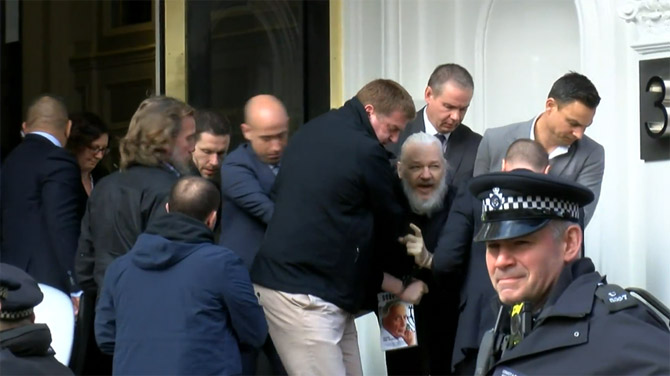
USA is preparing more charges against Julian Assange

April 20, 2019 Posted by | civil liberties, USA | Leave a comment

State subsidies for nuclear power in USA are simply not necessary

State Nuclear Subsidies Not Needed, Forbes, Adam Millsap-19 Apr 19 
Natural gas has become the dominant source of electricity generation in the United States and this is creating some financial issues for the nuclear industry. Since 2010, several nuclear plants around the country have closed and economic conditions, particularly low natural gas prices, are often citedas a factor. Officials from companies that own and operate struggling plants are seeking government assistance to stay afloat, but state lawmakers should be skeptical.

The decline in the price of natural gas since 2008, shown in the figure below, [on original] has made it difficult for some nuclear plants to compete. Prior to 2008, some thought a nuclear renaissance was on the horizon. Now this seems unlikely.

Nuclear power is characterized by the initial high costs of plant construction followed by relatively low operating costs. When alternative energy sources—such as coal, oil, solar, etc.—are expensive, it can make economic sense to bear the high costs of nuclear plant construction. But when other prices are low, as with today’s abundant natural gas and increasingly competitive wind and solar power, it’s harder to justify new plant construction.

Not only are economic conditions working against new nuclear plants, but they are also unfavorable to many existing plants. Unsurprisingly, officials from the companies that own and operate the struggling plants want some government help. A recent report in Pennsylvania’s York Dispatch shows that Exelon Corp.—the owner of some of the struggling plants—significantly increased its lobbying spending in Pennsylvania in 2018 compared to the previous five election cycles. Spending increased from an average of just over $646,000 from 2008 to 2016 to nearly $1.8 million in 2018.

There is some evidence that the lobbying is working. …..

Subsidies work by taxing one group and giving the revenue to another. In the Pennsylvania and Ohio bills, the funding for the subsidy is raised via higher electricity rates on consumers.

Supporters of both bills argue that nuclear is a vital source of clean energy and that without legislation nuclear plants will continue to shut down. But despite competition from natural gas and renewables, it’s not clear that the nuclear industry as a whole is in deep financial trouble. According to a recent analysis, all but one of Pennsylvania’s five nuclear plants are covering their costs. Since there is no financial stress requirement in the Pennsylvania bill, profitable plants in the state will benefit just as much as the current unprofitable one—Three Mile Island Unit 1.

More broadly, a recent State of the Market Report for PJM, which is the regional transmission organization that coordinates the movement of wholesale electricity in Pennsylvania, Ohio, and other nearby states, also casts doubt on the general unprofitability of nuclear power. The report projects that only three of 18 nuclear plants in the region—Three Mile Island along with Davis-Besse and Perry in Ohio—won’t be able to cover their costs for at least one year between 2019 to 2021. ……

 it’s not clear that subsidizing inefficient nuclear plants is the most economical way to address climate change , since subsides have problems of their own……

subsidies to nuclear plants are also likely to crowd out new, more efficient electricity plants. Total electricity generation in the United States has declined slightly since 2010 despite economic growth in the form of real GDP per capita, as shown below. [on original]

In a world of declining or even stable electricity use, the profit motive for investing in new capacity is weakened if new plants are not allowed to out-compete less efficient plants for market share. So as long as less efficient nuclear plants are meeting consumer demand, newer plants powered by natural gas, wind, solar, or some other source will have a difficult time finding a market.

Stu Bressler, senior vice president of operations and markets for PJM Interconnection, recently said essentially this when he told Ohio lawmakersthat subsidizing less competitive plants “…could prevent the building of more efficient and cost effective plants, including cleaner technologies like solar and wind.”

Finally, just because a subsidy has the potential to improve economic efficiency doesn’t mean it will. A subsidy that is too small will not generate enough of the good or service. A subsidy that is too large can generate too much, leading to more inefficiency than no subsidy at all. The bureaucratic costs of estimating the correct subsidy, implementing it, and administering it must also be considered. If these costs outweigh the potential gains in efficiency from the subsidy, then the economy would be better off without it.

It doesn’t appear that Ohio or Pennsylvania lawmakers have rigorously estimated the appropriate subsidy or accounted for the costs of implementing and administering one in their proposals. Without such analysis, it’s unlikely that the proposed nuclear subsidies will lead to an improvement in consumer welfare. Instead, these subsidies will likely do more harm than good, as they seem to be primarily designed to help a few unprofitable nuclear plants rather than carefully thought out pieces of a broader, market-based energy plan.

Adam A. Millsap is the Assistant Director of the L. Charles Hilton Jr. Center at Florida State University and an Affiliated Scholar at the Mercatus Center at George Mason University. https://www.forbes.com/sites/adammillsap/2019/04/19/state-nuclear-subsidies-not-needed/#e532f23111dc

April 20, 2019 Posted by | politics, USA | Leave a comment

Harvey Wasserman: America’s “Hole-in-the-Head” Nuke Suicide Pact Gets Court Approval 

April 20, 2019 Posted by | politics, USA | Leave a comment

Three Mile Island, and the nuclear industry’s legacy of cancer

The legacy of nuclear power is checkered at best, Delware State News, Apr 18th, 2019 · by Alan Muller

Forty years ago, on March 28, 1979, the Three Mile Island (TMI) Unit 2 nuclear power reactor in central Pennsylvania — about 95 miles northwest of Dover — partially melted down and experienced at least one explosion.

Many of us living in Delaware at the time were very concerned about being downwind and somewhat downstream of a nuclear accident of unknown magnitude.

The causes were a combination of equipment failures, design defects and operator errors. The operators did not have accurate indications of what was going on in the reactor, so they couldn’t make the right decisions. Reportedly, more than half of the radiation monitors in the area were broken, so there was not adequate indication of how much radioactivity was released and where it went.

Days afterwards: “[Pa.] Governor Thornburgh advised pregnant women and pre-school age children to leave the area within a five-mile radius of the Three Mile Island facility until further notice. This led to the panic the governor had hoped to avoid; within days, more than 100,000 people had fled surrounding towns.”

Ever since the TMI meltdown, nuke industry sources and public health authorities have claimed that too little radioactivity was released to harm people’s health…….

Failure to investigate TMI health effects was published in the Bulletin of the Atomic Scientists in 2004. This included failure to investigate, media blackouts and the firing of Pennsylvania Health Commissioner Gordon MacLeod by Gov. Thornburgh after he pointed out increases in infant mortality and other health problems near TMI.

Jane Lee, a local farmer, with others, went door-to-door and said they had found and documented many acute health problems. I knew Jane towards the end of her life. She’d been unable to arrange publication of her work, and wasn’t online A deposit of Jane Lee Papers at Dickenson College (Carlisle, Pa.) may hold some of this information.

More recently in 2017:

“A new Penn State College of Medicine study has found a link between the 1979 Three Mile Island accident and thyroid cancer cases in south central Pennsylvania. The study marks the first time the partial meltdown can be connected to specific cancer cases, the researchers have said. The findings may pose a dramatic challenge to the nuclear energy industry’s position that radiation released had no impact on human health.” …….

All nuclear plants release radiation to air and water during normal operation, as do other parts of the nuclear fuel cycle such as uranium mining. Many nuclear plants have tall stacks intended to disperse “noncondensible” radioactive emissions. See one in pictures of the Peach Bottom nuclear plant — three of this same General Electric design melted down in Japan in 2011. Evidence is accumulating that these releases from normal operations may have health impacts.

Some reports claim the only health effects from TMI were mental health impacts from stress, as if “mental health impacts” were unimportant.

The TMI meltdown ended expansion of the U.S. nuclear power industry — after TMI, no new reactors were ordered in the U.S. and many projects were stopped.

Now, 40 years later, the remaining industry is collapsing, largely because wind and solar have become cheaper. The remaining TMI unit is to shut down this year. But the nuke industry isn’t going down without a fight, trying to rebrand itself as a climate change solution. In fact, the nuclear fuel cycle releases less climate-changing carbon dioxide than fossil-fuel burning but much more than wind or solar (per unit of electricity generated).

It is timely to think about TMI as Delaware is surrounded by nuclear power reactors. About 10 percent of all those in the U.S. are within 50 miles of Delaware. The Salem/Hope Creek reactors, the nearest, have recently received an enormous subsidy from the state of New Jersey to stay open. On the other hand, the Oyster Creek, N.J., reactor has closed.

This contraction of the nuclear power industry won’t be easy for people working in it, or for some of the nuclear host communities. But it will happen regardless and ultimately we will be safer and healthier for it.

To ignore the human impacts of the nuclear industry is a moral failure.

Alan Muller is executive director of Green Delaware.   https://delawarestatenews.net/opinion/commentary-the-legacy-of-nuclear-power-is-checkered-at-best/


April 20, 2019 Posted by | health, USA | Leave a comment

USA’s new proposal “Creating an Environment for Nuclear Disarmament”

Sidetrack or kickstart? How to respond to the US proposal on nuclear disarmament. Bulletin of the Atomic Scientists , By Lyndon BurfordOliver MeierNick Ritchie, April 19, 2019 Speaking to the Geneva-based Conference on Disarmament on March 26, US Assistant Secretary of State Chris Ford presented the “Creating an Environment for Nuclear Disarmament” (CEND) initiative. According to Ford, the scheme “aims to help the international community find a path forward by setting in motion a ‘Creating an Environment Working Group’ process.” He described CEND as a “pathbreaking new initiative” to bring countries together in a constructive dialogue to explore how “it might be possible to ameliorate conditions in the global security environment so as to make that environment more conducive to further progress toward—and indeed, ultimately to achieve—nuclear disarmament.”………

The name change is important because it points to the initiative’s key problem: the risk that the United States and other nuclear weapon states will use the process of Creating an Environment for Nuclear Disarmament to deflect pressures to take concrete action on disarmament. ……

What’s in a name? Shifting from conditions to progress. While the shift from “creating the conditions” to “creating the environment” suggests a willingness to listen (at least, to allies and P5 states), a closer comparison between Ford’s Geneva remarks and his earlier statements on the subject leads one to be sceptical. The Geneva speech does not substantively move beyond the conditions narrative. Ford consistently and repeatedly argues that disarmament can only move forward when and if the prevailing security conditions are improving. This focus is problematic for a number of reasons.

First, it is conservative and unimaginative; it highlights the barriers to disarmament, rather than exploring ways to make progress…..

nuclear weapon states often highlight the “conditions” for nuclear disarmament, mainly to argue that others are responsible for the fact that these conditions are “not ripe” yet….

the “conditions” narrative is perceived by many as a stepping away from Nuclear Non-Proliferation Treaty (NPT) disarmament commitments, including specifically the disarmament Action Plan agreed by NPT states parties at the 2010 Review Conference. The United States and other nuclear weapon states have been trying to diminish the importance of such commitments by arguing that they were concluded under different, arguably “better” circumstances. …….

The core challenge remains mobilizing the collective political will to take practical steps forward and working out effective measures that could precipitate a deeper transformation of global nuclear politics. In this regard, the issue of how the CEND working group relates to the Treaty on the Prohibition of Nuclear Weapons (often called the ban treaty) will be important.

The United States and other nuclear-armed states have not engaged with the ban treaty. …… the CEND working group will itself lack legitimacy if it sets itself up in opposition to the ban treaty. .. the group of ban treaty supporters is now so large that its voice will have to be heard in the CEND process. …..

for the time being, the Creating the Environment for Nuclear Disarmament working group is only an idea, but it could offer a new opportunity for states to engage on progress towards nuclear disarmament. It could be a serious, honest, and open forum to discuss the responsibilities of all states, including the nuclear weapon states, in helping create the conditions for nuclear disarmament and taking specific steps in that direction. For that to happen, however, participating states must have shared ownership, including financial buy-in as appropriate, to make sure that they have an equal say in the make-up and functioning of the group and the conclusions it reaches over time.  https://thebulletin.org/2019/04/sidetrack-or-kickstart-how-to-respond-to-the-us-proposal-on-nuclear-disarmament/

April 20, 2019 Posted by | USA, weapons and war | Leave a comment