USA lost unexploded nuclear bomb in Japanese waters
However, it was not until 1989 that the Pentagon admitted the loss of a one-megaton hydrogen bomb.
The revelation inspired a diplomatic inquiry from Japan, however, neither the weapon, or the pilot, was ever recovered.The incident, the most serious involving nuclear weapons in the Navy’s history, showed that US warships carried atomic weapons into Japanese ports in violation of policy, according to researchers.
Japanese law banned ships carrying nuclear weapons from sailing in its territorial waters or calling on its ports following the terrible Hiroshima and Nagasaki incidents.
However, the US warship routinely docked in Japan.
William M. Arkin of the liberal Institute for Policy Studies claimed in 1989: “For 24 years, the US Navy has covered up the most politically sensitive accident that has ever taken place.
“The Navy kept the true details of this accident a secret not only because it demonstrates their disregard for the treaty stipulations of foreign governments but because of the questions it raises about nuclear weapons aboard ships in Vietnam.”
The event was highly sensitive, with Japan being the only country to ever be attacked with nuclear weapons at the end of World War 2.
On September 8, 1951, 49 nations drew a line under the devastating event and signed the Treaty of San Francisco – also known as the Treaty of Peace with Japan.
The document officially ended US-led occupation of Japan and marked the start of re-establishing relations with the allied powers.
Meanwhile, In 1965, the US was arguably at the height of tensions with the Soviet Union.
Not only did the accident threaten to spoil already tenuous relations with Japan, but it would have also have given the USSR an excuse to start a nuclear war.
Despite the worrying claims, the US Navy confirmed inn 1989 that the waters were too deep for the weapon to pose a threat.
Worryingly though, it would not be the last of the nuclear gaffes for America. On January 17, 1966, a B-52G USAF bomber collided with a KC-135 tanker during a refuelling mission at 31,000 feet over the Mediterranean Sea.
During the crash, three MK28-type hydrogen bombs headed for land in the small fishing village of Palomares in Almeria, Spain.
Worse still, the explosives in two of the weapons detonated on impact, contaminating the surrounding area of almost one square mile with plutonium.
The fourth sunk off the coast of Spain and was recovered three months later.
Donald Trump caught in a rather serious lie about USA’s “more advanced” nuclear missile technology
 Trump tries to brag about ‘advanced’ US nuclear technology and gets immediately called out https://www.indy100.com/article/trump-nuclear-cruise-missile-advanced-technology-russia-explosion-national-security-9055336
On Thursday, five Russian nuclear engineers were killed in a rocket engine explosion, which is thought to be linked to tests for a nuclear-powered cruise missile announced by Vladimir Putin in March 2018.
In his typically tactless style, Trump shared his thoughts on the explosion yesterday by claiming the US was “learning much” from the blast and had even more advanced technology.
Trump’s tweet caught the attention of national security experts because it meant one of two things:
- Trump had just revealed a secret US nuclear-powered cruise missile programme
- He was bluffing about a missile programme that the US does not have
It doesn’t exactly take, ahem, a rocket scientist to know that both of those explanations are quite bad.
For example, Michael McFaul, who worked both for the US National Security Council and as Barack Obama’s Ambassador to Russia, had no idea what Trump was talking about.
In fact, there was once a programme to develop a nuclear-powered cruise missile during the Cold War, called Project Pluto, but the US abandoned it because it was believed to be too dangerous – potentially creating missiles for which there was no known defence.
Church Rock America’s Forgotten Nuclear Sacrifice Zone

|
Church Rock, America’s Forgotten Nuclear Disaster, Is Still Poisoning Navajo Lands 40 Years Later. https://www.vice.com/en_us/article/ne8w4x/church-rock-americas-forgotten-nuclear-disaster-is-still-poisoning-navajo-lands-40-years-later Residents say they’ve been ignored even as they struggle with contaminated water and worry about having children. By Samuel Gilbert; photos by Ramsay de Give, Aug 12 2019,
Early in the summer of 1979, Larry King, an underground surveyor at the United Nuclear Corporation’s Church Rock Uranium mine in New Mexico, began noticing something unusual when looking at the south side of the tailings dam. That massive earthen wall was responsible for holding back thousands of tons of toxic water and waste produced by the mine and the nearby mill that extracted uranium from raw ore. And as King saw, there were “fist-sized cracks” developing in that wall. He measured them, reported them to his supervisors, and didn’t think anything more of it.
A few weeks later, at 5:30 a.m. on July 16, 1979, the dam failed, releasing 1,100 tons of uranium waste and 94 million gallons of radioactive water into the Rio Puerco and through Navajo lands, a toxic flood that had devastating consequences on the surrounding area. “The water, filled with acids from the milling process, twisted a metal culvert in the Puerco,” according to Judy Pasternak’s book Yellow Dirt: A Poisoned Land and the Betrayal of the Navajos. “Sheep keeled over and died, and crops curdled along the banks. The surge of radiation was detected as far away as Sanders, Arizona, fifty miles downstream.” According to a Nuclear Regulatory Commission report, radioactivity levels in the Puerco near the breached dam were 7,000 times that of what is allowed in drinking water. The heavily contaminated water flowed over the river banks, creating radioactive pools. “There were children up and down the river playing in those stagnant pools, and they were deadly poisonous,” Jorge Winterer, a doctor with Indian Health Service in Gallup, New Mexico, said after the spill. Earlier this year, standing in his yard next to an old Chevy, King pointed in the direction of the now dry Rio Puerco. “It came right through there,” said King. The unleashed river of waste had flowed through his family’s land just a half-mile from his house. “I remember the terrible odor and the yellowish color of the water.” He recalls seeing an elderly woman who had burned her feet crossing the Puerco while watering her sheep that day. King still lives on the family land, two miles downstream of the rebuilt dam in the Church Rock chapter of the Navajo Nation. His home is surrounded by a beautiful, unforgiving landscape of red rock cliffs, a scattering of Navajo residences and, if you look closely, fencelines with KEEP OUT signs marking the numerous abandoned uranium sites. Forty years later, the Church Rock spill remains the largest single largest accidental release of radioactivity in U.S. history, worse in terms of total radiation than that of the partial meltdown at Three Mile Island and second in world history only to the 1986 Chernobyl catastrophe, both of which have loomed much larger in the cultural imagination. The effects of the spill have lingered for an entire generation: In 2007, the Church Rock Uranium Mining Project found widespread contamination of drinking water sources in the Church Rock area. Navajo residents say they have not been given the attention given to other victims of nuclear accidents, even as they remain under the catastrophe’s long shadow, dealing with poisoned livestock and ongoing health problems amid other aftereffects. “We have never been a priority,” said King. “Forty years after the spill and nothing has been done.” “Our generation is afraid of having children,” said Faith Baldwin, who grew up on the Navajo nation surrounded by abandoned uranium mines. “Cancer runs in our family but it shouldn’t. Cancer, diabetes were nonexistent in Navajo rez.” During the Cold War, Navajo lands provided much of the raw material for the burgeoning nuclear industry. From 1944 to 1986 some 30 million tons of uranium ore were extracted from mines, but as demand for uranium decreased the mines closed, leaving over a thousand contaminated sites, few of which have been cleaned up. The Church Rock Chapter has some 20 such contaminated uranium sites, including the mine where King worked. Navajo workers at these places were often poorly paid, underprotected, and uninformed about the danger of radiation exposure. And even before the spill, King said, UNC would routinely pump uranium-contaminated water from the mine into the Puerco, turning the seasonal wash into a toxic “man-made stream.” According to a 1994 report by the U.S. Geological Survey on levels of radioactive elements in the Rio Puerco and Little Colorado River basins, “at least 300 times more uranium and 6 times more total gross alpha activity were released by day-to-day pumping from the underground mines than was released by the spill.” As a child King remembers playing in the dry Puerco wash, its banks often coated with a “yellowish slime.” And ranchers used the Puerco to water their livestock. Residents couldn’t have known that the Church Rock dam was at risk of rupturing, but there’s evidence that the United Nuclear Corporation did. King wasn’t the first to notice cracks in the dam: An Army Corps of Engineers report would later find that UNC was aware of the cracks as early as 1977, two years before the breach. That report concluded that UNC failed to properly reinforce the tailings dam, ignored advice from its own engineering consultant that might have prevented the coming disaster, and did not report the cracks to regulators. “The company was remiss in not heading the problem off,” said Chris Shuey, director of the Uranium Impact Assessment Program at the Southwest Research and Information Center, an organization providing information to the public about the impacts of energy development and resource extraction. Shuey said that UNC failed to repair cracks in the dam while simultaneously overfilling the uranium mill’s toxic tailing ponds that were being held back by that cracking wall. The cleanup process after the spill was also lacking. Only 1 percent of solid radioactive waste was removed, according to Paul Robinson, the research director at the Southwest Research and Information Center, and no compensation for the nearby residents was provided. In contrast, those affected by the Three Mile Island disaster were paid thanks to the company that operated that plant and its insurers. “Governments took meaningful measures to deal with the Three Mile Island accident,” said Eric Jantz, a lawyer from the New Mexico Environmental Law Center, “while neither the federal nor New Mexico governments have taken any steps to remediate the Church Rock spill even after 40 years.” As time went on, the impacts of uranium exposure became more evident to residents. King watched as his former mine coworkers died early deaths. Community members complained of health problems that prior to the entrance of the uranium industry were foreign: kidney disease, bone cancer, and lung cancer afflicting non-smokers. According to King, the only warnings about radioactivity were a few signs telling residents not to water their livestock in the wash. UNC’s cleanup efforts consisted of hiring some temporary workers to shovel waste from the wash into five-gallon buckets and haul it away, according to Colleen Keane, who made a documentary about the aftermath of the spill called The River That Harms. In the early 90s, King joined the Eastern Navajo Diné Against Uranium Mining (ENDAUM), a grassroots organization fighting against new uranium projects and trying to mitigate the negative impacts of mining operations. Through that work, King began hearing troubling stories from nearby Red Water Pond Road, a small community sandwiched between three uranium sites where residents “unwittingly used water from contaminated wells to drink, bathe, and hydrate their livestock,” according to a 2017 Reveal article. “Their sheep were born hairless… like baby rats,” said King. There were also the stories of butchered animals whose insides had turned a sickly yellow. A few years back, one of King’s neighbors killed a sheep. Instead of white, the stomach fat was yellow, “more yellow than those happy faces,” said King, pointing to a stuffed smiley face pinned above his couch. “They got concerned and decided to butcher another one. Pretty soon there was a pile of carcasses, all the same… They burned the whole thing.” he health impacts of the spill on residents remain poorly understood, with only a few authoritative heath studies having been conducted. One of the few government studies that came out after the spill did limited testing on both residents (six in total) and livestock. The resulting 1983 report from the New Mexico government, based on Centers for Disease Control (CDC) tests, concluded that Rio Puerco water “may be hazardous if used over several years as the primary source of drinking water, livestock water or irrigation water.” The report goes on to state that “the severity of these hazards is not well known at the time.” But since then, it’s become more obvious that the spill has had long-lasting and serious effects. In 2015, Tommy Rock, a doctoral student of earth science, uncovered uranium contamination in Rio Puerco water in Sanders, a town in eastern Arizona, by looking at tests stretching back to 2003. “The Church rock spill was the single most likely cause,” he said. “For decades people were unknowingly drinking poisoned tap water.” The water company did not report the contamination to residents, and after Rock’s findings a new company took over operations and is drawing on a different well. For many residents, the spill has come to embody the broader toxic legacy of the uranium industry on the indigenous lands of the West. According to the EPA, there are over 500 abandoned uranium mines, mill sites, and waste piles on Navajo Nation land that continue to contaminate water, soil, livestock and housing. “The Church Rock spill symbolizes the governmental and societal indifference to the impacts of uranium development on Indigenous lands,” said Jantz. “The Church Rock spill is the third largest nuclear accident after Fukushima and Chernobyl, and the largest in the US in terms of radiation released, but nobody knows about it.” “Three Mile Island had more coverage and people were compensated right away,” said King. “I always say we don’t get the same attention because we live in impoverished native community… We live in a sacrifice zone.” |
|
|
The connection between indigenous and nuclear issues
“These trucks are carrying radioactive materials over the water supply for seven states, and they are driving by our communities and our families,” “This is an unacceptable risk.”
Local activists highlight connection between indigenous and nuclear issues, https://news.wbfo.org/post/local-activists-highlight-connection-between-indigenous-and-nuclear-issues, By KYLE S. MACKIE 9 Aug 19, A celebration of Indigenous Peoples and Nuclear-Free Future Day returns Friday to the Buffalo History Museum. Ahead of the event, local Native Americans and environmental activists explained how the issues of indigenous peoples and nuclear power are intertwined.
Representatives from local indigenous communities, the Western New York Peace Center and Peace Action New York State gathered Tuesday at the history museum’s Japanese Garden. Agnes Williams, coordinator of the organization Indigenous Women’s Initiatives, helped hold up two colorful banners that read, “No More Waste” and “Water is Life.”
“The nuclear issue is very important to us as indigenous people because we’re on the beginning and the end of the nuclear chain, at uranium mining and waste disposal,” said Williams, who is a member of the Seneca Nation.
Williams and other speakers discussed the long history of indigenous land around the world and in the U.S. being taken and used for mining, testing of nuclear weapons and then disposal of radioactive waste.
“We thank indigenous wisdom for the guidance,” said Victoria Ross, executive director of WNY Peace Center. “All of our issues are connected. We are working to #UniteTheStruggles.” Continue reading
Trump praises ‘very beautiful’ letter from Kim Jong Un amid frozen nuclear talks, tension over military exercises
Trump praises ‘very beautiful’ letter from Kim Jong Un amid frozen nuclear talks, tension over military exercises, By CONOR FINNEGAN and ELIZABETH MCLAUGHLINPresident Donald Trump said on Friday that he received another letter from North Korea‘s Kim Jong Un on Thursday amid stalled talks over the regime’s nuclear weapons program and Kim’s recent missile launches.
America’s nuclear-weapons policy isn’t what you think—it’s much worse
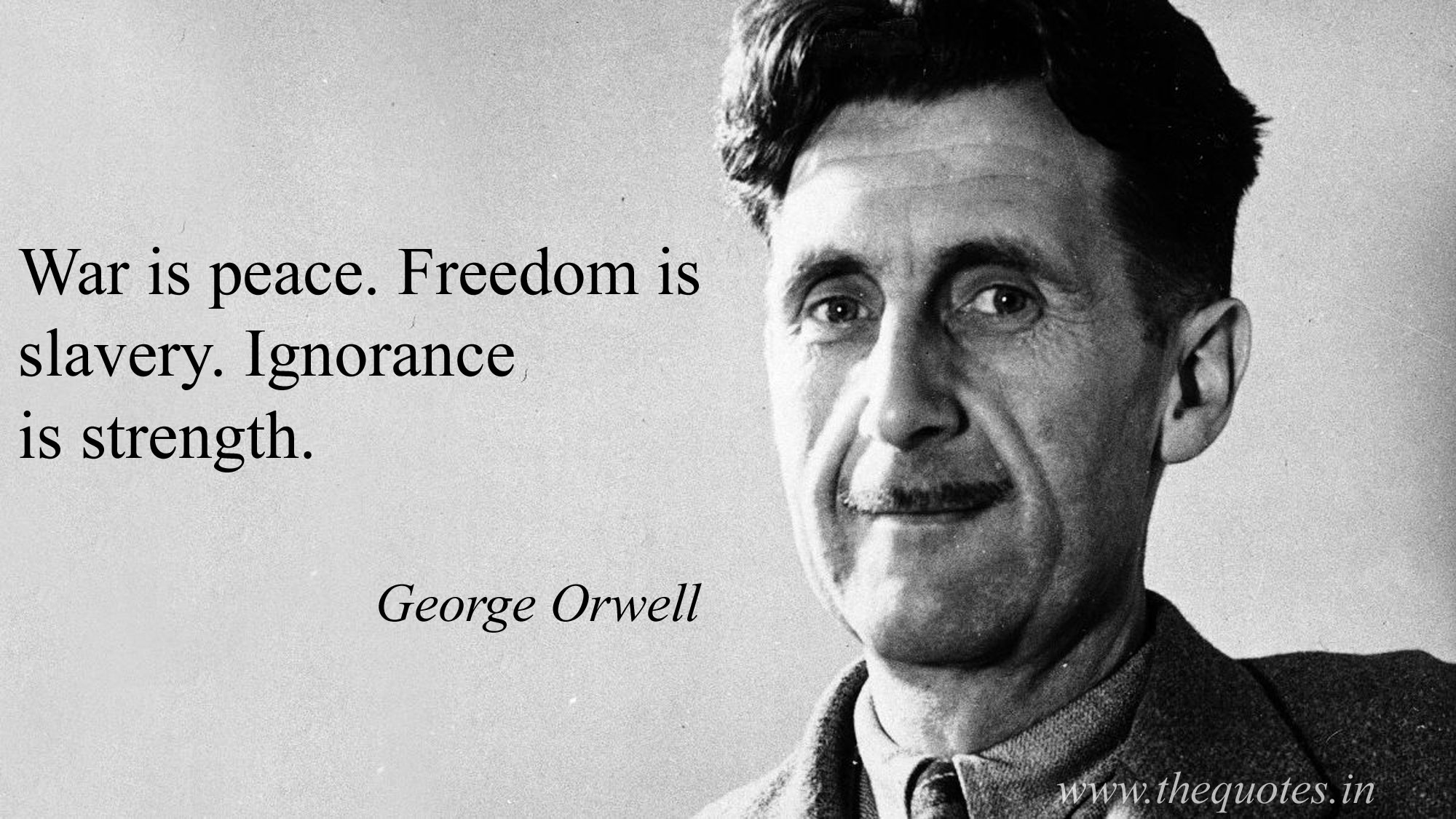 The US Strategic Command, which was created in the post-Cold War period to manage US nuclear strike capabilities, has even brought back the Orwellian motto of its predecessor, the Strategic Air Command: “Peace is our Profession.”
many experts consider missile defense destabilizing: It doesn’t get you defense—it gets you a new arms race.
Where does this path lead? If history is a guide: nowhere good.
The best-case scenario is that we get out of this era without any nukes going off, having spent our money and resources on weapons that forever sat in silos. That’s money we won’t be able to spend on improving the social safety net, on improving medical care, on basic scientific and medical research, on energy security, on infrastructure upgrades, or on mitigating climate change.
America’s nuclear-weapons policy isn’t what you think—it’s much worse https://qz.com/1680411/us-and-russia-are-starting-another-nuclear-war/, By Alex Wellerstein August 6, 2019
In the chaos that currently makes up the day-to-day of American foreign policy—a trade war here, tearing up international agreements and treaties there—it can be easy to miss the larger developments.
One of these, which occasionally rears its head in a frightened headline, is that there is a new nuclear arms race well under way.
In the United States, we typically get this in the form of news about the capabilities of other countries: Russia is developing a “doomsday torpedo,” China is developed “hypersonic missiles,” and so on. Whether these specifics are real or hype (experts are divided about the reality of the “doomsday torpedo”), they are part of a broader reality:
We’re back in an arms race. But it’s not a new one. Continue reading
The saga of Rocky Flats Nuclear Weapons Plant AND what happened to the Grand Jury documents??

Rocky Flats Nuclear Weapons Plant Closed Long Ago, but Is Still a Hot Topic https://www.westword.com/news/rocky-flats-nuclear-plant-shut-down-thirty-years-ago-but-is-still-a-hot-topic-11437949, | AUGUST 7, 2019
Colorado almost had its own Chernobyl.
That’s what then-congressman Jared Polis told the U.S. House of Representatives on May 12, 2009, the fortieth anniversary of a fire at what was then called the Rocky Flats National Munitions Plant, sixteen miles upwind of Denver.
“I rise today to commemorate one of the most fateful days in the history of the State of Colorado, the day the Rocky Flats Nuclear Weapons Plant outside of Boulder nearly became America’s own Chernobyl, some thirty years before that terrible accident in the Ukraine,” Polis told his colleagues. “On Mother’s Day of that year, a fire broke out amid the glove boxes in Building 776, where plutonium spheres were being manufactured for use as cores for some of the most powerful weapons in human history. The fire quickly spread throughout the facility, as many of the fire alarms had been removed to make room for more production. It is estimated that between 0.14 and 0.9 grams of plutonium 239 and 240 were released before a heroic band of perhaps forty firefighters were able to control and eventually douse the fire. Those firefighters faced the immense decision of whether to battle the blaze with water, which could have set off a chain reaction, with the resulting explosion literally contaminating the entire Denver metropolitan area. Luckily for us all, they chose correctly.
“Still, plutonium was released into the environment from that accident, through the air vents in the roof of the building and via firefighters extinguishing it. Thousands of Coloradans were exposed, although how many we’ll never know. The firefighters, of course, were exposed most severely, and everyone nearby faced greatly increased risks of serious disease. Indeed, many of those involved have since contracted and died from cancers and other conditions tied to radiation exposure.”
Unlike Chernobyl, the site of a massive nuclear explosion on April 26, 1986, that exposed at least half a million Russians to radiation, decimated the land for miles around and inspired HBO’s Chernobyl that educated a new generation to collateral damages of the nuclear age, Rocky Flats was not a nuclear power plant. In fact, Colorado’s only nuclear-generating facility, Fort St. Vrain near Platteville, had its own problems from when it began generating electricity in 1976 and was shut down entirely in 1989.
By then, what became known as the Rocky Flats Nuclear Weapons Plant had been in operation for almost three decades; it was a manufacturing facility that created plutonium triggers for this country’s nuclear arsenal. But it still dealt with one of the most toxic elements on the planet, one with a half-life of 24,000 years, as well as many deadly chemicals. By the time of the 1969 Rocky Flats fire, the plant had been manufacturing those triggers for sixteen years, largely in secret.
Rocky Flats was not Chernobyl. But what happened there was bad enough — though just how bad may never be known. Documents about the plant, like some of the plutonium that was processed there, have a way of disappearing.\
PROJECT APPLE
By then, scientists had realized that they’d misread the wind patterns when siting Rocky Flats; they’d relied on measurements taken at Stapleton Airport northeast of Denver, without accounting for how winds shifted as they came over the mountains and through the canyons. Rather than being safely out of the path of any plutonium release, Denver was at ground zero, sixteen miles downwind. Even so, residents were not warned of potential dangers after the fires.
At the time, Dr. Carl Johnson, head of the Jefferson County health department, was revealing his own concerns about the evils of Rocky Flats. He released studies suggesting that Denver’s overall cancer rates were higher than expected, and the rates around Rocky Flats higher still. Property near the plant set for the development of 10,000 homes exceeded the state’s plutonium soil contamination standard by a factor of seven, he reported. As a result, federal housing officials directed realtors to warn prospective homebuyers who wanted government loans in order to purchase houses in the area that there could be potential liabilities.
In 1981, Johnson was fired by Jefferson County. The feds soon removed its directive to realtors.
SPILLED SECRETS
In the first week of August 1989, two dozen citizens from across Colorado were sworn in as members of Special Grand Jury 89-2. The grand jurors met for a week every month for over two years, and after hearing from dozens of witnesses and going through hundreds of boxes of documents, they were prepared to consider charges not just for workers at the plant, but for their federal overseers. “We didn’t care who they were or how high up the chain of command they were,” one grand juror later told Westword.
It wasn’t Chernobyl, but the story about Rocky Flats exploded just the same.
CLEANING UP
After the raid, Rocky Flats never made another nuclear trigger. The feds and Rockwell agreed to an early termination of the Rockwell management contract in September 1989, the day after the company filed a civil suit against the DOE, the EPA and the Department of Justice, arguing that the feds had failed to provide proper waste-disposal sites for radioactive materials. A week later, Rocky Flats was named a Superfund site, and EG&G signed a contract to operate the facility starting January 1, 1990. By then, the focus had been changed from nuclear-materials production to cleanup, and most of the 5,000-plus employees stayed on to do the job. Among other things, nearly 3,600 containers of pondcrete and saltcrete — 4.3 million pounds of low-level solidified waste that had been packaged like barrels, until they started to crumble and leak (the grand jurors had heard considerable testimony about that failed system) — were moved, and the solar ponds where waste had been stored were drained. Plutonium located in the ducts, which Stone had warned about, was removed.
As the story of the Rocky Flats grand jury became national news, Congress held hearings to determine whether justice had been denied. The hearings made headlines, but secured nothing more than a promise of more transparency from the DOE. Foreman McKinley even ran for Congress, in hopes that he’d be able to tell the full story from the floor of the House of Representatives. (Although that attempt failed, he ultimately served in the Colorado Legislature and co-authored a book titled The Ambushed Grand Jury…and thus far has avoided any contempt-of-court charges.)
In 1995, EG&G staff and the DOE held a Rocky Flats Summit with 150 community activists, regulators, state officials and members of citizen oversight committees to discuss cleanup plans, including reducing the risk of plutonium to site workers and the public, and deferring some environmental restoration and cleanup in order to reduce that risk. When EG&G declined to sign up for a second round, Kaiser-Hill took over the project. The draft Rocky Flats Vision and Rocky Flats Cleanup Agreement were released in March 1996, four years after the Justice Department had made its deal with Rockwell; Governor Roy Romer signed them that June. What had been predicted to be a cleanup project that would take decades and tens of billions of dollars was put on the fast track.
After nearly ten years and $7.7 billion, the remediation job was declared complete in 2005. More than 800 structures had been decontaminated and demolished, including five major plutonium facilities and two major uranium facilities. While much of the low-level radioactive waste was shipped to other disposal sites, the most contaminated rubble was buried far below the ground in the Central Operable Unit: 1,308 acres at the center of the facility, where most of the manufacturing had been done, which would be declared off-limits forever. The 5,000-plus acres around the COU, in the Peripheral Operable Unit, were turned over to the U.S. Fish and Wildlife Service in 2007 to revamp into a wildlife refuge, much as the Rocky Mountain Arsenal had been two decades earlier.
Even though the grand jurors were still silenced, the secrets of Rocky Flats seeped out in other ways. Workers who’d become sick sued the government, and public officials took up their cause. Nearby homeowners who’d suffered bad health and other losses filed a class-action suit against Rockwell and Dow; their case was finally heard in U.S. District Court Judge John Kane’s courtroom, where former FBI agent Lipsky testified as to what he’d found at the plant. Despite the testimony about problems on those properties, houses were popping up along the southern border of Rocky Flats, and some new homeowners started to wonder if they’d bought more than they bargained for. And as plans to finally complete the northwest segment of the beltway around Denver progressed, municipalities began questioning whether construction of the Jefferson Parkway, set to go along the east side of Rocky Flats, would really be safe.
As the date of the Rocky Flats National Wildlife Refuge’s opening neared, activist groups filed suit to keep the gates closed. Last September, Congressman Polis made a last-second request to Ryan Zinke, then-secretary of the Department of the Interior, which oversees Fish and Wildlife, to consider “my constituents’ request that the DOI complete further testing of air, water, and soil at the Refuge site by March 2019, and that until further testing has been completed, the Refuge site remain unopened to the public.”
Although Polis never heard from Zinke, he got his answer: The refuge opened to the public on September 15, 2018 (the suits filed to prevent its opening are still pending). But even those who have no concerns about the refuge’s safety were taken aback last November when a British company proposed fracking alongside Rocky Flats: While cleanup experts had considered the effects of water runoff, and burrowing animals, and even prairie fires, they’d never considered that drilling operations would bore down and then up into the property from the sides. The proposal was pulled, and last month Representative Joe Neguse, who took over the first congressional seat when Polis was elected governor, introduced legislation that would prohibit oil, gas and mineral drilling beneath federally owned Superfund sites, such as Rocky Flats.
Meanwhile, the debate over whether the surface is really safe continues.
In January, attorney Pat Mellen decided to try a different tack. On behalf of seven groups — the Alliance of Nuclear Workers Advocacy Groups, Rocky Flats Downwinders, Candelas Glows/Rocky Flats Glows, Environmental Information Network, Rocky Flats Neighborhood Association, Rocky Flats Right to Know and the Rocky Mountain Peace and Justice Center — she filed a motion asking that materials considered by Colorado’s first-ever special grand jury be released. “The documents gathered by the Grand Jury and now under seal are a unique resource that provides the detailed evidence of whether specific locations or hot spots of unremediated or undiscovered hazardous substances must outweigh a site-wide ‘safe’ determination made for other purposes,” she argued.
MISSING IN ACTION
And then on July 24, Mellen received an email from Kyle Brenton, assistant U.S. Attorney in the U.S. Attorney’s office where Mike Norton had negotiated the Rockwell deal thirty years before, that the grand jury documents were missing. “Can you imagine that?” says McKinley. “The Justice Department has a long history of losing stuff. They lost all kinds of stuff…plutonium, reports.”
And some things never change, he notes. When the grand jury was sent home back in 1992 and its files first sealed, the head of the Department of Justice was William Barr. Today, Barr is again the attorney general.
Lipsky, who was transferred to the FBI’s Los Angeles gang unit not long after his investigation of Rocky Flats, is now a private investigator who continues to push for the release of the real story about Rocky Flats. When he heard that the documents were missing, “the only thing I could do was laugh,” he says. Brenton’s email estimates that “60-some boxes are not physically in our office space now.” Lipsky’s agents filled many times that many boxes with documents seized during the raid at Rocky Flats.
According to Brenton, his office had custody of the requested documents until at least 2004. He’s now going through boxes of documents from linked cases, such as whistleblower Stone’s suit against Rockwell, and the Cook class-action litigation that finally found victory and a $375 million settlement in Kane’s courtroom, to see if they were misfiled.
“It is incidents like this that continue to foster uncertainty and fear within the communities that are the most impacted,” Polis’s office says of the missing grand-jury documents. “Our administration is committed to government transparency and public access to information. That’s why our Department of Public Health and Environment recently requested that these records be unsealed for the public.”
For a time, there was a stash of grand jury documents at U.S. District Court Judge Richard Matsch’s courtroom. At one point, the grand jurors had petitioned Matsch to allow them to tell their story; that request was denied, and Matsch passed away this spring. Judge Finesilver had relevant documents, too; before he died in 2006, he gave 180 boxes of records to the Denver Public Library, with the stipulation that they be kept closed until 2009.
That August, a librarian began cataloguing the contents, then ran across two boxes holding various forms of the grand jury report marked “Not for public release.” He called the clerk of the U.S. District Court to ask if the documents could be made public. Instead, the clerk picked up the boxes and demanded that anything else that surfaced involving Rocky Flats be sent to the court. The missing grand jury materials are not the only documents devoted to Rocky Flats, of course. The Colorado Department of Public Health and Environment still has voluminous files, including a giant binder detailing all the different chemicals once used at the Rocky Flats Nuclear Weapons Plant. For a time, Front Range Community College hosted a Rocky Flats Reading Room, though much of the materials are now in the University of Colorado archives, which has a “wealth of information,” according to David Abelson, executive director of the Rocky Flats Stewardship Council. “Walling off these documents from public view creates an impression that there’s a lack of information regarding management of the site.”
That impression is misguided, he thinks: His group includes representatives from most of the local governments around Rocky Flats, all but one of which supports recreation at the refuge. Still, in June the council passed a resolution against allowing fracking near the plant, and it’s keeping an eye on three studies being done of environmental conditions at the refuge, the results of which are due this fall. The current samples will be compared to historic samples…if those can be found.
For now, Mellen is drilling down into the case of the missing documents. On July 31, she filed a motion asking the judge to give the U.S. Attorney’s Office thirty days to find them. “I actually believe it’s a bigger number of boxes than that,” she says of Brenton’s estimate. “But right now, I’d be happy with that.”
Rocky Flats isn’t Chernobyl, but this could still blow up.
Catholic peace activists may face 25 years’prison, for breaking into a nuclear submarine base
 These Catholics broke into a nuclear base. Now they’re asking a judge to drop the charges. Religion News Service, by Yonat Shimron, August 7, 2019 — Seven Catholic peace activists who broke into a nuclear submarine base in Kings Bay, Ga., last year stood before a federal judge Wednesday (Aug. 7) to argue that the charges against them should be dismissed.
The activists, known as the Kings Bay Plowshares 7, are charged with three felonies and a misdemeanor and face up to 25 years in prison each for trespassing on the U.S. Navy base that houses six Trident submarines carrying hundreds of nuclear weapons.
A crowd of about 100 people that included the actor Martin Sheen packed the three-hour hearing in Brunswick, Ga., as the seven and their lawyers made their case before U.S. District Judge Lisa Godbey Wood.
The defendants, mostly middle-aged or elderly, are residents of Catholic Worker houses, a collection of 200 independent houses across the country that feed and house the poor. As the hearing began, several were in the middle of a four-day liquid-only fast to mark the 74th anniversary of the atomic bombings of Hiroshima and Nagasaki
The Kings Bay 7 are part of a 39-year-old anti-nuclear movement called Plowshares, inspired by the pacific prediction of the biblical prophet Isaiah that the nations of the world shall “beat their swords into plowshares.” Its activists have made a signature of breaking into nuclear weapons bases to hammer on buildings and military hardware and pour human blood on them. …….
The group individually and through its lawyers are using a novel defense: the Religion Freedom Restoration Act, a 1993 federal law that says the government may not burden the faith practices of a person with sincerely held religious beliefs……
Three of the defendants, the Rev. Steve Kelly, Elizabeth McAlister and Mark Colville, have been in jail since the break-in last year. They declined to accept the conditions of the bail — an ankle monitor and $50,000 bail — and have remained in the Glynn County Detention Center.
Ira Lupu, professor emeritus of law at the George Washington University Law School, said he had great respect and admiration for the Plowshares’ actions but suspected they would not win a dismissal of their charges……
The judge is expected to issue an opinion in a few weeks on whether the case should proceed to a trial. https://religionnews.com/2019/08/07/these-catholics-broke-into-a-nuclear-base-now-theyre-asking-a-judge-to-drop-the-charges/
Putin And Trump are ‘normalising’the increasing numbers, and the use, of nuclear weapons
 The more that Putin and Trump revalidate the role of nuclear weapons in strengthening national security, the more they normalise the discourse of nuclear weapons use and embolden calls for nuclear weapon acquisition in other countries.
A nuclear world in disarray https://www.aspistrategist.org.au/a-nuclear-world-in-disarray/ 7 Aug 2019, Ramesh Thakur We are in a uniquely dangerous period in the atomic age. Geopolitical tensions have spiked in Europe, in the Middle East, on the subcontinent and in East Asia. The nuclear arms control architecture is fraying and crumbling, but no negotiations are underway to reduce global nuclear stockpiles.
A hostile international security environment, the proliferation of nuclear weapons and the emergence of new space, cyber and AI technologies have increased the risk of accidental or deliberate use of nuclear weapons. The growing strategic risks and uncertainty in turn fuel the vicious cycle of renewed interest among US allies in a nuclear deterrent as a hedge against receding US primacy and reliability.
At the conclusion of a United Nations conference on 7 July 2017, 122 states parties of the Nuclear Nonproliferation Treaty adopted a new Treaty on the Prohibition of Nuclear Weapons. All nine countries that possess the bomb (China, France, India, Israel, North Korea, Pakistan, Russia, the UK and the US) boycotted the conference and rejected the treaty. They have done their very best since then to invalidate the concerns behind the drive to adopt it.
The 2018 US nuclear posture review will guide the Trump administration’s nuclear decision-making, modernisation, targeting and signalling. With an expansive vision of the role of nuclear weapons, its threefold effect is to enlarge the US nuclear arsenal, lower the threshold for the use of nuclear weapons, and broaden the contingencies in which the threat of nuclear weapons can be wielded as a tool of diplomatic coercion.
The 2015 Iran nuclear deal established a robust dismantlement, transparency, inspections and consequences regime. Last year, President Donald Trump pulled the US out of the agreement and reimposed sanctions on Iran, despite its still being in compliance with its obligations. That put Washington in breach of the multilaterally negotiated and UN-endorsed Joint Comprehensive Plan of Action. Trump’s decision will have reconfirmed North Korea’s belief that the one thing standing between its security and a US attack is the bomb. It has also caused the recent surge in tensions in the Persian Gulf.
On 1 February, Trump decided to suspend US participation in the Intermediate-Range Nuclear Forces Treaty—an arms control agreement with Russia that contributed to the end of the Cold War and underpinned European strategic stability for three decades. It lapsed on 2 August. Trump has also rebuffed Russian overtures to discuss a five-year extension of New START beyond 2021. His second summit with North Korea’s leader Kim Jong-un in Hanoi in Februarycollapsed without agreement and Pyongyang now seems to be expanding its nuclear arsenal. Still, at least the US and North Korea are engaged in high-level and working-level discussions and the fear of an imminent war has faded.
The altered US nuclear posture will have cascading effects on the arsenals, doctrines and deployments of other nuclear-armed states. On 1 March 2018, Russian President Vladimir Putin boasted of a new array of invincible nuclear weapons that can penetrate any defences anywhere in the world. He noted the US had not heeded Russian warnings when it pulled outof the 1972 anti-ballistic missile treaty in 2002. ‘You didn’t listen to our country then. Listen to us now’, he said. Putin’s language was reminiscent of the Cold War.
After the US–Russian suspensions of the INF Treaty, Putin warned that Russia could place hypersonic nuclear weapons on submarines deployed near US waters to match the time in which US missiles based in Europe could strike Russia. He also warned of a radioactive tsunami that could be triggered in densely populated coastal areas by a new nuclear-powered underwater drone dubbed ‘Poseidon’.
The more that Putin and Trump revalidate the role of nuclear weapons in strengthening national security, the more they normalise the discourse of nuclear weapons use and embolden calls for nuclear weapon acquisition in other countries. In Australia, this debate has been restarted most recently by Hugh White.
Meanwhile, the official newspaper of the People’s Liberation Army has called for China to strengthen its nuclear deterrence and counterstrike capabilities to match the US’s and Russia’s developing nuclear strategies. China is upgrading its relatively small nuclear arsenal. It rejected Germany’s request to save the INF Treaty by agreeing to trilateralise it, emphasising that its warheads in the low hundreds cannot be compared with US and Russian arsenals in the several thousands.
India and Pakistan are enlarging, modernising and upgrading stockpiles, while investing in battlefield tactical nuclear weapons and systems to counter them. The INF Treaty was the first disarmament agreement of the nuclear age. In an unwelcome symmetry, on 26 February we witnessed the first airstrikes by one nuclear-armed state against another, and the two engaged in a deadly dogfight above the skies of Kashmir the next day. Another India–Pakistan war is a question of when, not if.
The US, described by former Canadian disarmament ambassador Paul Meyer as ‘the high priest of nuclear orthodoxy’, has left its allies looking rather foolish. Washington had led them in dismissing the nuclear weapon ban treaty as impracticable virtue-signalling, instead extolling the decades-long efforts at step-by-step measures to advance the cause of nuclear disarmament that had seen global stockpiles plummet by over two-thirds from their Cold War peak.
When unkind critics noted that the only steps that were visible were leading backwards, Washington responded by launching a new initiative on ‘creating the conditions for nuclear disarmament’. Lest some conditions be specified and met, however, Washington suddenly embraced the more nebulous and inherently subjective language of ‘creating an environment for nuclear disarmament’.
During the Cold War, Soviet citizens who kept to the straight path as the communist party veered sharply to the left or right were denounced as ‘deviationists’. For decades, US allies have been singing from the same hymn book, joining it in the insistence that the step-by-step, progressive approach was the only realistic path to nuclear disarmament. Instead of embracing the new orthodoxy from their fallible high priest, they should do a hard-nosed analysis of the merits of the changing risk–reward calculus of integrating more deeply with the nuclear alliance structure or joining the majority of countries in trying to rid the world of nuclear weapons.
Hiroshima Day – a time to review America’s “presidential first use” nuclear weapons policy

Hiroshima, Nagasaki, and no first use https://thebulletin.org/2019/08/hiroshima-nagasaki-and-no-first-use/ By Elaine Scarry, Zia Mian, August 5, 2019 On August 6 and August 9, we again take time to contemplate the US atomic bombing of Hiroshima and Nagasaki in 1945. The arrangements that permitted a US president to drop an atomic bomb on tens of thousands of civilians continue to be in place today.
The United States has a “presidential first use” policy which means that President Trump, acting alone, can issue the order for a nuclear strike, even if our own country is not under nuclear attack. This concern has been raised in the Democratic Party presidential primaries for the 2020 election, with some candidates arguing for a shift to a US policy of no first use of nuclear weapons. There is already legislation pending in Congress to this effect.
A conference held at Harvard in 2017, “Presidential First Use of Nuclear Weapons: Is it Legal? Is it Constitutional? Is it Just?” brought together a US congressman, a US Senator, a former missile launch officer, several constitutional law professors, a former secretary of defense, a physicist, and several philosophers to address this question as it applies to the United States, Russia, China, India, Pakistan, and North Korea.
Youtube videos of all their lectures can be found here. An edited transcript of some of the talks at the conference is available here.
To resuscitate the nuclear industry, USA Dept of Energy promotes yet another gimmick The Versatile Test Reactor

Energy Department wants to build nuclear test “fast” reactor, BOISE, Idaho (AP) — A new nuclear test reactor is needed as part of an effort to revamp the nation’s fading nuclear power industry by developing safer fuel and power plants, the U.S. Department of Energy said Monday.
The federal agency said it will prepare an environmental impact statement as part of the process to build the test reactor in Idaho or Tennessee by the end of 2025. Public comments on the environmental review are being taken through Sept. 4.
The Energy Department had a fast reactor, the Experimental Breeder Reactor II, operating in eastern Idaho until it was shut down in 1994 as the nation turned away from nuclear power.
Edwin Lyman, senior scientist and acting director of the Nuclear Safety Project at the Union of Concerned Scientists, a nonprofit, said fast reactors such as the proposed Versatile Test Reactor are less safe than current reactors.
Most nuclear reactors in use now are “light-water” reactors fueled by uranium and cooled with water. Lyman said the test reactor will be cooled with harder to control liquid sodium and likely fueled by plutonium, increasing potential nuclear terrorism risks because plutonium can be used to make nuclear weapons.
“There is nothing good about these reactors,” he said. “I think there is a love of plutonium in the (Energy) Department that is irrational.”…….
Reducing spent nuclear fuel, federal officials say, is also an objective of the new test reactor. The U.S. has no permanent repository for about 77,000 tons (70,000 metric tons) of radioactive spent fuel, stored mainly at the commercial nuclear power plants where they were used to produce electricity.
But Lyman said fast reactors would produce waste even more hazardous and difficult to dispose…….
The Energy Department is considering building the test reactor at the Idaho National Laboratory in eastern Idaho or the Oak Ridge National Laboratory in eastern Tennessee. …….. https://apnews.com/64194c2125ad4dc6add67d412e9024c5
Senator Elizabeth Warren causes a stir with her proposal for a “no first use” policy on nuclear weapons
 Warren’s pledge to avoid first nuclear strike sparks intense pushback, The Hill
Republicans slammed the proposal as sending a dangerous signal to both allies and enemies about a lack of U.S. resolve — previewing a potential attack line from President Trump should the two face off in the general election.
The United States has long reserved the right to be the first country to launch a nuclear weapon in a conflict.
Former President Obama reportedly thought of declaring a no first use policy toward the end of his tenure, but was talked out of it by advisors who argued it would worry allies and embolden adversaries.
Arms control advocates hold that declaring a no first use policy would improve U.S. national security by lowering the risk for miscalculation.
Warren made no first use a key part of her foreign policy early on in her run.
The speech was delivered before she officially jumped in the race but was considered an early sign she was running.
In January, she introduced the Senate version of a bill to make no first use official U.S. policy. The bill has six co-sponsors, including follow presidential contenders Sens. Bernie Sanders (I-Vt.) and Kirsten Gillibrand
House Armed Services Committee Chairman Adam Smith (D-Wash.), a longtime no first use advocate, also introduced the bill in the lower chamber. The House version has 35 co-sponsors, including presidential candidates Reps. Tulsi Gabbard (D-Hawaii) and Tim Ryan (D-Ohio.).
Only Warren, though, was asked to defend the policy at this week’s Democratic debates.
“We don’t expand trust around the world by saying, ‘You know, we might be the first ones to use a nuclear weapon,’” Warren said Tuesday night from the stage in Detroit.
“That puts the entire world at risk and puts us at risk, right in the middle of this,” she said.
She also noted that Trump’s policies, including pulling out of a nuclear deal with Iran, had gotten the world “closer and closer to nuclear warfare.”
n response to criticism of the policy, Warren’s campaign sent The Hill seven tweets and articles from nonproliferation advocates in support of Warren. The support included former Defense Secretary William Perry, who tweeted that “our nuclear arsenal is intended to deter a nuclear attack, not to initiate a nuclear war.”
NuScale’s Small Modular Nuclear power is too risky

NuScale nuclear power is too risky, [artist’s model above] https://www.sltrib.com/opinion/letters/2019/08/04/letter-nuscale-nuclear/ By Robert Goodman | The Public Forum, 4 Aug 19, NuScale’s nuclear power project is too much of a financial and environmental risk when there are cleaner energy alternatives.
Not only will NuScale’s virtually untested nuclear technology be an estimated 40% more costly than renewable energy portfolios, the project in Idaho Falls, Idaho, will also likely go exceedingly over budget.
Many recent nuclear projects nationwide have resulted in extreme cost overruns and project cancellations, the burden of which has often fallen on ratepayers. For instance, ratepayers in South Carolina will end up owing more than $6,000, to be paid in monthly installments for the next four decades for a failed nuclear power plant. And just this year, the Department of Energy gave $3.7 billion in taxpayer money to the ailing Southern Co.’s nuclear power project near Waynesboro, Ga.
Yes, UAMPS has promised a rate cap in order to protect ratepayers. But if the new, first-of-a-kind project goes over budget, will that rate cap stay? Will NuScale Power, an Oregon-based LLC, step up and pay the extra expense?
City officials in UAMPS districts should look beyond NuScale Power’s promotional presentations and consider economically competitive, safer and more sustainable energy portfolios through a more transparent, independent and robust procurement process.
Bernie Sanders supports Elizabeth Warren’s ‘no first use’ nuclear policy
Sanders backs Warren after Liz Cheney attacks ‘no first use’ nuclear policy https://www.theguardian.com/us-news/2019/aug/03/bernie-sanders-elizabeth-warren-liz-cheney-nuclear-no-first-use
Sanders rejects ‘national security advice from a Cheney’
Congresswoman is daughter of Iraq war architect Dick Cheney Lois Beckett@loisbeckett 4 Aug 2019 Bernie Sanders has defended his rival for the Democratic presidential 2020 nomination, Elizabeth Warren, after her policy against pre-emptive use of America’s nuclear weapons was attacked by the daughter of one of the architects of the Iraq war.
Warren reiterated her support for a “no first use” policy on nuclear weapons during the second round of Democratic presidential debates this week.
“It makes the world safer,” the Massachusetts senator said during the debate. “The United States is not going to use nuclear weapons pre-emptively, and we need to say so to the entire world.”
Liz Cheney, a Republican congresswoman from Wyoming, attacked Warren’s policy on Twitter, asking “which American cities and how many American citizens are you willing to sacrifice with your policy of forcing the US to absorb a nuclear attack before we can strike back?”
Cheney is the daughter of former vice-president Dick Cheney, a key advocate of the 2003 invasion of Iraq by the United States and its allies.
The Bush administration’s primary justification for the pre-emptive war, that Saddam Hussein had weapons of mass destruction and that his regime presented an escalating threat, was discredited after the invasion.
The war in Iraq, now in its 16th year, has resulted in an estimated 200,000 documented civilian deaths from violence, according to Iraq Body Count, although estimates vary widely, particularly estimates that factor in hundreds of thousands of additional war-related civilian deaths. More than 4,000 members of the US military have been killed.
“Taking national security advice from a Cheney has already caused irreparable damage to our country,” Sanders wrote on Friday, in response to Cheney’s attack on Warren.
The Democratic congresswoman Alexandria Ocasio-Cortez, who was 13 years old when the Iraq war began in 2003, also responded to Cheney’s attack on Warren, criticizing Cheney for offering hawkish foreign policy advice “as if an entire generation hasn’t lived through the Cheneys sending us into war since we were kids”.
Significant disappearance of files about Rocky Flats former nuclear weapons plutonium site
U.S. Nuclear Arms Plant Files Reported Missing,more https://www.ecowatch.com/nuclear-arms-plant-files-missing-2639561239.html?rebelltitem=1#rebelltitem1 Jordan Davidson, Jul. 31, 2019,
The U.S. Department of Justice won’t turn over 60 boxes of files about a nuclear arms plant in Colorado because it says it can’t find the files. The missing documents were presented to a grand jury during a two-year criminal investigation that looked into environmental crimes committed at Rocky Flats, which produced plutonium triggers for the nation’s nuclear arsenal throughout the Cold War, as the Denver Post reported.
The nuclear plant, just outside of Denver, operated from 1952 to 1989 when it shut down amid the grand jury investigation. While running, it had a history of fires, leaks and spills. Files about the plant, however, have remained a state secret since the grand jury investigation concluded in 1992.
The site was cleaned and opened up last year as a national wildlife refuge. But a coalition of environmental activists, former nuclear workers, nearby residents and public health advocates filed a motion in federal court asking that the files be made public, as the Associated Press reported.
“This is not a quest for guilt,” Patricia Mellen, one of the group’s attorneys said, as the Associated Pressreported. “We need the information to protect the public. That’s the issue.”
The group will file a motion to ask a federal judge on Wednesday to demand that the U.S. Department of Justice find the missing documents within 30 days. They say the documents could show whether the government did enough to clean up the site before turning part of it into a wildlife refuge and opening it to hikers and bicyclists.
Last week the U.S. Attorney’s office wrote in an email that 62 to 65 boxes of documents were last confirmed in the Justice Department’s custody in 2004. He wrote that the boxes were not found in the Denver office or at the federal records center.
“… I have been attempting to reach out to former USAO staff and attorneys who touched the Rocky Flats matter over the years to see whether they have any memory of where the boxes might have ended up,” Kyle Brenton, an assistant U.S. Attorney in Denver, wrote in the email seen by The Denver Post. “That effort is ongoing, but has not yet yielded results.”
In 1992, the grand jury determined that eight individuals, including Department of Energy officials and employees from Rockwell International — the company contracted by the DOE to manage the plant — should be indicted for environmental crimes. The indictments never happened and the Justice Department struck a deal with Rockwell, fining the company $18.5 million. The settlement also covered Rockwell’s legal bills and protected Rockwell executives from further legal action, according to Westword.
Since then, the grand jury foreman ran for Congress on the platform that winning a seat in Congress would give him the legal protections to talk about the evidence he saw. A former FBI agent who led the raid on Rocky Flats has discussed the site since retiring from the FBI. He believes the wildlife refuge is far from safe, even after a $7 billion cleanup effort, as Westword reported.
n addition to concerns about the safety of the current wildlife refuge, the documents could reveal important information for former Rocky Flats employees who may have developed health problems from working there.
“These documents could help individual complainants prove their case,” said Terrie Barrie, from the Alliance of Nuclear Workers Advocacy Groups told The Denver Post. “I am honestly frustrated by this because they are supposed to keep this stuff.”
So far, 11,823 former Rocky Flats workers have filed claims with the U.S. Department of Labor, and 4,290 of those claims had been settled, totaling over $642 million in medical bills paid by the U.S. government, according to The Denver Post.
-
Archives
- May 2026 (72)
- April 2026 (356)
- March 2026 (251)
- February 2026 (268)
- January 2026 (308)
- December 2025 (358)
- November 2025 (359)
- October 2025 (376)
- September 2025 (257)
- August 2025 (319)
- July 2025 (230)
- June 2025 (348)
-
Categories
- 1
- 1 NUCLEAR ISSUES
- business and costs
- climate change
- culture and arts
- ENERGY
- environment
- health
- history
- indigenous issues
- Legal
- marketing of nuclear
- media
- opposition to nuclear
- PERSONAL STORIES
- politics
- politics international
- Religion and ethics
- safety
- secrets,lies and civil liberties
- spinbuster
- technology
- Uranium
- wastes
- weapons and war
- Women
- 2 WORLD
- ACTION
- AFRICA
- Atrocities
- AUSTRALIA
- Christina's notes
- Christina's themes
- culture and arts
- Events
- Fuk 2022
- Fuk 2023
- Fukushima 2017
- Fukushima 2018
- fukushima 2019
- Fukushima 2020
- Fukushima 2021
- general
- global warming
- Humour (God we need it)
- Nuclear
- RARE EARTHS
- Reference
- resources – print
- Resources -audiovicual
- Weekly Newsletter
- World
- World Nuclear
- YouTube
-
RSS
Entries RSS
Comments RSS
 nuclear-news