Not all scientists are objective, especially nuclear scientists running for election

 system that only rewards those who can afford to contribute to political campaigns.” Foster “has
  taken millions of dollars from big banks, hedge fund managers, insurance companies, big Pharma and even money from fossil fuel companies.”
With a denier of science in The White House—whether it has to do with the climate crisis or Covid-19 and so on—there is a major push, including by Democratic officials, for making science the basis for governmental decision-making.
That’s completely understandable.
But what about the push by some scientists to politically further areas of science and technology which they favor? Science might be objective—but that doesn’t mean all scientists are.
Take Congressman Bill Foster.
Foster in a Democratic primary this year was challenged by Rachel Ventura, a member of the Will County Board in Illinois, who describes herself as a “progressive.” She is also an environmentalist who earlier worked as a naturalist for Georgia State Parks.
“Will County is effectively the ‘dumping grounds’ for Chicago’s dirty energy industry and garbage,” she declared in campaign literature. “Will County is home to two coal plants, two refineries and one nuclear power plant,” the twin-reactor Braidwood nuclear power plant.
She told patch.com/Illinois that the “Green New Deal is a centerpiece of my campaign” for both environmental and economic reasons. “I believe we can replace warehouse jobs with jobs building windmills and installing solar panels. I believe that we can replace the sweatshops in Aurora [a city, the second in population in Illinois after Chicago and in the Congressional district]…with better-paying jobs building energy efficient window and doors.”
She supports the Future Energy Jobs Act, pending before the Illinois General Assembly, which emphasizes solar and wind power and energy efficiency and commits the state to 100 percent renewable energy by 2050.
Ventura noted that Foster “argues that his Ph.D. somehow makes him a better lawmaker, yet he has become part of the broken pay-to-play system that only rewards those who can afford to contribute to political campaigns.” Foster “has taken millions of dollars from big banks, hedge fund managers, insurance companies, big Pharma and even money from fossil fuel companies.”
She wants to see nuclear power replaced by energy from solar, wind and hydropower.
Despite a modest budget—$80,000—she received 41.3 percent of the primary vote, 32,411 votes—to 58.7 percent, 46,116 votes, for Foster.
As to the Republican whom Foster will face on Election Day, it is Rick Laib, a Trumpster and sergeant in the Will County Sheriff’s Office, who stresses his opposition to abortion and the right for people to carry guns………..
In his farewell address as president in 1961, Dwight Eisenhower warned of the rise of a “military-industrial complex” in the U.S. In fact, according to Douglas Brinkley, formerly director of the Eisenhower Center for American Studies at the University of New Orleans, the original draft of the speech warned not only of a “military-industrial complex” but of a “military-industrial-scientific complex.” Because of the “urging” of Eisenhower’s science advisor, James Killian, said Brinkley, the word “scientific” was eliminated. (Brinkley is now Katherine Tsanoff Brown Chair in Humanities and professor of history at Rice University.)
Remaining in Eisenhower’s address were other words on the issue. Eisenhower said, “in holding scientific research and discovery in respect, as we should, we must also be alert to the equal and opposing danger that public policy could itself become the captive of a scientific technological elite.”
Eisenhower also said: “Akin to, and largely responsible for the sweeping changes in our industrial-military posture, has been the technological revolution during recent decades. In this revolution, research has become central; it also becomes more formalized, complex, and costly. A steadily increasing share is conducted for, by, or at the direction of, the federal government. Today, the solitary inventor, tinkering in his shop, has been overshadowed by task forces of scientists and laboratories.”
The chain of U.S. national laboratories which grew out of the crash program of World War II to build atomic bombs, the Manhattan Project, was—and is—the base for much of the scientific establishment about which Eisenhower was concerned.
In 1999, three-term U.S. Representative Michael Forbes, concerned about leaks of tritium from nuclear reactors at BNL, spoke out in connection to the radioactive pollution caused by the facility, located in his district. Its two reactors were leaking tritium directly into the underground water table below on which Long Island depends as its sole source of potable water.
As a result of Forbes’ criticism of the federal laboratory, he was opposed in a primary for the Democratic nomination by Regina Seltzer whose husband had been a BNL scientist. BNL personnel manned phone banks to campaign for Seltzer. She won the Democratic nomination over Forbes by 45 votes, but lost to the Republican candidate in the general election. Meanwhile, Forbes, a highly capable representative was driven out of Congress.
One need not be a scientist at a federal facility involved in atomic science to develop an affinity for nuclear technology. Involvement in the U.S. nuclear Navy can also be a springboard.
Take Congresswoman Elaine Luria.
Her online biography notes “Rep. Luria was one of the first women in the Navy’s nuclear power program.” She “served two decades in the Navy, retiring at the rank of Commander. Rep. Luria served at sea on six ships as a nuclear-trained Surface Warfare Officer, deployed to the Middle East and Western Pacific.”
In the online biography, Luria, of Virginia, states: “As a nuclear engineer in the Navy, I saw firsthand that nuclear power, when deployed safely and responsibly, can play a key role in our future as a zero-carbon energy source. That is why I introduced the bipartisan Nuclear Energy Leadership Act, which will encourage innovation in the design and deployment of advanced nuclear reactor technologies.”
Her Nuclear Energy Leadership Act, introduced in 2019, declares its purpose is to “direct the Secretary of Energy to establish advanced nuclear goals, provide for a versatile, reactor-based fast neutron source, make available high-assay, low-enriched uranium for research, development, and demonstration of advanced nuclear reactor concepts, and for other purposes.”
Luria is a Democrat and will face Republican Scott Taylor, a former Navy SEAL endorsed by Trump who had lost to her two years ago…… This past December “Congress voted to approve appropriations for fiscal year 2020 that includes $1.5 billion for nuclear energy programs, a 12.5 increase from the previous year,” the leading PR entity for the nuclear industry, the Nuclear Energy Institute, trumpeted. It quoted its president and CEO Maria Korsnick saying: “Today’s historic 2020 funding of $1.5 billion for nuclear energy programs reaffirms that nuclear energy is an essential driver in lowering carbon emissions. With Congress’ action, our government is signaling that nuclear energy is a vital part of our country’s commitment to a reliable and resilient energy system.” https://www.nationofchange.org/2020/08/25/science-is-objective-but-are-all-scientists-objective/?fbclid=IwAR32pATHxLwEv5-3jnrQTNCHcuavdl6zT0T1W1Bmm5O4UlCpMcu33L_E1dw
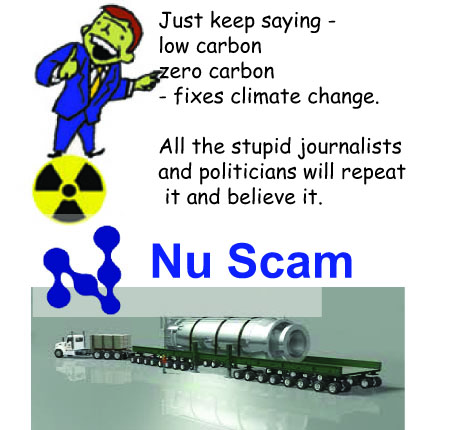
Lehi City Council backs out of NuScam ‘small’ nuclear reactor project
 Daily Herald 26 Aug 20,
The Lehi City Council voted unanimously Tuesday to withdraw the city from a multiagency nuclear power project that would provide nuclear power to cities across Utah, citing concerns over increasing costs.
The Carbon Free Power Project is an initiative by Oregon-based NuScale Power, the Utah Associated Municipal Power Systems and the United States Department of Energy to build a small modular reactor power plant at the Idaho National Laboratory………
Earlier this month, the Utah Taxpayer Association called on cities to withdraw from the project ahead of the Sept. 14 deadline after a closed-door virtual town hall meeting on July 21 where officials warned of project delays, increased costs to cities and towns involved, and “dependence on unpredictable federal subsidies.”
“The UAMPS project will lock in 27 municipalities in Utah and several in surrounding states for a share of billions of dollars in costs and unclear risk in the pursuit of a cluster of small modular reactors (SMRs) touted by Oregon-based NuScale Power, which repeatedly has delayed timelines and increased costs associated with its SMRs,” Utah Taxpayer Association Vice President Rusty Cannon said in an Aug. 4 news release. “The risky project with massive cost escalations is being conducted largely out of the public eye.”
Earlier this month, the Utah Taxpayer Association called on cities to withdraw from the project ahead of the Sept. 14 deadline after a closed-door virtual town hall meeting on July 21 where officials warned of project delays, increased costs to cities and towns involved, and “dependence on unpredictable federal subsidies.”
“The UAMPS project will lock in 27 municipalities in Utah and several in surrounding states for a share of billions of dollars in costs and unclear risk in the pursuit of a cluster of small modular reactors (SMRs) touted by Oregon-based NuScale Power, which repeatedly has delayed timelines and increased costs associated with its SMRs,” Utah Taxpayer Association Vice President Rusty Cannon said in an Aug. 4 news release. “The risky project with massive cost escalations is being conducted largely out of the public eye.”
In November 2017, the total cost of the project was estimated at $3.6 billion. By November 2019, that number had increased to $4.2 billion. By July, the estimated cost had gone up to $6.1 billion.
That would cost Lehi $466 million at the city’s current subscription levels, Eves said. UAMPS would be responsible for paying $4.8 billion, while the DOE would pay $1.3 billion and NuScale Power would pay $5 million. ………… https://www.heraldextra.com/news/local/govt-and-politics/lehi-city-council-votes-to-back-out-of-nuclear-power-project-contract/article_0af6e67c-24e5-5427-9029-e52b9f9d63ae.html
Ohio Attorney General could seek injunction to stop nuclear plant surcharge
Ohio AG Yost considering lawsuit to halt nuclear plant surcharge, LIZ SKALKA. The Blade. lskalka@theblade.com–26 Aug 20, COLUMBUS — Ohio Attorney General Dave Yost on Wednesday said he’s prepared to seek an injunction that would stop the imposition of a ratepayer surcharge flowing to two northern Ohio nuclear power plants at the center of the $61-million statehouse corruption scandal.Mr. Yost, a Republican, indicated he’s considering moving ahead with a lawsuit as the Ohio Senate prepares to return to Columbus next week to discuss repealing or replacing the energy law, House Bill 6, at the heart of the scandal.
Pressuring lawmakers to act quickly on what will be a complex process, Mr. Yost said he could file a lawsuit as soon as September if the legislature doesn’t move swiftly to repeal the law. He declined to set a deadline or elaborate on what might trigger him to file, except to say he supports a repeal……..
 Lawmakers have debated how to handle the controversial law since former House Speaker Larry Householder (R., Glenford) and four others were charged in July with conspiring to funnel $61 million from FirstEnergy and related interests to help elect Mr. Householder’s allies who would then elevate him to speaker. The political power he gained was used to pass the energy law.
Its key feature is a new surcharge to FirstEnergy Solutions’ customers monthly bills beginning in 2021 to generate $150 million a year to support the struggling nuclear plants and $20 million a year for solar projects.
House Republicans and Democrats have introduced separate repeal bills that would block the new subsidies while restoring mandates that utilities obtain more of their power from renewable sources.
A bipartisan measure doing the same thing has been introduced in the Senate.
Mr. Yost said a lawsuit would stop a billion-dollar revenue stream from flowing to the nuclear plants while lawmakers deal with the fallout from the corruption scandal. ……
The Coalition to Restore Public Trust, a pro-repeal group, applauded Mr. Yost.
“The potential injunction sought by AG Yost should serve as further notice to Ohio’s legislature that they must move expeditiously to remove this tainted legislation from Ohio law,” executive director Michael Hartley said in a statement. https://www.toledoblade.com/business/energy/2020/08/26/ohio-ag-yost-considering-lawsuit-to-halt-nuclear-plant-charge/stories/20200826129
Local opposition to Holtec’s temporary storage for nuclear waste in New Mexico
 Public comments are due by Sept. 22, and can be made at the online meetings; by email to Holtec-CISFEIS@nrc.gov; at the federal rule-making website (www.regulations.gov, Docket ID NRC-2018-0052); or by mail (Office of Administration, Mail Stop: TWFN-7-A60M, ATTN: Program Management, Announcements and Editing Staff, U.S. NRC, Washington, DC 20555-0001).
Licensing of temporary storage for nuclear waste in New Mexico inching forward
Nuclear regulator poised to OK move of spent fuel from reactors like San Onofre to temporary storage in New Mexico, but locals are opposed, By TERI SFORZA | tsforza@scng.com | Orange County Registerl August 26, 2020
The quickest way to get nuclear waste off Southern California’s quake-prone coast? Temporary storage sites in sparsely populated corners of the nation, experts say.
After years of processing, the Nuclear Regulatory Commission’s preliminary recommendation is that Holtec International be granted a license to build and operate such an interim storage site in New Mexico — which would first accept “stranded waste” from shuttered plants like the San Onofre Nuclear Generating Station.
“Hopeful,” said David Victor, an international law professor at UC San Diego and chair of San Onofre’s volunteer Community Engagement Panel. “But the regulatory process and the political process for the New Mexico site are moving in opposite directions.”
The NRC is hosting online meetings to present the project’s draft environmental impact report and gather public comment. The next virtual meetings are slated for 3 p.m. Wednesday, Aug. 26, and 8 a.m. Tuesday, Sept. 2. Public comments must be submitted to the NRC by Sept. 22.
Holtec hopes to build the first of a 20-phase project that eventually would cover 330 acres. It would be located in southeast New Mexico, about halfway between the cities of Carlsbad and Hobbs, and would look quite familiar to Southern Californians: Waste, potentially from all over the nation, would be stored in a Holtec HI-STORM UMAX in-ground system like the one at San Onofre.
But anyone familiar with the saga of Yucca Mountain — as well as the controversy surrounding waste storage here at San Onofre — won’t be surprised to find that the underlying issues are universal: Many locals adamantly oppose storing nuclear waste in their backyards.
Though the license period for Holtec’s New Mexico proposal would be 40 years, people fear nuclear waste would remain there forever
“Establishing an interim storage facility in this region would be economic malpractice,” wrote New Mexico’s governor, Michelle Lujan Grisham, in a letter asking President Donald Trump to oppose Holtec’s project. “Accidents are possible and unacceptably detrimental to the safety of New Mexicans, our economy and our state.”
The governor argued that the site is geologically unsuitable, would place a financial burden on the state and local communities and poses a danger as spent nuclear fuel is shipped into New Mexico from around the nation.
Many New Mexicans, however, say that’s not enough. Speaking “under protest” at virtual meetings they believe may be unlawful, critics said the NRC must present its findings in state and in person. Since in-person gatherings can’t happen during the pandemic, deadlines should be postponed until after the pandemic is over, they argued.
Speakers also attacked Holtec’s crediblilty. The company is currently embroiled in conflict in New Jersey, where it sued the New Jersey Economic Development Authority in March for holding up a $26 million payment that was part of a tax incentive program to build a facility in Camden.
The authority asserts that Holtec failed to mention that it had run into hot water with the Tennessee Valley Authority on its tax credit application in 2014.
The Southern California News Group reported that the U.S. Attorney’s Office looked into bribery allegations and asserted that a subcontractor manufacturing Holtec’s casks — U.S. Tool & Die — wrote checks totaling $54,212 to the account of a TVA manager. That money, the U.S. Attorney’s Office said, originated with Holtec.
The TVA manager pleaded guilty to falsifying financial statements by not disclosing those payments. Holtec said it wasn’t privy to any of this, and was not charged. But in 2010, the company paid a $2 million “administrative fee” to the TVA and became the first contractor in TVA history to be debarred. Its contract was suspended for 60 days, and it submitted to a yearlong monitoring program of its operations, according to the TVA’s inspector general.
Holtec continued supplying waste storage casks to the TVA, as well as to other nuclear plants in America and overseas.
At San Onofre, Holtec has had other bumps, including a surprise redesign of the canisters that hold nuclear waste and a snippy war of words with members of the San Onofre Community Engagement Panel. Errors loading spent fuel into the UMAX stopped operations for nearly a year, but were laid at the feet of operator Southern California Edison.……..
Public comments are due by Sept. 22, and can be made at the online meetings; by email to Holtec-CISFEIS@nrc.gov; at the federal rule-making website (www.regulations.gov, Docket ID NRC-2018-0052); or by mail (Office of Administration, Mail Stop: TWFN-7-A60M, ATTN: Program Management, Announcements and Editing Staff, U.S. NRC, Washington, DC 20555-0001). https://www.ocregister.com/2020/08/25/licensing-of-temporary-storage-for-nuclear-waste-in-new-mexico-inching-forward/
Two U.S.cities cut their losses, pullout of dodgy NuScam “small” nuclear reactor project
|
Lehi, Logan Back Out Of First-Of-Its-Kind Nuclear Power Plant Project Citing Financial Risk InKuer, By KATE GROETZINGER • 27 Aug 20, Two Utah cities have pulled out of a nuclear power plant investment — saying the financial risks are just too high. But 28 other towns and service districts in the state are still involved in the project, which is organized by a utility cooperative called Utah Associated Municipal Power Systems, or UAMPS. The Carbon Free Power Project involves a first-of-its-kind technology called “small modular nuclear reactors”, which would produce around 720 megawatts of nuclear energy. UAMPS and the U.S. Department of Energy have invested $3 million in the project since it began in 2017. But the reactors are still in development, and it’s unclear how much the project — and the power — will ultimately cost. That’s one reason the city of Logan cited in its decision to leave the project ahead of a Sept. 30 deadline to invest in its next phase, which is expected to cost $130 million. Logan was planning to use seven megawatts of power from the plant and has put around $250,000 into the project based on that amount so far. The city would have had to put in another $654,000 over the next three years to remain invested in the project. The cost could continue to grow, according to Mark Montgomery, director of light and power for Logan. He told the city council that Logan could end up having to pay millions into the project during the second phase of its licensing period, from 2023 to 2025……. Montgomery also cited concerns that it’s still up in the air whether the Department of Energy will invest in the project. The department pledged to fully fund the first reactor in 2018, but it went back on that deal. Now, it plans to invest $1.4 billion in the project — about a quarter of its total $6 billion price tag. That agreement is not yet final and the appropriation would need to be approved by Congress. The city of Lehi also voted to leave the project during a city council meeting this week. So far, Lehi has invested $455,000 in the project for a 21 megawatt subscription. Power Director Joel Eves said the project has struggled to find new investors, while its budget almost doubled to $6 billion from $3.4 billion since 2017. “A big piece of this is project subscription, and that does make us nervous,” Eves said. “It seems like we’re going at this alone as UAMPS members.” ……. https://www.kuer.org/post/lehi-logan-back-out-first-its-kind-nuclear-power-plant-project-citing-financial-risk#stream/0 |
|
America needs to abandon the idea of Yucca Mountain for nuclear waste dump: both Trump and Biden have
|
US policy regarding spent fuel disposal has been hung up for decades on whether to build a repository at Yucca Mountain. The site has been controversial since 1987, when Congress designated it as the future home for high-level radioactive waste – provided, of course, that it meets all technical requirements and is licensed by the Nuclear Regulatory Commission. Thirty-plus years and more than $15 billion later, all technical work to assess the site’s suitability has stopped and the licensing review is dead in the water. The US Congress has refused to appropriate funds to the project for years. And because the government has not met its commitment to begin accepting waste for disposal in 1998, it is forced to pay utilities more than $600 million every year to store their spent fuel on site. Moreover, the most realistic approach for managing the tons of spent fuel—an interim storage facility—is held hostage to progress on Yucca Mountain. Current law requires that the NRC issue a license for Yucca Mountain before a consolidated interim storage could begin to accept spent fuel. The sooner everyone agrees to pull the plug on Yucca Mountain, the sooner the United States can move forward on consolidated storage for the next 40 to 50 years, since this is likely the amount of time it will take to bring a long-term repository into operation. This will give the government time to find a new site using a consent-based process………..https://thebulletin.org/2020/08/if-trump-and-biden-agree-there-shouldnt-be-a-nuclear-waste-site-at-yucca-mountain-cant-we-all/#
|
|
|

Radiation hazard at Dead Horse Bay, Brooklyn
|
Scavengers Unearth Buried History — and Maybe Radiation — at Dead Horse Bay“It’s the closest you can come to time travel.” Cured, New York, By Caroline Spivack Aug 25, 2020, “It’s pretty devastating,” said Vanessa Dudley of the radiation recently discovered at Dead Horse Bay, a cove in southeastern Brooklyn that was once, many years ago, home to a landfill. For decades, the bay and its surrounding area have been burping up intriguing early-20th-century detritus onto the beach. Dudley, an administrator at Weill Cornell Medicine, is one of many treasure hunters and artists who regularly visited the beach to pick through mud-flecked glass bottles, ceramic shards, and rusted bits of metal. “You can see the lives of people through these objects. It’s like their memory lives on through them.”
But earlier this month, the three footpaths that snake from Flatbush Avenue through thick brush to the beach were marked with canary-yellow signs warning: “Danger Area Closed. Potential Hazardous Material.” Authorities had closed the southern half of the bay (near Floyd Bennett Field) following the discovery of radioactive material on the beach and near one of the paths. The radiation was first noticed during an environmental survey in 2019, when the National Park Service (which manages the bay as part of the Gateway National Recreation Area) discovered 31 locations along the shore and nearby trails with excessive levels of gamma radiation. At two of those sites, the culprits turned out to be old deck markers — small, glowing disks that were once used on Navy ships — that were leaking radium-226. These were recently removed, and the possibility of a more extensive cleanup is now being considered…….. In 1926, after many of the factories had moved elsewhere, Barren Island was connected via landfill to the mainland. In the 1950s, Robert Moses further expanded the area’s land mass by building landfills. Moses flooded the area with the city’s garbage — much of which was likely the rubble of other neighborhoods Moses himself destroyed as he reshaped New York — and then covered it with a layer of topsoil. Erosion has since released much of that debris, which collects at the bay’s eastern shore, providing New Yorkers with an eclectic compendium of 20th-century trash. But in light of new knowledge about the radiation there, exploring that garbage — and discovering the clues it holds about the city’s history — comes at a risk. ……… https://ny.curbed.com/2020/8/25/21398976/dead-horse-bay-beach-brooklyn-radiation-scavengers |
|
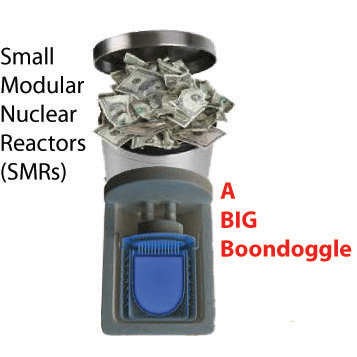
City in Northern Utah pulls out of NuScam small nuclear reactors project
Northern Utah city opts out of planned nuclear power project over money concerns Deseret News, Amy Joi O’Donoghue @Amyjoi 16 Aug 24, 2020,
SALT LAKE CITY — Cost concerns over Logan’s participation in a next-generation nuclear power plant planned at Idaho National Laboratory led the city to withdraw from the project, and Lehi is considering a similar move in its council meeting Tuesday.
“My concerns were many and varied,” Logan Finance Director Richard Anderson said of last week’s decision
……. changes in funding by the U.S. Department of Energy for the Carbon Free Power Project caused Anderson concern, as it did for Mark Montgomery, the city’s light and power director, and prompted both of them to recommend Logan withdraw its participation.
Ultimately, the energy department committed to spend $1.4 billion on the project with an eye toward reducing carbon emissions, combating climate change and to position the country as a world leader in nuclear technology.
But critics say the proposed 720-megawatt plant is too risky and ratepayers — hence taxpayers — should not be footing the cost for technology they say is yet to be proven.
LaVarr Webb, spokesman for the municipal power association, said the investment schedule was specifically designed with these exit opportunities if cities or special districts become nervous.
The project, he added, will not proceed if costs prove too high.
The project has also come under criticism for what some say is a lack of transparency.
Earlier this month, the Utah Taxpayers Association urged cities to withdraw ahead of the deadline and complained about meetings in which groups were turned away unless they were project participants.
Rusty Cannon, vice president of Utah Taxpayers Association, said because the municipal power association is exempt from Utah’s open meeting laws, it can close its doors to others.
“We asked to observe a recent meeting and were denied access. That is the same response many others have also received,” Cannon said.
While association leaders have spent hours on video calls with the association and others, Cannon said that format does not provide the same answers.
Webb said meetings in which non-project participants were turned away, with perhaps the exception of one, are in line with why other governmental entities can close meetings under Utah law, such as contractual issues, litigation or personnel issues.
On Tuesday in Lehi, the City Council will consider a resolution outlining the city’s withdrawal from the project……. https://www.deseret.com/utah/2020/8/24/21399537/northern-utah-city-opts-out-of-planned-nuclear-power-project-over-money-concerns
Compromise, compromise: U.S. Democrats almost merging into Republicans
Media Praise Biden’s ‘Centrist Coalition’ for Steering Clear of ‘Progressive Demands’, Fair 24 Aug 20, “Abortions for some, miniature American flags for others.”
That’s the line that an alien imposter who comes to America to run for president on The Simpsons (10/27/96) came up with after realizing any firm position on reproductive rights would draw some opposition, but a lukewarm compromise coupled with a sentimental devotion to the flag would get people cheering. Corporate media seem to be having a reaction similar to the cartoon alien as they opine on the nomination of former Vice President Joe Biden as the Democratic presidential candidate, with Sen. Kamala Harris as his running mate.
The Los Angeles Times (8/12/20) shared that optimism, with political reporter Janet Hook reporting that the Biden/Harris ticket has “a center-left brand that steers clear of the most far-reaching progressive demands,” which “has complicated the Trump White House’s efforts to portray the ticket as ‘dangerous radicals’”:
Harris, like Biden…has rebuffed some demands of the party’s rising progressive wing. That’s a profile that could help Biden appeal to moderate swing voters he needs to win in states like Michigan and Wisconsin.
Extreme weather – derecho storm brings about early closure of Duane Arnold nuclear plant
 Duane Arnold nuclear plant decommissioning early after damage from the derecho
by Rebecca Kopelman, Tuesday, August 25th 2020 https://cbs2iowa.com/news/local/duane-arnold-nuclear-plant-
Iowa (Iowa’s News Now) — The Duane Arnold Energy Center is beginning their decommissioning process after the August 10th derecho.
The energy center is the only nuclear power plant in Iowa. It was set to be decommissioned at the end of October, but will be closing due to the damage.
This is a statement from NextEra Energy Resources:
“After conducting a complete assessment of the damage caused by recent severe weather, NextEra Energy Resources has made the decision not to restart the reactor at Duane Arnold Energy Center. The strong storms that hit the area on Aug. 10 caused extensive damage to Duane Arnold’s cooling towers, and our evaluation found that replacing those towers before the site’s previously-scheduled decommissioning on Oct. 30, 2020, was not feasible.
As we have done since we announced the decommissioning of Duane Arnold in 2018, we will continue to work with all our employees to minimize the impact of this situation on them and their families.”
The storms damaged the cooling towers which are used to produce electricity to cool steam after it exits the turbine.The cooling towers are not required to cool critical nuclear components. There was also damage to the outside of the building. None of the damage impacted safety systems or critical components.
Jacksonville Electric Authority (JEA) tried to become part-owner of Plant Vogtle in 2019
Lawsuit settlement document shows JEA tried to become part-owner of Plant Vogtle in 2019 https://www.jacksonville.com/story/news/local/2020/08/24/jea-prepared-1-9-billion-offer-plant-vogtle-nuclear-plant-2019/3402832001/
David Bauerlein, Florida Times-Union Before JEA lost a lawsuit in June that tried to void its contract for purchasing electricity from Plant Vogtle, the utility wanted to settle the suit in 2019 by buying an ownership stake in the Georgia nuclear plant for $1.9 billion, according to a draft document that outlined terms of the utility’s strategy for settlement talks.
The controversial power purchase agreement, which dates back to 2008, weighs heavily on JEA because the contract binds JEA to buy electricity for 20 years at a high cost from two Vogtle nuclear reactors slated to go online in late 2021 and late 2022.
The agreement also was a thorny issue for JEA when it sought offers last year from private companies for a potential sale of the city-owned utility. Converting the power purchase agreement into an ownership interest in Plant Vogtle would have made JEA a more marketable asset.
The settlement talks in April 2019 occurred during the tenure of Aaron Zahn, who was CEO when the JEA board voted in July 2019 to put the utility up for sale. Since then, Zahn along with the rest of the senior leadership team and the board have been replaced.
JEA spokeswoman Gerri Boyce said the turnover means current JEA employees cannot say what the rationale was for any settlement offers in April 2019.
“Anything we could say would be speculation since no one currently at JEA was part of that meeting or proposed settlement,” Boyce said.
When JEA first evaluated privatization in early 2018 — prior to Zahn becoming CEO — an attorney for Holland and Knight sent an email to JEA outlining possible strategies for how JEA could get out of the purchase power agreement.
“Obviously, Plant Vogtle and and the purchase agreement (PPA) greatly affect valuation,” Holland & Knight attorney Allen Maines wrote in the Feb. 4, 2018, email.
Maines wrote that “one underlying assumption to privatization is that prospective purchasers will not be interested unless JEA sheds itself of the PPA.”
Maines wrote one way to get rid of the agreement would be to pay the Municipal Electric Authority of Georgia, also known as MEAG, to “take back the PPA.”
When JEA and MEAG entered into settlement talks in April 2019, Holland & Knight drafted proposed terms of a settlement in which JEA would pay $1.9 billion to MEAG in order to get JEA released from the power purchase agreement.
In turn, JEA would become part-owner of the Plant Vogtle plant by having a stake equal to 150 megawatts of the two reactors being built. That would be less than the 206 megawatts of electricity in the power purchase agreement.
WJXT-TV reported in April 2019 that JEA and MEAG met in Atlanta for settlement talks. WJXT reported at that time JEA was negotiating to get out of the nuclear power contract.
The station disclosed the talks after a JEA administrative aide mistakenly sent an email to WJXT reporter Jim Piggott that had the draft settlement terms attached to it.
The ownership stake would have given JEA more direct influence over decisions on Plant Vogtle, whose construction is years behind schedule with a cost that has doubled since JEA entered the power purchase agreement in 2008.
The proposed terms also would have enhanced the marketability of the utility in a sale to a private company.
If a private company purchased JEA, the rates charged to customers would have been regulated by the Florida Public Service Commission.
In the commission’s rate-setting structure, an investor-owned utility does not earn a profit from a purchase-power agreement, said Florida Public Counsel J.R. Kelly of the Office of Public Counsel, which represents consumers in rate-setting cases before the Public Service Commission.
A private utility’s cost from a purchase-power agreement is regulated as a break-even expense, meaning it doesn’t lose money or earn a profit from such agreements, Kelly said. The utility just passes the cost through to customers in the overall rate structure.
But if a private utility has ownership of a plant, it can get a profit from owning an asset and have that profit built into the rate structure approved by the state
Kelly said.
“They have a right to a return of and a return on that asset,” Kelly said. “That’s how they make a profit. That’s how utilities earn money.”
The draft settlement terms from April 2019 for Plant Vogtle proposed that after JEA paid $1.9 billion to end the power purchase agreement and become a part-owner of the nuclear plant, JEA no longer would pay any additional money to cover future cost over-runs for the plant’s construction.
The settlement talks failed to reach any agreement with MEAG. When JEA entered into negotiations last year for the potential sale of the utility, JEA proposed to separate the Plant Vogtle purchase power agreement from the sale by having JEA remains as a shell entity that would remain a party to the agreement.
The cost of the power purchase agreement then would have been passed along to customers on their bills. That arrangement would have been a hard sell to City Council members who would have had to agree to the terms of any sale.
U.S. District Judge Mark Cohen ruled June 17 in MEAG’s favor by finding the power purchase agreement is valid and enforceable. JEA and MEAG then agreed to end the lawsuit.
Nuclear power is not compatible with the fundamental tenets of a Green New Deal.


Nuclear power in the Green New Deal? https://beyondnuclearinternational.org/2020/08/23/nuclear-in-the-green-new-deal/ August 23, 2020 by beyondnuclearinternational By M.V. Ramana and Schyler Edmunston
Over the last few years, there has been a growing interest in a Green New Deal and there are many versions proposed in different countries. At the same time, there has also been criticism of these proposals on many counts, including the fact that they typically don’t include nuclear energy.
This criticism misses a basic point: a Green New Deal is, by its very definition, much more than an emissions reduction plan. As we argue below, the other attributes that characterize Green New Deals, rule out nuclear energy as an option.
Like the original New Deal of U.S. president Franklin D. Roosevelt in the 1930s, all Green New Deal proposals emphasize the creation of new jobs. Canada’s New Democratic Party version, for example, calls for “a New Deal for Climate Action and Good Jobs.”
Nuclear power is not a good job creator. One widely cited study found that for each gigawatt-hour of electricity generated, solar energy leads to six times as many jobs as nuclear power. This is compounded by the fact that solar power plants are far cheaper to build and maintain than nuclear reactors.
Green New Deal proposals also demand rapid emissions reduction; one spokesperson for the Pact for a Green New Deal talked of “a 50 per cent reduction in greenhouse gas emissions by 2030.” It takes, on average, a decade to build a nuclear plant and another 10 years before that to do the necessary planning, license procurement, and, most importantly, obtain the billions of dollars needed to finance construction. Therefore, it is impossible to scale up nuclear power fast enough to reduce emissions at the rate required to meet tight climate targets.
Last but not least, Green New Deal proposals emphasize ethics and equity. The Pact for a Green New Deal, for example, wants to ensure that the necessary energy transition “is socially just and doesn’t hurt those at the bottom of the economic ladder; and that it respects Indigenous rights.” It is precisely those groups that have been hurt most by the nuclear fuel chain.
Around the world, the uranium that fuels nuclear plants has predominantly been mined from traditional lands of Indigenous peoples, whether we are talking about Canada, India, the United States, or Australia. There is ample evidence of devastating health consequences from the production of uranium, for example, on the Navajo and the Lakota nations.
The nuclear industry’s plans for the disposal of radioactive waste streams produced by nuclear reactors also disproportionately target areas with high proportions of Indigenous populations, and has rightly been termed nuclear colonialism.
Nuclear waste, by its nature, raises difficult challenges for any effort to base energy policy on justice. The hazardous components of these wastes stay radioactive for hundreds of thousands of years, and no method can ensure safety for that long a period of time. There is inherent injustice in forcing future generations to deal with these radioactive products spreading into underground sources of water, when they do not benefit from nuclear electricity in any way.
One set of technologies that is widely seen as being necessary to confront climate change are renewables, especially solar and wind power. Because they are dependent on the sun shining and the wind blowing, some suggest that nuclear energy has to be part of the mix in order to ensure that electricity is available when needed.
This is not true and research has shown that it is possible for even Ontario, the Canadian province most dependent on nuclear energy, to phase out nuclear power and reduce emissions, while meeting electricity needs reliably.
Further, existing nuclear facilities, do not have the necessary flexibility to integrate well with the rapidly variable outputs from wind and solar power. Therefore, they inhibit ambitious climate agendas — a realization that informed the decision in California to close the Diablo Canyon nuclear plant.
In short, nuclear power is not compatible with the fundamental tenets of a Green New Deal.
M.V. Ramana is professor, Simons Chair in Disarmament, Global and Human Security, and director of the Liu Institute for Global Issues at the School of Public Policy and Global Affairs, the University of British Columbia.
Schyler Edmundson is a recent graduate from the Master of Public Policy and Global Affairs program at the University of British Columbia.
This article first appeared in The Star (Toronto) as part of a pro-con debate on nuclear power’s inclusion in a Green New Deal. The “against” argument here is republished with kind permission of The Star op-ed page editor.
Nuclear lobby rejoices as U.S. Democratic Party caves in to its pressure

|
After 48 Years, Democrats Endorse Nuclear Energy In Platform, Forbes, Robert Bryce, 23 Aug 20,
Energy ” ………. In its recently released party platform, the Democrats say they favor a “technology-neutral” approach that includes “all zero-carbon technologies, including hydroelectric power, geothermal, existing and advanced nuclear, and carbon capture and storage.”That statement marks the first time since 1972 that the Democratic Party has said anything positive in its platform about nuclear energy. ….. The Democrats’ new position means that for the first time since Richard Nixon was in the White House, both the Republican and Democratic parties are officially on record in support of nuclear energy……
partisan divide is apparent in the polling data. A 2019 Gallup poll found that 65 percent of Republicans strongly favored nuclear energy but only 42 percent of Democrats did so. ……….
in 2005, about 300 environmental groups – including Greenpeace, Sierra Club, and Public Citizen – signed a manifesto which said “we flatly reject the argument that increased investment in nuclear capacity is an acceptable or necessary solution….[N]uclear power should not be a part of any solution to address global warming.” (The Sierra Club, the biggest environmental group in America, says it remains “unequivocally opposed to nuclear energy.”)……….
While vying for their party’s nomination, two prominent Democratic presidential hopefuls — Cory Booker and Andrew Yang – both endorsed nuclear energy. In addition, Joe Biden’s energy plan included a shout-out to nuclear. ……… https://www.forbes.com/sites/robertbryce/2020/08/23/after-48-years-democrats-endorse-nuclear-energy-in-platform/#1856a2e35829
|
|
|
Ohio school all too close to Portsmouth Gaseous Diffusion Plant – nuclear radiation dangers

Ohio school still shuttered among radiation fears, Akron Beacon Journal, By Beth Burger
The Columbus Dispatch, Aug 22, 2020 PIKETON — Monday would have been Layton Cuckler’s first day at Zahn’s Corner Middle School.
Instead, Layton, 11, and about 300 of his peers will be divided between Jasper Elementary School and Piketon High School in the midst of the COVID-19 pandemic. As a fourth grader, he’ll have to stay at the elementary school another year.
He might not be happy about missing out on the rite of passage that his older brother, Gavin, 13, and others have experienced, but his parents, Mike and Teresa Cuckler, are relieved.
The change means Layton won’t risk being exposed to radioactive isotopes downwind from the former U.S. Department of Energy Portsmouth Gaseous Diffusion Plant. The isotopes have been found in the air, soil, water, vegetation and wildlife in the area, according to federal environmental reports……….
A nuclear waste-disposal cell is being built to bury radioactive debris as the 3,000-acre complex is dismantled.
Concerned neighbors Residents have asked for those efforts to be paused because they’re concerned about exposure to radioactive materials. Contamination has been detected there since the work began in 2017, according to the Scioto Valley Local School District.
The DOE waited two years before informing the school district that the air monitor across from the middle school had picked up radioactive elements: americium in 2018 and neptunium-237 in 2019.
The district closed the school last year after traces of uranium were detected in ceiling tiles and air ducts. The district has asked the state to build a new middle school.
History of school
Zahn’s Corner Middle School was built in 1955. One year earlier, before the school was opened, the enrichment plant came online for defense purposes and operated until 2001. The facility then transitioned to enriching uranium for nuclear power plants.
“Why is there a school on the downwind side of a site like this? That doesn’t make a lot of sense to me,” said David C. Ingram, chairman of the physics and astronomy department at Ohio University.
It’s unclear why the DOE chose that site, less than 2 miles from the school, and did not warn the district……..
When Gavin Cuckler was at the middle school, he would sometimes come home with dirt on his clothes from playing outside, Teresa Cuckler said. ……..
The Cucklers and others worry about cancer and other health risks tied to the plant.
“You think about the size of the air monitor [across from the school]. It wasn’t just one or two more elements floating through the air landing in that air monitor. How much was actually released? What’s the data on site show of where they were sampling at different release points?” said Jennifer Chandler, a former DOE employee who worked as an environmental scientist and who is now a Piketon village council member……..
Residents say the emissions are worrisome.
“They know it’s going to Zahn’s Corner because they put an air monitor there. It makes it to our school property. Our kids are out there,” Chandler said. “The danger comes in the toxicity of the inhalation or ingestion of that molecule, which is there. It’s there. So they want to pivot and talk only about radioactivity, which we are concerned about, obviously, but we’re more concerned with the toxicity of having these things in and on our school property.”
Neptunium, plutonium and americium are considered “bone seekers,″ according to the National Library of Medicine. That means that, if ingested, they will lodge in the body, possibly in bones, lungs, muscles and the liver, according to the Centers for Disease Control and Prevention.
“It’s going to irradiate from you for the rest of your life. It’s the toxicity of that. And what is the safe level of neptunium? … Zero. There is no such thing. There is no safe level of these elements,” Chandler said. …….. https://www.beaconjournal.com/news/20200822/ohio-school-still-shuttered-among-radiation-fears
Small Modular Nuclear Reactors costs jump by $billions. Logan city abandons NuScam project

|
Logan withdraws from nuclear power project seen as cutting-edge but risky, KSL.com
By Graham Dudley, KSL.com – Aug. 20, 2020 LOGAN — A hesitant Logan City Council agreed to follow staff recommendations Tuesday and voted to leave a nuclear power project that has been characterized by ballooning costs and funding uncertainties.The Carbon Free Power Project aims to begin producing nuclear power from state-of-the-art small modular reactors But the projected cost of the power plant jumped from about $3.6 billion in 2017 to more than $6.1 billion in 2020. Logan has already committed more than $400,000 to the project and would have paid over $650,000 more in the next three years to see it through its next phase, at which point the city would again have had the option to modify or withdraw from the agreement. The project involves the Utah Associated Municipal Power Systems, or UAMPS, a political subdivision of the state of Utah which supplies energy to communities in six Western states and of which Logan is a member. The reactors are being built by Oregon-based NuScale, and the Texas-based Fluor Corporation is involved in project construction Logan council members reviewed the city’s involvement in the Carbon Free Power Project during their Aug. 4 and Aug. 18 meetings, ultimately voting 4-1 to leave the agreement…….. https://www.ksl.com/article/50008552/logan-withdraws-from-nuclear-power-project-seen-as-cutting-edge-but-risky |
|
-
Archives
- October 2026 (129)
- September 2026 (339)
- August 2026 (330)
- July 2026 (355)
- June 2026 (287)
- May 2026 (306)
- April 2026 (356)
- March 2026 (251)
- February 2026 (267)
- January 2026 (308)
- December 2025 (358)
- November 2025 (359)
-
Categories
- 1
- 1 NUCLEAR ISSUES
- business and costs
- climate change
- culture and arts
- ENERGY
- environment
- health
- history
- indigenous issues
- Legal
- marketing of nuclear
- media
- opposition to nuclear
- PERSONAL STORIES
- politics
- politics international
- Religion and ethics
- safety
- secrets,lies and civil liberties
- spinbuster
- technology
- Uranium
- wastes
- weapons and war
- Women
- 2 WORLD
- ACTION
- AFRICA
- Atrocities
- AUSTRALIA
- Christina's notes
- Christina's themes
- culture and arts
- Events
- Fuk 2022
- Fuk 2023
- Fukushima 2017
- Fukushima 2018
- fukushima 2019
- Fukushima 2020
- Fukushima 2021
- general
- global warming
- Humour (God we need it)
- Nuclear
- RARE EARTHS
- Reference
- resources – print
- Resources -audiovicual
- Weekly Newsletter
- World
- World Nuclear
- YouTube
-
RSS
Entries RSS
Comments RSS

