Bill in USA Senate to help nuclear workers made ill by radiation exposure
 Bill would expand access to comp for federal nuclear site workers https://www.businessinsurance.com/article/20200731/NEWS08/912335900/Bill-would-expand-access-to-comp-for-federal-nuclear-site-workers#, Angela Childers, July 31, 2020
A bill introduced in the U.S. Senate Wednesday would help workers at federal radioactive sites obtain workers compensation for work-related cancers and other health issues.
S.B. 4363, introduced Wednesday by Sen. Patty Murray (D-Washington), would establish an occupational disease presumption for employees at the U.S. Department of Energy’s Radioactive Waste Management Complex.
The bill is aimed at helping cleanup workers at Washington State’s Hanford Nuclear Site and other nuclear sites more easily claim workers compensation benefits when they suffer from medical conditions as a result of exposure to toxic substances, Sen. Murray’s office said Thursday in a news release.
While the state of Washington created a presumption law for Hanford workers in 2018, the federal legislation would cover workers at other Energy Department nuclear sites. The Hanford site is a 560-square-mile federally operated site known for having manufactured plutonium used in one of the atomic bombs dropped on Japan in 1945.
The U.S. Department of Justice filed a lawsuit in late 2018 over the state’s presumption law, claiming that the law discriminated against the federal government and its Energy Department contractors and aimed to directly regulate the federal government by imposing extra cleanup costs on the decommissioned site. However, a federal judge dismissed the lawsuit in June 2019.
The bill has been referred to the Senate Committee on Health, Education, Labor and Pensions.
Problems in USA’s rush to put a nuclear reactor on the moon
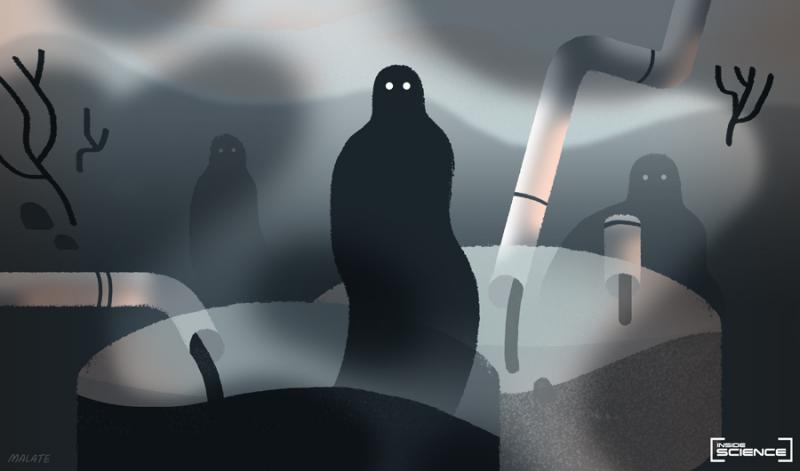 America Wants to Put a Nuclear Power Plant on the Moon
What happens to all that highly enriched uranium in space? Popular Mechanics, BY CAROLINE DELBERT, JUL 30, 2020
- The U.S. Department of Energy (DoE) is looking for technology partners to help power the moon.
- This could begin a project that later includes powering a Mars surface mission.
- The Union for Concerned Scientists doesn’t want highly enriched uranium in space.
Scientists at the U.S. Department of Energy’s (DoE) Idaho National Laboratory have a new design for a nuclear power plant they say could allow humans to more easily live on the moon. As part of a form plan, the scientists say they want to have the fission reactor, safe launch, and landing system ready by 2027
What are the challenges of generating nuclear energy on the moon?
Design Development Today reports that the Union of Concerned Scientists expressed, well, concerns:
“Edwin Lyman, director of Nuclear Power Safety at the Union of Concerned Scientists, a nonprofit, said his organization is concerned the parameters of the design and timeline make the most likely reactors those that use highly enriched uranium, which can be made into weapons. Nations have generally been attempting to reduce the amount of enriched uranium being produced for that reason.”
While the Idaho National Laboratory and the DoE broadly are pushing for “advanced” reactor technology in terms of issues like modularity and safety, the “parameters of the design and timeline” they refer to—in this case advocating for a small, reliable, space-friendly design in just 6 years—almost definitely rules out the modular reactors being developed and certified now.
To fully test and regulate these reactors—and design the special edition to send to the moon in this timeframe—is probably impossible. To rush any nuclear approval is a terrible idea, not just for safety, but also for a public that’s already shy about nuclear energy.
Technology like thorium fuel is still far from ready for the market….
USA Department of Energy enthuses about Highly Enriched Uranium in space. Not everyone agrees

As I’ve mentioned before on this site, the oh so confident macho nuclear enthusiasts don’t need to do precautions, even though USA is in the thick of the pandemic. Only the 2 token women have the brains to wear masks.
US Ramps Up Planning for Space Nuclear Technology AIP, 31 July 20, NASA and the Department of Energy are expanding their collaboration as part of a broader White House push to develop nuclear power systems for space applications. The initiative comes as NASA faces key decisions on what fuel sources and technology development paths to pursue.
Now, NASA, DOE, and the White House want nuclear power to play a much larger role in space exploration as plans take shape for a sustained human presence on the Moon and subsequent crewed journeys to Mars……….
The American Nuclear Society hosted a debate on the topic at its annual meeting in June. While the society has generally supported the use of space nuclear power and propulsion in the past, it has decided to develop a position statement by spring 2021 on whether to favor the use of LEU.
Among the participants was Rep. Bill Foster (D-IL), a former Fermilab physicist, who argued that proceeding with HEU ( Highly Enriched Uranium) would set a dangerous precedent. “If all of the spacefaring nations start using HEU reactors in space, then this would involve utilization of a significant amount of weapons grade material,” he remarked…….
Alan Kuperman, a policy scholar affiliated with the Nuclear Proliferation Prevention Project, pointed to U.S. efforts since the 1970s to minimize the use of HEU in civilian applications, arguing they are “based on the logic of no exceptions.”
“If we say, ‘well, we’re going to have exceptions,’ then other countries are going to say, ‘well, we want exceptions too,’ and then the whole thing falls apart,” he remarked……..https://www.aip.org/fyi/2020/us-ramps-planning-space-nuclear-technology
Donald Trump on nuclear proliferation and global heating – he’s incompetent about both
 Trump Says Nuclear Proliferation Is Scarier Than Climate Change. He’s Failing at Both. Mother Jones
“Enlightened leadership would be treating both as emergencies.”
WILL PEISCHEL 31 Jul 20, On Tuesday morning, President Donald Trump set off a furor when he told Axios reporter Jonathan Swan that during a recent call with Vladimir Putin, he hadn’t bothered to mention US intelligence suggesting that Russia had offered bounties to Taliban fighters for killing American service members. Trump said that instead, the two leaders had discussed nuclear nonproliferation efforts—and then he inexplicably pivoted to downplaying the threat of climate change.
“If we can do something with Russia in terms of nuclear proliferation, which is a very big problem, bigger problem than global warming, a much bigger problem than global warming in terms of the real world, that would be a great thing,” he said told Swan.
Bringing up global climate change—which already affects the lives of millions—was apparently an arbitrary tangent to the conversation. Even if it wasn’t, experts say attempting to rank the two existential threats against each other isn’t exactly a useful way to gauge either of them. …….
New START, a weapons treaty between Russia and the United States to limit nuclear stockpiles, is slated to expire in early 2021. The treaty contains a provision allowing it to be extended for five years, activated by signatures from both presidents. “If there was seriousness to his remarks, he could do that with the stroke of a pen,” Pomper says. Pomper also criticized Trump for abandoning the Iran nuclear deal and for his failed efforts to scale back North Korea’s weapons programs. On top of that, the Under Secretary of State for Arms Control and International Security Affairs is serving only in an acting role. “Basically, it’s hard to find a situation in the nonproliferation arms control world where it’s gotten better after this administration,” Pomper says. “I’m kind of at a loss for words.”
Efforts to confront global climate change—the smaller problem, according to Trump—are in a similar state. That’s perhaps less surprising, given Trump’s long record of dismissing global warming as a Chinese hoax. We’re already dealing with the consequences. “We’re seeing droughts and wildfires,” says Astrid Caldas, a senior climate scientist with Union of Concerned Scientists. “Here we are with the ninth tropical storm this year, about to be named, if it happens. This usually doesn’t happen until September.” And though climate change was a known existential threat long before Trump entered the picture, Caldas says the administration’s stewardship has done additional damage. “The denial of climate change and calling it a hoax, the whole administration rolling back of environmental regulations and the pulling out of the Paris Agreement,” she says, “all of these things signal that there is not a concern about people’s well being.” https://www.motherjones.com/environment/2020/07/trump-says-nuclear-proliferation-is-scarier-than-climate-change-hes-failing-at-both/
Iran’s Khamenei refuses talks with U.S., says Trump wants them only for election propaganda
Iran’s Khamenei Rejects Talks With U.S. Over Missile, Nuclear Programs, RFERL, 30 Jul 20
| Iran’s Supreme Leader Ayatollah Ali Khamenei has ruled out negotiations with Washington over Tehran’s ballistic missile and nuclear programs, calling the United States “Iran’s main enemy.”
“America’s brutal sanctions on Iran are aimed at collapsing our economy…..Their aim is to limit our influence in the region and to halt our missile and nuclear capabilities,” Khamenei said on July 31 in a live speech on state television…….. Khamenei said he would not agree to negtiations with the United State that were aimed only at boosting Trump’s reelection hopes. “This old man in charge, he apparently made some propaganda use out of his negotiations with North Korea. Now he wants to use (talks with Iran) for the (November 3 U.S. presidential) election,” he said. …… https://www.rferl.org/a/iran-s-khamenei-rejects-talks-with-u-s-over-missile-nuclear-programs/30758648.html |
Legal case settled over nuclear plant Vogtle
JEA Settles Litigation Over Nuclear Plant Vogtle, WJCT News 89.9, By BILL BORTZFIELD • JUL 30, 2020 JEA has ended its attempt to get out of a deal it made to buy electricity from a Georgia nuclear power plant that has seen billions of dollars in cost overruns.
Thursday afternoon Jacksonville’s public utility announced it has settled litigation and all related claims with the Municipal Electric Authority of Georgia (MEAG Power) in its dispute over the Alvin W. Vogtle Electric Generating Plant, which is commonly referred to as Plant Vogtle.
In settling the case, JEA acknowledged the contract is “valid and enforceable.”…….
Earlier this week JEA’s board unanimously agreed to have JEA’s legal team attempt to reach a settlement….. https://news.wjct.org/post/jea-settles-litigation-over-nuclear-plant-vogtle
That followed a U.S. District judge’s June ruling against JEA in the lawsuit, saying the contract Jacksonville’s utility set up for the nuclear power plant is still valid.
USA’s budget for nuclear weapons goes up and up
 NATIONAL NUCLEAR SECURITY ADMINISTRATION:
Information on the Fiscal Year 2021 Budget Request and Affordability of Nuclear Modernization Activities, Government Accountability Office
GAO-20-573R: Published: Jul 30, 2020. The Department of Energy’s National Nuclear Security Administration is in the middle of a long-term effort to modernize the U.S. nuclear weapons stockpile.
DOE’s 2021 budget estimate for nuclear modernization activities for FYs 2021-2025 is $81 billion—$15 billion more than its 2020 budget estimate for the same period.
Such an increase may require cuts in other national defense programs to keep the defense budget within spending limits.
What GAO Found
The Department of Energy’s (DOE) National Nuclear Security Administration (NNSA) is in the midst of a long-term effort to modernize the U.S. nuclear weapon stockpile and its supporting production infrastructure. NNSA’s modernization plans and budgets are communicated to Congress on an annual basis primarily through two key documents—the Stockpile Stewardship and Management Plan (SSMP) and DOE’s budget justification—together referred to as NNSA’s nuclear security budget materials. GAO reviewed four areas related to the affordability of NNSA’s modernization activities as described in these budget materials:
Funding for nuclear modernization activities. Congress funds NNSA’s nuclear modernization activities through the Weapons Activities appropriation account, which falls under the National Defense budget function along with other NNSA, DOE, and Department of Defense (DOD) appropriations related to the common defense and security of the United States. Discretionary defense spending for fiscal year 2021 may not exceed a certain statutory limit, or else a sequestration—a cancellation of budgetary resources—would be triggered. Therefore, a proposed increase for a given program under the National Defense budget function may need to be offset by reductions in other defense programs to keep the defense budget within statutory spending limits………https://www.gao.gov/products/gao-20-573r#summary
Mysterious case of mass drone incursions over America’s most powerful nuclear power plant
The Night A Drone Swarm Descended On Palo Verde Nuclear Power Plant, The Drive, BY TYLER ROGOWAY AND JOSEPH TREVITHICK JULY 29, 2020
The mysterious case of mass drone incursions over America’s most powerful nuclear power plant that only resulted in more questions and no changes.
While the news has been filled with claims that strange unidentified craft with unexplainable capabilities are appearing over highly sensitive U.S. installations and assets as of late, a much less glamorous, more numerous, and arguably far more pressing threat has continued to metastasize in alarming ways—that posed by lower-end and even off-the-shelf drones. Less than a year ago and just days after the stunning drone attacks on Saudi Arabia’s most critical energy production infrastructure deep in the heart of that highly defended country, a bizarre and largely undisclosed incident involving a swarm of drones occurred on successive September evenings in 2019. The location? America’s most powerful nuclear plant, the Palo Verde Nuclear Generation Station situated roughly two dozen miles west to Phoenix, near Tonopah, Arizona.

In a trove of documents and internal correspondences related to the event, officials from the Nuclear Regulatory Commission (NRC) described the incident as a “drone-a-palooza” and said that it highlighted concerns about the potential for a future “adversarial attack” involving small unmanned aircraft and the need for defenses against them. Even so, the helplessness and even cavalier attitude toward the drone incident as it was unfolding by those that are tasked with securing one of America’s largest and most sensitive nuclear facilities serves as an alarming and glaring example of how neglected and misunderstood this issue is.
What you are about to read is an unprecedented look inside a type of event that is less isolated in nature than many would care to believe.
A Rapidly Accelerating Threat
Following the nuclear scandal An Ohio resident has filed a class action lawsuit against FirstEnergy
 Ratepayer files class action suit against FirstEnergy amid nuclear plant bailout scandal https://www.reuters.com/article/usa-energy-lawsuit/ratepayer-files-class-action-suit-against-firstenergy-amid-nuclear-plant-bailout-scandal-idUSL2N2F000N Sebastien Malo, 29 Jul 20,
An Ohio resident has filed a class action lawsuit against FirstEnergy Corp and one of its former subsidiaries, claiming that the electric utilities should pay damages for conspiring with the state’s former House speaker, who was federally charged with conspiring to bail out two of the subsidiary’s nuclear power plants in exchange for $60 million in bribes.
Jacob Smith filed a Racketeer Influenced and Corrupt Organizations Act civil lawsuit against FirstEnergy Corp and First Energy Service Company on Monday in U.S. District Court for the Southern District of Ohio, claiming that tens of thousands of customers were like him wrongly charged on their electricity bills to subsidize the survival of the failing power plant under a law championed by the disgraced politician.
Union of Concerned Scientists, nuclear watchdogs and environmentalists urge against funding for nuclear tests
Groups Push to Remove Proposed Funding for Nuclear Testing https://www.manufacturing.net/home/news/21141496/groups-push-to-remove-proposed-funding-for-nuclear-testing Jul 28th, 2020 ALBUQUERQUE, N.M. (AP) A Senate defense bill includes funding to resume live testing for the first time in nearly three decades.
Deep within a multibillion-dollar defense spending measure pending in Congress is an apology to New Mexico, Nevada, Utah and other states affected by radiation from nuclear testing over the decades.
But communities downwind from the first atomic test in the New Mexico desert on July 16, 1945, are still holding out for compensation for health effects that they say have been ongoing for generations due to fallout from the historic blast.
So far, their pleas for Congress to extend and expand a federal radiation compensation program have gone unanswered. The program currently covers workers who became sick as a result of the radiation hazards of their jobs and those who lived downwind of the Nevada Test Site.
“When you talk about enhancing plutonium pit production and defense spending in the trillions, you can’t tell us there’s not enough money to do this,” she told The Associated Press. “You can’t expect us to accept that any longer and that adds insult to injury. It’s as if we count for nothing.”
U.S. Rep. Ben Ray Lujan, the New Mexico Democrat who advocated for the apology, continues to push for amendments to the radiation compensation program. His office recently convened a meeting among downwinders, uranium miners, tribal members, other advocates and staff in House Speaker Nancy Pelosi’s office.
“The congressman believes that the need for medical and monetary compensation has never been more urgent,” said Monica Garcia, a spokeswoman for the congressman.
The concerns of Cordova and other advocates are growing amid rumblings about reported discussions within the Trump administration about whether to conduct live nuclear weapons testing.
The discussions come as the New START treaty between the U.S. and Russia nears expiration in 2021. Russia has offered to extend the nuclear arms control agreement while the Trump administration has pushed for a new pact that would also include China.
While the U.S. House has adopted language that would prohibit spending to conduct or make preparations for any live nuclear weapons tests, a group of senators has included $10 million for such an effort in that chamber’s version of the bill.
The Union of Concerned Scientists, nuclear watchdogs and environmentalists all are pushing for the funding to be eliminated. They sent letters this week in opposition and plan to lobby lawmakers.
“A U.S. resumption of nuclear testing would set off an unpredictable and destabilizing international chain reaction that would undermine U.S. security,” reads one letter.
Kevin Davis with the Union of Concerned Scientists’ global security program said resuming live testing would be unnecessary because the U.S. has been able to do sub-critical experiments and use its super computers along with data from past testing to run simulations on the nation’s nuclear stockpile.
The last full-scale underground test was done Sept. 23, 1992, by scientists with Los Alamos National Laboratory at the Nevada Test Site northwest of Las Vegas. Less than two weeks later, then President George H.W. Bush signed legislation mandating a moratorium on U.S. underground nuclear testing.
Democrat Rep. Ben McAdams of Utah is among those leading the effort to ban spending for testing. He said thousands of residents in his state are still dealing with trauma and illness as a result of previous testing.
Dozens of groups also signed on to a letter sent to congressional leaders in May advocating for the expansion of the radiation compensation program.
“We can’t continue to allow the government to walk away from their responsibility,” Cordova said.
Karl Grossman on the Ohio Nuclear Scandal 2020
 Ohio Nuclear Scandal 2020, Montgomery County Sentinel, By Karl Grossman Jul 29, The U.S. Attorney’s Office and FBI last week charged the speaker of the Ohio House of Representative and four others in a $61 million scheme to use $1 billion in ratepayers money to keep two decrepit nuclear power plants operating.And, said the U.S. Attorney for the Southern District of Ohio, David DeVillers, at a press conference after the arrests on July 21: “This is by no means over. We are going to continue with this investigation.” Ohio Nuclear Scandal 2020, Montgomery County Sentinel, By Karl Grossman Jul 29, The U.S. Attorney’s Office and FBI last week charged the speaker of the Ohio House of Representative and four others in a $61 million scheme to use $1 billion in ratepayers money to keep two decrepit nuclear power plants operating.And, said the U.S. Attorney for the Southern District of Ohio, David DeVillers, at a press conference after the arrests on July 21: “This is by no means over. We are going to continue with this investigation.”
Those charged were involved in a “Conspiracy to Participate, Directly or Indirectly” in the scheme “through a Pattern of Racketeering Activity,” declared the “Offense Description” that headed an 81-page federal “Criminal Complaint.” As DeVillers described it at a press conference as the “largest bribery, money laundering scheme ever perpetrated against the people of Ohio.” FirstEnergy Corp., whose former subsidiaries owned the Davis-Besse nuclear power plant 21 miles from Toledo and the Perry nuclear power plant 40 miles from Cleveland, funneled “dark money,” he said, through a social welfare non-profit corporation to help Larry Householder become speaker of the Ohio House and get other legislators elected. Together, they then got a $1 billion bailout passed that places a fee on every electricity bill in the state through 2026 for the plants. Arrested with Ohio House Speaker Larry Householder was former Ohio Republican Chairman Matt Borges, lobbyists Neil Clark and Juan Cespedes and political consultant Jeff Longstreth. Atttorney DeVillers said that those involved in the scheme “were able to line their pockets.” Householder took in “a half a million dollars for his personal benefit.” The “Criminal Complaint” speaks of how in 2016 “Company A Corp.’s [referring to FirstEnergy Corp.] “nuclear generation looked grim.” It and “its affiliates reported a weak energy market, poor forecast demands, and hundreds of millions of dollars in losses.” So, the company “actively sought a ‘legislative solution’ for its two-affiliated nuclear power plants in Ohio.” There are then pages and pages of details about the investigation. The “Criminal Complaint” can be viewed online at https://ewscripps.brightspotcdn.com/f9/43/8327c2984e40adac3d957d226894/ohio-house-complaint.pdf What is described in the “Criminal Complaint” as the “Householder Enterprise” backed 15 candidates in primaries in 2018, including Householder himself, and six additional ones in the general election, with most candidates winning and voting for Householder to become speaker, and most voting for the bailout. The ”Conclusion” of the “Criminal Complaint” states: “The above facts establish probable cause that Householder’s Enterprise is an association-in-fact enterprise affecting interstate commerce, and the Defendants conspired to participate in the conduct of affairs of the enterprise by agreeing that a co-conspirator would commit a pattern of racketeering activity. To summarize, while operating together—and functioning as Householder’s ‘team’—the Defendants enriched themselves and increased Householder’s political power by: engaging in a scheme to defraud the public…involving the receipt of millions of dollars in secret bribe payments through Householder’s 501(c) (4) account in return for Householder taking official action to help pass a legislative bailout for two nuclear power plants; bribing and attempting to bribe individuals working on behalf of the Ballot Campaign in an attempt to receive inside information and defeat the Ballot Campaign; and concealing the scheme, their illegal activity; and the source of the funds transferring the Company A-to-Generation-Now payments through other controlled entities and knowingly engaging in monetary transactions with the proceeds.” Earlier, the Columbus Free Press ran an article by Bob Fitrakis and Harvey Wasserman headlined “Ohio’s Pro-Nuke Assault Threatens American Democracy with Violence & More.” https://columbusfreepress.com/article/ohios-pro-nuke-assault-threatens-american-democracy-violence-more The November 2019 article began: “The nuclear industry’s violent assault on democracy in Ohio has taken a surreal leap. Ohio’s GOP secretary of state has now asked the Ohio Supreme Court NOT to provide a federal judge with answers about key procedural questions surrounding the state’s referendum process. The short-term issue is about a billion-dollar bailout for two nuke reactors and two coal burners. Long-term it asks whether targeted violence perpetrated by paid thugs will now define our election process. And whether the public referendum will remain a workable part of our democracy.”………… https://www.thesentinel.com/communities/montgomery/news/ohio-nuclear-scandal-2020/article_31d9b01e-d19f-11ea-a7b7-d3a900894306.html Karl Grossman is an author and journalism professor at the State University of New York/College at Old Westbury. He attended Antioch College in Yellow Springs, Ohio. He hosts the television program Enviro Close-Up with Karl Grossman |
|
Nuclear Energy Leadership Act (NELA), sneaked into National Defense Bill: it will go back to U.S. Congress
 US Senate passes Nuclear Energy Leadership Act, WNN, 27 July 2020 US Senate passes Nuclear Energy Leadership Act, WNN, 27 July 2020
The US Senate has passed the Nuclear Energy Leadership Act (NELA) after it was included as an amendment to an act authorising defence appropriations and policies for fiscal 2021. NELA aims to re-establish US leadership in nuclear energy, with a focus on the demonstration of advanced reactors.
NELA (S 903) was introduced as an amendment to the National Defense Authorisation Act for Fiscal Year 2021 (NDAA, S 4049) by Senators Lisa Murkowski and Cory Booker during a floor debate on 23 July. The NDAA was passed the same day, with 86 senators voting in favour and 14 against. ……. The Department of Defense is a logical first customer for advanced reactors,…… Bills to instate NELA were introduced into the House and Senate last year. The legislation would focus US Department of Energy efforts on the demonstration of advanced reactor concepts, providing fuel for initial advanced nuclear reactors, and developing the nuclear energy workforce…… NELA was not included in the House of Representatives version of the NDAA, which was passed on 21 July. A final version of the legislation on which both House and Senate agree must be drawn up before it can become law. https://www.world-nuclear-news.org/Articles/US-Senate-passes-Nuclear-Energy-Leadership-Act |
|
Coast Guard To Deliver Nuclear Icebreaker Plan to White House
Coast Guard To Deliver Nuclear Icebreaker Plan to White House
The plan will include options to lease new breakers or build new nuclear-powered ships as Russia and China leap ahead of US capabilities in the Arctic. WASHINGTON: The Coast Guard is on track to deliver plans for a new generation of potentially nuclear-powered icebreakers to the White House by August 10, just two months after the Trump administration issued a surprise public directive to do so…….. https://breakingdefense.com/2020/07/coast-guard-to-deliver-nuclear-icebreaker-plan-to-white-house/
U.S. Nuclear Agency Workers Say Cost-Cutting Is Hurting Safety
U.S. Nuclear Agency Workers Say Cost-Cutting Is Hurting Safety, Charlie McGee, Bloomberg News, July 30, 2020,
- NRC inspector general survey shows worry among employees
- Shrinking resources, fewer inspections cited in report
Employees of the U.S. Nuclear Regulatory Commission fear that cost cutting has reduced that agency’s commitment to safety, according to a survey by a government watchdog.
The NRC’s Inspector General polled more than 2,100 employees at the agency, which is charged with overseeing safety at the nation’s nuclear power plants……. (subscribers only) https://news.bloomberglaw.com/daily-labor-report/u-s-nuclear-agency-workers-say-cost-cutting-is-hurting-safety
US-Russia launch talks in Vienna on nuclear arms control
The talks come less than a year before the expiration of New START, the last remaining nuclear arms control deal. The United States and Russia have entered a new phase of talks on nuclear arms control in Vienna, with working groups comprising government experts from both sides starting to meet for the first time.Over the course of three days, starting Tuesday, the groups of experts will deal with military doctrines and potentials, transparency and verification, as well as with security in space, according to the Russian foreign ministry.
The new format was set up in June in negotiations between US arms-control envoy Marshall Billingslea and Russia Deputy Foreign Minister Sergei Ryabkov in the Austrian capital.
The talks are taking place less than a year before the expiration of the New START agreement, the last remaining nuclear arms-control deal between the countries, which together possess about 90 percent of the world’s nuclear weapons.
The US-Russia Intermediate-Range Nuclear Forces (INF) treaty, which had banned nuclear-capable, land-launched missiles with a range between 500km (310 miles) and 5,500km (3,417 miles), ended last year, after the US initiated a pull-out, accusing Moscow of cheating.
Washington also wants China to take part in the arms control negotiations, but Beijing has made it clear that it is not interested.
1 This Month
26 April – Chernobyl: Inside the Meltdown airs on National Geographic on Sunday 26th April from 4pm

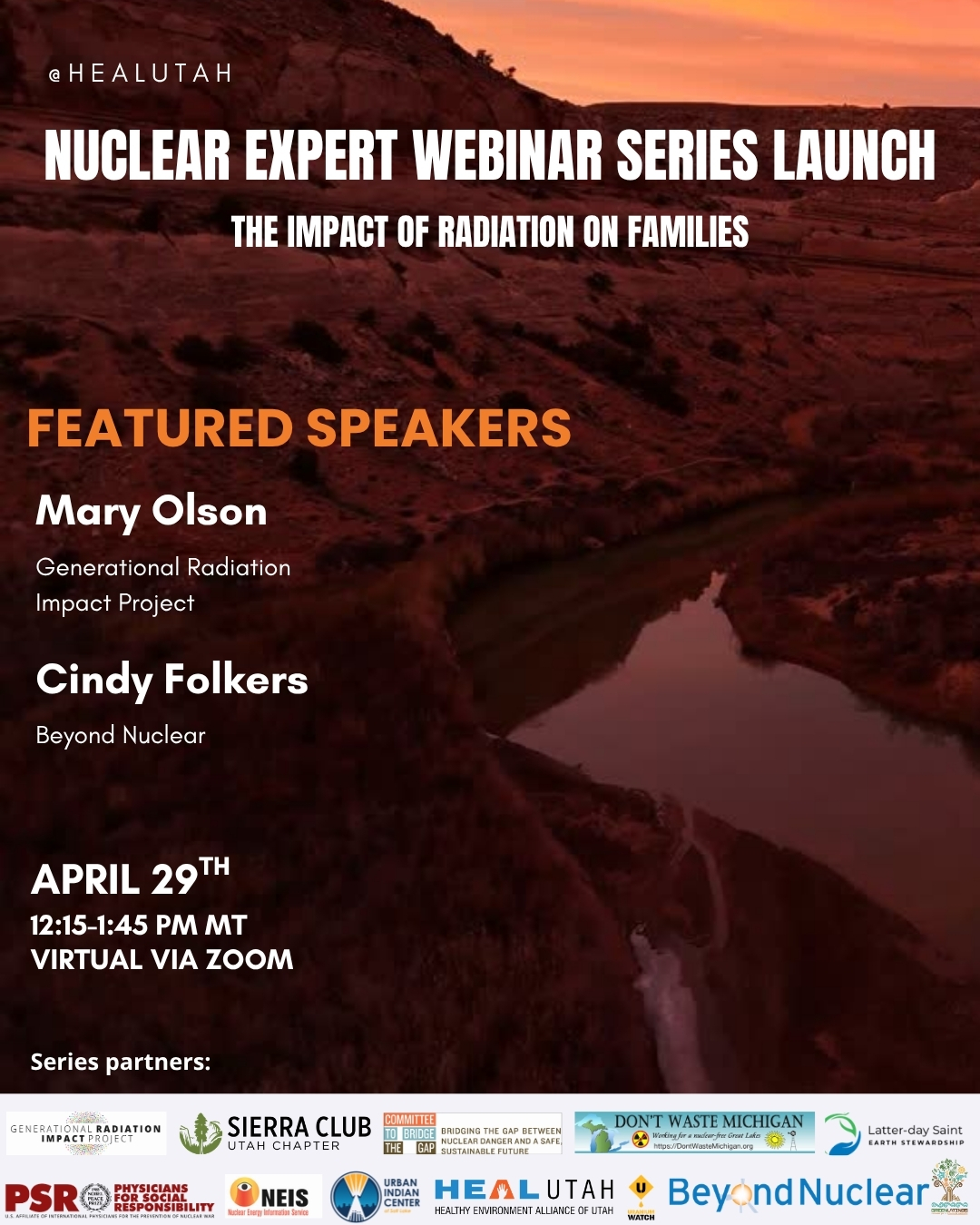
29 April – Nuclear Expert Webinar #1 – Radiation Impacts on Families with Mary Olson and Cindy Folkers
- 12:15 PM MT – 1:45 PM MT
- Location: Virtual – REGISTER TODAY

4 May -West Suburban Peace Coalition to discuss Iran war at May Educational Forum
Monday, May 4, 7:00 – 8:00 PM Central Standard Time
Title: : How Trump’s Narrative Tries to Shape the Reality of the War on Iran.
Contact Walt Zlotow, zlotow@hotmail.com 630 442 3045 for further information
14 May – online event From Bombs to Data Centres: the Face of Nuclear Colonialism

Pine Ridge Uranium is the real threat, not Tehran- Tell Burgum: Stop the Extraction.
Chernobyl: The Lost Tapes – A good documentary on Chernobyl on SBS available On Demand for the next 3 weeks– https://www.sbs.com.au/ondemand/tv-program/chernobyl-the-lost-tapes/2352741955560
To see nuclear-related stories in greater depth and intensity – go to https://nuclearinformation.wordpress.com
-
Archives
- May 2026 (25)
- April 2026 (356)
- March 2026 (251)
- February 2026 (268)
- January 2026 (308)
- December 2025 (358)
- November 2025 (359)
- October 2025 (376)
- September 2025 (257)
- August 2025 (319)
- July 2025 (230)
- June 2025 (348)
-
Categories
- 1
- 1 NUCLEAR ISSUES
- business and costs
- climate change
- culture and arts
- ENERGY
- environment
- health
- history
- indigenous issues
- Legal
- marketing of nuclear
- media
- opposition to nuclear
- PERSONAL STORIES
- politics
- politics international
- Religion and ethics
- safety
- secrets,lies and civil liberties
- spinbuster
- technology
- Uranium
- wastes
- weapons and war
- Women
- 2 WORLD
- ACTION
- AFRICA
- Atrocities
- AUSTRALIA
- Christina's notes
- Christina's themes
- culture and arts
- Events
- Fuk 2022
- Fuk 2023
- Fukushima 2017
- Fukushima 2018
- fukushima 2019
- Fukushima 2020
- Fukushima 2021
- general
- global warming
- Humour (God we need it)
- Nuclear
- RARE EARTHS
- Reference
- resources – print
- Resources -audiovicual
- Weekly Newsletter
- World
- World Nuclear
- YouTube
-
RSS
Entries RSS
Comments RSS
 nuclear-news