Deb Haaland -new U.S. Secretary for Interior, – first Native American in a U.S. presidential cabinet
Democracy Now 17th March 2021, Deb Haaland, a tribal citizen of the Laguna Pueblo, is being sworn in as
secretary of the interior and will be the first Native American ever to
serve in a U.S. presidential cabinet. Just four Republicans joined
Democrats in voting to confirm Haaland, who will manage 500 million acres
of federal and tribal land.
Haaland will also oversee government relations
with 574 federally recognized tribal nations and is expected to address the
legacy of uranium mining on Indigenous land and other areas. Leona Morgan,
a Diné anti-nuclear activist and community organizer, says that while
it’s “impossible to expect one person to correct the centuries of
racism and policy that have really devastated our people,” there is hope
that Haaland will use her power to make important changes. “She will be
held accountable,” Morgan says.
https://www.democracynow.org/2021/3/17/deb_haaland_interior_secretary?s=09
Duane Arnold nuclear reactor, same type as Fukushima Daiichi, vulnerable to extreme weather
|
Fukushima 10 years later: It still could happen here https://thebulletin.org/2021/03/fukushima-10-years-later-it-still-could-happen-here/ By Edwin Lyman | March 11, 2021 On March 11, 2011, 10 years ago this week, a massive earthquake and tsunami flooding triggered a power blackout at the Fukushima Daiichi nuclear plant in Japan, causing three reactors to melt down and release massive amounts of radioactive material. Last summer, an aging nuclear reactor several miles outside of Cedar Rapids, Iowa came uncomfortably close to experiencing a similar fate. On August 10, a powerful storm called a derecho swept through the Midwest with wind gusts of up to 130 miles per hour, cutting off the external power supply to the Duane Arnold Energy Center, a General Electric reactor of the same type and vintage as the doomed Fukushima Daiichi units. A pandemic-weary nation didn’t pay much attention, but it should have. According to a preliminary Nuclear Regulatory Commission (NRC) analysis, this was the most serious US nuclear power plant incident in at least 18 years. Duane Arnold, which its owner, NextEra, had been planning to shut down at the end of October 2020 for economic reasons, was already in a vulnerable state. It was operating at only 80 percent of capacity because the primary containment had been overheating due to a cooling system leak, and there was a ruptured nuclear fuel element in the core. In addition, major pieces of safety equipment were out of service for maintenance. At 12:49 p.m. local time, Duane Arnold automatically shut down after the derecho took down all six power lines supplying the plant. The reactor’s two emergency diesel generators started up as expected. However, the nuclear fuel remained hot, and it took plant operators 14 hours of deft maneuvering to stabilize and cool down the reactor—a process that was not trouble-free. Operators violated technical restrictions several times, one of the two spent fuel pool cooling pumps blew a fuse, and a strainer that filtered potentially damaging debris from the cooling water supply to one of the diesel generators became clogged and had to be bypassed. Off-site power to the plant was not restored until nearly 24 hours after it was lost. Meanwhile, the destructive derecho had blown down the cooling towers that normally provide shutdown heat removal, punched a hole in the reactor’s secondary containment, and ripped large sections of siding from the turbine building. The storm also damaged one of two storage buildings containing emergency backup equipment that the NRC required all nuclear plants to acquire after Fukushima, rendering that equipment inoperable. Given all this damage, NextEra decided to scrap the plant then and there, rather than repair it for only another couple of months of operation. Although operators were able to compensate for all the problems and shut down Duane Arnold safely, the NRC estimates that there was at least a one-in-1,000 chance, on average, that the reactor could have experienced a meltdown. The NRC considers such high-risk events “significant” precursors to a severe accident. For example, if the reactor’s emergency diesel generators had failed, a station blackout similar to the Fukushima accident would have occurred. (The NRC risk estimate optimistically assumes a nearly 90 percent chance that personnel would have been able to save the plant even after a blackout, which workers had failed to accomplish three times over at Fukushima.) The NRC initially decided not to conduct a more intensive inquiry of Duane Arnold’s near-miss and its potential implications for other US reactors. John Hanna, an NRC analyst who dissented from this decision, wrote: “Some population of our commercial reactor fleet may have unacceptably high risk due to (weather-related) losses of off-site power coincident with a challenge to the ultimate heat sink. I am of the opinion that the Duane Arnold event is ‘telling us something,’ and I think we, as an agency, should listen.” In response to Hanna’s concerns, the agency did agree to undertake a review, which should be completed this month. Unfortunately, it is highly unlikely that the NRC will take action even if it finds other plants with similar risks, as the agency continues to maintain an “it can’t happen here” attitude. After Fukushima, the NRC ordered all nuclear plant owners to reassess their facilities’ vulnerability to natural disasters such as floods and earthquakes, and most found that their sites faced more severe hazards than they were required to withstand. Regardless, the NRC decided that it was unnecessary for owners to harden their plants’ defenses against these updated threats. Under the leadership of newly appointed chairman Christopher Hanson, the NRC should reverse course and require nuclear plants to thoroughly prepare not only for the known hazards they face today, but also for the potentially greater disasters that climate change will likely bring in the future. Otherwise, a US Fukushima-like disaster may be all but inevitable. |
|
Plutonium used at Japanese reactor will be glassed, stored at Savannah River Site
Plutonium used at Japanese reactor will be glassed, stored at Savannah River Site, Aiken Standard, By Colin Demarest cdemarest@aikenstandard.com, Mar 17, 2021
The National Nuclear Security Administration has decided a cache of plutonium sent from Japan years ago will be processed and disposed of for the foreseeable future at the Savannah River Site, a change of plans with local ramifications.
Up to 350 kilograms of stainless steel-clad plutonium from a Japanese reactor will be rid of using a slew of Savannah River Site facilities, tech and staff, recent federal documents show.
The Fast Critical Assembly fuel – already at the Savannah River Site – will be processed and dissolved at H-Canyon, a one-of-a-kind separations facility built in the 1950s. The material will then go to the tank farms, where millions of gallons of waste is stored.
After that, it will move to the Defense Waste Processing Facility, a mammoth plant that encases nuclear sludge in glass, making it safer to handle and stow long-term. The glass cylinders will ultimately go to an on-site storage building, where they will stay pending the availability of a dedicated depot, like Yucca Mountain in Nevada.
The entire endeavor will take years. And Japan is helping defray the cost.
The plutonium was previously slated to be handled and treated at the Savannah River Site and entombed at the Waste Isolation Pilot Plant in New Mexico, a repository resembling a salt mine. “Direct disposal of the FCA materials” at the Savannah River Site is a “sound option,” said SRS Watch Director Tom Clements, but it drums up some other questions……….. https://www.postandcourier.com/aikenstandard/news/savannah-river-site/plutonium-used-at-japanese-reactor-will-be-glassed-stored-at-savannah-river-site/article_b7b08e4c-8667-11eb-b8cd-8f0fb9c35316.html?fbclid=IwAR1s_w6jcU21h64HZ6z-tzb7uaWt4x-51ECsKd8E3bw6tvGacJn9_9gGmA8
Production of plutonium must cease, for the Nuclear Non Proliferation Treaty to work
 For the NPT to work, plutonium has to go https://thebulletin.org/2021/03/for-the-npt-to-work-plutonium-has-to-go/?utm_source=Newsletter&utm_medium=Email&utm_campaign=MondayNewsletter03152021&utm_content=NuclearRisk_NPTwork_03152021
By Victor Gilinsky, Henry Sokolski | March 15, 2021 The Nuclear Nonproliferation Treaty (NPT), whose tenth review conference is coming up in August, is in trouble, and not only because of the crescendo of complaints about the failure of the nuclear-armed states to implement nuclear disarmament. The treaty is threatened with irrelevancy because its controls have not kept up with the times. It was drafted over 50 years ago, when it was widely believed that nuclear energy represented the future and would soon take over the generation of electricity. Not surprisingly, countries put few treaty restrictions on access to technology or materials other than to impose international inspection, and even that was circumscribed. We now have a more realistic view of the dangers of access to fuels that are also nuclear explosives (plutonium and highly enriched uranium) and also of the limited economic utility of these fuels for powering reactors. If we want an effective NPT, we have to eliminate these dangerous materials from civilian nuclear power programs. Dealing with uranium enrichment is complicated because nuclear power plants use enriched uranium fuel, but that should not hold us back from eliminating the danger we can eliminate—plutonium.
As soon as one mentions reinterpreting what the NPT allows, the treaty’s “originalism” crowd immediately pronounces the notion a non-starter. But we already have essentially eliminated an entire article (Article V) of the NPT that covered a technology—“peaceful” nuclear explosives—subsequently deemed both too dangerous and with negligible economic promise. That is exactly the situation with plutonium-fueled nuclear power reactors.
Separated plutonium in national hands leaves too little safety margin against possible use in warheads. At the same time, there is no economic penalty for doing without it. It should not be permitted in commercial use in all member countries. Existing civil stocks, like Japan’s nine tons, should be put under International Atomic Energy Agency (IAEA) supervision until their owners can safely dispose of the material.
This may sound radical, especially given the drumbeat of the US Energy Department and nuclear industry propaganda about a new generation of “advanced reactors” under development, most of them plutonium-fueled. But it is nothing more than President Gerry Ford’s common sense proposal in his 1976 Nuclear Policy Statement. He said we should forego using plutonium until “the world community can effectively overcome the associated risks of proliferation.” We are nowhere within reach of such a condition.
The NPT’s laxity on plutonium stems from the widespread beliefs at the time it was negotiated in the 1960s. Nuclear power plants were then considered destined to take over electricity generation and were thus vital for powering national economies. The US Atomic Energy Commission estimated that “essentially all [US] generating capacity built in the 21st century would be nuclear.” Moreover, and this is key, the Atomic Energy Commission believed uranium was scarce. To stretch nuclear fuel supply, they believed it would be necessary to develop reactors that turned the 99 percent of non-fissionable uranium into plutonium and then use that as fuel—plutonium-fueled fast breeder reactors.
That became doctrine in nuclear bureaucracies throughout the world and the NPT was drawn up to facilitate that result. (Ironically, had the projections been fulfilled, and the world commercial channels been flooded with plutonium, the possibility of effective control would have vanished.) Given nuclear power’s then-imagined critical importance, it’s not surprising that the less advanced NPT signatories insisted on full access to nuclear technology, hence on Article IV of the NPT that famously states all members have “the inalienable right” to it.
It has since turned out that all of the “expert” thinking about plutonium-fueled fast breeder reactors taking over electricity production was wrong. Contrary to the projections of the 1960s, nuclear energy’s prospects are limited, uranium is not scarce, extracting plutonium from irradiated uranium fuel is hugely expensive, and the plutonium-fueled reactors are expensive to build, which eliminated the economic arguments for the so-called plutonium economy. This is now clear to all but messianic believers in nuclear energy.
But the vestiges of this technological archaism continue to animate national bureaucracies that deal with the NPT, including that of the US, and the IAEA, as well. Perhaps the most glaring examples of the residual attachment to plutonium is Japan, which accumulated an enormous stockpile of plutonium and China, which, like Japan, plans to open a large reprocessing plant to separate more for two large fast breeder reactors. The US Energy Department is planning an expensive fast reactor to test fuel (the Versatile Test Reactor) for a mythical future commercial generation of such reactors. These steps legitimate similar actions elsewhere and undermine effective nonproliferation controls.
With the diminished prospects of nuclear power, the amount of this plutonium-related activity is not going to be anything like what the nuclear community once projected. The essential point remains: Amounts of plutonium that are very small in commercial terms can be very large in military terms.
At a more fundamental level, the United States needs to speak clearly to dispel the myth—one that still grips some NPT member countries—that nuclear power is an essential technology without which a country cannot consider itself as advanced. To get into the details would take us too far afield. But, as an indication of current nuclear prospects, consider the collapse of the highly vaunted “nuclear renaissance” at the beginning of this century that was to lead to construction of dozens of plants in the United States. US nuclear operators filed license applications for 31 large units. They ultimately canceled all but two, and those two are years behind schedule and already double the original cost, which led the original contractor, once proud Westinghouse, to file for bankruptcy.
America’s utility sector has been consistent on this score: It is not going to build any additional large nuclear reactors and doesn’t extract plutonium from used nuclear fuel. This message presented at the 2021 NPT Review Conference would help clear the decks for an honest assessment of what is needed for protection against access to nuclear weapons. If plutonium and reprocessing (its separation technology) are generally permissible, and only barred when worries arise in special cases like Iran, the NPT will ultimately undo itself.
None of this is to suggest that the NPT members will be easily persuaded, or perhaps even persuaded at all, of the need to limit what is permissible under the treaty. The entrenched plutonium-fuel firms and laboratories, and their government backers, including those in the United States, will not easily let go of their subsidies. But we need to start.
Sudden death of defendant in Ohio nuclear corruption case
|
Lobbyist Neil Clark, Defendant In Ohio Nuclear Bailout Case, Found Dead At 67, WOSU
By ANDY CHOW-16 Mar, 21 Neil Clark, a longtime Ohio lobbyist indicted in a sweeping federal bribery investigation into the state’s nuclear bailout law, has been found dead in Florida……
The Naples, Fla. medical examiner says they are conducting an autopsy on the 67-year-old Clark, following a sheriff’s office report of a man found dead with a head wound and a gun on the premises……
Clark was one of several defendants charged with racketeering last year in connection with HB6, Ohio’s nuclear bailout law. Federal prosecutors say the $61 million bribery scheme funneled money from FirstEnergy companies to then-Ohio House Speaker Larry Householder, in exchange for securing a $1 billion bailout benefiting several plants owned by First Energy and its former subsidiaries.
Clark pleaded not guilty in August. Householder has also pleaded not guilty in the case. Two other defendants and the dark money group Generation Now, which prosecutors said was created and operated at Householder’s discretion, have entered guilty pleas….. https://radio.wosu.org/post/lobbyist-neil-clark-defendant-ohio-nuclear-bailout-case-found-dead-67#stream/0 |
Report alleges elevated cancer deaths in Monroe may be result of nuclear plant
Report alleges elevated cancer deaths in Monroe may be result of nuclear plant, Tyler Eagle-The Monroe News, 16 Mar 21,
A new report has found that Monroe County’s cancer mortality rate is significantly higher than that of the national average.
And the scientist behind it contends the driving force behind that statistic is DTE Energy’s Fermi 2 Nuclear Power Plant in Newport.
Epidemiologist and executive director of the Radiation and Health Project Joseph Mangano unveiled a report titled “Fermi 2 Nuclear Reactor and Rising Cancer Rates” Thursday afternoon during a virtual press conference.
Using mortality data collected by the Centers for Disease Control and Prevention, Mangano’s analysis found that cancer-related deaths in Monroe County were 14.3% higher than the national average.
“We have raised red flags — these are matters of concern,” Mangano said. “There are no other obvious reasons for such an unexpected change. …
“You wouldn’t think Monroe County is a (center) for cancer. It’s a suburban county.”
More:DTE Energy decries advocacy group’s report
The national average for cancer-related deaths nationally was about 150 deaths per 100,000, according to Mangano’s report. Monroe County’s most recent metric — which is from 2019 — was 170 per 100,000.
Prior to Fermi 2’s activation in 1985, Monroe County’s cancer death rate was 3% less the national average, according to Mangano. He said the elevated trend has continued to increase in the last ten years, resulting in the most recent and highest metric.
Mangano said elevated risk and mortality of cancer was present in all population groups, including those classified by gender, race and age.
His report shows that in Monroe County, 10 of the 11 most common cancers in the U.S. occurred at a significantly higher rate, including leukemia, brain and central nervous system and bronchus and lung cancers.
The report also indicates that cancer-related mortality among younger populations is also much higher than the national average.
According to the report, cancer-related deaths among those ages 0-24 occurred 40.2% more than the national average.
Among those ages 25-49, the rate was 49.2% above the U.S. average.
Mangano is calling for more research into the matter, saying the federal and state government have not done enough to examine nuclear plants’ impact on those who live near such sites.
“You don’t have to wait for a meltdown for nuclear reactor to harm people,” Mangano said. “Every single day, reactors release a mix of 100 or more (harmful) chemicals into the environment. It gets into people’s bodies through the food chain.”……….
Mangano also discussed a new initiative to collect donated baby teeth from Monroe County residents in an effort to investigate whether there are increased instances of in-body radioactive contamination.
Mangano said the Tooth Fairy Project will analyze collected specimens for Strontium-90, a harmful substance that is a byproduct of nuclear reaction.
The project will seek to collect 25-50 local specimens, he said………. https://www.monroenews.com/story/news/2021/03/11/study-elevated-cancer-deaths-monroe-may-result-nuclear-plant/4649665001/
Report: Cancer death rates rising near Fermi nuclear plant
 Report: Cancer death rates rising near Fermi nuclear plant https://www.13abc.com/2021/03/11/report-cancer-death-rates-rising-near-fermi-nuclear-plant/
A new study is looking to test baby teeth from children living near the plant. NEWPORT, Mich. (WTVG) – A new report from the Radiation and Public Health Project claims that the cancer death rate in Monroe County, Michigan is on the rise and it’s tying that growth to the Fermi 2 nuclear plant in Newport.
According to the report, which uses public health data from the Centers for Disease Control and Prevention, the rate of death due to cancer in Monroe County was roughly equal to that of the rest of the United States. Since 1988, that rate has risen steadily, reaching 11.3% higher than the national average in the most recent 10 years (2009-2018). From 2014-2018, that rate was 14.3% higher than the national average, amounting to 1,794 deaths. In the period between 1969 and 1978, outlines the report, that rate was 4.5% lower than the national average.
The Fermi 2 nuclear power plant went online in June of 1985, and while the report has no concrete evidence that the plant is the definitive cause of the rise in cancer deaths in the county, it does provide a correlative pattern. 13abc has reached out to DTE Energy, owners of the Fermi 2 plant, for comment.
“The trends in Monroe County cancer rates since the mid-1980s cannot overlook the startup of the Fermi reactor, and the potential role of radioactive emissions on health,” says Joseph Mangano MPH MBA, Executive Director of RPHP and study author.
“The report needs to be taken seriously, and follow-up measures are urgently needed,” adds Christie Brinkley, a long-time activist on nuclear issues, Board member of RPHP, and a native of Monroe County. “In particular our children must be protected, as they are most vulnerable.”
In an effort to further understand the role the reactor may have had in the rise in cancer rates in the area, the RPHP is conducting a “Tooth Fairy” study. They’re collecting baby teeth from children living near the power plant to test for levels of Strontium-90, a chemical created by nuclear reactors. They’re hoping to test up to 50 teeth and will compare the results to Sr-90 levels in Detroit-area residents from a 1950s-era study of atomic bomb test fallout. Information about the study, including how to participate, can be found at their website.
Nuclear education of state energy regulators

With the Department of Energy behind this – can it really offer impartial education?
NARUC, DOE strike five-year deal to allow nuclear education of state energy regulators, Daily Energy Insider, March 10, 2021 by Chris Galford A new partnership between the National Association of Regulatory Utility Commissioners (NARUC) and the U.S. Department of Energy (DOE) will provide opportunities for NARUC to educate state public service commissioners and staff on nuclear issues.
This Nuclear Energy Partnership will last for five years to help regulators better understand the barriers to and potential of what is currently the nation’s largest source of zero carbon power.[ [zero carbon? That’s just not true ] It will officially begin this month and be co-chaired by Anthony O’Donnell of the Maryland Public Service Commission and Tim Echols of the Georgia Public Service Commission, chair and vice chair, respectively, of the NARUC Subcommittee on Nuclear Issues — Waste Disposal.
Estimates put nuclear power’s contributions to U.S. electricity at approximately 20 percent of the total last year. However, among the 94 nuclear reactors pumping out that clean power, many are approaching 40 years in service……. https://dailyenergyinsider.com/featured/29440-naruc-doe-strike-five-year-deal-to-allow-nuclear-education-of-state-energy-regulators/
USA’s new $100billion nuclear missile – a white elephant?
|
‘Cold war-era weapon’: $100bn US plan to build new nuclear missile sparks concern, Guardian, Washington, Wed 10 Mar 2021
Scientists say the GBSD project is outdated and the result of lobbying rather than a clear sense of what it will achieve. The US is building a new $100bn nuclear missile based on a set of flawed and outdated assumptions, a new report by the Federation of American Scientists (FAS) will say.The report, due to be published next week, will argue the planned ground-based strategic deterrent (GBSD) is being driven by intense industry lobbying and politicians from states that will benefit most from it economically, rather than a clear assessment of the purpose of the new intercontinental ballistic missile (ICBM).“It is becoming increasingly clear that there has not been a serious consideration of what role these cold war-era weapons are supposed to play in a post-cold war security environment,” the FAS report, titled Siloed Thinking, will say. According to the FAS, a non-partisan thinktank, the US Air Force price tag for the new GBSD was deliberately framed in such a way as to appear slightly less than the cost of extending the life of the missile it would be replacing, the Minuteman III. An independent assessment by the Rand corporation at about the same time, suggested the cost of a totally new weapon could cost two to three times more. An effort by Congress to mandate an independent study on the comparative costs was blocked in 2019 with the help of the industry lobby. The current estimate is that the basic acquisition costs of the GBSD will be $100bn, while the total cost of building, operating and maintaining it over its projected lifespan to 2075 is projected as $264bn. The report is being published as the Biden administration is preparing its first defence budget which may reveal its intentions towards the GBSD, which is in its early stages. In September 2020, Northrop Grumman was awarded an uncontested bid for the $13.3bn engineering, manufacturing and development phase of the project, just over a year after its only rival, Boeing, pulled out of the race, complaining of a rigged competition. It said Northrop Grumman’s purchase of one of the two companies in the US making solid fuel rocket motors gave it an unfair advantage. There are currently 400 Minuteman missiles spread over five states: Colorado, Montana, Nebraska, North Dakota and Wyoming. Many arms control advocates argue that rather than being replaced, they should be phased out entirely on grounds of their vulnerability and consequent instability…… |
|
Ohio House passes its version of Bill rescinding nuclear subsidies
House Bill 128 passed 86-7 on Wednesday afternoon. The bill also would revoke “decoupling” language in HB6 that guaranteed revenue for FirstEnergy at 2018 levels, and language that likely would have made it easier for FirstEnergy to pass a state test meant to prevent utilities from making excessive profits.
Of note, a House committee before passing the bill earlier this week changed it to add back in language offering $20 million in annual solar subsides to six large-scale solar projects. Developers behind some of the projects, some of which are have been completed or are close to it, told lawmakers that revoking the funding would economically undermine the deals they had made with companies that had agreed to buy the power they generated.
Other portions of HB6 so far have remained untouched, provisions eliminating energy efficiency programs and renewable energy mandates, and subsidizing two coal plants — one in Indiana, one in Ohio — owned by a consortium of Ohio utility companies.
Ohio House and Senate leaders will have to sort out how they line up the competing versions of the bills. Any law change requires approval by both chambers before heading to Gov. Mike DeWine for his signature….. https://www.cleveland.com/open/2021/03/ohio-house-passes-their-version-of-bill-rescinding-nuclear-subsidies.html
Problem in accepting higher level radioactive wastes in Texas
|
Waste Control Specialists won’t move high level nuclear waste to Permian Basin without state’s approval https://www.cbs7.com/2021/03/10/waste-control-specialists-wont-move-high-level-nuclear-waste-to-permian-basin-without-states-approval/ In a meeting on environmental regulation yesterday, Waste Control Specialists said they would not be moving high-level nuclear waste into the Permian Basin without the state’s approval. By Kate Porter Mar. 10, 2021 ANDREWS, Texas (KOSA) – In a meeting on environmental regulation yesterday, Waste Control Specialists said they would not be moving high-level nuclear waste into the Permian Basin without the state’s approval.Texas lawmakers, such as Representative Brooks Landgraf, have presented legislation that would shut the door on WCS ever bringing high-level nuclear waste to Andrews county. Representative Landgraf tells CBS 7 that the nuclear waste facility here in Andrews houses rubber gloves and hospital gowns. Landgraf says WCS proposed a plan to bring higher-level nuclear waste like rods used at nuclear testing sites. That proposal spurred representative Landgraf into action – he presented a bill to block all high-level waste being stored or disposed of here in Texas. I reached out to WCS several times today for comment but have not heard back as of right now. This thinking isn’t isolated to the Republican party.
Midland County Democrat, David Rosen, agrees that high-level nuclear waste does not have a place in the Permian Basin. The bottom line for Andrews residents: WCS will still store nuclear waste There, but it’s up in the air about the level of radioactivity. |
|
At last! – some media questioning the story that small nuclear reactors combat climate change
 What’s the Role for New Nuclear Power in the Fight Against Climate Change?
Some fear that small modular reactors could rob cash from more proven low-carbon technologies. Greentech Media, JASON DEIGN MARCH 08, 2021 Small modular reactors (SMRs) — nuclear reactors using novel technologies to fit into much smaller and mass-producible packages than the behemoth nuclear power plants of today — are presented as a way of rapidly decarbonizing the grid in the face of an ever more pressing need to meet climate targets. But some opponents claim new nuclear power could have the opposite effect, slowing the fight against human-caused climate change just when things should be speeding up.In September last year, for example, the Sierra Club Canada Foundation harshly criticized Canada’s plans to foster an SMR industry.SMRs “are not the solution to climate change,” said the organization, citing a University of British Columbia study indicating that energy produced by SMRs could cost up to 10 times as much as power from renewable sources such as wind and solar.
“Critics of SMRs say that developing experimental nuclear reactor technologies will take too long to make a difference on climate change and could drain billions of dollars from public coffers,” said the advocacy group.
Similar challenges have been leveled against U.S. utilities such as Duke Energy and Southern Company that include SMRs in the longer-range suite of options to fully decarbonize their power grids by 2050. Critics question whether the SMRs under development today can be commercialized fast enough to drive down emissions over the next decade or two and whether government funding to drive faster deployment might better be spent on other technologies.
That’s not the only criticism facing new nuclear. In 2014, NuScale Power, which looks likely to become the first Western SMR developer to commercialize a reactor, published a paper on the use of its SMRs for oil recovery and refining applications.
The aim of the paper was to show that SMRs could be instrumental in “reducing the overall carbon footprint of these industrial complexes and preserving valuable fossil resources as feedstock for higher-value products,” according to the authors.
Nevertheless, it doesn’t look good for the nuclear industry’s climate-fighting credentials when one of its upcoming stars is apparently touting wares to the oil and gas sector.
In a written statement, Diane Hughes, NuScale Power’s vice president of marketing and communications, told GTM that the SMR developer “does not comment or discuss what companies we may be talking to regarding potential business opportunities.”……
Doubts over government finance for SMRs
Despite this, the question remains whether it makes sense for governments to put money into SMR research and development when other low-carbon generation technologies can be used to combat climate change right away.
Nuclear skeptics such as David Toke, who researches energy politics at the University of Aberdeen in the U.K., don’t think so. SMRs “are a diversion from the development of energy systems that best mitigate climate change,” he said in an interview.
“Small reactors already exist, and they occupy a very niche zone, which is military marine, mainly. That allows very high costs. But that’s the point: They cost an awful lot of money. Just because something reduces carbon emissions doesn’t mean to say the state ought to encourage it.” ….https://www.greentechmedia.com/articles/read/whats-the-role-for-new-nuclear-power-in-the-climate-change-fight
How to dispose of 50 tons of weapons-grade plutonium for 10,000 years?
 The need for a long-term commitment to plutonium disposal. The Energy Department faces the daunting and unprecedented task of geologically disposing of tens of tons of weapons-grade plutonium, so it can never be used again, while ensuring its toxic dangers do not threaten the environment over a time period longer than the existence of human civilization.
|
Can the Energy Department store 50 tons of weapons-grade plutonium for 10,000 years? Bulletin of the Atomic Scientists, By Robert Alvarez | March 8, 2021 The nuclear age is undergoing a paradigm shift. During much of the latter half of the past century, the nuclear enterprise was ascendant; now, it has entered a period of decline and uncertain long-term custodianship. This reversal of fortune is especially apparent in the United States’ efforts to rid itself of its unwanted reserves of plutonium. It’s been more than 75 years since a blinding flash lit up the pre-dawn sky at Alamogordo in the Chihuahua Desert of New Mexico. On July 16, 1945, a single gram of the grapefruit-size sphere of plutonium at the center of the world’s first nuclear explosion released three times the destructive force of the largest conventional bomb used during World War II. [1]
Thereafter, the United States government built a grossly oversized nuclear arsenal and never envisioned having to stop building it. Between 1944 and 1994, the Energy Department and its predecessors produced 99.5 metric tons of plutonium for use in an estimated 70,000 nuclear weapons. (An additional 11 tons were produced or acquired for research and development purposes.) The perverse logic of the nuclear arms race reached a point of ultimate absurdity during the early Reagan presidency, when it was asserted that the winner of a nuclear war would be the one with the most weapons left afterward. Now, 80 percent of the US nuclear arsenal has been discarded, and the United States is still struggling with the strategic mistake of producing so much fissile material to begin with. Currently, a total of 61.2 tons of plutonium is declared excess to the needs of the US government, of which 53.4 tons is designated for nuclear weapons. The Energy Department faces the daunting task of geologically disposing of this huge cache of weapons-grade plutonium, so it can never be used again, while ensuring that its does not threaten the environment over a time period longer than human civilization has existed. Achieving safe plutonium disposal will be a multifaceted challenge requiring both long-term commitments and large financial investments at a time when nuclear modernization programs are also competing for federal funding. But arms control and disarmament will not progress as they should unless the excess plutonium problem is solved. The scope of the problem. Safely ridding the nation of one of the world’s largest excess stockpiles of weapons-grade plutonium will be no minor feat. At issue is the US Energy Department’s 2016 decision to dilute and dispose of, all told, about 48.2 metric tons of plutonium, including 26.2 tons of components, known as “pits,” from several thousand dismantled thermonuclear warheads and 22 metric tons in other forms. These massive quantities of plutonium are destined for the Energy Department’s Waste Isolation Pilot Plant (WIPP), the nation’s only geologic burial site for radiological waste, dug into a deep-underground salt formation near Carlsbad New Mexico. WIPP was opened in 1999, originally for disposal of equipment, clothing, and soil contaminated with dilute amounts of transuranic elements, mostly plutonium, somewhere in the nation’s nuclear weapons complex. If one gram of soil contains as little as 1.587 micrograms of plutonium, the Energy Department is required by federal standards to geologically isolate it from the environment for at least 10,000 years at WIPP. The site is not without its problems. In 2014, a drum burst open deep underground, shooting contamination to the surface and leading to a three-year closure of the facility that cost about $2 billion. During the Cold War, the Energy Department facilities involved in weapons productions recovered residual plutonium from production processes—for example, the lathe turnings produced when spherical plutonium bomb cores were shaped—when the cost of doing so was less than the cost of making new plutonium in production reactors. After the downsizing of its Cold War warhead stockpile, in 1998 the Energy Department reclassified residues from the Rocky Flats Plant— some 3.5 metric tons of weapons-grade plutonium, or enough to fuel some 900 weapons—as waste that should also be disposed of in the WIPP. In fact, as of September 2019, more than two thirds of 5.36 metric tons of plutonium 239 placed in the repository originally had been set aside to make bombs. An additional 5.29 metric tons of this residual plutonium is awaiting disposal, and amount that is separate from and above what is generally considered as excess fissile material from the weapons stockpile. The government has not publicized the formidable challenges of protecting thousands of workers and members of the public during the process necessary to geologically dispose of this enormous stockpile of nuclear explosives. To put it bluntly, if not done with extreme care, plutonium is a waste-disposal nightmare. The isotope used in American nuclear weapons, plutonium 239, has a specific activity (that is, an amount of radiation produced per unit of mass) that is about 200,000 times greater than uranium 238’s, and plutonium 239 has a radioactive half-life of 24,110 years. Alpha particle emissions from plutonium and other transuranic elements are considered to be about 20 times more carcinogenic than x-rays. Particles of plutonium less than a few microns in diameter can penetrate deep in the lungs and lymph nodes and also be deposited, via the bloodstream, in the liver, on bone surfaces, and in other organs. If inhaled, extremely small amounts can lead to cancer. Stringent procedures—many involving large number of workers with specialized skills—are required to ensure that even small amounts of plutonium are properly processed. That processing often must be done by hand, using gloveboxes, to prevent the creation of a critical mass that initiates a nuclear chain reaction and the resulting highly dangerous bursts of energy and radioactivity. While technologies have existed for years to process plutonium, they come out of the Cold War era when safety was secondary to production. Over the years, dozens of workers around the world have been killed or seriously over- exposed from criticality accidents. Various safeguards—including a security system that carefully accounts for all plutonium and protects against theft and diversion—add another costly dimension to handling this nuclear explosive. Plutonium production ends, but problems continue. Years before the collapse of the Soviet Union, the growing cost of plutonium production led to its gradual cessation. By the 1980s, half of every dollar spent to make plutonium at the aged Energy Department nuclear complex went for its burgeoning waste-management and environmental-restoration problems. By 1988, production costs compelled Energy Secretary John Herrington to declare: “We’re awash with plutonium. We have more than we need.” By 1992, the United States had stopped making new nuclear weapons as the industrial base for producing them began to collapse; about 80 percent of the Energy Department’s sprawling nuclear weapons production complex was shuttered a few years later. This left behind a legacy of radioactive waste and human suffering, one that is still unfolding. The Energy Department’s recent baseline cost estimates for waste management and environmental remediation are about $435 billion for the two main plutonium production facilities, the Hanford Reservation in Washington and the Savannah River Site in South Carolina. The single largest portion of the entire US government’s environmental liability in 2019, including the Defense Department, is due to plutonium production at these two sites. In terms of the human legacy, 22,459 sick workers at three major plutonium and fabrication sites have been granted more than $4.2 billion in compensation and medical care…………….
|
|
|
Sorry saga of America’s plutonium waste problems
Can the Energy Department store 50 tons of weapons-grade plutonium for 10,000 years? Robert Alvarez Bulletin of the Atomic Scientists, 8 Mar 21,
”…………The US-Russia plutonium disposal disagreement.
The end of the Cold War led to deep cuts in the US and Russian nuclear arsenals, and in 1993 President Clinton issued a directive declaring that the United States is “committed to eliminating, where possible, the accumulation of stockpiles of highly enriched uranium and plutonium.” In September 2000, the United States and Russia signed the Plutonium Management Disposition Agreement, under which 34 metric tons of plutonium from weapons would be blended with uranium and serve as mixed-oxide or MOX reactor fuel to produce electricity.
 Construction on the Mixed Oxide Fuel Fabrication Plant at the Savannah River Site began in 2007, but the United States abandoned the project because of delays and estimated cost overruns of $30 billion to $50 billion. After a “Red Team” expert review in 2015, the Energy Department decided to pursue a “dilute and dispose” option for storing plutonium, which, the team reported, would cost about half as much as the MOX project. Plutonium from weapons and other forms would be converted from metal to oxide, diluted with a secret adulterant, and then placed a special container for shipment and disposal at WIPP.
The dilute and dispose project.
The Energy Department optimistically estimates that its dilution and disposal project will start up in 2027 and store 34 metric tons of weapons-grade plutonium by 2049, at a cost of $18 billion. That time estimate seems likely to be unrealistic; according to the Institute for Defense Analysis, “we could find no successful historical major project that both costs more than $700 million and achieved [Energy Department project startup] … in less than 16 years.”
The dilute and dispose project i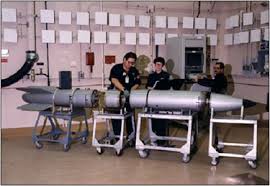
- The Pantex weapons assembly and disassembly plant near Amarillo, Texas, where thousands of pits and other forms of plutonium have to be prepared for safe and secure shipment to Los Alamos National Laboratory (LANL) in New Mexico. The majority of the plutonium at Pantex is stored in facilities at that were built in the 1940s. In 2010 and 2017, unexpected 2,000-year rains flooded a major plutonium storage area with several inches of water, which shut down the plant. It cost of hundreds of millions of dollars to deal with about 1,000 containers affected by the flooding.
 At the Los Alamos National Laboratory, pits will be converted from metal to an oxide that resembles a yellow-to-olive-green talcum-like powder, which is highly dispersible if it escapes from leaking glove boxes. The conversion process takes place at the PF-4 facility, a 69-year-old complex where the Energy Department has a major multibillion-dollar project underway to upgrade aged processes to produce new plutonium bomb triggers. In 2020, a panel of the National Academies of Science warned that “LANL may be a major bottleneck” impacting the plutonium disposal mission. The disposal and production projects could be on a collision course by the middle of this decade, when both are planned to scale up by 10 times.
 Once Los Alamos produces plutonium oxides, they will be sent to the Savannah River Site in South Carolina, where the plutonium will be diluted and mixed with a secret adulterant, sometimes via the use of mortars and pestles. About 166,000 specially designed drums will be filled with the dilute fissile material. This task is a tall order for the Savannah site, where the round-the-clock work is expected to scale up by 10 times in a facility that officially exceeded its design life years ago. The facility will be almost 100 years old by 2049 when the dilute and disposal project is expected to be completed.
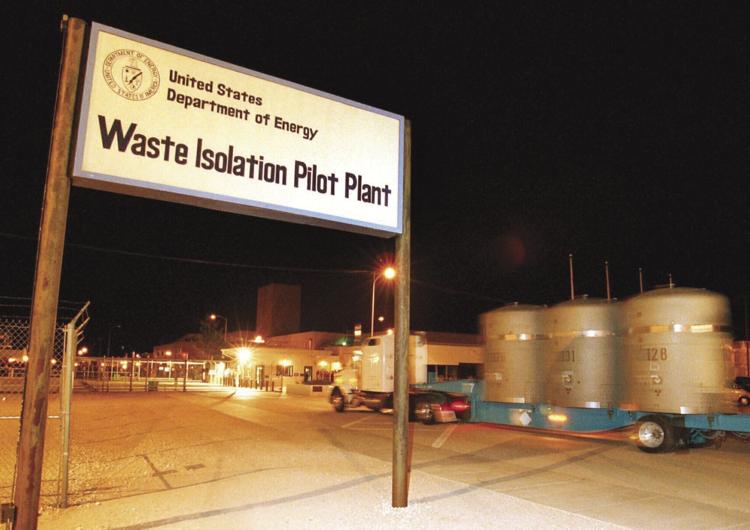
- Once the drums are filled, commercial trucks are expected to transport them across
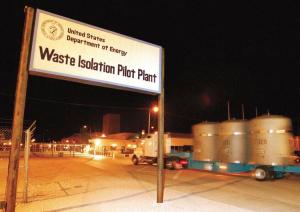 the country, from South Carolina to New Mexico and WIPP, in more than 3,888 shipments.
 - As it plans to dispose of its excess plutonium, the Energy Department has, notably, paid little attention to inspections and verification by the International Atomic Energy Agency, a key element of the Nuclear Non-Proliferation Treaty. As noted by the report of an expert panel of the National Research Council, “IAEA monitoring and inspections are an important component of the [Plutonium Management and Disposition Agreement with Russia] requirements, and they could also provide enhanced public and international confidence that the material is properly accounted for and emplaced in WIPP.”
Plutonium disposal beyond dilute and dispose.
- Over the past three years, WIPP and the nearby area have become ground zero for several storage and disposal plans for the bulk of civilian and military radioactive wastes. In addition to trans-uranic wastes set for WIPP and plutonium related to weapons production, the Energy Department seeks to dispose of six tons of fuel-grade plutonium from its research and development program, sludge from 15 of Hanford’s high-level radioactive waste tanks, trans-uranic waste generated from the production of new plutonium pits, and other radioactive waste.
- Even after the Energy Department recently recalculated its excess plutonium and other radioactive wastes, resulting in a 30 percent reduction in the total volume to be sent to WIPP, the federal statutory limit set in the Land Withdrawal Act, which authorized the opening of WIPP, will be exceeded by these planned disposal efforts. Congress would have to amend the law to expand the volume, set for WIPP at 175,564 cubic feet, by as much as than 50 percent to accommodate all the waste. Moreover, it appears that new plutonium pit production is projected to generate huge amounts more waste.Lurking in the shadows, 71 miles from the WIPP, sits an Energy Department effort to dispose of as much as 500,000 gallons of grouted wastes from Hanford’s high-level radioactive waste tanks at the Waste Control Specialists landfill in Andrews County Texas.

- That firm is also seeking a license from the Nuclear Regulatory Commission to establish centralized interim storage of spent nuclear fuel from the nation’s power reactor fleet. So, too, is the Holtec Corporation with a proposed spent nuclear fuel storage site 16 miles from WIPP in Lea County, New Mexico.If these interim storage efforts succeed, by mid-century up to 10,000 spent fuel cannisters containing nearly the entire US commercial spent nuclear fuel inventory will be transported across the country for storage near WIPP. They may sit there for more than 100 years. (See sidebar: “The long-term problem of “peaceful” plutonium.) If these plans are realized, WIPP and the nearby area will have become the recipients of an enormous, decades-long, radioactive-waste-transport funnel directing the bulk of the nation’s commercial and military radioactive detritus to New Mexico and far West Texas……… https://thebulletin.org/2021/03/can-the-energy-department-store-50-tons-of-plutonium-for-10000-years/#.YEa37PTkUIk.twitter



Difficult time for Biden to sort out Iranian nuclear deal
Biden as a candidate promised to take the U.S. back to the deal and was confident of achieving it; however, his time in office has proved that this won’t be an easy task
Since the inauguration of U.S. President Joe Biden, one of the most frequently asked questions are about his position on the Iranian nuclear deal. The candidate Biden had called the U.S. withdrawal from the Joint Comprehensive Plan of Action (JCPOA) a significant mistake and promised to take the U.S. back to the deal.
However, his few weeks in office demonstrated that this process will not be as easy as many may have thought.
The negotiation process, the content of the potential deal and its possible impacts on the countries’ domestic policies started to be discussed even before the beginning of negotiations.
Now, after the appointment of a special envoy to Iran, everybody is expecting to hear about the process and its details. However, there will be five different challenges that the Biden administration and its negotiators need to pay attention to while reaching a new deal with regards to the Iranian nuclear program.
Deadlock at home
First of all, it will be critical for the Biden administration to gain majority support in the U.S. Congress for a new nuclear deal with Iran……….
Regional outcry
Secondly, some U.S. partners in the region have reacted negatively to the JCPOA. They felt like they were left in the dark about critical foreign policy issues in regard to their region……….
Alliance skepticism
Thirdly, the U.S. administration also needs to pay attention to the concerns of its allies and partners in the P5+1 – the U.S., the U.K., France, China, Russia and Germany……….
Iran’s internal concerns
Fourthly, there will also be domestic dynamics at play with Iran. In June of this year, presidential elections will be held in Iran. Quite possibly, the Iranian nuclear deal and the relations with the U.S. will be part of this election campaign………. https://www.dailysabah.com/opinion/columns/biden-on-horns-of-a-dilemma-for-iranian-nuclear-deal
-
Archives
- October 2026 (112)
- September 2026 (339)
- August 2026 (330)
- July 2026 (355)
- June 2026 (287)
- May 2026 (306)
- April 2026 (356)
- March 2026 (251)
- February 2026 (267)
- January 2026 (308)
- December 2025 (358)
- November 2025 (359)
-
Categories
- 1
- 1 NUCLEAR ISSUES
- business and costs
- climate change
- culture and arts
- ENERGY
- environment
- health
- history
- indigenous issues
- Legal
- marketing of nuclear
- media
- opposition to nuclear
- PERSONAL STORIES
- politics
- politics international
- Religion and ethics
- safety
- secrets,lies and civil liberties
- spinbuster
- technology
- Uranium
- wastes
- weapons and war
- Women
- 2 WORLD
- ACTION
- AFRICA
- Atrocities
- AUSTRALIA
- Christina's notes
- Christina's themes
- culture and arts
- Events
- Fuk 2022
- Fuk 2023
- Fukushima 2017
- Fukushima 2018
- fukushima 2019
- Fukushima 2020
- Fukushima 2021
- general
- global warming
- Humour (God we need it)
- Nuclear
- RARE EARTHS
- Reference
- resources – print
- Resources -audiovicual
- Weekly Newsletter
- World
- World Nuclear
- YouTube
-
RSS
Entries RSS
Comments RSS

