Pentagon Denies Chinese Accusation of Cover-Up in Nuclear Attack Submarine Crash
Pentagon Denies Chinese Accusation of Cover-Up in Nuclear Attack Submarine Crash USNI News, By: Heather Mongilio, October 12, 2021, Pentagon spokesman John Kirby on Tuesday denied a Chinese accusation that the U.S. is seeking to cover up a submarine collision in the South China Sea…..
Seawolf-class nuclear attack submarine USS Connecticut (SSN-22) hit an unknown object while underwater on Oct. 2, injuring 11 sailors, USNI News previously reported.
The Navy has not yet said what Connecticut struck, and Kirby referred reporters to the Navy when asked. USNI News previously reported that it was not another vessel.
It took the Navy five days to release information on the crash, which prompted Chinese Foreign Ministry spokesman Zhao Lijian to question the details about the collision, according to a transcript of the foreign ministry’s Monday press conference.
“Such irresponsible attitude and stonewalling and cover-up practice only make the international community more suspicious of the US intention and details of the accident,” Zhao said, according to the transcript.
Zhao called on the United States to clarify the location of the accident, if there was any nuclear leakage and if the crash will affect fishery, according to the statement.
“The US side should take a responsible attitude, give a detailed account of what happened as soon as possible and make a satisfactory explanation to the international community and regional countries,” he said.
…… The submarine arrived at Naval Base Guam on Friday and is undergoing an assessment and preliminary repairs while the Navy investigates the crash, USNI News reported this week.
U.S. 7th Fleet is leading a command investigation into the crash, while Submarine Force, U.S. Pacific Fleet heads up a safety investigation, COMSUBPAC spokeswoman Cmdr. Cindy Fields previously told USNI News…. https://news.usni.org/2021/10/12/pentagon-denies-chinese-accusation-of-cover-up-in-nuclear-attack-submarine-crash
Nuclear Regulatory Commission backs Linear No-Threshold model for radiation safety

NRC backs Linear No-Threshold model for radiation safety, THE HINDUK. S. ParthasarathyOCTOBER 09, 2021
This decision of U.S. Nuclear Regulatory Commission was awaited by specialists
Now it is official. The U.S. Nuclear Regulatory Commission (NRC) decisively upheld the Linear No-Threshold model to prescribe radiation safety standards, ending the protracted controversy on the topic. Radiation protection specialists worldwide were eagerly awaiting the NRC’s decision.
Over six years ago, during February 2015, Dr. Carol S. Marcus, Mr. Mark L. Miller, Certified Health Physicist, and Dr. Mohan Doss, and others, through three……….(subscribers only) https://www.thehindu.com/sci-tech/science/nrc-backs-linear-no-threshold-model-for-radiation-safety/article36918797.ece
US navy engineer charged with trying so sell nuclear submarine secrets
US navy engineer charged with trying so sell nuclear submarine secrets
Jonathan Toebbe and wife arrested in West Virginia after nuclear engineer makes ‘dead drop’ to undercover FBI agent, Guardian, Associated Press in WashingtonMon 11 Oct 2021 A US navy nuclear engineer with access to military secrets has been charged with trying to pass information about the design of American nuclear-powered submarines to someone he thought was a representative of a foreign government – but who turned out to be an undercover FBI agent.
In a criminal complaint detailing espionage-related charges, the US Department of Justice (DoJ) said Jonathan Toebbe sold information for nearly a year to a contact he believed represented a foreign power. That country was not named in the court documents.
Toebbe, 42, was arrested in West Virginia on Saturday with his 45-year-old wife, Diana Toebbe, after he placed a removable memory card at a prearranged “dead drop” in the state, according to the DoJ. The Toebbes are from Annapolis, Maryland………………………
The FBI paid Toebbe $20,000 for the transaction and provided the contents of the SD card to a navy subject matter expert, who determined that the records included design elements and performance characteristics of Virginia-class submarine reactors, the justice department said.
Those submarines are sophisticated and nuclear-powered “cruise missile fast-attack submarines”, according to the complaint…………..
The complaint alleges violations of the Atomic Energy Act, which restricts the disclosure of information related to atomic weapons or nuclear materials.
The Toebbes are expected to have their initial court appearances on Tuesday in Martinsburg, West Virginia.
Jonathan Toebbe has worked for the US government since 2012, holding a top-secret security clearance and specializing in naval nuclear propulsion, the FBI says. He has also been assigned to a laboratory in the Pittsburgh area that officials say works on nuclear power for the US navy……. https://www.theguardian.com/world/2021/oct/10/us-navy-engineer-charged-with-trying-so-sell-nuclear-submarine-secrets
US nuclear attack submarine hits object in South China Sea, injuring crew
US nuclear attack submarine hits object in South China Sea, injuring crew, ABC, 8 Oct 21, A nuclear-powered submarine collided with an unknown “object” while submerged in the South China Sea, United States military officials confirmed.
Key points:
- The submarine’s nuclear propulsion plant was not damaged and is operating normally
- It is not clear what the sub collided with, but officials say it could have been a sunken vessel
- An investigation will be launched into the incident
The Seawolf-class fast-attack submarine USS Connecticut struck the “object” on October 2 and while about a dozen sailors were hurt, none of the injuries were life-threatening, the US Navy said in a statement.
Officials said the submarine’s nuclear propulsion plant was not impacted and remained fully operational.
“The submarine remains in a safe and stable condition,” the statement said.
“The extent of damage to the remainder of the submarine is being assessed.”
US officials, speaking on the condition of anonymity, said the incident took place in international waters in the South China Sea.
They said it was not yet clear what object the sub had struck but that it was not another submarine.
One official said it could have been a sunken vessel, a sunken container or other uncharted object…………….
In 2009, two British and French nuclear subs were damaged after colliding in the Atlantic while in 2019 14 Russian naval officers were killed in a fire on a nuclear-powered submersible near the Barents Sea. …………….. https://www.abc.net.au/news/2021-10-08/us-nuclear-sub-hits-object-south-china-sea/100523164
Nuclear power is not a good option for Kentucky. Radioactive waste is still a problem
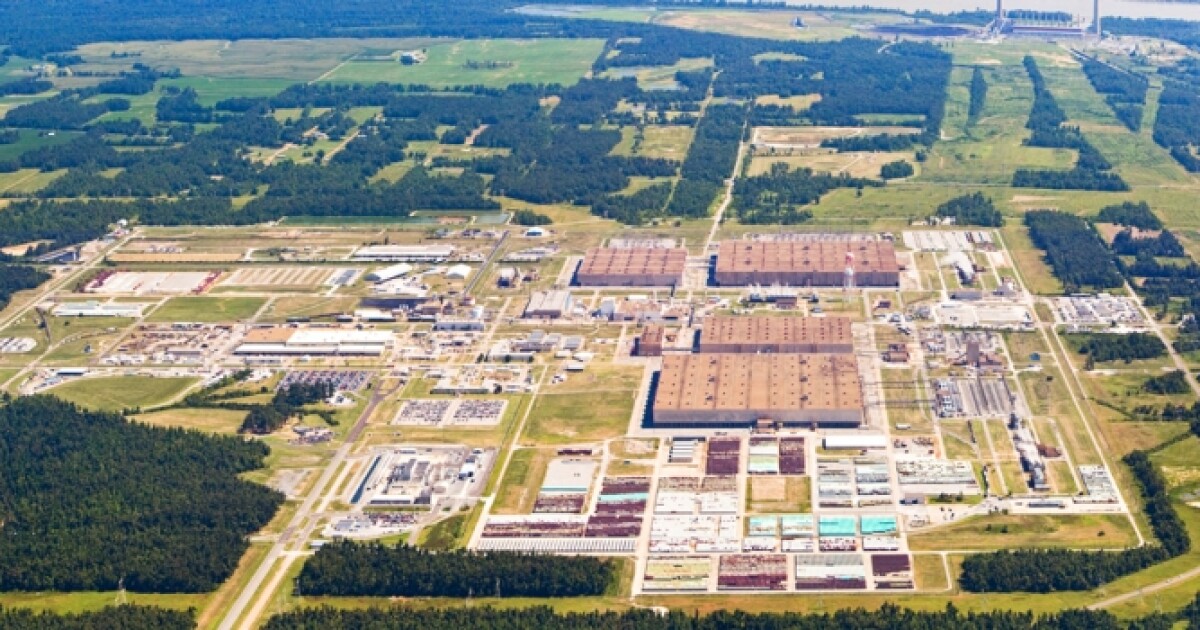
Nuclear power is not a good option for Kentucky. Radioactive waste is still a problem https://www.courier-journal.com/story/opinion/2021/10/08/nuclear-power-plants-bring-radioactive-waste-problematic-kentucky/5951188001/, David Ross Stevens Proponents of nuclear power plants speak eloquently about the efficiencies and safety of uranium-powered electrical generation. However, they cavalierly pass by the major problems of radioactivity — both before and after power generation. This is exactly what happened in the recent Courier Journal op-ed piece by Julian Colvin, a nuclear engineering student at North Carolina State University. He contends that Kentucky’s best option for transitioning from coal to something else is to nuclear power because of its new safety measures and efficiencies. That is all well and good, perhaps, but the major knock against nuclear power is what happens before electrical generation and after electrical generation.
Kentucky already has experience with both. The “before” example is the Paducah Gaseous Diffusion Plant that turned raw uranium ore into a more usable gas to be sent to the Oak Ridge, TN, plant for nuclear rods and for bomb-making. The “after” example is the Maxey Flats low-level radioactive waste deposit site 10 miles northwest of Morehead, KY. Both places are now closed but still are staffed by people who are trying to “manage” the migration of radioactive water aimed at the Ohio River. These jobs are “forever” jobs because the Department of Energy sees no end to the need for cleanup and environmental protection.
The Paducah plant, one of sixteen such U.S. facilities, is now labeled a Superfund high-priority environmental disaster site. In the year 2020 alone the Department of Energy requested $277 million for the Paducah cleanup plan which is decades behind schedule. After all, there are 750 acres with highly polluted land and 400 more buildings to be decontaminated and demolished. Many people there have sued because of radioactive-caused diseases. Their cases are pending. The plant has been closed to production for 27 years, but still employs hundreds of workers trying to contain the wastes. None of these costs are ever reflected in “efficiency claims” by nuclear engineers.
And then there is Maxey Flats, a facility that the late Governor Bert Combs thought would be the beginning of a great economic boon for Kentucky. Anything that uranium comes into contact with ends up as waste — desks, brooms, coveralls, tanks, pipes, you name it. The private company that operated the site dug 64 trenches, each one more than two football fields long. They were 30 feet deep and then covered with 10 feet of soil.
Apparently no one thought that the rain would seep down onto the half million pounds of material. And that the rainwater might pick up some radioactivity. And that it might flow off with other groundwater toward the nearby Ohio River. That is precisely what happened, according to the monitoring wells surrounding the 770 acres. So for 14 years the material was trucked in until the monitoring wells started to tell their tale. In 1977 the dump was closed to dumping but not to the ensuing cleanup. By 1979 the state took over “management” duties for the next 42 years. The state has had to dig six more rubber-lined trenches to receive wastes generated by the very site itself. It would be interesting to see a cost/benefit study for the Commonwealth of Kentucky during the decade and a half of activity and the four decades of post-activity.
There are many people like engineering student Julian Colvin, who advise Kentucky to forgo solar and wind energy in favor of nuclear power as the substitute for coal. Here are two numbers I like to think of in response. Nuclear waste lasts for hundreds of thousands of years before they are half-decayed. Our United States government — perhaps the longest continuous government in the world — is only 232 years old. Who will be around to manage uranium wastes?
David Ross Stevens was the first investigative environmental writer for The Courier Journal, a former adjunct professor at Indiana University Southeast, New Albany teaching a sustainability course and the designer/builder of his own solar house 42 years ago.
Despite pre-election promises, Biden administration is continuing Trump’s costly nuclear weapons modernisation.

In terms of nuclear policy, the Biden administration, for its part, seems set on continuing much of the strategic weapons modernization that was already underway during the Trump administration, despite the president-elect making calls for reducing spending on nuclear weapons, even stating that “the United States does not need new nuclear weapons.”…..……
despite pre-election rhetoric about pursuing a “sustainable nuclear budget,” the nuclear weapons plans of the current administration are more or less business as usual
Newly Declassified Data Shows Unexplained Increase In U.S. Nuclear Warhead Stockpile
There had been no increases in the stockpile for over 25 years before this data point was released.
BY THOMAS NEWDICK OCTOBER 7, 2021, The Drive, In the latest official public count, the U.S. military possesses a stockpile of 3,750 nuclear warheads, with approximately 2,000 more that have been retired and are awaiting disposal. Under the Trump administration, however, a small but unusual bump in stockpile size occurred between 2018 and 2019, according to these same figures. The unexplained increase in the total number of warheads in inventory is apparently only the second reported instance of its kind since the end of the Cold War.
The revelations are among newly declassified details of nuclear weapons numbers in a recently published fact sheet from the U.S. Department of State with the title Transparency in the U.S. Nuclear Weapons Stockpile. This is the first time such data has been released since September 2017, after which the Trump administration took the decision to classify the information.
The revelations are among newly declassified details of nuclear weapons numbers in a recently published fact sheet from the U.S. Department of State with the title Transparency in the U.S. Nuclear Weapons Stockpile. This is the first time such data has been released since September 2017, after which the Trump administration took the decision to classify the information.
While there is no information immediately available to explain that 20-warhead increase, FAS suggests that one possibility is the production of the controversial low-yield W76-2 nuclear warheads for the U.S. Navy’s Trident D5 submarine-launched ballistic missiles.
The-then presidential candidate Joe Biden warned before taking office that fielding the W76-2 was a “bad idea” and that the warhead’s existence makes the U.S. government “more inclined to use them” than in the past…………..
The timing of the latest nuclear warheads fact sheet coincides with a review of nuclear weapons policy and capabilities by the Biden administration. Declassifying the nuclear stockpile information is also likely geared toward next January’s Nuclear Non-Proliferation Treaty conference, in which nuclear powers who have signed the treaty — among the United States, Russia, the United Kingdom, France, and China — will address the issue of disarmament commitments………….
As The War Zone has examined in the past, New START places hard limits on the total number of strategic nuclear weapon delivery systems, as well as the warheads that they carry, that each country can possess. The arrangement is seen as being key to preventing a new nuclear arms race between the two powers and the Biden administration is apparently keen to negotiate new arms control deals with Russia, especially given the collapse of the Intermediate-Range Nuclear Forces Treaty, or INF, in 2019.
In terms of nuclear policy, the Biden administration, for its part, seems set on continuing much of the strategic weapons modernization that was already underway during the Trump administration, despite the president-elect making calls for reducing spending on nuclear weapons, even stating that “the United States does not need new nuclear weapons.”………..
despite pre-election rhetoric about pursuing a “sustainable nuclear budget,” the nuclear weapons plans of the current administration are more or less business as usual. The hopes of some analysts that the United States might even do away with the ICBM leg of its nuclear triad were swiftly dashed, the Biden administration quickly committing itself to the primacy of the nuclear triad itself — ICBMs, nuclear-capable Air Force bombers, and submarine-launched ballistic missiles. All of those areas are undergoing a process of modernization……… https://www.thedrive.com/the-war-zone/42666/newly-declassified-data-shows-unexplained-increase-in-u-s-nuclear-warhead-stockpile
Nuclear security helicopter scours Boston Marathon route for radiation
Nuclear security helicopter scours Boston Marathon route for radiation
Radiation surveys part of beefed-up security around the 125th Marathon. Ars Technica, TIM DE CHANT – 10/9/202 This morning, a Department of Energy helicopter buzzed above cities and suburbs in eastern Massachusetts, scanning for radiation in advance of the 125th Boston Marathon. The sweep is part of security preparations to help first responders pinpoint possible “dirty bombs” and other terrorist activities before they claim any lives.
The flight started with a thorough scan of the starting line in the western suburb of Hopkinton before flying along the 26.2-mile route to the finish line in Boston, where the helicopter performed another comprehensive survey. The craft flew at low altitude the entire time, dipping below 100 feet on several occasions, according to FlightAware.
The twin-engine Bell 412 (tail number N412DE) is operated by the National Nuclear Security Administration, a division of the Department of Energy that is responsible for everything from nonproliferation to maintaining the nation’s nuclear stockpile. The helicopter is part of the agency’s Aerial Measuring System, which routinely performs radiological surveys before major events, including presidential inaugurations, Super Bowls, and New Year’s Eve celebrations in Las Vegas.
The NNSA will fly additional surveys in the Boston area over the next three days, including Monday, when the marathon will be run. Today’s flight is intended to develop a map of background radiation sources, which will help the helicopter and other ground-based sensors detect any unusual radiological activity on race day, including so-called “dirty bombs” that use traditional explosives to scatter radioactive material………………… https://arstechnica.com/science/2021/10/nuclear-security-helicopter-scours-boston-marathon-route-for-radiation/
The CIA Plot to Kidnap or Kill Julian Assange in London is a Story that is Being Mistakenly Ignored
The CIA Plot to Kidnap or Kill Julian Assange in London is a Story that is Being Mistakenly Ignored https://www.counterpunch.org/2021/10/05/the-cia-plot-to-kidnap-or-kill-julian-assange-in-london-is-a-story-that-is-being-mistakenly-ignored/?fbclid=IwAR3t BY PATRICK COCKBURN 5 October 21, Three years ago, on 2 October 2018, a team of Saudi officials murdered journalist Jamal Khashoggi in the Saudi consulate in Istanbul. The purpose of the killing was to silence Khashoggi and to frighten critics of the Saudi regime by showing that it would pursue and punish them as though they were agents of a foreign power.
It was revealed this week that a year before the Khashoggi killing in 2017, the CIA had plotted to kidnap or assassinate Julian Assange, the founder of WikiLeaks, who had taken refuge five years earlier in the Ecuador embassy in London. A senior US counter-intelligence official said that plans for the forcible rendition of Assange to the US were discussed “at the highest levels” of the Trump administration. The informant was one of more than 30 US officials – eight of whom confirmed details of the abduction proposal – quoted in a 7,500-word investigation by Yahoo News into the CIA campaign against Assange.
The plan was to “break into the embassy, drag [Assange] out and bring him to where we want”, recalled a former intelligence official. Another informant said that he was briefed about a meeting in the spring of 2017 at which President Trump had asked if the CIA could assassinate Assange and provide “options” about how this could be done. Trump has denied that he did so.
The Trump-appointed head of the CIA, Mike Pompeo, said publicly that he would target Assange and WikiLeaks as the equivalent of “a hostile intelligence service”. Apologists for the CIA say that freedom of the press was not under threat because Assange and the WikiLeaks activists were not real journalists. Top intelligence officials intended to decide themselves who is and who is not a journalist, and lobbied the White House to redefine other high-profile journalists as “information brokers”, who were to be targeted as if they were agents of a foreign power.
Among those against whom the CIA reportedly wanted to take action were Glenn Greenwald, a founder of the Intercept magazine and a former Guardian columnist, and Laura Poitras, a documentary film-maker. The arguments for doing so were similar to those employed by the Chinese government for suppressing dissent in Hong Kong, which has been much criticised in the West. Imprisoning journalists as spies has always been the norm in authoritarian countries, such as Saudi Arabia, Turkey and Egypt, while denouncing the free press as unpatriotic is a more recent hallmark of nationalist populist governments that have taken power all over the world.
It is possible to give only a brief precis of the extraordinary story exposed by Yahoo News, but the journalists who wrote it – Zach Dorfman, Sean D Naylor and Michael Isikoff – ought to scoop every journalistic prize. Their disclosures should be of particular interest in Britain because it was in the streets of central London that the CIA was planning an extra-judicial assault on an embassy, the abduction of a foreign national, and his secret rendition to the US, with the alternative option of killing him. These were not the crackpot ideas of low-level intelligence officials, but were reportedly operations that Pompeo and the agency fully intended to carry out.
This riveting and important story based on multiple sources might be expected to attract extensive coverage and widespread editorial comment in the British media, not to mention in parliament. Many newspapers have dutifully carried summaries of the investigation, but there has been no furor. Striking gaps in the coverage include the BBC, which only reported it, so far as I can see, as part of its Somali service. Channel 4, normally so swift to defend freedom of expression, apparently did not mention the story at all.
In the event, the embassy attack never took place, despite the advanced planning. “There was a discussion with the Brits about turning the other cheek or looking the other way when a team of guys went inside and did a rendition,” said a former senior US counter-intelligence official, who added that the British had refused to allow the operation to take place.
But the British government did carry out its own less melodramatic, but more effective measure against Assange, removing him from the embassy on 11 April 2019 after a new Ecuador government had revoked his asylum. He remains in Belmarsh top security prison two-and-a-half years later while the US appeals a judicial decision not to extradite him to the US on the grounds that he would be a suicide risk.
If he were to be extradited, he would face 175 years in prison. It is important, however, to understand, that only five of these would be under the Computer Fraud and Abuse Act, while the other 170 potential years are under the Espionage Act of 1917, passed during the height of the patriotic war fever as the US entered the First World War.
Only a single minor charge against Assange relates to the WikiLeaks disclosure in 2010 of a trove of US diplomatic cables and army reports relating to the Iraq and Afghan wars. The other 17 charges are to do with labeling normal journalistic investigation as the equivalent of spying.
Pompeo’s determination to conflate journalistic inquiry with espionage has particular relevance in Britain, because the home secretary, Priti Patel, wants to do much the same thing. She proposes updating the Official Secrets Act so that journalists, whistle-blowers and leakers could face sentences of up to 14 years in prison. A consultative paper issued in May titled Legislation to Counter State Threats (Hostile State Activity) redefines espionage as “the covert process of obtaining sensitive confidential information that is not normally publicly available”.
The true reason the scoop about the CIA’s plot to kidnap or kill Assange has been largely ignored or downplayed is rather that he is unfairly shunned as a pariah by all political persuasions: left, right and centre.
To give but two examples, the US government has gone on claiming that the disclosures by WikiLeaks in 2010 put the lives of US agents in danger. Yet the US Army admitted in a court hearing in 2013 that a team of 120 counter-intelligence officers had failed to find a single person in Iraq and Afghanistan who had died because of the disclosures by WikiLeaks. As regards the rape allegations in Sweden, many feel that these alone should deny Assange any claim to be a martyr in the cause of press freedom. Yet the Swedish prosecutor only carried out a “preliminary investigation” and no charges were brought.
Assange is a classic victim of “cancel culture”, so demonised that he can no longer get a hearing, even when a government plots to kidnap or murder him.
In reality, Khashoggi and Assange were pursued relentlessly by the state because they fulfilled the primary duty of journalists: finding out important information that the government would like to keep secret and disclosing it to the public.
Patrick Cockburn is the author of War in the Age of Trump (Verso).
The “No Militarization of Space Act” has been introduced in the U.S. Congress.
No Militarization of Space Act, CounterPunch BY KARL GROSSMAN, 6 Oct 21,
Finally, there’s some good news about the U.S. push to turn space into a war zone. The “No Militarization of Space Act” has been introduced in the U.S. Congress. It would abolish the new U.S. Space Force.
It is being sponsored by five members of the House of Representatives led by Representative Jared Huffman. In a statement announcing the September 22nd introduction of the measure, Huffman called the U.S. Space Force “costly and unnecessary.”
The arms and aerospace industries, which have a central role in U.S. space military activities, will no doubt be super-active in coming weeks working to stop movement of the legislation.
Representative Huffman, with a background as a consumer attorney specializing in public interest cases, was elected in 2012 to represent the 2nd Congressional District in California which covers the state’s North Coast up to the Oregon border. He resides in San Rafael.
In his statement announcing the introduction of the bill, Huffman said the “long-standing neutrality of space has fostered a competitive, non-militarized age of exploration every nation and generation has valued since the first days of space travel. But since its creation under the former Trump administration, the Space Force has threatened longstanding peace and flagrantly wasted billions of taxpayer dollars.” And, he continued: “It’s time we turn our attention back to where it belongs: addressing urgent domestic and international priorities like battling COVID-19, climate change, and growing economic inequality. Our mission must be to support the American people, not spend billions on the militarization of space.”
Co-sponsors of the “No Militarization of Space Act” are Representatives Mark Pocan of Wisconsin, chair of the Congressional Progressive Caucus; Maxine Waters of California; Rashida Tlaib of Michigan; and Jesus Garcia of Illinois. All are Democrats.
Alice Slater, a board member of the organization World BEYOND War, commented that Trump, “in his besotted hunkering for hegemonic glory,” established the Space Force as “a brand new branch of the already gargantuan military juggernaut….Sadly, the new U.S. President Biden has done nothing to ratchet down the warmongering. Fortunately, help is on the way with a group of five sane members of Congress.”
But not only has Joe Biden stuck with the U.S. Space Force, but most Democrats in both the House of Representatives and Senate voted for its creation as championed by Trump. All Republicans in Congress voted for it…………….https://www.counterpunch.org/2021/10/06/no-militarization-of-space-act/
Nuclear executive to go to prison for fraud
Former exec readies for 2 years in prison in nuclear debacle, abc, By Jeffrey Collins, Oct 5, 2021 Associated Press COLUMBIA, S.C. (AP) — An executive who spent billions of dollars on two South Carolina nuclear plants that never generated a watt of power, lying and deceiving regulators about their progress, is ready to go to prison.
Former SCANA Corp. CEO Kevin Marsh has agreed with prosecutors that he should spend two years in prison. He goes before a federal judge Thursday who will decide whether to accept that deal…..
Marsh is the first executive to go to prison for the nuclear debacle. A second former SCANA executive and an official at Westinghouse Electric Co., the lead contractor to build two new reactors at the V.C. Summer plant, have also pleaded guilty. A second Westinghouse executive has been indicted and is awaiting trial.
Marsh in February pleaded guilty to conspiracy to commit wire and mail fraud in federal court, and obtaining property by false pretenses in state court. Prosecutors agreed to his request to serve his entire sentence on both sets of charges in a federal prison.
Marsh already paid $5 million in restitution. SCANA had paid Marsh $5 million in 2017, the year the utility abandoned the hopelessly behind-schedule project in Fairfield County
Marsh lied and presented rosy projections on the progress of the reactors that he knew was false in earning calls, presentations and press releases. The CEO wanted to keep investors pumping money into the project and the company’s stock price up, prosecutors said.
His actions took more than $1 billion from the pockets of ratepayers and investors, authorities said in an 87-page Securities and Exchange Commission lawsuit filed against them in 2020………….. https://www.abccolumbia.com/2021/10/05/former-exec-readies-for-2-years-in-prison-in-nuclear-debacle/
US Reveals Nuclear Bomb Numbers After Trump Blackout
US Reveals Nuclear Bomb Numbers After Trump Blackout
Last week, Russian and US diplomats held talks in Geneva to determine controls on conventional weapons. The Defense Post, 6 Oct 21, The US State Department published on Tuesday the number of nuclear warheads the country stockpiles for the first time in four years, after former president Donald Trump placed a blackout on the data.
As of September 30, 2020, the US military maintained 3,750 active and inactive nuclear warheads, down by 55 from a year earlier and by 72 from the same date in 2017.
The figure was also the lowest level since the US nuclear stockpile peaked at the height of the Cold War with Russia in 1967, when the total was 31,255 warheads.
The numbers were released Tuesday amid an effort by the administration of President Joe Biden to restart arms controls talks with Russia after they stalled under Trump………….
Biden, who came in to office on January 20, immediately proposed a five-year extension to New Start, which Russian President Vladimir Putin quickly agreed to.
The deal caps at 1,550 the number of nuclear warheads that can be deployed by Moscow and Washington.
Last week, Russian and US diplomats held talks behind closed doors in Geneva to begin discussions on a successor to New Start and also controls on conventional weapons.
A US official called the talks “productive,” but both sides said the mere fact of holding the talks was positive.
According to a January 2021 tally by the Stockholm International Peace Research Institute, which includes retired warheads — not counted in the State Department’s numbers — the United States had 5,550 warheads, compared to 6,255 in Russia, 350 in China, 225 in Britain, and 290 in France.
India, Pakistan, Israel, and North Korea have together around 460 nuclear warheads, according to the institute. https://www.thedefensepost.com/2021/10/06/us-nuclear-bomb-numbers/
Rep. Burgess Owens and Rep. Chris Stewart sponsor a Bill to ensure compensation for health effects of nuclear bomb testing
Too many ‘downwinders’ are still suffering https://www.deseret.com/2021/10/4/22709221/utah-nuclear-testing-downwinders-congress-compensation-health-effects We are sponsoring a bill that would make sure the government’s responsibility to those who were harmed by nuclear testing does not get swept under the rug. By Burgess Owens and Chris Stewart Oct 4, 2021, ‘ Any objective study of American history brings us to the realization that there are many Americans who quietly made, and continue to make, great sacrifices for our national security. Many of these women and men willingly give of themselves to ensure that our country remains free.
Tragically, under the banner of national security the United States government exposed Americans to radioactive uranium ore and radioactive dust — subjecting them to lung cancer and other respiratory illnesses.
On July 16, we marked the 76th anniversary of the detonation of the first nuclear weapon — code-named Trinity — in the desert of New Mexico’s Tularosa Basin. Three weeks after the Trinity detonation, the United States exploded the Little Boy bomb over Hiroshima and, three days later, the Fat Man bomb over Nagasaki. Six days later, Japan surrendered. In the aftermath of World War II, a nuclear arms race began that reached its zenith with over 60,000 nuclear weapons worldwide in 1986.
Many lives were lost or severely altered by the nuclear weapons program. Thankfully, the world stockpile of nuclear weapons has steadily declined since 1986 and will, hopefully, continue to do so in the future. Yet, the effects of detonating over 1,100 nuclear weapons since the Trinity test in 1945 continue to mar the lives of Americans to this day.
Through atmospheric weapons tests, as well as mining, transporting and milling of uranium ore, many Americans have been slowly killed by radiation exposure. Thousands of Utahns were infected by radiation exposure simply by living “downwind” of the federal government’s nuclear weapons testing sites. Additional Utahn miners were affected as they worked the uranium necessary for these weapons. These “downwinders” and miners and their families friends, and communities often suffered excruciating illness, loss and devastation.
In response to this malfeasance, Congress rightly enacted (and later amended in 2000) the Radiation Exposure Compensation Act (RECA) in 1990. This legislation was a good first step in making recompense to those who mined and hauled uranium ore and those who processed the ore at a mill. The RECA legislation also addresses those exposed to radiation downwind from nuclear test sites.
It has been more than 20 years since any meaningful reform to RECA has been made for those whose lives have been taken or irreversibly altered by our foray into the arms race. Several classifications of workers such as core drillers and ground workers have been denied justice by being excluded completely from the process.
Some diseases that should have been compensable have been excluded. Numerous geographical locations exposed to downwind radiation have been left out. Uranium miners continued to mine after the United States stopped buying uranium for its nuclear weapons programs in 1971. These so-called post-1971 workers were excluded from accessing benefits since the original RECA legislation had an arbitrary cutoff date of Dec. 31, 1971 — even though the federal government continued to regulate uranium mines long after 1971. To make matters worse, RECA is scheduled to sunset in July 2022 — potentially leaving all classifications of exposure victims without redress.
We are honored to represent some of these “downwinders” and their family members and want them to know their suffering — and the sacrifices they made for our nation — are not forgotten.
That is why we are pleased to be the lead Republican members of the House of Representatives on the “RECA Amendments Act of 2021,” legislation that will reauthorize RECA for those still suffering the consequences of nuclear testing.
The tragic consequences of the nuclear arms race cannot be swept under the rug of history. We urge our colleagues in Congress to support the “RECA Amendments Act of 2021.” Our country must act now to address the injustices of those who have been forgotten by their own government.
Rep. Burgess Owens represents Utah’s 4th Congressional District. Rep. Chris Stewart represents Utah’s 2nd Congressional District.
Surprise surprise. USA Justice Dept drops charges against Michael Flynn.

In surprise move, US Justice Department drops case against Michael Flynn, SMH, 8 May 20, Washington: The Justice Department says it is dropping the criminal case against President Donald Trump’s first national security adviser, Michael Flynn, abandoning a prosecution that became a rallying cry for the President and his supporters in attacking the FBI’s Trump-Russia investigation.
The move is a stunning reversal for one of the signature cases brought by special counsel Robert Mueller. It comes even though prosecutors for the past three years have maintained that Flynn lied to the FBI in a January 2017 interview about his conversations with the Russian ambassador.
Flynn himself admitted as much, pleading guilty before asking to withdraw the plea, and became a key cooperator for Mueller as the special counsel investigated ties between Russia and the 2016 Trump campaign.
In court documents being filed on Thursday, the Justice Department said it is dropping the case “after a considered review of all the facts and circumstances of this case, including newly discovered and disclosed information.” The documents were obtained by The Associated Press………
Flynn himself admitted as much, pleading guilty before asking to withdraw the plea, and became a key cooperator for Mueller as the special counsel investigated ties between Russia and the 2016 Trump campaign.
In court documents being filed on Thursday, the Justice Department said it is dropping the case “after a considered review of all the facts and circumstances of this case, including newly discovered and disclosed information.” The documents were obtained by The Associated Press………
Flynn pleaded guilty that December, among the first of the President’s aides to admit guilt in Mueller’s investigation. He acknowledged that he lied about his conversations with Kislyak, in which he encouraged Russia not to retaliate against the US for sanctions imposed by the Obama administration over election interference.
He provided such extensive cooperation that prosecutors said he was entitled to a sentence of probation instead of prison…… https://www.smh.com.au/world/north-america/in-surprise-move-us-justice-department-drops-case-against-michael-flynn-20200508-p54qzu.html
The plot thickens, as Michael Flynn’s shady nuclear deals are exposed.
 Michael Flynn’s involvement in a plan to build nuclear reactors in the Middle East is looking even shadier https://www.vox.com/2017/12/6/16743476/michael-flynn-russia-sanctions
According to a whistleblower, a Flynn business associate bragged that Flynn would end sanctions on Russia to clear the way for this project.
That’s the explosive, but unverified, allegation of a whistleblower cooperating with House Democrats probing the myriad scandals surrounding Flynn, who pleaded guilty earlier this month to lying to the FBI about his contacts with a senior Russian diplomat.
The allegation has been made public by Rep. Elijah Cummings (D-MD), the top Democrat on the House Oversight Committee — who is demanding that his Republican counterpart on the committee investigate Flynn and others involved in the matter more aggressively.
The project in question — promoted by a group of former senior US military officers, and often described as a “Marshall Plan” of sorts — would involve US companies working with Russian companies to build and operate nuclear plants in the Middle East, and export spent fuel from those plants.
In June 2015, Flynn flew to Egypt and Israel to “gauge attitudes” on the proposal, Newsweek’s Jeff Stein has reported. And one of the companies involved in the project covered his travel expenses and wrote him a check for $25,000 for the trip, though it’s not clear if Flynn cashed the check.
But reports over the last few months have suggested that Flynn continued to promote the project after the election, and even after he had been sworn in as national security adviser.
One businessman involved in the project — Alex Copson of ACU Strategic Partners — even dubbed it the “Trump/Putin M.E. [Middle East] Marshall Plan,” according to an email obtained by Reuters.
Now, new allegations are coming from a whistleblower who says he met Copson at a Washington, DC, event on Inauguration Day — and that Copson had some very interesting things to say about the project.
Michael Flynn’s business partner allegedly said this project was a pretext for expanding the US military presence in the Middle East
According to the whistleblower, Copson flat-out said the following things:
- That he “just got” a text message from Flynn saying the nuclear plant project was “good to go,” and that his business colleagues should “put things in place”
- That Flynn was making sure sanctions on Russia would be “ripped up,” which would let the project go forward
- That this was the “best day” of his life, and that the project would “make a lot of very wealthy people”
- That the project would also provide a pretext for expanding a US military presence in the Middle East (the pretext of defending the nuclear plants)
- That citizens of Middle Eastern countries would be better off “when we recolonize the Middle East”
The whistleblower said that Copson quickly displayed what he claimed to be a text message from Flynn that appeared to have been sent during Trump’s inauguration speech. But the whistleblower says he or she could not read the actual message. Still, he or she claims to have been disturbed enough by the interaction to have documented it at the time.
Perhaps most intriguingly of all, Cummings writes that he told Special Counsel Robert Mueller’s team about all this some time ago — and that they asked him to delay publicly revealing this information “until they completed certain investigation steps.”
Cummings added: “They have now informed us that they have done so.”
Michael Flynn, Trump’s first National Security Advisor hid $200k in payments for Middle East nuclear power plan before joining White House
Michael Flynn hid $200k in payments for Middle East nuclear power plan before joining White House https://www.salon.com/2021/10/04/michael-flynn-hid-200k-in-payments-for-middle-east-nuclear-power-plan-before-joining_partner/
Trump’s first National Security Advisor did not disclose fees from consulting work in the Middle East
By TRAVIS GETTYS OCTOBER 4, 2021 MICHAEL FLYNN RECEIVED $200,000 IN UNDISCLOSED PAYMENTS FOR CONSULTING WORK IN THE MIDDLE EAST BEFORE JOINING DONALD TRUMP’S ADMINISTRATION.
The retired U.S. Army general was paid for his work in 2014 and 2015 on a plan to build 40 nuclear power plants in the Middle East,
Flynn briefly served as Trump’s first national security adviser before he resigned in disgrace for lying to FBI agents about his communications with then-Russian ambassador Sergey Kislyak and his undisclosed work for the Turkish government.
Robert Mueller’s prosecutors filed charges against Flynn, who pleaded guilty to making false statements to the FBI, but Trump pardoned him in November.
The newly revealed payments to Flynn came from a U.S. firm connected to the project, ACU Strategic Partners, although his relationship to the project had been reported in 2017. ACU Strategic Partners, although his relationship to the project had been reported in 2017.
Two U.S. House committees investigated Flynn’s involvement in the project, which he had not disclosed before joining the White House, after Newsweek reported he had been repaid between $10,000-$15,000 for travel expenses.
An audit of a Dutch company that specializes in transport revealed the $200,000 payment to Flynn.
-
Archives
- October 2026 (104)
- September 2026 (339)
- August 2026 (330)
- July 2026 (355)
- June 2026 (287)
- May 2026 (306)
- April 2026 (356)
- March 2026 (251)
- February 2026 (267)
- January 2026 (308)
- December 2025 (358)
- November 2025 (359)
-
Categories
- 1
- 1 NUCLEAR ISSUES
- business and costs
- climate change
- culture and arts
- ENERGY
- environment
- health
- history
- indigenous issues
- Legal
- marketing of nuclear
- media
- opposition to nuclear
- PERSONAL STORIES
- politics
- politics international
- Religion and ethics
- safety
- secrets,lies and civil liberties
- spinbuster
- technology
- Uranium
- wastes
- weapons and war
- Women
- 2 WORLD
- ACTION
- AFRICA
- Atrocities
- AUSTRALIA
- Christina's notes
- Christina's themes
- culture and arts
- Events
- Fuk 2022
- Fuk 2023
- Fukushima 2017
- Fukushima 2018
- fukushima 2019
- Fukushima 2020
- Fukushima 2021
- general
- global warming
- Humour (God we need it)
- Nuclear
- RARE EARTHS
- Reference
- resources – print
- Resources -audiovicual
- Weekly Newsletter
- World
- World Nuclear
- YouTube
-
RSS
Entries RSS
Comments RSS

