Leaked documents – Facebook ‘Bot’ adviser secretly in the pay of USA regime change agency.
Mint Press News KIT KLARENBERG 14 July, 22
Documents shared with MintPress reveal that Valent Projects – a shadowy communications firm that advises social media platforms such as Facebook on alleged state-backed online influence campaigns – has itself received $1.2 million from U.S. intelligence front USAID, for “counter disinformation and communications support.”
This relationship has hitherto never been publicly acknowledged, and the resulting income is not reflected in the company’s published accounts…………………..
Valent Projects is the creation of Amil Khan, a veteran BBC and Reuters journalist turned British intelligence-adjacent information warfare professional. For many years, Khan worked on secret Foreign Office projects in Syria. There, he ran covert psyops campaigns targeting domestic and international audiences, trained ostensibly independent opposition journalists and activists to communicate effectively with the media, and provided propaganda support to numerous armed groups trained, funded, and armed by London and Washington………………………………………………………………………………………..
UKRAINE ON THE BRAIN
On June 7, it was revealed that Khan was also working closely with British journalist Paul Mason in an effort to deplatform The Grayzone, as part of a wider personal crusade against the anti-war, anti-imperialist left over the matter of Ukraine.
Leaked emails between the pair exposed how Mason suggested subjecting The Grayzone – which he baselessly and bizarrely believed to be a Chinese and Russian intelligence operation – to “relentless deplatforming” via “full nuclear legal” attacks, official probes by government bodies, and cutting the website and its contributors off from online donation sources such as PayPal.
…………………………………. the conflict in Ukraine has grown the power of Western governments to directly dictate what is and is not true, and what their populations are and are not allowed to know, exponentially. Yet, their ability to distort and censor overseas is limited, if not outright waning – and that’s where Valent Projects comes in.
As such, the leaked documents reviewed by MintPress illuminate a hitherto unexplored purpose of online suppression and deplatforming: regime change. By filtering out troublesome viewpoints and inconvenient facts in target countries, governments can be destabilized, and who or what replaces them entrenched in power, with domestic and foreign audiences deprived of access to any and all critical viewpoints.
As the New Cold War grows considerably hotter every day, Khan’s services will surely become ever-increasingly in demand. Neither he nor his state and quasi-state sponsors can be allowed to succeed.
Kit Klarenberg is an investigative journalist and MintPresss News contributor exploring the role of intelligence services in shaping politics and perceptions. His work has previously appeared in The Cradle, Declassified UK, and Grayzone. Follow him on Twitter @KitKlarenberg. https://www.mintpressnews.com/valent-facebook-influence-ops-regime-change-leak/281403/
NATO: The Most Dangerous Military Alliance on the Planet

NATO is determined to stay in business. Its business is war. That meant expanding its war machine far beyond the border of Europe and engaging in ceaseless antagonism toward China and Russia.
NATO sees the future, as detailed in its “NATO 2030: Unified for a New Era,” as a battle for hegemony with rival states, especially China, and calls for the preparation of prolonged global conflict.
the U.S. and NATO seem determined to funnel billions of dollars of weapons into the conflict for months if not years — the more the unthinkable becomes thinkable.
The massive expansion of NATO, not only in Eastern and Central Europe but the Middle East, Latin America, Africa and Asia, presages endless war and a potential nuclear holocaust.
By Chris Hedges, July 16, 2022: Information Clearing House — The North Atlantic Treaty Organization (NATO), and the arms industry that depends on it for billions in profits, has become the most aggressive and dangerous military alliance on the planet. Created in 1949 to thwart Soviet expansion into Eastern and Central Europe, it has evolved into a global war machine in Europe, the Middle East, Latin America, Africa and Asia.
NATO expanded its footprint, violating promises to Moscow, once the Cold War ended, to incorporate 14 countries in Eastern and Central Europe into the alliance. It will soon add Finland and Sweden. It bombed Bosnia, Serbia and Kosovo. It launched wars in Afghanistan, Iraq, Syria and Libya, resulting in close to a million deaths and some 38 million people driven from their homes. It is building a military footprint in Africa and Asia. It invited Australia, Japan, New Zealand and South Korea, the so-called “Asia Pacific Four,” to its recent summit in Madrid at the end of June. It has expanded its reach into the Southern Hemisphere, signing a military training partnership agreement with Colombia, in December 2021. It has backed Turkey, with NATO’s second largest military, which has illegally invaded and occupied parts of Syria as well as Iraq. Turkish-backed militias are engaged in the ethnic cleansing of Syrian Kurds and other inhabitants of north and east Syria. The Turkish military has been accused of war crimes – including multiple airstrikes against a refugee camp and chemical weapons use – in northern Iraq. In exchange for President Recep Tayyip Erdoğan’s permission for Finland and Sweden to join the alliance, the two Nordic countries have agreed to expand their domestic terror laws making it easier to crack down on Kurdish and other activists, lift their restrictions on selling arms to Turkey and deny support to the Kurdish-led movement for democratic autonomy in Syria.
It is quite a record for a military alliance that with the collapse of the Soviet Union was rendered obsolete and should have been dismantled. NATO and the militarists had no intention of embracing the “peace dividend,” fostering a world based on diplomacy, a respect of spheres of influence and mutual cooperation. It was determined to stay in business. Its business is war. That meant expanding its war machine far beyond the border of Europe and engaging in ceaseless antagonism toward China and Russia.
NATO sees the future, as detailed in its “NATO 2030: Unified for a New Era,” as a battle for hegemony with rival states, especially China, and calls for the preparation of prolonged global conflict…………………………………….
NATO has provided more than $8 billion in military aid to Ukraine, while the US has committed nearly $54 billion in military and humanitarian assistance to the country.
China, however, is the main course. Unable to compete economically, the U.S. and NATO have turned to the blunt instrument of war to cripple their global competitor.
The provocation of China replicates the NATO baiting of Russia………………………..
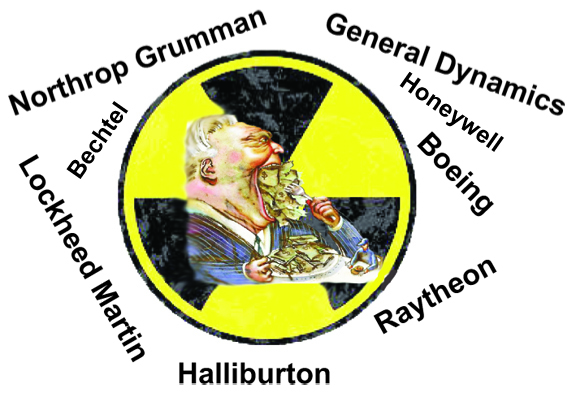
The conflict in Ukraine has been a bonanza for the arms industry, which, given the humiliating withdrawal from Afghanistan, needed a new conflict. Lockheed Martin’s stock prices are up 12 percent. Northrop Grumman is up 20 percent. The war is being used by NATO to increase its military presence in Eastern and Central Europe. The U.S. is building a permanent military base in Poland. The 40,000-strong NATO reaction force is being expanded to 300,000 troops. Billions of dollars in weapons are pouring into the region………………….
The war makers are frighteningly cavalier about the threat of nuclear war……………………………
The Biden administration has formed a Tiger Team of national security officials to run war games on what to do if Russia uses a nuclear weapon, according to The New York Times. The threat of nuclear war is minimized with discussions of “tactical nuclear weapons,” as if less powerful nuclear explosions are somehow more acceptable and won’t lead to the use of bigger bombs.
At no time, including the Cuban missile crisis, have we stood closer to the precipice of nuclear war. ………..
The longer the war in Ukraine continues — and the U.S. and NATO seem determined to funnel billions of dollars of weapons into the conflict for months if not years — the more the unthinkable becomes thinkable. Flirting with Armageddon to profit the arms industry and carry out the futile quest to reclaim U.S. global hegemony is at best extremely reckless and at worst genocidal. http://www.informationclearinghouse.info/57120.htm
The lingering horror of thorium radioactive poisoning in West Chicago

On the one hand, the story of West Chicago and thorium is one of triumph: a small town overcomes the odds and makes a big corporation clean up its radioactive waste. On the other hand, thorium still haunts some residents, especially those living with illness or deaths in the family that they suspect are related.
Are West Chicago’s Radiation Worries Over?, BELT Magazine, By Liuan Huska, 13 July 22,
Sandra Arzola was relaxing in her West Chicago home one weekend in 1995, when she heard a knock at the door. Recently married, she shared the gray duplex with her husband, mom and sister, and family members were constantly coming and going. But when Sandra answered the door that day, what she learned would change how she looked at her home and suburban community forever.
At the door was a woman representing Envirocon, an environmental cleanup company. There was thorium on the family’s property, the woman said, and if it was OK with them, workers were coming to remove it. It was the first time Sandra had heard of thorium “It took me by left field,” she said. “But [the representative] made it sound like everything was going to be fine.”
Unknowingly, the Arzolas had bought their way into what the Chicago Tribune in 1979 called “the radioactive capital of the Midwest.” Not long after they purchased the property, the U.S. Environmental Protection Agency designated it a Superfund site because of the hazardous waste in their yard.
The source of the danger was the old factory one block to the north of the Arzola home, which Jesse Arzola frequently went past while walking their dogs. From 1932 to 1973, the factory was the largest producer of rare earth and radioactive thorium compounds in the world. It started out producing lamps and later supplied thorium for the federal government’s atomic bomb development. But perhaps the factory’s most lasting legacy, at least in West Chicago, is the harmful radioactive waste that was dumped in ponds, piled at the factory and buried around homes and sidewalks across town.
Residents raised health concerns as early as the 1940s about the toxic material, but these were regularly dismissed by the factory, last owned by the Kerr-McGee Chemical Corporation. Comprehensive environmental protection rules weren’t put in place until the early 1970s, leaving the factory largely free to dispose of its nuclear waste for decades.
It has taken just as long for the company and government to clean up the radioactive waste. As of 2015, the radioactive sites under federal jurisdiction near the factory have been cleaned to EPA standards. There are no remaining health risks from the land, according to government officials.
But below the factory, the groundwater is still polluted with a range of toxins – particularly uranium – that exceed protection standards. The Illinois Emergency Management Agency, which has jurisdiction over the site, expects remediation to begin this fall. ……………………..
Prolonged or high levels of radiation exposure can damage genetic material in cells and cause cancer and other diseases later on, especially for children, who are more sensitive to radiation. Only two public health studies, published in the early 1990s, have been conducted in West Chicago. Both found elevated cancer rates in the 60185 zip code, which includes the neighborhood around the factory……………………………
The challenges facing West Chicago residents today began ninety years ago, when Charles R. Lindsay moved his lamp factory from Chicago to what was then an undeveloped little town with multiple rail connections. The factory, now officially known as the Rare Earths Facility, took monazite ore and used powerful acids to extract minerals to make gas lanterns, which burned thorium nitrate to emit an incandescent glow. During World War II, it also supplied thorium to the federal government to develop the atomic bombs that were later dropped on Nagasaki and Hiroshima, Japan.
During its four decades of operation, the Rare Earths Facility processed up to one hundred and forty-one thousand tons of monazite. The liquid waste from the extraction process was dumped into unlined ponds around the factory, seeping into the surrounding water table. Solid waste, a black, sand-like material known as thorium tailings, piled up on site. Old-timers share stories of sneaking into the factory grounds and playing on “Mount Thorium.” When the pile got too big, the waste was trucked down the road to a new pile in Reed Keppler Park.
Facing mounting piles of toxic waste, Lindsay came up with another solution: offer the waste to residents for landscaping. From the 1930s through the 1950s, radioactive thorium tailings were distributed across town, mixed with concrete to pour foundations, mixed with topsoil for gardens and spilled along roadways. The company continued to do this as the risks of radiation exposure became widely known starting in the late 1940s through its effects on Japanese atomic bomb survivors.
Soon after the factory moved to West Chicago, people started complaining. In 1941, nearby residents sued Lindsay Light for releasing airborne hydrofluoric acid that killed trees and shrubs nearby.
The federal government did not begin regulating nuclear materials until 1954. Starting in 1957 the company received repeated citations for safety violations, including failing to fence off radioactive storage areas, exposing workers to radiation levels above standards and improper waste disposal.
As the environmental movement gained steam through the 1960s, growing public pressure pushed Congress to create the Environmental Protection Agency and pass the Clean Air Act of 1970 and Clean Water Act of 1972. That resulted in sweeping new regulations – and obligations to the American public – for companies like Kerr-McGee, which had gotten used to operating with limited oversight…………………………….
The EPA denied the company’s request for an operating permit and the factory shuttered in 1973. It was cheaper to cease operations than follow the new rules. By 1980, Kerr-McGee had started the process of closing down the West Chicago facility for good. Pressure from residents and the city pushed the company to begin cleanup on 119 contaminated residential properties.
Still, Kerr-McGee had another plan that worried residents: to permanently store thirteen million cubic feet of radioactive waste at the factory site in a four-story, twenty-seven-acre, clay-covered cell. Concerned residents formed an organization, the Thorium Action Group, to fight the company’s proposal. This spawned more than a decade of legal battles between residents, the city of West Chicago, and state of Illinois — who wanted the thorium out of town — and the company and the federal Nuclear Regulatory Commission, who insisted the waste could safely be stored in this densely populated neighborhood of West Chicago…………………
Moving the thorium waste out of town would take over two decades to complete. In the meantime, there was still the problem of radioactive tailings embedded around the neighborhood…………………….
The Arzolas’ experience is far from rare. Realtors in West Chicago have operated with a “don’t ask, don’t tell” policy, said longtime realtor and former West Chicago resident Dan Czuba. Unlike for radon or lead, realtors never received directives from the state or any licensing board to disclose other harmful thorium byproducts. People have had to do their own homework and decide whether or not a home was a risk. “To this day,” Czuba said, “I still don’t know that there was an official statement of, ‘Thorium will hurt you.’”…………………………………..
Throughout the decades, various groups have tried to get the word out about thorium. The Thorium Action Group was active through the early 2000s. Once the EPA got involved and Kerr-McGee agreed to move the waste out, the group dissipated………
The lack of easily accessible information surrounding the contamination and cleanups has left some residents with the nagging worry that there may be other hidden pockets of radiation around town……….
One house to the west and across the railroad from the Arzolas, Erika Bartlett grew up playing along the tracks and under her yard’s sprawling old oak trees. When she was diagnosed with leukemia in 2012, at age thirty-four, a friend asked if there was anything she could have been exposed to.
“Wait a minute, I actually was,” Bartlett told her friend. She thought back to her high school years, when the oak trees, swingset and above-ground pool at her house were removed during the radiation remediation. Bartlett realized she had spent her childhood, starting from age four, in a neighborhood embedded with nuclear waste. She wondered how many others living near the factory had similar health problems. That started her on a yearslong personal investigation into the town’s thorium legacy.
Between 2012 and 2016, as Bartlett was undergoing cancer treatment, she knocked on doors in the neighborhoods around the factory, an area covering about one square mile. She found over 200 cases of cancers and other illnesses that could stem from radiation exposure, including birth defects, Hashimoto’s and aplastic anemia, the illness that killed the pioneering radioactivity researcher Marie Curie in 1934.
“When I first started, I didn’t think I’d find anything,” Bartlett said. “But block after block, it seemed like a bigger deal than I thought.”
The EPA estimated that, before the waste was removed, radiation levels in some residential neighborhoods in West Chicago increased lifetime cancer risks up to seventy times what is acceptable……
The only official health studies into the impacts on people living near the factory were conducted over three decades ago, by the Illinois Department of Public Health. Among residents in the 60185 zip code, studies in 1990 and 1991 found elevated rates of cancer, including melanomas and lung, colorectal and breast cancers. By grouping exposed and unexposed people together, however, researchers said more differences may have been masked……………………………………….
On the one hand, the story of West Chicago and thorium is one of triumph: a small town overcomes the odds and makes a big corporation clean up its radioactive waste. On the other hand, thorium still haunts some residents, especially those living with illness or deaths in the family that they suspect are related………………… https://beltmag.com/are-west-chicagos-radiation-worries-over/
Earthling: Was Obama right about Russia-Ukraine?
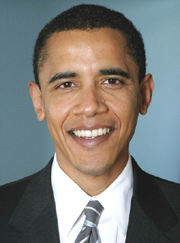
NonZero Newsletter, 18 July 22, If President Obama’s successors had stuck with his policy toward Ukraine, would there be a war there now?
That question is raised by a 2015 New York Times article that Glenn Greenwald unearthed this week. And, though the answer, as with other great historical what-ifs, is “We’ll never know for sure,” you could make a case for “Probably not.” In any event, pondering the question has benefits—such as reminding us how constricted discourse about war becomes once a war is underway.
The Times article was about Obama’s refusal, in the face of bipartisan pressure, to send arms to Ukraine. Obama, the Times reported, “has told aides and visitors that arming the Ukrainians would encourage the notion that they could actually defeat the far more powerful Russians, and so it would potentially draw a more forceful response from Moscow.”
An anonymous source paraphrased Obama as asking questions like, “Okay, what happens if we send in equipment – do we have to send in trainers?” And, “What if it ends up in the hands of thugs? What if Putin escalates?” In the absence of satisfactory answers, Obama confined aid to things like helmets and night vision goggles.
After he left office, Washington reversed course and sent lethal military aid to Ukraine—billions of dollars worth. And, to answer Obama’s questions: Yes, that turned out to involve sending trainers to Ukraine—as well as conducting NATO-Ukraine military exercises on Russia’s doorstep; and yes, Putin escalated. This doesn’t mean that the former caused the latter, but the sequence of events leaves that possibility quite open.
By early fall of 2021, some American observers were warning that the kinds of fears Obama expressed were being born out. Ted Galen Carpenter of the CATO institute noted that Biden had continued and in some ways accelerated the flow of weapons started under Trump, including weapons that “Russia considers especially destabilizing.” Galen said Ukraine had become “a NATO member in all but name” and called this policy “arrogant, unwise, and potentially very dangerous.”
In Putin’s famously intense speech on February 21, a few days before the invasion, the flow of western weapons to Ukraine, and Ukraine’s increasingly close relationship to NATO, were central themes. ………………………….
given the power wielded within the Ukrainian military by its famously zealous Azov battalion, it’s certainly possible that assertiveness on the part of American-equipped Azov officers was a factor.
In any event, these are all good questions. So it’s unfortunate that, since the invasion, they’ve become virtually off limits. If you suggest that things like arming Ukraine or encouraging Ukraine to join NATO raised the chances of war, you’re accused of “reciting Putin talking points” or “justifying” Putin’s invasion (even if you explicitly and repeatedly say that the invasion was wrong and unjustified)……………………….. https://nonzero.substack.com/p/earthling-was-obama-right-about-russia?utm_medium=email
Biden Rebuked for ‘Openly Praising War Profiteering’ at Lockheed Martin

Critics said Biden’s visit to Lockheed Martin—whose CEO suggested to investors in January that the coming conflict would strengthen the company’s profits—offered a clear picture of the president’s current priorities
“This is all the [Democrats] can deliver,” said one critic. “War, policing, capital consolidation for warmongers, and more war
https://www.commondreams.org/news/2022/05/04/biden-rebuked-openly-praising-war-profiteering-lockheed-martin JULIA CONLEY. May 4, 2022
While reproductive rights advocates across the U.S. Tuesday called on the Democratic Party to do everything in its power to codify abortion rights into federal law, President Joe Biden called on Congress to approve more military aid for Ukraine after visiting a Lockheed Martin facility to praise its supply of weaponry.
Biden headed to Troy, Alabama to visit the factory where 600 workers have the capacity to produce more than 2,000 Javelin anti-tank missiles per year, applauding the facility for helping to defend “freedom and democracy itself” in Ukraine.
The U.S. has sent more than 5,000 Javelin missiles to Ukraine since Russian forces invaded the country in February, according to the White House.
“The weapons built here—now in the hands of Ukrainian heroes—are making all the difference,” the president said.
Critics said Biden’s visit to Lockheed Martin—whose CEO suggested to investors in January that the coming conflict would strengthen the company’s profits—offered a clear picture of the president’s current priorities following the collapse of his domestic agenda, the Build Back Better Act and its anti-poverty and climate action provisions.
“Update on Biden’s economic agenda,” tweeted Stephen Semler of the Security Policy Reform Institute. “He’s abandoned his Build Back Better agenda and is now openly praising war profiteering.”
Following Biden’s visit to Lockheed Martin, the president called on federal lawmakers to approve $33 billion in additional aid for Ukraine, including $20 billion in security and military assistance and funds to replenish the Pentagon’s own stockpiles “to replace what we’ve sent to Ukraine.”
The U.S. has sent more than $3 billion in military aid to Ukraine since the war began on February 24.
CodePink co-founder Medea Benjamin demanded to know how Lockheed Martin’s contributions are “saving civilization,” as the president said during his tour of the factory.
“Is war-making really civilized, no matter which side?” she asked.
Progressive political strategist Peter Daou denounced Biden for visiting the weapons facility as women’s rights in the U.S. apeared on the cusp of being effectively “gutted” following the leak of a Supreme Court draft opinion in which Justice Samuel Alito said Roe v. Wade “must be overruled.”
Since the leak Monday night, progressives have been demanding that Biden push every Democrat in the Senate to support eliminating the filibuster in order to pass the Women’s Health Protection Act, which would codify into federal law the right to obtain and provide abortion care. Right-wing Sens. Kyrsten Sinema (D-Ariz.) and Joe Manchin (D-W.Va.) do not support filibuster reform.
Steven Thrasher, a professor at Northwestern University and author of The Viral Underclass, said Biden’s visit demonstrated that “this is all the [Democrats] can deliver: war, policing, capital consolidation for warmongers, and more war.”
“They’ve no money for Covid. They won’t legislate on abortion,” Thrasher said. “Just war, war, war.
President Biden’s $6 billion effort to save distressed” nuclear power plants is misguided

We must think holistically about what constitutes “clean energy” when
we consider climate change investments and our energy future.
President Biden’s recent announcement of his $6 billion effort to save
“distressed” nuclear (fission) power plants is misguided and
short-sighted. Although reducing carbon emissions is critical to slowing
the pace of climate change, it must not be our only litmus test for moving
toward a “clean” energy future, similarly to how our overall health
cannot be measured solely by our blood pressure or weight.
In the case of nuclear power, we must consider its high cost compared to renewable energy
sources, such as wind and solar. According to Climate Nexus, the minimum
cost per megawatt hour to build a new nuclear plant is almost 3 times
higher than utility-scale solar ($112 vs. $46, respectively) and almost 4
times higher than wind power ($122 vs. $30, respectively).
That’s like paying $70,000 for a car when you could purchase an equivalent car, in
terms of its overall value, for one-third or one-quarter of the cost.
Contrary to public perception, nuclear power is a significant source of
greenhouse gas emissions when considering the amount of fossil fuels
required for mining, uranium enrichment, building and decommissioning of
power plants, and processing and storing radioactive waste. In fact,
nuclear power emits twice as much carbon as solar photovoltaics and six
times as much as onshore wind power, according to the nonprofit
organization Beyond Nuclear.
Counter Punch 18th July 2022
https://www.counterpunch.org/2022/07/18/nuclear-power-is-not-the-solution-to-climate-change/
Atomic Lies: New York’s bizarre Nuclear Preparedness PSA
http://www.envirosagainstwar.org/2022/07/16/atomic-lies-new-yorks-bizarre-nuclear-preparedness-psa/
July 16th, 2022 – by Gar Smith / Environmentalists Against War, ) — On July 11, New York City’s Emergency Management office released a Public Service Announcement that pretended to share important advice on steps New Yorkers could take to survive a nuclear attack. Here’s the PSA:
Re that “Don’t ask me how or why” PSA:
This updated version of the government’s misleading “duck-and-cover” nuclear war survival campaign from the 1950s begins by instructing New Yorkers to get away from the windows and huddle together “in the middle” of their building.
But, unlike a single-family suburban home, a typical New York high-rise apartment building can house thousands of individuals—so the “middle of the building” would get crowded pretty quickly.
While the PSA’s advice might help to survive a guided missile strike, it would be useless for a nuclear detonation. (All the more reason why there should be a nation-wide rebroadcast of ABC’s 1983 nuclear-strike enactment, “The Day After.”)
What Nuclear Scientists Say Would Happen
The New York PSA was so misleading that it prompted Steven Starr (a senior scientists with Physicians for Social Responsibility) to repost a 2015 research paper he co-authored with two other scientists. The article, which appeared in The Bulletin of the Atomic Scientists, addressed “the consequences of the detonation of a single [800 kiloton] warhead over midtown Manhattan.” Here are some sobering details:
“Within a few tenths of millionths of a second after detonation, the center of the warhead would reach a temperature of roughly 200 million degrees Fahrenheit (about 100 million degrees Celsius), or about four to five times the temperature at the center of the sun.”“
[T]he enormous heat and light from the fireball would almost instantly ignite fires over a total area of about 100 square miles.”
“The mass fire, or firestorm, would quickly increase in intensity, heating enormous volumes of air that would rise at speeds approaching 300 miles per hour.”
“The fireball would vaporize the structures directly below it and produce an immense blast wave and high-speed winds, crushing even heavily built concrete structures within a couple miles of ground zero. The blast would tear apart high-rise buildings and expose their contents to the solar temperatures; it would spread fires by exposing ignitable surfaces, releasing flammable materials, and dispersing burning materials.”
- “Two miles from ground zero, the Metropolitan Museum of Art, with all its magnificent historical treasures, would be obliterated. Two and half miles from ground zero, in Lower Manhattan, the East Village, and Stuyvesant Town, the fireball would appear 2,700 times brighter than a desert sun at noon.”
- ““Within tens of minutes, everything within approximately five to seven miles of Midtown Manhattan would be engulfed by a gigantic firestorm. The fire zone would cover a total area of 90 to 152 square miles. The firestorm would rage for three to six hours. Air temperatures in the fire zone would likely average 400 to 500 degrees Fahrenheit.”
Why Are They Telling Us To Prep For A Nuclear Attack??
Ellsberg on Nuclear Abolition or Annihilation
The following two short videos were released on July 11 by Defuse Nuclear War with the following introduction: Directed by Oscar-nominee Judith Ehrlich, this series explores the dangers of nuclear weapons and the politics that drive their existence. Hear firsthand accounts from Pentagon Papers whistleblower Daniel Ellsberg about his time as a nuclear war planner for the US military and learn hidden truth about realities of nuclear weapons.
ICBMs: Hair-Trigger Annihilation
Let’s Replicate Chicago’s Antiwar Organizing Victory Against Boeing
Asha Ransby-Sporn & Debbie Southorn, Truthout, July 17, 2022 The news released this spring that Boeing, a corporate weapons manufacturer, is moving its headquarters out of Chicago, Illinois, is a win for the anti-militarist movement and came just weeks after an even more meaningful victory for youth organizers who blocked the company from getting a $2 million tax break before they left.
It’s a victory that organizers like us hope will inspire communities in other cities to target weapons manufacturers who are sucking up public resources via tax breaks and government contracts. By forcing local government to ask questions rather than write blank checks and by telling death-dealing corporations that they are no longer welcome, our movement can undermine the business model of pillaging public budgets in order to reap profit from militarized weapons and violence.
This victory came months after a group of young people blocked traffic to and from Boeing’s corporate headquarters last May, hanging a large banner that read “Boeing Arms Genocide” over the Chicago River that was visible from the corporate offices and commercial walkways in the city’s downtown area. Following escalated assaults on the Palestinian neighborhood of Sheikh Jarrah, which sparked protests around the world, these youth called attention to Boeing’s $735 million weapons sale to Israel, which was approved by the United States State Department in the same weeks as the assault.
In the following months, organizers with the newly formed Boeing Arms Genocide campaign presented to Chicago’s Office of Inspector General (OIG) and to Alderwoman Maria Hadden with a detailed analysis of how Boeing’s Chicago headquarters has reaped more than $60 million in tax breaks while failing to deliver on promises of job creation. (Alderwoman Hadden represents Chicago’s 49th ward, which is home to large immigrant and refugee communities.) This set in motion an OIG inquiry into the contract that had made this arrangement possible. At the end of 2021, for the first year in 20 years, Boeing declined to file for a tax reimbursement worth roughly $2 million. Then in May 2022, its leaders announced their headquarters would be leaving the city.
From the onset of the campaign, organizers had set out to ensure there would be no extension of the contract slated to end in 2021, or any new contract that would allow Boeing to continue benefiting from state and local tax breaks, after they’d received these public checks for two decades. The canvassing, petition drives, teach-ins and meetings with city officials resulted in first-time scrutiny on the company’s compliance with the minimal requirements of the contract. A Freedom of Information Act (FOIA) request confirmed, in the words of the Department of Planning and Development’s Financial Incentives Division Deputy Commissioner Tim Jeffries, “The term of the agreement is over and Boeing has stated they are not seeking reimbursement for the 2021 tax year. The contract is functionally dead.”
Up against a Fortune 500 company, a few hand-painted banners, a little public pressure, and the compelling research of a group of 20-somethings presented to a few city officials might not seem like much. A closer look, however, at the business model of a company like Boeing shows us how much they have to lose from a challenge to the idea that public resources can or should go toward the profits of a weapons manufacturer………………………………. https://truthout.org/articles/lets-replicate-chicagos-antiwar-organizing-victory-against-boeing/?eType=EmailBlastContent&eId=a0819f3e-09e9-4774-9b4a-fd30ff368bb3
Biden proved that Israel is a US proxy in the Middle East
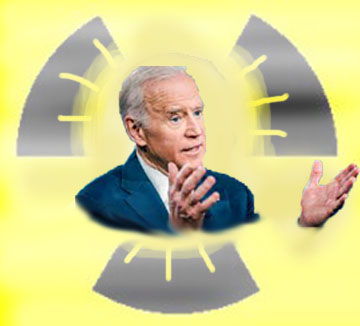
Biden went on to stress that the US needs Israel to stand beside it in its fight in the Middle East, which America is returning to in order to prevent the Russian and Chinese influence.
Biden’s words have proven that Israel is an American proxy in the Middle East.
Motasem A Dalloul, July 15, 2022
American President Joe Biden landed in Israel on Wednesday and started his four-day tour of the Middle East, the first since he took office. Moments after landing in Tel Aviv, he delivered a speech which outlined his intentions during this controversial tour.
Biden has visited Israel several times before becoming president, with his first trip being in 1973 when he was a senator. He has repeatedly expressed his absolute support for Israel, regardless of its daily abuses of Palestinians and continuous violations against their legitimate rights.
In his speech on Wednesday, he repeated his support for the occupation state, highlighting that he is a Zionist Christian; emphasising that supporters of Israel don’t need to be Jews.
He also told the journalist: “As president, I’m proud to say that our relationship with the State of Israel is deeper and stronger, in my view, than it’s ever been. And with this visit, we are strengthening our connections even further. We’ve reaffirmed the unshakable commitment of the United States to Israel’s security, including partnering with Israel on the most cutting-edge defence systems in the world.”
Biden stressed that “generation after generation” the “connection grows,” adding: “We invest in each other. We dream together. We’re part of what has always been the objective we both have.” Thus highlighting that the two states have been working to achieve shared objectives and address global challenges.
The US president failed, once again, to mention Israeli violations and aggression against Palestinians and other countries in the region. “We’ll continue to advance Israel’s integration into the region; expand emerging forums and engagement,” he said.
He mentioned the two-state solution, which remains, in his view, “the best way to ensure the future of equal measure of freedom, prosperity and democracy for Israelis and Palestinians alike.” This, while Israeli occupation forces confiscated large swathes of Palestinian land slated for the potential Palestinian state just a few miles away.
Biden stated that Israel is united with the US, stressing that they have “shared values” and a “shared vision”. While making efforts to extend the US’ domination over the world, Biden wished America and Israel could “continue to grow and prosper together for the benefit of the entire world.”
The following day, Biden met with Israel’s caretaker Prime Minister Yair Lapid in Jerusalem, where Israel has been working to evict Palestinians and force them from their homes. There they signed “The Jerusalem US-Israel Strategic Partnership Joint Declaration” in which the US pledged to protect Israel and meet its security demands. “The United States and Israel reaffirm the unbreakable bonds between our two countries and the enduring commitment of the United States to Israel’s security,” the declaration stipulated.
Ignoring Israel’s abuses of human rights and violations of international law, it adds that the US and Israel share “unwavering commitment to democracy and the rule of law” in order to “repair the world.”
The declaration reiterated the US “commitment to Israel’s security, and especially to the maintenance of its qualitative military edge.” As part of the declaration, the US reiterated “its steadfast commitment to preserve and strengthen Israel’s capability to deter its enemies and to defend itself by itself against any threat or combination of threats.”
Touching on the alleged Iranian threat, it said the US is committed to “never allow Iran to acquire a nuclear weapon, and that it is prepared to use all elements of its national power to ensure that outcome.” The declaration also stipulated that the US will continue to help Israel in its attack on the non-violent grass roots Palestinian Boycott, Divestment and Sanctions (BDS) campaign, calling it an act of “self-defence” to do so.
“The United States and Israel affirm that they will continue to work together to combat all efforts to boycott or de-legitimise Israel, to deny its right to self-defence,” the declaration stated, stressing that “they firmly reject the BDS campaign.”
Biden went on to stress that the US needs Israel to stand beside it in its fight in the Middle East, which America is returning to in order to prevent the Russian and Chinese influence.
As part of this pledge, the US is working to integrate the occupation state in the Arab world, Biden said, adding that the US will not allow any of the region’s countries to have nuclear weapons or arms more qualitative than those in Israel’s possession in order to give Tel Aviv the military edge.
Biden’s words have proven that Israel is an American proxy in the Middle East.
BOEING’s executives rake $billions from tax-payers to spread weapons around the world

Taxpayers within the U.S. gave Boeing $21.33 billion through government contracts in 2020 alone.
While companies like Boeing continue to rake in billions from producing and selling weapons, there is a pathway for more communities to organize, to resist public dollars lining the pockets of war profiteers instead of going toward the public good.
”……………………………………………………………………Bush-Era Legislation Paves the Way for Corporate Exploitation,
Making commercial airplanes, what Boeing is most commonly known for, accounts for less than 30 percent of the company’s annual revenue. Boeing is primarily in the business of profiting from war and militarism, not airplanes. As the world’s third-largest profiter of weapons sales, the company rakes in billions in profit from arming the war on Yemen, Israel’s occupation of Palestine, and India’s ethnic cleansing of Kashmir.
Fifty-five percent of Boeing’s profits come from weapons sales, amounting to more than $32 billion in 2020, to both the U.S. government and 21 countries around the world. Taxpayers within the U.S. gave Boeing $21.33 billion through government contracts in 2020 alone. Chicago’s tax breaks for Boeing happened in the context of the company already reaping huge profit from public resources via U.S. government spending on things like military weapons, border surveillance and the creation of missile systems.
Boeing is in the business of selling weapons to governments that are used to wage war and enact state violence. In this case, a challenge to corporate tax incentives became a challenge to the whole business model of a war profiteer and a challenge to the idea that the public funds can or should subsidize militarism and profit.
Twenty years ago, Boeing’s move to Chicago was on the early edge of what has become a pattern of corporations relocating to places where they stand to benefit from tax incentives and mega-deals. Local governments compete to offer the best deals for the companies, which are often the worst deals for the public in terms of dollar-for-dollar outcomes.
This pattern was then codified and accelerated by President George W. Bush signing the “Job Creation & Worker Assistance Act” into law just months later in March 2002. Making way for corporations to pocket $300 billion over 10 years, this piece of legislation was a corporate tax break branded as a way to create jobs for everyday people. This narrative about corporations paying fewer taxes is rooted in the free market idea that relieving the “burden” of things like regulation and taxation allows corporations and the market to create economic growth, jobs and prosperity. However, what we see to actually be true is that corporations are driven by profit, something that is maximized via exploitation and extraction from our natural environment or, in this case, from public funds.
Then known as a Seattle-based company that makes airplanes, Boeing’s move in late 2001 exemplified a desire to separate their executives from their weapons manufacturing hubs and establish proximity to more global business leaders in a “world-class” city. In exchange for housing its headquarters in a downtown skyscraper and promising to maintain only 500 jobs to the city, Boeing would receive annual tax reimbursement checks from the City of Chicago, in addition to further tax breaks from the state. Even with an impressively low bar, Boeing repeatedly fell short and is now leaving the city after having taken in tens of millions of public dollars without consequence for its failure to deliver for Chicagoans or for the harm the company’s weapons have caused around the world.
Corporate Tax Incentives Benefit Executives, Not Residents or Workers
Corporations lured to cities and states by tax incentives consistently under-deliver and often are not held to whether they hold up their end of the bargain when it comes to providing jobs and economic growth in exchange for tax cuts. In 2017, then-Wisconsin Gov. Scott Walker brokered what was one of the largest corporate tax incentive deals ever approved. Electronics company Foxconn would receive more than $4 billion in state and local tax incentives on the premise of building a massive new factory that was to create 13,000 jobs.
Two years after the original deal was reached, plans for building a massive factory had been scaled back, and only 178 jobs were created. By 2021, the proposed factory and corresponding deal that former President Donald Trump lauded as being the “eighth wonder of the world” had shrunk dramatically in scope, and the contract was renegotiated after Governor Walker left office. Foxconn never delivered on visions of thousands of jobs created by a huge factory campus despite benefiting from more than a billion public dollars in forgone investment.
Despite the public narrative pushed by right-wingers, centrist Democrats and corporate elites — a narrative claiming that relieving taxes on corporations creates economic growth — those who stand to benefit most from these types of deals are high-level corporate executives, not workers or local residents. A recent study analyzing the effects of two specific corporate tax breaks showed that for every dollar a company benefits from certain tax breaks, the pay of the company’s top five executives increased by 17 percent to 25 percent.
Evidence does not support the idea that tax breaks actually result in higher wages or better jobs for workers. And a report published by the Action Center on Race and the Economy showed that in the case of Boeing specifically, “The creation of additional jobs and income as spending from the Boeing headquarters rippled through the economy was not significant.” This is despite the city and state giving $63 million in tax incentives to bring 500 jobs, which equate to about $126,000 per job per year financed by the city, most of which already existed before the move.
Imagine those funds invested in the public sector, in high-paying union jobs, dedicated to the programs and services that working communities are constantly seeking such as health care, education and needed social programs — we could create real jobs programs instead of lining the pockets of executives such as Boeing CEO David Calhoun, who recently bought a $2.7 million condominium in downtown Chicago………………………………….
Let’s Divert Resources From Militarized Violence to Community Investment
Not only does Boeing take resources away from other needed public goods and services by pulling in tax breaks and government contracts, it also profits from the production and sale of deadly weapons used to wage militarized violence around the world. Boeing earned over $62.29 billion in revenue in 2021.
Its fighter jets and helicopters were used in an attack that killed 256 Palestinians in May of last year. In the Saudi-led war on Yemen, the single largest weapon killing civilians has been guided missiles, of which Boeing had sold Saudi Arabia more than 6,000 guided bombs by 2019. In the 2016 bombing of a market in the Yemeni village of Mastaba, which killed 97 people (including 25 children), destroyed infrastructure and left massive destruction, Boeing weapons guidance kits were used to ensure the missile hit its target.
Boeing doesn’t limit its use of militarized technologies to violence abroad, however. Boeing is heavily involved in the lucrative business of militarizing the U.S.-Mexico border……………………………………..
While companies like Boeing continue to rake in billions from producing and selling weapons, there is a pathway for more communities to organize, to resist public dollars lining the pockets of war profiteers instead of going toward the public good. While Boeing leaving Chicago and taking its headquarters to Virginia may not be a standalone win, blocking the company from its last paycheck from the city and the precedent it sets certainly is. As local groups calling out Boeing emerge in more and more cities across the country, from the Washington, D.C., area to Seattle to St. Louis the company should expect and deserves heat wherever it goes.
Everyday people, like the young Black and Brown organizers resisting Boeing in Chicago, have the power to make it no longer politically acceptable to funnel public dollars toward the profits of a weapons-maker in any city. Wielding that power to make an impact requires us to be organized. It requires us to grow social movements that connect the dots between issues like militarized violence and corporate greed in order to paint a fuller picture of both what is wrong in the world and what is possible………………… https://truthout.org/articles/lets-replicate-chicagos-antiwar-organizing-victory-against-boeing/?eType=EmailBlastContent&eId=a0819f3e-09e9-4774-9b4a-fd30ff368bb3
Governor Newsom Wants to Keep Dangerous California Nuclear Power Plants Open

Buzz Flash, July 16, 2022, By Harvey Wasserman
As he begins to campaign for the White House, Gov. Gavin Newsom is toying with extending operations at two of the world’s most dangerous atomic reactors, sited at the aptly named Diablo Canyon, nine miles west of San Luis Obispo.
The coastal nukes are surrounded by a dozen earthquake faults, just 45 miles from the San Andreas, whose eruption could send an apocalyptic radioactive cloud into Los Angeles County, just 180 miles downwind. Potential human casualties could far exceed ten millon. The economic and ecological devastation would be incalculable.
Newsom’s emergence as a potential atomic triggerman has been tortured and tragic. Long marketed as an environmentalist, Newsom has fiercely criticized the state’s largest utility, for good reason.
Since 2000, Pacific Gas & Electric has twice fled to bankruptcy……………………………
Nuclear Regulatory Commission site inspector Dr. Michael Peck warned that Diablo could not withstand a credible seismic shock and should be shut. Peck worked five years inside the plant. But the NRC trashed his warnings and forced him out.
The NRC also warned in 2003 that Diablo Unit One is dangerously embrittled, a flaw that risks an apocalyptic explosion. Critical welds were done with metal amalgams long since abandoned. Serious cracking indicated in key components has been ignored in expectation the reactors will soon shut.
Diablo uses an obsolete “once-through” cooling system that destroys the marine environment; state law now requires cooling towers, which PG&E does not want to build.
In 2016 a broad coalition of unions, the governor, Public Utilities Commission, local communities, state regulators and environmental groups struck a landmark deal to shut both reactors as their operating licenses expire in 2024 and 2025.
The agreement has let PG&E avoid critical maintenance on the assumption that the nukes would soon close. The site lacks sufficient short-term waste storage space for fuel burned after 2025. Extremely dangerous manipulations of spent fuel pools would be required to handle more highly volatile rods and assemblies.
The shut-down agreement includes generous buy-outs for retiring workers. Retraining is set for younger ones in renewables and other fields. Much of the workforce has planned to stay on for decommissioning.
But six years into the shutdown phase, an irreplaceable core of inherited knowledge about the dangerously complex reactors has been lost, putting future operations in deep peril.
The reactors’s electricity costs California rate payers more than $3.5 million per day—-$1 billion/year—-over market prices. Timely shut-downs would avoid $8 billion in over-market charges, easily enough to replace the reactors with renewables.
The nukes’ dirty, costly output regularly forces far cheaper renewable generation off the grid. Since 2016 PG&E has added to the grid thousands of megawatts of renewables.
Unlike nuclear power, wind and solar emit no heat or carbon. Just 1500 workers work at Diablo, which has no job growth potential. More than 70,000 Californians work in the fast-expanding wind, solar, battery and efficiency industries.
Looming above all is the chance one or both Diablo’s reactors could explode, sending apocalyptic radioactive clouds into Los Angeles, the Bay Area or across into the central valley and then across the continental US., with incalculable human, ecological and economic devastation.
As the reactors age, with an aging, disappearing work force, worsening operational and structural defects, and cost and environmental impacts soaring, the harsh realities at Diablo Canyon point to catastrophe.
Why Gov. Newsom would court disaster to break the 2016 shut-down agreement and force these much-hated reactor to continue operations beyond their license agreements remains a mystery. But the costs of his folly could be apocalyptic.
Harvey Wasserman wrote the PEOPLE’S SPIRAL OF US HISTORY (solartopia.org) and most Mondays convenes the Green Grassroots Emergency Election Protection zoom call (www.grassrootsep.org) https://buzzflash.com/articles/harvey-waserman-newsom-wants-to-keep-dangerous-california-nuclear-power-plants-op
NASA, Russian space agency sign deal to share space station flights – Roscosmos
Yahoo News, Joey Roulette July 15, 2022 (Reuters) -NASA and Russia’s space agency Roscosmos have signed a long-sought agreement to integrate flights to the International Space Station, allowing Russian cosmonauts to fly on U.S.-made spacecraft in exchange for American astronauts being able to ride on Russia’s Soyuz, the agencies said Friday.
NASA and Russia’s space agency Roscosmos have signed a long-sought agreement to integrate flights to the International Space Station, allowing Russian cosmonauts to fly on U.S.-made spacecraft in exchange for American astronauts being able to ride on Russia’s Soyuz, the agencies said Friday.
“The agreement is in the interests of Russia and the United States and will promote the development of cooperation within the framework of the ISS program,” Roscosmos said in a statement, adding it will facilitate the “exploration of outer space for peaceful purposes.”
NASA and Roscosmos, the two-decade-old space station’s core partners, have sought for years to renew routine integrated crewed flights as part of the agencies’ long-standing civil alliance, now one of the last links of cooperation between the United States and Russia as tensions flare over the war in Ukraine.
The first integrated flights under the new agreement will come in September, NASA said, with U.S. astronaut Frank Rubio launching to the space station from the Moscow-leased Baikonur Cosmodrome in Kazakhstan alongside two cosmonauts, Sergey Prokopyev and Dmitry Petelin.
In exchange, cosmonaut Anna Kikina will join two U.S. astronauts and a Japanese astronaut on a SpaceX Crew Dragon flight to the orbital laboratory, launching from NASA’s Kennedy Space Center in Florida.
The two agencies had previously shared astronaut seats on the U.S. shuttle and the Russian Soyuz spacecraft.
After the shuttle’s retirement in 2011, the U.S. relied on Russia’s Soyuz for sending American astronauts to the space station until 2020, when SpaceX’s Crew Dragon capsule revived NASA’s human spaceflight capability and began routine ISS flights from Florida……………………….. more https://www.yahoo.com/news/nasa-russian-space-agency-sign-132725285.html
US, Israel sign joint anti-Iran nuclear declaration – US will use “all elements of national power”
Aljazeera, 14 July 22, US President Biden and Israeli Prime Minister Lapid sign joint declaration during meeting in Jerusalem.
United States President Joe Biden and Israeli Prime Minister Yair Lapid have reiterated their anti-Iran positions in a joint declaration committing to preventing Tehran from acquiring nuclear weapons.
The two leaders signed the statement earlier after holding a one-on-one meeting on Thursday morning in West Jerusalem on the second day of Biden’s four-day Middle East tour, followed by a virtual summit with the leaders of India and the United Arab Emirates.
The statement says that the US will use “all elements of national power” available to it to deny Iran the ability to arm itself with nuclear weapons.
The joint declaration also includes a pledge by Washington to continue US military aid to Israel.
A record 10-year $38bn aid package was signed in 2016 under the administration of former US President Barack Obama when Biden was vice president.
Speaking at a news conference following the signing, both Biden and Lapid spoke of their support for the US-Israeli relationship, and the perceived threat from Iran.
“The only way to stop a nuclear Iran is if Iran knows the free world will use force,” Lapid said………………………………………………. https://www.aljazeera.com/news/2022/7/14/us-israel-to-commit-to-stopping-iran-nuclear-ambitions
Noam Chomsky: Biden’s Middle East Trip Contains Echoes of Trump’s Policies

C.J. Polychroniou, Truthout,15 July 22, After 18 months in office, President Joe Biden decided to pay a visit to the Middle East region. Oil is most likely what is dragging him back to the Middle East, and why for months now he had been warming up to Saudi Arabia, despite having said as a presidential candidate that he would make the Saudis “pay the price, and make them in fact the pariah that they are,” while saying that there was “very little social redeeming value in the present government in Saudi Arabia.”
As Noam Chomsky notes in this exclusive interview for Truthout, Biden is carrying on a U.S. tradition: Relations with Saudi Arabia “have always proceeded amicably, undisturbed by its horrifying record of human rights abuses, which persists.”
Security also likely figures in the equation of Biden’s trip, particularly with regard to Israel. He will also visit the West Bank and meet with Palestinan leaders, but it’s hard to say what he hopes to accomplish there. As Chomsky points out, “Palestinian hopes lie elsewhere.”…………………………………………………….more https://truthout.org/articles/noam-chomsky-bidens-middle-east-trip-contains-echoes-of-trumps-policies/?eType=EmailBlastContent&eId=d682ca02-74e2-4ef3-a856-28d3b4293907
Archbishop Wester embarks on the long path to end the nuclear threat
In 2017 the Holy See became the first government to sign the Treaty on the Prohibition of Nuclear Weapons. The treaty entered into force in January 2021
.
Jul 14, 2022, by Dennis Sadowski, Catholic News Service,
Archbishop John Wester of Santa Fe, New Mexico, thinks it’s time for serious conversations about how to achieve nuclear disarmament — not just for the United States but for all countries of the world.
And he’s trying to initiate such discussions, beginning in his own archdiocese, home of two national laboratories — Sandia and Los Alamos — where nuclear weapon research and development continues.
The archbishop hopes the pastoral letter he released in January, “Living in the Light of Christ’s Peace: A Conversation Toward Nuclear Disarmament,” can be a starting point.
The document is the most recent and perhaps most heartfelt from a U.S. bishop seeking to end the nuclear arms race. His concern is that after decades in which arms control treaties led to reductions in nuclear armaments, a new arms race is already underway as the U.S. and Russia, the world’s primary nuclear powers, develop new weapons systems.
“I think we’ve been lulled into a false sense of complacency. I think it’s important as the archbishop of Santa Fe that I say something, that the archdiocese has a seat at the table on this discussion, because this is the birthplace of the nuclear bomb,” Wester told Catholic News Service…………………
His concern is that in any future nuclear exchange, however limited, Earth will never be the same and it’s likely the planet — and virtually all life — will be destroyed.
Pope Francis also had a role in Wester’s decision to issue the pastoral letter.
Throughout his papacy the pope has appealed to the world’s nine nuclear weapons-possessing nations to dismantle their arsenals for the good of humanity. In 2017 the Holy See became the first government to sign the Treaty on the Prohibition of Nuclear Weapons. The treaty entered into force in January 2021.
But it was the pope’s comments during a November 2019 visit to Hiroshima that stayed with Wester.
“The use of atomic energy for purposes of war is immoral, just as the possessing of nuclear weapons is immoral, as I already said two years ago,” the pope said. “We will be judged on this.”…………………….. more https://www.ncronline.org/news/justice/archbishop-wester-embarks-long-path-end-nuclear-threat0
1 This Month

To see nuclear-related stories in greater depth and intensity – go to https://nuclearinformation.wordpress.com
-
Archives
- September 2026 (194)
- August 2026 (330)
- July 2026 (355)
- June 2026 (287)
- May 2026 (306)
- April 2026 (356)
- March 2026 (251)
- February 2026 (267)
- January 2026 (308)
- December 2025 (358)
- November 2025 (359)
- October 2025 (375)
-
Categories
- 1
- 1 NUCLEAR ISSUES
- business and costs
- climate change
- culture and arts
- ENERGY
- environment
- health
- history
- indigenous issues
- Legal
- marketing of nuclear
- media
- opposition to nuclear
- PERSONAL STORIES
- politics
- politics international
- Religion and ethics
- safety
- secrets,lies and civil liberties
- spinbuster
- technology
- Uranium
- wastes
- weapons and war
- Women
- 2 WORLD
- ACTION
- AFRICA
- Atrocities
- AUSTRALIA
- Christina's notes
- Christina's themes
- culture and arts
- Events
- Fuk 2022
- Fuk 2023
- Fukushima 2017
- Fukushima 2018
- fukushima 2019
- Fukushima 2020
- Fukushima 2021
- general
- global warming
- Humour (God we need it)
- Nuclear
- RARE EARTHS
- Reference
- resources – print
- Resources -audiovicual
- Weekly Newsletter
- World
- World Nuclear
- YouTube
-
RSS
Entries RSS
Comments RSS
 nuclear-news