NewsReal: Alien Balloon Malarkey! Setting The Stage For Proxy War Against China?
What in the name of God is going on in America?
Following last week’s comically bizarre ‘Chinese Spy Balloon Shoot-down’, this weekend the Pentagon declared that it shot down two MORE ‘Chinese balloons’ over Alaska and Canada, and that it scrambled fighter jets to investigate a ‘radar anomaly’ over Montana. (And, since airing, a FOURTH balloon has been downed by the US Air Force over Lake Huron.)
What’s different this week is that the Pentagon isn’t exactly confirming that these latest ‘objects’ are balloons, much less Chinese ‘spy’ ones. In fact, the media and govt spokespeople seem to be deliberately insinuating that these ‘unidentified objects’ are… extraterrestrial in origin!
Ballooning paranoia: The China threat hits the skies
Thankfully, one or two sober notes of reflection have prevailed, even from within the military-intelligence fraternity. The Center for Strategic and International Studies has issued a few self-evident truths. ‘Balloons are not an ideal platform for spying,’ writes James Andrew Lewis, ‘they are big and hard to hide. They go where the winds take them’. Such instruments ‘would be a strange choice for a technologically advanced and sophisticated opponent’.
Independent Australia, By Binoy Kampmark | 13 February 2023
Hysteria over balloons is a strange thing, writes Dr Binoy Kampmark.
HOT AIR balloons first appeared during the Napoleonic era, where they served as delivery weapons for bombs and undertook surveillance tasks. High-altitude balloons were also used by, of all powers, the United States during the 1950s, for reasons of gathering intelligence, though these were shot down by the irritated Soviets.
On 28 January, a device reported to be a “high-altitude surveillance balloon” entered U.S. airspace in Alaska. It then had a brief spell in Canadian airspace before returning to the U.S. via Idaho on 31 January.
On 4 February, with the balloon moving off the coast of South Carolina, a decision was made by the U.S. military to shoot it down using an F-22 Raptor from the First Fighter Wing based at Langley Air Force Base. The Pentagon has revealed that the collection of debris is underway.
In response, the Chinese Foreign Ministry issued a stern note of disapproval, protesting:
‘The US attack on a civilian unmanned airship by force.’
This was ‘a clear overreaction and a serious violation of international practice’. Beijing also issued a note of apology, regretting ‘the unintended entry of the ship into U.S. airspace due to force majeure’.
A U.S. State Department official, while noting the statement of regret, felt compelled to designate:
‘The presence of this balloon in our airspace [as] a clear violation of our sovereignty as well as international law.’
Rumours of a second Chinese balloon flying across Latin America were also confirmed by a spokesperson of the Chinese Foreign Ministry on 6 February, who described it as being “of a civilian nature and is used for flight tests”.The instrument had been impaired by weather in its direction, having “limited self-control capabilities”.
The Pentagon’s press secretary, Brigadier General Pat Ryder, also confirmed the existence of the second balloon, reaching the predictably opposite conclusion to his Chinese counterparts:
“We are seeing reports of a balloon transiting Latin America. We now assess it is another Chinese surveillance balloon.”
This overegged saga has seen much airtime and column space dedicated to those in the pay of the military-defence complex. Little thought was given to the purpose of such a seemingly crude way of collecting military intelligence. Timothy Heath of the Rand Corporation went so far as to extol the merits of such cheeky devices. For one thing, they were hard to detect, making them somehow reliable.
General Glen VanHerck, commander of North American Aerospace Defense Command and U.S. Northern Command, made reference to a number of Chinese spy balloons that supposedly operated with impunity during the Trump Administration. “I will tell you that we did not detect those threats,” he said. This had resulted in a “domain awareness gap that we have to figure out”.
The begging bowl for even larger defence budgets is being pushed around the corridors of power.
Lawyers of international law have also had their say, reaching for their manuals, and shaking their heads gravely. Donald Rothwell of the Australian National University thought that:
‘The incursion of the Chinese balloon tested the boundaries of international law.’
Thankfully, one or two sober notes of reflection have prevailed, even from within the military-intelligence fraternity. The Center for Strategic and International Studies has issued a few self-evident truths. ‘Balloons are not an ideal platform for spying,’ writes James Andrew Lewis, ‘they are big and hard to hide. They go where the winds take them’. Such instruments ‘would be a strange choice for a technologically advanced and sophisticated opponent’.……………………………..
The Chinese explanation has been scoffed at and derisively dismissed. Yet balloons are an almost quotidian feature of scientific and meteorological work, whatever the official explanation offered by Beijing might be. NASA’s own Scientific Balloon Program, for instance, has been most engaged of late.
The organisation was keen to tout its fall 2022 campaign involving six scientific, engineering and student balloon flights in support of 17 missions.
The scale of any one mission be sizeable. ‘Our balloon platforms’, came the description from NASA’s Scientific Balloon chief Debbie Fairbrother, ‘can lift several thousand pounds to the edge of space, allowing for multiple, various scientific instruments, technologies, and education payloads to fly together in one balloon flight’.
The disproportionate nature of Washington’s reaction to Beijing over such balloons also looks rather odd in the face of the vast surveillance technologies it deploys against adversaries and friends.
But politics is not merely the art of the possible but an opportunity for the absurd to find form and voice. On this score, the mouse has clearly terrified the elephant. https://independentaustralia.net/politics/politics-display/ballooning-paranoia-the-china-threat-hits-the-skies,17230
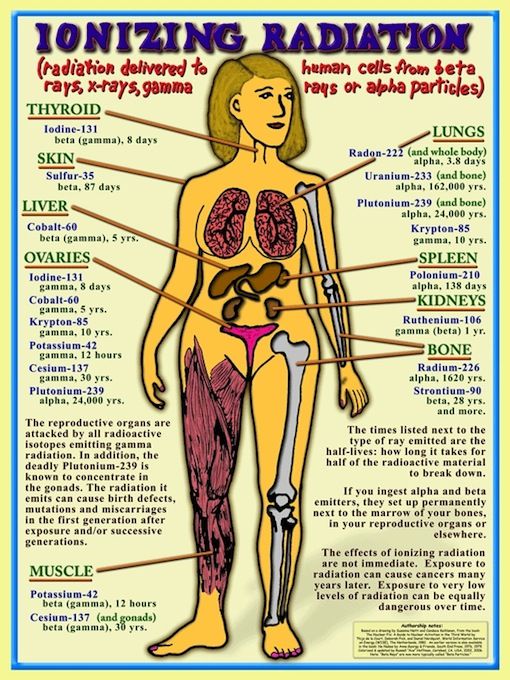
Radioactive releases from the nuclear power sector and implications for child health.
Notes here provided by:
Simon J Daigle, B.Sc., M.Sc., M.Sc(A)
Industrial / Occupational Hygienist, Climatologist,
Environmental Sciences Expert (Air Quality tropospheric Ozone),
Epidemiologist, Citizen scientist
Montreal, Quebec, Canada.
This BMJ article articulated extremely well the challenges of women’s health, pregnancy and radioactive exposures and includes nuclear power and related industries (nuclear waste). The facts below were known for decades and true to this very day and I quote:
“exposure standards in the USA remain based on a Reference Man—a model that does not fully account for sex and age differences.”
“Early in the nuclear weapons era, a ‘permissible dose’ was more aptly recognised as an ‘acceptable injury limit,’ but that language has since been sanitised. Permissible does not mean safe.”
“As noted by the EPA, this gives radiation a ‘privileged pollutant’ status”
The facts above are not only astonishing, in which the general public may either be oblivious or uninformed, but in 2023, these facts remain true and yet the nuclear industry remain “willfully blind” and disingenuous about the real radiation risks, especially to the most vulnerable groups in our population.
British Medical Journal – Paediatrics (Open Access).
A reputable journal! A recent article in the British Medical Journal – Paediatrics (Oct 2022).
Open access to all. A reputable journal!
Radioactive releases from the nuclear power sector and implications for child health (October 2022).
Link: https://bmjpaedsopen.bmj.com/content/6/1/e001326
Selected excerpts:
“Children, women and particularly pregnant women living near nuclear production facilities appear to be at disproportionately higher risk of harm from exposure to these releases. Children in poorer often Non-White and Indigenous communities with fewer resources and reduced access to healthcare are even more vulnerable—an impact compounded by discrimination, socioeconomic and cultural factors.”
“Nevertheless, pregnancy, children and women are under protected by current regulatory standards that are based on ‘allowable’ or ‘permissible’ doses for a ‘Reference Man’.”
“Early in the nuclear weapons era, a ‘permissible dose’ was more aptly recognised as an ‘acceptable injury limit,’ but that language has since been sanitised. Permissible does not mean safe. Reference Man is defined as ‘…a nuclear industry worker 20–30 years of age, [who] weighs 70kg (154 pounds), is 170cm (67 inches) tall…is a Caucasian and is a Western European or North American in habitat and custom’.”
“However, many studies are unable to link these adverse outcomes to radioactivity because the studies’ authors tend to use several faulty assumptions:
- ‘doses will be too low to create an effect’—a beginning assumption ensuring poor hypothesis formation and study design. Therefore, when an effect is found, radioactivity has been predetermined not to have an association with the effect. This exclusion often leads to an inability to find an alternate associated disease agent;
‘small negative findings matter’—In fact, what matters are positive findings or very large negative findings;- ‘statistical non-significance means a lack of association between radiation exposure and disease’ — a usage a number of scientists in various disciplines now call ‘ludicrous’;
- ‘potential bias or confounding factors are reasons to dismiss low dose studies’—In fact, when assessing low dose impacts, researchers should take care not to dismiss studies with these issues and researchers should minimise use of quality score ranking.
“Consequently, we examine and reference studies even if they contain such faulty assumptions because they still indicate increases in certain diseases, such as some leukaemias, known to be caused by radiation exposure. Additionally, few alternative explanations were offered in the conclusions of these studies, meaning radiation exposure might still have been the cause.”
“Current U.S. regulations allow a radiation dose to the public (100 mrem per year) which poses a lifetime cancer risk to the Reference Man model of 1 person in 143. This is despite the EPA’s acceptable risk range for lifetime cancer risk from toxics being 1 person in 1million to 1 person in 10000. As noted by the EPA, this gives radiation a ‘privileged pollutant’ status. Additionally, biokinetic models for radioisotopes are not sex-specific. A male model is still used for females. The models are also not fully age-dependent. Radiation damage models also fail to account for a whole host of childhood and pregnancy damage.”
Highlights (Conclusion)
- Despite the numerous observations globally, linking radiation exposures to increased risks for children, pregnant and non-pregnant women and the well-demonstrated sensitivity to other toxicants during these life stages, exposure standards in the USA remain based on a Reference Man—a model that does not fully account for sex and age differences.
- In addition, faulty research assumptions, unique exposure pathways, systemic inequities and legacy exposures to both heavy metals and radioactivity from mining wastes add to the risks for women and children, especially those in underserved communities.
- Socioeconomic factors that drive higher deprivation of services in non-homogenous low-income communities of colour also put non-White children at higher risk of negative health outcomes when exposed to radioactive releases, than their White counterparts.
- A first and essential step is to acknowledge the connection between radiation, heavy metal and chemical exposures from industries and the negative health impacts observed among children, so that early diagnosis and treatment can be provided.
- Measures should then be taken to protect communities from further exposures, including a prompt phaseout of nuclear power and its supporting industries.
Studies are also urgently needed where there are none, and the findings of independent doctors, scientists and laboratories should be given equal attention and credence as those conducted by industry or government-controlled bodies, whose vested and policy interests could compromise both their methodologies and conclusions.- Finally, in the face of uncertainty, particularly at lower and chronic radiation doses, precaution is paramount.
Notes:
Funding: The authors have not declared a specific grant for this research from any funding agency in the public, commercial or not-for-profit sectors.
Competing interests: None declared.
Patient consent for publication: Not applicable.
Ethics approval: Not applicable.
Provenance and peer review: Commissioned; externally peer reviewed
Rep. Matt Gaetz introduces resolution to end military and financial aid to Ukraine, urge peace deal

in October House Leader Kevin McCarthy was more cautious, saying that Republicans wouldn’t write a “blank check” for Ukraine.
Russia-Ukraine conflict has been ongoing for nearly a year
By Adam Shaw | Fox News 12 Feb 23 https://www.foxnews.com/politics/gaetz-introduces-resolution-end-military-financial-aid-ukraine-urge-peace-deal
Rep. Matt Gaetz, R-Fla., is introducing a resolution in the House on Thursday that calls on the Biden administration to end U.S. military and financial aid to Ukraine — while also urging all involved to secure a peace agreement after nearly a year of war in the region.
The resolution, the “Ukraine Fatigue Resolution” is being introduced by Gaetz and 10 co-sponsors and calls for the U.S. to “end its military and financial aid to Ukraine and urges all combatants to reach a peace agreement.”
The resolution notes that since Russia invaded Ukraine in February 2022, the U.S. has been the top contributor to the Ukrainian war effort, with more than $110 billion in financial, military, and humanitarian aid to the U.S. ally. It includes more than $27.4 billion in security assistance.
In January the U.S. announced additional security assistance, including approval by President Biden of 31 Abrams M1 tanks to Ukraine. On top of that, reports suggest another $2 billion could be in the pipeline.
The resolution lists the enormous amount of equipment that the U.S. has provided to the country since the beginning of the conflict. It also cites Pentagon officials who have said the munitions have “severely depleted United States stockpiles, weakening United States readiness in the event of conflict.”
It also claims that by providing assistance, the U.S. is inadvertently contributing to civilian casualties, and notes U.S. estimates that 40,000 civilians had died in the conflict.
Concern about the continued U.S. funding of the war has grown among a subset o f Republicans as the conflict has dragged on, with lawmakers highlighting issues at home that could use additional funding
Gaetz, a member of the House Armed Services Committee, said the U.S. has been the top contributor to what he called an “everlasting conflict.”
“America is in a state of managed decline, and it will exacerbate if we continue to hemorrhage taxpayer dollars toward a foreign war,” he said. We must suspend all foreign aid for the War in Ukraine and demand that all combatants in this conflict reach a peace agreement immediately.”
The co-sponsors on the resolution include Reps. Andy Biggs, R-Ariz., Lauren Boebert, R-Colo., Paul Gosae, R-Ariz., Marjorie Taylor Greene, R-Ga., Anna Paulina Luna, R-Fla., Thomas Massie, R-Ky., Mary Miller, R-Ill., Barry Moore, R-Ala., Ralph Norman, R-S.C. and Matt Rosendale, R-Mont.
Gaetz had taken aim at both parties for the additional funding for Ukraine earlier this week on the House floor, asking if there was a limit to the funding the U.S. was prepared to provide.
“How much more for Ukraine? Is there any limit?” he asked on the House floor. “Which billionth dollar really kicks in the door? Which redline we set will we not later cross?”
Republican leadership had broadly remained in favor of funding the war effort. Senate GOP Leader Mitch McConnell said in December said that “providing assistance for Ukrainians to defeat the Russians is the No. 1 priority for the United States right now according to most Republicans.”
However, in October House Leader Kevin McCarthy was more cautious, saying that Republicans wouldn’t write a “blank check” for Ukraine.
Another sign of madness? – thermonuclear propulsion technology to power a rocket to Mars.

Decisions on nuclear future are guided by myths.
By Linda Pentz Gunter 12 Feb 23
“…………………………………………………………. a sign of some kind of madness?
A few weeks later, that same presentiment [about the UK government] was re-evoked on reading a headline in the print edition of the Washington Post: US works on nuclear-powered rocket.
This is not an entirely new story, but an update on the plan to use thermonuclear propulsion technology to power a rocket to Mars.
There are so many things wrong with this. The premise is that not using a nuclear reactor to power the rocket will mean it will just be too tediously slow for human passengers to endure — a journey of seven months. With the reactor on board speeding the rocket on its way, the journey to Mars could be cut to what? A mere three and a half months. Not tedious at all!
Never mind that rockets have a nasty habit of sometimes exploding on the launch pad. And never mind that do we REALLY need to spend billions of dollars right now trying to get maybe three astronauts to Mars when we have a planet called Earth that desperately needs every dime and dollar available to save it?
The announcement was replete with the usual illogicalities. Sending astronauts on that seven-month journey to Mars in a traditional rocket was “dangerous” as “the radiation levels on a Mars mission could expose astronauts to radiation levels more than 100 times greater than on Earth.” Much better to send them there on a rocket powered by a nuclear reactor!
There is another agenda afoot here, of course, and it’s a military one and the sinister battle for who controls space.
If you thought shooting down the Chinese spy balloon was exciting, that was child’s play compared to what is planned for NASA’s nuclear reactors in space.
This includes being able to power satellites to become more agile in maneuvering away from “enemy” satellites. Using nuclear propulsion will achieve that, but what other consequences might result from a host of nuclear powered satellites buzzing around in space? It’s no surprise that the Space Force, created for war-fighting in space, is involved in all this.
And of course, apparently taking its cue from the mess we have already created on Earth, NASA wants to place nuclear reactors on the Moon as a power source. But for who or what exactly? Will we plant the US flag there while we are at it and claim a new military and strategic frontier? The signs are ominous.
And what about all the radioactive waste? Will we be boring deep holes in the Moon to bury it, or will we simply jettison it further into deep space? It’s bad enough that the oceans are already our dustbin. Now Space is to be our new nuclear waste frontier.
While all this was going on, evidence from yet more research poured in about how completely unnecessary it is to use nuclear power for anything, now or in the future.
Looking at every kind of power demand including energy consumption, electric vehicles, and commercial transport, then applying solar, wind, nuclear, heat pumps, storage and other technology, nuclear power was repeatedly eliminated from the mix for increasing costs without increasing reliability.
And yet, governments here and in far too many other parts of the world press on inexorably with plans to continue the use of nuclear power or develop new nuclear programs.
Despite all the evidence that this is — to understate it — a Very Bad Idea. https://beyondnuclearinternational.org/2023/02/12/signs-of-madness/
Linda Pentz Gunter is the international specialist at Beyond Nuclear and writes for and curates Beyond Nuclear International.
‘Downwind’: How Did America Create Its Own Nuclear Disaster?
BY PANDORA DEWAN ON 2/9/23 https://www.newsweek.com/downwind-documentary-america-create-nuclear-disaster-1780196
new documentary called Downwind shines a spotlight on the legacy of nuclear testing in the Nevada desert in the 50s and 60s and shares the stories of those whose lives were the most severely impacted.
Between 1951 and 1962, nuclear weapons were tested above ground at the Nevada Test Site, based in the Nevada desert, 65 miles north of Las Vegas. Underground testing continued until the 1990s and, in total, over 900 nuclear weapons tests were carried out at the site, according to the documentary.
Ken Smith, professor of family studies and population science at the University of Utah and executive director of the Wasatch Front Research Data Center, told Newsweek that the people who were most affected by these detonations, known as “downwinders,” were mostly based in Utah, southern Nevada and northern Arizona. “The number of people in that area at the time—[in] the mid-50s to the early 60s—is the concern,” he said.
The testing released plumes of radioactive material into the atmosphere, which was carried hundreds of miles by the wind before falling back down to the ground. This “nuclear fallout” material takes many different forms, but one of the most concerning is iodine-131, which can increase risk of thyroid cancer.
It is impossible to accurately determine the dose of radiation and the resulting risk of this exposure, but a report in 1999 by the National Cancer Institute estimated that nuclear weapons testing at the Nevada site would have yielded between 11,300 to 212,000 excess cases of thyroid cancer over this period.
Exposure to radioactive material is mainly thought to have occurred through the consumption of contaminated milk: when iodine-131 falls down to the earth it can settle on vegetation, which is eaten by cows and goats. Over time, the iodine-131 builds up in the animal’s bodies and accumulates in their milk, which is then consumed by people. Fresh produce and meat may have also contained small amounts of this radioactive material too, but it would have been less concentrated.
Overall, these concentrations are still very small, but some people would have been more vulnerable to this radiation than others. “It’s the children who were the most affected,” Smith said. “This is because they drink more milk and have smaller bodies. Your thyroid accumulates iodine-131, and they have a smaller thyroid.”
The Centers for Disease Control and Prevention (CDC) says that iodine-131 is not the only radioactive material in fallout that affects a person’s health. For example, strontium-90 can affect the bone marrow and lead to an increased risk of leukemia.
Downwind directors Douglas Brian Miller and Mark Shapiro, spoke to people from Utah and Nevada about how this testing had impacted their communities.
One of the people they heard from was Mary Dickson, a writer, playwright and downwinder who grew up in Salt Lake City during this period. She ate locally grown vegetables and drank locally produced milk, never knowing the risks of her exposure. At age 29, she was diagnosed with thyroid cancer.
Dickson survived the disease, but others she knew were less lucky.
In a post for the anti-nuclear campaign group, #stillhere, Dickson said that two of her fellow classmates had died of cancer at 8 and 4 years old, and her own sister is now battling a rare form of stomach cancer.
“Sometimes I feel like I am forever piling up losses,” she said.
On July 10, 2000, Congress established the Radiation Exposure Compensation Act (RECA) which provides monetary compensation for the people who developed cancer in light of this exposure. It was due to expire in 2022 but has been extended for another two years.
To date, RECA has awarded nearly $2.6 billion in benefits to close to 40,000 claimants, as per statistics from the U.S. Department of Justice. However, over 13,000 claims have been rejected, and downwinders can only claim compensation if they lived in Utah, Nevada or Arizona during the period of above-ground testing.
Downwind premiered at the Slamdance Film Festival in Park City, Utah, at the end of January.
That time Northern California had a near nuclear accident
by: Matthew Nobert, Feb 11, 2023 https://fox40.com/news/local-news/sutter-county/that-time-northern-california-had-a-near-nuclear-accident/
KTXL) — The Sacramento region has a rich history of United States Air Force aviation, but on a Tuesday in 1961 that history turned dark as an aircraft armed with nuclear bombs crashed in Sutter County.
Following World War II the United States Air Force was looking to add a modern bomber to its fleet and in 1955 the B-52 Stratofortress began its military service.
Between 1960 and 1968, the USAF would run Operation Chrome Dome, which would have B-52’s armed with nuclear weapons remain continuously airborne on the border of the Soviet Union.
On March 14, 1961, a B-52F-70-BW armed with two nuclear weapons departed Mather Air Force Base, now Mather Airport, when the cabin pressure in the crew compartment began to fail, according to Department of Defense records.
The crew dropped the plane to 10,000 feet but the increased fuel consumption caused “fuel exhaustion” before an air tanker could refuel the B-52.
The crew bailed out at 10,000 feet, but the commander stayed until 4,000 feet in order for the massive bomber to be steered away from a populated area.
The bomber crashed into Sutter County farmland near the intersection of Moroni Road and Drexler Road, about 17.5 miles southwest of Yuba City.
When the bomber crashed, the two nuclear weapons it was carrying were stripped away from the body of the plane, but their explosives did not detonate. No nuclear contamination was detected either.
This recounting of events by the Department of Defense was challenged years later in a 2013 book written by Retired USAF Lt Col Earl McGill, a B-47 and B-52 pilot during the Cold War.
His book “Jet Age Man: SAC B-47 and B-52 Operations in the Early Cold War” recounts the Strategic Air Commands (SAC) Operation Chrome Dome and the events of March 14, 1961.
“Whatever the cause, SAC crews were briefed on every B-52 accident….we were summoned to the alert shack briefing room where we were told that a B-52 returning from a 24-hour CHROME DOME mission ran out of fuel and dumped four Mk-28’s on Northern California,” McGill writes.
McGill’s recounting of the crash also puts into question how safe the nuclear weapons actually were when the plane went down.
“The safety devices barely worked as designed,” McGill writes. “Apparently three weapons chutes did not fully deploy, which prevented detonation. The one that hung up (in a tree), we were briefed, had ‘rung in’, a term we used to indicate ‘armed’….”
McGill’s book was Nominated as Best Military History Book 2013 by Air Power History, published by the US Air Force Historical Foundation.
Northern California was not the only area of the United States or the world that saw crash landings by B-52’s armed with nuclear bombs.
Operation Chrome Dome would come to an end in 1968 after five B-52 crashes in the United States and abroad.
U.S. Test Launches ICBM Into Pacific as Part of Nuclear ‘Deterrence Mission’

US News By Paul D. Shinkman, Feb. 10, 2023
Military officials said the test launch of the Minuteman III intercontinental ballistic missile serves as a reminder that the U.S. can ‘deter twenty-first century threats.’
The U.S. Air Force test-launched an intercontinental ballistic missile into the Pacific Ocean neighborhood of its adversaries in China and North Korea late Thursday at a time of growing international concern that brewing tensions among nuclear powers could escalate into a new arms race………….
The missile’s payload, which for a real strike could carry thermonuclear warheads, flew more than 4,000 miles from Vandenberg Air Force Base on the California coast to the Kwajalein Atoll in the Marshall Islands…..
China has repeatedly warned of the dangers of a new arms race as it blasts U.S. political rhetoric that increasingly views Beijing as the signature threat around which America’s national security infrastructure must organize itself………………. https://www.usnews.com/news/national-news/articles/2023-02-10/u-s-test-launches-icbm-into-pacific-as-part-of-nuclear-deterrence-mission
Elon Musk’s SpaceX Cuts Support for Ukrainian Military but continues work for U.S. military.
Decrying Starlink’s ‘Weaponization,’ SpaceX Cuts Support for Ukrainian Military, Defense One, Patrick Tucker, 10 Feb 23
But Wednesday’s explanation by the Elon Musk-founded company is at odds with its continuing work for the U.S. military.
SpaceX will no longer support certain Ukrainian military operations through its Starlink satellite-communications service, the company’s president said on Wednesday, explaining that the tech was “never meant to be weaponized.” But Gwynne Shotwell’s explanation is at odds with Starlink’s role in recent U.S. Army modernization experiments that seek to fire on targets more quickly………………
On Wednesday, Shotwell said has taken steps to keep Ukraine from using Starlink to control armed drones and perform other military tasks.
“We were really pleased to be able to provide Ukraine connectivity, and help them in their…fight for freedom. It was never intended to be weaponized, however,” the SpaceX president said during an FAA Commercial Space Transportation Conference, according to Breaking Defense.
SpaceX’s work for the U.S. military suggests otherwise. In May 2020, the company signed a cooperative research and development agreement with the Army to look at battlefield applications for the Starlink broadband. Later that year, Starlink played a key role in the service’s inaugural Project Convergence experiment to test new and more interconnected weapons and systems………………………..
In November, Olha Stefanishyna, Ukraine’s deputy prime minister for European and Euro-Atlantic integration, told reporters that Starlink communications were a “signal of life” for Ukrainians, but said the country was growing increasingly concerned about the ever-erratic behavior of the company’s founder, Elon Musk—especially after Musk made attempts to charge the Pentagon for Starlink services he had donated. Ukrainian officials said they are looking for alternatives to SpaceX https://www.defenseone.com/technology/2023/02/spacex-now-says-they-dont-want-starlink-be-weaponized-ukraine/382797/
The US Department of Energy has made it easier to share nuclear information with Mexico and harder to do so for Colombia and Egypt.
US DOE changes rules for nuclear information exchange with Mexico, Colombia, Egypt
S and P Global, William Freebairn,
Mexico rules relaxed after nuclear cooperation agreement reached
Work with Colombia, Egypt now requires specific permission
The US Department of Energy has made it easier to share nuclear information with Mexico and harder to do so for Colombia and Egypt.
In a new rule effective Feb. 9, DOE expanded the requirements for sharing nuclear energy technology with Mexico, doing away with a limit that had only allowed such general sharing on matters related to upgrades and operation of its single nuclear power plant, Laguna Verde, or research reactors. Now, the country becomes a generally-authorized destination for sharing nuclear technology without those limits, DOE said
Under rules in Part 810 covering the exchange of certain non-public commercial nuclear energy technology, countries may be generally authorized, meaning information can be shared with those countries as well as citizens of those countries working at nuclear facilities in the US.
The DOE changes, which were announced in a secretarial determination Dec. 29, also included removing Colombia and Egypt from the list of generally authorized destinations, DOE said. These destinations, and the sharing of information with citizens of those countries in the US, will now require a specific authorization from DOE, it noted……… (Subscribers only) https://www.spglobal.com/commodityinsights/en/market-insights/latest-news/electric-power/021023-us-doe-changes-rules-for-nuclear-information-exchange-with-mexico-colombia-egypt
Media ‘Spy Balloon’ Obsession a Gift to China Hawks
The Pentagon says it believes this spy balloon doesn’t significantly improve China’s ability to gather intelligence with its satellites.
Minimizing US provocation
The unstated premise of much of this coverage was that the US was minding its own business when China encroached upon it–an attitude hard to square with the US’s own history of spying.
JULIANNE TVETEN 10 Feb 23 https://fair.org/home/media-spy-balloon-obsession-a-gift-to-china-hawks/
For over a week, US corporate media have been captivated by a so-called “Chinese spy balloon,” raising the specter of espionage.
NBC News (2/2/23), the Washington Post (2/2/23) and CNN (2/3/23), among countless others, breathlessly cautioned readers that a high-altitude device hovering over the US may have been launched by China in order to collect “sensitive information.” Local news stations (e.g., WDBO, 2/2/23) marveled at its supposed dimensions: “the size of three school buses”! Reuters (2/3/23) waxed fantastical, telling readers that a witness in Montana thought the balloon “might have been a star or UFO.”
While comically sinister, the term “Chinese spy balloon”—which corporate media of all stripes swiftly embraced—is partially accurate, at least regarding the device’s provenance; Chinese officials promptly confirmed that the balloon did, indeed, come from China.
What’s less certain is the balloon’s purpose. A Pentagon official, without evidence, stated in a press briefing (2/2/23) that “clearly the intent of this balloon is for surveillance,” but hedged the claim with the following:
We assess that this balloon has limited additive value from an intelligence collection perspective. But we are taking steps, nevertheless, to protect against foreign intelligence collection of sensitive information.
Soon after, the Chinese Ministry of Foreign Affairs’ website (2/3/23) stated that the balloon “is of a civilian nature, used for scientific research such as meteorology,” according to a Google translation. “The airship,” the ministry continued, “seriously deviated from the scheduled route.”
Parroting Pentagon
Despite this uncertainty, US media overwhelmingly interpreted the Pentagon’s conjecture as fact. The New York Times (2/2/23) reported that “the United States has detected what it says is a Chinese surveillance balloon,” only to call the device “the spy balloon”—without attributive language—within the same article. Similar evolution happened at CNBC, where the description shifted from “suspected Chinese spy balloon” (2/6/23) to simply “Chinese spy balloon” (2/6/23). The Guardian once bothered to place “spy balloon” in quotation marks (2/5/23), but soon abandoned that punctuation (2/6/23).
Given that media had no proof of either explanation, it might stand to reason that outlets would give each possibility—spy balloon vs. weather balloon—equal attention. Yet media were far more interested in lending credence to the US’s official narrative than to that of China.
n coverage following the initial reports, media devoted much more time to speculating on the possibility of espionage than of scientific research. The New York Times (2/3/23), for instance, educated readers about the centuries-long wartime uses of surveillance balloons. Similar pieces ran at The Hill (2/3/23), Reuters (2/2/23) and the Guardian (2/3/23). Curiously, none of these outlets sought to provide an equivalent exploration of the history of weather balloons after the Chinese Foreign Affairs statement, despite the common and well-established use of balloons for meteorological purposes.
Even information that could discredit the “spy balloon” theory was used to bolster it. Citing the Pentagon, outlets almost universally acknowledged that any surveillance capacity of the balloon would be limited. This fact apparently didn’t merit reconsideration of the “spy balloon” theory; instead, it was treated as evidence that China was an espionage amateur. As NPR’s Geoff Brumfiel (2/3/23) stated:
The Pentagon says it believes this spy balloon doesn’t significantly improve China’s ability to gather intelligence with its satellites.
One of Brumfiel’s guests, a US professor of international studies, called the balloon a “floating intelligence failure,” adding that China would only learn, in Brumfiel’s words, at most “a little bit” from the balloon. That this might make it less likely to be a spy balloon and more likely, as China said, a weather balloon did not seem to occur to NPR.
Reuters (2/4/23), meanwhile, called the use of the balloon “a bold but clumsy espionage tactic.” Among its uncritically quoted “security expert” sources: former White House national security adviser and inveterate hawk John Bolton, who scoffed at the balloon for its ostensibly low-tech capabilities.
Minimizing US provocation
The unstated premise of much of this coverage was that the US was minding its own business when China encroached upon it–an attitude hard to square with the US’s own history of spying. Perhaps it’s for this reason that media opted not to pay that history much heed.
In one example, CNN (2/4/23) published a retrospective headlined “A Look at China’s History of Spying in the US.” The piece conceded that the US had spied on China, but, in line with the headline’s framing, wasn’t too interested in the specifics. Despite CNN‘s lack of curiosity, plenty of documentation of US spying on China and elsewhere exists. Starting in 2010, according to the New York Times (5/20/17), China dismantled CIA espionage operations within the country.
And as FAIR contributor Ari Paul wrote for Counterpunch (2/7/23):
The US sent a naval destroyer past Chinese controlled islands last year (AP, 7/13/22) and the Chinese military confronted a similar US vessel in the same location a year before (AP, 7/12/21). The AP (3/21/22) even embedded two reporters aboard a US “Navy reconnaissance aircraft that flew near Chinese-held outposts in the South China Sea’s Spratly archipelago,” dramatically reporting on Chinese military build up in the area as well as multiple warnings “by Chinese callers” that the Navy plan had “illegally entered what they said was China’s territory and ordered the plane to move away.”
The US military has also invested in its own spy balloon technology. In 2019, the Pentagon was testing “mass surveillance balloons across the US,” as the Guardian (8/2/19) put it. The tests were commissioned by SOUTHCOM, a US military organ that conducts surveillance of Central and South American countries, ostensibly for intercepting drug-trafficking operations. Three years later, Politico (7/5/22) reported that “the Pentagon has spent about $3.8 million on balloon projects, and plans to spend $27.1 million in fiscal year 2023,” adding that the balloons “may help track and deter hypersonic weapons being developed by China and Russia.”
In this climate, it came as no surprise when the US deployed an F-22 fighter jet to shoot down the balloon off the Atlantic coast (Reuters, 2/4/23). Soon after, media were abuzz with news of China’s “threat[ening]” and “confrontational” reaction (AP, 2/5/23; Bloomberg, 2/5/23), casting China as the chief aggressor.
Perpetuating Cold War hostilities
Since news of the balloon broke, US animus toward China, already at historic highs, has climbed even further.
Secretary of State Antony Blinken postponed a trip to China. President Biden made a thinly veiled reference to the balloon as a national security breach in his February 7 State of the Union address, declaring, “If China threatens our sovereignty, we will act to protect our country.” Rep. Raja Krishnamoorthi, Democratic ranking member of the newly formed House Select Committee on China, asserted that “the threat is real from the Chinese Communist Party.”
Rather than questioning this saber-rattling, US media have dispensed panicked spin-offs of the original story (Politico, 2/5/23; Washington Post, 2/7/23; New York Times, 2/8/23), ensuring that the balloon saga, no matter how much diplomatic decay ensues, lasts as long as possible.
“The devil is always in the details”: Nuclear watchdog urges public to attend Diablo Canyon meetings

KCBX | By Benjamin Purper, February 10, 2023
There are several upcoming opportunities for Central Coast residents to comment on the future of the Diablo Canyon Nuclear Power Plant. They come amid the ongoing debate over how, and if, the plant’s life should be extended.
The plant near Avila Beach was scheduled to close in 2024 and 2025, until the California legislature voted last year to try to delay that deadline. They authorized a $1.4 billion loan to the plant’s operator, utility Pacific Gas & Electric (PG&E), to go through the process of extending Diablo’s life until 2030…….
David Weisman is with the nonprofit Alliance for Nuclear Responsibility, which describes itself as a nuclear watchdog group. He’s an avid speaker at all the various hearings and public comment opportunities related to Diablo Canyon.
“As with everything Diablo, the devil is always in the details, and those remain extraordinarily complex. They involve a multiple number of agencies both at the state level and clearly at the federal level. It falls upon certain advocacy organizations to have to take on this rather enormous task of parsing through all the different parts of this picture that have to come together to make the governor’s dream a reality,” Weisman said.
The most recent big news about Diablo has to do with PG&E’s application to renew its federal license. The utility can’t continue to operate the plant without a license renewal from the federal Nuclear Regulatory Commission (NRC).
After the legislature passed the bill to try to extend Diablo’s life, Pacific Gas & Electric asked the NRC to reconsider an old application to renew the plant which they submitted in 2009. PG&E withdrew that application in 2018 after deciding they would be decommissioning the plant, and no longer needed to renew the license.
In January, the NRC rejected that request to reuse the old renewal application, meaning PG&E now has to submit a new one — a lengthy process that will likely happen later this year. The denial was met with praise from those advocating for more scrutiny on the extension process, including Weisman himself.
“Quite clearly, the plant has been on a downgraded situation, on a glide path to closure. And maintenance has been allowed to lapse, and equipment purchases, capital improvements have been deferred. So the NRC in this case is quite right in asserting, ‘The plant you’d like us to review is not in the state it was when we last did that.'”
However, Weisman said of the NRC, “they are also capable of granting exemptions as they see fit.”
……………… Weisman acknowledges the climate and energy concerns, but said the public has not seen enough data to conclude that keeping Diablo Canyon open is the way to address them.
……. “Finally, if we do a cost comparison analysis, is it cost effective to actually continue the operation of Diablo Canyon? Something you would have hoped the legislators would have had in front of them on the night they voted on this bill at 1:07 in the morning — but they didn’t,” Weisman said.
…………… Weisman, a long-time critic of PG&E, said he feels another reason for the public to scrutinize what’s happening with Diablo is PG&E’s history of bankruptcy, safety incidents and more.
“They’re not splitting atoms just for fun. This is a company that’s been twice bankrupt in as many decades, a convicted a corporate felon [for] obstruction of justice, wildfire incidents, pipeline explosions at San Bruno. I would say we should all be aware, and pay attention and follow the money,” he said.
………………… Next week, the Diablo Canyon Independent Safety Committee is meeting Wednesday and Thursday at the Avila Lighthouse Suites, with a livestream option via Zoom as well. More information on that is online at dcisc.org. https://www.kcbx.org/environment-and-energy/2023-02-10/the-devil-is-always-in-the-details-nuclear-watchdog-urges-public-to-attend-diablo-canyon-meetings
.
U.S. Court of Appeals rejects New Mexico’s challenge to Nuclear Waste License
10th Cir. Tosses New Mexico’s Challenge to Nuclear Waste License
Bloomberg Law, Feb. 11, 2023
- NRC granted license to store spent nuclear fuel near border
- New Mexico lacks jurisdiction to bring challenge, court found
New Mexico lost its challenge to the Nuclear Regulatory Commission’s decision to grant a license to store nuclear waste in the state, after the Tenth Circuit dismissed the state’s petition for review on Friday.
A three-judge panel for the US Court of Appeals for the Tenth Circuit agreed with the federal government that the petition should be dismissed, finding that New Mexico lacked jurisdiction to bring the action under the Hobbs Act and Atomic Energy Act.
New Mexico didn’t participate in the licensing proceeding or qualify as an aggrieved party, Judge Robert E. Bacharach wrote for the three-judge panel. The …………………. [Subscribers only] https://news.bloomberglaw.com/environment-and-energy/10th-cir-tosses-new-mexicos-challenge-to-nuclear-waste-license
US takes another step toward gearing up nuclear plutonium pit factory
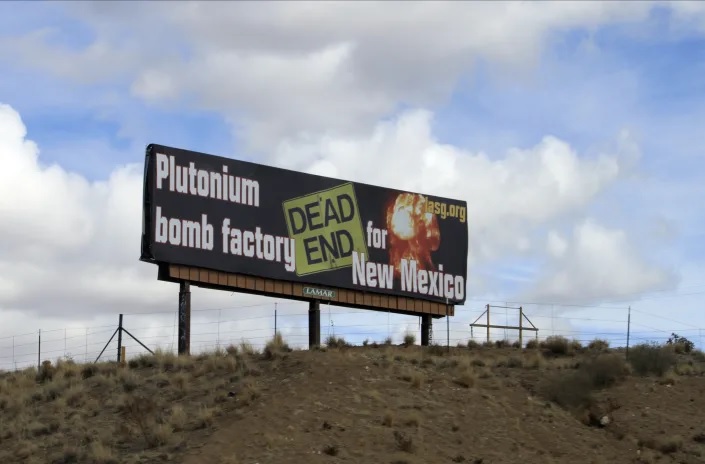
SUSAN MONTOYA BRYAN, Sat, February 11, 2023
ALBUQUERQUE, N.M. (AP) —
The U.S. agency in charge of producing key components for the nation’s nuclear arsenal has cleared the way for new equipment to be installed at a New Mexico laboratory as part of a multibillion-dollar mission, but nuclear watchdog groups say the project already is behind schedule and budgets have ballooned.
Approval for moving equipment into place at Los Alamos National Laboratory was first outlined in an internal memo issued by the deputy secretary of energy in January. The National Nuclear Security Administration, which is overseen by the U.S. Department of Energy, made a public announcement Thursday.
SUSAN MONTOYA BRYAN
Sat, February 11, 2023 at 8:42 AM GMT+11·3 min read
ALBUQUERQUE, N.M. (AP) —
The U.S. agency in charge of producing key components for the nation’s nuclear arsenal has cleared the way for new equipment to be installed at a New Mexico laboratory as part of a multibillion-dollar mission, but nuclear watchdog groups say the project already is behind schedule and budgets have ballooned.
Approval for moving equipment into place at Los Alamos National Laboratory was first outlined in an internal memo issued by the deputy secretary of energy in January. The National Nuclear Security Administration, which is overseen by the U.S. Department of Energy, made a public announcement Thursday.
The work will include the design, fabrication and installation of gloveboxes and other special equipment needed to make the plutonium cores. The work will be split between Los Alamos in northern New Mexico and the Savannah River Site in South Carolina, with the locations facing a congressional mandate to make at least 80 of the cores each year by 2030.
The deadline for meeting that capacity has been pushed back, with the memo being the latest evidence that the minimum equipment necessary will be in place at Los Alamos by August 2030, or four years later than expected…………………………………………..
Greg Mello, director of the watchdog Los Alamos Study Group, said the NNSA has made contradictory statements about the delays and what they mean for the overall plutonium pit project. He pointed to NNSA statements in 2017 and 2018 in which the agency predicted problems if it were producing pits while also replacing gloveboxes and other equipment at the same time.
“There is more they aren’t saying,” Mello said. “We believe NNSA and LANL will struggle mightily, with further setbacks, failures and accidents in a misguided attempt to produce any meaningful number of pits in that cramped, aging facility.”
SUSAN MONTOYA BRYAN
Sat, February 11, 2023 at 8:42 AM GMT+11·3 min read
ALBUQUERQUE, N.M. (AP) —
The U.S. agency in charge of producing key components for the nation’s nuclear arsenal has cleared the way for new equipment to be installed at a New Mexico laboratory as part of a multibillion-dollar mission, but nuclear watchdog groups say the project already is behind schedule and budgets have ballooned.
Approval for moving equipment into place at Los Alamos National Laboratory was first outlined in an internal memo issued by the deputy secretary of energy in January. The National Nuclear Security Administration, which is overseen by the U.S. Department of Energy, made a public announcement Thursday.
The work will include the design, fabrication and installation of gloveboxes and other special equipment needed to make the plutonium cores. The work will be split between Los Alamos in northern New Mexico and the Savannah River Site in South Carolina, with the locations facing a congressional mandate to make at least 80 of the cores each year by 2030.
– ADVERTISEMENT –
https://s.yimg.com/rq/darla/4-10-1/html/r-sf-flx.html
The deadline for meeting that capacity has been pushed back, with the memo being the latest evidence that the minimum equipment necessary will be in place at Los Alamos by August 2030, or four years later than expected.
The nuclear agency contends that installation of the equipment isn’t necessary for Los Alamos to produce 30 pits per year, and that the lab will be building war reserve pits using existing equipment as the project proceeds.
Agency spokeswoman Shayela Hassan said in an email to The Associated Press that the NNSA expects an increasing number of pits to be produced each subsequent year until the new equipment is installed. She said that’s when the capability will be in place to produce 30 pits each year “with moderate confidence.”
The long-shuttered Rocky Flats Plant outside Denver was capable of producing more than 1,000 war reserve pits annually before work stopped in 1989 due to environmental and regulatory concerns. In 1996, the DOE provided for limited production capacity at Los Alamos, which produced its first war reserve pit in 2007. The lab stopped operations in 2012 after producing what was needed at the time.
Greg Mello, director of the watchdog Los Alamos Study Group, said the NNSA has made contradictory statements about the delays and what they mean for the overall plutonium pit project. He pointed to NNSA statements in 2017 and 2018 in which the agency predicted problems if it were producing pits while also replacing gloveboxes and other equipment at the same time.
“There is more they aren’t saying,” Mello said. “We believe NNSA and LANL will struggle mightily, with further setbacks, failures and accidents in a misguided attempt to produce any meaningful number of pits in that cramped, aging facility.”
The memo provides formal cost and schedule estimates for getting equipment in place at Los Alamos, but it’s unclear when construction will begin. The cost has been pegged at roughly $1.85 billion.
More details about spending and schedules are expected when the NNSA submits its budget request to Congress next month.
In January, the Government Accountability Office said in a report that NNSA plans for reestablishing plutonium pit production do not follow best practices and run the risk of delays and cost overruns.
The GAO described the modernization effort as the agency’s largest investment in weapons production infrastructure to date, noting that plutonium is a dangerous material and making the weapon cores is difficult and time consuming. https://news.yahoo.com/us-takes-another-step-toward-214207395.html
The US is preparing Australia to fight its war against China

The United States is not preparing to go to war against China. The United States is preparing Australia to go to war against China.
Defence and military weapons manufacturing industries in Australia are now largely owned by US weapons corporations – Lockheed Martin, Raytheon, Boeing, Thales, NorthropGrumman. The deep integration of Australia’s defence industries and economy into the US military-industrial complex greatly influences Australia’s foreign/defence policies.
The Threat. All these preparations are justified by the false premise that China presents a military threat. China has not invaded anywhere. It has never proposed use of force against other countries. It has enshrined in its Constitution the ‘Three No’s – No military alliances; No military bases; No use, or threat to use, military force. China has, however, reserved the right to use force to prevent secession by Taiwan.
Guardian, By John Lander, Feb 1, 2023 Edited transcript of a speech to the Committee for the Republic, Salon, 18 January 2023.
The ANZUS Treaty
A look at the ANZUS Treaty and the way it has been manipulated over time will explain why I have come to this conclusion.
Originally defensive in concept, the ANZUS Treaty was seen by Australia from its very beginning as a means to “achieve the acceptance by the USA of responsibility in SE Asia” (Percy Spender) to shield Australia from perceived antagonistic forces in its region. It has, however, developed into an instrument for the furtherance of US ability to prosecute war globally – previously in Iraq and Afghanistan, currently against Russia and potentially against China.
The ANZUS Treaty, usually referred to in reverential tones as “The Alliance”, has been elevated to an almost religious article of faith, against which any demur is treated as heresy amounting to treachery. Out of anxiety to cement the US into protection of Australia, the Alliance has been invoked as justification for Australia’s participation in almost every American military adventure – or misadventure – since WW II.
Unlike NATO or the Defence Treaty with Japan, the ANZUS treaty actually provides no guarantee of protection, merely assurances to consult on appropriated means of support in the event that Australia should come under attack.
On the other hand, the Alliance has facilitated the steady growth of American presence in Australia, to the point that it pervades every aspect of Australian political, economic, financial, social and cultural life. Australians fret about China “buying up the country”, but American investment is ten times the size.
They are unaware or uncaring that almost every major Australian company across the resources, food, retail, mass media, entertainment, banking and finance sectors has majority American ownership. Right now US corporations eclipse everyone else in their ability to influence our politics through their investment in Australian stocks.

The transfer of Australian assets to American ownership has continued unabated: In the second half of 2021 then Treasurer Josh Frydenberg approved the transfer of $130 billion of Australian assets to foreign private equity funds, benefiting Goldman Sachs who facilitated the transactions, by multimillions of dollars. Josh Frydenberg now is employed by Goldman Sachs:
- Sydney Airport – Macquarie Bank led by a NY investment banker
- AusNet (electricity infrastructure) $18 billion takeover by Brookfield – NY via Canada
- SparkInfrastructure (electricity) $5.2 billion takeover by American interests
- AfterPay financial transaction system $39 billion takeover
- Healthscope, second-biggest private hospitals group (72 Hospitals) taken over by Brookfield and now controlled in the Cayman Islands.
The USA and the UK between them represent nearly half of all foreign investment. China plus Hong Kong represents 4.2%. The 4 big “Aussie” banks are dependent on foreign capital which dictate local banks’ policies and operations.
Defence and military weapons manufacturing industries in Australia are now largely owned by US weapons corporations – Lockheed Martin, Raytheon, Boeing, Thales, NorthropGrumman. The deep integration of Australia’s defence industries and economy into the US military-industrial complex greatly influences Australia’s foreign/defence policies.
That, plus US capture of Australia’s intelligence and policy apparatus through the “Five Eyes” network and ASPI (which has lobbyists from American arms manufacturers on a Board headed by an operative trained by the CIA) means that the US is able to swing Australian policy to support America in almost all its endeavours.
Despite the fact that it contains no guarantee of US protection of Australia, the Treaty and further arrangements under its auspices, such as the 2014 Force Posture Agreement and now AUKUS, have greatly facilitated US war preparation in Australia. This has accelerated exponentially in the past few years. The US now describes Australia as the most important base for the projection of US power in the Indo-Pacific.
Indicators of war preparations
* 2,500 US marines stationed in Darwin practicing for war with the Australian Defence Forces, soon to include the Japanese Defence Forces
* Establishment of a regional HQ for the U.S. Indo-Pacific Command in Darwin
* Lengthening the RAAF aircraft runways in Northern Territory at our expense for servicing US fighters and bombers
* Proposed stationing of 6 nuclear weapons-capable B52 Bombers at RAAF Tindal in NT
* Construction of massive fuel and maintenance facilities in Darwin NT for US aircraft
* Proposed acquisition of eight nuclear-propelled submarines at the cost of $170 billion for hunter-killer operations in the Taiwan Strait
* Construction, at the cost of $10 billion, of a deep water port on Australia’s east coast for US and UK nuclear powered and nuclear missile-carrying submarines
* The long-established satellite communications station known as Pine Gap in central Australia has recently, and is still being, expanded and upgraded. It is key to the command and control of US forces in the Indo-Pacific (and even as far afield as Ukraine)
The Government and right wing anti-China analysts and commentators, whose opinions dominate main stream media, accept the Defence Minister’s contention that this militarisation enhances Australia’s sovereignty by strengthening the range and lethality of Australia’s high-end war-fighting capability to provide a credible deterrent to a potential aggressor.
Many analysts and commentators outside the governing elite, including myself, argue that these arrangements effectively cede Australian sovereignty to America. This is especially because of the provisions of the Force Posture Agreement of 2014, entered into under the auspices of ANZUS.
I understand that a paper has been circulated to the Committee, expounding the details of the FPA, so in summary, it gives unimpeded access, exclusive control and use of agreed facilities and areas to US personnel, aircraft, ships and vehicles and gives Australia absolutely no say at all in how, when where and why they are to be used.
All Australian analysts, whether sympathetic or antipathetic to China, agree on one point. That is, that if the US goes to war against China over the status of Taiwan, or any other issue of contention, Australia will inevitably be involved.
The Threat
All these preparations are justified by the false premise that China presents a military threat. China has not invaded anywhere. It has never proposed use of force against other countries. It has enshrined in its Constitution the ‘Three No’s – No military alliances; No military bases; No use, or threat to use, military force. China has, however, reserved the right to use force to prevent secession by Taiwan.
It has recently rapidly increased its defence capability in response to the fearsome US naval presence and war-fighting exercises just off its coastline. Its defence budget is one third that of the US and the bases that it has constructed in the South China Sea pale into insignificance compared to the hundreds of bases that the US has ranged all around China.
So, if China is not a military threat, why is it designated as the primary systemic threat of the collective West, led by the US? The answer lies in the word “systemic”. China has expressed a determination to revamp the global financial system to make it fairer for developing countries. Kissinger is reputed to have said: “If you control money, you control the world”. The US currently controls world finance and China (with Russia) is out to change that.
The US, which played the leading part in the establishment of the post-World War II institutions, has become a leading revisionist, abandoning the UN for “coalitions of the willing”. The US has declined to join important Conventions like those on the Law of the Sea and on Climate. It has refused to accept the jurisdiction of the International Court of Justice and the International Criminal Court, and has exempted itself from the Genocide Convention. It has played a leading part in the weakening of the World Trade Organisation by imposing trade restrictions on other countries, while not agreeing to new appointments to the WTO’s appellate tribunal, so preventing that body from functioning.
China is the second-largest (or by some calculations, the largest) economy in the world. It is the major trading partner of over 100 countries, mainly in the global south, but including Australia and a number of other Western countries. Hence China has the clout to undermine the “international rules-based order” set up by, and for the benefit of, the West.
China has already established an alternative to the Anglo-American international financial transaction system: – the Cross-border Interbank Payments System CIPS, (in which, ironically a number of Western banks are shareholders). In collaboration with Russia and within the BRICS (Brazil, Russia, India, China & South Africa) China is creating an alternative to the almighty dollar as the preferred currency for trade and for national reserve holdings.
It seems that the US has concluded that, since it can’t constrain China economically, it will have to get it bogged down in a long-drawn-out war to hinder its economic growth and hamper its infrastructure development cooperation with other countries. On 25 March 2021 President Biden vowed to prevent China from overtaking the US as the most powerful country in the world – “not on my watch” he said.
Nevertheless, the latest CSIS computer modelling, like previous modelling by the Rand Corporation, indicates that all involved in a Sino-US war would lose.
Proxy War
All of these analyses overlook one significant point. US determination to pursue the Wolfowitz doctrine of preventing the rise of any power that could challenge US global supremacy (neither Russia, nor Europe, nor China) has not diminished, but has morphed into a strategy of fighting its adversaries by proxy.
This has been clearly demonstrated by the war in Ukraine. A White House press briefing on 25 January 2022, before the Russian intervention, stated that “the US, in concert with its European partners, will weaken Russia to the point where it can exercise no influence on the international stage”.
Political leaders from Biden, through Pelosi and on to Members of Congress have told Ukraine that “your war is our war and we are in it for as long as it takes”. Congressman Adam Schiff put it bluntly that “we support Ukraine… to fight Russia over there, so that we don’t have to fight it over here”.
In the case of China, defined in the NDS as the principal threat to the US, the proxy of choice is clearly Taiwan. The strategy envisages:
• a world-wide media campaign (going on for several years already) to portray China as the aggressor;
• goading China into taking military action to prevent Taiwan’s secession;
• leaving Taiwan to conduct its own defence, with constant resupply of arms and equipment from the US, at great profit to the military/industrial complex;
• sustaining Taiwan sufficiently to keep China ‘bogged down’, thus hampering its economic development and its infrastructure cooperation with other countries;
• avoiding direct military engagement, in order to maintain the full capacity of US forces, while China’s would be significantly depleted; Although Biden has publicly re-affirmed adherence to the ‘One China’ principle, the US has been goading China by;
• stationing the bulk its naval power off the coast of China;
• ‘freedom of navigation’ and combat exercises in the South China Sea and Taiwan Straits;
• visits by senior US officials using US military aircraft;
• creation of a putative ‘Air Defence Identification Zone’ (ADIZ) extending well over mainland territory and then alleging Chinese violation of it;
• secretly providing military training personnel (whilst denying it);
• including Taiwan in the Summit for Democracy (9-10 December 2021), implying it is a separate country;
Many Australian politicians, (although not the present government), joined in goading China, by encouraging Taiwan to consider the possibility of declaring independence, which would trigger military action by China.
If Australia were to make good on its promise to ‘save Taiwan’, it would be devastated:
• The Australian navy would be obliterated, given the disparity between China’s and Australia’s forces;
* command/control centres (and possibly cities) in Australia could be wiped out by Chinese missiles. Australia has no anti-missile defence;
• To preserve its own assets, and to forestall the descent into nuclear conflict, the US would not engage directly in defence of Australia;
• US ‘support’ would be through massive arms sales to replace our losses – just as in Ukraine – at further profit to the US military/industrial complex;
• ASEAN is unlikely to support Australia. It has renewed and up-graded its Comprehensive Strategic Partnership with China. Each member country has infrastructure projects under China’s BRI, which they would not want to jeopardise in a ‘no-win war’;
Support from India is unlikely, despite its membership of the Quad – which is nothing more than a consultative dialogue. India has security commitments to China under the SCO and gets its arms from Russia, which has a “better than treaty” relationship with China.
• Australia relies heavily on China for many daily necessities. In a war, deliveries from China would be severely disrupted.
The increasing size of China’s economic (and, by extension military) strength, to which Australia contributes important resources and from which it derives so much benefit, is portrayed as a threat to Australia’s security. This has Australia trapped in the absurd policy paradox of preparing to go to war against China to protect Australia’s trade with China.
Recent developments in Taiwan, particularly the county and municipal elections, which caused the President, Tsai Ingwen, to resign her leadership of the pro-Independence Party, suggest that Taiwan prefers the status quo and is unwilling to be the proxy of the US in a war with Beijing.
Australia thus becomes the potential proxy.
In the name of the Alliance, American service personnel (active and retired) are now embedded in Australian defence policy making institutions and in command and control positions within the ADF. All of the American military assets installed in Australia under the Alliance and the AUKUS deal, are now “interchangeable” with the ADF, making it possible to use them as putative Australian forces against China, while the US stands aside and maintains the same pretence of “no engagement”, as it is doing in Ukraine.
This is why I said at the beginning that the US is preparing to send Australia to war against China.
Whilst these are the dangers that the ANZUS Alliance poses for Australia if the US instigates a war against China, there are risks for the US also.
1. There would be crippling expense that further exacerbates the US wealth divide and related domestic political breakdown. Supplying the weaponry and everything else required for a proxy war with China would be a bigger drain on the US budget than the Ukraine conflict. The expenditure would flow back to the military industrial complex, constituting a further massive transfer of wealth from the ordinary taxpayer to the plutocrat billionaires. It would blow out the already unsustainable national debt, and either take away from expenditure on essential services and infrastructure, or, if they print money, further blow out inflation. The political and social breakdown that the US is already suffering as a consequence of its real economic decline and widening wealth gap could only intensify to breaking point.
2. The slide into a direct war would probably be inevitable. Planning a proxy war is all very well as an academic exercise, but sticking with those plans when the fighting starts will be very difficult. There are already lunatic politicians and “experts” in the US who think America can win a direct war, so when China starts bombing Australia, and good old Aussie “mates” are dying in massive numbers, the voices of those in the US advocating direct engagement will be amplified. Combined with the already extreme polarisation of US politics in which ONLY war is bipartisan, the risk that extremists will take the US into direct conflict, and a nuclear showdown with China, is very serious.
3. The folding in of Japan into the AUKUS arrangements will increase the risk that Japan would be obliged to assist Australia in any military conflict with China. The US, because of its Defence Treaty with Japan, would then be obliged to join in the fighting, vitiating its plan to avoid direct military engagement.
A point of historical irony:
I’ll wind up with a bit of historical irony, in which I was personally involved:
In the early 70’s, we had been kept completely in the dark about the secret Kissinger visits to China, until the plan for Nixon to visit was announced. Feeling blindsided by a momentous change in US policy towards China, we produced Policy Planning Paper QP11/71 of 21 July 1971.
It recognised.. “political disadvantage resulting from the manner in which the United States conducts its global policies” and argued that this would mean that. “The American alliance, in a changing power balance, will mean less to us than it has in the past.”
It went on:
“If anything, this argument has been strengthened by recent United States actions and America’s failure to consult us on issues of primary importance to Australia. Accordingly, we shall need, now more than ever, to formulate independent policies, based on Australian national interests and those of our near neighbours…”
This is even more true today than it was in the 1970’s. For example, Australia was not consulted in the precipitate US withdrawal from Afghanistan, despite our role as ‘loyal’ supporter of the US in that ill-advised conflict. Our indignant protestations were met with Biden’s statement that “America acts only in its own interests”.
Our present predicament is due largely to the failure of a succession of Australian Governments to take this analysis to heart and act upon it. Prime Minister Fraser, who replaced Whitlam, ironically came to a very similar view towards the end of his life, which he set forth in detail in his book ‘Dangerous Allies’, but too late to do anything about it. He identified the paradox that Australia needs the US for its defence, but it only needs defending because of the US.
A couple of pertinent quotes, first from the late Jim Molan:
“Our forces were not designed to have any significant independent strategic impact. They were purely designed to provide niche components of larger American missions.”
We were, in his view, abdicating our own defence and cultivating complete dependence on the Americans.
And from Chris Hedges:
“Finally, the neo-cons who have led the U.S. into the serial debacles of Afghanistan, Iraq, and now Ukraine, costing the country tens of trillions of dollars and even greater amounts of destroyed reputational capital, will claim their customary immunity from any accountability for their savage failures and cheerily move on to their next calamity. We need to be on the lookout for their next gambit to pillage the treasury and advance their own private interests above those of the nation. It will surely come.”
An (incomplete) list of some of the commentators from whom I have drawn:
John Menadue – former secretary PM&C
Richard Tanter – military analyst, Nautilus Foundation
Brian Toohey – author (political and historical analysis)
Mike Scrafton was a senior Defence executive, and ministerial adviser to the minister for defence
Paul Keating was the prime minister of Australia from 1991 to 1996.
Geoff Raby AO was Australia’s ambassador to China (2007–11); He was awarded the Order of Australia for services to Australia–China relations and to international trade.
Gregory Clark began his diplomatic career with postings to Hong Kong and Moscow. He is emeritus president of Tama University in Tokyo and vice-president of the pioneering Akita International University.
Dr Mike Gilligan worked for 20 years in defence policy and evaluating military proposals for development, including time in the Pentagon on military balances in Asia.
Jocelyn Chey AM is Visiting Professor at the University of Sydney and Adjunct Professor at Western Sydney University and UTS. She formerly held diplomatic posts in China and Hong Kong. She is a Fellow of the Australian Institute of International Affairs.
Joseph Camilleri is Emeritus Professor at La Trobe University in Melbourne, a Fellow of the Australian Academy of Social Sciences, and President of Conversation at the Crossroads
David S G Goodman is the Director, China Studies Centre, University of Sydney.
Geoff Miller was Director-General, Office of National Assessments, deputy secretary, Department of Foreign Affairs, Ambassador to Japan and the Republic of Korea, and High Commissioner to New Zealand.
Cavan Hogue was Ambassador to USSR and Russia. He also worked at ANU and Macquarie universities.
1 This Month





PLEASE OPPOSE HR 8255 AND S.3639 – bills would accelerate satellite deployment, with no environmental review or safeguards – https://ncstd5li.quorum.us/campaign/169331/
To see nuclear-related stories in greater depth and intensity – go to https://nuclearinformation.wordpress.com
-
Archives
- October 2026 (74)
- September 2026 (339)
- August 2026 (330)
- July 2026 (355)
- June 2026 (287)
- May 2026 (306)
- April 2026 (356)
- March 2026 (251)
- February 2026 (267)
- January 2026 (308)
- December 2025 (358)
- November 2025 (359)
-
Categories
- 1
- 1 NUCLEAR ISSUES
- business and costs
- climate change
- culture and arts
- ENERGY
- environment
- health
- history
- indigenous issues
- Legal
- marketing of nuclear
- media
- opposition to nuclear
- PERSONAL STORIES
- politics
- politics international
- Religion and ethics
- safety
- secrets,lies and civil liberties
- spinbuster
- technology
- Uranium
- wastes
- weapons and war
- Women
- 2 WORLD
- ACTION
- AFRICA
- Atrocities
- AUSTRALIA
- Christina's notes
- Christina's themes
- culture and arts
- Events
- Fuk 2022
- Fuk 2023
- Fukushima 2017
- Fukushima 2018
- fukushima 2019
- Fukushima 2020
- Fukushima 2021
- general
- global warming
- Humour (God we need it)
- Nuclear
- RARE EARTHS
- Reference
- resources – print
- Resources -audiovicual
- Weekly Newsletter
- World
- World Nuclear
- YouTube
-
RSS
Entries RSS
Comments RSS

