The Nuclear Reactors Coming to a Small Town Near You
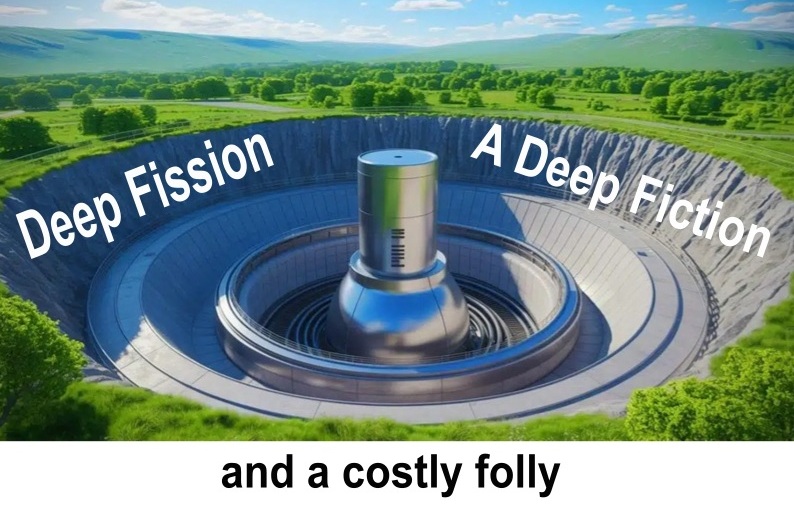
As a disruptive new nuclear power project embeds itself in Parsons, Kansas, residents are divided on whether it’s worth the potential risk.
The New Republic Finn Hartnett, June 16, 2026
Parsons, Kansas …… With a population of about
9,600 ………
……………………………………The Parsons Sun had it first: a deal struck between industrial park board members and the nuclear company Deep Fission. A first-of-its-kind nuclear reactor was coming to the park. “I saw it on Facebook, and I thought it was a joke,” Marjorie Reynolds, a home nurse who lives in the area, said. The public was not informed before the deal was completed: Even county commissioners were only told “a week or two” prior, according to Commissioner Terry Weidert. “They just announced it in the newspaper December 4, like it was a done deal,” anti-nuclear activist Ann Suellentrop said. “So arrogant and so dismissive of the public.”
Park officials said they could not inform the public because they were under nondisclosure agreements with Deep Fission and the Department of Energy. “You’ve got intellectual property that … they like to keep under wraps,” Reams said. “If you’re the DOE, it’s a national security risk. It’s an energy project that has national implications.” Zaleski concurred, arguing that the agreement with Deep Fission was a standard one. “That’s just how the cookie crumbles in this industry,” he said.
Holger Meyer, a particle physics professor at Wichita State University with a background in nuclear energy, said the public should have been informed regardless. “There sometimes are good reasons for the desire for nondisclosure agreements,” he said. “But this isn’t something that just impacts the land it is on. It impacts the entire county—the entire region.… There is obvious public interest.”
It didn’t matter. Five days later, park officials, executives of Deep Fission, a smattering of locals, and roughly 40 TV stations gathered in the park for a groundbreaking. Parsons may not have liked it, but it was going nuclear.
Founded three years ago, the California-based start-up Deep Fission was thrust into prominence last August, when its reactor project became one of 11 selected as part of Donald Trump’s “Nuclear Reactor Pilot Program.” The pilot program, created by executive order, fast-tracks the companies’ ability to receive commercial operating licenses. The stated goal at the time was for three reactors to achieve criticality by July 4, 2026; one already has, and the DOE claims two more are on track. Deep Fission is not among them.
This rapid schedule is possible in part because Trump has overhauled the Nuclear Regulatory Commission since the start of his second term, relaxing regulations and inspections to meet demand from data centers.
In May 2025, the president ordered the theoretically independent NRC to submit to the White House’s Office of Management and Budget, and cut the annual hours spent on nuclear inspections by an estimated 38 percent. Hundreds of staff members have since departed the agency, and the two remaining Democrats on its board have expressed fear they could be fired after Democratic Chair Christopher Hanson was canned last year. Suellentrop warned that the NRC will be “gutted” if Trump continues to get his way. “The DOE will rubber-stamp whatever he wants, and to hell with people’s safety, their health, the environment,” she said.
………………….For advocates of Deep Fission, the government’s promotion of the project is evidence of its safety.
But others warned against such implicit trust. Meyer said “industry interest” was behind the Trump administration’s embrace of nuclear power. “Environmental regulations are being dismantled in all areas,” he said. “It’s clear that nuclear safety isn’t prioritized by the Trump administration.” Kent Rowe, a retired professor of aeronautics and anti-nuclear activist from near Parsons, stated that the Deep Fission project was “a scheme to bury [reactors] haphazardly and worry about consequences later.”
A March letter signed by 11 state attorneys general condemned the DOE for creating an exemption allowing certain nuclear projects to skip previously mandated environmental reviews. Paul Gunter, director of the group Beyond Nuclear, said he was concerned the exemption would allow Deep Fission to bypass proper safety measures.
“There should be no question about whether or not a novel nuclear technology without a designed reactor containment system can avoid an environmental review for potential severe accidents and the long-term consequences,” he said. When asked whether Deep Fission would indeed be exempt from the review, a DOE spokesperson said, “No determination has been reached.”
While the other nuclear companies in Trump’s pilot program are working on more or less traditional reactors, Deep Fission is getting weird with it, forecasting a reactor it has described as both “discreet” and “bespoke.” A laudatory Forbes profile on company founders Richard and Liz Muller outlines the plan: “Drill a 30-inch-diameter borehole a mile into the earth, fill it with water, then insert a teeny-tiny nuclear reactor that will boil the water at the bottom and send it up a separate pipe to run a steam turbine. Each hole will generate 15 megawatts, enough to power 12,000 homes.” (The profile fails to note some less savory details from Richard’s past: He was a vocal global warming skeptic until 2012, and has been criticized for taking research funding from the oil and gas tycoon Charles Koch.)
A small, scalable reactor is Deep Fission’s Theranos-esque goal, perfect for supporting Silicon Valley’s new obsession: AI data centers. Seventy in-house reactors can power one data center, according to Forbes. Deep Fission has been open about a desire to “meet the explosive demand for power from artificial intelligence” with a system “designed to scale modularly.” They have already seduced the likes of Palantir co-founder Joe Lonsdale, who owns an 8 percent stake in the company.
Speed is one of the company’s core tenets, which is concerning to some critics. Deep Fission’s website proudly states its reactors take an “estimated six months” to build, and the company told Parsons in December it aimed to have a test reactor running by July. “We have to build fast enough to meet data center demand before they decide to go with something else,” Liz Muller told Forbes.
It turns out, though, that building a nuclear reactor is quite difficult. The company now will not say when its test reactor will be ready, and is unsure on whether it will be able to open a commercial reactor at all. Deep Fission recently completed a test well in Parsons 6,000 feet deep and eight inches in diameter. That may sound impressive, but it’s far smaller than the mile-deep, 30 to 50 inch–wide borehole that will be needed for the real thing.
While a white paper sent to the NRC gives insight into the proposed reactor blueprint, Deep Fission’s design is not final yet. The company has not submitted a preliminary safety analysis to the DOE, nor applied for the NRC license it will need to sell energy, according to federal officials. Deep Fission declined to speak with The New Republic for this piece, with vice president of communications Chloe Frader citing the “active registration process.”
Reams said Deep Fission was never going to hit the deadline it set for itself. “I think even if it had gone perfectly, they probably wouldn’t have hit July 4,” he said. As to why the company may not be selling its energy anymore? “They weren’t sure [of] all the P’s and Q’s that they had to make sure were covered,” Reams said. “It’s been a learning process for them.”
…..some have been vocal in their opposition to Deep Fission, particularly Reynolds, who founded a local group called Prairie Dog Alliance for the express purpose of fighting the development. In a matter of months, Reynolds has assembled a hodgepodge of community members, among them farmers, business owners, activists, and professors. (Suellentrop, Meyer, Rowe, and Gunter have all been in contact with the group.) Prairie Dog Alliance now boasts over 500 Facebook followers and about 15 members who attend regular meetings.
Some locals say Prairie Dog represents the majority opinion. Librarian Heather Fouts estimated that “at most 25 percent” of residents support the nuclear project. “I would say most of Parsons is against the reactor,” echoed Beachner, who recently joined the group. “But I also feel … nobody believes they can do anything.” In contrast, Zaleski and Parsons Sun editor Hannah Emberton cast Prairie Dog as a vocal minority.
The group forced a public meeting with Deep Fission in March after rejecting private talks. There have been a handful of meetings since, but Prairie Dog still wants more transparency. Member Jill Blankinship said the March meeting was “turned into a meet-and-greet”; at a later May in-person meeting where company officials took questions, participants were made to write them down ahead of time. Deep Fission also promotes a “community advisory group” in Parsons, which has no public facing presence at the moment, though Deep Fission says has met twice.*
Deep Fission is also drilling its boreholes at the edge of the Roubidoux aquifer, an underground water source that’s part of the larger Ozark system. While Parsonites get their drinking water from nearby Lake Parsons, the Ozark system is used for commerce, farming, and rural water districts all over the shop. “If something did happen, there’s potential that it could contaminate groundwater, which then contaminates the Neosho River, which goes … all the way down to Oklahoma,” Blankinship said. “Thirty-six towns, all kinds of people.”…………..
There’s also the issue of nuclear waste. Deep Fission’s founders said in April they wanted to just abandon their spent fuel rods underground after each reactor’s six-year lifespan. “Instead of pulling them out of the hole, they’ll pour in a mix of cement and rock to seal it all in place,” the Forbes profile states happily. Activists called the idea dangerous.
A month after the Forbes piece, Deep Fission seemingly changed its tune. Chief Operating Officer Mike Brasel said in a May public meeting that the company will only leave spent fuel underground temporarily and that “we do not plan on disposing fuel down in that hole.” While the federal government is “contractually required to take the fuel,” Brasel said, Deep Fission aims to have a recycling or disposal facility in place before its boreholes begin to collapse in “40 to 50” years.
By then, things could already be going very wrong. Reynolds’s doomsday scenario is that radiation poisoning of the city’s soil and water will turn Parsons into something akin to Picher, Oklahoma, a small town 35 miles away. Once a bastion of lead and zinc mining, the town underwent dangerous corporate practices that caused irreconcilable environmental damage to the land; Picher was soon declared uninhabitable, and the municipality was officially dissolved in 2013.
In the event of a disaster, Deep Fission is seeking liability insurance under the Price-Anderson Act, which indemnifies the company in the event of a nuclear accident, providing costs fall above a certain threshold. “They’re going to … look for being indemnified from an accident that they’re saying will never happen,” Gunter said. “That’s a clear no-confidence vote.”…………………………………………………………..https://newrepublic.com/article/211643/nuclear-reactor-parsons-kansas-safety
US Finally Capitulates with ‘Memorandum’ of Surrender

Simplicius, Jun 17, 2026
The US has finally capitulated in its disastrously failed war against Iran, reportedly drafting a memorandum of understanding which is highly favorable to the Islamic Republic, and gains as concession nothing more than the promise that “Iran will not obtain nuclear weapons”—a position Iran had already long held.
The most explosive detail is the alleged $300 billion “reconstruction fund” that Iran will be entitled to once the deal is sealed.
Trump has downplayed or denied this point, with everyone seemingly perplexed as to what this massive sum entails, exactly. In the above article, Reuters writes the following:
The new fund is a private investment vehicle, not a reconstruction or reparations program and will not include any government money or grants, the source said, adding that companies based in the U.S., the Gulf Arab states, Asia, South America and Africa have agreed to commit financing.
Investments pledged span energy, logistics, manufacturing and transport, the source said.
They claim it’s not a reparations program, yet the official name of the fund is the ‘Reconstruction and Development Fund’. It appears to revolve around regional entities—both corporate and governmental—providing credit lines, direct financing, etc., to Iran. As can be seen above, over half of the fund is claimed to be already committed.
Some American propaganda pundits had claimed that this fund is being pulled from Iran’s frozen assets abroad, but Reuters begs to differ, citing that as an entirely separate negotiating track:
The investment fund is entirely separate from a parallel negotiating track over the lifting of U.S. sanctions and the release of Iranian sovereign assets frozen abroad, the source said, describing the two as distinct financial mechanisms with different purposes and timelines.………………………………………………………………………………………………………………………………………………………………………………………………………………………………………. https://simplicius76.substack.com/p/us-finally-capitulates-with-memorandum?utm_source=post-email-title&publication_id=1351274&post_id=201961444&utm_campaign=email-post-title&isFreemail=false&r=c9zhh&triedRedirect=true&utm_medium=email
Georgia nuclear power plant cleared for 80-year operating life
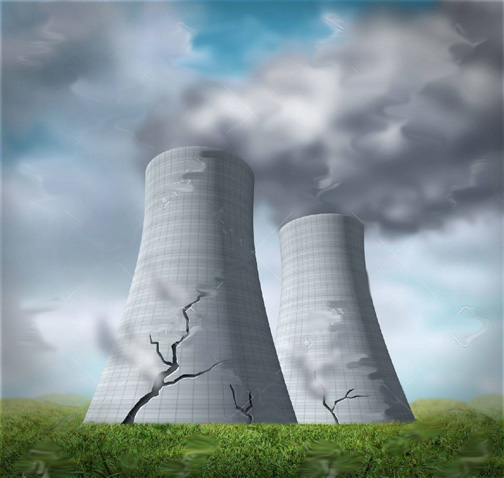
The two boiling water reactor units at Georgia Power’s Edwin I Hatch plant
have been cleared by the regulator to operate until the mid-2050s. Hatch
unit 1 began commercial operation in December 1975, with Hatch 2 following
in September 1979. The units were originally licensed to operate for 40
years, with the NRC approving a previous 20-year licence extension in 2002.
The plant is operated by Southern Company subsidiary Southern Nuclear on
behalf of its co-owners Georgia Power, Oglethorpe Power Corporation, the
Municipal Electric Authority of Georgia and Dalton Utilities.
World Nuclear News 16th June 2026, https://www.world-nuclear-news.org/articles/georgia-nuclear-power-plant-cleared-for-80-year-operating-life
Trump’s ‘nuclear bros’ race to deliver US atomic revival
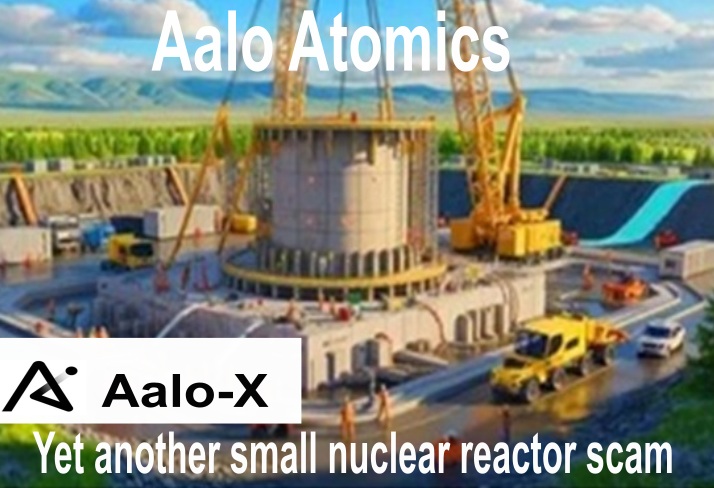
At a factory in Texas, Matt Loszak is building a new type of nuclear reactor he
hopes will allow the US to reclaim leadership in an industry dominated by
Russia and China. “Our goal is to ship hundreds and possibly thousands of
reactors every year,” the 35-year-old founder of Aalo Atomics said as he
inspected components for the Aalo-X, designed to power AI data centres.
Aalo is one of several US start-ups planning to switch on new reactors this
month ahead of a July 4 deadline set by President Donald Trump to mark the
250th anniversary of America’s independence.
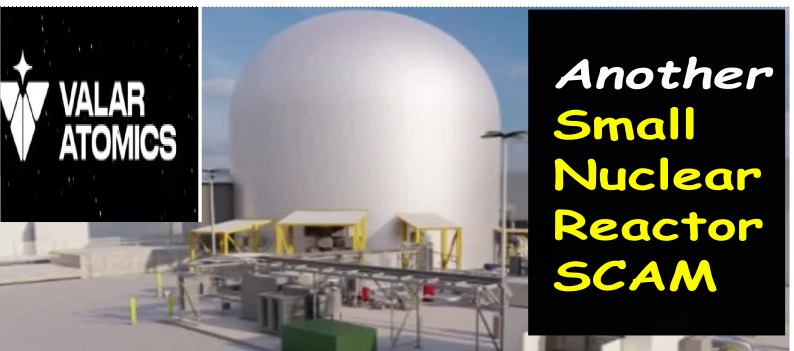
Antares Nuclear and Valar
Atomics have already announced they have achieved “criticality” — the
moment a nuclear chain reaction becomes self-sustaining. Radiant Nuclear
and Oklo told the FT they were in the final stages of receiving safety
clearances under Trump’s pilot programme, which aims to have at least
three test reactors reach criticality by the target date. Many of the
founders leading the charge are under 40 and come from outside the nuclear
industry, while some have ties to the Trump administration. Backed by
Silicon Valley, they say small reactors can help meet soaring electricity
demand from AI data centres.
FT 18th June 2026,
https://www.ft.com/content/0d074795-e54a-41d7-9c97-baf2bd6deb94
Trump Administration Plans Major NATO Drawdown Of U.S. Jets, Tankers, Bombers And Warships In Europe
The reported reductions provide one of the clearest pictures so far of how far the Trump administration intends to go in scaling back the U.S. role within NATO
by yourNEWS Media Newsroom | Jun 13, 2026
A June document shared with allies reportedly outlines sweeping reductions in U.S. military assets assigned to NATO operations, including fighter jets, surveillance aircraft, tankers, naval forces and bomber units.
By yourNEWS Media Newsroom
The Trump administration is preparing to reduce key U.S. air and naval assets available for NATO missions in Europe, a move that would mark a broad shift in America’s military posture inside the alliance, according to The New York Times.
Two senior European officials familiar with the decision said the reductions were detailed in a document provided to allies in early June. The plan would cut the number of American aircraft and warships assigned to NATO operations and could limit the alliance’s capacity for aerial refueling, surveillance, long-range strikes and maritime monitoring.
Under the proposal described by the officials, U.S. F-16 and F-15E fighter jets available for NATO operations would fall from about 150 to 100. Maritime reconnaissance aircraft would be reduced from 26 to 15, and all eight aerial refueling tankers previously assigned to Europe would be withdrawn.
The drawdown would also involve the reassignment of a missile-launching submarine, an aircraft carrier and several supporting warships. One of the two bomber groups previously designated for Europe’s defense would also be reassigned.
The Pentagon declined to address the specific numbers in the document. It instead referred to a recent statement from U.S. European Command about plans to reduce American commitments in Europe.
The reported reductions provide one of the clearest pictures so far of how far the Trump administration intends to go in scaling back the U.S. role within NATO, the post-World War II alliance created for the collective defense of North America and Europe. European leaders continue to regard NATO as central to deterring Russian aggression, and the proposed shift comes as many governments on the continent remain concerned about Moscow’s military activity near alliance territory.
No public timetable has been announced for carrying out the reductions. However, U.S. officials have signaled that the changes could occur sooner than many European governments had expected.
The impact could be felt across several NATO missions. Fewer aircraft and ships could affect the alliance’s ability to track Russian submarine movements, support long-distance air operations and conduct long-range strike missions.
Giuseppe Spatafora of the European Union Institute for Security Studies said the combined reductions would have consequences beyond any one category of equipment.
“While each of these cuts can be managed individually, together they represent a significant posture change and pose challenges to European deterrence readiness across the spectrum,” Spatafora said.
President Donald Trump has repeatedly argued that European NATO members rely too heavily on U.S. military power and should spend more on their own defense. His administration had already announced smaller adjustments to American troops and forces in Europe, but the June document outlines wider reductions affecting NATO missions across the continent.
The United States would still maintain one of NATO’s largest military footprints in Europe after the planned cuts. At the same time, European governments have increased defense spending and moved to rebuild military capacity amid uncertainty over long-term U.S. support……………………………………………………………………………………………… https://yournews.com/2026/06/13/7053385/trump-administration-plans-major-nato-drawdown-of-u-s-jets-tankers/
Can Trump Restrain Israel?
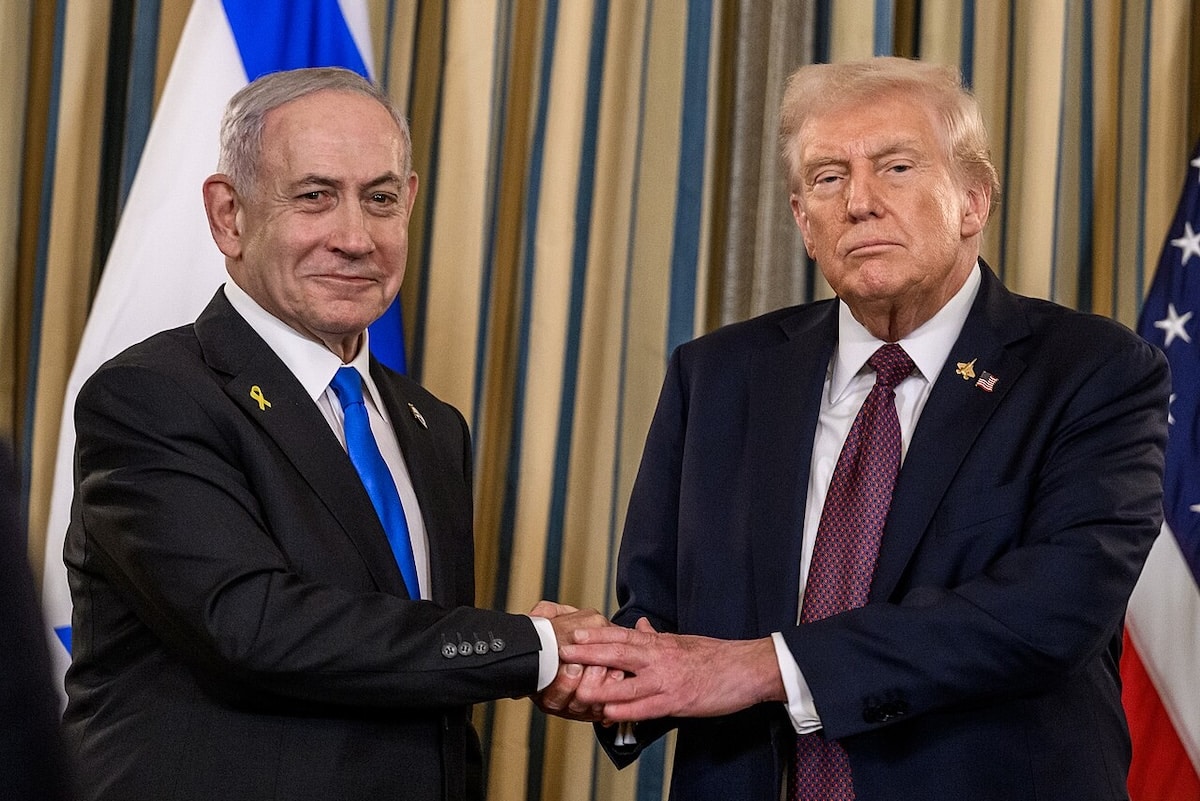
Middle East Monitor06/13/2026, by Norliza binti Saleh, https://www.juancole.com/2026/06/trump-restrain-israel.html
The latest exchange between Iran and Israel raises a fundamental question: Who is really driving events in the Middle East – Washington or Jerusalem?
Following Israeli strikes on targets in Beirut, Lebanon, Iran responded with strikes against northern Israel and military facilities around Haifa. Israel then immediately retaliated by attacking Tehran, Tabriz, Karaj and Isfahan. While the ceasefire between the United States and Iran is technically in place, the broader regional conflict continues to intensify. Throughout the crisis, President Donald Trump has repeatedly expressed support for de-escalation and urged all parties to avoid a wider war.
Yet events on the ground suggest that Washington’s desire for stability may not necessarily translate into restraint by its closest ally. The current crisis is becoming a test not only of regional security but also of American influence itself.
The Trump administration appears reluctant to become involved in another prolonged West Asian conflict. Unlike previous periods of direct American military engagement in the region, Washington’s priorities today are largely domestic and economic.
A wider regional war would almost certainly increase energy prices, disrupt global trade routes, and create uncertainty in international markets. Such instability would undermine economic recovery efforts and place additional pressure on American households.
For Trump, who has consistently portrayed himself as a leader focused on domestic prosperity rather than foreign military adventures, another regional war offers few political benefits.
This explains why Washington continues to advocate restraint and emphasize the importance of maintaining the ceasefire framework currently in place.
Israel, however, views the situation through a different lens.
From the Israeli perspective, Hezbollah and Iran remain immediate security threats that cannot be ignored. Israeli leaders claim that military pressure is necessary to weaken these adversaries, regardless of American concerns about regional escalation.
Yet security alone does not fully explain Israel’s actions.
“The conflict is also intertwined with political and ideological ambitions. The influential factions within the Israeli regime continue to be influenced by a broader vision of expanding Israel’s strategic footprint in the region, often associated with the concept of “Greater Israel”.
In this reading, Lebanon is not merely a battlefield but part of a wider Israeli expansionist project.
This creates an important divergence between American strategic interests and Israeli security calculations. The result is an increasingly visible gap between what the United States wants and what Israel is prepared to do.
Recent developments have also highlighted Iran’s growing strategic importance. Iran occupies a critical geographical position overlooking the Strait of Hormuz, through which a significant portion of the world’s oil and gas supplies passes. Any disruption to this maritime chokepoint would immediately affect global energy markets and international trade.
More importantly, external pressure has strengthened domestic unity within Iran. The groups that previously disagreed with the government have increasingly
rallied around the state in response to external threats. Regionally, Iran has demonstrated both military capability and strategic reach, reinforcing its position as a major regional power whose actions can no longer be ignored. Recent events have witnessed that Iran possesses significant leverage over regional security and global energy stability.
The central issue, therefore, is not whether Trump supports a ceasefire. He clearly does.
The real question is whether Washington possesses sufficient leverage to translate its preference into Israeli behaviour.
“If Israeli military operations continue despite American calls for restraint, observers will inevitably question the extent of US influence over its closest ally. “
This matters because American credibility remains a key pillar of regional stability. If Washington is unable to shape the actions of partners that depend heavily on American diplomatic, financial and military support, its broader influence across West Asia may also come under scrutiny.
Failure to contain the current escalation carries risks far beyond West Asia. A wider Iran-Israel confrontation could threaten critical energy routes, including the Strait of Hormuz and other regional maritime chokepoints. Rising energy prices would affect economies worldwide, including countries geographically distant from the conflict such as Malaysia.
At the same time, continued instability risks expanding the conflict across multiple fronts involving Lebanon, Syria, Iraq and the Red Sea region. The longer the crisis continues, the greater the likelihood of miscalculation by one or more actors.
For this reason, calls for a genuine ceasefire must be matched by meaningful diplomatic efforts and credible pressure on all parties involved.
“The current crisis has become a test of two things: regional stability and American influence. “
President Trump may genuinely prefer de-escalation, but preference alone is insufficient. The true measure of leadership lies in the ability to shape outcomes, not merely express intentions If Washington cannot persuade its closest ally to support a sustainable ceasefire, the risk of a wider regional conflict will continue to grow.
“The key question is therefore not whether Trump wants peace. The key question is whether he still possesses the leverage necessary to make it happen”
New Billionaire Jared Kushner Is Mired in Conflicts of Interest as “Peace Envoy”
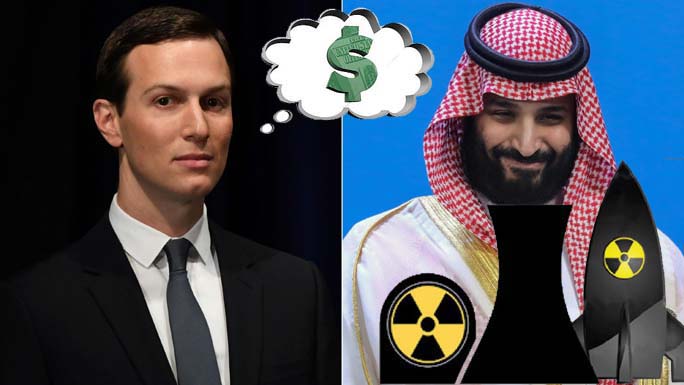
Kushner’s current fundraising efforts with Gulf state regimes, through which he aims to personally profit, raise serious concerns over conflicts between his business interests with regional states and his diplomatic role as a top Trump administration negotiator.
Jared Kushner, like the rest of the Trump family, uses the White House for personal enrichment.
By Derek Seidman , Truthout, June 12, 2026, https://truthout.org/articles/from-peace-envoy-to-billionaire-kushner-makes-a-killing-in-white-house-admin/?utm_source=Truthout&utm_campaign=8d7f421301-EMAIL_CAMPAIGN_2026_06_12_06_45_COPY_01&utm_medium=email&utm_term=0_bbb541a1db-16ee3bf6a0-650192793
Kushner is now a billionaire,” proclaimed Forbes in September 2025 of Donald Trump’s son-in-law Jared Kushner. While just over half of Kushner’s wealth — $560 million — comes from his family’s real estate empire, what’s catapulted Kushner into billionaire status is the growth of his private equity firm, Affinity Partners, formed in 2021.
“[T]hese days,” said Forbes, Kushner is “laser-focused on Affinity.”
Kushner is not an experienced investment manager. His key clients are Gulf state sovereign wealth funds — hugely wealthy state-owned coffers that invest revenue generated by fossil fuel sales — overseen by the same regimes with whom Kushner is now involved diplomatically as a U.S. “special envoy for peace.”
That Kushner personally profits from, and is currently trying to raise billions from, the same actors he’s negotiating with, raises code red-level alarms over potential conflicts of interest. Moreover, two of Trump’s sons, Donald Jr. and Eric, have been tied to a slew of business deals connected to companies that are benefitting handsomely from federal government contracts.
“The degree of shamelessness is unprecedented,” Jeff Hauser, founder and executive director of the Revolving Door Project, a watchdog group monitoring the U.S. executive branch, told Truthout. “The degree of unity among elected Republicans to not speak about the Trump progeny, and their corruption, is the worst conspiracy of silence in American political history.”
Affinity Partners
Jared Kushner founded Affinity Partners in 2021, and he is the firm’s sole owner. Forbes estimates Affinity was worth $215 million as of September 2025, up from $170 million in October 2024. Through Affinity, Kushner recruits wealthy clients and invests their money through funds that acquire stakes in different companies.
Affinity currently has $6.2 billion in assets under management. According to the Israeli financial paper Globes, Kushner earns “a commission of 1.25 percent on investors’ capital.” Forbes says that Affinity’s investors “pay about $60 million per year in fees.”
The New York Times also reports that Affinity has earned an estimated 25 percent rate of return on its investments since 2021. Private equity investment firms often get a double-digit percentage cut on client returns.
Affinity’s biggest clients are Gulf state sovereign wealth funds. According to The New York Times, Saudi Arabia’s Public Investment Fund, which invests the kingdom’s oil profits and is led by Crown Prince Mohammed bin Salman, is “already the largest and earliest investor in Affinity,” having invested $2 billion with the firm after Trump’s first term ended. As part of that investment deal, Saudi Arabia was also given “the first chance to invest during any subsequent attempts by Affinity to raise funds,” said The New York Times.
The sovereign wealth funds of both the United Arab Emirates (UAE) and Qatar were also early investors in Affinity Partners, with the UAE investing over $200 million in Kushner’s firm.
“Most of Affinity’s investors came through connections Kushner made while serving in the White House,” wrote Forbes.
Kushner is currently trying to raise $5 billion or more in new funds for Affinity. As part of this effort, The New York Times reported in March 2026 that Affinity representatives had met with Saudi Arabia’s Public Investment Fund and that the United Arab Emirates and Qatar “are also expected to be asked for more” as the fundraising efforts should “stretch on for the better part of this year,”
“Staggering Conflicts of Interest”
Kushner’s current fundraising efforts with Gulf state regimes, through which he aims to personally profit, raise serious concerns over conflicts between his business interests with regional states and his diplomatic role as a top Trump administration negotiator.
“There’s an enormous conflict of interest when you have somebody who had never been a money manager like this before, and who is all of a sudden building massive funds based off a handful of foreign investors with an interest in buttering up the Trump administration,” said Hauser.
Hauser said it’s “not unprecedented” for well-connected family members or friends of presidents to influence U.S. diplomacy. But, he adds, “it is very susceptible to abuse, and I think it’s being abused here,” and government reforms are needed in the wake of Kushner’s current “diplomatic exploits.”
The potential conflicts of interest have been highlighted by some members of congress. Rep. Jamie Raskin (D-Maryland) has opened an investigation into what he labels Kushner’s “foreign entanglements and staggering conflicts of interest.”
“From the standpoint of the American people, your decision to act in these two roles — one public for the government and one private for personal profit — creates a glaring and incurable conflict of interest,” Raskin wrote in a letter to Kushner.
Kushner’s diplomatic efforts have included helping to design and advance the Abraham Accords, which aims to normalize relations between Israel and key Gulf States; carrying out negotiations with Iran, whose retaliatory strikes have been aimed at nations like Saudi Arabia and the UAE; and working on Donald Trump’s “Board of Peace,” which several Gulf states, including top Affinity clients, have joined.
Kushner’s Portfolio Companies
Read more: New Billionaire Jared Kushner Is Mired in Conflicts of Interest as “Peace Envoy”Affinity Partners’ most significant deal has been its $55 billion acquisition in 2025, in partnership with Saudi Arabia and other investors, of the video game giant Electronic Arts, maker of popular franchises like Madden and Sims. The transaction, which has garnered protests from gamers and developers, would be the largest-ever private buyout of a publicly-traded company. It’s currently in its final stages of approval.
Under the deal’s terms, Saudi Arabia’s sovereign wealth fund — which already had a 10 percent stake in Electronic Arts — will own 93.4 of EA, while Affinity Partners will own 1.1 percent. For Saudi Arabia, the deal advances two separate but intertwined aims: diversifying its economy away from overreliance on oil revenue, and partnering with a member of the Trump family as the deal seeks regulatory approval from the U.S. Committee on Foreign Investment, chaired by Trump’s Treasury Secretary Scott Bessent
Affinity Partners also invests in smaller AI and financial companies, including U.K. digital bank OakNorth, AI infrastructure firm Universal AGI, and the fintech start-up company Revolut. Forbes reports that Kushner recently launched a new San Francisco-based AI start-up with the prominent Israeli-born venture capitalist Elad Gil. The firm, Brain Co., also raised funds from Coinbase’s Brian Armstrong and LinkedIn’s Reid Hoffman.
Raising more potential for conflicts with his diplomatic role, Kushner also has stakes in several Israeli companies, including $1.68 billion in Phoenix Financial, one of Israel’s leading insurance and financial companies. Affinity is Phoenix’s top shareholder and has seen a five-times return on its investment.
Affinity is also invested in the Israeli Shlomo Group, one of Israel’s largest holding groups with big investments in the auto sector.
Kushner, TikTok, and the Trump Web
Jared Kushner is also embedded in a wide web of business figures advancing the Trump agenda — which could be seen in the January 2026 deal that created a U.S. spinoff of TikTok.
Kushner’s Electronic Arts deal is co-led by Silver Lake, a Los Angeles-based private equity firm. As Truthout previously reported, Silver Lake is also a 15 percent stakeholder in the new U.S. TikTok. The firm’s co-CEO Egon Durban sits on the seven-member board of U.S. TikTok.
In 2025, the Wall Street Journal reported that acquiring Electronic Arts was Durban’s “dream deal,” but that “the pieces began to fall into place” for the acquisition only after Durban “began spending time with Jared Kushner.”
Silver Lake also owns Endeavor, whose portfolio includes TKO Group Holdings, the parent company of Ultimate Fighting Championship (UFC), the mixed martial arts corporation that is chummy with Donald Trump.
Durban and Silver Lake are close business partners with Michael Dell, the megabillionaire chairman and CEO of Dell Technologies who is also part of the U.S. TikTok ownership group with Durban. Dell has cast himself as a Trump ally by donating $6.25 billion toward the president’s so-called “Trump Accounts” program, which creates investment accounts for U.S. children.
Billionaire Yuri Milner, another U.S. TikTok investor, previously invested $850,000 in a real estate company started by Kushner in 2015. Jon Winkelried, the billionaire CEO of TPG Global, a private equity firm represented on U.S. TikTok’s board, also previously served as a strategic adviser and partner for Thrive Capital, an investment firm overseen by Jared Kushner’s brother, Josh Kushner.
The Trump Sons
If Kushner, Donald Trump’s son-in-law, may be personally benefiting from his closeness to the president, so too might be two of the president’s own children.
Donald Trump Jr. is a partner with an investment firm called 1789 Capital, which he says is dedicated to “patriotic capitalism,” and which has seen its assets under management boom from $200 million to $3.5 billion over the past year.
1789 Capital has made investments in companies that have gone on to benefit from federal contracts. For example, the Trump administration helped secure a $620 million loan for Vulcan Elements, a rare earths firm, months after 1789 Capital acquired a stake. Other 1789 Capital portfolio companies that benefit from federal contracts include rocket propulsion start-up Firehawk Aerospace, quantum computing company PsiQuantum, and AI group Cerebras Systems, as well as SpaceX and Anduril. Donald Trump Jr. and Eric Trump have also been linked to other drone makers, including Unusual Machines and Powerus, that have secured federal contracts.
Trump Jr. told the Financial Times that he is “very involved in the strategic decisions regarding where to invest” the resources of 1789 Capital.
The Financial Times also reported that Eric Trump accompanied his father on his recent state visit to China at the same “a company linked to him and the US president’s family” — Alt5 Sigma, a Las Vegas-based financial technology company — “explores a deal” with Chinese chipmaker Nano Labs that U.S. lawmakers says is tied to the Chinese Community Party. Eric Trump is an “observer” on the board of Alt5 Sigma, while Zach Witkoff, the son of top Trump aide Steve Witkoff, chairs Alt5’s board.
The Financial Times also reports that a shell company backed by Donald Trump Jr. and Eric Trump is set to merge with a critical minerals group that last year secured up to $1.6 billion in U.S. government backing to mine tungsten in Kazakhstan. Now, that group is asking for $400 million more from the government.
Holding Politicians to Account
While Donald Trump may be struggling in the polls, his family, financially, is doing just fine.
Hauser told Truthout that much of Donald Trump’s “economic interest” is tied to “increasing the wealth of his kids,” including his son-in-law Kushner. “When they are engaged in these types of overseas actions, they are carrying Trump’s interests with them inherently,” said Hauser.
But, Hauser adds, the law treats adult children of presidents as wholly independent from their parents, allowing “relative impunity” for their intermixing of business transactions with diplomatic roles or close familial relations.
“The law is just not written to address this type of situation,” said Hauser.
But Hauser sees hope in past U.S. history, which he says has always experienced vicissitudes of political corruption and revulsion against corruption that propels reform through both legal avenues as well as social ostracization of bad actors.
“Political corruption cycles tend to be cyclical,” he said. “Hopefully this is [the] nadir, and we can all be angry enough and hold our politicians to account such that they start to clean this up, and we can switch from a vicious cycle of ever-increasing corruption to a virtuous cycle of greater integrity.”
Senate wants to force US to share sensitive intel with Israel

A measure in a must-pass bill would dramatically increase Israeli access to American secrets
Paul R. Pillar, Responsible Statecraft, Jun 10, 2026
Buried deep inside a 192-page intelligence authorization bill is Section 622, titled “United States-Israel Intelligence Sharing Enhancement.” It would require the president, acting through the director of national intelligence and as necessary the secretary of defense, to “expand and enhance intelligence sharing with the Government of Israel” on a list of subjects that encompasses almost every topic of intelligence interest in the Middle East.
The bill, put forward by Sen. Tom Cotton (R-Ark.), the chairman of the Senate Intelligence Committee, would prohibit any suspension, reduction, or limitation of such sharing “except on the basis of a specific and identifiable national security concern determined by the President.” Any such exception would require a report to Congress within fifteen days detailing not only the reason for the change but also the categories of information involved. The same report would require an assessment of the anticipated impact on regional security and various other matters.
This proposal is one of several recent moves by those in Washington who carry the Israeli government’s water to keep the United States tied to Israel despite plummeting support for the country among the American public. The most salient form of U.S. support to Israel has been more than $300 billion in economic and especially military assistance. Israeli Prime Minister Benjamin Netanyahu has tried to get ahead of the declining public support and avoid embarrassing losses by suggesting it would be fine with him to phase out the military aid.
Israel’s strategy and that of its U.S. supporters is now to rely on ties with, and support from, the United States that are not as salient as the military aid with its prominent price tag. The strategy includes forms of military integration that are less visible than congressionally appropriated grant aid and therefore less publicly accountable. Section 224 of a defense authorization bill currently in the House of Representatives embodies this form of integration.
The mandating of intelligence sharing carries this strategy further by moving it into the shadowy world of relations between intelligence agencies. That world is even farther removed from public visibility and accountability than the defense integration, and even less likely to stimulate thoughts about American taxpayers’ money going to a foreign country. So far, Section 622 of the intelligence bill has received less attention than Section 224 of the defense bill.
The notion of legislating an intelligence liaison relationship in this way, with any foreign country, is bizarre……………………………………………………………………………………………………………………………………………………………………………….
The current ill-advised war with Iran demonstrates the sharp divergence of U.S. and Israeli interests. After being the principal influence on President Donald Trump’s decision to launch the war, Netanyahu’s government has been sabotaging efforts to end it.
It currently is doing so mainly with relentless attacks in Lebanon that have killed thousands and displaced over a million people. The divergence of objectives was reflected in an expletive-laden phone call last week between Trump and Netanyahu that was mainly about those attacks.
Attacks that sabotage diplomacy are among the Israeli operations that might use shared U.S. intelligence. The United States also will be blamed for aiding other violent Israeli operations because of the “enhanced” intelligence sharing, even if it were no longer paying for Israeli arms.
The supposed escape clause in Section 622 of the intelligence bill would in practice be so cumbersome as to be useless. The required report to Congress would dump the issue on Capitol Hill, where the Israel lobby would quickly depict it as a question of being for or against the security of Israel. The mandated intelligence sharing in the bill thus would tie the president’s hands and prevent any administration from using management of the intelligence liaison relationship as leverage to deter destructive conduct by Israel. https://responsiblestatecraft.org/us-intelligence-israel/
Trump news at a glance: president claims Iran ‘no longer want a nuclear weapon’ amid peace deal hopes
Washington and Tehran express increasing optimism that weeks of halting negotiations may be drawing to a close – key US politics stories from Saturday 13 June at a glance
Guardian staff, 14 June 26, https://www.theguardian.com/us-news/2026/jun/14/trump-news-at-a-glance-president-claims-iran-no-longer-want-a-nuclear-weapon-amid-peace-deal-hopes
Donald Trump says a deal with Iran to end the war would be signed on Sunday, and that the strait of Hormuz would be “open to all” immediately after.
Iran had offered a different timeline earlier in the day, but nonetheless signalled an agreement was in the offing, as both the warring parties and their mediators expressed increasing optimism that weeks of halting negotiations were drawing to a close.
“The Deal is scheduled to get signed tomorrow, and immediately after it is signed, the Hormuz Strait is OPEN TO ALL,” Trump said on his Truth Social platform. Since an 8 April truce paused the worst of the fighting, Trump has repeatedly insisted a deal was near only for the wrangling to drag on.
The Iranian foreign ministry spokesperson, Esmaeil Baqaei, had said earlier on Saturday that the date of the signing was yet to be determined, but “it will not be tomorrow”. However, he added: “The possibility of this happening in the coming days cannot be ruled out.”
Space Force needs to prepare for an ‘in-person’ moon conflict with China, new report argues
Guardians need a human spaceflight program for future lunar missions, Mitchell Institute says.
Defense One, Thomas Novelly, 23 May 26,
The Space Force should prepare to put active-duty troops on the moon and on space stations to counter China’s lunar and military ambitions, a new research paper argues.
The Mitchell Institute’s paper, published Thursday, calls for the Space Force to prioritize the creation of a “human spaceflight” program and redefine federal, active-duty Title 10 orders to compete against China’s military-focused space initiatives—such as the reported goal of putting its Taikonauts on the moon by 2030. Although Chinese officials as recently as last month have said the country believes in the “peaceful use” of space, the paper claims future “competition for control of lunar resources and territory will likely reach a tipping point” and the U.S. military must be prepared.
With a potential ‘in person’ lunar conflict with China as the contextual touchstone, the U.S. must begin a pragmatic multi-decade effort, leveraging its Space Test Course (STC), as well as partnerships with NASA and commercial space companies, to deliver the skills, tools, and concepts needed for future Title 10 activities to enforce U.S. spacepower-enabling norms and standards,” the report said. “These efforts will require additional funding from Congress for both U.S. Space Force human spaceflight opportunities and residencies at commercial space stations.”
The 22-page policy report calls for blurring the long-standing boundaries between space exploration and militarized operations by allowing Title 10 active-duty federal orders to include “space and lunar habitation” and “warfighting authorities and a national defense mindset in the advancement of human spaceflight.” The 1967 Outer Space Treaty, which the U.S. and China are parties to, calls for the governments to use the moon and other planets for “peaceful purposes” and forbids military bases, testing, and maneuvers. Kyle Pumroy, a retired Space Force colonel and the paper’s author, called for pushing back against those norms………………………………………………………………………………….. https://www.defenseone.com/threats/2026/05/space-force-needs-prepare-person-moon-conflict-china-new-report-argues/413747/
US Begins Another Round of Attacks on Iran
Trump had said earlier that he would launch more strikes on the country
by Dave DeCamp | June 10, 2026 , https://news.antiwar.com/2026/06/10/trump-threatens-more-attacks-on-iran-after-exchange-of-heavy-strikes/
On Wednesday night, US Central Command (CENTCOM) announced it was launching a round of attacks on Iran for the second night in a row as Iranian media began reporting blasts across the southern part of the country.
In response to the US attacks, Iran’s military said that it would fully close the Strait of Hormuz. “From this moment, due to insecurity in the region, the Strait of Hormuz is declared closed to the passage of all vessels, including oil tankers and commercial ships, and any traffic will be targeted,” Iran’s Khatam al-Anbiya Central Headquarters said in a statement.
CENTCOM then claimed that the Iranian statement was false and that ships were still transiting the strait, but the denial came just a short while after Iran’s announcement. President Trump had earlier claimed that over the past month, the US military was conducting a “secret mission” to allow tankers to exit the Strait of Hormuz. He claimed the US helped bring 100 million barrels out of the strait, which, if true, is still a fraction of the oil that was transiting through the waterway before he launched the war.
After the start of the US strikes, Iranian media reported blasts across Iran’s southern Hormozgan province and said that at least two residents of the city of Kargan were wounded by shrapnel. Iran appears to be striking back as air raid sirens were sounded in Bahrain and the IRGC said it was targeting 18 US military installations across the region.
The fresh US attacks came after President Trump threatened more bombings, and US War Secretary Pete Hegseth also said that the US would be attacking the Islamic Republic.
“CENTCOM will be busy tonight because President Trump said we will be hitting Iran hard, and we will be,” Hegseth told reporters outside CENTCOM headquarters in Florida not long before the strikes started.
On Wednesday morning, the president said on Truth Social that Iran has “taken too long to negotiate a deal that would have been great for them, now they will have to pay the price.” He also claimed in the post that Iran had been “completely defeated” despite its ability to launch missile and drone attacks across the Middle East.
In comments to reporters in the Oval Office later in the day, Trump was more explicit in his threat. “We hit them hard yesterday, and we’re going to hit them again hard today,” he said.
Trump also told Fox News reporter Trey Yingst that he may “keep going” with his attacks on Iran and that he is “getting closer to the targeting of Iranian power plants and bridges.”
During the US-Israeli bombing campaign against Iran, Trump repeatedly threatened to launch massive attacks on Iranian energy infrastructure and bridges, part of his threats to turn the country into “hell” and end a “whole civilization.”
Iran’s Islamic Revolutionary Guard Corps (IRGC) said Wednesday that its forces targeted the US military in Kuwait, Bahrain, and Jordan, and vowed it would launch stronger strikes if the US attacked again.
Iran’s Foreign Ministry said that Iran’s military dealt a heavy blow to the US following its “savage attacks” on Iran that were launched under the pretext of Iran allegedly downing a US Apache helicopter over the Strait of Hormuz as it was enforcing a blockade on Iranian ports. “With these aggressive actions, the US ruling administration once again demonstrated its criminal and warmongering nature,” the ministry said.
US officials said the US strikes on Iran targeted air defense and radar systems, while Iranian media also reported that strikes hit two water reservoirs, cutting off drinking water to thousands of Iranians.
War crime -US ‘precision strikes’ cut water access to 20,000 people in southern Iran
The ‘self-defense’ strikes that Washington said it carried out destroyed part of a key water facility in Hormozgan province
News Desk, JUN 11, 2026, https://thecradle.co/articles/us-precision-strikes-cut-water-access-to-20000-people-in-southern-iran
The US military’s recent airstrikes on a drinking water facility in southern Iran “could constitute a war crime,” a 10 June New York Times (NYT) investigation said after an attac
After the strike, US Central Command (CENTCOM) described its attacks as “self-defense” that was carried out with “precision” munitions.
In response to NYT, a CENTCOM spokesman said he was “aware” of the reports about destroyed water infrastructure, but declined to provide any further information.
The US strikes hit Iran early on Wednesday.
The CEO of Hormozgan province’s water and wastewater company announced before NYT released its investigation that the US struck a 500-cubic-meter tank and a 2,000-cubic-meter tank that both played a key role in supplying drinking water to Sirik.
Authorities said the strikes cut off water to 20,000 people living in nearby areas.
“Mobile water tankers brought in water to supply residents while crews built a new service line that bypassed the damaged tanks,” Abdolhamid Hamzehpour, the head of the provincial water authority, told NYT, adding that the task was completed within 12 hours. k by Washington cut off water to tens of thousands of people.
ranian forces targeted US bases in the region on Wednesday in response to the attacks that destroyed the facility.
Since then, more US strikes have targeted the Islamic Republic.
Iran carried out retaliatory missile operations targeting key US sites in Bahrain, Kuwait, and Jordan on Thursday.
US President Donald Trump has threatened more strikes on Iran since Tehran’s latest retaliation.
Is America ready for a nuclear explosion in space?

by Peter A. Garretson and Richard M. Harrison, – 06/09/26, https://thehill.com/opinion/national-security/5915315-space-based-nuclear-weapons/
Gen. Stephen Whiting, the commander of U.S. Space Command, recently made waves when he publicly discussed a major threat that America’s newest military branch recently war-gamed — that of an adversary detonating a nuclear weapon in space.
At first blush, the scenario seems far-fetched. In truth, though, it is a real possibility.
More than a year ago, in February 2024, House Intelligence Chairman Mike Turner (R-Ohio) was already raising the alarm that Russia could place a space-based nuclear device into orbit. That possibility was later confirmed by the Pentagon.
The White House grasps the danger. A December 2025 Executive Order on Space Superiority directs the country’s relevant agencies to create “a space security strategy that accounts for United States interests in, from, and to space” and “a technology plan for detecting, characterizing, and countering potential adversary placement of nuclear weapons in space.” That strategy, moreover, is expected as soon as June 16.
This public call to action is notable. It marks the first time an unclassified document has publicly directed a response to a nuclear weapon in space. It also reflects the gravity of what is an increasingly plausible threat. After spending several months conducting a deep dive into this subject, we at the American Foreign Policy Council have come to the same ominous conclusions. Space-based nuclear weapons are a serious matter, and one that deserves the very highest level of national attention.
Talk of a nuclear detonation generally triggers visions of cities being destroyed and mushroom clouds. The effects differ when a detonation occurs at a high altitude. While explosions near space, or in space, may not have immediate destructive effects here on Earth, they can prove equally devastating. Even a relatively small nuclear device, detonated at the right place in low Earth orbit, would have a catastrophic impact on U.S. and allied interests.
That is because, while space itself is enormous, the vast majority of modern spacecraft (nearly 90 percent) are in low Earth orbit, most of them satellites. Both the American and the global economy rely on these systems for everything from the functioning of the Internet to aircraft navigation and ship tracking, at a cost of billions of dollars daily, and trillions annually.
Moreover, our intelligence agencies and the U.S. military rely extensively on satellites to detect the movement of adversary ships, aircraft and tanks; to track ballistic, hypersonic and cruise missiles; and to communicate with our overseas forces. And in the near future, advanced capabilities will allow the U.S. Space Force to globally track everything that moves in the skies or on the ground in real time, in addition to all weather across the entire globe.
A space-based nuclear explosion anywhere could be damaging, but one in low Earth orbit would be crippling. If a nuclear weapon were detonated above this range, in a medium, higher Earth or geostationary orbit, the blast effects would basically only destroy satellites within a few kilometers.
But a nuclear weapon detonated in low Earth orbit would be far more devastating, because it would interact with the Earth’s magnetic field. The resulting radiation would be so strong, it would basically destroy everything in low Earth orbit in under a week’s time — leaving more than 10,000 derelict satellites on intersecting orbits with no way to avoid each other. The resulting destruction would be massive. A nuclear detonation there would truly be a weapon of mass destruction.
Worse still, repopulating those space assets after a detonation would be extremely complicated. We lack a stockpile of military (or civilian) satellites that are radiation-hardened, that could serve as replacements for the dead ones in orbit. Nor do we have proven technology available for deployment in space to reduce the harsh radiation. Finally, we have not yet invested in the technologies that would allow us to build build the satellites needed to replenish low Earth orbit quickly and efficiently.
By next week, the Department of Defense and intelligence community should have an actionable plan to deal with this gargantuan problem — or at least the start of one. Congress needs to stand ready to resource it. Moreover, as we have recommended, it should catalyze investments in space traffic management models, commercial “what if” agreements, radiation remediation technology, radiation-hardened replenishment, and long-term investments in an in-space industrial base above the threat.
Putting such a plan in place is a necessary start. But it will necessitate political will and resolute action on the part of the U.S. government. Otherwise, we risk being left in the dark.
Peter A. Garretson is a senior fellow in defense studies at the American Foreign Policy Council, where Richard M. Harrison is vice president of operations. They are the authors of a new report on Space Nuclear Weapons.
Is the Ceasefire Dead? (w/ Alastair Crooke) | The Chris Hedges Report
The US-Israeli war has heated up again as Iran launched “Operation Victory” in response to Israel’s continued attacks on Southern Lebanon and attacks on Iranian infrastructure, and the United States bombing islands in the Strait of Hormuz over the weekend. In this episode, Chris Hedges speaks with former British Diplomat Alastair Crooke of the Conflicts Forum Substack, who explains that given the failure of diplomatic negotiations, Iran has entered a new phase of the war utilizing the methodology of ‘escalatory deterrence’ in which every attack on Iran will be met with an increasingly greater response.
A change in Israel’s military strategy has occurred following the events of the 7th of October 2023. Crookes describe this as a shift away from primarily using military force to expand settlements to a focus on ‘permanent security’ — aimed at eliminating any potential threats in the region. Israel is on a mission to establish a Greater Israel by force, but this is taking a toll on the Israeli military, which is at a “point of implosion.”
Both Netanyahu and Trump have boxed themselves in with the wars on Palestine, Lebanon and Iran, generating heavy losses and little possibility of victory but no clear politically acceptable path to a resolution. Both face declining support in the polls and are likely to fare poorly in the next elections. The Likud party is fragmenting, and Crooke explains that “it’s quite possible that the machine that [Netanyahu’s] put into place over 20 and more years could implode.”
For President Trump, the outcome will be decided by what happens to the global economy as shortages of critical resources — fuel, fertilizer and industrial inputs — cause a growing crisis. “Pain is a great transformer,” states Crooke, which may lead Western allies to accept greater concessions to Iran. In the big picture, Hedges and Crooke concur that the West, with its failing institutions, is in a process of catharsis, a period of decline, which is necessary, they say, for there to be any possibility of its renewal and restoration. “This is the process we’ve got to start slowly addressing.”
Transcript………………………………………………..https://scheerpost.com/2026/06/10/is-the-ceasefire-dead-w-alastair-crooke-the-chris-hedges-report/
The US Starts Wars On The Other Side Of The Planet And Then Claims “Self-Defense”
Caitlin Johnstone, Jun 10, 2026, https://www.caitlinjohnst.one/p/the-us-starts-wars-on-the-other-side?utm_source=post-email-title&publication_id=82124&post_id=201394626&utm_campaign=email-post-title&isFreemail=true&r=1ise1&triedRedirect=true&utm_medium=email
The US is bombing Iran again after an American attack helicopter was downed over the Strait of Hormuz amid renewed escalations in the conflict.
CENTCOM said the following in a statement on the airstrikes:
“U.S. Central Command (CENTCOM) forces began launching self-defense strikes against Iran at 5 p.m. ET today at the Commander in Chief’s direction, in response to yesterday’s downing of a U.S. Army Apache helicopter. The mission is a proportional response to unjustified Iranian aggression.”
It always amazes me how the US can start an unprovoked war of aggression on the other side of the planet and then claim it is “launching self-defense strikes” there.
These military forces are nowhere near the United States. It’s absurd to claim “self-defense” against a country that has been defending itself in a war you started. There’s some debate about whether the helicopter was intentionally targeted by Iran and whether or not it was over international waters at the time it was struck, but honestly, who cares? It shouldn’t have been there in the first place.
These freaks really do operate from the premise that the entire planet is their property, and that any failure to respect their property rights shall therefore be viewed as an act of aggression.
I mean, just look at who’s making this statement. US “Central Command” is the unified combatant command responsible for military operations in the middle east. The US military has separate unified combatant commands for every part of the globe:
• Central Command (CENTCOM) for the middle east.
• Africa Command (AFRICOM) for Africa.
• Indo-Pacific Command (INDOPACOM) for Asia, the Pacific islands, Australia and Antarctica.
• European Command (EUCOM) for Europe.
• Southern Command (SOUTHCOM) for South America.
• Northern Command (NORTHCOM) for North America.
No other country on earth does this. No other military power is segmented into areas of responsibility spanning every continent on earth. This is because normal military forces are used to defend the actual, official country they belong to, whereas the US military is used to dominate the entire planet.
And in that sense it’s actually entirely reasonable that the US “Department of Defense” changed its name to the Department of War. The US military is never used to defend the actual, official country of the United States of America; it is only ever used to prop up the globe-spanning imperial power structure it commands.
This is not normal. It is a freakish aberration without historical precedent. The world cannot know peace until the US empire is dismantled.
1 This Month





PLEASE OPPOSE HR 8255 AND S.3639 – bills would accelerate satellite deployment, with no environmental review or safeguards – https://ncstd5li.quorum.us/campaign/169331/
To see nuclear-related stories in greater depth and intensity – go to https://nuclearinformation.wordpress.com
-
Archives
- October 2026 (67)
- September 2026 (339)
- August 2026 (330)
- July 2026 (355)
- June 2026 (287)
- May 2026 (306)
- April 2026 (356)
- March 2026 (251)
- February 2026 (267)
- January 2026 (308)
- December 2025 (358)
- November 2025 (359)
-
Categories
- 1
- 1 NUCLEAR ISSUES
- business and costs
- climate change
- culture and arts
- ENERGY
- environment
- health
- history
- indigenous issues
- Legal
- marketing of nuclear
- media
- opposition to nuclear
- PERSONAL STORIES
- politics
- politics international
- Religion and ethics
- safety
- secrets,lies and civil liberties
- spinbuster
- technology
- Uranium
- wastes
- weapons and war
- Women
- 2 WORLD
- ACTION
- AFRICA
- Atrocities
- AUSTRALIA
- Christina's notes
- Christina's themes
- culture and arts
- Events
- Fuk 2022
- Fuk 2023
- Fukushima 2017
- Fukushima 2018
- fukushima 2019
- Fukushima 2020
- Fukushima 2021
- general
- global warming
- Humour (God we need it)
- Nuclear
- RARE EARTHS
- Reference
- resources – print
- Resources -audiovicual
- Weekly Newsletter
- World
- World Nuclear
- YouTube
-
RSS
Entries RSS
Comments RSS

