Groups Warn Biden that Ukraine War Shows Attacks on Nuclear Plants ‘Could Happen Here’

“Our concern is that the security of U.S. nuclear power plants does not seem to be receiving a commensurate amount of attention, neither from the U.S. Nuclear Regulatory Commission (NRC), nor the administration,” the coalition explained. “Worse, your administration is also seeking to expand the nuclear industry in dangerous ways that compound nuclear plant security threats.”
Common Dreams , Jessica Corbett, 25 May 23
“The recent catastrophic train derailment in East Palestine, Ohio, and the crash of two Boeing 737 Max jets demonstrate the real-world consequences of inadequate or capriciously enforced safety regulation and oversight. We can’t add radiological releases from U.S. nuclear plants to this list.”
In the wake of another nerve-wracking outage at a Russian-held Ukrainian nuclear energy facility this week, 90 groups and dozens of individuals wrote to U.S. President Joe Biden expressing “grave concerns regarding security at U.S. nuclear power plants.”
“We commend and wholeheartedly support your administration’s much-needed efforts to make nuclear plants in the Ukraine war zone more secure in the face of daunting political and military challenges,” states the letter, spearheaded by Nuclear Energy Information Service (NEIS) and sent to the White House Wednesday. “This work protects not only Ukraine but the entire planet.”
“Our concern is that the security of U.S. nuclear power plants does not seem to be receiving a commensurate amount of attention, neither from the U.S. Nuclear Regulatory Commission (NRC), nor the administration,” the coalition explained. “Worse, your administration is also seeking to expand the nuclear industry in dangerous ways that compound nuclear plant security threats.”
While the letter argues that given the associated security threats, “federal funding should prioritize scaling up renewables, storage, efficiency, and transmission upgrades, so as to phase out nuclear power as quickly as possible,” it also calls for immediate action.
“Nuclear plant security MUST begin at home,” the groups declared, urging the U.S. government to “learn the lesson” from Zaporizhzhia Nuclear Power Plant (ZNPP) since Russian forces invaded Ukraine early last year—that “attacks on nuclear facilities and other external dangers they face are credible threats and could happen here.”……………………………
The coalition also sent the president a separate document detailing security concerns and recommendations for U.S. facilities, but the letter highlights the top takeaways:
- The 92 operating reactors and 19 reactors in various stages of decommissioning in the U.S. are vulnerable to sabotage, terrorism, cyberattack, dam breaches, and other threats of a deliberate nature.
- Shipments of spent nuclear fuel to consolidated interim storage facilities (CISFs) are similarly vulnerable.
- NRC nuclear plant security policy is reactive rather than proactive, leaving it up to licensees. The NRC also takes a “hands-off” approach to securing spent nuclear fuel.
- Independent analysis shows this approach has failed, and that as a result, U.S. nuclear plants are not secure.
In a statement, Kevin Kamps—a radioactive waste specialist with Beyond Nuclear, which signed the letter to Biden—took aim at Holtec International, a U.S.-based company that owns a proposed New Mexico CISF, has handled spent fuel in Ukraine, and recently signed a contract to deploy small modular nuclear reactors in the war-torn country.
“Holtec’s performance in handling spent fuel has been abysmal in Ukraine and similarly abysmal in the United States,” said Kamps. “That’s one illustration among others that the problem is not limited to Ukraine, and that U.S. nuclear plants are subject to security threats we need to start addressing.”
NEIS director Dave Kraft asked, “What sense does it make to send tens of millions of dollars to Ukraine to enhance security and safety, when our own 92 operating reactors and 90,000 tons of high-level radioactive wastes are not secure?”
“What sense does it make to sprinkle the next-generation micro- and mini-nuke reactors around the nation and the world, boasting they can be mobile on flatbed trucks or housed in factories or Walmarts, when it is daily demonstrated that silent drones are capable of turning heavily armored tanks and military vehicles into shredded heaps of burning metal?” he added. “This is the real world nuclear power now exists in, and this administration is not prepared to provide the safety and security necessary for it to survive.”………………………………. more https://www.commondreams.org/news/zaporizhzhia-nuclear-power-biden
—
While Sullivan and Wang build ‘guardrails’: where is Mr Blinken?

By C K YeungMay 24, 2023, Pearls and Irritations
When US National Security Advisor Jake Sullivan met face-to-face with Mr Antony Blinken’s China counterpart Mr Wang Yi for eight hours in Vienna on May 10-11, a meeting both sides described as “constructive”, where was America’s top diplomat, Mr Blinken?
The Sullivan-Wang meeting not only makes US Treasury Secretary Janet Yellen’s long-awaited China visit a distinct possibility but also paves the way for a meeting between President Biden and President Xi Jinping at APEC in San Francisco this November.
…………………. “Both sides agreed to maintain this channel between Director Wang and the National Security Advisor”, and “Both sides see that a channel between Director Wang and National Security Advisor is one means of managing that competition (between the US and China).”………………….
So where is Mr Blinken?
Not only does Blinken’s portfolio require him to be the top line of communication with China, but President Biden also specifically named him his China man after meeting with Xi Jinping on November 14 last year. “The two leaders agreed to empower key senior officials to maintain communication and deepen constructive efforts”, and “The two leaders agreed that Secretary of State Blinken will visit China to follow up on their discussions,” President Biden announced.
Mr Blinken failed to deliver on both fronts. He makes no secret that he is keen to visit China. But China gently shuts the door on him and looks the other way when he tries to talk.
As the US President’s chief foreign affairs advisor and fourth in line of succession to presidency, the Secretary of State wields enormous sway in US foreign policy. Played constructively, Mr Blinken can be the guardrails that keep Sino-US relations on track. But he chose destructiveness.
Actually China had been all set to roll out the red carpet for Mr Blinken. On January 17 this year, two months after the Xi-Biden meeting, a Chinese Ministry of Foreign Affairs (MFA) spokesman said that: “We welcome Secretary Blinken to visit China and are in communication with the US on the specifics of the visit.”
But Mr Blinken hasn’t learned from the March 2021 Alaska talks, at which he got a lecture from his then China counterpart and Wang Yi’s predecessor Yang Jiechi, that the US is “unqualified to speak to China in a condescending way from a position of strength”.
After China’s “welcome” gesture, instead of creating favourable conditions for what could be a historic visit, Mr Blinken again resorted to his “position of strength” tactic during the lead up to his visit, reviving old issues and creating new ones to suppress China, including issues around the origin of covid, Taiwan, military base in the Philippines, NATO links with Korea and Japan, new export controls, new bans on Huawei – the list goes on.
………………………………………………………. Almost three weeks after the shoot-down [of the Chinese weather balloons], Mr Blinken still stuck to his “don’t let a crisis go to waste” mindset, escalating it further to denounce China for “Violating US sovereignty and international law,” while repeating the China threat narrative.
……… In stark contrast, Mr Sullivan’s spokesman Mr John Kirby said at a press briefing on February 16 at the height of the balloon hype: “We assessed whether they posed any kinetic threat to people on the ground. They did not. We assessed whether they were sending any communications signals. We detected none. We looked to see whether they were manoeuvring or had any propulsion capabilities. We saw no sign of that. And we made sure to determine whether they were manned. They were not. “
Back to Mr Sullivan. His statement after the meeting with Wang was all positive. The word “communication” was used 11 times, “productive” four times, “constructive” three times. The only adjective used to characterise US-China relations is “competition”, appearing eight times. All the usual suspects attached to China like “threats” “aggressive” “coercion” “confrontation” were used zero times.
…………………….“friends of China” do not exist in today’s US politics. Mr Sullivan is pro-China? You must be kidding. Same in Australia. People like Mr Paul Keating and Mr John Menadue have been painted red from head to toe by “white men’s media” for their China-friendly comments. But it is a joke to say Mr Keating or Mr Menadue are pro-China. They are true Australian patriots, 100 per cent pro-Australia. They treat China with fairness and reasonableness for no other reason than doing that is in Australia’s best interest. Lowering oneself to become a US spear for attacking China is in US interest and against Australia’s.
Mr Blinken will still have a chance to set foot in China before he steps down, as China would stand ready to honour the agreement with President Biden for such a visit to happen. But the top diplomat of any country who doesn’t have an open line of communication with Beijing cannot possibly be an effective diplomat.
Mr Blinken’s days as America’s top diplomat are numbered if President Biden is serious about having effective guardrails to keep the US-China relations on track. https://johnmenadue.com/while-sullivan-and-wang-build-guardrails-where-is-mr-blinken/
America’s Wars and the US Debt Crisis

To surmount the debt crisis, America needs to stop feeding the Military-Industrial Complex, the most powerful lobby in Washington.
JEFFREY D. SACHS, May 20, 2023, Common Dreams https://www.commondreams.org/opinion/military-spending-debt-crisis
In the year 2000, the U.S. government debt was $3.5 trillion, equal to 35% of the Gross Domestic Product (GDP). By 2022, the debt was $24 trillion, equal to 95% of GDP. The U.S. debt is soaring, hence America’s current debt crisis. Yet both Republicans and Democrats are missing the solution: stopping America’s wars of choice and slashing military outlays.
Suppose the government’s debt had remained at a modest 35% of GDP, as in 2000. Today’s debt would be $9 trillion, as opposed to $24 trillion. Why did the U.S. government incur the excess $15 trillion in debt?
The single biggest answer is the U.S. government’s addiction to war and military spending. According to the Watson Institute at Brown University, the cost of U.S. wars from fiscal year 2001 to fiscal year 2022 amounted to a whopping $8 trillion, more than half of the extra $15 trillion in debt. The other $7 trillion arose roughly equally from budget deficits caused by the 2008 financial crisis and the Covid-19 pandemic
Facing down the military-industrial lobby is the vital first step to putting America’s fiscal house in order
To surmount the debt crisis, America needs to stop feeding the Military-Industrial Complex (MIC), the most powerful lobby in Washington. As President Dwight D. Eisenhower famously warned on January 17, 1961, “In the councils of government, we must guard against the acquisition of unwarranted influence, whether sought or unsought, by the military-industrial complex. The potential for the disastrous rise of misplaced power exists and will persist.” Since 2000, the MIC led the U.S. into disastrous wars of choice in Afghanistan, Iraq, Syria, Libya, and now Ukraine.
The Military-Industrial Complex long ago adopted a winning political strategy by ensuring that the military budget reaches into every Congressional district. The Congressional Research Service recently reminded Congress that, “Defense spending touches every Member of Congress’s district through pay and benefits for military servicemembers and retirees, economic and environmental impact of installations, and procurement of weapons systems and parts from local industry, among other activities.” Only a brave member of Congress would vote against the military-industry lobby, yet bravery is certainly no hallmark of Congress.
America’s annual military spending is now around $900 billion, roughly 40% of the world’s total, and greater than the next 10 countries combined. U.S. military spending in 2022 was triple that of China. According to Congressional Budget Office, the military outlays for 2024-2033 will be a staggering $10.3 trillion on current baseline. A quarter or more of that could be avoided by ending America’s wars of choice, closing down many of America’s 800 or so military bases around the world, and negotiating new arms control agreements with China and Russia.
Yet instead of peace through diplomacy, and fiscal responsibility, the MIC regularly scares the American people with a comic-book style depictions of villains whom the U.S. must stop at all costs. The post-2000 list has included Afghanistan’s Taliban, Iraq’s Saddam Hussein, Syria’s Bashar al-Assad, Libya’s Moammar Qaddafi, Russia’s Vladimir Putin, and recently, China’s Xi Jinping. War, we are repeatedly told, is necessary for America’s survival.
A peace-oriented foreign policy would be opposed strenuously by the military-industrial lobby but not by the public. Significant public pluralities already want less, not more, U.S. involvement in other countries’ affairs, and less, not more, US troop deployments overseas. Regarding Ukraine, Americans overwhelmingly want a “minor role” (52%) rather than a “major role” (26%) in the conflict between Russia and Ukraine. This is why neither Biden nor any recent president has dared to ask Congress for any tax increase to pay for America’s wars. The public’s response would be a resounding “No!”
While America’s wars of choice have been awful for America, they have been far greater disasters for countries that America purports to be saving. As Henry Kissinger famously quipped, “To be an enemy of the United States can be dangerous, but to be a friend is fatal.” Afghanistan was America’s cause from 2001 to 2021, until the U.S. left it broken, bankrupt, and hungry. Ukraine is now in America’s embrace, with the same likely results: ongoing war, death, and destruction.
The military budget could be cut prudently and deeply if the U.S. replaced its wars of choice and arms races with real diplomacy and arms agreements. If presidents and members of congress had only heeded the warnings of top American diplomats such as William Burns, the U.S. Ambassador to Russia in 2008, and now CIA Director, the U.S. would have protected Ukraine’s security through diplomacy, agreeing with Russia that the U.S. would not expand NATO into Ukraine if Russia also kept its military out of Ukraine. Yet relentless NATO expansion is a favorite cause of the MIC; new NATO members are major customers of U.S. armaments.
The U.S. has also unilaterally abandoned key arms control agreements. In 2002, the U.S. unilaterally walked out of the Anti-Ballistic Missile Treaty. And rather than promote nuclear disarmament—as the U.S. and other nuclear powers are required to do under Article VI the Nuclear Non-Proliferation Treaty—the Military-Industrial Complex has sold Congress on plans to spend more than $600 billion by 2030 to “modernize” the U.S. nuclear arsenal.
Now the MIC is talking up the prospect of war with China over Taiwan. The drumbeats of war with China are stoking the military budget, yet war with China is easily avoidable if the U.S. adheres to the One-China policy that properly underpins U.S.-China relations. Such a war should be unthinkable. More than bankrupting the U.S., it could end the world.
Military spending is not the only budget challenge. Aging and rising healthcare costs add to the fiscal woes. According to the Congressional Budget Office, debt will reach 185 percent of GDP by 2052 if current policies remain unchanged. Healthcare costs should be capped while taxes on the rich should be raised. Yet facing down the military-industrial lobby is the vital first step to putting America’s fiscal house in order, needed to save the U.S., and possibly the world, from America’s perverse lobby-driven politics.
USA pours $billions into Poland, in effort to market USA’s small and large nuclear reactors to Europe

The Road to US Nuclear Energy Revival May Run through Warsaw
BY Matt Bowen , Sagatom Saha • MAY 23, 2023
United States civil nuclear diplomacy is back on the move. Last month, the Export–Import Bank of the United States (EXIM) and the Development Finance Corporation (DFC) announced financing of up to $3 billion and $1 billion, respectively, to deploy US small modular reactors (SMRs) in Poland.[1] SMRs—smaller, more uniform designs intended to be factory-manufactured to lower nuclear energy costs—have benefited from congressional support and interagency interest in the Biden administration. This follows the Trump administration’s reversal of a legacy prohibition on DFC funding of US nuclear energy exports.
United States civil nuclear diplomacy is back on the move. Last month, the Export–Import Bank of the United States (EXIM) and the Development Finance Corporation (DFC) announced financing of up to $3 billion and $1 billion, respectively, to deploy US small modular reactors (SMRs) in Poland.[1] SMRs—smaller, more uniform designs intended to be factory-manufactured to lower nuclear energy costs—have benefited from congressional support and interagency interest in the Biden administration. This follows the Trump administration’s reversal of a legacy prohibition on DFC funding of US nuclear energy exports………..
The Polish Opportunity
With EXIM Bank and DFC having just signed letters of intent to support the deployment of the GE-Hitachi BWRX-300 SMR with Orlen Synthos Green Energy as the most recent example,[3] Poland has been the epicenter of the revival of US commercial nuclear diplomacy.
The 2020 US-Poland Intergovernmental Agreement (IGA) on nuclear energy cooperation[4] was a political commitment, and in 2021 the US Trade and Development Agency funded a front-end engineering (FEED) study for potential deployment of a AP1000 nuclear power plant.[5] These developments likely facilitated Poland’s selection of the Westinghouse AP1000 for large reactor builds in 2022.[6]
Separately, Poland-headquartered mining company KGHM announced a plan in 2023 to deploy modular reactors designed by the US company NuScale Power, and in April submitted an application to the Polish Ministry of Climate and Environment to build NuScale SMRs in Poland.[7]
Successfully deploying both large-scale reactors and SMRs in Poland could accelerate progress throughout a region (Romania, Slovakia, Estonia, Czech Republic, and Ukraine) that has coal plants in need of retirement by mid-century to meet decarbonization goals. Poland’s neighbors have, in some cases, handshake agreements to adopt US nuclear technologies. For example, at the 2021 United Nations Climate Change Conference in Glasgow, US special presidential envoy for climate John Kerry and Romanian president Klaus Iohannis jointly announced Romania’s intention to build NuScale SMRs. A May 2023 announcement at the G7 Leaders’ Summit included support for the Romanian SMR project of up to $275 million from the United States, Japan, Republic of Korea, and United Arab Emirates, as well as Letters of Interest issued by EXIM and DFC for potential support of up to $3 billion and $1 billion for project deployment – similar to potential package for Poland.[8] US diplomatic efforts also contributed to the Czech Republic at least excluding Russian and Chinese companies from a tender to build a new reactor that will entail roughly $6.6 billion of investment into the country.[9]
Financing the Deal
For all of the announcements, there are no done deals just yet. Part of Russia’s competitive edge in the past has stemmed from the ability of Rosatom, its state-owned enterprise, to offer a “one-stop shop” including favorable financing terms that private sector companies cannot match alone.[10] The United States will ultimately have to grapple with this challenge if it expects to be competitive in international markets.
To date, the US playbook in Poland has consisted of an IGA demonstrating US political commitment and an intent to finance; funding for FEED work from USTDA; and now, letters of intent from EXIM Bank and DFC. The process has been improvised and tactical, but it could be replicated elsewhere as part of a long-term, sustainable approach. The missing piece at the end—US government financing agencies’ ability to quickly finalize deals—could make the difference, especially as the United States competes with Russia and China for reactor supply deals.
The US may be able to improve the efficiency and terms of its reactor export financing offers to other countries through measures such as:…………………………………………………more https://www.energypolicy.columbia.edu/the-road-to-us-nuclear-energy-revival-may-run-through-warsaw/
Nuclear Security: Department Of Energy Should Take Actions to Fully Implement Insider Threat Program

GAO: May 24, 2023.
The Department of Energy has several programs to ensure proper access to and handling of the nation’s nuclear weapons and related information. DOE started a program in 2014 to further protect against insider threats from employees, contractors, and trusted visitors.
But as of 2023, DOE hasn’t fully implemented the program. For example, DOE doesn’t ensure that employees are trained to identify and report potential insider threats. Also, the agency hasn’t clearly defined contractors’ responsibilities for this program.
DOE changed the program’s leadership in February 2023, but there’s more to do. We recommended ways to improve the program.
What GAO Found
The Department of Energy (DOE) has not implemented all required measures for its Insider Threat Program more than 8 years after DOE established it in 2014, according to multiple independent assessments. Specifically, DOE has not implemented seven required measures for its Insider Threat Program, even after independent reviewers made nearly 50 findings and recommendations to help DOE fully implement its program (see fig. for examples). DOE does not formally track or report on its actions to implement them. Without tracking and reporting on its actions to address independent reviewers’ findings and recommendations, DOE cannot ensure that it has fully addressed identified program deficiencies.
Examples of Selected Recommendations from Independent Assessments of DOE’s Insider Threat Program……………………………………………………………………………… https://www.gao.gov/products/gao-23-105576
Nuclear power won’t help Maine reach its clean-energy goals

The industry lobby is promoting a renewed call for investments in nuclear technology, but there are less complex, more affordable choices.
BY GERRY RUNTESPECIAL TO THE PRESS HERALD https://www.pressherald.com/2023/05/24/commentary-nuclear-power-wont-help-maine-reach-its-clean-energy-goals/
In Maine and in state legislatures across the nation, the nuclear industry lobby is promoting a renewed call for investments in nuclear technology as a source of clean energy. In the Maine Legislature, there have been three bills this session – L.D. 486, L.D. 689 and L.D. 1549 – that would promote nuclear power plants in our state.
While it’s important that Maine pursues solutions to provide affordable, clean energy, nuclear power isn’t the answer – and likely never will be.
Since launching my career in the energy industry in 1975, I have repeatedly witnessed campaigns heralding the pending emergence of nuclear power.
In the mid-’70s, there was a promise that 1,000 reactors would be up and running by 2000, producing power “too cheap to meter.” As recently as a decade ago, the U.S. was reportedly again on the cusp of a nuclear renaissance. But this renaissance and other, earlier predictions never materialized. In this latest campaign, the spotlight is on small modular reactor technology.
However, there is no market for commercial nuclear power plants in this country, and there has not been one for 30 years, if ever. Only one new nuclear site, Plant Vogtle in Georgia, has been built on American soil since the mid-1980s. Public apprehension, concerns over nuclear waste and the environmental movement are often cited as reasons that nuclear energy hasn’t lived up to expectations. But none of these issues has been the real roadblock to the construction of nuclear plants – it has just been plain old economics.
Commercial nuclear power is a business, and like all businesses, it requires a market-competitive, customer-appealing product. The hard truth is that when a product isn’t financially viable and there are more cost-effective alternatives available, market demand evaporates. Nuclear power has failed in the competitive market of electricity generation, where there are less complex, more affordable choices.
Vogtle is expected to start operations this year, six years behind schedule. Its total cost is at least $35 billion, more than double the original projections. And its electricity will cost several times more than its most expensive alternative. Vogtle is by no means unique in this regard; similar plants in France and Finland that have started operations in the last few months have experienced the same exorbitant costs and late delivery. Vogtle is just the most recent example of nuclear technology consistently falling short of lofty expectations.
Will small modular reactors change this narrative? No matter the kind of nuclear plant, all units require an operating license from the U.S. Nuclear Regulatory Commission, a grueling process that can span decades. To date, only three developers of small modular nuclear technology have initiated an application with the NRC. The one company making the most progress, NuScale, started its application in 2009, yet it is still roughly a decade from completion. Earlier this year, NuScale declared delivery setbacks and a doubling of projected costs that may already be uncompetitive. It seems inevitable that their costs will continue to climb and delays will stretch further – a familiar refrain.
A few experimental, small, liquid sodium-cooled fast breeder reactors are also being promoted. Despite research into this technology dating back to the early 1950s, commercial success has yet to be achieved. These “fast” reactors are even further away from becoming commercially viable than the three that have already filed applications with the NRC.
Maine will undoubtedly need more clean and affordable electricity sources as we head into the future, and there are a variety of technologies that should be considered as we build our portfolio. Those options include technologies that are nearing commercialization and offer credible delivery and affordable electricity without the baggage of nuclear power.
It’s important that the state not be swayed by this most recent campaign promising cheap nuclear electricity just over the horizon. It was just over the horizon 50 years ago, and will remain just over the horizon 50 years from today.
What we know about the federal government’s ongoing nuclear waste plans in New Mexico
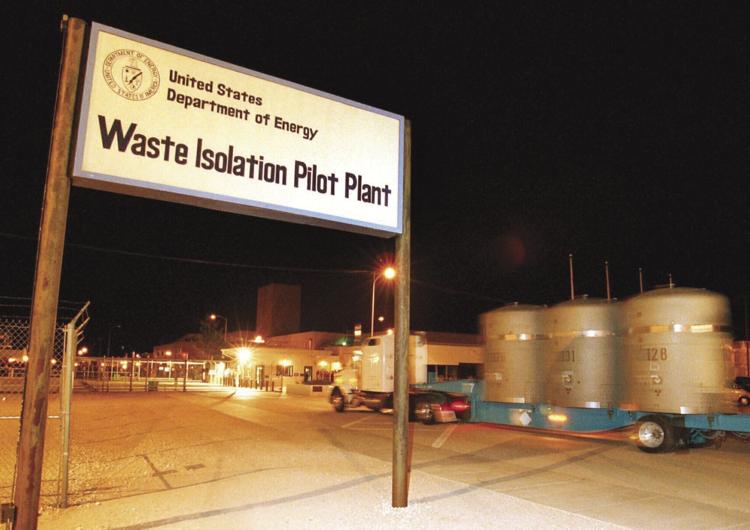
Adrian Hedden, Carlsbad Current-Argus https://www.currentargus.com/story/news/2023/05/24/what-we-know-about-federal-nuclear-waste-plans-in-new-mexico-waste-isolation-pilot-plant-wipp/70242952007/
Southeast New Mexico is home to the nation’s only repository for nuclear waste at the Waste Isolation Pilot Plant about 30 miles east of Carlsbad.
At WIPP, transuranic (TRU) nuclear waste from across the country is trucked in and buried in a salt deposit about 2,000 feet underground.
The waste comes from national laboratories and other facilities owned by the U.S. Department of Energy and WIPP is managed by the DOE’s Office of Environmental Management to clean up waste left at generator sites and new waste produced through the agency’s ongoing nuclear activities.
Here are the key takeaways from the federal government’s recent accomplishments and plans for WIPP future.
Air system at WIPP hoped to finish construction
Two projects were underway at WIPP intended to rebuild its underground ventilation system and improve airflows for workers in the underground.
After an accidental radiological release in 2014 air was restricted at the site, limiting personnel in the underground, and slowing progress in emplacing waste for disposal and mining new areas of the facility.
The Safety Significant Confinement Ventilation System (SSCVS) project along with a new utility shaft to act as an air intake were expected to increase available air at WIPP from 170,000 cubic feet per minute (cfm) to 540,000 cfm.
In 2023, the DOE said it hoped the primary construction of the SSCVS – a series of building and filters that will clean the air at WIPP before exhausting it at the surface- would be finished in 2023
In 2022, the DOE reported it partially completed constructing the SSCVS’ new filter building.
WIPP’s utility shaft finished this year
Meanwhile, the DOE planned to finish sinking the utility shaft to its planned depth of 2,150 feet underground.
The agency also reported it was 50 percent complete in mining a west access drift for the new shaft as of 2022.
Goal set for 400 shipments of nuclear waste to WIPP in 2023
The DOE said it hoped to send about 400 shipments of TRU waste to WIPP from its generator sites in 2023.
This would be the most shipped to WIPP since the 2014 incident, and subsequent three-year shutdown of WIPP’s underground operations.
Included in this listed priority was also ensuring no backlog of waste at Los Alamos National Laboratory (LANL) in northern New Mexico, in response to pressure from the State of New Mexico that instate facilities be prioritized by the DOE for cleanup.
The DOE estimated it was taking in about two shipments a week from Los Alamos, contending they were sent to WIPP as soon as the drums were ready for transport.
Since opening in 1999, WIPP accepted 1,608 shipments from LANL, about 12 percent of WIPP’s total of 13,460 shipments, according to DOE records.
The DOE completed its 2022 goal, read the report, of 30 LANL shipments.
Where else does WIPP get its waste from?
Other major shippers include Idaho National Laboratory – WIPP’s biggest shipper – with 6,880 shipments sent to the repository opened, about 51 percent of WIPP’s total.
The second-biggest active shipper was the Savannah River site in South Carolina, which sent 1,714 shipments in total during WIPP’s lifetime, records show.
The decommissioned Rocky Flats Environmental Technology Site near Denver was the second-biggest overall shipper to WIPP with 2,045 shipments of nuclear waste to the repository.
Nuclear waste retrieved from Texas site could go to WIPP
Buoying the DOE’s priorities at LANL was a goal for this year to retrieve drums of Los Alamos waste from the Waste Control Specialists (WCS) facility in Andrews, Texas and likely prepare them for disposal at WIPP.
The DOE reported after last year it “partially completed” a goal to install equipment needed for this work.
The DOE was originally slated, via an agreement with the Texas Commission on Environmental Quality (TCEQ), to remove the 74 waste boxes from LANL stored at WCS in 2014 temporarily amid WIPP’s closure as it resumed operations in 2017.
The TCEQ “extended the deadline multiple times” for the waste’s removal from WCS, read a May 2022 letter from the agency to the DOE, or the State of Texas would take “additional enforcement actions.”
Adrian Heddencan be reached at 575-628-5516,achedden@currentargus.com or@AdrianHedden on Twitter.
Biden Okays F-16s For Ukraine, US Weapons To Attack Crimea

Moscow has considered Crimea a part of the Russian Federation since its annexation in 2014, meaning efforts to recapture it would — at least in theory — be treated the same as an invasion of any other part of Russia. It was only by way of an arbitrary bureaucratic fluke that Crimea wound up a part of Ukraine after the fall of the Soviet Union, and Crimeans overwhelmingly prefer to be a part of the Russian Federation. That we may soon be staring down the barrel of a nuclear third world war over something so pedantic is a very dark shade of absurd.
As Tapper noted, both the F-16 decision and the Crimea decision marked a sharp policy shift by the Biden administration in just a few months. This proxy war just keeps escalating and escalating, with aggressions once deemed unthinkable due to their likelihood of sparking a nuclear exchange now becoming commonplace. Every time a new once-unthinkable escalation is enacted, the hawks are already pushing for the next one.
CAITLIN JOHNSTONE, MAY 22, 2023 https://caitlinjohnstone.substack.com/p/biden-okays-f-16s-for-ukraine-us?utm_source=post-email-title&publication_id=82124&post_id=123001716&isFreemail=true&utm_medium=email
The Biden administration has signed off on both F-16s for Ukraine and attacks on Crimea using US-made weapons. Both of these moves have drawn dire warnings from nuclear-armed Russia, and both would have been unthinkable a year ago.
In a Sunday interview with CNN’s Jake Tapper from the G7 summit in Hiroshima, Biden’s National Security Advisor Jake Sullivan made it clear that Washington would approve of US weapons being used in an offensive to recapture Crimea, a horrifying prospect that many experts have agreed is the most likely scenario to lead to nuclear warfare in this conflict. Sullivan told Tapper that while the US has forbidden the use of American weapons to attack Russia, the US considers Crimea to be part of Ukraine, not Russia.
Here’s CNN’s transcript of the exchange:
TAPPER: In February on this show, you would not say whether the U.S. would support Ukrainian efforts to recapture Crimea. That’s one of the concerns that has been expressed about whether or not the Ukrainians are given the ability to hit Russian targets in Crimea. Do you think that Crimea is part of Ukraine?
SULLIVAN: Of course.
TAPPER: So, what would be the objection of giving…
SULLIVAN: Crimea is Ukraine.
TAPPER: Right.
SULLIVAN: I mean, that’s a very straightforward thing.
TAPPER: Well, yes you answered it directly. I mean, Russia doesn’t think so, obviously. But do you think that Ukraine should have weapons that can reach Russian targets in Crimea?
SULLIVAN: Yes. We have not placed limitations on Ukraine being able to strike on its territory within its internationally recognized borders. What we have said is that we will not enable Ukraine with U.S. systems, Western systems, to attack Russia. And we believe Crimea is Ukraine.
TAPPER: OK.
Moscow has considered Crimea a part of the Russian Federation since its annexation in 2014, meaning efforts to recapture it would — at least in theory — be treated the same as an invasion of any other part of Russia. It was only by way of an arbitrary bureaucratic fluke that Crimea wound up a part of Ukraine after the fall of the Soviet Union, and Crimeans overwhelmingly prefer to be a part of the Russian Federation. That we may soon be staring down the barrel of a nuclear third world war over something so pedantic is a very dark shade of absurd.
In the same interview, Tapper questioned Sullivan about the Biden administration’s policy shift toward approving F-16 fighter jets to be sent to Ukraine, demanding to know why the war planes weren’t approved sooner.
“President Biden told the G7 leaders that the United States is going to support this joint effort to train Ukrainian pilots to fly F-16 fighter jets,” said Tapper. “As you know, just a few months ago, the president said there was no basis militarily for giving Ukraine jets and that Ukraine didn’t need them at all. What changed? And would these jets not have been more effective if Ukraine had been trained and had them in time for the upcoming counteroffensive?”
It’s so obnoxious how the only time you ever see these mass media propagandists challenging the US government on its warmongering is when they’re pushing it to be more warlike and demanding answers on why it isn’t warmongering more. This creates the illusion of brave adversarial journalism, when in reality these empire cronies are just manufacturing consent for the increased aggressions the US wants to wage anyway.
These escalations have drawn stern warnings from Moscow, which have just been casually hand-waved away by Biden like he’s rejecting jello for dessert. In an article titled “Russia Says West Providing F-16s to Ukraine a ‘Colossal Risk’”, Antiwar’s Dave DeCamp writes the following:
A Russian official said Saturday that the Western plans to provide Ukraine with American-made F-16 fighter jets bring “colossal risks” after the US announced it would sign off on European countries delivering the aircraft.
“We see that Western countries are still adhering to the escalation scenario. It involves colossal risks for themselves,” said Russian Deputy Foreign Minister Alexander Grushko, according to TASS.
“In any case, this will be taken into account in all our plans, and we have all the necessary means to achieve the goals we have set,” Grushko added.
During the last day of the G7 Summit in Hiroshima, Japan, President Biden was asked about Russia calling the F-16 plan a “colossal risk.” He replied, “It is for them.”
As Tapper noted, both the F-16 decision and the Crimea decision marked a sharp policy shift by the Biden administration in just a few months. This proxy war just keeps escalating and escalating, with aggressions once deemed unthinkable due to their likelihood of sparking a nuclear exchange now becoming commonplace. Every time a new once-unthinkable escalation is enacted, the hawks are already pushing for the next one.
As we’ve discussed previously, this pattern of continually escalating nuclear brinkmanship in Ukraine has built-in incentives for Russia to ramp up its own aggressions against NATO itself. Every time the west ramps up its brinkmanship and crosses another once-taboo line in the sand without Moscow responding with direct military confrontation, the west takes this as a sign that it can ramp up the escalations again. This has put things on a trajectory toward more and more direct western-backed attacks on the Russian Federation unless Russia lashes out at NATO powers in some way to show them it’s not worth it. Which would be about as dangerous an occurrence as you could possibly imagine.
It is not okay for our rulers to play games with our lives like this. It is not okay for them to keep rolling the dice on nuclear escalation more and more often in the name of securing US unipolar hegemony. These people are making it abundantly clear that sanity and level-headedness are not in the driver’s seat here. Everyone on earth should be shouting a loud, unequivocal “no” to this at the top of their lungs.
US Electricity From Renewable Energy Beat Electricity From Coal Or Nuclear In 2022

Since 2007, the use of coal for electricity generation has generally been in decline, while the use of renewables has been on the rise. Electricity generation from nuclear had remained relatively flat over the last two decades but has experienced a slight decline in recent years. In 2022, net generation of electricity from renewables reached 0.91 billion megawatt-hours, topping both coal and nuclear (0.83 and 0.77 billion megawatt-hours, respectively). In 2022, renewables accounted for about 21% of all net generation of electricity.
- Renewable sources of power include wind, solar, hydropower, biomass, and geothermal energy. “Other” category includes petroleum liquids, petroleum coke, batteries, chemicals, hydrogen, pitch, purchased steam, sulfur, miscellaneous technologies, and non-renewable waste.
- Electricity net generation is the amount of gross electricity generation a generator produces minus the electricity used to operate the power plant.
Source: U.S. Energy Information Administration, Electricity Data Browser, queried April 21, 2023.
View the supporting data for this Fact of the Week.
Nuclear would be labeled ‘clean energy’ under new legislation

KEVIN GARCIA-GALINDO, MAY 22, 2023, The Carolina Journal
Senate Bill 678, “Promote Clean Energy,” currently in the N.C. House Rules Committee, could pave the way for more investment in nuclear energy in North Carolina.
The bill would relabel “renewable energy resources” as “clean energy resources” in the State’s Renewable Energy Portfolio Standard and add nuclear fission and fusion into the definition of clean energy. If approved by the state legislature, this bill would make nuclear energy a viable option toward replacing coal-fired power plants with new cleaner sources.
S.B. 678 would also help further the proliferation of nuclear energy by eliminating statutes that had previously restricted the construction of nuclear facilities in House Bill 951, which passed in 2021.
COOPER INDICATES RESISTANCE
The N.C. Senate passed S.B. 678 in late April, but it is now seeing opposition from Gov. Roy Cooper. At the State Energy Conference last month, Cooper told business leaders that he did not want politicians to be seen as influencing which energy sources are prioritized over others.
Environmental activist group CleanAIRE NC told the Wilmington Star-News in a statement that “nuclear energy may be zero-emission, but it is not renewable and it’s certainly not clean. … Uranium is a mined resource. And on the backend storing nuclear waste poses major, unanswered safety questions. With wind and solar capacity rapidly expanding, is it really worth gambling with our health and safety?”
A Cooper spokesperson stated that the governor would not look at the bill until it reached his desk………………………………………………….. https://www.carolinajournal.com/nuclear-would-be-labeled-clean-energy-under-new-legislation/
Robert F Kennedy’s Peace Platform – BRING IT HOME
In the long term, a nation’s strength does not come from its armies. America spends as much on weaponry as the next nine nations combined, yet the country has grown weaker, not stronger, over the last 30 years. Even as its military technology has reigned supreme, America has been hollowing out from the inside. We cannot be a strong or secure nation when our infrastructure, industry, society, and economy are infirm.
A high priority of a Kennedy administration will be to make America strong again. When a body is sick, it withdraws its energy from the extremities in order to nourish the vital organs. It is time to end the imperial project and attend to all that has been neglected: the crumbling cities, the antiquated railways, the failing water systems, the decaying infrastructure, the ailing economy. Annual defense-related spending is close to one trillion dollars. We maintain 800 military bases around the world. The peace dividend that was supposed to come after the Berlin Wall fell was never redeemed. Now we have another chance.
As President, Robert F. Kennedy, Jr. will start the process of unwinding empire. We will bring the troops home. We will stop racking up unpayable debt to fight one war after another. The military will return to its proper role of defending our country. We will end the proxy wars, bombing campaigns, covert operations, coups, paramilitaries, and everything else that has become so normal most people don’t know it’s happening. But it is happening, a constant drain on our strength. It’s time to come home and restore this country.
In Ukraine, the most important priority is to end the suffering of the Ukrainian people, victims of a brutal Russian invasion, and also victims of American geopolitical machinations going back at least to 2014. We must first get clear: Is our mission to help the brave Ukrainians defend their sovereignty? Or is it to use Ukraine as a pawn to weaken Russia? Robert F. Kennedy will choose the first. He will find a diplomatic solution that brings peace to Ukraine and brings our resources back where they belong. We will offer to withdraw our troops and nuclear-capable missiles from Russia’s borders. Russia will withdraw its troops from Ukraine and guarantee its freedom and independence. UN peacekeepers will guarantee peace to the Russian-speaking eastern regions. We will put an end to this war. We will put an end to the suffering of the Ukranian people. That will be the start of a broader program of demilitarization of all countries.
We have to stop seeing the world in terms of enemies and adversaries. As John Quincy Adams wrote, “Americans go not abroad in search of monsters to destroy.” Robert F. Kennedy will revive a lost thread of American foreign policy thinking, the one championed by his uncle, John F. Kennedy who, over his 1000 days in office, had become a firm anti-imperialist. He wanted to exit Vietnam. He defied the Joint Chiefs of Staff and refused to bomb Cuba, thus saving us from nuclear Armageddon. He wanted to reverse the imperialistic policies of Truman and Eisenhower, rein in the CIA, and support freedom movements around the world. He wanted to revive Roosevelt’s impulse to dissolve the British empire rather than take it over.
John F. Kennedy’s vision was tragically cut short by an assassin’s bullet. But now we have another chance. The country is ailing, yes, but underneath there is vitality still. America is a land rich in resources, creativity, and intelligence. We just need to get serious about healing our society, to become strong again from the inside.
America was once an inspiration to the world, a beacon of freedom and democracy. Our priority will be nothing less than to restore our moral leadership. We will lead by example. When a warlike imperial nation disarms of its own accord, it sets a template for peace everywhere. It is not too late for us to voluntarily let go of empire and serve peace instead, as a strong and healthy nation.
$3 BILLION Pentagon ‘accounting error’ means more weapons for Ukraine
What’s a lazy couple of billion in U.S. taxpayer dollars when there’s a war in Eastern Europe to fight? That question was answered Thursday when the Defense Department revealed it can send more weapons to Ukraine without Congress spending approval after the Pentagon overestimated the value of the arms it has already sent Kyiv by some $3 billion.
AP reports the error was caused when officials wrongly used valuation for new equipment, rather than for used equipment drawn from U.S. stocks, to assess the cost of weapons already despatched to the war zone.
The poor accounting methodology has been exposed as the Pentagon faces increased pressure by Congress to show accountability for the billions of dollars it has sent in weapons, ammunition, equipment, and training to Ukraine and as some lawmakers question whether that level of support is sustainable.
In many of the military aid packages, the Pentagon has opted to drain stockpiles of older, existing gear because it can get those items to Ukraine faster. Pentagon spokeswoman Sabrina Singh addressed the financial mess by saying:
During our regular oversight process of presidential drawdown packages, the Department discovered inconsistencies in equipment valuation for Ukraine.
In some cases, ‘replacement cost’ rather than ‘net book value’ was used, therefore overestimating the value of the equipment drawn down from U.S. stocks.
She added the mistake hasn’t constrained U.S. support to Ukraine or hampered the ability to send aid to the battlefield.
According to the AP report, a defense official said the Pentagon is still trying to determine exactly how much the total surplus will be.
The official, who spoke on condition of anonymity to discuss internal deliberations, said the comptroller has asked the military services to review all previous Ukraine aid packages using the proper cost figures.
The result, said the official, will be that the department will have more available funding authority to use as the Ukraine offensive nears.
The aid surplus was first reported by the Wall Street Journal.
To date the U.S. has provided Ukraine nearly $37 billion in military aid since Russia invaded in February 2022.
The rush of U.S. weapons to Ukraine has already sparked a warning that domestic military stockpiles have been pushed to “dangerously low levels” not seen for decades. https://www.breitbart.com/politics/2023/05/19/oops-3-billion-pentagon-accounting-error-means-more-arms-for-ukraine/
Nuclear Fusion breakthrough hits hurdles as five experiments fail

Japan Times, BY DAVID R. BAKER, BLOOMBERG 17 May 23,
The U.S. government lab that made a long-awaited breakthrough in fusion energy late last year has run five similar experiments since then without being able to replicate the results.
The milestone came in December as the the Lawrence Livermore National Laboratory near San Francisco reported achieving the first fusion reaction that produced more energy than it took to create — a threshold known as ignition. The achievement opened the possibility of power plants one day running on nuclear fusion, the same energy source as the sun.
Since then, the lab has run five similar experiments, shooting the world’s most powerful laser at small diamond capsules filled with hydrogen, said Lawrence Livermore Director Kim Budil. But so far, ignition hasn’t been achieved again…………….
Speaking at an event at the lab Monday celebrating December’s breakthrough, U.S. Energy Secretary Jennifer Granholm said the federal government would spend $45 million over the next four years to create a series of research hubs pursuing the kind of fusion achieved at Lawrence Livermore, known as inertial confinement. https://www.japantimes.co.jp/news/2023/05/09/business/nuclear-fusion-experiments-fail/
Pentagon seeks authority to transfer nuclear submarines (and costs) to Australia

Finally, the Pentagon is also asking Congress for permission to accept Australian payments to bolster the U.S. submarine industrial base. Australia has offered to make an undisclosed sum of investments in the U.S. submarine industrial base as part of AUKUS.
Defense News, By Bryant Harris and Megan Eckstein 17 May 23
WASHINGTON — The U.S. Department of Defense asked Congress to authorize the transfer of nuclear-powered submarines to Australia as part of the trilateral AUKUS agreement with the U.K.
Three legislative proposals, submitted on May 2 and first posted online Tuesday, would greenlight the sale of two Virginia-class submarines to Australia, permit the training of Australian nationals for submarine work and allow Canberra to invest in the U.S. submarine industrial base………………
“Importantly, the proposals spell out a clear path forward to facilitate the transfer of Virginia-class submarines to Australia while ensuring we have the necessary authorities to accept the Australian Government’s investments to enhance our submarine industrial base capacity and provide training for Australian personnel.” – Rep. Joe Courtney of Connecticut, the top Democrat on the Armed Services Committee’s sea power panel
AUKUS stipulates that Australia will buy at least three and as many as five Virginia-class submarines in the 2030s as part of phase two of the agreement, giving Congress more than a decade to authorize the sale. This year’s proposal, which the Pentagon hopes will become part of the fiscal 2024 National Defense Authorization Act, asks that Congress approve just two of those submarines “without a deadline to consummate the transfers and without specifying the specific vessels to be transferred.”
The proposal argues that this “small amount of flexibility is necessary” since the transfers depend on Australian readiness to operate the submarines, which will involve developing Australia’s submarine industrial base through training and appropriate shipyard infrastructure.
To that end, a second legislative proposal would authorize U.S. defense service exports directly to Australia’s private sector in order to train its own submarine workers……..
Finally, the Pentagon is also asking Congress for permission to accept Australian payments to bolster the U.S. submarine industrial base. Australia has offered to make an undisclosed sum of investments in the U.S. submarine industrial base as part of AUKUS.
The Pentagon states in the legislative proposal that those funds would be used to “add a significant number of trade workers” that will help address “the significant overhaul backlog” for the Virginia-class submarine. Australian monies would also be used for “advance purchasing of components and materials that are known to be replacement items for submarine overhauls” and “outsourcing less complex sustainment work to local contractors.”
Congress is also making its own investments to expand the U.S. submarine industrial base as the Navy ultimately aims to build two Virginia-class and one Columbia-class submarines per year. Courtney helped secure $541 million in submarine supplier development and $207 million in workforce development initiatives as part of the FY 23 government funding bill.
Austal USA, the American subsidiary of Australia-based Austal, plans to open a new facility at its shipyard in Mobile, Alabama to begin construction on nuclear submarine modules for General Dynamics’ Electric Boat shipyard in Connecticut, which produces both Virginia and Columbia-class submarines. Austal expects it will need 1,000 new hires in Mobile to staff that facility.
At Electric Boat, the prime contractor for the Virginia- and Columbia-class submarine programs, the hiring need will be even greater. The company currently employs more than 19,000 people, after hiring 3,700 new workers in 2022, according to local newspaper The Day. But the company needs to hire 5,750 new workers this year, to manage attrition and to help grow the workforce to about 22,000 to handle the increased workload.
The legislative proposal notes that Australian funds “would be applied to recruitment, training, incentivizing, and retention of key skilled trades, engineering and planning personnel in both nuclear and non-nuclear disciplines that are required by the additional AUKUS workload.” https://www.defensenews.com/congress/2023/05/17/pentagon-seeks-authority-to-transfer-nuclear-submarines-to-australia/
Should SC have canceled Plant Summer? Yes, and Ga. should have canceled, too

https://www.postandcourier.com/columbia/opinion/should-sc-have-canceled-plant-summer-yes-and-ga-should-have-canceled-too/article_a298d894-f34c-11ed-8647-cfd2ea480900.html By Patty Durand 17 My 23
In a recent Post and Courier opinion piece, author Kevin Fisher quoted an Atlanta Journal-Constitution headline, “Georgia Power began splitting atoms on Monday at one of its two new nuclear units at Plant Vogtle.” In his piece, he expressed regret that SCANA and Santee Cooper botched and then abandoned Plant Summer, costing ratepayers about $9 billion while getting nothing in return.
It might seem logical to think that spending $9 billion for something you did not receive meant the decision to stop was wrong, but in the case of Plant Summer, it was absolutely the right decision. Rather than taking up space here, please type “sunk cost fallacy” into any search engine after you read this article.
People who wish South Carolina had not canceled Plant Summer must not realize how much trouble Georgians are in over the cost of Plant Vogtle. Now approaching $40 billion, it is the most expensive power plant ever built on earth.
As Georgia Power continues to rack up billions of dollars of cost overruns for Plant Vogtle, botched is hardly a strong enough word to describe this project. According to documents filed at the Georgia Public Service Commission prepared by independent construction monitors, issues plaguing the project include unachievable schedules, a culture of poor work inspections, failure to document progress, violation of IEEE standards and component failure rates of 80 percent. Failure to adopt lessons learned has also been a bedrock theme.
Although Georgia officials like to say zero carbon energy is a benefit of Plant Vogtle, let’s be clear: reduced carbon emissions were not why this plant was built. Georgia has no renewable energy goals and last July the Ga PSC authorized 2300 MW of new natural gas generation. Georgia doesn’t even track carbon emissions.
This plant happened because Georgia Power’s business model rewards capital investment, a perverse incentive that results in overbuilding and delivers rich profits. Georgia Power has already earned billions of dollars in early profits just for construction financing costs from riders on electricity bills. Once both reactors begin operating Georgia Power bills are expected to increase a shocking 20 percent for 60 years to pay for it.
For a state already in the top 10 for high power bills and energy poverty, these increases will be more than many people can bear.
Since South Carolina has half the population of Georgia, state officials knew that billions of dollars of cost overruns for Plant Summer would have been divided over a small number of customers and electricity rate increases would have been unbearable. That is why officials wisely canceled Plant Summer.
And look at what South Carolina has accomplished since Plant Summer was canceled: The 2014 landmark energy bill known as the Distributed Energy Resources (DER) program has flourished in ways it would not have with the heavy costs and distractions of building a nuclear power plant which crowds out other investments.
In 2023 South Carolina is a top 10 state for affordable electric bills and is ranked 13th nationally for rooftop solar. Georgia is the opposite: we are a top 10 state for most expensive electric bills and in 43rd place for rooftop solar — practically last. Rooftop solar is too expensive for almost everyone since Georgia officials do nothing to support it, so customers are forced to pay big electricity bills profiting Georgia Power. Once construction costs are added to the rates Georgia Power bills will become the highest in the nation because of Plant Vogtle. This is the fate South Carolina avoided by cancelling Plant Summer.
South Carolina officials who made the tough call to cancel Plant Summer in 2017 should be thanked for that decision. Utility officials who lied about Plant Summer’s progress were held accountable, while utility officials in Georgia similarly providing false schedule updates and cost estimates have had no accountability.
And by the way? The “splitting of atoms” at Plant Vogtle’s Unit 3 that began April 1 is no longer occurring. This unit shut down May 5, for the second time in the past month, for safety failures. Cost overruns continue.
Patty Durand is founder of Cool Planet Solutions and is a candidate for the Georgia Public Service Commission.
1 This Month

of the week – Shut Down Drone Warfare!


Tell the Ukrainian Government to Drop Prosecution of Peace Activist Yurii Sheliazhenko

Petition to revoke the licensing of the Near Surface Nuclear Disposal Facility (NSDF) at Chalk River. https://www.ourcommons.ca/petitions/en/Petition/Details?Petition=e-7247
To see nuclear-related stories in greater depth and intensity – go to https://nuclearinformation.wordpress.com
-
Archives
- April 2026 (103)
- March 2026 (251)
- February 2026 (268)
- January 2026 (308)
- December 2025 (358)
- November 2025 (359)
- October 2025 (376)
- September 2025 (257)
- August 2025 (319)
- July 2025 (230)
- June 2025 (348)
- May 2025 (261)
-
Categories
- 1
- 1 NUCLEAR ISSUES
- business and costs
- climate change
- culture and arts
- ENERGY
- environment
- health
- history
- indigenous issues
- Legal
- marketing of nuclear
- media
- opposition to nuclear
- PERSONAL STORIES
- politics
- politics international
- Religion and ethics
- safety
- secrets,lies and civil liberties
- spinbuster
- technology
- Uranium
- wastes
- weapons and war
- Women
- 2 WORLD
- ACTION
- AFRICA
- Atrocities
- AUSTRALIA
- Christina's notes
- Christina's themes
- culture and arts
- Events
- Fuk 2022
- Fuk 2023
- Fukushima 2017
- Fukushima 2018
- fukushima 2019
- Fukushima 2020
- Fukushima 2021
- general
- global warming
- Humour (God we need it)
- Nuclear
- RARE EARTHS
- Reference
- resources – print
- Resources -audiovicual
- Weekly Newsletter
- World
- World Nuclear
- YouTube
-
RSS
Entries RSS
Comments RSS
 nuclear-news