US Republicans threaten to block AUKUS deal
By Anthony Galloway, The Age, July 21, 2023
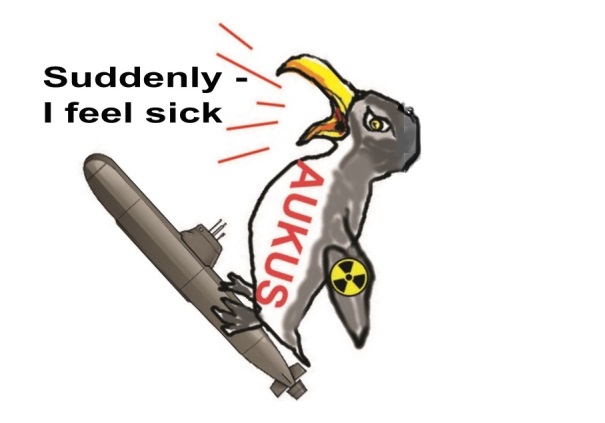
Australia’s AUKUS submarine deal with the United States has hit a hurdle with Senate Republicans threatening to block the sale unless President Joe Biden boosts funding for the domestic production line.
Republican members of the Senate Armed Services Committee on Friday moved to block legislation which would enable the sale of US Virginia-class submarines to Australia.
Under the AUKUS deal, Washington was set to sell Canberra between three and five of its own nuclear submarines in the 2030s before Australia begins building a new class of boat with Britain.
But the ranking Republican on the Senate Armed Services Committee, senator Roger Wicker, said Biden needed to commit more money to guarantee “we have enough submarines for our own security before we endorse that pillar of the agreement”.
Wicker said Australia’s commitment of US$3 billion ($4.4 billion) for the US production line would not be enough to meet the needs of both countries.
“The president needs to submit a supplemental request to give us an adequate number of submarines,” he told US news outlet Politico…………………………………………………….. https://www.theage.com.au/politics/federal/foolish-us-republicans-threaten-to-block-aukus-deal-20230721-p5dqc3.html
Feds digging up nuclear waste in Los Alamos for disposal at Carlsbad-area repository
Adrian Hedden, Carlsbad Current-Argus, 21 Jul 23, https://www.currentargus.com/story/news/2023/07/21/feds-digging-up-nuclear-waste-in-los-alamos-for-disposal-at-carlsbad-area-repository/70426843007/
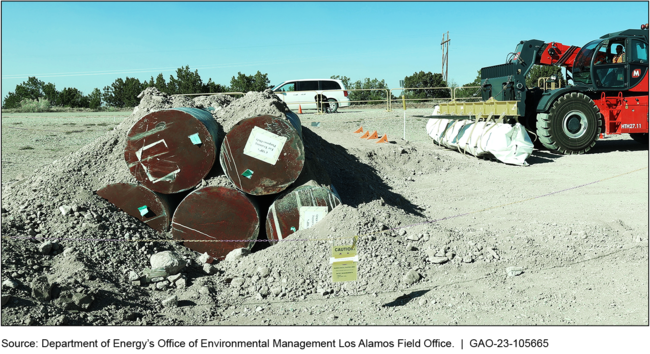
Workers at Los Alamos National Laboratory dug up buried nuclear waste they planned to dispose of at the federal repository near Carlsbad, amid pressure from State officials that the facility prioritize New Mexico waste.
The U.S. Department of Energy’s Los Alamos Field Office and the lab’s cleanup contractor Newport News Nuclear BWXT (N3B) Los Alamos announced Tuesday they began exhuming corrugated metal pipes containing transuranic (TRU) nuclear waste and preparing them for shipment.
At the Waste Isolation Pilot Plant near Carlsbad, TRU waste is disposed of via burial in a salt deposit about 2,000 feet underground, trucked into the site from DOE facilities throughout the country.
TRU waste is made up of irradiated clothing, equipment and other debris from nuclear research and development activities around the U.S.
Before it can be shipped to WIPP, the pipes must be cut using hydraulic sheers, allowing them to be loaded into waste boxes for shipment and disposal.
The pipes weight about 10,000 to 14,000 pounds, and measure about 20 feet long. They are cut into five pieces, with each piece loaded into a box.
It’s occurring at portion of the lab known as Dome 375, and the waste came from Los Alamos’ former radioactive liquid waste treatment facility operating during the Cold War at Technical Area 21 (TA-21).
There were 158 pipes in total transferred from TA-21, records show, containing cemented waste.
They were buried in 1986, where the waste sat until recently when worked began preparing it for final disposal.
The DOE hoped to finish digging up and preparing the pipes for disposal by spring 2024.
More: No progress to report on nuclear waste site aside from Carlsbad-area repository, feds say
The US should end its use of nuclear power plants – the intractible problem of dangerous spent fuel rods

Chicago Tribune, Jul 21, 2023 , Larry R. Eaton, Chicago
Fifty years ago, as chief of the Illinois attorney general’s Environmental Control Law Division, a relatively new field of law at that time, I had the occasion to tour an Illinois nuclear power plant. I was taken aback to see extensive pools of water containing bundles of spent nuclear fuel rods standing on end just beneath the surface of the water. I was advised that a pilot plant study had indicated that it would have an essentially closed-loop system that would not generate large amounts of spent fuel; however, once the full-scale plant became operational, the system failed to perform as anticipated. Plant workers were left with no good alternative but to store spent fuel rods in pools of water, at least temporarily, pending (hopefully) a better idea.
It appears that the nuclear power industry is still waiting for that better idea. A supporter of nuclear power production now maintains, in essence, that we have nothing to be concerned about regarding spent nuclear fuel because all we need to do is encase it in concrete and then open it up and repackage it in concrete every several decades. (In perpetuity, presumably; the radioactivity will remain unabated for a very long time indeed.) To understand how absurd this proposal is requires little more than to say it out loud.
Chernobyl and Three Mile Island were wake-up calls, but we do not appear to have fully awakened. It does not help that a nuclear power plant now sits near the front lines of a shooting war between Russia and Ukraine. Hopefully, we will somehow be lucky enough never to have a massive nuclear power plant disaster. But regardless of that, we will have radioactive spent fuel problems with us forever. We can no longer escape that fact. However, we can choose to stop making it worse.
Germany has decided to end its use of nuclear power. The U.S. should do the same. If there is anything worse than having an enormous carbon footprint, it has to be for that footprint to be radioactive too!
Corruption In Ukraine & The U.S. Mutually Rewarding
The Pentagon failed its 5th consecutive audit last year, appearing to lose track of 61% of its $3.5 trillion in assets.
Substack, LISA SAVAGE, JUL 20, 2023
“…………………………………………………………………………………………. Ukraine’s leaders are so over the top that it’s becoming impossible to ignore. Add in the fact that they have been enriched by U.S. taxpayers more or less directly despite crumbling infrastructure, catastrophic homelessness, apartheid healthcare, and a host of other problems that the U.S. could address with adequate funding.
From RT (whose editor-in-chief, Margarita Simonyan, just survived a second assassination attempt):
On July 7, US Under Secretary of Defense for Policy Colin Kahl spoke about a new package of aid from the US which includes cluster munitions – which are banned in 120 countries. The cost was $800 million.This is the 42nd delivery of aid that Ukraine has received from the US in the past year and a half.[emphasis mine] Since the beginning of Russia’s offensive, the US Congress has approved military and economic assistance to Ukraine amounting to over $70 billion – and that’s only counting direct expenses..
“Ukraine needs only one thing… To have someone come to power who won’t steal. Someone who won’t do it himself and won’t allow others to do so. Unfortunately, so far we haven’t been lucky,” [Aleksey Arestovich, former advisor to President Zelensky] said.
Ok, so Arestovich has a motive for trashing the government that used to include him. How about Pulitzer Prize-winning U.S. investigative journalist Seymour Hersh? Hersh does not approve of Russia’s entry into the war but he nonetheless published a piece on rampant corruption in Ukraine, “Trading with the Enemy,” back in April.
Zelensky has been buying fuel from Russia, the country with which it, and Washington, are at war, and the Ukrainian president and many in his entourage have been skimming untold millions from the American dollars earmarked for diesel fuel payments. One estimate by analysts from the Central Intelligence Agency put the embezzled funds at $400 million last year, at least; another expert compared the level of corruption in Kiev as approaching that of the Afghan war………………………………
Then there is President Zelensky, elected on pledges to end corruption and, incidentally, the war on the Donbas.
Pre-2022, i.e. when corporate media headlines about Ukraine did a 180, even The Guardian found he was part of the problem and not likely to be part of the solution.
Neither is the U.S. government likely to be part of the solution. The Pentagon failed its fifth consecutive audit last year, appearing to lose track of 61% of its $3.5 trillion in assets……………………….. more https://went2thebridge.substack.com/p/corruption-in-ukraine-and-the-us?utm_source=post-email-title&publication_id=1580975&post_id=135301485&isFreemail=true&utm_medium=email_medium=email
The Big Problem With Small Nuclear Reactors

The diminutive reactors are likely to be just as prone to delays and cost overruns as their behemoth predecessors.

I just read Pal Hockenos’ fine story about small nuclear reactors. But Hockenos is naive to think that Bill Gates and co. give a hoot about our future. What they do care about is their own increasing $squillions. And the coming source of new $squillions is in weaponry – that’s where all sorts of applications for SMRs lie. And Gates etc are well aware that the fixing-climate story is just a cover for the real practical purpose.
UNDARK BY PAUL HOCKENOS , 07.20.2023
IN RECENT YEARS, the nuclear power lobby and its advocates have begun to sing a new song. They have bailed on the monstrous reactors of the 20th century — not because of safety or toxic waste concerns, but because of the reactors’ exorbitant expense and ponderous rollout schedules. And they have switched their allegiance to a next generation nuclear fission technology: small modular reactors, which they claim will help rescue our warming planet, as well as the nuclear power industry— once they exist.
Respected thinkers such as former U.S. president Barack Obama, French president Emmanuel Macron, and Microsoft co-founder and philanthropist Bill Gates have toasted the idea of small modular reactors, or SMRs, as a potentially reliable, almost-emissions-free backup to intermittent renewable energy sources like wind and solar. Advocates claim that because SMRs will be smaller than the giants that currently dominate horizons, they will be safer, cheaper, and quicker to build. Although SMRs will have only a fraction of the power-generating capacity of traditional nuclear power reactors, proponents envision that they will, one day, be assembled in factories and transported as a unit to sites — like Sears’ mail-order Modern Homes of the early 1900s.
Currently, half of the states in the EU, both major political parties in the U.S, and the five BRICS nations — Brazil, Russia, India, China, and South Africa — have indicated that they want to split atoms for the purpose of generating energy. U.S. President Joe Biden included billions of dollars in tax credits for nuclear energy in the Inflation Reduction Act and the Infrastructure Investment and Jobs Act. Gates has gone so far as to invest a chunk of his fortune in a firm he founded, TerraPower, a leading nuclear innovation company. But despite the prodigious chatter, the endeavor to blanket the Earth with SMRs is a Hail Mary pass that’s very unlikely to succeed.
Granted, it is certainly a step in the right direction that most observers now see the postwar, giga-watt-scale water-cooled reactors as obsolete. When constructed new, these behemoths generate electricity at up to nine times the cost of large-scale solar and onshore wind facilities, and can take well over a decade to get up and running. Perhaps for this reason, there has been one, and only one, new nuclear power project initiated in the U.S. since construction began on the last one 50 years ago: a two-reactor expansion of the Vogtle Electric Generating Plant in Georgia. The first of the reactors came online this year — seven years behind schedule. The staggering $35 billion cost for the pair is more than twice the original projection.
But SMRs are just as likely to face similar delays and cost overruns. Currently, there are just two existing advanced SMR facilities in the world that could be reasonably described as SMRs: a pilot reactor in China and Russia’s diminutive Akademik Lomonosov. More small reactors are under construction in China, Russia, and Argentina, but all of them are proving even more expensive per kilowatt than traditional reactors.
It’s worth noting that in the U.S., and everywhere else in the world, nuclear policy relies heavily on subsidies to be economically competitive. Starting next year, utilities operating nuclear facilities in the U.S. can qualify for a tax credit of $15 per megawatt-hour — a break that could be worth up to $30 billion for the industry as a whole. However, even these giveaways won’t reduce the projected costs of SMR-generated electricity to anywhere near the going prices of wind and solar power.
In the U.S., the only SMR developer with a design approved by the Nuclear Regulatory Commission is NuScale, which plans to deploy six modules at one site in Idaho that will together generate less electricity than a smallish standard nuclear reactor. So far, however, NuScale has yet to lay a single brick. Its biggest win to date is securing $4 billion in federal tax subsidies. In January of this year, NuScale announced plans to sell electricity not at $58 per megawatt-hour, as originally pledged, but at $89 per megawatt-hour, citing higher than anticipated construction costs. The new projection is nearly twice the average global cost of utility-scale solar and onshore wind, according to calculations by BloombergNEF. And without the government subsidies, NuScale’s price tag would be that much higher.
In fact, there’s a fair chance that not a single NuScale SMR will ever be built: The company has said it will not begin construction until 80 percent of its expected generation capacity is subscribed, and currently buyers have signed up for less than a quarter of the plant’s capacity.
Gates’s TerraPower has an even longer way to go, although it too is cashing in on subsidies. The U.S. Department of Energy has pledged up to $2 billion in matching funds to construct a demonstration plant in Wyoming. Yet TerraPower recently announced it’s facing delays of at least two years because of difficulties securing uranium fuel from its lone supplier: Russia.
Even if the unlikely rollout of SMRs eventually happens, it will unfold too late to curb the climate crisis. And the reactors will face many of the same safety and radioactive waste concerns that plagued their larger counterparts, if only at smaller scales. Meanwhile, the siren song of nuclear energy is diverting critical resources from the urgent task of building out clean technologies. And the idea that nuclear reactors would serve as “backups” for wind and solar is misguided because the reactors can’t be ramped up and down quickly.
……………………………The technology of the future is already here. Clean wind and solar energy — coupled with updated smart grids, expanded storage capacity, hydrogen technology, virtual power plants, and demand response strategies — can work. Our energy systems of the future will look like a patchwork quilt, with diverse energy sources kicking in at different times during the day, and with the mix differing from one day to the next.
Bill Gates and like-minded innovators should put their minds and fortunes to work on this futuristic project of the present — and leave the 20th century relic that is nuclear power in the past, where it belongs
US Asset Managers Have ‘Significant Investments’ in Nuclear Weapons and Cluster Bombs: Analysis

“Many investors, given a choice, would not want to profit from companies that manufacture weapons of mass destruction,” said As You Sow’s Andrew Behar.
By Brett Wilkins / Common Dreams https://scheerpost.com/2023/07/19/us-asset-managers-have-significant-investments-in-nuclear-weapons-and-cluster-bombs-analysis/
Amidst what the Bulletin of Atomic Scientists calls “an exceedingly dangerous nuclear situation” facing humanity today, the largest U.S. mutual funds—which manage the retirement and other savings of tens of millions of Americans—are profiting from investments in nuclear weapons, cluster munitions, and other banned or controversial arms, an analysis by a leading shareholder advocacy group revealed Tuesday.
Measured by dollars invested, the top 25 U.S. asset managers “all earn a D grade or worse, with significant investments in arms manufacturers and major military contractors, including companies involved with nuclear weapons and controversial weapons like cluster munitions, anti-personnel landmines, incendiary weapons, and depleted uranium,” Berkeley, California-based As You Sow said in its new report.
Some of the largest corporate 401(k)s like American Funds, John Hancock Funds, and Franklin Templeton Investments were among the most heavily invested in these armaments, while “fund managers that focus on sustainable investing have less exposure to military weapons, on average.”
Seven funds profiled in the analysis—Eventide Funds, Ecofin, New Alternatives, Vert Asset Management, Aspiration Funds ,Thrivent, and Kayne Anderson—held no investments in the controversial weapons.
“Many investors, given a choice, would not want to profit from companies that manufacture weapons of mass destruction,” As You Sow CEO Andrew Behar said in a statement. “Yet nearly every retirement plan has nuclear and other controversial weapons embedded in their plan. Our new ratings empower investors with the tools to know what they own so they can invest their money in alignment with their values.”
As You Sow’s mutual fund ratings are part of the group’s Weapons Free Funds investment tool, “built to help responsible investors prioritize peace and people over war and violence.”
Nuclear weapons, landmines, and cluster munitions are all banned under international law. However, the United States is not a signatory to any of the bans, and none of the world’s nine nuclear powers have signed the landmark Treaty on the Prohibition of Nuclear Weapons.
Common Dreams reported last month that nuclear-armed nations spent $82.9 billion on their arsenals last year, with the United States accounting for more than half of the global total, according to the Nobel Prize-winning International Campaign to Abolish Nuclear Weapons.
Meanwhile, U.S. House Republicans last week blocked a bipartisan amendment to the 2024 National Defense Authorization Act that would have banned the export of cluster munitions. This, as the Biden administration was giving final approval to transfer cluster bombs to Ukraine’s military—which, like its Russian enemy, has used the weapons during the ongoing war with devastating effects.
Almost forgotten? the Church Rock nuclear tragedy
On July 16, 1979, the worst accidental release of radioactive waste in U.S.
history happened at the Church Rock uranium mine and mill site. While the
Three Mile Island accident (that same year) is well known, the enormous
radioactive spill in New Mexico has been kept quiet. It is the U.S. nuclear
accident that almost no one knows about. Just 14 weeks after the Three Mile
Island reactor accident, and 34 years to the day after the Trinity atomic
test, the small community of Church Rock, New Mexico became the scene of
another nuclear tragedy.
Beyond Nuclear 16th July 2023
Safety lapses at Los Alamos National Laboratory

By Searchlight New Mexico
by Alicia Inez Guzmán, Searchlight New Mexico https://nmpoliticalreport.com/2023/07/17/safety-lapses-at-los-alamos-national-laboratory/
In a windowless corridor of PF-4, the Los Alamos National Laboratory’s plutonium processing facility, the deputy director of weapons stood among a cluster of journalists and National Nuclear Security Administration officials, all clad in anti-contamination lab coats and booties, safety goggles and dosimeters.
“It’s not that scary,” said Robert Webster, during a rare media tour of several rooms brimming with glove boxes, some almost as old as the Cold War-era building itself, others newly installed. “You just have to be careful.”
In these highly classified rooms, each task is the sum of its many protocols, a meticulous choreography that was palpable on a recent morning — June 22 — even in the absence of workers. The respirators, protective clothing, ventilation systems and dosimeters — fail-safes aimed, according to officials, at reducing or detecting the risk of exposure — are routine and required controls at “the plant,” as PF-4 is popularly known. Here, no task can be taken for granted and no movement unintended.
Five years ago, LANL began embarking on a controversial mission — to produce an annual quota of plutonium pits, the triggers for nuclear weapons. Matt Johnson, head of the lab’s Pit Technologies division, characterized it as “probably one of the safest places in New Mexico.”
A recent NNSA investigation portrays another version of the plant, a place cited for its “significant lack of attention or carelessness” in protecting workers and the public, as a Preliminary Notice of Violation read. Released on May 18, the findings detailed four “nuclear safety events” that took place over a five-month period in 2021, including one glove box breach, two floods, and an instance in which too much fissionable material was placed in one area.
The NNSA, as a result, withheld nearly $1.5 million from its 2021 contract award to Triad National Security, the organization that manages and operates the lab. (The NNSA, nonetheless, refrained from exacting additional civil penalties, which could have totalled an extra half a million dollars.)
Its 11-page report revealed an environment in which workers were either too underqualified to perform certain tasks or overburdened by too many tasks to perform them well. Another problem stemmed from faulty equipment, which had presented problems since 1990 and had not been replaced under Triad’s tenure, despite multiple requests.
The report emphasized that Triad routinely focused on “human errors rather than on the conditions that make those errors more likely.”
That particular oversight, in part, led to water entering a ventilation system for multiple rooms and glove boxes — the windowed, stainless-steel containers where radioactive materials are handled. According to the NNSA, it amounted to a violation of “criticality safety requirements.” Water has long been known to enhance fission and, in certain circumstances, cause plutonium to go critical, sending out a blast of blue light and radiation.
The four nuclear safety events cited by the NNSA represented only a small fraction of the many “process deviations” and compliance concerns around handling nuclear materials that have beset the plant since May 2018. That’s the same year the lab was recommended as one of two sites in the country to produce plutonium pits for nuclear warheads.
In an attempt to understand a fuller picture of risks at the plant, Searchlight New Mexico culled through the last five years of weekly reports by the Defense Nuclear Facility Safety Board (DNFSB), a federal watchdog that oversees the U.S. nuclear weapons complex and makes recommendations to the Department of Energy. An analysis like this has never been conducted before, according to the DNFSB.
Searchlight counted at least 100 process deviations at the plant during that period: a mix of safety incidents, emergency events and protocol violations. The examples were wide ranging — from construction accidents and small fires, to floods and worker contamination. Not all had the potential to be catastrophic, but at a facility like PF-4, the consequences can be much higher than in other workplaces.
In 2019, one worker was nearly felled by a 320-pound toxic nuclear waste container and, in 2020, another inhaled plutonium oxide powder — the most dangerous form of plutonium. There was a broken finger, a mysterious head injury and several instances in which containers of toxic waste were backlogged, up to 80 at one point, in a single storage room. The all-important protective gloves inside the glove boxes have on occasion become separated from their ports in the box wall; they’ve also torn on sharp objects or been worn down by tools or overuse. The DNFSB called glove box glove failures and floods “repeat events” — serious incidents they attribute to “poor conduct of operations.” Records show at least 20 such incidents in the last five years that resulted in several instances of skin contamination, though only 2 reports indicated an “uptake” — an absorption of plutonium into the body.
“NNSA is investing billions of dollars in production-related infrastructure at Los Alamos,” a DNFSB spokesperson wrote in an email to Searchlight, “and the Board is continuing to urge commensurate investment in the safety infrastructure needed to ensure workers and the public are adequately protected from potential accidents at PF-4.”
In the June 2020 glove box breach, the worker underwent chelation therapy for significant radiation — on hair, skin and by inhalation — when he “pulled out of the glovebox gloves after weighing and packaging plutonium-238 oxide powder.” As a soluble form of plutonium, oxide powder can begin to circulate in the bloodstream almost immediately and eventually end up in the liver and bones, according to reports. Fourteen other workers were also exposed in that same incident.
Searchlight found other incidents that could be considered outliers. In July 2021, for example, a 4.2 magnitude earthquake hit some 30 miles northwest of the lab, located within the Pajarito Fault System.
The plant’s new glove boxes have been built to withstand an earthquake, according to the DNFSB. But, there are “a large number of existing gloveboxes that do not meet current seismic standards,” the agency’s email to Searchlight made clear.
The worst possible scenario would be a cataclysmic earthquake that triggers a fire at the plant. For almost two decades, the DNFSB has argued that the building’s “passive confinement system” — essentially its capacity to prevent a release of radioactive material from leaking out and reaching the public — is insufficient. After years of back and forth on the matter, and piecemeal enhancements to the plant, the NNSA, in 2022, deemed significant upgrades, including to the ventilation system, were unnecessary — despite DNFSB’s strong recommendations to the contrary.
Another one-off event occurred in February 2019, when two electricians were “inadvertently locked inside a caged storage location” for 40 minutes. “During this time,” the DNFSB reported, “the workers would have been unable to properly respond to alarms associated with a nuclear criticality, an airborne radioactive material release, fire, or other emergency situations requiring egress.”
When asked about a recent spate of glove box and other safety matters at the plant, the lab responded with the following statement:
“PF-4 is one of the safest places in the country as a result of the many redundant safety and security measures in place to protect our workforce, the environment, and the community. We have ongoing programs to ensure the safe handling of materials at TA-55. In the case of glove box breaches, training and controls identified the breaches and allowed us to address them immediately. Employees’ personal protective equipment and the facility and room ventilation systems help keep workers safe at all times.”
Searchlight produced the interactive graphics in this story to help visualize the DNFSB reports. Searchlight’s counts are based on the findings of site inspectors and confirmed by the DNFSB. While there could be many reasons behind an incident, site inspectors categorized the events according to a complex set of procedures. The number of reported incidents in 2022 rose by 33 percent compared to the previous year. In 2022, Triad commenced round-the-clock operations.
Noah Raess contributed to the reporting of this story.
Safety Report Graph:
https://public.tableau.com/app/profile/christian.marquez/viz/Safety_Reports/Dashboard1
Searchlight New Mexico is a nonpartisan, nonprofit news organization dedicated to investigative reporting in New Mexico.
Climate Change Threatens U.S. Nuclear Strike Capability

A new report says flooding and heat waves exacerbated by climate change could complicate U.S. nuclear launches
Scientific American, By Minho Kim, E&E News on July 14, 2023
CLIMATEWIRE | Flooding, rising seas and extreme heat from climate change threaten the nation’s ability to launch some of its nuclear weapons, according to a new report by the Carnegie Endowment for International Peace.
The report warns that climate change could undermine U.S. efforts to stop adversaries from using nuclear weapons by interfering with the military’s operation and maintenance of missile launch systems that are a key part of nuclear deterrence.
Missile systems at a Navy submarine base in Georgia and at a launch field in North Dakota face increasing flood threats from climate change that could inundate for weeks at a time access roads that are used to transport missiles and maintenance equipment to the sites.
“The issue is really transporting the missiles,” report author and Carnegie fellow Jamie Kwong said in an interview Monday. “If you can’t transport the missiles and you have older weapons on board that perhaps need technical updates, that raises questions about the potential viability of missiles.”
At Whiteman Air Force Base in Missouri, heat waves are the major concern. Many climate models predict an increasing number of days with temperatures above 90 degrees Fahrenheit, the threshold for “black flag” days at the air base that limit the activities of armed personnel due to concerns about heat stroke.
CLIMATEWIRE | Flooding, rising seas and extreme heat from climate change threaten the nation’s ability to launch some of its nuclear weapons, according to a new report by the Carnegie Endowment for International Peace.
The report warns that climate change could undermine U.S. efforts to stop adversaries from using nuclear weapons by interfering with the military’s operation and maintenance of missile launch systems that are a key part of nuclear deterrence.
Missile systems at a Navy submarine base in Georgia and at a launch field in North Dakota face increasing flood threats from climate change that could inundate for weeks at a time access roads that are used to transport missiles and maintenance equipment to the sites.
“The issue is really transporting the missiles,” report author and Carnegie fellow Jamie Kwong said in an interview Monday. “If you can’t transport the missiles and you have older weapons on board that perhaps need technical updates, that raises questions about the potential viability of missiles.”
At Whiteman Air Force Base in Missouri, heat waves are the major concern. Many climate models predict an increasing number of days with temperatures above 90 degrees Fahrenheit, the threshold for “black flag” days at the air base that limit the activities of armed personnel due to concerns about heat stroke.
“That has implications for pilot readiness,” Kwong said. Whiteman is home to B-2 Spirits, the only U.S. stealth nuclear bombers that are undetectable to enemy radar.
Air-, land- and sea-based weapons systems form the three legs of the U.S. nuclear triad that the Pentagon calls the “backbone of America’s national security.”
“Each leg of the U.S. nuclear triad could be detrimentally affected by climate change,” Kwong said. “…………………………………
The report is the first to look at the impacts of climate change on the U.S. nuclear deterrent capabilities, Kwong said. To assess the risks, Kwong overlaid the predictions from government climate models such as the NOAA model for sea-level rise with critical nuclear warhead facilities that represent each element of the triad.
“The point of this report is to demonstrate that we’re not thinking about this enough,” Kwong said. “One of the most surprising things about my research was how little we’re paying attention to this, which is surprising, given the [importance] of nuclear weapons to U.S. national security interests.”…………..
At the Kings Bay, Ga., naval base, the access road to the Strategic Weapons Facility Atlantic, where submarines with nuclear warheads get repaired and receive supplies, is projected to flood once a year on average, the report found. The base is one of only two sites equipped to fully support a ballistic missile submarine fleet, one of the most important legs of the U.S. nuclear system for its clandestine operations under the sea.
The launch fields in Minot, N.D., could face similar transportation problems, Kwong said. The access roads connecting about 150 underground missile launch pads are unpaved dirt roads “particularly vulnerable to flooding,” the report says…………………..
Heat waves could also impact the stealth bombers because rising temperatures cause air density to drop, making takeoff difficult, the report says. Commercial aircraft comparable to B-2s in size are grounded at 118 F, according to the report.
Radar-absorbing stealth skins of the B-2 bombers are also highly sensitive to heat and humidity, requiring “special, intensive maintenance” during heatwaves………. https://www.scientificamerican.com/article/climate-change-threatens-u-s-nuclear-strike-capability/
WHY ARE AMERICAN SOLDIERS IN UKRAINE?
2 EVE OTTENBERG July 15, 2023
EVE OTTENBERG July 15, 2023 https://www.counterpunch.org/2023/07/14/u-s-soldiers-dont-belong-in-ukraine/ — So how many American soldiers fight in Ukraine? The Biden bunch is careful not to reveal or refer to their presence, mercenary or otherwise, but the question keeps coming to mind. It popped up again June 27, when Russia bombed what the Ukraine press called simply a restaurant in Kramatorsk. However, this supposedly innocuous restaurant was part of a hotel complex that apparently attracted lots of western men of fighting age, specifically American soldiers and others from NATO countries. We know this because eyewitnesses heard them speaking American English and saw their U.S. military tattoos (3rd Ranger Battalion) and the American flags on their helmets. Also, American mercenaries were reported dead in twitter accounts. We also know that this missile attack killed 50 Ukrainian officers and two generals and at least 20 of the westerners, including Americans, proving yet again that one American soldier in Ukraine is one too many. |
 nuclear-newsNew comment waiting approval! nuclear-newsNew comment waiting approval! Emin Minberg just commented on TODAY. “As long as it takes” – WHAT DOES THIS MEAN?.- it takes cluster bombs (to cause later mutilations and deaths, especially children) – it takes depleted uranium weapons, …WHY ARE AMERICAN SOLDIERS IN UKRAINE Emin Minberg just commented on TODAY. “As long as it takes” – WHAT DOES THIS MEAN?.- it takes cluster bombs (to cause later mutilations and deaths, especially children) – it takes depleted uranium weapons, …WHY ARE AMERICAN SOLDIERS IN UKRAINEEVE OTTENBERG July 15, 2023 So how many American soldiers fight in Ukraine? The Biden bunch is careful not to reveal or refer to their presence, mercenary or otherwise, but the question keeps coming to mind. It popped up again June 27, when Russia bombed what the Ukraine press called simply a restaurant in Kramatorsk. However, this supposedly innocuous restaurant was part of a hotel complex that apparently attracted lots of western men of fighting age, specifically American soldiers and others from NATO countries. We know this because eyewitnesses heard them speaking American English and saw their U.S. military tattoos (3rd Ranger Battalion) and the American flags on their helmets. Also, American mercenaries were reported dead in twitter accounts. We also know that this missile attack killed 50 Ukrainian officers and two generals and at least 20 of the westerners, including Americans, proving yet again that one American soldier in Ukraine is one too many. The problem is that we don’t know how many U.S. soldiers – to say nothing of American mercenaries – are in Ukraine. The Russian ministry of defense estimates that there have been over 900 American mercenaries in Ukraine. Meanwhile Washington remains mum, closely guarding its knowledge of this secret for the obvious reason that not doing so might provoke an open confrontation with Moscow. |
And since they don’t want a nuclear World War III, the white house and pentagon nurture an intense interest in concealing facts about the U.S. military footprint in Ukraine and their possible encouragement of it. Even if large numbers of American NATO officers were killed there, we, back in the so-called homeland, would doubtless be kept in the dark.
The scraps of news we do get indicate that the fighting goes poorly for U.S. troops. “This is my third war I’ve fought in, and this is by far the worst one,” Troy Offenbecker told the Daily Beast July 1. “You’re getting fucking smashed with artillery, tanks. Last week I had a plane drop a bomb next to us, like 300 meters away. It’s horrifying shit.”
The Daily Beast quotes another U.S. soldier, David Bramlette: “The worst day in Afghanistan or Iraq is a great day in Ukraine.” Regarding reconnaissance missions, he said, “if two of them get injured…there’s no helicopter coming to get you…shit can go south really, really frickin’ quickly.” In other words, this is a different enemy, a very competent one, and U.S. soldiers in Ukraine sub rosa could die in large numbers that people back home never hear about.
Take the case of the March missile attack on Lvov. We have no idea if the rumors swirling around this assault, rumors of hundreds of NATO dead, including Americans, were true or not. Insofar as they mentioned this alleged catastrophe at all, U.S. press outlets hastened to impugn these reports’ veracity. So this attack received little to zero western coverage. Savvy observers like Moon of Alabama steered clear of it, presumably because the fog of war was just too thick. However, a regular commentor on that site, Oblomovka Daydream, did post an account on the Moon of Alabama open thread on April 15.
It’s worth a look for its elsewhere unreported details. But caveat lector: little is known about Oblomovka Daydream’s track record.
According to this source, back in March Russia launched “Daggers” – Kinzhal missiles – at a NATO command center in the Lvov region. This secret facility, at a depth of one hundred meters, was “a reserve command post of the former Carpathian military district…well protected and equipped with modern communication systems.” NATO generals and colonels chose it. They felt so safe, they dropped their guard: “Sometimes dozens of cars gathered at the entrance to the headquarters even in broad daylight.”
The Dagger was chosen “because such a bunker is invulnerable to conventional missiles.” The Russian assault left no survivors. “And there were more than 200 of them. Including, say some ‘informed’ Western journalists, several American generals and senior officers. And also – British, Polish, Ukrainian.” According to the Greek portal ProNews, which is close to the Greek ministry of defense and was quoted in this post, “dozens of foreign officers were killed” when the Kinzhal hypersonic missiles hit the secret facility. This was “a disaster for NATO forces in Ukraine.”
As aforementioned, western news outlets hastened either not to report one word of this or to cast doubt on these accounts’ credibility. According to Newsweek March 31, claims that a NATO command center had been hit were “baseless.” Newsweek singled out ProNews as “highly questionable,” nonetheless conceding that on the night of March 9 Russia retaliated for sabotage in Bryansk, with Kinzhals, and that one targeted region was Lvov.
So it’s unclear what happened. Oblomovka Daydream cites some convincing details: “Some Kiev sites have also blabbed: after the emergency, representatives of the Ministry of Defense and the General Staff of the Armed Forces of Ukraine were called to the carpet at the U.S. Embassy, where they were reprimanded ‘for the poor security of the control center,’ and at the same time handed a list of the dead senior American officers and ordered ‘to get them at least from the underground.’”
The point is this: dozens of Americans could have been killed and if so, you can be sure, we’d never hear a peep about it. That’s because this is a proxy war and the U.S. supposedly has nothing to do with it. Even though billions of American dollars and lots of U.S. military hardware have disappeared who knows where into Ukraine. Even though Americans fight and die there. And even though no one, outside of their families and government officials, knows who they are.
But never doubt that Americans have been in Ukraine since the start of this war. Reports surfaced on twitter July 9 quoting an Azov commander, Volyn, to Turkish media that the U.S. and Russia arranged the Azov surrender at Azovstal last year in exchange for the withdrawal of several “high-ranking U.S. officers” from the facility. Indeed, there were rumors of Americans at Azovstal at the time. This Turkish interview would appear to confirm them. Far from objecting, many Americans would support this. But then again, many Americans discount the threat of nuclear war with Russia, something no sane person wants to gamble with.
All of which adds up, yet again, to the argument that Washington should retract its claws and try to bargain. Moscow has said it will strike command centers. How long before a large contingent of American NATO “trainers” are killed and can’t be concealed? Then what? Oopsies…we didn’t mean to start World War III?
Washington should look for a negotiated settlement. A peace plan, like the one arranged by neutral countries in spring 2022, which western geniuses scuttled. Or Washington could swallow its pride and follow up on the Chinese peace proposal. If there was the slightest concern for human life, bigwigs in the imperial capital would do so. One can only conclude there is not.
Kennedy accuses Biden of preparing for ‘war with Russia’
Rt.com 15 July 23
The US leader should acknowledge his “failure” in Ukraine and focus on domestic issues, the presidential candidate has said
By ordering the deployment of 3,000 more reservists to Europe, US President Joe Biden is preparing to fight Russian forces on the ground in Ukraine, Democratic presidential candidate Robert F. Kennedy Jr. has said.
“Biden has lost his way,” Kennedy tweeted on Friday, arguing that the president should focus on America’s domestic problems instead of trying to achieve “global military dominance.”
“I want people to understand what this troop mobilization is about. It’s about preparing for a ground war with Russia,” he said.
The idea of defeating Moscow in its conflict with Kiev is a “futile geopolitical fantasy” of the Biden administration, the Democratic presidential candidate added.
Thousands of Ukrainians have already lost their lives because “America’s foreign policy establishment manipulated their country into war… Now, rather than acknowledge failure, Biden admin prepares to sacrifice American lives too,” Kennedy said.
On Thursday, Biden signed an executive order mobilizing 3,000 members of the US military’s Selected Reserve to boost the ranks of Operation Atlantic Resolve, which Washington launched in Europe in 2014 after Crimea rejoined Russia following the Western-backed coup in Kiev……………………………………………..
Another Republican presidential candidate, Vivek Ramaswamy, said it is “downright disturbing” that the US media is largely ignoring the president’s order in its reporting. “What is the justification now [for sending reservists to Europe]? What are the operations? Where will they go? What will they do? We need answers, not sweeping this under the rug as Biden would prefer,” Ramaswamy said in a statement. https://www.rt.com/news/579746-kennedy-biden-trump-ukraine/
An Unholy Alliance: billionaire technocrats delight in planning Artificial Intelligence to run nuclear reactors and nuclear weapons!

AI to run nuclear reactors?
AI to run weapons?
What could possibly go wrong?
Imagine! if artificial intelligence had run the Soviet Union’s missile system on September 26 1983, all-out nuclear war would have erupted. It took the imaginative thinking of Lt. Col. Stanislav Petrov to prevent that.
With AI in charge, we will not have a Stanislav Petrov to save us.
New Startup Looks To Blend AI And Nuclear Energy, Oil Price, By Haley Zaremba – Jul 15, 2023
- AI’s increasing role in the energy sector is challenged by its own high energy demands.
- Sam Altman proposes a symbiotic relationship between AI and nuclear energy to address this issue.
……The future of the global energy sector is in the hands of Artificial Intelligence. ……..
…………..But the relationship between AI and energy goes two ways. AI doesn’t just present opportunities to the energy sector; it also presents significant challenges – one of which is the huge amount of energy that AI itself needs for operational purposes. In some cases, the energy footprints of singular AI training models have equaled that of 125 New York-Beijing round-trip flights, or the lifetime carbon footprint of five cars.
Sam Altman, the founder of OpenAI – the now (in)famous firm behind ChatGPT – thinks that nuclear energy will play a key role in keeping AI’s carbon footprint in check. “The AI systems of the future will need tremendous amounts of energy and this fission and fusion can help deliver them,” Altman was recently quoted in the Wall Street Journal. Altman also expressed that he thinks that AI will have some positive implications for nuclear-system designs as well, creating a kind of symbiotic AI-nuclear relationship. This is not a new idea – for years now, researchers have been looking into the various ways that AI and machine learning can be integrated into nuclear power production for a more efficient, less expensive, and safer nuclear energy sector.
Altman is clearly serious about his hope for nuclear energy’s role in the future of the energy and technology sectors. Just this week, it was announced that Oklo, an AI-integrated startup specializing in “nuclear microreactors” will go public in 2024.
Oklo is valued at around $850 million, according to the Wall Street Journal. The company expects that its innovative microreactors will be ideal for military applications where connection to an existing power grid isn’t possible,………… Oklo has already secured $50 million in funding, $420,000 in grants from the Department of Energy (DOE), and a permit to build its first microreactor at the Idaho National Laboratory, the nation’s leading center for nuclear research. The pilot project is slated to come online by 2026 or 2027.
…………………………………Altman is the just latest in a long line of tech billionaires investing in nuclear energy. High-profile proponents of nuclear power include Elon Musk and Bill Gates……..more https://oilprice.com/Alternative-Energy/Nuclear-Power/New-Startup-Looks-To-Blend-AI-And-Nuclear-Energy.html
A Pro-Nuke Snoozer
CounterPunch, BY HARVEY WASSERMAN, 14 July 23,
Do not bother to see Oliver Stone’s new pro-nuke screed “Nuclear Now.”
It’s slow, boring, often cringe-worthy and profoundly false from start to finish. It’s also deeply tragic on at least two fronts.
The film’s stated purpose is to promote atomic energy, a for-profit weapons-related business defined by failure, multiple bankruptcies and major mishaps, now in steep obsolescent decline.
Stone’s apologia is unabashed and inept enough to make us wonder who’s really footing the bill. Masquerading as a documentary, it’s barely an infomercial…and a mighty dull one at that.
Which is tragic. Oliver Stone has long been one of our most courageous and incisive social critics. JFK, Platoon, Born on the Fourth of July, Nixon, W are all astute critiques. For many of us over the decades, Mr. Stone has been a hero.
But NN pollutes a great career. It reeks of sad sellout, something the tobacco industry might’ve emitted to glorify the wonders of smoking, or Monsanto to sell us on the safety of glyphosate. It makes Mr. Stone himself—the film’s centerpiece—seem a cringe-worthy shell of a remarkable former self. For that, we can only weep.
But to the tragedy of a single human’s downfall has been added tangible damage to our future as a species.
In Stone’s hands, “nuclear power” becomes a Disneyesque fantasy. Recalling Walt’s original 1950s promo piece “Our Friend the Atom,” NN portrays atomic reactors as magical unicorns that never falter nor explode, whose toxic poop is a minor miracle, whose lethal radiation might be good for us, whose pesky plutonium is all but pixie dust.
Much else is blatantly false and hideously omitted. A half-century of No Nukes activism is scorned as delusional, with the concerns of its many millions dismissed out of hand. (I am among those quoted briefly and out of context).
Three Mile Island, Chernobyl and Fukushima barely appear as minor annoyances. A century-plus of scientific findings and tragic data on the killing power of high and low radiation doses are dismissed out of hand.
The vulnerability of all individual reactors to acts of war, terror, operator error, blatant corruption, construction shortfalls, faulty maintenance, old age and deadly deterioration never appear on screen. There’s no place in this film for the crises at Zaporizhzhia, now in military peril, or Fukushima, with a million tons of radioactive liquid poised to pour into the Pacific.
Nor do we hear from Mr. Stone that US commercial nukes now average 40 years of age, are dangerously embrittled, badly maintained, largely uninsured, grossly uncompetitive. Or that taken individually, any one of them could blow at any time for a wide range of causes specific to each plant.
In reality, the core issue we face is not nuclear power, it’s the 94 individual reactors themselves…and the suicidal bet on which will blow up next.
It is also the reality that nuclear reactors worsen the global climate crisis. We do not cool the planet with radioactive carbon-emitting potentially explosive reactors burning at 571 degrees Fahrenheit.
Stone can’t avoid bowing to wind and solar. But he ducks the reality that renewables now dominate the global energy investment market..
Simply put: wind, solar, batteries and increased efficiency are cheaper, safer, cleaner, more job-producing, more reliable, faster to deploy and far more popular and profitable than nuclear. Unlike atomic energy, they are genuinely carbon-and heat-free.
And they fill the rest-of-the-20s black hole that Stone and his ilk can’t face………………………………………………………..
Stone diverts us to the fantasy land of Small Modular Reactors, whose best case deployments are envisioned for December 2029. Their pushers posit thousands of these warhead-equivalent heat-makers buried throughout the land.
But even at the get-go they face soaring costs and complex licensing problems. Even at current pie-in-the-sky guesstimates, SMRs can never compete with renewables…………………………
So with no new big reactors in the pipeline, and small ones dubiously projected for the 2030s, and renewables blowing all other sources out of the market, the only tangible impact of Mr. Stone’s immediate atomic advocacy is to slash regulations at the existing, already uninsured nukes.
And that’s the biggest horror story Oliver Stone has ever hidden………………… more https://www.counterpunch.org/2023/07/14/a-pro-nuke-snoozer/
U.S. Congress votes down amendment to block cluster bomb shipments to Ukraine

The Grayzone, ANTIWAR DOT COM·JULY 14, 2023
As US cluster munitions arrived in Ukraine, a bi-partisan vote struck down an effort to stop the internationally banned weapons’ transfer.
Meanwhile, every House Democrat and a majority of Republicans voted down a measure to strip $300 million of Ukraine aid from the NDAA.
The House on Thursday night voted down an amendment to the 2024 National Defense Authorization Act that would have prohibited the transfer of cluster munitions to Ukraine.
The amendment was led by Rep. Marjorie Taylor Greene (R-GA) and failed in a vote of 147-276. The amendment received support from 98 Republicans and 49 Democrats.
The night before the vote, Republicans on the House Rules Committee voted down the original amendment relating to cluster bombs that would have banned the export of the controversial munition to all nations, not just Ukraine, which had bipartisan co-sponsors. The Republicans then added the narrowed-down Greene amendment, which was less likely to get Democratic support……………….
Even if the amendment passed, it wouldn’t have blocked current shipments of cluster bombs as they have already started arriving in Ukraine, and the NDAA still has a long way to go before it becomes law. Both the House and the Senate need to pass their versions, and then the two chambers have to negotiate the finalized version…………………………………………………… more https://thegrayzone.com/2023/07/14/amendment-to-block-cluster-bomb-ukraine/
BRING IT HOME- Robert F. Kennedy, Jr.
In the long term, a nation’s strength does not come from its armies. America spends as much on weaponry as the next nine nations combined, yet the country has grown weaker, not stronger, over the last 30 years. Even as its military technology has reigned supreme, America has been hollowing out from the inside. We cannot be a strong or secure nation when our infrastructure, industry, society, and economy are infirm.
A high priority of a Kennedy administration will be to make America strong again. When a body is sick, it withdraws its energy from the extremities in order to nourish the vital organs. It is time to end the imperial project and attend to all that has been neglected: the crumbling cities, the antiquated railways, the failing water systems, the decaying infrastructure, the ailing economy. Annual defense-related spending is close to one trillion dollars. We maintain 800 military bases around the world. The peace dividend that was supposed to come after the Berlin Wall fell was never redeemed. Now we have another chance.
As President, Robert F. Kennedy, Jr. will start the process of unwinding empire. We will bring the troops home. We will stop racking up unpayable debt to fight one war after another. The military will return to its proper role of defending our country. We will end the proxy wars, bombing campaigns, covert operations, coups, paramilitaries, and everything else that has become so normal most people don’t know it’s happening. But it is happening, a constant drain on our strength. It’s time to come home and restore this country.
In Ukraine, the most important priority is to end the suffering of the Ukrainian people, victims of a brutal Russian invasion, and also victims of American geopolitical machinations going back at least to 2014. We must first get clear: Is our mission to help the brave Ukrainians defend their sovereignty? Or is it to use Ukraine as a pawn to weaken Russia? Robert F. Kennedy will choose the first. He will find a diplomatic solution that brings peace to Ukraine and brings our resources back where they belong. We will offer to withdraw our troops and nuclear-capable missiles from Russia’s borders. Russia will withdraw its troops from Ukraine and guarantee its freedom and independence. UN peacekeepers will guarantee peace to the Russian-speaking eastern regions. We will put an end to this war. We will put an end to the suffering of the Ukranian people. That will be the start of a broader program of demilitarization of all countries.
We have to stop seeing the world in terms of enemies and adversaries. As John Quincy Adams wrote, “Americans go not abroad in search of monsters to destroy.” Robert F. Kennedy will revive a lost thread of American foreign policy thinking, the one championed by his uncle, John F. Kennedy who, over his 1000 days in office, had become a firm anti-imperialist. He wanted to exit Vietnam. He defied the Joint Chiefs of Staff and refused to bomb Cuba, thus saving us from nuclear Armageddon. He wanted to reverse the imperialistic policies of Truman and Eisenhower, rein in the CIA, and support freedom movements around the world. He wanted to revive Roosevelt’s impulse to dissolve the British empire rather than take it over.
John F. Kennedy’s vision was tragically cut short by an assassin’s bullet. But now we have another chance. The country is ailing, yes, but underneath there is vitality still. America is a land rich in resources, creativity, and intelligence. We just need to get serious about healing our society, to become strong again from the inside.
America was once an inspiration to the world, a beacon of freedom and democracy. Our priority will be nothing less than to restore our moral leadership. We will lead by example. When a warlike imperial nation disarms of its own accord, it sets a template for peace everywhere. It is not too late for us to voluntarily let go of empire and serve peace instead, as a strong and healthy nation.
1 This Month

of the week – Shut Down Drone Warfare!


Tell the Ukrainian Government to Drop Prosecution of Peace Activist Yurii Sheliazhenko

Petition to revoke the licensing of the Near Surface Nuclear Disposal Facility (NSDF) at Chalk River. https://www.ourcommons.ca/petitions/en/Petition/Details?Petition=e-7247
To see nuclear-related stories in greater depth and intensity – go to https://nuclearinformation.wordpress.com
-
Archives
- April 2026 (103)
- March 2026 (251)
- February 2026 (268)
- January 2026 (308)
- December 2025 (358)
- November 2025 (359)
- October 2025 (376)
- September 2025 (257)
- August 2025 (319)
- July 2025 (230)
- June 2025 (348)
- May 2025 (261)
-
Categories
- 1
- 1 NUCLEAR ISSUES
- business and costs
- climate change
- culture and arts
- ENERGY
- environment
- health
- history
- indigenous issues
- Legal
- marketing of nuclear
- media
- opposition to nuclear
- PERSONAL STORIES
- politics
- politics international
- Religion and ethics
- safety
- secrets,lies and civil liberties
- spinbuster
- technology
- Uranium
- wastes
- weapons and war
- Women
- 2 WORLD
- ACTION
- AFRICA
- Atrocities
- AUSTRALIA
- Christina's notes
- Christina's themes
- culture and arts
- Events
- Fuk 2022
- Fuk 2023
- Fukushima 2017
- Fukushima 2018
- fukushima 2019
- Fukushima 2020
- Fukushima 2021
- general
- global warming
- Humour (God we need it)
- Nuclear
- RARE EARTHS
- Reference
- resources – print
- Resources -audiovicual
- Weekly Newsletter
- World
- World Nuclear
- YouTube
-
RSS
Entries RSS
Comments RSS
 nuclear-news