Nuclear waste is the really most serious problem
nuclear waste lasts forever. That’s the real horror of Fukushima – that the spread of radioactive material could make an entire chunk of Japan uninhabitable. We could afford to be smug if we knew how to deal with our nuclear waste. But we don’t.
Forget meltdowns. The real nuclear problem is waste, thestar.com Thomas Walkom , 21 March 11, For Canada, the danger of nuclear power lies not in a Japanese-style meltdown. When industry boosters say such an event is unlikely here, they are right.
But what the boosters don’t talk about is radioactive waste.

That’s the main hazard, the part of the nuclear question that has never been properly addressed. No one knows what to do with nuclear fuel rods that remain highly radioactive for thousands of years.
The industry talks of burying them. But this is not a real solution. Sealed containers leak. Ground shifts. Over decades, unforeseen events occur. Continue reading
Political push to close down Quebec’s nuclear plant
‘It’s not necessary to refurbish the plant at such an elevated price when Quebec has the means – through energy efficiency, renewable energy and its hydro electricity – to avoid nuclear.’—PQ Leader Pauline Marois……The PQ said it would immediately close the plant if it were elected.

 Coalition fights Quebec’s nuclear plant – Montreal – CBC News, 21 March 11, A Quebec coalition of politicians and activists is calling for the permanent closure of the province’s lone nuclear facility in light of the crisis in Japan. The group says maintaining Quebec’s Gentilly-2 power plant is dangerous, given the disaster at Japan’s Fukushima Daiichi nuclear plant. Continue reading
US senator calls for a stop to re-licensing nuclear power plants
 US Sen. Sanders: Slow down on nuclear relicensing Bloomberg, BusinessWeek 21 march11, MONTPELIER, Vt.U.S. Sen. Bernie Sanders is calling for a moratorium on the licensing of new nuclear plants and relicensing of existing ones, as well as other steps that would put the brakes on what’s been touted as a nuclear renaissance in the United States…. US Sen. Sanders: Slow down on nuclear relicensing – BusinessWeek
Questions over the safety of USA’s spent nuclear fuel cooling ponds
President Barack Obama has ordered a comprehensive review of U.S. nuclear plant safety.
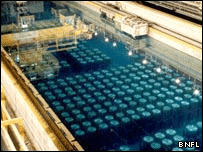 Martha Coakley asks feds to re-examine nuclear storage – BostonHerald.com, March 21, 2011 BOSTON – Massachusetts Attorney General Martha Coakley is urging federal energy officials to re-examine the safety of the wet storage of spent fuel at nuclear power plants, including the Pilgrim Nuclear Power Station in Plymouth.In a letter sent Monday to Energy Secretary Steven Chu and Nuclear Regulatory Commission Chairman Gregory Jaczko, Coakley said federal regulators need to take another look at the wet storage protocol, which is also used at the Vermont Yankee nuclear plant near the Massachusetts border.
It was also used at the damaged Fukushima Dai-ichi plan in Japan…….. Continue reading
China, Germany, now USA, put the brakes on nuclear development
 corporations are bracing for a potential U.S. regulatory backlash that will elevate costs. Governments from China to Germany moved swiftly last week to brake further nuclear development,
UPDATE 3-NRG, eyeing Japan, first to slow US nuclear plant work | Reuters, 22 March 11, NRG pull-back is first sign of U.S. impact from quake * US nuclear builders face uncertainty amid NRC review, By Eileen O’Grady, HOUSTON, March 21 (Reuters) – U.S. nuclear power developer. NRG Energy Inc has all but stopped work on a majo project in Texas, the first U.S. company to slow down ambitious growth plans in the wake of the crisis in Japan.
NRG, which has worked closely with Tokyo Electric Power Co to develop the Texas reactors, said there was too much regulatory uncertainty to continue pouring cash into the project.NRG’s move is the first sign that
as regulators sought time to apply any lessons learned from the crisis on Japan’s east coast.
The U.S. Nuclear Regulatory Commission’s order for a review of all plants raises uncertainty about potential design changes and timing of new license approvals, NRG Chief Executive David Crane said. He also noted that low natural gas prices are challenging the economics of new nuclear power plants.
“The economics related to the capital budget are right on the edge of viability,” Crane told Reuters in an interview.
NRG and its partner Toshiba Corp (6502.T) will reduce the scope of development work at Nuclear Innovation North America, which has been working to build new units at the South Texas Project nuclear station in Matagorda County, 90 miles (145 km)southwest of Houston.
UPDATE 3-NRG, eyeing Japan, first to slow US nuclear plant work | Reuters
Viability of USA’s nuclear power now called into question
“Today everybody is worried about the spent fuel pools………..New York Gov. Andrew Cuomo is seeking a review of the Indian Point power plant, about 40 miles north of New York City. More than 21 million people live within 50 miles of the plant……
Rep. Ed Markey, D-Mass., said the crisis called into question the viability of nuclear power in the United States.
Nuclear crisis may affect placement of US reactors, Google News 21 march 11, “………The chairman of the Nuclear Regulatory Commission said his agency will again review how U.S. nuclear plants store spent-fuel from nuclear reactors. Continue reading
Five close shaves at USA nuclear reactor cores
Nuclear safety: Five recent ‘near miss’ incidents at US nuclear power plants, Christian Science Monitor, 18 March 11, Fourteen safety-related events at nuclear power plants required follow-up inspections from the Nuclear Regulatory Commission, the NRC reported in 2010. These “near-miss” events “raised the risk of damage to the reactor core – and thus to the safety of workers and the public,” concluded a new report, “The NRC and Nuclear Power Plant Safety in 2010,” by the Union of Concerned Scientists. Here are five of these 14 “near miss” examples:……
US Senator Graham has touching faith in nuclear industry
“I have a lot of faith in the nuclear industry, and I feel safe living five miles away from a nuclear power plant,”…Graham said, adding that the nuclear industry needs to do a better job explaining itself…….

US Sen. Graham: I have faith in nuclear power – BusinessWeek, 18 March COLUMBIA, S.C.U.S. Sen. Lindsey Graham, R-S.C., said Thursday that Japan’s nuclear crisis shouldn’t cause a halt in the construction of new nuclear power plants in this country. Continue reading
Potential for disaster in USA’s nuclear reactors and cooling systems
It would not even require a quake or tsunami, only a moderately ingenious terrorist, to breach Shearon Harris’s puny defences and sabotage the cooling systems. A study by the Brookhaven Labs estimates that a pool fire there could cause 140,000 cancers, and contaminate thousands of square miles of land.
Another Fukushima meltdown? In America? Not if, but when | The First Post, Alexander Cockburn, 18 March 11, “…….. President Obama for example, who took plenty of money from this industry for his presidential campaign and used his State of the Union address last January to reaffirm his commitment to “clean, safe” nuclear power. This week, Obama’s press spokesman confirmed that nuclear energy “remains a part of the President’s overall energy plan”. Continue reading
In nuclear accident, evacuation from Indian Point area would be impossible
Citing plants like the Indian Point nuclear site north of New York City, Mr. Lyman, a physicist and member of the Institute of Nuclear Materials Management, called it “utterly unrealistic” to expect that an effective evacuation could be undertaken should a disaster like the earthquake and tsunami that hit Japan last week occur in this country.
Citing Near Misses, Report Faults Both Nuclear Regulators and Operators, – NYTimes.com,By TOM ZELLER JR. March 17, 2011,The Nuclear Regulatory Commission, which oversees the nuclear power industry in the United States, came under fire from critics on Thursday for recommending that Americans in Japan remain at least 50 miles away from the ailing Fukushima Daiichi nuclear power plant there. Continue reading
Ever increasing hidden subsidies to nuclear lobby in USA
U.S. Nuclear Subsidies Mask Real ‘Costs and Risks,’ Scientists Say, Sunshine State News, Kenric Ward’ March 17, 2011 A report issued just days before Japan’s nuclear-reactor crisis warned that U.S. government subsidies to the industry inject financial instability.”Government subsidies to the nuclear power industry over the past 50 years have been so large in proportion to the value of the energy produced that in some cases it would have cost taxpayers less to simply buy kilowatts on the open market and give them away,” stated the study by the Union of Concerned Scientists.
The report — “Nuclear Power: Still Not Viable without Subsidies” — argues that tax breaks and other government-engineered deals fuel a continued rise in costs as the nuclear power lobby demands evermore support from taxpayers.
“Piling new subsidies on top of existing ones will provide the industry with little incentive to rework its business model to internalize its considerable costs and risks,” concluded the Cambridge, Mass.-based Union.
Alternatively, the UCS report recommended adopting market-oriented approaches to uranium mining royalties and waste- management financing, and incorporating the costs of preventing nuclear proliferation and terrorism into economic assessments of new reactors.
The Obama administration is currently proposing $54 billion in new government-backed loan guarantees to facilitate the construction of new nuclear power plants.
U.S. Nuclear Subsidies Mask Real ‘Costs and Risks,’ Scientists Say | Sunshine State News
Earthquake risks for USA nuclear plants
The Uniform California Earthquake Rupture Forecast figures the probability of an earthquake of 6.7 magnitude or higher is 67 per cent for Los Angeles, 63 per cent for San Francisco.
Another Fukushima? In America? Not if, but when, Alexander Cockburn on the shameful trade-off that keeps nuclear power on the agenda MARCH 17, 2011
Along much of California’s coastline runs the Ring of Fire which stretches round the Pacific plate from Australia, north past Japan, to Russia, round to Alaska, and down America’s west coast to Chile. Ninety per cent of the world’s earthquakes happen round the Ring.
The late great environmentalist David Brower used to tell audiences solemnly, “Nuclear plants are incredibly complex technological devices for locating earthquake faults.”
Apparently acting on this piece of sarcastic wisdom, the US has deployed four nuclear plants near the Ring of Fire faultline, including two active ones in my home state of California.
Forty miles up the road from me, in far northern California we had a boiling water reactor, closed in 1976 because – surprise! – there was an earthquake from a “previously unknown fault” just off the coast. Now all we have are spent nuclear fuel rods in ponds, right on the shoreline, a few feet above sea level, nicely situated for a tsunami, such as the one that disabled the relief diesel generators designed to pump emergency coolant in the Fukushima plant. Three plates meet a few miles west of where I write. We had a 7.1 earthquake in 1992. First moral in the nuclear business: Expect the unexpected.
Further south, halfway between San Francisco and Los Angeles, is the Diablo Canyon nuclear plant, planned in 1968 when no one knew about the Hosgri fault, part of the Ring of Fire, a few miles offshore. See moral number one.
Further inquiry established that there’d been a 7.1 earthquake 40 years earlier, offshore from the plant, completed in 1973. The power company – Pacific Gas and Electric – said it would beef up defences. In their haste, the site managers managed to reverse the blueprints for the new earthquake-proofing of the two reactors, and so the retro-fit wasn’t a total success. Second moral in the nuclear business: people do mess up.
Back to the first moral: they recently discovered yet another fault and are now worried about “ground liquefaction” in the event of a big quake. In 2008 there was a terrorist attack by jellyfish which blocked the cold water intake, and the plant was shut down for a couple of days…….
The Uniform California Earthquake Rupture Forecast figures the probability of an earthquake of 6.7 magnitude or higher is 67 per cent for Los Angeles, 63 per cent for San Francisco. Up where I live, in the Cascadia subduction zone, we have a 10 per cent possibility of an 8.0 or 9.0 force quake….
US Nuclear Regulatory Commission’s lax rules for re-licensing nuclear plants
Entergy merely had to prove that it had a program to manage the aging reactor……NRC’s rubberstamp of this old and leaking nuclear reactor says more about the Commission and its deference to the nuclear industry than it does about the battle over Vermont’s energy future. The NRC ‘s standard for renewal is now so lax that the Commission could relicense the Chicago Pile.
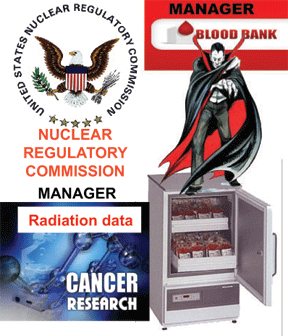
License Renewal Vote Says More About NRC Than Vermont Yankee Greenpeace USA by jim riccio – March 11, 2011 Yesterday, the U.S. Nuclear Regulatory Commission (NRC) decided to end the legal proceeding on the license renewal for the Vermont Yankee nuclear power plant and said that the agency expects to issue the renewed license soon.

While discouraging, this should not come as a surprise. The NRC has renewed every reactor license since Yankee Rowe withdrew its application in the early ‘90s and threw the nuclear industry’s efforts to run aging reactors another 20 years into chaos.
So why did Yankee Rowe withdraw and Vermont Yankee receive NRC approval?
Simple, after Yankee Rowe shut down the NRC gutted its renewal rule. Yankee Rowe had to prove that it met the original terms of its operating license; not so Vermont Yankee. Entergy merely had to prove that it had a program to manage the aging reactor.Now you might think that the series of screw ups at the reactor: the turbine fire, the cooling tower collapse and the never ending leaks of radiation into groundwater, would give the Commission reason to question running the reactor another 20 years. But NRC’s rubberstamp of this old and leaking nuclear reactor says more about the Commission and its deference to the nuclear industry than it does about the battle over Vermont’s energy future. The NRC ‘s standard for renewal is now so lax that the Commission could relicense the Chicago Pile.
License Renewal Vote Says More About NRC Than Vermont Yankee | Greenpeace USA
Nuclear reactors at San Onofre and Diablo Canyon not designed to withstand earthquakes
VIDEO YouTube – Chernobyl Winds Over America Chernobyl Winds Over America. AceHoffman, 15 March 11, Had the massive 8.9 Richter-scale earthquake that has just savaged Japan hit off the California coast, it could have ripped apart at least four coastal reactors and sent a lethal cloud of radiation across the entire United States. (http://nukefree.org/ace-hoffman-computerized-graphic-what-if-chernobyl-h… )
The two huge reactors each at San Onofre and Diablo Canyon are not designed to withstand such powerful shocks. All four are extremely close to major faults.
All four reactors are located relatively low to the coast. They are vulnerable to tsunamis like those now expected to hit as many as fifty countries. YouTube – Chernobyl Winds Over America

USA nuclear facilities in earthquake zones
1 This Month

Tell Congress: Prevent Nuclear Catastrophe in Iran

Tell Congress: Prevent Nuclear Catastrophe in Iran

Read the Public Inquiry Report, the Commissioners’ report, Surrendering Australia: The AUKUS Deception is available to download for free at aukuspublicinquiry.com. Or just watch the replay of the National Press Club Luncheon.
To see nuclear-related stories in greater depth and intensity – go to https://nuclearinformation.wordpress.com
Say No to NASA’s Reckless Nuclear Reactor on the Moon
-
Archives
- November 2026 (284)
- October 2026 (302)
- September 2026 (339)
- August 2026 (330)
- July 2026 (355)
- June 2026 (287)
- May 2026 (306)
- April 2026 (356)
- March 2026 (251)
- February 2026 (267)
- January 2026 (308)
- December 2025 (358)
-
Categories
- 1
- 1 NUCLEAR ISSUES
- business and costs
- climate change
- culture and arts
- ENERGY
- environment
- health
- history
- indigenous issues
- Legal
- marketing of nuclear
- media
- opposition to nuclear
- PERSONAL STORIES
- politics
- politics international
- Religion and ethics
- safety
- secrets,lies and civil liberties
- spinbuster
- technology
- Uranium
- wastes
- weapons and war
- Women
- 2 WORLD
- ACTION
- AFRICA
- Atrocities
- AUSTRALIA
- Christina's notes
- Christina's themes
- culture and arts
- Events
- Fuk 2022
- Fuk 2023
- Fukushima 2017
- Fukushima 2018
- fukushima 2019
- Fukushima 2020
- Fukushima 2021
- general
- global warming
- Humour (God we need it)
- Nuclear
- RARE EARTHS
- Reference
- resources – print
- Resources -audiovicual
- Weekly Newsletter
- World
- World Nuclear
- YouTube
-
RSS
Entries RSS
Comments RSS

