Unethical and unwise killing of Iranian nuclear scientist
 The bomb blast that killed chemist Mostafa Ahmadi-Roshan this week seemed to be designed to limit the scope of the damage, unlike most terrorist attacks. But it did nonetheless kill his driver and wound a third person, which shows how easily an overly flexible definition of “civilian” can stretch to reprehensible lengths.
A utilitarian calculation that suggests killing a few individuals now might save more lives later is not only ethically dubious; it’s also wrong. ..also counter-productive

 Killing civilians, Ottawa Citizen JANUARY 12, 2012 If the definition of “terrorism” is violence targeting civilians to spread fear in furtherance of a political motive, then the assassination of Iranian scientists certainly qualifies as terrorism. It should be condemned as such. It’s also an unwise strategy.
Although no one can say for sure who’s behind the attacks, the main motivation behind this string of assassinations seems clear: to slow down Iran’s efforts to become a nuclear power, not only by eliminating some skilled experts, but also by intimidating their peers. Continue reading
Nuclear Regulatory Commission wants a more pro nuclear Chairman
Agency Smackdown, Round 2: A Critique of ‘the Nuclear Party’ NYT, By  MATTHEW L. WALD, December 28, 2011, The chairman of the Nuclear Regulatory Commission, whose four fellow commissioners complained about him to the White House, saying that he had been withholding information from them and wielding too much power, drew a spirited defense on Wednesday from a predecessor at the agency. Peter A. Bradford, who was a commission member from 1977 to 1982, was speaking with reporters in a conference call on another topic, whether the recent approval of a new reactor design by the commission represented a major step toward a “nuclear renaissance.” (It doesn’t, he said.)
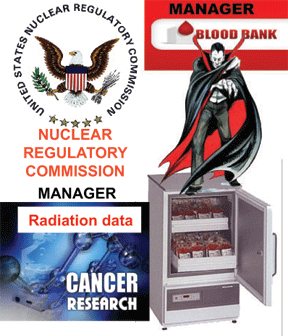 …….In the course of the call, Mr. Bradford said that the four commissioners were trying to give the Nuclear Regulatory Commission’s chairman, Gregory B. Jaczko, “a push toward the door.”
Mr. Bradford said it was not unusual for the commissioners to disagree strongly. “What’s unusual here is the letter these four commissioners have written,’’ he said. He said the letter had been prepared “unquestionably with the intention it would become public,’’ and that that there was no possibility that it would contribute to more collegial decision-making at the commission. The letter accused Mr. Jaczko of intimidating staff members – an allegation that was also noted in a report by the agency’s inspector general this year.
But Mr. Bradford said he did not believe that “ the chairman is somehow raging around the agency and intimidating the staff.’’
“These are professionals, they’re grown-ups, they don’t get scared under their desk by one commissioner, even the chairman,’’ he said. “It doesn’t pass the straight-face test. Of the four other members, two are Republicans and two are Democrats, but Mr. Bradford said the letter was not in fact bipartisan. “In Washington, you’ve got a situation where the ‘nuclear party’ transcends the Republican and Democratic party,’’ he said. “You’ve got four members of the nuclear party writing a letter about the chairman, who’s never been a member of the nuclear party.’’
Those four members have backgrounds in nuclear engineering, the nuclear Navy and related fields; Dr. Jaczko has a Ph.D in particle physics and came to the commission after a career on Capitol Hill, including a stint as an aide to Harry Reid of Nevada, the leader of the Senate’s Democratic majority.
The appointment of Dr. Jaczko did not have the support of the main nuclear industry trade association, the Nuclear Energy Institute, and that group has made an oblique plea for his departure. http://green.blogs.nytimes.com/2011/12/28/in-agency-smackdown-a-critique-of-the-nuclear-party/?scp=1&sq=Peter%20A.%20Bradford&st=cse
Nuclear Regulatory Commission dispute, as Chairman Jaczko wants more safety

 A Philosophical Split at the Nuclear Regulatory Commission, Huffington Post, Elliott Negin, 12 Jan 12“…….For two days, a federal agency aired its dirty laundry in public. Both the House and the Senate held hearings on December 14 and 15 respectively that wound up focusing on a bureaucratic tiff between the chairman of the Nuclear Regulatory Commission and the agency’s four commissioners….
the split may be more philosophical than personal. A critical vote the five took on December 15, the same day as the Senate hearing, suggests that it is at least partly the latter. For the seventh time over the last three years, Jaczko was on the losing end of a 4-1 vote that went against a proposal that would have strengthened plant safeguards. Continue reading
Florida residents up for $millions for nuclear plants?
Progress Energy rate-payers are already on the hook for part of the $2.5 billion in repairs 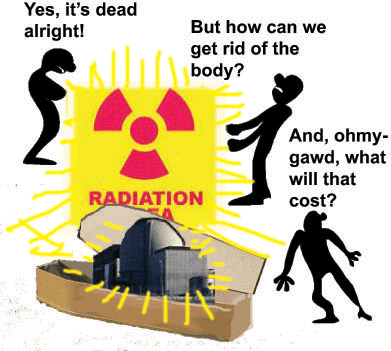 for the existing Crystal River nuclear plant. The plant has been offline with various problems since September 2009 and is not expected to be operating again before 2014. The utility wants customers to pay about $670 toward the repairs and insists that scrapping the plant would cost rate-payers more than fixing it.
Nuclear plant opponents in Fla. voice concerns Washington Examiner, By: MITCH STACY | 01/12/12 Opponents of two proposed nuclear power reactors in west-central Florida told a Nuclear Regulatory Commission panel on Thursday that the units will upset the delicate balance of the rural area’s water system and present a health risk……. The hearing before a
three-judge panel of the Atomic Safety and Licensing Board — the judicial arm of the NRC — addressed a legal challenge to Progress Energy’s application to license the plants. The NRC is expected to complete an environmental impact statement this spring and a formal trial on the challenge could happen as early as October. Continue reading
Ionising radiation a valuable medical tool, but only when really warranted
“Ionized radiation is the most studied carcinogen in the world.”
the problem is that sometimes the devices are used when they are not necessary, a situation peculiar to the American medical system. In the United Kingdom and Europe the devices are not used unless the need is warranted by the patient’s medical condition.
On that, everyone seems to agree.
Medical Physicists Say Fear of Diagnostic Radiation Is Overblown Patients should not decline X-ray imaging for medically advised procedures, group says. Jan 11, 2012 Inside Science, By Joel N. Shurkin, ISNS — An association of physicists in the medical field has warned patients not to decline diagnostic radiation procedures because of perceptions that the tests may be
harmful. Continue reading
USA hypocrisy in nuclear sales to Middle East – arms race risk?
 Nuclear trade agreements allow for U.S. companies to build reactors overseas or provide sensitive technologies, nuclear materials or know-how to recipient nations.
“I think the administration will pay lip service to the idea of [a nuclear trade partner] forgoing enrichment and reprocessing, but I would be very surprised if they made renunciation a hard condition of any agreement,” said nuclear expert Jeffrey Lewis.
serious concerns about the possibility that the entire region could be on the verge of a race to develop nuclear weapons.
 Obama Team Reveals Nuclear Trade, Nonproliferation Decision on Capitol Hill, National Journal, By Elaine M. Grossman January 11, 2012 The Obama administration told key lawmakers by letter on Tuesday how it intends to pursue upcoming nuclear trade agreements with one or more partner states, and the decision was believed to shed light on whether such pacts would contain specific conditions aimed at discouraging the spread of nuclear weapons, Global Security Newswire has learned (see GSN, July 28, 2011).
Two senior Obama administration officials wanted to brief key lawmakers in person or by phone this week, but logistics proved impossible and a written notification was sent instead, according to sources.
Details were shrouded in secrecy even after the letters were sent to the chairs and ranking members of the House Foreign Affairs and Senate Foreign Relations committees, but the outlines of a policy determination appeared to be emerging, sources and experts said. Continue reading
Big investment in wind farms USA
Global Deal: BP, Sempra Energy to Invest $1 Billion in U.S. Wind Farms WSJ, JANUARY 11, 2012, By Cassandra Sweet of Dow Jones Newswires BP PLC and Sempra Energy said Tuesday that together they will invest more than $1 billion in two wind farms under development in Pennsylvania and Kansas. Continue reading
Attack on Iran’s nuclear plant likely to radioactively pollute Kuwait
 Kuwait faces more risk than any other country in the region….. This gives Kuwait the right to request that the United States refrain from any military action that would put the Iranian plant at risk, the experts believe.
 Bushehr plant damage risks 90% radiation in Kuwait KUWAIT TIMES, 11 Jan 12, : Kuwait is not prepared for any negative impact from military action against the Bushehr nuclear power plant, experts say. “A radiation leak from the Bushehr Plant puts at least 90 percent of Kuwait’s population at risk of being affected by the worst kinds of cancer that affect the brain and kidney”, according to studies mentioned recently by experts from inside and outside Kuwait who are following the development of Iran’s nuclear projects.
The expert, quoted in an Al-Dar daily report published yesterday, indicated that Kuwait is not prepared to thwart risks of a radiation leak that could happen as a result of a military strike or natural disaster affecting the plant.
The report quotes the experts as saying that an environmental organization assigned to monitor radiation levels is not equipped to give accurate readings regarding hazardous radiation leaks and spread levels. Continue reading
Indigenous peoples fight against nuclear waste dumping on their land
 No nuclear Northwest: Grand Chiefs Kenora Daily Miner and News, By Jon Thompson, 10 Jan 12 Grand chiefs representing every inch of Northwestern Ontario are publicly taking a hard line against burying nuclear waste in their traditional territory, claiming it would violate international law. Continue reading
An “under-performing investment” – Cameco uranium company
Cameco (CCJ) Downgraded by Zacks Investment Research to “Underperform”, Localised USA, Jan 10th, 2012 Cameco (NYSE: CCJ) was downgraded by equities research analysts at Zacks Investment Research from a “neutral” rating to an “underperform” rating in a research note issued to investors on Tuesday.
Cameco Corporation (Cameco) is a Canada-based company. The Company and its subsidiaries are primarily engaged in the exploration for and the development, mining, refining, conversion and fabrication of uranium for sale as fuel for generating electricity in nuclear power reactors in Canada and other countries. Cameco has three reportable segments: uranium, fuel services and electricity.
The company has a 31.6% interest in Bruce Power L.P. (BPLP). Cameco’s uranium joint venture interests are comprised of McArthur River, Rabbit Lake, Cree Extension Millenium, Moon Lake, Dawn Lake, Read Lake and Virgin River. Cameco’s projects include Kintyre Uranium Exploration Project (Kintyre) and GoviEx Uranium (GoviEx). Kintyre project is located in the East Pilbara region of Western Australia. Cameco holds 12% interest in GoviEx. Its wholly owned subsidiary is Global Laser Enrichment LLC (GLE).
Indian Point nuclear power plant shut due to radioactive water problem
Pump problem shuts nuclear reactor in NYC suburbs, WSJ, JANUARY 10, 2012, WHITE PLAINS, N.Y. — An increase in a leak of slightly radioactive water forced the shutdown Tuesday of a reactor at the Indian Point nuclear power plant in New York City’s suburbs, officials said.
Entergy Nuclear, owner of the plant in Buchanan, said all the water was contained in the pump. It said there was no release of radioactivity from the Indian Point 2 reactor and no danger to workers or the public…
it’s not yet known how long Indian Point 2 will be offline….. Indian Point, 35 miles from midtown Manhattan, is fighting for new 20-year licenses for the two reactors. Current
licenses expire in 2013 and 2015. Gov. Andrew Cuomo has opposed the new licenses, saying it’s unsafe to have a nuclear plant in such a densely populated area.
http://online.wsj.com/article/AP45c33f21230c436195398edcb5f43907.html
Infant deaths linked to Fukushima radiation – report ignored by govt and media
[In April 2011] the Environmental Protection Agency (EPA) reported increased levels of radiation in the air, water and milk right across the U.S. that were 100s of times above normal levels.
while deaths were reported across all age categories, infants under the age of one-year old were the demographic hardest hit. The increase in 2010-2011 deaths among infants in the spring was 1.8 percent, compared to a decrease of 8.37 percent in the preceding 14 weeks. Infant deaths were highest “because their tissues are rapidly multiplying, they have undeveloped immune systems, and the doses of radioisotopes are proportionally greater than for adults,”
 this study, which was released publicly on December 19, 2011, was not covered by mainstream media, but mostly watchdog groups and alternative, underground and fringe publications. There has been little reported about the after affects of Fukushima of late.
In an audio news conference, Mangano says the reaction of the nuclear industry and government will likely be a smear campaign to the report’s credibility
 14,000 U.S. Deaths Linked to Fukushima Nuclear Meltdown: Infants Hardest Hit,The Province, Tess Zevenbergen January 9, 2012. The first study linking radioactive fallout to 14,000 U.S. deaths as a result of Fukushima’s nuclear meltdown following the 9.0 magnitude earthquake and tsunami that struck the coast of Japan on Friday, March 11th last year has been published in the International Journal of Health Services (IJHS). According to a news release issued over the PR Newswire, the study is the first peer-reviewed study to appear in a medical scientific journal that documents the health hazards associated with the Fukushima nuclear explosion and meltdown catastrophe.
The study, authored by epidemiologist Joseph Mangano MPH MBA and Executive Director of the Radiation and Public Health Project, and Janette Sherman, a toxicologist and adjunct professor at the University of Michigan, states the number of radiation-related deaths linked to the Fukushima disaster is comparable to the number of deaths following the Chernobyl meltdown of 1986. The results of the study were gleaned from looking at U.S. death rates during the period Fukushima occurred, as well as in previous months and years.
“This study of Fukushima health hazards is the first to be published in a scientific journal. It raises concerns, and strongly suggests that health studies continue, to understand the true impact of Fukushima in Japan and around the world. Findings are important to the current debate of whether to build new reactors, and how long to keep aging ones in operation,” stated Mangano. Continue reading
Nuclear technicians watching Internet sites, not the nuclear controls
 NRC: Nuclear technicians surfed web on the job, By Mike M. Ahlers, January 9, 2012 WASHINGTON (CNN) — Nine technicians responsible for monitoring operations at a Louisiana nuclear power plant spent on-duty time surfing the Internet — visiting websites that included news, sports, fishing and retirement information — jeopardizing the safety of the plant, federal regulators say.
The Nuclear Regulatory Commission disclosed the web-surfing activities Monday in a letter that proposes a $140,000 fine against the River Bend nuclear power station, 24 miles northwest of Baton Rouge……
According to an NRC investigation, nine operators “deliberately violated” the safety procedures by surfing the web between January and April of 2010. Three of the nine did so with such frequency and duration that they are being issued “severity level three enforcement violations.” (Severity level one represents the greatest significant violation and severity level four is the lowest.) The remaining six operators will receive severity level four violations. …..http://edition.cnn.com/2012/01/09/us/technicians-web-surfing/
Canada’s chequered history on nuclear safety
A closer look at Canada’s nuclear plants CBC News Canada: Jan 9, 2012 Reports of two radioactive spills at the nuclear power plant in Point Lepreau, N.B., late in 2011 have raised concerns with the head of Canada’s Nuclear Safety Commission.
Michael Binder, the president of the commission, called the news “unsettling.”…….
Some notable nuclear accidents in Canada
Chalk River, 1952 and 1958
A power surge and partial loss of coolant led to significant damage to the NRX reactor core in 1952. It was the world’s first major nuclear reactor disaster, and it resulted in 4.5 tonnes of radioactive water collecting in the cellar of the building. In 1958, a fuel rupture in the reactor led to a fire and complete contamination of the NRU building. The military was called in both times to aid in the cleanup.
Pickering, 1974 and 1983
The most serious nuclear accidents in Canada happened at the Pickering facility east of Toronto, in 1974 and in 1983. In each case, pressure tubes — which hold fuel rods — ruptured. Some coolant escaped, but was recovered before it left the plant, and there was no release of radioactive material from the containment building.
Darlington, 2009
In 2009, more than 200,000 litres of tritium, the radioactive isotope of hydrogen, spilled into Lake Ontario after workers accidentally filled the wrong tank with a mixture of tritium and water. The level of the isotope in the lake was not enough to pose harm to residents. http://www.cbc.ca/news/canada/story/2012/01/09/f-canada-nuclear-reactors.html
NRC’s nuclear safety moves slow and inadequate
There is some dissent among nuclear experts despite the NRC’s assurances.
radioactive tritium has leaked into groundwater at three-quarters of U.S. commercial nuclear power sites.
Nuclear safety in the U.S. a slow affair Smart Planet, By David Worthington | January 8, 2012 The Nuclear Regulatory Commission (NRC) is taking a years long methodical approach to advanced nuclear safety in the United States while other nations, including France and Japan, are acting more expeditiously.
Japan’s ongoing Fukushima crisis has placed nuclear power under scrutiny throughout the world, and public interest groups in the US have expressed safety concerns about its aging reactors. Watchdogs have criticized the NRC for softening regulations or even ignoring violations…… Continue reading
1 This Month

Tell Congress: Prevent Nuclear Catastrophe in Iran

Tell Congress: Prevent Nuclear Catastrophe in Iran

Read the Public Inquiry Report, the Commissioners’ report, Surrendering Australia: The AUKUS Deception is available to download for free at aukuspublicinquiry.com. Or just watch the replay of the National Press Club Luncheon.


Shut down the radiation-damaged Heysham nuclear reactors now
To see nuclear-related stories in greater depth and intensity – go to https://nuclearinformation.wordpress.com

Say No to NASA’s Reckless Nuclear Reactor on the Moon
Say No to NASA’s Reckless Nuclear Reactor on the Moon
-
Archives
- November 2026 (269)
- October 2026 (302)
- September 2026 (339)
- August 2026 (330)
- July 2026 (355)
- June 2026 (287)
- May 2026 (306)
- April 2026 (356)
- March 2026 (251)
- February 2026 (267)
- January 2026 (308)
- December 2025 (358)
-
Categories
- 1
- 1 NUCLEAR ISSUES
- business and costs
- climate change
- culture and arts
- ENERGY
- environment
- health
- history
- indigenous issues
- Legal
- marketing of nuclear
- media
- opposition to nuclear
- PERSONAL STORIES
- politics
- politics international
- Religion and ethics
- safety
- secrets,lies and civil liberties
- spinbuster
- technology
- Uranium
- wastes
- weapons and war
- Women
- 2 WORLD
- ACTION
- AFRICA
- Atrocities
- AUSTRALIA
- Christina's notes
- Christina's themes
- culture and arts
- Events
- Fuk 2022
- Fuk 2023
- Fukushima 2017
- Fukushima 2018
- fukushima 2019
- Fukushima 2020
- Fukushima 2021
- general
- global warming
- Humour (God we need it)
- Nuclear
- RARE EARTHS
- Reference
- resources – print
- Resources -audiovicual
- Weekly Newsletter
- World
- World Nuclear
- YouTube
-
RSS
Entries RSS
Comments RSS

