Obama administration considering deep cuts to nuclear weapons deployed

 US weighing steep nuclear arms cuts (AP) WASHINGTON , CBS News, Robert Burns, February 14, 2012— The Obama administration is weighing options for sharp new cuts to the U.S. nuclear force, including a reduction of up to 80 percent in the number of deployed weapons, The Associated Press has learned.
Even the most modest option now under consideration would be an historic and politically bold disarmament step in a presidential election year, although the plan is in line with President Barack Obama’s 2009 pledge to pursue the elimination of nuclear weapons. Continue reading
Palisades and Browns Ferry nuclear reactors rated at the bottom for safety
 Michigan Nuclear Plant Downgraded Over Safety, WSJ, FEBRUARY 14, 2012, COVERT TOWNSHIP, Mich.—Federal regulators said Tuesday that safety violations at the Palisades nuclear-power plant in southwestern Michigan had led them to downgrade the plant to a status held by just two others in the U.S.
The Nuclear Regulatory Commission assigns the more than 100 nuclear reactors in the U.S. to one of five categories based on their safety performance. Most are in the top-performing group. Palisades was bumped to the No. 2 category last month and now will join two others
in the third category: the Perry Nuclear Power Plant’s Unit 1 generator near Cleveland and the Susquehanna Nuclear Power Plant’s Unit 1 generator in Berwick, Pa.
The only reactor that ranks lower is Browns Ferry Unit 1 near Athens, Ala., which is in the fourth category….. http://online.wsj.com/article/SB10001424052970204883304577223561511417868.html
Testicular cancer linked to ionising radiation affecting fetus
 Fetal exposure to radiation increases risk of testicular cancer Medical Express February 13, 2012 Male fetuses of mothers that are exposed to radiation during early pregnancy may have an increased chance of developing testicular cancer, according to a study in mice at The University of Texas MD Anderson Cancer Center
According to the American Cancer Society, more than 8,500 new cases of testicular cancer are diagnosed each year in the United States. During the past 50 years, the incidence has tripled in young Caucasian men throughout the world. Continue reading
Unseemly haste for tax-payer to supply $8.3 billion nuclear loan
 the loan guarantee is nearing final approval, less than a week after the Nuclear Regulatory Commission (NRC) greenlighted the license for the project.
Energy Dept. nears approval of $8.3B nuke loan, setting up clash in Congress, The Hill, By Andrew Restuccia – 02/13/12 Energy Secretary Steven Chu said Monday he expects to finalize an $8.3 billion taxpayer-backed loan for two new nuclear reactors in Georgia, setting up another battle on Capitol Hill over the government’s investments in energy projects. Continue reading
Nuclear Regulatory Commission’s poor oversight of safety enforcement
US nuclear watchdog questions oversight of safety enforcement, msnbc.com, By M. Alex Johnson 13 Feb 12, The federal government’s nuclear watchdog has faulted the Nuclear Regulatory Commission for failing to follow through on safety agreements with nuclear facilities, saying its system for tracking corrective action raises questions about its oversight of nuclear safety and security. Continue reading
The war-mongering of Israel and USA.

How the US and Israel are Shredding the NPT, The Real Nuclear Outlaws CounterPunch, by CARL BOGGS, 5 April 12, While United States and Israeli leaders, duly assisted by a warmongering media, ramp up war talk against Iran, two troublesome pieces of information are ritually ignored. First, even American intelligence reports conclude that Iran is not close to building a nuclear-weapons program. Second, it is the U.S. and Israel – not Iran – that stand in flagrant violation of the Nuclear Non-Proliferation Treaty (NPT). The real nuclear outlaws are located in Washington and Tel Aviv rather than in Tehran.
The consensus of 17 U.S. agencies, as reported by National Intelligence Estimates of 2007 and 2011, finds that Iran has not enriched uranium above 20 percent purity, far short of the nearly 90 percent essential to weapons development. Further, no viable nuclear delivery system or command structure has been uncovered. High-powered U.S. surveillance and espionage operations, many inside Iran, have revealed nothing beyond (an entirely legal) civilian energy program. Recent International Atomic Energy Agency (IAEA) investigations, the latest in November 2011 and February 2012, cite “continuing enrichment processes” but nothing beyond the 20 percent level. The IAEA merely states what should be obvious – that some Iranian sites “could be” used for a weapons program at some point in the future…..
The Iranians have every right within existing international rules to carry out their program – a fact conveniently obscured by the Western media and politicians. Their Israeli antagonists, on the other hand, not only possess a nuclear arsenal of up to 400 warheads – possibly fifth largest in the world – but breezily dismiss the NPT as a worthless nuisance…..
Make no mistake: despite the media fiction of a small, weak, relatively defenseless country isolated and surrounded by aggressive foes, Israel currently rivals Britain, France, and China as a world nuclear power, central to its shared goal (with the U.S.) of military supremacy in the Middle East. Credible sources indicate that Israel possesses not only neutron bombs but an array of tactical nukes, ballistic missiles, atomic land mines, cruise missiles, nuclear-armed subs, and high-explosive artillery shells. The subs alone are armed with four cruise missiles each, replete with multiple warheads. The general Israeli military arsenal dwarfs the actual or potential armed forces of all other Middle Eastern nations combined. Several U.N. resolutions calling for Israel to join the NPT, open up its nuclear facilities to inspection, and agree to a regional nuclear-free zone have been stonewalled by the U.S. and Israel. After the CIA reported that Israel had the Bomb in 1968 (fully 18 years before Mordecai Vanunu’s insider revelations), no outside visits to Israeli military sites have been allowed.
Meanwhile, India – still a non-NPT state – has long benefitted from a massive transfer of atomic resources and technology from the U.S., dating to years before the Indian weapons breakthrough of 1974. As an imagined counterweight to Chinese military power, India was empowered to build as many as 65 warheads, manufactured and deployed in the absence of external monitoring and made possible by the work of 1100 U.S.-trained scientists. Like Israel and also Pakistan, India maintains a hostile attitude toward IAEA monitoring. In July 2005 the U.S. signed an historic deal with New Delhi for nuclear cooperation, just when India was busy modernizing its illegal atomic stockpile and delivery systems. (The deal was approved by Congress in October 2008.) Those profiting, of course, included dozens of U.S. technical and military corporations……
n the end, the Iranian “crisis” is symptomatic of a deeper predicament: nothing will be resolved until every state – not just the targeted villains – is held accountable to the same universal norms. This means, above all, the U.S., Israel, and other nuclear outlaws. Blix noted that the NPT “is not a treaty that appoints the nuclear-weapons states individually or jointly to police non-nuclear weapons states and threaten them with punishment. It is a contract in which all parties commit themselves to the goal of a nuclear weapons-free world.” There can be no meaningful “contract” without an internationalization of security arrangements that, in the end, will require a dismantling of the American warfare state that underpins its nuclear outlawry and that of its clients. http://www.counterpunch.org/2012/04/04/the-real-nuclear-outlaws/#.T33s-UO4hjA.facebook
Radioactive leakage to water, in normal operations of nuclear reactors
 RADIOACTIVE “DRINKING WATER” for million american people… While US licenses first nuclear reactors since 1978. by RNA International February 11, 2012 – Press Conference, Red Wing, Minnesota My name is Christina Mills. I am a staff scientist and policy analyst with the Institute for Energy and Environmental Research (IEER) which provides policymakers, journalists, and the public with understandable and accurate scientific and technical information on energy and environmental issues.
IEER’s aim is to bring scientific excellence to public policy issues in order to promote the democratization of science and a safer, healthier environment.
As the report “Too Close to Home” discusses, nuclear power plants pose a threat to the drinking water of millions of Americans. Unfortunately many Americans have been and continue to be exposed to radioactive drinking water as the result of routine operations at the country’s nuclear reactor fleet. Continue reading
Despite approval of 2 new US nuclear reactors, the nuclear industry has ground to a halt
 These US reactors are only happening in Georgia, where the electricity price is regulated. Elsewhere, the nuclear renaissance has ground to a halt.
building a nuclear power plant is risky and that risk falls on the banks and the banks are not happy with that.
There were only ever two firm orders for nuclear power plants in the West using these new designs; one is in Finland and one is in France and both of those are going badly wrong. All the other projects are no more than projections of what might happen in the future……. And the industry needs China more than it needs nuclear.

 http://www.abc.net.au/pm/content/2012/s3428147.htm No nuke comeback despite US approval of two reactors, Matt Peacock reported this story , February 10, 201 ABC Radio P.M.Listen to MP3 of this story
MARK COLVIN: In the United States, the Nuclear Regulatory Commission has approved construction of two new nuclear power plants in Georgia. They’ll be the first nuclear reactors in the US since the Three Mile
Island accident more than 30 years ago.
While the nuclear industry is hailing this decision as a breakthrough, Matt Peacock reports; a so-called nuclear renaissance seems further away than ever. Continue reading
Ratings agency sees little future for new nuclear reactors
 Fitch says new nuclear plant may spur few more, Reuters, Caryn Trokie, New York Ratings Unit, Feb 10 -, Fitch Ratings believes that the Nuclear Regulatory Commission’s (NRC) vote on February 9 approving the combined construction and operating license (COL) for Plant Vogtle Units 3 and 4 is a significant milestone in the development of new nuclear capacity in the US but has limited impact on credit.
The new reactors are being developed by Southern Company subsidiary, Georgia Power Company (GPC) along with its partners the Municipal Electric Authority of Georgia (MEAG), Oglethorpe Power Corporation (OPC), and the city of Dalton, GA..
.. The two public power utilities have already prefunded, through debt issuance, a substantial portion of their share of the construction
costs. GPC will rely on a combination of Department of Energy loan guarantees and traditional utility funding sources. The utility
benefits from constructive rate treatment of project costs including recovery of construction work in progress on financing costs…..
We believe that new COL applications beyond those in process are unlikely in the near term. Despite significant enthusiasm for nuclear
power in recent years as an alternative to fossil generation, diminished load growth in the slow economy and historically low
natural gas and wholesale electric prices have dampened interest. Combined with lower prospects for carbon emission regulations and
evolving safety standards following the events at Fukushima, the industry’s focus has shifted to maintenance of the nation’s existing
nuclear fleet.
Details of the approval are not yet available. Fitch will review them as soon as they are made available to us to evaluate the conditions included in the COL and any impact they may have on the cost or timing of completion. http://www.reuters.com/article/2012/02/10/idUSWNA998020120210
$14 billion to build Vogtle nuclear plant. If it makes losses, $8.3 billion loan guarantee from govt?
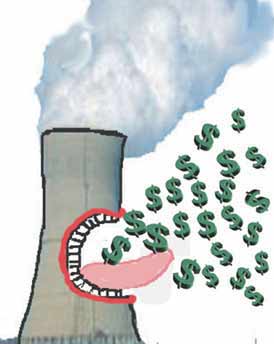 The Vogtle plant will cost $14 billion at least to build……..If things go as planned, the reactors will be making electricity four to five years from now. If not, the company is seeking an $8.3 billion loan guarantee from the federal government to cover losses.
Nuclear Safety, Cost Issues Loom As U.S. OKs Reactor, NPR, by CHRISTOPHER JOYCE February 10, 2012 The nuclear industry is celebrating the federal Nuclear Regulatory Commission’s decision to give the go-ahead for a utility company to build two new nuclear reactors in Georgia, the first license to be granted for a new reactor in the U.S. since 1978. But last year’s accident at reactors in Fukushima, Japan, still clouds the future of nuclear power, as does the cost of new power plants.
Southern Co. will build the reactors at its Vogtle site in Georgia, where two older reactors already operate. Scott Peterson, vice president of the industry’s Nuclear Energy Institute, says it’s not a “nuclear renaissance,” but instead a “first wave” for new reactors….
Costs But demand for electricity is flat, and the price of natural gas, also used to make electricity, is low. Continue reading
Nuclear Regulatory Commission Chairman warns on safety factors for Vogtle new nuclear plant
 Southern’s `Monumental Accomplishment’ Tempered by Fukushima, Bloomberg, By Brian Wingfield – Feb 9, 2012 The chief regulator’s dissent in a vote that approved the first U.S. permit in 34 years to build a nuclear reactor is fueling a debate over safety as the first anniversary of Japan’s nuclear disaster nears.
The U.S. Nuclear Regulatory Commission voted 4-1 yesterday to award Southern Co. (SO) of Atlanta a license to build two reactors at its Vogtle plant near Augusta, Georgia. The agency should have required the company to implement lessons from Japan’s nuclear crisis last year, said Chairman Gregory Jaczko, who opposed the license.
“Right now we know there are things that need to be fixed, things that need to be changed, or at least things that need to be analyzed,” Jaczko said yesterday in an interview at NRC headquarters in Rockville, Maryland. “For us to issue this license, and say ‘we’ll deal with them later,’ to me is kind of putting the cart before the horse.” Continue reading
The lower price of gas is causing the stillbirth of the nuclear ‘renaissance’
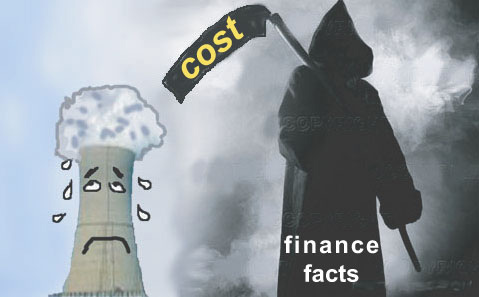 Nuclear Power vs. Natural Gas, February 10, 2012, NYT, By MATTHEW L. WALD When critics say nuclear power is risky, they often mean the risk of an accident. But people in the nuclear industry say that the bigger threat is natural gas.
To look like a smart move, the $14 billion nuclear project undertaken by the Southern Company and its partners must meet several challenges, including actually completing the job for that figure, always a question in nuclear construction.
But for the 104 nuclear reactors now running in this country, and for many of the ones that have retired, the big issue has always been the price of electricity from competing sources. And generally, that comes down to a prediction about the future cost of natural gas, which usually sets the price of electricity on the grid in much of the United States.
The nuclear industry must also reckon with the prospect that in the 2020’s or 2030’s, that the United States will get more serious about limiting carbon dioxide emissions, which would be a plus for nuclear operators. Substituting gas for coal does reduce emissions, but there is still far too much carbon in natural gas to allow its widespread use if the electric system is to reduce its emissions by 80 percent by 2050. That was the national goal endorsed by President Obama when he ran for president in 2008.
In fact, some electricity experts say that if the economy as a whole has to cut emissions by 80 percent, the electric sector will have shoulder even deeper reductions, given that other areas, like transportation, can probably manage less….
John W. Rowe, the chairman of Exelon, the nation’s biggest nuclear utility, had said that he would not build a new reactor at today’s natural gas prices. Referring to the geologic formations from which natural gas is extracted, he said in a recent speech, “Shale is good for the country, bad for new nuclear development.”
“There must be a shortage of natural gas and stable high prices to make the economics right, ‘’ he said of nuclear power in a speech to a nuclear group. And the Union of Concerned Scientists, a group that is generally critical of nuclear energy, argues that new reactors will be more expensive than other “readily available alternatives, including energy efficiency, renewable energy and natural gas.” http://green.blogs.nytimes.com/2012/02/10/natural-gas-vs-nuclear-power/
Doctors want to make sure that use of medical radiation does more good than harm

ensuring that a diagnostic procedure involving ionizing radiation is necessary for a patient’s care and should be expected to do more good than harm
Radiation Risks From Diagnostic Procedures Examined, Doctors’ Lounge: February 09, 2012, Feb. 9 (HealthDay News) — National strategies should be developed for the use of evidence-based criteria and improved oversight of equipment to minimize radiation exposure for patients undergoing diagnostic procedures, according to a study published online Feb. 3 in CA: A Cancer Journal for Clinicians. Continue reading
Cameco uranium company cuts production in view of nuclear industry slowdown
 Cameco outlook sours amid doubts on nuclear’s future * Company sees 2012 revenue flat to down 5 percent
* Eyes lower production in 2012
* Shares down 1 pct at C$23.12
TORONTO, Feb 10 (Reuters) – Uranium producer Cameco forecast lower sales and highlighted doubts about the takeup of nuclear power in its stronger than expected quarterly results, and its shares edged lower on Friday, ……
Cameco, the world’s No.1 publicly-listed uranium producer, also lowered its 2012 uranium production outlook by 3 percent to 21.7 million pounds and said delays and cancellations after last year’s Fukushima nuclear disaster could hit prices.
Germany, which represents about 5 percent of the global market for uranium, plans to phase out its reactors by 2022.
Japan shut down most of its reactors for testing after the March 2011 earthquake and tsunami that crippled the Fukushima Daiichi power plant, and is expected to take its remaining three reactors offline for maintenance in the next few months.
“It remains unclear what level of nuclear power Japan itself – which represents 12 percent of global nuclear generating capacity – will depend on in the future,” Cameco said.
Process for terminating Cotter company’s radioactive license in Colorado
The majority of the documents being reviewed currently concern characterization of the soil and groundwater contamination on site and cleanup criteria.
Cotter documents under review, Company in process to terminate radioactive materials license, Canon City Daily Record, By RACHEL ALEXANDER 02/10/2012 A public meeting was held Thursday with the Colorado Department of Public Health and Environment and Cotter Corp. to discuss three upcoming department decisions.
The documents currently under review by CDPHE, the Environmental Protection agency and the public are the New Evaporation Pond
Conceptual Design; the Onsite Soil Excavation and Groundwater Characterization Process Plan; and the Soil Remediation Criteria
Selection.
This is the first round of documents that are being developed by Cotter as part of the process to terminate its radioactive materials
license and the deletion of the site from the Superfund list. Continue reading
1 This Month

Tell Congress: Prevent Nuclear Catastrophe in Iran

Tell Congress: Prevent Nuclear Catastrophe in Iran

Read the Public Inquiry Report, the Commissioners’ report, Surrendering Australia: The AUKUS Deception is available to download for free at aukuspublicinquiry.com. Or just watch the replay of the National Press Club Luncheon.


Shut down the radiation-damaged Heysham nuclear reactors now
To see nuclear-related stories in greater depth and intensity – go to https://nuclearinformation.wordpress.com

Say No to NASA’s Reckless Nuclear Reactor on the Moon
Say No to NASA’s Reckless Nuclear Reactor on the Moon
-
Archives
- November 2026 (269)
- October 2026 (302)
- September 2026 (339)
- August 2026 (330)
- July 2026 (355)
- June 2026 (287)
- May 2026 (306)
- April 2026 (356)
- March 2026 (251)
- February 2026 (267)
- January 2026 (308)
- December 2025 (358)
-
Categories
- 1
- 1 NUCLEAR ISSUES
- business and costs
- climate change
- culture and arts
- ENERGY
- environment
- health
- history
- indigenous issues
- Legal
- marketing of nuclear
- media
- opposition to nuclear
- PERSONAL STORIES
- politics
- politics international
- Religion and ethics
- safety
- secrets,lies and civil liberties
- spinbuster
- technology
- Uranium
- wastes
- weapons and war
- Women
- 2 WORLD
- ACTION
- AFRICA
- Atrocities
- AUSTRALIA
- Christina's notes
- Christina's themes
- culture and arts
- Events
- Fuk 2022
- Fuk 2023
- Fukushima 2017
- Fukushima 2018
- fukushima 2019
- Fukushima 2020
- Fukushima 2021
- general
- global warming
- Humour (God we need it)
- Nuclear
- RARE EARTHS
- Reference
- resources – print
- Resources -audiovicual
- Weekly Newsletter
- World
- World Nuclear
- YouTube
-
RSS
Entries RSS
Comments RSS

