A comprehensive review of the revolving door between Fox and the second Trump administration

Trump has picked 5 former Foxers — so far
by Matt Gert, 11/13/24
Incoming president Donald Trump’s unprecedented relationship with Fox News is once again creating a revolving door between the right-wing propaganda network and his administration. Trump has named three current or former Fox employees to high-ranking positions in the week since he was elected president — and more seem sure to follow.
Trump, an obsessive Fox viewer whose worldview is shaped by the network’s programming, stocked his first-term White House and federal agencies with familiar faces from the network. At least 20 people with Fox on their resumes joined his administration over the course of his tenure, including Cabinet secretaries, top White House aides, and ambassadors.
Trump also consulted privately with an array of Fox stars, creating a shadow Cabinet of advisers with immense influence over government affairs whose key credential was their ability to attract attention via right-wing bombthrowing. And he frequently made important decisions based on what people were telling him on his favorite network — at times with disastrous results.
As Trump ramps up his second term, he is once again plucking top administration officials from the network’s stable.
The list below will be updated as additional former Fox employees join or leave the Trump administration.
……………………………………………………………………………………………………………………… more https://www.mediamatters.org/donald-trump/comprehensive-review-revolving-door-between-fox-and-second-trump-administration
Trump 2.0 promises US enabled Israeli genocide on steroids.

Walt Zlotow, West Suburban Peace Coalition, Glen Ellyn IL, 15 Nov 24
President Biden set a high bar for enabling Israeli genocide in Gaza. Like Israeli Prime Minister Benjamin Netanyahu, Biden didn’t’ lift a finger to bring the remaining 97 Israeli hostages back safely from Gaza. But he’s used over 50,000 tons of weapons, costing over $18 billion for Israel to complete the genocidal ethnic cleansing of Gaza.
He did nothing to force Israel to provide food, water and medicine to the 2,300,000 sick and starving Palestinians (less the 100,000 or so already dead) as a condition for supplying genocide weapons. On October 12th he issued a demand giving Israel 30 days to start allowing in life saving supplies. When Israel did nothing to comply, Biden essentially said ‘Just kidding about the consequences….keep up the genocide.’
But at least Biden said a ceasefire along with food and medicine were needed to stop the Palestinians’ suffering.
Unlike Biden, Trump will continue US genocide enabling without the veneer of sympathy for its victims. He repeatedly demands that Israel “Finish the job” in Gaza.
His picks on foreign policy promise even more genocide in Gaza compared to Biden’s tough act to follow.
Trump tabbed uberhawk Mike Waltz to be his National Security Advisor. Waltz is totally against ceasefire, charging it will only lead to larger Middle East war, when it’s only the ongoing genocide in Gaza fueling it. He’s a huge fan of Netanyahu’s conduct of the genocide, claiming Biden has been too reactive compared to Netanyahu’s proactive aggression.
Pete Hegseth, Trump’s pick to run Defense, is all in for Israeli expanding the genocide in Gaza and bombing of Lebanon, to take out Iranian nuclear sites. He’s enamored of Israeli bombing and assassinations in Iran because he charges Biden is too weak to do it. He carries visible symbols of his beliefs—a large Crusader’s Jerusalem Cross tattoo on his chest and the biblical verse Matthew 10:34, which reads, “Do not suppose that I have come to bring peace to the earth. I did not come to bring peace but a sword.” When in charge of Defense, Hegseth should change its name to Department of Endless War and Genocide.
Trump’s selection of Marco Rubio to head the State Department is equally dreadful. Rubio defends the ongoing Israeli genocide in Gaza saying “Israel’s enemies are also our enemies. The Iranian regime and its proxies – Hamas in Gaza, Hezbollah in Lebanon, the Houthis in Yemen and a multitude of groups in Syria and Iraq seek Israel’s destruction as part of a multi-stage plan to dominate the Middle East and destabilize the West. The Jewish state is on the front lines of this conflict, fighting with many shared American-Israeli lives.” Rubio would be more accurate in saying ‘Israel is on the front lines of genocide.’
But Trump’s pick of Mike Huckabee to be Ambassador to Israel trumps even Waltz, Hegseph and Rubio for genocidal support. Huckabee, a Christian Evangelist claims “There is no such thing as a West Bank. It’s Judea and Samaria. There’s no such thing as a settlement. They’re communities, they’re neighborhoods, they’re cities. There’s no such thing as occupation….there’s no such thing as a Palestinian.”
As grotesque as Biden’s enabling of Israeli genocide in Gaza is…Trump 2.0 figures to be much worse.
Imprisoned ex-Ohio House Speaker Larry Householder to ask Donald Trump for clemency, campaign attorney says
By Jeremy Pelzer, cleveland.com, COLUMBUS, Nov. 11, 2024,
Ex-Ohio House Speaker Larry Householder, who’s serving a 20-year prison sentence for overseeing the largest bribery scandal in Ohio history, is preparing to ask President-elect Donald Trump for clemency, according to his campaign’s attorney.
Householder, a Perry County Republican, is planning to submit an official pardon application to the U.S. Justice Department at some point closer to Trump’s inauguration on Jan. 20, 2025, according to the attorney, Scott Pullins.
“We will also be working to build support and communicate with the President and his team,” Pullins stated in a message. Pullins is not a member of Householder’s criminal defense team; rather, he’s advised Householder about legal and political matters over the years and represented him in some state elections cases.
Mark Marein, one of Trump’s criminal defense attorneys, declined comment.
U.S. presidents have the power to offer two kinds of executive clemency for federal crimes: a presidential pardon, and commuting a prison sentence. Either would result in Householder being immediately released from prison……………………………………………………………………….
Last year, Householder was convicted by a federal jury of leading a scheme to use $60 million in bribes from FirstEnergy to help pass and maintain House Bill 6, a 2019 energy law that offered the Akron-based utility a windfall of financial perks – headlined by a $1 billion-plus bailout of two Ohio nuclear power plants owned at the time by a company subsidiary.
……………………………………….. Even if Trump grants a presidential pardon for his federal conviction, Householder could still remain behind bars if he’s convicted of pending state-level charges filed against him last March claiming he lied on state ethics disclosure forms and illegally used campaign funds to pay criminal defense fees from his federal trial.
While Householder was prosecuted at trial by the office of U.S. Attorney Kenneth Parker, an appointee of Democratic President Joe Biden, the House Bill 6 corruption investigation was launched under Parker’s predecessor, Trump appointee David DeVillers………………………………………….. more https://www.cleveland.com/news/2024/11/larry-householder-imprisoned-ex-ohio-house-speaker-to-ask-donald-trump-for-clemency-campaign-attorney-says.html?outputType=amp&fbclid=IwY2xjawGjYXRleHRuA2FlbQIxMQABHVnzOLnrs4RtAZadAmLBy1ftyo-ntH8VLFbM5eb32xO1e2i2iaCHrnYdmQ_aem_C0GQArV6rnh_v9JKVSeyGQ
The Future of Nuclear Power is Wrought with Challenges

My analysis indicates that while advanced modular nuclear reactors might theoretically be helpful for the very long term, they cannot fix the problems of the US, and other countries in the West, nearly quickly enough. I expect that the Trump administration, which will start in January 2025, will see this program as a boondoggle.
Strangely enough, the US has no working model of a small-scale nuclear reactor, even one operating on conventional fuel.
Oil Price, By Gail Tverberg – Nov 12, 2024
The world is facing a growing shortage of uranium, the essential fuel for nuclear power plants.
The US is heavily reliant on Russia and its allies for enriched uranium, creating geopolitical risks.
Recycling spent nuclear fuel is expensive, complex, and faces significant environmental and security challenges.
It is easy to get the impression that proposed new modular nuclear generating units will solve the problems of nuclear generation. Perhaps they will allow more nuclear electricity to be generated at a low cost and with much less of a problem with spent fuel.
As I analyze the situation, however, the problems associated with nuclear electricity generation are more complex and immediate than most people perceive. My analysis shows that the world is already dealing with “not enough uranium from mines to go around.” In particular, US production of uranium “peaked”about 1980 (Figure 1 on original).
For many years, the US was able to down-blend nuclear warheads (both purchased from Russia and from its own supply) to get around its uranium supply deficit.
Today, the inventory of nuclear warheads has dropped quite low. There are few warheads available for down-blending. This is creating a limit on uranium supply that is only now starting to hit.
Nuclear warheads, besides providing uranium in general, are important for the fact that they provide a concentrated source of uranium-235, which is the isotope of uranium that can sustain a nuclear reaction. With the warhead supply depleting, the US has a second huge problem: developing a way to produce nuclear fuel, probably mostly from spent fuel, with the desired high concentration of uranium-235. Today, Russia is the primary supplier of enriched uranium.
The plan of the US is to use government research grants to kickstart work on new small modular nuclear reactors that will be more efficient than current nuclear plants. These reactors will use a new fuel with a higher concentration of uranium-235 than is available today, except through purchase from Russia. Grants are also being given to start work on US production of the more highly enriched uranium fuel within the US. It is hoped that most of this highly enriched uranium can come from recycling spent nuclear fuel, thus helping to solve the problem of what to do with the supply of spent fuel.
My analysis indicates that while advanced modular nuclear reactors might theoretically be helpful for the very long term, they cannot fix the problems of the US, and other countries in the West, nearly quickly enough. I expect that the Trump administration, which will start in January 2025, will see this program as a boondoggle.
Current problems with nuclear electricity generation are surprisingly hidden. World electricity generation from nuclear has been close to flat since 2004.
Although there was a dip in world generation of nuclear electricity after the tsunami that affected nuclear reactors in Fukushima, Japan, in 2011, otherwise world production of nuclear electricity has been nearly flat since 2004 (Figure 3 on original)……………………………………………………………………………………………………
Recycling of spent fuel to recover usable uranium and plutonium has been accomplished only to a limited extent. Experience to date suggests that recycling has many issues……………………………………………..
There seem to be several issues with building units to recover uranium from spent fuel:
- Higher cost than simply mining more uranium
- Pollution problems from the recycling plants
- Potential for use of the output to make nuclear warheads
- Potential for nuclear accidents within the plants
- Remaining radioactivity at the site at the end of the reprocessing plant’s life, and thus the need to decommission such plants
- Potential for many protestors disrupting construction and operation because of issues (2), (3), (4), and (5)
The US outlawed recycling of spent fuel in 1977, after a few not-very-successful attempts. Once the purchase of Russian warheads was arranged, down-blending of warheads was a much less expensive approach than reprocessing spent fuel. Physics Today recently reported the following regarding US reprocessing:
“A plant in West Valley, New York, reprocessed spent fuel for six years before closing in 1972. Looking to expand the plant, the owners balked at the costs required for upgrades needed to meet new regulatory standards. Construction of a reprocessing plant in Barnwell, South Carolina, was halted in 1977 following the Carter administration’s ban.”
Japan has been trying to build a commercial spent fuel reprocessing plant at Rokkasho since 1993, but it has had huge problems with cost overruns and protests by many groups. The latest estimate of when the plant will actually be completed is fiscal year 2026 or 2027.
The largest commercial spent fuel reprocessing plant in operation is in La Hague, France. It has been in place long enough (since 1966) that it has run into the issue of decommissioning an old unit, which was started as a French military project. The first processing unit was shut down in 2003. The International Atomic Energy Administration says, “The UP2-400 decommissioning project began some 20 years ago and may be expected to continue for several more years.” It talks about the huge cost and number of people involved. It says, “Decommissioning activities represent roughly 20 per cent of the overall activity and socio-economic impact of the La Hague site, which also hosts two operating spent fuel recycling plants.”
The cost of the La Hague reprocessing units is probably not fully known. They were built by government agencies. They have gone through various owners including AREVA. AREVA has had huge financial problems. The successor company is Orano. The currently operating units have the capacity to process about 1,700 metric tons of fuel per year. The 1700 metric tons of reprocessing of spent fuel from La Hague is reported to be nearly half of the world’s operating capacity for recycling spent fuel.The plant would process 800 metric tons of fuel per year.
I understand that Russia is working on approaches that quite possibly are not included in my figures. If so, this may add to world uranium supply, but Russia is not likely to want to share the benefits with the West if there is not enough to go around……………………………………………………………………………………….
The US is trying to implement many new ideas at one time with virtually no successful working models to smooth the transition.
Strangely enough, the US has no working model of a small-scale nuclear reactor, even one operating on conventional fuel. A CNBC article from September 2024 says, Small nuclear reactors could power the world, the challenge is building the first one in the US…………………………………………………………………………………….
Starting at this level, it is difficult to see how reactors with the new technology and the HALEU fuel to feed them can possibly be available in quantity before 2050.
It is difficult to see how the cost of electricity generated using the new advanced modular nuclear reactors and the new HALEU fuel, created by reprocessing spent fuel, could be low.
As far as I can see, the main argument that these new modular electricity generation plants will be affordable is that they will only generate a relatively small amount of electricity at once —about 300 megawatts or less, or about one third of the average of conventional nuclear reactors in the US. Because of the smaller electricity output, the hope is that they will be affordable by more buyers, such as utility companies.
The issue that is often overlooked by economists is that electricity generated using these new techniques needs to be low cost, per kilowatt-hour, to be helpful. High-cost electricity is not affordable. Keeping costs down when many new approaches are being tried for the first time is likely to be a huge hurdle. I look through the long list of problems encountered in recycling spent fuel mentioned in Section [6] and wonder whether these issues can be inexpensively worked around. There are also issues with adopting and installing the proposed new advanced modular reactors, such as security, that I have not even tried to address.https://oilprice.com/Alternative-Energy/Nuclear-Power/The-Future-of-Nuclear-Power-is-Wrought-with-Challenges.html
Caitlin Johnstone: The Incoming Trump Administration Is Already Filling Up With War Sluts,
Caitlin Johnstone, Nov 12, 2024 https://www.caitlinjohnst.one/p/the-incoming-trump-administration?utm_source=post-email-title&publication_id=82124&post_id=151534941&utm_campaign=email-post-title&isFreemail=true&r=1ise1&triedRedirect=true&utm_medium=email
Donald Trump has named Republican congressman Mike Waltz as his next national security advisor, a position that was held by ultrahawk John Bolton in the last Trump administration.
Like Bolton, Waltz is a warmongering freak. Journalist Michael Tracey has been filling up his Twitter page since the announcement with examples of Waltz’s insane hawkishness, including his support for letting Ukraine use US weapons to strike deep into Russian territory, criticizing Biden for not escalating aggressively enough in Ukraine, advocating bombing Iran, opposing the US military withdrawal from Afghanistan, and naming Iran, North Korea, China, Russia and Venezuela as “on the march” against the United States toward global conflict. The mainstream press are calling Waltz a “China hawk”, but from the look of things he’s a war-horny hawk toward all the official enemies of the United States.
Trump has also confirmed that Republican congresswoman Elise Stefanik will be taking on the role of US ambassador to the UN, a role previously held by warmonger Nikki Haley in the last Trump administration. Again, there doesn’t seem to be much difference between the old hawk and the new one.
Stefanik is best known for her congressional efforts to stomp out free speech on college campuses, making a lie of Trump’s lip service to the importance of First Amendment rights. As explained by Antiwar’s Dave DeCamp, she’s a hawkish swamp monster whose political career was primed in some of the most odious neoconservative think tanks in Washington, and opposes placing any limits on US military support for Israel. Earlier this year Stefanik actually flew to Israel to give a speech before the Israeli Knesset vowing to help stop the “antisemitism” of protesters against Israel’s genocidal atrocities at American universities.
And now we’re getting reports throughout the mass media that deranged war slut Marco Rubio has been tapped as Trump’s new secretary of state. It’s really hard to imagine anyone worse for the role of Washington’s top diplomat than a warmonger who has spent his entire political career pushing for more wars, sanctions and slaughter at every opportunity.
This should dash the hopes of Trump supporters everywhere that this time their guy really will end the wars and drain the swamp. Trump’s appointment of Iran hawk Brian Hook to help staff the State Department for the next administration and his rumored consideration of Mike Rogers for secretary of defense are likewise bad signs, as is Tucker Carlson’s claim that virulent China hawk Elbridge Colby is likely to play a role in the administration.
Trump’s anti-interventionist supporters loudly applauded the other day when he unexpectedly announced that Mike Pompeo and Nikki Haley would not be playing a role in the next administration. In response to the announcement, libertarian comedian and podcaster Dave Smith said on Twitter that stopping Pompeo was not enough and that “we need maximum pressure to keep all neocons and war hawks out of the Trump administration.” In response to Smith’s post, Donald Trump Jr tweeted, “Agreed!!! I’m on it.”
When I saw this, I tweeted the following:
“Ignore their words and watch their actions. Been saying it for years, and I’m going to keep on saying it. Ignore their words, watch their actions. Talk, as they say, is cheap.”
Their actions are telling us a lot more than their words right now.
Inside the secret plan to re-open America’s most infamous nuclear power plant code named Tetris
Daily Mail, By RACHEL BOWMAN FOR DAILYMAIL.COM, 11 November 2024
The mastermind behind the plan to reopen the nuclear plant that caused America’s worst reactor accident hatched the idea after learning tech CEOs were desperately searching for energy to power artificial-intelligence.
Constellation Energy and Microsoft announced a power purchase agreement in September to reopen the Three Mile Island (TMI) nuclear plant in Pennsylvania.
The plant is home the worst commercial nuclear power accident after the Unit 2 reactor suffered a partial meltdown due to mechanical failure and human error in 1979.
Joe Dominguez, the chief executive of Constellation Energy, said he came up with the idea after OpenAI co-founder Sam Altman revealed data centers for some AI models would require as much power as a large city during a gathering for CEOs in May 2023. ……………………………………………………………………………..
The Unit 1 reactor located on TMI Unit 2 was shut down in 1979 after its partial meltdown. Its twin – the Unit 2 rector – was operating until 2019.
To restart Unit 2, Constellation will invest $1.6 billion in the turbine, generator, main power transformer and cooling and control systems.
Then Dominguez had to get Pennsylvania Gov. Josh Shapiro’s support for the move. The two met for the first time last December and the CEO said Shapiro questioned him on the plant conditions and if a restart could be done safely without cost to the state……………………………………………
The companies have not released the financial details of the deal, but analysts at Jefferies estimate Microsoft will pay between $110 to $115 per megawatt hour of electricity.
The plant is expected to start delivering energy in 2028 under the agreement, and Constellation said they will pursue license renewal that will extend plant operations to at least 2054. https://www.dailymail.co.uk/news/article-14067243/Inside-secret-plan-open-Americas-infamous-nuclear-power-plant-code-named-Tetris.html
Nuclear sector’s views on second Trump administration mixed as Rogan interview raises questions
Donald Trump enacted pro-nuclear policies during his first term and supported an “all-of-the-above” energy policy during the campaign, but some advocates fear a “divide between words and actions.”
Utility Dive, By Brian Martucci. 8 Nov 24
Dive Brief:
- President-elect Donald Trump in August vowed to “approve new drilling, new pipelines, new refineries, new power plants [and] new reactors” on “day one” of his administration.
- But Trump has more recently sounded skeptical about federal backing for large-scale nuclear builds like Vogtle, which he said in an Oct. 25 interview with podcaster Joe Rogan “get too big, and too complex and too expensive,” raising questions about his second administration’s willingness to support the industry.
- The nuclear sector has mixed views on the incoming administration’s potential support, with some expressing optimism that Trump would build on pro-nuclear policies enacted during the Biden and first Trump administrations and others concerned about a pullback in federal funding for advanced nuclear development.
Dive Insight:
The second Trump administration is likely to “pursue an overall domestic energy agenda focused on energy production and dominance in the United States” but may not continue the Biden-Harris administration’s “massive appropriations” to the nuclear sector, American Nuclear Society Director of Public Policy John Starkey said.
At least one prominent Trump ally, environmental lawyer and former presidential candidate Robert F. Kennedy Jr., has an anti-nuclear track record. Kennedy, a Trump ally who is expected to have an official role in the incoming administration, fought for years to close New York’s Indian Point nuclear plant. More recently, he has voiced opposition to federal nuclear energy subsidies.
“We should have no subsidies … all the companies should internalize their costs in the way that they internalize their profits,” Kennedy told Tesla CEO and fellow Trump backer Elon Musk in an online discussion last year.
But the first Trump administration was broadly supportive of the U.S. nuclear industry……………………………………………………….
…………………………………..the incoming administration’s likely focus on reducing federal discretionary spending — Musk called for at least $2 trillion in spending cuts last month after Trump in September floated his appointment to a new “government efficiency commission” — “is a concern for a lot of potential customers” for advanced nuclear, said Jessica Lovering, co-founder and executive director of the Good Energy Collective, a pro-nuclear advocacy group. ………………………………………………………………………………………………………………..
https://www.utilitydive.com/news/nuclear-energy-sector-mixed-views-second-trump-administration-joe-rogan/732
America Can’t Afford a New Nuclear Buildup

William Hartung, 11 Nov 24, https://www.forbes.com/sites/williamhartung/2024/11/11/america-cant-afford-a-new-nuclear-buildup/
The return to power of Donald Trump raises serious questions about the future of the U.S. nuclear arsenal. His statements on nuclear weapons have been all over the map, but a 2017 review by Anthony Zurcher of The Guardian of Trump’s statements since the 980s concluded that “his thoughts on atomic weaponry reflect a certain strain of Cold War arms-race enthusiasm and diplomatic brinkmanship.” And in 2016, after he was challenged when he said ‘possibly, possibly” nuclear weapons could be used, Trump went on to say that if they weren’t to be used, “Then why are we making them?” On the flip side, he has also called nuclear war “the ultimate catastrophe.”
As for his actions in office, Trump pulled the U.S. out of the Iran nuclear deal, formally known as the Joint Comprehensive Plan of Action (JCPOA), which by all objective accounts had been working to stop Tehran’s pursuit of a nuclear weapon. And in 2019, the Trump administration withdrew from the Intermediate Nuclear Forces in Europe treaty (INF), which had banned ground-based ballistic missiles and cruise missiles in the range of between 500 and 5,500 kilometers.
On the other hand, Trump was roundly (and unfairly) criticized for his short-lived effort at nuclear negotiations with North Korea. The talks ultimately failed, but critics who slammed Trump for “rewarding” North Korean dictator Kim Jong Un seemed to be ignoring the fact that in the final analysis talking with adversaries is a precondition for any sort of agreement. Criticism of Trump for being ill-prepared or inconsistent was fair game, but slamming him for talking to the North Korean leader at all didn’t make a lot of sense.
The real test of Trump’s stance on all-things nuclear will be his approach to the Pentagon’s multi-year effort to build a new generation of nuclear-armed missiles, bombers, and submarines, plus new warheads to go with them, a plan that some experts suggest could cost up to $2 trillion in the next three decades.
The nuclear plan has already been plagued by major cost overruns, including an 81% increase in the projected cost of the new intercontinental ballistic missile, dubbed the Sentinel, and developed and produced by Northrop Grumman. The cost overrun prompted a government review of the program, but the assessment ended up pronouncing that the program was too important to cancel.
The review of the Sentinel was a missed opportunity. Former secretary of defense William Perry has called ICBMs “some of the most dangerous weapons we have,” because the president would have only a matter of minutes to decide whether to launch them on warning of attack, increasing the risk of a nuclear confrontation sparked by a false alarm.
The Pentagon has a big shopping list – a larger Navy, more combat aircraft, new armored vehicles, drones and other unpiloted vehicles. Even with a Pentagon budget soaring towards $1 trillion per year, something may have to be cut. There’s also a chance that at least a few fiscal conservatives in Congress may seek across-the-board cuts, including the Pentagon, upon news that for the first time interest on the federal debt is larger than the Pentagon budget.
On the other hand, despite the occasional criticism, Trump has come to see weapons contractors as important allies in executing his domestic strategy because of the jobs created by contracts with the Pentagon and foreign buyers. This alliance was on display in Trump’s effort to make a huge weapons deal with Saudi Arabia, which he claimed could create 500,000 jobs in the United States, when a more realistic estimate would be one-tenth to one-twentieth of that figure. The ultimate test came after the Saudi regime’s murder of the U.S.-resident Saudi dissident Jamal Khashoggi, when Trump issued a statement saying that U.S. arms to the Saudi regime would continue, in part because he didn’t want to reduce business for “our wonderful defense companies.”
Donald Trump is nothing if not unpredictable. Will Trump the deal maker pleasantly surprise us by attempting to enter into negotiations to reduce nuclear arsenals, or will he resort to bluster and threats that make negotiations more difficult, even as he helps line the pockets of major weapons makers with billions of dollars of our tax money? To some degree it’s up to what kind of pressure he gets for and against the current buildup, which is a question that can only be answered once he is in office.
Prepping Readers to Accept Mass Slaughter in Lebanese ‘Strongholds’

Belén Fernández, November 9, 2024, https://fair.org/home/prepping-readers-to-accept-mass-slaughter-in-lebanese-strongholds/
Back in May 2015, the New York Times’ Isabel Kershner decided to moonlight as an Israeli military propagandist by penning an alleged exposé (5/12/15)—headlined “Israel Says Hezbollah Positions Put Lebanese at Risk”—in which she diligently conveyed all that Israel had to say about Hezbollah’s infrastructure in south Lebanon.
The minuscule hamlet of Muhaybib, for example, was said to contain no fewer than “nine arms depots, five rocket-launching sites, four infantry positions, signs of three underground tunnels, three anti-tank positions and, in the very center of the village, a Hezbollah command post.” In the village of Shaqra, home to approximately 4,000 people, the Israeli army had meanwhile identified some “400 military sites and facilities belonging to Hezbollah.”
Only after 11 full paragraphs of transmitting the Israeli line did Kershner manage to insert the disclaimer that “the Israeli claims could not be independently verified.” But by that time, of course, the damage had been done, the reader having already been persuaded that south Lebanon was one big Hezbollah military installation, where Israel could not afford to concern itself with civilian lives in any future conflict. Driving the point home was former Israeli national security adviser Yaakov Amidror, who informed Kershner that “many, many Lebanese will be killed” in the next showdown with Hezbollah.
I happened to be in south Lebanon at the time of the article’s publication, and drove over to Muhaybib and Shaqra to check out the fearsome landscape. Though I did not encounter any Hezbollah command posts, I did see some schoolchildren, elderly folks, bakeries, farms, clothing shops and, in Shaqra, a colorful establishment offering “Botox filling.”
Legitimizing destruction
Nine years have now passed since Kershner’s bout of weaponized journalism, and Amidror’s words have certainly rung true: Many, many Lebanese have been killed in Israel’s latest war on Lebanon.
From October 2023 through November 5, more than 3,000 people have been slaughtered in the country—among them 589 women and at least 185 children. The vast majority were killed in September through November of 2024, when Israel ramped up its assault on Lebanese territory as a sideshow to the ongoing genocide in the Gaza Strip.
More than 800,000 people have been displaced. Muhaybib has literally been blown up in its entirety, and much of Shaqra has been pulverized as well. Israel has damaged or destroyed nearly a quarter of all buildings along the entire southern border.
And while the United States newspaper of record and other Western corporate media outlets have not exactly been preemptively calling in the strikes, à la Kershner, they have nonetheless done a fine job of legitimizing mass killing, displacement and destruction in other ways.
For starters, as FAIR has written about recently (10/10/24), there’s the insistence on following the US/Israeli lead in branding Hezbollah a “terrorist” organization and a “proxy” for Iran. Never mind that the Shia political party and armed group emerged as a direct consequence of the 1982 US-backed Israeli invasion of Lebanon that killed tens of thousands of people and constituted a textbook case of terrorism, including the cold-blooded murder of thousands of Palestinian refugees and Lebanese civilians in the Sabra and Shatila massacre.
When Israel in September staged an unprecedented terrorist attack in Lebanon by detonating personal electronic devices across the country — killing 12 people, including two children—CNN (9/17/24) spun the episode thusly: “Exploding Pagers Injure Members of Iran-Backed Terror Group.”
Converting communities into targets
Then there is the matter of the term “Hezbollah stronghold,” to which pretty much every corporate media outlet has proved itself hopelessly addicted when describing the densely populated neighborhood of Dahiyeh in the Lebanese capital of Beirut.
The Guardian (10/4/24) was one of numerous outlets that referred to Dahiyeh, a densely packed Beirut suburb, as a “Hezbollah stronghold”—painting the entire community was a legitimate military target.
Devastated in Israel’s 2006 war on Lebanon, Dahiyeh is now once again under maniacal bombardment by the Israeli military, which on September 27 leveled a whole residential block in order to assassinate Hezbollah secretary general Hassan Nasrallah. Sure enough, the New York Times (9/27/24) was standing by with the headline: “Israel Strikes Hezbollah Stronghold in Attempt to Kill Leader.”
Just google “Hezbollah stronghold” and you’ll see what I mean — that the press is apparently incapable of talking about Dahiyeh any other way. Or, if you’re not in the mood for googling, here are some illustrative links to the Washington Post, Guardian, Wall Street Journal, ABC News, NBC News, Reuters and Associated Press. And that’s just the tip of the iceberg.
To be sure, there is substantial public support in Dahiyeh for Hezbollah—not that support for an anti-Zionist resistance organization should make anyone fair game for extrajudicial slaughter. There is also support for numerous other Lebanese parties and groups in this neighborhood of nearly 1 million people, although the “stronghold” designation tends to erase the diversity that exists.
But the real problem with the terminology is that, when deployed in the context of war, a “stronghold” is more likely to be interpreted as “a fortified place”—the first definition of the word appearing in the Merriam-Webster dictionary. In that sense, then, Dahiyeh is effectively converted into a legitimate military target, its inhabitants dehumanized by the linguistic arsenal of a media establishment that is ultimately committed to validating Israeli massacres of civilians.
And it’s not only Dahiyeh. The press has now expanded its obsessive use of the “stronghold” descriptor in accordance with Israel’s current killing spree in south Lebanon and the Bekaa Valley in the east of the country, both of which regions we are now continuously reminded are also “Hezbollah strongholds.” When the Lebanese health ministry reported 60 killed in airstrikes in Lebanon’s Bekaa Valley on October 29, the BBC noted that “rescue efforts were still under way in the valley, which is a Hezbollah stronghold.”
Back in July, the same outlet had warned that the south Lebanese city of Tyre would “be in the firing line in the event of all-out war, along with the rest of southern Lebanon, a Hezbollah stronghold.” Four months later, Tyre and the rest of southern Lebanon are an unmitigated horrorscape, blunted for a Western audience by media euphemism.
Israel Keeps Finding New Ways To Play Victim While Committing Genocide
Caitlin Johnstone, Nov 10, 2024, https://www.caitlinjohnst.one/p/israel-keeps-finding-new-ways-to?utm_source=post-email-title&publication_id=82124&post_id=151441702&utm_campaign=email-post-title&isFreemail=true&r=1ise1&triedRedirect=true&utm_medium=email
Israel is really struggling with how difficult its present circumstances make playing the victim. It keeps having to invent new abuses to be victimized by like the imaginary Amsterdam “pogrom” and the fake mass rape narrative that surfaced months after October 7, because it can’t sit comfortably in the role of victimizer while on trial for genocide in international courts.
Playing victim is too deeply ingrained in the narrative control strategies of Israel and its apologists, so they have to keep coming up with new and innovative ways for Israel to be victimized even when it is very clearly the last state on earth who has any business being viewed as such.
We keep seeing the word “pogrom” used to refer to Israeli hooligans getting their asses kicked for obnoxious behavior in Amsterdam even as Israeli settlers keep committing textbook pogroms in the occupied West Bank.
Just a week ago armed Israeli settlers went on a violent rampage torching Palestinian people’s houses, vehicles and olive trees in order to terrorize them and drive them away. This is the exact type of behavior that the word “pogrom” has historically been used to describe, but you never hear that word used in the mass media to describe Israeli thuggishness. Instead we’re seeing it used to describe Israeli soccer hooligans getting beat up after they tore down Palestinian flags and sang chants about murdering children in Gaza.
So we’re seeing some good news and some bad news about Donald Trump’s potential cabinet picks when it comes to US warmongering and militarism.
The good news is that Trump has publicly ruled out giving psychopathic war hawks Nikki Haley and Mike Pompeo a role in his next administration, explicitly naming them in a post on Truth Social and saying they won’t be invited.
This announcement suggests that Trump is at least trying to win the favor of the more anti-interventionist faction of his base. Pundits like Tucker Carlson have been publicly crusading against both Haley and Pompeo throughout this election cycle, and I mention Carlson specifically because he reportedly has Trump’s ear and was believed to have played a role in talking Trump out of bombing Iran in 2019.
The bad news is that other professional warmongers appear to be working their way into the administration. Reports from both Bloomberg and Fox News say the horrible Mike Rogers is under consideration to be the next secretary of defense. The Ron Paul Institute’s Daniel McAdams has a good thread on Twitter calling Rogers “an utter warhawk neocon” who is “arguably worse than Pompeo and Rubio,” noting that Rogers has promoted insanely hawkish positions on Ukraine/Russia, Israel/Iran, and China.
This news, in addition to Trump’s selection of Iran hawk Brian Hook to help staff the incoming State Department, makes it clear that Trump could still easily wind up with a cabinet packed full of warmongering swamp monsters just like last time. Hopefully he keeps getting pressured not to do so.
In a new article on “the expanding ground occupation of the Gaza Strip by the IDF” about the way Israel has been carving up Gaza and seizing more and more territory, Israel’s Ynet News reports that far right elements within the Israeli government are simply waiting for the Israeli hostages held by Hamas to die so that their deaths can be used to justify continued occupation and the construction of Jewish settlements in Gaza.
It’s like a false flag conspiracy theory, except it’s definitely happening and is being done right out in the open, and is even being announced ahead of time.
Democrats: Oh no the right wing voters we again tried to win over voted Republican again and we lost again.
Leftists: So stop doing that and win over the left instead by promoting immensely popular social policies.
Democrats: No way man, if we do that we’ll lose.
US F-15 Fighter Jets Arrive in Middle East as Part of Buildup Aimed at Iran

The US announced last week that it was sending additional military assets to the region for the ‘defense’ of Israelby Dave DeCamp November 7, 2024
By Dave DeCamp / Antiwar.com, https://news.antiwar.com/2024/11/07/us-f-15-fighter-jets-arrive-in-middle-east-as-part-of-buildup-aimed-at-iran/
The US military said Thursday that additional F-15 fighter jets arrived in the Middle East as part of a buildup meant as a threat to Iran as Tehran is vowing it will respond to Israel’s October 26 airstrikes on Iranian territory.
“Today, US Air Force F-15E Strike Eagles from the 492nd Fighter Squadron, RAF Lakenheath, England, arrive in the US Central Command area of responsibility,” US Central Command wrote on X.
The Pentagon announced last week that it was sending additional military assets to the region for the “defense” of Israel. CENTCOM said that B-52 bombers arrived in the region on November 2.
According to flight and satellite data, six US B-52 bombers are at al-Udeid Air Base in Qatar. Haaretz reported that the US F-15 fighter jets were being sent to Jordan. The Pentagon said it would also be deploying additional US Navy destroyers and tanker aircraft to the region.
Before the latest US deployments, the Pentagon sent a THAAD missile defense system and about 100 troops to Israel. The US assets in Israel and elsewhere in the region could become potential targets of Iranian missiles since the US is vowing to defend Israel.
Recent media reports have said Iran is planning to launch a major attack on Israel from Iraqi territory. Baghdad has denied the rumors, saying they’re “false pretexts” to justify aggression against Iraq.
Poodles and puppet masters – Mutual Defence Agreement puts USA in charge of UK military policy

The Mutual Defence Agreement (MDA) of 1958 effectively ensures that the UK remains a nuclear weapon power by allowing the US to provide it with nuclear materials, including uranium and plutonium, nuclear weapons components, and submarine reactors. It also permits the sharing of staff and know-how between the two countries.
There will be no dispute mechanisms allowed. No parliamentary scrutiny. And it will not be subject to approval by the US congress.”
The Mutual Defence Agreement now permanently ties British nuclear weapon dependency to the United States, writes Linda Pentz Gunter
Remember the pet poodle that used to belong to US President George W. Bush? “I must correct you,” I hear you say. It was Scottish terriers that W had, not poodles.
Yes, but I refer here not to Barney and Beazley but to Bush’s third dutiful dog, Blair, as in Tony Blair, the contemporaneous British prime minister, who was routinely featured in cartoons as the compliant canine — specifically a poodle — glued to W’s side.
“I will be with you, whatever,” Blair had written to Bush in a confidential note eight months before the ill-fated invasion of Iraq, launched on the basis of exaggerated and downright false information.That declaration and other professions of poodlish loyalty, were revealed in the 2016 report issued by the Chilcot Commission examining events around the ensuing Iraq war.
“I express more sorrow, regret, and apology than you can ever believe,” was Blair’s response to the report’s findings. Based on his activities since then —which include serving as a well-paid advisor to corporate financial institutions, charging speaking fees as high as $300,000 a pop, and amassing a net worth of at least $60 million — no, we won’t ever believe it.
Perhaps Sir Keir Starmer, whose popularity continues to plummet, is also eagerly awaiting such post-prime ministerial plentitude. At least then, he will be able to pay for his own suitable suits.
But after winning the UK general election in July and duly ascending to US poodlehood, Starmer knew he needed to quickly mark some territory before the departure of the gray-muzzled mutt then occupying both the dog house and the White House.
In order to ensure that the so-called special relationship — the canine cordiale — between the UK and the US remained intact, Starmer orchestrated a fundamental change to a key joint defense policy, cunningly by-passing parliamentary oversight.
The Mutual Defence Agreement (MDA) of 1958 effectively ensures that the UK remains a nuclear weapon power by allowing the US to provide it with nuclear materials, including uranium and plutonium, nuclear weapons components, and submarine reactors. It also permits the sharing of staff and know-how between the two countries.
Thus far, a section of the MDA has required renewal by the UK parliament every ten years. Those key clauses were due to expire this December.
Britain is in possession of four Vanguard class attack submarines armed with American-made Trident II D-5 ballistic missiles carrying UK-made warheads. As long time British national security correspondent, Richard Norton-Tayor, explained in Declassified: “The MDA enables the US to provide Britain with nuclear weapons materials and know-how without which Trident would not be able to function.” It also makes the program affordable for UK coffers.
In a briefing put out by the British nuclear watchdog group, Nuclear Information Service, the MDA is described as “the treaty that governs the relationship between the nuclear weapons programmes of the United Kingdom (UK) and the United States (US), which is unique amongst nuclear armed states for the level of dependency and technical integration involved.”
Now the MDA will endure in perpetuity. That’s because the Starmer government skillfully avoided a vote on the lifting of the sunset clause by first introducing its amendment during parliamentary recess, thus guaranteeing six weeks of inaction, then setting the expiry deadline for October 23 during which politicians from both parties were consumed with party conferences and budget issues.
Consequently, the key amendments to the MDA slipped through without debate.
As NIS’s David Cullen summed it up, “The idea is to put this beyond democratic accountability in perpetuity.”
Specifically, the amended treaty contains three important clauses that leash the nuclear poodle tightly to its American owner. As reported in a debate in the British House of Lords, which did discuss the MDA renewal, can choose to oppose any changes, but has no actual jurisdiction over it, these are:
- Article 4 which makes the provisions on naval nuclear propulsion cooperation reciprocal and allows the UK to transfer technology to, and share information with, the US.
- Article 5 which removes the expiry provisions that relate to article III bis and allows for the MDA, as a whole, to remain in force on an “enduring basis”. As such, the agreement will not require renewal every ten years.
- Article 13 adds new final provisions to the agreement that will ensure that information, material or equipment shared or transferred under the MDA will continue to be protected should the agreement be terminated by either party in the future.
What this means in real terms, explained NIS’s Cullen at a recent conference held in London by the Campaign for Nuclear Disarmament, is that Rolls Royce parts “can be used in the next generation of US nuclear submarines. There will be no dispute mechanisms allowed. No parliamentary scrutiny. And it will not be subject to approval by the US congress.”
The amendment also increases the already considerable secrecy shrouding the precise language in the MDA. “Efforts to scrutinise this relationship are regularly deflected by the government under the guise of national security,” said outgoing CND general secretary, Kate Hudson, in a statement.
According to the NIS report, “no information abut plutonium transfers after March 1999 or transfers of HEU [highly enriched uranium] and tritium outside the three barter exchanges has been made public, and the MOD [Ministry of Defence] has rejected Freedom of Information Requests for information about more recent transfers.”
Likewise, “there is little information in the public domain about the quantity and nature of transfers of non-nuclear components under the MDA,” says NIS.
“This ‘special relationship’ tethers British military and foreign policy to Washington – and makes redundant the claim that Britain has an independent nuclear weapons system,” Hudson added. “Without US support, Britain would be unable to sustain its nuclear arsenal.”
But why the rush to do away with the renewal clause and preserve key terms of the agreement in aspic? The answer, it appears, was insurance, to make the treaty impervious to the bite of the orange attack dog then potentially poised to return to the White House. This was necessary, the argument went, because Donald Trump had already shown a predilection under his previous presidential term for shredding nuclear treaties.
Trump withdrew the US from the 1987 Intermediate-Range Nuclear Forces (INF) Treaty with Russia, a key instrument of global arms control, leaving Russia free to develop as many intermediate-range nuclear missiles as it wants and potentially triggering a new nuclear arms race.
Trump also tore up the Joint Comprehensive Plan of Action — or Iran nuclear deal — which, while still in place, at least allowed for independent verification and oversight of Iran’s civil uranium enrichment activities in exchange for sanctions relief. Iran has already said it has now enriched uranium above 60%, well within the weapons-usable range if not yet weapons-grade.
In January, Trump will indeed be US president again. Starmer has decided to remain as his nuclear lapdog. The MDA may be impermeable to MAGA meddling. But how else Trump may choose to use his UK nuclear proxy should fill all of us with dread.
Linda Pentz Gunter is the international specialist at Beyond Nuclear and writes for and edits Beyond Nuclear International. Her forthcoming book, Hot Stories. Reflections from a Radioactive World, will be published in the new year.
Trump planning to withdraw from Paris climate agreement
Donald Trump is preparing to withdraw from the Paris climate agreement
when he returns to office in January. The president-elect’s team has
already prepared an executive order that would see the US leave the
international treaty, which commits countries to cutting their greenhouse
gas emissions.
More executive orders have been prepared for Mr Trump to
sign when he re-enters the White House that would shrink the size of
national monuments to allow more drilling and mining, The New York Times
reports. It is one of the first signs of how Mr Trump plans to undo the
legacy of Joe Biden, who has frequently touted his administration’s green
credentials and spent billions of dollars on renewable energy projects.
Telegraph 9th Nov 2024,
https://www.telegraph.co.uk/us/politics/2024/11/09/trump-planning-withdraw-from-paris-climate-agreement/
The death of Karen Silkwood—and the plutonium economy

The vision first created during World War II—and fostered with tens of billions of dollars of public funds—to establish nuclear power plants fueled by plutonium started to take on a nightmarish quality.
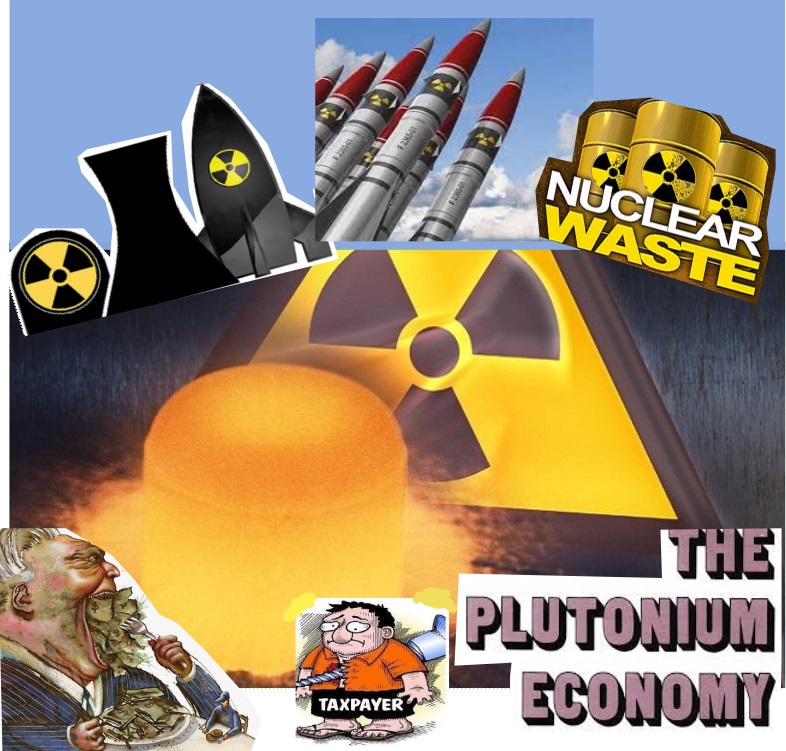
Within the next 10 years following the Indian nuclear explosion and Karen Silkwood’s death, the US Congress pulled the plug on the Liquid Metal Fast Breeder Reactor project, ending the Atomic Energy Commission’s vision of a plutonium economy, and the Supreme Court provided a little bit of justice for Karen’s parents and children, upholding a jury decision that for the first time cast aside the legal shield of the federal government protecting the nuclear industry.
Bulletin, By Robert Alvarez | November 8, 2024
On the evening of November 13, 1974—that is, 50 years ago—Karen Silkwood was driving to a meeting with a New York Times reporter and an official of the Oil, Chemical and Atomic Workers (OCAW) union. Her car flew off the road and hit a culvert on a lonely highway in western Oklahoma, killing her instantly. Karen was a union activist working as a technician at a plutonium fuel fabrication plant in Cimarron, Oklahoma owned by the Kerr-McGee Corp.
Several days before her death, Silkwood’s apartment was purposefully contaminated with highly toxic plutonium—which she had no access to—from the nuclear plant where she worked. Because of her activism, the company had put her and her roommates under constant surveillance. Documents about problems at the plant that two witnesses had seen before Silkwood’s fateful drive were missing. An independent investigation found evidence that her car was run off the road—contradicting official conclusions.
Karen became a whistleblower in large part because Kerr-McGee never bothered to tell workers that microscopic amounts of plutonium in the body can cause cancer. Karen became alarmed after dozens of workers, many fresh out of high school, had breathed in microscopic specks of plutonium and were required to undergo a risky procedure (chelation) to flush the radioactive contaminant from their bodies. It’s a procedure that can, even if successful in removing contaminants from the body, harm the kidneys.
Between 1970 and 1975, two metric tons of weapons-usable plutonium were shipped by truck from the Hanford nuclear production complex in Washington state to the Kerr-McGee plant in Oklahoma, where the plutonium was to be mixed with uranium and placed into 19,000 stainless steel fuel rods. At the time of Karen’s death, the Atomic Energy Commission found that about 40 pounds of plutonium had gone missing—enough to fuel several atomic bombs.
Since then, numerous books, articles, documentaries, and a critically acclaimed Hollywood motion picture have focused on the circumstances surrounding Silkwood’s death. My late wife and I were engaged in efforts for nearly a decade to achieve justice for her parents and children; those efforts were chronicled in some detail in Howard Kohn’s 1981 book, Who Killed Karen Silkwood? Was this an unfortunate accident, or was Karen Silkwood run off the road and killed to stop her from revealing dark secrets? After more than 40 years, the definitive answers to these questions remain unavailable.
The beginnings of the Silkwood saga. Karen Silkwood’s death heralded an end of America’s romance with the atom as a source of limitless cheap energy. There was no doubt on the part of the AEC, then the dominant force behind US energy policy, that commercial nuclear power would expand so rapidly and widely that by the end of the 20th century, the world would exhaust its supplies of uranium. If nuclear power was to thrive thereafter, according to AEC doctrine, a new generation of reactors fueled by plutonium extracted from spent nuclear fuel would have to be built. This new generation of so-called “breeder” reactors held the promise of producing vast amounts of cheap electricity while producing up to 30 percent more plutonium than they consumed. It turned out that the AEC’s nuclear power growth projection was off by an order of magnitude. Even today, world uranium supplies remain more than sufficient to fuel existing and reasonably contemplated commercial power plants.
Were it not for my wife, Kitty Tucker, and our friend, Sara Nelson, the death of Karen Silkwood would have been erased from public memory, like a sand painting blown away by the wind. I am proud to have played a supporting role, working with Karen’s parents and congressional staff, raising funds, reviewing technical documents, helping with the news media, cooking a lot of meals, and recruiting expert witnesses for the trial of a lawsuit over Silkwood’s death that would unfold in the spring of 1979.
Working with little and often no financial resources but a lot of grit, Kitty and Sara organized a national campaign that led to a congressional investigation revealing that Karen’s concerns over nuclear safety at the Kerr-McGee plant were more than justified. The congressional investigation exposed an FBI informant with a long history of spying on US citizens and revealed that enough plutonium to create several nuclear weapons was missing from the plant. These findings set the stage for a lawsuit organized on behalf of Karen’s parents and children.
The nine-week trial before a federal court jury in Oklahoma City resulted in a landmark jury decision that held Kerr-McGee liable for contaminating Silkwood and her home and awarded her estate a multimillion-dollar verdict. But the path to that verdict was long and uncertain and often disorganized and contentious, a David-and-Goliath story that ran from a near-commune of a house in a leafy portion of the District of Columbia through a variety of congressional offices and investigators and into the pages of Rolling Stone magazine. Along the way, a lot of young and idealistic lawyers and activists—led by Kitty and Sara—worked, mostly for free, to make sure Karen Silkwood’s death was not brushed under a bureaucratic rug and forgotten. I feel lucky to have been one of them.
………………………………………………………………………………………………………………………………………………………………… Kitty’s dogged research found that Silkwood was justified in being outspoken in her struggle to stop constant plutonium leaks and worker exposures at the Cimarron, Okla. Kerr-McGee plant. She and several other co-workers suffered from repeated plutonium exposures while on the job. Between 1971 and 1975, in fact, contamination reports show that at least 76 workers were exposed to plutonium at the Cimarron plant,[1] some more than once.[2] About a third of the exposed workers inhaled enough plutonium to require emergency treatment with experimental chelating drugs to help flush the radioactive metal out of the body. By comparison, during that same period, less than one percent of 3,324 employees at the Energy Department’s Rocky Flats nuclear weapons plant in Colorado[3]—which processed tens of tons of plutonium per year and became notorious for its poor plutonium-handling practices—required this extreme emergency measure.[4]
Kerr-McGee’s role in the plutonium economy. Long a leader of domestic uranium mining for US nuclear weapons, Kerr-McGee was among the first corporations to get in on the ground floor of the US government’s push to establish a plutonium fuel economy. The Atomic Energy Commission’s vision for such an energy economy was outlined in 1970 by its chairman, Glenn Seaborg, who discovered plutonium 30 years earlier. By the end of the 20th century, Seaborg estimated, an enormous expansion of nuclear power plants would have all but exhausted world uranium reserves, and new US reactors would require 1,750 tons of plutonium. This would be more than 66 times the amount of this deadly nuclear explosive in today’s worldwide nuclear weapon stockpiles.[5]
Kerr-McGee came in with a low bid to design and operate one of two of the first privately owned plutonium fuel plants that would handle tons of this fissile material. The Kerr-McGee facility was engineered to extract plutonium nitrate liquid from spent nuclear fuel generated at Hanford’s material production reactor and sent by guarded trucks to the Cimarron, Oklahoma plant. Once there it underwent 14 complex processing steps. The first blended liquid plutonium with uranium. The blended material was then sent to a furnace where it was dried into a powdered oxide. The powder was then heated, compressed, and ground into pellets. The pellets were then placed into stainless-steel rods, after which the ends of the rods were welded shut. All told, some 19,000 of these fuel rods were shipped back to Hanford, where they were used in experiments at the Fast Flux Test Facility (FFTF) and another research reactor. These reactor experiments were aimed at the development of the first large-scale liquid metal fast breeder reactor (LMFBR), to be built along the Clinch River near the government’s Oak Ridge nuclear site in eastern Tennessee.
It turned out that Kerr-McGee cut corners at the expense of the health and safety of its workers from the outset of its operation. The company squeezed in as much equipment as possible into its facility, a space about half the size of a typical high-school gymnasium, leading to spills that were often difficult to clean up. Miles of pipes in the cramped workplace were so close together and poorly routed that they would not fully drain, creating excessive radiation levels[6] in the plant.
Cramped piping also made it difficult to account for the plutonium carried through them, which was classified by the government as a Category I strategic special nuclear material—that is, material that “in specified forms and quantities, can be used to construct an improvised nuclear device capable of producing a nuclear explosion.”[7]
Gloveboxes—the laboratory workstations with gloves in their transparent walls, so workers could manipulate plutonium without coming into direct contact with it—became a major source of contamination because the type installed by Kerr-McGee used plastic seals that US weapons plants had long known could degrade and leak. Also, there were few contained connections between gloveboxes, so workers had to transfer radioactive materials in the open, creating greater risks of contamination. The ventilation systems did not permit rooms in the facility to be isolated from one another to minimize the spread of contamination when it occurred. Even the plant’s radiation air filters were configured in a way that made them difficult to replace.[8]
As substandard facilities led to contamination, Kerr-McGee failed to inform workers that plutonium can cause cancer. Managers often claimed that it was harmless. “There has been no lung cancer caused by plutonium exposure,” William Utnage, the plant designer, told employees. “From human experience to date, we have nothing to worry about.” Based on numerous animal studies, the Atomic Energy Commission considered plutonium to be a potent carcinogen.
Read more: The death of Karen Silkwood—and the plutonium economyTurnover was high at the Kerr-McGee Cimarron plutonium plant, with an average of 90 people out of the plant’s total workforce of 150 quitting each year.[9] AEC inspections found that the company could not keep accurate track of radiation doses, making it difficult if not impossible to know the frequency and severity of exposures. Given the need to constantly replace three out of five workers every year, many people were hired fresh out of high school, provided minimal training, and sent on the line to operate a high-hazard nuclear facility.
After being repeatedly exposed to plutonium at the plant that required often painful scrubbing of her skin, Karen Silkwood began documenting dangerous practices at the plant, including the doctoring of X-rays of fuel rod welds by a technician who used a felt-tip pen to hide defects shown in the X-rays.
Days before she died in the car crash, plutonium contamination was found in the home that Silkwood shared with her boyfriend, Drew Stephens, and roommate, Sheri Ellis. The highest concentrations were in lunch meat in her refrigerator and on the toilet seat. Karen, Drew, and Sheri were soon flown to Los Alamos Laboratory, where it was determined that Karen had sustained a significant dose of plutonium in her lungs. Subsequent laboratory analyses concluded that the plutonium in her home came from a batch at the plant to which she did not have access. These revelations all happened within the few days before her fatal drive that night of November 13, 1974.
Congress takes interest. In a way. Just five months before Karen Silkwood’s death, India conducted its first nuclear weapon test; it involved a bomb fueled with plutonium extracted from spent fuel produced by Canadian nuclear reactors. Growing concern in the US Congress about the thought of plutonium circulating in world commerce focused attention on the missing plutonium from the Kerr-McGee plant where Silkwood had worked. Although the amount of the unaccounted-for material was less than a tenth of a percent of the 2.2 tons handled at the plant, it was enough to fuel as many as four nuclear weapons. The Silkwood case also led to greater congressional scrutiny of how the government accounted for and safeguarded its stocks of nuclear materials.
…………………..In the spring of 1975, with our infant daughter Amber in a stroller, my wife Kitty and Sara Nelson met with Tony Mazzochi, legislative director of the Oil Chemical and Atomic Workers (OCAW), and his union colleague Steve Wodka. Both had worked closely with Karen Silkwood in support of efforts to prevent Kerr-McGee from decertifying the union and to strengthen worker safety. The night Silkwood died, Wodka was in a hotel room waiting with New York Times reporter David Burnham for Karen to show up. Shortly after that meeting, Kitty and Sara were recruiting a legal team, led by Daniel Sheehan, to take this case into federal court, on behalf of Karen’s parents.
……….. As I began my work at EPC, one of my first tasks was to serve as a representative on Capitol Hill for Bill and Meryl Silkwood, Karen’s parents. Deeply upset by the suspicious death of their daughter, they approached us in the late fall of 1975 seeking help………………………….. Among the initial appointments I set up for them on Capitol Hill was one in the high-security offices of the Joint Committee on Atomic Energy on a top floor of the US Capitol, accessed by a special elevator. After we went over numerous safety concerns about the Kerr-McGee plant, we were given a polite but frosty response by the committee’s staff director, who curtly advised Bill to go back home and write a letter to his congressman.
The response came as no surprise. Kerr-McGee founder Robert S. Kerr held sway over atomic energy matters as a US senator from the late 1940s until he died in 1963. In 1948, the year Robert Kerr was elected to the U.S. Senate, Kerr-McGee became the first oil company to take advantage of the uranium boom, opening mines on the Navajo reservation to take advantage of the US government’s lucrative price guarantees. By 1954, the company dominated the US uranium market.
By the summer of 1975, Kitty and Sara had collected 8,500 signatures from NOW members and others petitioning Sen. Abraham Ribikoff, chair of the US Senate Committee on Governmental Affairs, to launch an investigation into the circumstances surrounding Karen Silkwood’s death.
On the anniversary of Silkwood’s death—November 13, 1975—during a congressional recess, several NOW members pressed Ribikoff in his home state of Connecticut. Six days later, Ribikoff and his Senate colleague Lee Metcalf of Montana met with a large delegation including Karen’s parents, Kitty, Sara, newly elected NOW President Eli Smeal, religious advocates, and me. Also joining the meeting were Peter Stockton, on loan from Michigan Congressman John Dingell’s staff, and Win Turner. Ribicoff quickly agreed to an investigation and passed the baton to Senator Metcalf……………………………………
In addition to raising serious questions about the investigation of the accident that killed Silkwood, Newman and Stockton revealed that 40 pounds of plutonium was missing and unaccounted for at the Kerr McGee plant. The AEC failed to successfully black out this discrepancy from the document Newman obtained under the Freedom of Information Act. Twenty years later, after the Cimarron plant was dismantled, only 20.2 pounds were recovered from its pipes, leaving enough missing plutonium to fuel two Nagasaki-type atomic bombs.
Turner and Stockton now had a congressional green light to press the Energy Research and Development Administration, the Nuclear Regulatory Commission and especially the FBI for their investigative documents covering the Silkwood case…………………………
………………………….. By this time, pressures were mounting for Turner and Stockton to back off investigating Silkwood’s death. Republican staff on the Governmental Affairs Committee blocked travel funds needed to interview key officials. Turner had to prevail on a less-than-enthusiastic Senator Metcalf to intervene. Eventually, Stockton prevailed on Dingell to pay for his trip to Nashville to try to gain greater cooperation from Srouji.
Shortly thereafter, Metcalf dropped the investigation into Silkwood’s death,[10] but Dingell picked up the ball, thanks in large part to his trust in Stockton, and held two public hearings that showed the disturbing lack of safety working at the plant.
………………………………………..Under the threat of being held in contempt of Congress, Srouji turned over documents she claimed to have obtained from the FBI. The documents indicated that the FBI’s investigation of events surrounding Silkwood’s death was superficial. Most conspicuous by its absence was any documented effort by Olson and the FBI to address the AEC’s concern that Kerr McGee could not account for about 40 pounds of plutonium.[12]
The Silkwood lawsuit begins. By the fall of 1976, congressional investigations had run their course, leaving Karen’s parents only with the option of going to court. ………………………………………..
The complaint had three basic components: Kerr McGee was liable under state law for the contamination of Karen Silkwood in her home; Kerr McGee violated Silkwood’s civil rights to travel on the highway; and finally Kerr McGee conspired to violate Silkwood’s civil rights. It turned out that the contamination of Karen’s home with plutonium from the plant became the anchor for the lawsuit………………………………………………………………………………………………………..
Bill Paul, Kerr McGee’s lead attorney and former president of the Oklahoma Bar Association, seemed determined to stop the case from going to trial by proving we were “outside agitators” in a conspiracy, supposedly run by Ralph Nader and the Communist Party, to stop nuclear power in the United States……………………………………………………… Through the efforts of investigative reporter Howard Kohn and his wife and assistant Diana, Rolling Stone made the Silkwood case a major investigative focus and played an important role in raising funds for the lawsuit.[15]
………………………………………………………………………….As trial approached, Danny and his investigators tried to shine a light on efforts by Kerr-McGee to spy and intimidate Silkwood, possibly to the point of running her off the road, and the FBI’s efforts to conceal Kerr McGee’s wrongdoings. Even though Danny and his colleagues found a considerable amount of evidence to back these claims, the federal judge on the case, Frank Thies, ruled that conspiracies to violate Karen Silkwood’s civil rights were not covered by the law. This left the legal liability against Kerr McGee for contaminating Silkwood in her home as the only issue to be argued in court.
………………………………………………………………………..Kitty and I moved out to Oklahoma City and watched the 47-day trial unfold as Gerry Spence masterfully took apart Kerr-McGee’s defense. Bill Paul, Kerr’s McGee’s lead attorney, had not faced a seasoned court roombrawler like Gerry Spence before. From the outset, Spence, with his large-brimmed cowboy hat sitting on the table and cattle rancher demeanor, and his co-counsel, the much shorter, frizzy-haired Arthur Angel, created a “David vs Goliath” atmosphere. Ranged against them were a half dozen defense attorneys in three-piece suits who immediately became known as the “men in grey.”
After 43 witnesses gave testimony, the case went to the jury, and on May 18, 1979, the jury rendered its verdict. Bill and Merle Silkwood sat beside Kitty and our 4-year-old daughter, Amber. Dean McGee, the president and co-founder of the Kerr-McGee Corp., and leaders of the Oklahoma State Legislature were also present to hear the jury find Kerr McGee liable for $505,000 in actual damages and $10 million in punitive damages. On January 11, 1984, the US Supreme Court upheld the jury’s verdict, but allowed Kerr-McGee to contest the punitive damages in another trial. Not wanting to go through another lengthy trial Karn’s family agreed to a $1.38 million setlement.
Even so, the lawsuit set an important precedent that federal regulation of nuclear safety did not shield nuclear facilities from being held accountable under state tort laws.
The end of the plutonium economy. A highly eventful year followed Karen’s death; those events would impact the future of nuclear energy around the world.
In May 1974, India shocked the world by detonating a nuclear weapon underground in the remote desert region of Rajasthan. Called the “Smiling Buddha,” the weapon was fueled by plutonium produced in a reactor provided by Canada that used heavy water supplied by the United States from the Savannah River Plant, a nuclear weapons material production facility in South Carolina. India extracted the plutonium from spent reactor fuel at a reprocessing plant built with the assistance of the United States and France. The Indian weapons experts who designed Smiling Buddha were trained by the Soviet Union.
India declared its weapon test a “peaceful nuclear explosion.” Between 1961 and 1975, the United States and the Soviet Union set off 35 and 124 “peaceful” nuclear detonations, respectively, in a quest to dig channels, recover minerals, excavate tunnels for highways, store oil and gas, and build dams. Undeterred by the radiological problems peaceful nuclear explosions would cause, the United States actively promoted their use, which made sure that other countries would follow, as an integral part of the “peaceful” uses of nuclear power allowed under the 1970 Nuclear Non-Proliferation Treaty.
In 1976, then-President Gerald Ford responded, suspending reprocessing of spent nuclear fuel to recover plutonium in the United States. The next year, President Jimmy Carter converted the suspension into a ban, issuing a strong international policy statement against establishing plutonium as fuel in global commerce. As the US government continued to refuse to support reprocessing of nuclear fuel, US utilities with nuclear power plants opted to support underground disposal of spent fuel.
The vision first created during World War II—and fostered with tens of billions of dollars of public funds—to establish nuclear power plants fueled by plutonium started to take on a nightmarish quality. Within the next 10 years following the Indian nuclear explosion and Karen Silkwood’s death, the US Congress pulled the plug on the Liquid Metal Fast Breeder Reactor project, ending the Atomic Energy Commission’s vision of a plutonium economy, and the Supreme Court provided a little bit of justice for Karen’s parents and children, upholding a jury decision that for the first time cast aside the legal shield of the federal government protecting the nuclear industry.
Eventually, Kerr-McGee’s destructive practices caught up with it. In April 2014, after fraudulently trying to avoid paying for the cleanup of the massive environmental damage it had wrought throughout the United States, Kerr-McGee entered into a $5.5 billion settlement with the US Justice Department. Kerr-McGee is now a bankrupt legacy of the atomic age, a relic of a plutonium economy that never came to be in the United States.
Notes…………………………………………………………………………………. more https://thebulletin.org/2024/11/the-death-of-karen-silkwood-and-the-plutonium-economy/
1 This Month

of the week – Shut Down Drone Warfare!


Tell the Ukrainian Government to Drop Prosecution of Peace Activist Yurii Sheliazhenko

Petition to revoke the licensing of the Near Surface Nuclear Disposal Facility (NSDF) at Chalk River. https://www.ourcommons.ca/petitions/en/Petition/Details?Petition=e-7247
To see nuclear-related stories in greater depth and intensity – go to https://nuclearinformation.wordpress.com
-
Archives
- April 2026 (68)
- March 2026 (251)
- February 2026 (268)
- January 2026 (308)
- December 2025 (358)
- November 2025 (359)
- October 2025 (376)
- September 2025 (257)
- August 2025 (319)
- July 2025 (230)
- June 2025 (348)
- May 2025 (261)
-
Categories
- 1
- 1 NUCLEAR ISSUES
- business and costs
- climate change
- culture and arts
- ENERGY
- environment
- health
- history
- indigenous issues
- Legal
- marketing of nuclear
- media
- opposition to nuclear
- PERSONAL STORIES
- politics
- politics international
- Religion and ethics
- safety
- secrets,lies and civil liberties
- spinbuster
- technology
- Uranium
- wastes
- weapons and war
- Women
- 2 WORLD
- ACTION
- AFRICA
- Atrocities
- AUSTRALIA
- Christina's notes
- Christina's themes
- culture and arts
- Events
- Fuk 2022
- Fuk 2023
- Fukushima 2017
- Fukushima 2018
- fukushima 2019
- Fukushima 2020
- Fukushima 2021
- general
- global warming
- Humour (God we need it)
- Nuclear
- RARE EARTHS
- Reference
- resources – print
- Resources -audiovicual
- Weekly Newsletter
- World
- World Nuclear
- YouTube
-
RSS
Entries RSS
Comments RSS
 nuclear-news