State regulator: Vermont Yankee nuclear plant needs more NRC scrutiny
The Republic By DAVE GRAM Associated Press August 17, 2012 MONTPELIER, Vt. — A top Vermont utility regulator is renewing her push for stepped-up scrutiny by the Nuclear Regulatory Commission after a series of problems at the Vermont Yankee nuclear plant. Continue reading
Secrecy and un-safety in nuclear reactor designs – a first hand report

 Fukushima They Knew, Nation of Change, Greg Palast
http://www.nationofchange.org/fukushima-they-knew-1345037631 16 Aug 12
I’ve seen a lot of sick stuff in my career, but this was sick on a new level. Here was the handwritten log kept by a senior engineer at the nuclear power plant:
Wiesel was very upset. He seemed very nervous. Very agitated. . . . In fact, the plant was riddled with problems that, no way on earth, could stand an earth- quake. The team of engineers sent in to inspect found that most of these components could “completely and utterly fail” during an earthquake.
“Utterly fail during an earthquake.” And here in Japan was the quake and here is the utter failure.
The warning was in what the investigations team called The Notebook, which I’m not supposed to have. Good thing I’ve kept a copy anyway, because the file cabinets went down with my office building ….
WORLD TRADE CENTER TOWER 1, FIFTY-SECOND FLOORNEW YORK, 1986
Two senior nuclear plant engineers were spilling out their souls and files on our huge conference table, blowing away my government investigations team with the inside stuff about the construction of the Shoreham, New York, power station.
The meeting was secret. Very secret. Their courage could destroy their careers: No engineering firm wants to hire a snitch, even one who has saved thousands of lives. They could lose their jobs; they could lose everything. They did. That’s what happens. Continue reading
Santa Monica council calls for full investigation of San Onofre nuclear plant
 Santa Monica Council urges probe of San Onofre reactors Aug. 15, 2012 Council unanimously votes for state investigation of San Onofre costs, reliability and alternative energy resources and urges federal license amendment hearing
SANTA MONICA, CALIF. — Last night, the Santa Monica City Council voted unanimously to urge the state to fully investigate the costs and reliability of the crippled San Onofre Nuclear Generating Station and to compare it to other available energy sources. The council also voted unanimously to urge federal regulators to hold a transparent and public license amendment procedure for the plant’s twin reactors…..
Under state law, Edison can ask the California Public Utilities Commission to allow it to recover its costs through rate increases to its customers. An investigation by the CPUC, such as the one called for by the Santa Monica City Council, could end in a ruling that Edison, not its customers, is liable for the costs. Such a ruling could push Edison to permanently shut down the reactors rather than incur additional expenses.
The Council vote also directs the City of Santa Monica to urge the Nuclear Regulatory Commission to conduct a public, transparent license amendment hearing on San Onofre. A license amendment is a formal, open and legally adjudicated procedure that would allow for independent expert review of the significant modifications to the replacement steam generators. Under NRC rules, a license amendment is required for major design changes to replacement equipment like those Edison made to these replacement components. In a petition before the NRC, Friends of the Earth and other public interest groups charge that the replacement generators were not “like for like” as Edison presented them to regulators, but instead were substantially altered.
Santa Monica’s action is similar to the resolution unanimously adopted last week by the Laguna Beach City Council.
Contact: Kendra Ulrich: (216) 571-7340, kulrich@foe.org
Diane Moss: (310) 463-1355 http://www.foe.org/news/news-releases/2012-08-santa-monica-council-urges-probe-of-san-onofre-reactors
Fort Calhoun nuclear plant to be run by private company
Private firm to run nuclear plant Omaha.com By Erin Golden, 16 Aug 12, BLAIR, Neb. — The Omaha Public Power District is planning to turn over control of Fort Calhoun Nuclear Station to a private company — a move the district’s board says is essential if the plant is to reopen.
In a meeting Thursday night at Blair City Hall, the board voted unanimously to allow OPPD officials to negotiate a 20-year contract with Exelon Corp. for day-to-day operations of the troubled plant, which is about 20 miles north of Omaha.
The plant’s reactor has been shut down since April 2011 because of concerns over Missouri River flooding and a series of safety violations. The U.S. Nuclear Regulatory Commission, which is overseeing the facility, has not set a restart date for Fort Calhoun.
One board member, John Green, said it has become clear that the NRC
was interested in outside management of the facility. “I’ve been convinced over the last few months … that we weren’t going to be able to open the plant without doing this,” Green said.
Gary Gates, the utility’s CEO, said the district has been considering looking to an outside company for some time and has been negotiating with Exelon for a month….. An NRC spokesman declined to comment….. http://www.omaha.com/article/20120817/NEWS/708179925/1685
Climate change heat might mean the end of the nuclear industry
 Extreme Heat, Drought Show Vulnerability of Nuclear Power Plants Reactor shutdown in Connecticut is latest sign that nuclear energy would face challenges from climate change. By Robert Krier, InsideClimate News, 15 Aug 12, Will 2012 go down as the year that left the idea of nuclear energy expansion in the hot, dry dust?
Nuclear energy might be an important weapon in the battle against climate change, some scientists have argued, because it doesn’t emit greenhouse gases. But separate of all the other issues with nuclear, that big plus would be moot if the plants couldn’t operate, or became too inefficient, because of global warming. In June, InsideClimate News reported on the findings of Dennis Lettenmaier, a researcher at the University of Washington. His study found that nuclear and other power plants will see a 4 to 16 percent drop in production between 2031 and 2060 due to climate change-induced drought and heat.
The U.S. is getting plenty of both this year. Just Sunday, the Millstone nuclear plant in Waterford, Conn., had to shut down one of its two reactors because seawater was too warm to cool it. It was the first time in the plant’s 37-year history that the water pulled from the Long Island Sound was too warm to use.
So the question becomes, is the future already here?
Heat records have been falling by the thousands since spring, and on Aug. 9 theU.S. Drought Monitor map showed that 62.46 percent of the nation is under moderate to exceptional drought conditions. That’s down slightly from the peak of 63.86 percent last month, the highest percentage since the Drought Mitigation Center began producing the map in 2000. But the percentage of the country that is experiencing extreme to exceptional drought continued to rise and is now at 24.14 percent, almost a fourth of the country.
Much of the drought and unusual heat has been in areas that rely in part on nuclear plants: the upper Midwest, the Southeast and parts of New England.
When all of the nation’s 104 nuclear plants are fully operational, they supply about 20 percent of the energy generated in the United States. Those plants need water to operate, and in most cases, they need fresh water. There’s not a lot of fresh water to go around in much of the nation this summer, and that is putting nuclear energy to the test.
It’s also raising questions about how freshwater supplies should be managed in a world further taxed by climate change. Inevitably, there will be increased competition for water from a growing population, agriculture and the energy sector.
(Plants that use saltwater for cooling generally don’t have the same issues, because they never have a shortage of water. But the shutdown at Millstone shows they can still be vulnerable to heat waves.)
About 40 percent of the nation’s fresh water use goes toward energy generation, with nuclear energy considered a very water-intensive energy source….. http://insideclimatenews.org/news/20120815/nuclear-power-plants-energy-nrc-drought-weather-heat-water utm_source=feedburner&utm_medium=feed&utm_campaign=Feed:%20solveclimate/blog%20(InsideClimate%20News
List of USA’s nuclear power plants badly affected by extreme heat
 Extreme Heat, Drought Show Vulnerability of Nuclear Power Plants By Robert Krier, InsideClimate News, 15 Aug 12, “……— The Vermont Yankee plant near Brattleboro had to limit output four times in July because of low river flow and heat. At one point, production was reduced to 83 percent of capacity.
— FristEnergy Corp’s Perry 1 reactor in Ohio dropped production in late July to 95 percent of capacity because of above-average temperatures.
— Operators of the Braidwood, Ill., nuclear plant 60 miles southwest of Chicago sought and were granted a waiver from the Environmental Protection Agency to raise the temperature of a cooling pond to 102 degrees—2 degrees above the established limit. The pond holds water cycled through the plant for cooling and then discharged. If the plant had not received the waiver, it would have had to scale back production in the middle of an intense heat wave. Kraft said the nuclear plants’ operating difficulties are part of a recurring pattern. In the summer of 1988, drought, high temperatures and low river volumes forced Commonwealth Edison to reduce power by 30 percent or shut down, in some cases, at the Dresden and Quad Cities plants in Illinois.
“That was the first wake-up call that plants would be vulnerable in a climate-disrupted world,” Kraft said.
There have been many more instances since:
— Europe, summer of 2003. During the heat wave that killed more than 30,000 people, France, Germany and Spain had to choose between allowing reactors to exceed design standards and thermal discharge limits and shutting down reactors. Spain shut down its reactors, while France and Germany allowed some to operate and shut down others.
— Illinois, summer of 2005. EPA and state officials considered easing thermal discharge standards because of drought, but a break in the weather made it unnecessary.
— Illinois, Minn., July 29 to Aug. 2, 2006. The Prairie Island (Minn.) plant had to reduce output by 54 percent. The Quad Cities, Dresden and Monticello plants in Illinois also cut power to moderate water discharge temperatures.
— Michigan, July 30, 2006. The Donald C. Cook reactors in Michigan were shut down during a severe heat wave because temperatures in a containment building exceeded the regulatory limit of 120 degrees.
— Southeast U.S, Aug. 5-12, 2008. The Tennessee Valley Authority lost a third of nuclear capacity due to drought conditions. All three Browns Ferry reactors in Alabama were idled to prevent overheating of the Tennessee River.
— France, July 2009. France had to purchase power from England because almost a third of its nuclear generating capacity was lost when it had to cut production to avoid exceeding thermal discharge limits.
— Southeast U.S., July, August 2011. The TVA reduced power at Browns Ferry to stay within discharge limits. At one point, all three of the reactors cut output to about 50 percent. Had the plant been operating at full capacity, the downstream temperature on the Tennessee River would have exceeded the 90-degree limit…. http://insideclimatenews.org/news/20120815/nuclear-power-plants-energy-nrc-drought-weather-heat-water?utm_source=feedburner&utm_medium=feed&utm_campaign=Feed:%20solveclimate/blog%20(InsideClimate%20News)
No confidence in USA’s “Waste Confidence Rule” – so nuclear licensing stopped
puts waste where it belongs, front and center in the debate over the future of nuclear power in this country
NRC elevates nuclear waste to front and center of debate http://www.thereporteronline.com/article/20120815/OPINION01/120819748/nrc-levates-nuclear-waste-to-front-and-center-of-debate&pager=2 08/15/12 BECAUSE THE U.S. Nuclear Regulatory Commission is a part of the federal bureaucracy, it can make even groundbreaking news seem mundane.
Take this understated sentence in its ruling Aug. 7 delaying the final issuance of any nuclear permits, for existing or new power plants:
“Waste confidence undergirds certain agency licensing decisions, in particular new reactor licensing and reactor licensing renewal.”
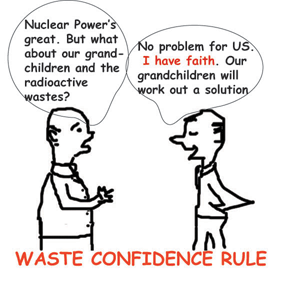
Translation: The country cannot continue to talk about building new nuclear plants without figuring out what it is going to do with the dangerous waste that literally is stacking up at sites all over the country, including at Ameren Missouri’s Callaway County plant.
That means that because Americans can have no confidence that the NRC has seriously dealt with the growing problem of nuclear waste, the NRC will stop making the problem worse by extending nuclear plant licenses. Continue reading
Investigation into dirty work at the NRC crossroads
 (includes video ) http://www.huffingtonpost.com/2012/08/15/william-ostendorff-nuclear-safety_n_1778989.html William Ostendorff, GOP-Appointed Regulator, Under Investigation For
 Thwarting Nuclear Safety Probe HUFFINGTON POST, Ryan Grim, 08/15/2012 WASHINGTON – The inspector general at the Nuclear Regulatory Commission has launched an investigation into a GOP political appointee for attempting to thwart an agency probe into safety concerns at a Michigan plant, NRC insiders tell The Huffington Post.
In late May, Gregory Jaczko, then the chairman of the NRC, paid a rare visit to the controversial Palisades Power Plant on Lake Michigan. Activists are agitating for the plant’s closure due to safety issues. The plant is represented in Congress by Energy and Commerce Chairman Fred Upton, a Michigan Republican who has long been close to the nuclear industry.
While Jaczko was touring the plant on May 31st, according to the sources, a significant leak of potentially radioactive water was pouring into the control room. Less than two weeks later, the plant was shut down to repair the leak. Yet Jaczko was never made aware of the issue while inspecting the plant. He asked the NRC’s Office of Investigations to look into why the leak was kept from him.
Commissioner William Ostendorff, however, wanted no such investigation to take place. Shortly after Jaczko ordered it, Ostendorff shouted at the top agency investigator, Cheryl McCrary, in front of several NRC employees. He told her that the inquiry should be halted and that it was a “waste of agency resources,” according to the sources, who were briefed on the exchange by witnesses. The probe into Ostendorff is the latest tussle in an ongoing war inside the agency over how to regulate the industry — whether to take a trusting, hands-off approach, or to apply the rules in a serious way. It’s a battle being fought all across Washington, as longtime advocates of deregulation argue that government bureaucrats are stifling job creation. Inside some industries, deregulation might tilt the balance of power away from consumers and workers, but in the nuclear industry, the consequences involve life and death.Pro-industry forces won a round in May, just before Jaczko visited Palisades, when he announced his resignation, finally stepping down June 29th when a new chair was confirmed. Jaczko’s resignation was the result of a scorched-earth campaign waged against him by the other commissioners, backed by the industry’s lobbying arm, the Nuclear Energy Institute. Senate Majority Leader Harry Reid (D-Nev.), Jaczko’s former boss, fired back at the leader of the campaign against him, Democrat Bill Magwood, calling him a “treacherous, miserable liar,” among many other things.
The upheaval has altered the mood within the NRC; before the anti-Jaczko campaign, pro-regulation sources were largely unwilling to speak to HuffPost about internal disputes. But as a full-fledged war wages on, some of that resistance is slackening…… http://www.huffingtonpost.com/2012/08/15/william-ostendorff-nuclear-safety_n_1778989.html
USA govt permits dumping of radioactive wastes into salt caverns
 US Gov’t: EPA specifically allows radioactive waste to be dumped in salt caverns — Exempted from hazardous waste requirements http://enenews.com/us-govt-epa-specifically-allows-radioactive-waste-to-be-dumped-in-salt-caverns-exempted-from-hazardous-waste-requirements
August 13th, 2012 ENENews itle: Giant Sinkhole May Be Radioactive
Source: Courthouse News Service
Author: SABRINA CANFIELD
Date: August 13, 2012
[…]
A U.S. Department of Energy document on storage of naturally occurring radioactive material in salt caverns states that oil field wastes – but not other industrial wastes – are exempted from the hazardous waste requirements of the Resource Conservation and Recovery Act. Continue reading
Potential radiation causes Louisiana parish evacuation
ABC: “Evacuation order… for fear of potential radiation” in Louisiana parish — Company Official: Sinkhole ‘could still grow’ http://enenews.com/abc-evacuation-order-for-fear-of-potential-radiation-in-louisiana-parish-company-official-sinkhole-could-still-grow
August 14th, 2012 By ENENews
Title: Mysterious Louisiana Sinkhole Raises Concerns of Explosions and Radiation
Source: ABC News
Author: CHRISTINA NG
Date: Aug 14, 2012
A nearly 400-foot deep sinkhole in Louisiana has swallowed all of the trees in its area and enacted a mandatory evacuation order for about 150 residences for fear of potential radiation and explosions. Continue reading
Allison Macfarlane speaks out on USA’s nuclear waste problem
New U.S. Nuclear Regulator Says Spent Fuel a Top Priority Bloomberg News, By Kasia Klimasinska August 14, 2012 The new chairman of the U.S. Nuclear Regulatory Commission said she plans to concentrate on the disposal of spent atomic fuel, an issue that is holding up decisions on power-plant licenses.
Allison Macfarlane, in her first news conference since taking over at the NRC on July 9, today also called on Congress and the White House to identify a permanent disposal site for spent fuel from the nation’s 104 nuclear reactors. Continue reading
Fracture danger in Belgian and USA nuclear plants
“Emergency situation” as fractures suspected at nuclear reactor http://enenews.com/official-emergency-situation-as-fractures-suspected-at-reactor-10-u-s-nuclear-plants-may-use-same-component— Ten U.S. plants may use same component — “Likely to reignite a debate over the risks of nuclear energy” -Financial Times
August 10th, 2012 By ENENews
Follow-up to: FOX: Nuclear reactor halted on “suspicion of cracks”; “We have found anomalies,” says Belgium official — AFP: Possible cracks in reactor vessel?
Title: Belgium shuts down nuclear power plant
Source: Financial Times
Author: James Fontanella-Khan
Date: August 9, 2012 5:47 pm
Emphasis Added
Belgium has temporarily shut down one of its seven nuclear power plants after the country’s atomic energy regulator discovered “several anomalies”, including possible cracks, in the tank containing the reactor’s core. […] suspected fractures at the Doel 3 reactor […]
Several other nuclear sites around the world – including the US, Germany and Spain – use tanks produced by the same company, according a nuclear energy expert who asked not to be named. Continue reading
Generator failures at nuclear power plant ‘very troubling’ Examiner AUGUST 14, 2012 BY: KEITH STEIN According to Xcel Energy, operators at the Prairie Island Nuclear Generating Plant, in Minnesota, were forced to shut down one of two nuclear reactors early Tuesday morning when two diesel generators were determined to be inoperable during a monthly test. The unit is being shut down until the generators can be repaired. These generators are part of the safety systems in place to help maintain plant function in the event of a loss of offsite electricity. “To have not just one, but both of the back-up diesel generators fail is very troubling,” said Johnny Johnson, tribal council president of the Prairie Island Indian Community, in a press statement. … http://www.examiner.com/article/generator-failures-at-nuclear-power-plant-very-troubling
How President Jimmy Carter slowed down the spread of nuclear weapons
Carter entered office and promptly pushed through Congress the 1978 Non-Proliferation Act
Carter’s U.S. nuclear doctrine was enormously unpopular among America’s nuclear science elite
To the chagrin of the powerful nuclear weapons and nuclear power lobbies, Carter abandoned the idea of a new nuclear renaissance.
Jimmy Carter’s re-election defeat brought the nuclear establishment another opportunity.
United States Circumvented Laws To Help Japan Accumulate Tons of Plutonium, DC Bureau By Joseph Trento, April 9th, 2012 “….Stopping the Spread of Fissile Material After Jimmy Carter won the presidency in 1976, he instituted an aggressive policy to control the spread of fissile materials. As a former nuclear reactor engineer on a Navy submarine, Carter knew better than any other world leader the immense power locked up in plutonium and highly enriched uranium. He was determined to keep it out of the hands of even our closest non-nuclear allies – including Japan.
Carter had good reason for this policy. Despite Japan’s ratification of the NPT in 1976, a study conducted for the CIA the following year named Japan as one of the three countries most able to go nuclear before 1980. Only the Japanese people’s historic opposition to nuclear weapons argued against Japanese deployment. Every other factor argued for a Japanese nuclear capability.
By now the CIA – and its more secretive sister agency, the NSA — had learned the position of Japan’s inner circle.
Carter knew the incredibly volatile effect plutonium would have on world stability. Continue reading
Hotter summers shut down nuclear power plants
 Heat Shuts Down a Coastal Reactor NYT, By MATTHEW L. WALD A reactor at the Millstone nuclear plant in Waterford, Conn., has shut down because of something that its 1960s designers never anticipated: the water in Long Island Sound was too warm to cool it.
Under the reactor’s safety rules, the cooling water can be no higher than 75 degrees. On Sunday afternoon, the water’s temperature soared to 76.7 degrees, prompting the operator, Dominion Power, to order the shutdown of the 880-megawatt reactor.
“Temperatures this summer are the warmest we’ve had since operations began here at Millstone,’’ said a spokesman for Dominion, Ken Holt. The plant’s first reactor, now retired, began operation in 1970.
The plant’s third reactor was still running on Monday, but engineers were watching temperature trends carefully out of concern that it, too, might have to shut down….. And higher water temperatures could lie ahead. The sound’s temperature usually does not peak until late August….. Power plants in the Midwest have also experienced problems as temperatures soared in recent weeks. In some cases, reactors shut down because the cooling water was too warm; in others, the ongoing drought had shrunken the body of water from which the cooling water is drawn, and the plant’s intake pipes were above the surface.
Last month the twin-unit Braidwood nuclear plant in Illinois needed special permission to keep operating because its cooling water pond reached 102 degrees as a result of low rainfall and high air temperatures. When Braidwood opened 26 years ago, it was designed to run at temperatures up to 98 degrees. http://green.blogs.nytimes.com/2012/08/13/heat-shuts-down-a-coastal-reactor/
1 This Month
Tell Congress: Prevent Nuclear Catastrophe in Iran

Tell Congress: Prevent Nuclear Catastrophe in Iran

Read the Public Inquiry Report, the Commissioners’ report, Surrendering Australia: The AUKUS Deception is available to download for free at aukuspublicinquiry.com. Or just watch the replay of the National Press Club Luncheon.


Shut down the radiation-damaged Heysham nuclear reactors now
To see nuclear-related stories in greater depth and intensity – go to https://nuclearinformation.wordpress.com

Say No to NASA’s Reckless Nuclear Reactor on the Moon
Say No to NASA’s Reckless Nuclear Reactor on the Moon
-
Archives
- November 2026 (255)
- October 2026 (302)
- September 2026 (339)
- August 2026 (330)
- July 2026 (355)
- June 2026 (287)
- May 2026 (306)
- April 2026 (356)
- March 2026 (251)
- February 2026 (267)
- January 2026 (308)
- December 2025 (358)
-
Categories
- 1
- 1 NUCLEAR ISSUES
- business and costs
- climate change
- culture and arts
- ENERGY
- environment
- health
- history
- indigenous issues
- Legal
- marketing of nuclear
- media
- opposition to nuclear
- PERSONAL STORIES
- politics
- politics international
- Religion and ethics
- safety
- secrets,lies and civil liberties
- spinbuster
- technology
- Uranium
- wastes
- weapons and war
- Women
- 2 WORLD
- ACTION
- AFRICA
- Atrocities
- AUSTRALIA
- Christina's notes
- Christina's themes
- culture and arts
- Events
- Fuk 2022
- Fuk 2023
- Fukushima 2017
- Fukushima 2018
- fukushima 2019
- Fukushima 2020
- Fukushima 2021
- general
- global warming
- Humour (God we need it)
- Nuclear
- RARE EARTHS
- Reference
- resources – print
- Resources -audiovicual
- Weekly Newsletter
- World
- World Nuclear
- YouTube
-
RSS
Entries RSS
Comments RSS

