USA’s renewable energy under attack from Koch bros, Heartland Institute

Over the past two years, the Koch brothers and their proxies have worked to undermine Maine’s RPS through a campaign co-sponsored by the Heartland Institute and ALEC.
Koch Brothers, ALEC Attack Maine Renewable Energy Standards http://www.desmogblog.com/2013/05/03/koch-brothers-alec-attack-maine-renewable-energy-standards 3 May 13, Maine’s clean energy legislation has spurred more than $2 billion in local investment and created at least 2,500 jobs in the Pine Tree State. That isn’t stopping some state lawmakers from trying to weaken and kill these laws, as the local political puppets do the will of their fossil fuel masters, the Koch brothers.
A quick reminder: there’s a coordinated national campaign to dismantle renewable portfolio standards (RPS) at the state level. Behind the campaign is the American Legislative Exchange Council (ALEC), who we’ve covered quite a bit before. Behind ALEC is the Heartland Institute and the Koch brothers. Continue reading
In Connecticut they’ll just keep storing more radioactive trash

it would be more sensible to just stop making the stuff
Conn. OK’s more waste storage at nuclear plant, Boston Globe ASSOCIATED PRESS MAY 03, 2013 The key problem facing nuclear plant operators, including Millstone in Connecticut, is the inability in Washington to decide what to do with radioactive waste. NEW BRITAIN, Conn. — State officials authorized the Millstone nuclear plant on Thursday to significantly expand nuclear waste storage capacity over the next 30 years.
Without a national site to take spent nuclear fuel, Millstone Power Station’s owner, Dominion Resources Inc., turned to Connecticut for permission to increase storage at the Waterford site. The nine-member council voted unanimously without discussion to allow Millstone to build concrete pads necessary for an expansion of its waste storage. Millstone is seeking to expand storage from 19 cask storage units now to 135 by 2045. However, Millstone’s application does not include a request to install the 135 casks, the Siting Council said.

Melanie Bachman, staff attorney for the council, said Millstone has authorization to install 49 casks and must seek permission for the remaining 86.
The Black Point Beach Club Association, a homeowners group in Niantic across Niantic Bay from Millstone, asked the Siting Council to reject the nuclear plant’s request. State officials are not accounting for possible problems at Millstone if sea level rises as projected because of climate change, the association said. It also urged the state to wait for guidance from the Nuclear Regulatory Commission.
‘‘All of the association’s members and all residents of Black Point are subject to potential mandatory evacuation orders and martial law and personal harm in the event of a serious accident at Millstone, including the proposed storage facility,’’ the group told the Siting Council.
Dominion is spending $11 million for preparation and other work, Holt said. The plant will move fuel from pools and move them into dry casks, which will be welded shut and moved to a concrete bunker. Fuel will be moved within two years, Holt said. http://www.bostonglobe.com/metro/2013/05/02/conn-oks-expanded-waste-storage-capacity-millstone-nuclear-plant-conn-approves-new-waste-storage-nuclear-plant/NZRUTzzGMvJ0LxVWhkccYM/story.html
The $billion cost of Repairs to the Oconee Nuclear Plant
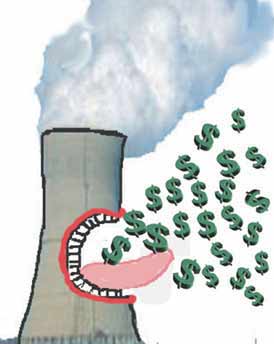 Will Repairs to the Oconee Nuclear Plant Cost Duke Energy a Billion Dollars?, http://www.huffingtonpost.com/philip-radford/will-repairs-to-the-ocone_b_3208859.html Philip Radford, 3 May 13 Duke Energy and government regulators have been hiding a not-so-little secret from the people of the Carolinas. Duke’s Oconee nuclear power plant, three aged nuclear reactors 30 miles from Greenville, SC, isat risk of a meltdown should an upstream dam fail. If that were to happen, a meltdown of all three reactors on the scale of the Fukushima meltdowns and subsequent containment failure are virtual certainties according to U.S. Nuclear Regulatory Commission (NRC) documents obtained by Greenpeace .
We’ve also received a tip that the cost to upgrade the Oconee nuclear plant site to address this triple meltdown threat would cost Duke Energy a billion dollars.
A billion dollars.
So at Duke Energy’s annual shareholder meeting yesterday in Charlotte, NC, I asked Duke CEO Jim Rogers a question about his company’s dangerous nuke plants and the billion dollar cost to protect and upgrade. Tellingly, Jim Rogers did not dispute the billion dollar price tag nor the need to better defend Oconee from flood waters….. It’s worth noting that Mr. Rogers didn’t deny the potential billion dollar price tag of the Oconee repairs. Even for Duke, that’s a serious amount of money.
I wonder if Duke’s shareholders know that the company could end up being on the hook for that kind of a pricey fix? Greenpeace appreciates Mr. Rogers acknowledging the threat to Oconee and the enormous expense of fixing it. If Rogers wants to do the most fiscally prudent thing for Duke’s investors, he should retire the reactors. Duke and its regulators have known about this threat for decades and have utterly failed to address it. While regulation of nuclear power can be very complex, the issue at Oconee is pretty simple to understand. As you can read here, the potential flood height at Duke Energy’s Oconee nuclear plant is well above the height of Oconee’s flood walls leaving important safety equipment vulnerable.
Does this sound familiar? It should. In Japan, the nuclear industry knew that the flood wall at Fukushima was too low and did nothing about it there either.
Other nuclear laden electric corporations face steep costs to upgrade old and dangerous reactors. Dominion recently testified that Fukushima fixes would cost their corporation between $30 and $40 million. But the billion dollar price tag to reduce the risks at Oconee is truly staggering. Rather than wasting a billion dollars on old reactors that will never be safe, Duke Energy should invest in renewable energy and efficiency. Wind turbines and solar panels don’t threaten the Carolinas with the prospect of nuclear meltdowns.
Crash go earnings and share price for uranium miner Cameco
 Cameco Profit Trails Analysts’ Estimates as Uranium Price Drops http://www.bloomberg.com/news/2013-05-01/cameco-profit-trails-analysts-estimates-as-uranium-price-drops.html By Christopher Donville – May 1, 2013 Cameco Corp. (CCO), the world’s third- largest uranium producer, reported first-quarter profit and revenue that trailed analysts’ estimates after a decline in the price of the raw material in nuclear-reactor fuel.
Net income fell to C$9 million ($8.9 million), or 2 cents a share, from C$129 million, or 33 cents, a year earlier, Saskatoon, Saskatchewan-based Cameco said today in a statement. Profit excluding one-time items was 7 cents a share, missing the 8-cent average of 14 estimates compiled by Bloomberg. Sales declined to C$444 million from C$466 million, less than the C$473 million average of six estimates.The price of uranium for immediate delivery has slumped 40 percent since the March 11, 2011, earthquake and tsunami in Japan led to a meltdown at Tokyo Electric Power Co.’s Fukushima Dai-Ichi nuclear power plant. In response to the disaster, Japan suspended its fleet of reactors while Germany canceled license extensions, shut down some of its oldest nuclear plants and ordered the others close by 2022.
“Fukushima is still a major factor in the uranium market,” Rob Chang, a Toronto-based analyst at Cantor Fitzgerald LP, said in a telephone interview before the results were released. “On top of that, commodity prices around the world have been dragged down by worries about global growth and Chinese demand for raw materials.”
Kazatomprom, Kazakhstan’s state-owned producer, and Paris- based Areva SA (AREVA) are the biggest uranium miners, according to the World Nuclear Association.
(Cameco scheduled a conference call to discuss results at 1 p.m. New York time at +1-877-240-9772or +1-416-340-8530.)
93% fall in earnings so far this year, for uranium mining company
 Earnings down for Saskatoon uranium giant CBC News May 1, 2013 Lower sales, lower prices and higher costs pushed down first quarter results at Cameco.
So far this year, the Saskatoon-based uranium company earned $9 million — down 93 per cent from the $129 million Cameco made in the first quarter of 2012……
The company recently laid off a number of staff at its Saskatoon headquarters.
Cameco said most of the power utilities that buy its nuclear products are locked into contracts until 2016….. http://www.cbc.ca/news/canada/saskatchewan/story/2013/05/01/saskatoon-cameco-earnings.html
In last few days, high spike of radiation in air in Japan and West USA
 Fukushima pushes Japan over 26 times normal radiation http://www.agoracosmopolitan.com/news/headline_news/2013/05/02/5835.html 02 MAY 2013 BY : BY SADIA ARSHAD
- As of the sampling done four days ago, the radiation fallout level has spiked up to twenty six times its average level since the past year in Japan. The reading indicates 100.4 MBq/Km2. The average reading was at 3.85 MBq/Km2 until 26th April. The reason behind this sudden climb is not known as of yet.
The leak is suspected from the radioactive waste water from the water storage ponds at Fukushima I Nuclear Power Plant. The amount of radioactive material in the water sample taken from Pond No. 1 on 27th April has led to this discovery.
As per air samples taken by the United States Environmental Protection Agency at eighteen different collection points in the Pacific States, the average level of radioactivity in the air has also spiked to more than seven times the normal levels.
Great? Shoot nuclear waste into deep space?
Disposal of Spent Nuclear Fuel and High-level Radioactive Waste
Source: ENVIRON International Corporation
Date: September 10, 2010
This material was prepared at the request of the Blue Ribbon Commission on America’s Nuclear Future (“the BRC”).

Disposal by shooting the wastes into deep space or the sun
Cost and the risk of an accident during launch has kept space disposal from being taken seriously. With the current cost of putting objects in orbit at around $10,000 per pound, and given that the U.S. inventory of spent fuel and high-level waste is of the order of 100,000 metric tons, not including the heavy shielding that would be required, the costs with present technology would be prohibitive, even if the risks of radioactive wastes crashing back to earth could be managed somehow.
But if one wanted to dispose of only the very long-lived waste, e.g., technetium-99, cesium-135, iodine-129, and the long-lived actinides, then the amounts are much more manageable, of the order of a few million kilograms for all current U.S. wastes. […]
Radioactive groundwater in Santa Susanna could take centuries to clean up
 Santa Susana groundwater cleanup could take centuries, official says, VC Star, By Mike Harris, April 18, 2013 The groundwater cleanup at the Santa Susana Field Laboratory, the site of a 1959 partial nuclear meltdown, could take centuries, a state official said Wednesday night.
The soil decontamination will take far less time, a few or more years, but might not be finished by a 2017 deadline, Mark Malinowski of the state Department of Toxic Substances Control told about 100 people during a cleanup update at the Grand Vista Hotel in Simi Valley.
“It’s a very aggressive schedule to get to 2017, and many things have to happen correctly in order to get there,” said Malinowski, the department’s cleanup team manager.
The groundwater cleanup will take “a lot longer … decades, possibly centuries to complete,” Malinowski said. “Groundwater is an extremely difficult thing to clean up. This contamination we’re dealing with did not happen overnight.”……
Boeing owns most of the 2,850-acre site, formerly the Rocketdyne nuclear and rocket engine test facility, in the hills between Simi Valley and the San Fernando Valley. The rest of the site is owned by the federal government and administered by NASA.
During a question-and- answer period, cleanup activists sharply questioned Malinowski’s statement that no significant contamination has been found beyond the site’s boundaries.
“I had to remind him that in 2008, they removed three football fields of contaminated soil off the adjacent Sage Ranch Park property,” William Bowling said. “And then last year, the EPA found radioactivity in a well on the campus owned by the American Jewish University, which also adjoins the site.
“They’re not giving the public the clear picture, which is that there is off-site contamination,” Bowling said. http://www.vcstar.com/news/2013/apr/18/santa-susana-soil-cleanup-may-not-make-2017-deadli/#ixzz2SI1pAhgC
Duke Energy pulls out of building 2 new nuclear reactors
 Duke Energy suspends licensing for nuclear reactors near Raleigh Charlotte Business Journal, by John Downey, 2 May 13, Duke Energy Corp. has asked federal regulators to suspend its application to build two 1,017-megawatt nuclear units at its Shearon Harris nuclear plant near Raleigh. Dhiaa Jamil, president of Duke Energy Nuclear, cites slowing growth in demand for electricity as the reason for the decision….. The decision is the latest sign that the once-touted “nuclear renaissance” is faltering in the United States. …. http://www.bizjournals.com/charlotte/blog/power_city/2013/05/duke-energy-suspends-licensing-for.html
USA’s present danger of nuclear spent fuel pools
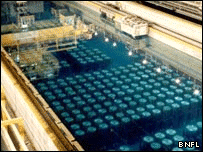 Congress needs to focus on how nuclear waste is stored now By Dave Lochbaum and Robert Cowin, Union of Concerned Scientists – 05/01/13 U.S. nuclear power plants have been generating electricity for more than 50 years, but the nuclear industry and the federal government have yet to figure out what to do with nuclear waste, which remains dangerously radioactive for thousands of years. On April 25, a bipartisan group of senators — Lamar Alexander (R-Tenn.), Dianne Feinstein (D-Calif.), Lisa Murkowski (R-Alaska) and Ron Wyden (D-Ore.) — released draft legislation addressing this intractable problem. Continue reading
A plastic bag,tape and broomstick fix for San Onofre nuclear leak
 ‘Plastic Bags, Tape, Broomsticks Fix San Onofre Nuclear Power Plant Leak’ April 30, 2013 http://www.blacklistednews.com/%E2%80%98Plastic_Bags,_Tape,_Broomsticks_Fix_San_Onofre_Nuclear_Power_Plant_Leak%E2%80%99/25680/0/38/38/Y/M.html … April 30, 2013 Source: 10 News ABC
An inside source gave Team 10 a picture snapped inside the San Onofre Nuclear Generating Station (SONGS) showing plastic bags, masking tape and broom sticks used to stem a massive leaky pipe.
San Onofre owner Southern California Edison (SCE), confirms the picture was taken inside Unit Three, but did not say when. The anonymous source said the picture was taken in December 2012.

Unit Three is the same unit that leaked radiation in January 2012. SONGS has been shutdown since then as a precaution.
“[Staff] identified a small leak in the water box and will perform maintenance per our scheduling process,” SCE spokeswoman Maureen Brown wrote in a statement. “In the meantime, plastic is in place to direct the water from the small leak to a drain.”(Team 10 took the picture to the Nuclear Regulatory Commission (NRC) to see what federal regulators had to say about the quick fix. See the commission’s response today on 10News at 5 p.m.)
“If that’s nuclear technology at work and that’s how we’re going to control leaks I think the public should know,” the inside source said.
More than one anonymous source talked about the picture with Team 10. They said the public has a right to know about the plant’s condition, as the NRC decides whether the plant will be allowed to restart.
Unit Two is the generator under consideration for restart – not Unit Three – where the picture was taken. Currently there are no plans to restart Unit Three.
Sources also pointed to what appears to be corrosion on the pipe as a sign of the power plant’s age.
They claim rust is rampant throughout SONGS — including what sources call a fire suppression pipe, which protects both units.
“There’s a pipe that runs along the security fence, from one side of the plant to the other side of the plant — it’s totally blistered,” one inside source told Team 10.
“To take an isolated picture and leap to some kind of conclusion about maintenance is a pretty big leap,” SCE’s Brown said in a phone conversation.
“We are dealing with unknown territory here which has never been explored before,” another inside source said. Two inside sources called restarting SONGS “risky.”
SCE disputes those claims and told Team 10 the plant is safe to restart.
Doubts about the NRC special team investigating San Onofre nuclear plant
 Unfortunately, many people do not see the NRC and such agencies which have an intimate relationship with the nuclear industry as impartial and reliable. As was the case with Fukushima, it could very well emerge that government agencies have been working with the nuclear companies in order to downplay the dangers of these incidents, but obviously I hope that is not the case here.
but with all of the lies surrounding the Fukushima incident, I find the nuclear industry and their supposed regulators to be highly dubious at best.
NRC dispatches Augmented Inspection Team after California nuclear facility fails test. End the Lie, By Madison Ruppert Editor of End the Lie, 1 May 13, After a safety test at the San Onofre Nuclear Generating Station near San Clemente, California (which we discussed in this episode of End the Lie Radio), resulted in a “significant issue,” the Nuclear Regulatory Commission (NRC) has moved to send out a so-called Augmented Inspection Team (AIT) to determine the cause of the failure. Continue reading
Los Angeles city Council warns on danger of San Onofre nuclear power plant
 Los Angeles to San Onofre: ‘Not So Fast!’ http://www.huffingtonpost.com/harvey-wasserman/los-angeles-to-san-onofre_b_3167482.html 04/29/2013 A unanimous Los Angeles City Council has demandedthe Nuclear Regulatory Commission conduct extended investigations before any restart at the San Onofre atomic power plant.
The move reflects a deep-rooted public opposition to resumed operations at reactors perched in a tsunami zone near earthquake faults that threaten all of southern California. Continue reading
Shortage of water a big threat to nuclear reactors
 Cooling systems for nuclear plants and power plants that burned coal, gas and oil accounted for 41 per cent of fresh water withdrawals and 49 per cent of all water withdrawals.
During the 2003 heat wave in France, which was responsible for more than 10,000 deaths, nuclear plants had to reduce their output, worsening the crisis. The rising temperature of river water meant they could not achieve sufficient cooling and still observe discharge limits
Nuclear and coal-fired power plants with OTC systems are especially vulnerable to droughts and heat waves because they rely on by far the largest volume of water withdrawals.
US energy supplies imperiled by water shortages, The Age May 1, 2013 – John Kemp Water and energy are inextricably linked.Power plants are the largest users of water in the United States, while substantial amounts of energy are needed to supply fresh water to homes, farms and factories and treat waste water prior to safe disposal.
Rising water consumption for hydraulic fracturing and production of biofuels, coupled with severe droughts in Texas in 2011 and across more than 60 per cent of the continental United States in 2012, have propelled that link up the policymakers’ agenda.
The threat to hydroelectric generation is obvious. But in 2007-2009, drought put the water supplies of 24 of the nation’s 104 reactors at nuclear plants at risk. In 2011, more than 3,000 megawatts of thermal generating capacity in Texas also was considered at risk of having to shut down if the drought persisted as reservoir levels plunged.
Texans were asked to conserve water to keep the lights on. The state was only spared blackouts because of high output from wind farms.
On April 25, the Energy and Natural Resources Committee of the US Senate held a hearing to explore the effect of drought on the energy sector and water management, reflecting lawmakers’ fears about the instability created by the tightening links between water and energy supplies. Continue reading
San Onofre nuclear plant at risk of Fukushima style meltdown
Nuclear station insider says San Onofre should stay closed http://rt.com/usa/san-onofre-nuclear-insider-652/ April 30, 2013 A safety engineer from the San Onofre nuclear power plant has warned that “there is something grossly wrong” with the plant and that it faces the prospect of a full or partial meltdown if it is restarted
The safety engineer, who has worked in the nuclear field for 25 years, told ABC 10 that due to broken tubes carrying scalding water, there could easily be a main steam line break, which would cause the nuclear reactor core to overheat and result in a Fukushima-like meltdown. Continue reading
1 This Month
Tell Congress: Prevent Nuclear Catastrophe in Iran

Tell Congress: Prevent Nuclear Catastrophe in Iran

Read the Public Inquiry Report, the Commissioners’ report, Surrendering Australia: The AUKUS Deception is available to download for free at aukuspublicinquiry.com. Or just watch the replay of the National Press Club Luncheon.


Shut down the radiation-damaged Heysham nuclear reactors now
To see nuclear-related stories in greater depth and intensity – go to https://nuclearinformation.wordpress.com

Say No to NASA’s Reckless Nuclear Reactor on the Moon
Say No to NASA’s Reckless Nuclear Reactor on the Moon
-
Archives
- November 2026 (246)
- October 2026 (302)
- September 2026 (339)
- August 2026 (330)
- July 2026 (355)
- June 2026 (287)
- May 2026 (306)
- April 2026 (356)
- March 2026 (251)
- February 2026 (267)
- January 2026 (308)
- December 2025 (358)
-
Categories
- 1
- 1 NUCLEAR ISSUES
- business and costs
- climate change
- culture and arts
- ENERGY
- environment
- health
- history
- indigenous issues
- Legal
- marketing of nuclear
- media
- opposition to nuclear
- PERSONAL STORIES
- politics
- politics international
- Religion and ethics
- safety
- secrets,lies and civil liberties
- spinbuster
- technology
- Uranium
- wastes
- weapons and war
- Women
- 2 WORLD
- ACTION
- AFRICA
- Atrocities
- AUSTRALIA
- Christina's notes
- Christina's themes
- culture and arts
- Events
- Fuk 2022
- Fuk 2023
- Fukushima 2017
- Fukushima 2018
- fukushima 2019
- Fukushima 2020
- Fukushima 2021
- general
- global warming
- Humour (God we need it)
- Nuclear
- RARE EARTHS
- Reference
- resources – print
- Resources -audiovicual
- Weekly Newsletter
- World
- World Nuclear
- YouTube
-
RSS
Entries RSS
Comments RSS

