False arguments on the “necessity” for the atomic bombing of Hiroshima and Nagasaki
Will Media Raise Key Questions About Hiroshima, and Nuclear Legacy, This Year? THE NATION,Greg Mitchell on July 24, 2013 Sixty-eight years ago last week the Nuclear Age began with the first successful test of an atomic weapon at the Trinity site in the New Mexico desert. The test and what surrounded it set the standard for much of what followed in the decades to come: radiation dangers, official secrecy and cover-ups, a nearly endless nuclear arms race, and the triumph of the national security state……
Every summer for the past thirty years I’ve written numerous articles about this and related subjects—because the US media, with the exception of the fiftieth anniversary in 1995, fail to raise new, or even longstanding, questions. I’ve written three books on the subject: Hiroshima in America (with Robert Jay Lifton), Atomic Cover-Up (on the decades-long suppression of shocking film shot in the atomic cities by the US military) and Hollywood Bomb (the wild story of how an MGM 1947 drama was censored by the military and Truman himself).
For now, here’s a kind of summary of the debate of the use of the bomb in August 1945. Continue reading
Veterans exposed to radiation at Antarctic Naval Base
 Federal hearings exploring radiation exposure among McMurdo Navy veterans get underway in Washington http://www.newsnet5.com/dpp/news/local_news/investigations/federal-hearings-exploring-radiation-exposure-among-mcmurdo-navy-veterans-get-underway-in-washington Prompted by exclusive 5 On Your Side investigation Ron Regan, newsnet5.com WASHINGTON – Federal hearings prompted by an exclusive 5 On Your Side investigation into radiation exposure among McMurdo Navy veterans are scheduled to begin Tuesday morning.
Our investigative series revealed how a nuclear reactor at McMurdo Naval base in Antarctica continued to leak radiation for years and a possible link to cancer.
Our report documented 432 malfunctions at the plant from 1964 through 1972 while thousands of Navy veterans were stationed there.
Complaints from veterans dying from cancer were ignored by the Veterans Administration until our report exposed the radiation leaking that Navy veterans said was kept secret for decades.
Veterans have hope the hearings will provide them with assistance in compensation for their medical bills.
On Tuesday, the Veterans Advisory Board on Dose Reconstruction will discuss its final report and finding regarding the leaking nuclear reactor and veterans cancer.
Birth defects rise near Hanford radioactive site “just a coincidence”
Watch a recent local TV report on the birth defects here
“Worrisome” spike in deadly birth defects around leaking U.S. nuclear site — Officials claim “it could be a complete coincidence” — No news reports mention it’s by the most contaminated area in Western Hemisphere #Hanford http://enenews.com/worrisome-spike-in-deadly-birth-defect-around-leaking-u-s-nuclear-site-officials-claim-it-could-be-a-complete-coincidence-all-media-reports-fail-to-mention-its-nearby-most-contaminate
Title: Washington State Health Officials Stumped by High Rate of Birth Defects
Source: ABC News with Diane Sawyer
Author: Gillian Mohney
Date: July 18, 2013
high rate of birth defects has confounded Washington health officials, who have been unable to identify a cause.

The Hanford nuclear site is located near Richland, WA, between Benton and Franklin counties (White Arrow)
A report released Tuesday by the Washington State Department of Health said that, since 2010, the neighboring counties of Yakima, Benton and Franklin have an unusually high number pregnancies affected by the [neural tube] birth defect anencephaly, which results in a newborns’ brains being severely underdeveloped. Continue reading
Indian Point nuclear plant tests fabricated – former supervisor charged
Ex-supervisor at Indian Point nuclear plant charged with fabricating fuel tests http://www.nydailynews.com/new-york/ex-supervisor-indian-point-nuclear-plant-charged-fabricating-fuel-tests-article-1.1406963 Daniel Wilson, 57, the Westchester County plant’s chemistry manager from 2007 to 2012, was charged in Federal Court in White Plains with two counts of violating rules of the Nuclear Regulatory Commission. BY BILL HUTCHINSON / NEW YORK DAILY NEWS TUESDAY, JULY 23, 2013, 5:11 PM A FORMER CHEMISTRY MANAGER AT THE INDIAN POINT NUCLEAR PLANT IN WESTCHESTER COUNTY ALLEGEDLY FABRICATED FUEL TESTS TO PREVENT THE FACILITY FROM BEING SHUTTERED.
 An ex-supervisor at the Indian Point nuclear plant was arrested Tuesday on charges he fabricated fuel tests on backup generators to prevent the facility from being shut down.
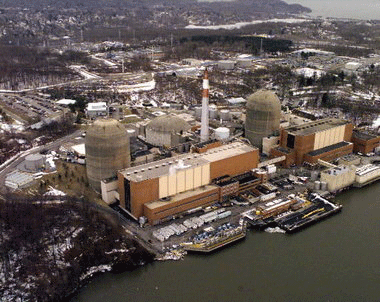
Daniel Wilson, 57, the Westchester County plant’s chemistry manager from 2007 to 2012, was charged in Federal Court in White Plains with two counts of violating rules of the Nuclear Regulatory Commission.
USA quietly reveals extent of massive nuclear bombing of Marshall Islands
The Fallout from Nuclear Secrecy , Consortium News, July 23, 2013 During the Cold War’s early years, the U.S. government detonated dozens of nuclear explosions on Pacific atolls, spreading nuclear fallout around the globe and making some areas uninhabitable, a grim legacy captured in secret documents finally being shared with the Marshall Islands’ government, reports Beverly Deepe Keever.

More than a half century after U.S. nuclear tests shattered the tranquility of Pacific Ocean atolls — rendering parts of them uninhabitable – the U.S. government has quietly released secret fallout results from 49 Pacific hydrogen-bomb blasts with an explosive force equal to 3,200 Hiroshima-size bombs. Continue reading
New Mexico court ruling against uranium mine permit
 Judge overturns uranium mine permit http://www.abqjournal.com/main/224658/abqnewsseeker/judge-overturns-uranium-mine-permit.html By Associated Press on Tue, Jul 23, 2013 SANTA FE (AP) — A lawyer for environmental groups say a Santa Fe judge has overturned a decision by Gov. Susana Martinez’s administration granting a permit for a uranium mine to remain inactive without any cleanup.
Eric Jantz of the New Mexico Environmental Law Center said District Judge Raymond Ortiz’s decision on Monday will send the case back to the state Mining and Minerals Division for further public hearings.
The agency renewed a standby permit last year for Rio Grande Resources’ Mount Taylor mine near Grants.
The judge ruled Amigos Bravos and the Multicultural Alliance for a Safe Environment weren’t adequately allowed to raise issues about protecting ground water from contamination from mining waste piles.
The judge also said the agency wrongly kept a company report confidential on the mine’s economic viability.
USA a bigger nuclear attack threat than North Korea is
The threat of nuclear war? North Korea or the United States http://rt.com/op-edge/north-korea-nuclear-us-467/ RT 23 July 13 Michel Chossudovsky is an award-winning author, professor of economics, founder and director of the Centre for Research on Globalization, Montreal and editor of the globalresearch.ca website.
Columbia River threatened by Hanford radioactive waste cleanup plan
Hanford Cleanup Plan Would Let Massive Amounts of Uranium Flow into the Columbia River http://columbiariverkeeper.org/featured/hanford-agencies-want-to-let-massive-amounts-of-uranium-flow-into-the-columbia-river/
On July 15th, the Tri-Party agencies, the U.S. Department of Energy, the U.S. Environmental Protection Agency (EPA), and the Washington State Department of Ecology, released their Proposed Plan for cleanup for forty square miles, ten along the Columbia River, on the southern corner of the Hanford Nuclear Reservation, also known as the 300 Area. The public has only thirty-two days, until, August 16th, to submit comments on the 300 Area Proposed Plan.
Unfortunately, the Tri-Party agencies’ want to rely on experimental technology and natural attenuation to treat the pollutants in the soil and groundwater of southeast Hanford. This strategy demonstrably fails to protect the Columbia River from long lived pollutants such as uranium that seep into the groundwater and the river where they enter the food chain. Continue reading
Hinkley nuclear site’s history of weapons deals with USA

 Hinkley’s hidden history Morning Star UK 21 July 2013 by David Lowry With the coalition government’s decision to back a third nuclear reactor at Hinkley Point on Somerset’s coast and the ongoing debate over Trident replacement, it’s interesting to take a look back at the origins of Britain’s nuclear programme.
When the British nuclear power and weapons programmes were born, a different foreign power, the United States, was intimately involved in the planning.
The first public hint came with an MoD announcement in June 1958 on “the production of plutonium suitable for weapons in the new [nuclear] power stations programme as an insurance against future defence needs” at Britain’s first-generation Magnox reactor (named after the fuel type, magnesium oxide).
A week later in Parliament, Labour’s Roy Mason asked why the government had “decided to modify atomic power stations, primarily planned for peaceful purposes, to produce high-grade plutonium for war weapons.”
He was informed by paymaster general Reginald Maudling: “At the request of the government, the Central Electricity Generating Board has agreed to a small modification in the design of Hinkley Point and of the next two stations in its programme so as to enable plutonium suitable for military purposes to be extracted should the need arise.
“The modifications will not in any way impair the efficiency of the stations. As the initial capital cost and any additional operating costs that may be incurred will be borne by the government, the price of electricity will not be affected……….
the following month, the US and British governments signed a mutual defense – spelt with an “s” even in the official British version, so you can guess where it was authored – co-operation agreement on atomic energy matters.
The agreement was intended to circumvent the draconian restrictions of the 1954 Atomic Energy Act, which sought to retain all nuclear secrets within the US, even though many foreign nationals had worked collaboratively with US counterparts for six or more years on nuclear R&D.
The deal was reached after several months of congressional hearings in Washington DC, but no oversight whatsoever in the British Parliament.
As this formed the basis, within a mere five years, for Britain obtaining the Polaris nuclear WMD system from the US, and some 20-odd years later for Britain to buy US Trident nuclear WMD, the failure of Parliament to at least appraise the security merits of this key bilateral atomic arrangement was unconscionable…….
And so it may be seen that the Britain’s first civil nuclear programme was used as a source of nuclear explosive plutonium for the US military, with Hinkley Point A the prime provider.
The reason there was a swap between Britain and the US of weapons-suitable highly enriched uranium and plutonium was the US had huge surpluses of uranium, but wanted more plutonium than its nuclear production complex at Hanford could deliver, while the British first-generation “commercial” Magnoxes, which were scaled-up plutonium production factories, were perfect for producing military-suitable plutonium as they had online refuelling systems to optimise plutonium over electricity production.
They produced perfect plutonium in surplus, but Britain lacked sufficient highly enriched uranium, so an exchange deal was mutually beneficial.
Two decades later in 1984 Wales national daily the Western Mail reported that the largest Magnox reactor in Britain, at Wylfa on Anglesey, had also been used to provide plutonium for the military.
Plutonium from both reactors went into the British military stockpile of nuclear explosives, and could well still be part of the British Trident warhead stockpile today.
Subsequent research by the Scientists Against Nuclear Arms, published in the prestigious science weekly journal Nature and presented to the Sizewell B and Hinkley C public inquiries in the ’80s, has demonstrated that around 6,700kg of plutonium was shipped to the US under the military exchange agreement, which stipulates explicitly that the material must be used for military purposes by the recipient country.
To put this quantity into context, a nuclear warhead contains around 5kg of plutonium.
Is it any wonder the Atoms for Peace movement began to demand “safeguards” to deter diversion of civilian nuclear plants to military misuse?
After all, the US and Britain knew that such deadly diversion was possible – they had demonstrated it themselves.
The trouble is that safeguards are misleading. They are neither safe, nor do they guard. And what would Iran or North Korea make of this deliberate intermixing of civil and military nuclear programmes by one of the nuclear weapons superpowers – one which leads the criticisms of them for allegedly doing this very thing today. http://www.morningstaronline.co.uk/news/content/view/full/135635
Now double – the cost of upgrading Monticello nuclear plant
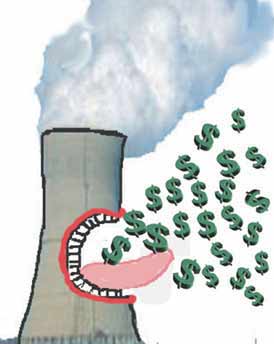 Cost of upgrading Monticello nuclear plant doubles http://www.kare11.com/news/article/1032273/391/Cost-of-upgrading-Monticello-nuclear-plant-doubles Jul 18, 2013 ST. PAUL, Minn. – Xcel Energy says the costs of upgrading its Monticello nuclear plant have doubled to $640 million.
The utility revealed the cost in a filing Wednesday with the state Public Utilities Commission, after previously saying the figure was a trade secret.
The project was originally expected to cost $320 million. The recently completed five-year project included replacement of aging equipment and boosting electricity output by 12 percent. The upgrades are intended to extend the life of the 43-year-old reactor another two decades.
Xcel expects to restart the plant this month after a four-month shutdown.
The utility has asked the PUC for a rate hike for 1.2 million Minnesota customers because of the cost overruns, which it blames on the complexity of the project. The commission is expected to decide this fall.
Now for the legal wrangles over the costs of San Onofre nuclear plant
Fallout Over Nuclear Energy Debacle Underway Forbes, Ken Silverstein, 19 July 13 It’s not a bombshell. But it is the fallout from the retirement of two nuclear units dotting Southern California’s coastline. Southern California Edison has just filed a so-called Notice of Dispute on its former vendor, Mitsubishi Heavy Industries. It is the first step toward gaining a settlement in what has become a huge blemish on the nuclear energy sector — the leakage of radiation at one of the units and the subsequent revelation that both companies had known about the underlying causes years before the incident. If the two are unable to reconcile, the case would then go to mandatory arbitration before it could get tried before a judge and jury. Judicial systems, though, are not prepared to resolve complex nuclear energy questions.
“Our action is about making sure that Mitsubishi takes responsibility for providing the defective steam generators that led to the closing of SONGS,” says Ron Litzinger, president of SCE, in a formal declaration.
SONGS refers to the San Onofre Nuclear Generating Station owned by Southern California Edison. …. Edison is alleging that Mitsubishi, as designer and manufacturer of the steam generators, is responsible for the economic damages. …..
The price tag associated with all the woes: Estimated to be at least $700 million and as much as $2 billion. Just how will that be paid? Chairman Ted Craver explained on an earlier conference call that there are potentially four pools of money: ratepayers, shareholders, insurance companies and Mitsubishi Heavy………
Friends of the Earth which had led the attack on the utility since the leak, has said that Southern California Edison has been “untruthful.” The environmental organization has also said that while Mitsubishi does not have “clean hands” here, it merely designed the steam generators to meet the utility’s specifications.
The environmental organization added that the utility downplayed the design changes it had made so as to avoid public hearings, and scrutiny. In addition, it is highly critical that Edison denied any knowledge of issues with excessive vibrations — until the leaks surfaced in 2012. As a result of all this, the Nuclear Regulatory Commission, the California Public Utility Commission and, perhaps, the Securities and Exchange Commission are investigating. It’s a huge legal morass — and one that court system is unaccustomed to hearing. That’s why the two sides should amicably resolve their dispute. http://www.forbes.com/sites/kensilverstein/2013/07/19/fallout-over-nuclear-energy-debacle-underway/2/
Renewable energy up – nuclear down – Lawrence Livermore National Laboratory
 Renewable Energy Sources On the Rise ENN,July 18, 2013 Each year the Lawrence Livermore National Laboratory (LLNL) releases energy flow charts in an effort to track the United States’ consumption of energy resources. So what seems to be the trend from the past couple of years? Well, renewable energy is on the upswing.
Compared to 2011, Americans used more natural gas, solar panels and wind turbines and less coal to generate electricity in 2012, according to the LLNL charts……
The reasons why we are turning to renewables isn’t purely environmental as the rise in renewables is tied to both prices (the underlying cost of solar panels and wind turbines has gone down) and policy (government incentives to installers of equipment or renewable energy targets in various states), Simon said.
Overall, Americans used 2.2 quadrillion BTU, or quads, less in 2012 than the previous year (BTU or British Thermal Unit is a unit of measurement for energy; 3,400 BTU is equivalent to about 1 kW-hr).
Out of the renewables, wind power saw the highest percentage gains, going from 1.17 quads produced in 2011 up to 1.36 quads in 2012. New wind farms continue to come on line with bigger, more efficient turbines that have been developed in response to government-sponsored incentives to invest in renewable energy.
Solar jumped from 0.158 quads in 2011 to 0.235 quads in 2012. This can be attributed to declining prices of photovoltaic panels.
The charts also show that 2012 is the first year in at least a decade where there has been a measurable decrease in nuclear energy.
“It is likely to be a permanent cut as four nuclear reactors recently went offline (two units at San Onofre in California as well as the power stations at Kewaunee in Wisconsin and Crystal River in Florida),” Simon said. “There are a couple of nuclear plants under construction, but they won’t come on for another few years.”…. http://www.enn.com/pollution/article/46227
The nuclear industry is waking up to its gloomy future
The U.S. Nuclear Power Industry’s Dim Future Bloomberg Business Week By Matthew Philips July 18, 2013 ”……optimism has given way to despair. Four reactors have closed so far in 2013—a record for the industry. Because of the shale energy boom, natural gas prices crashed, followed by coal. Electricity demand fell during the recession and has yet to regain its 2007 peak. Bolstered by billions of dollars in green energy subsidies in the 2009 stimulus package, renewables, especially wind, have come on faster than many anticipated. Cap and trade never happened. And Japan’s Fukushima disaster in 2011 reminded the world just how dangerous nuclear power can be.
The industry hasn’t done itself any favors. A radioactive steam leak and a botched repair job have led to the permanent closure of three reactors in the last several months, two in California operated by Southern California Edison (EIX), and another in Florida run by Duke Energy (DUK). Faced with growing political opposition, billions of dollars of estimated repair costs, and cheaper alternatives, utility executives in both cases decided to pull the plug rather than fix the plants.
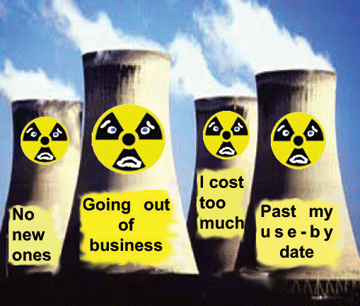
More troubling for the industry is the decision thatDominion Generation (D) made in May to close its Kewaunee reactor in Wisconsin. Squeezed by cheap coal and natural gas and unable to find a buyer after looking for more than a year, Dominion shut down the facility rather than keep operating it at a loss. Continue reading
Global warming- heating cooling water- stopping nukes?

 Seawater temps too high for Pilgrim cooling By CHRISTINE LEGERE clegere@capecodonline.com July 18, 2013 PLYMOUTH — The ongoing heat wave could force Pilgrim Nuclear Power Station to shut down, as soaring temperatures continue to warm the Cape Cod Bay waters that the plant relies on to cool key safety
systems. Pilgrim’s license from the Nuclear Regulatory Commission requires the water being drawn from the bay to be no warmer than 75 degrees. On Tuesday night, the temperature in the saltwater system reached 75.3 degrees and remained above the 75-degree limit for about 90 minutes.
If water temperatures rise and show no sign of lowering, the plant has 24 hours to completely shut down.
“The water temperature will be closely monitored as the heat wave persists,” NRC spokesman Neil Sheehan wrote in an email.
The temperature of seawater being drawn from the bay must be low enough to cool the water circulating around the reactor and transform steam from the system back to liquid water.
Although the seawater is warmer when it is discharged back into the bay, it must not be so warm it affects the ecosystem……Mary Lampert, chairwoman of the Duxbury Nuclear Advisory Committee and director of the anti-nuclear group Pilgrim Watch, fired off a letter to NRC officials Wednesday, urging the agency to shut down the Pilgrim plant until the cause of the alarm system failure is found.
“Until that is done, we fail to see how the NRC can provide reasonable assurance for public health and safety,” Lampert wrote.http://www.capecodonline.com/apps/pbcs.dll/article?AID=/20130718/NEWS/307180318
The end is nigh for 38 USA nuclear reactors: shock wave to Wall St
“Recent developments have sent what are truly shock waves through the industry and Wall Street. The spate of early retirements and decisions to forego uprates magnify the importance of the fact that the ‘nuclear renaissance’ has failed to produce a new fleet of reactors in the U.S.

 Report: Over Three Dozen U.S. Nuclear Reactors At Risk Of Early Retirement, 12 Face Greatest Shutdown Pressure http://www.sacbee.com/2013/07/17/5573488/report-over-three-dozen-us-nuclear.html By Mark Cooper, Vermont Law School, Jul. 17, 2013 WASHINGTON, July 17, 2013 — In Wake ofSan Onofre, Crystal River & Kewaunee Shutdowns, Cooper Outlines Next Nuclear Reactors Under the Greatest Pressure to Close Down; Reactors in AL CA, CT, FL, IL, IA, KS, MD, MA, MI, MN, MO, NE, NH, NJ, NY, OH, PA, SC, TN, TX, VT, and WI on “At Risk” List. WASHINGTON, July 17, 2013 /PRNewswire-USNewswire/ — The tough times the U.S. nuclear power industry faces today are only going to get worse. In the wake of nine major nuclear reactor closures or uprate cancellations in recent months, a review of the remaining U.S. fleet reveals that 38 reactors in 23 states are at risk of early retirement, with 12 facing the greatest risk of being shutdown, according to a major new analysis by Mark Cooper, senior fellow for economic analysis, Institute for Energy and the Environment, Vermont Law School. Continue reading
1 This Month
Tell Congress: Prevent Nuclear Catastrophe in Iran

Tell Congress: Prevent Nuclear Catastrophe in Iran

Read the Public Inquiry Report, the Commissioners’ report, Surrendering Australia: The AUKUS Deception is available to download for free at aukuspublicinquiry.com. Or just watch the replay of the National Press Club Luncheon.


Shut down the radiation-damaged Heysham nuclear reactors now
To see nuclear-related stories in greater depth and intensity – go to https://nuclearinformation.wordpress.com

Say No to NASA’s Reckless Nuclear Reactor on the Moon
Say No to NASA’s Reckless Nuclear Reactor on the Moon
-
Archives
- November 2026 (246)
- October 2026 (302)
- September 2026 (339)
- August 2026 (330)
- July 2026 (355)
- June 2026 (287)
- May 2026 (306)
- April 2026 (356)
- March 2026 (251)
- February 2026 (267)
- January 2026 (308)
- December 2025 (358)
-
Categories
- 1
- 1 NUCLEAR ISSUES
- business and costs
- climate change
- culture and arts
- ENERGY
- environment
- health
- history
- indigenous issues
- Legal
- marketing of nuclear
- media
- opposition to nuclear
- PERSONAL STORIES
- politics
- politics international
- Religion and ethics
- safety
- secrets,lies and civil liberties
- spinbuster
- technology
- Uranium
- wastes
- weapons and war
- Women
- 2 WORLD
- ACTION
- AFRICA
- Atrocities
- AUSTRALIA
- Christina's notes
- Christina's themes
- culture and arts
- Events
- Fuk 2022
- Fuk 2023
- Fukushima 2017
- Fukushima 2018
- fukushima 2019
- Fukushima 2020
- Fukushima 2021
- general
- global warming
- Humour (God we need it)
- Nuclear
- RARE EARTHS
- Reference
- resources – print
- Resources -audiovicual
- Weekly Newsletter
- World
- World Nuclear
- YouTube
-
RSS
Entries RSS
Comments RSS

