Geologists meet to discuss burial of nuclear wastes
 Radioactive Waste: Where to Put It? http://www.sciencedaily.com/releases/2013/10/131027140628.htm Oct. 27, 2013 — As the U.S. makes new plans for disposing of spent nuclear fuel and other high-level radioactive waste deep underground, geologists are key to identifying safe burial sites and techniques. Scientists at The Geological Society of America (GSA) meeting in Denver will describe the potential of shale formations; challenges of deep borehole disposal; and their progress in building a computer model to help improve understanding of the geologic processes that are important for safe disposal of high-level waste. Continue reading
USA’s new nuclear warheads undermine global disarmament efforts
One Of the World’s Greatest Nuclear Threats is Closer to Home Than You Think Policy Mic Laura Muth 28 Oct 13, Syria has met the deadline to submit a plan for the destruction of its chemical weapons. Iran has stopped enriching uranium to near bomb-grade levels, and diplomats so far appear to be cautiously optimistic that the current nuclear talks with the country could prove fruitful. It is looking to be a promising year for nonproliferation — except in the U.S., where the government is investing in building five new types of nuclear warheads.
The warheads are part of the National Nuclear Security Administration’s (NNSA) “3+2” consolidation strategy. The plan is to shift the U.S.’ nuclear stockpile to consist mainly of 3 ballistic missile warheads and two air-delivered systems (like cruise missiles or bombers.)
The logic from the NNSA seems to be that since these warheads will be based on existing designs, they don’t count as “new” and hence their development does not contradict either the Obama administration’s policy of not building new nuclear weapons, or its international treaty obligations……This all matters because of the example the U.S. sets for the rest of the world. Good faith measures to reduce nuclear stockpiles and reduce the possibility nuclear war on the part of the U.S. creates a greater incentive for other countries to follow suit. On the other hand, maintaining or growing a major nuclear stockpile can generate competition. ……..
The Nuclear Nonproliferation Treaty (NPT), which the U.S. is also a party to, lays out three goals: that nuclear-armed states will move to disarm, non-nuclear-armed states will not acquire nuclear weapons, and all countries will be permitted to access nuclear energy for peaceful purposes. The NNSA’s plan may not violate the letter of international or domestic law, but it does violate the spirit of these treaties. And when the U.S. acts against the spirit of these laws, it weakens them on the international level and disincentivizes compliance for other nations. That creates a more dangerous world for all of us. President Obama should live up to his lofty rhetoric and prevent this plan from going forward.http://www.policymic.com/articles/70361/one-of-the-world-s-greatest-nuclear-threats-is-closer-to-home-than-you-think
New research for more efficient solar panels, and storage systems
The group is now turning its attention to developing applications such as energy storage solutions utilizing the reverse side of solar cells.
Solar Panels (Batteries Included) http://www.energymatters.com.au/index.php?main_page=news_article&article_id=3999 28 Oct 13 As power companies grow more belligerent and households start considering leaving the grid altogether; the topic of energy storage is becoming increasingly popular. One development could see solar panels also fulfil the role of batteries by using the same material that creates the electricity – silicon.
Scientists at Vanderbilt University have found a way to create supercapacitors using silicon structures coated in graphene.
While supercapacitors can be recharged much faster and have a longer service life; one of their challenges is size. Energy storage capabilities of supercapacitors is directly tied to the surface area available; meaning the devices tend to be bulky.
The need for a large surface area is being addressed to a degree through the use of nanotechnology to create microscopic ridges, valleys and pores on materials. Continue reading
Bill Gates promotes his nuclear reactor business in Idaho
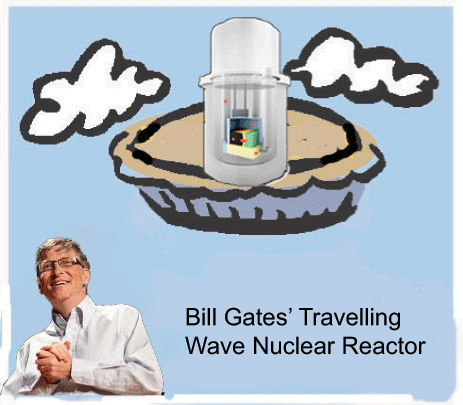 Bill Gates goes nuclear in Idaho http://gigaom.com/2013/10/25/bill-gates-goes-nuclear-in-idaho/?go_commented=1#comment-1375195 Katie Fehrenbacher OCT. 25, 2013 – Bill Gates, along with the staff of nuclear startup TerraPower, visited the U.S. government-owned Idaho National Labs this week to check out the facilities in advance of reactor design work that TerraPower plans to do at the facility. Gates is chairman of, and investor, in TerraPower, which has been developing a traveling wave nuclear reactor that can run on waste uranium, and can make and consume its own fuel — theoretically it doesn’t need to be refueled for hundreds of years.PD
US State Dept official offends Iran with provocative comments
The Comment That Offended Iranians More Than a Nuclear Threat Iran’s leaders don’t worry we’ll nuke them. They worry we’ll never trust them. By Michael Crowley @Crowley TIME 24 Oct 13, Octogenarian billionaire and GOP megdaonor Sheldon Adelson caused a ruckus Wednesday by suggesting that the U.S. lob a nuclear missile into the Iranian desert. The idea, as Adelson described it, was to issue a warning shot that would show Tehran “we mean business” in nuclear negotiations. American media outlets hyped Adelson’s characteristically hawkish fantasy. But Iran appeared unperturbed by his talk of a nuclear first strike.
That’s because the real furor in Tehran now is over another provocative remark, this one from Wendy Sherman, a senior State Department official who is America’s lead negotiator in talks with Iran. In recent testimony to Congress, Sherman said that the U.S. had to be cautious about cutting a deal with Tehran, because recent experience with the Iranians over their nuclear program—which Iran has repeatedly concealed—shows that “deception is part of the DNA.”
“Sherman’s DNA comment has created a big stir in Iran,” says Karim Sadjadpour, an Iran expert at the Carnegie Endowment for International Peace. “Adelson not so much.”
How could a diplomatic slight like Sherman’s outweigh Adelson’s talk of a nuclear first strike?
One reason has to do with the messengers. Adelson may bankroll Republicans, but he’s not setting American policy. And no one takes seriously his fantasy of a nuclear shot across Tehran’s bow.
Sherman, by contrast, speaks directly for the U.S. government. That’s why conservative leaders and media outlets in Iran are lashing out at what they call Sherman’s insult, uttered at a Senate hearing earlier this month. One hard-line paper is calling for a boycott of the talks if she’s present. A cartoon published by Iran’s Fars news agency depicts Sherman as a broom-riding witch…….
the flap also goes to a core problem with the nuclear talks: mutual distrust. The U.S. worries that Iran is feigning flexibility to win relief from sanctions, with no real intent to halt its nuclear program. Iran thinks America sees the nuclear issue as a stalking horse for regime change. The parallel suspicions could make a deal impossible…… http://swampland.time.com/2013/10/24/the-comment-that-offended-iranians-more-than-a-nuclear-threat/#ixzz2ilvRuSjn
Oconee Nuclear Station – one reactor shut down
1 reactor shut down at Oconee Nuclear Station The Tribune, : October 25, 2013 By JEFFREY COLLINS — Associated Press COLUMBIA, S.C. — The Oconee Nuclear Station near Seneca had to shut down one of its three reactors after a problem in the water system that helps generate electricity, federal regulators said.
Unit 3 at the plant was manually shut down by Duke Energy around 6 a.m. Thursday, about four minutes after the problem was detected, Nuclear Regulatory Commission spokesman Roger Hannah said.
A control valve in the plant’s water system started causing changes in the flow of water that generates steam to turn the turbines and create power. Engineers shut down the reactor before it was automatically turned off, and there was no danger to the public, Hannah said……. The shutdown did come in the same month the Government Accountability Office released a report about nuclear plant safety. Since 2000, the Oconee Nuclear Station reported the most safety violations of any nuclear plant in the Southeast.
The plant reported 163 lower-level violations and 14 higher-level violations. Lower-level violations pose very low risk, such as improper upkeep of a transformer, while higher-level violations range in significance, such as an electrical system that caused a fire…….. The Browns Ferry plant in Decatur, Ala., reported 135 lower-level violations and six higher-level violations, while the Palo Verde plant in Wintersburg, Ariz., reported 299 lower-level violations and five higher-level violations since 2000. http://www.sanluisobispo.com/2013/10/25/2749832/1-reactor-shut-down-at-oconee.html
Careless behaviour by USA nuclear Air Force officials
Nuclear officers left crucial blast doors open, according to AP report The Verge, By Russell Brandom on October 22, 2013 According to an exclusive report by the Associated Press, Air Force officers entrusted with nuclear launch codes have been caught leaving open the blast doors to their underground command post on two separate occasions. The doors are a crucial element of American nuclear security, ensuring that even if the outer facility is compromised, attackers will not be able to reach the codes required to launch a nuclear attack. The AP’s sources say similar violations are much more common than is publicly reported.
There’s no evidence that any facilities or launch codes were compromised, but the breach of protocol raises serious questions about the security of the US nuclear arsenal, especially after the arsenal’s commander, Maj. General Michael Carey, was abruptly firedlast week. In May, three officers from a North Dakota nuclear base were relieved for a lack of “proper attitude.” http://www.theverge.com/2013/10/22/4867234/nuclear-officers-left-crucial-blast-doors-open-according-to-ap-report
Conspiracy theorists working hard against United Nations
 “Here’s the simple truth. The U.N. does not do anything that its member countries don’t want to do. Period. There is no such thing as the U.N. being a super-national authority imposing anything on governments. It just doesn’t exist…..All the U.N. does is provide a platform for conversations and an exchange of views.… But there’s no such thing as the U.N. imposing any regulation.”
 Debunking the U.N. Climate-Change Conspiracy, http://www.nationaljournal.com/energy/debunking-the-u-n-climate-change-conspiracy-20131021 By Coral Davenport
The United Nations Climate-Change Conspiracy Theory—the idea that human-caused global warming is a false construct invented by the U.N. to justify government control of economies and people’s daily lives—is alive and well in the United States.
The flames of the theory were freshly fanned last month after the U.N.’s Intergovernmental Panel on Climate Change released a landmark report concluding with 95 percent scientific certainty that burning fossil fuels are warming the planet, with dangerous consequences.
The report “proves that the U.N. is more interested in advancing a political agenda than scientific integrity,” said Sen. James Inhofe, R-Okla., author of the book The Greatest Hoax: How the Global Warming Conspiracy Threatens Your Future. Inhofe is far from alone. Around the country, Republican lawmakers, bloggers, and even some local TV weathercasters panned the report as further evidence of the U.N.’s plans to use allegedly false climate data to justify a global takeover.
So what do the U.N.’s top officials make of this?….. Continue reading
Ontario govt has no idea of the costs of refurbishing nuclear reactors
Ontario Liberals flying blind on nuclear reactor file, NDP says CBC News 23 Oct 13, Horwath charges Liberals ‘haven’t learned’ from $1.1-billion gas-plant fiasco The Canadian Press Oct 23, 2013 The provincial Liberal government “learned nothing” from the $1.1-billion cost of killing two gas plants and is ready to refurbish nuclear reactors without knowing the final price, NDP Leader Andrea Horwath charged Wednesday.
‘Apparently the sky is the limit when it comes to the price’ –NDP Leader Andrea Horwath on proposed nuclear refurbishments
The Liberals recently abandoned plans to build two new nuclear reactors, after spending $180 million in preparatory work, but said they would refurbish existing reactors at the Darlington power station east of Toronto to extend their service life until 2055.
“The procurement for it is going to take place in stages, and the final cost is not known at this particular point in time,” Energy Minister Bob Chiarelli said.
The NDP released a statement from the Ministry of Energy showing “a final timeline and cost will not be known until the regulatory and technical scope is determined” and contracts are signed, sometime in
Check out CBC’s special report on electricity in Canada, including this profile of power in Ontario.
“We were shocked when the minister responded to our request by saying, ‘We’re spending $950 million on contracts we’ve already signed but we can’t tell you what the final cost is going to be,’ ” Horwath said. “That is frightening.”
It’s hard to believe the Liberals are prepared to waste more money on the electricity file after the auditor general reported the costs of their decisions to cancel gas plants in Oakville and Mississauga could top $1.1 billion, added Horwath….. http://www.cbc.ca/news/canada/toronto/ontario-liberals-flying-blind-on-nuclear-reactor-file-ndp-says-1.2187519
Michigan’s success in renewable energy and energy efficiency
Renewable energy is the answer, not the enemy The Detroit News, Shari Pollesch, 21 Oct 13 “…..Since 2008, according to a recent Michigan legislative report, there has been a dramatic reduction in the cost of renewable energy, with the latest wind energy contracts coming in 50 percent cheaper than coal. Michigan’s  Energy Efficiency program has provided the cheapest source of baseload power (over 6x cheaper than coal). For every $1 invested in energy efficiency, customers are saving $3.55 in energy costs.
Although 70 of 71 electric companies in Michigan are on track to meet the 10 percent by 2015, most of these same utilities have declared an unwillingness to do anything more unless required by law. This is notwithstanding the fact that renewable energy is cheaper and cleaner than current or proposed fossil fuel options. Without legislative action, Michigan’s progress toward clean energy will come to a halt.
Consider that Michigan currently gets over 50 percent of our electricity from coal, all of which is imported from other states. In turn, Michigan sends $1.2 billion a year — and the jobs that money creates — to other states to pay for it.
Michigan’s clean energy sector already supports 20,500 jobs and $5 billion in annual economic activity according to a report by conservative Hill Group. Homegrown renewable energy and efficiency are strong economic drivers, attracting investment and creating jobs that can’t be shipped out of state or overseas.
Expanding our use of clean energy will build on our manufacturing strength and will allow us to re-tool and reopen closed manufacturing facilities. A 25 percent RES and 2 percent Energy Efficiency standard is projected to create over 44,000 new jobs in Michigan.
Renewables are cleaner, better for our environment and better for our health. Clean energy creates jobs and saves consumers on energy bills. But the utility companies are not going to do it on their own. We need our state legislature to mandate higher renewable standards. http://www.detroitnews.com/article/20131021/OPINION01/310210004#ixzz2iSTQDlgu
End of plans for Levy nuclear power plant, termination of Crystal River nuclear plant
 Duke Energy’s revised agreement ends nuclear power plant plans ww.power-eng.com/articles/2013/10/duke-energys-revised-agreement-ends-nuclear-power-plant-plans.html Oct 17, 2013The Florida Public Service Commission approved a Revised and Restated Settlement Agreement that officially ends plans for Duke Energy Florida (NYSE: DUK) to build the Levy nuclear power plant and allows the retirement the shuttered Crystal River nuclear plant.
As part of the revised agreement, recoverable costs for Crystal River Unit 3 will be capped at $1.4 billion, with stockholders covering the first $295 million. Commissioners said in a release that when a plant is retired, the company has a right, by law, to recover the remaining costs from its customers.
Duke will continue to collect fixed amounts for costs associated with the canceled Levy nuclear plant until 2017. However, customers will earn refunds that were in the original 2012 agreement, including $129 million this year, $139 million in 2014, $50 million in 2015 and $70 million in 2016. Customers will also receive a refund of $835 million from insurance proceeds over the Crystal River unit by the end of 2014.
Energy storage promises to revolutionise renewable energy
The PUC’s big storage decision will boost renewable energy production My desert.com October 17th, 2013 | by K Kaufmann My Twitter feed and email box are lighting up with big news that the California Public Utilities Commission has voted to approve an order requiring the state’s three big utilities to start procuring renewable energy storage technology, with the goal of having 1,325 megawatts of storage on the grid by 2020.
You can read the full text of the original proposed decision, as released Sept. 3, here.
Both Southern California Edison and Pacific Gas & Electric will be required to procure a total of 580 megawatts of storage, with 310 megawatts dedicated to transmission, 185 megawatts on distribution and 85 megawatts going to the consumer market, which presumably means distributed generation or rooftop.
San Diego Gas & Electric will be responsible for putting on 165 megawatts of storage, with an 80-55-30 split on the transmission, distribution and customer requirements. The three utilities have until Jan. 1, 2014 to file individual applications on how they will run their first solicitations for energy storage facilities.
Those are the quick basics. Expect plenty of press and discussion on this decision. Its potential impacts are huge — in terms of providing a big push for more research and investment in storage technology in the state and in pushing California to go beyond its current 33 percent renewable energy target. If renewable power can be stored for use when the wind is not blowing and sun isn’t shining, then the potential for clean energy development will be limitless……http://voices.mydesert.com/2013/10/17/the-pucs-big-storage-decision-will-boost-renewable-energy-production/
More jobs and toys for the nuclear boys – blowing up asteroids

David Wright, co-director of the Union of Concerned Scientists’ Global Security Program, said he hoped any joint asteroid defense work would not become a “jobs program” for weapons scientists
Blowing Up Asteroids: The Latest Excuse to Keep Nuclear Stockpiles? While the White House says it seeks a world without nuclear weapons, NASA and US weapons labs are moving ahead with plans to blow up asteroids with A-bombs. Mother Jones, By Douglas Birch, Center for Public Integrity Thu Oct. 17, 2013 When geophysicist H. Jay Melosh attended a meeting of American and ex-Soviet nuclear weapons designers in May 1995, he was surprised by how eager the Cold Warriors were to work together against an unlikely but dangerous extraterrestrial threat: asteroids on a collision course with Earth.
After Edward Teller, father of the hydrogen bomb, urged others meeting at Lawrence Livermore National Laboratory to consider building and orbiting huge, new nuclear weapons for planetary protection, some top Russian weaponeers lent their support.
“It was a really bizarre thing to see that these weapons designers were willing to work together—to build the biggest bombs ever,” said Melosh, an expert in space impacts who has an asteroid named after him.
Ever since, he has been pushing back against scientists who still support the nuclear option, arguing that a non-nuclear solution—diverting asteroids by hitting them with battering rams—is both possible and far less dangerous. Continue reading
Over $60 billion for USA’s new nuclear weapons spending
 U.S. nuclear arms modernization plan misguided: scientists’ group By David Alexander WASHINGTON | Thu Oct 17, 2013 (Reuters) – An Obama administration plan to spend $60 billion over the next 25 years to modernize the U.S. nuclear arsenal is misguided and violates the spirit of its pledge not to develop new nuclear arms, a Union of Concerned Scientists report said on Thursday.
The 81-page report by the independent nonprofit said the $60 billion for upgrading warheads is a fraction of what Washington plans to spend on its nuclear deterrent in the coming decades, on top of billions for new manufacturing facilities and billions more for delivery systems like submarines.
The spending comes despite President Barack Obama’sendorsement of the goal of a world without nuclear weapons and his negotiation of the “New START” treaty with Russia, which committed the former Cold War rivals to reducing deployed strategic nuclear weapons to 1,550 each by 2018…….
The 81-page report by the independent nonprofit said the $60
Energy storage to revolutionise large scale renewable energy
Energy storage mandate expected to bring large-scale renewable energy projects onto the electric grid http://photos.mercurynews.com/2013/10/16/energy-storage-mandate-expected-to-bring-large-scale-renewable-energy-projects-onto-the-electric-grid/ Oct 16, 2013
The first-in-the-nation energy storage mandate is expected to help integrate large-scale renewable projects onto the electric grid, help the grid better manage unpredictable events such as storms or wildfires, push utilities to consider a wider range of emerging technologies and jump-start the storage market as a whole. PG&E’s Yerba Buena Battery Energy Storage System Pilot Project, based in East San Jose, charges batteries when demand is low and sends stored power to the grid when demand grows, allowing operators to balance supply and demand. The project, which cost $18 million, uses the sodium-sulfur batteries made by NGK in Japan that have 4 megawatts of capacity and can store electricity for roughly six hours
PG&E’s Yerba Buena battery energy storage project, seen Tuesday morning Oct. 15, 2013, is capable of storing up to four megawatts of power from its place in the hills above Evergreen Valley College in San Jose, Calif. A California law that requires utilities to get 33 percent of their electricity from renewable sources like solar and wind is widely credited with accelerating the state’s cleantech economy. Now state regulators are poised to compel utilities to invest in “energy storage,” which could jump-start technology long considered the holy grail of the electricity industry. (Karl Mondon/Bay Area News Group)
1 This Month
Tell Congress: Prevent Nuclear Catastrophe in Iran

Tell Congress: Prevent Nuclear Catastrophe in Iran

Read the Public Inquiry Report, the Commissioners’ report, Surrendering Australia: The AUKUS Deception is available to download for free at aukuspublicinquiry.com. Or just watch the replay of the National Press Club Luncheon.


Shut down the radiation-damaged Heysham nuclear reactors now
To see nuclear-related stories in greater depth and intensity – go to https://nuclearinformation.wordpress.com

Say No to NASA’s Reckless Nuclear Reactor on the Moon
Say No to NASA’s Reckless Nuclear Reactor on the Moon
-
Archives
- November 2026 (246)
- October 2026 (302)
- September 2026 (339)
- August 2026 (330)
- July 2026 (355)
- June 2026 (287)
- May 2026 (306)
- April 2026 (356)
- March 2026 (251)
- February 2026 (267)
- January 2026 (308)
- December 2025 (358)
-
Categories
- 1
- 1 NUCLEAR ISSUES
- business and costs
- climate change
- culture and arts
- ENERGY
- environment
- health
- history
- indigenous issues
- Legal
- marketing of nuclear
- media
- opposition to nuclear
- PERSONAL STORIES
- politics
- politics international
- Religion and ethics
- safety
- secrets,lies and civil liberties
- spinbuster
- technology
- Uranium
- wastes
- weapons and war
- Women
- 2 WORLD
- ACTION
- AFRICA
- Atrocities
- AUSTRALIA
- Christina's notes
- Christina's themes
- culture and arts
- Events
- Fuk 2022
- Fuk 2023
- Fukushima 2017
- Fukushima 2018
- fukushima 2019
- Fukushima 2020
- Fukushima 2021
- general
- global warming
- Humour (God we need it)
- Nuclear
- RARE EARTHS
- Reference
- resources – print
- Resources -audiovicual
- Weekly Newsletter
- World
- World Nuclear
- YouTube
-
RSS
Entries RSS
Comments RSS

