Independent testing of radiation levels in air- Woolsey Fire and Santa Susana Field Lab Site.

 WOOLSEY FIRE: ARE YOU BREATHING TOXIC AND RADIOACTIVE AIR? http://lancasterweeklyreview.com/woolsey-fire-radiation-toxic-testing by fdr | Nov 14, 2018 Preliminary Independent Radiation Test Results from US Nuclear Corporation from The Woolsey Fire and Santa Susana Field Lab Site
After various complaints and talking with numerous concerned parents The Lancaster Weekly Review has ordered a commission in a preliminary study in order to finally answer some of the community’s concerns regarding potential toxic materials released from the Woolsey Fire as well as radiation from the Santa Susana Field Laboratory. The Field Lab was the site of a nuclear meltdown in 1959 with many locals and doctors condemning subpar cleanup efforts that point to high cancer rates which are 60% higher for those people living within a 2 mile radius of the SSFL. A lingering effect of the various toxins within the Field Labs vicinity.
It appears that the recent Woolsey Fire which has devastated swathes of Ventura and northwestern Los Angeles Counties, originated at the Santa Susa Field Lab and Testing Site with varied reports to the damage to the facility as well as the contamination area of the nuclear meltdown. The Southern California Edison Chatsworth Substation which is on the SSFL site shut down 2 minutes prior to start of the Woolsey Fire.
An independent study of air testing was conducted by US Nuclear Corporation of Canoga Park on Tuesday, November 13, five days after the Woolsey fire began. The owner, Mr. Bob Goldstein, was more than happy to help with the study and dispatched David Alban and Detwan Robinson to the Santa Susana Field Laboratory on Tuesday, November 13th at 3PM. They took two types of measurements for radiation with the US Nuclear Fast-Cam Air Monitor and another with a filter air tape. Twenty minute samples were taken at high flow rate of 40cfm at the Lab Entrance, which is up wind from the Lab. Another 20 minute sample was taken on the down wind side, which is North of the Lab. Given the proximity of the company’s headquarters to the Woolsey Fire US Nuclear Corporation’s team also took indoor samples at their office in Canoga Park.
It appears that many of the preliminary tests are picking up increased levels of Radon. Mr. Goldstein of US Nuclear Corporation commented, “Ordinary background radiation from minerals in the soil (and also from the solar wind and from cosmic rays) gives a dose rate of 0.015mR/hr (milliRem per hour) in the San Fernando Valley. But at the Santa Susana Field Laboratory background levels were found to be elevated to 0.040mR/hr. which is 0.025mR/hr higher than expected.”
Mr. Goldstein also stated, “The radioactivity collected on the filters decayed down to undetectable levels within 3 hours, leading us to conclude that this radioactive material is from Radon gas which decays after a short half life.” Overall, the tests that were conducted found that the area’s Radon levels are about 3 times higher than the surrounding San Fernando Valley.
Additional independent testing of other contaminants and toxins will take place in the coming days and will be published as soon as testing has taken place.
Trump’s war on wind power: Plans to stop windmill construction nationwide

In a recent conference held at his Florida resort, US President-elect
Donald Trump announced his intention to halt the construction of wind
turbines across the country. “We are going to have a policy where no
windmills will be built,” Trump declared, reiterating his long-standing
opposition to this form of renewable energy.
Review Energy 8th Jan 2025
https://www.review-energy.com/otras-fuentes/trump-s-war-on-wind-power-plans-to-stop-windmill-construction-nationwide
LA wildfire damages set to cost record $135bn

The Los Angeles wildfires are on track to be among the costliest in US
history, with losses already expected to exceed $135bn (£109.7bn). In a
preliminary estimate, private forecaster Accuweather said it expected
losses of between $135bn-$150bn as the blazes rip through an area that is
home to some of the most expensive property in the US.
The insurance industry is also bracing for a major hit, with analysts from firms such as
Morningstar and JP Morgan forecasting insured losses of more than $8bn.
Fire authorities say more than 5,300 structures have been destroyed by the
Palisades blaze, while more than 5,000 structures have been destroyed by
the Eaton Fire.
BBC 9th Jan 2025, https://www.bbc.co.uk/news/articles/c07g73p4805o
What a second Trump administration may mean for the Saudi nuclear program
By Nour Eid | Bulletin of Atomic Scientists 6th Jan 2025
Donald Trump’s return to the White House could mean the end of the
nonproliferation regime: As the Iranian-Israeli confrontation intensifies,
and the threat of an Iranian nuclear breakout looms, the Kingdom of Saudi
Arabia could see in a second Trump administration an opportunity to finally
get the nuclear cooperation the Saudis have been yearning for.
The Saudis argue that it is their right, under the Treaty on the Non-Proliferation of
Nuclear Weapons (NPT), to enrich uranium for domestic energy purposes. They
refuse to be subjected to double standards, given that India and Japan
received “blanket consents” to seek enrichment or reprocessing
capabilities under their respective 123 agreements.
Adding insult to injury, in Saudi eyes: Its main rival, Iran, was allowed to enrich uranium
under the 2015 Joint Comprehensive Plan of Action (JCPOA), also known as
the Iran nuclear deal. The Saudis aim to benefit from the same privileges
by developing an indigenous nuclear program………………………………………………….. https://thebulletin.org/2025/01/what-a-second-trump-administration-may-mean-for-the-saudi-nuclear-program/
Deep Fission to supply Endeavour data centers with 2GW of nuclear energy from “mile-deep” SMR
The first reactors are expected to come online in 2029
DCD, January 07, 2025 By Zachary Skidmore
Deep Fission, a small modular nuclear reactor (SMR) developer, has partnered with Endeavour Energy, a US sustainable infrastructure developer, to develop and deploy its technology at scale.
As per the agreement, the partners have committed to co-developing 2GW of nuclear energy to supply Endeavour’s global portfolio of data centers which operate under the Endeavour Edged brand. The first reactors are expected to be operational by 2029.
The Deep Fission Borehole Reactor 1 (DFBR-1) is a pressurized water reactor (PWR) that produces 15MWt (thermal) and 5MWe (electric) and has an estimated fuel cycle of between ten to 20 years…………………………………
Deep Fission plans to release white papers throughout the regulatory approval process for discussion direction on key issues surrounding the SMR………………………………..
Based in Berkley, California, Deep Fission was founded in 2023. In August last year, it announced a $4 million pre-seed funding round to accelerate efforts in hiring, regulatory approval, and the commercialization of its SMR.
Edged, Endeavour’s data center arm, will be the primary beneficiary of the power produced by DFBR-1.
The company, which was formed in 2021, has data centers across the US and the Iberian peninsula, with facilities in operation or development in Madrid, Barcelona, Lisbon, and across the US, including Missouri, Arizona, Texas, Georgia, Iowa, Ohio, and Illinois.
The company specializes in data centers built for high-density artificial intelligence, which utilize a waterless cooling system…………………….. https://www.datacenterdynamics.com/en/news/deep-fission-to-supply-endeavour-data-centers-with-2gw-of-nuclear-energy-from-mile-deep-smr/
Genocide: The New Normal

The genocide, and the decision to fuel it with billions of dollars, marks an ominous turning point. It is a public declaration by the U.S. and its allies in Europe that international and humanitarian law, although blatantly disregarded by the U.S. in Iraq, Afghanistan, Libya, Syria and a generation earlier in Vietnam, is meaningless.
By Chris Hedges ScheerPost January 7, 2025, https://scheerpost.com/2025/01/07/chris-hedges-genocide-the-new-normal/
Joe Biden’s parting gift of $8 billion in weapons sales to the apartheid state of Israel acknowledges the gruesome reality of the genocide in Gaza. This is not the end. It is not even the beginning of the end. This is a permanent, endless war designed not to destroy Hamas, or free Israeli hostages, but to eradicate, once and for all, Palestinians in Gaza and the West Bank. It is the final push to create a Greater Israel, which will include not only Gaza and the West Bank, but chunks of Lebanon and Syria. It is the culmination of the Zionist dream. And it will be paid for with rivers of blood — Palestinian, Lebanese and Syrian.
Minister of Agriculture and Food Security of Israel Avi Dichter was probably offering conservative estimates when he said “I think that we are going to stay in Gaza for a long time. I think most people understand that [Israel] will be years in some kind of West Bank situation where you go in and out and maybe you remain along Netzarim [corridor].”
Mass extermination takes time. It is also expensive. Fortunately for Israel, its lobby in the U.S. has a stranglehold on Congress, our electoral process and the media narrative. Americans, although 61 percent support ending weapons shipments to Israel, will pay for it. And those that express dissent will be frog-marched into Zionist black holes where their voices are silenced and their careers jeopardized or destroyed. Donald Trump and the Republicans have an open disdain for democracy, but so do the Democrats and Joe Biden.
The U.S. provided $17.9 billion in military aid to Israel from October 2023 to October 2024, a substantial increase from the already $3.8 billion in military aid the U.S. gives Israel annually. This is a record for a single year. The State Department has informed Congress that it intends to approve another $8 billion in purchases of U.S.-made arms by Israel. This will provide Israel with more GPS guidance systems for bombs, more artillery shells, more missiles for fighter jets and helicopters, and more bombs, including 2,800 unguided MK-84 bombs, which Israel has a habit of dropping on densely packed tent encampments in Gaza. The pressure wave from the 2,000-pound MK-84 pulverizes buildings and exterminates life within a 400-yard radius. The blast, which ruptures lungs, rips apart limbs and bursts sinus cavities up to hundreds of yards away, leaves behind a 50-foot-wide and 36-foot-deep crater. Israel appears to have used this bomb to assassinate Hassan Nasrallah, leader of Hezbollah, in Beirut on September 27, 2024.
The genocide, and the decision to fuel it with billions of dollars, marks an ominous turning point. It is a public declaration by the U.S. and its allies in Europe that international and humanitarian law, although blatantly disregarded by the U.S. in Iraq, Afghanistan, Libya, Syria and a generation earlier in Vietnam, is meaningless. We will not even pay lip service to it. This will be a Hobbesian world where nations that have the most advanced industrial weapons make the rules. Those who are poor and vulnerable will kneel in subjugation. The genocide in Gaza is the template for the future. And those in the Global South know it.
The “wretched of the earth” who lack sophisticated weapons, who do not have modern armies, artillery units, missiles, navies, armored units and warplanes, will strike back with crude tools. They will match individual acts of terror against massive campaigns of state terror.
Are we surprised we are hated? Terror begets terror. We saw this in New Orleans where a man who was allegedly inspired by the Islamic State of Iraq and Syria (ISIS) killed 14 people when he drove his pickup truck into a crowd on New Year’s Day. We will see more of it. But let’s be clear. We started it. The moral void of the suicide bomber is birthed from our moral void.
Israel’s frustration at the dogged resistance in Gaza, the West Bank, Yemen and Lebanon increases the bloodlust. Members of Israel’s Foreign Affairs and Defense Committee sent a letter to Minister of Defense Israel Katz, calling on the government to intensify the siege of Gaza.
“Effective control of the territory and the population is the only means towards cleansing enemy lines from the strip, and naturally towards decisive victory, rather than treading [water] in a war of attrition, where the side that is most worn is Israel,” they write. “Therefore we end up inserting our soldiers again and again into neighborhoods and alleys that were already conquered by them many times.”
Israel, the letter reads, must carry out “remote elimination of all energy sources, that is fuel, solar panels and any relevant means (pipes, cables, generators etc.)” It should ensure the “elimination of all food sources including warehouses, water and all relevant means (water pumps etc.)” and it must facilitate the “remote elimination of anyone who moves in the area and does not exit with a white flag during the days of the effective siege.”
The letter concludes that “after these actions and the days of siege upon those who remain, [the] IDF must enter gradually and conduct a full cleansing of the enemy nests…. This should be done in the northern Gaza Strip, and similarly in any other territory: encirclement, evacuation of the population to a humanitarian zone, and effective siege until surrender or full elimination of the enemy. This is how every army acts, and so must the IDF act.”
In short, exterminate the brutes.
Shamsud-Din Jabbar, the 42-year-old U.S. military veteran who plowed his pick-up truck into a crowd of New Year’s revellers in New Orleans killing 14 people and injuring 35 others, spoke to us in the language we use to speak to the Arab world. Indiscriminate death. The targeting of innocents. The callous indifference to life. The thirst for revenge. The demonization of others. The belief that fate or God or western civilization has decreed that we have a right to impose our vision of the world with violence. Jabbar, who posted videos online in which he professed his support for Islamic State, is our murderous doppelgänger. He will not be the last.
“When a society is dispossessed, when the injustices thrust upon it appear insoluble, when the ‘enemy’ is all-powerful, when one’s own people are bestialised as insects, cockroaches, ‘two-legged beasts,’ then the mind moves beyond reason,” Robert Fisk writes in The Great War for Civilization. “It becomes fascinated in two senses: with the idea of an afterlife and with the possibility that this belief will somehow provide a weapon of more than nuclear potential. When the United States was turning Beirut into a NATO base in 1983, and using its firepower against Muslim guerrillas in the mountains to the east, Iranian Revolutionary Guards in Baalbek were promising that God would rid Lebanon of the American presence. I wrote at the time — not entirely with my tongue in my cheek — that this was likely to be a titanic battle: U.S. technology versus God. Who would win? Then on 23 October 1983 a lone suicide bomber drove a truckload of explosives into the U.S. Marine compound at Beirut airport and killed 241 American servicemen in six seconds…I later interviewed one of the few surviving marines to have seen the bomber. ‘All I can remember,’ he told me, ‘is that the guy was smiling.’
These acts of terrorism, or in the case of Gaza, the West Bank, Lebanon and Yemen armed resistance, are used to justify endless mass killing. This Via Dolorosa leads to a global death spiral, especially as the climate crisis reconfigures the planet and international bodies, such as the United Nations and the International Criminal Court, become hollow appendages.
We are sowing the Middle East with dragon’s teeth and, as in the ancient Greek myth, these teeth are rising from the soil as enraged warriors determined to destroy us.
Jimmy Carter hailed as ‘action’ hero for stopping nuclear meltdown at 28
Jimmy Carter hailed as ‘action’ hero for stopping nuclear meltdown at 28 https://nypost.com/2021/12/16/jimmy-carter-is-action-hero-for-stopping-nuclear-disaster/
By Hannah Sparks, December 16, 2021 Who needs action movies when there are real-life superheroes like Jimmy Carter among us?
A viral Twitter thread is reminding the world that the 39th US President James Earl Carter Jr., now 97, actually rescued Ottawa, Ontario, from nuclear destruction as a 28-year-old way back on Dec. 12, 1952.
“Do you remember the world’s very first nuclear meltdown? That time the US President, an expert in nuclear physics, heroically lowered himself into the reactor and saved Ottawa, Canada’s capital?” asked Canadian physicist University of Ottawa professor Jeff Lundeen in his now-viral thread, originally posted Tuesday but officially trending two days later.
Sounds like schlocky action movie, but it actually happened!”
Lundeen’s revelatory tweet to his modest 1,078 followers now boasts nearly 50,000 likes, more than 20,000 retweets and hundreds of cheerfully shocked comments. He included data from the Ottawa Historical Society and a snippet of a 2011 report documenting Carter’s heroics, and he followed up with several other media sources that recount the historic tale.
As the story goes, the Plains, Ga., native planned his entire life to join the Navy — and did so when he received his appointment to the Naval Academy in 1942. After graduating with distinction, Carter spent two years completing his service ship duty before signing on to the Submarine Force. Following a series of relocations and promotions, the young lieutenant would request to join Captain Hyman G. Rickover’s nuclear sub program, where they were developing the world’s first atomic subs.
Rickover then sent Carter to work for the US Atomic Energy Commission, where he served on temporary duty with the Naval Reactors Branch. Meanwhile, a few months later, an accidental power surge at Chalk River Laboratories in Ottawa caused fuel rods within a nuclear research reactor to rupture and melt — risking a full nuclear meltdown.
It was the first such incident of its kind, and Carter’s team of 23 men was ordered to clean it up.
I
n a scene straight out of modern-day blockbusters, the operation would require the brave men to descend into the core by rope and pulley so they could deconstruct the reactor bolt by bolt. The lab had set up a duplicate reactor as a training field for Carter’s team, who would get only one shot at the real thing. Each man would have to descend into the core and complete their high-flying tasks in 90-second spurts, as exposure to toxic radiation within the reactor posed a high risk to their long-term health.
Their plan went off without a hitch. The core was shut down and then rebuilt. From there, Carter went on to become the engineering officer for the USS Seawolf, one of the first submarines to operate on atomic power. By 1961, he retired from the Navy and Reserves, and, in 1963, ran for his first political office.
For those who admire the single-term Democratic president, Lundeen’s tweet was just another reminder of Carter’s selfless service — and good jokes.
One top Twitter response included a quote from the president, who visited Pennsylvania’s Three Mile Island power plant in 1979, during their disastrous partial meltdown.
When asked by media if he thought it too dangerous to visit the radioactive site, he reportedly quipped, “No, if it was too dangerous they would have sent the vice president.”
Lepreau nuclear plant’s costs will continue to balloon: critic.
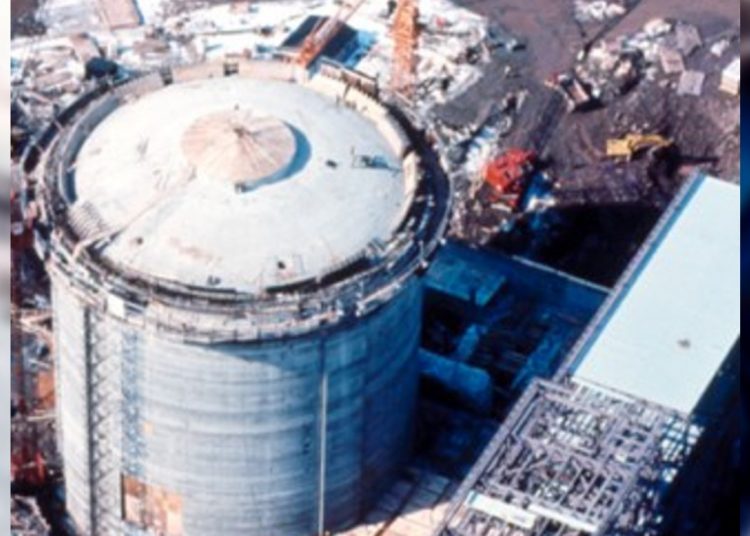
But NB Power insists the station should supply safe, reliable electricity for years to come
Telegraph-Journal, John Chilibeck • Local Journalism Initiative reporter, Jan 08, 2025
Last year’s costly, prolonged shutdown at the Point Lepreau Nuclear Generating Station near Saint John is just a piece of debilitatingly expensive repairs to come, warns an industry critic.
The outage that lasted between April 6 and Dec. 11 could end up costing New Brunswick ratepayers hundreds of millions.
But Gordon Edwards argues far bigger costs could be coming down the line in the years ahead to the workhorse in NB Power’s fleet of generators that supplies more than one-third of the province’s electricity.
Edwards is the president and co-founder of the nonprofit organization Canadian Coalition for Nuclear Responsibility and a long-time anti-nuclear activist who testified in 2023 before a New Brunswick legislative committee.
He told Brunswick News in a recent interview that many of the hopes behind the massive $2.5-billion refurbishment of the plant in 2012 turned out to be a fantasy. Now 41 years old, the plant is showing its age, he said.
There are things in the Lepreau reactor that were simply not done that should have been done at the time of the refurbishment. – Gordon Edwards
“The promise was held out that by spending all this money on refurbishment that essentially we’d have a brand new reactor,” Edwards said from his home in Montreal.
“And that’s obviously not true. When you replace a part of a complicated piece of machinery, like an automobile for that matter, often times it causes something else to go wrong because it’s worn but has not been replaced. And there are things in the Lepreau reactor that were simply not done that should have been done at the time of the refurbishment.”
According to a report by New Brunswick’s auditor general in 2014, Lepreau’s refurbishment took 37 months longer and cost $1 billion more than anticipated.
The latest shutdown started on April 6. It was supposed to be a 100-day planned maintenance outage to ensure the ongoing reliability and safety of the station’s operations. However, when workers started to fire up the plant again, they discovered a big problem on the non-nuclear side of the station where none of the maintenance work had been done.
Before the plant could get back up and running, the problem had to be fixed: six damaged stator bars inside the main generator. NB Power described the repair process as complex, requiring careful disassembly, reassembly, and extensive testing to meet strict safety and operational standards.
In the end, it took 149 extra days to get the job done and the plant back online.
No official figures have been released on the extra cost to customers, but earlier in the summer an NB Power official at rate hearings in Fredericton said the repairs would be more than $70 million and the cost of buying power or burning more fossil fuel at other stations to pick up the slack would be on average $900,000 a day.
This raises the possibility that the shutdown cost as much as $294 million.
“NB Power continues to assess the financial impact of the extended outage and is actively exploring options to mitigate costs for customers, including potential recovery through corporate insurance policies,” the public utility stated in a press release on Dec. 12.
Edwards predicts more problems will arise because the refurbishment, now more than a decade old, mostly addressed the plant’s nuclear side, not the conventional one.
“The fact that you have the core of the reactor back up to top operating condition, puts more of a strain on these other components that have not been replaced,” he said. “Among the components that weren’t replaced are the steam generators, which are critical.”
Edwards said the private consortium Bruce Power in Ontario took a different course, replacing steam generators at the first two units at the Bruce nuclear plants on the eastern shore of Lake Huron when they were refurbished in 2012.
“That was a prudent thing to do, but NB Power did not replace them at Lepreau. I predict that will be a source of problems going forward,” said the critic, an octogenarian who has a PhD in mathematics from Queen’s University.
……………………………………………………………………Edwards said another major issue at the plant is the prolonged use of the same hard water, which has different physical properties than regular water. He said the 200,000 litres that circulate in tubes is highly radioactive and should have been replaced long ago.
“To keep the costs from ballooning completely out of proportion, NB Power hasn’t replaced the hard water,” he said. “The cost of hard water is expensive. As much as one-fifth of the cost of a nuclear plant is simply the hard water.”
He and other anti-nuke activists, such as the Sierra Club of Canada, have for years called for the hard water’s replacement, arguing the radioactivity can leak during accidental spills, causing a threat to plant workers and the wider environment.
But NB Power says for the time being, such a drastic step is unnecessary.
“We continue to monitor industry-wide processes and improvements as it relates to the reactor moderator heavy water,” Couture said. “It has not been determined at this time that a replacement of the moderator heavy water is required.” https://tj.news/new-brunswick/lepreau-nuclear-plants-costs-will-continue-to-balloon-critic#:~:text=No%20official%20figures%20have%20been,slack%20would%20be%20on%20average
Ohio Community Faces Cancer Crisis from Radioactive Contamination
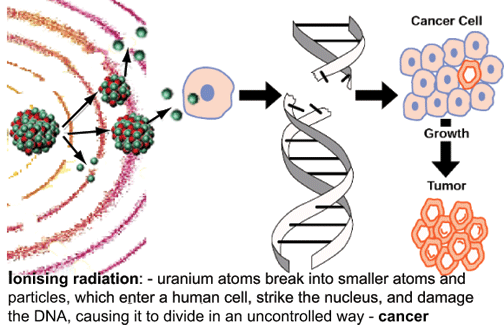
PIKETON, OH – A growing health crisis in Pike County, Ohio, has brought national attention to a region plagued by some of the highest cancer rates and premature death rates in the country. Decades of uranium enrichment and ongoing demolition at the Portsmouth Gaseous Diffusion Plant are now being linked to the troubling health trends impacting this community and six surrounding counties.
A recent study by Joseph J. Mangano, epidemiologist and executive director of the Radiation and Public Health Project, paints a stark picture of the consequences of radioactive contamination in Pike County. Released last summer, the study highlights significant increases in cancer, infant mortality, and premature death rates in communities located downwind of the former uranium enrichment plant.
Cancer Rates and Premature Deaths
The numbers are alarming. Between 2021 and 2023, Pike County’s premature death rate for individuals under 74 years old was 107% higher than the national average, a sharp rise from 85% above the national average between 2017 and 2020. Over 750 premature deaths occurred during this period in a county with a population of just over 27,000.
Cancer rates in Pike County and six neighboring counties—Adams, Gallia, Jackson, Lawrence, Scioto, and Vinton—were 17.5% above the national average between 2015 and 2019. Infant mortality rates in the region were also 31.9% higher than the U.S. average between 1999 and 2020, and middle-aged adults saw mortality rates more than double the national average.
A School at the Center of Controversy
In 2019, concerns about radioactive contamination reached a tipping point when Zahn’s Corner Middle School in Piketon was permanently closed after radioactive isotopes, including enriched uranium and neptunium-237, were discovered inside the building. The school, located just a few miles from the Portsmouth plant, became a symbol of the community’s struggle with the health impacts of the site. Over the years, several students and staff members at Zahn’s succumbed to rare cancers, further heightening concerns.
Recently, the school district sold the building to a Christian ministry, which plans to reopen it as a STEM academy. While the sale marks a new chapter for the facility, it has reignited fears about whether the site is truly safe, given the radioactive materials previously found within its walls.
Radioactive Contamination and Ongoing Demolition
The Portsmouth Gaseous Diffusion Plant, operational from 1954 to 2001, enriched uranium for nuclear weapons and reactors, releasing radioactive particles such as Americium-241, Plutonium-238, and Uranium-235 into the environment. These isotopes, which remain hazardous for thousands of years, have contaminated the air, water, and soil in the surrounding area.
Although uranium enrichment operations ceased in 2001, the plant remains active with demolition and decommissioning projects. Experts have raised concerns that open-air demolition of contaminated buildings is releasing additional radioactive particles into the environment. Critics argue that the U.S. Department of Energy’s (DOE) air monitoring, which detects only “background” levels of radiation, fails to capture the full extent of the contamination.
Community Devastation
The impact on the community has been profound. Families across Pike County and neighboring areas have experienced unusually high rates of rare cancers and aggressive diseases, particularly among children and young adults. Many residents believe these illnesses are tied to decades of exposure to radioactive materials released by the plant.
The closure of Zahn’s Corner Middle School and the deaths of students and staff members have become a grim reminder of the broader crisis affecting the region. Parents and advocates continue to demand answers about the plant’s role in the contamination and the steps being taken to ensure the safety of current and future generations.
A Call for Accountability
Despite mounting evidence of health risks, the DOE has proposed new projects at the Portsmouth site, including uranium purification and experimental reactors. These plans have fueled further concerns among residents, who argue that additional activities could exacerbate the environmental and health challenges they already face.
Advocates and researchers are calling for independent investigations into the health impacts of the Portsmouth plant and comprehensive public health monitoring for affected communities. Many argue that stricter oversight is urgently needed to prevent further harm.
A Community Demanding Justice
The study by Mangano highlights the devastating and long-lasting effects of radioactive contamination in Pike County. The ongoing health crisis, coupled with incidents like the closure of Zahn’s Corner Middle School, underscores the urgent need for accountability and meaningful action to address the region’s toxic legacy. For residents of Pike County and surrounding areas, the fight for answers—and justice—continues.
Japanese crime boss admits to conspiring to sell nuclear material to Iran
Takeshi Ebisawa faces a maximum punishment of life in prison after pleading guilty to six counts in a Manhattan court.
A Japanese crime boss has pleaded guilty to conspiring to sell nuclear material from Myanmar to Iran along with drug trafficking and weapons offences, authorities in the United States have said.
Takeshi Ebisawa, 60, a member of the yakuza, entered a guilty plea to six counts in federal court in Manhattan on Wednesday, the US Department of Justice said in a statement.
He is set to be sentenced on April 9.
According to prosecutors, Ebisawa in 2020 told an undercover agent for the Drug Enforcement Administration (DEA) and a DEA source that he had acquitted a large quantity of thorium and uranium that he wished to sell.
In response to Ebisawa’s repeated inquiries, the undercover agent agreed to help Ebisawa broker the sale of the nuclear materials to an associate who was posing as an Iranian general, prosecutors said.
Ebisawa then offered to supply the undercover associate with plutonium that would be even “better” and more “powerful” than uranium for making nuclear weapons, according to prosecutors.
A powdery yellow substance that Ebisawa’s co-conspirators showed to undercover agents was later determined in a laboratory analysis to contain detectable quantities of uranium, thorium and plutonium, the Justice Department said.
Ebisawa also conspired to broker the purchase of US-made surface-to-air missiles and heavy-duty weaponry to arm multiple ethnic armed groups in Myanmar, and to accept large quantities of heroin and methamphetamine as partial payment for the arms, according to prosecutors.
US officials said they conducted Ebisawa’s arrest and prosecution in cooperation with law enforcement partners in Indonesia, Japan and Thailand.
“Today’s plea should serve as a stark reminder to those who imperil our national security by trafficking weapons-grade plutonium and other dangerous materials on behalf of organized criminal syndicates that the Department of Justice will hold you accountable to the fullest extent of the law,” said Assistant Attorney General Matthew G Olsen of the Justice Department’s National Security Division.
Ebisawa, who was previously charged in 2022 with international drug trafficking and firearms offences, faces possible life imprisonment for the most serious of the charges.
An overlooked Supreme Court case could decide the future of nuclear power

Miles Mogulescu, 6 Dec 24, https://beyondnuclearinternational.org/2025/01/05/a-double-edged-sword-of-damocles/
Although barely mentioned in the mainstream media, in granting cert to Interim Storage Partners, LLC v. Texas, a case about the storage of spent radioactive fuel from nuclear power plants, the U.S. Supreme Court may have taken on potentially the most consequential case of its new term.
SCOTUS will decide whether or not to uphold a Fifth Circuit decision that the Nuclear Regulatory Commission (NRC) does not have the legal power to license a private corporation to construct an off-site storage facility to hold deadly radioactive waste from nuclear power plants.
Depending on the legal rationale for SCOTUS’ decision, it could further enhance the power of courts to overturn decisions of regulatory agencies.
The case could determine whether artificial intelligence companies like Microsoft and Google can build a new generation of nuclear power plants to service the voracious hunger of artificial intelligence for electricity. Depending on its rationale, it could also impact the ability of regulatory agencies to function efficiently without being second guessed by courts.
The issues in the case have brought together an unlikely coalition of environmentalists, Texas Republicans, New Mexico Democrats, and the oil and gas industry against an equally unlikely grouping of the Biden administration, the nuclear power industry, and AI tech companies like Microsoft and Google.
The Legal Substance Issues
The environmental and legal issues in the case have a long history. The nuclear power industry has accumulated nearly 100,000 metric tons of radioactive waste that need to be deposited in a place that could be safe for millions of years. Most of the waste is now stored in temporary facilities adjacent to the power plants that create them, but such sites are running out of space and may not be safe long-term. During the 1980s Congress passed and amended the Nuclear Waste Policy Act providing for a permanent waste site and then designating Yucca Mountain, Nevada as the sole site. But plans for the site were abandoned due to environmental and political opposition, leaving no permanent site for disposable nuclear waste.
In response, for the first time the Nuclear Regulatory Commission began to grant licenses for “interim” storage facilities which were off-site (and often hundreds of miles away) from the power plants which generated the waste, claiming authority under the Atomic Energy Act. One such license was for an off-site storage facility in the Permian Basin, Texas. Texas Republican Attorney General Ken Paxton and a private oil and gas company sued, claiming that the federal government lacked the statutory authority to issue a license for interim off-site storage.
The conservative Fifth Circuit agreed with the plaintiffs, opining “Texas is correct. The Atomic Energy Act does not confer on the commission the broad authority it claims to issue licenses for private parties to store spent nuclear fuel away-from-the-reactor. And the Nuclear Waste Policy Act establishes a comprehensive statutory scheme for dealing with nuclear waste generated from commercial nuclear power generation, thereby foreclosing the commission’s claim of authority.”
The Fifth Circuit vacated the license. The U.S. Supreme Court just granted cert and will hear the case this term. Its decision will likely be highly consequential, both for environmental and AI development reasons, and for legal reasons.
Environmentally, the building of new nuclear power plants has been stalled for decades, both because of cost and because of environmental catastrophes like Three Mile Island, Chernobyl, and Fukushima and anti-nuclear films like Mike Nichols’ Silkwood starring Meryl Streep.
The Role of High-Tech Companies in Expanding Nuclear for AI
But largely under the radar, the voracious demand for electricity to power AI is leading top high-tech companies like Microsoft and Google to reinvigorate nuclear energy. Goldman Sachs analysts say it takes nearly 10 times the energy to power a ChatGPT than a Google search—data center power center demand will grow by 160% in the next five years. Morgan Stanley projects global data center emissions to accumulate 2.5 billion metric tons carbon-dioxide equivalent by then.
Microsoft has contracted for the currently mothballed Three Mile Island plant to reopen and access its entire output for Microsoft’s data centers. The operator is seeking hundreds of millions in tax breaks from the federal government under President Joe Bidens’s Inflation Reduction Act, which it says are necessary to make the reopening economically feasible. Energy Secretary Jennifer Granholm has said in the past that federal subsidies could cut the cost of bringing a new plant online by as much as half.
In March an Amazon affiliate purchased a nuclear-powered data center in Pennsylvania for $650 million.
It will be highly consequential if SCOTUS simply upholds the Fifth Circuit’s result, which would greatly slow high tech’s attempts to kick start nuclear power without time to reexamine the environmental dangers.
Google has already announced that it will support building seven small nuclear-power reactors in the U.S., to help power its growing appetite for electricity for AI and jump-start a U.S. nuclear revival.
The tech companies claim that reviving nuclear power will decrease CO2 emissions and help with global climate change. But they ignore the long-standing warnings of environmentalists of the potentially catastrophic dangers of nuclear power.
If SCOTUS upholds the Fifth Circuit decision outlawing the licensing of off-site nuclear waste dumps, it could considerably slow the renewed push for nuclear power, particularly by high-tech companies. That might give more time to evaluate the potential dangers of widespread renewal of nuclear power.
But depending on the legal rationale for SCOTUS’ decision, it could further enhance the power of courts to overturn decisions of regulatory agencies.
The Fifth Circuit used several rationales to block the license of temporary off-site nuclear waste facilities. The first, and least concerning, is its statutory holding that the Atomic Energy Act is “unambiguous” and “nowhere authorizes issuance of a materials license to possess spent nuclear fuel for any reason, let alone for the sole purpose of storing such material in a standalone facility.” If SCOTUS upholds the Fifth Circuit purely on statutory interpretation grounds, it would create few problematic precedents for regulatory agencies in general.
The Major Questions Doctrine
But the Fifth Circuit unnecessarily went further, holding that “even if the statutes were ambiguous, the [government’s] interpretation would not be entitled to deference by the courts” pursuant to the Chevron Doctrine, under which for previous decades, until recently rejected by the Roberts Court, judges deferred to the expertise of regulatory agencies when reasonably interpreting ambiguous statutes.
The Fifth Circuit cited SCOTUS’ precedent-setting 2022 decision in West Virginia v. EPA, in which, for the first time, a conservative majority of SCOTUS justices relied on the “major questions” doctrine to overturn a major Environmental Protection Agency rule. Under the newly invented “major questions” doctrine, SCOTUS ruled that courts should not defer to agencies on matters of “vast economic or political significance” unless the U.S. Congress has explicitly given the agencies the authority to act in those situations.
Citing West Virginia v. EPA, the Fifth Circuit held that “[D]isposal of nuclear energy is an issue of vast ‘economic and political significance.’ What to do with the nation’s ever-growing accumulation of nuclear waste is a major questions that—as the history of the Yucca Mountain repository shows—has been hotly contested for over half a century.”
It’s questionable whether the Fifth Circuit needed to reach the issues concerning the major questions doctrine in order to block the waste depository. It had already decided that the statutes were “unambiguous” and therefore it was not necessary to decide what would happen if they were “ambiguous,” which is the only situation in which the major questions doctrine might arguably apply. If SCOTUS wants to affirm the Fifth Circuit’s result, it can simply agree that the statutes were unambiguous and treat the parts of the decision involving the major questions doctrine as mere dicta. That would set no additional precedent for when courts can question the expertise of regulatory agencies.
What Party Has the Right to Sue?
There’s also a procedural issue in the case, that depending on SCOTUS’ rationale, could set precedent allowing a wider range of entities to legally challenge regulatory agency decisions. Under the Hobbs Act, a “party aggrieved” by an agency’s final order may seek judicial review in a federal appeals court.
The NRC argued, however, that the plaintiffs were not parties aggrieved by the NRC’s licensing order because they were not parties to the underlying administrative proceeding. The Fifth Circuit cited its own precedent asserting that the Hobbs Act contains an “ultra vires” exception to the party aggrieved requirement when the petitioner attacks the agency action as exceeding its authority and therefore the plaintiffs had a right to sue.
In granting cert SCOTUS agreed to rule on two questions. First is the substance issue on whether the government exceeded its authority in granting the off-site nuclear storage license. The second is the procedural issue of whether an allegation of ultra vires can override statutory limitations on jurisdiction, as the Fifth Circuit held. If SCOTUS rules that the Fifth Circuit was wrong to grant jurisdiction to the plaintiffs, the likely result would be that the licenses for off-site nuclear waste facilities would go forward and expand.
It will be highly consequential if SCOTUS simply upholds the Fifth Circuit’s result, which would greatly slow high tech’s attempts to kick start nuclear power without time to reexamine the environmental dangers. At the same time, if SCOTUS also rules that the plaintiffs had an ultra vires right to sue, it could further cripple the ability of regulatory agencies to act to protect the public interest under broad grants of power.
Miles Mogulescu is an entertainment attorney/business affairs executive, producer, political activist and writer.
First Nations chiefs shouldn’t be duped by ‘nuclear-is-green’ deception
Commentary
by William Eric Altvater, January 6, 2025, : https://nbmediacoop.org/2025/01/06/first-nations-chiefs-shouldnt-be-duped-by-nuclear-is-green-deception/
Some First Nation Chiefs are victims of shenanigans, not unlike the swindle behind the purchase of Manhattan. The federal government needs the support of Indigenous peoples to expand nuclear power generation capacity in Canada.
For millennia, the cornerstones of the Indigenous people that inhabit Turtle Island, now known as North America, held all that is essential to life, in reverence. Every decision considered the next 7 generations. These cornerstones are crumbling.
Newcomers, armed with the Colonizing tool, “The Doctrine of Discovery” and their mentality of superiority, invaded the land of those they called “Savages,” almost totally exterminating Skicinuwok, People of The Earth.
Determined to bestow Christianity and civility to this wild untamed population, old growth forests were cut, rivers and streams were dammed to power sawmills, roads and railroads were built, bridges erected. All to create an infrastructure for capitalism, a system to make a profit, that morphed into greed, a word of foreign root. This unbridled desire for progress has ruined what was once called Paradise.
Now most water is not fit to drink, clean air is scarce, deforestation is rampant, biodiversity loss out of control, plants genetically modified, food manufactured with unpronounceable chemicals, caged fish starved of oxygen while being fed chicken feathers and pig parts, cancer cases in the millions, the list goes on.
As the population increased over this continent the available sources for power generation have not been able to satisfy the insatiable desires of the “bigger, better, faster, more is never enough” mentality. Some have finally acknowledged the fact that fossil fuels are not the golden egg they were once deemed to be.
So-called “Green Energy” is required to slow the blind drive to extinction of man; man, who is considered by some to be the most intelligent creature to ever roam Earth. Unfortunately, the lure of riches and the corruption of self-serving purposes have led man to stray from practices that nurture everything required to sustain life on this tiny blue marble floating through the universe.
Nuclear power is now being touted as being “Green.” It is not. Big money corporations are lobbying legislators to convince them and the public that it is. They are also lobbying to convince the public that they should foot the bill in the form of taxes and rate hikes, for a process that pollutes from the day it starts. Water is life. As soon as uranium is mined from the earth it begins to contaminate the water in surrounding aquifers.
When the uranium is processed sufficiently, it is used as fuel for reactors where it generates heat while delivering electricity, not just for essential needs, but also for many things once considered luxuries. This fission generated heat is then dumped into nearby waters where it kills thousands, if not millions of small beings that form the basis of life itself.
After this radioactive fuel is depleted, it is stored in various containers where it will stay radioactive for eons. Indigenous Grandmothers have labelled it “Forever Dangerous.”
The power generated during the fission process benefits only those who exist today as the process occurs, not those born tomorrow or next week or next month. All the radioactive waste and the inherent danger it creates is left to future generations, kicking the can down the road.
What better place to dump this waste than in an area with a population that has witnessed Newcomers enrich themselves for hundreds of years? Yes, what better place than a population that has been targeted for assimilation, suffered theft of lands, witnessed the taking of naturally bestowed rights? A population that has been subjected to racial Indian Act legislation essentially stripping away all that sustained this population for thousands of years.
Yes, let us give the Indians some more shiny beads and trinkets so that they willingly agree to care for our radioactive garbage. How do we do this? Let’s talk to the Chief and Council. Let’s wine and dine them. Let’s give them some money, take them to dinner, buy some drinks and make them feel all festive and most of all make them think we are looking out for their best interests. Some Chiefs have taken the bait.
Egregious as it may be, this is exactly what is happening in some Indigenous communities contrary to the will of the majority. Elected Chiefs are continuing the deception as they are blinded and professing the “Nuclear is Green” mantra. They have lost connection with the Spirit of Ancestors and traditional values. They need to have a serious introspection and realize that looking forward, we need only look back at what has sustained us to this point in time. We need not do any more than that.
Can Trump Trump China (or Vice Versa)?

When Washington granted diplomatic recognition to China in 1979, it “acknowledged” that Taiwan and the mainland were both part of “one China” and that the two parts could eventually choose to reunite. The U.S. also agreed to cease diplomatic relations with Taiwan and terminate its military presence there.
For decades, one president after another reaffirmed the “one China” policy while also providing Taiwan with increasingly powerful weaponry.
the bind Trump will inevitably find himself in when it comes to Taiwan this time around.
Trump Confronts a Rising China
Can He Manage U.S.-China Relations Without Precipitating World War III?
By Michael Klare, December 17, 2024, https://scheerpost.com/2024/12/19/trump-confronts-a-rising-china/
Gaza, Haiti, Iran, Israel, Lebanon, Russia, Syria, Ukraine, and Venezuela: President-elect Donald Trump will face no shortage of foreign-policy challenges when he assumes office in January. None, however, comes close to China in scope, scale, or complexity. No other country has the capacity to resist his predictable antagonism with the same degree of strength and tenacity, and none arouses more hostility and outrage among MAGA Republicans. In short, China is guaranteed to put President Trump in a difficult bind the second time around: he can either choose to cut deals with Beijing and risk being branded an appeaser by the China hawks in his party, or he can punish and further encircle Beijing, risking a potentially violent clash and possibly even nuclear escalation. How he chooses to resolve this quandary will surely prove the most important foreign test of his second term in office.
As Waltz and others around Trump see it, China poses a multi-dimensional threat to this country’s global supremacy. In the military domain, by building up its air force and navy, installing military bases on reclaimed islands in the South China Sea, and challenging Taiwan through increasingly aggressive air and naval maneuvers, it is challenging continued American dominance of the Western Pacific. Diplomatically, it’s now bolstering or repairing ties with key U.S. allies, including India, Indonesia, Japan, and the members of NATO. Meanwhile, it’s already close to replicating this country’s most advanced technologies, especially its ability to produce advanced microchips. And despite Washington’s efforts to diminish a U.S. reliance on vital Chinese goods, including critical minerals and pharmaceuticals, it remains a primary supplier of just such products to this country.
Fight or Strike Bargains?
For many in the Trumpian inner circle, the only correct, patriotic response to the China challenge is to fight back hard. Both Representative Waltz, Trump’s pick as national security adviser, and Senator Marco Rubio, his choice as secretary of state, have sponsored or supported legislation to curb what they view as “malign” Chinese endeavors in the United States and abroad.
What such a deal might look like is anyone’s guess, but it’s hard to see how Trump could win significant concessions from Beijing without abandoning some of the punitive measures advocated by the China hawks in his entourage. Count on one thing: this complicated and confusing dynamic will play out in each of the major problem areas in U.S.-China relations, forcing Trump to make critical choices between his transactional instincts and the harsh ideological bent of his advisers.
Trump, China, and Taiwan
Of all the China-related issues in his second term in office, none is likely to prove more challenging or consequential than the future status of the island of Taiwan. At issue are Taiwan’s gradual moves toward full independence and the risk that China will invade the island to prevent such an outcome, possibly triggering U.S. military intervention as well. Of all the potential crises facing Trump, this is the one that could most easily lead to a great-power conflict with nuclear undertones.
When Washington granted diplomatic recognition to China in 1979, it “acknowledged” that Taiwan and the mainland were both part of “one China” and that the two parts could eventually choose to reunite. The U.S. also agreed to cease diplomatic relations with Taiwan and terminate its military presence there. However, under the Taiwan Relations Act of 1979, Washington was also empowered to cooperate with a quasi-governmental Taiwanese diplomatic agency, the Taipei Economic and Cultural Representative Office in the United States, and provide Taiwan with the weapons needed for its defense. Moreover, in what came to be known as “strategic ambiguity,” U.S. officials insisted that any effort by China to alter Taiwan’s status by force would constitute “a threat to the peace and security of the Western Pacific area” and would be viewed as a matter “of grave concern to the United States,” although not necessarily one requiring a military response.
For decades, one president after another reaffirmed the “one China” policy while also providing Taiwan with increasingly powerful weaponry. For their part, Chinese officials repeatedly declared that Taiwan was a renegade province that should be reunited with the mainland, preferably by peaceful means. The Taiwanese, however, have never expressed a desire for reunification and instead have moved steadily towards a declaration of independence, which Beijing has insisted would justify armed intervention.
As such threats became more frequent and menacing, leaders in Washington continued to debate the validity of “strategic ambiguity,” with some insisting it should be replaced by a policy of “strategic clarity” involving an ironclad commitment to assist Taiwan should it be invaded by China. President Biden seemed to embrace this view, repeatedly affirming that the U.S. was obligated to defend Taiwan under such circumstances. However, each time he said so, his aides walked back his words, insisting the U.S. was under no legal obligation to do so.
The Biden administration also boosted its military support for the island while increasing American air and naval patrols in the area, which only heightened the possibility of a future U.S. intervention should China invade. Some of these moves, including expedited arms transfers to Taiwan, were adopted in response to prodding from China hawks in Congress. All, however, fit with an overarching administration strategy of encircling China with a constellation of American military installations and U.S.-armed allies and partners.
From Beijing’s perspective, then, Washington is already putting extreme military and geopolitical pressure on China. The question is: Will the Trump administration increase or decrease those pressures, especially when it comes to Taiwan?
That Trump will approve increased arms sales to and military cooperation with Taiwan essentially goes without saying (as much, at least, as anything involving him does). The Chinese have experienced upticks in U.S. aid to Taiwan before and can probably live through another round of the same. But that leaves far more volatile issues up for grabs: Will he embrace “strategic clarity,” guaranteeing Washington’s automatic intervention should China invade Taiwan, and will he approve a substantial expansion of the American military presence in the region? Both moves have been advocated by some of the China hawks in Trump’s entourage, and both are certain to provoke fierce, hard-to-predict responses from Beijing.
Many of Trump’s closest advisers have, in fact, insisted on “strategic clarity” and increased military cooperation with Taiwan. Michael Waltz, for example, has asserted that the U.S. must “be clear we’ll defend Taiwan as a deterrent measure.” He has also called for an increased military presence in the Western Pacific. Similarly, last June, Robert C. O’Brien, Trump’s national security adviser from 2019 to 2021, wrote that the U.S. “should make clear” its “commitment” to “help defend” Taiwan, while expanding military cooperation with the island.
Trump himself has made no such commitments, suggesting instead a more ambivalent stance. In his typical fashion, in fact, he’s called on Taiwan to spend more on its own defense and expressed anger at the concentration of advanced chip-making on the island, claiming that the Taiwanese “did take about 100% of our chip business.” But he’s also warned of harsh economic measures were China to impose a blockade of the island, telling the editorial board of the Wall Street Journal, “I would say [to President Xi]: if you go into Taiwan, I’m sorry to do this, I’m going to tax you at 150% to 200%.” He wouldn’t need to threaten the use of force to prevent a blockade, he added, because President Xi “respects me and he knows I’m [expletive] crazy.”
Such comments reveal the bind Trump will inevitably find himself in when it comes to Taiwan this time around. He could, of course, try to persuade Beijing to throttle back its military pressure on the island in return for a reduction in U.S. tariffs — a move that would reduce the risk of war in the Pacific but leave China in a stronger economic position and disappoint many of his top advisers. If, however, he chooses to act “crazy” by embracing “strategic clarity” and stepping up military pressure on China, he would likely receive accolades from many of his supporters, while provoking a (potentially nuclear) war with China.
In January 2018, the first Trump administration imposed tariffs of 30% on imported solar panels and 20%-50% on imported washing machines, many sourced from China. Two months later, the administration added tariffs on imported steel (25%) and aluminum (10%), again aimed above all at China. And despite his many criticisms of Trump’s foreign and economic policies, President Biden chose to retain those tariffs, even adding new ones, notably on electric cars and other high-tech products. The Biden administration has also banned the export of advanced computer chips and chip-making technology to China in a bid to slow that country’s technological progress.
Accordingly, when Trump reassumes office on January 20th, China will already be under stringent economic pressures from Washington. But he and his associates insist that those won’t be faintly enough to constrain China’s rise. The president-elect has said that, on day one of his new term, he will impose a 10% tariff on all Chinese imports and follow that with other harsh measures. Among such moves, the Trump team has announced plans to raise tariffs on Chinese imports to 60%, revoke China’s Permanent Normal Trade Relations (also known as “most favored nation”) status, and ban the transshipment of Chinese imports through third countries.
Most of Trump’s advisers have espoused such measures strongly. “Trump Is Right: We Should Raise Tariffs on China,” Marco Rubio wrote last May. “China’s anticompetitive tactics,” he argued, “give Chinese companies an unfair cost advantage over American companies… Tariffs that respond to these tactics prevent or reverse offshoring, preserving America’s economic might and promoting domestic investment.”
But Trump will also face possible pushback from other advisers who are warning of severe economic perturbations if such measures were to be enacted. China, they suggest, has tools of its own to use in any trade war with the U.S., including tariffs on American imports and restrictions on American firms doing business in China, including Elon Musk’s Tesla, which produces half of its cars there. For these and other reasons, the U.S.-China Business Council has warned that additional tariffs and other trade restrictions could prove disastrous, inviting “retaliatory measures from China, causing additional U.S. jobs and output losses.”
As in the case of Taiwan, Trump will face some genuinely daunting decisions when it comes to economic relations with China. If, in fact, he follows the advice of the ideologues in his circle and pursues a strategy of maximum pressure on Beijing, specifically designed to hobble China’s growth and curb its geopolitical ambitions, he could precipitate nothing short of a global economic meltdown that would negatively affect the lives of so many of his supporters, while significantly diminishing America’s own geopolitical clout. He might therefore follow the inclinations of certain of his key economic advisers like transition leader Howard Lutnick, who favor a more pragmatic, businesslike relationship with China. How Trump chooses to address this issue will likely determine whether the future involves increasing economic tumult and uncertainty or relative stability. And it’s always important to remember that a decision to play hardball with China on the economic front could also increase the risk of a military confrontation leading to full-scale war, even to World War III.
And while Taiwan and trade are undoubtedly the most obvious and challenging issues Trump will face in managing (mismanaging?) U.S.-China relations in the years ahead, they are by no means the only ones. He will also have to decide how to deal with increasing Chinese assertiveness in the South China Sea, continued Chinese economic and military-technological support for Russia in its war against Ukraine, and growing Chinese investments in Africa, Latin America, and elsewhere.
In these, and other aspects of the U.S.-China rivalry, Trump will be pulled toward both increased militancy and combativeness and a more pragmatic, transactional approach. During the campaign, he backed each approach, sometimes in the very same verbal outburst. Once in power, however, he will have to choose between them — and his decisions will have a profound impact on this country, China, and everyone living on this planet.
Radiation is normal at Cesar Chavez Park, but it’s a different story underground, tests show

New precautions are being urged for workers in contact with underground liquids at the popular landfill-turned-park, but Berkeley residents need not fear a stroll on the surface.
Berkelyside, by Iris KwokJan. 2, 2025
Radiation testing of Cesar Chavez Park ordered by regional water regulators has found that bird watchers, morning walkers and dogs digging in the dirt have no cause for worry.
“All radiological activity detected at the ground surface and shallow subsurface is equal to or lower than typical background radiation levels expected in the ambient environment,” according to a report released Monday outlining the results of gamma-ray drone tests conducted this fall by UC Berkeley nuclear engineering experts.
But underneath the landfill-turned-park, it’s a somewhat different story.
Tests of groundwater and leachate — liquids between 6 to 34 feet underground formed when rainwater filters through landfill — revealed higher-than-usual levels of radium-226, a radioactive metal, according to the report, which found four types of radionuclides in the city’s monitoring wells.
Groundwater and leachate wells are secured with locks, lids and caps. While the wells are not publicly accessible, there could be a danger for workers.
“Contractors and maintenance personnel who come into contact with subsurface liquids at the site should now take additional precautions to prevent unnecessary exposure to radiation,” reads the report. Chronic exposure to high levels of radium can increase the risk of bone, liver or breast cancer, according to the Environmental Protection Agency website.
The liquid samples were collected by SCS Engineers, which authored the city-commissioned report, and sent to labs in Pittsburg, California and St. Louis, Missouri for analysis.
The highest levels of radium-226 were discovered in a leachate monitoring well on the northwestern quadrant of the park, according to the report. The sample taken from that well measured 226 picocuries per liter (a unit of measurement for radioactivity in air) — far exceeding the EPA’s limit of 5 picocuries per liter for drinking water. The highest level of radium-226 found in a groundwater monitoring well was 88.8 picocuries per liter.
…………………………………………………………………………………………………………………………….. In January 2024, the water board ordered the city to test for the presence of radioactive material in the park after archival documents emerged showing that the now-defunct Stauffer Chemical Company may have dumped 11,100 pounds of potentially toxic industrial waste there in the 1960s and ’70s when it was still a municipal dump. The city closed the landfill in the 1980s, covered it with soil and thick clay, and in the early 1990s reopened it as Cesar Chavez Park. In a July letter to the water board, the city reiterated that it was not previously aware of the potential presence of radioactive material at the site.
…………………………..Berkeley is planning follow-up tests of the radionuclides detected in liquids deep underground at Cesar Chavez Park, but is awaiting further guidance from the water board, city spokesperson Seung Lee wrote in an email. In the coming days, the city plans to share public updates about the test results on its capital projects webpage.
The water board did not immediately respond to Berkeleyside’s questions about a timeline for the follow-up testing. ………. https://www.berkeleyside.org/2025/01/02/radiation-cesar-chavez-park-underground-landfill
1 This Month

of the week – Shut Down Drone Warfare!


Tell the Ukrainian Government to Drop Prosecution of Peace Activist Yurii Sheliazhenko

Petition to revoke the licensing of the Near Surface Nuclear Disposal Facility (NSDF) at Chalk River. https://www.ourcommons.ca/petitions/en/Petition/Details?Petition=e-7247
To see nuclear-related stories in greater depth and intensity – go to https://nuclearinformation.wordpress.com
-
Archives
- April 2026 (68)
- March 2026 (251)
- February 2026 (268)
- January 2026 (308)
- December 2025 (358)
- November 2025 (359)
- October 2025 (376)
- September 2025 (257)
- August 2025 (319)
- July 2025 (230)
- June 2025 (348)
- May 2025 (261)
-
Categories
- 1
- 1 NUCLEAR ISSUES
- business and costs
- climate change
- culture and arts
- ENERGY
- environment
- health
- history
- indigenous issues
- Legal
- marketing of nuclear
- media
- opposition to nuclear
- PERSONAL STORIES
- politics
- politics international
- Religion and ethics
- safety
- secrets,lies and civil liberties
- spinbuster
- technology
- Uranium
- wastes
- weapons and war
- Women
- 2 WORLD
- ACTION
- AFRICA
- Atrocities
- AUSTRALIA
- Christina's notes
- Christina's themes
- culture and arts
- Events
- Fuk 2022
- Fuk 2023
- Fukushima 2017
- Fukushima 2018
- fukushima 2019
- Fukushima 2020
- Fukushima 2021
- general
- global warming
- Humour (God we need it)
- Nuclear
- RARE EARTHS
- Reference
- resources – print
- Resources -audiovicual
- Weekly Newsletter
- World
- World Nuclear
- YouTube
-
RSS
Entries RSS
Comments RSS
 nuclear-news