Renewabl eenergy investments by Warren Buffett set to increase to around $30 billion
 Warren Buffett could double renewable energy investment to $30bn http://blueandgreentomorrow.com/2014/06/11/warren-buffett-could-double-renewable-energy-investment-to-30bn/ Wednesday, June 11th, 2014 By Richard Heasman
Warren Buffett has said his Berkshire Hathaway holding company could invest a further $15 billion (£8.9 billion) in solar and wind projects in the US.
At a Las Vegas conference this week, the world’s third wealthiest man was reminded by his deputy Greg Abel of the company’s current $15 billion investment in the sectors.
Buffett swiftly declared that the same figure should be committed again, describing the overall potential of sustainable energy as an expanding market.
Bloomberg said Buffett responded to Abel’s prompt with, “There’s another $15 billion ready to go, as far as I’m concerned.” Buffett has remained one of the world’s leading investors in renewable energies,bankrolling major solar and wind power developments with multi-billion dollar investments.
Buffett’s Nebraska-based firm Berkshire Hathaway is now the fifth-largest in the world by market value. It has huge investments in regulated, capital-intensive businesses such as infrastructure and energy.
Buffett has described the renewables market as high in potential, with the predictability of reinvestment and large growth.
In 2011, he bought a massive California-based solar farm project from First Solar. Other investments include the acquisition of an Iowa energy holding company in 2011.
His unit now operates power grids in the UK, natural gas pipelines that run across the entirety of the US and wind farms in Iowa, Wyoming, California and Arizona.
Buffett’s pledge to boost renewables investment comes after Barack Obama declared tighter emission targets for coal power companies – with an overall aim of cutting emissions by 30% by 2030. The Environmental Protection Agency (EPA) declared this would bring net climate and health benefits of up to $82 billion (£48 billion).
U.S. shores continue to have increasing levels of Fukushima radiation
 Post-Fukushima radiation levels near US shores continue to increase
http://voiceofrussia.com/news/2014_06_11/Post-Fukushima-radiation-levels-near-US-shores-continue-to-increase-5967/ Radiation levels in Albacore tuna have tripled post-Fukushima, according to Oregon State University (OSU) researchers. The scientists came to that conclusion after conducting a study on fish caught off the coast of Oregon.
According to Delvin Neville, a graduate research assistant at OSU, these trace levels are too small to be a realistic concern. “A year of eating albacore with these cesium traces is about the same dose of radiation as you get from spending 23 seconds in a stuffy basement from radon gas, or sleeping next to your spouse for 40 nights from the natural potassium-40 in their body,” said Mr. Neville.
However, researchers with the National Oceanic and Atmospheric Administration (NOAA) and the GEOMAR Research Center for Marine Geosciences say the worst is yet to come and that the most highly radioactive water hasn’t reached US shores yet.
Regardless, all scientists apparently agree that the radioactive contamination is still traveling in ocean currents, the long-term effects of which remain to be seen.
Questions in US Congress on costs of NATO nuclear burden
 House Bill Seeks Answers on Costs of NATO Nuclear Burden-Sharing, Global Security Newswire, By Rachel Oswald, 11 June 14 A defense bill approved by a House panel on Tuesday contains language that seeks to spotlight the costs of nuclear burden-sharing within NATO.
A measure contained in the House Appropriations Committee’s annual military spending bill would require the Pentagon to issue a report outlining “the proportional contributions of NATO members to the cost of sustaining forward-deployed nuclear weapons” as well as the impact that proportional cost-sharing would have on the U.S. military’s budget.
The United States presently shoulders the vast majority of the expense — about $100 million annually — for the operational deployment of less than 200 B-61 gravity bombs in Europe. The nonstrategic weapons are broadly understood to be fielded in Belgium, Germany, Italy, the Netherlands and Turkey. Those five nations in turn are supposed to maintain the aircraft capability necessary to deliver the nuclear bombs in an attack. The host states additionally pay for facility and security costs at the military installations where the weapons are stored.
Separate from the operational expense of keeping B-61s in Europe is the cost of modernizing the gravity bomb. The B-61 life-extension program is anticipated to cost as much as $11.5 billion — all of it currently to be borne by U.S. taxpayers, Kristensen told Global Security Newswire.
Some of the future costs of maintaining U.S. nuclear weapons in Europe include an estimated $1 billion to integrate the updated B-61 with European Tornado and F-16 aircraft and U.S. F-15E, F-16 and B-2 bombers; and about $154 million to enhance security at the European military bases that store the nuclear warheads, according to research compiled by Kristensen.
The House bill cites “the growing costs of this mission” as the reason for requiring a report on proportional cost-sharing with alliance members no later than six months after the legislation becomes law.
U.S. Representative Mike Quigley (D-Ill.) inserted the language during the bill’s markup on Tuesday. He sees the requested report as a “first step” toward achieving a “more equitable cost-sharing among NATO allies,” according to a press release from his office. He expects the report also will be useful in enabling U.S. legislators to better evaluate the cost-effectiveness of the B-61 modernization program and a plan give a nuclear capabilityto a future variant of the F-35 Joint Strike Fighter.
The military value of maintaining U.S. nuclear weapons in Europe has been questioned on both sides of the Atlantic, although nations shied away from altering the status quo at the 2012 NATO summit. In 2010, then-Vice Chairman of the U.S. Joint Chiefs of Staff Gen. James Cartwright indicated that U.S. long-range nuclear weapons and conventional arms could handle all of the military missions currently associated with the B-61 in Europe……. http://www.nationaljournal.com/global-security-newswire/house-bill-seeks-answers-on-costs-of-nato-nuclear-burden-sharing-20140611
The most radioactively poisoned site in America – Hanford
25 years on at America’s most contaminated nuclear waste site BBC News, Washington 10 June 2014 By Taylor Kate Brown The town of Hanford, Washington, has long been the most contaminated nuclear waste site in the US. But critics say poor management has put the site in further danger.
When Susan Leckband moved to eastern Washington state to take a job 30 years ago, radioactive contamination was not on her mind.
“I loved my job,” she says.
But it was only a handful of years before the place she worked, Hanford, turned from a plutonium production complex to a massive environmental clean-up site.
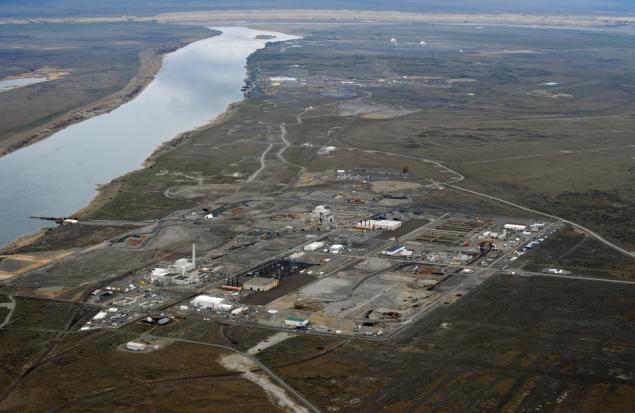
For Leckband, the question is not about the past, but the progress made on cleaning contaminated buildings and soil.
“It’s important to the entire Pacific North-West… the food crops, the salmon, the Indian tribes – it’s a huge, huge obligation,” she says.
Situated on a plain along the Columbia River, the Hanford site is where the US produced plutonium used in the Manhattan Project, for the bomb that destroyed Nagasaki, and for a Cold War stockpile………despite some progress, the site’s most complicated and potentially dangerous waste issue – 56 million gallons (255 million litres) of high-level radioactive waste sitting inside tanks at the centre of the site – is facing more problems.
In the mid-1980s, activists and reporters began to unwind Hanford’s history, detailing safety lapses and environmental hazards across the site. ………
Hanford’s daunting clean-up problem in 1989
100 sq miles (259 sq km) of contaminated groundwater
56 million gallons (254 million litres) of liquid waste, in tanks buried just below ground
More than 1,000 ad hoc burial sites of waste
Hundreds of contaminated buildings
450 billion gallons of contaminated water released at ground level……..http://www.bbc.com/news/magazine-26658719
Fracking brings instability and anxiety to the area around USA’s Waste Isolation Pilot Project (WIPP)

 Will Fracking Cause Our Next Nuclear Disaster? 09 June 2014 By Dahr Jamail, Truthout | The idea of storing radioactive nuclear waste inside a hollowed-out salt cavern might look good on paper. The concept is to carve out the insides of the caverns, deep underground, then carefully move in the waste. Over time, the logic goes, the salt will move in and insulate the containers for thousands of generations. “The whole game is to engineer something that can contain those contaminants on the order of tens of thousands of years,” Tim Judson, the executive director of the Nuclear Information Resource Service(NIRS), told Truthout. NIRS is intended to be a national information and networking center for citizens and environmental activists concerned about nuclear power, radioactive waste, radiation and sustainable energy issues, according to Judson.
Salt-cavern storage was the plan for the Waste Isolation Pilot Project (WIPP), the world’s third-deepest geological repository, constructed and licensed to permanently dispose of radioactive waste for 10,000 years. The repository sits approximately 26 miles east of the town of Carlsbad in southeastern New Mexico.
Since shipments began in 1999, more than 80,000 cubic meters and 11,000 shipments of waste have been transferred to WIPP.
But at the moment, there are several ongoing critical problems at the site, which has been closed and unable to accept shipments of radioactive waste ever since a fire and radiation release in February. Dozens of barrels of radioactive waste from Los Alamos National Lab, like the one that caused the radiation leak, now pose an “imminent” or “substantial” threat to public health and the environment.
Yet, these problems could pale in comparison to what might happen at the site if an earthquake were to strike, or if the protective salt layer were compromised by nearby drilling for oil and gas, and in particular, hydraulic fracturing, commonly known as fracking.
Fracking is a technique used in obtaining gas and petroleum, in which water is mixed with sand and toxic chemicals, and the mixture is injected at extremely high pressure into a wellbore to create small fractures.
Thus, one would logically deduce that fracking should never be done anywhere near WIPP. However, it is being done there, and experts expect it to increase.
“In the last three years, a dozen fracking wells have become operational within five miles of the site [WIPP],” Don Hancock, the director of the Nuclear Waste Safety Program at Southwest Research and Information Center, told Truthout.
Given that it is already well known that fracking causes earthquakes, it is clear that the nuclear waste storage site is now in danger of having its structural integrity compromised.
“These are the major concerns,” Hancock warned. “There is clearly a possibility that the deep fracking can affect the stability, but even more likely is fracking liquids nearing or entering the waste beds – which would be a very bad thing.”
“They Are Drilling All Around It”
Truthout spoke with a state of New Mexico employee who is intimately familiar with the permitting and drilling processes related to WIPP. The employee spoke on condition of strict anonymity, due to a fear of reprisals from the pro-drilling administration of radical right-wing Tea Party Governor Susana Martinez.
“There is so much drilling coming online down there now,” the employee explained. “They are going back into existing fields and drilling horizontally, and the WIPP siteis located right in the middle of all these fields, so they are drilling all around it.”
The source said that the oil and gas companies who are drilling and fracking near WIPP “have permission to go under the [WIPP] boundary to target the reservoirs there, so it appears as though most of the wells are horizontal, and that is a concern.”
According to the employee, “The fracking fluids they are injecting are very unstable, and if it continues like this there could be big problems…. There was a 5.2 [earthquake] in West Texas from fracking, and that’s a big concern given the sensitivity of the WIPP site and what the possible consequences could be.”…….http://www.truth-out.org/news/item/24201-will-fracking-cause-our-next-nuclear-disaster
Whistleblowers fired, as Hanford leaking radioactive waste problem continues
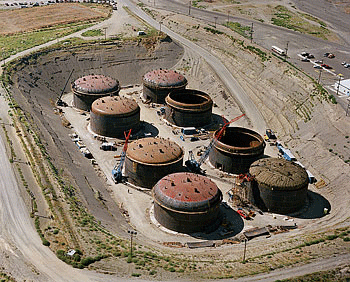 25 years on at America’s most contaminated nuclear waste site BBC News, Washington 10 June 2014 By Taylor Kate Brown “…….In February, Oregon Senator Ron Wyden accused the DOE of a “never-ending pattern of failing to disclose what it actually knows about conditions at Hanford”. Wyden is most recently concerned about the tanks holding by-products of plutonium production, buried just below the surface at the centre of the site.
The original containers, single-shell tanks built in the 1940s and 1950s, had already leaked at least 1 million gallons of liquid waste into the ground. Hanford officials built double-shell tanks in the 1970s and 1980s and began transferring the radioactive waste into the newer vessels.
But in October 2012, the energy department announced one of the double-shell tanks was leaking into the space between the two shells. Waste in that tank has not entered the environment.
Wyden released an engineering review that said six other double-shells had similar construction flaws. He accused the agency of hiding what they knew, as the report had been made months after the initial leak announcement, but no other warnings from the DOE had followed.
Meanwhile, Hanford officials have recently submitted a plan to start emptying the leaking tank in two years.
Then, in late March, two dozen workers fell ill because of chemical vapours near the tanks. Workers again noticed vapours around the tanks in May. The composition of the waste in the leaking tank makes it more likely to corrode, Fletcher says. No other double-shell tank holds such a mixture and full inspections on the tanks will now be done more frequently,
But in general, the double-shells must do their job for several more decades until a waste treatment plant – currently under construction – immobilises in glass all 56 million gallons of waste in the tanks.
The treatment plant was scheduled to become operational by 2019, but construction has been slowed or entirely halted on two key parts of the plant for additional testing. Once the treatment plant goes into operation, parts of it must be run entirely by robotics because of the high radioactivity of the waste. Regulators call it a “black-box” system.
Hanford Challenge represents two whistleblowers, Walt Tamosaitis and Donna Busche, who say they have been punished for expressing concerns about the treatment plant’s design.
Carpenter says the whistleblowers are speaking up now because once the plant begins operations, there will be no chance to fix potentially dangerous errors.
Both Tamosaitis and Busche have been fired by URS, one of the contractors at Hanford.
The energy department says it has asked its inspector general to “review the circumstances surrounding the termination of Ms Busche”, a safety manager who alleged continuing harassment since she first brought up concerns in 2011. Meanwhile the waste remains in the aging tanks. http://www.bbc.com/news/magazine-26658719
A Growing Number of Problems at Waste Isolation Pilot Project (WIPP)
Will Fracking Cause Our Next Nuclear Disaster? 09 June 2014 By Dahr Jamail, Truthout “…….Due to the ongoing problems at WIPP, the federal government’s Department of Energy (DOE) recently notified the state of New Mexico that it would be unable to meet a June 30 deadline to remove 3,706 cubic meters of nuclear waste from the mesa at Los Alamos National Lab where it is stored.
“As we work to assess the conditions of the transuranic waste program at the lab, we have decided to halt further shipments until we can reassure the public that it is safe to do so,” DOE Deputy Under Secretary David Klaus said.
As a result of the February radiation leak and fire within the facility, WIPP officials at the site discounted any effect of the current leak on human health, saying no radiation escaped to the surface. But they did not speak about the extent of the problem or how it eventually would be cleaned up.
“Officials at WIPP continue to monitor the situation,” DOE spokeswoman Deb Gillsaid at the time of the leak. “We are emphasizing there is no threat to human health and the environment.”
Contradicting Gill’s assurances, plutonium readings were detected at a DOE field office half a mile from the site. Joe Franco, the manager of the DOE field office, confirmed the readings……… Continue reading
Nuclear Regulatory Commission’s secrecy about San Onofre Nuclear Generating Station
 Nuclear regulators to Boxer: ‘None of your business’ Orange County Register, By TERI SFORZA / STAFF COLUMNIST 9 June 14,
The Nights of Fire and Explosions at WIPP
Breaking Bad: A Nuclear Waste Disaster By Joseph Trento, DC Bureau, June 5th, 2014 “…..There were warnings that not all was sanguine at WIPP. On Wednesday February 5, a truck used to haul salt taken out of the mine to make room for more and more radioactive casks caught fire because of a fuel spill. A fire in a mine is always serious. But a fire in a high-level nuclear storage facility is very serious. The first concern was a storage cask or canister had caused the fire but no radiation monitors went off, only a fire alarm. Eighty-six workers were slowly evacuated from the mine.
Fortunately, the workers made it to the surface and the fire was isolated to the ruined truck and involved no radioactive waste. That day there was no plutonium flash, no compromised canisters; just six workers were transported and treated at Carlsbad Medical Center. Another seven workers were treated at WIPP for smoke inhalation and the facility closed until everyone was certain the fire was out. A crew had to be sent in to do the inspection because, inexplicably, the WIPP facility is remarkably short of sophisticated remote sensing equipment. DOE immediately began an investigation.
The DOE Office of Environmental Management (EM) put together an Accident Investigation Board (AIB) to review what had gone right and wrong. The main contractor, Nuclear Waste Partnership, as well as the entire Carlsbad DOE field office was under scrutiny. DOE issued a press release saying, “The fire was a serious event that posed a threat to workers deep underground. In this case, the fire resulted in minor smoke inhalation to six workers, but it did not impact the public or the environment. There is no indication the fire was related to the February 14 radiological release.”
What investigators found was shocking. Carlsbad DOE officials did not conduct basic oversight of the private contractors running WIPP. The contractors failed to implement basic fire safety procedures, such as managing flammable truck fuel in an underground nuclear storage facility. In addition, WIPP officials repeatedly ignored the recommendations of the Defense Facilities Board – the gold standard for maintaining basic safety standards at all defense facilities. But the most damning part of the report said the safety culture required in such a dangerous environment no longer existed. Ironically, as the fire investigation was still underway, investigators had time to prevent the explosion that was to come. But their observations were ignored. The DOE EM report should have resulted in the immediate shutdown and full safety review of the facility. Instead, DOE Washington pressed to keep the waste flowing into WIPP. “The reality is DOE is overwhelmed with nuclear waste and has no safe place to put it,” Greg Mello says.
Nine days later, 2150 feet under the New Mexico desert, just before midnight on February 14, a canister of Los Alamos plutonium-tainted nuclear waste exploded. In a nuclear repository holding thousands and thousands of similar canisters and casks in what was supposed to be the most secure nuclear storage facility in the world, the very thing that was never supposed to happen did. No security cameras had been installed that could view the explosion. The radiation unleashed by the cracked canister quickly contaminated the sprawling underground salt mine. The seven football-field sized rooms in the Panels contain canisters that could have then caught fire and exploded. The continuous air monitor (CAM) finally detected the radiation and an alarm sounded alerting the night shift that high-level radiation had been detected. At that point, the contractors and DOE had no idea of the extent of the damage.
A DOE press release put the best face on a disaster: “Only 11 employees were at the WIPP site on the surface, no employees were in the underground. Two other WIPP employees reported to the site a couple hours later. The continuous air monitor measured airborne radioactivity close to the operating location where waste was being emplaced. Ventilation air is pulled from the underground repository by huge fans on the surface. This exhaust consists of unfiltered clean air… When the CAM alarmed, two dampers were automatically closed in the exhaust duct that redirected the exhaust through high efficiency particulate air (HEPA) filters that removes radioactive particles.
DOE said, “The next day an above ground exhaust air monitor on the WIPP site detected very low levels of airborne radioactive contamination. The 140 employees at the site were kept indoors as a precaution while air samples were taken. The 13 employees present during the radioactive release event on February 14 were tested for internal radioactive contamination after the event. The 140 employees have also been offered testing.
“It is believed that a small amount of radioactivity leaked by the exhaust-duct dampers, through the unfiltered exhaust ducts and escaped above ground. The exhaust duct dampers are large ‘butterfly’ valves that are designed to close and cut off the airflow through the exhausters. However, the valves do not fully seal the exhaust ducts and still allowed a small amount of unfiltered air to escape.”
In fact, DOE employees used spray foam to seal the dampers to keep more radiation contaminated air from escaping from a half mile underground.
That night America’s only official high-level nuclear waste site was rendered useless for at least the next three years. Everything that was supposed to happen did not. Air vents to the surface did not automatically close. DOE failed to keep computer records updated of what deadly waste was in what container and where it was located. That small explosion not only contaminated 21 workers and caused an unknown amount of radiation released into New Mexico’s air, but it also revealed a Department of Energy that is the midst of a nuclear security crisis not in some far off country like Pakistan or one of the former Soviet Republics but here at home.
This time the Environmental Management team asked to investigate by DOE did not have to face the pressure of telling headquarters that WIPP should be shuttered. Radiation contamination did that for them.
The loss of WIPP means the most deadly substances science has managed to create will have to be stored in place across our country in places totally unsuited for such storage. At WIPP, the deadly conditions created by the explosion will make monitoring the remaining radioactive materials very difficult. The official report of the WIPP accident was scathing. But scathing reports on DOE operations are common…. “.http://www.dcbureau.org/201406059835/natural-resources-news-service/breaking-bad-nuclear-waste-disaster.html
Big contributions to George W Bush and Rick Perry got WIPP nuke waste facility happening
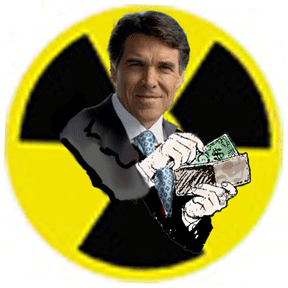 Breaking Bad: A Nuclear Waste Disaster By Joseph Trento, DC Bureau, June 5th, 2014″…….. Former President George W. Bush and Texas Governor Rick Perry’s single largest political contributor, the late Texas billionaire Harold C. Simmons, founded Waste Control Specialists and used his political influence to get the West Texas nuclear disposal site approved by state and federal licensing officials. The political efforts used to secure the licensing caused years of controversy in Texas. Environmentalists opposed the site because it is on an important aquifer in Texas. Another reason is that one of Simmons’s companies had operated a lead incinerator in Dallas that became an EPA Superfund Site.
Despite this environmental pedigree, LANL and DOE officials chose Waste Control Specialists to administrator their alternative nuclear waste storage site. While technically the company has licenses only for low-level nuclear waste, under its Texas permit, Waste Control can accept certified waste from federal agencies.
DOE officials said the Waste Control site is just a temporary alternative to the disabled WIPP. That is not true. Los Alamos and other national laboratories with high-level nuclear waste have been planning to use the Texas site for years, well before is licenses had been approved. The political promises that were made that it would be only for low-level waste were a ruse. As long as four years ago, during a Savannah River Site Citizens Advisory Board meeting in Aiken, South Carolina, DOE officials and SRS contractors talked openly about using the Texas site to offload uranium waste from SRS.
In late May, DOE investigators became so concerned about the Los Alamos containers being stores in what amounts to an open pit, they halted the shipments to Waste Control. The 112 canisters already at Waste Control were ordered to be isolated and surrounded by large concrete containers as well monitored by television camera. As of May 28, seventy-three Los Alamos containers have been segregated and covered with the cement and gravel-filled barriers.
Harold Simmons’s team lobbied hard to get only the second license in U.S. history from DOE for a private nuclear dump. They got the licensing in the last days of the Bush administration. Prior to the LANL decision to ship containers of transuranic waste to the site, there were warnings to Waste Control that it had already been accepting waste it was not permitted to receive.
Pressure has been building for years for DOE to stabilize and isolate its growing high-level nuclear waste stream. After the WIPP explosion, the DOE suddenly concluded that the thousands of feet below earth in salt beds were no longer needed to store the most deadly radioactive material on earth. Open trenches in the West Texas desert would be good enough. On April 2, tractor trailers hauled the first of the Los Alamos casks of radioactive high-level waste to the Andrews County dump before the WIPP investigation team succeeded in halting the shipments……”.http://www.dcbureau.org/201406059835/natural-resources-news-service/breaking-bad-nuclear-waste-disaster.html
Effects on the brain from nuclear radiation – reports from Hanford
 NBC stations reveal nuclear workers suffering severe brain damage, dementia — Toxic waste raining down from sky, wore baseball caps for protection — Brains being eaten away, teeth falling out — Workers raising safety issues framed using false evidence, fired — Gov’t not allowed in to investigate (VIDEO) http://enenews.com/nbc-stations-reveal-nuclear-workers-suffering-severe-brain-damage-dementia-toxic-waste-raining-down-from-sky-wore-baseball-caps-for-protection-brains-being-eaten-away-workers-raising-safety NBC Right Now,Apr. 30, 2014: Former Hanford Worker Sick from Nuclear Waste
- Jane Sander, reporter: A nuclear waste spill happened hours before at the tank farm.
- Lonnie Poteet, Hanford worker: I was already burning from my glove line to my t-shirt line and… starting to lose a little bit of vision in my right eye… Why didn’t they say something?
- Sander: Poteet describes living his life now as recluse… sharp pains in his head, they cause him to often twitch. He says medication prevents him from collapsing in pain due to severe nerve damage in his brain.
- Poteet: [More Hanford workers] are going to be exposed to the same situation… Nobody is going to do anything to stop it… As long as there’s profit… and they get their bonuses on a decent time, that’s all they care about… Most of the workers onsite right now are running scared. They will not bring up any safety concerns because as soon as you do, you’re going to be labeled and thrown off the site, just as fast as they can go. They’ll either create stuff that never happened, or they’ll find ways to get you.
NBC Right Now, June 5, 2014: Sick Former Hanford Worker Speaks Out
- Jane Sander, reporter: He sadly lives his life with a deadly disease…
- Lawrence Rouse, Hanford worker: I have toxic encephalopathy… it eats your brain away.
- Sander: Near the end of his almost 20 years at Hanford… he began to develop severe symptoms. Stuttering, memory loss, losing teeth…emotionally unstable…violent outbursts.
- Rouse: [My son] wrote this letter, this little poem, and said that his dad is gone… It would rain the chemicals on you from the stack. That’s why we wore the baseball caps.
- Sander: The Washington Dept. of Labor and DOE denied [compensation]… Since the [EEOICPA] program began in 2001, they’ve paid more than $1 billion in compensation and medical bills to [6,936 Hanford] workers…
- Rouse: DOE has always denied everything. And that’s not going to change.
- Sander: More Hanford workers continue to file claims for their illnesses.
- Watch the broadcast here
KING 5 Seattle (NBC), June 4, 2014: It’s an unprecedented series of workplace accidents in the state. Since mid-March the number Hanford workers seeking medical help after breathing in chemical vapors has risen to 34.
- Susannah Frame, reporter: Vapors causing serious illnesses at Hanford is not new… at the most contaminated workplace in the nation, OSHA can’t get past the gates to investigate.
- Diana Gegg, Hanford worker: It’s turned my life upside down.
- Frame: Brain damage, sudden tremors, vision loss, dementia – Illnesses the gov’t admits were caused by exposure… she can’t go out without a wheelchair, cook, or drive.
America’s MOX nuclear waste recycling boondoggle

they must stop making this radioactive trash
Failed Nuclear Weapons Recycling Program Could Put Us All in Danger io9, Mark Strauss, 7 June 14, Some government screw-ups are so epic that they require decades of effort. Such was the case for the recently cancelled plan to convert surplus weapons-grade plutonium into nuclear fuel. Not only did the U.S. waste $4 billion dollars, it increased the likelihood that terrorists could obtain bomb-making materials.
It sounded like a good idea at the beginning. Let’s turn megatons into megawatts!
In 2000, the United States and Russia signed the Plutonium Management and Disposition Agreement (PMDA). Each country pledged to dispose of at least 34 metric tons of plutonium from their nuclear weapons programs. U.S. nuclear weapons contain less than four kilograms of plutonium, so the combined total of 68 metric tons is enough for some 17,000 nuclear weapons. Disposing of this plutonium would make it more difficult to reverse U.S.-Russian nuclear weapons reductions and would prevent terrorists from gaining access to the material.
The United States settled on a plan to convert most of its surplus plutonium into fuel for nuclear reactors. A massive reprocessing plant would be built at the Savannah River Site in South Carolina, which, during the Cold War, had refined nuclear material for deployment in warheads. Now, the site would have a new mission: creating nuclear fuel from a mixture of plutonium and uranium oxide, otherwise known as mixed oxide fuel, or MOX. Although nuclear power plants in the U.S. use fuel made from low-enriched uranium (LEU), other countries had demonstrated that MOX was a viable alternative.
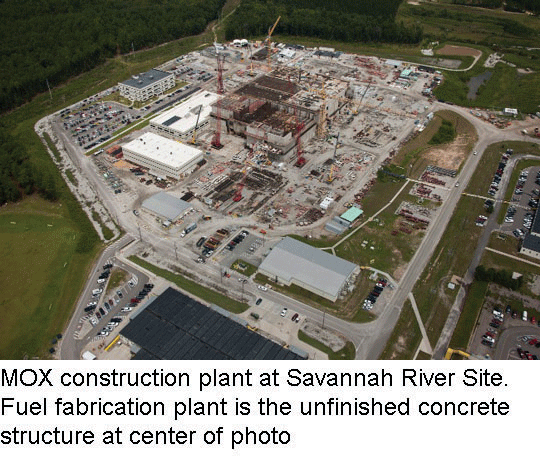
Instead, the final outcome was a mothballed facility and a still-increasing supply of surplus plutonium. Like I said, this isn’t your typical government boondoggle. It was twenty years in the making………. Continue reading
Hypocrisy of nuclear company Exelon – claims to be ‘green’, while trying to kill wind energy
 “The public policy position of Exelon is to oppose subsidies for wind and solar while the company itself purports to be this super-green company and also wants more subsidies for nuclear,” he said. “That’s just hypocritical.”
Nuclear Giant Exelon Blasts Win, by Elliot Negin, Director of News & Commentary, Union of Concerned Scientists Corporate executives often tout the benefits of competition in a free-market economic system, but it’s striking just how much large corporations don’t like it. In fact, some companies will do all they can to squash it, lobbying for favors and subsidies while working to deny them to their competitors.
The squabble over a key federal tax break for the wind industry is a case in point. Called the production tax credit (PTC), it has helped quadruple the wind industry’s generation capacity over the last five years, and six states now have enough wind turbines to meet more than 15 percent of their annual demand
Unlike most coal, nuclear, and oil and gas subsidies, the PTC — which has been around only since the mid-1990s — is not permanent. Congress has to renew it periodically. Last December, Congress let it expire yet again, and lawmakers likely will not restore it until after the November mid-term elections, if at all. The PTC represents roughly $1.2 billion in annual tax savings to the wind industry.
Wind’s more-established competitors want the PTC dead.
ExxonMobil, the Koch brothers and their front groups, for example, want Congress to let it die. Never mind that the oil and gas industry has been receiving an average of$4.86 billion annually in today’s dollars in subsidies and tax breaks since 1918. Or the fact that Congress exempted natural gas developers from key provisions of seven major environmental laws, including the Clean Air Act and Clean Water Act.
The nuclear power industry doesn’t like the wind tax break, either. Its most outspoken critic is Exelon, the nation’s largest nuclear plant owner with 23 reactors at 14 plant sites. Continue reading
South Dakota’s community livelihood at risk from uranium polluted water
 Uranium mine would affect more than West River http://www.argusleader.com/story/opinion/readers/2014/06/07/letter-uranium-mine-affect-west-river/10109709/ Kim C. Kraft Are you aware of the potential problem of uranium mining in western South Dakota to the rest of the state? Presently, there are more than 200 abandoned uranium mines leaching radioactive debris into our rivers. Radioactive residue from these mines can be detected as far as Vermillion. So it is not just a West River problem.
Now we have Powertech/Azarga, a China-based investment company, wanting to take vast amounts of water from two major aquifers of the Southern Black Hills for in situ mine leaching of uranium. Not only will they take the water from our ranchers, who desperately need it during the drought, but contaminating it for any future use by the ranchers and surrounding communities. With the Western states becoming dryer from prolonged drought, we cannot afford to waste clean water for the benefit of foreign countries. Our state government is allowing this. Our governor and Legislature have removed oversight and control over water usage in the Southern Black Hills, thus allowing the mining companies to use up precious clean water, pollute it and then leave with no responsibility to clean the mess up. They are putting our livelihoods on the line. Remember this for the November elections.
Management Problems in USA’s failed Nuclear Weapons Recycling Program
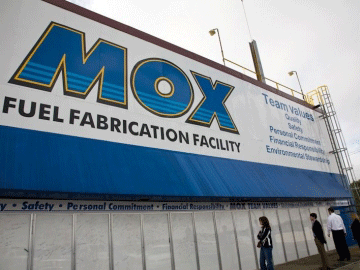 Failed Nuclear Weapons Recycling Program Could Put Us All in Danger io9, Mark Strauss, 7 June 14 “…….In 2004, the National Nuclear Security Administration estimated that the Savannah River MOX facility would cost $1.6 billion. Three years later, that estimate jumped to $4.9 billion. In 2012, the forecasted expenditure increased again, to $7.7 billion. By this time, $4 billion had already been spent and the project employed more than 1,800 construction workers, designers and engineers. Then, in April 2013, an internal review conducted by the Department of Energy revealed that the total lifetime operating cost of the facility—including construction, maintenance and disposal of all the plutonium—would be $24.2 billion.
TJust one example of the poor management that led to cost overruns: NNSA and its primary contractor underestimated the number of safety systems required to meet Nuclear Regulatory Commission (NRC) requirements, which further increased equipment installation costs. More specifically, they were unaware of the costs associated with building a facility that could withstand an earthquake. The source of their confusion? The MOX facility’s design is based on a similar facility in France, but the NRC regulatory requirements differ from those in France.
The Department of Energy was also at fault, because it approved the initial cost and schedule estimate, when the overall design of the MOX facility was only about 58% complete.
A report published two weeks ago by the Department’s Inspector General noted:
In a separate July 2006 memorandum to the NNSA Administrator, NNSA’s Associate Administrator for Infrastructure and Environment expressed his concern regarding the MOX Facility project. He expressed the belief that incomplete project planning could lead to an unintended “design-build-design” process similar to that experienced by other major Departmental projects including the Waste Treatment Plant and the Highly Enriched Uranium Materials Facility. The Waste Treatment Plant at the Hanford Site was given the approval to start construction when the design was only about 45 percent complete. Since then, total project costs for that facility have increased significantly and the project is considerably behind schedule. He pointed out that, similarly, a comprehensive design review had not been conducted on the complete MOX Facility project and that the project had high-risk potential for increasing downstream costs and schedule.
The White House did its part, as well. In 2010, President Obama announced a loan guarantee of $8.3 billion to help the Southern Company build two new nuclear reactors in Georgia. As a result, workers with nuclear engineering design and manufacturing experience were suddenly in very high demand. The MOX construction site had an employee turnover of 20% per year because, after workers completed additional training at the Savannah River Site, they quit to take higher paying jobs in Georgia. The U.S. government was subsidizing its own labor shortfall.
Finally, in March 2014, the White House announced that it would put the whole project on “cold standby”—essentially, preparing it for shutdown—while the administration evaluated “alternative plutonium disposition technologies to MOX that will achieve a safe and secure solution more quickly and cost effectively.”
Adding up the losses
MOX may be mothballed, but the problem of what to do with our surplus weapons-grade plutonium remains. And, despite cool relations between Washington and Moscow, the disposal agreement still stands.
The Department of Energy has established a Plutonium Disposition Working Group that will spend the next 12 to 18 months trying to come up with a plan. You can see an initial working paper here. The options are depressingly similar to the ones suggested by the National Academy of Sciences, 20 years ago.he sticker shock prompted the Department of Energy to note in its Fiscal Year 2014 budget request that, “This current plutonium disposition approach may be unaffordable…due to cost growth and fiscal pressure.”
Any lingering doubts that the MOX program was on its last legs were dispelled when the Government Accountability Office (GAO) published a report in February 2014. Even by GAO standards, the assessment was scathing.
One of the biggest mistakes, according to the GAO, was entrusting this project to the National Nuclear Security Administration, which is a semi-autonomous agency within the Department of Energy:
NNSA has not analyzed the underlying, or root, causes of the Plutonium Disposition program construction cost increases to help identify lessons learned and help address the agency’s difficulty in completing projects within cost and schedule, which has led to NNSA’s management of major projects remaining on GAO’s list of areas at high risk of fraud, waste, abuse, and mismanagement.
………Even if we got this facility up and working, nobody wants what it’s making. The companies that run commercial nuclear reactors have lost confidence in the program. They can’t be certain that it would provide a reliable, steady supply of fuel, or keep enough surplus fuel on hand in case it was needed. And why would commercial nuclear reactors purchase MOX when low-enriched uranium is cheaper, easier to transport and doesn’t present a security risk? Adding to the climate of skepticism: a MOX fuel irradiation test in a commercial reactor had to be prematurely terminated in 2008 because of unanticipated problems.
The loss to the United States can be measured in more than the $4 billion to build the facility and the hundreds of millions of dollars sent to Russia to subsidize their program. The greater loss is that the U.S. could have spent those funds to shore up other nonproliferation programs…….. http://io9.com/failed-nuclear-weapons-recycling-program-could-put-us-a-1586851270
1 This Month
Tell Congress: Prevent Nuclear Catastrophe in Iran

Tell Congress: Prevent Nuclear Catastrophe in Iran

Read the Public Inquiry Report, the Commissioners’ report, Surrendering Australia: The AUKUS Deception is available to download for free at aukuspublicinquiry.com. Or just watch the replay of the National Press Club Luncheon.


Shut down the radiation-damaged Heysham nuclear reactors now
To see nuclear-related stories in greater depth and intensity – go to https://nuclearinformation.wordpress.com

Say No to NASA’s Reckless Nuclear Reactor on the Moon
Say No to NASA’s Reckless Nuclear Reactor on the Moon
-
Archives
- November 2026 (238)
- October 2026 (302)
- September 2026 (339)
- August 2026 (330)
- July 2026 (355)
- June 2026 (287)
- May 2026 (306)
- April 2026 (356)
- March 2026 (251)
- February 2026 (267)
- January 2026 (308)
- December 2025 (358)
-
Categories
- 1
- 1 NUCLEAR ISSUES
- business and costs
- climate change
- culture and arts
- ENERGY
- environment
- health
- history
- indigenous issues
- Legal
- marketing of nuclear
- media
- opposition to nuclear
- PERSONAL STORIES
- politics
- politics international
- Religion and ethics
- safety
- secrets,lies and civil liberties
- spinbuster
- technology
- Uranium
- wastes
- weapons and war
- Women
- 2 WORLD
- ACTION
- AFRICA
- Atrocities
- AUSTRALIA
- Christina's notes
- Christina's themes
- culture and arts
- Events
- Fuk 2022
- Fuk 2023
- Fukushima 2017
- Fukushima 2018
- fukushima 2019
- Fukushima 2020
- Fukushima 2021
- general
- global warming
- Humour (God we need it)
- Nuclear
- RARE EARTHS
- Reference
- resources – print
- Resources -audiovicual
- Weekly Newsletter
- World
- World Nuclear
- YouTube
-
RSS
Entries RSS
Comments RSS

