Three religious peace activists still in prison in USA
Angela 9 Dec 14 Please remember that there are three people in prison.

“Two years after Megan Rice, Greg Boertje-Obed and Michael Walli entered the Y12 Nuclear Weapons Complex in Oak Ridge, TN to issue an indictment against the continuing production of nuclear weapons components there and to oppose plans for a multi-billion dollar Uranium Processing Facility which would produce thermonuclear cores for US weapons… ”
http://transformnowplowshares.wordpress.com/
From Madrid, with love to Tohoku and, also, to Megan, Greg and Michael.
US Energy Dept fined $54 Million by New Mexico, for Nuclear Accidents
 New Mexico Fines U.S. $54 Million for Nuclear Accidents http://www.wsj.com/articles/new-mexico-fines-u-s-54-million-for-nuclear-accidents-1417898258 Underground Fire, Radiation Leak at Repository Exposed Workers to Contamination By DAN FROSCH Dec. 6, 2014 SANTA FE, N.M.—New Mexico has fined the U.S. Energy Department more than $54 million over accidents at the country’s only underground repository for nuclear waste.
The fines, which state officials announced Saturday morning, stem from an underground fire and a radiation leak earlier this year at the Waste Isolation Pilot Plant, known as WIPP. Nearly two dozen workers were exposed to contamination at the plant, which handles radioactive waste from the nation’s nuclear-weapons program.
The facility, in southeastern New Mexico near Carlsbad, remains closed.
The fines represent the largest penalties New Mexico has ever levied against the Energy Department, state officials said, noting that their investigation found major procedural problems.
The Energy Department committed 37 violations of state regulations in its handling of radioactive waste, the state said. Drums of the waste were improperly treated and stored at Los Alamos National Laboratory before being shipped to the nuclear repository, according to the state, contributing to the accidents last February. A federal report issued earlier this year traced the radiological accident at WIPP to a drum of waste that contained a mix of material that didn’t meet the facility’s standards for storage. The Energy Department has said it could cost more than $500 million to return WIPP to full operations.
Energy Department officials couldn’t immediately be reached for comment.
New Mexico has fined the Energy Department in past years over state violations at Los Alamos and WIPP, according to Don Hancock, director of the nuclear-waste program at the Southwest Research and Information Center, an Albuquerque watchdog group.
Other states, such as Washington and Idaho, have also sued and fined the Energy Department over its handling of nuclear waste, Mr. Hancock said.
Write to Dan Frosch at dan.frosch@wsj.com
Nuclear Regulatory Commission reveals that workers inhaled uranium during spill at an in-situ mine
 Nuclear regulatory agency: 6 workers inhaled uranium at Wyoming mine after yellowcake spill, Star Tribune by: MEAD GRUVER , Associated Press : December 5, 2014 CHEYENNE, Wyo. — Six workers at a Wyoming uranium mine inhaled the radioactive element while cleaning up a spill inside a processing building just days before the mine delivered its first shipment last year, according to the Nuclear Regulatory Commission.
The workers’ urine tested positive for uranium at close to seven times the federal agency’s permissible level, the federal agency alleges in a Nov. 14 violation notice against Lost Creek LLC ISR, a subsidiary of Littleton, Colorado-based Ur-Energy.
The spill happened Nov. 28, 2013, at the Lost Creek in-situ uranium mine in south-central Wyoming. In-situ mining involves pumping fluids underground to release uranium into a solution that is pumped to the surface. No shafts or tunnels are dug.
Some 1,500 pounds of yellowcake, a precursor of enriched uranium, surged onto the floor of a processing building while a worker was filling a 55-gallon drum with the dry, powdery substance, according to the notice…….http://www.startribune.com/lifestyle/health/284909581.html
America’s dangerous thinking about national security and nuclear weapons
 Beyond M.A.D.: Reviving Nuclear War, Huffington Post,6 Dec 14
Let’s meditate on this irony — that disarmament, finally, means no more than growing old and weak and pathetic.
What brilliant Cold War Revival propaganda, masquerading, in the Los Angeles Timeslast week, as objective reporting. Let’s meditate on the dark chuckles of the Cold War technocrats, as they attempt to summon an extra trillion dollars or so from the national coffers to restore America’s nuclear weapons program to the glory of the 1960s and push on vigorously with the design and development of the next generation of nukes: our national strength, the foundation of our security. All that’s missing from the article — “New nuclear weapons needed, many experts say, pointing to aged arsenal” — is Slim Pickens screaming “Ya-hoo!” as he rides the bomb into human oblivion at the end of Dr. Strangelove.
The ostensible focus of the article, as well as a second article published two weeks earlier, both by Ralph Vartabedian and W.J. Hennigan, is the decrepitude of the American nuclear arsenal, with its myriad sites and delivery systems hampered with out-of-date technology and indifferent maintenance, e.g.: “Today, the signs of decay are pervasive at the Pantex facility in Texas, where nuclear weapons are disassembled and repaired. Rat infestation has become so bad that employees are afraid to bring their lunches to work.”
Oh, the horror. Rats and nukes. Next up, Godzilla? Any serious challenge to nuclear weapons as the ultimate manifestation and symbol of national strength is absent from these articles; so is any rational account of the danger their hair-trigger presence poses to humanity — not to mention the insanity of their ongoing development.
For instance:
“John S. Foster Jr., former director of Lawrence Livermore National Laboratory and chief of Pentagon research during the Cold War, said the labs should design, develop and build prototype weapons that may be needed by the military in the future, including a very low-yield nuclear weapon that could be used with precision delivery systems . . .” (emphasis added).
During the Cold War, the primary justification for our gargantuan nuclear arsenal was contained in the acronym M.A.D.: mutually assured destruction. No more world wars, boys and girls! With the Cold War superpowers in possession of the means to destroy the human race, the only wars we could wage were relatively small, proxy wars in Third and Fourth World countries.
“Those who like peace should love nuclear weapons,” said Kenneth Waltz, Cold War academic extraordinaire and founder of the school of neorealism (as quoted recently by Eric Schlosser in The Guardian). “They are the only weapons ever invented that work decisively against their own use.”
But seven decades into the nuclear era, mission creep is making its presence felt along with the rust and rats. Link low-yield nuclear weapons with a word like “precision” and their use in a real war starts to feel almost justifiable — and so much more satisfying, apparently, than simply maintaining a nuclear arsenal for the purpose of never using it. Threat is power in the abstract. But a mushroom cloud over Central Asia or the Middle East is power made manifest, especially if one lacks the mental and spiritual capacity to grasp the consequences……….
What seems desperately outmoded and nearing collapse isn’t our nuclear infrastructure but our thinking about national security. The United States of America, nation of Manifest Destiny, was built on conquest and exploitation. This is the basis of its inability to believe that security could be based on anything except near-absolute power and the reason why, in the corridors of political power, disarmament is synonymous not with sanity but neglect.
Unless the paradigm shifts and we redefine ourselves as a nation — and we redefine our relationship to other nations, including our alleged enemies — our future is nuclear weapons we can use. http://www.huffingtonpost.com/robert-koehler/beyond-mad-reviving-nucle_b_6272094.html
Robert Koehler is an award-winning, Chicago-based journalist and nationally syndicated writer. His book, Courage Grows Strong at the Wound (Xenos Press), is still available. Contact him atkoehlercw@gmail.com or visit his website at commonwonders.com.
Worrying questions on the real costs of Georgia’s Vogtle nuclear power plant

 State monitor warns on Ga. nuclear plant costs, seattle pi By RAY HENRY, Associated Press, December 7, 2014 TLANTA (AP) — Public watchdogs are giving Southern Co. a between-the-lines warning that building a multibillion-dollar nuclear plant in Georgia without a detailed construction schedule could trigger financial penalties.
That warning came in a report filed by a nuclear engineer and an analyst who work for state regulators and monitor the construction of two new reactors at Plant Vogtle in eastern Georgia.
The Public Service Commission has warned for at least two years that Southern Co. subsidiary Georgia Power is relying on an outdated project schedule that contains almost no detail after December 2015, even though construction will continue for several more years.
Nuclear engineer William Jacobs Jr. and financial analyst Steven Roetger said building a complex, first-of-its-kind project without a schedule was unreasonable. “In fact it runs counter to any prudent project management, nuclear or otherwise,” goes against the project’s construction agreement and an industry group’s own recommendations for construction, Jacobs and Roetger wrote in a semi-annual report.
That keyword — “prudent” — was meant to catch the ears of Southern Co. executives.
By law, the Public Service Commission can prevent Georgia Power, a regulated monopoly, from billing its customers for any construction costs the commission decides are the result of “imprudence.”
The state’s elected utility regulators have agreed to delay any final decisions on construction costs until after the first reactor is finished, likely in late 2017 at the earliest. However, the latest filing shows the commission’s staffers are laying the legal groundwork that could be used in future arguments to prevent customers from paying some of Georgia Power’s costs……….
Georgia Power’s budget estimate does not reflect the potential costs of resolving a roughly $1 billion lawsuit between the plant’s builders and its owners over previous delays and design changes. While Georgia Power has denied any responsibility for those extra costs, company leaders have said they would consider a settlement if it made financial sense.
Follow Ray Henry on Twitter: http://twitter.com/rhenryAP. http://www.seattlepi.com/business/energy/article/State-monitor-warns-on-Ga-nuclear-plant-costs-5941198.php
USA Republican battling against climate change denialism
House Republican Plans to Introduce Pro-Climate-Science Bill http://www.nationaljournal.com/energy/house-republican-plans-to-introduce-pro-climate-science-bill-20141205
Chris Gibson wants the GOP to “operate in the realm of knowledge and science.”
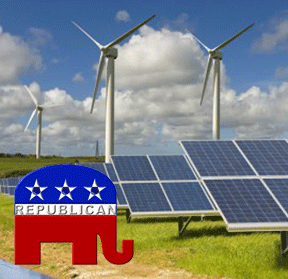 BY BEN GEMAN December 5, 2014 A Republican House member is battling the skepticism toward climate-change science that’s common in GOP ranks. And he wants to put lawmakers on record in the process.
Rep. Chris Gibson said Thursday he plans to introduce a resolution on climate change that will help others “recognize the reality” of the situation. Gibson said the extreme weather he has witnessed in his own upstate New York district supports the science, and he wants to be a leader in spurring recognition of changing weather patterns.
“My district has been hit with three 500-year floods in the last several years, so either you believe that we had a one in over 100 million probability that occurred, or you believe as I do that there’s a new normal, and we have changing weather patterns, and we have climate change. This is the science,” said the two-term lawmaker who was reelected in November.
“I hope that my party—that we will come to be comfortable with this, because we have to operate in the realm of knowledge and science, and I still think we can bring forward conservative solutions to this, absolutely, but we have to recognize the reality,” Gibson said. “So I will be bringing forward a bill, a resolution that states as such, with really the intent of rallying us, to harken us to our best sense, our ability to overcome hard challenges.”
Gibson spoke at an event hosted by Citizens for Responsible Energy Solutions, which is a pro-Republican advocacy group; a PAC that supports Republicans called Concord 51; and the Conservation Leadership Council, a group of conservatives that includes Gale Norton, who was Interior Secretary under George W. Bush. The Environmental Defense Fund helped create the CLC. Event organizers provided a video clip of his comments. Gibson’s office did not respond to inquiries about the matter. But while the specifics of the effort aren’t yet clear, Gibson’s stances are at odds with many in the GOP’s ranks.
Ascendant Republicans on Capitol Hill are preparing fresh assaults on the White House climate agenda, and expressing continued doubts about the scientific consensus that burning fossil fuels and other human activity is the leading driver of global warming.
Incoming Senate Majority Leader Mitch McConnell, during his reelection campaign in Kentucky, said he is “not a scientist” when asked about climate change, a line used by a number of Republicans.
Gibson, to be sure, hardly marches in lockstep with environmentalists. He supports the Keystone XL oil-sands pipeline and has voted for expanded offshore drilling.
But he also joined just two other Republicans last March in voting against a bill to scuttle EPA’s carbon-emissions rules for power plants, and he has also voted against other attacks on federal climate-change programs.
He won support in this year’s elections from the political branch of the Environmental Defense Fund. “It’s very encouraging to see this kind of leadership emerging in the Congress,” Tony Kreindler, EDF Action’s senior director for strategic communications, said of Gibson’s planned resolution.
Elsewhere in his remarks, Gibson both touted his support for expanded drilling and called for more investment in federal green-energy investment, while noting the potential of solar energy as costs decline.
Ontario’s Bruce Power Nuclear Deal under scrutiny – needs full public review
 9 good reasons why we need a public review of a Bruce Nuclear deal
The Ontario Power Authority and Bruce Power are secretly negotiating a multi-billion dollar deal to rebuild four aging reactors at the Bruce B Nuclear Station. Here are 9 good reasons why Premier Kathleen Wynne should send any agreement to the Ontario Energy Board (OEB) for a full public review:
1. |
The Bruce B contract would be the largest private sector contract ever signed by an Ontario government, worth $60-$111 billion that householders and businesses would pay. Is Bruce B the cheapest available power? |
2. |
Electricity demand in Ontario is falling. Since 2005 Ontario’s total annual electricity demand has fallen by 10%, despite the fact that our GDP has grown by 8.5%, and it appears likely that our electricity demand will continue to fall as our electricity productivity continues to rise. Will we need Bruce B power? |
3. |
Ontario has a rising supply of renewable and gas-fired generation, including the TransCanada gas-fired power plant in Napanee. Will Bruce B power be needed? |
4. |
Ontario already has a surplus baseload problem. Bruce Power claims its nuclear units are now capable of cutting back generation when demand falls. But in reality the company is running its reactors full tilt, either venting the excess steam into Lake Huron or producing unneeded power and exporting it to the US at a loss. Will a Bruce B deal make these problems worse? |
5. |
The cost overruns on nuclear projects have always been passed on to electricity consumers and taxpayers. Despite government assurances that nuclear projects must minimize “commercial risk on the part of ratepayers and government”, 93% of the work on the proposed Darlington re-build project is not subject to fixed price contracts, with the provincial treasury and ratepayers liable for inevitable cost overruns. Will it be any different at Bruce where ratepayers have already picked up billions of dollars in cost overruns on previous projects? |
6. |
We can meet some or all of our electricity needs at a lower cost with additional investments in energy conservation and efficiency. According to the government’s Conservation First policy, Ontario will pursue all cost-effective energy conservation and efficiency resources beforeinvesting in new supply. |
7. |
We can meet our electricity needs at a lower cost with water power imports from Quebec. The cost of upgrading transmission infrastructure to fully exploit Quebec imports would be a fraction of the cost of re-building nuclear reactors. |
8. |
According to the Long-Term Energy Plan, the existing Bruce B reactors will not come to the end of their lives until 2022 and beyond. There is a very good chance that renewable energy options like wind, solar, biogas and biomass will be lower cost electricity supply options by 2022. Quebec’s existing hydro-electric storage capacity could also be used to transform wind and solar from intermittent to “firm” base-load electricity resources. Is this the right time to commit to Bruce B power? |
9. |
We don’t know by how much a Bruce B contract would cause our electricity rates to rise. Surely we should know this before a deal is signed. |
 Please send Premier Wynne a message urging her to follow through on her commitment to run “the most open and transparent government in Canada” by sending any Bruce deal to the OEB for review.
These are important questions that the Ontario Energy Board’s procedures are designed to answer — before any contract is signed.
You can also read our open letter to Premier Wynne outlining our questions about a Bruce deal.
Green energy now big business in Canada, bigger employer than tar sands is

 Canada’s Green Energy Sector Now Employs More People Than Its Tar Sands, Climate Progress BY JEFF SPROSS DECEMBER 2, 2014 BETWEEN 2009 AND 2013, EMPLOYMENT IN CANADA’S CLEAN ENERGY SECTOR INCREASED BY 37 PERCENT — MEANING IT NOW SUPPLIES MORE JOBS THAN THE COUNTRY’S INFAMOUS TAR SANDS, ACCORDING TO A NEW REPORT.
“Clean energy has moved from being a small niche or boutique industry to really big business in Canada,” said Merran Smith, the director of Clean Energy Canada.
Green energy tends to be more labor intensive than energy from fossil fuels, meaning that every unit of energy produced by green sources tends to employ more people than those sources that come along with carbon emissions. In America, research suggests green jobs are more accessible to workers without a college education, that green sectors grow a bit faster than the economy as a whole, and that they more successfully weathered the 2008 recession.
The report also noted that Canada’s energy generation capacity in wind, solar, and other renewable sources has grown 93 percent over the past five years, and investors have pumped $25 billion into green energy in the country over that same time period………..http://thinkprogress.org/climate/2014/12/02/3598312/canada-green-energy-tar-sands/
NO to uranium mining. Quebec’s Nunavik Inuit stand firm
Makivik President Jobie Tukkiapik says the consensus is clear: Nunavik Inuit fears for radioactive contamination of the land trump any economic windfall they might reap from uranium mining.
“Uranium is a controversial topic, and must be considered separately from conventional mining activities exploiting other minerals in Nunavik,” Tukkiapik says.
Makivik Corporation, the land claims organization, teamed up with the Kativik Regional Government in stating their case to Quebec’s environmental consultation office.
The land claims organization made the announcement following three years of consultations throughout Nunavik’s 14 communities. They also did consultations in Montreal and some neighbouring Cree villages. KRG chair Maggie Emudluk says the key concern is the health of country food.
Inuit rely on hunting wildlife for sustenance, and Emudluk says the impact of radioactive material getting into the food chain could be deadly.
“The psychological effects cannot be underestimated,” she says. “People are afraid of uranium in general, but when a population is so dependent on locally sourced food, the fear and uncertainty escalate.”
It remains to be seen whether the declaration is legally enforceable under Quebec law
Hanford nuclear site area has dramatically high rate of babies born without brains
New data shows babies missing brains at 2,500% national rate in county by nuclear site — Mother: Officials “shut me down the minute I mentioned Hanford!… WE NEED ANSWERS!” — Experts: No birth defect is more extreme; It’s the most significant impact of radiation on developing embryos (AUDIO) http://enenews.com/79334?utm_source=feedburner&utm_medium=email&utm_campaign=Feed%3A+ENENews+%28Energy+News%29

“Nothing [is] more extreme than anencephaly” –Dr Michael Grodin, Boston U. School of Medicine
‘Fatal Birth Defects Surge’ – Dr. Kathy Lofy, Washington Dept.of Health (emphasis added): Anencephaly is a rare birth defect in which the brain and the skull of the baby do not fully form [and is] not compatible with life… The most well known risk factor… is a deficiency in folic acid… that’s one of the possibilities we’re looking into [note that mothers in the birth defect cluster had much higher rates of folic acid consumption than the control group chosen by officials]…Hanford nuclear facility has been one concern of the community. We worked really closely with our radiation experts… who work closely with… Hanford. There have been no recent releases [note how she rephrases this] — no recent CHANGE in radiation releases. We can’t really determine any pathway by which radiation could affect all the women in the 3-county area [note all 3 counties surround Hanford]… We’re working with the doctors to make sure we’re identifying all the cases… It’s very important to figure out the rates.
Dr. Wladimir Wertelecki, MD, (Chair of Medical Genetics at U. of S. Alabama), Dr. Helen Caldicott’s Crisis Without End, Oct 2014: “The most significant negative impact of radiation on a developing embryo includes anencephaly… Two US studies… sponsored by the[CDC and published in 1988] sought to determine the… impact of ionizing radiation nearHanford… One study detected higher neural tube defect rates [e.g. Anencephaly, Spina Bifida] in two counties near the nuclear complex and the other demonstrated higher rates of neural tube defects in parents exposed… to low levels of radiation.”
Physicians for Social Responsibility: Hanford documents [reveal] incredible contamination of the environment and exposure of large numbers of citizens to dangerous amounts…Eight plutonium production reactors dumped a daily average of 50,000 curies of radioactive material into the Columbia... [In 1949] 8,000 curies of iodine-131 were [secretly] released [over] an area o 200 by 40 miles, no warnings were given… [`400 times TMI’s release of] 15 -24 curies — PSR: Contamination has not and will not stay inside Hanford’s boundaries… Over 300 miles of the Columbia… are threatened… [Fires in] 2000… burned three radioactive waste sites [and] plutonium was detected in nearby communities. — PSR: Hanford is the most contaminated site in the Western Hemisphere… At least 200-square miles of groundwater… is contaminated and migrating to the Columbia.
Nuclear engineer Arnie Gundersen on Nuclear Hotseat, Nov. 12, 2014 (at 34:00 in): Birth defect issues occur in the 2nd [generation after radiation exposure] — especially the 3rd and 4th.
Washington Anencephaly Investigation, Oct 2014:
- Anencephaly in Benton, Franklin, YakimaCounties (next to Hanford) from Jan 1 to Oct 17, 2014: 9 cases in 290 days with est. 6,423 births (based on 8,084 in 2013) —RATE: 14 cases per 10,000 births
- Anencephaly in Yakima County from Jan 1 to Jun 6, 2014: 2 cases in 157 days wirh est. 1,700 births (based on 3,953 in 2013) – RATE: 11.8 cases per 10,000 births
- Anencephaly in Yakima County from Jun 7 to Oct. 17, 2014: 3 cases in 133 days out of est. 1,440 births (based on 3,953 in 2013) — RATE: 20.8 cases per 10,000 births (2,860% of US national rate)
CDC 2010 statistics, released 2013: Anencephaly 313 cases; RATE: 0.73 per 10,000 births.
Instead of using the 0.73 rate, officials claim the national rate is 2.1, nearly 3 times higher. The rate of 2.1 is from a study using data from 2004-2006 that estimates the anencephaly rate, andonly uses data from less than 15 states — unlike the CDC report above which is based on the most current data, uses data from all 50 states, and is not an ‘estimate’.
Nikki Shelton, mother of baby w/ neural tube defect (e.g. Anencephaly, Spina Bifida) 13 mi. from Hanford, Nov 6, 2014: This is not something that is going away… the numbers are increasing. The last teleconference I was in shut me down the minute I mentioned Hanford! … let’s not let the department of health just sweep this under the rug…WE NEED ANSWERS!
USA’s Nuclear Waste Isolation Pilot Project (WIPP) has now its ‘Worst Case Scenario’
 ‘Worst Case Scenario’ has happened at US nuclear site — Robert Redford film predicted 2014 WIPP disaster: Plutonium release due to chemical reaction in burst nuclear drum is ultimate catastrophe… Most significant issue is combustible waste exposed to high heat, everyone understands that (VIDEO) http://enenews.com/worst-case-scenario-nuclear-site-1989-robert-redford-film-predicted-2014-disaster-wipp-plutonium-release-due-chemical-reaction-burst-nuclear-drum-ultimate-disaster-significant-issue-combustible-was?utm_source=feedburner&utm_medium=email&utm_campaign=Feed%3A+ENENews+%28Energy+News%29
Sante Fe New Mexican, Nov 30, 2014: [D]ocuments obtained by The New Mexican… raise questions about the stability of dozens of other nuclear waste drums that were in the same chamber as the drum that ruptured [after a] chemical reaction… Radiation leaked into the air, and temperatures in the underground chamber peaked at nearly 1,600 degrees… One internal lab report described the [contents] as similar to plastic explosives… Investigators believe the organic material may be one reason temperatures in the chamber rose so high… Internal emails… detail concerns about the stability of drums… exposed to the extreme temperatures… June 17 draft of a LANL report… suggested the high temperatures may have made other nuclear waste drums in the chamber more unstable than ever…
Albuquerque Journal, guest column by Harish C. Sharma, retired engineer, Nov 30, 2014: Department of Energy’s Office of Inspector General… report mentions that the use of “kitty litter/Zeolite clay”… may have been the cause of the fire and release of radiation… What is the real cause of the incident? No one is sure… What if the real reason for the fire and release of radiation was not the “kitty litter”?… Without finding the real cause, DOE and LANL’s actions only assure that this incident will occur again.
The WIPP Trail, narrated by Robert Redford, 1989 (at 17:00 in):
- Robert Redford: We now know that 40% of the [WIPP] hazardous waste is combustible, thus posing a more serious and immediate threat.
- Bruce Throne, New Mexico State Attorney: I think the combustible waste is perhaps the most significant because even a layman can understand that when combustible waste is exposed to high levels of heat, there may be some effectinside the TRUPAC [containers].
- Redford: Wind is a critical factor that must be considered. The worst case scenario would be if a fire occurs within a breach of a container. The wind could then carry plutonium particles through the atmosphere, traveling considerable distances.
- Oxford Dictionary’s definition of fire: “Combustion or burning, in which substances combine chemically with oxygen from the air and typically give out bright light, heat, and smoke”
Nuclear power has no place in any ‘Clean Power Plan’
There’s no place for nuclear in the ‘Clean Power Plan’, The Ecologist Tim Judson / NIRS 28th November 2014

The EPA’s plan for ‘clean power’ are welcome, writes Tim Judson – except for its inclusion of nuclear, and economic distortions and serious omissions that favour the technology. In this open letter to EPA Administrator Gina McCarthy, he and co-signatories call on her to ditch the ‘false and irrational assumptions’ used to justify both new and existing nuclear power. “………..Unfortunately, the treatment of nuclear energy in the draft rule is unsupported by meaningful analysis, and would make it possible for states to implement the rule in ways that are counterproductive to the Clean Power Plan’s purpose of reducing emissions.
The role of nuclear power must be re-evaluated
We are, additionally, very concerned about industry proposals to expand provisions to encourage nuclear. We urge the EPA to conduct a thorough and fact-based analysis of nuclear, and to do the following:
- Remove the preservation of existing nuclear reactors from the BSER.
- Do not force Georgia, South Carolina, and Tennessee to finish building new reactors.
- Conduct a thorough and accurate analysis of the environmental impacts of nuclear power, from radioactive waste and uranium mining to reactor accidents and water use.
- Recognize and incorporate the much greater role renewable energy and efficiency can, will, and must play in reducing carbon emissions and replacing both fossil fuels and nuclear………
- False and irrational assumptions
Unfortunately, the Clean Power Plan’s treatment of nuclear incentivizes the preservation and expansion of a technology that is and has always been the most expensive, inflexible, and dangerous complement to fossil fuels.
The Clean Power Plan incorporates nuclear into the BSER in two ways:
- Assumes five new reactors will be completed and brought online in the states of Georgia, South Carolina, and Tennessee, and irrationally estimates the cost of doing so as $0. In fact, billions more remain to be spent on these reactors and there is a great deal of uncertainty about when, if ever, they will be completed, facing years of delays and billions in cost overruns. The cost assumption would force states to complete the reactors no matter the cost, rather than enabling them to choose better ways to meet their emissions goals. Even though renewables and efficiency could be deployed at lower cost than nuclear, the draft rule would make it look like they are much more expensive because of the zero-cost assumption about completing the reactors.
- Encourages states to ‘preserve’ reactors economically at-risk of being closed, equivalent to 6% of each state’s existing nuclear generation. While it is true that about 6% of the nation’s operating reactors may close for economic reasons, this provision encourages every state to subsidize existing reactors, greatly underestimates the cost of doing so, and overestimates their role in reducing emissions. Uneconomical reactors have high and rising operating costs, and cannot compete with renewables and efficiency. If anything, EPA should simply recommend that low-carbon energy sources be replaced with other low-carbon resources, but singling out nuclear for ‘preservation’ suggests it is better for states to lock themselves into obsolete and increasingly uneconomical nuclear.
The rule also says states may utilize two other ways of adding nuclear capacity as options for achieving the goals, even though they are not incorporated in the BSER:
- New reactors other than those currently in construction. EPA recognizes that new nuclear is too expensive to be included in the BSER, so it should not suggest states consider it as a way of meeting their emissions goals.
- Power uprate modifications to increase the generation capacity of existing reactors. Power uprates are capital-intensive and expensive, and several recent projects have been cancelled or suffered major cost overruns, in the case of Minnesota’s Monticello reactor, at a total cost greater than most new reactors ($10 million/megawatt). [1]
Rather than suggesting states waste resources on nuclear generation too expensive and infeasible to be included in the BSER, EPA should include an analysis of these problems so that states can better evaluate their options and select lower-cost, more reliable means for reducing emissions, such as renewables and efficiency.
- Serious nuclear concerns ignored
The Clean Power Plan also considers some non-air quality impacts of nuclear generation, as it is required to do under the Clean Air Act. However, the EPA’s evaluation is both woefully incomplete and alarmingly inadequate. EPA dismisses concerns about radioactive waste and nuclear power’s impact on water resources, simply characterizing them as equivalent to problems with fossil fuel generation.
In fact, radioactive waste is an intractable problem that threatens the environment for potentially hundreds of thousands of years. In addition, nuclear reactors’ use of water is more intensive than fossil fuel technologies, and a majority of existing reactors utilize the most water-intensive once-through cooling systems.
Regardless, however, rather than only comparing them to fossil fuels, EPA should have compared these impacts to the full range of alternatives, including renewables and efficiency, which do not have such problems.
EPA leaves out a host of other environmental impacts unique to nuclear, including uranium mining and nuclear accidents.
There are over 10,000 abandoned uranium mines throughout the US, which are subject to lax environmental standards, pose major groundwater and public health risks, present serious environmental justice concerns, and could entail billions in site cleanup and remediation costs.
The failure to consider the impacts of a nuclear accident is a glaring oversight, in the wake of the Fukushima disaster. EPA must consider both the environmental and economic impact of nuclear accidents.
Renewables can do the job!
In general, the Clean Power Plan’s consideration of nuclear appears to be based on a dangerous fallacy: that closed reactors must be replaced with fossil fuel generation, presumably because other low- / zero-carbon resources could not make up the difference.
In fact, renewable energy growth has surpassed all other forms of new generation for going on three years, making up 48% of all new electricity generation brought online from 2011 to July 2014. [2]
- The growth rate of wind energy alone (up to 12,000 MW per year) would be sufficient to replace all of the ‘at-risk’ nuclear capacity within two years, at lower cost than the market price of electricity, [3] let alone at the subsidized rate for nuclear the draft rule suggests.
Assuming that closed reactors will be replaced with fossil fuel generation both encourages states to waste resources trying to ‘preserve’ (or even build) uneconomical reactors rather than on more cost-effective and productive investments in renewables and efficiency.
While states are free to develop their implementation plans without using the specific energy sources included in the BSER, the rule should not promote such foolishness.
No amount of spending or subsidies for nuclear has been effective at reducing the technology’s costs nor overcoming lengthy construction times and delays, whereas spending on renewables and efficiency has had the effect of lowering their costs and increasing their rate of deployment.
The economic problems facing currently operating reactors merely underscore the point that nuclear is not a cost-effective way of reducing emissions.
We are hopeful that the Clean Power Plan will be a watershed in setting the country on a path to emissions reductions and climate action, and we are grateful to the EPA for taking this step.
We believe that correcting the problems with the way nuclear is considered in the draft rule, and increasing the role of renewables and efficiency, will make the Clean Power Plan much stronger and lead states to implement it more productively and cost-effectively……….http://www.theecologist.org/blogs_and_comments/commentators/2654789/theres_no_place_for_nuclear_in_the_clean_power_plan.html
Petition to stop Saskatchewan plan for small nuclear reactors- University in grip of nuclear lobby
 Stop plans to build small nuclear reactors in Saskatchewan to power oil extraction from the Alberta Tar Sands. https://secure.avaaz.org/en/petition/Stop_plans_to_build_small_nuclear_reactors_in_Saskatchewan_to_power_oil_extraction_from_the_Alberta_Tar_Sands_1/?pv=10
Why this is important to me
When elected in 2007, Saskatchewan Premier Brad Wall (his Saskatchewan Party is ideologically tied to Harper’s federal Conservatives) created the Uranium Development Partnership (UDP), chaired by one of the U of S vice-presidents. With industry support from Bruce Power (nuclear reactors) and its majority shareholders, Cameco (uranium mining) and TransCanada Corporation (the Keystone pipeline), the UDP pushed to establish a nuclear program at the University.
Public consultations in 2009 gave a resounding 88% “NO” to this nuclear agenda , but the government/corporate/university consortium have used the U of S to bypass this overwhelming expression of public opinion. The Canadian Centre for Nuclear Innovation (CCNI) was announced in March 2011 with $30 million of Government funding over 7 years. Its first goal is to build a prototype small nuclear reactor on campus. In August 2011 the Government and Hitachi-GE Nuclear Energy Ltd announced another $10 million towards that objective.
Current U of S President MacKinnon and Board of Governors Chair Nancy Hopkins have been deeply involved in this project. Hopkins owns nearly $2 million in Cameco investments and is a paid Cameco director ($175,872 in 2009). MacKinnon accepted an all-expenses-paid trip to Cameco’s northern operations and exclusive lodge in 2009, at the peak of the public debate about the UDP report.
But MacKinnon retires from the U of S on June 30. We must send a clear message to his successor, Ilene Busch-Vishniac, to step off this destructive path.
Brad Wall’s government has starved the University of essential funding – U of S has an accumulated $90 million debt. Existing infrastructure is crumbling. New buildings on campus can’t open. And the $40 million for the CCNI and related nuclear projects won’t help U of S out of this crisis.
The University of Saskatchewan, founded in 1907, was once proudly called “the people’s university” – set in the heartland of the Canadian cooperative movement, home to Tommy Douglas, the greatest Canadian, the father of Medicare. Today the University has become an easy target for corporate takeover and a tool for the nuclear and petroleum industries. But right now we have a chance to stop this from happening.
No transparency in Ontario Energy Board’s multi-billion-dollar plan to overhaul six nuclear reactors
 Ontario Energy Board won’t probe Bruce nuclear overhaul Opposition, Ontario Clean Air Alliance want to see public scrutiny of the multi-billion-dollar plan to overhaul six reactors at the Bruce nuclear generating station. By: John Spears The Star, Business reporter, Nov 27 2014
The multi-billion-dollar plan to overhaul six reactors at the Bruce nuclear generating station won’t be submitted to the Ontario Energy Board for scrutiny.
Nuclear critics had called for public examination of the project, expected to cost in the range of $15 billion.
An energy official confirmed Wednesday that energy minister Bob Chiarelli won’t send the issue to the energy board for hearings.
Jack Gibbons of the Ontario Clean Air Alliance said the energy board should examine at the project in public.
“This would be the hugest private-sector deal in Ontario’s history,” he said in an interview.
Peter Tabuns, energy critic for the New Democrats, agreed.
“I don’t think it’s something that should be negotiated behind closed doors and stamped in the premier’s office,” he said.
“The public have to be shown a business case for going down this route.” The contract is currently being negotiated between Bruce Power — the private consortium that operates the station under lease — and the Ontario Power Authority. Bruce Power produces about 30 per cent of Ontario’s electricity.
The reactors are owned by Ontario Power Generation, whose sole shareholder is the province………
Gibbons and Tabuns argued that the public needs to be able to see what’s proposed and ask questions before an agreement is signed.
One question: Whether the deal would push up electricity prices, and by how much.
Another: How badly the power is needed, or whether it could be obtained elsewhere. Currently, Ontario frequently has surplus power, some of which is exported at a loss. At times the province has to pay neighbouring jurisdictions to take it.
Tabuns also said he’d like to question whether having a private company operating the plant is the right thing.
“We have not been well served by private ownership and operation of our hydro system,” he said.
“I think it’s time to question that in the kind of forum that the OEB can provide.” http://www.thestar.com/business/2014/11/27/ontario_energy_board_wont_probe_bruce_nuclear_overhaul.html
Fukushima radiation has killed two US sailors?
CBS: Now 2 US sailors dead after Fukushima radiation exposure — Doctor: Officials have to re-look at this entire situation — Reporter who served on USS Reagan: “We were done so wrong… Critical health risk to all of us onboard… People are not realizing how serious the issue is” (VIDEO) http://enenews.com/cbs-2-sailors-dead-after-fukushima-radiation-exposure-reporter-served-uss-reagan-feel-like-wrong-critical-health-risk-all-onboard-feel-people-realizing-serious-issue-video?utm_source=feedburner&utm_medium=email&utm_campaign=Feed%3A+ENENews+%28Energy+News%29
California State University, Northridge, Nov 12, 2014: Little did [U.S. Navy veteran Kelli Serio, 25] know her service would change the way she viewed the system she vowed her loyalty to… Serio may have been affected by radiation during what she calls her “final and most personally sacrificing deployment” in Japan… at 18, she enlisted in the U.S. Navy [and] was deployed off Japan’s coast… to assist with the cleanup of the Fukushima nuclear plant. While there, her carrier acted as a floating fuel station… Serio said she’ll never forget the day her captain said their water filtration system had been compromised… “I feel like we were done so wrong,” Serio said. “We were drinking the water.” Serio said she and the other 70,000 first responders have been dismissed by the government as if nothing happened out there. She wants justice…
Serio’s team-like mentality has also led to her modeling with organizations like Pin-Ups for Vets… to help bring up the morale of veterans and current soldiers [and] bring awareness to the men and women who’ve served their country through speaking engagements and visiting patients at veteran hospitals… [E]arlier this year… she met her friend and mentor, Fox News reporter Hollie McKay [who recommended] Serio for a reporter position at [breitbart.com]… Her first piece for the website was a first-hand account of and a look back at Operation Tomodachi.
Tahlequah Daily Press, Aug 7, 2014: USS Ronald Reagan… passed through radiation plumes and clouds… the ship and most of those onboard, tested positive for radiation exposure… Serio, now a broadcast journalism major at [CSUN], has recently written a column… on breitbart.com. “I feel as if people are not realizing how serious the issue is, and I would like to shed as much light on it as possible,” said Serio.
Breitbart, by Kelli Serio, Jul 23, 2014: I was onboard the USS Ronald Reagan [and went] directly through a radiation cloud. The commanding officer warned us that our water and ventilation systems had been contaminated, posing a critical health risk to all of us onboard. We were advised to refrain from showering or drinking water… Sailors worked tirelessly… while being left vulnerable to dangerous levels of radiation… most of us onboard the ship were tested for radiation exposure and many came back positive, resulting in full-body scrubdowns… [W]e were issued gas masks… myself and other junior sailors were asked to don protective garments in an effort to decontaminate the ship… Proper medical care for the victims of radiation exposure [is needed, it’s a] dire situation for many… Many of us are enduring the unfortunate consequences [and] hoping for care from the VA that appears to never arrive… we are reassured of our good health, despite the presence of mysterious and unexplained symptoms… A lack of coverage by the mainstream media has left victims without a voice… We do not want to be forgotten.
CBS San Francisco, Nov 21, 2014: Rare cancers, blindness, birth defects and now, two deaths. Hundreds of U.S. sailors… say they were exposed to dangerous levels of radiation… [Steve] Simmons… began feeling weak and sick with uncontrolled fevers… Soon he was in a wheelchair, unable to walk. He says military doctors would never tell him what was wrong. “Every one of them wanted to discredit radiation as a possible cause,” Simmons said… “[There’s] evidence that the doses that were assumed to be on board the USS Reagan may have been under-reported,” said Dr. Robert Gould, a former Kaiser pathologist… “Given that there is more information that has come out, I think you would have to re-look at the entire situation,” said Dr. Gould. >> Watch the CBS broadcast here
1 This Month
Tell Congress: Prevent Nuclear Catastrophe in Iran

Tell Congress: Prevent Nuclear Catastrophe in Iran

Read the Public Inquiry Report, the Commissioners’ report, Surrendering Australia: The AUKUS Deception is available to download for free at aukuspublicinquiry.com. Or just watch the replay of the National Press Club Luncheon.


Shut down the radiation-damaged Heysham nuclear reactors now
To see nuclear-related stories in greater depth and intensity – go to https://nuclearinformation.wordpress.com

Say No to NASA’s Reckless Nuclear Reactor on the Moon
Say No to NASA’s Reckless Nuclear Reactor on the Moon
-
Archives
- November 2026 (224)
- October 2026 (302)
- September 2026 (339)
- August 2026 (330)
- July 2026 (355)
- June 2026 (287)
- May 2026 (306)
- April 2026 (356)
- March 2026 (251)
- February 2026 (267)
- January 2026 (308)
- December 2025 (358)
-
Categories
- 1
- 1 NUCLEAR ISSUES
- business and costs
- climate change
- culture and arts
- ENERGY
- environment
- health
- history
- indigenous issues
- Legal
- marketing of nuclear
- media
- opposition to nuclear
- PERSONAL STORIES
- politics
- politics international
- Religion and ethics
- safety
- secrets,lies and civil liberties
- spinbuster
- technology
- Uranium
- wastes
- weapons and war
- Women
- 2 WORLD
- ACTION
- AFRICA
- Atrocities
- AUSTRALIA
- Christina's notes
- Christina's themes
- culture and arts
- Events
- Fuk 2022
- Fuk 2023
- Fukushima 2017
- Fukushima 2018
- fukushima 2019
- Fukushima 2020
- Fukushima 2021
- general
- global warming
- Humour (God we need it)
- Nuclear
- RARE EARTHS
- Reference
- resources – print
- Resources -audiovicual
- Weekly Newsletter
- World
- World Nuclear
- YouTube
-
RSS
Entries RSS
Comments RSS

