Cost overruns lead USA Air Force to weaken requirements for future missile alert system
Budget Busters: The USA’s SBIRS-High Missile Warning Satellites https://www.defenseindustrydaily.com/despite-problems-sbirs-high-moves-ahead-with-3rd-satellite-award-05467/ Jan 19, 2015 by Defense Industry Daily staff SBIRS early warning satellite: As part of its effort to institute cost reforms, the U.S. Air Force will weaken requirements  for the space-based infrared system (SIBRS), among others. The Space Based Infrared System (SBIRS)-High satellite program is a key component of the USA’s future missile alert system, designed to give maximum warning and monitoring of ballistic missile launches anywhere in the world. The new satellites will replace the existing Defense Support Program (DSP) fleet. Their infrared sensors have 3x the sensitivity of DSP and 2x the revisit rate, while providing better persistent coverage.
Unfortunately, the program has been beset by massive cost overruns on the order of 400%, technical challenges that continue to present problems, and uncertainties about performance. Despite these problems, the U.S. Air Force is proceeding with the program, and has terminated potential alternatives and supplements. However, as part of a January 2015 effort to institute cost reforms, the Air Force will weaken requirements  for the program, and at least three other major procurement programs.
Canada’s record breaking wind energy results

 Record-setting year for Canadian wind industry http://www.renewableenergyfocus.com/view/41133/record-setting-year-for-canadian-wind-industry/19 January 2015
1,871 MW of wind energy capacity was installed in five provinces in Canada in 2014.
For the second consecutive year, Canada has set a record for the installation of new wind energy capacity. According to the Canadian Wind Energy Association (CanWEA), a total of 1,871 MW of wind energy capacity was installed in five provinces in Canada in 2014, with most growth centred in Ontario (999 MW), Quebec (460 MW) and Alberta (350 MW).
Canada ended 2014 with nearly 9,700 MW of installed wind energy capacity, producing enough electricity to meet the needs of more than 3 million average Canadian homes every year.
America’s $trillion nuclear weapons industry – now too big to succeed?

 Rebranding the nuclear weapons complex won’t reform it, Bulletin of the Atomic Scientists Robert Alvarez, 18 Jan 15
“…………Lab overcapacity, in particular, contributes to an inflated weapons complex cost structure, within which the average full time employee is two to three times as expensive as in the private sector. Since 2006, when management of the weapons labs was transferred from the nonprofit University of California to for-profit entities,administrative fees have jumped by 650 percent at Los Alamos. The bloat in the weapons complex is hardly limited to the national labs; the Y-12 nuclear weapons plant in Tennessee has excess capacity that is comparable, in size, to two auto assembly plants.
The Obama administration should establish a commission—one, this time, that is not dominated by the very contractors that run the nuclear weapons complex—to analyze and downsize the redundant elements of that complex. The Defense Department accomplished such a downsizing over the past 20 years; it’s long past time for the Energy Department to begin shedding its surplus capacity. Given that weapons facilities dominate the wage and benefit structures of large areas in several states, such streamlining will no doubt meet stiff congressional resistance. Still, the downsizing sword could eliminate redundant facilities and free up funding to rebuild those that are truly needed.
- Too big to succeed. Perhaps the most significant aspect of management reform in the nuclear weapons complex is coming to terms with its size. From the start, this newest review panel was directed to place the thorny problem of downsizing the weapons complex—an issue raised by several expert panels over some 20 years—off the table. By focusing on organizational boxes, Congress made sure that the panel would not tackle a most obvious problem: The nuclear weapons production and laboratory system is simply too large for the nation’s current needs.
- Finally, the most recent study of the weapons complex raises a fundamental question: Could it be that the “orphan” status of nuclear weapons in the United States reflects not presidential and congressional inattention, but changing priorities in the real world of international security? When the president spoke last year of “reducing the role of nuclear weapons in our security strategy,” he seemed to unequivocally answer this question.
- By rebranding the Energy Department in a way that gives nuclear weapons production equal status with the whole of US energy policy, the congressional panel has tried to impose on the government a Cold War urgency that does not reflect the actual relevance of nuclear weaponry in the 21st century. Some estimates have puta trillion-dollar price tag on replacing our decaying nuclear deterrent. With the stakes so high, is it really in the nation’s interest to rely on a panel dominated by the interests of weapons contractors for advice on managing the problems of the weapons complex? http://thebulletin.org/rebranding-nuclear-weapons-complex-wont-reform-it7935

Failures of management at the Los Alamos nuclear weapons complex
- Rebranding the nuclear weapons complex won’t reform it, Bulletin of the Atomic Scientists Robert Alvarez, 18 Jan 15“………..The NNSA was removed from its transuranic waste management responsibilities at Los Alamos and, in an unusual “management alert,” the Energy Department’s inspector general warned that contractors at the lab—the source of the compromised waste drum—“failed to ensure that changes to waste treatment procedures were properly documented, reviewed, and approved, and that they incorporated all environmental requirements.” Recently, the State of New Mexico levied a fine of more than $54 million against the contractor running Los Alamos, which the Energy Department is contesting. At the same time, the Energy Department has cut the Los Alamos contractor’s award fee by $57 million, a 90 percent reduction.
About a month after the accident at WIPP, the advisory panel informed Congress in its interim report that the NNSA had to go. http://thebulletin.org/rebranding-nuclear-weapons-complex-wont-reform-it7935
- The WIPP leak: Another embarrassment. In February 2014, in the midst of the panel’s deliberations, another major mishap involving NNSA and its contractor at the Los Alamos National Laboratory occurred. At least one drum containing a potentially explosive mixture of plutonium waste burst open at the Waste Isolation Pilot Project (WIPP) geologic repository in New Mexico. The wastes shot up about a half-mile through the ventilation system to the surface, contaminating 22 workers. The Energy Department estimates it may take years before it can restore operation at the nation’s only operating high-hazard radioactive waste geological disposal site, at an expense of more than $550 million……. http://thebulletin.org/rebranding-nuclear-weapons-complex-wont-reform-it7935
Turkey Point nuclear power plant guzzling precious drinking water
 Critics: Turkey Point Sucking Us Dry MIAMI (CBSMiami) Gary Nelson, 13 Jan 15 – The Turkey Point nuclear power plant was busy splitting atoms by Biscayne Bay Wednesday, and just down the street a Nuclear Regulatory Commission appeals Board was hearing a challenge to the cooling system at Turkey point.
Water to cool the nuclear reactors is hot, as hot as 104 degrees at times. The nuclear regulatory  commission has granted FPL a waiver, allowing the water to be hotter then regulations would normally allow.
Still, to keep the water even at the 104 degree limit, FPL has been allowed to pull as much as 100 million gallons of water a day from Everglades canals to cool the plant’s overheated cooling water.
Opponents say FPL, already sucking water from the aquifer-and now canals-is threatening environmental ruin. Click here to watch Gary Nelson’s report.
“The waters going to get more saline, it’s going to get denser, and it’s going to sink, and it’s going to further displace freshwater,” said Mayor Phillip Stoddard of South Miami. “It will mess up the Everglades and threaten the drinking water supply for Florida Keys residence.”
Miami-Dade farmer Mike Hatcher is among those battling FPL’s increased thirst. “It’s the water that we drink, it’s the water that I and my fellow farmers use to grow the crops,” Hatcher said. “It’s the water that we use for recreation.”……
Barry White of the group Citizens Allied for Safe Energy, said citizens have reason to be worried. “Eventually, they’ll pay for it in higher water bills and in the quality of life here,” White said. “There is not enough water and land to support so much.”
It is considered unlikely that the Nuclear Regulatory Commission’s appeals panel will overturn the agencies earlier decision. In any event, opponents vow to fight on. A decision from the panel is expected within a few weeks. http://miami.cbslocal.com/2015/01/14/critics-turkey-point-sucking-us-dry/
National Security Agency and its allies methodically preparing for future cyber wars
 New Snowden documents show that the NSA and its allies are laughing at the rest of the world http://revolutionradio.org/?p=91448 , 2015 By Paul Martin Investmentwatchblog.comJanuary 18th, 2015
A team of nine journalists including Jacob Appelbaum and Laura Poitras have just published another massive collection of classified records obtained by Edward Snowden. The trove of documents, published on Der Spiegel, show that the National Security Agency and its allies are methodically preparing for future wars carried out over the internet. Der Spiegel reports that the intelligence agencies are working towards the ability to infiltrate and disable computer networks — potentially giving them the ability to disrupt critical utilities and other infrastructure. And the NSA and GCHQ think they’re so far ahead of everyone else, they’re laughing about it.
We already know that the US is already capable of launching complex digital attacks that can cause physical damage to its enemies. A computer virus
known as Stuxnet, discovered in 2010, was deployed as part of a joint operation between the US and Israel that ravaged Iran’s Natanz nuclear facility, destroying many of the country’s nuclear centrifuges. Since then, the NSA’s top brass has boasted of newer and more powerful digital weapons.
The Rest…HERE
Der Spiegel has hundreds of pages on offensive NSA cyberoperations to infiltrate and exploit networks around the world.
 New NSA Documents on Offensive Cyberoperations http://www.lawfareblog.com/ By Bruce Schneier Sunday, January 18, 2015 Jacob Appelbaum, Laura Poitras and others have another NSA aticle with an enormous Snowden document dump on Der Spiegel, giving details on a variety of offensive NSA cyberoperations to infiltrate and exploit networks around the world. There’s a lot here: 199 pages. (Here it is in one compressed archive.) Paired with the 666 pages released in conjunction with the December 28th Spiegelarticle (compressed archive here) on the NSA cryptanalytic capabilities, we’ve seen a huge amount of Snowden documents in the past few weeks. And, at least according to one tally, 3560 pages in all.
“Blind Faith” – book reveals the toxic nuclear legacy in Port Hope
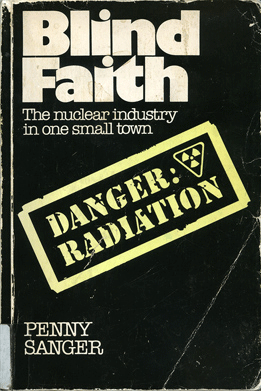 Blind Faith: The Nuclear History of Port Hope, Ontario http://www.mintpressnews.com/MyMPN/author/driches/ January 15, 2015 By Dennis Riches
Radiation is invisible, and it has always been imbued with a diverse range of magical powers in science fiction. Ironically, in a very real sense, radiation does make people invisible. Once groups of people have become victims of a radiological contamination, they are, in addition to being poisoned (or being traumatized by the possibility that they have been poisoned), marginalized and forgotten. Their traditions and communities are fragmented, and they are shamed into concealing their trauma. When contamination occurs, there is a strong impulse even among many victims to not admit that they have been harmed, for they know the fate that awaits them if they do.
Thus it is that hibakusha (the Japanese word for radiation victims) become invisible. When a new group of people become victims, such as in Fukushima in 2011, they feel that they have experienced a unique new kind of horror. For them, for their generation, it is new, but for those who know the historical record, it is a familiar replay of an old story. The people of Fukushima should know by now that they are bit players who have been handed down a tattered script from the past.
A case in point is “Blind Faith,” the superb 1981 book by journalist Penny Sanger, about the small irradiated Canadian town of Port Hope on the shores of Lake Ontario. In the 1970s, it faced (and more often failed to face) the toxic legacy of processing first radium, then uranium for nuclear weapons and nuclear power plants.
Fissures in earth not far from 7 nuclear reactors
 Official: Fissures in earth now suspected under dam upstream of nuke plants — “There’s plenty of rumors… We’re considering all possibilities… Leak is actually in embankment, that’s where all the focus is” — Speculation that problem to go on for years — New drone footage shows excavation in progress (VIDEO) http://enenews.com/officials-fissures-suspected-dam-multiple-nuclear-reactors-downstream-considering-all-possibilities-leak-actually-embankment-all-focus-plenty-rumors-speculation-repair-project-could-years-video?utm_source=feedburner&utm_medium=email&utm_campaign=Feed%3A+ENENews+%28Energy+News%29
Follow-up to: ‘Sinkhole develops under dam in US — 7 nuclear reactors downstream — NRC notified of ‘stability issues’, plants begin evaluating potential flood impacts‘ and ‘Muddy seepage coming up near foundation of Boone Dam — Officials working around clock, using submarines and ground-penetrating radar
Bristol Herald Courier, Jan 14, 2015 (emphasis added): Water is still seeping at Boone Dam and the cause has yet to be determined… Boone Dam has two portions, a concrete portion [and] an earthen embankment. “The leak is actually in the embankment, that’s where all the focus is,” Travis Brickey, a spokesman for TVA, said Monday… TVA is currently drilling around the area where the units discharge water… Though there is no clear timeline on how long the investigation will take, Brickey said that it’s safe to say that there will be a project at the dam. But he’s not sure… how long the project will last or how it will impact the reservoir.
WJHL, Jan 12, 2015: TVA… says it plans to make an announcement about… water seeping out of a nearby riverbank near Boone Dam [after] what’s now being described as a “prolonged analysis” to find the source of the water moving underground… [TVA spokesman Travis Brickey] confirmed TVA engineers now suspect water is moving through fissures in rock under the earth-filled section of Boone Dam… TVA has lowered Boone Lake [to reduce] pressure on the dam [and] stopped passing water through its power-generating turbines at Boone Dam as a safety precaution… That’s forced TVA to release water [which is] shooting into the air… a highly visible water release that seems to have fired speculation about what’s going on at Boone Dam… TVA is non-committal about its plans to refill the lake in the spring. “It’s too soon to tell,” Brickey said.
TVA spokesman Travis Brickey, Jan 12, 2015: “We are considering all possibilities and continue to analyze the data… We’ve installed additional monitoring equipment along with anextensive core drilling campaign… We’re aware that there are plenty of rumors… Our engineers are working to develop next steps.”
More from Brickey: “We’re doing a lot of engineering work and looking at repair options and what that might entail… I assure you there are a lot of people working on this.”
WCYB, Dec 29. 2014: People who visit Boone Lake won’t be seeing normal water levels any time soon… Brickey says that TVA is reviewing repair options on Boone Dam… But, the longer it takes for TVA to announce the plans, the more concerned many marina owners are becoming.
Kingsport Times-News, Dec 29, 2014:“It’s all speculation,” Brickey said of rumors that the lake’s drawdown could last two years or longer… TVA’s most recent press [said] “reservoir levels could be lowered further if conditions change… The duration of the drawdown will depend on the results of the ongoing analysis.”
US Department of Defense – the Global Polluter
 This article might be 4 years old, but nothing has changed. My only question about it, is that Russia is surely equal with USA at the top of the military pollution list?
US Department of Defense is the Worst Polluter on the Planet Project
Censored October 2, 2010 The US military is responsible for the most egregious and widespread pollution of the planet, yet this information and accompanying documentation goes almost entirely unreported. In spite of the evidence, the environmental impact of the US military goes largely unaddressed by environmental organizations and was not the focus of any discussions or proposed restrictions at the recent UN Climate Change Conference in Copenhagen. This impact includes uninhibited use of fossil fuels, massive creation of greenhouse gases, and extensive release of radioactive and chemical contaminants into the air, water, and soil. Continue reading
America’s dangerous, aging, nuclear arsenal
The average age of a U.S. nuclear warhead is 27 years. Many of the buildings where the nuclear missiles and bombs are stored date back to the 1950s — and it shows. Blast doors on the country’s nuclear missile silos are too rusty to seal shut. The roof of a security complex in Oak Ridge, Tenn., that houses most of the U.S. supply of enriched uranium collapsed in March. ……
That’s an understatement…….. The institutional rot has led to a number of frightening near-misses.
Such as?
In 2007, six nuclear missiles went missing from a North Dakota facility for 36 hours. It turned out they’d been accidentally attached to a plane’s wings and flown over several states to Louisiana, where they were left sitting unprotected on the tarmac for hours. A year before, four missile nose cones were accidentally sent to Taiwan instead of helicopter batteries. The most serious near-disaster occurred back on Jan. 21, 1961, when two nuclear bombs slipped from the belly of a B-52 flying over the North Carolina city of Goldsboro. Both bombs were set to detonate, and failed to do so after suffering minor damage to the parts needed to initiate an explosion — a stroke of luck that saved the city from annihilation……….http://theweek.com/articles/533721/dangers-ouraging-nuclear-arsenal
USA: Number of solar energy jobs equals number of coal industry jobs
 There are about as many solar jobs as coal jobs in the US, Vox January 18, 2015 Rooftop solar power is fairly labor-intensive. You need people to design and manufacture panels. Then people to market the panels to households. Then people to come and install them on rooftops…..the solar industry employed roughly 174,000 people in 2014, according to a survey from the non-profit Solar Foundation. And the industry is expected to add another 36,000 jobs this year, as rooftop installations keep rising at a rapid clip.
To put this in perspective, 174,000 is pretty comparable to the number of workers employed by the US coal industry, if you add up everyone employed in coal mining (about 80,000), plus coal transportation and coal power plants.
Barack Obama and David Cameron on diplomacy with Iran
 Obama: There’s A Less Than 50/50 Chance Of Nuclear Deal With Iran NPR, EYDER PERALTA
 President Obama warned Congress that if they passed further sanctions against Iran, he would veto them.
The two leaders, speaking to the press after a series of bilateral meetings, stood shoulder to shoulder on all the issues that came before them. Cameron said that on Iran, he had been calling U.S. senators to tell them he didn’t think new sanctions would work against Iran.
During the almost two-hour conference, Obama and Cameron touched on terrorism, climate change, cyber security and foreign policy.
Here are some highlights of what they said:
— President Obama said the chances of a diplomatic deal with Iran are “probably less than 50/50.”
— But, he said, adding more sanctions would likely scuttle the deal and Iran would be “able to maintain that the reason they ended negotiations is because the U.S. was acting in bad faith.”
— “Congress needs to show patience,” Obama said, adding that at the moment a diplomatic solution is the “the best possible outcome that we can arrive at right now.”
— Cameron said he told U.S. senators that “it is the opinion of the U.K. that further sanctions at this point won’t actually help to bring the talks to a successful conclusion.”
— On the threat from violent extremism, Obama said: “I do not consider this an existential threat… this is one that we will solve.”
— The United States, unlike some parts of Europe, Obama said, has a Muslim population that “feel themselves to be Americans.”………
Commemoration of the Manhattan Project ignores those who lived downwind and paid the ultimate price
Thousands of Hanford Downwinders — people who lived downwind from or worked at Hanford — have become ill or have died of cancers as the result of radiation exposure.
The legacy of the Manhattan Project is not represented solely by the atomic science. It is also reflected in its destructive effects on the human body, a cautionary tale learned from the broken lives of Downwinders not just near Hanford but around the world. The human toll of this project remains a story that must not be silenced or ignored.
Don’t throw history out with the radioactive bathwater http://america.aljazeera.com/opinions/2015/1/manhattan-projectnationalhistoricalparkhanfordnuclearplant.html January 15, 2015 by Trisha Pritikin @TrishaPritikin On Dec. 12, Congress passed legislation to create the Manhattan Project National Historical Park at three nuclear plants in Washington state, New Mexico and Tennessee. President Barack Obama signed the bill into law on Dec. 19. The park will preserve historic buildings, structures and nuclear artifacts at the sites where the first atomic bombs were created. Public officials in Richland, Washington, near the Hanford B Reactor are rejoicing. Tourism promoters hope that the Hanford plant will become a major historical tourist attraction.
But not everyone is celebrating. As a victim of radiation discharged downwind from that plant, my feelings are mixed.
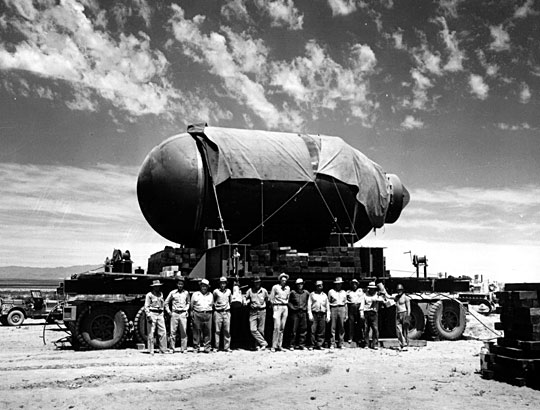
My father was an engineer at Hanford from the 1940s to ’60s. I spent my childhood playing in the poisoned Columbia River and drinking radioactive milk. Both my parents died of cancer related to Hanford radiation exposure. I’m alive today, I believe, because I had my thyroid gland removed at the first sign of cancer. I now live with tetany, pain and bone-numbing fatigue.
Constructed during World War II, the Hanford B Reactor was the first full-size weapons-grade plutonium production reactor in the world. It made plutonium for the first test of an atomic bomb, the Trinity test, in 1945, and for the atomic bomb detonated over Nagasaki, Japan. Continue reading
22 Fukushima-style reactors still operating in USA
Japan closing 5 reactors but U.S. still running its Fukushimas, Beyond Nuclear 17 Jan 15 The Japanese nuclear industry has announced it will permanently close five more of its remaining 48 “operable” nuclear reactors by March 2015, leaving the country with 43 reactors “operable” but still not actually “operating.” Two of the plants to be decommissioned are the same GE Mark I boiling water reactors identical to Fukushima. Despite the political landscape in Japan still promoting nuclear power, the anti-nuclear movement there continues to campaign to keep all of Japan’s reactors closed indeifinitely.
1 This Month
Tell Congress: Prevent Nuclear Catastrophe in Iran

Tell Congress: Prevent Nuclear Catastrophe in Iran

Read the Public Inquiry Report, the Commissioners’ report, Surrendering Australia: The AUKUS Deception is available to download for free at aukuspublicinquiry.com. Or just watch the replay of the National Press Club Luncheon.


Shut down the radiation-damaged Heysham nuclear reactors now
To see nuclear-related stories in greater depth and intensity – go to https://nuclearinformation.wordpress.com

Say No to NASA’s Reckless Nuclear Reactor on the Moon
Say No to NASA’s Reckless Nuclear Reactor on the Moon
-
Archives
- November 2026 (224)
- October 2026 (302)
- September 2026 (339)
- August 2026 (330)
- July 2026 (355)
- June 2026 (287)
- May 2026 (306)
- April 2026 (356)
- March 2026 (251)
- February 2026 (267)
- January 2026 (308)
- December 2025 (358)
-
Categories
- 1
- 1 NUCLEAR ISSUES
- business and costs
- climate change
- culture and arts
- ENERGY
- environment
- health
- history
- indigenous issues
- Legal
- marketing of nuclear
- media
- opposition to nuclear
- PERSONAL STORIES
- politics
- politics international
- Religion and ethics
- safety
- secrets,lies and civil liberties
- spinbuster
- technology
- Uranium
- wastes
- weapons and war
- Women
- 2 WORLD
- ACTION
- AFRICA
- Atrocities
- AUSTRALIA
- Christina's notes
- Christina's themes
- culture and arts
- Events
- Fuk 2022
- Fuk 2023
- Fukushima 2017
- Fukushima 2018
- fukushima 2019
- Fukushima 2020
- Fukushima 2021
- general
- global warming
- Humour (God we need it)
- Nuclear
- RARE EARTHS
- Reference
- resources – print
- Resources -audiovicual
- Weekly Newsletter
- World
- World Nuclear
- YouTube
-
RSS
Entries RSS
Comments RSS

