USA could be 100% powered by renewable energy by 2015
 The US Could Run Exclusively On Renewable Energy By 2050 http://www.gizmodo.com.au/2015/06/the-us-could-run-exclusively-on-renewable-energy-by-2050/ ALISSA WALKERThere are many things holding up the US’s move towards renewable energy, but that one thing is not science: We already have all the technology we need to make this happen. A new study claims that a completely clean energy future is possible by 2050, and it plots roadmaps for all 50 states to achieve this goal.
The study, which is published in Energy & Environmental Science, is authored by Mark Z. Jacobson, a civil and environmental engineer who heads up Stanford’s Atmosphere and Energy Program. He’s known for publishing many similar roadmaps for America’s energy future, but this one is the most comprehensive — and useful — because it takes into consideration the unique environmental situations and policy quirks for each state.

Most enticing is this chart where incredible growth in solar and wind energy helps offset the gradual reduction in fossil fuels and nuclear energy. But the overall energy supply needed will also decrease, even with increased demand, due to better energy efficiency.
In that black zone that gets squeezed out: Nuclear power, coal with carbon capture, liquid or solid biofuels, and natural gas. Nope, not even biofuels, argues the study — since “their combustion produces air pollution at rates on the same order as fossil fuels and their lifecycle carbon emissions are highly uncertain.”
The irrationality of nuclear deterrence – General George Lee Butler
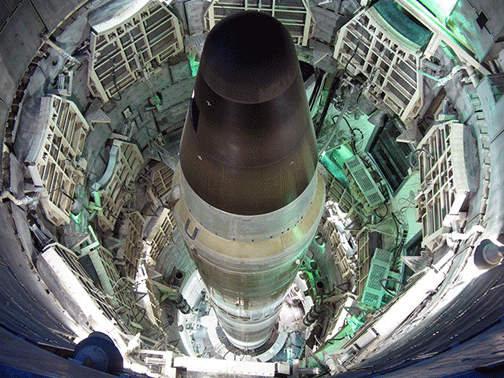
That we would pursue these weapons with such unfettered enthusiasm—competing amongst the [military] services for resources, going to roll out these shiny new things, cutting ribbons—spoke to me a great deal about the human condition. For some people, technology has absolutely mesmerizing qualities. If we can do it, we must.
That’s the kind of thinking that got us where we are today. To add to that, the military-industrial complex was being fed a virtually endless trough of money. There is no end to the number of people who will find any way to justify building something new, brighter and better. I’ve seen that happen time and time and time again
Ex-Chief of Nuclear Forces General Lee Butler Still Dismayed by Deterrence Theory and Missiles on Hair-Trigger Alert, TruthOut , 14 June 2015 00:00By Robert Kazel, Nuclear Age Peace Foundation | Interview After the Cold War ended in the early 1990s, the danger of nuclear weapons faded as a source of anxiety for some Americans. To them, worrying that the world’s stockpiles of missiles and bombs could eventually create catastrophe seemed as anachronistic as the duck-and-cover classroom drills of a previous generation. But for George Lee Butler, a four-star US Air Force general and the commander of US nuclear forces between 1991 and 1994, thinking about the possibility of just such a calamity didn’t end. The reality was always a phone call away.
The calls would come at least once a month, and there was never advance warning. Butler might be anywhere: his office at Offutt Air Force Base near Omaha, Neb., or traveling, or home sleeping. A hotline to other military officers and the White House sat on a bedside table, closer to his wife’s head because she was the lighter sleeper.
It always turned out to be an exercise—World War III obviously never broke out during Butler’s tenure. But, at least at the outset, he never knew for sure. The games were thought to be more useful if the participants—even a key player such as Butler—were kept in the dark about that…..
Actual presidents—in Butler’s day, George H.W. Bush and Bill Clinton—never took part in these “missile threat conferences.” Like a stand-in for a movie star who wished to avoid an unpleasant stunt, someone else always acted out the role of commander-in-chief at the other end of the line. Butler felt disgust that such a crucial task was left to a substitute.
Few knew it, but for Butler that sense of abhorrence gradually began to encompass nuclear weapons in general, as he became privy to more secrets about them………….
Former colleagues were surprised when Butler continued to make earnest, eloquent remarks to large audiences, condemning the same military systems he’d once managed. Now Butler was speaking freely about the “scourge” of nuclear weapons as being sinister and irreligious, and recommending they be dismantled everywhere they existed in the world through international agreements. These weapons were relics of a previous age when it was regrettably customary for rival nations to demonize one another, he argued. But they had no strategic value for any government in the post-Cold War world. Continue reading
USA Congress bars US assistance going to Ukraine’s Nazi military unit

 U.S. House Admits Nazi Role in Ukraine OpEdNews 6/12/2015 By Robert Parry (about the author) Last February, when ethnic Russian rebels were closing in on the Ukrainian port of Mariupol, the New York Times rhapsodically described the heroes defending the city and indeed Western civilization — the courageous Azov battalion facing down barbarians at the gate. What the Times didn’t tell its readers was that these “heroes” were Nazis, some of them even wearing Swastikas and SS symbols.
The long Times article by Rick Lyman fit with the sorry performance of America’s “paper of record” as it has descended into outright propaganda — hiding the dark side of the post-coup regime in Kiev. But what makes Lyman’s sadly typical story noteworthy today is that the Republican-controlled U.S. House of Representatives has just voted unanimously to bar U.S. assistance going to the Azov battalion because of its Nazi ties.
USA and Russia: top former generals plea to “de-alert” nuclear weapons
Ex-U.S., Russian brass: ‘De-alert’ nukes or risk disaster Politico. com By BRYAN BENDER 4/29/ 15
Amid all the talk about a new Cold War, here’s one hard, cold fact: Nearly 25 years after the collapse of the Soviet Union, Washington and Moscow still have nearly 2,000 atomic bombs ready to fly at a moment’s notice to destroy each other.
And that so-called hair-trigger alert is now sparking new concerns that deepening distrust between the former foes significantly raises the risk of a miscalculation and nuclear disaster.
Story Continued Below
On Thursday the American general who recently commanded U.S. nuclear forces will lead a group of ex-Russian officers and other national security leaders in an appeal for the United States and Russia to take immediate steps to “de-alert” their respective arsenals.
Their proposal starkly warns that the current dismal state of relations — combined with other new factors such as the threat of cyberattacks — demands leaders on both sides be given more time to respond to potential provocations before ordering the unthinkable.
“Tension between Russia and the West over the Ukraine crisis has brought the parties one step closer to the precipice of nuclear brinksmanship, the point at which nuclear risk skyrockets,” according to the findings of the commission convened by the disarmament group Global Zero, which will be delivered at the United Nations. “This tension is uncharacteristic of their post-Cold War partnership, but it has flared to the point that it is producing dangerous misunderstandings and action-reaction cycles with strong escalatory updrafts.”
The group, led by retired four-star General James Cartwright, who oversaw the U.S. nuclear arsenal before leaving the military in 2011, says the United States and Russia are at serious risk of an accidental nuclear confrontation, spurred by flawed intelligence or a misreading of the other side’s intentions. The primary reason: Fully half of their large arsenals remain designed to respond within minutes, what is known as launch-on-warning. As the report points out, “the go-code comes as a message that is the length of a tweet.” And “Minuteman missiles are so named for a reason.”
By requiring more steps be taken to prepare the weapons for launch, Russia and the United States would have hours — if not several days — to develop better information before reacting, while still maintaining a strong deterrent force, Cartwright told POLITICO.
“These weapons that are on alert are particularly vulnerable to being hijacked or [the systems] indicate something that is not true in a situation where you only have a few minutes to make a decision,” said Cartwright, who was head of the U.S. Strategic Command before becoming vice chairman of the Joint Chiefs of Staff.
“In a tense military-political situation, like the one that exists currently as a result of the crisis in Ukraine, the probability of making erroneous decisions increases,” added retired Russian Major General Vladimir Dvorkin, former director of Research Institute No. 4 in the Russian Ministry of Defense. “That is why at the present time it would be necessary for the presidents of Russia and the U.S. to formally renounce the launch-on-warning form.”
…………….. http://www.politico.com/story/2015/04/russian-nukes-risk-disaster-117489.html#ixzz3d6YDSvLK
The real success behind the Solyndra solar power story
 The Real Solyndra Scandal It’s that no one’s noticed the enormous success of the government program behind it. Slate, By Daniel Gross , 15 June 15 On Thursday, Peter Davidson, the official who took over the controversial, much-mocked Energy Department Loan Programs Office in 2013,announced he’s stepping down. Created during the Bush administration, the program received a huge influx of funds as a result of the 2009 stimulus bill, which it lent to a range of companies in the energy and transportation industries.
Early on, the program was known for its failures, especially Solyndra, which was like Benghazi before Benghazi was Benghazi—a three-syllable slogan that signified to conservatives the Obama administration’s fecklessness. A startup solar panel manufacturer, Solyndra received a $535 million loan guarantee and in 2011 went bankrupt. The program had other high-profile face-plants, including Fisker Automotive, a startup electric car-maker that went bust, causing the government towrite off $139 million of the $192 million loan it made.
The loan program says it has made loans to 17 entities that are currently producing power—and hence generating revenue to pay back their loans. Meanwhile, as the industry has gained scale (thanks in part to the Energy Department–backed projects), the price of building such plants has fallen. And so the private sector has seized the initiative. Solar and wind are booming in the U.S., as utilities, private equity firms, banks, startups, and Fortune 500 companies are rushing to finance the construction of dozens of large-scale emissions-free power plants. According to the Solar Energy Industries Association, the U.S. utility-scale solar sector grew 38 percent in 2014. From nothing before the loan guarantees, utility-scale solar now accounts for about 4 gigawatts of generating capacity. It’s a genuine growth industry, financed largely by private funds.
In a way, this dynamic is no different than the one we’ve seen over the last two centuries, in which the first efforts at commercializing a new technology—the canal, the telegraph, the railroad, the Internet—were funded by the government, and then the private sector rushed in after it was proved to work…………
As with the financial bailouts, it is likely the taxpayers will get all the money they lent to energy-related companies back—and then some. Unlike the financial bailouts, these bailouts will produce lasting social, economic, environmental, and industrial benefits.http://www.slate.com/articles/business/the_juice/2015/06/peter_davidson_steps_down_from_energy_department_his_loan_program_was_responsible.html
Energy inefficiency and hot water pollution in Entergy’s Pilgrim Nuclear Power Station
 OF NUCLEAR INTEREST: Energy efficiency and Pilgrim Nuclear http://cambridge.wickedlocal.com/article/20150612/NEWS/150619852 The inefficiency of Entergy’s Pilgrim Nuclear Power Station is overlooked when it comes to figuring out how we can use our resources in a more economically and environmentally sound manner. By Brian Boyle, William Maurer and Meg Sheehan Cape Cod Bay Watch
Energy efficiency is on everyone’s mind these days. State and federal government programs incentivize homeowners and businesses to become more energy efficient. Yet, the inefficiency of Entergy’s Pilgrim Nuclear Power Station is overlooked when it comes to figuring out how we can use our resources in a more economically and environmentally sound manner.
An investigation into Pilgrim’s efficiency uncovered that about two-thirds (66 percent) of the heat energy produced is dumped into Cape Cod Bay as waste heat.
Pilgrim generates electricity by boiling water using nuclear fission, which creates steam. The steam runs turbines that make electricity. The cooling water Pilgrim needs for condensing the steam back into water comes from Cape Cod Bay: up to 510 million gallons every day. The water from Cape Cod Bay absorbs excess heat during the process of making electricity, and is pumped back into the Bay about 30 degrees Fahrenheit hotter.
Only about one-third (34 percent) of the heat energy produced at Pilgrim is converted into electricity for consumers. At this rate, Pilgrim is about as efficient as a typical coal fired power plant.
Entergy’s wasteful operations are sanctioned under an outdated Clean Water Act permit issued by U.S. Environmental Protection Agency (EPA) and the state. EPA and the state allow Entergy to use an inefficient, outdated “once-through” cooling water system to withdraw cooling water from Cape Cod Bay, instead of requiring a more efficient, updated closed-loop system. Pilgrim has been using this outdated cooling water system since it started operating in 1972. The hot water – or wasted energy – that Entergy dumps into Cape Cod Bay harms marine resources and pollutes our ocean.
Entergy’s use of Cape Cod Bay for cooling water is supposed to be tightly regulated by EPA and the state, to make sure Pilgrim uses the best technologies available that reduce environmental harm. However, since 1972, EPA and the state have not required any updates to Pilgrim’s cooling technology, and have let Entergy’s Clean Water Act permit expire in 1996 – almost two decades ago.
To put Pilgrim’s inefficiency and wastefulness into perspective, here is a comparison. The amount of heat energy Entergy dumps into the Bay each year – about 42 trillion BTUs – is enough to heat 437,800 homes every year with fuel oil. That’s more than four times the number of households on the Cape and Islands, and more than two times the number of households in Plymouth County.
The volume of water Entergy dumps into the Bay each year is more than enough to run a shower in every household on the Cape and Islands every day, all day, all year long. It is also 100 times more than the town of Plymouth’s Water Department pumps to meet the entire town’s municipal and domestic water requirements each year.
Public can comment on designated “potential conditions.” for Ontario nuclear waste dump
Canada opens comment period on nuclear dump proposed for Lake Huron http://www.voicenews.com/articles/2015/06/14/news/doc557af82e523ff381884332.txt , June 14, 2015 By Jim Bloch
As a result, the agency has extended the timeline for a final decision by Minister of the Environment Leona Aglukkaq on the Environmental Assessment of the dump by 90 days. The deadline is now Dec. 2.
“It is interesting that the Minister of the Environment’s decision on the nuclear waste dump is being postponed from Sept. 3 until December, which falls after the federal election in October,” said Beverly Fernandez, founder of the Canadian organization Stop the Great Lakes Nuclear Dump.
Critics of nuclear power were aghast at the Joint Panel’s decision in May to endorse the dump.
Western Michigan native Kevin Kamps works as a nuclear waste specialist for the Maryland-based Beyond Nuclear, an anti-nuclear group that supports renewable energy and nuclear disarmament. Kamps condemned the Joint Panel’s decision to endorse the dump, calling OPG’s proposal “insane” and labeling it “a declaration of war against the Great Lakes.”
Kamps is expected to speak about ways to stop the dump at 7 p.m. June 16 at the Donald Dodge Auditorium at the St. Clair County Administration Building, located at 200 Grand River Ave. in Port Huron.
US Democrats stall passage of Trans Pacific Partnership
 Democrats turn back on Obama over secret trade negotiations, ABC Radio AMBen Knight reported this story on Saturday, June 13, 2015 ELIZABETH JACKSON: The Australian Government’s hopes of joining a massive Pacific free trade agreement have been dampened today, after the US Congress voted to slow down the negotiations.
The Trans-Pacific Partnership is being negotiated between the US, Japan, Australia and nine other Pacific countries.But the discussions are secret and opponents of the deal are deeply worried about what the leaders of those countries are giving away – including members of Barack Obama’s own party.
Our Washington correspondent is Ben Knight.
Ben, what exactly was this vote?
BEN KNIGHT: Well, it’s pretty complicated. And, you know, it’s very easy to get sort of down into the weeds of congressional machinations and, in fact, Barack Obama’s spokesman, Josh Earnest, called this a “procedural SNAFU” – a word he’s become pretty fond of.
But look, essentially what has happened is: the Congress had the first votes on giving the president the authority he wants to be able to negotiate this Trans-Pacific Partnership in secret, by himself.
Now, this is a luxury that other leaders in TPP countries – the 11 other TPP countries – have. Australian Government is negotiating this and it’s not giving out any of the details – and, of course, this is one of the great big concerns for opponents: is that we don’t know what’s being negotiated.
Now, president Barack Obama was saying, “Look, I want to negotiate this deal. I want the luxury, I want the ability to be able to do this in secret.”
And then, when all the countries have come up with a final text, with a final draft of what will be, probably, one of the biggest free trade agreements in history, then he will present it to the American public and to the Congress. And then they will vote on it: yes or no.
The alternative to that is that people in the Congress want to be able to see the details. They want to know what’s going on. They want to vote on each particular part of it as it’s being discussed and as it’s being decided. And as the president says: “I can’t do it that way.”…….http://www.abc.net.au/am/content/2015/s4254374.htm
The Weather Channel Confronts Republicans on Climate Change
On Wednesday, the Weather Channel launched a dramatic campaign it says is intended to help shift the climate change conversation from science to solutions.
The series of short videos, called Climate 25, is surprisingly political for a venue like the Weather Channel, and most are aimed at making the case for urgent action from a conservative, Republican angle. Among the featured speakers are U.S. Army Gen. Charles H. Jacoby (Ret.); Henry Paulson, a former CEO of Goldman Sachs who served as secretary of the treasury under President George W. Bush from 2006 to 2009; and Paul Polman, the CEO of Unilever. At one point, Christine Todd Whitman, the EPA administrator under George W. Bush, addresses Republicans directly, saying, “It’s our issue.”
http://www.slate.com/blogs/future_tense/2015/06/12/the_weather_channel_s_new_video_series_on_climate_change_features_25_stark.html &
The Heartland Institute spouting lies about climate change
The global warming conference where skeptics think they’re winning the debate.
The annual International Climate Change Conference, which this year runs Thursday and Friday, just steps from Capitol Hill, is like an alternate universe…
During the event, one can hear from a handful of leading climate skeptics on how the sun is really responsible for driving climate variability, how extreme precipitation events are just an artifact of poor data measurements and how federal scientists are manipulating data to manufacture spurious warming trends.
Most importantly, one can hear from senior Republican lawmakers about how they plan to stop the Obama administration’s climate regulations and scientific research agenda.
The conference is put together by the Heartland Institute, a free-market think tank based in Chicago, which in the past has received significant funding from the oil industry.
http://mashable.com/2015/06/11/global-warming-conference-skeptics/ & http://www.dailyclimate.org/t/7117601345683326174
Trans Pacific Partnership would give corporations, including nuclear ones, power over government laws
Under the existing deals with this parallel legal system for foreign corporations, a Swedish company has sued Germany because the German government decided to phase out nuclear power after the Fukushima disaster,
Rep. John Conyers:Why the TPP Is a Terrible Deal for Most Americans, Conyers in the House, 12 June 15 Trade agreements boost economic growth, while destroying lives and livelihoods. By John Conyers, Jr. “…………. Economic growth—our raw output of goods and services—is a questionable measure of our success or well-being as a nation. Growth, in some cases, runs counter to priorities that matter deeply to our people. As a short-term measure of national production, GDP often tends to increase as rates of crime, pollution, and household debt rise. Both Hurricane Sandy and the BP Deepwater Horizon disaster arguably boosted economic growth because of the activity associated with cleanup and rebuilding.
Nuclear fusion: US Congress ponders on this as wasteful boondoggle
 Nuclear war on the Hill Fusion research splits the House and Senate. Why? Because, er… science. Politico.com , 12 June 15 By BOER DENG On a patch of land in Saint-Paul-les-Durance, in the South of France, cranes recently installed two massive electrical fixtures, industrial gray and 87 tons each — the first components of a plant that will house the world’s biggest scientific project.
If it succeeds, the International Thermonuclear Experimental Reactor, or ITER, will turn hydrogen, the most abundant element in the universe, into virtually limitless clean energy. But success is far from assured, getting results will take years, and construction is behind schedule.
Now Congress has split on whether to continue supporting the enterprise at all. ……..Ambitious science projects frequently crash into funding rocks, and nuclear fusion is a particularly vexing problem for politicians. More than four decades have been spent trying to turn the reaction that fuels stars and H-bombs into a viable source of energy. Is it worth shelling out ever more on a very risky bet with a big potentialpayoff — a step towards securing the world’s, not to mention the country’s, energy future? Or is it yet another boondoggle science project recklessly spending taxpayer money?….
like many “big science” projects, it has a record of overrunning its cost estimates. ……
Plenty of physicists are skeptical of ITER, … “I was on the site and it’s appalling how little work has been done,” says Michael Lubell of the American Physical Society. Some researchers have derided the Department of Energy’s most recent fusion strategy, which includes ITER, or have written to Congress to plead for pulling out of the experiment. The technology the reactor will use is too costly to be viable, they say, and the money would be better put toward research on alternative designs…..http://www.politico.com/agenda/story/2015/06/nuclear-war-on-the-hill-000083
Transfer of radiation experts to Alabama makes Californiaans more vulnerable , in nuclear disaster
“Dangerous Decision” Could Leave Californians Vulnerable After Nuclear Disaster. 4 Southern California, 12 June 15 By Joel Grover and Matthew Glasser
An EPA plan to consolidate resources would move West Coast nuclear response team to Alabama. Housed in a nondescript office park in Las Vegas, the United States Environmental Protection Agency has an elite team of radiation experts trained to respond to a nuclear disaster. One of their most important tools is a Mobile Environmental Radiation Lab known as the “MERL.”
A set of three large vehicles, the MERL can be in Southern California in a matter of hours after a terrorist attack or nuclear accident. And it allows the radiation response team to quickly identify and track dangerous radiation spreading across the region.
“The laboratory would be used to make emergency response decisions as to where people are okay to go, and where they can’t go,” explains Richard Flotard, a retired EPA radiation chemist.
But the NBC4 I-Team has obtained an EPA internal memo explaining that the agency is moving the mobile lab from Las Vegas to Alabama, leaving the state far removed from what California’s Office of Emergency Services calls a “first response” tool in the case of nuclear attack or accident.
Homeland Security officials have long worried that the port of LA, or downtown LA, could be a prime target for terrorists to detonate a nuclear device.
The EPA says it plans to move the lab to Montgomery, Alabama, home of another EPA radiation facility, this summer because of “tight resources.” That means the lab would have to drive across 7 states, taking 4-6 days for it to get to California in case of a nuclear event.”Leaving the western U.S. without this critical resource will increase response time to our state, jeopardizing our combined ability to adequately protect the public” during a nuclear disaster, said Jennifer Chappelle of the Governor’s Office of Emergency Services in a letter to the EPA.
Dr. Vern Hodge, a radiation scientist at the University of Nevada Las Vegas who has been studying radiation for decades, told NBC4 that “it’s a criminal act if you remove this rapid response unit from the west coast.”……..http://www.nbclosangeles.com/news/local/Dangerous-Decision-Could-Leave-Californians-Vulnerable-After-Nuclear-Disaster-307086911.html
Legal action against Canada’s nuclear waste plan for Lake Huron area
 Burial of nuclear waste near Lake Huron subject of legal action The Canadian Press Jun 12, 2015 A review panel decision in favour of a plan to bury dangerous nuclear waste near Lake Huron was illegal and unreasonable, a citizen’s group argues in a new Federal Court application.
In asking the court to set aside the decision, the group says the panel that approved the Ontario Power Generation proposal failed to consider Canada’s international obligations, was biased, and violated the Canadian environmental rules.
“The (panel) erred in failing to require OPG to fully study accidents and malfunctions that would result in adverse effects to human health and safety and to the environment,” the application by Save our Saugeen Shores states.
“(It) erred in failing to require OPG to adequately evaluate the potential for reasonably foreseeable or unplanned events, singly or in combination, to produce significant short- and long-term adverse effects on the Great Lakes Basin ecosystem, home to 40 million people and containing 20 per cent of the world’s fresh water.”
Approval of the billion-dollar deep geological repository near Kincardine, Ont., along with any conditions currently rests with federal Environment Minister Leona Aglukkaq, who has delayed making a decision until December — after the fall election………..
More than 150 communities — many in the United States — have passed resolutions against any storage of nuclear waste near the Great Lakes.
The federal court application argues Ontario Power Generation failed to take into account Canada and Ontario’s obligations to be “good neighbours” to the U.S. and individual states.
“No Canadian representative, whether formally or informally, notified the United States of the proposal,” the application states………Jill Taylor, president of Save Our Saugeen Shores, said the federal government cannot expect industry and the public to respect environmental laws and processes when it has failed to do so. The project is simply too risky, she said, noting last year’s failure at an American underground nuclear waste site in New Mexico.
“To risk contaminating (Great Lakes) water with nuclear waste that will remain highly radioactive for 100,000 years is unthinkable,” Taylor said. http://www.cbc.ca/news/canada/toronto/burial-of-nuclear-waste-near-lake-huron-subject-of-legal-action-1.3111403
Grid powered 50% by renewable energy without the use of batteries.
Systems flexible enough to accommodate the ups and downs of solar and wind production can be made by adjusting the power at millions of homes and businesses on a minute-by-minute or even second-by-second basis. This approach requires no new hardware, some control software and a bit of consumer engagement.
Massive balancing act..……This is an enormous challenge to grid operators in this region. Massive fluctuations in power require equally massive storage devices that can charge when the wind is blowing, and discharge during periods of calm.
Now, the balance of supply and demand for power is primarily done by generating more power rather than storage.
Grid operators draw on what is called the balancing reserves obtained from fossil fuel generators or hydro plants, when available. These power plants ramp up and down their output in response to a signal from a grid balancing authority. This is just one of many ancillary services required to maintain a reliable grid.
Many states are now scrambling to find new sources of ancillary services, and the federal government is also searching for incentives: Federal Energy Regulatory Commission (FERC) orders 745, 755 and 784 are recent responses by a government agency to create financial incentives for responsive resources to balance the grid.
Are batteries the solution?
Storage is everywhere, but we have to think beyond electricity…………..
Through local intelligence – in the form of a chip on each device or a home computer for many devices – the collection of one million pools in Florida can be harnessed as massive batteries. Through one-way communication, each pool will receive a regulation signal from the grid operator. The pool will change state from on to off based on its own requirements, such as recent cleaning hours, along with the needs of the grid. Just as in the office building, each consumer will be assured of desired service.
Pools are, of course, just one example of a hungry but flexible load.
On-off loads such as water pumps, refrigerators or water heaters require a special kind of intelligence so that they can accurately erase the variability created from renewable generation. Randomization is key to success: To avoid synchronization (we don’t want every pool to switch off at once), the local intelligence includes a specially designed “coin-flip”; each load turns on or off with some probability that depends on its own environment as well as the state of the grid.
It is possible to obtain highly reliable ancillary service to the grid, while maintaining strict bounds on the quality of service delivered by each load. With a smart thermostat, for example, indoor temperature will not deviate by more than one degree if this constraint is desired. Refrigerators will remain cool and reliable, and pools will be free of algae………
Today, about 750,000 homeowners in Florida have signed contracts with utility Florida Power & Light, allowing them to shut down pool pumps and water heaters in case of emergencies. How can we expand on these contracts to engage millions of homeowners and commercial building operators to supply the virtual storage needed? Recent FERC rules that offer payments for ancillary services for balancing the grid are a valuable first step in providing incentives.
It is possible that little incentive is required since we are not subjecting consumers to any loss of comfort: it is the pool or fridge that provides flexibility, and not the homeowner.
A sustainable energy future is possible and inexpensive with a bit of intelligence and flexibility from our appliances. https://theconversation.com/could-one-million-smart-pool-pumps-store-renewable-energy-better-than-giant-batteries-41937
1 This Month
Tell Congress: Prevent Nuclear Catastrophe in Iran

Tell Congress: Prevent Nuclear Catastrophe in Iran

Read the Public Inquiry Report, the Commissioners’ report, Surrendering Australia: The AUKUS Deception is available to download for free at aukuspublicinquiry.com. Or just watch the replay of the National Press Club Luncheon.


Shut down the radiation-damaged Heysham nuclear reactors now
To see nuclear-related stories in greater depth and intensity – go to https://nuclearinformation.wordpress.com

Say No to NASA’s Reckless Nuclear Reactor on the Moon
Say No to NASA’s Reckless Nuclear Reactor on the Moon
-
Archives
- November 2026 (224)
- October 2026 (302)
- September 2026 (339)
- August 2026 (330)
- July 2026 (355)
- June 2026 (287)
- May 2026 (306)
- April 2026 (356)
- March 2026 (251)
- February 2026 (267)
- January 2026 (308)
- December 2025 (358)
-
Categories
- 1
- 1 NUCLEAR ISSUES
- business and costs
- climate change
- culture and arts
- ENERGY
- environment
- health
- history
- indigenous issues
- Legal
- marketing of nuclear
- media
- opposition to nuclear
- PERSONAL STORIES
- politics
- politics international
- Religion and ethics
- safety
- secrets,lies and civil liberties
- spinbuster
- technology
- Uranium
- wastes
- weapons and war
- Women
- 2 WORLD
- ACTION
- AFRICA
- Atrocities
- AUSTRALIA
- Christina's notes
- Christina's themes
- culture and arts
- Events
- Fuk 2022
- Fuk 2023
- Fukushima 2017
- Fukushima 2018
- fukushima 2019
- Fukushima 2020
- Fukushima 2021
- general
- global warming
- Humour (God we need it)
- Nuclear
- RARE EARTHS
- Reference
- resources – print
- Resources -audiovicual
- Weekly Newsletter
- World
- World Nuclear
- YouTube
-
RSS
Entries RSS
Comments RSS

