History of safety failures at US nuclear plants

 How the next US nuclear accident could happen, Bulletin of the Atomic Scientists, Hugh Gusterson 5 July 15 “…….We can learn a lot about the potential for safety failures at US nuclear plants from the July 29, 2012, incident in which three religious activists broke into the supposedly impregnable Y-12 facility at Oak Ridge, Tennessee, the Fort Knox of uranium. Once there, they spilled blood and spray painted “work for peace not war” on the walls of a building housing enough uranium to build thousands of nuclear weapons. They began hammering on the building with a sledgehammer, and waited half an hour to be arrested. If an 82-year-old nun with a heart condition and two confederates old enough to be AARP members could do this, imagine what a team of determined terrorists could do.
We have a detailed understanding of this incident thanks to energetic reporting byFrank Munger, Dan Zak, and, finally, a recent tour de force account in the New Yorker by Eric Schlosser, who has established himself as the premier reporter on nuclear accidents waiting to happen. Their cumulative reporting suggests that the Achilles’ heel of US nuclear safety culture lies in a fondness for automated security technologies, the delegation of government functions to private contractors, and a predilection for hollow facsimiles of effective audit procedures.
Where some other countries often rely more on guards with guns, the United States likes to protect its nuclear facilities with a high-tech web of cameras and sensors. Under the Nunn-Lugar program, Washington has insisted that Russia adopt a similar approach to security at its own nuclear sites—claiming that an American cultural preference is objectively superior. The Y-12 incident shows the problem with the American approach of automating security. At the Y-12 facility, in addition to the three fences the protestors had to cut through with wire-cutters, there were cameras and motion detectors. But we too easily forget that technology has to be maintained and watched to be effective. According to Munger, 20 percent of the Y-12 cameras were not working on the night the activists broke in. Cameras and motion detectors that had been broken for months had gone unrepaired. A security guard was chatting rather than watching the feed from a camera that did work. And guards ignored the motion detectors, which were so often set off by local wildlife that they assumed all alarms were false positives….
Instead of having government forces guard the site, the Department of Energy had hired two contractors: Wackenhut and Babcock and Wilcox. Wackenhut is now owned by the British company G4S, which also botched security for the 2012 London Olympics, forcing the British government to send 3,500 troops to provide security that the company had promised but proved unable to deliver. Private companies are, of course, driven primarily by the need to make a profit, but there are surely some operations for which profit should not be the primary consideration.
Babcock and Wilcox was supposed to maintain the security equipment at the Y-12 site, while Wackenhut provided the guards. Poor communication between the two companies was one reason sensors and cameras were not repaired. Furthermore, Babcock and Wilcox had changed the design of the plant’s Highly Enriched Uranium Materials Facility, making it a more vulnerable aboveground building, in order to cut costs. And Wackenhut was planning to lay off 70 guards at Y-12, also to cut costs.
Incidentally, we hear similar stories coming out of Los Alamos, where the private contractor responsible for packaging nuclear waste for the Waste Isolation Pilot Project put pressure on an undertrained workforce to pack as many barrels of nuclear waste as possible everyday, if necessary by cutting safety corners to maximize profit.
These are the hazards of outsourcing essential state security functions to private contractors: They prioritize profit and, like the Soviet bureaucratic organizations Sonja Schmid blames for Chernobyl, they often find it hard to work together……
This time the nuclear facility was broken into by highly principled peace activists intent on symbolically spilling their own blood to make a point. Next time the intruders may be more malevolent, intending to spill others’ blood. If there is a next time, be prepared for an inquiry that shows a misplaced faith in automated security technology, private contractors cutting corners to make a buck, and government managers astonished that their reviews didn’t catch the problem. http://thebulletin.org/how-next-us-nuclear-accident-could-happen8441
A losing bet – Bill Gates’ gamble on nuclear power?
Arjun Makhijani, president of the Institute for Energy and Environmental Research, told VICE News that companies have spent $100 billion worldwide trying to commercialize breeder reactors without success.
“So now you’re telling me that this combination of reactors has $1.3 billion scattered over more than a dozen technologies?” he said. “Bill Gates’ investment … is hopeless.”
Tech Titans Like Bill Gates Are Gambling on Nuclear Power — But It Looks to Be a Losing Bet, VICE News, By Laura Dattaro July 4, 2015 Nearly 50 American and Canadian tech companies, including heavy hitters like Bill Gates, have invested over a billion dollars in next-generation nuclear technologies in the last 10 years, according to the think tank Third Way.
Despite declining public trust in nukes, especially since the Fukushima Daiichi meltdown in Japan in March 2011, proponents argue that nuclear is key — some say the key — to providing reliable energy while at the same time helping to rid the world of fossil fuels.
“We were compelled by a mission to get involved in a very pressing energy challenge …. Marcia Burkey, chief financial officer of TerraPower, told VICE News. Bellingham, Washington-based TerraPower was founded by Bill Gates and is developing new nuclear reactor technologies.
But critics of nuclear power say this rosy picture does not match the realities of the industry, and that the technologies are too far from being scaled up commercially to meet the urgency of lowering emissions. What’s more, they say, the money behind the current push for more advanced reactors is paltry compared to the costs associated with developing, licensing, and constructing even a single nuclear plant.
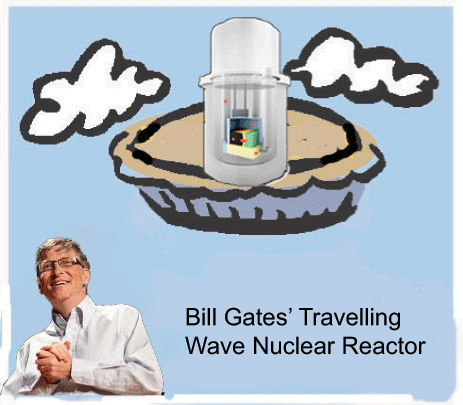
“You can’t really in good faith put forward a technology that we don’t know how to do, and have no real prospect of knowing how to do in the next couple of decades. The solution needs to be underway already or to be capable of beginning tomorrow,” Peter Bradford, a professor at Vermont Law School and former member of the US Nuclear Regulatory Commission (NRC), told VICE News. “That’s really not true of any of those designs mentioned in the [Third Way] report.” Continue reading
Washington State Senate passes Bill on Small Modular Nuclear Reactors – calls them “clean”
 Small modular reactor bill passes state Senate BY ANNETTE CARY Tri-City HeraldJune 30, 2015 A bill to support the manufacturing of small modular reactors in Washington state passed the state Senate 31-12 on Tuesday as the Legislature wrapped up its work.
As of 8 p.m. Tuesday, however, the House had yet to consider it…………….
There is interest in the Tri-Cities for positioning the community as a center for assembling or manufacturing the small nuclear plants to be shipped around the world, including to Asia. The reactors are proposed to be manufactured in modules and then shipped to where they will be used, with additional modules added as demand for electricity production increases…….
Added to the bill is a requirement that the state Department of Commerce and the Office of the Superintendent of Public Instruction prepare a joint report to the Legislature by Dec. 1 with recommendations for a clean-energy education program.
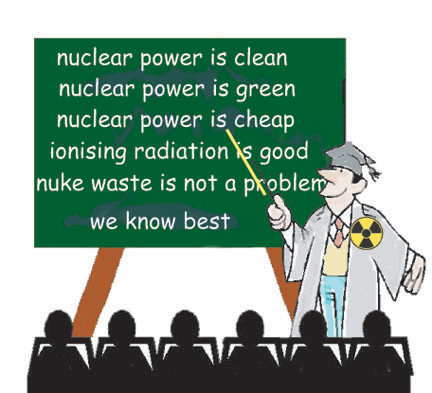
The program would be required to include grants both for clean-energy ambassadors and for professional development for teachers.
The clean-energy ambassadors would visit classrooms to introduce students to clean energy science and technology. They could cover solar and wind power, small modular reactors and opportunities for nuclear waste cleanup technology careers…….
Certified science teachers could receive grants to help them pursue professional development opportunities in clean-energy science and broaden their exposure to the field.
“One way to ensure that young people understand nuclear energy is to introduce them to our many great scientists, engineers and others who work in the nuclear field,” Brown said. “It’s also one of the best ways to guarantee that the next-generation of Washington job-seekers is prepared for opportunities in emerging nuclear and other clean-energy fields.”…….http://www.tri-cityherald.com/2015/06/30/3632808_small-modular-reactor-bill-passes.html?rh=1
Nuclear industry keen to save US government’s Export-Import Bank
 Why the US nuclear industry is eager to save this obscure, government-run bank The US nuclear industry has looked abroad for business as demand in the US has fallen. But without the Export-Import Bank’s backing, some say it would be harder for US companies to seal nuclear deals abroad.
Christian Science Monitor, By Jared Gilmour, Staff writer JULY 2, 2015 WASHINGTON — Tucked away in an unassuming building two blocks from the White House is a government-run bank. It helps US companies sell products abroad,……..
Until recently, the bank was relatively low-profile……the Export-Import Bank’s loans and loan guarantees are critical for another domestic industry that has fallen on hard times: US nuclear power. If the bank’s charter isn’t reauthorized, the industry and a host of other business interests say the effects could be devastating for US companies’ overseas prospects……..
Nuclear looks abroad For years, the US nuclear industry has struggled domestically. Cheap natural gas and coal have largely crowded the low-carbon power source out of the market. The recession also put a damper on demand for new US power generation. Safety concerns have made matters worse for US nuclear, and those worries flared up anew after Japan’s Fukushima disaster in 2011. http://www.csmonitor.com/Environment/Energy/2015/0702/Why-the-US-nuclear-industry-is-eager-to-save-this-obscure-government-run-bank
Organization of Canadian Nuclear Industries (OCI) to work with Romania to market nuclear reactors
 MOU promotes stronger ties among Canadian and Romanian nuclear suppliers Market Watch, BUCHAREST, Romania, Jul 2, 2015 (Canada NewsWire via COMTEX) — The Organization of Canadian Nuclear Industries (OCI) is proud to announce the signing today of a Memorandum of Understanding (MOU) with the Romanian Atomic Forum Association (ROMATOM)……..
The Partnering Workshop included an update on the planned Cernavoda 3/4 CANDU project as well as presentations by Canadian and Romanian nuclear suppliers on their nuclear capabilities and experience along with discussions on their mutual interest in collaborating on the Cernavoda 3/4 CANDU Project.
This MOU outlines several ways that OCI and ROMATOM will work together including identifying opportunities at nuclear projects in Romania, Canada, and other countries on which OCI and ROMATOM companies can cooperate. The OCI-ROMATOM MOU will also encourage and facilitate cooperation among Canadian and Romanian nuclear research institutes and universities on nuclear research, development, and nuclear education……..
The Canada-Romania Cernavoda 3/4 Supply Chain Partnering Workshop was the focal point of a three day 12 company OCI-led Trade Mission to Romania that kicked off with a July 1 Canada Day Celebration hosted by the Canadian Embassy …… The Trade Mission to Romania was supported by co-funding from Global Opportunities for Associations (GOA) program through which the Foreign Affairs, Trade and Development Canada (DFATD) encourages and supports trade associations in taking member companies into promising export markets.
Organization of Canadian Nuclear Industries (OCI) is an association of 180 leading Canadian suppliers to the nuclear industry in Canada and foreign markets. OCI…provides……engineering services and support to CANDU nuclear power plants in Canada as well as to CANDU and Light Water Reactor (LWR) plants in offshore markets. OCI promotes the continued and expanded use of nuclear energy in Canada and supports member companies in both domestic and international nuclear markets………http://www.marketwatch.com/story/mou-promotes-stronger-ties-among-canadian-and-romanian-nuclear-suppliers-2015-07-02
NASA cancelling solar space missions, favouring plutonium fuelled space flights
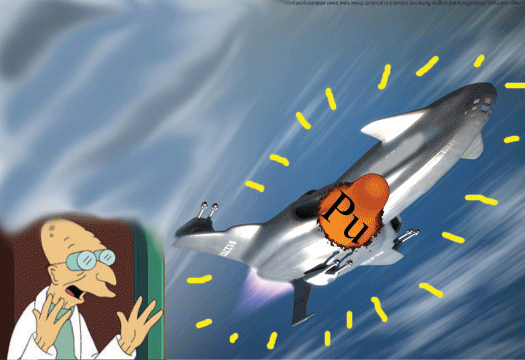
Debate over future of nuclear power systems in space, Enformable, Karl Grossman 29 Jun 2015NASA has released a study claiming there is a need for continued use of plutonium-energized power systems for future space flights. It also says the use of actual nuclear reactors in space “has promise” but “currently” there is no need for them.
The space plutonium systems—called radioisotope thermoelectric generators (RTGS)—use the heat from the decay of plutonium to generate electricity in contrast to nuclear reactors, usually using uranium, in which fission or atom-splitting takes place.
The “Nuclear Power Assessment Study” describes itself as being done as a “collaboration” involving “NASA centers,” among them Johnson Space Center, Kennedy Space Center and the Jet Propulsion Laboratory, “the Department of Energy and its laboratories including Los Alamos National Laboratory, Idaho National Laboratory, Sandia National Laboratories,” and the Johns Hopkins University Applied Physics Laboratory.
The study, released this month, comes as major breakthroughs have been happening in the use of solar and other benign sources of power in space. The situation parallels that on Earth as solar and wind power and other clean, safe technologies compete with nuclear, oil, coal and other problematic energy sources and the interests behind them. Examples of the use of benign power in space include the successful flight in May of a solar-powered spacecraft named LightSail in a mission funded by members of the Planetary Society. Astronomer Carl Sagan, a founder of the society, was among those who have postulating having a spacecraft with a sail propelled through the vacuum of space by the pressure of photons emitted by the sun. LightSail demonstrates his vision.
Yet, meanwhile, NASA cancelled its own solar sail mission scheduled for this year. Continue reading
Canada’s last shipment of weapons grade uranium. Medical radioisotopes to be made in cyclotron, not nuclear reactor
The Chalk River reactor, which began operating in 1957, is one of five major producers of molybdenum-99, which decays into the technetium-99m isotope used in 85 per cent of nuclear medicine procedures such as bone scans and other diagnostic tests.
 Other sources, such as a cyclotron operated by TRIUMF, Canada’s national nuclear laboratory for particle and nuclear physics at the University of British Columbia, are in the works.
Final shipment of weapons-grade uranium due at Ontario facility this year http://www.thestar.com/news/canada/2015/06/29/final-shipment-of-weapons-grade-uranium-due-at-ontario-facility-this-year.html By: Joanna Smith Ottawa Bureau reporter, Jun 29 2015
OTTAWA—The United States has approved what is expected to be the last shipment of weapons-grade uranium to be sent to Canada for the production of medical isotopes. The U.S. Nuclear Regulatory Commission signed an export licence June 23 to transport 8.1 kilograms of highly enriched uranium from Oak Ridge, Tenn., along a secret route to Chalk River, Ont., by the end of this year.
There, for what is expected to be the last time, the uranium will be used to produce target material for the aging National Research Universal (NRU) reactor to irradiate in order to produce medical isotopes used in nuclear medicine.
“The game is over for Canada’s unnecessary and irresponsible use of bomb-grade uranium to produce medical isotopes. Better late than never,” Alan Kuperman, coordinator of the Nuclear Proliferation Prevention Project at the University of Texas at Austin, said in a statement Monday.
THE LAST SHIPMENT Kuperman has long been tracking the controversial U.S. exports of highly enriched uranium to Canada. The Conservative government has committed to shutting down the routine production of medical isotopes at the NRU by Oct. 31, 2016, with the possibility of the NRU retaining licences to operate until March 2018 in case of unexpected shortages. The isotope has a very short lifespan, causing it to disappear within a day of being generated and so it cannot be stockpiled.
Radiation legacy of atomic bomb research
LAST SECRET OF THE ATOM BOMB, Who What Why, 30 June 15 In August 2005, the New York Police Department, with the Department of Energy, conducted an anti-terrorism radiation flyover survey. The survey was intended to provide a baseline of radiological activity, in order to catch a suspicious construction of a dirty bomb.
They didn’t find a dirty bomb—but there was plenty of radiological activity. Surveyors found 80 radioactive locations in the city—one of them being Great Kills Park in Staten Island, one of the city’s five boroughs. The Park is a popular place near a suburban enclave inhabited by cops, firefighters and other unsuspecting residents. The Park, more than 500 acres of woods surrounding softball and soccer fields and a marina, was constructed from garbage dumped in the bay between 1944 and 1946. Unregulated and illegal dumping has a long history in New York City.
Children Are Especially Vulnerable Continue reading
New WikiLeaks Documents Reveal NSA Spied On Top French Companies
by Jeffrey Phillips | Jun 30, 2015 “……in addition to eavesdropping French Economy Ministers François Baroin and Pierre Moscovici between 2004 and 2012, the NSA gathered as much data as possible on big French companies. In particular, the agency wanted to know more about the companies that signed expensive export contracts for industrial goods, such as nuclear power plants, planes, high speed trains, etc……..
Radioactive Polonium from Fukushima has contaminated Southeast USA
 NASA Experts: Southeast US hit by “anomalously high” levels of polonium from Fukushima — Never seen before, except during volcanic events — Fallout also detected in Mississippi river — Polonium releases kept secret in past nuclear disasters; Death estimates would skyrocket if included http://enenews.com/nasa-experts-anomalously-high-levels-polonium-found-southeastern-after-fukushima-explosions-never-recorded-before-except-during-volcanic-events-fallout-detected-mississippi-river-polonium-rel?utm_source=feedburner&utm_medium=email&utm_campaign=Feed%3A+ENENews+%28Energy+News%29
Journal of Environmental Radioactivity, W. Yang and L. Guo, NASA Stennis Space Center and Univ. of Southern Mississippi Dept. of Marine Science, 2012 (emphasis added): Depositional fluxes and residence time of atmospheric radioiodine (131I) from the Fukushima accident
- The Fukushima Dai-ichi nuclear power plant explosions… emitted vast quantities of radioactive materials into the environment… radioiodine (131I)… 134Cs and 137Cs are of special concern to people because they could trigger dangerous health effects
- However, data on time series depositional fluxes are still lacking, preventing… prediction of the scope of dispersion especially in North America
- Following the Fukushima accident, a high level of 131I was first detected on March 23 in a dry deposition sample at [NASA’s space center]
- After this initial fallout, the 131I depositional flux increased up to ten- to twenty-foldduring the following two weeks, varying from 218 mBq/m^2/day to 463 Bq/m^2/day
- Concurrent high rainfall and high 131I fluxes were observed at the SSC site… from 97 to 337 mBq/L with an average of 217 mBq/L
- In addition to precipitation samples, 131I was also detectable in surface waters from the Pearl River in Mississippi, with an activity of 6.7 mBq/L
- Interestingly, the 210Po/210Pb ratios of the fallout samples during the peak 131I fallout period were anomalously high… Before and after the Fukushima accident, the environmental 210Po/210Pb ratio in precipitation samples varied from 0.02 to 0.09 with anaverage of 0.06 at the SSC in southern Mississippi… However, the 210Po/210Pb ratioduring the Fukushima fallout was up to 1.5 on March 23…
- To date, excess 210Po in the atmosphere was only reported for high temperature activities such as volcanic eruptions or degassing… Therefore, the anomalously high 210Po/210Pb ratios observed in the southern US were mostly derived from theFukushima Dai-ichi nuclear plant explosions which could have resulted in the fractionation of environmental 210Po and 210Pb and thus the preferential release of volatile 210Po into the atmosphere. Indeed, the anomalous 210Po/210Pb ratios were accompanied by the peak fallout of 131I… indicating that the Fukushima nuclear plant explosions mainly contributed to the anomaly in the 210Po/210Pb ratio…
- it seemed that regions reachable by 131I transport within two weeks from Fukushima would receive much more fallout…
New Scientist, Mar 1983: 25 years since the nuclear accident at Windscale… Attention has centred [on] radioactive iodine… the National Radiological Protection Board (NRPB) said the iodine-131 may have killed 13… However, the damage to health may have been much more severe… Indeed, it could represent the worst environmental disaster that Western Europe has known this century… re-examination of the data… reveals that one crucial isotope released in the fire has been ignored… there was one isotope released in the accident that is highly mobile [with] a high take-up by the human body… this was only revealed this week by the NRPB after New Scientist’s inquiries… It is polonium… polonium could give… a total dose to the UK of 5 million man-rems… the death figures may have to be revised significantly upwards… The figures suggest that some 1200 excess cases of leukaemia may have been caused in Britain by the Windscale accident. Since leukaemia deaths account for some 15 per cent of cancers attributable to nuclear accidents, the total toll of cancer deaths suggested is 8000… Clearly further investigations into the whole of the Windscale accident must be urgently pursued. The British are in effect now the nuclear laboratory of the world.
Woods Hole’s Ken Buesseler and others have cited polonium-210 levels in seafood tested for Fukushima radionuclides, for example: “Doses from eating fish are very low off US, and in fact 500 times greater from a natural radionuclide, polonium-210, but no one worries about 210Po.”
Depleted uranium especially hazardous – gradually becomes more radioactive – a problem for Utah
 Federal regulators hear Utah testimony on depleted uranium By Amy Joi O’Donoghue, Deseret News, June 25 2015 “…………The NRC is proposing to adopt a rule that for the first time specifically addresses the disposal of the material, which is a waste stream generated from the enrichment process of uranium in the nuclear fuel cycle.
Depleted uranium poses unique disposal challenges because it does not hit its peak radioactivity until 2.1 million years, and actually grows more radioactive over time. In its disposal stage, however, depleted uranium contains radioactivity that falls under the lowest level classified by the federal government — that of class A — and is legally within limits on what can be buried in Utah at EnergySolutions’ Clive facility.
Matt Pacenza, executive director of the radioactive waste watchdog organization called HEAL Utah, believes that the NRC is making a huge mistake by classifying depleted uranium as class A.
“Right now, a regulatory loophole could allow waste that does not reach a peak hazard for 2.1 million years to be treated just like waste which loses 90 percent of its hazard in less than 200,” his presentation asserted.
Pacenza, who spoke at the briefing Thursday, said the safety of the public and the environment cannot be assured given the complex nature of depleted uranium and its long-lived radioactivity.
HEAL Utah has lobbied hard against any depleted uranium being disposed of at EnergySolutions’ commercial facility in Tooele County ever since the Salt Lake-based company inked a contract with the U.S. Department of Energy in 2009 to begin accepting stockpiles of the waste — with the initial shipments reaching 10,500 tons.
Utah Gov. Gary Herbert intervened, successfully getting some of those shipments turned around after he launched objections with the federal agency over the uncertainties associated with the material’s disposal.
State regulators then convened multiple hearings and crafted their own rules governing the disposal of any significant amounts of depleted uranium, including the requirement that EnergySolutions develop a site-specific performance assessment designed to specifically contemplate depleted uranium’s unique character……….
The NRC’s proposed rule on depleted uranium would affect commercial facilities in Utah and Texas, as well as Washington and South Carolina.
Mike Garner, executive director of the Northwest Interstate Compact — a regional alliance with oversight of low-level radioactive waste management — argued before the commission that the proposed rule should not be hoisted on states that aren’t planning to take depleted uranium, a concern echoed by the Nuclear Energy Institute that argued the proposal would be unnecessarily costly and burdensome.
Pacenza, too, added that the proposal is undergoing significant modifications that show how much industry — particularly EnergySolutions — is influencing the potential regulation of depleted uranium……
Comments on the rule can be submitted atwww.regulations.gov
Email: amyjoi@deseretnews.com, Twitter: amyjoi16 http://www.deseretnews.com/article/865631459/Federal-regulators-hear-Utah-testimony-on-depleted-uranium.html?pg=all
Bill Gates and his nuclear power company – no friend to renewable energy
Gates: Renewable energy can’t do the job. Gov should switch green subsidies into R&D, The Register , 26 Jun 2015 , Lewis Page
‘Only way to a positive scenario is innovation’ ……….In Bill Gates’ view, the answer is for governments to divert the massive sums of money which are currently funnelled to renewables owners to R&D instead. This would offer a chance of developing low-carbon technologies which actually can keep the lights on in the real world……
Plan to spend $1 Trillion on modernising USA’s nuclear weapons
 Should the US Spend 1 Trillion on Nuclear Weapons? http://thediplomat.com/2015/06/should-the-us-spend-1-trillion-on-nuclear-weapons/ Given the rapid modernization of Chinese and Russian nuclear stockpiles, some argue the US might want to.By Franz-Stefan Gady June 27, 2015 The United States will have to spend $18 billion a year for 15 years starting in 2021 to keep its nuclear weapons operational, Kris Osborne over atmilitary.com reports.
His assessment is based on the testimony of U.S. Deputy Defense Secretary Bob Work in front of the House Armed Services Committee yesterday. The subject of the hearing was nuclear deterrence.
“We’ve developed a plan to transition our aging system. Carrying out this plan will be an expensive proposition. It is projected to cost DoD an average of $18 billion a year from 2021 through 2035,” Work noted.
The Pentagon is in the middle of initiating the modernization of its nuclear triad (land-based missiles, submarine-launched missiles, and long-range bombers).
Among other DoD programs to upgrade nuclear weapons complexes, the Navy is trying to work out a deal with Congress over its $80 billion Ohio Replacement Program (12 new ballistic missile submarines to enter servicein the 2030).
The Air Force is speeding up the development of its Long-Range Strike Bomber (LRS-B) to enter service in 2025 in addition to initiating a new mobile land-based intercontinental ballistic missile program and upgrading 480 B61-12 bombs (to be carried by the F-35 A).
Total cost of modernizing the United States’ nuclear triad over 30 years could be as high as 1 $ trillion, with $ 348 billion spend over the next ten years, according to a proposed modernization plan of the Obama White House. Continue reading
Many incidents and near misses in USA’s nuclear reactors
 The Truth About Nuclear Power – Part 16 Subtitle: Near Misses on Meltdowns Occur Every 3 Weeks Roger E. Sowell, Marina del Rey, California 25 June 15
This is the second of approximately one dozen articles on nuclear safety, these will (or do) include (1) the relationship between plant operators and the regulatory commission, NRC, and show that safety regulations are routinely relaxed to allow the plants to continue operating without spending the funds to bring them into compliance. (2) Also, the many, many near-misses each year in nuclear power plants will be discussed. (3) The safety issues with short term, and long-term, storage of spent fuel will be a topic. (4) Safety aspects of spent fuel reprocessing will be discussed. (5) The health effects on people and other living things will be discussed. The three major nuclear disasters (to date) will be discussed, (6) Chernobyl, (7) Three Mile Island, and (8) Fukushima. (9) The near-disaster at San Onofre will be discussed, and (10) the looming disaster at St. Lucie. (11) The inherent unsafe characteristics of nuclear power plants required government shielding from liability, or subsidy, for the costs of a nuclear accident via the Price-Anderson Act. (12) Finally, the serious public impacts of evacuation and relocation after a major incident, or “extraordinary nuclear occurrence” in the language used by the Price-Anderson Act, will be the topic of an article. Previous articles showing that nuclear power is not economic are linked at the end of this article.
In the four year period 2010-2013, inclusive, the US nuclear reactors had 70 near-misses. These occurred in 48 of the 103 reactors. Some, therefore, had multiple near-misses in the same year. One plant, Columbia, had 3 near-misses in the same year. Wolf Creek, and Ft. Calhoun each had one near-miss in three of the four years. On average, that is 17 near-misses per year, or roughly 17 percent of the reactor fleet. Put another way, every 3 weeks, another near-miss occurs. The frequency of near-misses is expected to increase over time, as the aging reactors have more equipment degrade and fail, and new systems are installed that are unfamiliar to the operators.
What is common in these incidents are old and degraded equipment that fails due to improper inspection, replacement equipment that either does not work as expected, or operators are improperly trained, and in one notable case, improperly trained workers left critical bolts improperly tightened on the reactor head.
The most serious incident, in my view, occurred at the Byron Station, Unit 2, in January, 2012, in Illinois. A complete loss of cooling water at Unit 2 was temporarily replaced with water from Unit 1. Had this been a single-reactor plant, with no operating reactor close at hand, the loss of cooling could have resulted in a partial or full core meltdown, exactly what happened at Fukushima, Japan. This is completely unacceptable.
Some, the nuclear proponents, will argue that the safety systems are adequate since no meltdowns occurred. However, the sheer number of serious incidents shows that eventually, another catastrophe will occur. The US has been lucky, but that luck is likely running out as the plants grow older and more mishaps occur.
Information in these incidents are taken from Union of Concerned Scientists’ series of annual reports, 2010 – 2013, inclusive. The commentary is my own. Links to the four (now five) reports are:
2010 see link
2011 see link
2012 see link
2013 see link
2014 see link (link added 5/10/2015)
Incidents in 2013 (Fourteen incidents)…………http://sowellslawblog.blogspot.com.au/2014/05/the-truth-about-nuclear-power-part-16.html
$1.8B in tax-payer loans for USA nuclear plant – as its costs soar
 Energy Department guarantees $1.8B in loans for GA nuclear plant, The Hill, By Devin Henry – 06/24/15 The Department of Energy (DOE) will guarantee $1.8 billion in loans for the operators of two new nuclear reactors under construction at a power plant in Georgia, the department announced on Wednesday.
The government had previously provided $6.5 billion in loan guarantees for the Vogtle Electric Generating Plant project, the country’s first new nuclear facility to be licensed and begin construction in more than 30 years. Wednesday’s step, officials said, will allow the project to be fully-financed………….
Construction at the Vogtle plant has been plagued by delays, and the Associated Press reportedWednesday that cost overruns have threatened the $2.7 billion in savings project executives have said they would secure since state regulators approved construction in 2009. Operators expect to spend at least $7.5 billion on the project. …http://thehill.com/policy/energy-environment/245975-energy-department-guarantees-18b-in-loans-for-ga-nuclear-plant
1 This Month
Tell Congress: Prevent Nuclear Catastrophe in Iran

Tell Congress: Prevent Nuclear Catastrophe in Iran

Read the Public Inquiry Report, the Commissioners’ report, Surrendering Australia: The AUKUS Deception is available to download for free at aukuspublicinquiry.com. Or just watch the replay of the National Press Club Luncheon.


Shut down the radiation-damaged Heysham nuclear reactors now
To see nuclear-related stories in greater depth and intensity – go to https://nuclearinformation.wordpress.com

Say No to NASA’s Reckless Nuclear Reactor on the Moon
Say No to NASA’s Reckless Nuclear Reactor on the Moon
-
Archives
- November 2026 (224)
- October 2026 (302)
- September 2026 (339)
- August 2026 (330)
- July 2026 (355)
- June 2026 (287)
- May 2026 (306)
- April 2026 (356)
- March 2026 (251)
- February 2026 (267)
- January 2026 (308)
- December 2025 (358)
-
Categories
- 1
- 1 NUCLEAR ISSUES
- business and costs
- climate change
- culture and arts
- ENERGY
- environment
- health
- history
- indigenous issues
- Legal
- marketing of nuclear
- media
- opposition to nuclear
- PERSONAL STORIES
- politics
- politics international
- Religion and ethics
- safety
- secrets,lies and civil liberties
- spinbuster
- technology
- Uranium
- wastes
- weapons and war
- Women
- 2 WORLD
- ACTION
- AFRICA
- Atrocities
- AUSTRALIA
- Christina's notes
- Christina's themes
- culture and arts
- Events
- Fuk 2022
- Fuk 2023
- Fukushima 2017
- Fukushima 2018
- fukushima 2019
- Fukushima 2020
- Fukushima 2021
- general
- global warming
- Humour (God we need it)
- Nuclear
- RARE EARTHS
- Reference
- resources – print
- Resources -audiovicual
- Weekly Newsletter
- World
- World Nuclear
- YouTube
-
RSS
Entries RSS
Comments RSS

