Not much real help to nuclear lobby from White House
Obama tweaks $12.5 billion in nuclear power loans, Washington ExaminerBy JOHN SICILIANO • 11/6/15 The Obama administration announced Friday that it will supplement its $12.5 billion loan guarantee program to build and license new nuclear reactors, but very little new money is being made available.
The announcement was made during a nuclear energy summit held at the White House Friday to discuss the role of nuclear power in producing zero-emission energy to combat climate change.
 The Energy Department will be “supplementing its existing solicitation that makes up to $12.5 billion in loan guarantees available to support innovative nuclear energy projects,” according to a White House fact sheet.
That means the administration will allow nuclear plant developers to use government loans to cover the costs of more items related to power plant development, including licensing costs, compared with the previous policy that provided loan backing solely for the construction of the plant itself.
“The solicitation states that eligible projects can include construction of advanced nuclear reactors, small modular reactors, uprates and upgrades at existing facilities, and front-end nuclear facilities,” the White House said.
Putting the costs of licensing a new plant in the new plan addresses the new, small modular power plants that the administration has attempted to jumpstart a market for, but with little success…….
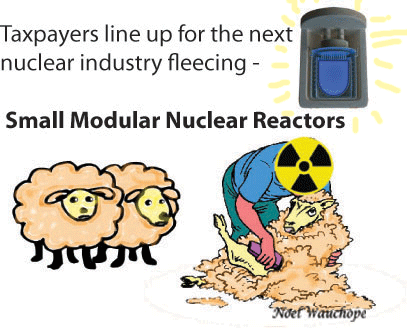
The only problem: None are being built, and no licenses have been granted by the federal government to build one.
The administration said it has invested $452 million over six years to help reduce the engineering costs associated with certification and licensing activities for the reactors, and expects a design license won’t be submitted to the Nuclear Regulatory Commission until just before President Obama leaves office.
The Energy Department, also, is establishing what it calls the Gateway for Accelerated Innovation in Nuclear, which is sort of a one-stop shop for pushing new nuclear reactor designs toward commercialization, the White House said.http://www.washingtonexaminer.com/obama-tweaks-12.5-billion-in-nuclear-power-loans/article/2575815
The New START treaty – arms control pact between USA and Russia
Carroll: The enduring nuclear threat, By Vincent Carroll, Denver Post 7 Nov 15 “…Undersecretary of State for Arms Control and International Security, Rose E. Gottemoeller was the chief negotiator for the New START treaty, an arms control pact with the Russians that went into effect in 2011. Her career in arms control and national security goes back many years and spans government, academia and think tanks.….
The New START treaty will take our nuclear weapons that are deployed down to 1,550 — and the same with the Russians — by February 2018. By contrast, when we signed the first START treaty in 1994, we and the Russians both had approximately 12,000 deployed nuclear warheads.
Even after the Ukraine crisis and their grab of Crimea, they continued to have a businesslike attitude toward the implementation of START. We conduct 18 inspections a year in Russia and they come here, too. Everything is reciprocal. And we exchange on a daily basis the status of our strategic nuclear forces. If the Russians take an ICBM out of its silo to a repair facility, they have to tell us that.
Q:Has the megatonnage come down proportionately with those reductions in warheads?
A: Absolutely. It’s been a real success story. So no matter what the ups and downs of our relationship, this process has been good for U.S. national security, and for predictability and mutual stability for these two great nuclear powers. And I would say especially now, when relations aren’t so hot, it’s good to have a clear idea of what’s going on with their nuclear forces.
The question is what to do about the future. Between 2010 and 2014 under President Obama we did a posture review, and in 2013 the president concluded we could go up to one-third lower in the New START, from 1,550 down even as low as 1,000 and still maintain our security. So in Berlin in June 2013, we put that offer on the table and said to the Russians, “Let’s work on the next nuclear disarmament negotiation.” But so far the Russians haven’t picked that offer up from the table, even though I think it would be good for them, too.
I think their reaction is wrapped up in a lot of things, such as Vladimir Putin’s sense that nuclear weapons mean a lot for Russian security at this moment to concerns, he says, in our national missile defense program. But it’s ridiculous to think that our limited missile defense system can somehow threaten the Russian strategic offensive deterrent.
Q:That system is for a smaller rogue regime?
A: It’s North Korea. And I’m glad we have it available as an insurance policy. ………
Q:Where do you see the major threats to proliferation?
A: The biggest new threat we face today is nuclear weapons in the hands of terrorists. And not only nuclear weapons, but fissile material, highly enriched plutonium or uranium that could be used to craft a simple nuclear bomb. President Obama was really clear about this in his Prague speech back in 2009.
This threat is undeterrable. Even North Korea, as crazy as they are, knows they will be facing a very intense response if they attack us with a nuclear weapon. Countries hold off on that basis. That’s why the president said we need to push step by step for a world without nuclear weapons. The policy is to minimize the amount of highly enriched uranium and plutonium around the world, and to constantly press toward fewer weapons.
Q:Don’t terrorists need the assistance of a state to develop a nuclear weapon, at least in terms of getting the fuel?
A: The key factor is having enough fissile material, highly enriched uranium or plutonium. Then the designs for simple devices are on the Internet basically. So the concern is that they could get enough fissile material to make a bomb on their own or that they could steal a bomb or the material from somewhere.
In some cases, we do worry about state sponsorship. That’s one of the reasons we’re watching so closely North Korea, because they ship missile parts around the world and might get into this business as well……..http://www.denverpost.com/perspective/ci_29081465/carroll-enduring-nuclear-threat
USA making Plutonium-238 for Space Travel
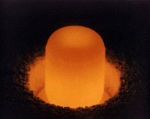 Peak Plutonium-238? U.S. Starts Making Nuclear Fuel For Deep Space Missions, Forbes, William Pentland , 8 Nov 15 In the next two or three years, the U.S. Department of Energy will begin producing small quantities of a material known as plutonium-238 a trefurbished federal nuclear facilities at in Idaho and Tennessee.
When fully operational, the facilities will be able to produce a little more than three pounds of plutonium-238 every year, or about enough to fill a can of soda pop. It will be the first time plutonium-238 has been produced anywhere in the world in nearly 30 years.
Plutonium-238, a special radioactive material that does not occur in nature, emits a constant level of heat for decades as it decays. It is the primary fuel source used to power more than two-dozen U.S. space missions for spacecraft and planetary probes that cannot rely on solar energy.
Other than exploring deep space or powering decades-long experiments on the dark side of the moon, plutonium 238 is pretty much worthless. It is not suitable for use in nuclear weapons. Ditto nuclear reactors.
It was originally produced as a by-product of nuclear weapons. When the United States and Russia shuttered their nuclear weapons programs in the 1980s, the world stopped producing plutonium-238.
Not surprisingly, plutonium-238 is expensive to make – very expensive. One pound of plutonium 238 costs about $4 million to make. And that does not include the upfront investment needed to reestablish production of plutonium-238 in the United States, which is expected to cost as much as $150 million or more……
Nobody needs the U.S. space program, but at least in the United States almost everybody wants it just the same, including me. http://www.forbes.com/sites/williampentland/2015/11/08/peak-plutonium-238-u-s-starts-making-nuclear-fuel-for-deep-space-missions/
Nuclear lobby convincing USA govt of its climate change credentials ?
One major consideration is convincing investors to back new nuclear…...
The Clean Air Task Force is working with other industry and environmental groups to launch the Nuclear Innovation Alliance, which aims to improve investing for advanced nuclear in the United States. A formal rollout is scheduled for later this month

White House summit boosts industry’s sagging spirits Jean Chemnick and Hannah Northey, E&E reportersE&E Daily: Friday, November 6, 2015 The nuclear industry hopes today’s White House summit is the start of a more proactive effort by the Obama administration to put reactors into the U.S. push to meet its international climate change targets.
The summit comes as the days tick down to the Nov. 30 start of the U.N. climate conference in Paris aimed at producing a post-2020 emissions agreement. President Obama has staked out a large role in helping to broker a Paris deal. Continue reading
Legal case over St Louis radioactive trash – 2700 cancer cases from nuclear radiation?
 US Government Secretly Buried Nuclear Waste Near Playground — And Thousands Now Have Cancer http://www.offthegridnews.com/current-events/us-government-secretly-buried-nuclear-waste-near-playground-and-thousands-now-have-cancer/ by: Daniel Jennings November 4, 2015 A government contractor buried tens of thousands of barrels of nuclear waste in two sites around St. Louis that may have caused more than 2,700 cases of cancer, a lawsuit and CBS News are alleging.
“Within a six-house radius, I knew four people with brain cancer, one a child, one a young professor,” resident Jenelle Wright told CBS. “And I just thought, ‘This is really odd.’”
What is truly disturbing is that Wright and others only figured out that something was wrong when they got together on Facebook to plan a school reunion. When they started reconnecting, they noticed that a lot of people they knew had developed cancer.
“If we did not have social media, if Facebook did not exist, we would never have put these pieces together,” Wright said.
Nuclear Waste on Playgrounds
Wright and other residents of North County near St. Louis think the cause of cancer was the tens of thousands of barrels of nuclear waste dumped in the area decades ago by the Mallinckrodt Chemical Company. The company had been hired by the US government agency to process uranium for America’s nuclear weapons program. Then, “under the cover of national security secrecy, the government authorized the company to dump radioactive wastes quietly in the suburbs,” according to a 1990 New York Times article.
The waste was buried in two areas near Coldwater Creek, which runs through the area. One of the sites where the waste was dumped was located near a park where Wright and her friends played as kids. The park is now locked tight and engineers are trying to clean up the mess.
What you see is an environmental health disaster unfolding slowly over decades,” St. Louis County Health Director Dr. Faisal Khan told CBS News. “… The rates of appendix cancer, for instance, which is relatively rare — we see about 800 cases across the nation per year. To find seven or eight cases in one zip code or one small geographic area is rather unusual.”
The study on the soil could take years. That frustrates Mary Oscko, a resident who has stage 4 lung cancer.
“My husband and I had to sit down at night and discuss whether I want to be cremated or buried,” she toldCBS News. “I don’t want to be buried in North County, that’s the one thing I told him — I do not want to be buried where this soil is.”
During World War II Mallinckrodt processed uranium in St. Louis for the world’s first nuclear reactor and the Manhattan Project, which created the atomic bomb.
USA’s Nuclear Regulatory Commission considering 80 year licenses for nuclear reactors!
Debates may lie ahead on how aging risks should properly be measured, if a dispute involving Entergy Nuclear’s Palisades nuclear plant near South Haven, Mich., is a guide. Four citizen organizations — Beyond Nuclear, Don’t Waste Michigan, Michigan Safe Energy Future-Shoreline Chapter and the Nuclear Energy Information Service — oppose Entergy’s proposal for assessing the extent of neutron-caused embrittlement of the reactor, which could lead to critical failures…….
Aging has an economic side, too……..
 Life span of U.S. reactors is an issue for the Clean Power Plan Peter Behr, E&E reporterEnergyWire: Friday, November 6, 2015 correction appended.
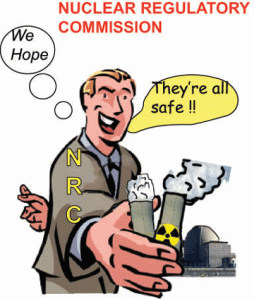
The Nuclear Regulatory Commission will update by year’s end proposed guidelines for assessing the safe life span for nuclear reactors — a central issue for the nuclear industry, the nation’s future electric power supply and the Obama administration’s Clean Power Plan.
The new guidance is linked to NRC’s current judgment that there are as yet no “aging” issues with reactors’ structures and components that would prevent current plants from being licensed out to 80 years of age.
NRC’s Generic Aging Lessons Learned (GALL) Report will address four potential aging risks for reactors caused by decades of thermal shock, radiation and mechanical stress: metal embrittlement in pressure vessels, deterioration of cables, concrete and containment structures, and cracks in reactor components. The report will update inspection and assessment methods for aging issues…….. Continue reading
Time to anandon the fairy tale that nuclear power is affordable
It is past time for utility executives and their regulators to take a step back and reassess. An honest look at the real costs of nuclear power will show that the economics don’t add up. It is time to stop believing in impossible things
 Nuclear Power Economics Requires Believing In ‘Impossible Things‘, Energy Collective, Dennis Wamsted, 6 Nov 15 It is increasingly clear that the economics of nuclear power don’t add up. Just in the past two and a half years, for example, seven plants at six sites have been shut down due to uneconomic performance or massive equipment repair costs—and other plants are on the chopping block.
Similarly, the two ballyhooed active construction projects, in Georgia and South Carolina, are seriously behind schedule and way over budget. Nonetheless, utility executives and regulators in a number of states still have not gotten the message, notably in Florida and Virginia where executives at Juno Beach-based Florida Power & Light and Richmond-based Dominion soldier on, pushing new reactor proposals whose economics, simply put, just don’t add up and could leave ratepayers holding the bag for billions of dollars in nuclear construction costs. Continue reading
Nuclear industry sulking because Obama is not doing enough for them
Obama’s Green Push Comes At Expense Of Nuclear Power, Daily Caller 6 Nov 15 The nuclear power industry supports President Barack Obama’s plan to force coal plants to close, but a pending Supreme Court case threatens to cause huge problems for nuclear plants.
Currently the Federal Energy Regulatory Commission (FERC) is embroiled in a Supreme Court battle over a program called demand response, which seeks to cut energy use by compensating retail customers who reduce consumption during peak power grid operation. FERC is forcing energy companies to participate, a move that opponents argue exceeds their legal mandate. According to Utility Dive, demand response keeps wholesale energy prices low, cutting into profits in the nuclear and coal industry……….
The court case puts the coal and nuclear power industries on the same side……..
In the wake of these closures, the industry has been lobbying the administration to increase government assistance to nuclear power, arguing the nuclear industry holds the key to cleaner air………http://dailycaller.com/2015/11/05/obamas-green-push-comes-at-expense-of-nuclear-power/
Virginia nuclear power plant owner Dominium seeks 80 year lifespan for reactors !!
 Dominion plans to extend Surry nuclear reactors to 80-year lifespan BY JOHN RAMSEY Richmond Times-Dispatch, 6 Nov 15 Dominion Virginia Power today will formally seek a second license extension for its Surry nuclear power plant, becoming the first utility in the U.S. to try to push the operating range for nuclear reactors to 80 years.
If successful, the utility’s pair of reactors in Surry County would be eligible to operate past 2050.
At a White House summit on nuclear energy this afternoon, Dominion executives will deliver a letter to the federal Nuclear Regulatory Commission confirming plans to apply for the extension.
The Surry plant, located on the south bank of the James River in southeastern Virginia, saw its first reactor open in December 1972 and its second in May 1973……
As of today, no nuclear plants in the country have been granted the second 20-year extension Dominion is seeking.
Expanding nuclear power will reduce and retard climate protection.
 “[E]xpanding nuclear power is uneconomic, is unnecessary, is not undergoing the claimed renaissance
 in the global marketplace … and, most importantly, will reduce and retard climate protection.
Nuclear Power: Dead in the Water it Poisoned, CounterPunch, by JOHN LAFORGE NOVEMBER 5, 2015 On Feb. 11, 1985, the cover page of Forbes thundered, “The failure of the U.S. nuclear power program ranks as the largest managerial disaster in business history, a disaster on a monumental scale.…”
Fourteen months later, reactor No. 4 at Chernobyl exploded and burned for 40 days, spreading radioactive fallout across the entire Northern Hemisphere, depositing cesium-137 in Minnesota’s milk[1]and Japan’s topsoil.[2]
So how is it that Congressional representatives, TV network pundits, FOX ditto heads and even CNN program directors still promote nuclear power?
Part of the answer comes from American University researcher Judy Pasternak and her students. According to Pasternak’s 2010 study, the nuclear industry spent $645 million over 10 years lobbying Capitol Hill, and another $63 million in campaign contributions over the same period.[3] Between 1999 and 2008, these millions manufactured the canard that nuclear power is “carbon free,” “clean” and can “help fend off climate change.” Prior to this spending blitz, the US nuclear power program was, because of the shock of accidents at Three Mile Island in 1979 and Chernobyl in 1986, “pretty well dead in the water” — in the words of economist and author Jeremy Rifkin.[4]
The lobbyists and check writers worked hard spinning the yarn that the richest and most pollution-intensive industrialists on earth were concerned about climate change and wanted to cut carbon emissions — but they didn’t convince everybody.
Independent scientists, free of corporate blinders and the market imperative of short term profit, scoff at “green nuke” propaganda. Continue reading
USA’s Environment Protection Agency helping nuclear industry out of its financial crisis
 Nuclear Power: Dead in the Water it Poisoned, CounterPunch, by JOHN LAFORGE NOVEMBER 5, 2015 “……..As the nuclear industry struggles against financial collapse, government regulators seem to have capitulated to political pressure to weaken radiation exposure standards after accidents and thereby save the industry hundreds of billions of dollars.
On April 15, the EPA issued new Protective Action Guides (PAGs) for dealing with large-scale radiation releases — like Fukushima. The proposed PAGs represent a preemptive government bailout, because they would save reactor owners the nine-figure costs of currently required decontamination following large radiation releases. Eerily, the new PAGs seem to presume the premeditated inevitability of catastrophic releases that the industry can’t afford to withstand. The likelihood of such events was cold-bloodedly conceded by NRC Commissioner James Asselstine who testified to Congress in 1986: “[W]e can expect to see a core meltdown accident within the next 20 years, and it … could result in off-site releases of radiation … as large as or larger than the releases … at Chernobyl.”[48]
Now that Fukushima has tripled down on Commissioner Asselstine’s radiation roulette wager, real players in big electricity are running for the exits. Unlike Congressional hogs feeding at utility lobbying buffets, or commercial television executives who devour utility advertising checks, Wall Street isn’t buying bank-busting liabilities like Fukushima which will cost Japan a minimum of $350 billion and which is relentlessly salting the entire Pacific Ocean with long-lived radioactive materials.
Big investors must smirk at sloganeering about “safe reactor designs” spouted in documentary hoaxes like “Pandora’s Promise.” They read headlines from Japan and recall the stinging deception purveyed by Lewis Straus of the Atomic Energy Commission who said electricity from reactors would be “too cheap to meter.” And they can’t forgetForbes’ 1985 denunciation of nuclear power as industry’s “largest managerial disaster.”
Only add to Forbes’ prescient epitaph that nuclear is also history’s broadest and most and persistent health and environmental catastrophe.
Notes……. http://www.counterpunch.org/2015/11/05/nuclear-power-dead-in-the-water-it-poisoned/
“Nuclear can’t compete today”
Asked about Duke Power Florida’s August decision to cancel new reactor plans, Peter Bradford, a former NRC  commissioner, told theTampa Bay Times that a nuclear construction boom “was just this artificial gold rush. And yes, it does show the renaissance is dead.”
Nuclear Power: Dead in the Water it Poisoned, CounterPunch, by JOHN LAFORGE NOVEMBER 5, 2015 “……..Well before Fukushima’s triple meltdowns staggered nuclear’s future, Congress and the industry were struggling to ignore its abandonment by important players around the world and public condemnations made by former supporters, and since March 2011 major figures the world over are saying “No nukes.”
Speaking in New York City Nov. 27, World Bank President Dr. Jim Yong Kim said, “The World Bank Group does not engage in providing support for nuclear power. … [O]ur focus is on finding ways of working in hydroelectric power, in geo-thermal, in solar, in wind. … and we don’t do nuclear energy.” A week earlier, Kim said governments weren’t doing enough to confront climate change, revealing that the WBG well knows that nuclear power is no answer.[33]
World Bank directors may have adopted the recommendation of the US Commission on the Prevention of Weapons of Mass Destruction Proliferation and Terrorism, which concluded in 2009 that governments can and should help stop nuclear weapons proliferation by “… discouraging … the use of financial incentives in the promotion of civil nuclear power.”[34]
More pointedly, Gregory Jaczko, who was Chairman of the NRC when Japan’s Fukushima-Daiichi catastrophe started in 2011, warned in 2012 that “All 104 nuclear power reactors now in operation in the US have a safety problem that cannot be fixed and they should be replaced with newer technology…”[35] When he left the NRC, theTimes editorialized that “the country is losing a strong advocate for public safety who was always willing to challenge the nuclear industry and its political backers in Congress.” Continue reading
Security escort rear-ends semi carrying nuclear weapon in US
 http://www.9news.com.au/world/2015/11/04/17/18/security-escort-rear-ends-semi-carrying-nuclear-weapon US security forces apparently transporting a nuclear weapon suffered an embarrassing slip-up when an armoured escort rear-ended the main vehicle as the convoy sped through a truck stop.
To make matters worse, the high-speed prang occurred just as the bystander filming was being told off by federal police for capturing the incident.
Uploaded to YouTube overnight, the video shows the intimidating convoy of at least ten vehicles and the semi, as well as several helicopters, barrelling through an unnamed town on what looks to be a US interstate highway. Continue reading
Plumes of disinformation from nuclear lobby hide the truth on radiation
 The National Council on Radiation Protection (NCPR) says, “…the Council assumes that, for radiation-protection purposes, the risk of stochastic [random] effects is proportional to dose without threshold…”[17] (Emphasis added) In other words, “… every increment of radiation exposure produces an incremental increase in the risk of cancer.”[18]
Nuclear Power: Dead in the Water it Poisoned, CounterPunch, by JOHN LAFORGE NOVEMBER 5, 2015 “……….Another part of reactor greenwashing is the powerful influence of mis- and disinformation following the Great East Japan Earthquake, the resulting tsunami, and the catastrophic Fukushima radiation gusher that began March 11, 2011.
In reporting on the contamination of soil, tap water, rain water, groundwater, breast milk, vegetables, fish, baby food, animal feed, beef, and incinerator ash, radiation was and is almost always said to pose little or no “immediate” danger. This minimization is designed to and quite successfully does ease public concern and push Fukushima’s ongoing radio-contamination from public consciousness.
Contaminated spinach and milk “do not pose an immediate health threat,” NPR’s Giles Snyder reported April 19, 2011. The Agence France-Presse reported October 6, 2011, “An exposure of 100 millisieverts per year is considered the lowest level at which any increase in cancer risk is evident.” However, as the US Nuclear Regulatory Commission says, “…any increase in dose, no matter how small, results in an incremental increase in risk.”[11]
An April 11, 2011 Forbes report flatly misstated the US EPA’s published public warning about radiation. Noting that a Phoenix, Arizona, drinking water sample contained 3.2 pico-curies per liter of radioactive iodine-131 from Fukushima, and that the EPA’s maximum contaminant level is 3.0, the writer concluded, “EPA does not consider these levels to pose a health threat.” In fact, the EPA officially warns that “there is no level below which we can say an exposure poses no risk.”
This pattern of misstatement and official falsehood went to the very top of the food chain. Japan’s Chief Cabinet Secretary Yukio Edano famously declared March 11, 2011, “Let me repeat that there is no radiation leak, nor will there be a leak.”[12] He later asked the public not to overreact to reports of radioactively contaminated food, saying, according to the BBC, “Even if you eat contaminated vegetables several times, it will not harm your health at all.”
President Obama followed suit. Continue reading
“Worst accidental radioactive pollution of Pacific Ocean” hasn’t moved US to test seafood
Nuclear Power: Dead in the Water it Poisoned, CounterPunch, by JOHN LAFORGE NOVEMBER 5, 2015 “………..Radiation exposure and contamination should concern everyone because by all accounts the volume of  radioactive materials discharged to the Pacific Ocean by Fukushima is the single greatest radioactive contamination of the sea ever observed. [27] An estimated 27 “peta-becquerels” (27 million billion becquerels) of cesium-137 had already leaked or been deliberately dumped into the Pacific by October 2011. A becquerel represents one atomic disintegration/second.
Last July, Tokyo Electric Power Co., which owns the Fukushima wreckage, acknowledged that an additional 300 tons-a-day of highly contaminated water is leaking into the Pacific from the six-reactor station — and has been since the beginning of the disaster almost three years ago. The American Medical Association — following the revelation of massive ongoing leaks — called on the US government to “monitor and fully report the radioactivity levels of edible species sold in the United States.”[28]
Yet at present, US seafood is not regularly tested for cesium contamination, in spite of the large numbers of fish and other foods that have been found contaminated by Fukushima isotopes — including blue fin[29] and albacore tuna[30] caught off the US West Coast, grapefruit from Florida, and prunes, almonds, pistachios and oranges from California.[31]
In this context, a coalition of public health and environmental groups petitioned the FDA in early summer demanding a drastic reduction in the amount of radioactive cesium allowed in food. The petition by members of the Fukushima Fallout Awareness Network (FFAN) declared that the arbitrarily high 1,200 becquerels-per-kilogram (Bq/kg) US limit is “ridiculous.” The standard is between 120 times to 24 times weaker than Japan’s.
The petition demands that US foods have no more than 5 Bq/kg of cesium-137 and -134, and that all food be tested and labeled with its cesium content. The FFAN reports that the devastated Fukushima reactors continue to leak more than 10 million becquerels of cesium-134 and cesium-137 per hour into the environment, “with no sign of stopping.” The network said it was “alarmed” at the lack of testing currently in place to meet the threat of radioactive contamination in food. Because cesium-134 has a hazardous life of about 10-20 years, and cesium-137 has a hazardous life of about 300-600 years, the FFAN said, the threat of food contamination “is a long-term issue that deserves immediate attention………”http://www.counterpunch.org/2015/11/05/nuclear-power-dead-in-the-water-it-poisoned/
1 This Month
Tell Congress: Prevent Nuclear Catastrophe in Iran

Tell Congress: Prevent Nuclear Catastrophe in Iran

Read the Public Inquiry Report, the Commissioners’ report, Surrendering Australia: The AUKUS Deception is available to download for free at aukuspublicinquiry.com. Or just watch the replay of the National Press Club Luncheon.


Shut down the radiation-damaged Heysham nuclear reactors now
To see nuclear-related stories in greater depth and intensity – go to https://nuclearinformation.wordpress.com

Say No to NASA’s Reckless Nuclear Reactor on the Moon
Say No to NASA’s Reckless Nuclear Reactor on the Moon
-
Archives
- November 2026 (215)
- October 2026 (302)
- September 2026 (339)
- August 2026 (330)
- July 2026 (355)
- June 2026 (287)
- May 2026 (306)
- April 2026 (356)
- March 2026 (251)
- February 2026 (267)
- January 2026 (308)
- December 2025 (358)
-
Categories
- 1
- 1 NUCLEAR ISSUES
- business and costs
- climate change
- culture and arts
- ENERGY
- environment
- health
- history
- indigenous issues
- Legal
- marketing of nuclear
- media
- opposition to nuclear
- PERSONAL STORIES
- politics
- politics international
- Religion and ethics
- safety
- secrets,lies and civil liberties
- spinbuster
- technology
- Uranium
- wastes
- weapons and war
- Women
- 2 WORLD
- ACTION
- AFRICA
- Atrocities
- AUSTRALIA
- Christina's notes
- Christina's themes
- culture and arts
- Events
- Fuk 2022
- Fuk 2023
- Fukushima 2017
- Fukushima 2018
- fukushima 2019
- Fukushima 2020
- Fukushima 2021
- general
- global warming
- Humour (God we need it)
- Nuclear
- RARE EARTHS
- Reference
- resources – print
- Resources -audiovicual
- Weekly Newsletter
- World
- World Nuclear
- YouTube
-
RSS
Entries RSS
Comments RSS

