Wind power in America in a big way, and transmission grid development

US Wind Energy Juggernaut: You Ain’t Seen Nothing Yet (CT Exclusive Interview), Clean Technica, April 4th, 2016 by Tina Casey The American Wind Energy Association will release its much anticipated annual report on April 12, and the group’s CEO Tom Kiernan provided CleanTechnica with some advance insights during a one-on-one phone chat last week. Hint: it’s gonna be big.
Kiernan also discussed two recent major milestone developments in the US wind industry, one being the construction of the nation’s first ever offshore wind farm — which will finally open the floodgates to developing the immense Atlantic Coast wind resources — and the other involving the Energy Department in what will be the biggest ever renewable energy project in the US.
The 2015 American Wind Energy Association Report
AWEA has already teased some info for its 2015 annual wind energy report to the press, underscoring the sector’s reduction in carbon dioxide, sulfur dioxide, and nitrogen emissions:
Electricity generated by wind in 2015 displaced an estimated 176,000 metric tons of SO2 and 106,000 metric tons of NOx, representing $7.3 billion in avoided health costs last year alone.
AWEA provides third-party statistics that suggest wind sector growth has contributed to a total US power sector emissions drop down to 1995 levels, while average electricity rates dropped — yes, dropped — 5.5 percent below 2009.
The group also states that “wind energy is the most cost-effective energy source to comply with the Clean Power Plan” put forth by President Obama last summer, and in the interview Kiernan emphasized that wind also provides the US with a pathway for honoring its Paris COP21 global climate pledge.
Among other tidbits, AWEA’s 2015 statistics reveal that the US is now #1 in global wind energy production.
During his conversation with CleanTechnica, Kiernan provided this additional teaser for the 2015 report:
There will be some exciting news about jobs growth…for example wind technicians [maintenance, service and repair positions] is now the fastest-growing profession in the country…
The group has also has some big news about private sector, non-utility wind investments and it has scheduled another preview announcement about the report for April 7, so stay tuned for that.
Offshore Wind Ready For Its Closeup
CleanTechnica’s conversation with Kiernan began with a discussion of the soon-to-be-completed Block Island wind farm off the coast of Rhode Island. Offshore wind energy development faces some technological challenges compared to onshore, so getting “steel in the water” is a major development for the industry:………
Biggest Ever Clean Power Project In The US
The other big development is the Energy Department’s announcement that it will get behind the proposed 700-mile megawatt Clean Line Plains & Eastern transmission line, designed primarily to transport electricity from Oklahoma and Texas wind farms through Arkansas to Tennessee and points east.
At 4,000 megawatts, Plains & Eastern counts as the biggest renewable energy project so far in US history. By way of comparison, the Hoover Dam hydropower plant clocks in at 2,000 megawatts of capacity.
The other striking thing about the project is the Energy Department approval (check out theTennessee Valley Authority for an idea of the scale and impact of major federally sanctioned energy initiatives).
As described by Kiernan, federal involvement provides wind with the same procedural advantages that other conventional forms of energy have long enjoyed:
It’s important for building momentum for [wind] transmission projects throughout the country…conventional power has long term, proven regulatory processes that are speedier. This is the first one for clean energy…it’s a very important step for the industry. This is a transformational project.
US Wind Energy Rising………http://cleantechnica.com/2016/04/04/us-wind-energy-takes-off-with-transmission-offshore-farm/
Religious groups urge US lawmakers to approve funding for Green Climate Fund (GCF)
Faith groups call for more international climate funding The Hill, By Devin Henry – 04/11/16 More than 120 religious groups are encouraging lawmakers to approve President Obama’s proposed $750 million contribution to an international climate change fund.
In a letter to members of Congress, the groups say the  is an important way to “build resilience and stability in the face of the unavoidable impacts of climate change,” an issue they say their faith backgrounds call them to focus on.
The GCF is an international pool of money designed to help poor and developing countries cope with climate change. Obama has requested Congress provide $750 million for the fund in 2017. …….http://thehill.com/policy/energy-environment/275864-faith-groups-call-for-more-international-climate-funding
Waste Isolation Pilot Plant (WIPP) still not open, and USA’s toxic nuclear waste mounts

 Changing nuclear landscape alters WIPP’s role Local News Santa Fe Apr 10, 2016. By Rebecca Moss The New Mexican “………Don Hancock of the Southwest Research and Information Center, a nuclear safety watchdog group, said more environmental assessments under the National Environmental Policy Act need to be conducted to assess WIPP’s capacity or ability to handle additional plutonium.
“There is more of that waste in existence than there is room at WIPP,” Hancock said. “Insofar as they want to bring in foreign plutonium, they have to get the law changed.”
He said Japan’s civilian plutonium would be in direct violation of the Land Withdrawal Act’s stipulation that the waste stored at WIPP come from U.S. defense activities.
The Land Withdrawal Act states: “The Secretary shall not transport high-level radioactive waste or spent nuclear fuel to WIPP or emplace or dispose of such waste or fuel at WIPP.”
“Geological repositories kind of win by default. If the decision is to put it in the ground, then it could be done someplace else,” Hancock said.
“We the public were always told, ‘Oh no, none of this prohibited materials — ignitable, reactive, potential explodable materials — will ever come to WIPP. We are not allowed to ship those ignitable, reactive [materials]. We have lots of safeguards so that will never happen,’ ” Hancock said, adding, that has been proven wrong.
U.S. Sen. Tom Udall, D-N.M., said in a statement that the future of MOX and what that will mean for New Mexico are questions that should be rigorously considered by Congress. He said it is likely “this debate will continue into the next administration.”
“My understanding is that the amount of defense waste in South Carolina likely would require an expansion at WIPP and a change in its total radiation limits, which are set by law,” he said. “And that is not a small issue to address.”
Before the diluted plutonium in South Carolina can be transported to WIPP, he said, an environmental assessment, public comment and an agreement from the state of New Mexico should occur.
Many “ifs” exist regarding the safety of the waste and the remaining capacity at WIPP, he said. If the waste is transported, he said, New Mexico should be compensated and workers trained to deal with a radiological emergency.
“We shouldn’t talk about new missions for WIPP until it’s open,” he said. “And until we know that it will be able to safely complete its current mission.”
Expanded nuclear waste role for USA’s Waste Isolation Pilot Plant
 Changing nuclear landscape alters WIPP’s role Local News Santa Fe Apr 10, 2016. By Rebecca Moss The New Mexican When the salt bed trenches of the Waste Isolation Pilot Plant were mined on the outskirts of Carlsbad in the mid-1980s, Congress dictated specific guidelines for what could be held within its chambers. Only low-level transuranic waste — rags, tools and even soil that had been contaminated with potent radiation through the creation and testing of nuclear weapons in the U.S. — could fill the 6.2 million-cubic-foot cavern more than 2,000 feet below ground.
Even within these limited parameters, finally approved by the Environmental Protection Agency in 1998, it took WIPP 20 years to open. When the first waste-bearing truck drove from Los Alamos to Carlsbad the following year, two women sat on the pavement and a man parked his car in the middle of the road, hoping to prevent its passage. Others waved American flags in support.
But in the 17 years since the facility opened, the nation’s nuclear landscape has changed. WIPP remains the world’s only underground geological repository for nuclear waste, and a confluence of budget constraints, geopolitical issues, the threat of terrorists obtaining nuclear materials and other concerns have led many to consider whether WIPP’s mission should be expanded to include not only higher levels of waste from the U.S. but also waste from around the world. Plans are already in motion to accept plutonium from Japan.
The U.S. now has 61.5 metric tons of plutonium that require a path to disposal — a path that increasingly points to WIPP, despite vulnerabilities exposed by an underground truck fire at the plant in 2014 and an unrelated radiation leak that followed days later, shutting down the plant for the past two years. Officials say it might reopen by the year’s end.
In late March, the National Nuclear Security Administration announced that more than 6 tons of plutonium would be diluted with a blend of chemical compounds called oxides — a process known as down-blending — at the Savannah River Site in South Carolina and would then be shipped to New Mexico. A portion of that plutonium — just under 1 metric ton, or 2,000 pounds — from “foreign sources” could be included in the shipment, the agency said.
The Department of Energy then announced a $6 billion contract spanning a 10-year period for the Savannah River Site to prepare and package the waste. And on April 1, President Barack Obama and Japanese Prime Minister Shinzō Abe announced that “critical” highly enriched uranium and separated plutonium had been removed from the Fast Critical Assembly nuclear reactor research facility in Japan and shipped to the U.S.
Despite objections from the state of South Carolina, the plutonium from Japan was sent to the Savannah River Site. NNSA spokeswoman Francie Israeli confirmed to The New Mexican last week that the plutonium ultimately will be placed at WIPP.
WIPP originally was intended to be the nation’s first deep-underground nuclear repository — not the only such facility in the U.S. or in the world. A high-level waste storage site planned for Yucca Mountain in Nevada was abandoned in 2011 following extensive public and political outcry in the state. No other sites have been designated as nuclear repositories since.
Meanwhile, the Obama administration set a goal in 2009 “to secure all vulnerable nuclear materials” worldwide by 2013, and while that deadline has gone unmet, the president has remained a strong proponent of a “global zero” campaign to eliminate the spread of nuclear weapons. Part of this mission rests on an agreement to secure or dispose of all vulnerable nuclear materials.
Critics say storing plutonium from Japan at WIPP would directly violate the laws that govern the underground repository and could fundamentally reshape the facility’s mission — which stipulated storing only transuranic waste from U.S. defense projects. Others say that because the plutonium will be heavily diluted, it will meet WIPP’s criteria.
Since WIPP opened its doors, the original scope of its mission has slowly shifted. Exceptions have been made to allow more than 3 tons of plutonium from the Savannah River Site and the Rocky Flats Plant in Colorado to be secured in the salt caverns below Carlsbad — including classified molds that shaped plutonium pits used to trigger nuclear bombs.
The plant’s mission also included a pledge to “open clean and stay clean,” but a runaway reaction from an improperly packaged waste drum from Los Alamos in 2014 caused a radiation leak that escaped the cavern, contaminating the air above ground and breaking that promise.
Meanwhile, the plant is still pegged to take waste waiting at national laboratories, as well as new waste the labs create. The U.S. Department of Energy’s budget for the coming year proposes funding to enhance the nation’s nuclear stockpile and ramp up plutonium pit production at Los Alamos National Laboratory — work certain to contribute to the waste stream.
Todd Shrader, Carlsbad Field Office manager for the Department of Energy, addressed the plan to bring plutonium to New Mexico during a WIPP public forum Thursday night.
“As with all waste that comes here, it has to meet our waste acceptance criteria and the hazardous waste permit,” he said. “In our mind, it is frankly the same.”………
He also said that plutonium disposal through a nuclear reactor fuel program or storage at WIPP has not been thoroughly studied to show which path — if either of them — is the clear route forward in getting rid of such sensitive materials.
“I worry that we might be trying to jump off of one horse before we are sure that the other horse will be better and faster,” he said.
He [William Tobey, a senior fellow at the Harvard Kennedy School’s Belfer Center for Science and International Affairs and the former deputy administrator of the Office of Defense Nuclear Proliferation at the NNSA.] said spending money to solve the problem is necessary.
“The people who fought World War II bore significant burdens, but they realized they had a responsibility to do that,” Tobey said. “My argument is we also have a responsibility to bear some burden for the disposition of plutonium” that resulted from the weapons program at that time. “There is a symmetry,” he said………….. Contact Rebecca Moss at 505-986-3011or rmoss@sfnewmexican.com. http://www.santafenewmexican.com/news/local_news/changing-nuclear-landscape-alters-wipp-s-role/article_2a57716d-4e92-5e94-bc3a-d2a6ce1ae26c.html
USA Energy Dept moving away from dangerous MOX nuclear fuel plan
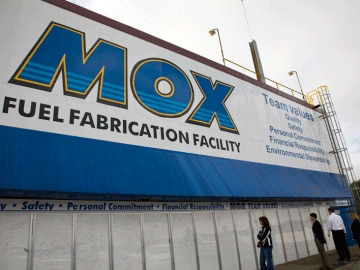 Radioactive Pork Finally on the Chopping Block Project On Government Oversight. By: Lydia Dennett 9 Feb 16 A “Sensitive But Unclassified” document from the Secretary of Energy, obtained by the Project On Government Oversight, indicates that the Department is concerned that parochial interests in Congress may thwart their plans to kill the MOX program.
The Mixed Oxide Fuel Fabrication Facility (MOX) is the result of a bilateral agreement with Russia in which both countries agreed to dispose of 34 metric tons of nuclear weapons grade plutonium. In 2002 the U.S. decided to construct the MOX facility to convert this dangerous material into fuel for commercial nuclear power reactors. But now, 14 years later, the MOX program is almost 3,000 percent over budget, lacks even a single potential customer for the fuel, and could actually be putting our nuclear material at risk.
The November 2015 memorandum from Secretary of Energy Ernest Moniz to President Obama states that MOX is a “high-priority ‘hot potato’ issue” for this Congress and indicates that the Department is finally beginning to shift focus and funding away from MOX and toward a plutonium disposition process that will actually work: “We are working with our appropriators and other stakeholders to shift our plutonium disposition strategy from MOX power reactor fuel to dilution and underground disposal. This is much faster and cheaper.”
Last year, an independent study performed by the Aerospace Corporation confirmed that the cost of finishing construction of MOX and operating the plant for the next 20 years will be at least $47.5 billion and could be as much as $114 billion depending on annual funding from Congress. That would be in addition to the $5 billion already spent on the project. MOX was originally expected to cost a mere $1.6 billion.
Despite the project’s long history of skyrocketing costs, safety and security concerns, and construction problems, it has been kept alive in large part by political officials who have an interest in making sure funding for the project continues.
Problems with the MOX program were first raised in the early 2000s by then-Representative David Hobsen (R-OH), who was serving as Chairman of the House Appropriations Energy and Water Subcommittee at the time. His efforts to halt construction of the MOX facility were stalled in 2006 due to pressure from the Department of Energy, the Administration, and his own party.He was told that canceling the project would hurt then-South Carolina Governor Mark Sanford’s chances of being reelected.
In 2013, Senator Lindsay Graham (R-SC)placed a hold on the president’s nomination for Secretary of Energy Ernest Moniz until Moniz promised to finish the MOX plant. Graham eventually relented and removed the hold but remains one of the most outspoken supporters for the project along with Representative Joe Wilson (R-SC) and Representative Rick Allen (R-GA).
Representatives Wilson and Allen recently denounced the dilution and underground disposal method, which would involve mixing the weapons grade plutonium with other materials before sending it to the Waste Isolation Pilot Plant (WIPP), an underground repository in New Mexico. The Aerospace Corporation found that this method would cost $17 billion over its lifetime as opposed to the $47.5 billion needed to complete the MOX project.
The Center for Public Integrity has previously detailed the long history of lobbying and campaign donations to the South Carolina members by large companies with a financial interest in the MOX project. Many of these same officials bill themselves as budget hawks, committed to limited federal spending while, at the same time, supporting this multi-billion dollar boondoggle.
Secretary Moniz’s November memo to the president references this difficult history. “While Senate appropriators agree with us, the House appropriators are concerned about alienating the South Carolina delegation.”
One of the concerns raised by Representative Wilson and others is that moving away from the MOX strategy will require re-opening negotiations with Russia, something Wilson told the Nuclear Security and Deterrence Monitor (behind a paywall) “the U.S. should avoid.” Although the Energy Department acknowledges that US-Russia relations are “complicated,” Moniz’s memo confirms that the Energy Department’s Russian partners “are amenable to discussion.”
POGO is pleased to see the Energy Department formally move away from the MOX program and begin working toward a cheaper, faster, and less risky strategy for disposing this dangerous material.
No penalty for Entergy’s faked nuclear inspections
Entergy nuclear plant avoids violations for faked inspections, By Littice Bacon-Blood, NOLA.com | The Times-Picayune April 08, 2016 Entergy‘s Waterford 3 nuclear plant on the west bank of St. Charles Parish has been given nine months to address shortcomings that let contractors falsify fire inspection records for almost a year. Company officials could face criminal prosecution and fines if they violate a new agreement that Entergy has reached with the U.S. Nuclear Regulatory Commission.

The commission said it won’t issue a violation notice or civil penalty for the faked inspections, in light of the “significant corrective actions” Entergy already has taken in addition and the targets that the commission has required the company to address in the coming months. “The NRC is satisfied that its concerns will be addressed by making Entergy’s commitments legally binding through a confirmatory order,” according to a commission letter dated Wednesday (April 6).
“Any person who willfully violates, attempts to violate or conspires to violate any provision of this confirmatory order shall be subject to criminal prosecution … Violation of this confirmatory order may also subject the person to civil monetary penalties.”
Nuclear plant contractors faked 10 months of inspection records
In disclosing the results of its investigation in December, the commission gave Entergy the opportunity of requesting a “pre-decisional enforcement conference” or an “alternative dispute resolution,” before the commission decided on enforcement penalties. Entergy chose alternative dispute resolution, and an agreement was reached in February. The confirmatory order contains the corrective actions that the company must take.
The 15-month investigation of the Waterford 3 plant at Taft indicated that seven contractors knowingly falsified the hourly fire inspection watch logs to indicate that inspections had taken place. The inspections were actually skipped and the records falsified between July 2013 and April 2014, according to the commission.
The hourly fire watch tours are required to assure that no fires break out in parts of the nuclear power plant building where sensitive equipment is located. These areas include wiring and piping that is used to operate the nuclear reactor during accidents or emergencies.
In addition, the investigation found that on Jan. 13, 2014, a contract manager “willfully failed” to provide complete and accurate information about the trustworthiness and reliability of a person applying for unescorted access to Waterford 3 as a fire watch inspector.
Entergy did not dispute those findings……… http://www.nola.com/environment/index.ssf/2016/04/entergy_avoids_violations_for.html
USA facing up to the dilemma of mounting nuclear waste
“Don’t fall for an idea that this is unsafe to keep it where it is and now we have to move it. I would say it is unsafe, but it’s not going to be safer somewhere else.”
Meanwhile some attendees questioned whether a true consent-based siting process is possible and argued that no fully-informed communities would consent to hosting nuclear waste.
“It will be very hard to find communities that will be willing,” said Wasserman-Nieto. “We really needto stop the creation of this waste.
“I begged and pleaded with the Blue Ribbon commission, do not target Native American tribes again for these dumps,” . “This is an environmental injustice, this is radioactive racism.”
Energy Department Seeks Public Process for Nuclear Waste Storage, TruthOut, Friday, 08 April 2016 By Kari Lydersen, Midwest Energy News | Report Half a century ago when the town of Zion, Illinois agreed to site a nuclear power plant on its Lake Michigan shoreline, civic leaders felt they were helping to secure a clean and dependable energy source through the turn of the century.
They never intended to become a nuclear waste dump.
But since the Zion plant closed in 1998, waste has been stored on-site as it is at working and defunct reactors across the country. And since neither a permanent geologic repository nor proposed interim storage sites for nuclear waste have been created, the waste may remain in Zion for quite some time……..
city leaders decided it was worth it, in part because, “There was an understanding that when the operating license of the plant expired, these 400 acres would be returned to pristine condition,” Hill said. “That was the deal — it was an unwritten deal but that was the deal the people of Zion understood. There was never an understanding that once the plant closed the people of Zion would play host to a radioactive dump.”
The Chicago hearing is part of a new Department of Energy effort aimed at avoiding situations like the debacle surrounding efforts to build a permanent repository at Yucca Mountain and other controversies regarding the storage of nuclear waste. The process will include public comments in the Federal Register, public meetings around the country, webinars and small group meetings, with a summary of the findings to be published in late 2016.
The process builds on a Blue Ribbon Commission launched in 2010 to study the waste issue…….
A Voluminous Problem
There are about 70,000 metric tons of spent fuel from power generation stored at operating and defunct commercial reactors and a small number of sites managed by the Department of Energy nationwide. Waste is usually stored in pools for about five years, and then moved to dry casks.
Illinois has the most reactors and waste sites of any state, with the decommissioning Zion reactor and six operating plants. About 2,200 metric tons of waste are being produced each year, and currently operating reactors will over their lifetime bring the total inventory to about 140,000 metric tons of spent fuel, according to the government.
In remarks delivered by video to the Chicago event, Energy Secretary Ernest Moniz stressed that no specific sites for permanent or interim storage are currently being considered; rather the department is seeking input on how to construct a consent-based process to choose sites so waste can be removed from individual reactors…….
Some proposed creating a new entity or agency to carry out the process, since there is a “long history with DOE.”
Some compared the issue to genetically modified foods, worrying that “what people don’t know can hurt them,” as one group put it. They expressed concerns about trains, trucks and barges carrying nuclear waste through communities to storage sites. Some questioned whether new storage sites are necessary, and proposed turning reactor sites where waste is currently stored into interim sites.
“If it’s a safety issue, then why has it been safe to keep the nuclear waste there for as long as we have?” asked Gail Snyder, board president of the anti-nuclear group Nuclear Energy Information Service. “Don’t fall for an idea that this is unsafe to keep it where it is and now we have to move it. I would say it is unsafe, but it’s not going to be safer somewhere else.”
Speaking on a panel before the group discussions, environmental activist Kim Wasserman-Nieto stressed the need for a meaningful consent-based process, not a token one with a predetermined outcome……
John Kotek, DOE acting assistant secretary for the Office of Nuclear Energy, said that the department plans to make grants to local governments, states, communities and tribal nations to participate in the consent-based siting process. He said the department has requested $25 million from Congress for such grants.
Meanwhile some attendees questioned whether a true consent-based siting process is possible and argued that no fully-informed communities would consent to hosting nuclear waste.
“It will be very hard to find communities that will be willing,” said Wasserman-Nieto. “We really need to stop the creation of this waste to avoid having these conversations every couple years.”
During the public comment period, Kevin Kamps, radioactive waste watchdog of the anti-nuclear organization Beyond Nuclear, argued that Native American leaders have been offered financial incentives in an effort to coerce them to accept radioactive waste.
“I begged and pleaded with the Blue Ribbon commission, do not target Native American tribes again for these dumps,” said Kamps. “This is an environmental injustice, this is radioactive racism.” http://www.truth-out.org/news/item/35562-energy-department-seeks-public-process-for-nuclear-waste-storage
Renewable energy and new technologies undercutting price of nuclear power
Unable To Compete On Price, Nuclear Power On The Decline In The U.S. npr, 8 Apr 16 Renewable energy and new technologies that are making low-carbon power more reliable are growing rapidly in the U.S. Renewables are so cheap in some parts of the country that they’re undercutting the price of older sources of electricity such as nuclear power.
The impact has been significant on the nuclear industry, and a growing number of unprofitable reactors are shutting down……….
right from the start, people in the nuclear industry struggled with a big problem: cost. Making nuclear power cheap was the Holy Grail.
It never panned out. Nuclear plants keep coming in over-budget. And after the Fukushima disaster in Japan in 2011 — when three nuclear reactors melted down after an earthquake and tsunami hit — companies were forced to spend millions of dollars more on safety equipment to keep older plants operating.
“It would be very difficult for any company to make a decision to try to build a new nuclear plant,” says Mike Twomey, a spokesman for Entergy Nuclear,which runs nuclear power plants.Entergy has already taken one unprofitable reactor offline in Vermont and plans to close two more plants that are losing money in upstate New York and Massachusetts.
In all, 19 nuclear reactors are undergoing decommissioning, of which five have been shut down in the past decade, according to the U.S. Nuclear Regulatory Commission.
The main reason behind the wave of closures is a new generation of cheap, gas-fired power plants that has pushed the wholesale price of electricity into the basement.
But Mycle Schneider, a nuclear industry analyst, says nuclear also faces growing price pressure from wind and solar. Renewable energy is so cheap in some parts of the U.S. that it’s even undercutting coal and natural gas.
“We are seeing really a radical shift in the competitive markets which leave nuclear power pretty much out in the rain,” Schneider says……..
even within the nuclear industry itself, a growing number of experts agree that the U.S. has reached a pivot point, where new nuclear power plants are just too expensive.
“We think that the costs of new nuclear right now are not competitive with other zero-carbon technologies, renewables and storage that we see in the marketplace,” says Joe Dominguez, executive vice president for governmental and regulatory affairs and public policy at Exelon, a nuclear power company that has announced plans to close one of its existing reactors in New Jersey.
Three other plants that are losing money in Illinois and upstate New York are also being reviewed for possible closure, Dominguez says.
“Right now we just don’t have any plans on the board to build any new reactors,” he says.
Companies like Exelon and Entergy hope state governments will agree to subsidize their existing reactors…….http://www.npr.org/2016/04/07/473379564/unable-to-compete-on-price-nuclear-power-on-the-decline-in-the-u-s
USA Secretary of State defends nuclear pact with Tehran

 Kerry on Iran nuclear deal: If they’re cheating, we’ll know it Secretary of state defends pact with Tehran ahead of expected grilling by angry Republicans in Congress, Times of Israel, BY RICHARD LARDNER April 5, 2016,WASHINGTON (AP) — US Secretary of State John Kerry on Tuesday defended the landmark nuclear deal the United States made with Iran ahead of a congressional hearing where Senate Republicans are expected to hammer the Obama administration for considering the easing of financial restrictions against Tehran.
Kerry acknowledged the harsh criticism of the arrangement, which is designed to prevent Iran from becoming a nuclear power, telling MSNBC there’s a furious debate even in Iran over whether Tehran should choose missiles over dialogue.
“I think what you’re seeing there is tension” between moderates and hard-liners over Iran’s future course, Kerry said.
Kerry’s remarks came just hours ahead of a scheduled hearing by the GOP-led Senate Foreign Relations Committee on the implementation of the nuclear accord. Thomas Shannon, the undersecretary of state for political affairs, will testify.
The committee’s hearing comes amid reports that the administration may relax the prohibition that prevents US dollars from being used in transactions with Iran. Angry lawmakers, who contend the US was taken advantage of in the deal, have countered that Tehran would be getting more than it deserves from the international nuclear pact reached last year.
While no final decision has been made, officials told The Associated Press the Treasury Department has prepared a general license permitting offshore financial institutions to access dollars for foreign currency trades in support of legitimate business with Iran, a practice that is currently illegal.
Several restrictions would apply, but the change could prove significant for Iran’s sanctions-battered economy. It also would be highly contentious in the United States, where Republican and several Democratic lawmakers say the administration promised to maintain a strict ban on dollars along with other non-nuclear penalties on Iran after last July’s seven-nation nuclear agreement.
The nuclear pact provided Iran with billions of dollars in sanctions relief for curtailing programs that could lead to nuclear weapons. But the Iranians say they haven’t benefited to the extent envisioned under the deal because of other US measures linked to human rights, terrorism and missile development concerns.
Kerry told MSNBC that Iran “needs to make some clear decisions about the role that it intends to play in the region and the world.”
Kerry added, “if they’re cheating, we will know it.”……..http://www.timesofisrael.com/kerry-on-iran-nuclear-deal-if-theyre-cheating-well-know-it/
In a fully accountable marketplace, wind power is the leader
The best renewal would be the creation of a level playing field where all energy sources bear their own costs and all subsidies are removed.
In a fully accountable marketplace, challenger fuels like wind will do very well because they cost less when all costs are counted. The incumbent fuels fear that accountability—for good reason.
Market forces choose wind power http://thehill.com/blogs/congress-blog/energy-environment/274890-market-forces-choose-wind-power By Former Rep. Bob Inglis (R-S.C) 1 April 16 As a staunch believer in free markets, I don’t pick winners and losers- I let the market do that for me. And right now, the free market is telling me wind power is a big part of America’s energy future.
 There will always be people who hold on to old technology even while the evidence mounts around them that the new is better. Time and time again, history proves that those who refuse to be forward-looking get left behind. Whether it’s buggy whip manufacturers scoffing at the Model T Ford or someone hunting for a pay phone, some people just can’t adapt to the times.Here’s what happened for wind power in 2015. It was the year’s largest source of newly installed electric capacity, beating solar and natural gas by significant margins. Wind made up 35 percent of all new electricity that came online last year.
We see this progress in state after state: Iowa generated 31 percent of electricity with wind in 2015, while 12 states created at least 10 percent.
Or how about this: America continues to be the best in the world for wind energy production. We should be proud that the United States is number one on the list, beating China, Germany and every other country. Continue reading
Farmers turn to solar power for an economic “crop”
 Farmers Quit Corn; Grow Solar Power, Triple Pundit, by Leon Kaye on Friday, Apr 1st, 2016 One of the arguments used against solar power deployment is the amount of space needed for all of those solar panels. Although one study has shown that 0.6 percent of all land in the U.S. would be needed to completely electrify the country, the fight still goes on, even as solar and wind power technologies continue to increase in efficiency while decreasing in costs.
The fight is also occurring in counties across the U.S., as landowners and farmers seek new ways to generate revenue. Most of rural America has missed out on the economic revival that has conjoined technology and urbanization in many cities, so these counties are also seeking new ways to generate tax revenues. Farmers, of course, have also taken a hit due to the ongoing slump in global commodities.
The controversy over farmers having the right to sign contract with solar and wind power companies is now taking center stage in North Carolina.
The combination of the state’s Renewable Energy Portfolio Standard (REPS), which requires utilities operating in the state to generate some electricity from renewables, along with its booming tech culture, has turned the Tar Heel State into a solar powerhouse. In fact, the Solar Energy Industries Association (SEIA) says North Carolina ranks third in the nation amongst U.S. states in total solar capacity. Last year, the installation of over 1,100 megawatts of solar power placed North Carolina in second nationally in new solar generation.
And much of this power is generated in rural counties across the state, from the northern border with Virginia to along the South Carolina state line. According to Solar Strata, one company that is riding North Carolina’s solar boom, these new solar farms are appearing on farmland where crops such as tobacco, peanuts, cotton and corn can no longer earn enough money for farmers to keep their land. Other sites are appearing on fallow land that has not been farmed in years. Companies such as Solar Strata pay rent to these farmers, with contracts that often last as long as 20 years. As quoted by one farmer who was interviewed by Joe Ryan of Bloomberg, “It gives me a way to keep the farm . . . and pass it to my grandchildren.”…….http://www.triplepundit.com/2016/04/harvesting-solar-offers-farmers-stable-incomes/
Saving the family farm – through farming the wind
In many cases, lease payments from turbines are the difference between keeping a farm and selling off the land.
Jason Wilson of Calhan, CO, told me, “The wind farm allowed us to be able to keep our family farm. We had come to a point where it no longer made financial sense to keep the property even with its vast sentimental value. The wind farm balanced the financial viability with the sentimental value, allowing the family farm to be passed on to the next generation.”
wind farms bring other opportunities for employment. Wind turbine technician is the fastest growing occupation in the country and presents another employment avenue for people who enjoy rural lifestyles.
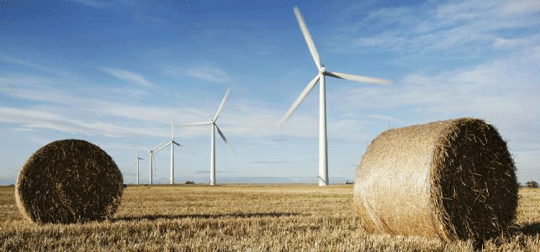
How does wind help the family farm stay in the family?, http://www.aweablog.org/how-does-wind-help-the-family-farm-stay-in-the-family/ Greg Alvarez, 22 Mar 16, During my tour through Colorado wind power last week, I often heard how wind helps keep the fabric of rural communities intact, allowing them to thrive.
Land lease payments make it possible for family famers and ranchers to keep their businesses running, expanded tax revenue provides resources to buy new emergency services equipment, and wind farms bring well-paying jobs to the community, meaning young people don’t have to leave home to find a good career.
Millions in financial resources for rural communities
New data released today allows us to quantify these sorts of anecdotes: landowners with wind turbines on their property now receive a total of $222 million in lease payments every year. Overall, landowners in six states currently receive over $10 million each year in lease payments, and 26 states have landowners that receive over $1 million.
This revenue acts as a drought resistant cash crop for family farmers and ranchers, providing a stable source of income they can count on when productivity declines because of drought or other causes. It also helps protect them from commodity price fluctuations, a frequent source of frustration in the agricultural world.
Real world impacts
In many cases, lease payments from turbines are the difference between keeping a farm and selling off the land.
Jason Wilson of Calhan, CO, told me, “The wind farm allowed us to be able to keep our family farm. We had come to a point where it no longer made financial sense to keep the property even with its vast sentimental value. The wind farm balanced the financial viability with the sentimental value, allowing the family farm to be passed on to the next generation.”
The Wilson farm sits on the plains at the base of Pike’s Peak. It’s a beautiful, serene place started by Jason’s great-grandfather in the 1940’s. Jason will be taking over the operation in the coming years, and his family explained they had no doubt this transition is only possible because of the lease payments they receive in exchange for hosting wind turbines.
Tax revenue helps communities thrive
Land lease payments aren’t the only source of revenue from wind farms; they also help expand the tax base. In many states, wind increases property tax funds by millions of dollars. For example, in Colorado increased property tax revenue from wind could near $19 million a year by 2030.
When our team visited a wind farm in the northeastern part of the state, in a town called Peetz, we heard that the local fire department had been using hand-me-down trucks in poor condition from other counties. Some locals joked that the old fire trucks couldn’t make it up a hill. However, after a wind farm was built, the resulting tax base expansion enabled the town to purchase brand new trucks.
Since around 70 percent of American wind farms are located in rural communities where median household incomes are lower than overall U.S. median incomes, lease payments and added tax revenue are doubly important. Overall, wind farm investment in such areas has exceeded $101 billion.
Wind farms mean local jobs
A final component in this economic picture concerns the jobs wind farms bring to a community.
In many rural areas, jobs are limited to agricultural professions. Young people that may want to pursue a different livelihood are often forced to move away because of a lack of options, even if they don’t want to leave their families and hometowns.
However, wind farms bring other opportunities for employment. Wind turbine technician is the fastest growing occupation in the country and presents another employment avenue for people who enjoy rural lifestyles.
Our team met with a wind farm operations and maintenance crew in Peetz, CO, and many of its members fell exactly into this category. Working as a wind turbine technician provided them with well-paying jobs while also allowing them to stay in the town they grew up in and loved, in close proximity to their extended families. The crew told us this option simply wasn’t available before the wind farm was built.
There are a multitude of different ways wind power brings resources and opportunities to local communities. Even better, the dollar amounts and job numbers will only increase as we continue to grow this American energy source, which will help rural towns thrive along the way.
Indigenous people push for decontamination of Los Alamos National Laboratory atomic research area
Tribe on front lines of fight over nuclear lab contamination Seattle Times, April 4, 2016 By SUSAN MONTOYA BRYAN The Associated Press ALBUQUERQUE, N.M. (AP) — The tribal community of San Ildefonso Pueblo sits in the shadow of Los Alamos National Laboratory, one of the nation’s premier laboratories and the birthplace of the atomic bomb.
The tribe is on the front lines of a battle to rein in contamination left behind by decades of bomb-making and nuclear research.
Pueblo Gov. James Mountain says he’s encouraged that New Mexico regulators, under a revamped cleanup proposal, have identified as a priority a plume of chromium contamination at the tribe’s border with the lab.
San Ildefonso Pueblo, in northern New Mexico’s high desert, has a tribal enrollment of about 750. Its members are known for their artistry, creating jewelry, paintings, traditional black-on-black pottery and other works.
Groundwater sampling shows increasing chromium concentrations at the edges of the plume, indicating it’s migrating through an area considered sacred by the tribe and closer to the Rio Grande, which provides drinking water to communities throughout the region. The plume has stretched about 1 mile into the upper part of the regional aquifer, and is about a half-mile wide and 100 feet thick.
It’s about a half-mile from the closest drinking water well.
“Without a doubt, it definitely raises concerns,” Mountain said.
The contamination was first detected more than a decade ago, and officials traced it to potassium dichromate used to prevent corrosion inside cooling towers at Los Alamos lab’s power plant. As part of regular maintenance from 1956 to 1972, the chemicals were discharged into canyons below…….
The U.S. Energy Department’s Office of Environmental Management is asking for $189 million for work at the lab next fiscal year. That would pay for handling radioactive waste stored at the lab, as well as completing the chromium investigation.
“The essence is groundwater is precious in New Mexico so we take threats to groundwater very seriously,” he said. “We certainly think there’s an elevated risk associated with any contamination to groundwater.”
The area also is home to flaked stone tools, ceramic shards and even a wagon road that dates back to the homestead period of the 1800s.
“It’s a very important area to the pueblo,” Mountain said. “And it’s not just on the parameters of physical inhabitation. There’s an effect on the pueblo’s health and welfare, on our mental well-being, our spiritual well-being.” http://www.seattletimes.com/nation-world/tribe-on-front-lines-of-fight-over-nuclear-lab-contamination/
Very serious consequences if Iran nuclear deal scrapped
U.S. warns of dire consequences if By Nicole Gaouette April 5, 2016 Washington (CNN)The Obama administration warned of dire consequences Tuesday should the next occupant of the Oval Office scrap the Iran nuclear deal.
Lawmakers want Entergy to pay its fair share of tax
Westchester OKs Indian Point tax deal http://www.lohud.com/story/news/local/westchester/2016/04/05/westchester-oks-indian-point-tax-deal/82635322/ Mark Lungariello, mlungariel@lohud.com
Entergy agrees to pay almost $4 million for 2015, but some lawmakers wanted a more equitable deal running through 2024.
The owners of Indian Point Energy Center will pay Westchester County more per year in a new tax deal approved Monday, although some lawmakers questioned if the company is really paying its fair share under the agreement.
The county Board of Legislators approved in a 12-4 vote a new payment in lieu of taxes, or PILOT, for the two active nuclear reactors and an adjacent building at Indian Point in Buchanan. The land is property-tax exempt and the plant’s owner, Entergy, instead pays a set fee negotiated with the municipality.
The new deal runs through 2024, with Entergy’s payment increasing annually by the lesser amount of the New York state tax cap or 2 percent. Under the deal, the company agreed to pay almost $4 million to Westchester backdated for 2015 after paying $3.1 million in the final year of its last PILOT.
Legislator Catherine Parker, a Rye Democrat, voted against the PILOT after a public hearing during which no members of the public spoke.
“We want to make sure that we have an equitable situation for the taxpayer and for the entity,” she said.
Legislature Chairman Michael Kaplowitz, a Somers Democrat who also voted against the measure, had sought to renegotiate the terms so that the PILOT was tied more directly to the county’s annual tax increase or decrease.
The expired PILOT, he said, was agreed to during an uncertain time for nuclear facilities. Under that agreement, Indian Point’s owner paid $3.4 million in 2003 but that payment decreased to a low of $2.6 million in 2007 before bouncing back up.
Entergy bought Unit 2 from Con Edison and Unit 3 from NYPA. Unit 1 is no longer in use. The company has separate PILOTs already approved by the town of Cortlandt, the village of Buchanan and the Hendrick Hudson school district.
1 This Month
Tell Congress: Prevent Nuclear Catastrophe in Iran

Tell Congress: Prevent Nuclear Catastrophe in Iran

Read the Public Inquiry Report, the Commissioners’ report, Surrendering Australia: The AUKUS Deception is available to download for free at aukuspublicinquiry.com. Or just watch the replay of the National Press Club Luncheon.


Shut down the radiation-damaged Heysham nuclear reactors now
To see nuclear-related stories in greater depth and intensity – go to https://nuclearinformation.wordpress.com

Say No to NASA’s Reckless Nuclear Reactor on the Moon
Say No to NASA’s Reckless Nuclear Reactor on the Moon
-
Archives
- November 2026 (190)
- October 2026 (302)
- September 2026 (339)
- August 2026 (330)
- July 2026 (355)
- June 2026 (287)
- May 2026 (306)
- April 2026 (356)
- March 2026 (251)
- February 2026 (267)
- January 2026 (308)
- December 2025 (358)
-
Categories
- 1
- 1 NUCLEAR ISSUES
- business and costs
- climate change
- culture and arts
- ENERGY
- environment
- health
- history
- indigenous issues
- Legal
- marketing of nuclear
- media
- opposition to nuclear
- PERSONAL STORIES
- politics
- politics international
- Religion and ethics
- safety
- secrets,lies and civil liberties
- spinbuster
- technology
- Uranium
- wastes
- weapons and war
- Women
- 2 WORLD
- ACTION
- AFRICA
- Atrocities
- AUSTRALIA
- Christina's notes
- Christina's themes
- culture and arts
- Events
- Fuk 2022
- Fuk 2023
- Fukushima 2017
- Fukushima 2018
- fukushima 2019
- Fukushima 2020
- Fukushima 2021
- general
- global warming
- Humour (God we need it)
- Nuclear
- RARE EARTHS
- Reference
- resources – print
- Resources -audiovicual
- Weekly Newsletter
- World
- World Nuclear
- YouTube
-
RSS
Entries RSS
Comments RSS

