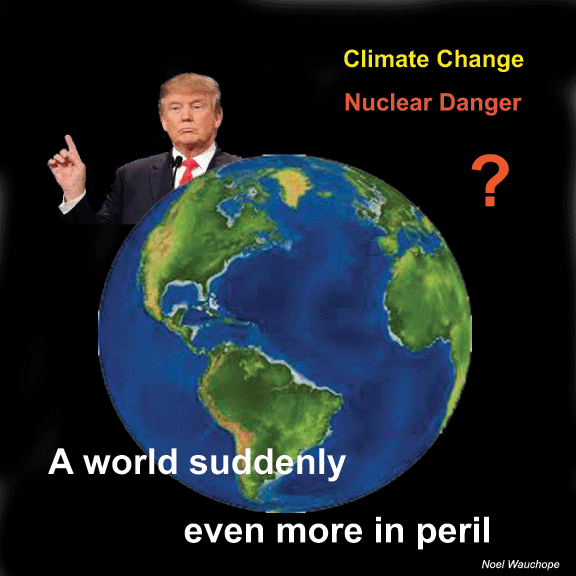
Rick Perry asked about nuclear energy policy as energy secretary
Going nuclear: Perry poised to lead renewable energy push
BY MARK PERRY, 01/20/17 “……..This is where the new administration can make a difference. With Perry guiding the DOE, the agency can stimulate development of a new generation of small modular reactors and advanced nuclear plants.
Just last week, NuScale, an Oregon-based nuclear company, applied to the Nuclear Regulatory Commission for safety certification of a small modular reactor (SMR) that it intends to develop for use in the United States and abroad.
This is the first request for certification of a new reactor design in many years and it could mark the start of the next step for advanced nuclear power…….
Perry is a strong supporter of nuclear power. He can play an invaluable role in pushing for action at the state and regional levels to keep existing nuclear plants online…… it takes new leadership and a renewed appreciation for the importance of nuclear power. Hopefully, Perry will soon provide that leadership as the head of the DOE”.
“Responsibly developed wind energy offers a substantial, economically feasible, and wildlife-friendly energy opportunity for America,” according to the National Wildlife Federation.
Here’s why they offer such strong endorsements.
Scientists overwhelmingly agree that excess carbon pollution threatens birds across the globe. This looms particularly large in North America, where the National Audobon Society finds CO2 pollution could cause 314 different bird species to lose up to 50 percent of their habitats in the coming decades.
Fortunately, wind power remains the biggest, fastest, and cheapest way to reduce carbon pollution, cutting 28 million cars’ worth every year. Wind also contributes to a cleaner environment for America’s birds by eliminating pollutants like nitrogen oxides and sulfur dioxide that create smog.
Working proactively to keep impacts low
The U.S. wind industry works closely with conservation organizations and government officials to understand and minimize the impacts it does have to the greatest degree possible. Here’s one example of groundbreaking research on ways to do this:
How else do wind developers ensure conservation happens? Some examples of the different methods they use include:
Thorough site monitoring to notice any unexpected impacts.
Creating wildlife preserves.
Partnering to create the American Wind Wildlife Institute to tackle wind and wildlife issues, identifying areas that need research and then making sure it happens.
Performing extensive pre-construction surveys to minimize impacts, and following best practices to maintain small effects during project operations.
Factors like this contributed to the New York State Energy and Research Development Authority’s finding that wind has the lowest impact on wildlife and their habitats of any way to generate electricity.
It is true that wind does have some impact on bird populations, and the U.S. wind industry takes that very seriously. However, this should also be put into context: wind causes less than 0.01 percent of all human-related bird deaths.
The reality is no human activity is completely impact-free. With decades of siting experience and comprehensive environmental impact assessments done before construction, wind greatly lessens the effects it does have.
And because wind power directly combats the greatest threat to birds, helps create a cleaner environment and preserves habitats through its small footprint, it creates a future where birds of all kinds can continue to flourish.
In Nuclear Poker, Don’t Bet on Trump, Bloomberg JAN 19, 2017 BY James McManus Is North Korea’s belligerent young leader, Kim Jong-un, bluffing when he says the “last stage” is underway for testing a ballistic missile capable of hitting the U.S.? What about President-elect Donald Trump, when he tweets, “It won’t happen“?
As Trump’s administration begins, a showdown with North Korea over ICBMs seems all but inevitable. Just yesterday, South Korean media reported possible signs that the North may be preparing a new missile launch. In managing this conflict, few things will be more crucial than understanding the nature of bluffing. Unfortunately, for all his talk of being a good deal maker, Trump is a terrible bluffer — and his lack of skill is likely to destabilize nuclear politics.
A bluff is an untrue but plausible story. In the mindsport of poker, bluffs work when your opponent believes you have a better hand, so he can’t call your bet or raise, conceding you the pot. The savvier player wants to steadily grind away at the stack of his opponent over a large number of small pots, without risking too many of his own chips in any single hand. The weaker player can counter the “small ball” strategy by raising all-in fairly often, forcing all-or-nothing confrontations.
To understand why these dynamics are so crucial in nuclear negotiation, consider the work of John von Neumann, the prodigiously gifted polymath who immigrated to the U.S. from Hungary in 1933 and later contributed to the Manhattan Project. Von Neumann loved poker because its strategy involves guile, probability, luck and budgetary acumen, but is never transparent; it always depends on the counterstrategies deployed by opponents.
Expert players misrepresent the strength of their hands, simulate irrational behavior, and deploy other mind games to confuse their opponents. In a nutshell, they bluff. It was von Neumann’s efforts to express bluffs in mathematical terms that helped him develop game theory, which has numerous real-world applications, nuclear strategy foremost among them……..
Trump bluffs almost constantly. He has spent his entire adult life overstating the value of his real estate holdings and branding endeavors, while bragging relentlessly about his wealth, sex life, length off the tee, and on and on. His bluffs during the campaign — that he had a replacement for Obamacare, a secret plan to defeat Islamic State and so on — were plainly false to anyone paying attention. To Trump, what was true hardly mattered.
Such tendencies would not serve him well in a poker game. Any player who continually misrepresents the size of his hand would cause sharp opponents to give his bets little credit. They’d simply wait for above-average hands and call him. As Daniel Negreanu, the all-time winningest poker tournament player, put it to me, “Trump’s bluffs are very effective against level-one thinkers. His lies are so outlandish that people think they have to be true or he wouldn’t have said it. The constant barrage makes him tougher to read. But sharper players would pick him apart.”
Kim may not be irrational, but he knows how to seem that he is, which gives him leverage. Kim’s contempt for most North Koreans means that he has less to lose by threatening to nuke an American city. The more we know about his pretensions to deity, his labor camps, the food and electricity shortages his policies have prolonged, the easier it is to believe he might sacrifice millions of Koreans in an absurd attempt to save face. Kim isn’t threatening to defeat the U.S., a bluff no one would credit; he’s trying to prove he could grievously injure it before dying himself, a bluff that must be taken seriously. As Negreanu puts it, Kim is “a scary player. Being unpredictable, capable of any move at any time, makes him hard to prepare for.”
In such circumstances, Trump’s long history of empty boasts is destabilizing. Kim may calculate that he has renewed leverage to push for concessions from the U.S. He might engage in riskier behavior, such as firing more test missiles or launching cyberattacks. Almost certainly, he’ll persist in developing missiles that can reach the U.S., calculating all the while that Trump’s Twitter outbursts are simply talk.
People of color are bracing for climate injustice under Trump, Guardian, Elizabeth C Yeampierre, 20 Jan 17 When things are bad for everyone, they are particularly bad for people of color – which doesn’t bode well as the Trump administration sets up shop. hen things are bad for everyone, they are particularly bad for people of color. The Trump administration is about to legitimize injustice in all of our communities. People of color have endured the extraction of our land and labor – and its legacy – since the creation of these United States. Now, we are bracing ourselves for worse things to come.
The environmental and climate justice movement has had substantial successes on both the local and national fronts. We have cleaned up brownfields, stopped the siting of power plants, facilitated community-based planning for climate adaption and resilience, all while developing a framework known as Just Transitions, which rejects the “dig, burn, dump” economy and wants to push it away from an extractive economy to a regenerative one.
Always frontline-led and solutions–oriented, we have been working diligently to operationalize this transition through such initiatives as community-owned solar, offshore wind and local cooperatives that model another way to live without a carbon footprint. Energized by the momentum created by the People’s Climate March and the breadth of knowledge shared by the Climate Justice Alliance’s Our Power Campaign, the last few years have been all about the possibilities.
And then Trump was elected.
The solutions to unresolved environmental justice crises in low-income communities of color that the environmental and climate justice movement and allies have been diligently working to resolve now suddenly appear unattainable……..
Our communities across the nation have struggled but survived with administrations that moved slowly. We have never faced an administration that on all underlying tenets of climate justice – including the very existence of climate change – is at best indifferent and at worst actively antagonistic.
The appointments of climate denier Scott Pruitt as head of the Environmental Protection Agency, fossil fuel-backed Ryan Zinke as head of Department of Interior, ExxonMobil CEO Rex Tillerson as secretary of state, neo-Confederate Jeff Sessions as attorney general and fast food executive Andrew Puzder as secretary of labor all constitute direct attacks on these tenets and communities of color.
6.4 million Americans now work in the traditional energy and the energy efficiency sector, which added more than 300,000 net new jobs in 2016, or 14 percent of the nation’s job growth.
“This report verifies the dynamic role that our energy technologies and infrastructure play in a 21st century economy,” said DOE Senior Advisor on Industrial and Economic Policy David Foster. “Whether producing natural gas or solar power at increasingly lower prices or reducing our consumption of energy through smart grids and fuel efficient vehicles, energy innovation is proving itself as the important driver of economic growth in America, producing 14 percent of the new jobs in 2016.”
The solar industry is particularly shining bright.
“Proportionally, solar employment accounts for the largest share of workers in the Electric Power Generation sector,” the report, released on Jan. 13, states. “This is largely due to the construction related to the significant buildout of new solar generation capacity.” Overall, the U.S. solar workforce increased 25 percent in 2016.
According to the report, solar—both photovoltaic and concentrated—employed almost 374,000 workers in 2016, or 43 percent of the Electric Power Generation workforce. This is followed by fossil fuels, which accounts for 22 percent of total Electric Power Generation employment, or 187,117 workers across coal, oil and natural gas generation technologies.
Wind generation is seeing growth in employment with a 32 percent increase since 2015. The wind industry provides the third largest share of Electric Power Generation employment with 102,000 workers at wind firms across the nation.
The reason behind this growth in the solar sector is due to the high capacity additions in both distributed and utility-scale photovoltaic solar, the report said. In fact, construction and installation projects represented the largest share of solar jobs, with almost four in ten workers doing this kind of work, followed by workers in solar wholesale trade, manufacturing and professional services.
In a sign of promise for the booming industry, solar employers reported that they expect to increase employment by 7 percent this year.
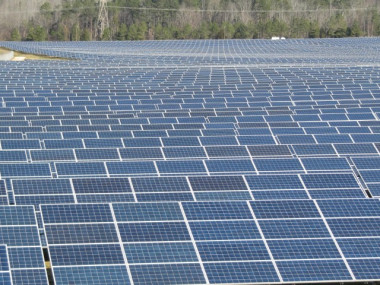
Solar is becoming the cheapest form of electricity production in the world, according to statistics from Bloomberg New Energy Finance. Last year was the first time that the renewable energy technology out-performed fossil fuels on a large scale.
Donald Trump’s very confusing thoughts on nuclear weapons, explained
Vox, by Zack Beauchamp@zackbeauchampzack@vox.com Jan 18, 2017 Just days before his inauguration, Donald Trump made headlines by trashing America’s European allies in an interview with two of Europe’s biggest newspapers. The hubbub over Trump’s attack on Europe obscured one of the stranger comments in the interview — that he hoped to work with Russian strongman Vladimir Putin to reduce both countries’ nuclear arsenals.
“Let’s see if we can make some good deals with Russia,” Trump said. “For one thing, I think nuclear weapons should be way down and reduced very substantially.”
To say this is a flip-flop is an understatement. Less than a month ago, Trump tweeted that the US “must greatly strengthen and expand its nuclear capability until such time as the world comes to its senses regarding nukes.” When MSNBC’s Mika Brzezinski asked him about the possibility of this policy setting off an arms race with Russia (which is also talking about expanding/modernizing its nuclear arsenal), Trump’s answer was simple.
“Let it be an arms race.”
Nuclear arms control is a hugely important issue — especially in a world where tensions between the US and two other nuclear powers, Russia and China, are heating up. So where does Trump stand: with his comments from December, or with his comments from January?
The truth is that nobody knows — leaving us in the dark on one of the very few policy issues with the potential to transform the future of human civilization.
“It’s difficult to discern what Trump’s policy will be and whether he has given more than a few minutes’ thought to these issues,” Kingston Reif, the director for disarmament and threat reduction policy at the Arms Control Association, tells me.
Questions about nuclear policy have dogged Trump for more than a year now. In a December 2015 Republican debate, moderator Hugh Hewitt asked Trump about the “nuclear triad” — America’s three-part system for delivering nuclear weapons (bombers, submarines, and intercontinental ballistic missiles). Trump’s answer was confusing:
We have to be extremely vigilant and extremely careful when it comes to nuclear. Nuclear changes the whole ballgame. … The biggest problem we have is nuclear — nuclear proliferation and having some maniac, having some madman go out and get a nuclear weapon. That’s in my opinion, that is the single biggest problem that our country faces right now.
There are two interesting things about this. First, Trump suggests, as he later did in his January interview, that he sees large global nuclear stockpiles as a problem. Second, he doesn’t appear to know any of the major policy questions surrounding the nuclear triad, or even what the nuclear triad is.
That became especially clear when Hewitt followed up, pressing Trump to answer the actual question about the triad. Trump’s response? “I think — I think, for me, nuclear is just the power, the devastation is very important to me.”
This pattern — an abstract abhorrence of nuclear weapons but seemingly confused views on actual nuclear policy — continued throughout the campaign. . In a March 2016 town hall, for example, host Chris Matthews pressed Trump on whether he’d use nuclear weapons. He seemed to say both no and yes at the same time, saying he’d be “the last one to use nuclear weapons,” but also that he would be very willing to nuke ISIS territory in response to a terrorist attack:………… http://www.vox.com/world/2017/1/18/14310168/trump-nuclear-policy-inauguration-explained
An unknown military aid will accompany President Barack Obama during the handover ceremony tomorrow. They will be carrying the briefcase which inside holds the digital piece of hardware, measuring 3in by 5in, known as “the biscuit”, and will pass it to Mr Trump’s side.
A briefing for the incoming president on how to activate them will have already taken place in private.
Cristina Varriale, a research analyst in proliferation and nuclear policy at the Royal United Services Institute (RUSI), told The Independent: “Right from the moment he is inaugurated and officially becomes the president of the United States, Trump will have access to the nuclear codes.”
What could stop him using it?
“In theory the president has full discretion over authorisation of nuclear use, however in practice, launch will still depend on other factors, including a human element,” added Ms Varriale.
Mr Trump would make the decision first, but he would be giving permission to US Secretary of Defence, retired US Marine General James Mattis, to authorise the launch.
Mr Mattis could disobey the order but this would constitute mutiny and the president could fire him and turn to his deputy secretary of defence – and so on.
Also, under the 25th Amendment of the US Consitution, a vice-president could declare the President mentally incapable, but would need majority backing from cabinet.
Non-proliferation expert Mark Fitzpatrick, of the International Institute for Strategic Studies in Washington, also told BBC News: “There are no checks and balances on the president’s authority to launch a nuclear strike.
“But between the time he authorises one and the time it’s carried out there are other people involved.”
How the message is sent?
Inside the briefcase is a black book with a menu of strike options. He then authenticates his identity as commander-in-chief using a plastic card.
Once that’s done, the order is passed via the chairman of the Joint Chiefs of Staff, to the Pentagon war room, and then, using sealed authentication codes, to the US Strategic Command HQ in Offutt Airbase in Nebraska.
The order to fire is transmitted to launch crews using encrypted codes that have to match the codes locked inside their safes.
How quick?
Less than an hour apparently. Land-based missile flight times between the US and Russia, or US and China, are around 30 minutes. That could be as little as 12 minutes from a submarine lurking in the Western Atlantic Ocean.
How much damage could do?
“The US still remains one of world’s nuclear superpowers – the other being Russia – with an arsenal that has the potential to be incredibly destructive and change the world as we know it,” said Ms Varriale.
As of September 2016, according to the BBC, America had 1,367 strategic nuclear warheads, Russia had 1,796, and the UK had 120.
Why would he use it?
Mr Trump has given mixed messages on nuclear weapons.
In March he said it was a “last resort”, in Mr Trump’s interview with Michael Gove he said it should be “reduced very substantially”, but last month he tweeted the US must “expand its nuclear capability until such time as the world comes to its senses regarding nukes”.
President Harry Truman used two atomic bombs on Hiroshima and Nagasaki in Japan in 1945 to, by his justification, end the Second World War.
Ms Varriale added: “Although there are still many questions over Trump’s understanding of nuclear weapons, and how he see’s nuclear use, there would still need to be a number of significant steps before the prospect of intentional nuclear use by Trump becomes a near term possibility.”
FPL Wins Battle to Store Radioactive Waste Under Miami’s Drinking Water Aquifer, Miami New Times, BY JERRY IANNELLI JANUARY 16, 2017 Environmental activists have started a petition urging Florida lawmakers to prevent FPL from storing waste underground.South Florida sits atop two gigantic underground stores of water: the Biscayne and Floridan Aquifers. Miamians get most of their drinking water from the upper Biscayne Aquifer, while the government has used the lower portion of the Floridian to dump waste and untreated sewage — despite the fact that multiple studies have warned that waste could one day seep into the drinking water.
According to NRC documents, CASE’s petition was dismissed for being filed “inexcusably late” in FPL’s application process.
“This was thrown out on procedural grounds,” says CASE’s president, Barry J. White. “The science is still there.”
CASE had filed a petition with the U.S. Nuclear Regulatory Commission, but the NRC on Friday threw out CASE’s complaint, saying the environmental group had filed too late in FPL’s approval process.
The fight stems from the energy company’s plan to build two nuclear reactors at the controversial Turkey Point Nuclear Generating Station south of Miami by roughly 2030. The towers might not be operational for a decade or two, but that doesn’t mean the public should stop paying attention to them. FPL is submitting numerous proposals about the project to the government.
As part of that package, FPL told the U.S. Nuclear Regulatory Commission that it plans to store contaminated water used to clean the reactors, as well as radioactive waste (“radwaste”) in the Boulder Zone. In October, the NRC issued a report, stating FPL’s plan would pose “no environmental impacts” to the South Florida environment.
Roughly a month later, on November 28, CASE filed a legal petition demanding that the NRC hold a hearing on FPL’s radioactive waste plan. CASE alleges the government failed to address a host of concerns about the power company’s plan.
Groups sue to end ratepayer subsidies of aged nuclear power plants http://www.midhudsonnews.com/News/2017/January/19/nuke_plant_subsidy_suit.htmlBEACON – Hudson River Sloop Clearwater and a number of co-petitioners filed in Supreme Court a challenge to the recently enacted mandatory 12-year nuclear subsidy that is expected to cost New York ratepayers between $7 billion and $10 billion.The surcharge was ordered by the state Public Service Commission as part of its Clean Energy Standard.
The petitioners argue that the $7.6 billion nuclear subsidy imposed on the state’s electricity consumers was unjustified and that the PSC did not follow the law when it enacted them.
The subsidies will be paid by ratepayers on their monthly energy bills based on usages. That cost will “most seriously impact low-income ratepayers and businesses operating on a thin profit margin,” the groups said.
“New Yorkers who are currently using and who are committed to renewable energy and who are paying additionally for Renewable Energy Credits for 100 percent of their electrical needs should not also be billed for this $7.6 billion nuclear plant subsidy,” said North Salem Town Supervisor Warren Lucas.
“This action has brought to challenge the PSC’s nearly $8 billion bailout of the unsustainable and polluting nuclear industry, based on the mistaken premise that nuclear energy production is emission-free,” said attorney Susan Shapiro, owner of petitioner Goshen Green Farms. “Nuclear energy is not, nor has it ever been emission-free, as it routinely emits radiation, heat and greenhouse gases, which are all climate change catalysts.”
Clearwater Environmental Director Manna Jo Greene noted at Diablo Canyon in California, they are phasing out their last nuclear plant by committing to 100 percent renewable replacement energy, while protecting plant workers by retaining those with critical institutional memory and highly technical knowledge. She said they are also retraining those who are not needed for safe decommissioning, and placing them in jobs in the renewable energy economy.
“New York needs to create a just transition plan, not a prolonged nuclear bailout,” Greene said.
Parts of United States are heating faster than globe as a whole A new study shows the Northeast USA will reach the dangerous 2°C warming threshold faster than most of the rest of the planet, Guardian, John Abraham, 17 Jan 17, A new study shows the Northeast USA will reach the dangerous 2°C warming threshold faster than most of the rest of the planet,
Global warming obviously refers to temperature increases across the entire globe. We know the Earth is warming, we know it is human-caused, we have a pretty good idea about how much the warming will be in the future and what some of the consequences are. In fact, when it comes to the Earth’s average climate, scientists have a pretty good understanding.
On the other hand, no one lives in the average climate. We live spread out north, west, east, and south. On islands, large continents, inland or in coastal regions. Many of us want to know what’s going to happen to the climate where we live. How will my life be affected in the future?
This type of question is answered in a very recent study published by scientists from the University of Massachusetts at Amherst. The team, which includes Dr. Raymond Bradley and researcher Dr. Ambarish Karmalkar looked specifically at the Northeastern United States. They found that this area will warm much more rapidly than the globe as a whole. In fact, it will warm faster than any other United States region. The authors expect the Northeast US will warm 50% faster than the planet as a whole. They also find that the United States will reach a 2 degree Celsius warming 10–20 years before the globe as a whole.
So why does this matter? Well first, it matters because some of the effects people will experience are directly tied to the temperature increase in their region. For instance, we know that warmer air leads to more intense precipitation. In fact, we are already observing increases in very heavy rainfall across the United States (especially in the Northeast). Based on this new research, that trend will only get worse. It means that winters in this region will get warmer and wetter – more winter precipitation will likely occur as rain rather than snow. This affects the availability of water into the spring months. It also means that summers will have more intense heat waves which will lead to more severe droughts.
Rick Perry: Energy Secretary nominee didn’t know his job would involve managing nuclear weapon stockpile The 66-year-old is said to be facing a ‘steep learning curve’ The Independent Andrew Buncombe New York @AndrewBuncombe Rick Perry made embarrassing headlines when he could not remember the name of the federal agency he wanted to scrap.
He listed the Department of Commerce and the Department of Education, but failed to recall the third – the Department of Energy. Soon after the performance at that Republican debate, he dropped out of the race.
Mr Perry is now back as Donald Trump’s nominee to head that very same department. But reports suggest the former Texas governor will have a steep learning curve; when he accepted the job, he did not realise one of his major tasks as Energy Secretary would be overseeing the US’s vast nuclear arsenal……..
Mr Perry’s confirmation process before the Senate started on Thursday. If approved, he will replace Ernest Moniz, who was chairman of the Massachusetts Institute of Technology physics department and directed the linear accelerator at MIT’s Laboratory for Nuclear Science.
Prior to that, the job was held by Steven Chu, a physicist who won a Nobel Prize.
It is a good idea to at least test the feasibility of deep boreholes. As one resident said “Something must be done with the wastes”. There is no obligation on that community to agree to actually accept high level nuclear waste – only to host the testing of the deep bore concept.
The whole project would really make sense if it were combined with a definite plan to STOP MAKING TOXIC RADIOACTIVE WASTES, by closing down all nuclear reactors. This could be done, with genuine good will, and planning for compensation and transition to other employment for workers in the nuclear industry.
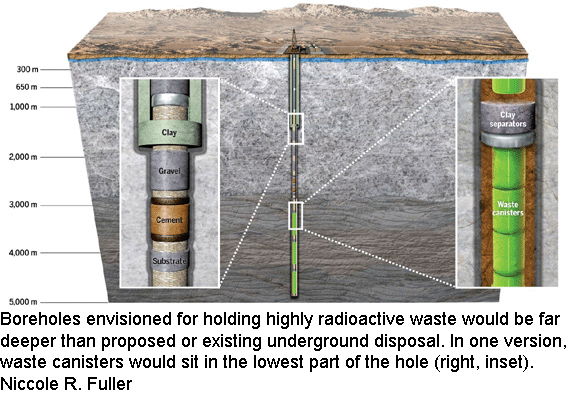
New Mexico town steps up for nuclear borehole projectLMT Online, , January 15, 2017 “……. The U.S. Energy Department, Quay County and two energy development companies say the nation’s latest nuclear waste experiment could inject as much as $40 million into the county’s economy. Nara Visa residents just have to agree to let the companies drill a three-mile-deep borehole — seven times deeper than the Waste Isolation Pilot Plant in Carlsbad — into the crystalline, granite crust of the earth a few miles outside of town, on land currently occupied by fat, black cattle.
Right now, the project is pegged as a scientific experiment. The Energy Department says no nuclear waste will be placed in the test borehole.
The ultimate goal is to find a permanent place to dispose of the ever-growing and deadly stockpile of spent nuclear fuel rods and high-level radioactive waste collected at nuclear reactors and nuclear weapons laboratories nationwide.
Until this year, no town in the U.S. had agreed to the proposal. But when the Quay County Commission approved the plan in October, it put Nara Visa on track to become the first.
About seven miles outside Nara Visa, there is a small, gravel roadside park where semi-truck drivers pull off U.S. 54 to sleep. Below the earth, the granite is devoid of oil but just right for deep drilling.
These 10 acres belong to Louis and Elaine James, who’ve agreed to lease it to the government………
As far as the nuclear waste component is concerned, Louis James, 69, said, “I have more of a problem with it sitting over at Pantex 100 miles away than I do with it being under the ground, because you know it will get you if they ever attack those spots.” He was referring to the Pantex Plant, a nuclear weapons assembly facility outside Amarillo, Texas……
The test hole planned for the James’ property is meant to be just 8 1/2 inches wide but would go deep below ground, first through the water table and a mile through sediment before hitting the top of a crystalline rock layer. From there, the hole would be drilled another two miles into the Earth. This is the layer where nuclear waste would be stored, then sealed off with a steel casing and concrete to protect the environment and water in the mile span separating the waste from the land’s surface.
Utah-based DOSECC Exploration Services LLC and Enercon Federal Services, Inc., based in Atlanta, are developing the Nara Visa proposal and are one of four groups that have been granted the go-ahead from the Energy Department for Phase 1 of the project. This is referred to as “community buy-in,” gaining not only public approval but also support for the project, and securing the land for the borehole site.
If DOSECC and Enercon win this bid, they will get $35 million over a five-year period to drill the first hole. The Energy Department will grant an additional $50 million to drill a second, wider borehole if the first is successful……
State Rep. Dennis Roch said that after meeting with the companies, he felt confident there was “no connection between this viability test and the ultimate decision of where to dispose of nuclear waste way down the road.”…….
The Nara Visa site would only be permitted for drilling, he added. Nuclear waste storage would require an entirely different permitting and regulatory process…….
WIPP, after being closed for nearly three years following the radiation leak, began depositing waste below ground for the first time in December. But the stagnation of waste disposal at these facilities left the Energy Department scrambling for alternatives, and in 2012, deep boreholes resurfaced as a potential alternative, an idea that was first floated in the 1950s.
To store all of the waste sitting at 77 U.S. facilities, the Energy Department needs to drill 950 boreholes at an estimated $20 million per hole, or $71 billion for the entire project, including transportation, environmental reclamation, monitoring and site characterization, according to the 2010 Sandia study. In contrast, Yucca Mountain was estimated to cost $96 billion.
Each hole is expected to contain 400 vertically stacked fuel pods that, unlike the costly steel drums used to pack waste headed to WIPP, would not require specialized containers but instead would be stored in their spent fuel form or glass. Multiple boreholes could be drilled just over 200 meters apart to avoid thermal reactions.
Though the Sandia study said boreholes could be used for nuclear reactor waste, Mast from Enercon said he believes the Energy Department is only looking at boreholes for waste from nuclear weapons development.
To actually begin placing nuclear waste in the boreholes will require an amendment to the Nuclear Waste Policy Act.
Before the proposal reaches that stage, Greg Mello, director of the watchdog Los Alamos Study Group, says the government should be more transparent about exactly what type of high-level nuclear waste would go in the holes: spent fuel rods, nuclear weapons waste or down-blended plutonium. …..http://www.lmtonline.com/news/article/New-Mexico-town-steps-up-for-nuclear-borehole-10858853.php
This solar strategy is an integral part of the company’s stated goal of a net-zero energy facility, through which it will produce as much — or more — energy than it consumes.
Dive Insight:
Another energy-saving strategy at the gigafactory, according to 2015 statements from JB Straubel, Tesla’s chief technical officer, was to eschew natural gas pipelines in the structure’s design so that there could be no future possible concessions regarding the company’s no-emissions policy.
Construction on the Nevada gigafactory — expected to be fully functional in 2018 — is progressing, and battery production is already underway. It is widely believed that the solar panels Tesla will use to build its rooftop solar farm will come from SolarCity, which Tesla purchased last year. Soon after the acquisition, Tesla CEO Elon Musk announced that SolarCity would begin to market a relatively low-cost solar roof shingle that mimicked the look of high-end slate and terra cotta roofs, removing the aesthetic barrier of traditional, industrial-looking solar shingles and panels.
Tesla’s solar ambitions, however, extend far beyond the U.S. and solar rooftops. In November, TechCrunch reported that Tesla and SolarCity were behind a solar microgrid project — funded by the Environmental Protection Agency, the Department of the Interior and the American Samoa Economic Development Authority — that aims to eliminate the island’s reliance on costly diesel generators by providing 72 hours of full power from a solar array that recharges with seven hours of sunlight.
it’s “absolute madness” to “dig this hole beside the drinking water source for 40 million Canadians and Americans.”
OPG identifies most of Ontario as alternate ‘location’ to bury nuclear waste: Ontario Power Generation was asked by the federal government to identify “actual locations” as alternates for its plan to bury nuclear waste. It’s now up to the minister as to whether they’ve done that. The Star, By JENNIFER WELLS, Business Columnist, Jan. 10,2017..……The hunt for an appropriate site for a Deep Geologic Repository (DGR) to house waste from Ontario’s nuclear facilities is not a subject to be taken lightly. Everything from mops to materials close to the reactor core, such as ion exchange resins that bear a “significant amount” of Carbon-14, a radionuclide that has a half life of more than 5,700 years, is slated for permanent burial.
………. A report recently released by OPG cites Ryden’s GPS co-ordinates as one of the plot points in one of two contemplated alternate locations for the DGR. Equally curious, the co-ordinates for the second alternate include a stately two story brick home in Chaplin Estates, near Yonge St. and Davisville Ave.
This is worth digging into.
On Dec. 28, Ontario Power Generation submitted the results of its federally mandated assignment to present technically and economically feasible alternate locations for the DGR — alternate, that is, to OPG’s preferred strategy to inter the waste from the Bruce, Darlington and Pickering nuclear power plants at Bruce Nuclear near Kincardine.
The Canadian Environmental Assessment Agency will take until Jan. 16 to determine “whether OPG’s information is complete and that it conforms to the Minister’s information request.” A 30-day public comment period will follow.
When the federal Environment Ministry requested the study, 11 months ago, it sought details as to “specific reference to actual locations.” While OPG responded in April that it intended to assess two feasible “geological regions” in the province, “without providing specific reference to actual locations,” it says now that in this document and the main submission it is using specific references to actual locations.
The common reader may see the word “location” to mean, as it is conventionally defined, a particular or exact place.
OPG has provided something quite different and Environment Minister Catherine McKenna now must decide whether the power giant has come up with an evaluation that is good enough.
Let’s remember that the proposed Bruce site will be dug nearly 700 metres deep in limestone host rock a distance of 1.2 km from Lake Huron. The town of Kincardine is on side. Opposition voices on both sides of the border have been loud, particularly as it concerns protecting the Great Lakes.
The dominant question: is Bruce the best spot? And a corollary: wasn’t granite — the Canadian Shield in northern Ontario — discussed long ago as potentially the appropriate geology for toxic waste? The issue may pertain not just to low and intermediate waste, but ultimately the disposal of spent fuel rods, a headache for the generations that has yet to be effectively addressed………..
Rod McLeod’s view is that it’s “absolute madness” to “dig this hole beside the drinking water source for 40 million Canadians and Americans.”
OPG insists that, at least according to its own social media analysis, Ontarians aren’t bothered. “The topic is not a popular one, nor is it generating large volumes of curiosity,” the report states, adding that interest in the DGR has “flatlined.”
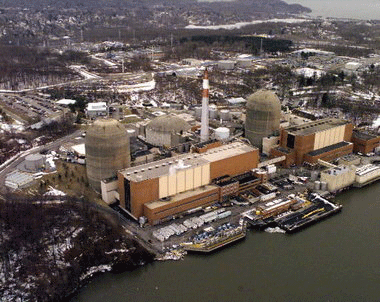
What’s Really Behind the Indian Point Nuclear Deal? CounterPunch byLINDA PENTZ GUNTER 13 Jan 17There was general celebration among sensible-thinking people on January 9 when New York Governor, Andrew Cuomo, signed a deal that would see the twin reactors at the Indian Point Nuclear Generating Station in Buchanan, NY, close by 2021.
Indian Point, on the shores of the Hudson River, has been plagued by safety problems for years, sits on two fault lines — putting it at high risk of earthquake — and was identified as a potential target by the 9/11 attackers who flew over the plant while taking flight training lessons.
In 2004, the group Riverkeeper commissioned physicist, Dr. Edwin Lyman, now with Union of Concerned Scientists, to analyze the outcome of a terrorist attack on Indian Point, a report entitled Chernobyl On The Hudson? Lyman calculated that, depending on the weather that day, an attack on Indian Point “could result in as many as 44,000 near-term deaths from acute radiation syndrome or as many as 518,000 long-term deaths from cancer among individuals within fifty miles of the plant.”
Clearly, it’s high time Indian Point, less than 30 miles from Manhattan, was closed. It is equally obvious that 2021 is not soon enough, tempering the joy among those who have worked for decades to get the plant shut down.
Disappointingly, however, the Cuomo administration is at the same time handing out a massive bailout to four upstate nuclear reactors — two at Nine Mile Point and the single units at FitzPatrick and Ginna. FitzPatrick is the same GE Mark I boiling water reactor design as those that exploded and melted down at Fukushima. If we are going to shut down nuclear reactors, the 30 of this design still operating in the U.S. should be top of the list.
Cuomo is a self-proclaimed advocate for renewable energy. Why then would he shoot its development in the foot by handing out $7.6 billion in state subsidies to keep decrepit and dangerous nuclear plants going upstate while shuttering Indian Point?
In a July 22, 2016 submission to the New York Public Service Commission (NYPSC), four advocacy groups noted that this massive bailout effectively values each of the 2,090 nuclear jobs at the three nuclear sites at $303,000 per year per worker, almost three times what these workers are currently paid.
All of this naturally provokes a frustrating level of cynicism about Cuomo’s motives. Is he really a green energy champion or just another pragmatic politician concerned only with (1) getting re-elected in 2018 and (2) raising campaign funds?
In the last gubernatorial election in 2014, Cuomo predictably ran strong in the affluent counties in and around New York City, including Westchester, where Indian Point is located. In wealthy, downstate counties, Cuomo easily defeated his Republican rival, Rob Astorino, by largely resounding margins………
Cuomo is vulnerable at ballot boxes in the farther reaches of the state, (excepting Erie County, home to Buffalo and where he won in a landslide). Making a show of “saving jobs” in these poorer areas could potentially translate into political capital.
Of course it’s an illusion, because propping up jobs at three times their value is a costly piece of lip service. Comments submitted in April 22, 2016 to the NYPSC by the Alliance for a Green Economy and Nuclear Information and Resource Service show that far more secure, long-term jobs are already being created in the renewable energy sector in the upstate region. And some nuclear jobs could still be retained while the plants are being decommissioned.
“The development of green industry, such as the Solar City factory in Buffalo, the 1366 Technologies factory near Rochester, and the Soraa LED lightbulb factory in Syracuse, NY” will collectively “create 6,420 long-term jobs” with just $937 million in state support, said the two groups.
It is in any case just a matter of time before these flawed, aging and uneconomic nuclear plants either close down or melt down. Where will the nuclear workforce go then? Is Cuomo more willing to risk a radiological disaster in low-income Oswego County than 30 miles from Manhattan? Clearly he can win the election without those upstate voters as the 2014 results showed.
Oswego and Ontario counties may have been conned for now into thinking they have been thrown a job-saving lifeline rather than a potential death sentence. But while the bailout has been approved, it can still be challenged. That’s an essential strategy if we are to pre-empt a potential Fukushima on the Great Lakes.
Tell Congress: Prevent Nuclear Catastrophe in Iran
Read the Public Inquiry Report, the Commissioners’ report, Surrendering Australia: The AUKUS Deception is available to download for free at aukuspublicinquiry.com. Or just watch the replay of the National Press Club Luncheon.