U.S. and Israeli strikes on Iran could fuel a new wave of nuclear proliferation
In the wake of recent strikes by Israel and the United States on Iranian
cities, military sites and nuclear facilities, a troubling paradox has
emerged: actions intended to prevent Iran from acquiring nuclear weapons
may actually be accelerating its pursuit of them and encouraging other
countries to follow suit.
The Conversation 14th July 2025, https://theconversation.com/u-s-and-israeli-strikes-on-iran-could-fuel-a-new-wave-of-nuclear-proliferation-260897
Trump’s Weapons Magic Show is Smoke & Mirrors Masterclass

Simplicius, Jul 15, 2025
Trump finally ‘wowed’ the world today with his grand announcement on punitive measures against Russia.
As usual, the announcement struck a dull and lackluster chord for most, with Russian markets jubilantly jumping by nearly 3% in response. But let’s dig in to see whether there is actually more meat on the bone of Trump’s scary threats than people give credit for.
Firstly, the timing: Axios now reports that Putin allegedly told Trump he plans to ‘intensify’ the Russian summer offensive in the next 60 days, with the goal—according to some sources—purportedly being to capture the remainder of nominal Russian territory, i.e. Donetsk, Lugansk, and Zaporozhye oblasts
Axios: According to Trump, Putin allegedly told him about plans to intensify the offensive in Ukraine in the next 60 days.
Trump shared details of the conversation with the Russian leader with his French counterpart Macron, adding: “He wants to take everything.”
It was after this conversation, according to the publication, that Trump criticized Putin and promised to increase arms supplies to Ukraine.
If there’s any hint of truth to such reports, then Trump’s “50-day notice” would seem to line up with Putin’s timeline, given that the conversation happened days ago, and thus Putin’s “60-day plan” would fall almost precisely on Trump’s deadline.
The basic interpretation of that could be that Trump is giving Russia two months to capture whatever territory it claims belongs to it, then “the hammer” will come down.
Now on the weapons side, as always, is where the biggest cloud of ambiguity lies. No one seems to know precisely what weapons and from what package will be sent, but according to CNN, it all sounds like more of the same, but just ‘repackaged’ with a new price tag.
Reports indicate the same air-to-air missiles, howitzer and GMLRS rounds will be sent as before, but simply that now NATO countries will foot the bill. Prior to that, under Biden’s PDA, the US was sending weapons directly to Ukraine from its own stockpiles, and then replenishing those stockpiles with new orders to the MIC, from taxpayer funds. Now, it will come from European taxpayer funds—a win for the US, we must admit.
But the biggest focal point were the Patriot ‘systems’. Again, the cloud of confusion—no one quite knows what the numbers represent: Patriot launchers, batteries, battalions, etc. Trump once mentioned the word ‘batteries’, but the numbers being discussed do not appear to realistically jibe. For instance, he mentioned sending “17” to Ukraine, but the US itself only has something like a total 50-70 active batteries, and obviously sending a third of its entire Patriot stock is unlikely.
When you really read between the lines, what Trump appeared to intimate was that the eventual goal is to scrounge up a larger amount of ‘systems’ for Ukraine, but “initially” only a tiny fraction will be sent. This is one of the few commenters who grasped the nuances of the mealy-mouthed ‘announcement’:
Recall that Rubio just recently implied the US has no more Patriots to give, a video I posted several updates ago. He called on Europe to give their Patriots instead, but quelle surprise, in a new FT article German Defense Minister Pistorius admitted that Germany will not be sending any Patriots nor Taurus missiles:
You can see in the above [on original], he goes on to say that Germany could purchase two systems from the US for Ukraine, instead. This is a kind of puerile shell game which is really meant to bolster the PR narrative that Ukraine is being ‘supported’ in order to keep hopes alive, so that the AFU doesn’t collapse from demoralization.
German Defense Minister Pistorius to Reuters:
Decision on two Patriots for Ukraine will be taken within days or weeks, but actual delivery of first system will take months.
In short: it’s a lot of hoopla to kick the can down the road again, repackaging the same policy with new fanfare.
The sanctions threat was likewise fraught with double-meaning. Trump called them ‘tariffs on Russia’, but in reality they are merely tariffs on US’ own allies:
Russia exports virtually nothing to the US which can be ‘tariffed’. The threat here is meaningless as these other heavyweights will not put up with Trump’s threat, forcing him to back away at the last moment as usual, then claiming “victory” after securing some other secondary fig leaf ‘deal’.
In conclusion: the entire charade appears to be a sneaky but brilliant act of jugglery by Trump, wherein he once again gives the appearance of major ‘action’ against Russia to silence critics and placate neocons, while in actuality doing little to further Ukraine’s war efforts, apart from plugging the previous status quo back onto life support. The act is meant to play both sides, relieving pressure on himself, while not overly risking his relationship with Putin in the hopes he can still clinch his big Nobel-earning armistice.
Notably, top-shelf items like JASSM missiles were all absent from the discussion, contrary to high-octane predictions from the peanut gallery the day before. Likewise, in the earlier-mentioned FT article, Pistorius once again categorically rejected—for the umpteenth time—the sending of Taurus missiles to Ukraine:
So, what are we left with? Essentially, the resumption of Biden’s PDA status quo with an ambiguous new promise of “a few” Patriot launchers, which is more a preliminary call to look for some potential stock among allies.
When asked what would happen after the 50 day mark if Putin refuses to back down, Trump told a reporter: “Don’t ask me that question.”
The bigger debate is whether Trump has now officially taken ownership of the war, despite his feeble attempts to impute his continued failings to Biden; many think so. But I still suspect Trump is trying his hardest to playact the stern and impatient taskmaster to signal ‘toughness’ against Putin for his deep state audience, all while actually trying to mitigate damage to US-Russian relations.
For instance, ‘senior officials’ told FT just two days ago that Trump still views Zelensky as the primary obstacle to peace:
That would likely make his ‘anger’ at Putin a put-on.
—
Intermezzo:
Ex-Russian prime minister Sergei Stepashin has a stark message for Germany, amidst all the militarization threats:
Moscow ‘knows location’ of German missile plants as Merz plans to hand Zelensky the bombs to hit ‘center of Russia’ — ex-PM Stepashin
Given that all the Trump-Ukraine weapons antics are merely an attempt to front-run and offlet some steam from the Russian summer offensives, let us now turn to frontline news:
Starting in western Zaporozhye Russian forces took over the remainder of Kamyanske:……………………………………………………………………………………….. https://simplicius76.substack.com/p/trumps-weapons-magic-show-is-smoke?utm_source=post-email-title&publication_id=1351274&post_id=168312161&utm_campaign=email-post-title&isFreemail=false&r=c9zhh&triedRedirect=true&utm_medium=email
Trump Announces Weapons Plan for Ukraine, Gives Russia 50-Day Deadline for Tariffs

Under the plan, the US will sell more weapons to NATO countries that will be transferred to Ukraine
by Dave DeCamp | Jul 14, 2025, https://news.antiwar.com/2025/07/14/trump-announces-weapons-plan-for-ukraine-gives-russia-50-day-deadline-for-tariffs/
President Trump on Monday met with NATO Secretary-General Mark Rutte at the White House and announced a plan to provide Ukraine with “billions of dollars” worth of US military equipment by selling US weapons to NATO countries that will be then transferred to the war-torn nation. The president also said that if a peace deal isn’t reached within 50 days, he will impose tariffs on Russia.
A source told Axios that the US is expected to sell $10 billion worth of military equipment to NATO countries in the first wave. Explaining the weapons plan to reporters, Rutte said the idea was to ensure that the US, which he described as the “police agent” of the world, is able to maintain its military stockpiles while also providing a “massive” amount of weapons to Ukraine.
“The US needs to make sure it can keep its hands on what the US needs to keep the whole world safe, because, in the end, you are the police agent of the whole world … but given that, the US has decided to indeed to massively supply Ukraine with what is necessary through NATO. Europeans [will be] 100% paying for that,” Rutte said.
Trump and Rutte said that they’d gotten commitments from European countries to purchase US weapons for Ukraine. “I will say that I spoke with Germany, spoke with most of the larger countries, and they are really enthusiastic about this, and they’re willing to go really far,” Trump said.
Trump and Rutte didn’t elaborate on the type of arms that would be sent, except to mention that more US-made Patriot air defense systems would be supplied to Ukraine. Sources told Axios that the weapons will also include long-range weapons that can strike deep inside Russia.
Regarding tariffs, Trump threatened to impose 100% tariffs on Russia and “secondary tariffs” that would target Moscow’s trading partners, which include China and India. “We’re going to be doing very severe tariffs if we don’t have a deal in 50 days,” he said.
While announcing measures to continue the proxy war, Trump is still trying to distance himself from the conflict, calling it a “Biden war” and a “Democrat war.” The president insisted that he still wants to bring the conflict to an end and that he hopes the new military aid and tariff threat will do that. “This is not Trump’s war. We’re here to get it finished and stopped,” he said.
Trump also expressed frustration with Putin, saying that he has nice conversations with the leader, but that missiles keep targeting Ukrainian cities. “My conversations with him are very pleasant, and then the missiles go off at night,” he said.
Russia has made clear that it won’t back down on its core demands for a peace deal: Ukrainian neutrality and the recognition of the four oblasts Moscow annexed in 2022 as Russian territory, which would require a Ukrainian withdrawal from the territory it still controls in those areas.
Ukrainian President Volodymyr Zelensky has refused to give up the territory and is unlikely to make concessions as long as the US and NATO continue to support his war effort. In the meantime, Russia continues to make gains on the battlefield and launch heavy missile and drone attacks across Ukraine.
Ex-UN Special Rapporteur Says Francesca Albanese Deserves Nobel Prize, Not US Sanctions

The US is punishing UN Special Rapporteur Francesca Albanese for her scathing reports on Israel’s genocide in Gaza.
By Marjorie Cohn , Truthout, July 14, 2025
The day after Donald Trump welcomed indicted war criminal Israeli Prime Minister Benjamin Netanyahu to the United States for the third time in less than six months, U.S. Secretary of State Marco Rubio imposed sanctions against UN Special Rapporteur on Occupied Palestine Francesca Albanese for her clear-eyed critiques of Israel’s genocide.
In a July 9 press statement, Rubio charged that Albanese “has directly engaged with the International Criminal Court (ICC) in efforts to investigate, arrest, detain, or prosecute nationals of the United States or Israel, without the consent of those two countries.” He alleged that Albanese “has spewed unabashed antisemitism, expressed support for terrorism, and open contempt for the United States, Israel, and the West … including recommending that the ICC, without a legitimate basis, issue arrest warrants” for Netanyahu and former Defense Minister Yoav Gallant.
“No comment on mafia style intimidation techniques,” Albanese responded to the sanctions in a text message to Al Jazeera. “Busy reminding member states of their obligations to stop and punish genocide. And those who profit from it.” She queried why she had been sanctioned: “for having exposed a genocide? For having denounced the system? They never challenged me on the facts.”
In the height of irony, war criminal Netanyahu nominated serial lawbreaker Trump for the Nobel Peace Prize. But it is Albanese who deserves that prize.
“The UN Special Rapporteur on Occupied Palestine deserves the Nobel Peace Prize, not the U.S. punitive pushback by way of targeted sanctions denying her entry into the country and freezing any American assets she may have,” Richard Falk, who served as UN Special Rapporteur on Occupied Palestine from 2008 to 2014, told Truthout.
“This was an intimidating attack on Albanese, an unpaid civil servant, for her brave truth-telling and expert knowledge fully in accord with expectations of the job to report periodically to the UN Human Rights Council and the General Assembly,” Falk added. “Her well-documented reports have broken the mainstream silence in the West on Israel’s genocidal assault, carried out before the eyes and ears of the world, shocking many by its transparency and sadism over a period of more than 20 months. She has also exposed shameful patterns of U.S. complicity with Israeli criminality.”
As they dined together in Washington, Netanyahu told Trump he had nominated him for the Nobel Peace Prize. The nomination, which Netanyahu sent to the Nobel Committee 10 days after the U.S. bombed nuclear facilities in Iran, rewarded Trump for his unwavering support for the crimes of the Zionist regime in both Palestine and Iran. Trump has continued and increased Joe Biden’s financial, political, and diplomatic assistance to Israel’s (now) 21-month-long genocide in the Occupied Palestinian Territory, which has killed more than 58,000 Palestinians. Trump also dutifully complied with Netanyahu’s plea to bomb Iranian nuclear sites, dropping several 30,000-pound bunker buster bombs on Iran. U.S. participation in Israel’s international crimes is patently illegal.
“Anatomy of a Genocide”
On July 1, 2024, Albanese filed her report “Anatomy of a Genocide” with the UN Human Rights Council. The summary begins, “After five months of military operations, Israel has destroyed Gaza.” That was one year ago. Not content with destroying Gaza, Israel continues to slaughter, starve, and displace the Palestinian people.
In this report, Albanese thoroughly documents Israel’s commission of genocide which is prohibited by the Genocide Convention. She cites the International Court of Justice’s (ICJ’s) order that Israel prevent and punish genocide and ensure humanitarian aid, which Israel has ignored. Albanese finds that “Israel has strategically invoked the international humanitarian law framework as ‘humanitarian camouflage’ to legitimize its genocidal violence in Gaza.” Israel, she charges, “appears to represent itself as conducting a ‘proportionate genocide.’” The crime of genocide, Albanese notes, entails “both individual and State responsibility.”
Israel’s actions “have been driven by a genocidal logic integral to its settler-colonial project in Palestine, signalling a tragedy foretold,” Albanese continues. “[D]isplacing and erasing the Indigenous Arab presence,” she writes, “has been an inevitable part of the forming of Israel as a ‘Jewish State.’”
Since illegally acquiring Palestinian territory by force in 1967, “Israel has advanced its settler-colonial project through military occupation, stripping the Palestinian people of their right to self-determination,” the report reads. “Genocide cannot be justified under any circumstances, including purported self-defence.” The ICJ has repeatedly held that Israel, as occupier, does not have a right to self-defense against the occupied Palestinians.
Albanese recommends that UN member states immediately implement an arms embargo on Israel, and investigate and prosecute war crimes, crimes against humanity, and genocide under principles of universal jurisdiction.
“Genocide as Colonial Erasure”
On October 1, 2024, Albanese filed her report “Genocide as Colonial Erasure.” In it, she expands her analysis of Israel’s genocide beyond the July 1 report. She cites the ICJ’s Advisory Opinion of July 2024, finding Israel’s occupation of Palestinian territory illegal, and reaffirming that the unlawfulness of the occupation “vitiates [Israel’s] claims of purported self-defence.” Albanese writes that “the only lawful recourse available to Israel is its unconditional withdrawal from the whole of that territory.”
When this report was filed, at least 90 percent of Palestinians in Gaza had been forcibly displaced, “many more than 10 times,” Albanese writes. Israeli officials and religious leaders “continue to encourage erasure and dispossession of Palestinians, setting new thresholds for acceptable violence against civilians. The Nakba, which has been ongoing since 1948, has been deliberately accelerated.”
“As Israeli leaders promised,” Albanese writes, “Gaza has been made unfit for human life.” She found “an intent to destroy [the] population [of Gaza] through starvation … Hungry crowds waiting for food have been massacred.”……………………………………………………………………………………………………………………………………………………………………………………………………… https://truthout.org/articles/ex-un-special-rapporteur-francesca-albanese-deserves-nobel-prize-not-sanctions/
Tonnes of nuclear waste from Gentilly-1 secretly rolled down Quebec roads

A federal appeals court has already ruled that CNL and Canada’s nuclear regulator, the Canadian Nuclear Safety Commission (CNSC), both acted improperly by not consulting the Kebaowek FN on the proposed “megadump” at Chalk River.
Shockingly, many of the radioactive species proposed for permanent storage in that earthen mound – the megadump, the NSDF – will remain dangerous for tens of thousands of years.
Gordon Edwards, 15 July 25
Since 2015, a consortium of multinational corporations led by two American firms has been contracted by the Government of Canada to “manage” all federally-owned nuclear facilities and all federally-owned radioactive waste.
The consortium, operating under the banner of Canadian Nuclear Laboratories (CNL), has already been paid several billions of dollars from the Canadian treasury. In September a new consortium of three American multinationals is slated to take over the reins of CNL
and will continue to receive close to a billion dollars a year of federal tax dollars.
There is a federal petition in the House of Commons calling on the government to pause the contract until a federal audit has been conducted to determine where all that money is going. If you are a Canadian citizen, please sign your name to that petition and tell your friends and colleagues about it.
The article below indicates that all the high-level radioactive waste – used nuclear fuel – from the defunct Gentilly-1 nuclear reactor in Quebec has been secretly transported to Chalk River Ontario by the consortium, even though its current licence does not authorize such a transfer.
In typical grandiose fashion, CNL spokespersons boast that the consortium has “eliminated” a major liability. In actual fact the high-level waste has merely been moved upstream, to Chalk River, right on the border of Quebec, right beside the Ottawa river that flows down to Montreal.
There is no mention of how much Canadians have had to pay the consortium for this operation, which was both unnecessary and ill-advised. The high-level waste cannot stay at Chalk River, it will have to be moved again at further taxpayer expense – because there is as yet no permanent home for any such highly radiotoxic waste – waste that will remain dangerous for many hundreds of thousands of years.
CNL falsely claims that municipalities and indigenous people were fully informed about the shipments. This is not true. For example, Keboawek First Nation (on whose ancestral land Chalk River is situated) was completely blind-sided by the Gentilly-1 radioactive waste being imported onto their territory without their full prior and informed consent, as required by law.
A federal appeals court has already ruled that CNL and Canada’s nuclear regulator, the Canadian Nuclear Safety Commission (CNSC), both acted improperly by not consulting the Kebaowek FN on the proposed “megadump” at Chalk River. KFN knew nothing about this operation until after it was completed. You cannot consult someone about a “fait accompli”.
The Chalk River megadump – euphemistically called the Near Surface Disposal Facility (NSDF) – is intended to hold a million tons of so-called “low level radioactive waste” in a glorified landfill operation perched on a height of land not far from the Ottawa River.
Shockingly, many of the radioactive species proposed for permanent storage in that earthen mound – the megadump, the NSDF – will remain dangerous for tens of thousands of years.
The megadump has been opposed by over a hundred Quebec municipalities, including the City of Montreal and its “agglomeration” partners. As far as we can determine, none of these municipalities were notified or consulted about the Gentilly-1 waste shipments.
Has Canada granted American multinational corporations, all of them closely linked to the American nuclear weapons program, “carte blanche” to do what it likes without even notifying or consulting those Canadians that are most directly affected by their actions?
CNL is concentrating all federally-owned radioactive wastes of human origin at Chalk River, right across from Quebec, on a river that empties into the St. Lawrence River at Montreal. Large volumes of radioactive waste from Quebec and Manitoba, as well as from Kincardine and Rolphton in Ontario, is being accumulated at this one location It is astonishing that the present Quebec government has absolutely nothing to say about this.
Past Quebec leaders have had the audacity to speak up. When Quebec activists intervened to prevent a high level nuclear waste dump in Vermont, Premier Bourassa stated that Quebec would never allow a permanent nuclear waste repository “in its territory or on its frontiers”. The Quebec National Assembly passed a unanimous resolution against the import of radioactive waste into Quebec for permanent disposal. Just on the border is OK?
Apparently, out of sight is out of mind. How times have changed….
The operation was completed at the end of June, after several months.
Sylvain Larocque, Le Journal de Montréal, 14 July 2025, https://tinyurl.com/msasbd4w
Over the past few months, dozens of trucks have been secretly driving the roads of Quebec to transport tonnes of irradiated fuel from the Gentilly-1 plant in Bécancour to Chalk River, Ontario.
– Also read: Hydro-Québec CEO Michael Sabia cautious on the nuclear issue
– Also read: Looking back: the nuclear adventure lasted only 29 years in Quebec
How many convoys were there?
Where exactly did they go?
It’s impossible to know.
‘To ensure the safe and secure transport of these materials, we cannot divulge specific information about the routes,’ Alexandra Riopelle, a spokeswoman for the Canadian Nuclear Laboratories (CNL), which was responsible for the operation, told Le Journal.
In all, there were 2985 fuel bundles to be transferred. These contained 62.8 tonnes of uranium, occupying a total volume of 12.1 cubic metres.
The trips began last autumn and ended a fortnight ago,” says Ms Riopelle.
Protected by the provincial police (Sûreté du Québec)
Quebec police officers provided security for each of the convoys.
‘I can confirm that we saw these materials being transported,’ says Sûreté du Québec inspector Richard Gauthier, although he declined to give any further details.
CNL, a consortium made up of the engineering firms Atkins-Réalis (formerly SNC-Lavalin), Jacobs and Fluor [both based in Texas], discreetly issued a press release last week highlighting the ‘success’ of the ‘removal of fuel from Gentilly-1, more quickly than expected’.
‘Canadian Nuclear Laboratories has eliminated a major nuclear liability and paved the way for the next stages in the decommissioning’ of the former experimental power station, which operated intermittently from 1972 to 1977, the organisation declared in a tone of self-congratulation.
No clear announcement
However, CNL has never made a clear announcement about the start of transport activities. In the spring of 2025, CNL provided information [no details!] on the decommissioning of Gentilly-1, but the question of transporting nuclear waste was only vaguely addressed.
It was a Montreal citizen, Jacques Dagenais, who alerted Le Journal in May. ‘If there were an accident, half the Montreal and Gatineau-Ottawa regions would have to be evacuated,’ he said.
Although the nuclear waste from Gentilly-1 left the Centre-du-Québec region, it did not go very far: the Chalk River Laboratories are located on the banks of the Ottawa River, a stone’s throw from Quebec.
Gordon Edwards, a well-known anti-nuclear campaigner, also condemns the transport of spent fuel from Gentilly-1.
‘Even after 40 years, irradiated fuel still emits significant quantities of radioactivity’, he says. [Correction: it is not radioactivity that is emitted; radioactive materials emit ‘ionizing radiation’ often referred to as ‘atomic radiation’]
Terrorist risks
Guy Marleau, a professor at Polytechnique Montréal, maintains that it is to reduce risks, particularly terrorist risks, that nuclear waste shipments are not announced in advance.
“We make sure that the transport is carried out at times and on routes where the risk of collision is minimised,” explains the expert. As far as possible, we try to avoid crossing watercourses….
“Even if there is a collision with fire, the fuel is protected. The thing we’re most afraid of is it ending up at the bottom of a river.”
CNL asserts that it has notified the municipalities and aboriginal communities along the convoy route. The town of Bécancour and the Abenakis of Wôlinak did not reply to the Journal on this subject.
‘Quebec is notified and consulted’ when highly reactive waste is transported, ‘to ensure that risks are properly managed’, says Marjorie Larouche, spokesperson for the Ministry of the Environment.
As for Hydro-Québec’s Gentilly-2 power station, which ceased operations in 2012, its decommissioning [dismantling] could also be accelerated. It is not yet known whether its irradiated fuel will remain on site or be shipped elsewhere in Canada.
Peace River nuclear power project: The hidden cost
Alberta is already building faster, cheaper alternatives. Between 2019 and 2022, the province added over 1,400 megawatts of wind and solar, with another 2,500 MW in development, according to the Alberta Electric System Operator.”
Patrick Jean, Jul 15, 2025 , https://www.dailyheraldtribune.com/opinion/more-expensive-than-you-think-the-hidden-cost-of-nuclear-energy
As someone born in Peace River and raised in the Falher–Donnelly area, I care deeply about the land, water, and communities that would be affected by the proposed nuclear facility in northwestern Alberta. Although I live in Edmonton now, I work as a Municipal Energy Manager for a small rural municipality in the province, and my family still lives across the region — from McLennan to Marie-Reine.
Though I’m relatively new to public service, I bring over 20 years of experience in project management, systems analysis, and strategic planning across various sectors, including energy, agriculture, and technology. I’ve worked with municipalities, nonprofits, and institutions across Alberta on energy efficiency, infrastructure modernization, and rural economic development. I hold an Honours degree in Sustainability Management from MacEwan University, and continue to deepen my training in energy policy and climate adaptation as I prepare to do my Master of Sustainable Energy Development at the University of Calgary. I’ve also published and presented research on how geothermal energy can support rural economies—work that reflects my broader commitment to clean, decentralized solutions that benefit communities like the one I come from.
In contrast, Alberta is already building faster, cheaper alternatives. Between 2019 and 2022, the province added over 1,400 megawatts of wind and solar, with another 2,500 MW in development, according to the Alberta Electric System Operator (AESO). Most renewable projects are completed in under five years, with many rooftop and community systems operational in less than one. In 2022, solar became the world’s fastest-growing source of new electricity capacity.
They’re also far more cost-effective. Lazard’s 2025 Levelized Cost of Energy+ estimates nuclear at $141–$251 per megawatt-hour, compared to just $37–$81 for wind and $38–$66 for solar. Nuclear is up to six times more expensive than renewables, and that doesn’t include long-term waste management, decommissioning, or liability coverage—costs that often fall to the public. Clean energy isn’t just cheaper—it’s better for jobs. A dollar invested in solar or wind creates 2.8 to 5.7 times more employment than the same dollar spent on nuclear, according to peer-reviewed research in energy policy. These are jobs in construction, maintenance, engineering, and operations, many of which can be located in rural and underserved communities.
Even if built, nuclear doesn’t align with the needs of modern energy systems. Grids today depend on flexibility, not constant output “baseload” plants like nuclear reactors that can’t adjust quickly to changing demand. When renewable energy production is high, inflexible nuclear can force the grid to waste clean power. In contrast, renewables combined with battery storage, smart grid controls, and demand-side response offer more adaptable, resilient energy systems. Research in Joule and PNAS shows that 100 per cent renewable grids with storage are not only viable, they’re more stable than those relying on nuclear.
In the time it would take to bring Peace River’s reactors online, Alberta could:
• Deploy 10 to 15 GW of solar and wind,
• Install 1–2 GW of grid-scale storage,
• Retrofit public buildings and homes for energy efficiency,
• Launch locally led clean energy partnerships, and
• Create tens of thousands of well-paying jobs.
The local risks are just as serious. A nuclear facility would withdraw millions of litres of water per day from the Peace River for cooling, potentially harming aquatic ecosystems and fish spawning habitats. A 2021 study in Environmental Monitoring and Assessment found that thermal pollution and water drawdown from nuclear plants disrupt river ecosystems.
Public submissions and academic research have also raised critical concerns about the cultural and social impact of this project. The proposed site lies within Treaty 8 territory—an area with deep spiritual, cultural, and subsistence significance. According to The Canadian Journal of Native Studies (2022), long-term nuclear waste storage near such lands threatens intergenerational safety and undermines the cultural integrity of surrounding communities. The Land Use Policy journal emphasizes the importance of free, prior, and informed consent under Canada’s obligations to UNDRIP—yet many affected communities report they have not been meaningfully engaged. The Impact Assessment Agency of Canada (IAAC) has already documented frustration with inaccessible technical documents and limited public engagement in its summary of issues.
We don’t need to go down this road. Alberta already has the tools to reduce emissions, create good jobs, and support rural communities—without waiting decades or spending billions on a legacy system that doesn’t serve our needs.
The Peace River nuclear proposal would delay real climate action, raise electricity costs, and place long-term environmental and financial burdens on the very communities it claims to help. We already have faster, cleaner, and smarter options. We should be investing in them now.
Patrick Jean is a holistic sustainability consultant, policy analyst, and municipal energy manager based in Edmonton. He holds an honours degree in sustainability management, has over 20 years of experience in systems analysis and project management, and has published research on rural energy innovation. He was born in Peace River, raised in the Falher–Donnelly area, and maintains strong family and community ties across the region. His comprehensive comments are available on the Government of Canada’s Impact Assessment Agency.
Northern Ontario residents oppose plan to dump radioactive material near drinking water source.
By Angela Gemmill, July 15, 2025, https://www.ctvnews.ca/northern-ontario/article/northern-ont-residents-oppose-plan-to-dump-radioactive-material-near-drinking-water-source/
Residents in Nairn and Hyman and surrounding communities met Monday to discuss concerns about a plan by the province to transfer radioactive material into the area.
Concerns were first raised last summer after a local municipal councillor noticed newer back roads and inquired about the upgrades.
That’s when the township discovered that the Ministry of Transportation and the Ministry of Mines were planning to move 18,000 cubic metres of niobium radioactive materials from Nipissing First Nation to the tailings area at Agnew Lake.
Agnew Lake is 27 kilometres from the township’s drinking water.
“We felt we really hadn’t been consulted,” Nairn and Hyman Mayor Amy Mazey told the crowd.
“We were told the ‘naturally occurring radioactive material’ was just like gravel.”
Last September, the municipality asked the province for more specific information about the project, which was scheduled to begin this summer.
“This is not ‘NORM ‘–naturally occurring radioactive material,” Mazey said.
“It contains hazardous heavy metals — uranium, niobium, radium 226, cadmium, arsenic, selenium, silver and manganese.”
In April, both ministries provided the township with a massive report filled with technical and scientific details. So the township hired environmental consultants Hutchinson Environmental Sciences Ltd. to interpret the report — and determine what science was missing.
That information was presented to residents on Monday, who were then asked for feedback and suggestions on what to do next.
Mazey said there are eight studies missing from the report.
“The two most important are a cumulative risk assessment — what’s going to happen when you put uranium tailings on top and niobium tailings together,” she said.
What will happen? And also a drainage study — so where is the water going to go, how is it going to leech? All of those things that were outlined that should have been done already, we just haven’t seen them.”
Township CAO Belinda Ketchabaw said what it boils down to is that the province wants to put radioactive materials in a lake that’s already struggling.
“(Agnew Lake) site is already in crisis, and they want to bring in more radioactive material to ‘fix’ the site,” Ketchabaw said.
“It doesn’t really add up to me. When the science isn’t there, there’s no trust. We need to trust what is best for our community.”
Safe outcome
Ketchabaw said they’ve learned that some of the niobium material will be taken to a Clean Harbors facility near Sarnia, made for hazardous waste.
She said it raises the question that if the material is hazardous enough to be sent to this facility, shouldn’t it all be sent there?
“Let’s just bring it all there and have a safe outcome for everyone,” Ketchabaw said.
Furthering distrust, Mazey said the two ministries often give the community contradictory information.
“It just raises a lot of red flags,” she said.
“I hope that the Ontario government listens to the residents and takes us seriously that this isn’t an easy fix … Just because this is the most convenient solution for the province, it doesn’t mean that it’s the best solution.”
Margaret Lafromboise, who lives close to the Spanish River, said she’s concerned about having “an unsafe radioactive site increased in volume.”
“I think the most constructive and practical thing to do would be to see if the municipality could get financial help to hire a lawyer and initiate an injunction to stop the action immediately,” Lafromboise said.
“As a society, as a province, we are not taking good enough care of our environment, the water and I don’t believe our current government is willing to take the action that is required.”
Representatives from the provincial ministries were not invited to Monday’s town hall.
US DOGE (Department of Government Efficiency) told regulator to ‘rubber stamp’ nuclear.

The Nuclear Regulatory Commission’s historic role of assuring safety is changing as the White House shifts some responsibility to the Department of Energy.
Politico, By Francisco “A.J.” Camacho and Peter Behr, 07/14/2025
A DOGE representative told the chair and top staff of the Nuclear Regulatory Commission that the agency will be expected to give “rubber stamp” approval to new reactors tested by the departments of Energy or Defense, according to three people with knowledge of a May meeting where the message was delivered.
The three people said Adam Blake, detailed to the NRC by the Department of Government Efficiency, described a new regulatory approach by NRC that would expedite nuclear safety assessments.
“DOE, DOD would approve stuff, and then NRC would be expected to just kind of rubber-stamp it,” said one of the three people, who were all granted anonymity because of the sensitivity of the issue.
The meeting was held after President Donald Trump signed a May 23 executive order that would supplant the NRC’s historical role as the sole agency responsible for ensuring commercial nuclear projects are safe and won’t threaten public health.
Two of the three people said Blake used the term “rubber stamp” at the meeting that included NRC Chair David Wright, senior agency staff and DOE officials. Under Trump’s executive order, the NRC could not revisit issues assessed by DOE or the Pentagon, but the people with knowledge of the meeting said Blake and DOE officials went a step further to suggest the NRC’s secondary assessment should be a foregone conclusion.
Trump’s executive order and staff departures have added to concern at the independent agency and among nuclear experts that the White House is exerting more control over the NRC’s mandate under the Atomic Energy Act of 1954 than any previous administration.
“The NRC is working quickly to implement the executive orders reforming the agency and modernizing our regulatory and licensing processes,” said NRC spokesperson Maureen Conley. “We look forward to continuing to work with the administration, DOE and DOD on future nuclear programs.”
The NRC’s Wright was not made available for an interview. POLITICO’s E&E News also reached out for comment from Blake about the “rubber stamp” remark and his role at the agency. Blake and the White House did not respond to requests for comment.
When asked about the May meeting, a DOE spokesperson referenced Trump’s executive order.
Trump has said he wants to quadruple the U.S. supply of nuclear power by 2050. Tech industry allies, Republicans in Congress and Secretary of Energy Chris Wright have been sharply critical of the NRC for what they say is an unreasonably slow approval process that has held back the nuclear industry.
Defenders of the NRC and former agency officials agree that today’s smaller reactor designs require a new approach to licensing nuclear technology. They’re also adamant that a political push to build more nuclear reactors, and fast, doesn’t change NRC requirements under the law to ensure new reactor designs are safe.
Nuclear is now in political vogue again, with bipartisan support lately driven by Silicon Valley and Trump administration plans to use nuclear power to fuel huge artificial intelligence data centers. Some clean energy supporters see new, smaller nuclear reactors as crucial sources of carbon-free power in the 2030s.
Ongoing shake-up
In the weeks following the “rubber stamp” comment, the NRC experienced significant upheaval, including the abrupt June 13 firing of Christopher Hanson, a Democratic commissioner originally appointed during Trump’s first term and the former chair under President Joe Biden.
Hanson took to social media to protest the termination, saying it was done “without cause, contrary to existing law and longstanding precedent regarding removal of independent agency appointees.”
Anna Kelly, a White House spokesperson, told POLITICO at the time that “all organizations are more effective when leaders are rowing in the same direction,” adding that Trump “reserves the right to remove employees within his own Executive Branch who exert his executive authority.”
Wright’s term on the commission expired at the end of June as his reappointment from Trump waited in a Senate committee. Wright’s appointment squeaked through the Environment and Public Works Committee on Wednesday on a party-line vote after Democrats decried what they characterized as the administration’s “hostile takeover” of the NRC.
The decision by Trump and top aides to insert DOE into the NRC’s statutory licensing process was spelled out in four executive orders Trump signed May 23 — prompting nuclear experts to warn of “serious consequences” if the NRC’s loss of independence erodes safety.
Trump ordered a “wholesale review” of the NRC’s reactor design and safety regulations, with a nine-month deadline for proposed changes and final action in another nine months. The order said commission reviews of new designs must be completed within 18 months, with shorter deadlines set as appropriate.
A committee of at least 20 people would perform the review, including representatives of DOGE and the Office of Management and Budget, headed by Russ Vought, the architect of Project 2025’s conservative blueprint for shrinking the federal government.
Leadership at Idaho National Laboratory, which has been one of the centers of DOE’s research on nuclear reactors, has said DOE can perform safety evaluations of new reactors, and in doing so move more quickly and efficiently than the NRC………………………………………………….
………………………………………….
Big tech companies such as Microsoft, Google, Amazon and Meta are also signing long-term agreements with utilities that own nuclear reactors and SMR startups for future purchases of electricity to power their AI data centers.
The NRC is assessing a plan to reopen a closed unit at the Three Mile Island nuclear plant in Pennsylvania. And last month, the agency received a combined license application from Fermi America, a Texas-based company led by former Energy Secretary Rick Perry that plans to build the nation’s largest nuclear power complex. The “HyperGrid” site is in Amarillo, Texas, near the largest U.S. assembly plant for nuclear weapons known as Pantex.
“The Chinese are building 22 nuclear reactors today to power the future of AI,” said Perry, the former Texas governor. “America has none. We’re behind, and it’s all hands on deck.”
One of the three people with knowledge of the May meeting and Blake’s “rubber stamp” remark said the influx of nuclear license applications — and from politically connected people — is adding pressure and scrutiny to the process. “This is where the rubber hits the road,” the person said.
All of this comes amid a shake-up of senior leadership at the NRC. That includes the commission’s Executive Director of Operations Mirela Gavrilas, who had worked at the agency for more than 20 years and who was effectively forced out, according to the three people.
As the Senate Environment and Public Works Committee sent Wright’s renomination to the full Senate on Wednesday, its top Democrat, Sheldon Whitehouse of Rhode Island, withdrew his support……………………………..https://www.politico.com/news/2025/07/14/doge-to-regulator-rubber-stamp-nuclear-00450658
Instigating Murder
The US Attack on Francesca Albanese is even worse than meets the eye
Tarik Cyril Amar, Jul 10, 2025, https://www.tarikcyrilamar.com/p/instigating-murder
Sometimes – or, actually, very often – the behavior of the West’s ruling “elites” (if that is the word) is so obviously absurd and vicious that it’s, literally, stunning. In the sense that it almost knocks out a sane and morally decent individual’s capacity to fully grasp all aspects of any given new piece of depravity.
Instead, if you are still halfway normal in this West ruled by the clearly criminal and perverse, their frequent peak performances in depravity leave you with a dazed sense of “What just happened, again?” And once you recover from that shock, you can’t entirely shake the eerie feeling that you’ll never quite catch up with “their” constant and, again literally, limitless production of new evils.
None of the above is abstract. On the contrary, concrete examples abound. Recently, for instance, we have witnessed Israeli genocider-in-chief and fugitive under international law Benjamin Netanyahu publicly nominate genocide co-perpetrator Donald Trump for the Nobel Peace Prize.
Together with his gang, the same Donald Trump, also of course serving as president of the still single most powerful (alas!) rogue state on the planet, has attempted to simply wipe out the memory of the Epstein sex abuse (at least) and political blackmail scandal. Most likely – as in, we all know it – because he himself and many of his donors were ensnared in that Israeli operation of controlling the West’s “elites” and depriving the West’s populations of the last, miserable shreds of having a say in their own countries.
Meanwhile, in Britain, those who resist the Gaza Genocide perpetrated by Israel and the West together are brutally suppressed as “terrorists,” while cabinet minister Lisa Nandy literally conspires with Israeli diplomats to make the already outrageously pro-Zionist BBC even more so.
And then, essentially at the same time, there has been America’s massive and unambiguously criminal attack on the UN Special Rapporteur on the Occupied Palestinian Territories, Francesca Albanese. And that is, perhaps, the case displaying with greatest clarity that odd, stunning quality of the West’s atrocities and outrages.
The gist of the matter is that the US has sanctioned Albanese as if she were a criminal or even a terrorist. US secretary of state Marco Rubio has claimed that Albanese, an internationally recognized authority on human rights and international law, is waging a “campaign of political and economic warfare against the United States and Israel.” In particular, Rubio charged her with having supported the prosecution of Israeli leaders – that is, in reality, genocide perpetrators, also guilty of any other crime in every other book, from war crimes, via crimes against humanity, to apartheid and ethnic cleansing – by the International Criminal Court, another body under heavy sanctions fire from the US.
That, according to Rubio’s non-logic which is, of course, identical with that of the Israeli criminals – amounts to “antisemitism.” As a special highlight of absurdity, Rubio added that Albanese’s activities threaten the US’s “sovereignty.”
Let’s not waste time. No, it is neither necessary nor just nor intellectually healthy to treat these American allegations seriously, in the sense of going into any detail about why precisely they are deranged lies. Only so much, if Rubio and the other Trumpists are looking for someone destroying US “sovereignty” then the guy the American president has a habit of seating in his chair like a waiter may be a really good starting-point. And Netanyahu would, obviously, only be a small, nasty part of something much bigger called Israel and its lobby in America.
What is really happening here is clear: Albanese is a prominent critic and opponent of Israeli genocide. The US and its Western vassals are, at best, accomplices or, more realistically, co-perpetrators of that genocide. No Western state, conversely is fulfilling its clear legal obligations under the 1948 UN Genocide Convention and the 1998 Rome Statute (the US, to be fair, has always been vile enough not to even sign the latter; but that makes no difference to the fact that it is a signatory of the Genocide Convention): namely, not only not to commit the crime of genocide but to prevent it and to punish its perpetrators.
The US conclusion from the above, true to form is to persecute Albanese. It’s – literally – the criminals going after the sheriff. Because they can. For the worst and meanest rogue nation of them all, the US, with its trusty mass-murderous sidekick Israel, believes that might makes right. The rest – rules-based this or that, values, etc. – is pure hypocrisy.
None of the above is surprising or, make no mistake, new: No, this is not merely “Trumpism,” it is real-existing Americanism, as it has been for a long, long time. Ask the native Americans who were exterminated not “merely” by bloody violence but also by one broken agreement after another. Ask, more recently, the Iraqis or Libyans, for instance. What the Trumpists have added is merely a special note of in-your-face: Going after Albanese as if she were a terrorist while simultaneously not only sucking up once again to the genocidal führer of Israel but also a died-in-the-wool real terrorist, the head-cutting, pogrom-running puppet now in charge in Syria – that is almost a Gesamtkunstwerk of real-existing Americanism. Or maybe a Gestalt of evil and lies of satanic purity.
Likewise, the assault on Albanese – while a fresh peak performance – stands in a long tradition of harassing her as well as other opponents of Western-Israeli genocide, and not only in the US, of course. In Germany, Albanese was treated like a dangerous extremist who must not be allowed to speak in public. In the US, the attempt to cancel Albanese has a long history. Other critics of Israel and its crimes have been subjected to massive lawfare, on both sides of the Atlantic. Most recently, the German journalist Hüsein Dogru and his pregnant wife, too, have been terrorized by lawless EU sanctions that aim at nothing less than his economic destruction.
The reason: his reporting on protests against German complicity in the Gaza Genocide, which was absurdly re-interpreted as destabilizing Germany and – drum roll – playing into Russian hands. By that “logic” any criticism of any policy in the West can now lead to punitive sanctions (without any legal process, simply by bureaucratic fiat, Kafka-style) designed to destroy an individual’s existence.
All of the above, though, is obvious. Indeed, it is stunningly obvious in the sense mentioned at the beginning of this text: It arrests the mind, as it were. One gets stuck as if meditating on a perverse mandala of the unholy. Yet there seems to be one aspect of the attack on Albanese that receives too little attention, although it is second to none in its viciousness.
Consider that the Israelis have a long history of not “merely” smearing and undermining the UN, its offices, and representatives, but of deliberately mass-murdering them, too. To his eternal shame, UN Secretary-General Antonio Guterres has betrayed his own brave staff by never daring to say what the world knows: The hundreds of UN, in particular UNRWA, personnel killed in Gaza since October 2023 have been the victims of an Israeli campaign to destroy UNRWA as a last lifeline for the Palestinian victims. A campaign that is part of Israel’s use of starvation as yet another weapon of genocide. Its “logical” conclusion has been the replacement of UNRWA with the mercenary death squads, cooperating with the equally murderous IDF, of the so-called Gaza Humanitarian Foundation, funded, of course, by Israel.
If hundreds of UN staff have been mass-murdered as part of Israel’s Gaza Genocide, let’s not forget that Israel has a long tradition of assassinating UN officers, indeed, including the very highest: In 1948, Folke Bernadotte, a mediator and emissary of the UN Security Council was murdered by the Lehi terrorist organization (aka Stern Gang). Its members received a general amnesty in 1949. Later, one of Lehi’s leaders would go on to become Israeli prime minister (another one, of course, had led Irgun, another Zionist terror organization), and a military decoration would be named after it as well.
Israel, in sum, has a proud tradition of murdering UN representatives. It also has a long tradition of impunity in this area – as in all others – of criminality as well. Against this background, it is impossible that Rubio, Trump, and other US officials have missed one simple fact: They have not only assaulted Albanese with criminal lawfare. They have also signaled to Israel that they won’t mind if Israeli criminals go a step further and murder this UN representative, too.
That is the stark reality: Albanese’s punishment for standing up against genocide is not “merely” massive harassment but a very real death threat. Or to be precise, an implicit encouragement for Israel, a murderous state founded by ethnic cleansers and terrorists, to make true on the death threat Albanese lives under already. And Trump and his henchmen know this.
Trump to Ukraine: ‘Squander another half million casualties to prevent defeat on my watch’

Walt Zlotow, West Suburban Peace Coalition, Glen Ellyn IL. 13 July25
Most esteemed observers put Ukraine’s dead and wounded at north of a half million in their lost war with Russia. Several million young Ukrainian men have fled conscription while stragglers are rounded up like stray dogs to be thrown into the meat grinder of warfare they’re totally unprepared to fight.
But the war is much more than Ukraine defending itself from a Russian invasion. It’s America’s proxy war to weaken, Russia from Western European political economy. Its origins go back 17 years when the US pitched NATO membership to Ukraine to achieve that senseless goal. It virtually guaranteed war after the US engineered the 2014 coup against Russian friendly Ukrainian President Victor Yanukovych. It ignited a civil war between the Kyiv government and the Russian cultured Ukrainians in the Donbas on Russia’s border. Russia tried diplomacy for 8 years to no avail before invading both to keep Ukraine out of NATO and end protect the beleaguered Donbas Ukrainians. Just before the invasion the US stupidly told Russia that NATO membership for Ukraine and Russia’s security concerns were not subject to diplomacy.
America’s best laid plans to prevail failed spectacularly. Now Ukraine will never join NATO but Donbas Ukrainians are largely safe and thrilled to be under Russian protection from the terrors imposed by Kyiv. Ukraine’s fate was sealed once Biden announced he’d only waste US treasure for weapons but not one drop of US blood for Ukraine’s defense. Three and a half years and over $200 billion in US/NATO weapons have simply put Ukraine on US/NATO life support.
Biden was able to keep Ukraine in the fight for nearly 3 years, squandering a half million of its finest, so he could pass the war on to successor Trump. After being eviscerated by the US national security class for his admitting defeat and withdrawing from the 20 year Afghan war, Biden was loathe to incur another defeat on his watch. So he loaded up Ukraine with tons of weapons in his last months to ensure Ukraine would not collapse before his leaving.
Even before retaking office, clueless Trump bragged he’d end the war in one day. He tried to browbeat Ukraine President Zelensky to negotiate war’s end, even humiliating him before the world in the Oval Office. One hundred seventy-five days in Trump is facing his own Afghanistan style defeat as Ukraine nears collapse.
To stave off impending defeat he reversed the Pentagon’s withdrawal of new weapons based on US stockpiles running low. But all he could sputter was that he’s releasing “defensive weapons” only which will do no good with Ukraine running out of cannon fodder to fire them.
For Trump that’s A-OK. ‘Fight on Ukraine…I’ve only got three and a half years to keep this going till I can pull a Biden and pass it on the next clueless idiot trying to defeat an undefeatable Russia.’ The real issue is not whether Trump will succeed. He can’t. The ominous issue facing the US, indeed peoplekind, is whether Trump’s plan to avert defeat will lead to nuclear war that has been a possibility every day in Ukraine for the past three and a half years.
Rep. Green cracks open America’s decades long denial of Israel’s illegal nuclear arsenal
Walt Zlotow, West Suburban Peace Coalition, Glen Ellyn IL, 12 July 25
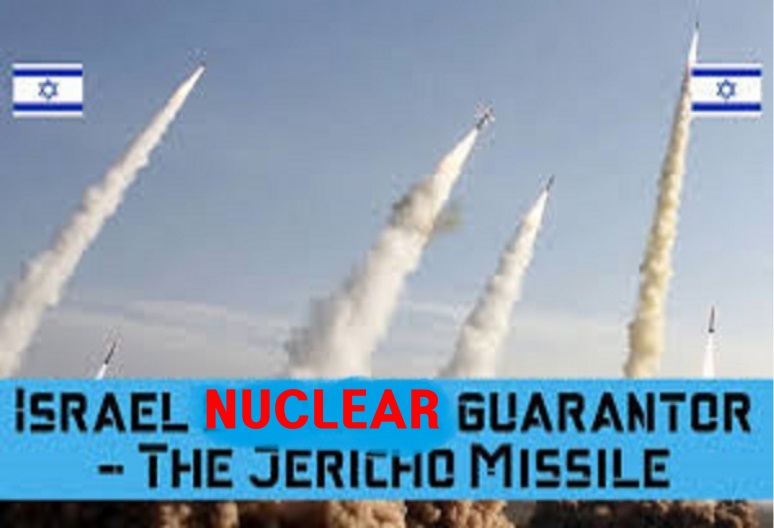
Marjorie Taylor Green (R-GA) became 1 in 535 congresspersons with the guts to call out Israel’s lawless nuclear weapons arsenal containing between 100 and 300 nukes.
She plans to introduce an amendment to strip $500 million from the 2026 NDAA (defense budget) for Israel. “I’m entering amendments to strike $500 million more for nuclear-armed Israel. And it’s important to say nuclear-armed Israel, because they do have nuclear weapons. And we already give them $3.4 billion every single year from the State Department. They don’t need another $500 million in our defense budget. That’s for the American people’s defense.”
Green represents the first serious crack in US administration, Congress and mainstream media’s lockstep denial of Israel’s nukes to avoid complying with US law. The Symington Amendment, a foreign assistance law, forbids military aid to countries trafficking in nuclear enrichment or technology outside of International Atomic Energy Administration (IAEA) safeguards
If the US admitted to Israel’s illegal nukes, it couldn’t give penny in military aid, much less the $3.4 billion Congress gifts to Israel every year on top of the roughly $20 billion we’ve given them to conduct their genocidal ethnic cleansing of Palestinians in Gaza. US aid represents nearly three quarters of Israel’s military spending since their genocide began in October, 2023.
Green, long a critic of the Israel Lobby, is likely to continue receiving her yearly bribe from the Lobby to support their genocidal ethnic cleansing of Gaza and the West Bank….$0.
When the Lobby comes calling to the other 534 congresspersons, nearly all sputter ‘Step right up.’ None dare not utter one word against Israel’s illegal, destabilizing, dangerous nuclear arsenal.
Back in February 2009 at his first presidential press conference, Obama said this when Helen Thomas asked him if any Middle East countries possess nuclear weapons. “When it comes to nuclear weapons….I do not wish to speculate.” What Obama really said was ‘When it come to nuclear weapons, I do not wish to tell the truth.’ A big reason was Obama’ senseless plan to guarantee Israel $3.4 billion annually for 10 years, something he could not do if he did tell the truth.
It’s been 16 years, but we finally heard a governmental leader, albeit just a relatively powerless congressperson, answer that question truthfully.
Let’s hope the crack Green opened up on Israel’s nukes will expand into a Grand Canyon of nuclear sanity.
‘An Arsenal of Profiteering’: Military Contractors Have Gotten Over Half of Pentagon Spending Since 2020

“These figures represent a continuing and massive transfer of wealth from taxpayers to fund war and weapons manufacturing,” said the project’s director.
Jessica Corbett, Jul 08, 2025, https://www.commondreams.org/news/pentagon-contractors
Less than a week after U.S. President Donald Trump signed a budget package that pushes annual military spending past $1 trillion, researchers on Tuesday published a report detailing how much major Pentagon contractors have raked in since 2020.
Sharing The Guardian‘s exclusive coverage of the paper on social media, U.K.-based climate scientist Bill McGuire wrote: “Are you a U.S. taxpayer? I am sure you will be delighted to know where $2.4 TRILLION of your money has gone.”
The report from the Costs of War Project at Brown University’s Watson School of International and Public Affairs and the Quincy Institute for Responsible Statecraft shows that from 2020-24 private firms received $2.4 trillion in Department of Defense contracts, or roughly 54% of DOD’s $4.4 trillion in discretionary spending for that five-year period.
The publication highlights that “during those five years, $771 billion in Pentagon contracts went to just five firms: Lockheed Martin ($313 billion), RTX (formerly Raytheon, $145 billion), Boeing ($115 billion), General Dynamics ($116 billion), and Northrop Grumman ($81 billion).”
In a statement about the findings, Stephanie Savell, director of the Costs of War Project, said that “these figures represent a continuing and massive transfer of wealth from taxpayers to fund war and weapons manufacturing.”
“This is not an arsenal of democracy—it’s an arsenal of profiteering,” Savell added. “We should keep the enormous and growing power of the arms industry in mind as we assess the rise of authoritarianism in the U.S. and globally.”
The paper points out that “by comparison, the total diplomacy, development, and humanitarian aid budget, excluding military aid, was $356 billion. In other words, the U.S. government invested over twice as much money in five weapons companies as in diplomacy and international assistance.”
“Record arms transfers have further boosted the bottom lines of weapons firms,” the document details. “These companies have benefited from tens of billions of dollars in military aid to Israel and Ukraine, paid for by U.S. taxpayers. U.S. military aid to Israel was over $18 billion in just the first year following October 2023; military aid to Ukraine totals $65 billion since the Russian invasion in 2022 through 2025.”
“Additionally, a surge in foreign-funded arms sales to European allies, paid for by the recipient nations—over $170 billion in 2023 and 2024 alone—have provided additional revenue to arms contractors over and above the funds they receive directly from the Pentagon,” the paper adds.
The 23-page report stresses that “annual U.S. military spending has grown significantly this century,” as presidents from both major parties have waged a so-called Global War on Terror and the DOD has continuously failed to pass an audit.
Specifically, according to the paper, “the Pentagon’s discretionary budget—the annual funding approved by Congress and the large majority of its overall budget—rose from $507 billion in 2000 to $843 billion in 2025 (in constant 2025 dollars), a 66% increase. Including military spending outside the Pentagon—primarily nuclear weapons programs at the Department of Energy, counterterrorism operations at the Federal Bureau of Investigation (FBI), and other military activities officially classified under ‘Budget Function 050’— total military spending grew from $531 billion in 2000 to $899 billion in 2025, a 69% increase.”
Republicans’ One Big Beautiful Bill Act passed earlier this month “adds $156 billion to this year’s total, pushing the 2025 military budget to $1.06 trillion,” the document notes. “After taking into account this supplemental funding, the U.S. military budget has nearly doubled this century, increasing 99% since 2000.”
Noting that “taxpayers are expected to fund a $1 trillion Pentagon budget,” Security Policy Reform Institute co-founder Stephen Semler said the paper, which he co-authored, “illustrates what they’ll be paying for: a historic redistribution of wealth from the public to private industry.”
Semler produced the report with William Hartung, senior research fellow at the Quincy Institute. Hartung said that “high Pentagon budgets are often justified because the funds are ‘for the troops.'”
“But as this paper shows, the majority of the department’s budget goes to corporations, money that has as much to do with special interest lobbying as it does with any rational defense planning,” he continued. “Much of this funding has been wasted on dysfunctional or overpriced weapons systems and extravagant compensation packages.”
In addition to spotlighting how U.S. military budgets funnel billions of dollars to contractors each year, the report shines a light on the various ways the industry influences politics.
“The ongoing influence of the arms industry over Congress operates through tens of millions in campaign contributions and the employment of 950 lobbyists, as of 2024,” the publication explains. “Military contractors also shape military policy and lobby to increase military spending by funding think tanks and serving on government commissions.”
“Senior officials in government often go easy on major weapons companies so as not to ruin their chances of getting lucrative positions with them upon leaving government service,” the report notes. “For its part, the emerging military tech sector has opened a new version of the revolving door—the movement of ex-military officers and senior Pentagon officials, not to arms companies per se, but to the venture capital firms that invest in Silicon Valley arms industry startups.”
The paper concludes by arguing that “the U.S. needs stronger congressional and public scrutiny of both current and emerging weapons contractors to avoid wasteful spending and reckless decision-making on issues of war and peace. Profits should not drive policy.”
“In particular,” it adds, “the role of Silicon Valley startups and the venture capital firms that support them needs to be better understood and debated as the U.S. crafts a new foreign policy strategy that avoids unnecessary wars and prioritizes cooperation over confrontation.”
Why the US must protect the independence of its nuclear regulator

By Stephen Burns, Allison Macfarlane, Richard Meserve | July 7, 2025, https://thebulletin.org/2025/07/why-the-us-must-protect-the-independence-of-its-nuclear-regulator/https://thebulletin.org/2025/07/why-the-us-must-protect-the-independence-of-its-nuclear-regulator/
The White House has introduced radical changes that threaten to disrupt the effectiveness of the US Nuclear Regulatory Commission (NRC). The agency was formed in 1975 to be an independent regulator, separating it from the promotional role pursued by its predecessor, the Atomic Energy Commission. The NRC has set safety requirements that have become the global gold standard for nuclear regulation. The White House actions threaten to undermine this record.
Conversations with fellow former NRC chairs and retired NRC experts reveal a shared concern that the changes will have unintended, dangerous consequences. In February, the White House issued an executive order that intruded on the traditional autonomy of independent agencies, thereby giving the White House the capacity to control NRC regulatory actions and allow politics to infect regulatory decision-making. A series of executive orders on nuclear matters issued in late May compounded the challenge. One of the executive orders focuses on the reform of the NRC. It would establish arbitrary deadlines for decisions on construction permits and operating licenses, regardless of whether the design offers new and previously unevaluated safety challenges. Other provisions demand the review of all the extensive NRC regulations within 18 months. The other executive orders allow the construction of nuclear power reactors on federal lands—sites belonging to the Energy Department and the Defense Department—without any review by the NRC.
Then, on June 13, the Trump administration fired Christopher Hanson, an NRC commissioner and former chair, without any stated justification. These actions all serve to weaken protections for those who work in or live near reactors. Given the anticipated expansion of reliance on nuclear power, the drastic staff reductions contemplated by the White House come at the wrong time.
There is always room to assess the efficiency and effectiveness of the regulatory process and adapt it to the evolution of nuclear technologies and their implementation. Recognizing that, past and current NRC commissioners and technical staff have set in motion changes to reduce the regulatory burden and speed the deployment of reactors at a lower cost. The changes are prudent and reasonable and support the promise of expanded reliance on nuclear energy. Congress has also encouraged those efforts and further instructed the NRC to make more improvements to the process through the bipartisan ADVANCE Act signed into law in 2024. All of this was underway before the White House interference.
The NRC has protected the health and safety of Americans for 50 years without a single civilian reactor radiation-related death. The lessons of the 1979 Three Mile Island accident have long been woven into the safety regime, and every commercial reactor in the United States is safer today because of major safety steps taken after the destruction of reactors in Japan’s Fukushima Daiichi plant by a massive earthquake and tsunami in 2011.
Since Three Mile Island, the agency has licensed approximately 50 power reactors to operate. It has recently issued construction permits for advanced reactors ahead of schedule. And the NRC has cleared utilities to boost the power of many existing reactors and has licensed them to run longer than originally planned.
We are concerned about the unintended safety consequences that a reduced NRC independence and a schedule-driven regulatory paradigm threaten to bring.
We fear the loss of public confidence that can befall a safety agency when expediency is seen to be given priority. Reducing the NRC’s independence while mixing promotion of nuclear energy and responsibility for safeguarding the public and environment is a recipe for corner-cutting at best and catastrophe at worst.
We are also concerned that such steps could damage the reputation of US reactor vendors worldwide. A design licensed in the United States now carries a stamp of approval that can facilitate licensing elsewhere, including the many countries that plan to embark on a nuclear power program. If it becomes clear that the NRC has been forced to cut corners on safety and operate less transparently, US reactor vendors will be hurt.
The US nuclear industry is helped by the fact that it has a strong independent regulator behind it. The White House’s executive orders may produce the opposite effect from their stated purpose.
Editor’s note: The authors are former chairs of the US Nuclear Regulatory Commission.
U.S. sanctions U.N. expert critical of Israel’s war in Gaza
Francesca Albanese has called for an arms embargo on Israel and accused the U.S. ally of waging a “genocidal campaign” in Gaza.
The United States said on Wednesday it was imposing sanctions on Francesca Albanese, the United Nations’ special rapporteur on human rights in the occupied Palestinian territories, who has been very critical of U.S. ally Israel’s war in Gaza.
“Today I am imposing sanctions on UN Human Rights Council Special Rapporteur Francesca Albanese for her illegitimate and shameful efforts to prompt (International Criminal Court) action against U.S. and Israeli officials, companies, and executives,” Secretary of State Marco Rubio said in a statement.
In a post on X late on Wednesday, Albanese wrote that she stood “firmly and convincingly on the side of justice, as I have always done,” without directly mentioning the U.S. sanctions. In a text message to Al Jazeera, she was quoted as dismissing the U.S. move as “mafia style intimidation techniques.”
Albanese, an Italian lawyer and academic, has called on states at the U.N. Human Rights Council to impose an arms embargo and cut off trade and financial ties with Israel while accusing the U.S. ally of waging a “genocidal campaign” in Gaza.
Israel has faced accusations of genocide at the International Court of Justice and of war crimes at the ICC over its devastating military assault on Gaza. Israel denies the accusations and says its campaign amounts to self-defense after a deadly October 2023 Hamas attack.
In a report published earlier this month, Albanese accused over 60 companies, including major arms manufacturers and technology firms, of involvement in supporting Israeli settlements and military actions in Gaza. The report called on companies to cease dealings with Israel and for legal accountability for executives implicated in alleged violations of international law.
Albanese is one of dozens of independent human rights experts mandated by the United Nations to report on specific themes and crises. The views expressed by special rapporteurs do not reflect those of the global body as a whole.
Rights experts slammed the U.S. sanctions against Albanese. Dylan Williams, vice president for government affairs at the Center for International Policy think tank, labeled them as “rogue state behavior” while Amnesty International said special rapporteurs must be supported and not sanctioned.
“Governments around the world and all actors who believe in the rule-based order and international law must do everything in their power to mitigate and block the effect of the sanctions against Francesca Albanese and more generally to protect the work and independence of Special Rapporteurs,” Amnesty International’s Secretary General Agnes Callamard, a former UN special rapporteur, said.
Since returning to office in January, President Donald Trump has stopped U.S. engagement with the U.N. Human Rights Council, extended a halt to funding for the Palestinian relief agency UNRWA and ordered a review of the U.N. cultural agency UNESCO.
He has also announced U.S. plans to quit the Paris climate deal and the World Health Organization.
His administration imposed sanctions on four judges at the ICC in June in retaliation over the war tribunal’s issuance of an arrest warrant for Israeli Prime Minister Benjamin Netanyahu and a past decision to open a case into alleged war crimes by U.S. troops in Afghanistan.
Republicans and Democrats Finally Agree on Nuclear. It’s the Industry That’s the Problem.
The atomic age is perpetually on the verge of dawning.
Nuclear power is a political winner — but not a money saver. Just ask
Tim Echols. Echols’ term on the Georgia Public Service Commission is up
this year, and unlike most states, his position is an elected one.
He says the Vogtle nuclear plant has been a campaign issue — it’s hiked
customers’ bills by about 12 percent since coming fully online last year,
$21 billion over budget and seven years behind schedule — but that his
opponents haven’t been able to weaponize it. He won his Republican
primary resoundingly last month.
“All the Democratic opponents are saying
that they would build Vogtle,” he said. “They’re just not saying how
they would pay for it. Or they’re saying they’re going to lower bills,
but they’re going to build nuclear, and those two things don’t go
together.”
The hippies are dying out, and with them the memories of
Shoreham, San Onofre, V.C. Summer, Three Mile Island and other nuclear
plants that didn’t pan out, suffered radiation leaks or otherwise closed
before their time. It’s not the policy that’s holding nuclear back:
It’s the industry.
All the incentives and permitting reforms the
government can muster won’t change the basic economics that have led to
just three new nuclear plants getting built in the U.S. this century: It
takes too long, is too expensive and is only getting pricier. “In terms
of new nuclear, it’s a nonstarter,” said Stanford engineering professor
Mark Z. Jacobson, a longtime skeptic of nuclear power. “They can spend as
much money as they want, it’s never going to happen.”
Politico 9th July 2025, https://www.politico.com/news/magazine/2025/07/09/gop-dems-nuclear-energy-industry-problems-debra-kahn-column-00344370
1 This Month

of the week– Nuclear Reactor Information Task Force

14 May – online event From Bombs to Data Centres: the Face of Nuclear Colonialism
To see nuclear-related stories in greater depth and intensity – go to https://nuclearinformation.wordpress.com
-
Archives
- May 2026 (92)
- April 2026 (356)
- March 2026 (251)
- February 2026 (268)
- January 2026 (308)
- December 2025 (358)
- November 2025 (359)
- October 2025 (376)
- September 2025 (257)
- August 2025 (319)
- July 2025 (230)
- June 2025 (348)
-
Categories
- 1
- 1 NUCLEAR ISSUES
- business and costs
- climate change
- culture and arts
- ENERGY
- environment
- health
- history
- indigenous issues
- Legal
- marketing of nuclear
- media
- opposition to nuclear
- PERSONAL STORIES
- politics
- politics international
- Religion and ethics
- safety
- secrets,lies and civil liberties
- spinbuster
- technology
- Uranium
- wastes
- weapons and war
- Women
- 2 WORLD
- ACTION
- AFRICA
- Atrocities
- AUSTRALIA
- Christina's notes
- Christina's themes
- culture and arts
- Events
- Fuk 2022
- Fuk 2023
- Fukushima 2017
- Fukushima 2018
- fukushima 2019
- Fukushima 2020
- Fukushima 2021
- general
- global warming
- Humour (God we need it)
- Nuclear
- RARE EARTHS
- Reference
- resources – print
- Resources -audiovicual
- Weekly Newsletter
- World
- World Nuclear
- YouTube
-
RSS
Entries RSS
Comments RSS
 nuclear-news