Americans have placed vast military power at the discretion of this mind, a presidential discretion that is largely immune to restraint by the Madisonian system of institutional checks and balances. So, it is up to the public to quarantine this presidency by insistently communicating to its elected representatives a steady, rational fear of this man whose combination of impulsivity and credulity render him uniquely unfit to take the nation into a military conflict.
 Trump has a dangerous disability, https://www.washingtonpost.com/opinions/trump-has-a-dangerous-disability/2017/05/03/56ca6118-2f6b-11e7-9534-00e4656c22aa_story.html?utm_term=.97e4e52a988c By George F. Will May 3 It is urgent for Americans to think and speak clearly about President Trump’s inability to do either. This seems to be not a mere disinclination but a disability. It is not merely the result of intellectual sloth but of an untrained mind bereft of information and married to stratospheric self-confidence.
In February, acknowledging Black History Month, Trump said that “Frederick Douglass is an example of somebody who’s done an amazing job and is getting recognized more and more, I notice.” Because Trump is syntactically challenged, it was possible and tempting to see this not as a historical howler about a man who died 122 years ago, but as just another of Trump’s verbal fender benders, this one involving verb tenses.
Now, however, he has instructed us that Andrew Jackson was angry about the Civil War that began 16 years after Jackson’s death. Having, let us fancifully imagine, considered and found unconvincing William Seward’s 1858 judgment that the approaching Civil War was “an irrepressible conflict,” Trump says:
“People don’t realize, you know, the Civil War, if you think about it, why? People don’t ask that question, but why was there the Civil War? Why could that one not have been worked out?”
[When is it okay to say the president might be nuts?]
Library shelves groan beneath the weight of books asking questions about that war’s origins, so who, one wonders, are these “people” who don’t ask the questions that Trump evidently thinks have occurred to him uniquely? Presumably they are not the astute “lot of,” or at least “some,” people Trump referred to when speaking about his February address to a joint session of Congress: “A lot of people have said that, some people said it was the single best speech ever made in that chamber.” Which demotes Winston Churchill, among many others.
What is most alarming (and mortifying to the University of Pennsylvania, from which he graduated) is not that Trump has entered his eighth decade unscathed by even elementary knowledge about the nation’s history. As this column has said before, the problem isn’t that he does not know this or that, or that he does not know that he does not know this or that. Rather, the dangerous thing is that he does not know what it is to know something.
The United States is rightly worried that a strange and callow leader controls North Korea’s nuclear arsenal. North Korea should reciprocate this worry. Yes, a 70-year-old can be callow if he speaks as sophomorically as Trump did when explaining his solution to Middle Eastern terrorism: “I would bomb the s— out of them. . . . I’d blow up the pipes, I’d blow up the refineries, I’d blow up every single inch, there would be nothing left.”
As a candidate, Trump did not know what the nuclear triad is. Asked about it, he said: “We have to be extremely vigilant and extremely careful when it comes to nuclear. Nuclear changes the whole ballgame.” Invited to elaborate, he said: “I think — I think, for me, nuclear is just the power, the devastation is very important to me.” Someone Trump deemed fit to be a spokesman for him appeared on television to put a tasty dressing on her employer’s word salad: “What good does it do to have a good nuclear triad if you’re afraid to use it?” To which a retired Army colonel appearing on the same program replied with amazed asperity: “The point of the nuclear triad is to be afraid to use the damn thing.”
[Trump has been sued. Here’s why the Justice Department shouldn’t represent him.]
As president-elect, Trump did not know the pedigree and importance of the one-China policy. About such things he can be, if he is willing to be, tutored. It is, however, too late to rectify this defect: He lacks what T.S. Eliot called a sense “not only of the pastness of the past, but of its presence.” His fathomless lack of interest in America’s path to the present and his limitless gullibility leave him susceptible to being blown about by gusts of factoids that cling like lint to a disorderly mind.
Americans have placed vast military power at the discretion of this mind, a presidential discretion that is largely immune to restraint by the Madisonian system of institutional checks and balances. So, it is up to the public to quarantine this presidency by insistently communicating to its elected representatives a steady, rational fear of this man whose combination of impulsivity and credulity render him uniquely unfit to take the nation into a military conflict.
May 5, 2017
Posted by Christina Macpherson |
politics, USA |
Leave a comment
 Stephen King: Trump’s nuclear ability ‘worse than any horror story I ever wrote’, The Hill, BY BRANDON CARTER – 05/03/17 Author Stephen King slammed President Trump on Wednesday, saying Trump’s tweets show that “he’s an almost textbook case of personality disorder.” King also signaled fear over Trump’s ability to launch a nuclear attack.
“That this guy has his finger on the nuclear trigger is worse than any horror story I ever wrote,” King said…..King’s comments come as lawmakers are pushing a bill that would deny Trump the authority to launch a first strike with a nuclear weapon without congressional approval. http://thehill.com/blogs/in-the-know/in-the-know/331865-stephen-king-trumps-nuclear-ability-worse-than-any-horror-story
May 5, 2017
Posted by Christina Macpherson |
politics, USA, weapons and war |
Leave a comment
500K People Sign 500K People Sign Petition Barring Trump’s Nuclear Weapons Use, telesyr, 4 May 17 According to the bill, the President will be prohibited from using the Armed Forces to conduct a “first-use nuclear strike” until a congressional declaration of war expressly authorized such a strike.
Nearly half a million people have signed a petition supporting the “Restricting First Use of Nuclear Weapons Act of 2017,” a legislative proposal submitted to the U.S. Congress on Wednesday.
The legislation, introduced by Rep. Ted Lieu of California and Sen. Ed Markey of Massachusetts, is aimed at keeping U.S. President Donald Trump from launching a nuclear weapon without Congress’ approval of declaring a war.
Calling out Trump’s rhetoric on North Korea and Russia, Markey called the action, “absolutely critical during the Trump administration,” adding that the petition is “a reflection of concern across our country of the use of nuclear weapons by the president.” Just recently, the president tweeted that there’s a possibility of a “major, major” conflict with North Korea over the ongoing tension between the U.S. and Pyongyang’s nuclear program.
“A nuclear first strike, which can kill hundreds of millions of people and invite a retaliatory strike that can destroy America, is war,” Lieu said.
“The current nuclear launch approval process, which gives the decision to potentially end civilization as we know it to a single individual, is flatly unconstitutional. Furthermore, the single individual currently possessing the sole power to start World War Three is Donald J. Trump.”…..http://www.telesurtv.net/english/news/500K-People-Sign-Petition-Barring-Trumps-Nuclear-Weapons-Use-20170503-0028.html
May 5, 2017
Posted by Christina Macpherson |
ACTION, USA |
Leave a comment

 With Renewables Surging, Nuclear And Petroleum Battle Over Subsidies, Forbes, Jeff McMahon , 4 May 17 If the petroleum industry continues to fight subsidies for nuclear power, the nuclear industry will go after petroleum-industry tax breaks, the president of the Nuclear Energy Institute said Tuesday.
“They might say, oh don’t subsidize this, but let me tell you, you open up the books and you might not call it a subsidy but I tell you there’s a lot of tax breaks that the American Petroleum Institute gets,” said Maria Korsnick, president and CEO of NEI, the leading nuclear industry lobbying group.
“If in fact that’s the playing field that we’re going to be set with, then you’re going to hear more about comparisons of subsidies vs. tax breaks in order to get all the information, if you will, out on the table.”The American Petroleum Institute, the largest lobbying group for oil and gas companies like ExxonMobile and Chevron, has lobbied against legislative efforts in several states to save aging nuclear plants that are struggling to compete against cheap natural gas and, in some places, cheap renewable energy.
In Ohio, for example API Ohio Executive Director Chris Zeigler sent a message to state legislators:
“Abundant natural gas has provided Ohio consumers with reliable and affordable energy and created countless jobs throughout the state without government subsidies,” Zeigler said. “Instead of subsidizing nuclear power companies, we should let the markets work to protect consumers.”
API accused the nuclear industry of misleading consumers about the consequences of closing nuclear plants, arguing that natural gas would continue to lower emissions even if two Ohio plants close.
The nuclear industry has won support in New York and Illinois, with Exelon and Entergy benefitting. Lest those victories set a trend, the oil industry is raising objections in Ohio, Pennsylvania, and Connecticut…..https://www.forbes.com/sites/jeffmcmahon/2017/05/04/with-renewables-surging-nuclear-and-petroleum-battle-over-subsidies/#27185f7d4b15
May 5, 2017
Posted by Christina Macpherson |
business and costs, politics, USA |
Leave a comment
 Southern Seeks $3.7 Billion From Toshiba for Georgia Nuclear Plant https://www.wsj.com/articles/southern-seeks-3-7-billion-from-toshiba-for-georgia-nuclear-plant-1493829606
Utility not sure it can finish Vogtle plant, which was being built by bankrupt Westinghouse Electric By Russell Gold May 3, 2017 The chief executive of Southern Co. on Wednesday said the utility will need $3.7 billion and cooperation from Toshiba Corp. to complete a nuclear power plant in Georgia that was being built by bankrupt Toshiba unit Westinghouse Electric Co.
But even if it obtains those commitments, Southern isn’t sure it can finish the half-built Georgia reactors, Thomas A. Fanning, Southern’s chairman and chief executive, said in an interview with… (subscribers only)
May 5, 2017
Posted by Christina Macpherson |
business and costs, USA |
Leave a comment
 Nuclear Reactor Wastewater Will End Up In Your Drinking Water, KNWA: Erika Hall : May 04 FAYETTEVILLE, Ark. – – Fayetteville City Council on Wednesday approved dumping wastewater from the site of a former nuclear reactor into the city’s sewer system. The water will eventually flow into Beaver Lake, our area’s main source for drinking water.One city council member thinks it’s a bad idea, but others claim it’s perfectly safe. “We are actually dumping our sewage, what’s left of it into our drinking what source,” said Fayetteville City Council member John La Tour.
May 5, 2017
Posted by Christina Macpherson |
USA, water |
Leave a comment
Nuclear plant worker ‘deliberately’ tried to hide error, officials say, NJ.com 3 May 17 LOWER ALLOWAYS CREEK TWP. — A worker “deliberately” attempted to fix an error he had made while conducting tests at a New Jersey nuclear reactor causing the plant to shut down 2 years ago, federal officials say.
The now-former employee’s action prompted the Hope Creek generating station to automatically shut down on Sept. 28, 2015. The worker later lied about what he did, officials said Wednesday.
The unidentified PSEG Nuclear technician “made an error while performing a surveillance test and deliberately attempted to correct the error rather than comply with the procedural guidance to stop and inform management,” the Nuclear Regulatory Commission said in a letter outlining its findings in the case on Wednesday……
When it conducted its own investigation of the unplanned shutdown, PSEG Nuclear discovered it was human error, not mechanical failure that caused the plant to trip off line, officials said……
The plant was shut down for four days.
PSEG, as the operator of Hope Creek, takes responsibility for the actions of the worker and did not contest the NRC’s finding…
The plant is one of three nuclear reactors operated by PSEG at its Artificial Island generating complex in Lower Alloways Creek in Salem County.
Hope Creek, along with the other two reactors there — Salem 1 and Salem 2 –comprise the second-largest nuclear complex in the United States.
Bill Gallo Jr. may be reached at bgallo@njadvancemedia.com. Follow Bill Gallo Jr. on Twitter @bgallojr. Find NJ.com on Facebook. http://www.nj.com/salem/index.ssf/2017/05/nuclear_plant_shut_down_after_worker_deliberately.html
May 5, 2017
Posted by Christina Macpherson |
incidents, USA |
Leave a comment
 U.S. Wind Energy Installations Surge: A New Turbine Rises Every 2.4 Hours, Inside Climate News,
The wind power industry just chalked up its strongest first quarter in eight years. Tax credits play an important role. Phil McKenna, 4 May 17 Every two and a half hours, workers installed a new wind turbine in the United States during the first quarter of 2017, marking the strongest start for the wind industry in eight years, according to a new report by the American Wind Energy Association (AWEA) released on May 2.
“We switched on more megawatts in the first quarter than in the first three quarters of last year combined,” Tom Kiernan, CEO of AWEA, said in a statement.
Nationwide, wind provided
5.6 percent of all electricity produced in 2016, an amount of electricity generation that has
more than doubled since 2010. Much of the demand for new wind energy generation in recent years has come from Fortune 500 companies including Home Depot, GM, Walmart and Microsoft that are buying wind energy in large part for its low, stable cost.
The significant increase this past quarter, when 908 new utility-scale turbines came online, is largely a result of the first wave of projects under the renewable energy tax credits that were extended by Congress in 2015, as well as some overflow from the prior round of tax credits. The tax credits’ gradual phase-out over a period of five years incentivized developers to begin construction in 2016, and those projects are now beginning to come online.
A recent
AWEA-funded report projects continued steady growth for the wind energy industry through 2020. Energy analysts, however, say that growth could slow after 2020 as the federal Production Tax Credit (PTC) expires……..
A key driver in the early 2020s will be renewable portfolio standards in states like New York and California, which have both mandated that local utilities get 50 percent of their electricity from renewable sources by 2030.
By the mid-2020s, the cost of unsubsidized onshore wind will be low enough to compete with both existing and new fossil-fueled generation in many regions of the U.S., Morgan said.
The report shows that Texas continues as the overall national leader for wind power capacity, with 21,000 MW of total installed capacity, three times more than Iowa, the second leading state for wind power installations. Over 99 percent of wind farms are built in rural communities; together, the installations pay over $245 million per year in lease agreements with local landowners, according to AWEA.
May 5, 2017
Posted by Christina Macpherson |
renewable, USA |
Leave a comment
 Two thirds of Canada’s electricity now comes from renewable energy, Financial Post Jesse Snyder | May 3, 2017 CALGARY — Canada substantially boosted its renewable electricity capacity over the past decade, and has now emerged as the second largest producer of hydroelectricty in the world, a new report said Wednesday.
A report by the National Energy Board said that Canada generated 66 per cent of its electricity from renewable sources in 2015. Hydroelectric power accounted for roughly 60 per cent of electricity supply, generating around 79,000 megawatts in 2015………
As large-scale hydropower projects face some resistance, wind and solar are set to step grown rapidly in recent years as their costs continue to fall.
Wind capacity in Canada increased 20-fold between 2005 and 2015, according to the NEB, and accounted for 7.7 per cent of total electricity capacity in 2015. Solar accounted for 1.5 per cent.
As Canada’s dependence on renewable sources like solar and wind grows — albeit gradually — governments are now grappling with how to build the high-voltage transmission lines that would be needed to offset intermittency……
Substituting intermittent power supplies with more stable ones is vastly more costly in Canada than in higher density countries like Denmark, which generates more than 50 per cent of its electricity from wind power.
In January, researchers at the University of Ottawa’s Institute of the Environment released a report that analyzed the long-term cost savings of building high-voltage connecting lines between several hydro rich and hydro poor regions—for example between Alberta and British Columbia.
“We found that you can achieve emission reductions at a lower cost if you build those transmission lines, and that’s including the cost of construction,” said Brett Dolter, one of the report’s authors.
Canada produced roughly 10 per cent of hydro capacity worldwide in 2015, second only to China at 29 per cent, the NEB data shows. Brazil and the U.S. produced nine per cent and 8 per cent, respectively.
Canada’s proportion of electricity generated by renewables is the sixth-highest in the world behind Denmark, Norway, Brazil, Austria and New Zealand. Only 12 countries generate more than half of their electricity from renewable supplies.
jsnyder@postmedia.com http://business.financialpost.com/news/two-thirds-of-canadas-electricity-now-comes-from-renewable-energy
May 5, 2017
Posted by Christina Macpherson |
Canada, renewable |
Leave a comment
Want to protect the climate? Time for carbon pricing HTTPS://WWW.BOSTONGLOBE.COM/OPINION/2017/05/02/WANT-PROTECT-CLIMATE-TIME-FOR-CARBON-PRICING/MEUNGZH4DASOT7F8W4CNVJ/STORY.HTML, NAOMI ORESKES AND JEREMY JONES, MAY 03, 2017OUR COUNTRY IS feeling the effects of a changing climate. The West is witnessing dramatic changes to winter, including decreased snowpack — which means less water availability the rest of the year — and tremendous destruction of Western forests by bark beetles that used to die off in winter, but now don’t. Here in Massachusetts, people might think that shorter, milder winters are a good thing. But they are not. If we don’t deal with climate change now, the snowpack will be confined to only the highest of elevations.
Of course, renewable energy is helping to stop further climate change. But solar and wind have trouble competing with fossil fuels, because it’s just not a fair market. Fossil fuels — whose greenhouse gas emissions drive climate change — are more widely available than clean energy, and they are usually cheaper, due to ongoing subsidies. A carbon pricing system would level the playing field.
Putting a price on carbon is a proven market mechanism that has widespread, bipartisan support, and is increasingly being adopted around the globe. It will account for the true cost of burning fossil fuels, creating a more competitive market for clean energy sources. And, it can be implemented quickly to begin reducing carbon pollution.
In Massachusetts, there are two carbon pricing bills pending in the Legislature, with co-sponsorship of more than one-third of our lawmakers. These proposals focus on putting a price on fossil fuels once they enter the state and distributing revenue collected back to businesses and households in the form of rebates. One proposal returns 100 percent of the revenue collected; the other returns 80 percent of revenue while reinvesting the rest.
May 5, 2017
Posted by Christina Macpherson |
climate change, USA |
Leave a comment

 How two cutting edge U.S. nuclear projects bankrupted Westinghouse, Reuters, By Tom Hals and Emily Flitter | WILMINGTON, DEL./NEW YORK, 2 May 17
In 2012, construction of a Georgia nuclear power plant stalled for eight months as engineers waited for the right signatures and paperwork needed to ship a section of the plant from a factory hundreds of miles away.
The delay, which a nuclear specialist monitoring the construction said was longer than the time required to make the section, was emblematic of the problems that plagued Westinghouse Electric Co as it tried an ambitious new approach to building nuclear power plants.
The approach – building pre-fabricated sections of the plants before sending them to the construction sites for assembly – was supposed to revolutionize the industry by making it cheaper and safer to build nuclear plants.
But Westinghouse miscalculated the time it would take, and the possible pitfalls involved, in rolling out its innovative AP1000 nuclear plants, according to a close examination by Reuters of the projects.
Those problems have led to an estimated $13 billion in cost overruns and left in doubt the future of the two plants, the one in Georgia and another in South Carolina.
Overwhelmed by the costs of construction, Westinghouse filed for bankruptcy on March 29, while its corporate parent, Japan’s Toshiba Corp, is close to financial ruin [L3N1HI4SD]. It has said that controls at Westinghouse were “insufficient.”
The miscalculations underscore the difficulties facing a global industry that aims to build about 160 reactors and is expected to generate around $740 billion in sales of equipment in services in the coming decade, according to nuclear industry trade groups.
The sector’s problems extend well beyond Westinghouse. France’s Areva is being restructured, in part due to delays and huge cost overruns at a nuclear plant the company is building in Finland………
the source of the biggest delays can be traced to the AP1000’s innovative design and the challenges created by the untested approach to manufacturing and building reactors, according to more than a dozen interviews with former and current Westinghouse employees, nuclear experts and regulators.
Unlike previous nuclear reactors, the AP1000 would be built from prefabricated parts; specialized workers at a factory would churn out sections of the reactor that would be shipped to the construction site for assembly. Westinghouse said in marketing materials this method would standardize nuclear plant construction..…..
By 2016 Westinghouse began to grasp the scope of its dilemma, according to a document filed in its bankruptcy: Finishing the two projects would require Westinghouse to spend billions of dollars on labor, abandoning them would mean billions in penalties.
Westinghouse determined it could not afford either option. http://www.reuters.com/article/us-toshiba-accounting-westinghouse-nucle-idUSKBN17Y0CQ
May 3, 2017
Posted by Christina Macpherson |
business and costs, technology, USA |
Leave a comment

 North Korea says US bomber flights signal pre-emptive nuclear strike, ABC News 3 May 17 North Korea is accusing the United States of pushing the Korean peninsula to the brink of nuclear war after a pair of strategic US bombers flew over the area in a training drill with the South Korean air force.
Key points:
- Supersonic B-1B Lancer bombers flew over Korean peninsula
- North Korea says US is practising a nuclear strike
- Mr Trump has said he would consider meeting Kim Jong-un but also warned of a “major, major conflict”
The two supersonic B-1B Lancer bombers were deployed amid rising tensions over North Korea’s dogged pursuit of its nuclear and missile programs in defiance of United Nations sanctions and pressure from the United States.
The flight of the two bombers on Monday came as US President Donald Trump said he was open to meeting North Korean leader Kim Jong-un in the appropriate circumstances, even though Pyongyang suggested it would continue with its nuclear tests……..
The North is technically still at war with the South after their 1950-53 conflict ended in a truce, not a treaty, and regularly threatens to destroy the United States, Japan and South Korea.http://www.abc.net.au/news/2017-05-02/us-bomber-flights-push-peninsular-to-the-brink-of-war/8489952
May 3, 2017
Posted by Christina Macpherson |
North Korea, politics international, USA, weapons and war |
Leave a comment
 TVA’s plan for small nuclear reactor on Clinch River running into barriers, Knoxville News Sentinel Tyler Whetstone , USA TODAY NETWORK – Tennessee, 2 May 17, TVA’s plan to put a small modular nuclear reactor on its Clinch River site near Oak Ridge, which has been on the priority list for the energy giant, has experienced setbacks in the last year and is still a long way from getting started, members of TVA’s Regional Energy Resource Council learned Tuesday.
Joe Hoagland, TVA’s vice president of stakeholder relations, said the project still has three significant barriers that must be crossed before the project can begin.
TVA officials said in May they had filed an Early Site Permit application with the Nuclear Regulatory Commission for evaluating that site for the development of the reactor. TVA had announced in April it would take this step, as it considered the possibility of building and operating one of the modular reactors at the 1,200-acre Clinch River site. The NRC uses the application to look at the site in terms of safety, environmental issues and emergency preparedness requirements for construction of a reactor.
Hoagland, at the Energy Council workshop Tuesday morning, said one of the first issues is that TVA doesn’t need the extra energy and the marketplace isn’t clamoring for it in today’s environment. Eventually, TVA will have to decommission its current nuclear plants and the hope is that the Clinch River site will be ready by then, he said.
Secondly, the dollars and cents for such a project do not yet add up, he said. Operational costs would be too high.
“We’ve talked here in the past that for the SMRs (small modular reactors) to be really viable they’ve got to be cost-competitive with other technologies for the size and dollars per megawatt and they are not there yet,” Hoagland said.
Lastly, the technology for the small nuclear reactor is not yet there. Companies have submitted designs for the facility, but Hoagland said the process to review the designs can take up to five years.
May 3, 2017
Posted by Christina Macpherson |
technology, USA |
Leave a comment
Call it what you want. There is an explanation for his behavior. https://twoifbycharmwordpress.wordpress.com/
Throughout the 2016 presidential campaign, we have seen numerous examples of Donald Trump’s behavior fitting neatly into the blueprint presented in this blog. The “black heart” and “lack of empathy” Mr. Khan so eloquently spoke of falls within the framework of a dangerous personality disorder according to experts. Some call it Narcissistic Personality Disorder, while other experts describe this behavior as sociopathic, or psychopathic.
The purpose of the original posting below (link to WordPress article dated 07.14.16 is posted here) is to call attention to an apparent mental health issue relating to Trump. It is to provoke thought and incite a broad discussion around Donald Trump’s apparent dangerous personality disorder, and to provide a reliable and consistent profile of Trump’s behavior.
Based on Harvard psychiatrist Dr. Martha Stout’s highly-touted book, The Sociopath Next Door, Trump seems to fit the bill of a sociopath, and that is why I speculated that he is a sociopath in the original posting. A reasonable person must admit that Trump’s behavior does align with the description in her introductory chapter (YouTube link is here).
Many experts believe Trump is a narcissist. In fact, a retired psychotherapist, with over 40 years of experience, wrote a comment about my article, stating that he believes everything I wrote about him in the posting is “precise and true,” though he believes Trump “fits into the diagnosis of narcissistic personality disorder, one of the most severe I and most other psychotherapists I have talked to, and who have written about it, have ever seen.”
Call it what you want to. diagnosis is for the experts. My thesis below is simply that “Trained in sociopathy or not, I can state one certainty: If there is a debate about whether a person is a narcissist or a sociopath (or any of the related personality disorders), there is much cause for alarm if you are within that person’s sphere of influence. The stakes are even higher if the questioned individual is in contention to lead the free world.”
With or without agreement to the posting’s proposition, if you believe this discussion should be had on a broader level, I kindly ask you to chime in, and to share it. I believe it gives a strong perspective, in real-life terms, on what the world is observing in Donald Trump’s campaign and behavior. It also provides an education that could help everyday people gain perspective and healing when they are affected by someone with a personality disorder, such as sociopathy.
Thank you for reading this post, your comments. This article has now been read in 30 countries worldwide, and several experts have chimed in favorably towards the thesis.
Note: Please leave your comments at the original posting: link to WordPress article dated 07.14.16 is posted here so it will be combined with the broader discussion. This posting may be updated or replaced from time-to-time.
May 3, 2017
Posted by Christina Macpherson |
politics, psychology - mental health, USA |
Leave a comment
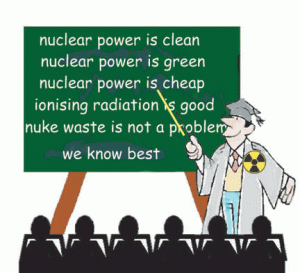 Students win nuclear essay contest http://www.postregister.com/articles/news-todays-headlines/2017/05/01/students-win-nuclear-essay-contest# May 1, 2017 By KEVIN TREVELLYANktrevellyan@postregister.com Skyline High School students David Hill and Phil Ma will receive $1,500 scholarships after winning an essay contest about nuclear technology.
The Idaho Section of the American Nuclear Society initiates the contest each fall. This year’s topic: why would a commercial entity build a reactor on a national laboratory site and how will the electricity be used?
The prompt came on the heels of Utah Associated Municipal Power Systems choosing a spot at the U.S. Department of Energy’s desert site for the small modular reactor being developed by NuScale.
The reactor, currently under review by the U.S. National Regulatory Commission, is slated to provide electricity for dozens of community-owned utilities.
“We thought it was a good time to have students look into that subject and learn more about a project that may actually occur locally; we think it’s relevant to the INL and local community,” society education committee chair Roger Mayes said.
Four judges reviewed submitted essays on content and clarity.
Hill won the 9-10 grade level contest with his essay titled, “A Small Modular Reactor, In Idaho?”
In the 11-12 grade level contest, Ma won with his essay, “NuScale SMR Technology Comes to Historic Nuclear Site.”
Scholarships will be awarded at a society dinner meeting May 18 at the Energy Innovation Laboratory, 775 University Blvd. Society president Andrew Klein will speak.
A social time begins at 6 p.m.; dinner and the program will follow at 7 p.m. Dinner is $20.
For dinner reservations, RSVP to Danielle Perez at IdahoAmericanNuclearSociety@gmail.com by May 15.
Reporter Kevin Trevellyan can be reached at 542-6762.
May 3, 2017
Posted by Christina Macpherson |
spinbuster, USA |
Leave a comment