Unheeded warnings, repeated mistakes put workers’ health at risk at Idaho nuclear lab, Idaho Statesman, BY PATRICK MALONE AND PETER CARY, The Center for Public Integrity AUGUST 10, 2017
Ted Lewis knew the plutonium plates at the government lab where he worked could leak potentially lethal radioactive dust.
He had seen it occur in the 1970s, when he was helping load some of those plates into a nuclear reactor at the lab near Idaho Falls. A steel jacket enclosing one of the plates somehow cracked, spilling plutonium oxide particles into the air. But Lewis and his colleagues were lucky — they were wearing respirators and given cleansing showers, so their lives weren’t endangered.
Three decades later, Lewis, an electrical engineer who had become chairman of the lab’s safety committee, had a bad feeling this could happen again, with a worse outcome. And he turned out to be right.
He tried to head it off. In 2009, Lewis wrote a pointed warning memo — he called it a white paper — and gave it to the official in charge of all nuclear operations at the Idaho National Laboratory, which is run by a consortium of private companies and universities under contract to the Energy Department.
The memo said the chance of encountering a plutonium plate that disintegrated, as Lewis had previously witnessed, was “greater than facility and senior management realizes,” according to a copy. Although Lewis said that a workplace manual published by the contractor — Battelle Energy Alliance LLC (BEA) — called the risk of an accidental spill of such radioactive dust “negligible,” he wanted his superiors to expect it and prepare for it.
He said in a sworn court deposition in January 2016 that he shared his concerns with at least 19 others at the laboratory, which holds one of the world’s largest stockpiles of plutonium, the explosive at the heart of modern nuclear weapons. But they didn’t respond, he said, and some of the precautions he urged — checking the plates more carefully before they were unwrapped and repackaged for shipment and setting up a decontamination shower — were ignored.
Then, at 11:04 a.m. on Tuesday, Nov. 8, 2011, Lewis’ fears came to life in a cavernous room at the lab where workers were readying some plates the size of Hershey’s chocolate bars for shipment to other federal sites and to researchers. The workers had a lead shield between themselves and the plates, but the table where they sorted the plates wasn’t sealed, and none of them had respirators on.
When a nuclear material handler named Ralph Stanton noticed that one plate’s container had a label warning that the plate’s corner was “swollen,” he asked a shift supervisor for guidance. The supervisor phoned one of the lab officials whom Ted Lewis had briefed on his worries, but after finishing the call the official told the workers to continue, according to an internal Department of Energyreport in January 2012.
Sure enough, as the plate’s wrapping was pulled away, black powder leaked out, and Stanton, along with 15 of his colleagues in the facility, inhaled the plutonium dust, according to the report. Three of them wound up suing BEA, saying that they had been sickened due to the company’s negligence. BEA publicly disputed that the workers were harmed, but it also reached private settlements with each of the litigants that included nondisclosure provisions.
The contamination incident was extensively covered by two newspapers published in Boise, including the Idaho Statesman. But the Center for Public Integrity’s investigation shows it was preceded by two other serious instances of radioactive contamination at the lab as well as by Lewis’ careful warnings, and that it was also followed by two additional, avoidable radioactive contaminations there……..
Idaho National Laboratory is not unique. The government has been similarly generous to many of the other private contractors that operate key nuclear weapons-related facilities. Part of the problem, according to auditors at the Government Accountability Office, which reports to Congress, is that the Energy Department has too little staff, and poorly-trained contract managers, making it more susceptible to fraud and waste than most agencies.
The contractors largely police themselves, according to the GAO and inspector general reports. Penalties do not cause enough pain to act as deterrents, safety experts say. And — as might be expected — the contractors typicallyprioritize the mission-related responsibilities that bear directly and most strongly on their profits, according to current and former workers and accident investigation reports.
Plenty of warning that workers were at risk
Lewis’ “white paper” was not the only sign that BEA’s effort to prevent radiation contamination of its Idaho workforce were lagging………
Numerous problems contribute to the mass inhalation incident
Then came the radiation contamination of 16 workers on Nov. 8, 2011, which occurred in a white, mound-shaped building that was once home to a now-dismantled nuclear reactor and still has a massive vault resembling a walk-in freezer. It’s there that the government stores several metric tons of surplus plutonium, which the Department of Homeland Security and the NNSA use to help develop and refine radiation detection devices deployed by Washington at ports and border crossings around the globe.
Multiple physical shortcomings and managerial lapses combined to endanger the workers that day, according to the Energy Department’s report: The building had old and failing equipment, and no showers. Records of the plutonium plates’ individual histories — including previous damage — had been lost, and Lewis’ warnings that some were liable to turning to powder were ignored. Managers “did not recognize the significance of this information,” the report said.
Worse, the nearest air monitor was 15 feet from where the plates were being unwrapped. A vent supposed to draw dangerous fumes from the work area was partially blocked. And some of those doing the work “had no training on the hazards associated with Pu [plutonium],” BEA’s report said.
According to the lawsuits filed against BEA, the company at the time felt compelled to complete the work speedily. In interviews with the Center, Stanton said he was told it was a “bonus job,” meaning that meeting deadlines would help the company and its managers earn their profits. “DOE gives these guys a bonus. When the milestone is in play, safety is completely gone,” he said. “We were playing Russian roulette.”
Braase, a health physicist technician responsible for checking jobsite radiation and worker exposures, said in his own legal complaint that the work was accelerated so it could be completed before he went on a medical leave, allowing less time than usual for a careful review. BEA’sreport on the accident, issued Sept. 17, 2012, said one of the factors contributing to the accident was that the company’s “focus is on getting the work done (the end justifies the means).”…
Health physicists consulted by the Center noted that the unusual circumstances complicate estimates of the potential consequences. If you inhale plutonium particles, they sit in the lung or get into the bloodstream and continue to radiate for a lifetime or until they are all are excreted. As a result, labs generally predict exposures and assign limits for this type of exposure over a 50-year period. Annual radiation limits for workers, in contrast, are pegged to short-term exposures from sources outside the body — like from an X-ray or series of X-rays……..
For this incident, and for the earlier radiation exposures that year of the three workers in the hot fuel facility, the DOE’s enforcement officer initially proposed fining BEA $615,000. But Boulden reduced the fine to $412,500 for what he said were “corrective actions taken.”
Separately, BEA’s profit was cut by $500,000 on Jan. 31, 2012, in a letter from Richard B. Provencher, the DOE’s fee awarding official, to Grossenbacher that noted “unacceptable events continue to occur” at the lab. But on Nov. 22, 2013, Provencher, who determines BEA’s annual profit, gave back the entire $500,000 that had been withheld, with the stipulation that BEA spend $100,000 of it on efforts to improve operations and safety.
In total, in 2011, BEA earned $17.1 million in profits, the year of the accident, or 92 percent of what was available. In 2012, it earned $16.2 million, but the next year it got the $500,000 back.
New contamination incidents
The plutonium contamination of 16 BEA workers was followed by two other significant radiation exposures, with the first occurring in August 2014, when workers in the Fuel Manufacturing Facility, a low structure next to the building where the plutonium exposures occurred, were fabricating radioactive americium in a glove box.
Outside the body, small bits of americium pose almost no threat to human health. But in higher internal doses, its radiation breaks down cells, alters genes and attacks bones and organs, increasing its victims’ chances of contracting life-threatening maladies, according tothe Centers for Disease Control and Prevention…….
At the end of 2014, BEA was awarded $18.1 million in pure profit, after $350,000 was deducted for the two safety incidents. That meant the company got 97 percent of the maximum profit allowed under its contract. It also got its contract extended to 2019 without competition. A joint newsrelease from BEA and the Energy Department announcing the extension credited the decision to the company’s “consistently strong annual performance and success in managing INL.”
Senator Dean Heller released a statement on the Nuclear Regulatory Commission’s vote to use past unobligated funds for work related to its review of the Department of Energy’s application for authorization to construct a high-level radioactive waste repository at Yucca Mountain. Heller says it’s another waste of taxpayer money on a failed project that has already cost the federal government billions of dollars over the past 30 years. It’s irresponsible for the NRC to move forward on Yucca Mountain given that it’s unknown how much funding if any it will ultimately receive. Heller calls it a reckless and fiscally irresponsible decision to throw more taxpayer dollars on a project that Nevada continues to reject.
With ‘fire and fury,’ Trump revives fears about his possession of nuclear codes, SF Gate, Marc Fisher and Jenna Johnson, The Washington Post, August 9, 2017
As with most things Trump, the furor over the “fire and fury” has divided the nation in two – those who believe the president is a loose launchpad, impulsively blurting whatever flits through his mind, and those who believe his inflammatory talk is a wily combination of politically savvy instincts and a gut-driven populism that simply aims to please.
When President Donald Trump went off script Tuesday to deliver a startling threat to North Korea – “They will be met with fire and fury like the world has never seen” – it was as if the nation relived the most lurid themes of the 2016 campaign in one chilling moment.
Last fall, Hillary Clinton’s campaign used as one of its final weapons a TV ad featuring a longtime nuclear missile launch officer who warned against voting for Trump: “I prayed that call would never come. Self-control may be all that keeps these missiles from firing.”
Then, quick-fire, a series of clips of Trump on the stump: “I would bomb the s— out of them.” “I want to be unpredictable.” “I love war.” The thought of Donald Trump with nuclear weapons scares me to death,” Bruce Blair, the retired launch officer, says in the ad. “It should scare everyone.”
It very nearly did: Voters made clear last fall that they trusted Clinton vastly more than Trump on the use of nuclear weapons – by 57 percent to 31 percent in a Fox News poll in October, for example.
But Trump voters often said that their reasons for supporting him outweighed their sense that he could be dangerously impulsive – and they repeatedly expressed confidence that the national security apparatus would keep him in check…….
OF NUCLEAR INTEREST: Proposed clean energy updates, Wicked Local Plymouth, 9 Aug 17, Last year, the Massachusetts Department of Environmental Protection proposed adding six new regulations as well as amendments to existing regulations designed to reduce greenhouse gas emissions in the commonwealth……
One of the six updates that may be of particular interest to South Shore residents is the Clean Energy Standard. The CES essentially requires sellers of electricity to purchase increasing amounts of “clean” energy for use by their customers, and is designed to increase the percentage of electricity sold to consumers that is generated by clean energy sources.
Which generators qualify as a “clean energy source,” according to the CES? As written, eligibility is determined using an emissions-based threshold and is limited to generators built after 2010. This includes large hydroelectric generators, nuclear power plants, and certain fossil fuel plants.
While we commend the state’s efforts to promote energy efficiency and clean energy, we strongly believe that clean energy sources need to be defined, not just by emissions in Massachusetts, but the total impact caused by the technology. This is especially true for environmental impacts, including associated pollution with mining and operations, pipeline emissions, and ultimate transportation and management of waste products.
Nuclear waste in Massachusetts, for example, is currently stranded on the Cape Cod Bay shoreline with no repository or solution in sight. This exceptionally dangerous waste will remain a threat for hundreds of thousands of years, and dealing with it over time requires enormous investment in energy for transport, security, and problem solving. Not exactly the definition of “clean.”……
MassDEP is scheduled to announce final regulations this month. Let’s hope that Massachusetts stays the course, and older nuclear plants are not eligible under the CES. Such an action would divert credits and incentive away from truly clean energy advancement and technologies, and shackle our region to serious and unresolved problems for years to come.
Karen Vale-Vasilev manages Jones River Watershed Association’s (JRWA) Cape Cod Bay Watch program. JRWA has its offices on the banks of the river in Kingston, eight miles from Pilgrim.
The Cayce-based utility has paid its top officials almost $21.4 million in annual performance-based bonuses over the past decade, according to The State newspaper’s review of the utility’s filings with the U.S. Securities and Exchange Commission.
Some of those payouts were to reward the executives for accomplishments related to the construction of two nuclear reactors at the V.C. Summer site in Fairfield County, SCANA said in the filings.
Late last month, SCANA and the state-owned Santee Cooper utility said they were abandoning that project, citing construction delays and cost overruns that plagued the 9-year-old venture……
Operational excellence’
Last year, SCANA’s top five executives took home $3.3 million in performance-based pay, according to the federal filings. Nearly half of that went to SCANA chief executive officer and president Kevin Marsh, accounting for about a quarter of his $6.1 million in total compensation.
The filings do not say exactly how much of the $21.4 million in performance-based pay went to reward the executives for building the two nuclear reactors……
Top SCANA executives have been paid nearly $21.4 million in performance-based bonuses over the past decade. Some of that money was to reward the officials for their accomplishments in building two nuclear reactors in Fairfield County, a project the utility now says it will abandon. Here is how much the executives were paid each year.:…… http://www.thestate.com/news/politics-government/article166298442.html
Donald Trump’s nuclear fixation – from the 1980s to now, BBC, Anthony ZurcherNorth America reporter 10 August 2017 “…….The president’s recent nuclear sabre-rattling shouldn’t be viewed as an isolated incident, however. Mr Trump has displayed a keen interest in the utility of atomic weapons for decades…..
his thoughts on atomic weaponry reflect a certain strain of Cold War arms-race enthusiasm and diplomatic brinkmanship.
Last December President-elect Trump emphasised that the US had to “greatly strengthen and expand” its nuclear weaponry and would “outmatch” any adversaries.In August MSNBC’s Joe Scarborough reported that candidate Trump had asked his foreign policy advisors several times why the US couldn’t use its nuclear weapons – a claim the Trump campaign denied.
The report, however, followed on the heels of an April 2016 town hall forum exchange between Mr Trump and MSNBC’s Chris Matthews, who asked him why he had refused to categorically rule out the use of nuclear weapons.
“Would there be a time when it could be used?” Trump replied. “Possibly. Possibly.”
When pressed on the risks of openly talking of using nuclear weapons, Mr Trump said: “Then why are we making them? Why do we make them?”(The US no longer makes new nuclear warheads. It maintains its current arsenal.)
He repeated that he is not going to take any of his “cards off the table”.
Digging back further, in 1990 Mr Trump gave an interview with Playboy Magazine in which the topic of atomic weaponry came up.
“I’ve always thought about the issue of nuclear war; it’s a very important element in my thought process,” Mr Trump said. He called it the “ultimate catastrophe” and compared it to an illness no one wants to talk about it.
“I believe the greatest of all stupidities is people’s believing it will never happen,” he continued, “because everybody knows how destructive it will be, so nobody uses weapons. What [expletive].”
In 1984 – at the height of the Cold War – Mr Trump even told a Washington Post interviewer he wanted to be put in charge of US-Russia nuclear arms negotiations.”It would take an hour-and-a-half to learn everything there is to learn about missiles,” Mr Trump said. “I think I know most of it anyway.”
Around the time of this interview a computer game called Balance of Power, which simulated the Cold War struggle between the US and Soviet Unions, became a surprise hit.
Players could sabotage, scheme and sabre-rattle up to the brink of nuclear war. The trick was you were never quite sure how close you could get before the missiles started flying. Escalation could lead to inadvertent annihilation.
And if it did, this was the message, displayed in white letters on a black screen: “You have ignited an accidental nuclear war. And no, there is no animated display of a mushroom cloud with parts of bodies flying through the air. We do not reward failure.”
If Mr Trump’s past comments are any guide, he appears to be making the calculus that the US nuclear arsenal is ineffective if adversaries don’t believe the nation is willing to pull the trigger. It’s all part of the “unpredictability” strategy he repeatedly touted during his presidential campaign (and plugged again in a recent tweet).Mr Trump – and his Defence Secretary Jim Mattis – have spoken of how the US will prevail in any military confrontation with North Korea. Largely left unmentioned amid the bluster, however, is the danger that an extended standoff could spin out of control and the high cost in human lives – in civilian lives on both sides of the Korean demilitarised zone and for US military personnel – that any such conflict would entail.
U.S. envoy to U.N. will go to Vienna to review Iran nuclear activities – U.S. official,Michelle Nichols, UNITED NATIONS (Reuters) 10 Aug 17, – U.S. Ambassador to the United Nations Nikki Haley will travel to Vienna later this month to discuss Iran’s nuclear activities with U.N. atomic watchdog officials, a U.S. official said on Wednesday, as part of Washington’s review of Tehran’s compliance with a 2015 nuclear deal
The official told Reuters that Haley, a member of President Donald Trump’s cabinet, would meet with International Atomic Energy Agency (IAEA) officials and the U.S. delegation in Vienna to further explore the extent of Iran’s nuclear activities.
In April, Trump ordered a review of whether a suspension of sanctions on Iran related to the nuclear deal was in the U.S. national security interest. He has dubbed it “the worst deal ever negotiated.”
Most U.N. and western sanctions were lifted 18 months ago under a deal Iran made with world powers to curb its nuclear program. It is still subject to a U.N. arms embargo and other restrictions, which are not technically part of the deal.
The IAEA polices restrictions the deal placed on Iran’s nuclear activities.
Under U.S. law, the State Department must notify Congress every 90 days of Iran’s compliance with the nuclear deal. The next deadline is October and Trump has said he thinks by then the United States will declare Iran to be noncompliant……..
A PUBLIC sector department has told employees to cease using the term ‘climate change’ and opt for other more benign words instead. Benedict Brook@BenedictBrook, news.com.au , 8 Aug 17 GOVERNMENT employees in the US have been given a dictionary of accepted words to use — and “climate change” isn’t one of them.
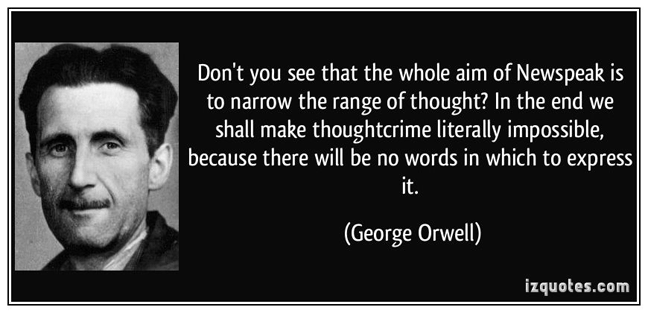
In a directive reminiscent of George Orwell’s dystopian novel Nineteen Eighty-Four, where people were only allowed to communicate in an ever diminishing language called “newspeak”, employees of the US Department of Agriculture (USDA) have been told to ditch the word “climate change”.
They should use “weather extreme” instead.
The clampdown comes as President Donald Trump further distances the US from global moves to limit global warming. Last week, the US formally announced its withdrawal from the Paris Agreement on climate change.
In a series of emails received by the Guardian, the director of the USDA’s soil health department, Bianca Moebius-Clune, listed terms that should be avoided and the alternatives to be used instead.
As well as giving climate change the flick, staff were told to avoid the term “climate change adaptation” and instead opt for “resilience to weather extremes”.
When talking about the cause of climate change, sorry “weather extremes”, saying people should “reduce greenhouse gases” is a big no-no. Rather, staff should talk in favour of “build soil organic matter, increase nutrient use efficiency”.
The email was dated 16 February but has only just come to light.
However, far from being a politically motivated reaction against the science of climate change, the instructions to staff may instead be a way for the Government department to continue its work without ruffling feathers in a White House averse to discussing global warming.
In the missive, Ms Moebius-Clune said that, “we won’t change the modelling, just how we talk about it — there are a lot of benefits to putting carbon back in the soil, climate mitigation is just one of them”.
The Guardian report added that public relations staff from the USDA had advised departments should “tamp down on discretionary messaging right now”.
The USDA denied it was limited discussion of climate change.
In a statement, the department said, “this guidance, similar to procedures issued by previous administrations, was misinterpreted by some to cover data and scientific publications.
Al Gore: We’re working around Donald Trump on climate change, DW, 8 Aug 17 The former vice president turned environmental activist says that the US will stick to the Paris Agreement despite Donald Trump’s opposition. He also accused the current president of censoring scientific information.
The 69-year-old environmental activist was in Berlin to preview “An Inconvenient Sequel,” a follow-up to his Oscar-winning 2006 film “An Inconvenient Truth” about global warming. Citing the axiom from physics that “for every action there is an equal counter-reaction,” Gore said that Trump’s election had galvanized and energized environmentalists in the US.
“The good news is that we are working around [Trump],” Gore said. “The US is going to meet its commitments under the Paris Agreement, regardless of what Trump says or does or tweets. He has isolated himself.”
Gore added that the majority of Republican voters in the US think that the country should have stayed in the Paris agreement. In perhaps the most unlikely scene in the film, Gore visits the Republican mayor of a town in the most conservative part of Texas, which had just completely gone over to using renewable energy sources. And that’s not the only example of Americans acting locally.
“In his speech on June 1, President Trump said that he was elected to represent Pittsburgh and not Paris,” Gore related with a smile. “And the next day the mayor of Pittsburgh said ‘Well, we’re still in the Paris Agreement.'”……
The former vice president took the current US president to task for suppressing scientific evidence and accused him of blocking a report, drawn up by scientists every four years, which concluded the earth is already feeling the effects of human-caused climate change. Excerpts from a draft of the report, which was leaked to the New York Times newspaper, were published on Monday.
A CONTROVERSIAL draft report on climate change that contradicts claims made by Donald Trump’s administration on global warming has been leaked. A DAMNING report on climate change that contradicts claims made by Donald Trump’s administration on global warming has been leaked, as scientists fear the President may suppress it.
“Americans are feeling the effects of climate change right now,” the report said according to The New York Times, which acquired a draft copy of the report by scientists from 13 federal agencies.
The report says extreme heatwaves have become more common and extreme cold waves have less common since the 1980s. It says emissions of greenhouse gases will affect the degree to which global temperatures continue to rise — a claim President Trump and some members of his cabinet have disputed. One scientist cited anonymously by the Times says he and other researchers are worried that the Trump administration, which must approve the report’s release, will suppress it.
The report “directly contradicts claims by President Trump and members of his cabinet who say that the human contribution to climate change is uncertain and that the ability to predict the effects is limited,” the Times said.
“How much more the climate will change depends on future emissions and the sensitivity of the climate system to those emissions,” a draft of the report states.
The report is part of the National Climate Assessment, which is carried out every four years, The New York Times reports. The National Academy of Sciences has signed off on the draft and is awaiting permission from the Trump administration for it to be publicly released.
The report also found that we would still experience at least 0.30 degrees Celsius of warming over this century compared with today, even if we put a stop to greenhouse gas emissions.
A small increase in global temperatures can lead to prolonged heatwaves, storms and the breakdown of coral reefs. The report found that surface, air and ground temperatures in Alaska and the Arctic are warming twice as fast as the global average.
“It is very likely that the accelerated rate of Arctic warming will have a significant consequence for the United States due to accelerating land and sea ice melting that is driving changes in the ocean including sea level rise threatening our coastal communities,” the report states.
The United States just announced Friday it would still take part in international climate change negotiations in order to protect its interests, despite its planned withdrawal from the Paris accord on global warming. Two months after President Trump announced the United States would abandon the 2015 global pact, his administration confirmed it had informed the United Nations of its “intent to withdraw from the Paris Agreement” — a process that will take at least until 2020.
The United States is the world’s second biggest producer of greenhouse gases after China and its withdrawal was a seen as a body blow to the Paris agreement.
The accord commits signatories to efforts to reduce greenhouse gas emissions that cause global warming, which is blamed for melting ice caps and glaciers, rising sea levels and more violent weather events.
They vowed steps to keep the worldwide rise in temperatures “well below” two degrees Celsius from pre-industrial times and to “pursue efforts” to hold the increase under 1.5 degrees Celsius
SC Attorney General sues feds for $100 million over plutonium left behind, BY JOHN MONK jmonk@thestate.com, AUGUST 08, 2017 COLUMBIA, SC
The South Carolina Attorney General’s Office announced Tuesday it has filed a lawsuit against the federal government seeking to recover an eye-catching $100 million it says the U.S. Department of Energy owes the state for failing to make good on a promise to remove one ton of plutonium from the Savannah River Site this year.
“A case of such magnitude has never been filed by South Carolina against the federal government,” a press release from the attorney general’s office said.
The press release said that Congress mandated that the U.S. Department of Energy would pay South Carolina $1 million per day, beginning Jan. 1, 2016, for every day the department failed to remove from the state one metric ton of weapons-grade defense plutonium. The requirement is in place during the first 100 days of each year from 2016 through 2021.
“The Department of Energy has failed to process or remove the plutonium or pay the state the $100 million owed for 2016 or 2017. This lawsuit seeks the recovery of the $100 million owed for 2017,” the press release said……http://www.thestate.com/news/local/article166008462.html
Friends of the Earth/Sierra Club will soon file a request that the hearing it garnered in response to a complaint filed on June 22 (Docket 2017-207-E) to be merged with SCE&G’s abandonment docket. The PSC issued an order on August 2 that positions on docket consolidation be filed by FOE/Sierra Club and SCE&G within 21 days.
SCE&G ratepayers already pay 18% of their monthly bill, averaging $27 per household, to pay for the failed nuclear project. Customers have been hit with nine rate hikes since 2009 to pay for the project in advance. Under SCE&G’s abandonment plan, that percentage of the bill would be increased, to pay for $2.2 billion in abandonment costs. SCE&G has presented a pay-back period of 60 years, meaning that additional billions of dollars would be collected by SCE&G, while no costs would be assumed by SCE&G and its shareholders.
Reflective of growing concern on the political level about the failed reactor project, leaders in the South Carolina Senate on August 4 requested a special legislative session to discuss SCE&G’s failed project. The attorney general of South Carolina followed by also submitting a letter to the legislature in support of such a legislative session and requested that any additional rate hikes to pay for abandonment be delayed while an investigation is proceeding.
COLUMBIA, S.C. – In an effort to protect ratepayers and advocate for alternative energy, Friends of the Earth and the Sierra Club today filed a formal intervention against a proposal from South Carolina Electric and Gas (SCE&G) to abandon its troubled nuclear construction project and charge ratepayers $2.2 billion over the next 60 years to pay for the failed project.
The plan, filed on August 1 by SCE&G with South Carolina Public Service Commission (PSC), abandoned the problem-plagued V.C. Summer reactor construction project. (See Docket 2017-244-E.) The project was abruptly halted on July 31 after continuous formal opposition by Friends of the Earth and the Sierra Club since 2008.
“Due to growing pressure from the public and legislators, the PSC will not be able to simply rubber stamp passing the cost onto SCE&G’s ratepayers,” said Tom Clements, senior adviser with Friends of the Earth. “We will fight this unjust plan and make sure that the company and its shareholders are put on the financial hook for the bad decisions made by SCE&G since 2008. It is simply unacceptable that SCE&G customers, who will not get any benefit after paying into the project since its inception, will now be stiffed with all of the costs while SCE&G walks away unscathed.”
The Friends of the Earth/Sierra Club intervention petition, filed by well-known South Carolina environmental lawyer Bob Guild, requests that the PSC review the imprudence of decisions related to the project, that reparations be made to SCE&G customers and that “available least cost efficiency and renewable energy alternatives,” as advocated by the groups now be pursued.
The hearing earlier granted to Friends of the Earth/Sierra Club on the project will likely now be consolidated with the abandonment docket, giving the organizations the right to review past cost overrun decisions, chronic schedule delays and repayment to customers for money wasted by SCE&G.
The abandonment petition filed by SCE&G included a suggested November date for a hearing on the matter, but in an unprecedented move late on the evening of Friday, August 4, the PSC’s chief clerk rejected the hearing dates. As pressure grows on how the PSC failed to properly monitor the project, no new dates have been set for the abandonment hearing.
The next step in the process will be for the PSC to approve the Friends of the Earth/Sierra Club intervention, which will then enable discovery to be filed for internal SCE&G documents. In particular, the groups want to learn what SCE&G knew about the bankruptcy of the reactor design company Westinghouse, filed on March 29, and if the PSC was informed by the company about what it knew.
Friends of the Earth is the U.S. voice of the world’s largest grassroots environmental network, with member groups in 77 countries. Since 1969, Friends of the Earth has fought to create a more healthy, just world.
Plutonium detected in air near public Highway 240 at Hanford, BY ANNETTE CARY, acary@tricityherald.com, AUGUST 08, 2017 Radioactive plutonium and americium have been found in air samples collected at the Rattlesnake Barricade just off public Highway 240, where workers enter the secure area of the Hanford nuclear reservation, according to the state Department of Health.
Air samples were collected by the Department of Health on June 8, the day that workers at the Plutonium Finishing Plant were ordered to take cover indoors because of an airborne release of radioactive particles during demolition of the highly contaminated facility.
Analysis results for the air samples were received Monday, Department of Health officials said at a Hanford Advisory Board committee meeting Tuesday in Richland.
Daily Observer 7th Aug 2017, On Sunday afternoon, a flotilla of more than 30 watercraft – from kayaks
to flat bottomed tour boats – carrying 150 people assembled offshore of
Chalk River Laboratories to deliver a message to Canadian Nuclear
Laboratories: a resounding no to the proposed near surface disposal
facility.
The facility is meant to dispose of up to one million cubic
metres of low level radioactive material at a site located about a
kilometre from the Ottawa River.
The flotilla, organized by the Old Fort William Cottagers’ Association, started up the Ottawa River from Fort
William and collected local residents, operating their own watercraft,
along the route before stopping at the mid-point of the river, across from
the CNL operated site. Once assembled, the protesters, many carrying
homemade signs, listened to some words of encouragement from the flotilla’s
organizers and a special guest, the leader of Quebec’s Green Party. http://www.thedailyobserver.ca/2017/08/07/protest-takes-to-the-river
US Government department tells staff to not use term ‘climate change,A PUBLIC sector department has told employees to cease using the term ‘climate change’ and opt for other more benign words instead. Benedict Brook@BenedictBrook, news.com.au , 8 Aug 17,
In a directive reminiscent of George Orwell’s dystopian novel Nineteen Eighty-Four, where people were only allowed to communicate in an ever diminishing language called “newspeak”, employees of the US Department of Agriculture (USDA) have been told to ditch the word “climate change”.
They should use “weather extreme” instead.
The clampdown comes as President Donald Trump further distances the US from global moves to limit global warming. Last week, the US formally announced its withdrawal from the Paris Agreement on climate change.
In a series of emails received by the Guardian, the director of the USDA’s soil health department, Bianca Moebius-Clune, listed terms that should be avoided and the alternatives to be used instead.
As well as giving climate change the flick, staff were told to avoid the term “climate change adaptation” and instead opt for “resilience to weather extremes”.
When talking about the cause of climate change, sorry “weather extremes”, saying people should “reduce greenhouse gases” is a big no-no. Rather, staff should talk in favour of “build soil organic matter, increase nutrient use efficiency”.
The email was dated 16 February but has only just come to light.
However, far from being a politically motivated reaction against the science of climate change, the instructions to staff may instead be a way for the Government department to continue its work without ruffling feathers in a White House averse to discussing global warming.
In the missive, Ms Moebius-Clune said that, “we won’t change the modelling, just how we talk about it — there are a lot of benefits to putting carbon back in the soil, climate mitigation is just one of them”.
The Guardian report added that public relations staff from the USDA had advised departments should “tamp down on discretionary messaging right now”.
The USDA denied it was limited discussion of climate change.
In a statement, the department said, “this guidance, similar to procedures issued by previous administrations, was misinterpreted by some to cover data and scientific publications.
Tell Congress: Prevent Nuclear Catastrophe in Iran
Read the Public Inquiry Report, the Commissioners’ report, Surrendering Australia: The AUKUS Deception is available to download for free at aukuspublicinquiry.com. Or just watch the replay of the National Press Club Luncheon.
19 November – Webinar – The Reality of Reprocessing
Time: 11:00 AM Pacific Time (US & Canada) / 2:00 PM Eastern / 7:00 PM UK / 8:00 PM CET









 Friends of the Earth/Sierra Club will soon file a request that the hearing it garnered in response to a complaint filed on June 22 (