Gov’t Is Owner In Navajo Land Uranium Cleanup Suit: Judge, By Kat Sieniuc. Law360, New York (August 16, 2017, ) — An Arizona federal judge on Tuesday ruled that the federal government qualifies under environmental cleanup law as an owner of more than a dozen old uranium sites on Navajo Nation land and could be liable for cleaning up the area.
U.S. District Judge David G. Campbell partially granted El Paso Natural Gas Company LLC’s bid for a quick win against the United States and U.S. the Department of the Interior, as well as the Bureau of Indian Affairs and the U.S. Department of Energy, among other…https://www.law360.com/articles/954711/gov-t-is-owner-in-navajo-land-uranium-cleanup-suit-judge
August 18, 2017
Posted by Christina Macpherson |
Legal, Uranium, USA |
Leave a comment
 How War Pollutes the Potomac River, DAVID SWANSON AND PAT ELDER FOR BUZZFLASH AT TRUTHOUT, 17 AUG 17, The Pentagon’s impact on the river on whose bank it sits is not simply the diffuse impact of global warming and rising oceans contributed to by the U.S. military’s massive oil consumption. The U.S. military also directly poisons the Potomac River in more ways than almost anyone would imagine.
Let’s take a cruise down the Potomac from its source in the mountains of West Virginia to its mouth at the Chesapeake Bay. The journey down this mighty waterway details six EPA Superfund sites created by the Pentagon’s reckless disregard for the fragile ecosystem of the Potomac River watershed.
The U.S. Navy’s Allegany Ballistics Laboratory in Rocket Center, West Virginia, 130 miles north of Washington, is a critical source of contamination in the Potomac River. The on-site disposal of explosive metals and solvent wastes contaminates soil and groundwater with hazardous chemicals. The groundwater and soil along the river are laced with explosives, dioxins, volatile organic compounds, acids, laboratory and industrial wastes, bottom sludge from solvent recovery, metal plating pretreatment sludge, paints, and thinners. The site also has a beryllium landfill. An active burning area is still used for waste disposal, sprinkling chemical dust over the river. It’s not good.
Traveling the river 90 miles further south brings us to Fort Detrick in Frederick, Maryland, the Army’s “proving ground” for the nation’s biological warfare program. Anthrax, Phosgene, and radioactive carbon, sulfur, and phosphorous are buried here. The groundwater is laced with deadly trichloroethylene, a human carcinogen, and tetrachloroethene, suspected of causing tumors in laboratory animals. The Army tested ghastly and heinous agents here, like Bacillus globigii, Serratia marcescens, and Escherichia coli. Although the DOD says it ceased biological weapons testing for offensive purposes in 1971, the claim is like the military’s placement of “defensive” missile systems near an enemy’s border.
Fort Detrick also has a history of dumping high levels of phosphorus into its drain system that ultimately washes into the lower Monocacy River, a tributary of the Potomac. In fact, the Maryland Department of Environment has cited the Army for exceeding allowable permit levels. Too much phosphorus in the water causes algae to grow faster than the Potomac ecosystem can handle. It is deadly. The Army is a leading polluter of the Potomac River watershed……..
The Potomac is far from unique. Sixty-nine percent of U.S. Superfund environmental disaster sites are the result of war preparations.
Preparations for war cost over 10 times the money that actual wars do, and cause at least 10 times the deaths. Routine U.S. military war preparations cause deaths by diverting resources from human needs and directly through massive environmental destruction spread all over the world including in the United States, and including in the Potomac.
So-called foreign intervention in civil wars around the world is, according to comprehensive studies, 100 times more likely — not where there is suffering, not where there is cruelty, not where there is a threat to the world, but where the country at war has large reserves of oil or the intervener has a high demand for oil.
The U.S. military is the top consumer of petroleum around, burning more of it than most entire countries, and burning much of it in routine preparations for more wars. There are military planes that can cause more damage with jet fuel in 10 minutes than you can with gasoline driving your car for a year.
All such calculations omit the environmental destruction done by private weapons makers and by their weapons. The U.S. is the leading exporter of war weapons to the rest of the world.
All such calculations also omit much of the damage and all of the details of the human suffering. The U.S. military burns toxic waste in the open, near its own troops in places like Iraq, near the homes of the people who live in the countries it has invaded, and within the United States in many — often poor and minority — communities such as Colfax, Louisiana, and at Dahlgren on the Potomac.
Much of the damage is essentially permanent, such as the poison of depleted uranium, used in places like Syria and Iraq. But this is true in locations all around the United States as well. Near St. Louis, Missouri, an underground fire is moving ever closer to an underground pile of radioactive waste.
And then there is the Potomac River. It flows south between the Lincoln and Jefferson Memorials in Washington, D.C. on the east, and Arlington, Virginia, on the west, where the Pentagon Lagoon brings the water up to the headquarters of world militarism.
Not only does the home of war making sit near rising waters — rising first and foremost because of the effects of war making, but those particular waters — the waters of the Potomac and of the Chesapeake Bay into which it flows, and the tides of which raise and lower the waters of the Pentagon Lagoon each day — are heavily polluted by war preparations.
This is why we are planning and invite you to join in a kayactivist flotilla to the Pentagon on September 16th. We need to bring the demand of No More Oil for Wars to the doorstep of our leading destroyer of the environment.
David Swanson is an author, activist, journalist, and radio host. He is director of WorldBeyondWar.org and campaign coordinator for RootsAction.org. Swanson’s books include War Is A Lie. He blogs at DavidSwanson.org and WarIsACrime.org. He hosts Talk Nation Radio. He is a 2015, 2016, 2017 Nobel Peace Prize Nominee. Follow him on Twitter: @davidcnswanson and FaceBook. http://truth-out.org/buzzflash/commentary/how-war-pollutes-the-potomac-river
August 18, 2017
Posted by Christina Macpherson |
environment, USA, weapons and war |
Leave a comment
Trump’s apocalyptic threats demand a moral case for disarmament,Guardian, Daniel José Camacho, 14 Aug 16, It’s easy to understand why Trump is potentially one of the worst people to be in charge of our nation’s nuclear codes. Yet, the problem runs much deeper.
Martin Luther King Jr once said: “When scientific power outruns moral power, we end up with guided missiles and misguided men.” Now, it appears Donald Trump might be the man who makes us pay for our country’s moral gap.
Trump has rekindled fears of war and nuclear strikes by threatening North Korea, saying: “They will be met with fire and fury like the world has never seen.” True to form, Trump’s words flew out of his mouth without much thought or preparation. In turn, the North Korean government has threatened to fire missiles near the US territory of Guam.
It’s easy to understand why Trump is potentially one of the worst people to be in charge of our nation’s nuclear codes. Yet the problem runs much deeper. Trump’s apocalyptic threat is a reminder that we need to revive the moral argument for disarmament and against militarism.
If the road to hell is paved with good intentions, then the road to this moment has been paved with the consensus of the foreign policy establishment. Both neocons and hawkish Democrats have pushed for an aggressive posture that has US special operations forces operating in 137 countries. US defense spending consistentlydwarfs the rest of the world.
King also said: “A nation that continues year after year to spend more on military defense than on programs of social uplift is approaching spiritual death.” Based on our record, it looks like this nation has been beyond spiritually dead for some time.
King was someone who acutely understood the danger of American militarism and nuclear weapons. In his 1967 Christmas Sermon on Peace, he said: “If somebody doesn’t bring an end to this suicidal thrust that we see in the world today, none of us are going to be around, because somebody’s going to make the mistake through our senseless blundering of dropping a nuclear bomb somewhere.”
Recovering King’s political vision can help us today…….
As long as war remains a business profiting a few, peace will remain a low priority. The problem is not simply Trump or the preceding presidential administrations, but an entire system that profits from violent conflicts and war.
The former president Dwight D Eisenhower understood this when he described the grave implications of the “military-industrial complex” in his 1961 farewell address. According to him: “The total influence – economic, political, even spiritual – [of an immense military establishment and arms industry] is felt in every city, every state house, every office of the federal government.”…..

Far from being idealistic, it is King’s framework which has regained relevance in the Trump era. As he wrote towards the very end of his life: “We still have a choice today: nonviolent coexistence or violent co-annihilation. This may well be mankind’s last chance to choose between chaos and community.” https://www.theguardian.com/commentisfree/2017/aug/11/trump-apocalyptic-threats-moral-case-disarmament
August 16, 2017
Posted by Christina Macpherson |
Religion and ethics, USA |
Leave a comment
The Real Nuclear Option, Americans are disturbingly unbothered by the idea of striking first with nuclear weapons, Slate ,By Fred Kaplan, 15 Aug 17, As President Trump rails against North Korea, threatening to rain down “fire and fury like the world has never seen” if it so much as tests another long-range missile, the world can’t help but wonder: Would he really do this? Would he order a nuclear strike, the ultimate fire and fury, against a country that hadn’t attacked us first?

Many are doubtful. His top security advisers would oppose such a move. So would the American people who, though they have no formal say in the matter, would impose constraints on a president’s actions—or so goes the conventional wisdom. Some scholars have written of a “nuclear taboo” ingrained in our sensibilities since the bombing of Hiroshima. Others detect a growing revulsion against the killing of noncombatants even with conventional weapons.
However, a new study suggests that these comforting notions are mistaken.
In the latest issue of the journal International Security, Scott Sagan and Benjamin Valentino, respectively professors at Stanford University and Dartmouth College, conclude that the American public is “unlikely to serve as a serious constraint on any president who might consider using nuclear weapons in the crucible of war.” In fact, under pressures similar to those facing President Harry Truman at the end of World War II, a clear majority of the public would support the first use of nuclear weapons now, just as it did back then.
Some opinion polls appear at first glance to show otherwise. A majority of Americans now say that Truman was wrong to drop atomic bombs on Hiroshima and Nagasaki. But Sagan and Valentino regard those polls as “a misleading guide” to understanding Americans’ “real views” on the use of nuclear weapons and the killing of civilians.
The problem with the Hiroshima polls is that Americans today lack the mindset of Americans in the time of World War II. Japan is now a leading U.S. ally. Few among the living remember the shock of Pearl Harbor or the horrors of the war in the Pacific and the desperate desire to stop the slaughter of American troops by any means necessary. So, the two professors—Sagan an eminent scholar of nuclear strategy, Valentino an expert on public opinion and the use of force—came up with a clever way of gauging how Americans would react in a similar situation today.
They commissioned the polling firm YouGov to conduct a survey in which those polled were shown a mock news story. In this story, the United States imposes sanctions on Iran for violating the Iran nuclear deal. Iran then attacks an American aircraft carrier in the Persian Gulf, killing 2,403 U.S. military personnel (the same number as those killed at Pearl Harbor, though this parallel isn’t drawn explicitly). The U.S. responds with airstrikes on Iranian military facilities. Iran refuses to surrender. The U.S. invades Iran but gets bogged down after 10,000 American troops are killed.
Those polled were then given a choice. Should we persist with the ground invasion all the way to Tehran, knowing that 20,000 American soldiers would be killed? Or should we drop a nuclear bomb on Mashhad, Iran’s second-largest city, “to pressure the Iranian government to surrender”—an attack that would kill 100,000 Iranian civilians (an arbitrarily chosen number).
The results were unsettling, though not so surprising. More than half of the respondents, 55 percent, favored dropping a nuclear bomb rather than proceeding with the invasion. An even higher number, 59 percent, said they would approve the president’s action after the fact if he chose to drop the bomb.
Then the pollster changed one key premise: What if the nuking of Mashhad killed 2 million Iranian citizens—which would you prefer: dropping the nuclear bomb or proceeding with the ground invasion, which would kill 20,000 U.S. soldiers?
Those favoring the nuclear option did drop, but not by much—from 55 percent (under the scenario with 100,000 killed) to 47 percent (under the scenario with 2 million killed). More sobering, the same number as before—59 percent—said they would approve the president’s action, after the fact, if he decided to drop the bomb.
In other words, to 47 percent—nearly half—of those polled, killing 2 million Iranian civilians is preferable to killing 20,000 American military personnel, a ratio of 100:1….. http://www.slate.com/articles/news_and_politics/war_stories/2017/08/sagan_and_valentino_study_shows_americans_would_likely_support_nuclear_first.html
August 16, 2017
Posted by Christina Macpherson |
politics, USA, weapons and war |
Leave a comment
President Trump holds the ‘nuclear football’ but what is the process to launch an attack? 9 News, Aug 15, 2017 On January 20 Donald Trump was inaugurated as President, giving the former reality star the
sole authority to launch a nuclear attack.
After being sworn in, an aide who had arrived with outgoing president Barack Obama carrying a satchel containing a briefcase, known as “the nuclear football”, moved quietly to Trump’s side.
The symbolism was clear: Trump now had complete control of the launch codes for a strategic nuclear strike.
It was a moment Trump had been waiting for – indeed, even thinking about for a long time……..
And it seems not all US politicians have confidence in the current system.
Ted Lieu – a Democratic member of the US House of Representatives – has filed a proposal to require congressional approval before the president could launch a first nuclear strike, labelling the current process “unconstitutional”.
“Right now one person can launch thousands of nuclear weapons, and that’s the president. No one can stop him. Under the law, the secretary of defense has to follow his order. There’s no judicial oversight, no congressional oversight,” Lieu said.
But what exactly is the current process to launch a nuclear attack? The current approval process dates back to after the atomic bombings of Hiroshima and Nagasaki in Japan to end World War II.
The Atomic Energy Act of 1946, signed by President Harry Truman, gave the president full responsibility over the nation’s nuclear arsenal.
That means, the president can use nuclear weapons with a single verbal order – an order that cannot be overridden.
Unlike other executive branch decisions, there are very limited checks and balances to launching a nuclear strike.
While Lie argues the current process is unconstitutional, the answer to that is not definitive – with possible answers lying in murky territory.
The American Constitution allows the president to use significant military force without congressional approval, if it is in self-defence.
That suggests North Korea would have to attack the US, or a US territory, such as Guam, first before Trump could legally pull the trigger on a nuclear retaliation.
However, a wrinkle in that comforting thought is the Korean War.
The Korean War which ran from 1950 to 1953 did not ever formally end – rather it ended with an armistice, with a peace treaty scheduled in Geneva in 1954 never being signed by the two parties.
Therefore, Trump could still attack North Korea first using the argument the US is already at war with the despot regime.While Trump may be able to launch a nuclear strike against North Korea on his say alone, the 1973 War Powers Resolution requires the president to have or to gain congressional approval to send troops to a foreign territory for combat purposes.
9RAW: Trump threatens ‘big, big trouble’ for North Korea
While the president can send the troops without the approval of Congress, the president then requires to get a yes otherwise they must terminate combat within 60 to 90 days.
While the Western world watch the continued exchange of verbal blows between North Korea and the US – a comment made by Trump in 1984, at the height of the Cold War, when the now President told a Washington Post reporter he wanted to be put in charge of US-Russia nuclear arms negotiations.
“It would take an hour-and-a-half to learn everything there is to learn about missiles,” Trump said. “I think I know most of it anyway.”
In March last year, Trump asserted he would be the last person to use nuclear.
“I’m not going to take cards off the table. We have nuclear capability,” he said.
“The last person to use nuclear would be Donald Trump. That’s the way I feel. I think it is a horrible thing. The thought of it is horrible. But I don’t want to take anything off the table. We have to negotiate. There will be times maybe when we’re going to be in a very deep, very difficult, very horrible negotiation.”
It’s a negotiation the world is watching now as North Korea’s leader Kim Jong Un continues to move ahead with a plan to strike an area around US territory Guam with four missiles.
August 15 could see North Korea begin preparations to launch four intermediate-range Hwasong-12 missiles near Guam, should Kim follow through on his rhetoric.
The rogue state’s head said today he will watch the actions of the United States for a while longer before making a decision, according to North Korea’s official news agency.
Kim said: “The United States, which was the first to bring numerous strategic nuclear equipment near us, should first make the right decision and show through actions if they wish to ease tensions on the Korean peninsula and prevent a dangerous military clash.”The ball seems to be sitting firmly in Trump’s court – and the world watches to see if he becomes the president to open the ‘nuclear football’.http://www.9news.com.au/world/2017/08/15/13/17/trump-north-korea-nuclear-codes
August 16, 2017
Posted by Christina Macpherson |
politics, politics international, USA |
Leave a comment
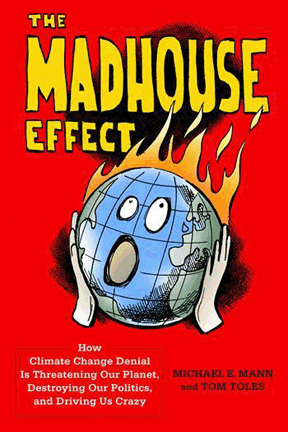
 The Madhouse Effect: this is how climate denial in Australia and the
 US compares, The Conversation August 14, 2017 Michael Mann is well known for his classic “hockey stick” work on global warming, for the attacks he has long endured from climate denialists, and for the good fight of communicating the environmental and political realities of climate change.
Mann’s work, including his recent book The Madhouse Effect, has helped me, as a dual US-Australian citizen, think about the similarities and differences between the US and Australia as we respond to what has been called the climate change denial machine.
In both countries, the denialists and distortionists have undermined public knowledge, public policy, new economic development opportunities, and the very value of the environment. Climate policy is being built upon alternative facts, fake news, outright lies, PR spin and industry-written talking points.
From the carbon industry capture of the two major parties, to the Abbott-Turnbull government parroting industry talking points, to coal industry lobbyists as government energy advisers, to the outright idiotic conspiracy pronouncements of senators funded and advised by the US- based denial machine, the Madhouse Effect is in full force in Australia.
How we can expose and counter this denialist machine? To partly lay out the task, I will discuss three points of contrast between the US and Australia.
Political culture
There is a key difference between the two countries’ political cultures. As much as the denialists have determined Australian energy and climate policy, they have not been as successful, yet, at undermining deep-seeded respect in Australian culture for the common good, for science, for expertise and knowledge…….
Last year, when the government fired climate scientists at CSIRO, there was another huge public backlash. The government had to step back a bit, both on the actual science to be done and the radical agenda change away from science for the public good.
And again, when the government wanted to support the dubious work of Bjorn Lomborg, that caused an outcry from both the university sector and the public. Even though the government wound up paying more than A$600,000 on what The Australian called his “vanity book project”, they couldn’t import him and plant him at any Australian university.
As Mann says, the main issue in implementing good, sound climate policy is no longer simply the science. The main issue is the cultural understanding of, and respect for the role of science in informing political decisions.
That’s not to say there are no attacks on science – clearly, these continue (such as the recent challenges to normal Bureau of Meteorology practices). But, overall, climate denialists and their enablers are outnumbered outliers in Australia, rather the norm.
The power of the carbon industry
My second point of comparison is not quite as positive.
The problem in Australia is less a culture turning against the Enlightenment, and more the direct political power and influence of the carbon industry. ……
even here I think there is some hope. We have seen, over the last few years, an incredible coalition grow – one focused on the end of carbon mining, on protecting communities, on creating real jobs, and on supporting renewables.
Once-unthinkable coalitions of farmers and Aboriginal communities are fighting new mines, new attacks on sacred and fertile land and water.
We have intensive household investment in rooftop solar – and as the feed-in tariffs are undermined, those folks will increasingly invest in battery storage. And we’re finally seeing states move in this direction, with increasing development of utility-scale renewable and storage projects. As hard as the federal government and its allies resist, renewables are growing and the public supports this – even conservative voters. https://theconversation.com/the-madhouse-effect-this-is-how-climate-denial-in-australia-and-the-us-compares-81822
August 16, 2017
Posted by Christina Macpherson |
AUSTRALIA, climate change, USA |
Leave a comment
 After failure of SC nuke plant, backers seek federal aid, By MATTHEW DALY, 14 Aug 17, WASHINGTON (AP) — Proponents of nuclear power are pushing to revive a failed project to build two reactors in South Carolina, arguing that the demise of the $14 billion venture could signal doom for an industry that supplies one-fifth of the nation’s electricity…..Supporters were alarmed when two South Carolina utilities halted construction on a pair of reactors that once were projected to usher in a new generation of nuclear power……
The July 31 suspension of the partly completed V.C. Summer project near Columbia, South Carolina, leaves two nuclear reactors under construction in Georgia as the only ones being built in the U.S. The collapse of the nearly decade-old project in South Carolina could cost ratepayers billions of dollars for work that ultimately provides no electricity and could signal that new nuclear plants are impossible to complete in the United States.
“These reactors failing would be the end of a nuclear renaissance before it even started,” said Sen. Lindsey Graham, R-S.C.
Graham and other lawmakers from both parties are urging Congress to extend a production tax credit that would provide billions of dollars to the South Carolina project and the two Georgia reactors. The House approved an extension in June, and Graham is pushing for a Senate vote after Congress returns from its August recess….
The Vogtle plant in Georgia faces similar economic and competitive threats, including the Westinghouse bankruptcy. The plant’s operator, Atlanta-based Southern Co., has said it will decide in coming weeks whether to finish the two reactors, which are years behind schedule and billions of dollars above projected costs……
Besides the production tax credit, nuclear supporters want the extension of an Energy Department loan guarantee program that has helped Vogtle and other energy projects secure funding. Vogtle received an $8.3 billion loan guarantee under the Obama administration – the largest ever issued by the loan program and a deal that some critics say could end up biting taxpayers…..https://www.apnews.com/1746c2dee6464b1586dbbedda6714bc4
August 16, 2017
Posted by Christina Macpherson |
business and costs, politics, USA |
1 Comment
 Questions remain about viability of building new nuclear reactors, Augusta Chronicle, Tom Corwin, August 12, 2017,
Five years ago, a study from the Union of Concerned Scientists correctly predicted a nuclear expansion at Plant Vogtle would be delayed and over budget. While Georgia Power puts together its estimate of final costs and schedule for the project, and whether to proceed on it, it is an open question whether the long-term benefits of building new nuclear reactors in the U.S. will be worth the growing cost.
The challenge to building new nuclear reactors in the U.S. has to do with new technology, the exacting construction and the relative affordability of other energy sources, experts said. While there could be long-term advantages to new nuclear energy, including its relative efficiency and lack of greenhouse gas emissions, the short-term costs are considerable and could sink the projects before they are completed, experts said.
The recently suspended nuclear expansion at the V.C. Summer Nuclear Station in South Carolina over its burgeoning costs has raised questions about the future of Vogtle’s two new nuclear reactors and other projects……
Capital costs could increase from $5.7 billion to $7.4 billion and financing costs from $2.3 billion to $3.5 billion. Because Georgia Power has the only publicly reported numbers attached to the project, some have used those figures to calculate the total cost at $25 billion, but it cautioned against that figure because the costs for the other companies involved in the project are different.
If the costs came in at the highest estimate and were the same across the board for all partners, the project would actually exceed $27 billion…….
One way of assessing whether adding a new nuclear plant makes economic sense is by looking at measures that seek to compare energy technologies based on what it costs to build and operate them, called levelized cost of electricty, and comparing it with the value of the electricity it would add to the overall system based on the cost of producing it. According to a report earlier this year from the U.S. Energy Information Administration, a nuclear reactor that came online in 2022 would actually cost nearly $40 more in kilowatt hour of electricity produced than generating that same electricity by other means……… http://chronicle.augusta.com/news/2017-08-12/questions-remain-about-viability-building-new-nuclear-reactors#.WZDB9dbWk2A.twitter
August 16, 2017
Posted by Christina Macpherson |
business and costs, USA |
Leave a comment
 Trump to reverse Obama-era order aimed at planning for climate change, WP, By Darryl Fears and Steven Mufson August 15 President Trump signed an executive order Tuesday that he said would streamline the approval process for building infrastructure such as roads, bridges and offices by eliminating a planning step related to climate change and flood dangers……
The White House confirmed that the order issued Tuesday would revoke an earlier executive order by former President Barack Obama that required recipients of federal funds to strongly consider risk-management standards when building in flood zones, including measures such as elevating structures from the reach of rising water. Obama’s Federal Flood Risk Management Standard, established in 2015, sought to mitigate the risk of flood damage charged to taxpayers when property owners file costly claims.
August 16, 2017
Posted by Christina Macpherson |
climate change, USA |
Leave a comment
Climate change projected to significantly increase harmful algal blooms in US freshwaters, Phys Org,
August 15, 2017, Harmful algal blooms known to pose risks to human and environmental health in large freshwater reservoirs and lakes are projected to increase because of climate change, according to a team of researchers led by a Tufts University scientist. The team developed a modeling framework that predicts that the largest increase in cyanobacterial harmful algal blooms (CyanoHABs) would occur in the Northeast region of the United States, but the biggest economic harm would be felt by recreation areas in the Southeast.
The research, which is published in print today in the journal Environmental Science & Technology, is part of larger, ongoing efforts among scientists to quantify and monetize the degree to which climate change will impact and damage various U.S. sectors…….
It has been estimated that lakes and reservoirs serving as drinking water sources for 30 million to 48 million Americans may be contaminated periodically by algal toxins. Researchers cited an example in 2014, when nearly 500,000 residents of Toledo, Ohio, lost access to drinking water after water drawn from Lake Erie revealed the presence of cyanotoxins……..https://phys.org/news/2017-08-climate-significantly-algal-blooms-freshwaters.html
August 16, 2017
Posted by Christina Macpherson |
climate change, USA, water |
Leave a comment
 State Asks Residents Close to Nuclear Plants to Have Pills https://www.usnews.com/news/best-states/pennsylvania/articles/2017-08-15/state-asks-residents-close-to-nuclear-plants-to-have-pills
Pennsylvania Gov. Tom Wolf is reminding Luzerne County residents to stock up on potassium iodide pills in case of an emergency at the Talen Energy nuclear power plant. Aug. 15, 2017 SALEM, Pa. (AP) — Pennsylvania Gov. Tom Wolf is reminding Luzerne County residents to stock up on potassium iodide pills in case of an emergency at the Talen Energy nuclear power plant.
The Democratic governor’s administration will be handing out free potassium iodide on Aug. 24 as part of an annual effort to replace expired tablets. The Wilkes-Barre Citizens’ Voice reports (http://bit.ly/2w6uokN ) the medication blocks the uptake of radioactive iodide.
In Luzerne County, there are 19 municipalities that are within or partially within the 10-mile radius of the plant. Wolf says residents who live within 10 miles of any of the state’s five nuclear power plants should also have up-to-date potassium iodide supplies.
The state Department of Health also has supplies year-round at certain offices.
August 16, 2017
Posted by Christina Macpherson |
health, safety, USA |
1 Comment
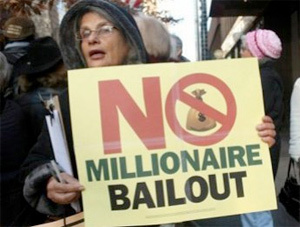
 Florida PSC looks at paying for nuclear projects today, Tampa Bay Times, By Malena Carollo, Times Staff Writer, August 15, 2017 TALLAHASSEE — The Florida Public Service Commission is holding its annual hearing at 1:30 p.m. today to discuss whether — and how much — Floridians will pay for its utilities’ nuclear power projects.
Among the projects up for discussion is Duke Energy Florida’s now-defunct Crystal River nuclear power plant — which ratepayers are still paying for. Duke said in May that it is attempting to recover $50 million in costs related to decommissioning the Crystal River facility.
The plant was closed in 2013, a year after Duke acquired the plant’s operator, Progress Energy. A DIY steam generator replacement that Progress Energy attempted in 2009 went awry, eventually rendering the plant unusable. Customers are paying for the decomissioning — a process that takes decades.
Because utilities are allowed to keep a portion of the funds spent on a nuclear project, Duke walked away with about $100 million following upgrades to the Crystal River plant.
What will not be discussed at this meeting is cost recovery for another nuclear power project Duke had proposed in Levy County.
When Duke bought Progress Energy, it also took over the construction of two nuclear reactors slated to be built in Levy. Duke ended up shutting down the $25-billion project because of high costs, which left Duke customers on the hook for a $1 billion bill.
Associated costs for the Levy project will be addressed on Oct. 25…. http://www.tampabay.com/news/business/energy/florida-psc-looks-at-paying-for-nuclear-projects-today/2333822
August 16, 2017
Posted by Christina Macpherson |
business and costs, politics, USA |
Leave a comment
“…. the coalition’s involvement has raised concerns about the use of limited county resources in such a speculative venture. Nor is it clear how the thorium proposal squares with the coalition’s legal mission, which is to “build essential regional infrastructure elements,” such as pipelines, roads, transmission and rail needed to deliver extracted minerals and power to markets……
The coalition’s financing and procurement practices have recently
come under intense scrutiny by Utah Treasurer David Damschen, who believes the group could be flouting accountability standards.
As a new member of the state Community Impact Board (CIB), which gives out federal mineral royalties to rural counties, Damschen has raised numerous concerns about the coalition’s management of CIB grants— its sole source of revenue. At recent meetings, the state treasurer has openly wondered whether the coalition steers contracts to insiders instead of the best qualified people and spends public money in ways that provide minimal public benefit…….
Thorium technology has years of costly research and development ahead before it’s ready to produce power and isotopes, according to Mike Simpson, a University of Utah metallurgical engineering professor.
“It‘s not accurate to say it’s proven to work. Aspects of it have been proven, but everything that has to be tied together hasn’t happened,” said Simpson, adding he would provide advice to the coalition for free. ”They still need another 10 years to perfect this….
many technical hurdles remain and these rural counties are not positioned to help address these challenges other than siting assistance for a reactor, Simpson added. Salt Lake Tribune
August 16, 2017
Posted by Christina Macpherson |
business and costs, thorium, USA |
Leave a comment
 Lifeline to Ga. nuclear project stuck in the Senate,Tamar Hallerman – The Atlanta Journal-Constitution, 14 Aug 17, A last-ditch effort to send hundreds of millions of dollars in tax breaks to Georgia’s struggling Plant Vogtle nuclear project appears to be stuck in the U.S. Senate as lawmakers grapple with the prospect of a broader tax overhaul.
Boosters of the estimated $25 billion project, the only one of its kind left in the U.S., think the federal bill could throw an economic lifeline to the companies behind the venture as they decide whether to move ahead with construction or abandon work amid major cost overruns and deep delays.
Under current law, newly constructed nuclear reactors can receive federal tax credits for producing electricity only if they are put in service before 2021. The bill before Congress would lift the deadline……
Georgia backers of the project recently visited Washington to ask for more aid from the Trump administration, Bloomberg reported last week, potentially by increasing or speeding up the disbursement of $8.3 billion in federal loan guarantees……
Nuclear power also has its critics on Capitol Hill, who see it as a waste of taxpayer funding.
“With so much renewable energy, nuclear power just doesn’t make sense,” U.S. Rep. Lloyd Doggett, a Texas Democrat, said earlier this summer. http://www.myajc.com/news/state–regional-govt–politics/lifeline-nuclear-project-stuck-the-senate/lxjVm1C1Ef5UyRiiKBS6MM/
August 16, 2017
Posted by Christina Macpherson |
politics, USA |
Leave a comment
 US AND KOREAN NUCLEAR PLANT CANCELLATIONS: IMPLICATIONS FOR UK NEW NUCLEAR BUILD, Prospec t Law August 10, 2017
The US currently has 100 nuclear power plants in operation supplying about 20% of its power needs. A further four were under construction, two each in Georgia and South Carolina, until the owners of the South Carolina plants recently announced the cancellation of construction of its two Westinghouse AP1000 units, Summer 2 and 3.
Summer 2 and 3 had been under construction since 2013, with original operational dates of late 2019 and late 2020. However, due to construction delays and cost overruns, these were later revised to December 2022 for Summer 2 and March 2024 for Summer 3. The finances were a key factor in the decision to cancel construction, with the original estimate of $11.5 bn having more than doubling to $25 bn. The reasons behind this are no doubt complex, but as the US has not constructed a new reactor since the 1970s, the loss of nuclear expertise must be a factor.
Summer 2 and 3 were intended to showcase advanced nuclear technology and pave the way, along with the Georgia plants – also Westinghouse AP1000s, for a nuclear renaissance in the US. A further four AP1000s and 12 SMRs (Small Modular Reactors) are currently proposed and several more are in the early stages of planning. The fate of these and the two Georgia plants remains to be seen…….
The Westinghouse bankruptcy has also complicated the picture in the US, with its AP1000 design being used for the South Carolina and Georgia projects and its role being reduced to a vendor supporting the EPC. Their situation has also had an effect in the UK, with Toshiba’s stake in Nu-Gen now being considered by KEPCO. Rather than utilise the Westinghouse design, which was approved by the UK nuclear regulator, ONR, in March this year, KEPCO wants to use its own technology, which will cause a delay in construction of the Moorside plant while the necessary regulatory design assessment is undertaken.
The South Korean nuclear industry is also in difficulty, with the new anti-nuclear government suspending construction of the Shin Kori 5 and 6 nuclear plants for several months while it undertakes a public consultation on their future. This decision has generated much debate in the country and is seen as a threat to its nuclear exports, and KEPCO’s future Nu-Gen.
Decisions to be taken in the next few months will be crucial for the future of nuclear in the US and Korea. …….http://prospectlaw.co.uk/us-and-korean-nuclear-plant-cancellations-implications-for-uk-new-nuclear-build/
August 16, 2017
Posted by Christina Macpherson |
business and costs, South Korea, UK, USA |
Leave a comment