http://www.power-eng.com/articles/2017/08/santee-cooper-offers-to-revive-summer-nuclear-expansion-not-viable.html, Aug 22, 2017 Editors of Power Engineering
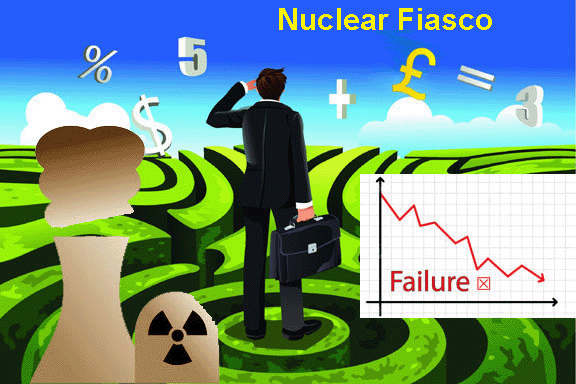
Two companies have offered to buy into the currently-abandoned Summer nuclear expansion, though Santee Cooper CEO Lonnie Carter said neither are viable.
Carter said neither of the parties that made an offer has the assets to undertake the massive and expensive project. In fact, one company is “somehow trying to get into the nuclear business in this country so it can actually build power plants in the Mideast,” The Post and Courierreported. He did not identify the companies.
Santee Cooper has set a September 15 deadline for potential buyers.
The offers came after Carter sent a letter seeking buyers for its 45 percent share in the plant to dozens of power companies earlier this month. SCANA Corp. owns the remaining 55 percent.
Estimates from both companies indicated the final cost of the two new nuclear reactors would be $21 billion, or nearly double the original estimate.
Additionally, South Carolina Governor Henry McMaster has initiated his own search for a buyer, and has reached out to officials at Duke Energy, Dominion Energy and Southern Power.
August 23, 2017
Posted by Christina Macpherson |
business and costs, USA |
Leave a comment
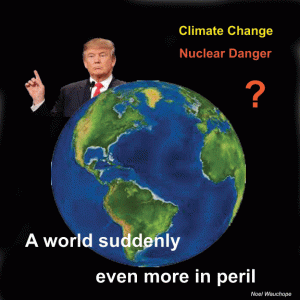 Trump’s attack on science isn’t going very well, WP, By Robert B.
 Richardson August 10 2017, Robert B. Richardson is an ecological economist and an associate professor in Michigan State University’s Department of Community Sustainability. He served on the Environmental Protection Agency’s Board of Scientific Counselors from 2014 to 2017.
The first 200 days of the Trump administration have been marked by direct and consistent confrontations with the scientific community, and no area of science has been targeted more explicitly than climate science. The administration has proposed drastic cuts in the budget to federal climate change programs; removed climate-related information from government websites; and refused to renew the appointments of more than 30 members of the Environmental Protection Agency’s Board of Scientific Counselors — including me.
Scientists know that these actions are dangerous to public health, the economy and our national security. Thankfully, some government workers concerned about climate change are pushing back on the administration’s attempts to muzzle them, finally speaking out — or, in some cases, leaking out — against threats to academic freedom.
This week, The New York Times published a draft report written by scientists from 13 federal agencies. The draft, completed this year under congressional mandate as a special science section of the National Climate Assessment, states that “evidence for a changing climate abounds, from the top of the atmosphere to the depths of the oceans.” It goes on to say that “many lines of evidence demonstrate that human activities, especially emissions of greenhouse (heat-trapping) gases, are primarily responsible for recent observed climate change.”
The document was publicized before the Trump administration signed off on the release of the final draft. As the Times reported, scientists who worked on the draft feared that the Trump administration would not approve the document or might tamper with the report.
Fears of censorship are not unfounded. Staff members at the Agriculture Department’s Natural Resource Conservation Service must “avoid” using the phrase “climate change” in agency documents, according to a series of emails leaked to the Guardian this week. The phrase “weather extremes” is now the prefered language. Other phrases on the blacklist: “climate change adaptation,” “reduce greenhouse gases” and “sequester carbon.”
Such phrases are part of the language and lexicon of science, and instructing federal scientists to avoid using particular words is an affront to the pursuit of knowledge. This is censorship, and it is dangerous to both science and democracy…….
The United States previously served as a world leader in global environmental responsibility, but tragically that’s no longer the case. The administration’s decision to withdraw from the Paris climate accord and President Trump’s refusal to budge on the issue at the recent Group of 20 conference confirms that the United States is denying science and dangerously ignoring the threat of climate change.
Meanwhile, the removal of data and information about climate change from federal agency websites deprives the public, including teachers and students, of valuable information regarding the state of knowledge about climate change. And the administration’s proposed budget cuts would eliminate critical funding for programs that will help protect the country from the worst effects of climate change, and where appropriate, adapt to the changing environment…….https://www.washingtonpost.com/opinions/trumps-attack-on-science-isnt-going-very-well/2017/08/10/096a0e1e-7d2c-11e7-a669-b400c5c7e1cc_story.html?utm_campaign=buffer&utm_content=buffer51b12&utm_medium=social&utm_source=t
August 21, 2017
Posted by Christina Macpherson |
climate change, USA |
Leave a comment
Nuclear’s Fork in the Road Atomic Insights, August 19, 2017 By Jim Little
Would you be willing to continue investing in an established business with flat revenues, increasing costs while competing against an agile field of competitors who enjoy a market advantage of lower costs, quicker deployment schedules and the support of government subsidies and favorable public opinion? Should you stay the course and focus on addressing those challenges or divest? This is the stark choice facing the nuclear power industry today……

Will nuclear generation continue or decline? Will the nuclear industry turn its attention away from new plant builds and extended-life operation activities and rather focus on decommissioning as evidenced by the plethora of recent conferences focused on decommissioning as the new market opportunity?…..
With revenues remaining flat, cost increases are significantly squeezing the profit margins of these operations. The financial outlook for nuclear utilities is bleak in an investment environment which rewards growth in revenues and profits. A number of utilities with nuclear units in merchant markets have recently announced decisions to decommission those units which are no longer able to sustain profitability. Utilities with units in regulated markets are likewise feeling similar financial pressures.
This situation was recently described to me by one nuclear utility executive: “From a shareholder perspective, how can I justify a recommendation to continue to invest in a facility when facing a forecast of declining returns while there may be other more profitable uses of capital?” So, should the default decision be to retire that unit and fund those efforts through its decommissioning fund; i.e. a “Nuclear 401(k)”?There are no easy choices. While the logic may seem straightforward, abandoning even a single unit could have cascading effects and far reaching implications. This same executive explained his concerns further: “How does one retain and attract talent going forward when there is a signal that nuclear may not enjoy full support going forward?” The inability to offset talent loss due to retirements in the workforce can affect performance on the remaining operations, increase costs, and further accelerate the departure away from nuclear. With a downturn in the industry there are other outcomes such as the reluctance of students to enter the nuclear field, university decisions to pursue other programs of study, research budgets reduced and grant applications no longer being sought. There are a number of other issues; the loss of existing, stable baseload generation and economic impacts such as those being experienced in host communities such as Zion, Illinois, and Vernon, Vermont. From a national policy perspective, it directly impacts the largest source of carbon-free generation in the United States, currently 63% of the nation’s total carbon-free generation.
Lastly, for the industry, the departure from nuclear is likely irreversible once made in the U.S. as the current talent and knowledge base is the result of over 50 years of investment and development. The situation may best be described by Stephen Wright, a comedian who is a master of the art of irony: “I live in a house halfway down a dead end street. It’s one way.”……..https://atomicinsights.com/nuclears-fork-road/
August 21, 2017
Posted by Christina Macpherson |
business and costs, USA |
Leave a comment
 The Trump administration just disbanded a federal advisory committee on climate change, WP, By Juliet Eilperin August 20 The Trump administration has decided to disband the federal advisory panel for the National Climate Assessment, a group aimed at helping policymakers and private-sector officials incorporate the government’s climate analysis into long-term planning.
The charter for the 15-person Advisory Committee for the Sustained National Climate Assessment — which includes academics as well as local officials and corporate representatives — expires Sunday. On Friday, the National Oceanic and Atmospheric Administration’s acting administrator, Ben Friedman, informed the committee’s chair that the agency would not renew the panel.
The National Climate Assessment is supposed to be issued every four years but has come out only three times since passage of the 1990 law calling for such analysis. The next one, due for release in 2018, already has become a contentious issue for the Trump administration.
Administration officials are currently reviewing a scientific report that is key to the final document. Known as the Climate Science Special Report, it was produced by scientists from 13 different federal agencies and estimates that human activities were responsible for an increase in global temperatures of 1.1 to 1.3 degrees Fahrenheit from 1951 to 2010.
The committee was established to help translate findings from the National Climate Assessment into concrete guidance for both public and private-sector officials. Its members have been writing a report to inform federal officials on the data sets and approaches that would best be included, and chair Richard Moss said in an interview Saturday that ending the group’s work was shortsighted……
While many state and local officials have pressed the federal government for more concrete guidance on how to factor climate change into future infrastructure, President Trump has moved in the opposite direction.
Last week, the president signed an executive order on infrastructure that included language overturning a federal requirement that projects built in coastal floodplains and receiving federal aid take projected sea-level rise into account. Some groups, such as the National Association of Home Builders, hailed the reversal of that standard from the Obama administration on the grounds that stricter flood requirements would raise the cost of development and “could make many projects infeasible.”
Seattle Mayor Ed Murray (D) said in an interview Saturday that the move to dissolve the climate advisory committee represents “an example of the president not leading, and the president stepping away from reality.” An official from Seattle Public Utilities has been serving on the panel; with its disbanding, Murray said it would now be “more difficult” for cities to participate in the climate assessment. On climate change, Trump “has left us all individually to figure it out.”…..
Trump Cabinet officials have either altered the makeup of outside advisory boards or suspended these panels in recent months, though they have not abolished the groups outright. Environmental Protection Agency Administrator Scott Pruitt decided to replace dozens of members on one of the agency’s key scientific review boards, while Interior Secretary Ryan Zinke is “reviewing the charter and charge” of more than 200 advisory boards for his department. https://www.washingtonpost.com/news/energy-environment/wp/2017/08/20/the-trump-administration-just-disbanded-a-federal-advisory-committee-on-climate-change/
August 21, 2017
Posted by Christina Macpherson |
climate change, politics, USA |
Leave a comment

 North Korea Warns US-South Korea War Games Driving Toward ‘Uncontrollable Nuclear War‘ https://www.commondreams.org/news/2017/08/20/north-korea-warns-us-south-korea-war-games-driving-toward-uncontrollable-nuclear-war The North called the planned joint military exercises “reckless” and said the U.S. is “lost in a fantasy”, by Jake Johnson, staff writer
With the United States and South Korea set to begin joint military exercises on Monday—and as Trump administration officials attempt to de-escalate tensions after the president threatened to bring “fire and fury” upon North Korea—the regime of Kim Jong-un published an editorial in a state-run newspaper on Sunday calling the planned war games “reckless behavior” that is “driving the situation into the uncontrollable phase of a nuclear war.” The editorial added that the military exercises amount to “pouring gasoline on fire,” and warned that the U.S. would not be able to “dodge the merciless strike” the regime claims it is prepared to launch.
“The Korean People’s Army is keeping a high alert, fully ready to contain the enemies,” the editorial continued. “It will take resolute steps the moment even a slight sign of the preventive war is spotted.”
“If the U.S. is lost in a fantasy that war on the peninsula is at somebody else’s doorstep far away from them across the Pacific, it is far more mistaken than ever,” the editorial concluded.
The U.S.-South Korea military exercises are set to last for ten days, and they will consist of 17,500 American troops and 50,000 South Korean troops. As the Associated Press noted, the drills “hold more potential to provoke than ever,” and some are calling on the U.S. and South Korea “to postpone or drastically modify drills to ease the hostility on the Korean Peninsula.
Tensions between the U.S. and North Korea have been running high of late as the North continues to develop its nuclear capacities and as U.S. President Donald Trump continues to ratchet up tensions by responding erratically. Trump recently suggested that his “fire and fury” remarks were not “tough enough.”
As a result, a growing number of lawmakers are calling for Trump to be stripped of the “nuclear football.” “No U.S. President, certainly not Trump, should have sole authority to initiate an unprovoked nuclear war,” argued Sen. Ed Markey (D-Mass.).
According to a recent CBS News poll, nearly 60 percent of Americans are “uneasy” about Trump’s ability to deal reasonably with North Korea, and the same percentage believes that the U.S. should not be threatening Pyongyang with military action.
As Common Dreams has reported, activists and analysts have issued urgent calls for diplomacy in recent weeks as tensions continue to intensify. The failure to pursue diplomatic avenues could result in a “nuclear nightmare,” some have warned.
“Time has proven that coercion doesn’t work,” CODEPINK co-founder Medea Benjamin recently wrote. “There’s an urgent need to hit the reset button on U.S.-Korean policy.”
August 21, 2017
Posted by Christina Macpherson |
North Korea, politics international, South Korea, USA, weapons and war |
Leave a comment
More GOP lawmakers bucking their party on climate change, But if the Republican Party is undergoing a shift on climate, it is at its earliest, most incremental stage. Politico, By DAVID SIDERS. 08/19/2017
LOS ANGELES — While President Donald Trump continues to dismantle Obama-era climate policies, an unlikely surge of Republican lawmakers has begun taking steps to distance themselves from the GOP’s hard line on climate change.
The House Climate Solutions Caucus, a bipartisan backwater when it formed early last year, has more than tripled in size since January, driven in part by Trump’s decision in June to withdraw the United States from the Paris climate accord.
And last month, 46 Republicans joined Democrats to defeat an amendment to the annual defense authorization bill that would have deleted a requirement that the Defense Department prepare for the effects of climate change.
The willingness of some Republicans to buck their party on climate change could help burnish their moderate credentials ahead of the 2018 elections. Of the 26 Republican caucus members, all but five represent districts targeted by the Democratic Congressional Campaign Committee next year.
But it has also buoyed activists who view the House members’ positioning as a rare sign of GOP movement on climate change……http://www.politico.com/story/2017/08/19/more-gop-lawmakers-bucking-their-party-on-climate-change-241800
August 21, 2017
Posted by Christina Macpherson |
climate change, politics, USA |
Leave a comment
Trump may be planning to make a very bad decision on the Iran deal WP, 20 Aug 17 “……According to international inspectors and the U.S. intelligence community, Iran has largely abided by the terms of the 2015 nuclear deal, which greatly reduced its stockpile of enriched unranium and placed strict limits on its nuclear activities. If the regime continues complying, it could be a decade or more before Iran could again threaten to become a nuclear power. Yet perversely, Mr. Trump is matching his passivity toward Iran’s regional meddling with an apparent determination to torpedo the nuclear pact.
After grudgingly
certifying in July that Iran was meeting the terms of the deal — a test mandated by Congress every 90 days — Mr. Trump
told the Wall Street Journal that he planned to find the regime noncompliant when the next certification is due in October. How to reach such a finding if the intelligence community judges otherwise?
According to Foreign Policy, Mr. Trump ordered a group of political aides, including now- fired strategist Stephen K. Bannon, to cook up a rationale — something that presumably will be made easier by their lack of data or expertise.
The real experts puzzle over what Mr. Trump could hope to accomplish by announcing that Iran is noncompliant — other than satisfying what appears to be his compulsive urge to spoil President Barack Obama’s legacies. Without proof of Iranian noncompliance, U.S. partners in the nuclear deal, including the European Union, Russia and China, would surely refuse to support the nullification of the accord or the reimposition of sanctions. Iran might respond to decertification by resuming uranium enrichment, even if Mr. Trump did not reimpose U.S. sanctions. That would present the White House with the ugly old problem of how to stop Iranian progress toward a bomb. Could Mr. Trump credibly threaten Iran with military action even while using the threat of force against North Korea?….
https://www.washingtonpost.com/opinions/global-opinions/trump-may-be-planning-to-make-a-very-bad-decision-on-the-iran-deal/2017/08/20/1faf5642-81e2-11e7-b359-15a3617c767b_story.html?utm
August 21, 2017
Posted by Christina Macpherson |
Iran, politics international, USA |
Leave a comment
if you add up those central estimates, wind and solar saved Americans around $88 billion in health and environmental costs over eight years. Not bad.
 Wind and solar power are saving Americans an astounding amount of money
Not getting sick and dying from pollution is worth quite a bit, it turns out. VOX, by David Roberts @drvoxdavid@vox.com Aug 18, 2017 Wind and solar power are subsidized by just about every major country in the world, either directly or indirectly through tax breaks, mandates, and regulations.
The main rationale for these subsidies is that wind and solar produce, to use the economic term of art, “positive externalities” — benefits to society that are not captured in their market price. Specifically, wind and solar power reduce pollution, which reduces sickness, missed work days, and early deaths. Every wind farm or solar field displaces some other form of power generation (usually coal or natural gas) that would have polluted more.
Subsidies for renewables are meant to remedy this market failure, to make the market value of renewables more accurately reflect their total social value.
This raises an obvious question: Are renewable energy subsidies doing the job? That is to say, are they accurately reflecting the size and nature of the positive externalities?
That turns out to be a devilishly difficult question to answer. Quantifying renewable energy’s health and environmental benefits is super, super complicated. Happily, researchers at the Lawrence Berkeley Lab have just produced the most comprehensive attempt to date. It contains all kinds of food for thought, both in its numbers and its uncertainties.
(Quick side note: Just about every country in the world also subsidizes fossil fuels. Globally, fossil fuels receive far more subsidies than renewables, despite the lack of any policy rationale whatsoever for such subsidies. But we’ll put that aside for now.)
Here’s how much wind and solar saved in health and environmental costs
The researchers studied the health and environmental benefits of wind and solar in the US between 2007 (when the market was virtually nothing) and 2015 (after years of explosive market growth).
Specifically, they examined how much wind and solar reduced emissions of four main pollutants — sulfur dioxide (SO2), nitrogen oxides (NOx), fine particulate matter (PM2.5), and carbon dioxide (CO2) — over that span of years. The goal was to understand not only the size of the health and environmental benefits, but their geographical distribution and how they have changed over time.
To cut to the chase, let’s review the top-line conclusions:
- From 2007 to 2015, wind and solar in the US reduced SO2, NOx, and PM2.5 by 1.0, 0.6, and 0.05 million tons respectively;
- reduction of those local air pollutants helped avoid 7,000 premature deaths (the central estimate in a range from 3,000 to 12,700);
- those avoided deaths, along with other public health impacts, are worth a cumulative $56 billion (the central estimate in a range from $30 to $113 billion);
- wind and solar also reduced CO2 emissions, to the tune of $32 billion in avoided climate costs (the central estimate in a range from $5 to $107 billion).
So, if you add up those central estimates, wind and solar saved Americans around $88 billion in health and environmental costs over eight years. Not bad.
That number is worth reflecting on, but first let’s talk a second about how they came up with it.
Uncertainties abound in measuring positive externalities
Tallying up these benefits is difficult for all sorts of reasons………
In all those steps, there are uncertainties and ranges, some having to do with the limitations of models, some having to do with the limitations of our understanding of the impacts of pollution, some having to do with difficult-to-quantify intangibles like the value of a human life.
These uncertainties explain the wide range of estimates involved: premature mortalities range from 3,000 to 12,700; local pollution impacts from $30 to $113 billion; CO2 climate impacts from $5 to $107 billion. (It’s worth saying that there are good reasons to think most SCC estimates are lowballing — certainly $5 billion is ludicrous.)……..
Wind and solar benefits vary over time and from place to place
If you dig into the paper, you find that the most interesting data has to do with the variations in benefits across regions and over time.
It’s complex, but in a nutshell, the health and environmental benefits of wind and solar vary depending on what other sources are being displaced, and how much, and when…….
Wind and solar effects also varied widely by region, because some regions have cleaner power sectors than others. In California, wind and solar are mostly displacing natural gas. In the upper Midwest and mid-Atlantic regions, which rely more heavily on coal, wind and solar have greater impact……. https://www.vox.com/energy-and-environment/2017/8/18/16160456/wind-solar-power-saving-money
August 21, 2017
Posted by Christina Macpherson |
renewable, USA |
Leave a comment

 The State 19th Aug 2017, SCE&G customers have already paid $1.4 billion for the SCANA nuclear power
plants boondoggle. That comes out to an average of $2,000 paid by each of
the 700,000 customers from the nine rate hikes to date.
With $27 of the average person’s power bill going to the now-abandoned project, if SCE&G
does not change this rate, that will cost the average customer an
additional $19,440 over the next 60 years — giving SCE&G a total of $13.6
billion to recover the balance of $4.9 billion it spent on the failed
project.
For the total of $21,440 that customers would pay on average for
this abandoned project, they could have purchased solar panels, thereby
reducing power consumption and obviating a need for increased generating
capacity while lowering their utility bills considerably. http://www.thestate.com/opinion/letters-to-the-editor/article167996422.html
August 21, 2017
Posted by Christina Macpherson |
business and costs, USA |
Leave a comment
 Even after nuclear catastrophe, SCANA execs eye bonuses, Post and Courier, BY STEVE BAILEY, 20Aug 17
So with consumers yelling for heads to roll, what is South Carolina Electric & Gas planning next? The largest stock buyback in the company’s history, which will help shareholders and bolster executive bonuses. Kevin Marsh, chief executive officer of SCANA Corp., SCE&G’s parent company, has told us that he is “deeply disappointed and sorry” the utility has decided to abandon two nuclear reactors after spending $9 billion with its partner, state-owned Santee Cooper. The company says it wants to use its share of a $2.2 billion settlement with its bankrupt contractor’s parent to avoid more rate increases….
But SCANA has said almost nothing about its plan for a big stock buyback that will be important to growth in its earning per share. And earnings per share, or EPS, will be important to Marsh and about 250 other managers if they are to keep those bonuses coming……
At the end of June, SCANA had only $91 million in cash, company reports show. Thus, the utility must generate more than $1.1 billion in excess cash over five years to complete the buyback. This cash would be generated on the backs of customers, or ratepayers, and will reward shareholders without providing any rate relief.
The buyout needs no regulatory approval, unlike the $4.9 billion SCANA is seeking to recoup for the failed reactors.
Under SCANA’s plan, ratepayers will be paying for others’ mistakes for 60 years, but earnings will be unaffected, Chief Financial Officer Jimmy Addison told the analysts. ….
critics say buybacks promote short-term thinking over long-term investment in the business. Executives use buybacks to increase stock prices and boost their pay, they say.
“Combined with pressure from Wall Street, stock-based incentives make senior executives extremely motivated to do buybacks on a colossal and systemic scale,” William Lazonick, a professor of economics at the University of Massachusetts Lowell, wrote in a ground-breaking Harvard Business Review article, “Profits Without Prosperity,” in 2014
Take SCANA. According to the company’s proxy statement, half of executives’ incentive pay is based on earnings per share. In 2016, for instance, Marsh and his top executives got 130 percent of their bonuses pegged to EPS because the company exceeded its target by 16 cents a share. They also got 100 percent of their bonuses tied to their personal goals, including “oversight” of the Fairfield reactors.
This is not a joke — it is right there in black and white…..
The cost of the V.C. Summer reactors has doubled, and construction is years behind schedule. Executives typically get fired for this kind of stuff, not bonuses.
But Marsh still has his job because he has protected his bosses — the shareholders — from the costs of the company’s mistakes and shifted them to customers.
He has gotten paid handsomely for the job he has done — and the buyback will help keep the good times rolling.http://www.postandcourier.com/opinion/commentary/even-after-nuclear-catastrophe-scana-execs-eye-bonuses/article_59d69b5a-8449-11e7-b1c0-f3ce1d623067.html
August 21, 2017
Posted by Christina Macpherson |
business and costs, USA |
2 Comments
 After paying for abandoned nuke project, do SC consumers need a stronger advocate?, The State, BY SAMMY FRETWELL sfretwell@thestate.com AUGUST 19, 2017 COLUMBIA, SC
A state agency whose job is to look out for utility customers finds itself explaining whether it did enough to protect ratepayers from rising power bills that resulted from a bungled nuclear expansion project.
The S.C. Department of Regulatory Staff, a 71-person agency with a $13.3 million budget, is drawing scrutiny for what critics say was a tepid defense of SCE&G ratepayers who were charged about $2 billion for the costs of two new reactors. SCE&G abandoned the unfinished reactor construction project July 31 after hitting customers with nine rate increases to pay for the work.
Regulatory staff officials say they did plenty to help ratepayers. But state law also requires the department to weigh the interests of utilities against those of customers. The Office of Regulatory Staff initially supported SCE&G’s plan to charge customers through a series of rate increases…….http://www.thestate.com/news/article168181267.html
August 21, 2017
Posted by Christina Macpherson |
politics, USA |
Leave a comment
Schiff: Jury’s out on Trump’s mental stability, Politico.com , By KYLE CHENEY, 08/20/2017
Rep. Adam Schiff, the top Democrat on the House Intelligence Committee, said Sunday that he and his colleagues are increasingly concerned about President Donald Trump’s mental fitness.
“There are some serious issues,” Schiff said on CNN’s “State of the Union,” adding that “the pressures of the job may only get worse.”
The California lawmaker’s comments came after he was asked by host Jake Tapper to respond to Democratic Rep. Jackie Speier’s call Tuesday to invoke the 25th Amendment, which empowers the vice president and Cabinet to remove a president who is incapable of serving. That remedy, Schiff noted, was primarily envisioned for a president who has “some kind of physical incapacitation or serious mental illness, a breakdown.”
“We’re still far from concluding that that’s the case, even though we find, many of us, his conduct anathema,” Schiff said. He added, “I don’t think we’re at a point of thinking about the 25th Amendment.”……
Schiff emphasized that colleagues on both sides of the aisle have recently questioned Trump’s stability, most notably Sen. Bob Corker (R-Tenn.), who said Thursday that Trump “has not yet been able to demonstrate the stability nor some of the competence that he needs to demonstrate in order to be successful.”
“I certainly think that there’s an issue with the president’s capability,” Schiff said, describing “some aspect of his character” that’s “incapable of introspection.” “I think it’s a question people are asking.” http://www.politico.com/story/2017/08/20/schiff-trump-mental-health-241835
August 21, 2017
Posted by Christina Macpherson |
politics, USA |
1 Comment
 President Trump’s Top Defense and Diplomatic Chiefs Insist There’s a Military Option for North Korea, Time, Matthew Pennington / AP, Aug 17, 2017 (WASHINGTON) — America’s diplomatic and defense chiefs sought Thursday to reinforce the threat of possible U.S. military action against North Korea after President Donald Trump’s top strategist essentially called the commander-in-chief’s warnings a bluff.
Secretary of State Rex Tillerson stressed after security talks with close ally Japan that the U.S. seeks a peaceful solution to the standoff over North Korea’s nuclear weapons program. But he said a U.S.-led campaign of economic pressure and diplomacy needs to be backed by potential military consequences.
Washington is “prepared militarily” to respond, if necessary, he said…..
North Korea’s missile launches “must stop immediately,” Tillerson said. Given the magnitude of the threat posed by the North’s weapons development, he said any diplomatic effort “has to be backed by a strong military consequence if North Korea chooses wrongly.”
“That is the message the president has wanted to send to the leadership of North Korea,” Tillerson said, “to remind the regime of what the consequences for them would be if they chose to carry out those threats.”
Trump last week pledged to answer North Korean aggression with “fire and fury.” He later tweeted that a military solution was “locked and loaded,” after leader Kim Jong Un was said to be considering a provocative launch of missiles into waters near Guam…..
Tensions have since eased somewhat since North Korea said Kim doesn’t immediately plan to fire the missiles. But fears of conflict remain as the U.S. and South Korea next week begin military drills that the North views as preparation for invasion, and as Washington seeks to stop the North’s progress toward having a nuclear-tipped missile that could strike the continental United States……http://time.com/4905989/donald-trump-steve-bannon-rex-tillerson-north-korea/
August 19, 2017
Posted by Christina Macpherson |
USA, weapons and war |
1 Comment
 Americans are afraid of war with North Korea — and of how Trump could handle it, New polls show Americans are divided on how to handle the North Korea threat , Vox, by Ella Nilsen Aug 11, 2017,
“…….New polls show a majority of Americans are afraid the US is about to wade into a war with North Korea, but are split on whether America should take military action in the face of increased threats from Pyongyang. At the same time, some of the public’s anxiety is about Trump and his off the cuff handling of the situation. Trump’s approval rating has dipped to historic lows, and Republicans and Democrats disagree sharply on whether they think the president is capable of dealing with North Korea…..
in the past month, North Korea has successfully
completed an intercontinental ballistic missile test that could reach the mainland United States, and American intelligence officials say the country is nearing its
goal of being able to fit a nuclear weapon on one of those long-range missiles.
And Trump hasn’t exactly been doing a lot to quell those fears. On Tuesday, Trump appeared to threaten nuclear war, vowing to respond to North Korean threats with “fire and fury like the world has never seen.”
Two days later, the president doubled down, saying of his remarks, “maybe it wasn’t tough enough.” He followed that up with a Friday tweet that the US military solutions were “locked and loaded should North Korea act unwisely.”
As a result, the possibility of war is on a lot of people’s minds.
A new poll from Public Policy Polling released by Axios on Friday morning shows 82 percent of Americans say they are afraid of nuclear war with North Korea. Another poll released by Rasmussen Report on Friday showed 63 percent of voters polled believe the US is now likely to take nuclear action against Kim Jong Un.
Meanwhile, the CBS poll conducted last week revealed 72 percent of Americans were already feeling uneasy about a possible conflict, while another 26 percent said they were confident things would be resolved.
However, the majority of those polled (60 percent), were optimistic the threat from North Korea could still be contained, with another 29 percent saying they believed it required immediate military action……
Another poll conducted by the Chicago Council on Foreign Affairs earlier this month found something similar, with a slim majority of respondents saying they supported military intervention if North Korea attacked South Korea.
The Chicago Council poll is the first time that more than half of Americans voiced support for sending in troops to help South Korea in the event of an attack. However, the same poll found Americans were still reticent to get involved in an armed conflict with North Korea and more likely to support increased sanctions instead.
Amidst the escalation, Americans still don’t have a lot of confidence in their commander in chief.
Just 35 percent of respondents to the CBS poll said they were confident in Trump’s ability to handle the North Korea threat, while 61 percent said they were uneasy. Confidence in Trump’s ability fell largely along party lines, with 76 percent of Republicans saying they were confident, and 31 percent of independents and just 10 percent of Democrats agreeing with them.
Many more people said they were uneasy about Trump, including 87 percent of Democrats, 64 percent of independents, and 22 percent of Republicans……https://www.vox.com/policy-and-politics/2017/8/11/16131016/americans-afraid-war-north-korea
August 19, 2017
Posted by Christina Macpherson |
USA, weapons and war |
Leave a comment
 Climate change will likely wreck their livelihoods – but they still don’t buy the science
The small Louisiana town of Cameron could be the first in the US to be fully submerged by rising sea levels – and yet locals, 90% of whom voted for Trump, still aren’t convinced about climate change, Guardian, Shannon Sims in Cameron Parish, Louisiana, 18 Aug 17, In 50 years, the region near where I grew up, Cameron Parish in south-west Louisiana, will likely be no more. Or rather, it will exist, but it may be underwater, according to the newly published calculations of the Louisianagovernment. Coastal land loss is on the upswing, and with each hurricane that sweeps over the region, the timeline is picking up speed.
As a result, Cameron, the principal town in this 6,800-person parish (as counties are called in Louisiana), could be the first town in the US to be fully submerged by rising sea levels and flooding. So it’s here one would expect to feel the greatest sense of alarm over climate change and its consequences.
Instead, Cameron has earned a different kind of fame: it’s the county that, percentage-wise, voted more in favor of Trump than any other county in the US in last year’s election. Nearly 90% of the population did.
Why would some of the people most vulnerable to climate change vote for a politician skeptical of climate change’s existence? Why would people in Cameron Parish support policies that could ruin them?……..
…..”Because of the rules and regulations, it costs so much to live here.”
Many locals in Cameron repeat this phrase – “rules and regulations”. They’re referring to the strict construction rules placed on residents who wanted to return to Cameron and rebuild after Rita and Ike hit the town. As a result, all structures needed to be raised in order to qualify for hurricane insurance. The result is a humble town whose homes appear strangely grandiose: single-story modest brick houses now rest on top of large, grassy man-made hills, a kind of south Louisianacastle…….
As for her politics, Smith thinks Cameron’s residents voted for Trump because “we think he could help the oil field out, and hopefully stop the imported seafood from coming into our country so our people can make a living,” she says.
Smith, like most of the residents of Cameron, has been highly dependent on state and federal assistance programs to recover after the storms. But what if, in Trump’s push to shrink the size of the government, recovery programs are cut?
“We’d be screwed,” she says frankly. “But that doesn’t change my opinion about Trump,” she quickly adds. “Outsiders think that everybody is just looking for a handout down here, but there is hard-working people that live here. There are just not many jobs right now, especially if all you know is commercial fishing. Even if Trump cuts those programs that helped us, we gonna make it one way or another here, with or without help. Down here we survive.”…….
Vail says he’s pleased with the drawdown on environmental restrictions that Trump has instituted since taking office.
“When he took office he stopped the EPA’s Waters of the US rule, where anything that would flow into a navigable tributary would have had jurisdiction under the EPA. Well, navigable tributaries go through half the land I farm. So you’re saying a ditch I put in my field to drain the water off, then that the land comes under your jurisdiction? You can tell me when I can go into it, and what I can use as fertilizer?”………
Mr Benny’s son lets me know that their alligator hunting business has brought in a high-end clientele. He brings out a photo of a grinning Donald Trump Jr taken during an alligator hunting trip. That personal connection has helped inform Mr Benny’s politics. “I’m Donald Trump all the way,” he says with a smile.
Even though Mr Benny’s family has been directly impacted by hurricanes, and even though the state mapping agency indicates that his home will be submerged within 50 years due to coastal land loss, Mr Benny isn’t buying it.
“I don’t believe it,” he says, shaking his head. “I don’t believe that the tide is gonna rise 10 feet and that the Ice Age is coming and stuff like that.” Like many of the residents here in Cameron, Mr Benny sees time on a longer horizon than others might. “I been here 75 years, you understand?,” he reminds me with gentle force. “And I’ve lived on the water and guess what? The tides still come up almost the same way, and there is no flooding. And today our front marshes aren’t underwater.”
“If you go by what the real scientists say, there’s no proof. In the last 10 years the average temperature of the world hasn’t even risen a half degree………
Theriot seems caught between her job as a science educator and her life as a longtime Cameron resident, tasked with teaching about the environment in a fiercely red town. “…….“But I think the data is incomplete. And I am still not sure about climate change. I am still researching it. I feel like I don’t have enough good sources to say yes or no on if climate change is a real thing.”
Now, from her elevated balcony overlooking the old slabs, she takes a clearer position. “I’m a big proponent of the oil industry, because that’s how my family and my community made a lot of its money. So that is my livelihood. So it is hard for me to point that finger.”….
….Dyson is not particularly concerned about the forecasts that show the coast disappearing over the coming decades. He thinks global warming is a gossipy scam……. Instead, Dyson says that what worries him most are the environmental regulations ostensibly intended to save the coast. “The laws are already there to protect the coast. And I understand Trump is not 100% environmentalist. But I think it’s a good thing to get the government out of our lives. I don’t want any more environmental regulations. I don’t want any more fishing laws. And I don’t want a lot of restrictions where people can’t make a living.”….. https://www.theguardian.com/us-news/2017/aug/18/louisiana-climate-change-skeptics-donald-trump-support
August 19, 2017
Posted by Christina Macpherson |
climate change, USA |
Leave a comment