Anti-war nuns to bring message of nuclear disarmament https://www.stripes.com/news/us/anti-war-nuns-to-bring-message-of-nuclear-disarmament-1.491495#.WdqS44-CzGgBy DEBBIE KELLEY | The Gazette | Associated Press October 7, 2017 COLORADO SPRINGS, Colo. — As political tensions mount over North Korea’s ballistic missile testing, two elderly Roman Catholic nuns who have spent decades sounding the plea for peace say they are more hopeful than ever that nuclear weapons — not the world — will be annihilated.
“We trust, we believe, we know that we are well on the way to a nuclear-free world and future,” said Sister Ardeth Platte, a Dominican nun.
Platte, 81, and Sister Carol Gilbert, 69, live at the Catholic Worker-affiliated Jonah House in Baltimore. They gained attention in Colorado in the past for pouring blood on a nuclear missile silo in Weld County and anti-war civil disobedience at Colorado Springs military bases.
Fifteen years later, they are returning to deliver the message that nuclear disarmament is at hand.
“We’re in an extremely dangerous time,” Platte said. “A strike could be launched from Colorado within 15 minutes and go 7,000 miles to its target within half an hour. It would be total devastation.”
At 3:30 p.m. on Oct. 9, they’ll present to Peterson Air Force Base personnel a copy of the new United Nations’ Treaty on the Prohibition of Nuclear Weapons.
They’ll repeat the action at 2:45 p.m. Oct. 10 at Schriever Air Force Base.
“We want the citizens of Colorado to know about this treaty,” Gilbert said. “The treaty would make nuclear weapons illegal.”
“We’re coming as peacemakers and peace advocates, to teach and show our concern,” Platte said. “Our politicians could be heroes of these times, if they start working with nations rather than against nations.”
Leading up to the Colorado Springs events, Platte and Gilbert will conduct a vigil at the N-8 missile silo in Weld County, where in October 2002 they poured blood on a Minuteman III missile loaded with a 20 kiloton nuclear bomb, one of 49 high-trigger nuclear weapons stored in Colorado. Their action symbolized taking it offline.
They were convicted of sabotage and received harsh sentences: 41 months for Platte and 33 for Gilbert.
In September 2000, Platte, Gilbert and three other Catholic nuns were arrested for civil disobedience at Peterson Air Force Base and jailed. The charges were subsequently dropped. They’ve also served time in other states for nonviolent acts of civil disobedience.
Prison provided the opportunity to do their best Christian ministry, Gilbert said. “We feel it is the closest that we can be with the poor of this country because jails and prisons are warehouses for the poor,” she said. “You learn people who have nothing are so generous in sharing, you learn what a waste the prison industrial complex is.”
The work of Platte and Gilbert has been “very significant,” said Bill Sulzman, founder of Colorado Springs-based Citizens for Peace in Space, an activist group that opposes the use of space for war-related activities.
“It’s unique in the sense that it’s primarily a moral argument against nuclear weapons and the phenomenon of modern-day war,” he said. “Not supporting it is one thing, actively opposing it is another.”
As part of a non-governmental organization, the International Campaign to Abolish Nuclear Weapons, the nuns attended a United Nations conference in New York, when on July 7, 122 countries — two-thirds of the 193-member states — adopted the Prohibition of Nuclear Weapons Treaty. It’s the first legally binding multilateral agreement for nuclear disarmament in 20 years.
The treaty came after months of negotiations, which the United States, Russia, Great Britain, France, North Korea and other nations did not attend.
To date, 53 countries have signed the treaty, and three ratified the document, which prohibits developing, testing, producing, manufacturing, acquiring, possessing and stockpiling nuclear weapons or other nuclear explosive devices, as well as the use or threat of use of such weapons.
The treaty opened for signatures at U.N. headquarters in New York on Sept. 20; the Vatican was the first to sign and ratify the treaty. The agreement would become law 90 days after at least 50 countries ratify it.
The sisters are optimistic that the treaty is the weapon needed to abolish nuclear capability.
“I’ve been working on this issue for 50 years, and this is the greatest hope I’ve had,” Platte said. “We finally have a tool, a treaty that declares criminality to the possession and threat of using nuclear weapons.”
Even if the United States, Russia and other countries with nuclear warheads never get on board, “it won’t matter because there will be great pressure by other nations,” Platte said. “People are much wiser as we come closer and closer to nuclear holocaust.”
The tactic has worked in the past, she said. At one time there were 70,000 weapons of mass destruction worldwide, now there are 15,000-16,000, due to disarmament.
“This is just the beginning of the implementation — we have gained real momentum,” Platte said.
The atomic bombs the United States dropped on Hiroshima and Nagasaki, Japan, in August 1945 were small compared to today’s weapons of mass destruction, the sisters said.
If a nuclear war were to happen now, “that is the elimination of the planet,” Platte said.
Nuclear weapons are the only weapons of mass destruction not universally prohibited. Biological weapons, chemical weapons, land mines and cluster munitions are banned under international law.
“We believe that the way to solve nations not having nuclear weapons is the total elimination,” Platte said. “It’s time to get rid of them.”
Warnings from First Americans: Insidious Changes Are Underway that Will Affect Us All, In These Times, BY STEPHANIE WOODARD , 5 Oct 17,The worst mass shooting in recent years. Escalating threats of nuclear war. Catastrophic hurricanes. Calamities and fear rock the nation these days. Meanwhile, public servants are chartering private jets, and the president’s frenzied tweetstorms create yet more chaos and division. As the tweeter-in-chief seeks sycophantic praise (or anything to divert our attention from Robert Mueller’s accelerating investigation), serious policy changes have been proposed, or are underway, in numerous aspects of American life.
For an update, Rural America In These Times spoke to Native Americans—people whose survival requires being extremely well informed about what all branches of the federal government are up to. From their vantage point as sovereign entities with direct government-to-government relationships with the United States, the tribes have a unique perspective on issues including voting rights, the economy, the extractive industries’ hold over this administration and more.
In each case below, they explain how powerfully and comprehensively this administration’s misguided policies would impinge on each and every one of us. After all, “everything is connected,” as Timbisha Shoshone Tribal Historic Preservation Officer Barbara Durham puts it.
Fire on the mountain
Kim Jong-un can relax! We have already nuked ourselves and are looking into a great way to poison ourselves even more with radioactive waste. In June, Department of Energy (DOE) Secretary Rick Perry suggested using the Nevada National Security Site, aka the Nevada Test Site, as an interim waste dump and at the same time reopening licensing procedures for nearby Yucca Mountain. Under Perry’s plan, the mountain, revered as a sacred site by area tribes, would eventually become the permanent repository for spent nuclear fuel and other radioactive material.
The waste would travel via roads and railroads through communities throughout the country as it made its way to Nevada. Once it arrived, its home would be deep inside the earthquake-prone mountain. The DOE’s Final Environmental Impact Statement (FEIS) for the project admits that Yucca Mountain may be shaken by “ground motion” and that “beyond-the-design” events could collapse the waste facility.
The Timbisha Shoshone government blasted the Perry proposal, citing the groundwater contamination that the Nuclear Regulatory Commission has said will likely occur, even without earthquakes. …….
The United States faces one more very large barrier at Yucca Mountain, adds Bob. In 1863, Shoshone tribal heads and United States representatives signed the Treaty of Ruby Valley, which declared friendship between the parties and guaranteed the tribes a homeland that encompasses most of Nevada and massive chunks of Idaho, Oregon, California and Utah. The federal government seemed to forget all about the agreement for decades, though of course there were distractions—the Civil War, Lincoln’s assassination, the Sioux defending their homelands and more. After the United States woke up to the gigantic gap in the national map, it tried unsuccessfully for decades to pay off the Shoshone tribes.
“We respect the treaty,” says Bob. “And we don’t want the nuclear waste.”
DOE offers one bright spot in all the controversy: According to the FEIS, Yucca Mountain is “highly unlikely” to erupt as a volcano.
This land is whose land?
The Trump administration is trying to shovel vast and pristine portions of the United States into the maw of the extractive industries, such as mining concerns and fossil-fuel companies…..
Equality redefined
It’s not just Russians anymore. Attacks against voting rights are proliferating beyond Putin’s pals hacking into state election systems or manipulating public opinion via social media. With the Trump administration’s all-out assault on ballot-box access, non-Natives are getting a taste of what Native people have long experienced, according to OJ Semans, the Rosebud Sioux executive director of Four Directions, a nonprofit that advocates for equal rights.
‘Enough is enough’ nuclear waste http://www.postandcourier.com/opinion/editorials/enough-is-enough-nuclear-waste/article_5875b0fc-aadc-11e7-baa8-13314076fcb5.html8 Oct 17South Carolina has been generally accommodating to the federal government’s nuclear waste disposal needs over the decades, based on the promise that the highly radioactive material would be eventually shipped out of Savannah River Site to a permanent storage facility. Unfortunately, the federal government hasn’t been willing to live up to its part of the bargain.
So the SRS Citizens Advisory Board recently said “enough is enough” in response to federal plans to ship a ton of uranium from Germany through the port of Charleston then by rail to the Aiken facility. While the board’s role is advisory, its decision can have a major impact on federal policy. For example, a federal committee examining nuclear waste disposal options during the Obama administration backed off a plan in 2013 to formalize SRS’ use as a waste treatment and disposal site when the citizens panel balked.
The uranium was originally sent to Germany for research purposes as part of the U.S. Atoms for Peace Program — and the U.S. government agreed to take it back when Germany was finished with it. No question, SRS has the experience and the capability to process the material so it can’t be used to produce a nuclear weapon, but CAB reasonably balked at the transfer.
“The proposal will unnecessarily add to an already large burden of … high-level radioactive waste storage at SRS with no established path for disposal,” the CAB stated in its response to the Department of Energy request. “DOE failures to faithfully keep pace with its SRS cleanup commitments impede the acceptability of this deficient proposal by the citizens of South Carolina.”
Among those failures are the previous administration’s unwillingness to continue funding a plant to process weapons grade plutonium into fuel for commercial nuclear reactors. The federal government agreed to build the mixed-oxide facility as a condition of sending 34 tons of plutonium to SRS. The decision to abandon the project came after the plutonium already had been shipped to SRS.
Meanwhile, the planned permanent storage site for high level nuclear waste at Yucca Mountain, Nevada, was shut down in 2011 by the then-chairman of the Nuclear Regulatory Commission, with the Obama administration’s approval. There are ongoing efforts to restart the project on which $15 billion has already been spent since the 1980s.
Meanwhile, South Carolina, Aiken County and Washington state have ongoing lawsuits against the DOE for failing to meet its promises on nuclear waste. The state also is attempting to get payment of $200 million in fines that the federal government agreed to remit if it failed to send a specified volume of nuclear waste out of the state by 2016. It reneged on that promise, too.
So don’t blame the SRS Citizens Advisory Board for being less than accommodating to the federal government’s latest radioactive waste disposal plan. As CAB member Larry Powell said, “I would just like to see less of this fuel coming into SRS, especially when there’s no exit plan out of state.”
South Carolina should emphasize its opposition to becoming the dump site for federal nuclear waste at every possible turn — in the courts, in Congress and by state government. The state has assumed more than its share of responsibility for nuclear defense production and waste management since the early years of the Cold War. The federal government should have to live up to its promises to the state.
The US Defense Department takes climate change seriously, PRI , Living on Earth, October 08, 2017, Adam WernickWhile President Donald Trump has dismissed climate change as a hoax, the Department of Defense is focused on understanding and preparing for continued climate disruption and the security threats it poses in a warming world.
The US experienced three large-scale disasters in succession — hurricanes Harvey, Irma and Maria — which has strained our resources, our politics and the infrastructure that helps bring aid to battered areas. Even in an era of highly polarized politics, however, the US remains a fairly stable government system. When these disasters hit other places that aren’t so stable, they can create regional and even international security problems.
“One of the components of climate change that makes it a threat or a risk to national security is [that] it can make already tenuous, or frankly bad, places much worse and, occasionally, catastrophically so,” says retired Rear Adm. David Titley. Titley led the US Navy’s task force on climate change and is now a professor of meteorology at Pennsylvania State University.
“So much depends on local governance, on the inherent strength and resilience of the communities affected,” Titley says. “This is why you see people like Defense Secretary Mattis talk so strongly about the need for not only the military to be funded, but for adequate funding for US Agency for International Development, or USAID; for our State Department to be adequately funded and adequately manned, because the military can come in initially and try to help stabilize the situation, but the US military is not going to be the one that rebuilds these societies.”……
Titley notes that James Mattis was “pretty clear on this early on in his tenure as Secretary of Defense.” His answers to written questions from congressional leaders indicated he understands that the climate is changing and that “those changes, if unmanaged, compose a risk to US security operations and US Department of Defense.”……
[Defense Secretary] Mattis’s acceptance of climate change as a security risk allows others in the department, including the Joint Chiefs of Staff, to begin to plan for its effects, he says.
“For a lot of the readiness of the Department of Defense, it doesn’t even really matter why [the climate] is changing,” he adds. The department’s internal message, he says, is “‘we know it’s changing; we know it’s changing pretty quickly, and we’d better be ready for that, because if we just plan for the past we’re going to be surprised,’— and that’s not where the Department of Defense wants to be.”
Since the 1940s, nuclear weapons tests, power plant failures and uranium mining have left radioactive contamination at hundreds of sites around the world. Whether the contamination is from weapons tests, accidents, or just reckless routine operations, the story of the affected people unfolds in much the same way, as if it were a formulaic plot for a generic television soap opera. Communities that have been chemically contaminated follow much the same script, but radiation adds some distinctive elements to the situation.
Radiation is invisible, and it has always been imbued with a diverse range of magical powers in science fiction. Ironically, in a very real sense, radiation does make people invisible (the phenomenon is fully explained by Robert Jacobs in “Radiation Makes People Invisible”) [1]. Once groups of people have become victims of a radiological contamination, they are, in addition to being poisoned (or being traumatized by the possibility that they have been poisoned), marginalized and forgotten. Their traditions and communities are fragmented, and they are shamed into concealing their trauma. When contamination occurs, there is a strong impulse even among many victims to not admit that they have been harmed, for they know the fate that awaits them if they do.
The victims are helped in this denial by those who inflicted the damage on them because nuclear technology, both for weapons and electricity production, has always been treated as two sides of a single national security problem that requires secrecy and the occasional sacrifice. Its workings must be hidden from enemies, terrorists and citizens themselves. Thus governments have never been interested in helping their citizens investigate nuclear accidents and environmental damage left in the wake of nuclear development.
As secretive programs of nation states, nuclear complexes operate free of any governing body that could provide checks and balances. In this sense, they are a more intractable problem than the corporate villains that are occasionally held in check by government supervision. The American tobacco industry was eventually forced into retreat by government, and it had to pay enormous damages to state governments for health care costs, but the nuclear weapons and energy complexes still operate free of any higher power that could restrain or abolish them.
Thus it is that hibakusha (the Japanese word for radiation victims) become invisible. When a new group of people become victims, such as in Fukushima in 2011, they feel that they have experienced a unique new kind of horror. For them, for their generation, it is new, but for those who know the historical record, it is a familiar replay of an old story. The people of Fukushima should know by now that they are bit players who have been handed down a tattered script from the past.
A case in point is “Blind Faith,” the superb 1981 book by journalist Penny Sanger, about the small irradiated Canadian town of Port Hope on the shores of Lake Ontario. (See the timeline at the end of this article) [2] In the 1970s it faced (and more often failed to face) the toxic legacy of processing first radium, then uranium for nuclear weapons and nuclear power plants.
In a saner world this book would not be out of print and forgotten. It would be a classic text known by everyone who has ever had to share his town with a dangerous corporate citizen. Then there would be no surprises when a nuclear reactor explodes or a cancer cluster appears somewhere new. It wouldn’t be a shock to see the victims themselves fall over each other in a rush to excuse their abuser, beg for a continuation of jobs and tax revenue, and threaten the minority who try to break the conspiracy of silence.
On the back cover of the 1981 paperback edition of “Blind Faith” there was an endorsement by the late great Canadian writer Farley Mowat, who passed away in the spring of 2014:
Penny Sanger has written a fascinating and fearsome account of the emotional turmoil that engulfs a small town when it discovers that its major industry is a threat to the health of its citizens. This is a classic account of how economic power enables industry to ride roughshod over those who must depend on it for their daily bread.
Although I wrote above that “Blind Faith” illustrates universal truths about what happens to communities contaminated with radiation, there are always unique aspects of the situation that come into play. In this case, we see the extreme complacency and obliviousness of Canadian society to the role that the country played in the development of nuclear weapons and nuclear power.
The uranium refinery in Port Hope was a key element in the Manhattan Project. It was the main facility for refining uranium ores from the Congo and northern Canada. However, as a subordinate nation in the American-led war, Canada just had to go along in complete secrecy. As was the case even in the US, there was never any debate in public or in elected legislatures. Canada was just taking orders and didn’t have to feel responsible. Canadians are still largely ignorant about their complicity in making the bombs that fell on Japan, as they are about being one of the sources of the uranium that was in the reactors of Fukushima Daiichi.
Another factor in our sense of irresponsibility is the comfortable delusion that all bad things are done by the evil empire south of the border. We’re the good guys, with universal health care and multiculturalism……..
The Port Hope refinery began operations in the 1930s to produce radium from uranium ore. The ore came from the recently discovered rich deposits in the Port Radium mine on the shore of Great Bear Lake in the Northwest Territories (previous post on this topic here). This mine would later become one of the primary sources of uranium for the first atomic weapons, but in the 1930s radium was the only product that had value for its use in making luminescent paint and medical applications.
By the 1930s it was well understood that radium and uranium mines were extremely dangerous. The high lung cancer rates of miners in Czechoslovakia had been noted for a long time, but there were others who failed to acknowledge any connection. Marie Curie died in 1934 from aplastic anemia, and she never acknowledged that her numerous health problems had been related to the vials of radium that she carried around in her pocket or perhaps to the unshielded x-ray machines she worked with. [3] Today her diaries and papers still have to be stored in a lead box.
Because there was no consensus on the dangers of radium by the early pioneers (DNA wasn’t even understood until the 1950s), there were few safety controls in place when radium became an industrial product. Radium paint workers got sick and died for mysterious reasons, as did workers in processing plants like the Eldorado Mining and Refining facility in Port Hope. Almost nothing was done to protect workers or properly dispose of the waste product. The wastes were isolated in a dump, but when that became problem, the dirt was sold as fill to unsuspecting (or unscrupulous) buyers and used at construction sites all over town.
It wasn’t until the 1970s that a few citizens of Port Hope started to notice radioactive wastes turning up in various locations. This new awareness was the beginning of bitter social divides that would be familiar to anyone who has followed what has happened in Fukushima prefecture since 2011. The enormous implications of the necessary cleanup forced political and economic powers to downplay or ignore the dangers, and ostracize anyone who dared to threaten real estate values and tarnish the image of the community. The mayor even boasted of what a great role the town had played in the Cold War by refining uranium so that America could beat back the Soviet threat, as if the contamination had been worth it.
There was a minimal recognition of the need to do something about the worst hot spots, to placate critics and relocate residents in the worst danger. Everyone agreed, for example, that something had to be done to clean up a contaminated school, but for the most part the problem was denied in favor of keeping the town’s biggest tax payer and employer satisfied. At the same time, the federal government was not motivated to do anything that would set back the expansion of the nation’s nuclear energy program. The Darlington and Pickering nuclear plants were built nearby in this era on the shores of Lake Ontario.
By this time, Eldorado was no longer selling uranium for American nuclear weapons, but it had become a major player in the uranium fuel market. It would provide the fuel for the large fleet of CANDU reactors that Ontario was building, and by the 1980s Eldorado was privatized, turned into Cameco, and was then selling about 80% of its output to the US where the uranium was enriched for use in light water reactors.
Thus a full acknowledgment of the extent of the problem—the cost of cleanup and the health impacts—would have jeopardized the refinery’s role as a major supplier in a growing nuclear energy industry. Eldorado might have seemed like a wealthy giant to outsiders, but the uranium business was perilous and changing rapidly. Just as the public was becoming aware of the extent of the pollution, Eldorado was stuck in long-term contracts that were a bargain for its customers but disastrous in a time of soaring costs.
The situation presented especially difficult obstacles for opponents because Eldorado was a crown (publicly owned) corporation. One obstacle was secrecy. Since 1942, the operations of Eldorado have been state secrets, and much remains locked up in archives that are yet to be opened to historians. [4]
The other problem was in the fact that the government had no interest in investigating its own corporation, and because Eldorado was a federal crown corporation, the province of Ontario had no authority to investigate it for environmental crimes. Thus complaints from citizens ran into this dead end.
Similar situations in the United States, such as at the Rocky Flats plutonium pit factory, involved the Department of Energy hiring large defense contractors like Rockwell to manage the plant. This meant there was a possibility the Environmental Protection Agency and the Federal Bureau of Investigations could act if enough public pressure were applied and evidence of crimes became apparent. As much as the American nuclear weapons complex was a monstrous crime against nature, there is at least something redeeming in the fact that the American system of government consisted of various institutions that could sometimes keep the others in check. In the dying days of operations at Rocky Flats in 1989, the EPA and the FBI raided the facility which was then operated by Rockwell under contract for the Department of Energy. The US government essentially raided and prosecuted itself. [5]
Unfortunately, no such checks and balances existed in Canada’s nuclear industry. The federal government and its crown corporation had a monolithic grip on the historical records and on decisions about environmental safety and health related to radiation. There was no outside force that had legal authority to prosecute them and force them to divulge information.
There are some further details in “Blind Faith” that stand out in my memory. Some are unique to the Port Hope story, while others are typical of stories of other irradiated and poisoned communities.
At one point, a doctor in a nearby town grew alarmed at the number cancer cases that appeared in his patients from Port Hope. He tried to bring the issue to the attention of health authorities, but was slandered and opposed by city officials to a degree that he found alarming. He had foolishly thought that his efforts to speak up for public health would be appreciated.
Instead, city officials made a pathetic attempt to sue him for defaming Port Hope, and when that immediately failed, they complained to the provincial medical association. They had thought that this would succeed in getting him stripped of his license to practice, but they were quickly rebuffed by the medical association that found no fault in a doctor expressing his opinion about a serious public health concern. Such was the sophistication of the strategies of the town fathers as they floundered for ways to preserve the tax base.
Eldorado and the federal government, and even the Workmen’s Compensation Board were equally combative in the lawsuits that former workers eventually managed to bring to court. Lung cancer was the only health issue that was admitted for consideration in the lawsuits, and once it became a legal battle, all ethical considerations went by the wayside. It became a matter of winning at all costs, of admitting to absolutely no wrongdoing no matter how absurd the defendants had to appear. The government lawyers played hardball, abandoning any thought that the government corporation owed anything to the citizens who had lost their health working on a project so essential for national security. The government side was not too ashamed to engage in extreme forms of legalistic hair-splitting.
For example, the victims were forced to prove their exposure, but everyone involved knew that the only party that had the information were the defendants, and Eldorado did its best to conceal it. One victim was denied compensation because the records showed his cumulative exposure was 10.8 working level months. Expert witnesses were brought in to say that the threshold of danger to health was 12 working level months.
Another segment of the book that stands out is that in which Penny Sanger was able to discover that at one time, before the contamination was known by townspeople, the Canadian military had used Port Hope as a training ground for operating in the aftermath of nuclear warfare. The military knew what the citizens of the town didn’t know at the time: there were sizzling hot spots of various sizes all over town, so it made for an ideal training ground for soldiers who would have to map radiation levels and move through contaminated terrain after a nuclear attack. After the training exercise, they might have bothered to tell the locals about what they were living with, but the contamination remained a secret until residents started to figure it out for themselves.
As the years of legal struggles and activism dragged on, there were signs that the government was tacitly admitting to the scale of the problem, even if it refused to accept legal responsibility for health damages. The management of Eldorado was routed, and it would eventually be privatized and turned into Cameco. The refinery became the object of pork barrel politics when the federal Liberals came back to power in 1980. They announced that the more dangerous uranium trioxide operation would be relocated to Blind River, a town in the north that had voted Liberal. Eldorado wanted the refinery kept in place close to markets. (I wonder if anyone saw the ironic symbolism of progress in the names; going from hope to blind—a fiction writer couldn’t have come up with anything better).
One stand-out account is that of a widow whose husband, a long-time Eldorado worker, had died of lung cancer at age 50. He had worked at Eldorado for over twenty years, during the era when workplace monitoring and standards were non-existent. Her husband was no longer there to say whether he too was “philosophical” about it and “couldn’t be bitter about it” like his wife and his daughter claimed. The widow said that in spite of her husband’s shortened life, they were grateful for the good jobs and university education that the children were able to get. Thanks to Eldorado, they had come up in the world.
Penny Sanger passed no judgment on this thinking, but I find it to be a rather disturbinging example of working man’s Stockholm Syndrome. The victim has internalized the values of the captor, and lost self-esteem and critical thinking skills in the process. The bereaved family shrugs that they “can’t be bitter about it.” They’ve internalized the value that children have to go to university to live worthwhile lives, and it’s alright if parents have to kill themselves to accomplish this goal.
It seemed to never occur to any of the Port Hope boosters that there were dozens of similar towns in rural Ontario that had found ways to survive without hosting toxic industries. I know a family of Polish immigrants who landed in Port Hope in the 1960s, and they managed to get by without working for Cameco. The children had the sense to leave town after high school when they saw their friends going straight to grim lives working with the yellowcake down at the plant. One of them managed somehow to get a couple of university degrees after he left town.
This lack of imagination among the terminally hopeful applies more widely. Not only do company towns fail to imagine less toxic ways to live, but large nations also fail to imagine new paradigms for energy and economic systems.
Port Hope’s troubles with its radioactive legacy didn’t end with the privatization of the refinery and other varied forms of resolution that came about in the 1980s. A cleanup was done in the 1980s, but twenty years later hot spots were still turning up, and the Canadian Nuclear Safety Commission finally admitted the extent of the problem and committed taxpayer funds to a billion-dollar decontamination project which is presently underway—an amount that is, ironically, about the same as the budget for the new Chernobyl sarcophagus under construction now. [6][7]
There is further irony in the fact that while the Fukushima and Chernobyl exclusion zones have become the famous global icons of radiation-affected communities, the Port Hope disaster has no place in Canada’s national consciousness. [8] There is little public awareness of the history, and the present billion-dollar decontamination project has received scant media attention and no public alarm over the high cost.
Opposition parties in Ontario have focused in recent years on stoking citizen outrage over cancelled plans to build gas-powered electric generating stations. That loss was comparatively little, amounting to “only” a few hundred million dollars. The same can be said of the province’s plan to spend $20 billion or more to refurbish nuclear power plants to operate them beyond their originally planned expiry dates. This issue receives little attention, as none of the major political parties wish to use it to stoke debate with rivals. Nuclear energy has vanished from political discourse.
Meanwhile, Cameco has continued to practice its philosophy of good corporate citizenship by funneling all its uranium sales through Switzerland in order to avoid Canadian taxes. The company is in an ongoing legal battle with Canada Revenue Agency, while it has warned stockholders it may owe as much as $850 million in back taxes[9]. Note that this amount falls a bit short of the cost of the decontamination project in Port Hope, but it would provide a big chunk of it.
“Blind Faith” is available on a website dedicated to the history of Port Hope. Since it is out of print and over thirty years old, I asked the author if she would allow its free distribution as a pdf file. She gave her permission, but of course the common sense rules apply. If you want to sell the book, ask the author for permission. If you redistribute it free, in whole or in part, do so with proper citation.Read it in a web browser: http://www.porthopehistory.com/blindfaith/blindfaith.htmFree download (permitted by author):
Penny Sanger,“Blind Faith” (pdf) (McGraw-Hill Ryerson, 1981), 135 pages.http://www.mintpressnews.com/MyMPN/blind-faith-nuclear-history-port-hope-ontario/
Richland nuclear plant OK’d to ship radioactive waste, BY ANNETTE CARY acary@tricityherald.com, OCTOBER 07, 2017, Energy Northwest has had its privileges to ship radioactive waste to a commercial disposal site on the Hanford nuclear reservation reinstated.
Twice over the past 12 months, it sent waste from the nuclear power plant near Richland to US Ecology with manifests that didn’t match the shipments.
Most recently, the wrong manifest accompanied a July 20 shipment. The Washington State Department of Health temporarily suspended Energy Northwest’s authorization to use US Ecology, which is about 10 miles from the Columbia Generating Station on leased land at the Hanford nuclear reservation…….
The Nuclear Regulatory Commission took no action on the July incident
However, the NRC issued a “white” violation finding against the plant for a more serious shipping incident in November 2016 that involved improperly packaged waste. A “white” designation in the NRC’s color-coded system indicates low to moderate safety significance.
SMR Supply Chains, Costs, are Focus of Key Developments, Neutron Bytes, Dan Yurman October 4, 2017
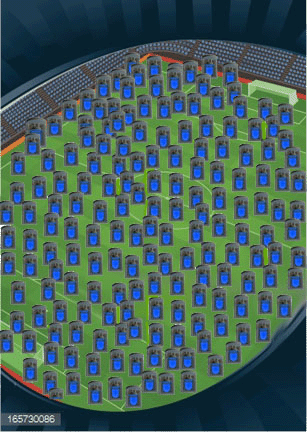
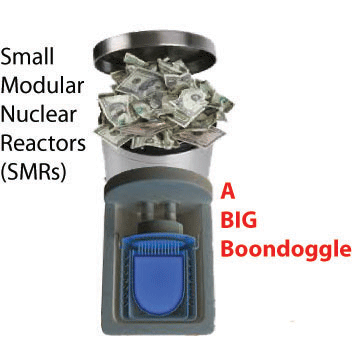
Small modular reactors won’t be able to compete with natural gas plants combined with renewables unless and until they get enough orders to justify building factories to manufacture them in a mass production environment.
Holtec Opens SMR Manufacturing Center in New Jersey
In September Holtec announced the grand opening of a $360M, 50 acre SMR manufacturing center in Camden, N.J. The firm was incentivized by the State of New Jersey to locate there with $260M in tax breaks. According to Holtec the Camden plant will eventually employ up to 1,000 people……….
Dr. Singh, Holtec’s President and CEO, declared the factory to be “Ground Zero” for the renaissance of nuclear energy and heavy manufacturing in America.
“It will serve as the launching pad for the regeneration of manufacturing in the United States.”
He added, “We will build nuclear reactors here, and they will sail from the port of Camden to hundreds of places around the world.”
Is Holtec Headed for Ukraine to Manufacture SMRs for Europe & Asia?
The maturing of an American supply chain to support mass production of components for SMRs might develop, but not all of it may be in the U.S. Holtec International, is reportedto be in talks about planning to arrange the production of small modular reactors (SMRs) for nuclear power plants in Ukraine, and for export to Europe and Asia.
The Interfax wire service report, which was not confirmed by Holtec, comes on the heels of the firm’s grand opening of a $360M nuclear energy component manufacturing center in Camden, NJ. It is the second report in three months providing details of Holtec International’s discussions with Energoatom. However, a spokesperson for Holtec declined to comment on these discussions as reported by Interfax.
The Intefax report quotes Energoatom National Nuclear Energy Generating Company of Ukraine President Yuriy Nedashkovsky who said,
“There is a very interesting offer made by Holtec International CEO Kris Singh to President of Ukraine Petro Poroshenko – to create a hub in Ukraine, distributing small modular reactors to Europe, Asia and Africa, with the localization of production and a large number of equipment at Ukrainian enterprises.”
According to Nedashkovsky, Ukraine’s Turboatom has already been involved in the project, as it has the required turbines in its production line.
“This project has already been developed conceptually. The launch of licensing procedures (in the U.S.) is expected next year, and an active phase of construction – approximately in 2023.” Nedashkovsky added.
Talking of the long-term prospects, Nedashkovsky noted that the demand for small modular reactors after 2025 was estimated to grow over time.
Is the Ukraine SMR Story Ahead of Holtec’s Headlights?
What’s unclear is whether Nedashkovsky was speaking off-the-top-of-his-head, commenting officially on behalf of Holtec International, Continue reading →
Piketon continues to fight radioactive disposal site , By Nikki Blankenship – nblankenship@aimmediamidwest.co NEWS 4 Oct 17,PIKETON –The Department of Energy (DOE) confirmed at Monday night’s Piketon Village Council meeting that concerns expressed by Piketon Mayor Billy Spencer, members of Council, various other public officials and members of Citizens Against Radioactive Dump (CARD) are valid. The DOE’s local site lead Joel Bradburne and Manager of the Portsmouth/Paducah Project Office for DOE Robert Edwards were both present at the meeting to answer questions from community members who expressed frustrations, claiming that the DOE has repeatedly lied to the them.Over recent months, the Village of Piketon has urged the DOE to reconsider the on-site waste disposal facility that the department feels is a solution to the waste problem at the Piketon plant. Thus far, options have been to do nothing, ship waste off-site or create a place on-site to dump it.
During the meeting, DOE representatives explained that it is expected to cost an estimated $1 billion less to dispose of the waste on-site. The facility would be 100-acre dump that DOE representatives state would hold low-level contaminants from site cleanup.
Earlier this year, Piketon hired an third-party consultant to evaluate plans for the site. The conclusion brought about several concerns that Piketon officials addressed directly during Monday night’s meeting.
The first concern was that there are fragments in the bedrock which could allow for waste to contaminant underground water sources, proximity to Piketon residents and compliance with the Toxic Substances Control Act provision mandating that the bottom of a landfill line system be installed at least 50 feet from historic high-water tables.
According to the results of the study, data from DOE states the depth of groundwater in some areas of the landfill site is as shallow as 21 feet below the surface.
“We worry about our water,” Spencer stated during the meeting.
Spencer and other frustrated Piketon officials and residents demanded DOE address these concerns……….
The waste disposal facility (referenced as a radioactive dump by opponents) is expected to be ready to accept waste as early as late 2021.
SMR Supply Chains, Costs, are Focus of Key Developments, Neutron Bytes, Dan Yurman October 4, 2017 “…….Westinghouse Says It Remains Committed To UK SMR Development
(NucNet) Westinghouse Electric Company said last week it remains committed to developing a 225-MW small modular reactor (SMR) that the company believes will allow the UK to move from buyer to global provider of SMR technology.
The company said in a statement that more than 85% of its SMR’s design, license and procurement scope can be delivered by the UK. The fuel would be manufactured at its Springfields facility in northern England.
“This is a special offering that only Westinghouse, with UK partners, can deliver,” the statement said.
Media reports in the UK have suggested that ministers are ready to approve the development of a fleet of SMRs to help guard against electricity shortages as older nuclear power stations are decommissioned………
Westinghouse said it filed for bankruptcy protection in the US to protect its core businesses and give the company time to restructure for continuing operation.
Musk said on Twitter Thursday that Tesla has already used a combination of its solar panels and Powerpack batteries to power a couple of small islands. He said that there is “no scalability limit” and that Tesla could build a similar system in Puerto Rico.
The island of Ta’u in American Samoa can run entirely on solar energy thanks to a Tesla microgrid that consists of 5,328 solar panels and 60 Powerpack batteries. Tesla also built a massive solar farm on the Hawaiian island of Kauai that can account for 20% of the island’s peak electricity load.
New research shows disastrous outcomes for nearby US allies if North Korea strikes
SEOUL• As United States President Donald Trump threatens to destroy North Korea, even some of his closest aides have warned of the potentially disastrous effects of a war.
New research published on the 38 North website points to just how catastrophic the impact might be on the regime’s neighbours.
If North Korean leader Kim Jong Un were to launch a nuclear attack on Seoul and Tokyo – both within striking distance of his weapons – as many as 2.1 million people could die and another 7.7 million could be injured, according to the 38 North report.
The analysis by Mr Michael Zagurek Jr, a consultant specialising in databases and computer modelling, is based on North Korea’s current estimated weapons technology and bomb strength.
Mr Zagurek assumes that Mr Kim has a baseline arsenal of 20 to 25 warheads and the capacity to put them on ballistic missiles.
Concerns about a nuclear conflict in North Asia have increased as Mr Kim accelerates his programme of acquiring weapons capable of hitting continental US, and as Mr Trump threatens preemptive military action.
While the chance of a direct attack on US allies Japan and South Korea remains slim, Mr Zagurek said history was replete with miscalculation by “rational actors” during crisis situations.
North Korean Foreign Minister Ri Yong Ho last month said the regime’s possible next steps include testing a hydrogen bomb over the Pacific Ocean.
According to Mr Zagurek, it is possible that another nuclear test, an intercontinental ballistic missile test, or a missile test that has the payload impact area too close to US bases in Guam might see Washington react with force.
US options could include attempting to shoot down the test missiles or possibly attacking the North’s missile testing, nuclear-related sites, missile deployment areas or the Kim regime itself. In turn, the North Korean leadership might perceive such an attack as an attempt to remove the Kim family from power and, as a result, could retaliate with nuclear weapons, he added.
North Korea’s older warheads have yields in the 15-25-kilotonne range, around the size of the bombs that devastated Hiroshima and Nagasaki in 1945.
Fatality estimates rise significantly if North Korea were able to strike with bombs similar to the one it tested on Sept 3, which had a likely yield of 108-205 kilotonnes, Mr Zagurek said.
Mattis says staying in Iran deal is in U.S. national security interest, https://www.axios.com/mattis-says-staying-in-iran-deal-is-in-u-s-national-security-interest-2492432687.html4 Oct 17Defense Secretary Mattis was asked Tuesday at a Senate Armed Services Committee hearing whether he believes it is in America’s “national security interest at this time to remain” in the Iran nuclear deal. After a lengthy pause, Mattis replied to Sen. Angus King: “Yes Senator, I do.”
Why it matters: Trump has an October 15 deadline to certify Iran’s compliance with the deal, or decline to do so. Trump has slammed the pact as “the worst deal ever”, and has been wrestling with whether to take a step toward ending it. This also puts Mattis directly at odds with Iran hawks like John Bolton who are urging Trump to rip up the deal, and say it’s a disaster for national security.
Trump plans to declare that Iran nuclear deal is not in the national interest, WP, By Anne GearanOctober 5 President Trump plans to announce next week that he will “decertify” the international nuclear deal with Iran, saying it is not in the national interest of the United States and kicking the issue to a reluctant Congress, people briefed on an emerging White House strategy for Iran said Thursday.
The move would mark the first step in a process that could eventually result in the resumption of U.S. sanctions against Iran, which would blow up a deal limiting Iran’s nuclear activities that the country reached in 2015 with the U.S. and five other nations.
Trump is expected to deliver a speech, tentatively scheduled for Oct. 12, laying out a larger strategy for confronting the nation it blames for terrorism and instability throughout the Middle East.
Under what is described as a tougher and more comprehensive approach, Trump would open the door to modifying the landmark 2015 agreement he has repeatedly bashed as a raw deal for the United States. But for now he would hold off on recommending that Congress reimpose sanctions on Iran that would abrogate the agreement, said four people familiar with aspects of the president’s thinking.
Tell Congress: Prevent Nuclear Catastrophe in Iran
Read the Public Inquiry Report, the Commissioners’ report, Surrendering Australia: The AUKUS Deception is available to download for free at aukuspublicinquiry.com. Or just watch the replay of the National Press Club Luncheon.
19 November – Webinar – The Reality of Reprocessing
Time: 11:00 AM Pacific Time (US & Canada) / 2:00 PM Eastern / 7:00 PM UK / 8:00 PM CET