2 Dec 17, WASHINGTON — The pressure is off South Carolina’s congressional delegation to extend a federal tax deadline for the country’s nuclear power industry following the cancellation of two unfinished reactors at V.C. Summer station.
As Republicans advance a tax overhaul bill in Congress, the likelihood of federal lawmakers passing tax credits for a new generation of nuclear power plants has diminished alongside South Carolina’s failed $9 billion energy project.
Lawmakers from the Palmetto State, who pushed the nuclear tax credits as recently as June, still believe that the incentives are good national policy but admit they now aren’t as much of a priority for the state, which continues to reel from the project’s collapse. …..
The tax credits, which would shrink the final cost of new nuclear reactors by billions of dollars once they are completed, were included in the massive tax bill that passed the House in November. But the incentives were left out of the Senate’s partnering tax legislation…….
At this point, Georgia is the only state likely to benefit from the proposed tax credits. Thirty states have nuclear power plants in operation, but few are discussing plans to construct new ones…….
U.S. Rep. Ralph Norman, R-Rock Hill, whose district includes V.C. Summer, said the project’s cancellation should serve as a “wake-up call” for other states that consider similar efforts in the future.
“The silver lining is it’s making people aware of oversight of a project like this,” Norman said. “It’s making people aware in government not to let the power companies off the hook.”
Another positive, Norman said, is that the energy vacuum creates more need for other sources of energy he has supported, such as solar. ……
The failure of South Carolina’s project also provides ammunition to longtime critics of the nuclear industry more broadly, such as U.S. Rep. Lloyd Doggett, D-Texas, who was the only House member to speak out against the tax credit extension when it came up for a House vote earlier this year and now expressed vindication.
“The nuclear industry is always asking for one handout after another and then they bail out,” Doggett said. “It’s a ripoff, and it’s tragic that the ratepayers in South Carolina end up picking up the cost.”
Officials continue fight against nuclear waste dump on shores of Lake Huron, Many local leaders sign opposition letter Voice News By Jim Bloch | For The Voice, 3 Dec 17
Just say no to a nuclear waste dump anywhere near the Great Lakes.
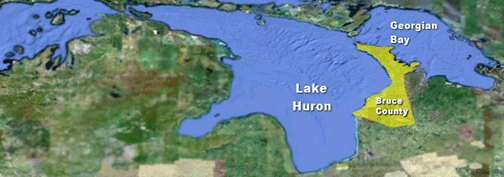
Especially the one proposed for the shores of Lake Huron in Kincardine, Ontario, Canada, about 110 miles uplake from Port Huron.
That’s the message delivered by more than 100 mayors, township supervisors and other elected officials in the region to Catherine McKenna, Canada’s minister of the Environment and Climate Change.
Of the 104 signatories, 14 hail from St. Clair County or nearby communities.
“Madame Minister, we the undersigned request that you act to protect North America’s most precious resource (the Great Lakes) and the health and safety of the millions of people who rely on your leadership by rejecting Ontario Power Generation’s application for its Deep Geological Repository in Kincardine, Ontario,” said the group.
OPG is proposing to excavate huge cavern out of a band of limestone more than 2,200 feet below the earth’s surface, framed by shale on the top and granite below, that has been stable for 450 million years, and store the nuclear waste there.
The site, next to Bruce Energy’s eight nuclear reactors, is about six-10ths of a mile from Lake Huron. The DGR is projected to hold 200,000 cubic meters of waste, some of which will remain toxic for at least 100,000 years, roughly 10 times longer than the Great Lakes have been in existence. Putting so much poisonous waste so close to the lakes amounts to madness, critics contend, especially given that all major underground burial sites for nuclear waste to date have leaked.
McKenna has asked OPG for additional information three times following the decision Joint Review Panel to recommend the project in 2015, which the company supplied — and some of which the mayors challenge in their letter.
McKenna’s delay in making a final decision on the project seems to hinge on getting feedback from the Saugeen Ojibway Nation, which is still undecided about the dump.
The chiefs and councils of SON wrote to McKenna in July reminding her of “OPG’s commitment that it will not move forward with the DGR Project until the SON communities are supportive of it…Through the process, ‘Anishnaabekiing, Anishnaabe Inwewin, Anishnaabe Naaknigewin — Our Territory, Our Voice, Our Decisions,’ members of the SON communities are becoming better acquainted with nuclear waste issues in order to be able to make a well-informed decision on whether they can support the DGR Project or not.”
In her response, McKenna suggested that her final decision may differ from the recommendation of the SON.
“I will make a decision based on science and traditional knowledge, taking into account the Joint Review Panel Report and the report by the Agency on the additional information, including the views of Indigenous Peoples, the public and other stakeholders,” McKenna said in her August response to the SON.
The signatories
Frank Fernandez, who helped organize the letter-writing drive on behalf of the Canadian-based Stop the Great Lakes Nuclear Dump, said the signees represent nearly 16 million residents hailing from Michigan, Indiana, Illinois, Wisconsin, Ohio, Minnesota, New York, Pennsylvania and Ontario, Canada.
“We are deeply concerned that Ontario Power Generation is proposing to bury nuclear waste in close proximity to the Great Lakes,” the letter states. “The Great Lakes are critically important resources to both Canada and the United States and supply drinking water to 40 million people including to the citizens we represent. The Great Lakes support fishing, boating, recreation, tourism, and agriculture and are the life-blood of a $6 trillion Great Lakes region economy.”……… Jim Bloch is a freelance writer. Contact him at bloch.jim@gmail.com. http://www.voicenews.com/news/officials-continue-fight-against-nuclear-waste-dump-on-shores-of/article_1de2f9fa-5605-5688-afdc-bc54ef98c926.html
Radiation concerns at Pohakuloa revisited: Feds to review issues raised by Kona resident, December 3, 2017 By TOM CALLIS Hawaii Tribune-Herald
Federal regulators will give parts of Pohakuloa Training Area’s radiation monitoring plan another look in response to a petition from a Hawaii Island resident.
A U.S. Nuclear Regulatory Agency review board agreed last month to review some of the concerns raised by retired geologist Michael Reimer, including frequency of sediment sampling, number of sediment sampling sites and data evaluation methods for depleted uranium.
Reimer, of Kailua-Kona, also asked for continued air monitoring and soil sampling, though they will not be part of the NRC’s review because those steps were previously considered……….
Flynn started a private lobbying and consulting practice that did business in foreign countries including Russia and Turkey. Flynn didn’t disclose those contacts and payments, as required, when applying for his security clearance to work in the Trump White House.
Top House Democrats have pointed out that Flynn failed to disclose a 2015 Middle East business trip tied to a plan to build nuclear plants in the region using money from Saudi and Russian investors. The Democrats called the omission a crime.
Flynn Said to Have Reached Out to Russia at Kushner’s Behest, By David Kocieniewski, Greg Farrell, Andrew M Harris, and David McLaughlin, Bloomberg,
Ex-security adviser pleads guilty and agrees to cooperate
Former national security adviser Michael Flynn pleaded guilty to lying to federal agents and is providing cooperation that promises to take Special Counsel Robert Mueller deep into Donald Trump’s administration.
Speaking in court as part of his plea agreement, Flynn, 58, described a series of conversations with the Russian ambassador to the U.S., Sergey Kislyak, in late December as the Trump team prepared to enter the White House. The talks were instigated by a “very senior member” of the Trump transition team. That person was Jared Kushner, the president’s son in law and adviser, as reported by Bloomberg View columnist Eli Lake……..
Flynn now says he lied to the FBI in January about the conversations, but that he had fully informed the transition team of the talks.
“This shows a Trump associate negotiating with the Russians against U.S. policy and interests before Donald Trump took office and after it was announced that Russia had interfered in our election,” Senator Dianne Feinstein, a Democrat from California, said in a statement, adding that it’s critical to find out “who knew and approved his actions.”……..
In cooperating with Mueller’s inquiry, Flynn is seeking leniency for himself and possibly his son, who worked with him in his private business. The charge doesn’t delve into Flynn’s work on behalf of Turkey, which is also under investigation, or his failure to promptly disclose such work to U.S. authorities. At the hearing, Flynn admitted to lying about contacts with Turkey. In admitting to false statements, he faced a maximum of five years in prison and a $250,000 fine, but is likely to get no more than six months and $9,500 under his plea agreement……
After he left the administration, Flynn filed an updated foreign registration form showing that he hadn’t disclosed multiple contacts and payments from foreign entities while serving as an campaign adviser to Trump starting in February 2016….
Flynn retired [from military service] in 2014 after Obama fired him as director of the Defense Intelligence Agency.
Afterward, Flynn started a private lobbying and consulting practice that did business in foreign countries including Russia and Turkey. Flynn didn’t disclose those contacts and payments, as required, when applying for his security clearance to work in the Trump White House.
Top House Democrats have pointed out that Flynn failed to disclose a 2015 Middle East business trip tied to a plan to build nuclear plants in the region using money from Saudi and Russian investors. The Democrats called the omission a crime.
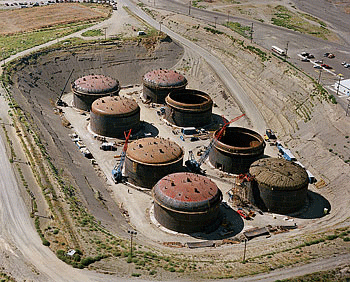
Hanford Tank Waste Among Top Federal Challenges For 2018 http://nwpr.org/post/hanford-tank-waste-among-top-federal-challenges-2018, ByANNA KING , 2 Dec 17, Cleaning up radioactive waste contained in tanks at the Hanford nuclear reservation is one of the top challenges facing the U.S. Department of Energy, according to a new special report by the department’s Inspector General.
The independent oversight arm of the U.S. Department of Energy didn’t mince words.
It said there were about 88 million gallons of radioactive tank waste across the nation that need to be cleaned up. Most is at Hanford.
The report noted that the factory meant to treat all of Hanford’s waste isn’t going so well — it’s behind schedule and will cost billions more than planned.
The report also highlighted problems that Hanford has had with its subcontractors. Specifically, several companies have agreed to pay a $125 million settlement for using substandard materials. Hanford’s tank waste and treatment plant were ranked at the top of the Department of Energy’s concerns along with cyber security and safeguarding the nation’s nuclear stockpile.
Saudi Arabia has welcomed the lobbying, they said, though it is likely to worry regional rival Iran at a time when tensions are already high in the Middle East.
One of the sources also said Riyadh had told Washington it does not want to forfeit the possibility of one day enriching uranium – a process that can have military uses – though this is a standard condition of U.S. civil nuclear cooperation pacts.
“They want to secure enrichment if down the line they want to do it,” the source, who is in contact with Saudi and U.S. officials, said before U.S. Energy Secretary Rick Perry holds talks in Riyadh early next week.
Another of the industry sources said Saudi Arabia and the United States had already held initial talks about a nuclear cooperation pact.
U.S. officials and Saudi officials responsible for nuclear energy issues declined to comment for this article. The sources did not identify the U.S. firms involved in the lobbying.
Under Article 123 of the U.S. Atomic Energy Act, a peaceful cooperation agreement is required for the transfer of nuclear materials, technology and equipment.
In previous talks, Saudi Arabia has refused to sign up to any agreement with the United States that would deprive the kingdom of the possibility of one day enriching uranium.
Saudi Arabia, the world’s top oil producer, says it wants nuclear power solely for peaceful uses – to produce electricity at home so that it can export more crude. It has not yet acquired nuclear power or enrichment technology.
Riyadh sent a request for information to nuclear reactor suppliers in October in a first step towards opening a multi-billion-dollar tender for two nuclear power reactors, and plans to award the first construction contract in 2018.
Reuters has reported that Westinghouse is in talks with other U.S.-based companies to form a consortium for the bid. A downturn in the U.S. nuclear industry makes business abroad increasingly valuable for American firms.
Reactors need uranium enriched to around 5 percent purity but the same technology in this process can also be used to enrich the heavy metal to a higher, weapons-grade level. This has been at the heart of Western and regional concerns over the nuclear work of Iran, which enriches uranium domestically.
Riyadh’s main reason to leave the door open to enrichment in the future may be political – to ensure the Sunni Muslim kingdom has the same possibility of enriching uranium as Shi‘ite Muslim Iran, industry sources and analysts say.
POTENTIAL PROBLEM FOR WASHINGTON
Saudi Arabia’s position poses a potential problem for the United States, which has strengthened ties with the kingdom under President Donald Trump.
Washington usually requires a country to sign a nuclear cooperation pact – known as a 123 agreement – that forfeits steps in fuel production with potential bomb-making uses.
“Doing less than this would undermine U.S. credibility and risk the increased spread of nuclear weapons capabilities to Saudi Arabia and the region,” said David Albright, a former U.N. weapons inspector and president of the Washington-based Institute for Science and International Security (ISIS).
It is not clear whether Riyadh will raise the issue during Perry’s visit, which one of the industry sources said could include discussion of nuclear export controls.
Under a nuclear deal Iran signed in 2015 with world powers – but which Trump has said he might pull the United States out of – Tehran can enrich uranium to around the level needed for commercial power-generation.
It would be “a huge change of policy” for Washington to allow Saudi Arabia the right to enrich uranium, said Mark Fitzpatrick, executive director of the Americas office at the International Institute for Strategic Studies think tank.
“Applying the ‘golden standard’ of not allowing enrichment or preprocessing (of spent fuel) has held up a 123 agreement with Jordan for many years, and has been a key issue in U.S. nuclear cooperation with South Korea,” said Fitzpatrick, a nuclear policy expert.
The United States is likely to aim for restrictions, non-proliferation analysts say.
These could be based on those included in the 123 agreement Washington signed in 2009 with the United Arab Emirates, which is set to start up its first South Korean-built reactor in 2018 and has ruled out enrichment and reprocessing.
“Perhaps Saudi Arabia is testing the Trump administration and seeing if the administration would be amenable to fewer restrictions in a 123 agreement,” ISIS’s Albright said.
Questions on outlook for nuclear plants by Tom Johnson, NJ SPOTLIGHT
In what is likely to be the opening salvo of a nasty legislative battle, lawmakers are to convene early next week to discuss how to prevent New Jersey’s nuclear plants from shutting down prematurely.
The bigger question is whether they also are planning to act on a yet-to-be-introduced bill that some say could provide billions of dollars in ratepayer subsidies to Public Service Enterprise Group over the next decade.
The Senate Environment and Energy Committee and Assembly Telecommunications and Utilities Committee plan to hold a rare joint session Monday on economic challenges facing nuclear power plants, an issue that is splintering the energy sector not only in New Jersey but in Washington and elsewhere.
News of the joint hearing this week jolted a coalition opposed to efforts to prop up nuclear units. They fear the proceedings foreshadows a legislative initiative to award lucrative financial incentives to PSEG and Exelon (a co-owner of two of the plants) during the lame-duck session, which ends early in January.
“We’ve seen this special-interest strategy before on bad bills,” said Jeff Tittel, director of the New Jersey Sierra Club, an opponent of subsidies to nuclear plants. “It’s how a bad bill gets passed in a lame-duck session.”………
New Jersey would not be the first state to financially back nuclear power plants. Both New York and Illinois have approved ratepayer subsidies to keep nuclear units operating in those states. In the former, the subsidies amount to nearly $1 billion over two years.
Meanwhile, the Trump administration is pushing a plan to bail out coal and nuclear units before the Federal Energy Regulatory Commission, which is supposed to act on the proposal within two weeks.
Workers finish cleaning up nuclear burial ground, Star Tribune By NICHOLAS K. GERANIOS Associated Press, NOVEMBER 30, 2017 SPOKANE, Wash.— Workers on the Hanford Nuclear Reservation in Washington state have finished cleaning up one of the nation’s most contaminated radioactive waste sites, the U.S. Department of Energy said Thursday.
The dangerous wastes at the site known as the 618-10 Burial Ground stem from the production of plutonium for nuclear weapons and took eight years to clean up, the agency said………
The 580-square-mile site Hanford site is located in southeast Washington state.
During the cleanup, workers retrieved more than 2,200 55-gallon drums, plus other waste, some of it buried more than 20 feet underground.
In total, workers removed more than 512,000 tons of contaminated soil and waste debris, which was taken to Hanford’s hazardous-waste landfill.
The 7.5-acre burial ground contained highly radioactive waste from Hanford laboratories and fuel development facilities in the 1950s and 1960s. Poor record-keeping at the time meant many of the waste types were unknown, the department said……
Hanford was created by the Manhattan Project during World War II as the nation raced to create an atomic bomb. It produced most of the plutonium for the nation’s nuclear arsenal during the Cold War and contains the nation’s largest volume of nuclear waste.
The cleanup work costs more than $2 billion per year and is expected to take decades. The lawmakers said they will press the federal government to continue funding the work.
Communities in Texas, Florida, other coastal states at risk
Credit rating agency says it’s adding climate to credit risks
Coastal communities from Maine to California have been put on notice from one of the top credit rating agencies: Start preparing for climate change or risk losing access to cheap credit.
In a report to its clients Tuesday, Moody’s Investors Service Inc. explained how it incorporates climate change into its credit ratings for state and local bonds. If cities and states don’t deal with risks from surging seas or intense storms, they are at greater risk of default.
“What we want people to realize is: If you’re exposed, we know that. We’re going to ask questions about what you’re doing to mitigate that exposure,” Lenny Jones, a managing director at Moody’s, said in a phone interview. “That’s taken into your credit ratings.”
In its report, Moody’s lists six indicators it uses “to assess the exposure and overall susceptibility of U.S. states to the physical effects of climate change.” They include the share of economic activity that comes from coastal areas, hurricane and extreme-weather damage as a share of the economy, and the share of homes in a flood plain.
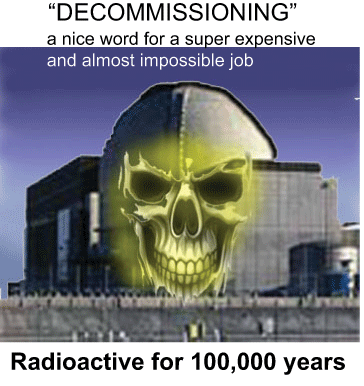
Decommissioning of Candu protoype moves forward, WNN, 01 December 2017
The Canadian Nuclear Safety Commission (CNSC) has extended the deadline for public comments on Canadian Nuclear Laboratories’ (CNL) draft Environmental Impact Statement (EIS) for decommissioning the country’s first ever nuclear power reactor by two weeks to 13 February. The Nuclear Power Demonstration (NPD) reactor was the prototype for the Candu reactor design……
CNL’s NPD Closure Project aims to safely carry out the decommissioning of the NPD facility and complete the closure of the site, using an in-situ approach. This would see the reactor systems and facility structure entombed in place using specially formulated grouts. The structure would then be capped with a reinforced concrete cap and covered with an engineered barrier. The decommissioned facility would be considered to be a licensed disposal facility under Canada’s Nuclear Safety and Control Act.
Despite promising to “drain the swamp” of vested interests and lobbyists, it became clear Trump was intent on refilling it with figures and ideas from the well-established network of conservative and neoliberal think-tanks.
Last month, Trump thanked one of those groups personally, with an address to the Heritage Foundation’s annual meeting.
But those think tanks, and the people who lead and run them, have strong links to another influential group that has been trying to bend governments around the world to a particular ideology for almost 70 years.
The Mont Pelerin Society (MPS) was established in 1947 by economist and philosopher Friedrich von Hayek — a man considered by many to be the godfather of modern free market thinking.
Mont Pelerin Society Membership List
Some scholars have described it as the “neoliberal thought collective” with its ideas heavily influencing the political administrations of Margaret Thatcher in the UK and Ronald Reagan in the US, and many world leaders since.
DeSmog has obtained a 2013 Mont Pelerin Society membership list, showing the group continues to boast influential members including former judges, former country leaders, wealthy industrialists, academics and think tank operatives in 62 countries from Argentina to Zimbabwe.
According to the Mont Pelerin Society, its members “see danger in the expansion of government, not least in state welfare, in the power of trade unions and business monopoly, and in the continuing threat and reality of inflation.”
Members continue to meet at annual conferences and regional meetings, often held in appealing locations. The next meeting will be held in Sweden’s capital, Stockholm.
High profile members include former Australian Prime Minister John Howard, petrochemical billionaire Charles Koch and former Czech Republic president Vaclav Klaus.
When Donald Trump won the election, one of the first people appointed onto his transition team was the Heritage Foundation’s Ed Feulner. Feulner joined MPS in 1972 – the year before he joined fellow Republican Paul Weyrich to start the Heritage Foundation.
Feulner was also president of MPS from 1996 to 1998 and has previously served as MPS treasurer.
In October, Trump gave a keynote address to the Heritage Foundation’s annual President’s Club Meeting.
“Heritage has been instrumental in providing the Trump administration with sound policies and experts who now serve in key government positions,” wrote Feulner in an email announcing Trump’s appearance………
Heritage, a conservative libertarian think tank, was also described by Politico as Trump’s “shadow transition team” as its fellows and staffers took up roles for the president.
In February, New Republic wrote how the Heritage Foundation was shaping Trump’s administration and was set to play a “key role in steering domestic policy” for the coming years.
MPS is also heavily linked with the Atlas Network — a co-ordinating group of more than 460 think tanks and operatives in 96 countries.
Atlas president Alejandro Chafuen joined MPS in 2010 and the current chair of Atlas, Linda Whetsone, is the daughter of the network’s founder, Sir Antony Fisher.
DeSmog’s analysis of Mont Pelerin Society’s membership shows scores of members who are affiliated with the same network of think tanks that have fought against policies to cut greenhouse gas emissions.
When Trump is gutting environmental regulations, pulling out of international climate agreements and pledging to cut welfare support and social security, it starts to look a lot like the world MPS members have been pushing for over decades.
MacLean found what George Monbiot calls the “missing link” that helps to explain the radicalisation of governments from the US to the UK and beyond. In an abandoned building on the campus of George Mason University, MacLean found the paper trail of the life’s work of James McGill Buchanan, including confidential letters with Charles Koch that confirm millions of Koch’s dollars flowed to GMU in support of Buchanan’s work.
Buchanan — who was a member and past-president of the Mont Pelerin Society — developed a strategy along with MPSmember Charles Koch and other elite industrialists to construct a network of neoliberal think tanks that, as MacLean writes and documents, have infected democracies with radical right wing policy ideas designed to shield and benefit the wealthy elite, and to disempower the majority of citizens.
Buchanan served on the advisory board of the Exxon- and Koch-funded Independent Institute, and as a Distinguished Senior Fellow of the Cato Institute, which Charles Koch co-founded with Murray Rothbard and Edward Crane. Crane is a long-standing member of MPS, and Rothbard is credited as having suggested to Charles Koch that he study the leadership of Vladimir Lenin and to view government as “our enemy.”
A ‘preventive strike’ against North Korea would trigger ‘nuclear retaliation’
On Tuesday, North Korea test fired what experts believe is its most advanced long range, nuclear-capable missile yet.
In response, Sen. Lindsey Graham told CNN “If we have to go to war to stop this we will.”
A preventive strike against North Korea is not feasible and would have devastating consequences. The best path is still diplomacy. Lt. Col. Daniel L. Davis, USA, Ret. CNBC , 1 December 17,
On Tuesday, North Korea test fired what experts believe is its most advanced long range, nuclear-capable missile yet. In response, U.S. Sen. Lindsey Graham (R-SC) bluntly told CNN’s that Trump will not allow North Korea to even possess a nuclear missile capable of hitting the U.S.”If we have to go to war to stop this we will,” he said. “We’re headed towards a war if things don’t change.”If Sen. Graham’s binary choice accurately reflects the president’s thinking, then war will come, and millions could die, including thousands of Americans. Such a war is too costly to seriously consider absent an imminent attack.
It is difficult to overstate the negative consequences that would result should President Trump order any type of “preventive” military strike—that is, an attack to deprive them of a capability rather than to stop an actual, imminent launch—against North Korea.
Choe Kang-il, Deputy Director General for North American affairs at North Korea’s foreign ministry recently told the New York Times, “If the United States even hints at a strike on North Korea, we will proceed with a preemptive attack on the U.S.”In case some are tempted to think these threats are merely bluster by the Kim regime, they were echoed almost precisely last month in congressional testimony by the highest ranking North Korean official ever to defect.
Former diplomat Thae Yong-ho told members of Congress North Korean officers are trained to fire their weapons “without any further instructions from the general command if anything happens on their side.” Their response would be immediate and devastating.
Consider the most dangerous course of action: this latest test, reportedly fired from a mobile launcher, indicates North Korea has the ability to launch nuclear-tipped missiles. If the United States tries to take out launch points, or even a massive and sustained bombing campaign in an attempt to destroy their ability to retaliate, we will inflict extraordinary damage—but it is unlikely our attacks would successfully penetrate all their mountain bunkers.
That leaves the possibility that Kim Jong-un would order a mobile launcher to emerge from its protective bunker, and in retaliation, send a nuclear missile crashing into Guam, Hawaii, or Seattle.
Such an act would not be a fringe possibility were the U.S. to launch any type of “preventive” armed attack; it would be a likely outcome.
The window of opportunity to strike North Korea without risk of nuclear retaliation closed many years ago. For more than a decade, it has been impossible to take out North Korea’s ability to launch conventional and nuclear retaliatory strikes against our allies—the only recent development is that our homeland may now also be at risk of a counterstrike.
White House May Share Nuclear Power Technology With Saudi Arabia, The overture follows an intense and secretive lobbying push involving Michael Flynn, Tom Barrack, Rick Gates and even Iran-Contra figure Robert McFarlane. Pro Publica by Isaac Arnsdorf, The Trump administration is holding talks on providing nuclear technology to Saudi Arabia — a move that critics say could upend decades of U.S. policy and lead to an arms race in the Middle East.
The Saudi government wants nuclear power to free up more oil for export, but current and former American officials suspect the country’s leaders also want to keep up with the enrichment capabilities of their rival, Iran.
Saudi Arabia needs approval from the U.S. in order to receive sensitive American technology. Past negotiations broke down because the Saudi government wouldn’t commit to certain safeguards against eventually using the technology for weapons.
Now the Trump administration has reopened those talks and might not insist on the same precautions. At a Senate hearing on Nov. 28, Christopher Ford, the National Security Council’s senior director for weapons of mass destruction and counterproliferation, disclosed that the U.S. is discussing the issue with the Saudi government. He called the safeguards a “desired outcome” but didn’t commit to them.
Abandoning the safeguards would set up a showdown with powerful skeptics in Congress. “It could be a hell of a fight,” one senior Democratic congressional aide said.
The idea of sharing nuclear technology with Saudi Arabia took an unlikely path to the highest levels of government. An eccentric inventor and a murky group of retired military brass — most of them with plenty of medals but no experience in commercial nuclear energy — have peddled various incarnations of the plan for years.
Many U.S. officials didn’t think the idea was serious, reputable or in the national interest. “It smelled so bad I said I never wanted to be anywhere close to that,” one former White House official said. But the proponents persisted, and finally found an opening in the chaotic early days of the Trump administration, when advisers Michael Flynn and Tom Barrack championed the idea……
In 2008, the Saudi government made a nonbinding commitment not to pursue enrichment and reprocessing. They then entered negotiations with the U.S. for a pact on peaceful nuclear cooperation, known as a 123 agreement, after a section of the Atomic Energy Act of 1954. A 123 agreement is a prerequisite for receiving American technology.
The talks stalled a few years later because the Saudi government backed away from its pledge not to pursue enrichment and reprocessing, according to current and former officials. “They wouldn’t commit, and it was a sticking point,” said Max Bergmann, a former special assistant to the undersecretary of state for arms control and international security at the time those negotiations occurred……..
The Obama administration held firm with the Saudis because it’s one thing to cap nuclear technology where it already exists, but it’s longstanding U.S. policy not to spread the technology to new countries. As Saudi Arabia and Iran — ideological and religious opponents — increasingly squared off in a battle for political sway in the Middle East, Republicans argued that the Obama administration had it backwards: It was enshrining hostile Iran’s ability to enrich uranium while denying the same to America’s ally Saudi Arabia.
One such critic of Obama’s Iran policy was Michael Flynn, a lieutenant general who was forced out as head of the Defense Intelligence Agency in 2014. Flynn quickly took up a variety of consulting assignments and joined some corporate boards. One of the former was an advisory position for a company called ACU Strategic Partners, which, according to a later financial disclosure, paid Flynn more than $5,000.
Flynn was one of many retired military officers whom ACU recruited. ACU’s chief was a man named Alex Copson, who is most often described in press accounts as a “colorful British-American dealmaker.” Copson reportedly made a fortune inventing a piece of diving equipment, may or may not have been a bass player in the band Iron Butterfly, and has been touting wildly ambitious nuclear-power plans since the 1980s. (He didn’t answer repeated requests for comment.)
By 2015, Copson was telling people he had a group of U.S., European, Arab and Russian companies that would build as many as 40 nuclear reactors in Egypt, Jordan and Saudi Arabia. Copson’s company pitched the Obama administration, but officials figured he didn’t really have the backers he claimed. “They would say ‘We have Rolls-Royce on board,’ and then someone would ask Rolls-Royce and they would say, ‘No, we took a meeting and nothing happened,’” recalled a then-White House official.
In his role with ACU, Flynn flew to Egypt to convince officials there to hold off on a Russian offer (this one unrelated to ACU) to build nuclear power plants. Flynn tried to persuade the Egyptian government to consider Copson’s proposal instead, according to documents released by Rep. Elijah Cummings, the ranking Democrat on the House Oversight and Government Reform Committee. Flynn also tried to persuade the Israeli government to support the plan and spoke at a conference in Saudi Arabia. (The trip would later present legal problems for Flynn because he didn’t report contacts with foreign officials on his application to renew his security clearance, according to Cummings. Cummings referred the information to Robert Mueller, the special counsel investigating Trump’s associates and Russia’s interference in the 2016 election. Flynn’s lawyer declined to comment.)
Copson’s outfit eventually splintered. A retired admiral named Michael Hewitt, who was to head up the security services part of the project, struck out on his own in mid-2016. Flynn went with him.
Hewitt’s new company is called IP3 International, which is short for “International Peace Power & Prosperity.” IP3 signed up other prominent national security alumni including Gens. Keith Alexander, Jack Keane and James Cartwright, former Middle East envoy Dennis Ross, Bush Homeland Security adviser Fran Townsend, and Reagan National Security adviser Robert “Bud” McFarlane.
IP3’s idea was a variation on ACU’s. Hewitt swapped out one notional foreign partner for another (Russia was out, China was in), then later shifted to an all-American approach. That idea resonated with the U.S. nuclear-construction industry, which never recovered from the Three Mile Island disaster in the 1970s and was looking to new markets overseas.
But nuclear exports are tightly controlled because the technology is potentially so dangerous. A 123 agreement is only the first step for a foreign country that wants to employ U.S. nuclear-power technology. In addition, the Energy Department has to approve the transfer of technology related to nuclear reactors and fuel. The Nuclear Regulatory Commission licenses reactor equipment, and the Commerce Department reviews exports for equipment throughout the rest of the power plant.
IP3 — whose sole project to date is the Saudi nuclear plan — never went through those normal channels. Instead, the company went straight to the top.
At the start of the Trump administration, IP3 found an ally in Tom Barrack, the new president’s close friend and informal adviser and an ultra-wealthy investor in his own right. During the campaign, Barrack wrote a series of white papers proposing a new approach to the Middle East in which economic cooperation would theoretically reduce the conditions for breeding terrorism and lead to improved relations.
Barrack wasn’t familiar with nuclear power as an option for the Middle East until he heard from Bud McFarlane. McFarlane, 80, is most remembered for his role in the defining scandal of the Reagan years: secretly selling arms to Iran and using the money to support Nicaraguan rebels. He pleaded guilty to withholding information from Congress but was pardoned by George H.W. Bush.
Nevertheless, Barrack was dazzled by McFarlane and his IP3 colleagues. “I was like a kid in a candy shop — these guys were all generals and admirals,” Barrack said in an interview. “They found an advocate in me in saying I was keen on trying to establish a realignment of U.S. business interests with the Gulf’s business interests.”
McFarlane followed up the meeting by emailing Flynn in late January, according to six people who read the message or were told about it. McFarlane attached two documents. One outlined IP3’s plan, describing it as consistent with Trump’s philosophy. The second was a draft memo for the president to sign that would officially endorse the plan and instruct his cabinet secretaries to implement it. Barrack would take charge of the project as the interagency coordinator. Barrack had discussions about becoming ambassador to Egypt or a special envoy to the Middle East but never committed to such a role. (McFarlane disputed that account but repeatedly declined to specify any inaccuracies. IP3 declined to comment on the memos.)
Flynn, now on the receiving end of IP3’s lobbying, told his staff to put together a formal proposal to present to Trump for his signature, according to current and former officials.
The seeming end run sparked alarm. National Security Council staff brought the proposal to the attention of the agency’s lawyers, five people said, because they were concerned about the plan and how it was being advanced. Ordinarily, before presenting such a sensitive proposal to the president, NSC staff would consult with experts throughout government about practical and legal concerns. Bypassing those procedures raised the risks that private interests might use the White House to their own advantage, former officials said. “Circumventing that process has the ability not only to invite decisions that aren’t fully vetted but that are potentially unwise and have the potential to put our interests and our people at risk,” said Ned Price, a former CIA analyst and NSC spokesman.
Even after those concerns were raised, Derek Harvey, then the NSC’s senior director for the Middle East, continued discussing the IP3 proposal with Barrack and his representative, Rick Gates, according to two people. Gates, a longtime associate of former Trump campaign chief Paul Manafort, worked for Barrack on Trump’s inaugural committee and then for Barrack’s investment company, Colony NorthStar.
By then, Barrack was no longer considering a government position. Instead, he and Gates were seeking investment ideas based on the administration’s Middle East policy. Barrack pondered the notion, for example, of buying a piece of Westinghouse, the bankrupt U.S. manufacturer of nuclear reactors. (Harvey, now on the staff of the House intelligence committee, declined to comment through a spokesman. In October, Mueller charged Manafort and Gates with 12 counts including conspiracy against the U.S., unregistered foreign lobbying, and money laundering. They both pleaded not guilty. Gates’ spokesman didn’t answer requests for comment.)
Ultimately, it wasn’t the NSC staff’s concerns that stalled IP3’s momentum. Rather, Jared Kushner, the president’s son-in-law and senior aide tasked with reviving a Middle East peace process, wanted to table the nuclear question in favor of simpler alliance-building measures with the Saudis, centered on Trump’s visit in May, according to a person familiar with the discussions. (A spokesperson for Kushner, asked for comment, had not provided one at the time this article was published; we’ll update the article if he provides one later.)
In recent months, the proposal has stirred back to life as the Saudi government kicked off a formal process to solicit bids for their first reactors. In October, the Saudis sent a request for information to the U.S., France, South Korea, Russia and China — the strongest signal yet that they’re serious about nuclear power.
The Saudi solicitation also gave IP3 the problem its solution was searching for. The company pivoted again, narrowing its pitch to organizing a consortium of U.S. companies to compete for the Saudi tender. IP3 won’t say which companies it has signed up. IP3 also won’t discuss the fees it hopes to receive if it were part of a Saudi nuclear plan, but it’s vying to supply cyber and physical site security for the plants. “IP3 has communicated its strategy to multiple government entities and policy makers in both the Obama and Trump administrations,” the company said in a statement. “We view these meetings and any documents relating to them as private, and we won’t discuss them.”
The Saudi steps lit a fire under administration officials. Leading the charge is Rick Perry, the energy secretary who famously proposed eliminating the department and then admitted he didn’t understand its function. (It includes dealing with nuclear power and weapons.) Perry had also heard IP3’s pitch, a person familiar with the situation said. In September, Perry met with Saudi delegates to an international atomic energy conference and discussed energy cooperation, according to a photo posted on his Facebook page. Perry’s spokeswoman didn’t answer requests for comment.
Other steps followed. Soon after, a senior State Department official flew to Riyadh to restart formal 123 negotiations, according to an industry source. (A State Department spokeswoman declined to comment.) In November, Energy and State Department officials joined a commercial delegation to Abu Dhabi led by the Nuclear Energy Institute, the industry’s main lobby in Washington. Assistant Secretary for Nuclear Energy Edward McGinnis said the administration wants to revitalize the U.S. nuclear energy industry, including by pursuing exports to Saudi Arabia. The Department of Commerce’s International Trade Administration and the Energy Department are organizing another industry visit in December to meet with Saudi officials, according to a notice obtained by ProPublica. And in the days before Thanksgiving, senior U.S. officials from several agencies met at the White House to discuss the policy, according to current and former officials.
The Trump administration hasn’t stated a position on whether it will let the Saudis have enrichment and reprocessing technology. An NSC spokesman declined to comment. But administration officials have begun sounding out advisers on how Congress might react to a deal that gives the Saudis enrichment and reprocessing, a person familiar with the discussions said.
Senators have started demanding answers. At the Nov. 28 hearing before the Senate Foreign Relations Committee, Ford, the NSC nonproliferation official who has been nominated to lead the State Department’s Bureau of International Security and Nonproliferation, testified that preliminary talks with the Saudis are underway but declined to discuss the details in public. As noted, Ford wouldn’t commit to barring the Saudi government from obtaining enrichment and reprocessing technology. “It remains U.S. policy, as it has been for some time, to seek the strongest possible nonproliferation protections in every instance,” he told the senators. “It is not a legal requirement. It is a desired outcome.” Ford added that the Iran deal makes it harder to insist on limiting other countries’ capabilities.
Sen. Ed Markey, the Massachusetts Democrat who led the questioning of Ford on this topic, seemed highly resistant to the idea of the U.S. helping Saudi Arabia get nuclear technology. “If we continue down this pathway,” he said, “then there’s a recipe for disaster which we are absolutely creating ourselves.” Markey also accused the administration of neglecting its statutory obligation to brief the committee on the negotiations. (The White House declined to comment.)
Any agreement, in this case with Saudi Arabia, would not require Senate approval. However, should an agreement be reached, Congress could kill the deal. The two houses would have 90 days to pass a joint resolution disapproving it. The committee’s ranking Democrat, Ben Cardin, suggested they wouldn’t accept a deal that lacked the same protections as the ones in the UAE’s agreement. “If we don’t draw a line in the Middle East, it’s going to be all-out proliferation,” he said. “We need to maintain the UAE’s standards in our 123 agreements. There’s just too many other countries that could start proliferating issues that could be against our national interest.”
Bob Corker, the committee’s chairman, has been a stickler on nonproliferation in the past; he criticized the Obama administration for not being tough enough. Corker isn’t running for reelection and has criticized Trump for being immature and reckless in foreign affairs, so he’s unlikely to shy away from a fight. (A spokesman declined to comment.) “The absence of a consistent policy weakens our nuclear nonproliferation efforts, and sends a mixed message to those nations we seek to prevent from gaining or enhancing such capability,” Corker said at a hearing in 2014. “Which standards can we expect the administration to reach for negotiating new agreements with Jordan or Saudi Arabia?” https://www.propublica.org/article/white-house-may-share-nuclear-power-technology-with-saudi-arabia
Canadian, American civic leaders urge feds to reject nuclear-waste proposal National Post, 30 Nov 17, TORONTO— More than 100 mayors and other elected officials on both sides of the Canada-U.S. border are urging Environment Minister Catherine McKenna to put the kibosh on a proposed nuclear-waste bunker near Lake Huron.
In an open letter to McKenna on Thursday, the officials say they speak for 16 million people who want the Ontario Power Generation proposal shelved as a potential eco hazard.
“We are deeply concerned that Ontario Power Generation (OPG) is proposing to bury nuclear waste in close proximity to the Great Lakes,” the letter states. “We find it irresponsible and deeply troubling that OPG failed, and continues to refuse, to investigate any other actual sites.”
The 104 signatories include mayors, wardens and reeves in Ontario, among them Keith Hobbs, of Thunder Bay, Maureen Cole, of South Huron, Heather Jackson, of St. Thomas, and Pat Darte, from Niagara-on-the-Lake. American signatories include mayors Ron Meer, of Michigan City, Ind., Stephen Hagerty of Evanston, Ill., and Mike Vandersteen, of Sheboygan, Wisc.
A covering note from Mayor Mike Bradley of Sarnia, Ont., says the message in the letter is clear.We oppose the risk to our precious fresh water,” Bradley writes.
Nuclear Regulatory Commission releases first step in new decommissioning regulations https://dailyenergyinsider.com/news/9290-nuclear-regulatory-commission-releases-first-step-new-decommissioning-regulations/ November 30, 2017 by Chris Galford The Nuclear Regulatory Commission (NRC) recently completed the regulatory basis it will use for the proposal of new decommissioning regulations for commercial nuclear power reactors next year. The NRC staff have determined that new regulations are necessary in a number of areas, including emergency preparedness, physical security, cyber security, drug and alcohol testing, training requirements for certified fuel handlers, decommissioning trust funds, financial protection requirements, indemnity agreements, and how the backfit rule is applied. Many of these revolve around the decommissioning process.
Not all of these require new rules, however. NRC staff has recommended that some are simply in need of updated guidance or inspection procedures. In the case of the management of spent fuel and environmental reporting, though, they have likewise recommended greater clarity among requirements. Staff in requirements, aging management of plant systems, structures, and components, as well as the active role state and local governments are expected to play in decommissioning scenarios, could all be affected.
This process of this new regulatory basis has been underway since November 2015, and the results are now publicly available.
Tell Congress: Prevent Nuclear Catastrophe in Iran
Read the Public Inquiry Report, the Commissioners’ report, Surrendering Australia: The AUKUS Deception is available to download for free at aukuspublicinquiry.com. Or just watch the replay of the National Press Club Luncheon.
19 November – Webinar – The Reality of Reprocessing
Time: 11:00 AM Pacific Time (US & Canada) / 2:00 PM Eastern / 7:00 PM UK / 8:00 PM CET