On a concrete pad about 25 feet above Plymouth Bay, eight massive steel-reinforced concrete cylinders hold the remains of the radioactive fuel that has kept the Pilgrim Nuclear Power Station running since the 1970s.
Design flaws in Holtec’s canisters for nuclear waste burial (-teleconference and comments)

 Holtec Proposal To Bury High Level Nuclear Waste – Teleconference Sign-up Deadline Monday-Written Comments Due End Mayhttps://wordpress.com/read/feeds/4410547/posts/1834518669 22 Apr 2018
by miningawareness
Deadline Monday to Register for teleconference re burial of high level nuclear waste (including spent Mox fuel) in New Mexico by Holtec. Privately owned Holtec’s plan would involve cross country transport and burial of first 500 and then ultimately 10,000 high level nuclear waste cans (Chernobyls in a can). Read more here:https://adamswebsearch2.nrc.gov/webSearch2/view?AccessionNumber=ML18107A144
Written Comment deadline end of May:https://www.federalregister.gov/documents/2018/03/19/2018-05438/holtec-internationals-hi-store-consolidated-interim-storage-facility-for-interim-storage-of-spent
An earlier US DOE funded site study of the site states that: “Mineral extraction in the area consists of underground potash mining and oil/gas extraction. Both industries support major facilities on the surface, although mining surface facilities are confined to a fairly small area…. Intrepid has rights to potash beneath the Site as shown in Appendix 2A, Map 9 and Figure 2.1.2-3. Mining has not progressed as far as Site….” https://www.nrc.gov/docs/ML1024/ML102440738.pdfWhile the dry salt lakes and potash mines suggest higher than normal corrosion rate for the 1/2 inch thick Holtec canisters, the location suggests sinkhole risk. The limited DOE funded study, which Holtec uses, denies the existence of karst, but this is hard to believe. Risk is exacerbated by the oil and gas wells and potash mining. The original DOE funded study states that “A producing gas and distillate well with associated tank battery is located near the communications tower…”
If “the requested CIS Facility license is issued by the NRC, Holtec subsequently anticipates requesting an amendment to the license to request authorization to possess and store an additional 500 canisters for each of 19 subsequent expansion phases to be completed over the course of years. Ultimately, Holtec anticipates that approximately 10,000 SNF canisters would be stored at the CIS Facility upon completion of all 20 phases…Phase 1 of the CIS Facility will include two HI-STORM UMAX pads that will allow storage of 500 canisters of SNF and GTCC waste from commercial nuclear reactors as well as a small quantity of spent mixed-oxide fuel..” https://www.federalregister.gov/documents/2018/03/19/2018-05438/holtec-internationals-hi-store-consolidated-interim-storage-facility-for-interim-storage-of-spent
As explained by Donna Gilmore of San Onofre Safety:
“Holtec HI-STORM UMAX canister storage systems and all other thin-wall nuclear waste canister storage systems are vulnerable to short-term radioactive leaks and potential explosions and criticalities. Each canister has roughly as much highly radioactive Cesium-137 as was released from the 1986 Chernobyl nuclear disaster.
These thin-wall “Chernobyl” cans have the following design flaws:
* Vulnerable to short-term cracking and major radioactive leaks
* Cannot be inspected inside or out
* Cannot be repaired
* Cannot be monitored or maintained to PREVENT radioactive leaks
* No plan for failing canisters.
Holtec proposes to transport thousands of US aging nuclear waste cans across the country to New Mexico and store them in an unproven HI-STORE CIS “Consolidated Interim Storage” facility,…“. See Handout: Holtec Storage System Designed to Leak.
https://sanonofresafety.files.wordpress.com/2015/10/designedtoleakholtec-cis-2017-06-24.pdf Read the rest here: https://sanonofresafety.org/holtec-hi-storm-umax-nuclear-waste-dry-storage-system/
Holtec actually admits in a recent presentation that these huge canisters which may be up to 75 ¾ inches in diameter, and up to 213 inches tall are only 1/2 inch thick and the vented protective shell only 1 inch thick: https://www.nrc.gov/public-involve/conference-symposia/dsfm/2015/dsfm-2015-stefan-anton.pdf…..
HOLTEC IS PRIVATELY OWNED, APPARENTLY BY KRIS PAL SINGH, THOUGH REALLY NO ONE KNOWS. IN THE US THIS MEANS THAT IT IS ALMOST IMPOSSIBLE TO GET INFORMATION ON THE COMPANY. IN THE PAST, SINGH HAS REFUSED TO GIVE INFORMATION ABOUT THE SPENT FUEL CASK SYSTEMS TO THE US GOVERNMENT WHEN IT WAS NEEDED BY THEM TO ESTIMATE COSTS DURING A LAWSUIT. HOLTEC HAS BEEN FINED FOR BRIBING THE TVA. HOLTEC HAS REQUESTED AND GOTTEN WHAT SEEMS LIKE ENDLESS REQUESTS FOR EXEMPTIONS TO THE AGREED STANDARDS FOR PRODUCTION AND PACKING THE SPENT FUEL CASK SYSTEMS. AN UNKNOWN NUMBER OF THE SPENT FUEL CASKS ARE NOT EVEN CORRECTLY PACKED AND RECEIVED “EXEMPTIONS”. ON AT LEAST ONE NUCLEAR REACTOR SITE ALMOST ALL ARE IMPROPERLY PACKED. NOTE THAT HOLTEC EVEN TRIES TO CLAIM COPYRIGHT ON INFORMATION WHICH HOLTEC TOOK FROM AN EARLIER US GOVERNMENT FUNDED DOCUMENT. THIS GIVES A TINY IDEA OF WHAT JERKS THEY ARE.
Danger of rising sea levels to nuclear waste canisters at Pilgrim Nuclear Power Station
Special vehicles are required to move the casks, as are specially built roads that can handle the immense weight.
“We don’t know if this highly dangerous material will be there for another 100 years or a thousand years.
if the casks are not moved in the coming decades, or even centuries, they worry about who would ultimately be responsible for protecting the nuclear waste. It’s unlikely, for example, that Entergy will still own the property, they say.
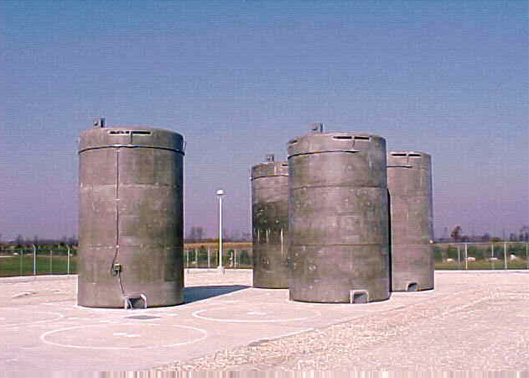
Pilgrim officials consider moving nuclear waste to higher ground more https://www.bostonglobe.com/metro/2018/04/20/seas-rise-pilgrim-mulls-moving-its-nuclear-waste-higher-ground/rcrkilSqo4cGpfledFyrJJ/story.html?,
The problem is where to store the nuclear waste — especially since its current location won’t stay 25 feet above Plymouth Bay for long.
As sea levels rise at an accelerating rate, increasing the threat that an extreme storm surge could flood the coastal facility, Pilgrim officials are considering whether to move the spent fuel to higher ground.
Plant officials and federal regulators maintain that the current location is safe, at least for the foreseeable future, noting that the containers are designed to withstand flooding. But local activists are urging Pilgrim to take action, worried that the daunting political obstacles to moving the casks to a federal repository could force them to remain in Plymouth permanently.
“Not moving them would be irresponsible,” said Pine duBois, executive director of the Jones River Watershed Association in Kingston, which is about 8 miles from Pilgrim. “We don’t know if this highly dangerous material will be there for another 100 years or a thousand years. It has to be moved.”
Environmental advocates are calling on the state to require Entergy Corp., the Louisiana-based conglomerate that owns Pilgrim, to move the casks to its helipad or parking lot, which are three times higher than the existing storage site and set further back from the water.
Despite the concerns, plant officials say the casks are secure……….
Under recent worst-case projections, tides could rise as much as 10 feet by the end of the century and as much as 37 feet by 2200. That’s not accounting for storm surges, such as the 15-foot high tides that battered the Massachusetts coast during two nor’easters this winter, causing widespread flooding. …….
Under recent worst-case projections, tides could rise as much as 10 feet by the end of the century and as much as 37 feet by 2200. That’s not accounting for storm surges, such as the 15-foot high tides that battered the Massachusetts coast during two nor’easters this winter, causing widespread flooding………
The decision about where to store the casks comes as the 46-year-old plant faces a host of maintenance challenges. Entergy announced three years ago that it would close Pilgrim in June 2019, after a litany of economic woes and safety issues. In 2015, the NRC designated Pilgrim as one of the nation’s three least-safe reactors.
Those problems have persisted. Until Thursday, the plant had been offline for 43 days — one of its longest unplanned outages — after crews discovered a significant issue with a transformer that provides power for Pilgrim to operate. It was the second unplanned shutdown this year.
Plant officials must also weigh a range of other issues in deciding whether to move the waste, including security, radiation, and the impact on decommissioning the plant.
Cost is another factor.
Special vehicles are required to move the casks, as are specially built roads that can handle the immense weight. For example, at Vermont Yankee, which began the decommissioning process several years ago, it cost $143 million to fill and move their remaining casks to a new storage site.
Moving the casks uphill would add to the expense, and plant officials have not ruled out building a new storage pad adjacent to the existing one, which is only about 100 feet from the reactor building.
Storing nuclear waste has long been a thorny political issue, one that has become increasingly urgent as more aging plants are shuttered………
For local activists who have long raised concerns about the dangers of nuclear power, the assurances of Pilgrim and the NRC provide little comfort.
While the casks may not leak from being submerged for a brief period, they could be subject to corrosion from exposure to saltwater, which could create cracks and eventually lead to leaks, they said.
And if the casks are not moved in the coming decades, or even centuries, they worry about who would ultimately be responsible for protecting the nuclear waste. It’s unlikely, for example, that Entergy will still own the property, they say.
“We need a plan for the next 100 to 300 years,” said Mary Lampert, director of Pilgrim Watch, a civic watchdog group. “I don’t see that happening.”
America’s mounting piles of plutonium cores – to be removed, perilously, by contract workers
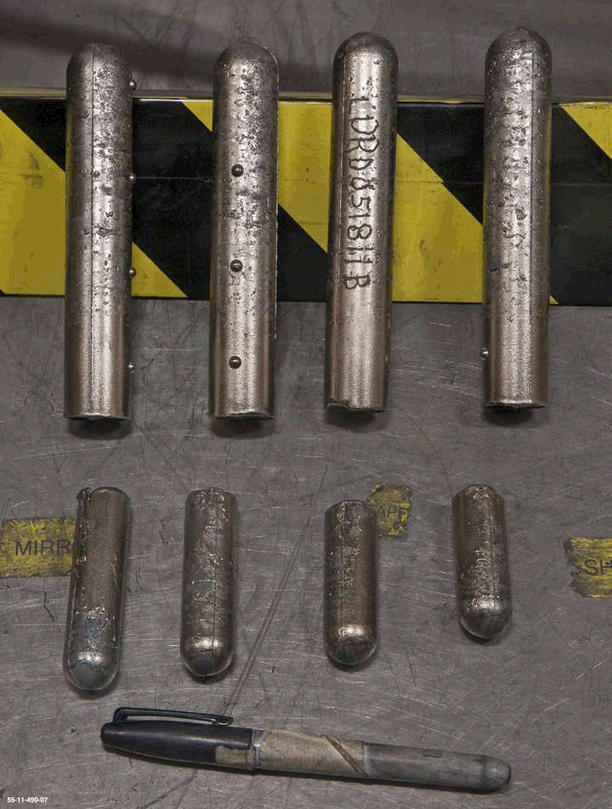 Reuters 20th April 2018 , In a sprawling plant near Amarillo, Texas, rows of workers perform by hand
one of the most dangerous jobs in American industry. Contract workers at
the U.S. Department of Energy’s Pantex facility gingerly remove the
plutonium cores from retired nuclear warheads. Although many safety rules
are in place, a slip of the hand could mean disaster.
In Energy Department facilities around the country, there are 54 metric tons of surplus
plutonium. Pantex, the plant near Amarillo, holds so much plutonium that it
has exceeded the 20,000 cores, called “pits,” regulations allow it to
hold in its temporary storage facility. There are enough cores there to
cause thousands of megatons of nuclear explosions. More are added each day.
https://www.reuters.com/article/us-usa-nukes-plutonium-specialreport/americas-nuclear-headache-old-plutonium-with-nowhere-to-go-idUSKBN1HR1KC
Trump to use wartime emergency Act to support coal and nuclear industries?
White House reportedly exploring wartime rule to help coal, nuclear, Ars Technica,President has used Act’s powers before for space industry. MEGAN GEUSS –
French President Macron urges Trump to stick with 2015 Iran nuclear accord
Iran nuclear deal: Macron urges Trump to stick with 2015 accord http://www.bbc.com/news/world-middle-east-43858040, 23 Apr 18 French President Emmanuel Macron has urged his US counterpart, Donald Trump, to stick with the Iran nuclear deal, saying there is no better option.
He was speaking to Fox News ahead of a three-day state visit to the US starting on Monday.
Mr Trump has threatened to abandon the deal, which limits Iran’s nuclear programme in return for sanctions relief, unless it is toughened up.
He has until 12 May to decide whether to restore US sanctions against Iran.
Correspondents say such a move would effectively kill the landmark agreement between Iran and six major western powers.
The two leaders are expected to address the issue when Mr Trump hosts Mr Macron this week.
Is Trump going to kill Iran deal?- How sanctions have hit ordinary Iranians
- An unlikely (and calculated) friendship is born
Mr Macron told Fox News he had no “plan B” for the deal if the US decided to restore sanctions, and said the US should stay in the agreement as long as there was no better option.
“Let’s present this framework because it’s better than the sort of North Korean-type situation.”
He said the two leaders had “a very special relationship” and he wanted to address ballistic missiles as part of the deal – a key demand of the US president – as well as work to contain Iran’s influence in the region.
President Trump is also demanding that signatories to the deal agree permanent restrictions on Iran’s uranium enrichment. Under the current deal they are set to expire in 2025.
He has put pressure on his European co-signatories to address these issues before the 12 May deadline, when he needs to decide whether to sign a waiver giving sanctions relief to Iran.
Under US law, passed during the Obama administration, the president needs to sign these waivers every 120-180 days acknowledging Iran’s compliance with the deal.
When Mr Trump signed the last one, in January, he said it was a “last chance” to change the accord, before the US withdraws.
Iran’s Foreign Minister Javad Zarif warned on Saturday that his country was prepared to resume its nuclear programme “at much greater speed”, if the US withdrew from the accord.
Mr Macron also appealed to the US president not to pull troops out of Syria after the final defeat of so-called Islamic State, saying that would “leave the floor” to Iran and Syria’s President Bashar al-Assad.
Trump’s Nuclear Posture Review makes allowance for NEW NUCLEAR BOMB TESTING
War on the rocks 20th April 2018 , While the Obama administration’s Nuclear Posture Review included a
blanket commitment not to conduct explosive nuclear tests, the Trump
administration’s 2018 version of the document argues that the United
States “must remain ready to resume nuclear testing if necessary to meet
severe technological or geopolitical challenges [emphasis added].”
Severe technological challenges that could merit a return to testing do not
currently exist. Specific geopolitical challenges, a new criterion, are not
defined. Does this mean the administration could resume testing if China
continues making aggressive moves in the South China Sea? If North Korea
tests another missile? If Russian hackers disrupt U.S. government websites?
https://warontherocks.com/2018/04/mushroom-clouds-beneath-the-surface-the-dangers-of-a-return-to-nuclear-testing/
U.S. Federal judge allows lawsuit about radiation to go ahead
 Federal judge allows Lakeland radiation lawsuit against Drummond Co. to go forward, The Ledger, By Suzie Schottelkotte , 20 Apr 18,
TAMPA — In a ruling released late Thursday, a federal judge again has determined that a lawsuit against the developer of the Grasslands and Oakbridge communities in Lakeland alleging radiation contamination in the soil will go forward.
U.S. District Judge Elizabeth Kovachevich rejected all of Alabama-based Drummond Co.’s arguments cited in a motion to dismiss, and ruled that lawyers for two residents have alleged enough facts to support their claims of residual gamma radiation from Drummond’s phosphate mining and subsequent reclamation in the late 1970s and early 1980s.
The lawsuit alleges that gamma radiation levels in the two developments have been measured at 11 to 21 times that of federal acceptable risk levels. It seeks compensation for cleaning up the contamination and a medical-monitoring program for residents in the 1,400-acre development.
Lawyers for the residents intend to seek class-action status in the lawsuit, which would allow anyone impacted by the alleged contamination to share in a monetary verdict if the residents prevail in court. The residents are represented by a consortium of six law firms led by the Houston-based Lanier Law Firm. ……http://www.theledger.com/news/20180420/federal-judge-allows-lakeland-radiation-lawsuit-against-drummond-co-to-go-forward
America’s dangerous stockpile of old plutonium cores
America’s nuclear headache: old plutonium with nowhere to go https://www.reuters.com/article/us-usa-nukes-plutonium-specialreport/americas-nuclear-headache-old-plutonium-with-nowhere-to-go-idUSKBN1HR1KC, Scot J. Paltrow
AMARILLO, Texas (Reuters) – In a sprawling plant near Amarillo, Texas, rows of workers perform by hand one of the most dangerous jobs in American industry. Contract workers at the U.S. Department of Energy’s Pantex facility gingerly remove the plutonium cores from retired nuclear warheads.
Although many safety rules are in place, a slip of the hand could mean disaster.
In Energy Department facilities around the country, there are 54 metric tons of surplus plutonium. Pantex, the plant near Amarillo, holds so much plutonium that it has exceeded the 20,000 cores, called “pits,” regulations allow it to hold in its temporary storage facility. There are enough cores there to cause thousands of megatons of nuclear explosions. More are added each day.
The delicate, potentially deadly dismantling of nuclear warheads at Pantex, while little noticed, has grown increasingly urgent to keep the United States from exceeding a limit of 1,550 warheads permitted under a 2010 treaty with Russia. The United States wants to dismantle older warheads so that it can substitute some of them with newer, more lethal weapons. Russia, too, is building new, dangerous weapons.
The United States has a vast amount of deadly plutonium, which terrorists would love to get their hands on. Under another agreement, Washington and Moscow each are required to render unusable for weapons 34 metric tons of plutonium. The purpose is twofold: keep the material out of the hands of bad guys, and eliminate the possibility of the two countries themselves using it again for weapons. An Energy Department website says the two countries combined have 68 metric tons designated for destruction – enough to make 17,000 nuclear weapons. But the United States has no permanent plan for what to do with its share.
Plutonium must be made permanently inaccessible because it has a radioactive half-life of 24,000 years.
“A MUCH MORE DANGEROUS SITUATION”
Edwin Lyman, a physicist at the Union of Concerned Scientists, a science advocacy group based in Washington, says solving the problem of plutonium storage is urgent. In an increasingly unstable world, with terrorism, heightened international tensions and non-nuclear countries coveting the bomb, he says, the risk is that this metal of mass annihilation will be used again. William Potter, director of the James Martin Center for Nonproliferation Studies at the Middlebury Institute of International Studies, told Reuters: “We are in a much more dangerous situation today than we were in the Cold War.”
Washington has not even begun to take the steps needed to acquire additional space for burying plutonium more than 2,000 feet below ground – the depth considered safe. Much of America’s plutonium currently is stored in a building at the Savannah River Site in South Carolina – like Pantex, an Energy Department site. Savannah River used to house a reactor. Local opponents of the storage, such as Tom Clements, director of SRS Watch, contend the facility was never built for holding plutonium and say there is a risk of leakage and accidents in which large amounts of radioactivity are released.
The Energy Department has a small experimental storage site underground in New Mexico. The department controls the radioactive materials – plutonium, uranium and tritium – used in America’s nuclear weapons and in the reactors of nuclear-powered aircraft carriers and submarines. In a Senate hearing in June 2017, Energy Secretary Rick Perry said the Energy Department has been in talks with New Mexico officials to enlarge the site. Environmental groups there have strongly opposed expansion.
Under an agreement with Russia, the United States was to convert 34 metric tons of plutonium into fuel for civilian reactors that generate electricity. The fuel is known as MOX, for “mixed oxide fuel.” Plutonium and uranium are converted into chemical compounds called oxides, and mixed together in fuel rods for civilian nuclear power plants. The two metals are converted into oxides because these can’t cause nuclear explosions. But the U.S. effort has run into severe delays and cost overruns.
The alternative method is known as dilute-and-dispose. It involves blending plutonium with an inert material and storing it in casks. The casks, however, are projected to last only 50 years before beginning to leak, and so would need to be buried permanently deep underground.
Trump administration dreams up a new plan to promote coal and nuclear
 The Trump Administration Just Hatched Another Plan to Buoy Coal and Nuclear
Welcome to the third act of the administration’s emergency plan to save its favorite fuels. GreenTech Media , APRIL 20, 2018
Nuclear corporation Rosatom parterners with National Geographic – to promote nuclear power!
 Energy Live News 19th April 2018 , The boss of ROSATOM in Europe has told ELN the future for nuclear power is
all about communication. Andrey Rozhdestvin was very open and direct when I
spoke to him earlier this week in Madrid, where the Russian nuclear giant
ROSATOM was launching its partnership with National Geographic, sponsoring
a series of new wildlife documentaries.
It’s one its ways of trying to trigger public dialogue on the issue of nuclear power. ROSATOM says the
documentaries will be talking about how to tackle climate change and they
of course believe nuclear energy, which is carbon-free generation, is part
of the answer.
https://www.energylivenews.com/2018/04/19/talk-to-the-people-says-russian-nuclear-chief/
Donald Trump might just walk out of the nuclear summit talk with Kim Jong Un
 Trump leaves open possibility of bailing on meeting with North Korea leader, Military Times, , 19 Apr 18, WASHINGTON — President Donald Trump said that although he’s looking ahead optimistically to a historic summit meeting with North Korean leader Kim Jong Un he could still pull out if he feels it’s “not going to be fruitful.”
Plutonium contamination forces shutdown of demolition process for Hanford nuclear site
 Contamination from a nuclear cleanup forced a shutdown. Investigators want to know who is responsible http://www.latimes.com/nation/la-na-hanford-plutonium-exposure-20180330-story.htmlBy RALPH VARTABEDIAN, APR 16, 2018
Dr Helen Caldicott – forthright and clear – on Donald Trump, and the nuclear war danger
 Interview A conversation with Helen Caldicott From the forthcoming issue (May 2018)Taylor and Francis online, 17 Apr 18 Dan Drollette Jr For decades, anti-nuclear weapons campaigner Helen Caldicott (helencaldicott.com) has been educating people about the effects of nuclear weaponry and issuing rousing calls to action. A practicing pediatrician from Australia, Caldicott was the subject of an Oscar-winning short film, If You Love This Planet, and is the author of 12 books.In this Skype interview from her home in Sydney, Australia, the 79-year-old Caldicott doesn’t pull punches. For nearly six decades, she has been taking on the powers that be, in joyously feisty terms: She has said that the US Defense Department should be re-named the Killing Department and characterized Barack Obama as an “intelligent, lovely man, who failed the world” when it came to eliminating nuclear weapons. She considers the movie Dr Strangelove more of a documentary than a satire, labeled arms manufacturers “wicked,” and called American politicians “corporate prostitutes.”
And of the current president, Caldicott said: “We’ve got a man in charge who I think has never read a book, and who knows nothing about global politics, or his own country’s politics. Who operates with his own kind of sordid intuition. And he’s putting people in every department committed to destroying that department. He’s absolutely destroying the infrastructure of America.”
Noting that it was International Women’s Month, Caldicott had one thing to say to young women: “We need to take over, because we’re on the short course to annihilation, and we need to say to men ‘Look, stand aside, you need your bottom smacked.’ ”
Yet for someone who has spent a lifetime fighting vigorously against the specter of nuclear annihilation, Caldicott reveals that she is remarkably pessimistic about humanity’s chances. Caldicott said that she wants her tombstone to read: “She tried.”
Editor’s note: This interview has been condensed and edited for clarity.
……..I noticed there seem to be a lot of people in the anti-nuclear weapons movement with medical backgrounds.
Helen Caldicott:
It’s a medical problem. And explaining the medical dangers of nuclear war was a very good way to teach people what the danger is, and to bring it home to their city. That approach was – and is – very powerful. During the 1980s, when I was one of the leaders of the nuclear weapons freeze movement and one of the founding presidents of PSR, we at PSR held symposia on the medical effects of nuclear war at various universities, all around the country. It started at Harvard, where we had George Kistiakowsky, a physicist who had been in the Manhattan Project as an explosives expert (https://www.manhattanprojectvoices.org/oral-histories/george-kistiakowskys-interview). It was quite wonderful.
Although afterwards, some journalists did say: “What are doctors talking about this for, this is a political issue.” And we said no, it’s a medical issue, because it will create the final medical epidemic of the human race……….
…… I think we’re actually in a much more dangerous situation than we were during the height of the Cold War, though no one’s really taking any notice. I mean, Dan Ellsberg went to 14 different publishers before Bloomsbury published his book. And my latest book, Sleepwalking to Armageddon, (https://thenewpress.com/books/sleepwalking-armageddon) is not selling very well at all. It seems like society is practicing psychic numbing and manic denial. We’re into clothes and food, and all sorts of things like that, while life on the planet just hangs in the balance………
Of course. America’s economy is built on killing. It’s the Killing Department, not the Defense Department. There’s no defense from nuclear weapons. It’s all run by voracious, wicked corporations, such as Lockheed-Martin, General Electric, General Dynamics, and the like. And many American politicians are corporate prostitutes. ……
Dan Drollette:
So you think that the military-industrial complex (http://avalon.law.yale.edu/20th_century/eisenhower001.asp) that Eisenhower warned about 50-odd years ago in his farewell address is still alive and healthy?
Helen Caldicott:
Oh, it’s grown, and metastasized.
……..Dan Drollette: How would you characterize Trump and his administration?
Helen Caldicott:
Trump is a dolt. He’s an idiot. We’ve got a man in charge who I think has never read a book, and who knows nothing about global politics, or his own county’s politics. Who operates with his own kind of sordid intuition. And he’s putting people in every department committed to destroying that department. He’s absolutely destroying the infrastructure of America.
When you think of all the brave, heroic Americans who worked hard all their lives to set up wonderful laws to protect the environment and protect the people and protect the children and protect the Earth, what’s happening is shameful. It’s all being undone, and I can’t understand why.
……..Dan Drollette:
What about his administration’s doings on the world stage?
Helen Caldicott:
For some reason, Trump likes Putin and the Russians. Well, I think I know why. I think that they and the oligarchs have funded Trump for years and years and years. It’s mostly, I think, about money. Trump wants to get on well with them, which is good because, you know, there’s almost certainly about 40 hydrogen bombs targeted on New York as we speak. So, therefore, it is imperative that America get on well with the Russians and in fact, push for bi-lateral nuclear disarmament. So, from that perspective, it makes me feel a little bit … less anxious.
………I think that enlarging NATO right up to the Russian border was extremely provocative. That policy largely came about because of people like Lockheed-Martin president Norman Augustine, who I’ve previously described elsewhere as “commander-in-chief of the Pentagon.” Because after the Cold War ended, Lockheed-Martin et al had nowhere to make money. They’re going to make money by making bombs, killing people, and then making more bombs.
So, Augustine set off on a journey to all the newly released little countries – Lithuania, Latvia, etcetera – to say “Look, if you want to be a part of NATO and have a democracy, you have to spend about $3 billion on armaments.” (http://www.nytimes.com/1997/06/29/world/arms-makers-see-bonanza-in-selling-nato-expansion.html) And let’s be frank: NATO is in fact America. So that was all well and good for Lockheed-Martin, even though it meant that America went back on its promise to Gorbachev that NATO would not be enlarged. As a consequence, there are NATO missiles right up to the Russian border, on what had been territory that was previously friendly to Russian, which is extremely provocative. Imagine if the situation were reversed, and Canada became part of the Warsaw Pact, and they put Warsaw Pact-missiles on the US border. How do you think America would react? So that’s problem number one………https://www.tandfonline.com/eprint/MBkXvHtz5QyAfikSM8Cv/full
European lawmakers urge USA to stick with the Iran nuclear deal
Hundreds Of European MPs Urge U.S. To Support Iran Nuclear Deal https://www.rferl.org/a/hundreds-of-european-mps-urge-u-s-to-support-iran-nuclear-deal/29177578.html APRIL 19, 2018
Hundreds of lawmakers from Germany, France, and Britain have called on their counterparts in the U.S. Congress to support the 2015 nuclear deal between Iran and six world powers, calling it a “major diplomatic breakthrough.”
The initiative came as U.S. President Donald Trump has set a May 12 deadline to either improve or scrap the deal providing Iran with relief from sanctions in return for curbs on its atomic program.
“We were able to impose unprecedented scrutiny on the Iranian nuclear program, dismantle most of their nuclear enrichment facilities, and drastically diminish the danger of a nuclear arms race,” reads a statement signed by some 500 MPs from the German, British, and French national parliaments and posted online on April 19.
Britain, Germany, and France are signatories to the nuclear accord, along with the United States, China, and Russia.
Trump accuses Tehran of violating the spirit of the agreement and has called on European powers to “fix” what he says are the “terrible flaws” of the agreement. He wants new restrictions to be imposed on Tehran’s nuclear and missile programs.
“It is the U.S.’s and Europe’s interest to prevent nuclear proliferation in a volatile region and to maintain the transatlantic partnership as a reliable and credible driving force of world politics,” the European lawmakers said.
They wrote that abandoning the accord would result “in another source of devastating conflict in the Middle East and beyond,” would “diminish the value of any promises or threats made by our countries,” and would damage “our credibility as international partners in negotiation, and more generally, to diplomacy as a tool to achieve peace and ensure security.”
“We therefore urge you to stand by the coalition we have formed to keep Iran‘s nuclear threat at bay,” they added.
French President Emmanuel Macron and German Chancellor Angela Merkel will both travel to Washington next week on separate official visits, in part to convince Trump not to pull the United States out of the nuclear deal with Iran.
Releases of radiation from Hanford plutonium processing plan: demolition process is halted
 Plutonium plant removal halted after radiation releases https://cen.acs.org/safety/Plutonium-plant-removal-halted-radiation/96/i17 Corrective measures include better control measures, communication with workers by Jeff Johnson APRIL 18, 2018
The Department of Energy (DOE) has called for 42 actions to correct safety deficits that led to a series of radioactive releases during demolition of the now-closed plutonium processing facility at the former Hanford nuclear weapons production site in Washington state.
The actions include better application of coatings and use of other technologies to control spread of radioactive contamination, broader radiation boundaries, improve air dispersion measurement and modeling, greater involvement of employees as demolition moves ahead, and better training of and communication with site workers to solicit their input.
Following the releases, site remediation halted last December. Several hundred workers were tested for radiation exposure. Test results showed that several dozen workers had inhaled or ingested detectable radiation but at levels acceptable to the department.
The shutdown only affects demolition of the plutonium facility, but that is a significant part of the $2 billion a year Hanford cleanup. Hanford, in turn, is the largest component in what is the world’s more expensive remediation program. During World War II and the Cold War, the Hanford site was one of more than 100 U.S. plants that made nuclear weapons components. All the plant sites are undergoing some level of remediation.
The radiation exposure incidents at Hanford occurred last year and DOE’s analysis of what happened was released publicly in March. Additionally, DOE recently announced an additional internal but independent review of the plutonium demolition project. That analysis will be “ongoing,” according to DOE’s Office of Enterprise Assessments, which will conduct the review. An official with the office would not predict when oversight will end.
The demolition and remediation will not restart until the Washington State Department of Ecology and the U.S. Environmental Protection Agency, which regulate Hanford cleanup activities, are satisfied the operation is safe, according to DOE and Washington state officials.
The plutonium finishing facility turned plutonium nitrate solutions into solid, hockey-puck-sized plutonium “buttons” that could be shipped to other facilities. It once was a complex of some 90 building and was shut down in the 1980s. Cleanup began in 1989; demolition began in 2016.
Last June and again in December, demolition activities contaminated workers and vehicles at the site. Small levels of radiation were found away from the plutonium facility but still within the Hanford site. No detectable amounts were found in workers’ homes, DOE says.
In the March report, DOE says 281 workers requested bioassays and were tested following the December release. The results found two doses less than 1 millirem, eight doses between 1 to 10 mrem, and one dose between 10 to 20 mrem. DOE sets the acceptable level at 100 mrem/year for nonradiological workers and members of the public and 500 mrem/year for radiological workers.
Following the June release, some 300 workers requested testing and bioassays found elevated radiation exposure for 31 workers, DOE says.
1 This Month

Tell Congress: Prevent Nuclear Catastrophe in Iran

Tell Congress: Prevent Nuclear Catastrophe in Iran

Read the Public Inquiry Report, the Commissioners’ report, Surrendering Australia: The AUKUS Deception is available to download for free at aukuspublicinquiry.com. Or just watch the replay of the National Press Club Luncheon.

19 November – Webinar – The Reality of Reprocessing
Time: 11:00 AM Pacific Time (US & Canada) / 2:00 PM Eastern / 7:00 PM UK / 8:00 PM CET
Register for the Zoom Event Here


Shut down the radiation-damaged Heysham nuclear reactors now
To see nuclear-related stories in greater depth and intensity – go to https://nuclearinformation.wordpress.com

Say No to NASA’s Reckless Nuclear Reactor on the Moon
Say No to NASA’s Reckless Nuclear Reactor on the Moon
-
Archives
- November 2026 (147)
- October 2026 (302)
- September 2026 (339)
- August 2026 (330)
- July 2026 (355)
- June 2026 (287)
- May 2026 (306)
- April 2026 (356)
- March 2026 (251)
- February 2026 (267)
- January 2026 (308)
- December 2025 (358)
-
Categories
- 1
- 1 NUCLEAR ISSUES
- business and costs
- climate change
- culture and arts
- ENERGY
- environment
- health
- history
- indigenous issues
- Legal
- marketing of nuclear
- media
- opposition to nuclear
- PERSONAL STORIES
- politics
- politics international
- Religion and ethics
- safety
- secrets,lies and civil liberties
- spinbuster
- technology
- Uranium
- wastes
- weapons and war
- Women
- 2 WORLD
- ACTION
- AFRICA
- Atrocities
- AUSTRALIA
- Christina's notes
- Christina's themes
- culture and arts
- Events
- Fuk 2022
- Fuk 2023
- Fukushima 2017
- Fukushima 2018
- fukushima 2019
- Fukushima 2020
- Fukushima 2021
- general
- global warming
- Humour (God we need it)
- Nuclear
- RARE EARTHS
- Reference
- resources – print
- Resources -audiovicual
- Weekly Newsletter
- World
- World Nuclear
- YouTube
-
RSS
Entries RSS
Comments RSS

