USA Congress rejects move to limit new low-yield nuclear weapon.
House rejects limit on new nuclear warhead, Defense News , , 24 May 18, WASHINGTON — The U.S. House on Wednesday shot down a proposed limit on the Trump administration’s pursuit of a low-yield nuclear weapon.
F-35 bombers to get B61 Mod 12 nuclear weapon
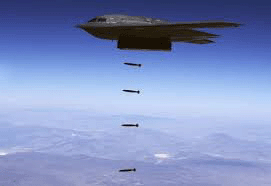 Terrifying new nuclear threat is here, Fox news By Kris Osborn | Warrior Maven 24 May 18
The Air Force is integrating the B61 Mod 12 nuclear weapon into the F-35 this year as part of a long-range plan to deploy a nuclear-armed, dual-capable F-35 able to give commanders a wider envelope of precision nuclear attack options.
“Detailed risk reduction activities have been completed ensuring the F-35A is fully compatible with the B61-12 weapon. Planning for Block 4 nuclear certification efforts have begun in anticipation of initial B61-12 integration on the F-35A this year,” Maj. Emily Grabowski, Air Force Spokeswoman, told Warrior Maven.
The Block 4 F-35, to fully emerge in the next decade, contains more than 50 technical adjustments to the aircraft designed as software and hardware builds — to be added in six-month increments between April 2019 to October 2024, she added.
The latest version of the B61 thermonuclear gravity bomb, which has origins as far back as the 1960s, is engineered as a low-to-medium yield strategic and tactical nuclear weapon, according to nuclearweaponsarchive.org, which also states the weapon has a “two-stage” radiation implosion design.
The most current Mod 12 version has demonstrated a bunker-buster earth-penetrating capability, according to the Federation of American Scientists (FAS).
“B61-12 is designed to have four selectable explosive yields: 0.3 kilotons (kt), 1.5 kt, 10 kt and 50 kt,” FAS writes.
Utilizing speed, maneuverability and lower-altitude flight when compared to how a bomber such as a B-2 would operate, a nuclear-capable F-35 presents new threats to a potential adversary. In a tactical sense, it seems that a high-speed F-35, fortified by long-range sensors and targeting technologies, might be well positioned to identify and destroy mobile weapons launchers or other vital, yet slightly smaller on-the-move targets. ………..
Also, without providing any detail, Grabowski did add that the Air Force is working closely with industry weapons developers to actively build new weapons specifically for the F-35.
“As we gain increasing experience with the aircraft and these new weapons mature, the program will follow the requirements for incorporating future weapons,” she told Warrior. http://www.foxnews.com/tech/2018/05/24/terrifying-new-nuclear-threat-is-here.html
Trump’s reckless propping up of the nuclear industry pleases its big lobbyists
 Trump has Plenty of Accomplices in his Reckless Energy Policies http://progressive.org/dispatches/trump-has-plenty-of-accomplices-in-his-reckless-energy-polic/, by Harvey Wasserman, May 24, 2018
Some 360,000 Americans now work in the solar industry, more than in nukes and coal combined. In fact, more Americans are now working in California’s solar industry than are digging coal nationwide. And the U.S. wind business now employs more than 100,000 people.
But President Donald Trump wants to change that. He has already slammed the solar industry’s growth by slapping a 30 percent tariff on imported Chinese panels, slowing installations nationwide.
He’s also contemplating using an obscure Korean War-era “emergency” ordinance that would let the government bail out money-losing coal and nuclear plants at the expense of renewables.
The idea was presented to Trump while he dined with a lobbyist from the infamous Akron-based FirstEnergy, whose bad business decisions have hung it with four crumbling, money-losing nuclear power reactors and some eighty obsolete coal burners.
More than half the nation’s ninety-nine licensed commercial reactors are now losing money. FirstEnergy’s Davis-Besse, near Toledo, Ohio; Perry, east of Cleveland, Ohio, and Beaver Valley 1 & 2, outside Pittsburgh, Pennsylvania, are bleeding radioactive red ink. One might expect “free market” corporate executives to cut their losses and let competition determine how our energy will be generated.
But FirstEnergy CEO Chuck Jones (annual salary: $8.7 million) has begged Ohio’s legislature and regulators to slap consumers with billions in higher electric rates. So far he’s failed, which is why he sent his lobbyist to dine with Trump.
Already, governments are doing what they can to prop up the nuclear power and fossil-fuel industries and damage the cause of renewable power.
Three nuclear reactors in Illinois have been granted a $200 million annual handout for the next decade. Pennsylvania and Connecticut may soon get soaked with massive rate hikes to keep reactors running there.
The New Jersey legislature has just approved spending $430 million over the next decade to run three more uneconomical reactors there, two at Salem and one at Hope Creek. Activists including actor Alec Baldwin have urged that state’s new Democratic governor to veto that proposal.
Throughout the United States, owners of even those few reactors that are still making money are poised to scam their way into compliant legislatures to see how much they can grab.
But the biggest nuke scam of all has been rammed through state regulatory agencies by New York’s “liberal” Governor Andrew Cuomo. Cuomo backs the 2021 shutdown of two decrepit reactors at Indian Point, saying they are too close to Manhattan to be considered safe.
But Cuomo wants ratepayers statewide to cough up a staggering $7.6 billion for four upstate reactors whose owners had them slated for decommissioning. To the astonishment of economists, ecologists, business and ratepayer groups, Cuomo’s hand-picked regulators approved the rip-off last year.
Nuclear opponents have gone to court to stop it. They argue that while less than four thousand jobs are tied to the reactors, many thousands more would be created by replacement wind and solar projects.
FirstEnergy’s scam is even more brazen. According to the Nuclear Energy Institute, the average reactor generally employs between four hundred and seven hundred workers. Some workers stay on long after shutdown to deal with issues of decommissioning and waste management.
But along with bailing out its four dying nukes, FirstEnergy wants a staggering $8 billion per year in above-market ratepayer fees for some 80 coal burners.
Rightwing think tanks like Heritage have joined financial and business groups in warning such rate hikes could decimate the area’s economy.
Meanwhile, a bitterly disputed “set-back” law has stopped some $4.2 billion in proposed wind projects along Ohio’s “north coast,” which is flat, windy, well-wired and full of farmers desperate for the projects to begin. But repeal has stalled, with tens of thousands of jobs and billions in income hanging in limbo.
They’ll all disappear if Trump and Energy Secretary Rick Perry approve FirstEnergy’s “emergency” bailout.
Last September, the Trump Administration approved another $3.7 billion in federal loans, on top $8.3 billion approved in the past, to sustain a scandal-ridden nuclear project in Vogtle, Georgia.
More recently, on May 10, Congress passed a new attempt to open the proposed Yucca Mountain waste dump. The plan to store some 70,000 tons of high-level commercial radwaste in an earthquake-riddled dormant volcano is overwhelmingly opposed by Nevadans and had long since been written off. But the measure was approved by a vote of 206 to 179, with ninety-four Democrats and eighty-five Republicans voting against. It now heads to the Senate.
As all of this plays out, tens of thousands of jobs hang in the balance. The nation’s entrenched fossil-nuclear corporate elites are more focused on propping up the industries of the past than embracing the technologies of the future.
Harvey Wasserman’s radio shows appear at prn.fm and KPFK-Pacifica, 90.7FM, Los Angeles. His America at the Brink of Rebirth: The Life & Death Spiral of US History from Deganawidah to the Donald will soon be published at Solartopia.org.
USA’s history of accidental dropping of nuclear bombs
Remembering A Near Disaster: U.S. Accidently Drops Nuclear Bombs On Itself And Its Allies WUNC91.5, By JAY PRICE 24 May 18
In 1968, the Pentagon halted a program that kept military bombers in the air, loaded with nuclear weapons to deter a Soviet attack.
The problem was the jets kept having near-catastrophic accidents.
“If you go through some of the archival evidence publicly available, it seems like once a week or so, there was some kind of significant noteworthy accident that was being reported to the Department of Defense or the Atomic Energy Commission or members of Congress,” said Stephen Schwartz, a long-time nuclear weapons analyst.
Schwartz singled out 1958 as a particularly notorious year.
“We’re actually celebrating − celebrating is probably the wrong word − but we’re marking the 60th anniversary of no fewer than eight nuclear weapons accidents this year,” Schwartz said.
Every couple of weeks, Maurice Sanders gets a reminder of one of those 1958 accidents when a car with out-of-state tags parks in front of his house just outside Florence, South Carolina. Strangers pile out and tromp around to the scrub oak forest just behind his back yard to gaze down at an odd tourist attraction.
“It’s the hole from where the bomb had dropped, years ago,” Sanders said. “I think it’s on some kind of map or something.”
The circular pit is as big around as a small house, with a pond of tea-colored water at the bottom. A fading plywood cutout that someone put up − apparently to lure more tourists − is the size and shape of the Mark 6 nuclear bomb that was dropped there by accident.
The core containing the nuclear material was stored separately on the B-47 bomber it fell from, but the high explosives that were used to trigger the nuclear reaction exploded on impact, digging the crater estimated at 35 feet deep. The blast injured six members of a nearby family and damaged their home beyond repair.
Earlier that same year, just one state farther south, a jet fighter collided with a bomber during a training exercise, and the crew jettisoned a bomb into coastal waters near Savannah, Georgia.
Two years later, in 1961, a B-52 bomber flying out of Seymour Johnson Air Force Base near Goldsboro came apart in the sky, and the two armed nuclear bombs it was carrying fell into a farming community northeast of the base. One buried itself so deeply into a tobacco field that some of its parts were never found. The other floated down on a parachute, planting its nose in the ground beside a tree.
The parachute bomb came startlingly close to detonating. A secret government document said three of its four safety mechanisms failed, and only a simple electrical switch prevented catastrophe. It was 260 times more powerful than the bomb dropped on Hiroshima and could have instantly killed thousands of people. The radioactive fallout could have endangered millions more as far north as New York City.
Safety takes back seat to readiness
The military’s name for serious nuclear weapons mishaps is “broken arrow.” The Pentagon has only officially acknowledged 32 broken arrows, but evidence compiled by the government shows there were thousands more accidents involving nuclear weapons, Schwartz said.
“Most of which were not that as serious as the 32 we know about, but some of them were quite bad,” he said.
Schwartz said a wave of serious accidents in the late 1950s through 1968 was partly due to programs that kept the U.S. on a war footing. A few planes were kept aloft 24 hours a day, ready to drop bombs on Russia.
And then there was the sheer number of weapons being made, which created more opportunities for things to go wrong.
Schwartz said by the year after the bomb fell on South Carolina, the U.S. was making almost 20 nuclear weapons a day……..
“Everything associated with nuclear weapons the nuclear weapons delivery system, the command-and-control systems that make sure they go off when they’re supposed to and most importantly that they don’t go off when they’re not supposed to − all of these things are designed, built, operated, and maintained by human beings,” Schwartz said. “And human beings are fallible.”
Overseas accidents bring program’s end
It wasn’t the bombs the U.S. dropped on itself that finally ended the program. Rather, it was two accidents over friendly nations.
In 1966, a B-52 bomber – also flying out of Seymour Johnson – broke apart in the sky near the coast of Spain. One of its bombs dropped into the sea, and three fell on land where conventional explosives scattered radioactive material.
Then, in 1968, the burning-seat-cushion crash spread plutonium and uranium onto sea ice and into the sea off the coast of Greenland……..http://wunc.org/post/remembering-near-disaster-us-accidently-drops-nuclear-bombs-itself-and-its-allies#stream/0
Ontario NDP only party speaking out against nuclear waste bunker near Lake Huron
Global News, The Canadian Press 24 May 18, TORONTO — Of the three main parties vying for office in Ontario’s spring election, only the NDP has spoken out against building a $2.4-billion nuclear waste bunker near Lake Huron.
USA nuclear agency up to its old tricks – secretive over-spending on nuclear weapons
 New Documents Raise Questions About Increased Nuclear Spending, A nuke agency is up to its old tricks War is Boring, WIB POLITICS May 22, 2018 Lydia Dennett
There are many reasons to keep certain parts of the U.S. nuclear weapons complex a secret. But fraud, waste, and abuse run rampant when the mystique and awe of nuclear bombs gets in the way of effective oversight. And it is the taxpayer who ends up suffering.
The secrets to creating a nuclear explosion and the materials to do so are kept by the National Nuclear Security Administration, a semi-autonomous agency within the Department of Energy, and it has a $1.2 trillion plan to build new nuclear warheads and facilities over the next 30 years.
But new documents obtained by the Project on Government Oversight discussing the life expectancy of nuclear weapons components show that the uranium cores may have a longer life span than originally thought. This may undermine some justifications for an expansive—and expensive—nuclear modernization plan.
Although much of the documents are redacted, likely to keep safe the most sensitive details of the U.S. nuclear enterprise, the remaining details seem to suggest that initial life-span estimates were too conservative. These initial estimates were partially used as justification for plans to build an expensive new facility and revising plans based on these findings could result in billions of savings for taxpayers.
In light of NNSA’s rhetoric about the aging nuclear arsenal and the desperate need for more money to modernize, POGO endeavored to determine exactly what upgrades were truly needed to support a credible nuclear deterrent. In 2013, we released a report that called for a study into the lifetime of uranium secondaries in order to determine what capacity would be required of a proposed new facility.
Initially, the NNSA had claimed publicly that it needed a “big box” design, a large facility that would replace several different buildings in the complex and that had the capacity to remanufacture 160-200 secondaries per year. But just a few years later the department’s own Stockpile Stewardship and Management Plan stated the need was really only 80.
Given this shift within the department, as well as a litany of design missteps, cost overruns, and poor project oversight, POGO recommended a lifetime study for uranium secondaries and a scaled-down design utilizing existing facilities.
Shortly after POGO released our UPF report, the NNSA formed a “Red Team” to review the design. That review echoed many of POGO’s findings and recommendations including the need for “significant and sustained oversight” as well as immediately scrapping the big box design.
“Design efforts on the current ‘big box,’ single structure UPF concept should be stopped while a comprehensive reevalution of program requirements and applicable design standards is undertaken,” the report stated.
The new documents from the time suggest that a study into the lifetimes of secondaries supported this decision. One of the newly obtained documents is a 2010 peer review analysis conducted by the Los Alamos National Laboratory of the life expectancy study for one nuclear warhead type, the W78. The review committee examined work and analysis done by the “life expectancy team” charged with concluding how long these secondaries will remain effective…………
NNSA’s pattern of exaggerating spending needs
A remarkably similar situation occurred with the agency’s planned plutonium operations replacement facility. The NNSA claimed the proposed Chemistry and Metallurgy Research Replacement – Nuclear Facility needed to be able to manufacture 450 plutonium cores per year. But after a lifetime study found they can last for over 150 years without significantly degrading the number plummeted to less than 80 per year, dramatically decreasing what would be required of the new building.
Congress ultimately canceled the facility when cost overruns and delays made it impossible to continue, and the NNSA is now pursuing a scaled down approach. But there’s no getting around the fact that twice now the NNSA has either obscured facts that would suggest a more limited capacity is all that’s required or has pursued an expensive plan without knowing all the facts beforehand. Either explanation is an unacceptable exploitation of taxpayer dollars.
……… Despite these nearly constant warnings and recommendations for improvement from all the four corners of the nuclear complex world, the NNSA plans to move full steam ahead with their incredibly expensive upgrade plan. A plan that is partially justified by rhetoric suggesting that age has significantly deteriorated parts of the complex.Without an independent study it’s impossible to know if these claims are true. And with NNSA’s track record, Congress would be more than justified in asking questions. Before pouring billions of dollars into this effort, Congress should commission an independent, scientist-led study by the JASON advisory group to ensure NNSA’s future spending plans match up with the overall U.S. national security needs.
This story first appeared at the Project on Government Oversight. https://warisboring.com/new-documents-raise-questions-about-increased-nuclear-spending/
Trump’s lawyer Cohen opens doors for Alabama nuclear developer Haney
By Kyle Whitmire kwhitmire@al.com “……Franklin Haney is a very rich man, and his money is hard at work in Alabama, in Washington, D.C., and maybe even the Middle East. The Chattanooga developer’s campaign cash has given him access to politicians from city council members to presidents of the United States.
And now, according to the Wall Street Journal, he has the help of President Donald Trump’s personal lawyer and political fixer, Michael Cohen, with designs on bringing online a nuclear power plant in northeast Alabama.
Two years ago, when I first wrote about Haney’s dream to buy a half-finished nuclear power plant in north Alabama and bring it online, I didn’t take his plans seriously for a couple of reasons.
Even if Haney could convince TVA to sell him the Bellefonte plant, even he — a billionaire — probably couldn’t afford to finish it, could he? Haney’s own projection was that the project would cost about $13 billion to complete. By most accounts, including Haney’s company’s website, he is worth less than that.
And even if he managed to finish it, there was no way the federal government would allow him to turn the thing on, would they?
The logistics and regulation of nuclear power make it nearly impossible to stop a project and then restart it again, which was a big reason the TVA never finished the job.
I wasn’t alone in that assessment.
Stephen Smith, the executive director of the Southern Alliance for Clean Energy, said then that Haney’s plans for Bellefonte were delusional.
“The first concrete was poured in 1974,” he said. “That reactor is approaching 50 years old. Do you think the Nuclear Regulatory Commission is going give a license for a reactor that has been sitting around for 50 years?”
But Haney didn’t give up.
Once a door-to-door Bible salesman, Haney became a self-made billionaire through working as the government’s landlord. He acquires and develops property, which he leases to local, state and federal agencies.
And he makes connections first with political donations. He’s donated to Democrats and Republicans. Bill Clinton and Barack Obama have benefited from his largess, as have Republicans, including Alabama Gov. Bob Riley………
TVA agreed to sell the power plant to Haney, but he still had those two hurdles left — regulation and capital.
Enter Donald Trump.
After the president’s victory in 2016, Haney donated $1 million to Trump’s inaugural fund, and last summer Bloomberg reported that Haney had bragged about dining with Trump about a dozen times during the president’s first six months in office. Haney could have had those opportunities because he’s a member of Trump’s club, Mar-a-Lago.
And it turns out, the Wall Street Journal reports, Haney had another connection, too. He is a client of Michael Cohen, Trump’s personal lawyer and political fixer, who appears to have turned his proximity to the president into a lucrative business opportunity.
According to the Journal, Haney hired Cohen to help him solicit investments for the Bellefonte project, and in April, the two met in Miami with Sheikh Ahmed bin Jassim bin Mohammed al-Thani, the minister of economy and commerce of Qatar and the vice chairman of the Qatar Investment Authority.
Previously, Cohen had solicited $1 million from Qatar for access to the Trump administration, the Washington Post reported last month. The Qatar government declined that solicitation.
It’s unclear whether the meeting was fruitful for Haney, but what is clear is that the law might not allow significant foreign investment in the Bellefonte project. Under the Atomic Energy Act, the NRC may not issue licenses for projects owned or controlled by a foreign entity.
But laws change, especially when men with money need them fixed, and if the Trump administration has shown anything, it’s that it cares little about regulations, environmental protections and foreign influence in domestic affairs.
Haney’s hurdles are still high. They are still there. But his money is working harder than ever to tear them down.
And anyone who cares about the safety of northeast Alabama should take him very seriously. https://www.al.com/opinion/index.ssf/2018/05/cohen_opens_doors_for_alabama.html
Huge corporate subsidy to be given by New Jersey Governor to nuclear industry
New Jersey Governor Plans to Sign Nuclear Bailout Bill, Bloomberg, By Elise Young and Brian Eckhouse
-
Bill seen costing customers more than $300 million a year
-
Exelon, Public Service Enterprise Group own reactors in state
-
New Jersey Governor Phil Murphy plans to sign a bill requiring utility customers to spend more than $300 million a year to rescue struggling nuclear power plants run by Exelon Corp. and Public Service Enterprise Group Inc., according to a person familiar with the matter.
The legislation, approved in April by the state’s Democratic legislature, aims to keep the state’s three nuclear plants operating, after owners warned the facilities were no longer economic amid lower power prices.
Murphy, a Democrat who was sworn-in in January, has not said publicly if he supports the measure, which some environmentalists oppose. A schedule released by his office Tuesday said he planned to sign “energy bills” at 11 a.m. Wednesday.
…….. Exelon and PSEG didn’t immediately comment. A spokesman for the Electric Power Supply Association, which represents independent power producers and has opposed subsidies for coal and nuclear plants, called the move “disconcerting.”“If news reports are true that Governor Murphy will sign the nuclear bailout legislation without seeking amendments, it is a sad day for New Jersey consumers and the future of competition in the state,” John Shelk, president of the Washington-based association, said in an email.
- ……. The Sierra Club is one of several environmental groups that have criticized the plan, calling it the “biggest corporate subsidy in state history.”https://www.bloomberg.com/news/articles/2018-05-22/new-jersey-governor-is-said-to-plan-to-sign-nuclear-bailout-bill
Call to White House to oppose Saudi Arabia’s threat to acquire nuclear weapons
 White House Should State Opposition to Saudi Threat to Acquire Nuclear Weapons http://www.ipsnews.net/2018/05/white-house-state-opposition-saudi-threat-acquire-nuclear-weapons/
America expands is nuclear arsenal as it demands that Iran and North Korea have no nuclear weapons
 As U.S. Demands Nuclear Disarmament, It Moves to Expand Its Own Arsenal, NYT. By David E. Sanger and William J. Broad, May 14, 2018
WASHINGTON — For the White House, these have been dramatic days for nuclear disarmament: First President Trump exited the Iran deal, demanding that Tehran sign a new agreement that forever cuts off its path to making a bomb, then the administration announced a first-ever meeting with the leader of North Korea about ridding his nation of nuclear weapons.
But for the American arsenal, the initiatives are all going in the opposite direction, with a series of little-noticed announcements to spend billions of dollars building the factories needed to rejuvenate and expand America’s nuclear capacity.
The contrast has been striking. On Thursday evening, hours after Mr. Trump announced that his meeting with Kim Jong-un, the North Korean leader, would take place on June 12 in Singapore, the Pentagon and the Energy Department announced plans to begin building critical components for next-generation nuclear weapons at the Savannah River Site in South Carolina.
The idea is to repurpose a half-built, problem-ridden complex that was originally intended to turn old nuclear weapons into reactor fuel to light American cities. Now the facility will be used to revitalize America’s aging nuclear weapons, and to create the capacity to make many hundreds more.
…… While it is possible that the American buildup is part of a negotiating strategy, offering Mr. Trump something he can trade away before it gets started, the White House has made clear, in both statements and strategy, that it envisions the reduction of nuclear weapons as a one-way street.
….. President Barack Obama argued that the United States could not urge other countries to give up nuclear programs while expanding its own. But many of his own aides later said they wished he had done far more to reduce America’s arsenal, arguing that it could safely drop below the number the Russians deployed.
Now Mr. Trump is heading in the other direction. The United States has dramatically stepped up the effort to overhaul the existing arsenal and prepare for the day when it might once again be enlarged. Unless the New Start Treaty is renewed for five years, any limits on the American and Russian arsenals will expire in February 2021, just days after Mr. Trump would enter his second term.
In the meantime, the American government is doing all it can to make clear it is preparing for an era of nuclear buildup.
…….. Los Alamos is to make 30 pits per year, and the South Carolina plant 50. That setup, the Energy and Defense Departments said, will improve “the resiliency, flexibility and redundancy of our nuclear security enterprise by not relying on a single production site.” But it also signals a return to production of new weapons, even as Mr. Trump is withdrawing from the 2015 deal with Iran in part because of “sunset provisions” that he says will eventually allow Tehran to do the same.
The federal rationale for making up to 80 pits a year is hidden in layers of secrecy but turns on stated fears that the plutonium fuel at the heart of American weapons will deteriorate with age, eventually rendering them useless.
Whether that fear is justified is a matter of debate. In 2006, a federal nuclear panel found that the plutonium pits aged far better than expected, with most able to work reliably for a century or more.
That judgment led critics to contend that the federal government was seeking a new generation of nuclear pits for reasons not of national security but of saber-rattling.
“No new pits are needed for any warhead,” Greg Mello, the executive director of the Los Alamos Study Group, a private organization in Albuquerque that monitors the nation’s nuclear complex and opposes expansion, said recently. “There are thousands of pits stockpiled for possible reuse.”
The Pentagon’s Nuclear Posture Review, published in February, called for the new capability to produce plutonium pits. It also called on Congress to approve the new low-yield nuclear weapons.
Last week, the full House Armed Services Committee endorsed the Nuclear Posture Review, but with Democrats overwhelmingly voting against it.
“We have to have a credible deterrence, but I think the Nuclear Posture Review goes way beyond credible nuclear deterrence,” said Representative Adam Smith of Washington, the top Democrat on the committee, warning that “we could stumble into a nuclear war.” https://www.nytimes.com/2018/05/14/world/trump-nuclear-savannah-river.html
Beware John Bolton, serial killer of nuclear agreements. He is shooting us all in the foot.
 The Path of Broke Nuclear Agreements, Yahoo News, Tom Z. Collina, Catherine Killough, Philip Yun The National Interest•May 20, 2018 Unlike North Korea today, Iran does not possess a single nuclear weapon. By trashing the Iran deal, President Trump risks turning Iran into North Korea.
The Path of Broke Nuclear Agreements
President Donald Trump, at the urging of National Security Advisor John Bolton, has withdrawn from the Iran nuclear agreement, putting the future of the deal in jeopardy. Trump did this despite the fact that Iran is in compliance with the deal, that the deal has served to shrink Iran’s nuclear program and keep it away from a bomb, and that it has prevented another costly war in the Middle East.
Just how bad will things get with Iran now that Trump has acted? Hard to say, but we can see the writing on the wall: Tehran could restart its nuclear program and edge closer to building a bomb. This would lead to increased calls from the right to—once again—stop Iran from acquiring nuclear capability, by military force if necessary. Trump is already indicating that things are heading in that direction. Just one day after breaking out of the Iran deal, Trump warned of “very severe consequences” if Iran resumes its nuclear program.
To fully understand the risks of the Trump administration abandoning the Iran deal, one need only recall what happened in North Korea after Bolton, then in the Bush administration as an under secretary of state, did his part to kill another landmark nuclear deal—the Agreed Framework.
In 1994, the North Korean regime threatened to go nuclear for the first time. To prove the point, Pyongyang expelled all international inspectors and made preparations to extract weapons-grade plutonium from its Yongbyon research reactor. The risks of a conventional conflict—even then— were high because the Clinton Administration was seriously considering military intervention in case diplomacy failed. An unprecedented meeting between former president Jimmy Carter and North Korean leader Kim Il-sung eventually led to the first U.S.-North Korea nuclear deal, the Agreed Framework.
Though only four pages long, the Agreed Framework served a similar purpose to the 159-page Iran agreement: to prevent a state from developing nuclear weapons. And, though neither agreement was perfect, the Agreed Framework—like the Iran deal thus far—proved successful, preventing the North from producing dozens more nuclear weapons worth of fissile material. For nearly a decade, the North readmitted international inspectors, stopped producing plutonium and shelved plans to build two large reactors.
……. Instead of working to improve the Agreed Framework by adding additional, stronger measures to what already existed, the Bush administration chose to back out of the agreement in 2002. Since that time, North Korea has consistently shocked the world with the speed, sophistication, and fulfillment of its nuclear ambitions.
……. Now, it is difficult to conceive of North Korea relinquishing a nuclear arsenal it has worked for two decades to achieve. But in 1994, long before North Korea tested its first bomb, the North did not have nuclear weapons to give up. Since then, the chance of convincing North Korea to give up its nuclear program has become less likely and more costly.
That history begs the question: What would North Korea look like today had we kept the Agreed Framework and built on it, rather than throwing it away?
Unlike North Korea today, Iran does not possess a single nuclear weapon, only the theoretical capability to one day produce them. By trashing the Iran deal, President Trump risks turning Iran into North Korea.
John Bolton was a central player in withdrawing U.S. support from the North Korea deal in 2002 and from the Iran deal now. History has shown that abandoning the North Korea deal made the problem worse, not better. Similarly, we can expect that the Iran crisis will now get worse, not better, as Tehran resumes its nuclear program and Trump responds with military threats.
Beware John Bolton, serial killer of nuclear agreements. He is shooting us all in the foot.
Philip Yun is Executive Director of Ploughshares Fund, a San Francisco-based peace and security foundation. He was a member of a government working group that managed U.S. policy and negotiations with North Korea under President Clinton and was part of the U.S. delegation that traveled to North Korea with Secretary of State Madeleine Albright in 2000.
Tom Collina is the Director of Policy at Ploughshares Fund. He has over 25 years of Washington, DC experience in nuclear weapons, missile defense and nonproliferation issues.
Catherine Killough is the Roger L. Hale Fellow at Ploughshares Fund, focusing on North Korea’s nuclear and missile development, inter-Korean relations, the US alliance system in East Asia, and the transnational politics of Asia.
Image: Unlike North Korea today, Iran does not possess a single nuclear weapon. By trashing the Iran deal, President Trump risks turning Iran into North Korea. https://www.yahoo.com/news/path-broke-nuclear-agreements-235800375.html
Walter Pincus warns U.S. Congress to be sceptical of Pentagon’s call to fund a new nuclear weapon
 The Pentagon is seeking money for a new nuclear weapon. Congress should be skeptical. https://www.washingtonpost.com/opinions/the-pentagon-is-seeking-money-for-a-new-nuclear-weapon-congress-should-be-skeptical/2018/05/18/d13fe766-59e4-11e8-8836-a4a123c359ab_story.html?utm_term=.e44ec44d91b4 By Walter Pincus May 18 Walter Pincus is a former Washington Post reporter and columnist covering national security issues.
Top Pentagon officials are telling some pretty tall tales in seeking congressional support for a new, low-yield, nuclear warhead to put on a long-range, submarine-launched ballistic missile.
Gen. John E. Hyten, commander of U.S. Strategic Command, gave the most unusual rationale when he testified on March 20 before the Senate Armed Services Committee.
The stated purpose of this new weapon is to deter the Russians from using any of their low-yield nuclear weapons — something Russian President Vladimir Putin has often threatened to do if he ever found himself being overwhelmed by NATO conventional forces, presumably in Western Europe.
The United States and its NATO allies already have about 200 low-yield nuclear bombs deployed in Europe. But Hyten and Pentagon officials say an additional weapon is needed to deter Putin’s first use of his tactical nukes, because the aircraft that would deliver our bombs, stealthy as they may be, might not be able to get through Russian defenses.
That’s where the new submarine-launched weapon would come in.
In Hyten’s presentation, should the Russians initiate the use of tactical nukes on the battlefield, the United States would launch one or two low-yield weapons from submarines, not toward the battlefield, where allies might be threatened, but toward targets in Russia.
Here’s the most interesting part: How are the Russians going to know the warheads on those incoming missiles are low-yield, and not — like most nuclear warheads delivered by our submarine-launched ballistic missiles — 10 times more powerful than the bombs used to strike Hiroshima and Nagasaki?
Hyten’s initial response to that question was to tell the senators that from launch to detonation some 30 minutes would elapse.
He then explained: “If somebody does detect that launch, they would see a single missile or maybe two missiles coming. They will realize it is not an existential threat to their country and, therefore, they do not have to respond with an existential threat.” By “existential threat” Hyten essentially meant a full-scale first strike by hundreds of U.S. warheads, designed to knock out Russia’s ability to respond and perhaps survive as a nation.
In short, Hyten suggested that Putin — or his successor — would wait 30 minutes for the incoming one or two U.S. missiles to hit Russian targets before deciding whether to launch a major nuclear response back at the United States.
Why does Hyten suggest that?
His answer was surprising: “That is what I would recommend if I saw that coming against the United States.”
Has any prior STRATCOM commander, or any other U.S. senior government official, announced publicly the United States would ride out any nuclear attack before responding?
Hyten went on to explain, “If we do have to respond, we want to respond in kind and not further escalate the conflict out of control.”
He described the new warhead as a “deterrence weapon first, and then a response weapon . . . to keep the conflict from escalating worse. It actually makes it harder for an adversary to use [a nuclear] weapon in the first place and if it does use it, it allows you to respond appropriately.”
Hyten added, “The key is a rational actor. A rational actor is the basis of all deterrent policy.”
Defense Secretary Jim Mattis made a simpler claim for developing the new warhead in testimony on May 9 before the Senate Appropriations defense subcommittee. He described the scenario Hyten used: Russia, facing defeat in a conventional battle, “would escalate to a low-yield nuclear weapon knowing that our choice would be . . . to either respond with a high-yield [nuclear weapon] or surrender — in other words, frankly suicide or surrender, because a nuclear exchange between Russia and the United States would be a disaster for this planet.”
Suicide or surrender are hardly the only choices, and Mattis should know better.
That same day, May 9, Rep. Adam Smith (Wash.), ranking Democrat on the Armed Services Committee, offered the more traditional understanding of how to deter the Russian low-yield nuclear weapon threat. It came during markup of the fiscal 2019 defense authorization bill.
Smith said, “We don’t create this notion that we can just exchange nuclear weapons and as long as they are small it will be okay. It won’t be okay.” Instead, he suggested, the response to the Russians should be, “We have over 4,000 nuclear weapons, and if you launch one, we will launch ours back at you. And we are not going to sit there and be concerned to make sure that ours isn’t bigger than yours when you started this.”
The Washington state congressman added, “If we send that message, that is a very sufficient deterrent.”
The full House Armed Services Committee ended up authorizing $65 million for development of the new low-yield, sub-launched missile and sent the measure on for an eventual vote by the full House. Meanwhile, the Senate Armed Services Committee has scheduled taking up the measure the week of May 21 where it may face more opposition than it did in the House committee. It should.
Missouri legal case – claim that cancer caused by Manhattan Project

 Woman claims Manhattan Project caused her cancer https://stlrecord.com/stories/511423482-woman-claims-manhattan-project-caused-her-cancer, by Amanda Thomas | May 20, 2018, ST. LOUIS – A Florissant woman has filed a lawsuit against a biopharmaceutical company and chemical-producing corporation for alleged negligence related to the disposal of “hazardous, toxic, and radioactive materials” near residential neighborhoods in St. Louis County.
Mox plutonium reprocessing plant has been a huge waste of U.S. taxpayers’ money
Another SC nuclear boondoggle could soon meet its end. This time it’s $7B in taxpayer money wasted, Post and Courier By Andrew Brown abrown@postandcourier.com , – May 20, 2018
Ballot initiative could shut down Phoenix-area nuclear plant
Santa Fe New Mexican, By Faith Miller | Cronkite News, May 19, 2018 “……. If the Clean Energy for a Healthy Arizona initiative appears on the ballot in November, voters will decide the plant’s future. The initiative calls for 50 percent of Arizona’s electrical energy to come from renewable sources, mostly solar and wind, by 2030. Nuclear power would be hit hardest among sources of power in Arizona, because Palo Verde — the nation’s largest power producer — could not operate at levels low enough to satisfy the initiative’s requirements.
1 This Month

Tell Congress: Prevent Nuclear Catastrophe in Iran

Tell Congress: Prevent Nuclear Catastrophe in Iran

Read the Public Inquiry Report, the Commissioners’ report, Surrendering Australia: The AUKUS Deception is available to download for free at aukuspublicinquiry.com. Or just watch the replay of the National Press Club Luncheon.

19 November – Webinar – The Reality of Reprocessing
Time: 11:00 AM Pacific Time (US & Canada) / 2:00 PM Eastern / 7:00 PM UK / 8:00 PM CET
Register for the Zoom Event Here


Shut down the radiation-damaged Heysham nuclear reactors now
To see nuclear-related stories in greater depth and intensity – go to https://nuclearinformation.wordpress.com

Say No to NASA’s Reckless Nuclear Reactor on the Moon
Say No to NASA’s Reckless Nuclear Reactor on the Moon
-
Archives
- November 2026 (147)
- October 2026 (302)
- September 2026 (339)
- August 2026 (330)
- July 2026 (355)
- June 2026 (287)
- May 2026 (306)
- April 2026 (356)
- March 2026 (251)
- February 2026 (267)
- January 2026 (308)
- December 2025 (358)
-
Categories
- 1
- 1 NUCLEAR ISSUES
- business and costs
- climate change
- culture and arts
- ENERGY
- environment
- health
- history
- indigenous issues
- Legal
- marketing of nuclear
- media
- opposition to nuclear
- PERSONAL STORIES
- politics
- politics international
- Religion and ethics
- safety
- secrets,lies and civil liberties
- spinbuster
- technology
- Uranium
- wastes
- weapons and war
- Women
- 2 WORLD
- ACTION
- AFRICA
- Atrocities
- AUSTRALIA
- Christina's notes
- Christina's themes
- culture and arts
- Events
- Fuk 2022
- Fuk 2023
- Fukushima 2017
- Fukushima 2018
- fukushima 2019
- Fukushima 2020
- Fukushima 2021
- general
- global warming
- Humour (God we need it)
- Nuclear
- RARE EARTHS
- Reference
- resources – print
- Resources -audiovicual
- Weekly Newsletter
- World
- World Nuclear
- YouTube
-
RSS
Entries RSS
Comments RSS

