Radioactive Particles Found in Homes of Workers at Major US Nuclear Weapons Facility

 Radioactive Dust Found in Homes of Workers at Major US Nuclear Weapons Facility, Radioactive microparticles were detected in the homes of six workers in central Washington state’s Tri-City area who are associated with the Hanford nuclear site, a major Cold War-era plutonium manufacturing facility, scientists have reported. Sputnik News, 14 June 18
A study published this month in the Journal of Environmental Engineering Science reported that small but still dangerous amounts of radioactive elements were found in dust collected by cloth wipes and vacuum cleaners in order to track the potential spread of radiation from one of the United States’ most notorious nuclear cleanup sites.
The same study also found radioactive particles in the homes of nuclear workers associated with the Los Alamos National Laboratory in New Mexico and the Rocky Flats Plant in Colorado. All three sites are heavily associated with nuclear weapons production.
It’s believed the particles could have found their way into the homes in a variety of ways, including being attached to workers’ clothing and being stirred up by wind storms and wildfires, which are common in the region, and blown inside.
The tests found radioactive uranium, thorium, plutonium and americium particles that, while innocuous in the external environment, represent a “potential source of internal radiation exposure” if ingested, warns Marco Kaltofen, a civil engineer affiliated with the Worcester Polytechnic Institute in Massachusetts and author of the study, the Seattle Times reported.
Exposure to these materials increases the risk of cancer, the study noted. Plutonium is “fiendishly toxic, even in small amounts,” said Glenn Seaborg, the physicist who discovered the element in 1941, as quoted in a 2011 fact sheet on the Rocky Flats site. The Agency for Toxic Substances and Disease Registry notes in its public health statement on thorium exposure that the radioactive isotopes can sit in the soil for decades and cause lung cancer if inhaled. Uranium ingestion mainly targets the kidneys, the ATSDR notes, while americium destroys and irradiates bone tissue and can cause bone cancers such as leukemia or lymphoma and damage the thyroid.
“These radioactive particles are tiny and difficult to detect once you get a few inches away, but once inside the body, the distance from our tissue is essentially zero,” Kaltofen explained. While the skin can handle certain amounts of radiation safely, the body’s internal organs have no protection and a tiny amount can prove fatally toxic. Polonium-210, for example, is 250 million times more toxic than hydrogen cyanide, the New York Times reported.
The report’s conclusions come from years of testing coordinated with Hanford Challenge, a Seattle-based organization that has fought for decades for accountability in the federal cleanup of the Hanford site. Kaltofen used an unusual technique that involves both electron microscopy and a specialized X-ray analysis that can detect extremely low levels of radioactive particles. The samples were compared to those taken from the Hanford site, which served as a kind of fingerprint for identifying the particles.
The levels found in the Hanford workers’ homes represented a health risk exceeding that considered acceptable by the International Commission on Radiological Protection’s safety standards.
…….. The Yakama Nation, whose reservation sits only 20 miles from the site, for decades fought turning Hanford into a nuclear waste site, as did other affected tribes such as the Nez Perce and Umatilla nations. Three counties around the Yakama reservation have seen high rates of a rare and fatal birth defect called anencephaly, in which a fetus’ brain and skull fail to fully form, which is believed to be caused by irradiation, Earth Island reported. Higher rates of anencephaly are also associated with sites in Iraq where the US military used depleted uranium rounds during the Iraq War, Iraqi doctors in Basra and Baghdad have noted.
Indigenous nations in Washington aren’t the only ones negatively affected by the US nuclear weapons program: decades of uranium mining in the Navajo Nation have caused extensive irradiation of the countryside, creating a disease known as Navajo Neuropathy, NPR reported. One spring in northeastern Arizona was reported in 2015 to have uranium levels “at least five times greater than safe drinking water standards” by a study published in the journal Environmental Science & Technology. The contamination caused the early deaths of many children who drank from the spring or whose mothers drank the water while pregnant. https://sputniknews.com/us/201806141065421254-Radioactive-Dust-Found-US-Homes/
Guam wants inclusion in radiation exposure compensation program: U.S. Senate considering this
S Senate panel to hear Guam’s inclusion in radiation exposure compensation program http://www.mvariety.com/cnmi/cnmi-news/local/105237-us-senate-panel-to-hear-guam-s-inclusion-in-radiation-exposure-compensation-program, 15 Jun 2018, Mar-Vic Cagurangan – For Variety HAGÅTÑA — Guam is getting close to achieving its long quest for inclusion in the Radiation Exposure Compensation Act.
- The U.S. Senate Committee on the Judiciary is scheduled to hold a hearing on June 27, 2018 for S.B. 197, also known as the Radiation Exposure Compensation Act Amendments or RECA of 2017, which would allow those who lived in Guam between 1945 and 1962 and who suffered from cancer or other listed radiation-related illness, to apply for compensation that would include free medical care and up to $150,000 from the remaining funds in the RECA Trust Fund.
It has been more than a decade since the National Research Council declared Guam’s eligibility for compensation under the RECA program. In 2005, the council released a report concluding that “Guam did receive measurable fallout from atmospheric testing of nuclear weapons in the Pacific” between 1946 and 1958. The council recommended that people living on island during that period be compensated under RECA “in a way similar to that of persons considered to be downwinders.”
As of 2017, the Justice Department had awarded more than $2 billion in “compassionate compensation” to eligible claimants under RECA, which provides up to $150,000 to victims of radiation. No one from Guam has received a cent from this program. The RECA program expires in 2022, but the justice department will stop receiving applications in 2020 to allow a two-year period to process the compensation.
Robert N. Celestial, president of PARS and longtime advocate for the inclusion of Guam in RECA, will testify before the U.S. Senate Committee.
About 67 nuclear devices were detonated by the Atomic Energy Commission in or around the Marshalls between 1946 and 1962. “The radiation emanating from these explosions severely affected those who lived in the Marshall Islands, resulting in everything from cancers to birth deformities. However, the radioactive fallout didn’t stop there: it extended downwind over 1,000 miles away to Guam,” states the council’s report.
- The 2005 study established that Guam did receive radioactive debris from fallout during the nuclear-weapons testing in the Pacific Ocean. The report, along with other studies, have established a correlation between the nuclear testing and high incidences of cancer in Guam, which is the second leading cause of death locally.
About 67 nuclear devices were detonated by the Atomic Energy Commission in or around the Marshalls between 1946 and 1962. “The radiation emanating from these explosions severely affected those who lived in the Marshall Islands, resulting in everything from cancers to birth deformities. However, the radioactive fallout didn’t stop there: it extended downwind over 1,000 miles away to Guam,” states the council’s report.
Vice Speaker Therese Terlaje said the introduction of the RECA amendment bill is “another step forward achieved by PARS’ fight for justice and assistance for those exposed to radiation on Guam during nuclear weapons testing conducted by the U.S. government in the Marshall Islands.”
Terlaje will also be attending the hearing and following up on lobbying that she participated in last October 2017. She will push for Resolution No. 39-34, passed unanimously by the 34th Guam Legislature in April 2017, which petitioned the U.S. Congress to pass legislation that would compensate those suffering from cancer and health issues due to radiation exposure from nuclear weapons testing in the Pacific.
“Justice is long overdue,” Terlaje said. “Free medical care and compassionate payments of $150,000 will certainly help cancer patients on Guam. Mr. Robert Celestial and the people of Guam have been working for years to educate lawmakers and ensure justice and financial redress for Guam, as has been given to other downwind populations who have endured the environmental and health impacts from radiation. A Senate hearing on whether to include Guam is an historic first. I want members of Congress to recognize that this is a very important issue that warrants justice for Guam’s people and that Guam’s leaders are in full support.”
Moving radioactive sludge from near Columbia River to the middle of the Hanford nuclear site
Major Problems at Hanford Nuclear Waste Site – King 5 Reports
Hanford workers move radioactive sludge to new storage facility https://www.king5.com/article/news/local/hanford/hanford-workers-move-radioactive-sludge-to-new-storage-facility/281-564101443
Workers will pump radioactive sludge to an adjacent building near the Columbia River, where it will be packaged and transported to the middle of the Hanford site. Allison Sundell, June 13, 2018
A very hard project – Trump trying to bail out coal and nuclear power
 Trump Wants to Bail Out Coal and Nuclear Power. Here’s Why That Will Be Hard. NYT,
Federal Energy Regulatory Commission (FERC) rejected Trump Administration’s plan to rescue coal and nuclear industries
 Massive FERC Flop For Plan To Save Coal & Nuclear Power Plants, Clean Technica, June 13th, 2018 by Tina Casey
The Trump Administration has devised a new plan for saving the nation’s aging fleet of coal and nuclear power plants, but so far it has been going over like a lead balloon. At a Senate hearing yesterday, all five members of the Federal Energy Regulatory Commission gave it the thumbs down.
Wait — what? Did you really think there was a chance the plan get the seal of approval from any of the FERC commissioners? Come to think of it, maybe. After all, the FERC Chairman himself was appointed by President* Trump. So, what went wrong at yesterday’s hearing?
What’s The Plan, Stan?
The new plan leverages the Energy Department’s authority to keep the electricity flowing under the federal Power Act. Here’s an explainer from the agency (emphasis added because that’s the important bit):
Under FPA section 202(c) during the continuance of a war in which the United States is engaged or when an emergency exists by reason of a sudden increase in the demand for electric energy, or a shortage of electric energy, or of facilities for the generation or transmission of electric energy, or of the fuel or water for generating facilities, or other causes, the Secretary of Energy may require by order temporary connections of facilities, and generation, delivery, interchange, or transmission of electricity as the Secretary determines will best meet the emergency and serve the public interest.
Fair enough. The question is whether or not an emergency exists, and at yesterday’s hearing the FERC commissioners couldn’t find anything in that long list of section 202(c) emergencies that would apply to the nation’s fleet of coal and nuclear power plants.
Meet The New Plan, Same As The Old Plan
More to the point, November’s midterm Congressional elections are fast approaching, so anything that looks like a taxpayer bailout is doomed to fail.
CleanTechnica predicted as much in a piece published Monday morning, before yesterday’s Senate hearing got under way………https://cleantechnica.com/2018/06/13/massive-ferc-flop-for-plan-to-save-coal-nuclear-power-plants/
The nuclear power industry is dying under its own weight.New small nuclear reactors too costly, too late
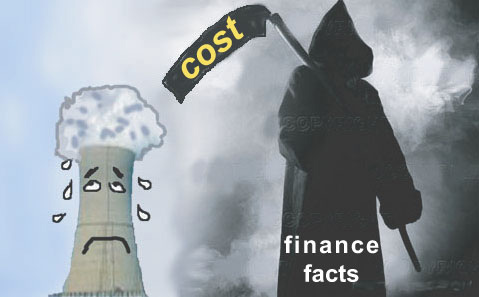 Nuclear Power Won’t Survive Without A Government Handout, Five Thirty Eight, By Maggie Koerth-Baker 14 June 18, Once upon a time, if you were an American who didn’t like nuclear energy, you had to stage sit-ins and marches and chain yourself to various inanimate objects in hopes of closing the nation’s nuclear power plants. Today … all you have to do is sit back and wait.
There are 99 nuclear reactors producing electricity in the United States today. Collectively, they’re responsible for producing about 20 percent of the electricity we use each year. But those reactors are, to put it delicately, of a certain age. The average age of a nuclear power plant in this country is 38 years old (compared with 24 years old for a natural gas power plant). Some are shutting down. New ones aren’t being built. And the ones still operational can’t compete with other sources of power on price. Just last week, several outlets reported on a leaked memo detailing a proposed Trump administration plan directing electric utilities to buy more from nuclear generators and coal plants in an effort to prop up the two struggling industries. The proposal is likely to butt up against political and legal opposition, even from within the electrical industry, in part because it would involve invoking Cold War-era emergency powers that constitute an unprecedented level of federal intervention in electricity markets. But without some type of public assistance, the nuclear industry is likely headed toward oblivion.
“Is [nuclear power] dying under its own weight? Yeah, probably,” said Granger Morgan, professor of engineering and public policy at Carnegie Mellon University.
……… it’s the cost of upkeep that’s prohibitive. Things do fall apart — especially things exposed to radiation on a daily basis. Maintenance and repair, upgrades and rejuvenation all take a lot of capital investment. And right now, that means spending lots of money on power plants that aren’t especially profitable…….
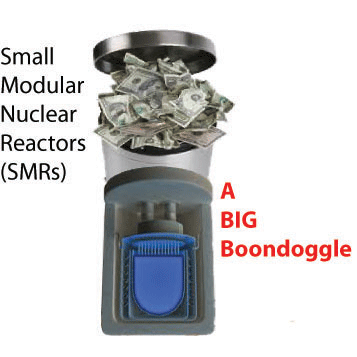 Morgan and other researchers are studying the economic feasibility of investment in newer kinds of nuclear power plants — including different ways of designing the mechanical systems of a reactor and building reactors that are smaller and could be put together on an assembly line. Currently, reactors must be custom-built to each site. Their research showed that new designs are unlikely to be commercially viable in time to seriously address climate change. And in a new study that has not yet been published, they found that the domestic U.S. market for nuclear power isn’t robust enough to justify the investments necessary to build a modular reactor industry. …….https://fivethirtyeight.com/features/nuclear-power-wont-survive-without-a-government-handout/
USA Federal nuclear weapons facilities are getting systems to disable drones
Federal nuclear weapons plants getting capability to disable drones,https://www.knoxnews.com/story/news/local/tennessee/2018/06/14/federal-nuclear-weapons-plants-getting-capability-disable-drones/702654002/
Natural Resources Defense Council warns against closing Hanford’s underground nuclear waste tanks
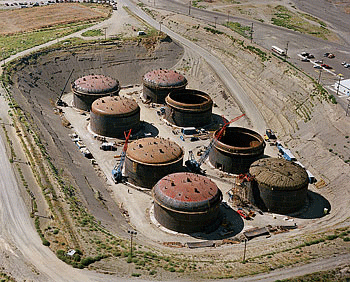 Hanford watchdog warns against closing underground tanks http://www.tri-cityherald.com/news/local/hanford/article212957659.html, BY ANNETTE CARY, acary@tricityherald.com, RICHLAND, WA , 14 June 18
A Hanford watchdog group is objecting as the Department of Energy takes the first step toward a plan to fill underground, radioactive waste storage tanks with concrete-like grout and leave them permanently in place. The C Tank Farm, which would be closed first, has not had enough radioactive waste removed to have tanks filled with grout, said Tom Carpenter, executive director of Seattle-based Hanford Challenge.
“This would be a serious setback for the cleanup at Hanford if the DOE is allowed to turn Hanford into the nation’s high-level nuclear waste dump,” Carpenter said. “This will be challenged.”
Geoffrey Fettus, a senior attorney at the Natural Resources Defense Council, said that “the people of the Pacific Northwest deserve better, and we’ll be there with them opposing this unsound and unsafe effort.”
The Singapore nuclear summit – a huge win for Kim Jong UN

North Korean leader Kim Jong Un provides guidance on a nuclear weapons program in this undated photo released by North Korea’s Korean Central News Agency (KCNA) in Pyongyang September 3, 2017. KCNA via REUTERS
The Guardian view on Trump in Singapore: a huge win – for North Korea https://www.theguardian.com/commentisfree/2018/jun/12/the-guardian-view-on-trump-in-singapore-a-huge-win-for-north-korea 13 June 18
Editorial A confident leader strode into the Singapore summit and won. Kim Jong-un went with a plan, gave little and left with plenty: bolstered status and diplomatic leverage, lavish praise from the US president, the promise of an end to US-South Korean military drills – and, surely, a growing confidence that North Korea is doing well at this game. A meeting supposed to effect a breakthrough on denuclearisation looked “more like a big welcome party to the nuclear-armed club”, in the acid but accurate words of one observer.
Better than war, for sure. But since it was Donald Trump who raised that spectre, giving him credit for dispelling it would be like calling a man a life-saver when second thoughts stay his hand from murder. The US president handed over gift after gift in exchange for the inflation of his ego. He does not know or does not care that his country went home poorer than it came. The language in the joint statement was weaker than in previous agreements– the very significant difference being that the North is now much further advanced in its nuclear programme. There was not even a pledge that either side “shall” take action; just the assertion that North Korea will “commit to working towards” denuclearisation, which it sees as a general, not unilateral, process.
In return Mr Trump axed the drills with, it seems, no warning to Seoul (or even US forces). Worse, he described them as “provocative” and “inappropriate”, not just giving the North what it wanted, but suggesting it was right to demand it. He added that he hoped to withdraw US troops from South Korea at some point – further undermining the long alliance.
Mr Trump’s recounting of the meeting would have been laughable were it not so shocking. He explained to the North Koreans that they could have “the best hotels in the world” on the beaches they use for artillery drills. He presented Mr Kim with a Hollywood-style movie trailer laying out the choice before him, complete with growling voiceover. He described the 100,000 or more North Koreans held in prison camps as “one of the big winners” of the meeting, though not even the vaguest assurance was extracted on their behalf. While finding time for another crack at Canada’s Justin Trudeau, he called Mr Kim “a very talented man” who wants to do the right thing and loves his country. He praised him for “running it tough” (quite the euphemism for a dictatorship with human rights atrocities which the UN calls unparalleled in the modern world). And the comprehensive, verifiable, irreversible denuclearisation on which the US was to insist? Ah: “There was no time!” to cover that. But he would be surprised if the North Koreans hadn’t begun already. Mr Trump thinks that the two sides probably have a rough transcript capturing all this, but does not need to verify anything because “I have one of the great memories of all time”. No satirist would dare to invent this.
Hope for the best but don’t expect much progress in lower-level talks next week; nor at meetings at the White House or in Pyongyang, mooted by the US president. China has already implied that it may be time to relax sanctions; South Korea and Russia have hinted that they are similarly minded. Even Mr Trump acknowledged that in six months’ time it may emerge that the North Koreans are not taking action (adding, in a startling moment of candour, that “I will find some sort of excuse” rather than admit that).
“He trusts me and I trust him,” Mr Trump boldly declared of Mr Kim. But if the US president is so naive, surely the North Korean leader cannot be. In so far as the US president has any enduring belief, it appears to be that disruption is a good in and of itself: that throwing everyone else off-balance must benefit the world’s only superpower, as one official has suggested (his colleague had a cruder characterisation). Withdrawal from the Iran deal proved that America’s enemies cannot rely upon its word. The G7 and Singapore summits demonstrated that allies cannot either. But Tuesday’s meeting also showed that Americans have reason to be wary. They too cannot count upon Mr Trump to live up to his promises.
What the Donald Trump and Kim Jong-un document actually says
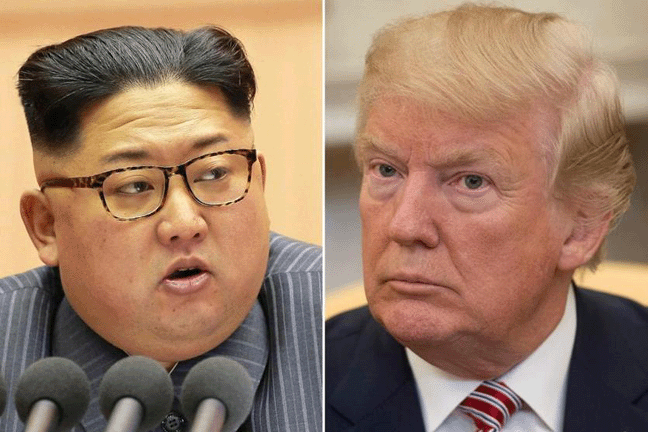 Singapore summit: Donald Trump and Kim Jong-un document released after historic meeting http://www.abc.net.au/news/2018-06-12/donald-trump-and-north-korea-leader-statement-after-meeting/9861688–June 12, 2018, Sentosa Island
The text from the document signed by Donald Trump and Kim Jong-un has been made available. Here it is in full:
President Donald J Trump of the United States of America and Chairman Kim Jong-un of the State Affairs Commission of the Democratic People’s Republic of Korea (DPRK) held a first, historic summit in Singapore on June 12, 2018.
President Trump and Chairman Kim Jong-un conducted a comprehensive, in-depth, and sincere exchange of opinions on the issues related to the establishment of new US-DPRK relations and the building of a lasting and robust peace regime on the Korean Peninsula.
President Trump committed to provide security guarantees to the DPRK, and Chairman Kim Jong-un reaffirmed his firm and unwavering commitment to complete denuclearisation of the Korean Peninsula.
Convinced that the establishment of new US-DPRK relations will contribute to the peace and prosperity of the Korean Peninsula and of the world, and recognising that mutual confidence-building can promote the denuclearisation of the Korean Peninsula, President Trump and Chairman Kim Jong-un state the following:
- The United States and the DPRK commit to establish new US-DPRK relations in accordance with the desire of the peoples of the two countries for peace and prosperity.
- The United States and the DPRK will join their efforts to build a lasting and stable peace regime on the Korean Peninsula.
- Reaffirming the April 27, 2018 Panmunjom Declaration, the DPRK commits to work towards complete denuclearisation of the Korean Peninsula.
- The United States and the DPRK commit to recovering POW/MIA remains, including the immediate repatriation of those already identified.
The United States and the DPRK commit to hold follow-on negotiations led by the US Secretary of State, Mike Pompeo, and a relevant high-level DPRK official, at the earliest possible date, to implement the outcomes of the US-DPRK summit.
President Donald J Trump of the United States of America and Chairman Kim Jong-un of the State Affairs Commission of the Democratic People’s Republic of Korea have committed to cooperate for the development of new US-DPRK relations and for the promotion of peace, prosperity, and security of the Korean Peninsula and of the world.
Reinventing Power: America’s Renewable Energy Boom
changed their lives and benefitted the diverse regions where they live.
“After I lost my job, I had about three days of sulking, and then I got
up and decided to listen to some of my co-workers’ advice to look into
wind turbines,” he said in Reinventing Power: America’s Renewable
Energy Boom, a new film (to be widely released this summer) from the Sierra
Club about the energy revolution in America.
recession. Bruce’s circumstances are not unusual: In the U.S., jobs in
sectors that have traditionally boosted the economy are disappearing. Coal
is environmentally damaging and expensive to mine. Car companies are
looking at an eventual slow-down in sales. Across both sectors and many
more, automation is putting people out of work.
employ over 800,000 people across the country, and are some of the
fastest-growing industries. As these resources scale, they’re becoming
economically viable–solar is around 50% cheaper than coal–and
wide-scale adoption of wind and solar could help curb America’s carbon
emissions. And they’re adaptable across a range of communities:
Reinventing Power traces the establishment of the country’s first
offshore wind farm near the tiny Rhode Island community of Block Island and
delves into community solar programs in Austin and wind power on Northern
Cheyenne Indian Reservation in Montana and a farm in North Carolina, The
film also follows the retraining of former coal miners and auto workers for
jobs in renewables throughout the U.S.
https://amp.fastcompany.com/40580983/this-new-doc-shows-how-renewable-energy-recharges-communities
How empty are Hanford’s nuclear waste tanks? Not enough, says watchdog
http://www.yakimaherald.com/news/local/how-empty-are-hanford-s-nuclear-waste-tanks-not-enough/article_a26eb296-6e4d-11e8-80f5-9b57fab51cec.html Annette Cary Tri-City Herald , 12 June 15
No scientific expertise wanted by Trump, as he approaches nuclear summit, guided by his “instinct”
 In the Trump Administration, Science Is Unwelcome. So Is Advice.
As the president prepares for nuclear talks, he lacks a close adviser with nuclear expertise. It’s one example of a marginalization of science in shaping federal policy. NYT By Coral Davenport 9 June 18
WASHINGTON — As President Trump prepares to meet Kim Jong-un of North Korea to negotiate denuclearization, a challenge that has bedeviled the world for years, he is doing so without the help of a White House science adviser or senior counselor trained in nuclear physics.
Mr. Trump is the first president since 1941 not to name a science adviser, a position created during World War II to guide the Oval Office on technical matters ranging from nuclear warfare to global pandemics. As a businessman and president, Mr. Trump has proudly been guided by his instincts. Nevertheless, people who have participated in past nuclear negotiations say the absence of such high-level expertise could put him at a tactical disadvantage in one of the weightiest diplomatic matters of his presidency.
“You need to have an empowered senior science adviser at the table,” said R. Nicholas Burns, who led negotiations with India over a civilian nuclear deal during the George W. Bush administration. “You can be sure the other side will have that.”
The lack of traditional scientific advisory leadership in the White House is one example of a significant change in the Trump administration: the marginalization of science in shaping United States policy.
There is no chief scientist at the State Department, where science is central to foreign policy matters such as cybersecurity and global warming. Nor is there a chief scientist at the Department of Agriculture: Mr. Trump last year nominated Sam Clovis, a former talk-show host with no scientific background, to the position, but he withdrew his name and no new nomination has been made.
These and other decisions have consequences for public health and safety and the economy. Both the Interior Department and the National Oceanic and Atmospheric Administration have disbanded climate science advisory committees. The Food and Drug Administration disbanded its Food Advisory Committee, which provided guidance on food safety.
Government-funded scientists said in interviews that they were seeing signs that their work was being suppressed, and that they were leaving their government jobs to work in the private sector, or for other countries.
After Mr. Trump last year withdrew from the Paris climate agreement, the international pact committing nations to tackle global warming, France started a program called “Make Our Planet Great Again” — named in reference to Mr. Trump’s slogan, “Make America Great Again” — to lure the best American scientists to France. The program has so far provided funding for 24 scientists from the United States and other countries to do their research in France…….https://www.nytimes.com/2018/06/09/climate/trump-administration-science.html
President Trump’s conference wrecking strategy on climate action, at G7 meeting in Canada
“CANADA, FRANCE, GERMANY, ITALY, JAPAN THE UK AND THE EUROPEAN UNIONREAFFIRM THEIR STRONG COMMITMENT TO IMPLEMENT THE PARIS AGREEMENT, THROUGH AMBITIOUS CLIMATE ACTION”
“PRESIDENT TRUMP’S WRECKING BALL APPROACH TO INTERNATIONAL DIPLOMACY LEFT HIM UTTERLY ISOLATED AT THE G7 SUMMIT,”

Six of the G7 Commit to Climate Action. Trump Wouldn’t Even Join Conversation. https://insideclimatenews.org/news/10062018/g7-summit-climate-change-communique-trump-allies-estranged-germany-france-canada
Trump skipped the formal climate discussions, had the U.S. negotiators promote fossil fuels instead, and then renounced the group’s official communique. BY STAFF, INSIDECLIMATE NEWS JUN 10, 2018
US plays down hopes from Trump-Kim nuclear summit
Both leaders land in Singapore as US seeks to manage expectations, Ft.com Bryan Harris and Stefania Palma in Singapore and Demetri Sevastopulo in Los Angeles
Kim Jong Un and Donald Trump landed in Singapore on Sunday in preparation for their historic summit, even as US officials sought to manage expectations for Tuesday’s much-heralded meeting. Once pitched as the final stage of a landmark denuclearisation deal, the meeting is increasingly being spun as just the beginning of a process of engagement between the two bitter adversaries. “I feel that Kim Jong Un wants to do something great for his people,” said Mr Trump as he departed Canada en route for the south-east Asian city state. “There’s a good chance it won’t work out. There’s probably an even better chance it will take a period of time.” The aim of the summit on Tuesday is to see if Mr Kim and Mr Trump could establish a level of chemistry and trust that would provide impetus for further negotiations between Washington and Pyongyang, according to one senior US official.
Joseph Yun, the state department’s former point-man on North Korea, echoed the sentiment, saying it was clear that high-level meetings between US and North Korean officials in recent days had reduced expectations on the American side. “Gone is the talk of all-in-one big bang and denuclearisation. The magic word seems to be process and progress,” said Mr Yun, adding that it would still be important to have a “substantive result” from the summit. Mr Trump said in advance of his arrival that he would know “within the first minute” of the meeting whether Mr Kim was “serious”. He added that he could make such a judgment based on “my touch, my feel — that’s what I do”……….
Washington is seeking CVID — the complete, verified and irreversible dismantlement of the North’s nuclear programme — a process that experts believe could take years, potentially even a decade. https://www.ft.com/content/99901e74-6c5b-11e8-92d3-6c13e5c92914
1 This Month

Tell Congress: Prevent Nuclear Catastrophe in Iran

Tell Congress: Prevent Nuclear Catastrophe in Iran

Read the Public Inquiry Report, the Commissioners’ report, Surrendering Australia: The AUKUS Deception is available to download for free at aukuspublicinquiry.com. Or just watch the replay of the National Press Club Luncheon.

19 November – Webinar – The Reality of Reprocessing
Time: 11:00 AM Pacific Time (US & Canada) / 2:00 PM Eastern / 7:00 PM UK / 8:00 PM CET
Register for the Zoom Event Here


Shut down the radiation-damaged Heysham nuclear reactors now
To see nuclear-related stories in greater depth and intensity – go to https://nuclearinformation.wordpress.com

Say No to NASA’s Reckless Nuclear Reactor on the Moon
Say No to NASA’s Reckless Nuclear Reactor on the Moon
-
Archives
- November 2026 (147)
- October 2026 (302)
- September 2026 (339)
- August 2026 (330)
- July 2026 (355)
- June 2026 (287)
- May 2026 (306)
- April 2026 (356)
- March 2026 (251)
- February 2026 (267)
- January 2026 (308)
- December 2025 (358)
-
Categories
- 1
- 1 NUCLEAR ISSUES
- business and costs
- climate change
- culture and arts
- ENERGY
- environment
- health
- history
- indigenous issues
- Legal
- marketing of nuclear
- media
- opposition to nuclear
- PERSONAL STORIES
- politics
- politics international
- Religion and ethics
- safety
- secrets,lies and civil liberties
- spinbuster
- technology
- Uranium
- wastes
- weapons and war
- Women
- 2 WORLD
- ACTION
- AFRICA
- Atrocities
- AUSTRALIA
- Christina's notes
- Christina's themes
- culture and arts
- Events
- Fuk 2022
- Fuk 2023
- Fukushima 2017
- Fukushima 2018
- fukushima 2019
- Fukushima 2020
- Fukushima 2021
- general
- global warming
- Humour (God we need it)
- Nuclear
- RARE EARTHS
- Reference
- resources – print
- Resources -audiovicual
- Weekly Newsletter
- World
- World Nuclear
- YouTube
-
RSS
Entries RSS
Comments RSS

