“A Space Force is not an aspiration unique to the Trump administration, of course,” she continued on the Beyond Nuclear International website of the Takoma Park, Maryland group, “but it feels worse in his reckless hands.”
Why do democracies elect sociopaths?
Ken commented on Nuclear news to 24 June 18
The Mass Psychology of Fascism by Wilhelm Reich. It is what is happening. He wrote it in 1933, and most of the book tries to answer the question why democracies continually elect psychopaths to rule them. I think you would really like it.
Here’s a free link to the PDF: http://www.wilhelmreichtrust.org/mass_psychology_of_fascism.pdf
You know Trump is a narcissist– a malignant narcissist. Every psychopath is also a narcissist and it’s clear that Trump is also a psychopath. You probably knew that too.
The question is, how did a malignant narcissist psychopath become president– not just president but a horrific monster who is intentionally destroying the protections that have made Americans and America save from the predations of the worst corporations and his fellow billionaire psychopaths? And what should we do about it.
It’s a long story. Before civilization, humans evolved, over at least seven million years, to live in small hunter-gather bands where they were bottom-up beings– empathic, kind, cooperative, sharing, interdependent, living with bottom-up connection consciousness– awareness of how decisions and actions affected all the people around them– and the natural ecosystems they depended upon. Anyone who tried to take more than their share of the bands resources would be seen as insane, or would banished or killed. for example, one expert on psychopaths told me that in the far north, a psychopath living amongst the indigenous peoples would be put on an chunk of ice and pushed off into the ocean to float away.
The creeping opening of vulnerability to the depredations of narcissists and psychopaths started with the onset of civilization, when food surpluses and possession of domesticated animals led to the creation of police and soldiers to protect them. That led to hierarchy, centralization, authoritarianism and domination. Narcissists and psychopaths began to flourish because there was no band of people to stop them.
Most of history (as opposed to prehistory)has been, until the past 3040 years, the top-down history of generals and rulers, i.e., despots, monarchs and worse. Civilization, while bringing some wonderful good advances came with a high price– slavery, serfdom, feudalism, privatization of the commons and brutal exploitation of the people at the bottom.
The narcissistic, top-down ideas of privatization and exploitation have been framed and celebrated by the right as aspects of “liberty” and individualism, as described by Ayn Rand. These narcissistic behaviors have become values that are supported and encouraged by religious and political leaders
Today, some businesses actually seek out psychopaths as employees. That gives them increasing access to wealth and power. Trump is a born-on-third-base child of wealth. These people are, I believe more at risk for developing the characteristics of psychopaths– particularly callousness, hard-heartedness, absence of empathy, propensity towards lying and disrespecting laws and morals. Of course, Donald Trump fits this profile perfectly.
His massive scale child abuse is a clear sign of his having all the signs– callousness, hard-heartedness, absence of empathy, propensity towards lying and disrespecting laws and morals. Worse, his deranged behavior is contagious, as evidenced by the many supporters and flunkies who defend this depraved policy. Even worse, ripping away children from their loving parents will permanently traumatize them and make them, the victims more at risk of becoming narcissists and psychopaths themselves. We have to take serious, aggressive action.
I’ve written many articles, in my article series, Psychopaths, Sociopaths and Narcissists, on the challenge narcissists and psychopaths present to a decent society. Trump and his enablers have made my message even more urgent. We need to develop a science and culture that reject the “values,” really, pathological behaviors and thinking, as the vile, evil things they are. People who engage in such behaviors, people with strong narcissistic and psychopathic tendencies and characteristics should be identified, just as sexual predators are. This is not bigotry, not separating out any particular religion, race, or culture. This is what is done with sexual predators and carriers of highly contagious diseases.
We need to deal with the reality that these people are dangerous, malignant, destructive people. At one level, they are predators who take life savings from innocent victims who love them. But they are also the same people who gave us the multi-trillion dollar economic collapse of 2008, and the people who profit from war and drugs– addictive and pharmaceutical.
These are the people who set examples of the worse kind, so we see massive increases in hate, bigotry, intolerance and discrimination. We need to identify them and protect the whole, healthy people who are not narcissists and psychopaths. This should be a conversation that is on the table. It will not be easy. There are billionaire narcissists and psychopaths who will fight it and they will fight dirty, attacking the messengers, attacking the idea. But we’ve gone far too long without doing this necessary work.
https://www.opednews.com/articles/How
From Paul Street article on Trump
“There have been many tyranny tests under the monstrous orange-tinted white nationalist Twitter clown Donald Trump. Where to begin:
+ The opening day trip to CIA headquarters, where he half-jokingly rambled about the US going back to Iraq to “get the oil”?
+ The repeated attempts to repeal even Obama’s inadequate health insurance measure and thereby remove tens of millions of U.S. citizens from health coverage?
+ The insane claim to have won the popular vote but for the votes of illegal immigrants?
+ The idiotic call for a southern border wall combined with the asinine call for Mexico to “pay for it”?
+ The noxious description of Mexican and other Central American immigrants and asylum-seekers as rapists and murderers?
+ The praise and dog-whistling cover he offered to murderous fascist racists in Charlottesville in the summer of 2017?
+ The giant tax cut that the racist real estate mogul trailblazed for the already obscenely super-opulent Few last Christmas season – a socioeconomic atrocity in a nation where the top 10thof the upper 1 percent already owned as much wealth as the bottom 90 percent?
+ The advance pardon that the Tangerine Satan offered to the sickening racist and nativist tent-camp murderer Sheriff Joe Arpaio in Arizona last year?
+ The racist shaming of federal judges who happen not to rule his way?
+ The repeated transparent attempts to place himself above the rule of law?
+ The open assault on basic environmental protections and the eco-exterminist determination to advance the extraction and burning of every last fossil fuel in U.S. reach?
+ The clear and transparent affection he shows for blood-drenched authoritarians the world over?
+ The snap approvals of the planet-cooking Dakota Access and Keystone XL pipelines?
+ The open embrace of Saudi Arabia’s practically genocidal war on Yemen?
+ The repeated ugly embrace of the National Rifle Association after yet another and then another mass shooting that amounts to homeland terrorism sponsored by the proto-fascistic and white supremacist gun lobby?
+ The open advance of prison privatization and mass incarceration combined with clear disinterest in curbing the ongoing epidemic of racist police shootings?
That’s just a short list.
What would it take to send millions of U.S.-Americans into the streets to confront the total evil of “their” government in the age of Trump? How about this: “Dragging young children kicking and crying and screaming from their parents, separating those children from their parents indefinitely, locking those children up in cages (‘dog kennels’) like animals, and subjecting them to the predators of the American police state”? Would that be enough? Could that do the trick?”
Despite the Outer Space Treaty to prevent this, USA has a long history of planning for nuclear weapons in space
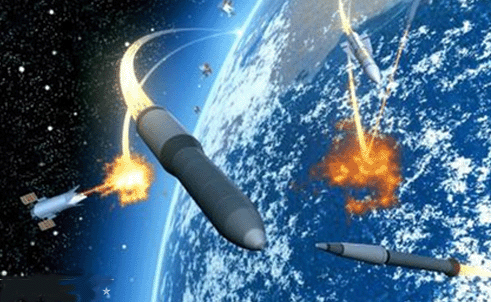 Star Wars Redux: Trump’s Space Force, Counter Punch Craig Eisendrath, who had been a U.S. State Department officer involved in its creation, notes that the Soviet Union launched the first space satellite, Sputnik, in 1957 and “we sought to de-weaponize space before it got weaponized…to keep war out of space.”
Adopted by the UN General Assembly in 1966, The Outer Space Treaty entered into force in 1967. It has been ratified or signed by 123 nations.
It provides that nations “undertake not to place in orbit around the Earth any objects carrying nuclear weapons or any other kinds of weapons of mass destruction, install such weapons on celestial bodies, or station such weapons in space in any other manner.”
Atomic physicist Edward Teller, the main figure in developing the hydrogen bomb and instrumental in founding Lawrence Livermore National Laboratory in California, pitched to Ronald Reagan, when he was governor of California visiting the lab, a plan of orbiting hydrogen bombs which became the initial basis for Reagan’s “Star Wars.” The bombs were to energize X-ray lasers. “As the bomb at the core of an X-ray battle station exploded, multiple beams would flash out to strike multiple targets before the entire station consumed itself in in a ball of nuclear fire,” explained New York Times journalist William Broad in his 1986 book Star Warriors.
Subsequently there was a shift in “Star Wars” to orbiting battle platforms with nuclear reactors or “super” plutonium-fueled radioisotope thermoelectric generators on board that would provide the power for hypervelocity guns, particle beams and laser weapons.
The rapid boil of “Star Wars” under Reagan picked up again under the administrations George H. W. Bush and son George W. Bush. And all along the U.S. military has been gung-ho on space warfare.
A U.S. Space Command was formed in 1982.
“US Space Command—dominating the space dimension of military operations to protect US interests and investment. Integrating Space Forces into war-fighting capabilities across the full spectrum of conflict,” it trumpeted in its 1998 report Vision for 2020. It laid out these words to resemble the crawl at the start of the Star Warsmovies. The U.S. Space Command was set up by the Pentagon to “help institutionalize the use of space.” Or, as the motto of one of its units declares, to be “Master of Space.”
Vision for 2020states, “Historically, military forces have evolved to protect national interests and investments-both military and economic.” Nations built navies “to protect and enhance their commercial interests” and during “the westward expansion of the United States, military outposts and the cavalry emerged to protect our wagon trains, settlements and railroads. The emergence of space power follows both of these models. During the early portion of the 2lst Century, space power will also evolve into a separate and equal medium of warfare.”
“It’s politically sensitive, but it’s going to happen,” remarked U.S. Space Command Commander-in-Chief Joseph W. Ashy in Aviation Week and Space Technology (8/9/96):
“Some people don’t want to hear this, and it sure isn’t in vogue, but—absolutely—we’re going to fight in space. We’re going to fight fromspace and we’re going to fight intospace…. We will engage terrestrial targets someday—ships, airplanes, land targets—from space.”
Or as Assistant Secretary of the Air Force for Space Keith R. Hall told the National Space Club in 1997: “With regard to space dominance, we have it, we like it and we’re going to keep it.”
The basic concept of the Pentagon’s approach to space is contained in The Future of War: Power, Technology & American World Dominance in the 2lst Century. Written by “arms experts” George and Meredith Friedman, the 1996 book concludes: “Just as by the year 1500 it was apparent that the European experience of power would be its domination of the global seas, it does not take much to see that the American experience of power will rest on the domination of space. Just as Europe expanded war and its power to the global oceans, the United States is expanding war and its power into space and to the planets. Just as Europe shaped the world for a half a millennium [by dominating the oceans with fleets], so too the United States will shape the world for at least that length of time.”
Or as a 2001 report of the U.S. Space Commission led by then U.S. Secretary of Defense Donald Rumsfeld asserted: “In the coming period the U.S. will conduct operations to, from, in and through space in support of its national interests both on the earth and in space.”……. https://www.counterpunch.org/2018/06/22/star-wars-redux-trumps-space-force/
Small Modular Nuclear Reactors are NOT going to save the nuclear industry
 The future of nuclear power in the US is bleak http://thehill.com/opinion/energy-environment/393717-the-future-of-nuclear-power-in-the-us-is-bleak, BY M. V. RAMANA, 06/23/18 Presumably as a way to fulfill election promises, President Trump has ordered the use of emergency federal powers designed for war-time crises to financially prop up coal and nuclear power plants.
Nuclear power that was once advertised as being “too cheap to meter” has evidently become too costly for electric utilities to buy. Apart from two 1,000 megawatt reactors being constructed in Georgia at enormous expense to ratepayers (even after subsidies from tax payers), there are no immediate prospects for new nuclear power plants in the United States. What of the longer-term future?
One possibility for new nuclear reactor construction comes from what are called the Small Modular Reactors (SMRs). One SMR design called NuScale is slowly making its way to potential construction. Developed by a company based in Oregon, a single NuScale reactor is designed to generate just 50 megawatts of power.Earlier this spring, the NuScale design cleared the first phase of the Nuclear Regulatory Commission’s certification process. A group of electrical utilities called the Utah Associated Municipal Power Systems has expressed an interest in purchasing a power plant, which consists of 12 NuScale reactors. The Tennessee Valley Authority also has applied for a permit to develop a site that could host an SMR.
Why SMRs? According to promoters of these scaled-down reactors, they could solve the multiple challenges faced by nuclear power. SMR developers promise lowered costs, decreased production of radioactive waste, reduction or even elimination of the risk of severe accidents, and no contribution to nuclear proliferation. Dozens of companies claim to be developing their own SMR designs, and many have received funding from wealthy private investors and the U.S. Department of Energy.
However, there is little to suggest SMRs will somehow magically remedy all that ails the nuclear industry. SMRs, as the name suggests, produce relatively small amounts of electricity in comparison with currently operational reactors. This puts them at a disadvantage.
One known way to reduce the cost of nuclear electricity has been to build larger reactors because the expenses associated with constructing and operating a reactor do not increase in direct proportion to the power generated. SMRs will, therefore, cost more than large reactors for each unit of generation capacity. Most of the small reactors built in the United States shut down early because they couldn’t compete economically.
SMR proponents argue that they can compensate by savings through mass manufacture in factories and learning how to hold down costs from the experience of constructing lots of reactors. This is a dubious assumption: In both the United States and France, the two countries with the highest numbers of nuclear plants, costs went up, not down, with construction experience.
Even if one were to assume that such “learning” actually occurs, SMRs have to be manufactured by the thousands to achieve meaningful savings. There is simply no market for so many reactors.
Even Westinghouse, the company that has directly or indirectly designed the majority of the world’s nuclear reactors, has realized that there is no market. For a decade or more, Westinghouse pursued a SMR design. But, in 2014, the company abandoned that effort. Its CEO explained: “The problem I have with SMRs is not the technology, it’s not the deployment — it’s that there’s no customers.” Few or no customers means no one would, or should, want to build a factory to construct the modules constituting these SMRs.
What of the claims about safety and nuclear waste? The problem is that the technical demands posed by these different goals conflict with one another, forcing reactor designers to make impossible choices.
For example, safety can be improved by making reactors smaller. But, a smaller reactor, at least the water-cooled reactors that are most likely to be built earliest, will produce more, not less, nuclear waste per unit of electricity they generate because of lower efficiencies. With no long-term solution in sight for nuclear waste, accumulating more radioactive spent fuel aggravates the storage problem.
The poor economic outlook for SMRs also affects safety. Companies that market SMRs propose placing multiple reactors in close proximity to save on costs of associated infrastructure. But this would increase the risk of accidents or the impact of potential accidents on the surrounding population.
At Japan’s Fukushima nuclear complex, explosions at one reactor damaged the spent fuel pool in a co-located reactor. Radiation leaks from one unit made it difficult for emergency workers to approach the other units.
The future of nuclear power in the United States, and indeed in much of the world, is bleak. Small modular reactors will not change that prognosis. There is no point in wasting public money on promoting them.
M. V. Ramana is the Simons chairman in Disarmament, Global and Human Security at the School of Public Policy and Global Affairs, University of British Columbia and the author of “The Power of Promise: Examining Nuclear Energy in India.”
Radioactive soil from Ohio heads to Wayne County landfill next week
Up to 124,000 tons of low-level radioactive soil and other materials from a contaminated former military supplier in Ohio will begin arriving at a Wayne County landfill next week, the U.S. Army Corps of Engineers has announced.
Protest campaign to stop nuclear waste transport in Idaho
 Opponents protest nuclear waste transport in Idaho, June 22, 2018, By SAVANNAH CARDON, Post Register ,Idaho Press CALDWELL — Among the tents set up at the Caldwell Farmers Market on June 13, one stuck out. Covered in nuclear waste symbols and mock waste barrels was the Radioactive Waste Roadshow with Don’t Waste Idaho.
New book: Climate Scientist Michael E. Mann and political cartoonist Tom Toles join forces
Amazon 23rd June 2018 Climate Scientist Michael E. Mann and political cartoonist Tom Toles have
been on the front lines of the fight against climate denialism for most of
their careers. In The Madhouse Effect, the two climate crusaders team up to
take on denialists and their twisted logic. Toles’s cartoons and Mann’s
expertise in science communication restore sanity to a debate that
continues to rage despite widely acknowledged scientific consensus—and
may even hit home with die-hard doubters. This paperback edition includes a
new chapter on the Trump administration’s attack on climate science.
https://www.amazon.co.uk/Madhouse-Effect-Threatening-Destroying-Politics/dp/0231177860
124,000 tons of low grade radioactive soil being dumped at Michigan landfill
NBC26 , Alan Campbell, Jun 22, 2018 VAN BUREN TOWNSHIP, Mich. — There are questions about radioactive soil and materials coming from out of state to the Wayne County landfill in Michigan.
Decision to keep Pickering Nuclear Station going does not make financial sense
Clean Air Alliance 21st June 2018, Today Ontario Premier-Designate Doug Ford failed to seize his opportunity
to lower Ontario’s electricity costs by $1.1 billion per year by
directing Ontario Power Generation (OPG) to close the Pickering Nuclear
Station in August when its licence expires.
On the contrary, Mr. Ford announced that he will allow the 4th oldest nuclear station in North
America to continue to operate in the middle of the GTA until 2024. Mr.
Ford’s decision does not make financial sense for Ontario’s electricity
consumers. The annual savings from closing the Pickering Nuclear Station
would be 183 times greater than the savings from firing Mayo Schmidt, the
CEO of Hydro One. According to the Canadian Manufacturers & Exporters
association, the Pickering Nuclear Station’s performance is
“persistently abysmal…by any objective standard.”
http://www.cleanairalliance.org/ford-fails-to-seize-opportunity-to-lower-ontarios-electricity-costs-by-1-1-billion-per-year/
Trump administration getting ready for nuclear war in space
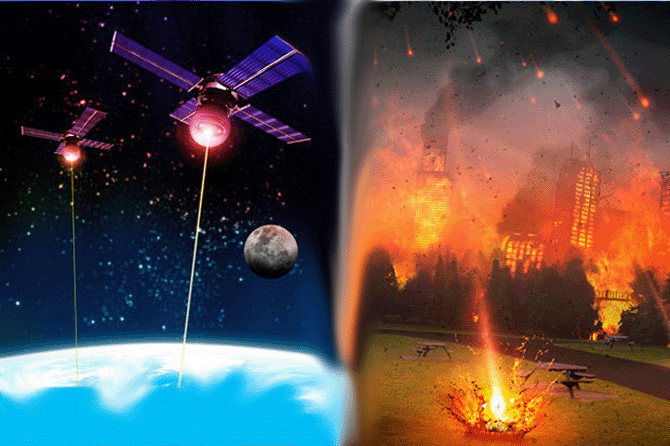
Star Wars Redux: Trump’s Space Force, Counter Punch
 If Donald Trump gets his way on formation of a Space Force, the heavens would become a war zone. Inevitably, there would be military conflict in space.
The Outer Space Treaty of 1967 which designates space as the global commons to be used for peaceful purposes—and of which Russia and China, as well as the United States, are parties—and the years of work facilitating the treaty since would be wasted.
If the U.S. goes up into space with weapons, Russia and China, and then India and Pakistan and other countries, will follow.
Moreover space weaponry, as I have detailed through the years in my writings and TV programs, would be nuclear-powered—as Reagan’s Star Wars scheme was to be with nuclear reactors and plutonium systems on orbiting battle platforms providing the power for hypervelocity guns, particle beams and laser weapons.
This is what would be above our heads.
Amid the many horrible things being done by the Trump administration, this would be the most terribly destructive. “It is not enough to merely have an American presence in space, we must have American dominance in space,” Trump said at a meeting of the National Space Council this week.
“Very importantly, I’m hereby directing the Department of Defense and Pentagon,” he went on Monday, “to immediately begin the process necessary to establish a Space Force as the sixth branch of the armed forces; that is a big statement. We are going to have the Air Force and we are going to have the Space Force, separate but equal, it is going to be something.”
The notion of the U.S. moving into space with weaponry isn’t new…………..
With the Trump administration, there is more than non-support of the PAROS treaty but now a drive by the U.S. to weaponize space.
It could be seen—and read about—coming.
Star wars returns – Free speech tv. 1 of 3
“Under Trump, GOP to Give Space Weapons Close Look,” was the headline of an article in 2016 in Washington-based Roll Call. It said “Trump’s thinking on missile defense and military space programs have gotten next to no attention, as compared to the president-elect’s other defense proposals….But experts expect such programs to account for a significant share of what is likely to be a defense budget boost, potentially amounting to $500 billion or more in the coming decade.”
Intense support for the plan was anticipated from the GOP-dominated Congress. Roll Call mentionedthat Representative Trent Franks, a member of the House Armed Services Committee and an Arizona Republican, “said the GOP’s newly strengthened hand in Washington means a big payday is coming for programs aimed at developing weapons that can be deployed in space.”
In a speech in March at the U.S. Marine Corps Air Station near San Diego, Trump declared: “My new national strategy for space recognizes that space is a war-fighting domain, just like the land, air, and sea. We may even have a Space Force—develop another one, Space Force. We have the Air Force; we’ll have the Space Force.”
Bruce Gagnon, coordinator of the Global Network Against Weapons and Nuclear Power in Space, notes that Trump cannot establish a Space Force on his own—that Congressional authorization and approval is needed. And last year, Gagnon points out, an attempt to establish what was called a Space Corps within the Air Force passed in the House but “stalled in the Senate.”
“Thus at this point it is only a suggestion,” said Gagnon of the Maine-based Global Network.
“I think though,” Gagnon went on, “his proposal indicates that the aerospace industry has taken full control of the White House and we can be sure that Trump will use all his ‘Twitter powers’ to push this hard in the coming months.”
Meanwhile, relates Gagnon, there is the “steadily mounting” U.S. “fiscal crisis…Some years ago one aerospace industry publication editorialized that they needed a ‘dedicated funding source’ to pay for space plans and indicated that it had come up with it—the entitlement programs. That means the industry is now working to destroy Social Security, Medicare, Medicaid and what little is left of the welfare program. You want to help stop Star Wars and Trump’s new Space Force. Fight for Social Security and social progress in America. Trump and the aerospace industry can’t have it both ways—it’s going to be social progress or war in space.”
As Robert Anderson of New Mexico, a board member of the Global Network, puts it: “There is no money for water in Flint, Michigan or a power grid in Puerto Rico, but there is money to wage war in space.”
Or as another Global Network director, J. Narayana Rao of India, comments: “President Donald Trump has formally inaugurated weaponization of space in announcing that the U.S. should establish a Space Force which will lead to an arms race in outer space.”
Russian officials are protesting the Trump Space Force plan, “Militarization of space is a way to disaster,”Viktor Bondarev, the head of the Russian Federation Council’s Defense and Security Committee, told the RIA news agency the day after the announcement. This Space Force would be operating in “forbidden skies.” He said Moscow is ready to “strongly retaliate” if the US violates the Outer Space Treaty by putting weapons of mass destruction in space.
And opposition among legislators in Washington has begun. “Thankfully the president cannot do it without Congress because now is NOT the time to rip the Air Force apart,” tweeted Senator Bill Nelson of Florida.
“Space as a warfighting domain is the latest obscenity in a long list of vile actions by a vile administration,” writes Linda Pentz Gunter, who specializes in international nuclear issues for the organization Beyond Nuclear, this week. “Space is for wonder. It’s where we live. We are a small dot in the midst of enormity, floating in a dark vastness about which we know a surprising amount, and yet with so much more still mysteriously unknown.”
To save the world, we don’t need Trump’s charisma: we need co-operative bureaucratic processes
Charisma in the nuclear age is a bitch. A century ago, the great German sociologist Max Weber showed that modern political authority has two varieties: charismatic and bureaucratic. Charismatic authority is based on personality and is disruptive; bureaucratic authority is based on rules and promises continuity.
 Charisma in the nuclear age https://thebulletin.org/charisma-nuclear-age11926, SHARON SQUASSONI Sharon Squassoni is research professor at the Institute for International Science and Technology Policy, Elliott School of International Affairs, at the George Washington University.
From his speech patterns to his body language, President Donald Trump exudes charisma. Perhaps to the despair of more stalwart democratic leaders, he acts instinctively rather than methodically. His approach to the historic Singapore summit with North Korean leader Kim Jong Un was, he told the press, to size up Kim in the first few minutes and ascertain whether a deal was possible.
And so it was. On the heels of a testy G-7 summit and months of name-calling between Trump and Kim, observers may be grateful that the summit went so well. The two leaders smiled, shook hands, and posed for the cameras. They shared a meal and signed a single page of vague goals that may or may not be realized. And while President Trump personally assured US citizens on Twitter that they could all sleep more safely on Tuesday evening because of the summit, there are many miles to go before anyone sleeps.
Charisma in the nuclear age is a bitch. A century ago, the great German sociologist Max Weber showed that modern political authority has two varieties: charismatic and bureaucratic. Charismatic authority is based on personality and is disruptive; bureaucratic authority is based on rules and promises continuity. Does this sound like two presidential candidates in the 2016 US election? We know who won.
Disruption has its virtues, and while Donald Trump’s campaign statements illustrated his limited understanding of the North Korean nuclear crisis, they also showed he was fearless in his embrace of unorthodox approaches to solving the problem. He called Kim Jong-un a “maniac,” but said—more than a year ago—that he was willing to negotiate with him. Candidate Trump believed China had “total control” over North Korea and could make Kim “disappear.” Ignoring decades of historical context, he flirted with taking troops out of South Korea and Japan and suggested he could support Japan’s development of nuclear weapons in response to North Korea.
As president, Trump’s approach to North Korea’s nuclear weapons has ricocheted from a strategy of isolation and maximum pressure designed to topple Chairman Kim to speculation about beachfront condos replacing missile test launch sites. Expert heads are spinning.
While Trump has focused on his personal relationship with Kim (bad or good), bureaucrats have been left to tidy up the messy details, like guessing which targets might be within range of Kim’s nuclear-tipped missiles, ensuring that missile alerts don’t falsely terrify ordinary people in Hawaii, and musing about whether a deterrence relationship with North Korea is even possible. (They concluded it wasn’t, in part because Kim continued to burnish his brutal dictator brand with firing squads and nerve agent assassination for those deemed a threat or an annoyance to him. Not to mention the long list of human rights violations he has inflicted on his people.).
Trump’s charismatic and chaotic brand of leadership may have helped jump-start talks about North Korea’s nuclear program, but it is inherently dangerous. Eight months ago, the world worried that the personal animosity could cause Trump and Kim to stumble into war; today, the world worries that Trump’s new-found admiration of Kim could lead to the ruin of post-war alliances that have helped to stabilize Northeast Asia. Japan has largely been sidelined, and South Korea was blindsided by Trump’s casual reference during the summit to the end of war-games. Exactly how that US concession will play out is still unclear. Both allies will likely try to make the best out of a bad situation.
The only hope for successful denuclearization will require Trump and Kim to step back and let their worker bees establish a methodical process by which commitments on both sides can be assessed. The only way to make real progress is to establish baselines, identify weapons of mass destruction capabilities, eliminate or somehow repurpose them, and put in place monitoring to ensure those capabilities are not reconstituted.
This is unsexy and uncharismatic work—exactly the kind of thing that we pay disinterested bureaucrats to accomplish. Hopefully, experts with decades of experience—experts therefore unlikely to be fooled by North Korean disinformation—can be put to the task. A few have recently left the State Department; only one seasoned expert on North Korea, Ambassador Sung Kim, was on the US delegation in Singapore.
Unfortunately, Trump has little appreciation for the nuts and bolts of governing, and his administration has devoted considerable attention to stripping away government capabilities. With luck, Secretary of State Mike Pompeo may be able to find experts who are willing to work on this enormous task. He should look beyond the intelligence community. He needs real diplomats, too.
One small but curious element of the Singapore joint statement was a reference to this as a “first historic summit.” President Trump told the press that he and Kim might meet many times, even at the White House or in Pyongyang. For the sake of democracy and global security, we don’t need more summits. It’s time instead to let US government experts do what they do best—careful, cautious negotiation and implementation that produce lasting, verifiable results.
Pro nuclear spruik of Michael Shellenberger is getting weirder and weirder
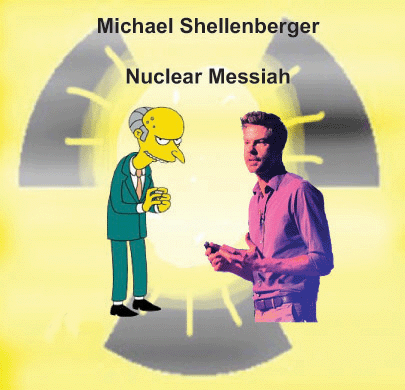
Steve Dale Nuclear Fuel Cycle Watch South Australia, 21 June 18
Shellenberger’s latest article is pretty strange and contradicts a lot of things I’ve heard from his local supporters.
Most unusual is that he calls nuclear waste a “blessing” – “But achieving that future will first require that we abandon our ridiculous fears and start seeing nuclear waste as the environmental blessing that it is.”
He also doesn’t want nuclear waste moved – not even from the reactor, let alone the USA. He says “Don’t Move The Waste” and “transporting cans of used nuclear waste would increase the threat to the continued operation of our life-saving nuclear plants.” This sort of contradicts the whole push of the NFCRC.
Shellenberger proposes that money set aside for storing nuclear waste for millennia should be diverted to nuclear plants, he says “It should be used to subsidize the continued operation of economically distressed nuclear plants, and subsidize the building of new ones.”
When a nuclear accident occurs we are usually told it’s because it is an old or aging plant? Well Shellenberger claims “Nuclear plants are functionally immortal. Existing plants can operate for 60, 80, 100 years or longer because everything inside the plant from the control panels to the steam generators and even the reactor vessel itself can be replaced, if needed.”
And I’ve heard local nuclear lobbyists claim new “waste eating” reactors are just around the corner, less than 10 years away, but Shellenberger says – “Sometime between 2050 and 2100, new nuclear plants — like the kind being developed by Bill Gates — will likely be able to use the so-called “waste” as fuel.”
I wonder what Shellenberger’s local supporters would think of this article? If Shellenberger gets his way, millennia lasting nuclear waste will be stored in half-inch thin, welded casks (see picture below) for centuries – by which time it would be too fragile to move.
The Forbes article is “Stop Letting Your Ridiculous Fears Of Nuclear Waste Kill The Planet” https://www.facebook.com/groups/1021186047913052/
Senator Heller Successfully Keeps Yucca Mountain out of Defense Bill Approved by the U.S. Senate
 June 18, 2018 The U.S. Senate today passed its annual defense authorization bill with three key provisions championed by U.S. Senator Dean Heller (R-NV) to support Nevada’s disabled veterans and veterans struggling with mental illness and to remove the $30 million to store defense nuclear waste at Yucca Mountain that was included in the version approved by the U.S. House of Representatives. The legislation, formally named the John S. McCain National Defense Authorization Act (NDAA) for Fiscal Year 2019, increases funding for training across all service branches and authorizes a 2.6 percent pay raise for troops – the largest increase in nine years for U.S. service members. Moving forward, both chambers will need to convene a joint conference committee in which representatives, who are appointed by leadership in the U.S. House of Representatives and U.S. Senate, reconcile the two versions of the defense bill and must produce a final report.
Heller worked with the U.S. Senate Armed Services Committee and the U.S. Senate Appropriations Committee to keep funding and an authorization of funding to revive Yucca Mountain out of the U.S. Senate’s version of the NDAA. Earlier this year, Heller urged U.S. Senate Armed Services Committee Chairman John McCain (R-AZ) to honor the will of the U.S. Senate appropriators and to exclude any language that authorizes funding for Yucca Mountain in the NDAA. Heller’s letter to Chairman McCain can be found HERE.
“Congress has an obligation to support our men and women in uniform, and that’s why I welcome the U.S. Senate’s passage of legislation that will give Nevada’s service members the largest pay raise in nearly a decade, provide our military with the resources it needs to keep America safe, and support Nevada’s 300,000 veterans. I’m proud that this legislation includes my provisions to support Nevada’s disabled veterans and help our veterans who may be struggling with mental illness and having difficulty finding work,” said Heller. “Furthermore, unlike the U.S. House of Representatives-passed version of the bill that contains $30 million to revive Yucca Mountain, I’m pleased I was able to work with Chairman McCain and U.S. Senate appropriators to successfully ensure that our bill did not include a single dollar authorized for Yucca Mountain. So once again, while the U.S. House of Representatives charges forward with shipping nuclear waste to Nevada, I kill their efforts in the U.S. Senate. While this is progress, we still have more work to do to stop the U.S. House of Representatives from turning Nevada into a nuclear waste dump. I remain committed to doing everything that I can to make sure that Yucca Mountain remains dead.”…….https://www.heller.senate.gov/public/index.cfm/pressreleases?ID=89EE1BBB-BB73-42D9-A192-038B549AADC4
Donald Trump says North Korean leader Kim Jong Un had committed to destroy a western North Korea missile site: USA names it
U.S. identifies North Korea missile test site it says Kim committed to destroy , Matt Spetalnick,
WASHINGTON (Reuters) 21June 18- The missile engine test site that President Donald Trump said North Korean leader Kim Jong Un had committed to destroy is a major facility in the western part of the country that has been used for testing engines for long-range missiles, according to a U.S. official.
Trump told reporters after their June 12 summit that Kim had pledged to dismantle one of his missile installations, which would be North Korea’s most concrete concession at the landmark meeting in Singapore.
However, the president at the time did not name the site.
A U.S. official identified it on Wednesday as the Sohae Satellite Launching Ground, saying North Korea “has used this site to test liquid-propellant engines for its long-range ballistic missiles.”
Pyongyang has said its missiles can reach the United States.
“Chairman Kim promised that North Korea would destroy a missile engine test stand soon,” the official told Reuters, speaking on condition of anonymity.
There was no immediate word on the exact timetable, and North Korea has not publicly confirmed that Kim made such a commitment.
CBS News was the first to identify the site, which is the newest of North Korea’s known major missile testing facilities.
Although Trump has hailed the Singapore summit as a success, skeptics have questioned whether he achieved anything, given that Pyongyang, which has rejected unilateral nuclear disarmament, appeared to make no new tangible commitments in a joint written declaration.
The U.S.-based North Korea monitoring group 38 North said in an analysis at the end of last week there had been no sign of any activity toward dismantling Sohae or any other missile test site.
USA’s nuclear weapons companies need the nuclear weapons race to continue
Eric Sirotkin speaks to RT Int 08012018
North Korea Agreed to Denuclearize, but When Will the US? Marjorie Cohn, Truthout 18 June 18

 A powerful economic incentive continues to drive the nuclear arms race. After the Singapore Summit, the stock values of all major defense contractors — including Raytheon, Lockheed Martin, Northrop Grumman, Boeing and General Dynamics — declined.
Given his allegiance to boosting corporate profits, it’s no surprise that Donald Trump is counterbalancing the effects of the Singapore Summit’s steps toward denuclearization with a Nuclear Posture Review that steers the US toward developing leaner and meaner nukes and lowers the threshold for using them.
The United States has allocated $1.7 trillion to streamline our nuclear arsenal, despite having agreed in the Nuclear Non-Proliferation Treaty in 1968 to work toward nuclear disarmament.
Meanwhile, the US maintains a stockpile of 7,000 nuclear weapons, some 900 of them on “hair trigger alert,” according to the Union of Concerned Scientists.
“If weapons are used they need to be replaced,” Brand McMillan, chief investment officer for Commonwealth Financial Network has argued. “That makes war a growth story for these stocks, and one of the big potential growth stories recently has been North Korea. What the agreement does, at least for a while, is take military conflict off the table.”
Moreover, economic incentives surrounding conventional weapons also cut against the promise of peace on the Korean Peninsula. Eric Sirotkin, founder of Lawyers for Demilitarization and Peace in Korea, has pointed out that South Korea is one of the largest importers of conventional weapons from the United States. If North and South Korea achieve “a lasting and stable peace regime on the Korean Peninsula,” as envisioned by the agreement between Trump and Kim Jong Un, the market for US weapons could dry up, according to Sirotkin.
Even so, US defense spending will continue to increase, according to Bloomberg Intelligence aerospace expert George Ferguson. “If North Korea turns from a pariah state to being welcomed in the world community, there are still enough trouble spots that require strong defense spending, supporting revenue and profit growth at prime defense contractors.”
The US Lags Behind on DenuclearizationLast year, more than 120 countries approved the Treaty on the Prohibition of Nuclear Weapons, which requires ratifying countries “never under any circumstances to develop, test, produce, manufacture, otherwise acquire, possess or stockpile nuclear weapons or other nuclear explosive devices.” It also prohibits the transfer of, use of, or threat to use nuclear weapons or nuclear explosive devices.
Since the treaty opened for signature on September 20, 2017, 58 countries have signed and 10 have ratified it. Fifty countries must ratify the treaty for it to enter into force, hopefully in 2019.
The five original nuclear-armed nations — the United States, Britain, France, Russia and China — boycotted the treaty negotiations and the voting. North Korea, Israel, Pakistan and India, which also have nuclear weapons, refrained from participating in the final vote
During negotiations, in October 2016, North Korea had voted for the treaty.
In advance of the Singapore Summit, dozens of Korean American organizations and allies signed a statement of unity,which says:
Denuclearization of the Korean Peninsula means not only eliminating North Korea’s nuclear weapons but also denuclearizing the land, air, and seas of the entire peninsula. This is not North Korea’s obligation alone. South Korea and the United States, which has in the past introduced and deployed close to one thousand tactical nuclear weapons in the southern half of the peninsula, also need to take concrete steps to create a nuclear-free peninsula. ………https://truthout.org/articles/north-korea-agreed-to-denuclearize-but-when-will-the-us/
A nuclear bomb terrorist attack on New York – the sequence of events
 What a nuclear attack in New York would look like This Is What a Nuclear Bomb Looks Like (picture of a somewhat rusting ordinary van) Ny Mag. 12 June 18
If America is attacked, the strike probably won’t come from North Korea. And it will be even scarier than we imagine. …….
There are currently at least 2,000 tons of weapons-grade nuclear material stored in some 40 countries — enough to make more than 40,000 bombs approximately the size of the one that devastated Hiroshima. Stealing the material would be challenging but far from impossible. Russia stockpiles numerous bombs built before the use of electronic locks that disable the weapons in the event of tampering. Universities that handle uranium often have lax security. And insiders at military compounds sometimes steal radioactive material and sell it on the black market. Since 1993, there have been 762 known instances in which radioactive materials were lost or stolen, and more than 2,000 cases of trafficking and other criminal activities.
Once terrorists obtained the uranium, they would need only a small team of sympathetic engineers and physicists to build what is known as a gun-type nuclear bomb, like the one dropped on Hiroshima. A gun-type nuke uses traditional explosives to fire a slug of uranium through a tube directly into another chunk of uranium, fracturing huge numbers of atoms and unleashing a massive amount of energy. Compared to modern nuclear missiles, which are far more powerful and complex, constructing a crude gun-type nuke is fairly straightforward. …..
The last step in the process — smuggling the weapon into the United States — would be even easier. A ten-kiloton bomb, which would release as much energy as 10,000 tons of TNT, would be only seven feet long and weigh about 1,000 pounds. It would be simple to transport such a device to America aboard a container ship, just another unseen object in a giant metal box among millions of other metal boxes floating on the ocean. Even a moderate amount of shielding would be enough to hide its radioactive signature from most detectors at shipping hubs. Given all the naturally radioactive items that frequently trigger false alarms — bananas, ceramics, Brazil nuts, pet deodorizers — a terrorist group could even bury the bomb in bags of Fresh Step or Tidy Cats to fool inspectors if a security sensor was tripped.
In 1946, a senator asked J. Robert Oppenheimer, the physicist who played a key role in the Manhattan Project, what instrument he would use to detect a nuclear bomb smuggled into the United States. Oppenheimer’s answer: “A screwdriver.” Amazingly, our detection systems have still not caught up to this threat: One would essentially have to open and visually inspect every single crate and container arriving on America’s shores. Once the container ship reached a port like Newark, terrorists would have no trouble loading the concealed bomb into the back of an unassuming white van and driving it through the Lincoln Tunnel directly into Times Square.
The Blast
One of the greatest misconceptions about nuclear bombs is that they annihilate everything in sight, leaving nothing but a barren flatland devoid of shape and life. In truth, the physical destruction inflicted by a nuclear explosion resembles that of a combined hurricane and firestorm of unprecedented proportion. Consider one example: A ten-kiloton nuclear bomb detonated on the ground in Times Square would explode with a white flash brighter than the sun. It would be seen for hundreds of miles, briefly blinding people as far away as Queens and Newark. In the same moment, a wave of searing heat would radiate outward from the explosion, followed by a massive fireball, the core of which would reach tens of millions of degrees, as hot as the center of the sun.
When such a bomb explodes, everyone within 100 feet of ground zero is instantaneously reduced to a spray of atoms. There are photos from Hiroshima and Nagasaki showing eerie silhouettes of people cast against a flat surface, such as a wall or floor. These are not, as is sometimes claimed, the remains of vaporized individuals, but rather a kind of morbid nuclear photograph. The heat of the nuclear explosion bleaches or darkens the background surface, except for the spot blocked by the person, leaving a corresponding outline. In some cases the heat released by the explosion will also burn the patterns of clothing onto people’s skin.
Near the center of the blast, the suffering and devastation most closely conform to the fictional apocalypse of our imaginations. This is what it would look like within a half-mile of Times Square: Few buildings would remain standing. Mountains of rubble would soar as high as 30 feet. As fires raged, smoke and ash would loft into the air. The New York Public Library’s stone guardians would be reduced to pebble and dust. Rockefeller Center would be an unrecognizable snarl of steel and concrete, its titanic statue of Prometheus — eight tons of bronze and plaster clad in gold — completely incinerated.
Within a half-mile radius of the blast, there would be few survivors. Those closest to the atomic bombings on Hiroshima and Nagasaki have described the horrors they witnessed: People with ripped sheets of skin hanging from their bodies; people whose brains were visible through their shattered skulls; people with holes for eyes. Sakue Shimohira watched her mother’s charred body crumble into ash as she tried to wake her. Shigeko Sasamori’s father cut off the blackened husk of skin all over her face, revealing pools of pus beneath.
As the fireball travels outward from the blast, people, buildings, and trees within a one-mile radius would be severely burned or charred. Metal, fabric, plastic, and clay would ignite, melt, or blister. The intense heat would set gas lines, fuel tanks, and power lines on fire, and an electromagnetic pulse created by the explosion would knock out most computers, cell phones, and communication towers within several miles.
Traveling much farther than the fireball, a colossal pressure wave would hurtle forth faster than the speed of sound, generating winds up to 500 miles per hour. The shock wave would demolish the flimsiest buildings and strip the walls and roofs off stronger structures, leaving only their naked and warped scaffolding. It would snap utility poles like toothpicks and rip through trees, fling people through the air, and turn brick, glass, wood, and metal into deadly projectiles. A blast in Times Square, combined with the fireball, would carve a crater 50 feet deep at the center of the explosion. The shock wave would reach a diameter of nearly 3.2 miles, shattering windows as far as Gramercy Park and the American Museum of Natural History.
All this would happen within a few seconds.
From Van to Tsunami
Five different nukes, and what they would do if unleashed on Times Square.……….http://nymag.com/daily/intelligencer/2018/06/what-a-nuclear-attack-in-new-york-would-look-like.html
1 This Month

Tell Congress: Prevent Nuclear Catastrophe in Iran

Tell Congress: Prevent Nuclear Catastrophe in Iran

Read the Public Inquiry Report, the Commissioners’ report, Surrendering Australia: The AUKUS Deception is available to download for free at aukuspublicinquiry.com. Or just watch the replay of the National Press Club Luncheon.

19 November – Webinar – The Reality of Reprocessing
Time: 11:00 AM Pacific Time (US & Canada) / 2:00 PM Eastern / 7:00 PM UK / 8:00 PM CET
Register for the Zoom Event Here


Shut down the radiation-damaged Heysham nuclear reactors now
To see nuclear-related stories in greater depth and intensity – go to https://nuclearinformation.wordpress.com

Say No to NASA’s Reckless Nuclear Reactor on the Moon
Say No to NASA’s Reckless Nuclear Reactor on the Moon
-
Archives
- November 2026 (147)
- October 2026 (302)
- September 2026 (339)
- August 2026 (330)
- July 2026 (355)
- June 2026 (287)
- May 2026 (306)
- April 2026 (356)
- March 2026 (251)
- February 2026 (267)
- January 2026 (308)
- December 2025 (358)
-
Categories
- 1
- 1 NUCLEAR ISSUES
- business and costs
- climate change
- culture and arts
- ENERGY
- environment
- health
- history
- indigenous issues
- Legal
- marketing of nuclear
- media
- opposition to nuclear
- PERSONAL STORIES
- politics
- politics international
- Religion and ethics
- safety
- secrets,lies and civil liberties
- spinbuster
- technology
- Uranium
- wastes
- weapons and war
- Women
- 2 WORLD
- ACTION
- AFRICA
- Atrocities
- AUSTRALIA
- Christina's notes
- Christina's themes
- culture and arts
- Events
- Fuk 2022
- Fuk 2023
- Fukushima 2017
- Fukushima 2018
- fukushima 2019
- Fukushima 2020
- Fukushima 2021
- general
- global warming
- Humour (God we need it)
- Nuclear
- RARE EARTHS
- Reference
- resources – print
- Resources -audiovicual
- Weekly Newsletter
- World
- World Nuclear
- YouTube
-
RSS
Entries RSS
Comments RSS

