Russian state media claimed on July 2 that the United States is preparing to send the next generation of B61 guided nuclear gravity bombs to NATO bases in European countries, including Turkey.
The U.S. Department of Energy’s National Nuclear Security Administration (DOE/NNSA) and the U.S. Air Force completed two non-nuclear system qualification flight tests of the B61-12 gravity bomb on June 9 at Tonopah Test Range in Nevada, according to a June 29 statement by DOE/NNSA.
The test, which was reportedly the first of its kind, was aimed at extending the B61 bomb’s service life by adapting it to next generation aircraft, including B-2A Spirit Bomber.
“The B61-12 LEP will consolidate and replace the existing B61 bomb variants in the [U.S.] nuclear stockpile. The first production unit is on schedule for completion in fiscal year 2020,” the statement said.
Russia’s state-run RIA news agency claimed on July 2 that the nuclear bomb will also be adapted to the F-35 aircrafts.
“The United States continues to invest in weapons of mass destruction. The NATO bases in Turkey, Germany and Italy will receive the new bombs in 2020,” Russian nuclear expert Alexandr Jilin was quoted as saying by the agency.
The United States has a total of 150 nuclear weapons in five NATO member countries, including Turkey, according to a report on worldwide nuclear arms prepared by the Turkish Parliament in October 2017.
Among those weapons, B61 type bombs are still in the İncirlik air base in the southern Turkish province of Adana.
According to data from the Federation of American Scientists (FAS), the number of B61s in Turkey is estimated to be nearly 50.
U.S. officials neither confirm nor deny reports about NATO’s nuclear weapons in Turkey.
Nevada’s office of Nuclear Projects has called on David Wright to recuse himself from any further proceedings involving the proposed Yucca Mountain nuclear waste dump.
Wright is a member of the Nuclear Regulatory Commission. But Bob Halstead, executive director of the Governor’s Agency for Nuclear Projects, says he’s biased.
“Your participation in the Yucca Mountain licensing process would violate Nevada’s due process right to a neutral and unbiased decision-maker,” Halstead wrote in his formal request for Wright’s removal.
He cited Wright’s participation as an adviser to South Carolina as a member of that state’s Public Service Commission and support for the move by the National Association of Regulatory Utility Commissioners to force the Department of Energy to continue with the licensing process, which DoE shut down after the budget for licensing was cut by the Obama administration.
Halstead pointed to Wright’s “frequent and long-standing expressions of opinion that a repository at Yucca Mountain is necessary and will be safe, your criticism of Nevada for daring to oppose the Yucca Mountain repository and your formation of and active participation in at least one organization whose sole focus was the advancement and completion of the Yucca Mountain repository.” …….https://www.nevadaappeal.com/news/government/nevada-wants-official-removed-from-yucca-mountain-process/
Nuclear plant pushes for state assistance, Ledger Enquirer The Associated Press July 06, 2018 WATERFORD, CONN.
Owners of a Connecticut nuclear plant say the facility faces closure unless the state reverses course and fully considers the plant’s benefits to the environment and regional grid in an upcoming electricity auction.
The Day reports that Dominion Energy is urging state regulators to give the Millstone Power Station an “at risk” of closing distinction in an electricity auction. Dominion Energy claims rising expenses and competition from natural gas have weakened the plant.
“At risk” facilities have an advantage because they’re evaluated on their price as well as environmental benefits and grid reliability.
The Department of Energy and Environmental Protection says facilities won’t be considered for their risk status until 2023.
The vanishing nuclear industry, Science Daily, July 2, 2018, Source: College of Engineering, Carnegie Mellon University
Summary:
Could nuclear power make a significant contribution to decarbonizing the US energy system over the next three or four decades? Probably not.
Could nuclear power make a significant contribution to decarbonizing the U.S. energy system over the next three or four decades? That is the question asked by four current and former researchers from Carnegie Mellon University’s Department of Engineering and Public Policy (EPP). Their answer: probably not.
In a paper, “U.S. nuclear power: The vanishing low-carbon wedge,” just published in the Proceedings of the National Academy of Science (PNAS), the team examined the current U.S. nuclear fleet, which is made up of large light water nuclear reactors (LWRs). While for three decades, approximately 20% of U.S. power generation has come from these LWRs, these plants are ageing, and the cost of maintaining and updating them along with competition from low cost natural gas, makes them less and less competitive in today’s power markets.
In place of these LWRs, the team asked whether advanced reactor designs might play a significant role in U.S. energy markets in the next few decades. They concluded that they probably would not. Then, the team examined the viability of developing and deploying a fleet of factory manufactured smaller light water reactors, known as small modular reactors (SMRs). The team examined several ways in which a large enough market might be developed to support such an SMR industry, including using them to back up wind and solar and desalinate water, produce heat for industrial processes, or serve military bases. Again, given the current market and policy environments, they concluded that the prospects for this occurrence do not look good. …https://www.sciencedaily.com/releases/2018/07/180702154736.htm
Mike Pompeo under pressure to secure nuclear progress in North Korea visit , Guardian Justin McCurry in Tokyo and agencies 5 Jul 2018 Secretary of state faces pressure to establish timeline for denuclearisation as well as duty to reassure regional allies Weeks after Donald Trump declared the world a safer place following his historic summit with Kim Jong-un, Mike Pompeo is due to arrive in Pyongyang on Friday amid growing doubts over the regime’s willingness to abandon its nuclear weapons.
Pompeo will also use his visit to consult and reassure Washington’s allies in the region, with meetings planned with Japanese and South Korean officials in Tokyo on Sunday. Japan has voiced support for the leaders’ Singapore declaration, but reacted cautiously to Trump’s decision to cancel a joint US-South Korea military exercise scheduled for August.
Pompeo must establish how far North Korea’s nuclear and missile programmes have advanced before US officials can even attempt to draw up a potential timeline for America’s central demand – their complete, irreversible and verifiable dismantlement [CVID].
At present, the US has no reliable information on where all of North Korea’s production and testing facilities are located or the size of its ballistic inventory.
In a tweet this week, Trump said Washington and Pyongyang had been having “many good conversations” with North Korea over denuclearisation. “In the meantime, no Rocket Launches or Nuclear Testing in 8 months, he said. “All of Asia is thrilled. Only the Opposition Party, which includes the Fake News, is complaining. If not for me, we would now be at War with North Korea!”
Sceptics have pointed out that Kim no longer believes such tests are necessary now that the North has successful developed an intercontinental ballistic missile, and that dismantling North Korea’s missile and nuclear infrastructure represents a much tougher diplomatic challenge that could take years and cost billions of dollars, if it happens at all.
“Denuclearisation is no simple task,” Daryl Kimball, executive director of the Arms Control Association, wrote in a commentary. “There is no precedent for a country that has openly tested nuclear weapons and developed a nuclear arsenal and infrastructure as substantial as the one in North Korea to give up its nuclear weapons.”
Experts have played down Trump’s upbeat appraisal of his 12 June meeting with Kim in Singapore, where the leaders made a loose commitment to work towards the denuclearisation of the Korean peninsula and agreed goodwill measures such as the possible return of the remains of US soldiers from the 1950-53 Korean war.
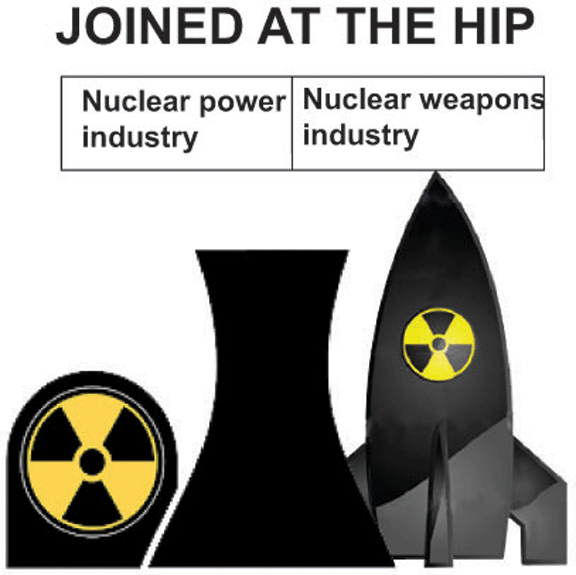
This loss of nuclear competence is being cited by nuclear and national security experts in both the U.S. and in Europe’s nuclear weapons states as a threat to their military nuclear programs. The White House cited this nuclear nexus in a May memo instructing Rick Perry, the Secretary of Energy, to force utilities to buy power from unprofitable nuclear and coal plants. The memo states that the “entire US nuclear enterprise” including nuclear weapons and naval propulsion, “depends on a robust civilian nuclear industry.”
A Double First in China for Advanced Nuclear Reactors, https://spectrum.ieee.org/energywise/energy/nuclear/a-double-first-in-china-for-advanced-nuclear-reactorsBy Peter Fairley 5 July 18 Call it the world’s slowest photo finish. After several decades of engineering, construction flaws and delays, and cost overruns — a troubled birth that cost their developers dearly — the most advanced commercial reactor designs from Europe and the United States just delivered their first megawatt-hours of electricity within one day of each other. But their benefits — including safety advances such as the AP1000’s passive cooling and the EPR’s airplane crash-proof shell — may offer too little, too late to secure future projects.
Both projects are coming online years behind schedule, and they are still at least several months away from full commercial operation. But the real problem for the AP1000 and the EPR are the designs’ unfinished Western debuts.
The AP1000 is designed to passively cool itself during an accidental shutdown, theoretically avoiding accidents like the one at Japan’s Fukushima Daiichi. But AP1000 developer Westinghouse declared bankruptcy last year due to construction troubles, particularly at dual-reactor plants for utilities in Georgia and South Carolina. The latter abandoned their pair of partially built AP1000s after investing US $9 billion. The Georgia plant, initiated in 2012, is projected to be completed five years late in 2022 and at a cost of $25 billion — $11 billion more than budgeted.
Delays for the EPR, whose dual-layered concrete shield protects against airplane strikes, contributed to the breakup of Paris-based nuclear giant Areva in 2015. And the first EPR projects in France and Finland remain troubled under French utility Electricité de France (EDF), which absorbed Areva’s reactor business, Fromatome. The Finnish plant, started in 2005 and expected to take four years, is currently slated for startup next year, and deadlines continue to come and go. In June, Finnish utility Teollisuuden Voima Oyj announced that startup had slid another four months to September 2019.
The troubled EPR and AP1000 projects show that U.S. and European firms have lost competence in nuclear construction and management. ”It’s no coincidence that two of the four AP1000s in the U.S. were abandoned, and that the EPRs that started much earlier than Taishan’s in Finland and France are still under construction,” says nuclear energy consultant Mycle Schneider, principal author of the annual World Nuclear Industry Status Report. “The Chinese have a very large workforce that they move from one project to another, so their skills are actually getting better, whereas European and North American companies haven’t completed reactors in decades,” says Schneider.
This loss of nuclear competence is being cited by nuclear and national security experts in both the U.S. and in Europe’s nuclear weapons states as a threat to their military nuclear programs. The White House cited this nuclear nexus in a May memo instructing Rick Perry, the Secretary of Energy, to force utilities to buy power from unprofitable nuclear and coal plants. The memo states that the “entire US nuclear enterprise” including nuclear weapons and naval propulsion, “depends on a robust civilian nuclear industry.”
A letter sent to Perry last month by 75 former U.S. military, industrial and academic leaders adds to the nexus argument, citing a statement from the Trump Administration’s 2018 Nuclear Posture Review about the United States’ inability to produce enriched uranium for nuclear weapons. “Re-establishing this capability will be far easier and more economical with a strong, thriving civil nuclear sector,” write the signatories.
Heavy dependence on China, meanwhile, puts the global nuclear industry in a vulnerable position. Total nuclear generation declined last year if one takes out China, notes Schneider. And he says a Chinese nuclear growth gap is coming since it hasn’t started building a new reactor in 18 months.
For more than a decade, the AP1000 has been the presumed successor to China’s mainstay reactors, which employ a 1970s-era French design. Areva’s EPR was a fallback option. The Chinese government may now wait to see how the first reactors actually operate before it approves a new wave of reactor construction.
All the while, nuclear is falling further behind renewable solar and wind power. As Schneider notes, the 3.3 GW of new nuclear capacity connected to the grid worldwide in 2017 (including three in China and a fourth in Pakistan built by Chinese firms) pales in comparison to the 53 GW of solar power installed in China alone.
Air Force conducts flight testing on new nuclear bomb — but do they need it?SOFREP News, BY ALEX HOLLINGS07.04.2018 Late last week, the National Nuclear Security Administration (NNSA) and the U.S. Air Force announced two successful “end to end” non-nuclear system qualification flight tests aboard B-2 Spirits for the newest nuclear bomb to enter into the American arsenal, the B61-12 gravity bomb.
These tests are intended to determine how effectively the bombs can be loaded onto aircraft and deployed using existing methodologies and procedures. Incorporating this new bomb design into existing processes is important for multiple reasons: specialized training for specific weapons systems would dramatically increase the overall cost of the platform’s introduction, and because the B61-12 gravity bomb is slated to slowly replace America’s existing stockpile of B61 nuclear bomb variants, it’s important that the new bombs blend seamlessly into the force. It will take time to transition the old platforms into new ones, and in the meantime, the whole family of B61 bombs needs to be able to play well with one another.
……… Despite rising concerns about the growing expense related to the B61-12 program, these new platforms are expected to enter service within the next two years, phasing out existing B61-3, -4, -7, and -10 bombs by 2025. The last legacy bombs to remain in the arsenal will be the B83-1 and B61-11 gravity bomb, both of which possess superior penetration capabilities intended to access and destroy bunkers and other underground facilities.
…….. Unlike nuclear missiles, the B61 family of bombs are simply dropped over their targets the old-fashioned way, using a tail section for stability and offering no further propulsion or navigation.
With America looking to maintain its reliance on the B-52 Stratofortress as integral to the airborne portion of the nuclear triad, it’s hard to imagine a conflict that could see these bombs being dropped from the aging platform at all. The Air Force acknowledges that the B-52 is too slow and lacks the stealth to fly into contested airspace (where such a bomb would almost certainly be used), and the B-2 is currently slated for retirement once the new B-21 Raider enters service. ……..https://sofrep.com/105418/air-force-conducts-flight-testing-on-new-nuclear-bomb-but-do-they-need-it/
Plans for a controversial multibillion-dollar U.S. nuclear research reactor are coming together at lightning speed—much too fast, say some nuclear policy experts. With a push from Congress, the Department of Energy (DOE) has begun designing the Versatile Fast Neutron Source, which would be the first DOE-built reactor since the 1970s. It would generate high-energy neutrons for testing materials and fuels for so-called fast reactors. But U.S. utilities have no plans to deploy such reactors, which some nuclear proliferation analysts say pose a risk because they use plutonium, the stuff of atomic bombs.
Researchers are divided on whether the reactor, which would likely be built at Idaho National Laboratory (INL) near Idaho Falls, is badly needed or a boondoggle. “Definitely, there is a lack of capability in the U.S. and a shortage of such facilities worldwide,” says Massimiliano Fratoni, a nuclear engineer at the University of California, Berkeley. But Frank von Hippel, a nuclear physicist at Princeton University, says, “It’s a pork-barrel project.”
The reactor does enjoy extraordinary congressional support. In March, Congress gave the project $35 million for this year, although DOE only requested $10 million. The House of Representatives and the Senate have passed separate bills that call for completing the facility by 2025, with the House bill authorizing DOE to spend $2 billion. Von Hippel speculates that the cost could end up reaching $10 billion.
B-2 Flies First ‘End-To-End’ Tests With New Nuclear Bomb Amid Growing Cost Concerns
The B61-12 nuclear gravity bombs are set to enter service in 2020 and already cost nearly twice their literal weight in gold. The Drive, BY JOSEPH TREVITHICKJULY 2, 2018
The U.S. Air Force, in cooperation with the Department of Energy’s National Nuclear Security Administration, has completed the first end-to-end qualification flight tests of the new B61-12 nuclear gravity bomb on the B-2 bomber. This milestone comes amid continued concerns about the weapon’s cost, including the recent announcement that the Pentagon’s top internal watchdog has started its own audit of the program.
On June 29, 2018, the National Nuclear Security Administration, or NNSA, revealed the two successful test flights in an official press release. A B-2A Spirit stealth bomber from the Air Force’s 419th Test and Evaluation Squadron, situated at Edwards Air Force Base in California, had dropped the weapons, which did not carry live nuclear warheads, on the Tonopah Test…..
The full stockpile of approximately 400 bombs is supposed to be combat ready by 2025. The B-2A, along with various dual-purpose combat jets, such as the F-16C/D Viper and F-15E Strike Eagle, will be able to carry these weapons. The Air Force plans to integrate the B61-12 on the F-35A Joint Strike Fighter and B-21 Raider bomber in the future, too.
………. while the U.S. military insists that the B61-12 offers superior capabilities compared to the existing bombs and will allow it to consolidate its inventory of B61 bombs, the project has proven to be time-consuming and very costly. On June 28, 2018, a day before NNSA announced the successful test flights, the Department of Defense’s Office of Inspector General announced it was reviewing the price and management of the tail kit portion of the program.
Our objective is to determine whether the Air Force is developing the B61-12 Tail Kit Assembly within cost, schedule, and performance requirements,” the office said in an associated press release. “We will consider suggestions from management on additional or revised objectives.”
This is hardly the first time a U.S. government agency has taken a look into the program, either. In May 2018, the Government Accountability Office, a Congressional watchdog, released its own review of the project.
“GAO recommended in a January 2018 report that NNSA document and justify such decisions, in part because GAO’s prior work has shown that independent cost estimates historically are higher than programs’ cost estimates because the team conducting the independent estimate is more objective and less prone to accept optimistic assumptions,” the May 2018 report said. “In response to the January 2018 report, NNSA agreed to establish a protocol to document management decisions on significant variances between program and independent cost estimates, but it has not yet provided evidence that it has done so.”
Providing an accurate scope of the costs for both the bomb and the tail kit, which are managed and therefore budgeted for separately, has been a major source of controversy from the beginning. Just between 2011 and 2012, NNSA’s estimate of the program’s price tag grew from $4 billion to $10 billion, which did not include the cost of the tail kit and various other ancillary components.
This prompted criticism both within sectors of the U.S. government and among advocacy groups. In 2012, the non-profit Ploughshares Fund, among others, noted that this revised cost split among the 400 700-pound nuclear bombs meant that each one would literally be worth more than its weight in gold. At the current price of gold at the time of writing, each one of the B61-12s could actually be worth nearly twice as much per pound.
A significant increase in cost could magnify existing criticisms, as well as questions about whether or not B61s of any kind still have a place in the U.S. military’s over-arching nuclear modernization plans. The Nuclear Posture Review argues that the gravity bombs, despite their low-yield settings, do nothing to deter potential opponents, primarily Russia, from engaging in a limited nuclear confrontation.
Though this basic premise is highly debatable, under this logic, the utility of the gravity bombs becomes particularly questionable. The U.S. military has deemed the B-52H bomber too vulnerable to deliver nuclear gravity bombs in a future conflict and is rapidly approaching that conclusion, right or wrong, with regards to dual-use combat jets.
Durham Region.com NEWS Jul 04, 2018 by Kristen Calis Pickering News Advertiser
PICKERING — Questions from concerned advocacy groups regarding the Pickering Nuclear Generating Station remain, while Ontario Power Generation continues to defend its position to justify the plant’s continued operation.This was the scene at the second round of Canadian Nuclear Safety Commission hearings regarding OPG’s request for a licence extension to operate the Pickering power plant to 2024, followed by safe storage activities until 2028. The plant is currently scheduled to close on Aug. 31.
Shawn-Patrick Stensil, senior energy analyst for Greenpeace, spoke Thursday at the Pickering Recreation Complex during the hearings. The CNSC will make the decision on the extension request.
In his submission on behalf of Greenpeace, Stensil said there is no justification for Pickering’s operation and the commission should reject OPG’s “request to expose millions of people within the (Greater Toronto Area) to the possibility of a nuclear accident.”
The week of hearings wrapped up on Friday. The first round took place in Ottawa in April.
……….The advocacy group was granted funding from the CNSC to poll the public on specific issues for the purpose of the hearing and presented its results.
The poll found 93 per cent of those surveyed want detailed nuclear emergency plans in place to protect residents from a possible large-scale accident at Pickering (or Darlington).
“Population density around the Pickering station is already too high yet intensification is being stepped up,” McNeill said.
Science Mag 3rd July 2018 , Plans for a controversial multibillion-dollar U.S. nuclear research reactor
are coming together at lightning speed—much too fast, say some nuclear policy experts. With a push from Congress, the Department of Energy (DOE) has begun designing the Versatile Fast Neutron Source, which would be the first DOE-built reactor since the 1970s.
It would generate high-energy neutrons for testing materials and fuels for so-called fast reactors. But U.S. utilities have no plans to deploy such reactors, which some nuclear proliferation analysts say pose a risk because they use plutonium, the
stuff of atomic bombs.
Researchers are divided on whether the reactor, which would likely be built at Idaho National Laboratory (INL) near Idaho
Falls, is badly needed or a boondoggle. “Definitely, there is a lack of capability in the U.S. and a shortage of such facilities worldwide,” says Massimiliano Fratoni, a nuclear engineer at the University of California, Berkeley. But Frank von Hippel, a nuclear physicist at Princeton University, says, “It’s a pork-barrel project.” http://www.sciencemag.org/news/2018/07/congress-pushes-multibillion-dollar-nuclear-reactor-critics-call-boondoggle
Natural gas pipelines can be targeted by cyberattacks. So can electric grids. And power plants. And hospitals, city governments, banks, entertainment companies, and virtually anything else that exists in the digital age.
Like most of those entities, pipeline companies have taken aggressive steps to better shield their infrastructure from hackers, isolate critical systems, and beef up physical security. Recent allegations by some that the natural gas industry is increasingly vulnerable to cyberattack are unsubstantiated and not based on any factual evidence.
A recent incident affecting a third-party service provider, used for scheduling and nominations by some pipeline operators, demonstrates how the industry’s preparedness protects consumers. After an attack in March halted data exchanges from the company, the operators that used their services to facilitate gas deliveries and billing sprang into action. There was no impact on natural gas deliveries and gas never stopped moving through pipelines as a result of this incident.
Natural gas pipeline companies have a long standing track record of reliable service, and are dedicated to meeting the highest industry and federal standards for safety, security and resilience, ensuring the flow of natural gas. This is par for the course in an industry where the number of threats are increasing, but advances in security and system resilience have made inflicting any real damage increasingly difficult.
Compared to cyberattacks that shut down entire electric grids in the Ukraine and a ransomware virus that hobbled services in Atlanta for days, the natural gas industry has avoided any attacks causing a halt in services. Preparedness is key, and the industry has demonstrated its commitment through participation in programs like the Downstream Natural Gas Information Sharing and Analysis Center, as well as real-world training exercises like the NERC GridEx. There is still work to be done, but we are on the right track.
Despite this progress, a recently leaked “pre-decisional” memo from the U.S. Department of Energy and the National Security Council argues that natural gas cybersecurity threats are proof that aging coal and nuclear power plants need to be propped up through unprecedented and legally-questionable use of federal national security powers.
This represents a solution to a problem that does not exist. If the Energy Department acts, consumers will be saddled with as much as $11.8 billion to pay for the uneconomic coal and nuclear plants.
That might be justifiable if these facilities increased the reliability of the grid. But they don’t. That’s why threepreviousattempts to find legal justification to subsidize these plants have failed. That’s also why PJM, the non-profit electric grid operator for the region that has seen most coal and nuclear retirements, dismissed the proposal as “damaging to markets and therefore costly to consumers.”
an inspection in 2017, after most of the waste was retrieved from the tank, found widespread pitting on the bottom of the inner shell, allowing waste to seep through. The finding pointed to a corrosion problem.
Experts don’t know enough about the issue yet to tell if the thinning is recent or definitely say what caused it.
More of Hanford’s newest waste storage tanks could be at risk of developing leaks, according to a new evaluation.
Tank farm contractor Washington River Protection Solutions compared the chemistry of the waste in the nuclear reservation’s oldest double-shell tank, which was discovered to be leaking, to the waste in the nuclear reservation’s other double-shell tanks.
The evaluation’s conclusion and other findings about the condition of the Hanford Site’s double-shell tanks suggest a need to build more waste storage tanks for 56 million gallons of waste, according to the Washington Department of Ecology.
“We need to start doing something, the sooner the better,” said Steve Lowe, Ecology’s double-shell tank lead engineer. “Cleanup depends on it.”
He characterized three of the double-shell tanks that still hold waste as having “very high risk factors” for corrosion, based on information in the new study.
But the finding doesn’t mean the three tanks are leaking or will leak, said Jeremy Johnson, deputy DOE project director for the Hanford tank farms, at a recent Hanford Advisory Board committee meeting.
The Department of Energy is emptying the radioactive and hazardous chemical waste from 149 leak-prone single-shell tanks into 28 newer double-shell tanks for storage until the waste can be treated for disposal. The waste is left from the past production of plutonium for the nation’s nuclear weapons program.
But the first of the double-shell tanks — Tank AY-102, which dates to 1971 — has been taken out of service and emptied after developing a slow leak from its inner shell into the space between its shells.
Corrosion risks identified
Initially, officials suspected the leak was caused by construction problems, including welds that had to be reworked as many as four times.
But an inspection in 2017, after most of the waste was retrieved from the tank, found widespread pitting on the bottom of the inner shell, allowing waste to seep through. The finding pointed to a corrosion problem.
Now the new study finds three other of the double-shell tanks — AY-101, AZ-101 and AZ-102 — have held waste with similar chemistry to what’s suspected of corroding the bottom of the inner shell of Tank AY-102.
Among the issues with the three tanks, as well as the tank that leaked and has been emptied, is a history of holding waste that generates high heat, which could accelerate corrosion.
The waste chemistry is one of three potential problems in the 27 remaining double-shell tanks that Johnson discussed with advisory board committee members.
Two of the tanks with possible waste chemistry issues also have spots with thinning in a ring around the wall of the inner shell. The ring is where condensate, or water from ventilation systems in the tank farms, was added and interacted with the air before it mixed into the rest of the waste.
In addition, ultrasonic testing has found thinning of the steel in the bottom of the outer shell of nine of 11 of the double-shell tanks checked.
In one spot of Tank AP-102, the steel bottom of the shell had thinned up to 70 percent, according to DOE.
Experts don’t know enough about the issue yet to tell if the thinning is recent or definitely say what caused it.
However, DOE suspects that moisture may be infiltrating and corroding the outside of the tank where it sits underground on a concrete foundation. The foundation has drains to a sump system.
High pressure water is sprayed to move waste around on the bottom of the inner shell of Hanford Tank AY-102. Bubbles may indicate some of the seven leaks found inside the inner shell. No waste is believed to have escaped the tank’s outer shell. Ed
McClatchyCourtesy Washington River Protection Solutions
DOE has relied on an independent Tank Integrity Expert Panel, which met last week, to provide recommendations on the Hanford tanks.
The panel has “found areas of interest in time to take action before they become a problem,” Johnson said.
Ecology raises concerns
But the state is concerned that double-shell tank space already is in short supply, with several of the tanks at risk.
Every double-shell tank that fails will take two out of use — the one that failed and the one that is filled with waste from the failed tank, Lowe said. Double-shell tanks have a capacity of at least 1 million gallons.
DOE has said that once the vitrification plant starts turning low-activity radioactive waste into a stable glass form, as soon as 2021, about 12 million gallons of space will be freed up during the following decade in the double-shell tanks to empty more single-shell tanks.
But by the time the vitrification plant starts treating waste, the oldest of the double shell tanks will already be 50 years old. And some of the tanks will remain in service as the plant operates for another 40 years, Ecology officials pointed out.
One of the tanks identified as at high risk for corrosion, Tank AZ-101, holds waste that is expected to be treated as high-level radioactive waste, according to Ecology officials. The waste is expected to remain in the tank until 2036, when the vit plant is expected to be fully operational.
The Tank Integrity Expert Panel discussed the new study on tanks at risk of corrosion this week, and members said they were concerned that it underestimated risk, according to the Department of Ecology’s account of the meeting.
The study did not consider that multiple risks, such as waste that generates high temperatures and waste with certain chemistry, could be synergistic, creating faster corrosion than predicted, according to Ecology.
DOE taking action
DOE and its tank farm contractor are taking steps both to prevent further deterioration and to learn more.
A chemistry-control program for the double shell tanks will be revised, DOE said. Core samples will be collected to analyze the waste at the bottom of the three most at-risk tanks.
To prevent pitting in a ring around tanks from ventilation system condensate, the liquid now will be treated elsewhere at the nuclear reservation, rather than going into the tanks.
DOE also is evaluating ways to prevent moisture from collecting under outer shells and is considering whether corrosion inhibitor could be added.
New robots small enough to be used in the ventilation spaces between the bottoms of the two shells are being developed and could be used later this year to learn more about the condition of the tanks.
There also is a possibility that some repairs could be made on the outer shell.
A broad coalition of 75 industry, government, and military dignitaries — a quarter of whom are retired admirals or vice admirals — has come out in support of President Trump’s plan to bail out the nation’s struggling nuclear plants, agreeing that more premature closures pose a national security threat.
“We urge you to continue to take concrete steps to ensure the national security attributes of U.S. nuclear power plants are properly recognized by policymakers and are valued in U.S. electricity markets,” according to the letter, which was addressed to U.S. Energy Secretary Rick Perry and dated last week.
The letter could help stave off the planned closures of FirstEnergy Solutions’ Davis-Besse nuclear plant east of Toledo, its Perry nuclear plant east of Cleveland, and its twin-reactor nuclear complex west of Pittsburgh.
FES has announced it will close Davis-Besse by May 31, 2020, unless a buyer or bailout emerges. The other three nuclear plants are to be closed by the end of 2021.
FES and FirstEnergy Nuclear Operating Co., both subsidiaries of Akron-based FirstEnergy Corp., are in bankruptcy proceedings because those plants — as well as several coal-fired power plants — have become unprofitable during the era of record-low natural gas prices and growth in the renewable energy sector. FirstEnergy has said it wants out of electricity generation, and that what’s left of the corporation will be focused on transmission.
The high-profile letter in support of saving nuclear plants is being circulated by the Nuclear Energy Institute, the nuclear industry’s lobbying arm on Capitol Hill.
Besides admirals and vice admirals, the signatories include former U.S. Secretary of State George Shultz and former U.S. senators Byron Dorgan (D., N.D.), Judd Gregg (R., N.H.), Trent Lott (R., Miss.), Jim Talent (R. Mo.), and John Warner (R., Va.).
Also signing the letter was former New Jersey Gov. and former U.S. Environmental Protection Agency Administrator Christine Todd Whitman as well as many former industry executives, such as Daniel Akerson, General Motors’ chairman and chief executive officer from 2010 to 2014; Thomas Christopher, former AREVA chief executive officer; Charles Pryor, retired Westinghouse Electric Co. and URENCO USA chairman, and Jeffrey Wadsworth, former Battelle Memorial Institute president and chief executive officer.
In addition, the letter is signed by three former U.S. Nuclear Regulatory Commission chairmen, Nils Diaz, Dale Klein, and Richard Meserve; as well as some former NRC commissioners, and several former directors of national laboratories.
The Trump Administration plan to bail out struggling nuclear and coal-fired power plants came two months after FirstEnergy Solutions filed what many experts view as a historic and potentially landmark petition for relief under Chapter 11 bankruptcy laws.
The bankruptcy filing has drawn national attention because FirstEnergy is one of America’s largest utilities. It appealed to Mr. Perry for help in late March when it filed for bankruptcy.
Those nuclear plants — in addition to numerous coal-fired power plants under FirstEnergy — represent a huge chunk of electricity for the regional electric grid that Pennsylvania-based PJM Interconnection operates in 13 states, including Ohio. That grid, which serves 65 million people, is the nation’s largest.
Mr. Perry is being asked to exercise emergency authority under a pair of federal laws typically reserved for wars or natural disasters.
According to The Associated Press, such a move is “unprecedented intervention into U.S. energy markets.”
PJM has said the planned shuttering of those plants pose “no immediate threat to system reliability,” and warned of higher prices, as have many others.
The Office of the Ohio Consumers’ Counsel, one of several parties that opposes such an emergency order, has called FirstEnergy’s request “extraordinary,” as well as “fundamentally unjust and unreasonable for Ohio consumers,” adding Ohioans will be subject to “paying subsidies and above-market prices for electricity” if a bailout is granted.
Also objecting have been attorneys general from nine states and the District of Columbia, calling the company’s justification “legally flawed” and “a grave abuse of the Federal Power Act,” a section of which provides for relief during national emergencies.
The Chicago-based Environmental Law & Policy Center — which called upon the NRC to investigate the utility’s decommissioning trust fund days before FES filed for bankruptcy protection — also has filed a 96-page petition in opposition, which it prepared with the New York-based Environmental Defense Fund, the Ohio Environmental Council, and Ohio Citizen Action.
The NRC found no shortfall during its last audit of the trust fund, completed in March, 2017.
The ELPC is one of several groups that have labeled Mr. Trump’s directive as an act of socialism, saying it goes against free market supply-and-demand principles. Those opposed include the American Petroleum Institute, which represents the industry benefiting most from expanded production of natural gas.
The United States is now the world’s largest producer of natural gas. Industry executives and government officials said at a conference in Washington last week that the country could expand its shale gas output another 60 percent in the coming decades.
The administration’s position is that America cannot become overly reliant on natural gas, renewable energy, and other sources of electricity that are now being sold at much cheaper prices. Natural gas in particular has made great inroads in the market because of how prices have fallen dramatically over the past decade once the modern era of fracking shale began.
Tell Congress: Prevent Nuclear Catastrophe in Iran
Read the Public Inquiry Report, the Commissioners’ report, Surrendering Australia: The AUKUS Deception is available to download for free at aukuspublicinquiry.com. Or just watch the replay of the National Press Club Luncheon.
19 November – Webinar – The Reality of Reprocessing
Time: 11:00 AM Pacific Time (US & Canada) / 2:00 PM Eastern / 7:00 PM UK / 8:00 PM CET