VANCOUVER, British Columbia, 8 Aug 18— ARTMS Products today announced it received CE marking approval for its first-in-class, advanced technology QUANTM Irradiation System™ for producing high-value radioisotopes, such as Tc-99m and Ga-68, on medical cyclotrons. Cyclotron facilities are constantly facing higher isotope costs and poor supply availability. Now, with CE marking, ARTMS’ QUANTM Irradiation System™ will help ease these issues.
“CE marking is an important milestone for ARTMS,” remarked Dr. Kaley Wilson, CEO of ARTMS Products. “There is a huge opportunity in providing a cost effective and secured supply of radioisotopes to hospitals and research institutions. ARTMS provides a more economical, environmentally safe and secured supply of important radioisotopes than reactor-based sources. Now, with CE marking approval, ARTMS can be readily integrated in a standardized fashion into existing and emerging facilities which ultimately leads to improved patient access and care across Europe.”
Giving Cyclotron Facilities More Control Over the Supply of Medical Isotopes
Unlike traditional reactor and generator production methods, which are growing increasingly more expensive and cannot consistently supply user requirements, the ARTMS QUANTM Irradiation System™ combines both local production control and a cost-effective, easy-to-use solid target system for production of radioisotopes on medical cyclotrons. Medical radioisotopes are used in the field of nuclear medicine on a daily basis for both medical diagnostic imaging and therapy, particularly in the fields of oncology, cardiology and neurology.
The ARTMS QUANTM Irradiation System™ is currently available for most OEM cyclotron systems and has been installed and is operating in a number of countries.
About ARTMS Products
Based in Vancouver, British Columbia, ARTMS Products Inc. is a leader in the development of novel technologies and products which enable the production of the world’s most-used diagnostic imaging isotope, technetium-99m (Tc-99m), using local, hospital-based medical cyclotrons. ARTMS holds the exclusive global commercialization rights to award-winning and proprietary Canadian inventions which address these challenges, and which offer the prospect of revolutionizing the nuclear medicine industry.
For more information on the QUANTM Irradiation System™ and ARTMS Products, please follow us on Twitter @Quantm99 and LinkedIn and visit http://www.artms.ca/
A water leak at Oyster Creek Generating Station has forced the nation’s oldest nuclear power plant to operate at reduced capacity as it nears the final month before closure, federal officials said…….
Oyster Creek is the oldest operating commercial nuclear power plant in the nation, according to the NRC and is slated to completely stop generating electricity Sept. 17.
About a decade ago, New Jersey officials informed Exelon that it would need to add costly cooling towers in order to continue operating for the next 20 years, Sheehan said. The state and the company reached an agreement that the company didn’t have to add the towers if it agreed to close after just 10 years………
Exelon estimated that cost to restore the site to its original state would cost near $1.4 billion.
Holtec International must obtain permission from the NRC before it can take over Exelon’s license for Oyster Creek. The NRC is hosting a public meeting about the license transfer at 11555 Rockville Pike in Rockville, Maryland at 1 p.m. on Aug. 15.
Nobody has ever disposed of a nuclear-powered aircraft carrier before. Turns out it’s not easy. By Kyle Mizokami Aug 10, 2018
Six years after decommissioning USS Enterprise, the world’s first nuclear-powered aircraft carrier, the U.S. Navy is still figuring out how to safely dismantle the ship. The General Accounting Office estimates the cost of taking apart the vessel and sending the reactors to a nuclear waste storage facility at up to $1.5 billion, or about one-eighth the cost of a brand-new aircraft carrier.
The USS Enterprise was commissioned in 1961 to be the centerpiece of a nuclear-powered carrier task force, Task Force One, that could sail around the world without refueling. The fleet was a symbol of the Navy’s global reach and its nuclear future. During its 51 years in operation, the Enterprise served in the Cuban Missile Crisis blockade, the Vietnam War, and the wars in Afghanistan and Iraq.
The Navy decommissioned Enterprise in 2012 (don’t worry, the third carrier of the new Gerald R. Ford class will be named Enterprise, so the name will live on) and removed the fuel from the eight Westinghouse A2W nuclear reactors in 2013. The plan was to scrap the ship and remove the reactors, transporting them by barge from Puget Sound Naval Base down the Washington Coast and up the Columbia River, then trucking them to the Department of Energy’s Hanford Site for permanent storage.
However, after decommissioning the cost of disposing of the 93,000-ton ship soared from an estimated $500-$750 million to more than a billion dollars. This caused the Navy to put a pause on disposal while it sought out cheaper options. Today the stripped-down hull of the Enterprisesits in Newport News, Virginia awaiting its fate.
Now, according to a new General Accounting Office report (PDF), the Navy has two options. The first is to have the Navy manage the job but let the commercial industry do the non-nuclear work. The Navy would allow industry to scrap the non-nuclear parts of the ship but preserve a 27,000-ton propulsion space containing the reactors. The propulsion space would then be transported to Puget Sound Naval Base, where the reactors would be removed and sent to Hanford. This is the most expensive option, costing a minimum of $1.05 billion up to $1.55 billion and taking 10 years to complete, starting in 2034.
The second option: let commercial industry do everything, with a reactor storage location to be determined. This would cost $750 million to $1.4 billion and would take 5 years to complete, starting in 2024. In either event, most of the ship gets turned into razor blades and flatware. (By comparison, a squadron of 10 F-35C Joint Strike Fighters costs $1.22 billion, and a brand new Burke-class guided missile destroyer costs $1.7 billion.)
The GAO report paints the commercial option as faster and cheaper, though there are a number of unknowns. Nobody knows where the hull will be dismantled under the commercial plan, nor where the reactors would be sent. Although the Navy believes disposing of the reactors will be fairly straightforward, no one has dismantled a nuclear-powered carrier before.
Compounding the issue is a “not my problem” intergovernmental dispute. The Naval Nuclear Propulsion Program, the arm of the Navy concerned with nuclear power, says the federal Nuclear Regulatory Commission could oversee a commercial effort. But the NRC says Navy nuclear reactors are not its job. It’s not clear exactly why NNPP doesn’t want the job, although it currently has a backlog of 10 submarine reactors and two cruiser reactor to deal with (which is probably why a Navy effort won’t start until 2034). Ultimately, according to the GAO, it may take Congress to make a decision.
Whatever the Navy ends up doing, this will only be the first of many nuclear-powered carrier disposals. USS Nimitz is set to retire within the next ten years, and there are ten ships in the class. These will age out every four or five years for the next forty years, and each has two reactors. The Navy must get Enterprise’s teardown right, because the orders are going to start stacking up.
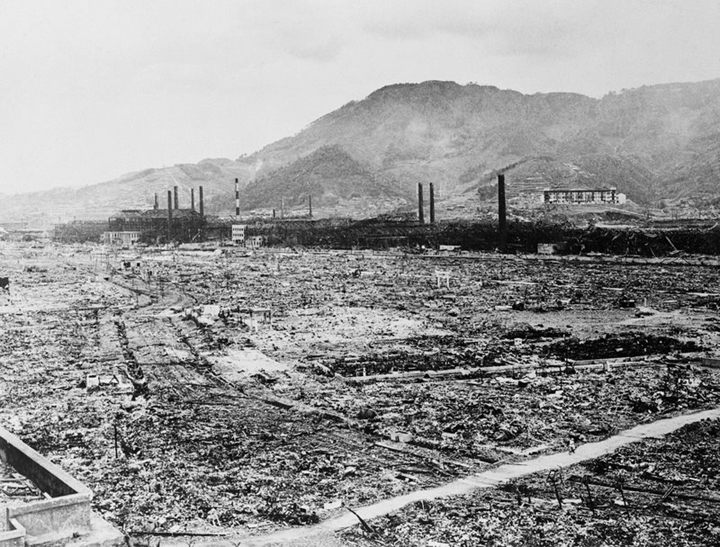
“Well, let’s see here. The reserve fuel tank pump was broken before take-off, and we knew it, so we were supposed to call off the mission then. Next, we failed to rendezvous over Yakushima with one of the crucial planes in the mission. At the primary target of Kokura we encountered cloud cover and flak. Now we are so dangerously low on fuel that there’s a good chance we’re going to lose the bomb and our lives by ditching in the Pacific. If we carry out the mission at the secondary target, and survive, there’s a good chance we’ll be court-martialed for not following orders to abort the mission if troubles like these arose. Hmmm. Let’s just spare Nagasaki, get back to base safely, and hope this war is over soon before we have to drop the second bomb.”
Unfortunately, the commanding officers of Bockscar, the plane that dropped the bomb on Nagasaki, were eager to not look like failures after the “success” of the Enola Gay over Hiroshima three days earlier. The full story is told in the article “The harrowing story of the Nagasaki bombing mission“ (Bulletin of Atomic Scientists, August 4, 2015). After encountering the many troubles listed above, the plane went to the secondary target, Nagasaki, and the pilot determined to drop the bomb by radar through the cloud cover, against specific orders to drop it only with a clear view of the target. “Fortunately,” there was an opening in the clouds over the Urakami district, which was not the intended target over the center of the city. They hastily decided to drop the bomb there, then headed toward Okinawa for an emergency landing. They approached Okinawa with empty fuel tanks, expecting they would have to ditch in the ocean and die. The crew was literally willing to die rather than return as “failures” compared to their colleagues who had flown on the Enola Gay. In this regard, they were much like the fictional Major T.J. King Kong in Dr. Strangelove who carried out a suicide mission in order to start WWIII.
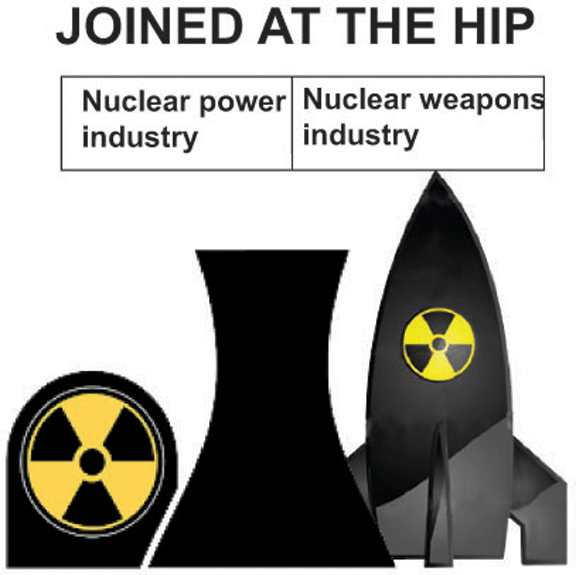
For years, the nuclear industry insisted that civilian nuclear power had nothing to do with weapons programs. That was then. Now, in a desperate attempt to keep no-longer-competitive nuclear plants from being shuttered, the industry claims there really has been a connection all along, and electricity customers should pay a premium to keep it going. It is one claim too many.
In its latest public effort, the nuclear industry got several dozen retired generals and admirals, former State, Defense and Energy Department officials, three former chairmen of the Nuclear Regulatory Commission, and a sprinkling of former senators, governors, industrialists and other worthies to sign a June 26, 2018, letter to Energy Secretary Rick Perry attesting to the connection between U.S. nuclear power plants and national security. The letter urged him to weigh in with federal and state rate-setting bodies to raise customers’ electricity bills to keep U.S. nuclear plants from shutting down, however much that will cost.
The letter didn’t, of course, put it in such crass terms. It talks about taking “concrete steps” to ensure electricity markets valued the nuclear plants’ “national security attributes”— a vague enough formulation to ease getting signatories. Most of them, as one of the signers (former Virginia Senator John Warner) himself put it , “are not intimately familiar with the ins and outs of the financial side of the power grid.” They do, however, apparently believe that they see the big picture—”the national security attributes of nuclear power”—more clearly than the parochial federal and state officials who set electric rates.
But are they any clearer on nuclear power’s national-security attributes than they are on the financial side of the industry?
The letter talks about “robust” nuclear power plants offering “a level of protection against natural and adversarial threats.” Leaving aside that “a level of protection” doesn’t mean much, the implied claim is dubious. It’s not well known but nuclear plant safety is critically dependent on the reliability of the electrical grid to which it is connected. In severe natural situations (ice storms, hurricanes, tornadoes, earthquakes), and even more so in adversarial ones, the transmission lines connecting nuclear plants to the electrical grid may fail or be destroyed. The earthquake that triggered the Fukushima accident first destroyed transmission towers and broke the link with the electrical grid. In these circumstances a nuclear plant must be shut down, as would any other electric generating plant. The difference, however, is that the nuclear plant becomes a serious liability because its safety cooling systems would have to operate indefinitely on its emergency diesel reserves—a highly undesirable state of affairs. There have been grid failures in the United States that have put several nuclear plants into emergency mode. In this context, it’s fair to ask whether nuclear plants increase the resilience of our electrical grid or burden it.
Another claim is that the Navy “benefits from a strong civil nuclear sector.” Maybe so. But in that event, as John Cochrane, an economist with the Hoover Institution, pointed out in connection with a similar appeal to subsidies, “If national security is at risk, let Defense ask for money.” The writers and signatories of the Perry letter know that nuclear power subsidies wouldn’t stand a chance set against the priorities of the Department of Defense. They know it would be an easier touch to stick the country’s ratepayers with the added bill. There is an element of insensitivity in this, as most of the ratepayers are in rather more difficult financial circumstances than the comfortably pensioned signatories. It has not occurred to them to ask that industry should earn less out of patriotism. But, of course, they didn’t write the letter.
“The nuclear industry is an important career destination for military veterans.” True, and retired Navy officers and seamen have had a useful effect on making plants run better and more safely. But should customers pay more on their bills to provide second careers to retired military and naval personnel at plants that are not needed?
The claim in the letter that deserves the most attention is the insidious argument that the United States needs to be a major exporter of nuclear technology in order to retain “influence over nonproliferation.” The worldwide spread of nuclear technology is, of course, what makes proliferation an urgent problem. The whole point of the body of the Perry letter is that there is a close connection between U.S. nuclear power and our nuclear weapons programs. Why should we think that this connection is not present in other countries? Wouldn’t that suggest sharing less, rather than more, of this technology?
Nuclear power has not succeeded in escaping its origin. It was born in the federal government, was suckled by the government, and has always relied on government support and protection. The industry preferred a system of federal regulation that gave the public essentially no say in the deployment of nuclear plants. It was an easy path for the industry to get its way, but only for a time. The crutch that seemed to make it unnecessary to react to public and market feedback also held back improvements. Now that nuclear plants are threatened with shutdowns, the industry can only think of more federal and state subsidies. In this latest effort, the industry wraps itself in the flag to urge Washington to find a way to stick ratepayers with the tab. It should be ignored.
Victor Gilinsky served on the U.S. Nuclear Regulatory Commission under Presidents Gerald Ford, Jimmy Carter, and Ronald Reagan. He is program adviser for the Nonproliferation Policy Education Center. Henry Sokolski is executive director of the Nonproliferation Policy Education Center and the author of Underestimated: Our Not So Peaceful Nuclear Future. He served as deputy for nonproliferation policy in the office of the U.S. secretary of defense from 1989 to 1993.
San Onofre Beach as PERMANENT Nuclear Waste Dump, Wilder Utopia BY THE OUTPOST AUGUST 7, 2018According to a former Nuclear Regulatory Commission Chief, the beach in front of San Onofre Nuclear Generating Station could become a permanent nuclear waste dump. Learn why Edison’s program of storing deadly nuclear waste on the beach is not a “temporary” plan. And cartoonist Jerry Collamer weighs in.
Former NRC Chief Says San Onofre’s Nuclear Waste May Never Be Moved
Greg Jaczko was the head of the Nuclear Regulatory Commission in 2012 when Edison shut down San Onofre because of a radioactive leak. He said plans to move the waste elsewhere may never materialize.
Southern California Edison spokeswoman Maureen Brown said the company has now transferred more than 26 canisters, about one-third of the still highly radioactive spent nuclear fuel remaining in cooling ponds at San Onofre, into dry cask storage on site. The canisters are loaded with spent fuel rods, moved across the site and lowered into vertical casks set in concrete. Only the 74 concrete lids are visible, lined up right next to a seawall.
“According to our outer planetary research team, this was once a delightfully pleasant population of coastal inhabitants, living an upscale beach life when the BIG ONE hit, dislodging those highly radiated canisters, releasing their deadly radioactive contaminates into the air. As the ol’ saying goes, “the rest is history.” But, that was 2,000 years ago, making confirmation of the research impossible. Other rumors say the dinosaurs caused it.” – Divined by Jerry Collamer
At a community engagement meeting arranged by Edison, Chief Nuclear Officer Tom Palmisano said the plan is to move the nuclear waste elsewhere once it has cooled to safer, interim storage, possibly in Texas or New Mexico.
“Our commitment is to support any reasonable and safe way to move fuel out of San Onofre, whether it’s a permanent repository, one of these two projects, or something not yet on the horizon,” Palmisano said.
But Jaczko said don’t count on it.
“Because, quite frankly, once they get loaded, I don’t see them ever taking those canisters out of there,” Jaczko said. “Realistically, they are not going to move them out, so those permits will be extended, the operational period will be extended on indefinitely and you will have a de facto burial site there.”
The problem of what to do with nuclear waste is a national one because the federal government has not agreed on a long-term storage site, Jaczko said.
“There’s a tendency to want to make the problem go away, emotionally and mentally, and when you bury things, it’s easier mentally to not worry about them,” Jaczko said. “Very quickly, people came to this conclusion that the way you solve this problem is you find a place where you can bury and forget: it’s literally called ‘bury and forget.’ You bury the waste and you forget about it.”
Sea Level Rise
Tom English is a retired electrical engineer who has advised the U.S. government and industry on nuclear waste disposal. He lives in Carlsbad, 25 miles south of San Onofre. Moving spent fuel rods out of cooling ponds and into dry storage casks is a good idea, English said, but not if the bottom of those casks are just feet above mean high tide levels.
“If you are involved with high-level nuclear waste disposal, the first thing you think of is to keep it away from water, because the water allows the radionuclides to spread through the environment, causing all sorts of havoc, wrecking ecosystems, cancer, etc.,” English said.
Edison plans to complete the transfer of the remaining spent fuel rods into dry casks by next year. Then the company hopes to dismantle the spent fuel pools and most of the remaining structures on the site. But not the spent fuel storage. That has a permit from the California Coastal Commission to remain until 2035.
“You have to recognize that this is not a short-term solution,” Jaczko said. “Whatever is going to be done with this spent fuel is probably what’s going to happen with this fuel for decades, if not centuries. So you have to think about this as a long-term solution.”
NWMO introducing nuclear waste plan education to youth Kincardine News, 9 Aug 18, With summer winding down, the Nuclear Waste Management Organization is concluding a busy few months of activities engaging with area youth……. “We want to foster and support opportunities for young people in South Bruce and Huron-Kinloss. Our local youth have a lot to offer, and as we engage with them as part of Canada’s plan we hope to strengthen the impact they will have on their communities.”…….
Youth engagement is a big priority for this multi-generational, infrastructure project. The NWMO has provided numerous investments in STEM Education Initiatives for youth at local schools and libraries. ……
Elementary and high schools in South Bruce and Huron-Kinloss were treated to an energy and nuclear power discussion with University of Calgary Professor Dr. Jason Donev, and the Canadian Nuclear Safety Commission (CNSC) also made stops to talk about radiation and their role as Canada’s independent nuclear regulator.
Local youth have highlighted their desire to seek out information on social media, specifically on Instagram.
Holtec and SNC-Lavalin presumably make money if the decommissioning can be done for less than $1 billion. What the public and the regulators need to watch now is how well it is done — no cutting corners, no substandard materials, no shoddy work. We need to know that the oceanfront site in Plymouth will be safe for generations to come with no health risk to people in Southeastern Massachusetts. If that isn’t the case when Holtec leaves, it is taxpayers who will have to pick up the tab to make things right. We don’t want that to happen.
OUR OPINION: Keep a watchful eye on decommissioning of Plymouth nuclear plant Metro West Daily News 9 Aug 18
First the good news: In 10 years, the Pilgrim nuclear power plant in Plymouth could be gone.
Now the bad news: Well, there really isn’t any, if everything goes exactly as planned and if someplace in New Mexico decides it wants to house some of the nation’s most incredibly dangerous nuclear leftovers.
Those are pretty big ifs, as is everything about decommissioning a nuclear power plant. And it is a very long shot that there won’t be 60 or so big tanks sitting upright on the plant site in 2028. They will be filled with rods containing the spent nuclear fuel that powered the plant. That spent fuel will be intensely radioactive for many thousands of years.
………. Entergy announced last week (Wednesday, Aug. 1) that it was selling Pilgrim to Holtec International of Florida. Holtec and a Canadian company, SNC-Lavalin Group of Montreal, had set up a joint venture company, Comprehensive Decommissioning International, to take on the decommissioning of nuclear facilities. Holtec and SNC-Lavalin are both substantial players in the fields of engineering, construction, manufacturing and project management, and have experience with nuclear operations. Entergy plans to shut down Pilgrim next June. It will then remove the last of the fuel rods before finalizing the sale to Holtec in 2020. The state and the federal government must approve the sale.
Under federal rules, the operators of the Pilgrim plant have set aside $1 billion over the life of the plant for decommissioning. As announced by Entergy, Holtec will get that billion dollars, the 1,500 acres and the operating license for the nuclear plant. Holtec and SNC-Lavalin get all the headaches that will come with decommissioning. None of the companies involved made public the financial terms of the sale. Holtec will end up owning the spent fuel rods.
Holtec and SNC-Lavalin could wait up to 60 years for radiation to decline before completing demolition and removal of the plant and equipment. The companies instead say they will employ new technologies for “accelerated decommissioning” and have everything gone in eight year. The goal is to make the land available for unrestricted use with the exception of any area needed for storage of the spent fuel. If all that happens on schedule, it will be very good news for Plymouth and surrounding communities and for the people downwind on Cape Cod who feel they would probably get most of the fallout if anything went seriously wrong.
Thousands of spent fuel rods, still highly radioactive and lethally dangerous, are stored at nuclear power plants throughout the country. There are roughly 140 million pounds of them stored in pools of water or in vertical tanks, called dry casks, made with tons of steel and concrete and liners of lead and other materials to absorb radiation. It will take 60 or so of these dry casks to store all the spent fuel from Pilgrim. The federal government long wanted to store spent fuel rods under a Nevada mountain. Opposition from that state, and questions about the geologic stability of the site, scuttled that plan. Holtec, which manufactures dry casks, is pushing for a license to operate a subterranean storage facility in New Mexico. If the Nuclear Regulatory Commission approves, and New Mexico and local communities agree, spent fuel from Holtec projects would get priority at the site. All the spent fuel from Pilgrim could be gone to New Mexico in a decade, if that happens. Please don’t bet the farm, the ranch or the house on it.
……… Holtec and SNC-Lavalin presumably make money if the decommissioning can be done for less than $1 billion. What the public and the regulators need to watch now is how well it is done — no cutting corners, no substandard materials, no shoddy work. We need to know that the oceanfront site in Plymouth will be safe for generations to come with no health risk to people in Southeastern Massachusetts. If that isn’t the case when Holtec leaves, it is taxpayers who will have to pick up the tab to make things right. We don’t want that to happen. http://www.metrowestdailynews.com/opinion/20180809
CBS News 7th Aug 2018 , The federal government confirms some people in the St. Louis area may have
a higher risk of getting cancer. A recent health report found some
residents who grew up in areas contaminated by radioactive waste decades
ago may have increased risk for bone and lung cancers, among other types of
the disease.
The assessment was conducted by the Agency for Toxic
Substances and Disease Registry, a branch of the U.S. Centers for Disease
Control and Prevention. As CBS News correspondent Anna Werner reports, the
situation is not unique to St. Louis because it’s connected to America’s
development of its nuclear weapons program decades ago. Radioactive wastes
persist in soils, and many believe that’s why they or a loved one developed
cancer. Now for the first time, federal health officials agree, on the
record, that’s a real possibility. https://www.cbsnews.com/news/radioactive-waste-cancer-federal-health-officials-acknowledge-possible-link/
After U.S. Energy Secretary Rick Perry came to Oswego County last week to praise the state’s support of nuclear power plants, several environmental groups and New York politicians sent a letter to state leaders saying the opposite.
The idea of using public dollars to keep financially struggling nuclear power plants afloat because they don’t emit carbon dioxide was never popular among some environmental groups that consider the facilities dangerous and dirty because of the radiation and nuclear waste they create. So when the New York Public Service Commission (PSC) voted two years ago to bail them with about $8 billion in fees on consumer’s energy bills, they left the door open to a potential compromise.
Then-chair of the PSC Audrey Zibelman said they would look at letting customers opt into a program to buy 100 percent of their energy from clean, renewable sources instead of paying into the system that supports the nuclear subsidies. Jessica Azulay with the Alliance for a Green Economy says it’s time for the state to make good on that promise.
“What this letter does that we filed with the governor and the chair of the Public Service Commission is to try to win the right for consumers to decide that they no longer want to pay this extra money toward nuclear energy and they want to instead adopt 100 percent renewable energy,” Azulay said. “We think that this is a really common sense approach – maybe a first step – in reversing the nuclear subsidies by allowing people to vote with their dollars and really create the pathway for renewable energy to accelerate in New York and phase out the nuclear reactors.”
To date, the nuclear subsidies have cost New York ratepayers about $650 million. A spokesperson for the PSC says the price would be even greater had the plants been allowed to shut down because they could have been replaced with fossil fuels that would have emitted carbon dioxide, setting back the state’s goals to lower carbon dioxide emissions 40 percent by 2030.
Julian Assange should ensure he’s granted immunity from prosecution before testifying to the Senate Intelligence Committee, former CIA officer John Kiriakou told RT, citing previous US attempts to charge those who did testify.
“If Assange is offered immunity by the committee, he then could not be charged with the crime because anything he said before the committee could not be used against him,” Kiriakou stressed, recalling how in 1987 former marine Oliver North was granted congressional immunity in exchange for his testimony on the Iran-Contra affair.
The Department of Justice then filed multiple felony charges against North, and he was arrested. But the Supreme Court later dismissed the charges, citing his immunity. Kiriakou believes the same measure can shield Assange, who has spent the last six years living in the Ecuadorian embassy in London fearing extradition to the US.
The WikiLeaks founder was earlier requested to give a closed interview to the staff of the Senate Select Intelligence Committee as part of the investigation into alleged Russian interference in the 2016 presidential election – an accusation Moscow flatly denies.
In October, 2017, WikiLeaks published the cache of emails belonging to Hillary Clinton’s campaign chair John Podesta, whose account the US Intelligence Community claims was hacked by ‘Russian operatives.’
Kiriakou reminded viewers that while many view Assange as a journalist and publisher, American lawmakers generally have a much more negative perception of the whistleblower. “On the Senate Intelligence Committee almost nobody believes that,” he said, explaining why the potential trip to the US can be risky for Assange.
Over the years, US politicians and intelligence officers have branded Assange a “traitor” and an “enemy of the state” for publishing classified materials on the wars in Iraq and Afghanistan, as well as leaking US diplomatic cables. Last year, the then-head of the CIA Mike Pompeo, who now serves as the secretary of state, labeled WikiLeaks a “non-state hostile intelligence service.”
The animosity harbored towards Assange suggests that the US Senate has “ulterior motives” for summoning him, human rights activist Peter Tatchell believes.
“I believe they want to snare him into somehow admitting or implying that he got information from Russian sources. That seems to be the focus of their attention,” the activist said, adding that the US authorities might use the interview to collect new evidence to prosecute Assange in the future.
Former MI5 officer Annie Machon, meanwhile, argues that it may be “difficult” for Assange to agree to a closed interview with US officials on such a sensitive subject. She believes he “always has got to be very careful about how they approach this, how it might be perceived, and what might be the outcome.” But crucially, the very nature of the hearing goes against the principles of WikiLeaks which Assange has staunchly defended.
“The whole ethos of WikiLeaks is to be open and transparent, and to bring the information out for the public’s good,” she said.
Radioactive liquid discovered in barrels near mobile home park in Bellflower By BRIAN ROKOS | brokos@scng.com | The Press-Enterprise
As Thorium 232 decays, it releases radiation and forms decay products. The decay process continues until a stable, nonradioactive decay product is formed.
US Renewables Are Closing In on Nuclear Generation, GT, Renewables produced more electricity than nuclear for the first five months of 2018. AUGUST 09, 2018
“..After decades of stalled nuclear plant development and the recent surge of increasingly cheap wind and solar deployments, the newcomers are pulling ahead. In the first five months of 2018, renewables produced 20.17 percent of U.S. electricity and nuclear produced 20.14 percent, according to Energy Information Administration data compiled by Ken Bossong of the Sun Day Campaign.
A similar record was hit in the first three months of 2017.
In the two most recent months included in the data set, April and May, renewables outproduced nuclear by more than 10 percent. …… Renewables out-generate nuclear in more than half of states, according to an analysis of EIA data by the Sun Day Campaign.
Sun Day has a very clear stake in this race: Its mission is to promote sustainable energy and help “phase out the use of nuclear power.”..
The volunteer efforts of a Hyde Park environmental activist and a retired Washington Township engineer helped about 300 former nuclear workers in the region collect $80 million from the federal government for cancers likely caused by their jobs.
A federal entitlement program that was enacted in 2000, the Energy Employees Occupational Illness Compensation Program pays $150,000 tax-free, plus medical benefits, to workers who became ill, because of their work for the government or contractors for nuclear weapons and Cold War-related work. The illnesses covered include being diagnosed with one of 22 types of cancers.
Among the workers who’ve benefited from the program include former employees of Alcoa in New Kensington, Westinghouse Nuclear Fuels Division in Cheswick and the Westinghouse Atomic Power Development plant in East Pittsburgh
But that program fell short for workers from the former Nuclear Materials and Equipment Corp. because many of the workers or their families couldn’t find the required medical records and the company couldn’t come up with the required documentation.
Zero worker claims approved
In September of 2002, none of the 115 claims filed by workers were approved for the former Nuclear and Material and Equipment Corporation (NUMEC) in Apollo and Parks Township. Historically, roughly about half of the claimants for the program in Pennsylvania worked at NUMEC, which produced nuclear fuel for submarines and other government projects. The plants, which have been razed, operated from the late 1950s until 2004.
A number of NUMEC workers had cancers recognized by the Energy Employees program for being caused by overexposure to radiation.
After learning of their plight, the Tribune Review’s Valley News Dispatch asked a Washington D.C. nonprofit in 2002 to review NUMEC’s health records and documentation from Patty Ameno, a Hyde Park environmental activist.
The Government Accountability Project, a watchdog group for worker health and safety in the nuclear weapons industry, reviewed the newspaper’s information and secured more records through a Freedom of Information Act request to the federal government.
The preliminary review found that some NUMEC workers were exposed to radiation levels hundreds of times greater than the health standards in place at the time.
NUMEC exposures included: Workers at the Apollo plant’s incinerator from 1966 to 1967 received between eight to 40 times the lung burden for a 50-year committed dose. Personnel, who had already been exposed to excessive concentrations of radiation, received additional exposures to airborne plutonium in the mid-1960s. The government authority then, the Atomic Energy Commission, attributed the additional contamination to the company’s inadequate evaluations of airborne contaminants in restricted areas.
Going to Illinois
Ameno spearheaded a successful petition for NUMEC workers to receive a special designation, known as a “special cohort,” for workers to be automatically accepted into the program if they met certain criteria such as being diagnosed with one of 22 cancers and working for the company for at least 250 days.
She traveled to Naperville, Ill., in October of 2007 to testify before the President’s Advisory Board on Radiation and Worker Health. Also traveling to to testify was Tom Haley of Washington Township, a former NUMEC engineer and Richard Parler, another NUMEC worker.
“NUMEC was continually defiant in adhering to laws, regulations, directives, professional standards and worker health and safety standards and therefore habitually violated them,” Ameno said in her testimony.
Looking back, Ameno said, “It’s been a long road. I hope in the scheme of things that it has allowed some semblance of comfort and vindication for the family of those former workers.”
Ameno credits her arsenal of company confidential documents that showing many of the worker exposures. Workers gave Ameno the documents over the years and a series of lawsuits, which she spearheaded against NUMEC and its successors, yielded even more documents.
Those lawsuits settled for $92 million against NUMEC’s successors, the Atlantic Richfield Co., and Babcock & Wilcox for wrongful death, personal injury and property damage from the nuclear plants’ emissions. The companies have always maintained that the plant operations didn’t cause the cancers or other damages.
Haley’s testimony included tales of potentially high worker exposures that weren’t reported by the company. The situation was sometimes made worse by the workers themselves, he added, when they knowingly compromised their urine tests so they could continue to work in the plant.
Haley and Ameno were happy to include the workers in the NUMEC administration for the compensation program, where Haley testified there were nuclear materials present and worked with in the building’s basement.
“I am very pleased to see our efforts have helped so many of my fellow, former workers,” said Haley, “and their families to bear the pain, stress and cost of such a terrible disease, not to mention the loss of their loved ones.”
The Advisory Board granted NUMEC workers the special status, becoming only the fourth such work site in the country at that time. Since then, former NUMEC workers have accounted for the lion’s share of federal benefits paid through the compensation program — $60 million.
Thedecision to grant NUMEC workers special status was based on Ameno’s and other’s presentation on the lack of company records to conduct accurate dose reconstruction for workers and evidence demonstrating that some workers may have “accumulated substantial chronic exposures through episodic intakes of radionucleotides, combined with external exposures to gamma, beta, and neutron radiation.”
Mary Ann Thomas is a Tribune-Review staff writer. You can contact Mary Ann at 724-226-4691, mthomas@tribweb.com or via Twitter @MaThomas_Trib.
Pa. distributing KI tablets to people near nuclear power plants, abc 27 news, By:Myles Snyder Aug 09, 2018 HARRISBURG, Pa.(WHTM) – The state Department of Health is distributing free potassium iodide tablets on Thursday to people who live or work within 10 miles of the state’s five nuclear power plants.
Potassium iodide, or KI tablets help protect the thyroid gland against harmful radioactive iodine and is safe for everyone including pregnant women, those who are breastfeeding, and children and infants, the Health Department said.
People should not take the tablets unless health officials or the governor tell them to do so.
KI tablets can be picked up for family members.
The tablets are also available year-round at county and municipal health departments or state health centers for those who live or work near a nuclear power plant.
Tell Congress: Prevent Nuclear Catastrophe in Iran
Read the Public Inquiry Report, the Commissioners’ report, Surrendering Australia: The AUKUS Deception is available to download for free at aukuspublicinquiry.com. Or just watch the replay of the National Press Club Luncheon.
19 November – Webinar – The Reality of Reprocessing
Time: 11:00 AM Pacific Time (US & Canada) / 2:00 PM Eastern / 7:00 PM UK / 8:00 PM CET