KNOXVILLE, Tenn. (AP) — An attorney is asking the U.S. Nuclear Regulatory Commission to review the Tennessee Valley Authority’s new whistleblowing program before it’s implemented.
The Knoxville News Sentinel reports attorney Billie Garde filed a letter Tuesday saying TVA fired some of its nuclear employee whistleblowing program managers. Garde represents the managers. She says the move is designed to stop safety complaints and silence workers.
TVA’s Chief Nuclear Officer Tim Rausch says the whistleblower program is being improved after worker complaints and other criticism. He says the managers weren’t fired but don’t qualify for the new positions within the overhauled program. Rausch says they are being offered other positions within the utility.
TVA has three nuclear plants: Browns Ferry in Athens, Alabama; Sequoyah in Soddy-Daisy; and Watts Bar in Spring City
June 6th, 2019 Despite being exclusively funded by a Department of Energy (DOE) grant, the New Mexico Environment Department is exploring whether to move the Oversight Bureau at Los Alamos National Laboratory (LANL) from Los Alamos to Santa Fe. A community meeting will held the week of June 24th to discuss the issues at a location to be determined. Your voice to support the Oversight Bureau remaining in Los Alamos is needed now.
For over 30 years, the Oversight Bureau has served as the eyes and ears of the Environment Department in Los Alamos. Their purview of day-to-day operations and emergencies, such as the 1996 Dome fire, the 2000 Cerro Grande
http://www.nuclearactive.org/docs/CerroGrandeindex.html, and the 2011 Las Conchas fires, has been essential for communities downwind and downstream of LANL. During the fires, the Oversight Bureau staffers remained on-site and monitored air emissions. CCNS, Nuclear Watch New Mexico, and the public rely on the Oversight Bureau’s expertise, institutional knowledge of LANL operations, and their environmental sampling data and analyses.
The Environment Department says it is conducting a proper assessment to determine where the Oversight Bureau should be located. Nevertheless, DOE provides about $1.8 million annually to the LANL Oversight Bureau under what was called an agreement in principle between the two agencies. It covered oversight of both the environmental releases from nuclear weapons work and cleanup at LANL. It is now called a memorandum of understanding and is restricted to cleanup.
Scott Kovac, of Nuclear Watch New Mexico, said, “If the Environment Department is concerned about funding the Oversight Bureau, it is time for them to initiate negotiations with DOE to revise, update, and possibly expand the memorandum of understanding and funding for it.” https://nukewatch.org/
Joni Arends, of CCNS, urged people to get involved to keep the Oversight Bureau in Los Alamos. She said, “The new Environment Department Secretary, James Kenney, needs to understand the importance of the Oversight Bureau staying in Los Alamos for those living downwind and downstream of LANL. Please contact Secretary Kenney and tell him your story about what the Oversight Bureau means to you. Explain why it needs to remain in Los Alamos. His phone number is 505 827-2855 and his email is James.Kenney@state.nm.us. Please copy your correspondence to your congressperson and your local media. Thank you.”
Here’s a sample public comment letter that you can use to submit your concerns to NM Environment Department Secretary James Kenney. Feel free to use the paragraphs that resonant with your concerns – edit them and add your own concerns. f OB sample public comment letter 6-6-19
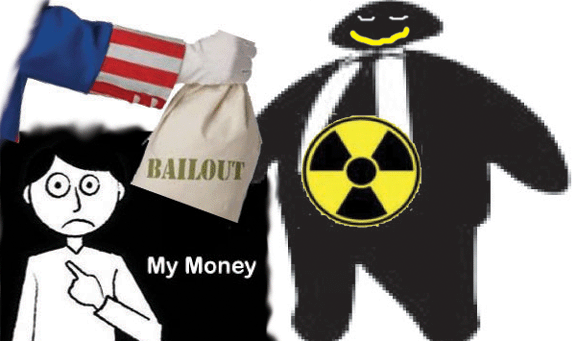
Costs of FirstEnergy nuclear bailout bill could exceed out-of-pocket subsidies, An analysis by grid operator PJM considers losses if Ohio nuclear subsidies deter new generation. Energy News Network, Kathiann M. Kowalski 6 June 19,
A bill to subsidize FirstEnergy Solutions’ two Ohio nuclear plants could cost customers even more than the hundreds of millions of dollars in direct charges proposed to prop up those plus two older coal plants.
A new analysis from grid operator PJM concludes that keeping FirstEnergy’s nuclear plants open could also cost ratepayers as much as $16 million a year in lost savings by discouraging cheaper gas generation from coming online.
Asim Haque, PJM’s executive director for strategic policy and external affairs,testified about the new analysis before the Ohio Senate Energy and Public Utilities Committee on Wednesday.
30 years ago, voters forced shutdown of Rancho Seco nuclear plant in Sacramento County, Sacramento Bee, Mila Jasper.June 6 is the 75th anniversary of D-Day, but in Sacramento, the date has another important meaning.Thursday is the 30th anniversary of the vote that permanently closed down the Rancho Seco nuclear power plant in southern Sacramento County. With the defeat of Measure K, Sacramento became the first community in the world to close a nuclear plant by public vote.
Phil Angelides, the former state treasurer, was a local businessman in Sacramento at the time, and he was involved in the movement to close Rancho Seco.
“The plant was an enormous liability for Sacramento,” Angelides said. “It was first generation plant technology, it just didn’t function.”
Angelides said Rancho Seco was preventing Sacramento from developing a diversified, forward-looking energy portfolio capable of sustaining the region’s growth because of how costly and inefficient the plant was.
The Sacramento Municipal Utility District opened the Rancho Seco power plant, about a 30-minute drive from downtown Sacramento, for commercial operation in 1975, but for years it was plagued by a series of outages.
In 1985, operators lost control of the plant during an “overcooling” event, which forced an automatic shutdown. The resulting 27-month outage cost SMUD $400 million, according to a report from the Union of Concerned Scientists.
SMUD also paid $745,000 in federal fines for various violations related to the facility through 1989, The Sacramento Bee reported.
Outcry against Rancho Seco unfolded when the safety of nuclear energy was in question. In 1979, the Three Mile Island nuclear power plant near Harrisburg, Pa. suffered a partial meltdown, and in 1986, the accident at Chernobyl became the worst nuclear disaster in human history……..
Just days after the Three Mile Island disaster, people climbed over the fence at Rancho Seco during a protest demonstration.
More than 100 other demonstrators cheered with cries of “shut down now, no meltdown later” as 13 protestors climbed the main gate of the plant. The 13 people were arrested for trespassing, and some demonstrators vowed to go on a hunger strike until the 13 were released from jail………
After the plant shut down, SMUD diversified its energy supply and increased investment in energy efficiency programs that have resulted in customer savings of more than $600 million, SMUD officials said.
While the plant was still running, SMUD built one of the first utility-scale solar plants at Rancho Seco, which was decommissioned and replaced in 2016. The solar array powers downtown buildings like the state Capitol and the Golden 1 Center.
SMUD is now constructing the Rancho Seco Solar 2 project, a second array of solar panels that will be the largest facility in the county when it comes online. Construction is scheduled to start in August……..
Still, the shutdown process for the plant was long and arduous. It took 20 years for the plant to be fully decommissioned by the federal government, costing ratepayers $500 million, The Bee reported.
Disposal of the radioactive waste at the plant hasn’t yet been settled, either. SMUD spends $5 million per year to provide security and oversee proper storage of spent uranium.
The materials have been in dry storage at Rancho Seco since decommission and will remain there until the federal government can come up with a solution, according to SMUD.
Rep. Doris Matsui, D-Sacramento, on Thursday introduced a bill that would initiate a program for both decommissioned plants like Rancho Seco and active plants to store spent nuclear fuel in a consolidated program at the Department of Energy. https://www.sacbee.com/news/local/article231253743.html
AI technology improves critical crack detection in nuclear reactors, bridges, buildings, Phys Org, JUNE 7, 2019, by Purdue University A tiny crack in a nuclear reactor, skyscraper, bridge or dam can cause catastrophic consequences. The Minneapolis bridge collapse, which killed 13 people in 2007, is just one example of what can happen when structural integrity is compromised.
Unidentified or under-identified structural damage in nuclear reactors can be cataclysmic. Inspection of critical systems such as nuclear reactors is complicated and time-consuming.
Videos captured by an automatic crack detection system can easily misidentify small scratches or welds as cracks, so technicians must review videos frame by frame. It is a time-consuming process with opportunities for human errors.
Nuclear Energy Regulators Need to Bring on More Cyber Experts, Watchdog Says Defense One, 7 June 19, Cyberattacks on nuclear power stations on the rise, and an aging workforce may soon leave the government struggling to defend plants against the latest threats.
The Nuclear Regulatory Commission is facing a mass exodus of cybersecurity experts in the years ahead, which could limit its ability to ensure the nation’s nuclear power plants are safe from digital attacks, an internal watchdog found……….
As of March 31, NRC officials had inspected 24 of the 57 power plants under its jurisdiction. While assessments “generally provide reasonable assurance that nuclear power plant licensees adequately protect digital computers, communications systems and networks,” auditors said, the agency could be hindered if the NRC doesn’t ramp up its recruitment and training efforts. …….
The situation at NRC is a symptom of the government’s broader struggle to recruit tech and cyber talent amid an aging workforce.
The IG advised NRC to improve its process for addressing skill gaps and managing its workforce, leaning on practices laid out in its existing Strategic Workforce Planning initiative.
Someday the U.S. Will Have to Actually Deal With Its Nuclear Waste Problem, The Department of Energy has made a move in that direction. Slate, By JANE C. HU 7 June 19, “………… the Department of Energy announced Wednesday that they are reclassifying the definition of “high-level,” or highly radioactive, waste stored in underground tanks at Hanford Nuclear Reservation in Washington state, the Savannah River Plant in South Carolina, and the Idaho National Laboratory in Idaho Falls. The DOE hopes that the redefinition will expedite cleanup of the waste. Currently, the high-level waste stored at these sites is waiting for the government to open a secure waste repository (like Yucca Mountain in Nevada, which has been in limbo for decades). But if some of the less radioactive waste qualifies under the new definition, it might instead be shipped off to other sites, like one in Texas, where it could be
mixed with “concrete-like grout.” The cleanup at Hanford has already cost the country billions of dollars and is projected to cost billions more as we continue the search for the waste’s final home. (Adding some urgency to developing a new plan is the risk that containers could leak and contaminate the environment, especially if there’s an earthquake in Washington.)JUNE 07,
The DOE’s new plan could be cost-effective, sure, but the question is whether it’s safe. When the agency first announced reclassification plans in October 2018 and solicited public comment, the proposal received thousands of responses. And Washington state officials are not happy; Gov. Jay Inslee and Department of Ecology Director Maia Bellon have both sent letters of concern to the DOE. “I am gravely concerned with DOE forging ahead with a new interpretation of HLW that does not comport with federal law, despite objections from Washington state,” wrote Bellon.
In addition to the waste we already have sitting around at Hanford and other old nuclear weapons facilities (charmingly called “legacy waste”), nearly 100 commercial nuclear reactors at 60 facilities around the U.S. are creating new waste every day. The type of waste produced by those two types of facility contains different radioactive materials with varying half-lives, but the same storage issues remain: What will we eventually do with all this radioactive stuff?
The lack of solution is not from lack of discussion. There have been all sorts of wacky ideas floated about where to store nuclear waste. Some have proposed we shoot it all into space, maybe have it orbit Venus. But given how spacecraft are prone to explosions, which would effectively mean showering the world with bits of radioactive waste, that idea stalled. In the ’90s, the idea of burying waste in deep ocean seabeds seemed promising, but it never really got off the ground. And some countries tried storing barrels of waste in ice sheets, which turns out to be less than ideal given that ice both moves and melts. As the earth thaws out, old waste becomes uncovered.
Here in the U.S., we’re running out of space, and experts are concerned about the lack of long-term solutions. “Instead of a planned, coherent system, we have the confusion of an unplanned, less than optimal system,” nuclear experts wrote in a 2018 report on nuclear waste management strategy and policy, calling the U.S. program “an ever-tightening Gordian Knot” subject to technical, scientific, logistical, regulatory, legal, financial, social, and political challenges. “This is not a situation that builds public confidence.”……..https://slate.com/technology/2019/06/department-of-energy-nuclear-waste-reclassification-yucca.html
Feds offer to speed cleanup of SC’s deadly nuclear waste. But plan isn’t that simple, The State, BY SAMMY FRETWELL
JUNE 06, 2019
The U.S. Department of Energy is proposing to ship what has long been considered some of the world’s most deadly nuclear waste from South Carolina to burial grounds in the western United States under a plan to reclassify some of the atomic refuse as less dangerous.
According to plans, the energy department would classify some of the Savannah River Site’s high-level waste as low-level waste, a type of atomic refuse that is considered less toxic. That, in turn, would allow the material to be shipped to low-level nuclear waste disposal sites in the deserts of Utah and Texas.
“We want to look at taking the waste stream in South Carolina and reclassifying it and moving it out of state,’’ said Paul Dabbar, the energy department’s undersecretary for science.
The DOE’s plan for reclassifying and shipping waste from SRS is part of a larger proposal to change the definition of nuclear waste at weapons complexes in other parts of the country. The agency says it has historically considered much of the waste that resulted from Cold War weapons production to be high-level. Now, it will consider how radioactive the material is, the DOE said.
In addition to the Savannah River Site, nuclear weapons sites in Washington and Idaho that also have high level waste could benefit from the department’s plan to change the definition of nuclear waste, the agency said.
The SRS proposal and a companion plan for nuclear sites across the country, released Wednesday, drew immediate criticism from environmental groups, which said the plans are potentially dangerous.
But the Department of Energy says reclassifying some of the high level waste would occur only after a thorough analysis and environmental studies.
Federal records show the agency will look at whether 10,000 gallons of Savannah River Site wastewater should still should be classified as high level waste or downgraded to another category. For now, the DOE said it is only considering the 10,000 gallons for disposal at a licensed faciliity outside South Carolina, records show. The wastewater comes from the Defense Waste Processing Facility, an industrial plant that converts high-level waste into glass in an effort to neutralize its danger.
Reclassifying waste would speed cleanup at the Savannah River Site, the agency said. The 310-square-mile weapons complex has tons of atomic refuse left over from Cold War weapons production. Much of that waste is held in about four-dozen aging tanks, some of which have cracked. A handful of tanks have been emptied, but most still contain waste……..
Geoff Fettus, who tracks nuclear waste issues for the Natural Resources Defense Council, said reclassifying waste might also allow officials at SRS to avoid cleaning up some material altogether.
Fettus said that if some of the waste at SRS is no longer considered high level, the DOE could leave the material there and walk away. If that happens, it would not be the first time at SRS. In 2002, the energy department offered plans to reclassify waste so some residual material could remain in the tanks.
“That is the big thing,’’ Fettus said. “I think this is just as much about what stays in the tanks, as to what comes out.’’
Fettus said the environmental group has serious reservations about the plan being advanced by President Donald Trump.
“The Trump administration is moving to fundamentally alter more than 50 years of national consensus on how the most toxic, radioactive and dangerous waste in the world is managed and ultimately disposed of,’’ Fettus told The State newspaper. “No matter what they call it, this waste needs a permanent, well-protected disposal option to guard it for generations to come.’’
Tom Clements, who heads Savannah River Site Watch, also said the proposal is unwise and unsafe.
“DOE’s questionable rewriting of the regulations is simply a cost-cutting measure designed to get thousands of HLW (high level waste) containers dumped off site,’’ he said in an email.
Any waste that is reclassified would not be sent to South Carolina’s Barnwell County low-level nuclear waste site near SRS, but to commercial facilities near the Texas-New Mexico border and in Utah, energy officials said. The low-level Utah waste site is owned by the same company that runs the aging Barnwell County low-level waste dump, which has leaked.
“It allows us to dispose of this into facilities … in Texas or in Utah,’’ Dabbar said….. https://www.thestate.com/news/politics-government/article231181298.html
US shared nuclear info with S Arabia after Khashoggi http://www.hurriyetdailynews.com/us-shared-nuclear-info-with-s-arabia-after-khashoggi-143952– 5 June 19, WASHINGTON– Reuters The Trump administration granted two authorizations to U.S. companies to share sensitive nuclear power information with SaudiArabia shortly after the killing of journalist Jamal Khashoggi in October, a U.S. senator who saw details of the approvals said on June 4.The timing of the approvals is likely to heap pressure on the administration of U.S. President Donald Trump from lawmakers who have become increasingly critical of U.S. support for SaudiArabia since Khashoggi was killed in the Saudi consulate in Istanbul in October.
Khashoggi, a native of SaudiArabia, left in 2017 to became a resident of the United States where he published columns in the Washington Post critical of the kingdom’s leadership.
Senator Tim Kaine, a Democrat from Virginia, where Khashoggi lived, called the timing of the approvals “shocking” and adds to a “disturbing pattern of behavior” of the administration’s policy on SaudiArabia. The Department of Energy granted the first part 810 authorization on Oct. 18, 16 days after Khashoggi was killed. The second occurred on Feb. 18.
U.S. authorities have concluded that responsibility for Khashoggi‘s death went to the highest levels of the Saudi government. Riyadh has denied that Crown Prince Mohammed bin Salman was involved.
The authorizations were among seven granted to U.S. companies by Trump’s administration since 2017, as Washington and Riyadh negotiate a potential wider agreement to help SaudiArabia develop its first two nuclear power reactors.
The Energy Department has kept the companies involved in the sharing of nucleartechnology information with the kingdom confidential, citing the need to protect business interests. In the past, 810 approvals have been made available for the public to view at department headquarters. The department did not immediately respond to a request for comment about Kaine’s statement.
Lawmakers have been anxious to be kept updated about talks on nuclear power development between the administration and Riyadh to make sure any deal contains strict nuclear nonproliferation standards.
SaudiArabia and Washington had begun talks about nuclear power development before Trump’s presidency. But progress has been slow as the kingdom opposes measures that would prevent it from enriching uranium and reprocessing plutonium, two potential pathways to making fissile material for nuclear weapons.
Last year the crown prince said the kingdom did not want to acquire a nuclear bomb, but if its archrival Iran did, “we will follow suit as soon as possible.”
Kaine, who had urged the administration to release the authorizations, said the approvals were “one of the many steps the administration is taking that is fueling a dangerous escalation of tension in the region.”
Late last month, Trump declared a national emergency because of tensions with Iran and swept aside objections from Congress to complete the sale of more than $8 billion worth of weapons to SaudiArabia, the United Arab Emirates and Jordan.
Riyadh plans to issue a multibillion-dollar tender in 2020 to build its first two nuclearpower reactors, sources said in April. Originally expected last year, the tender has been delayed several times.
The United States, South Korea, Russia, China and France are competing for the business. Reactor builder Westinghouse, which has been hit by a downfall in the U.S. nuclear power industry, would likely sell components to SaudiArabia in any deal involving U.S. technology. Westinghouse is now owned by Brookfield Asset Management Inc.
XY Chelsea (2019) Official Trailer | Chelsea Manning SHOWTIME Documentary
In Showtime’s “XY Chelsea,” filmmaker Tim Travers Hawkins aims to reframe the media’s narrative around the Army whistleblower, who identifies as transgender. HuffPost By Curtis M. Wong, 5 June 19 Filmmaker Tim Travers Hawkins aims to relay former Army intelligence analyst Chelsea Manning’s “sense of principles and sacrifice” in a new, sure-to-be-controversial documentary.
Plymouth Nuclear Power Station Shut Down for Good, BY EXCHANGEMONITOR, 5 June 19,
The Plymouth Nuclear Power Station shut down permanently late Friday afternoon.
Entergy hopes by the end of the year to sell the Cape Cod property to Holtec International, which would assume all responsibility for cleanup and spent fuel management, along with the trust fund that will pay for the work.
In 2015, the New Orleans-based power company announced it would retire Massachusetts’ last nuclear power plant this year, saying increasing operating costs and competition with natural gas as a power source had made the 690-megawatt boiling water reactor economically unviable……
Holtec, an energy technology company based in Camden, N.J., is also planning separate acquisitions for two other Entergy sites: the Palisades Power Plant in Michigan, due for retirement in 2022, and the three-reactor Indian Point site in New York in 2021 after its final reactor shuts down. It also aims to buy Exelon’s newly closed Oyster Creek Nuclear Generating Station in New Jersey. https://www.exchangemonitor.com/plymouth-nuclear-power-station-shut-good/
Could Trump Trash The Nuclear Test Ban Treaty? Forbes, Michael Krepon, 3 June 19
Think of what the world would be like if Russia, the United States, China, India and Pakistan were testing nuclear weapons. They are not because of the Comprehensive Test Ban Treaty (CTBT) which is responsible for shutting down nuclear testing by major and regional powers for more than two decades. Walking away from the CTBT would be extraordinarily dumb and dangerous, but the Trump administration has taken a step in this direction.
The CTBT was negotiated in 1996, but it isn’t solidly in place. While Russia has signed and ratified it, Senate Republicans rejected it in 1999. China, like the United States, has signed but not ratified.
There are other holdouts, including India and Pakistan. And yet none of these states has tested nuclear weapons since 1998. When a treaty is negotiated, it’s common diplomatic practice not to undercut its objectives while awaiting its entry into force. Hence the two-decades-long moratorium on testing by every nuclear-armed state except North Korea.
How long this can this situation last? The answer is in doubt now that the Director of the Defense Intelligence Agency, Lt. Gen. Robert P. Ashley, Jr., has declared at a public forum that the “United States believes that Russia probably is not adhering to its nuclear testing moratorium.” The Treaty sets a “zero yield” obligation: states aren’t supposed to test even with the slightest yields. The State Department defines this as any explosion “that produce a self-sustaining, supercritical chain reaction.” In other words, you can conduct experiments, but the experiments should not produce any seismic activity.
As a result of General Ashley’s statement, it’s now open season against the CTBT for those who want to trash another treaty. Critics of arms control have begun to call on Donald Trump to “unsign” the CTBT, just as he has walked away from the Iran nuclear deal and the Arms Trade Treaty. (Trump also announced withdrawal from the Intermediate-range Nuclear Forces Treaty, but in this case, evidence of Russian noncompliance is compelling.) By “unsigning” the CTBT, Trump would tell the world that the United States is no longer bound to respect the Treaty’s obligation not to test nuclear weapons.
Before stumbling into this sinkhole, there are three very important things to bear in mind. First, the U.S. Intelligence Community in general, and the Defense Intelligence Agency in particular, have bad track records in assessing Moscow’s compliance with nuclear testing constraints. Second, National Security Adviser John Bolton and others have a track record of fixing intelligence findings to fit their policy preferences, to the great detriment of America’s national security, expeditionary forces, and international standing. And third, walking away from the CTBT would remove constraints on the resumption of nuclear testing by others far more than on the United States.
Now let’s consider details.
General Ashley declared that the United States believes that Russia “probably” is cheating. This suggests an intelligence community-wide agreement, but Time magazine reports that this is not the case. According to Time’s reporters, there is no consensus, and “the Defense Intelligence Agency generally takes the ‘worst case’ position on military matters.” We deserve to know if there is a difference of view within the intelligence community on whether Russia is “probably” cheating, and if this dispute is about inference rather than evidence. We also need to know whether administration officials are seeking to influence intelligence assessments to suit policy preferences…………
It’s unknown whether John Bolton had any involvement with the DIA intelligence assessment, but another reason for investigation is the National Security Adviser’s record of “fixing” intelligence to make the case for a second war against Saddam Hussein, a war predicated on weapons of mass destruction that did not exist. Bolton is on record opposing U.S. ratification and entry into force of the CTBT. Is he once again “fixing the facts” to suit his policy preferences? Is the Defense Intelligence Agency once again guilty of reaching conclusions beyond available evidence, and misrepresenting the evidence it has? Or is there strong evidence of Russian violations of the CTBT’s prohibition on testing?
More than two dozen national security pros — including former White House policy directors, former senators, and one former defense secretary — are sending a letter to the leaders of the House and Senate Armed Services committees asking them to act to blunt what they call “the administration’s dangerous impulses” in nuclear policy.
The June 3 letter asks for action in this year’s National Defense Authorization Act, starting with support for extending the New START Treaty. Set to expire in 2021, the treaty is the last remaining strategic arms-control agreement between the United States and Russia. The Trump administration has proposed to let it expire and seek instead a three-way Russia-China-U.S.agreement that few outside the White House believe has any chance of becoming real.
The letter’s 25 signatories also ask Congress to “defund and prohibit deployment of low-yield nuclear weapons in this year’s NDAA to reduce the risk of nuclear escalation.” In the letter, they argue that ”deploying low-yield nukes not only lowers the threshold for the use of nuclear weapons, but it signals to adversaries that the United States would respond reciprocally (rather than overwhelmingly) to a nuclear attack. It incentivizes thinking in Moscow and Beijing that developing and deploying low-yield nuclear weapons is necessary to keep pace with the United States and could be a viable option in theater.”
Finally, the letter warns against overreacting to superfast maneuvering missiles being developed by U.S. rivals. “The development of hypersonic missiles by China and Russia is a serious military challenge, but it does not fundamentally change the logic of nuclear deterrence and therefore should not be cause for dangerous overreaction,” it says.
Among the signatories are former Defense Secretary William J. Perry; Bonnie Jenkins, once the State Department’s coordinator for threat reduction programs; Kelly Magsamen, former principal deputy assistant defense secretary; Ned Price, former senior director of the National Security Council; and Jon Wolfsthal, former NSC senior director for arms control and nonproliferation. The letter to lawmakers also bears the signatures of Sens. Gary Hart and Mark Udall.
By John Mecklin, May 28, 2019 The US political divide on climate change couldn’t be starker: Democrats argue over differences on a Green New Deal that would remake the US energy mix and quickly reduce the carbon dioxide emissions that are heating the planet; the Trump administration denies that human-caused climate change exists and tries to ridicule those silly ducks who believe the overwhelming global scientific consensus on the crisis. That divide has, however, taken on a new and ominous dimension with the Trump administration’s decision to attack the methods by which government climate science is produced.
In a ground-breaking piece, the New York Times reports that the federal government will no longer engage in “what scientists say is one of the most urgent jobs of climate science studies: reporting on the future effects of a rapidly warming planet and presenting a picture of what the earth could look like by the end of the century if the global economy continues to emit heat-trapping carbon dioxide pollution from burning fossil fuels.”
This effort to defang official US climate reporting appears aimed at making sure the government does not reproduce anything like the recent National Climate Assessment, which projected drastic results—”higher sea levels, more devastating storms and droughts, crop failures, food losses and severe health consequences”—unless quick action to counteract climate change is taken. If followed through, the administration’s anti-science effort would limit the time frame allowed in government climate projections, so that, in the case of the US Geological Survey, those projections could not extend beyond 2040, even though the most severe effects of climate change are expected to occur in the decades beyond that arbitrary deadline.
In addition to hamstringing climate assessment methodology to make climate change seem a less serious problem than it is, the Trump administration is trying to create a climate review panel that would examine government regulations from, it seems clear, a climate change-denialist vantage. The effort to create the panel is led by 79-year-old physicist William Happer, a deputy assistant on the National Security Council “who had a respected career at Princeton but has become better known in recent years for attacking the science of man-made climate change and for defending the virtues of carbon dioxide—sometimes to an awkward degree,” the Times says, perhaps understating by use of the word “awkward.”
Among other things, Happer has said, “The demonization of carbon dioxide is just like the demonization of the poor Jews under Hitler.”
I have searched my mind to find a proper description of the administration’s most recent, genuinely Orwellian efforts to distort rational truth-seeking on climate change and cannot come up with anything better than the quote given to the Times by Philip B. Duffy, the president of the Woods Hole Research Center, who served on a National Academy of Sciences panel that reviewed the government’s most recent National Climate Assessment: “What we have here is a pretty blatant attempt to politicize the science—to push the science in a direction that’s consistent with their politics.
Read the Public Inquiry Report, the Commissioners’ report, Surrendering Australia: The AUKUS Deception is available to download for free at aukuspublicinquiry.com. Or just watch the replay of the National Press Club Luncheon.
19 November – Webinar – The Reality of Reprocessing
Time: 11:00 AM Pacific Time (US & Canada) / 2:00 PM Eastern / 7:00 PM UK / 8:00 PM CET