Radioactive Materials Like at Piketon School Were Present in Huntington
Huntington News, June 29, 2019 BY TONY E. RUTHERFORD, NEWS EDITOR Following the discovery of neptunium and uranium at the Piketon Middle School, surveyors have found evidence of radioactivity up to 14 miles from the former Portsmouth Gaseous Diffusion Pant (PGDP). Vina Colley, National Nuclear Workers for Justice (NNWF) and PRESS, disclosed those findings last week with HNN.
A second class action has been filed on behalf of residents living seven miles of the A plant in Piketon, which sent materials to the Huntington Pilot Plant on the INCO property in the 1950s.
Colley has revealed that the Piketon plant received weapons grade atomic bomb matter from its early 50s opening. Some of that material also went to the Huntington site where nickel carbonyl was added and in some cases reactor process materials were recycled.
The HPP was owned by the Atomic Energy Commission and leased to INCO. Certain former employees of the actual structure which in 1978-1979 was demolished and most contaminated portions buried in a classified unlined landfill.
Contaminated HPP debris were trucked to Piketon for burial. One of the truck drivers perished from exposure: “Kenny Estep worked as a truck driver at the A-Plant. Estep hauled radioactive waste to a plant landfill. In 1978 he was told to dump snow on a leaking cylinder of radioactive uranium hexafluoride. Estep died of a rare form of liver cancer seven years later. Estep’s widow was compensated for her loss after the United States government admitted in 1999 that it had harmed workers at the A-Plant and other atomic plants.
Residents who live in the vicinity of the A-Plant have also experienced more than their share of cancer and other diseases, and animals and plants nearby were found to contain harmful contaminants.”
Although DOE/DOL/NIOSH documents have evaluated the former site, these decisions were based on findings that did not include that Piketon was working with atomic bomb weapons grade materials.
Piketon received product from the secret Oak Ridge K-25 plant. Colley said that K25 matter had “to be trucked off for disposal. At first, [Oak Ridge] city workers loaded this for disposal and got contaminated then workers from the K25 took over. They said it was cleaned up , but every once in a while they would find more.” Colley referred to reports from Frank Munger’s column in the Oak Ridge newspaper. As a result of receiving K-25, Savannah River, and West Valley New York bomb grade materials, Colley told HNN that evidence of contamination has been found within 14 miles of the PGDP. She suggests that more Piketon and Scioto schools need radiation testing.
(Reuters) – FirstEnergy Solutions said on Monday it hopes Ohio lawmakers will pass a bill by July 17 to prevent the early closure of the state’s two nuclear power reactors but cannot buy fuel for the units at this time without legislative certainty.
FirstEnergy Solutions, a bankrupt subsidiary of Ohio energy company FirstEnergy Corp, had said it would shut the Davis-Besse and Perry reactors on Lake Erie in 2020 and 2021 if it did not get some financial help from the state for the money-losing plants by the June 30 fuel purchase deadline for Davis-Besse.
The Midwestern state’s House of Representatives passed a nuclear bailout bill in May, known as “House Bill 6” (HB6).
The Ohio Senate worked on its own version of HB6 over the weekend and was still working on it early on Monday, according to a legislative aide.
State legislators were now working toward final passage of HB6 by July 17, FirstEnergy Solutions said.
“Should we receive the long-term certainty that comes with an affirmative vote within this timeframe, we will immediately re-evaluate our options,” FirstEnergy Solutions said in a statement, noting the company remains “on path for a safe deactivation and decommissioning” of Davis-Besse.
“Given the expectation that the legislation will be passed in the coming weeks, we have communicated our commitment to doing everything possible to accommodate this process, which will come with increased financial burden associated with missing the June 30th fuel purchasing deadline,” it said.
The House version of HB6 would provide FirstEnergy Solutions with about $150 million a year from 2020 to 2026, according to local newspaper reports.
A version of the Senate bill last week also included subsidies for a couple of coal plants owned by Ohio Valley Electric Corp (OVEC) like the House version of the bill.
OVEC is owned by several utilities, including units of American Electric Power Co Inc and Duke Energy Corp.
Cheap and ample gas from shale fields like the Marcellus and Utica in Ohio has depressed electricity prices nationwide over the past several years, making it uneconomical for generators to keep operating some nuclear- and coal-fired power plants.
Proponents of nuclear waste dump have a new strategy: Just buy us off, Las Vegas Sun, By Judy Treichel 2 Jul 19, A new tactic is coming to light in the decades-long effort by other states to get a nuclear waste dump rammed into Nevada. And like other strategies in that effort, it’s astonishing — in a bad way.
An opinion piece in a national newspaper suggested that the best way to get Nevadans to stand aside and let high-level radioactive waste roll into Yucca Mountain would be to pay rent to each of us once a year for 10 years.
What a terrible deal: We would give up all ability to fight any injustice or infringement of the rules while waste was transported through our state. We’d get just 10 years of rent payments for a facility that is supposed to house waste for a million years.
More preposterous yet, the suggested amount is $500 per year per person, which looks more like a small tax refund than a hedge against a facility that could easily lead to a calamity. If a nuclear waste train passing behind the resort corridor in Las Vegas derailed — as a train in Northern Nevada did recently — the damage to our economy could be very severe and long lasting.
But to even suggest that we would consider a payoff in exchange for accepting the nation’s nuclear waste is offensive. The suggestion assumes that we are stupid.
That’s wrong. We are not only knowledgeable, but also experienced on this issue. Nevada learned a painful lesson during and after atomic weapons testing. It took 50 years of begging and legal action for some of the victims’ families to finally be paid a set sum. We are not going to walk into that situation again, regardless of the amount of the bribe.
Another large fallacy in the thinking of those who would plot to buy Nevadans is the belief that Yucca Mountain is a repository, ready and waiting for the nation’s waste.
Yes, billions were spent there but all that is there is a tunnel where some experiments were done. There are no waste emplacement tunnels or receiving facilities. In addition to the money spent over a 20-year period, the Department of Energy estimates that over $100 billion of new money would be needed.
Was Tulsi Gabbard’s nuclear war warning during Democratic debate hyperbole, or all too real? In a rapid-fire question-and-answer portion of the first Democratic presidential debate Wednesday evening, each candidate was asked about the greatest geopolitical threat to the U.S. abc news, By LEE FERRAN Jun 27, 2019
Multiple candidates mentioned nuclear weapons or nuclear proliferation, but Rep. Tulsi Gabbard, D-Hawaii — a combat veteran who served on the armed services and foreign affairs committees — went further, claiming that “we’re in a greater risk of nuclear war today than ever before in history.”
Gabbard’s language might seem hyperbolic, especially to Americans who as children may have participated in “duck and cover” drills amid fears of a Soviet nuclear volley during the Cold War. But experts are split on whether she’s actually that far off — with one saying the nuclear war threat is as dire as ever, and another calling Gabbard’s assessment “nuts.”………,
Wolfsthal noted that the unnerving “Doomsday Clock” created by the Bulletin of Atomic Scientists, which has tracked the threat of nuclear disaster since the late 1940s, is currently set at two minutes to midnight, where it’s been since January 2018. The Bulletin says that’s “as close to the symbolic point of annihilation that the iconic Clock has been since 1953 at the height of the Cold War” due to the dual threats of nuclear weapons and climate change.
“This suggests that things are as bad as they ever have been, but not worse,” said Wolfsthal, who sits on the Bulletin’s Science and Security Board.
In April, a United Nations expert on nuclear disarmament, Izumi Nakamitsu, warned the international body that the threat of nuclear weapons being used, “by accident or through miscalculation, is higher than it has been in decades.”……
Wolfsthal pointed, in part, to the “tone and approach” taken by President Donald Trump with regard to “North Korea, Iran and elsewhere” as contributing to the crisis, as well as tensions with fellow nuclear power Russia over arms control treaties…….
In a speech earlier this month, Gabbard reasoned that “regime change” wars had “exacerbated” the problem of nuclear proliferation, specifically how the value of nuclear weapons was reinforced to North Korean leaders after the international intervention in Libya, and said the U.S. was in a “new arms race” among the major powers, contributing to an almost unprecedentedly unstable nuclear world. ……… https://abcnews.go.com/Politics/tulsi-gabbards-nuclear-war-warning-democratic-debate-hyperbole/story?id=63991471
State and top fed official at odds over Hanford high level radioactive waste, Tri City Herald, ANNETTE CARY,
A top Department of Energy official is fighting what he says are misconceptions about a new policy on which Hanford and other nuclear weapons complex waste must be treated and disposed of to the stringent standards required for high level radioactive waste.
“We’re proposing nothing here,” he said. “We don’t have any plans to propose anything in Washington state.”
But key state of Washington officials are not buying his explanation……..
When the new DOE policy on classifying high level waste was announced earlier this month, Washington state Gov. Jay Inslee and Attorney General Bob Ferguson said in a joint statement that all options would be considered to stop “this reckless and dangerous action.”
STATE: HANFORD WASTE COULD BE RECLASSIFIED
Bellon said after the meeting with Dabbar that he claimed the new interpretation for high level waste currently only applies to certain waste in South Carolina.
But there was no exclusion for Hanford in the policy change as announced by DOE in the Federal Register, she said. “So as it stands, the Federal Register notice could be used to make substantial and potentially harmful changes to the ongoing cleanup at Hanford,” she said.
She and other state leaders “are concerned that the Department of Energy’s high level waste reinterpretation will be a mechanism for it to do less than what is legally required,” she said.
Congress has passed laws that define high level waste that results from processing irradiated nuclear fuel if the waste is “highly radioactive.”
At Hanford, chemicals were used to separate plutonium from irradiated fuel at huge reprocessing plants for the nation’s nuclear weapons program from World War II through the Cold War.
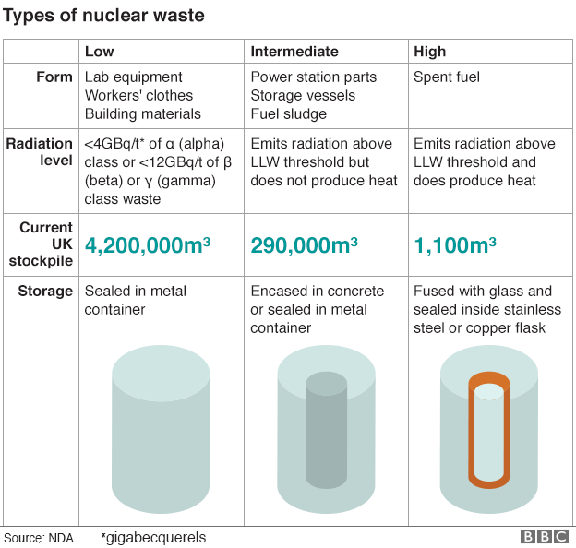
The fuel reprocessing left 56 million gallons of radioactive and hazardous chemical waste stored in underground tanks until it can be treated for disposal, which is now handled as high level waste. In addition, an estimated 1 million gallons of the processing waste leaked or spilled into the ground in central Hanford.
DOE’s change of policy would allow waste from fuel reprocessing to be classified as low level waste if it can meet radioactive concentration limits set for low level waste and could be safely disposed of at a site other than a deep geological repository, as required for high level waste……..
DOE now is moving forward with an initial look at whether up to 10,000 gallons of recycled wastewater at Savannah River could be classified as low level radioactive waste rather than high level radioactive waste. As high level waste it must be turned into a stable glass form and stored until the nation has a deep geological repository, such as proposed at Yucca Mountain, Nev.
If the waste is classified as low level, it could be turned into a concrete-like grout form and disposed of off site, possibly at the Waste Control Specialists site for low level waste in Texas.
Dabbar said risk would be reduced by disposing of the waste sooner………..
FUTURE OF HANFORD ADVISORY BOARD
Protecting the Columbia River from the radioactive sludge has been one of the priorities of the Hanford Advisory Board, a board with representatives of Hanford workers, local residents, local governments, environmental groups and others that provide advice to DOE and its regulators on environmental cleanup.
It is among the federal advisory boards that DOE will be evaluating after a June 14 order by the president that all federal agencies evaluate the need for each of its federal advisory committees and disband at least a third of them to reduce costs and improve government efficiency.
Dabbar has had no DOE conversations on which of the many DOE boards may be cut, he told the Herald.
NATO has said Russia’s SSC-8 missile violates terms of a 1987 missile treaty.
The alliance has said it will act to mitigate the Russian threat.
Russia has in turn said it would take “countervailing military measures.”
Moscow has said it will take “countervailing military measures” should NATO fulfil any threat related to Russia’s nuclear-ready cruise missile system.
NATO Secretary-General Jens Stoltenberg said Tuesday that Russia must dismantle the short-range system, or the alliance will be forced to respond, adding that NATO-member defense ministers would now look at next steps “in the event that Russia does not comply.”
No detail is yet known over what NATO might do although Stoltenberg said the alliance would not engage in any arms race.
According to the Kremlin-owned news agency TASS, Russian Deputy Foreign Minister Sergei Ryabkov told reporters Wednesday that NATO’s comments “reek of propaganda” and were falsely attempting to portray NATO’s threat as a “military and political response to Russia’s actions.”
The translation of Ryabkov, provided by TASS, added that Russia would respond to any military action from the 29-nation alliance.
NATO says it will act unless Russia destroys nuclear-ready missile, CNBC, JUN 26 2019
KEY POINTS
NATO has said Russia’s SSC-8 missile violates terms of a 1987 missile treaty.
The U.S. says it will exit the treaty unless Russia stops their production.
But Russia has continued to develop and site the missiles within range of Europe.
NATO said Russia must destroy its short-range nuclear-ready cruise missile system, or the alliance will be forced to respond.
The U.S. has previously said it will quit a decades-old missile treaty with Russia if the latter fails to destroy the missile, labeled the SSC-8 by NATO.
The 1987 INF Treaty between the U.S. and Russia sought to eliminate nuclear and conventional missiles, as well as their launchers, with short ranges (310–620 miles) and intermediate ranges (620–3,420 miles).
NATO has said the SSC-8 violates those terms and that Russia has been deploying the system at locations which could threaten countries across Europe.
The only suspense: How much per month the subsidy bill, House Bill 6, will force each Ohio electricity customer to pay to keep open Lake County’s Perry and Ottawa County’s Davis-Besse nuclear plants, built by what’s now FirstEnergy Corp., but owned by the utility’s FirstEnergy Solutions unit, which plans to become an independent company.
Ohioans required to pay subsidies wouldn’t just be FirstEnergy customers, but also every Ohioan who gets electricity from DP&L, Duke or American Electric Power (AEP).
Some HB 6 backers claim that because the bill (depending on the version discussed) would cut some renewable energy, etc., costs that Ohio consumers already pay, it could make the nuclear subsidy, at worst, a wash for consumers – maybe even net savings. (Voters might want to get that in writing.) Still, these factors make HB 6’s passage a decent bet:
* The Republican-run House has passed it – with some Democratic votes.
* The bailout is pending in the GOP-run Senate, which, after ending its Hamlet act, will pass the bill.
* Gov. Mike DeWine, a Cedarville Republican, favors a bailout.
* Nuclear bailouts are underway in Democratic-run Connecticut, Illinois, New Jersey and New York, arguably making bailouts cross-party.
The bill started in the House, led by Speaker Larry Householder, a Republican from Perry County’s Glenford. Politically speaking, he owes FirstEnergy big-time.
To pass HB 6, Householder crafted it to (a) appeal to as many House members possible and (b) persuade other electric utilities to support, or at least not fight, HB 6.
As to (a), the House-passed bill is said to net out the nuclear subsidy’s cost by stripping renewal energy, etc., mandates from current Ohio law. As to (b), the House-passed bill would help AEP, DP&L and Duke extend Ohio customers’ subsidies (now set to expire in four to six years) of two coal-burning power plants – one in Appalachian Ohio’s Gallia County, the other in Indiana.
Trouble is, the Senate’s (currently proposed) rewrite of HB 6 pulls the rug from under House tweaks – so much that AEP no longer supports HB 6, it told the Senate Energy and Public Utilities Committee. If that’s the bill senators send back to Householder, he’d have his hands full trying to win House agreement in Senate changes. Likelier, he’d call for a Senate-House conference, but Senate-House relations appear less than cozy right now.
Not that the Senate’s version is pro-consumer: “Fundamentally the bill remains a bailout of aging nuclear power plants, at public expense, for bankrupt FirstEnergy Solutions and its big Wall Street creditors,” Michael Haugh, of the Ohio Consumers’ Counsel, told the committee Thursday. The Consumers’ Counsel is the state agency that represents Ohio’s residential utility consumers.
But facts don’t necessarily kill bills. Some General Assembly members are all but duty-bound to side with contributors. After all, if someone takes you to the prom, you’re more or less expected to dance with him or her. Same thing happens in Columbus. FirstEnergy and Ohio’s other electric utilities are generous contributors to Statehouse campaigns. Whether your name is Fido or Rep. John Doe, it’s never a good idea to bite the hands that feed you. So legislators don’t.
And if you think otherwise, look at the Ohio Revised Code. Or agricultural pollution in the Maumee valley. Or the looming (and likely successful) bid by big retailers and plastic bag peddlers to forbid local governments from banning single-use plastic bags. Legislators may respect Old Glory and motherhood. But campaign donors they revere.
That’s why, at the Statehouse, when utilities and other big-ticket political players want favors, things can suddenly get … “bipartisan.” That calls to mind what Louisiana kingfish Huey P. Long said. He likened the two parties to a limited-menu restaurant: “They’ve got a set of Republican waiters on one side and a set of Democratic waiters on the other side. But no matter which set of waiters brings you the dish, the legislative grub is all prepared in the same Wall Street kitchen.”
Japan hopes latest Trump-Kim meeting will help get nuclear, abduction talks moving again, Japan Times , 29 June KYODO,Japan hopes the third meeting between U.S. President Donald Trump and North Korean leader Kim Jong Un on Sunday will reinvigorate stalled denuclearization talks and help resolve the issue of past abductions of Japanese citizens.
“The meeting could serve as an opportunity for North Korea to come out of its shell,” a senior Japanese Foreign Ministry official said.
Trump and Kim held talks in the Demilitarized Zone dividing the two Koreas and agreed to restart denuclearization talks within weeks following the rupture of their last summit in Hanoi in February.
Bulletin of Atomic Scientists 28th June 2019 , Within a 10-day period in
February 2014, two accidents happened at the Waste Isolation Pilot Plant
(WIPP) in New Mexico – the United States’ only underground repository
for nuclear waste.
First, a truck fire deep in the mine spread soot over
key equipment and disabled the repository’s air monitoring system. Then a
chemical reaction breached a waste drum, causing a radiological release
that contaminated large areas of the repository.
Two Accident Investigation
Boards and a Technical Assessment Team identified the immediate causes of
the accidents and recommended remedial actions.
The author, who served as the Deputy Under Secretary of the Energy Department at the time of the
accidents and during the three years WIPP was closed, examines the larger
problems within the Energy Department and its contractors that set the
stage for the accidents. He places the blame on mismanagement at the Los
Alamos National Laboratory; structural problems created by a statutory
“fence” between the National Nuclear Security Administration and the
rest of the Energy Department, including the Office of Environmental
Management, which is responsible for disposing of the waste from more than
60 years of nuclear weapons production; and a breakdown of the “nuclear
culture.”
Time to Downsize the Nuclear Attack Sub, The Maritime Executive BY CIMSEC 2019-06-28 [By Duane J. Truitt]
It is clear that U.S. Naval Sea Systems Command (NAVSEA) needs to re-engineer the next generation of SSNs. The bloated SSN(X) (now “New SSN”) concept should be rejected entirely because it is more of the same, but bigger and more expensive. Instead, the Navy should go for a new class of SSN that is far smaller and cheaper than the current Block 5 Virginias. …….. https://www.maritime-executive.com/editorials/op-ed-time-to-downsize-the-nuclear-attack-sub
The China Syndrome (1979) ORIGINAL TRAILER [HD 1080p]
How THE CHINA SYNDROME Brought Down The Nuclear Power Industry, The film that predicted Three Mile Island and affected the response to Chernobyl. Birth, Movies, Death. By ANDREW TODDJun. 28, 2019When we think about nuclear power, we tend to think about disasters. Real life has given us plenty of reason to do so: between Three Mile Island, Chernobyl, and Fukushima, three major global powers have each seen their nuclear industries fall subject to catastrophe. People died; economies crashed; whole sections of Earth were rendered uninhabitable. Hell, Chernobyl arguably ended the entire Soviet Union.
Entertainment, too, has played a significant role in creating this image of nuclear power. Dozens of movies, TV miniseries, and documentaries over the years have played off and magnified real-life fears, often drawing a direct connection between the “peaceful atom” and its destructive wartime counterpart. One of the first, and most influential, was James Bridges’ 1979 atomic energy thriller The China Syndrome.
“The China Syndrome” is a colloquial term for a very real threat in the event of a nuclear accident. It refers to a reactor accident wherein reactivity becomes so supercritical that operators cannot control it. The fuel gets so hot, it melts its mounting channels, control rods, and even exterior housing, burning through concrete and steel to seep unstoppably downwards – in fanciful terms, all the way to China (hence the name). This actually happened, to a degree, at Chernobyl: the reactor transformed into hundreds of tons of corium lava, eating through multiple basement levels and nearly breaching the building’s foundations before it cooled sufficiently to stop melting concrete. The danger, as with any China Syndrome situation, was that the fuel would reach groundwater, poisoning the land or creating a steam explosion that would blast radioactive material across an enormous area.
Curiously, there is no China Syndrome in The China Syndrome. Based primarily on a 1970 accident at the Dresden Nuclear Power Station in Illinois, the film follows reporter Kimberly Wells (Jane Fonda) and cameraman Richard Adams (Michael Douglas) after they witness an accident while reporting at a California nuclear power plant. ………….
Predictably, the nuclear industry had a fiery reaction. Westinghouse executive John Taylor described the film as “an overall character assassination of an entire industry.” Nuclear experts generally agreed that the film’s specific events were highly improbable (if not entirely impossible), but also that an inherent clash exists between earning corporate profits and spending the money required to keep reactors safe. The industry may have been correct to debate the film’s finer technical points or melodramatic ending, but it’s hard to argue that unchecked capitalism doesn’t encourage corner-cutting.
On that note, it’s worth noting, that The China Syndrome’s institutional failure is near-identical to that which contributed to the Chernobyl disaster. Both saw powerful organisations covering up disastrous mistakes made in the name of cost-efficiency, but they come from opposite ends of the ideological spectrum. One comes from American capitalism, where making money and gaining power comes first and safety regulations are a costly hassle. The other comes from Soviet communism, where saving money and maintaining power came first and safety regulations were a costly hassle. Personal and institutional selfishness knows no political boundaries, and both all-powerful states and all-powerful corporations are prone to malfeasance.
All the industry’s rebuttal ultimately proved ill-advised, of course, as less than two weeks after the film’s release, a reactor underwent a partial meltdown at the Three Mile Island Nuclear Generating Station. Still the most serious nuclear accident in US history, the accident caused no immediate deaths, but the radiation leakage may have contributed to cancers, and the fourteen years of cleanup cost a billion dollars. More importantly, it caused opinion to solidify around the The China Syndrome’s thesis: that the nuclear energy industry could not be trusted with nuclear energy……… https://birthmoviesdeath.com/2019/06/28/how-the-china-syndrome-brought-down-the-nuclear-power-industry
ON THURSDAY SENATORS tackled the radioactive question of the nation’s nuclear waste, this time with a new plan to circumvent the hot-potato politics that doomed Yucca Mountain and other proposals. A combination of new legislation that spreads out the nuclear waste burden and perhaps new technology could offer a new way forward.
Everyday, the Department of Energy sends $2.2 million to the nation’s electric utilities to store spent nuclear fuel that has nowhere to go. Under a 1982 law, the federal government was supposed to pick up the nuclear industry’s waste and put it in a safe place underground for the next few hundreds of thousands of years (the half-life of some radioactive isotopes). That deadline passed in 1998, and after more than two decades of lawsuits and political delays, there’s still no permanent location to put the nasty stuff. Instead, spent fuel rods are sitting at 95 nuclear plants around the country in either “fuel pools,” where the waste cools down for a few years after the rods finish producing energy, or in special steel-and-concrete casks that sit above ground like nuclear garbage cans.
Pretty much everyone—utility industry leaders, environmentalists, nuclear engineers, and local mayors—knows the status quo isn’t working. Nobody wants to invest in an industry that can’t deal with its waste (even if it’s carbon-free); and nobody likes the idea of these nuclear-rod-carrying casks multiplying ad infinitum.
The place that the government picked to store all the nuclear waste back in 1987, a repository in Yucca Mountain, Nevada, was canceled in 2009 by the Obama administration. Since then, the project has been in a bureaucratic limbo. The Trump administration moved to take another look at Yucca Mountain and restart the licensing process, but Congress removed funds to do that from last year’s budget.
Despite these obstacles, there’s a glimmer of bipartisan hope on Capitol Hill that this nuclear logjam might be broken, although maybe not at Yucca Mountain.
“It is long, long past time to figure this out, and the sooner we find a path the better,” said Senator Lisa Murkowski (R–Alaska) as she opened a hearing on the issue Thursday in the Senate’s Energy and Natural Resources Committee. Murkowski is sponsoring a bill that would both create a new agency in charge of handling nuclear waste and develop a way for local consent to become part of the decision-making process, although insulated from pressure by members of Congress. That means that the local residents living near a selected site—either temporary or permanent—would get some say in the matter, although perhaps not a veto.
At the hearing, experts testified that without some kind of storage facility, the nuclear industry will continue its slow decline. Nearly all of the nation’s plants were built in the early 1970s. Five are scheduled to shut down by 2025. Plans for two new nuclear reactors in South Carolina got scrapped in 2017 after contractors ran over budget and locals were forced to spend $9 billion to dig a hole in the ground and then fill it back up. A new plant under construction in Georgia has been tied up in contractor fights and court battles.
Murkowski’s bill would set up a new agency outside of Congress to pick a place for a new temporary nuclear waste site to take the spent fuel right away (well, within 10 years). The big holdup is “consent.” While some local communities or native tribes might want the money or jobs that go along with hosting a nuclear waste site, state politicians have blocked such attempts in Nevada, Utah, and Tennessee.
Senator Angus King (I–Maine) asked perhaps the most probing question of the two-hour hearing. “What if every state says no?” King said. “Where are we then?”
Geoffrey Fettus, senior attorney at the Natural Resources Defense Council, agreed that the stalemate will continue unless Congress changes the process of who gets to decide. “We have a higher chance of states getting to yes if they don’t have to take the entire burden” of all the nuclear waste, Fettus said. Fettus says the burden and the costs should be shared among states, with perhaps several smaller interim disposal sites in different parts of the country rather than a single facility.
West Virginia Democrat Joe Manchin wanted to know if the fuel casks could just stay where they are for awhile, and perhaps the fuel could be recycled. France and Japan, for example, reprocess spent fuel to squeeze out more energy. France then converts the twice-used fuel into glass logs that are awaiting a final burial.
Congress has banned nuclear reprocessing since the Carter administration because of fears that it can be turned into nuclear weapons material. Steven Nesbit, head of nuclear policy for Duke Energy and the American Nuclear Society, which represents nuclear scientists and engineers, says uranium is so cheap and plentiful that it doesn’t make economic sense to reprocess spent fuel. ………. https://www.wired.com/story/senators-tryagainto-solve-the-nuclear-waste-debacle/
The formal debates for the 2020 Democratic nomination for President have begun this week. While there are many substantive topics that need to be covered, there are two existential threats that demand to be addressed. The threat of climate change has been discussed nominally though hardly with the urgency that it requires to stop our steady drift to ever greater catastrophic climate events. The other threat is that of nuclear war which increases as environmental degradation, resource depletion and its associated conflict follows. Yet the threat of nuclear weapons and the concept of nuclear deterrence has not and is not likely to be discussed. Despite growing scientific evidence of the increasing vulnerability and threat posed by these weapons, we seem incapable of having a national dialogue on why they should even exist. Ultimately, they threaten every single thing we care about every moment of every day.
At a time when the Bulletin of Atomic Scientists calculates that we are closer to nuclear war either by intent, cyberattack or accident than at any time since the height of the cold war, we would be well advised to take note so as to take appropriate action and educate our citizenry to eliminate these risks. In keeping their 2019 Doomsday Clock at 2 Minutes to Midnight, the Bulletin’s advisory board noted the close interplay of climate crises with growing international conflict, and the risk of nuclear war.
Our nation and the world need a virtual IQ test to understand the risk we face from these weapons. Each of us and every presidential candidate should be required to take this test and respond to these questions so we can have a greater understanding of the devastating risks we face.
Such an IQ assessment might go as follows:…….
The risk of nuclear war remains with us as long as these weapons exist. The only way to eliminate this risk is by the complete abolition of these weapons. The non-nuclear nations of the world, refusing to be held hostage by the nuclear states, are moving forward in the process of making these weapons illegal by international law and norms in the same way every other weapon of mass destruction has been dealt with before.
Opinions on nuclear project at SC plant clash at public forum, Post and Courier, By Colin Demarest cdemarest@aikenstandard.com, Jun 28, 2019 NORTH AUGUSTA — Vocal support for producing nuclear weapon cores at the Savannah River Site sharply contrasted with questions, criticism and pushback Thursday night at a government-led public forum.
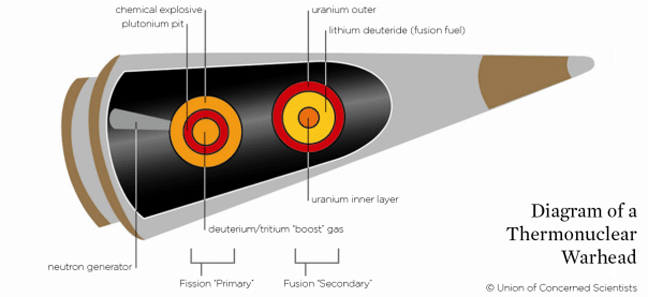
The U.S. Department of Energy’s National Nuclear Security Administration wants to produce 50 of the weapon components each year at the sprawling complex near Aiken. The cores, known as plutonium pits, use one of the world’s most dangerous substances to trigger a series of explosions that unleash the deadly potential of nuclear weapons.
Supporters tout the economic benefits of the project, which would create about 1,000 jobs and provide a new anchor for SRS after the government abandoned its long-delayed efforts to finish a facility designed to turn weapons-grade plutonium into fuel for nuclear power plants.
Critics, however, remain skeptical of the proposed mission and worry about the potential risks to the environment and workers’ health.
A slew of officials, including Aiken Mayor Rick Osbon, Aiken County Council Chairman Gary Bunker and Jim Marra of Citizens for Nuclear Technology Awareness, voiced support for the effort, offering their takes on why SRS is the correct fit for the looming weapons-oriented mission.
Encouragement also came from several chambers of commerce, University of South Carolina Aiken, and state and federal lawmakers.
……… Nuclear watchers and other groups, however, took aim at the effort’s multibillion-dollar projected cost, as well as potential dangers from exposing the environment and workers to plutonium.
“What is the environmental impact of a nuclear weapon?” Glenn Carroll, with Nuclear Watch South, said Thursday. “The absolute and wholesale destruction of the environment. Every human, every animal. Every plant.”
The anticipated costs of pit production have raised eyebrows in Washington, D.C. A congressional budget report published this year estimated pit production would cost $9 billion over the next decade.
Among other things, SRS Watch Director Tom Clements said the pit production process was off to a “rocky start.”
“The project is not funded by Congress, it’s not authorized by Congress,” he said.
Clements, alongside Tri-Valley CAREs and Nuclear Watch New Mexico, hosted a pit production forum earlier this month at the Aiken Municipal Building. He and others urged opponents to push back against the plan.
The public “can be effective against bad Department of Energy ideas, like the pit production one,” Clements said at the time.
One Aiken resident on Thursday described the pit production effort at SRS as hurried, and a woman representing The Human Family organization expressed concerns about earthquakes and becoming a target of terrorism.
………. The NNSA terminated the MOX project — which was over-budget and congressionally controversial — on Oct. 10, 2018. The government had shoveled almost $8 billion into the effort by that point, but it remained years and billions of dollars away from completion.
Clements on Thursday told the audience the Energy Department and others are attempting to “sweep the MOX debacle under the rug.”
Read the Public Inquiry Report, the Commissioners’ report, Surrendering Australia: The AUKUS Deception is available to download for free at aukuspublicinquiry.com. Or just watch the replay of the National Press Club Luncheon.
19 November – Webinar – The Reality of Reprocessing
Time: 11:00 AM Pacific Time (US & Canada) / 2:00 PM Eastern / 7:00 PM UK / 8:00 PM CET