Canada’s Nuclear Waste Management Organization (NWMO) courts indigenous communities

More specifically, the NWMO, which is a consortium of Canadian nuclear industry players created by an act of parliament, is looking for a community willing to allow used nuclear fuel to be placed in what’s called a deep geological repository – or DGR.
Currently the NWMO is engaging with Ignace, Ontario a small community 250 km northwest of Thunder Bay, as well as the municipality of South Bruce, on Lake Huron northwest of Toronto.
Indigenous communities in both those areas are being courted and having the DGR concept pitched to them by the NWMO.
Indigenous engagement is a major focus at the NWMO.
It has put out an eight-part video series on reconciliation, and it also employs Bob Watts as their vice president of Indigenous Relations.
Watts is a long time major player in Indigenous politics who has held high-level positions with the Assembly of First Nations and the federal government………
Fundamentally, a DGR needs to protect radioactive waste from water, because water could potentially bring the deadly radioactive material back into contact with our environment. …….
not everyone is sold on the safety case made by the NWMO.
Gordon Edwards is president of the Canadian Coalition for Nuclear Responsibility and is likely the nuclear industry’s best known critic in Canada.
Edwards isn’t impressed with the NWMO’s multiple barrier system.
“You can put barrier after barrier after barrier, that doesn’t mean that you have a safe system,” he said. ”The same multiple barrier philosophy is used in nuclear reactors. They say the fuel is inside metal tubes, which are called zirconium, that’s another barrier, it’s called the sheath. And those are inside pressure tubes, which is another barrier. And then that’s inside a calandria, which is another barrier. And that’s inside the reactor building, which is another barrier. Consequently, there cannot be a nuclear accident.
“Well, we’ve seen what happened with that philosophy. Chernobyl exploded and the whole area around Chernobyl is still uninhabitable and will be for at least another hundred years. Fukushima, we’ve had three reactors melting down on the same weekend and those multiple barriers were all in place.”
Edwards said the notion that we can build something to last hundreds of thousands of years, the length of time used nuclear fuel will potentially remain dangerously radioactive – is folly.
“You have to realize that the pyramids of Egypt are only 5,000 years old,” said Edwards. “Go and look at them there. They’re really deteriorated a great deal. So the half-life of plutonium is 24,000 years. The Great Lakes didn’t even exist 24,000 years ago. So we’re talking about periods of time that dwarf the span of human history.”
Edwards said he believes taking a wait-and-see approach is better than putting the used fuel in a DGR.
“We can afford to wait another century or two and see if we can come up with a genuine solution,” he said. “If we can’t come up with a genuine solution, we can continue to look after it. We can continue to transmit the information. We can continue to repackage it periodically into better and better packages, which is going to make sure. And if there is leakage that occurs, failure of containment – we can spring into action right away and fix it and not let it get out of hand. That’s a much better approach.
“This is called rolling stewardship.”………
The NWMO said it hopes to have identified a willing host community for a deep geological repository by 2023.
Nuclear Courtship, Part 2 airs next week, and will be accompanied with a web story which will examine the mood of some of the communities engaging with the nuclear industry.cread@aptn.ca https://aptnnews.ca/2020/02/07/indigenous-communities-courted-as-nuclear-industry-looks-for-place-to-put-used-fuel/
Aging nuclear plants: increased danger as U.S.utilities want their lives extended to 80 years
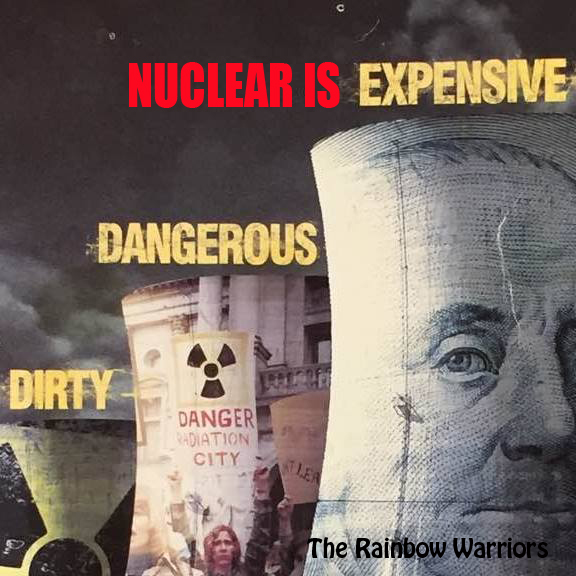
Bonnie Rippingille looked out at the wisps of steam curling from the Turkey Point Nuclear Power Plant across Biscayne Bay with a sense of dread. In December federal regulators approved Florida Power & Light Co.’s request to let the facility’s twin nuclear reactions remain in operation for another 20 years beyond the end of their current licenses. By that point they’ll be 80, making them the oldest reactors in operation anywhere in the world.
“That’s too old,” said Rippingille, a lawyer and retired Miami-Dade County judge. “They weren’t designed for this purpose.”
With backing from the Trump administration, utilities nationwide are preparing to follow suit, seeking permission to extend the life of reactors built in the 1970s to the 2050s as they run up against the end of their 60-year licenses.
“We are talking about running machines that were designed in the 1960s, constructed in the 1970s and have been operating under the most extreme radioactive and thermal conditions imaginable,” said Damon Moglen, an official with the environmental group Friends of the Earth. “There is no other country in the world that is thinking about operating reactors in the 60 to 80-year time frame.”
Indeed, the move comes as other nations shift away from atomic power over safety concerns, despite its appeal as a carbon-free [ whaaat?] alternative to coal and other fossil fuels. Japan, which used to get more than a quarter of its electricity from nuclear power, shut down all its plants in 2011 after a tsunami caused a nuclear meltdown at three reactors in Fukushima. Only a handful have restarted while others that can’t meet stringent new standards are slated to close permanently. Germany decided that year to shutter its entire fleet by 2022 and is now having trouble meeting its ambitious climate goals.
By contrast, the U.S. Nuclear Regulatory Commission is poised to decide this year on requests by subsidiaries of Exelon Corp. to extend the life of two nuclear reactors at its Peach Bottom Atomic Power Station in Pennsylvania and Dominion Energy Inc. to extend the life of two nuclear reactors at a power plant in Surry, Virginia.
Dominion has notified the commission it intends to ask permission to extend the life of two more reactors north of Richmond, Virginia. Duke Energy Corp. has said it plans to seek license extensions for its entire fleet of 11 nuclear reactors, starting with three in Seneca, South Carolina……
The nuclear industry has been buffeted by a wave of early reactor retirements in the face of competition from cheap natural gas and subsidized renewable power. Constructing a new nuclear plant – the only one being built in the U.S. is years behind schedule and over budget – can cost billions of dollars. Retrofitting an existing one is more likely to be in the hundreds of millions of dollars range. ……
Opponents such as Edward Lyman, a nuclear energy expert with the Union of Concerned Scientists, argue that older plants contain “structures that can’t be replaced or repaired,” including the garage-sized steel reactor vessels that contain tons of nuclear fuel and can grow brittle after years of being bombarded by radioactive neutrons. “They just get older and older,” he said. If the vessel gets brittle, it becomes vulnerable to cracking or even catastrophic failure.
Other concerns surround the durability of components such as concrete and electric cables, but an advisory board to the Nuclear Regulatory Commission, the independent government agency that gave Turkey Point the green light to operate into the 2050s, said those risks could be managed safely.
The commission’s decision doesn’t sit well with Philip Stoddard, mayor of South Miami, a city of 13,000 on about 18 miles away from the Turkey Point plant. He keeps a store of potassium iodide, used to prevent thyroid cancer, large enough to provide for every child in his city should the need arise.
“You’ve got hurricanes, you’ve got storm surge, you’ve got increasing risks of hurricanes and storm surge,” said Stoddard, 62. All of this not only increases the likelihood of a nuclear disaster, it also complicates a potential evacuation, which could put even more lives at risk…….
“They are going to be flooded,” Cox said. “If we are relicensing a major utility we need to be preparing for the impacts of sea level rise.”…….. https://www.goerie.com/business/20200209/our-aging-nuclear-plants
Natural Resources Defense Council: It’s Time to Pursue a Genuine Solution for Nuclear Waste
 NRDC: It’s Time to Pursue a Genuine Solution for Nuclear Waste NRDC: It’s Time to Pursue a Genuine Solution for Nuclear Waste
February 07, 2020 WASHINGTON — President Donald Trump bowed to reality as he said his administration would end its attempts to force nuclear waste into the unsafe Yucca Mountain site in Nevada.
Following is a statement by Geoff Fettus, senior attorney in the Nuclear Program at the Natural Resources Defense Council: “With this change of direction by the Trump administration, decades of unfortunate attempts to shove nuclear waste down Yucca Mountain officially come to an end. Congress must now move in a new direction, one based on sound science, the consent of the state and local citizens, and compliance with all environmental laws.” Please see this analysis for more information on this issue: https://www.nrdc.org/experts/geoffrey-h-fettus/final-resting-place-nuclear-waste The National Resources Defense Council (NRDC) is an international nonprofit environmental organization with more than 3 million members and online activists. Since 1970, our lawyers, scientists, and other environmental specialists have worked to protect the world’s natural resources, public health, and the environment. NRDC has offices in New York City, Washington, D.C., Los Angeles, San Francisco, Chicago, Bozeman, MT, and Beijing. Visit us at NRDC.org and follow us on Twitter @NRDC. |
|
Sea-level rise – an Unmanaged climate risks to spent fuel from U.S. nuclear power plants.
 Unmanaged climate risks to spent fuel from U.S. nuclear power plants: The case of sea-level rise https://www.sciencedirect.com/science/article/abs/pii/S0301421519306937?fbclid=IwAR3G1uXQ-mz1KU1_ENXztdqIdICVZPsgO6Rw-qvQ1jHHPiGPUuumd7OHcjw
U.S. Democrats call for five-year extension to nuclear arms treaty with Russia
 Dems call for five-year extension to nuclear arms treaty with Russia, . https://www.washingtontimes.com/news/2020/feb/5/dems-call-five-year-extension-nuclear-arms-treaty-/ By Lauren Meier – The Washington Times – Wednesday, February 5, 2020
The leading Democrats on the House and Senate Foreign Relations Committees are urging President Trump to strike a renewed nuclear arms treaty with Russia as the last such treaty between the two nuclear powers is set to expire in one year.
In a statement Wednesday, Rep. Eliot Engel of New York and Sen. Robert Menendez of New Jersey called on Mr. Trump to negotiate an extension with Russian President Vladimir Putin to continue the New Strategic Arms Reduction Treaty (New START) for an additional five years.
“This treaty has constrained Russia’s nuclear forces, provided strong and detailed verification measures to ensure Russia adheres to its commitments, and allowed the United States the flexibility to maintain a safe, secure, modern, and effective nuclear deterrent,” the members wrote.
They highlighted data exchanges and on-site inspections of nuclear facilities that are authorized under the Obama-era treaty that “provide unique insights into Russia’s nuclear forces and greatly assist our military in carrying out its deterrence mission.”
The U.S. and Moscow are the major signatories of the treaty, which limits the number of deployable American and Russian nuclear weapons to no more than 1,550.
The White House already pulled the U.S. out of the Intermediate-Range Nuclear Forces (INF) Treaty with Russia dealing with shorter-range “tactical” nuclear weapons, over what the U.S. says is Moscow’s continued noncompliance with the terms of the Cold War-era pact.
Mr. Putin has opened the door to immediately extending the treaty, which is set to expire in February 2021
Ontario Power Generation says ‘no’ to proposed nuclear waste disposal site following opposition from Saugeen FN
Ontario Power Generation says ‘no’ to proposed nuclear waste disposal site following opposition from Saugeen FN Manitoulin Expositor, By Michael Erskine, February 5, 2020 SAUGEEN FIRST NATION – The Saugeen Ojibway Nation (comprised of the Chippewas of Saugeen First Nation and the Chippewas of Nawash Unceded First Nation) were asked to vote on a proposal to host a deep geologic repository (DGR) close to the shores of Lake Huron on the site of the Bruce nuclear power station. The response of the band membership was a resounding no, with 1,058 no votes out of 1,232 total votes (170 voted yes, with four spoiled ballots).
“This vote was an historic milestone and momentous victory for our people,” said Ogimaa Lester Anoquot in a release following the vote on Saturday. “We worked for many years for our right to exercise jurisdiction in our territory and the free, prior and informed consent of our people will be recognized.”
Ontario Power Generation (OPG) spokesperson Fred Kuntz accepted the result, noting that “OPG respects the decision of the SON community. We followed the SON process. So we will uphold our 2013 commitment not to proceed with the DGR at the Bruce site without their support, and now we will move forward to develop an alternate solution.”
Weather reporters joining the battle against climate change
 Weathercasters Are Talking About Climate
 Change—and How We Can Solve It https://www.motherjones.com/environment/2020/02/weathercasters-are-talking-about-climate-change-and-how-we-can-solve-it/
In recent years there’s been a seismic shift on climate change within the weather reporting community. MADDIE STONE THIS piece was originally published in Grist and appears here as part of our Climate Desk PARTNERSHIP.
For many years, as the science of human-caused climate change grew ever clearer, TV meteorologists avoided discussing the topic on air. Today, many weathercasters bring up climate change regularly. By embracing the science and presenting it in a simple, locally-relevant manner, TV meteorologists have managed to become some of the most effective and trustworthy climate change educators in the country.
Now some meteorologists are taking the conversation a step further and talking not just about the science of climate change, but how we can solve it.
At the 100th annual meeting of the American Meteorological Society (AMS) in Boston earlier this month, a panel of broadcast meteorologists, climate communicators, and policy experts assembled to discuss how solutions to the climate crisis can be woven into TV weather reporting. While wading into politics on the air can carry career risks for many meteorologists, weathercasters are also uniquely positioned to educate the public about climate solutions in a nonpartisan way, whether that’s by delivering locally tailored forecasts of renewable power production or discussing climate resilience strategies in the wake of a major storm.
“Broadcasters have an unusually good platform from which to engage,” said Ed Maibach, the director of the Center for Climate Change Communication at George Mason University, during the panel. “You not only have the access but consistency of relationships with an audience.”
In recent years there’s been a seismic shift on climate change within the weather reporting community. In a 2011 survey of AMS members and the National Weather Association, less than 20 percent felt sure humans are the primary driver of global warming, a statistic that Maibach attributes, in part, to an “aggressive misinformation campaign by the Heartland Institute,” a climate change–denying think tank. But by 2017 that figure had jumped to 80 percent. That’s thanks largely to the efforts of the educators who organized Climate Matters, a climate reporting resource developed by the nonprofit Climate Central, the AMS, and various governmental and academic partners
Indigenous tribe, Saugeen Ojibway Nation, has voted down plans for nuclear waste dump near Lake Huron
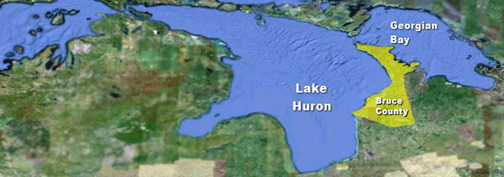
Hervé Courtois to C.A.N. Coalition Against Nukes, 1 Feb 2020, Members of  the Saugeen Ojibway Nation (SON) have voted down plans to bury Ontario’s low- and intermediate-level nuclear waste within 1.2 kilometres of Lake Huron….On Friday, 1,232 members of the First Nation band voted. The vote results saw 1,058 ‘no’ votes, with 170 ‘yes’ and 4 spoiled ballots…It means Canada’s first permanent nuclear waste facility will need to be built somewhere else in Ontario…OPG will now have to start searching for a new host community to house over 200,000 cubic metres of low- and intermediate- level nuclear waste…OPG says finding a new site may set the project back 20 to 30 years….https://www.facebook.com/groups/C.A.N.CoalitionAgainstNukes
A really bad idea – The Navy’s New Mini-Nuclear Warheads
|
The Navy’s New Mini-Nuclear Warheads Are A Really Bad Idea, In other words, a new tactical nuclear weapon is supposed to convince Russia that the U.S. could respond in kind to Moscow’s use of tactical nukes. Delivering the warhead by sub-launched ICBM means Russian air defenses can’t stop it. Unfortunately, there are questionable assumptions behind this thinking. National Interest, by Michael Peck . 31 Jan 2020, Why Does America Need New Mini-Nuclear Warheads for Its Submarines? America’s strategic ballistic missile submarines are getting tactical nuclear weapons……..
The U.S. military doesn’t discuss the deployment of nuclear weapons as a matter of policy. But it’s no secret why the Trump administration wants them. To understand why requires an appreciation of the unwritten rules that have governed the U.S. vs. Soviet Union/Russia nuclear arms race since 1949. The U.S. government fears that Russia is embracing a new military doctrine that envisions selective use of tactical nuclear weapons, such as during a conflict in Eastern Europe and the Baltic States. ……….
a new tactical nuclear weapon is supposed to convince Russia that the U.S. could respond in kind to Moscow’s use of tactical nukes. Delivering the warhead by sub-launched ICBM means Russian air defenses can’t stop it.
Unfortunately, there are questionable assumptions behind this thinking. The Cold War witnessed similar fears of nuclear blackmail if one superpower or the other fell behind in the arms race. Yet no one has employed nuclear weapons – tactical or strategic – since 1945. Perhaps that’s because the leaders of the U.S., Russia and other nuclear-armed states have realized that the nuclear threshold is crossed, events could easily spiral into full-scale atomic war.
Then there is the whole idea of using ICBMs to deliver mini-nukes. Just as with Prompt Global Strike, a controversial idea to mount conventional warheads on ICBMs, the problem is that no one can be sure whether the nose cone of a strategic ballistic missile contains high-explosive or a hydrogen bomb. Michael Peck is a contributing writer for the National Interest. He can be found on Twitter, Facebook. or on his Web site. https://nationalinterest.org/blog/buzz/navys-new-mini-nuclear-warheads-are-really-bad-idea-118831 |
|
|
Opposition to Nuclear Waste Storage Plan Near Lake Huron
|
Canada Nuclear Waste Storage Plan Near Lake Huron Faces Vote, Bloomberg, Jan. 31, 2020,
U.S. lawmakers from the Great Lakes region are weighing in on the fate of two major Canadian nuclear waste facilities, which could hinge on a vote in a First Nation community in western Ontario on Friday. The 4,500-member Saugeen Ojibway Nation, based on Lake Huron’s Bruce Peninsula, is voting on whether to support construction of Ontario Power Generation Inc.’s C$2.4 billion ($1.8 billion) deep geological repository for low- and intermediate-level nuclear waste near the shore of Lake Huron. But several U.S. members of Congress oppose it, claiming it could endanger drinking water for millions. Ontario Power Generation pledged not to move ahead if the First Nation community votes against the repository. The Nuclear Waste Management Organization, which could build a much larger C$23 billion repository for more radioactive spent nuclear fuel in the same region, won’t proceed in the area if it doesn’t have a partnership with the nation. The vote on Friday doesn’t deal with its proposal directly. The two projects together represent the bulk of Canada’s long-term plan to store nuclear waste. Canada has 2.9 million bundles of highly radioactive used nuclear fuel, according to 2015 data, and around 100,000 cubic meters of low and intermediate nuclear waste, according to 2016 figures, the most recent available. U.S. Lawmakers Oppose Both SitesU.S. lawmakers from across Lake Huron in Michigan have long opposed both projects, and environmental groups say storing radioactive materials deep underground near large bodies of water isn’t safe. “Storing high-level nuclear waste could threaten the well-being of the Great Lakes for generations to come and undo progress made to preserve them,” Sen. Gary Peters (D-Mich.) said in a statement Thursday. “This makes no sense,” said Sen. Debbie Stabenow (D-Mich.). “Canada has as much at stake as we do in protecting our Great Lakes. There is no justification for a nuclear waste site so close to Lake Huron to even be under consideration.” At its closest point, the low- and intermediate-level nuclear waste could be stored underground within a mile of the lake’s shoreline. Peters and seven other senators from the Great Lakes region introduced a resolution in the Senate on Jan. 15 calling on Canada’s federal government to stop both projects and for the Trump administration to help find a solution. An identical resolution was introduced in the House of Representatives Jan. 17. The U.S. Environmental Protection Agency has shared concerns about the project’s potential impact on the U.S. and the Great Lakes, the agency said in a statement Thursday. Highly Radioactive Waste SiteThe Nuclear Waste Management Organization repository would be built to store 5.2 million bundles of used nuclear fuel Canada is projected to produce. It could be built in South Bruce, Ontario, or farther north in Ignace, the organization said Jan. 24. The waste is currently stored outside nuclear facilities across four provinces, with 90% of it in Ontario. “We’re working to identify a single, preferred location for a deep geological repository to be located in an area with informed and willing hosts,” spokesperson Bradley Hammond wrote in an email Wednesday. Landowners in South Bruce gave the organization the go-ahead to dig bore holes to test the area’s suitability this month. The joint private-federal agency wants to pick its site by 2023. The U.S. has long wrestled with its own plan to store nuclear waste. First Nation VoteThe vote by the Saugeen Ojibway Nation on the site for low- and intermediate-level nuclear waste is a monumental accomplishment for First Nations having a say over major decisions, the nation’s environment office said in a statement in December. “Never before has a First Nation secured this level of consent on a project of this magnitude,” the nation said. It declined to comment further. Ontario Power Generation has proposed a financial benefit for the nation, but details aren’t public. A Canadian federal review panel approved the Ontario Power Generation project in May 2015, but the then environment minister asked the company to get more information on impacts to the Saugeen Ojibway Nation’s cultural heritage and wait for the results of the community vote. After receiving the new information, the Impact Assessment Agency will write a draft report on the project’s community impacts, Alison Reilander, agency spokeswoman, wrote in an email Jan. 21. Underground StorageCanada’s existing low- and intermediate-level nuclear waste is currently stored at the surface of where the repository will be located, which is also home to the eight-reactor Bruce Power plant……… https://news.bloombergenvironment.com/environment-and-energy/canada-nuclear-waste-storage-plan-near-lake-huron-faces-vote |
|
Nuclear weapons- the USA bomb making companies are doing great!

|
The Cost and Composition of America’s Nuclear Weapons Arsenal
Visual Capitalist January 29, 2020, By Nick Routley The American nuclear weapons arsenal is nowhere near its 1960s peak, but there are still thousands of warheads in the stockpile today.The U.S. nuclear program is comprised of a complex network of facilities and weaponry, and of course the actual warheads themselves. Let’s look at the location of warheads, how they’re deployed, and the costs associated with running and refurbishing an aging nuclear program. Let’s launch into the data. [ Excellent graphs] Nuclear Weapons Map……Deployment Data……America’s Nuclear Weapons BudgetThe Congressional Budget Office (CBO) is required to project the 10-year costs of nuclear forces every two years. Though much of the program is shrouded in secrecy, the budget below [on original] provides an overview of the costs of running America’s nuclear weapons arsenal……. Back in the Bomb BusinessGenerally, we think of nuclear weapons stockpiles as a sunsetting resource, slowly being dismantled; however, since the treaty that ended the arms race collapsed in mid-2019, the flood gates may be opening once again. New warheads are reportedly rolling off the production line, and in the beginning of this year, Lockheed Martin was tapped by the U.S. Navy to manufacture low yield submarine-based nuclear missiles…. https://www.visualcapitalist.com/cost-and-composition-of-americas-nuclear-weapons-arsenal/ |
|
Historic vote on nuclear waste underway in Bruce County, Ontario
|
Historic vote on nuclear waste underway in Bruce County, Ont.London CTV News, Scott MillerVideographer @ScottMillerCTV Contact, January 31, 2020 SOUTHAMPTON, ONT. — Plans to build Canada’s first permanent home to nuclear waste are being decided by a local First Nations band Friday. Over 4,500 members of the Saugeen Ojibway Nation (SON) were eligible to vote on whether to approve the plan to bury Ontario’s low- and intermediate-level nuclear waste along the shores of Lake Huron. Ontario Power Generation (OPG) plans to bury 200,000 cubic metres of nuclear waste in a facility, 680 metres under the Bruce Power site, north of Kincardine, Ont. The Deep Geological Repository or DGR falls within the traditional territory of the SON, so OPG has committed to not moving forward without the band’s support. Whatever SON members decide, it will have far-reaching impacts. There are over 230 resolutions by various levels of government around the Great Lakes, including London, Sarnia and Toronto, opposing the plan. In Michigan, Congressman Dan Kildee has been leading the charge against the DGR. “Permanently storing nuclear waste less than a mile from Lake Huron just doesn’t make sense. Surely in the vast land mass that comprises Canada, there is a better place to permanently store nuclear waste than on the shores of the world’s largest supply of fresh water,” he says…….. https://london.ctvnews.ca/historic-vote-on-nuclear-waste-underway-in-bruce-county-ont-1.4792113 |
|
U.S. sanctions Iran’s atomic power chief for nuclear violations
|
U.S. sanctions Iran’s atomic power chief for nuclear violations
By Don Jacobson Jan. 31 (UPI) — The U.S. Treasury has imposed fiscal sanctions against Iran’s nuclear energy chief and ordered his U.S.-linked assets frozen, amid ongoing tensions between the Washington, D.C., and Tehran.The Treasury on Thursday sanctioned Ali Akbar Salehi, the head of the Atomic Energy Organization of Iran, saying the agency has played a significant role in Tehran violating nuclear regulations……. https://www.upi.com/Top_News/US/2020/01/31/US-sanctions-Irans-atomic-power-chief-for-nuclear-violations/3251580482287/
|
|
USA’s new low-yield nuclear warhead increases likelihood of nuclear war
|
U.S. MILITARY HAS DEPLOYED NEW NUCLEAR WEAPON THAT HAS EXPERTS WORRIED ABOUT WAR, REPORT SAYS, NewsWeek,
BY TOM O’CONNOR ON 1/31/20 THE UNITED STATES HAS DEPLOYED A NEW LOW-YIELD NUCLEAR WARHEAD THAT EXPERTS WARNED COULD INCREASE THE LIKELIHOOD OF A CONFLICT GOING NUCLEAR, ACCORDING TO A NEW REPORT.
The Federation of American Scientists reported Wednesday that the W76-2 low-yield nuclear warhead was supplied to Ohio-class USS Tennessee ballistic missile submarine, which deployed to the Atlantic Ocean from Kings Bay, Georgia, late last month. The report estimated that the new warhead was fitted on at least one or two of the vessel’s 20 Trident submarine-launched ballistic missiles, each of which could carry up to eight warheads. The report was authored by military analyst William M. Arkin and Federation of American Scientists Nuclear Information Project director Hans M. Kristensen. Earlier this month, Arkin authored a Newsweek article featuring quotes by Kristensen on how the recent introduction of the W76-2 was the result of Pentagon planning a potential first strike scenario against adversaries, especially Iran……. Non-proliferation activists say the W76-2 does little bring the world back from the brink. Tim Wright, treaty coordinator of the 2017 Nobel Peace Prize-winning International Campaign to Abolish Nuclear Weapons, called the new nuclear warhead deployment an “alarming development that heightens the risk of nuclear war.” “The United States’ new ‘low-yield’ nuclear warheads are still powerful enough to kill many tens of thousands of people,” he tweeted Wednesday…… https://www.newsweek.com/us-new-nuclear-weapon-experts-worried-1485150 |
|
Waste Isolation Pilot Plant to cease accepting nuclear wastes from Feb. 14 to March 15
|
New Mexico nuclear waste facility to pause operations, https://www.kob.com/new-mexico-news/new-mexico-nuclear-waste-facility-to-pause-operations/5629204/ The Associated Press, January 30, 2020
CARLSBAD, N.M. (AP) – A New Mexico nuclear waste plant will temporarily stop its waste acceptance and other operations to complete multiple maintenance projects. The Carlsbad Current-Argus reported that the Waste Isolation Pilot Plant is expected to cease its primary operations of receiving and disposing nuclear waste from Feb. 14 to March 15. Federal energy officials say the maintenance projects are expected to take multiple days or be conducted in critical areas of the facility. Officials say waste shipments would also be put on hold until the projects are completed. |
|
1 This Month
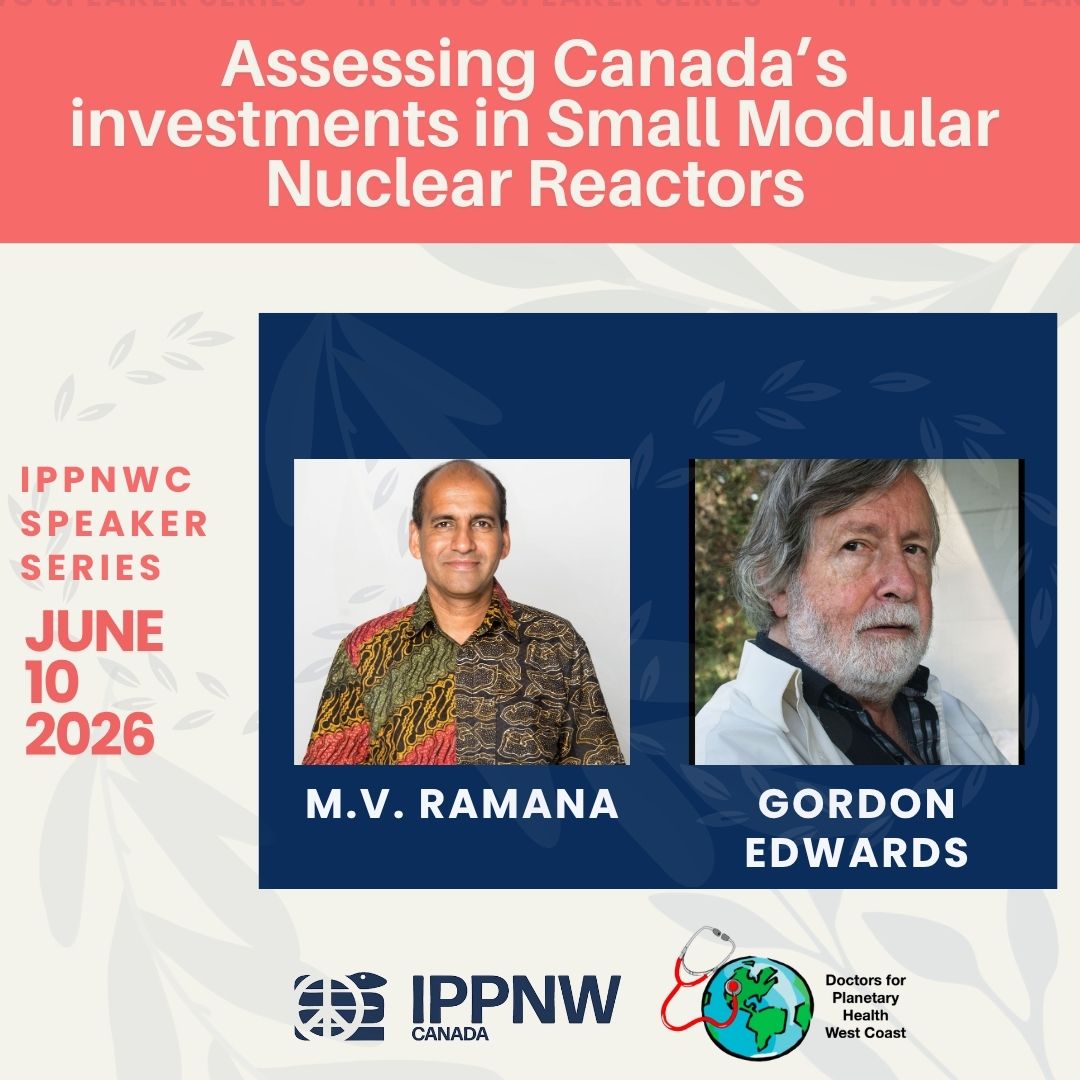
10 June – Assessing Canada’s Investments in Small Modular Nuclear Reactors – https://zoom.us/meeting/register/IiqHA5feRhaEBycOLNTJlA#/registration


Cuba Is Not a Failed State – It Is a Besieged State
PETITION: “Global Appeal to Endorse Palestinian Right of Return of Refugees”
To see nuclear-related stories in greater depth and intensity – go to https://nuclearinformation.wordpress.com
-
Archives
- June 2026 (89)
- May 2026 (306)
- April 2026 (356)
- March 2026 (251)
- February 2026 (268)
- January 2026 (308)
- December 2025 (358)
- November 2025 (359)
- October 2025 (376)
- September 2025 (257)
- August 2025 (319)
- July 2025 (230)
-
Categories
- 1
- 1 NUCLEAR ISSUES
- business and costs
- climate change
- culture and arts
- ENERGY
- environment
- health
- history
- indigenous issues
- Legal
- marketing of nuclear
- media
- opposition to nuclear
- PERSONAL STORIES
- politics
- politics international
- Religion and ethics
- safety
- secrets,lies and civil liberties
- spinbuster
- technology
- Uranium
- wastes
- weapons and war
- Women
- 2 WORLD
- ACTION
- AFRICA
- Atrocities
- AUSTRALIA
- Christina's notes
- Christina's themes
- culture and arts
- Events
- Fuk 2022
- Fuk 2023
- Fukushima 2017
- Fukushima 2018
- fukushima 2019
- Fukushima 2020
- Fukushima 2021
- general
- global warming
- Humour (God we need it)
- Nuclear
- RARE EARTHS
- Reference
- resources – print
- Resources -audiovicual
- Weekly Newsletter
- World
- World Nuclear
- YouTube
-
RSS
Entries RSS
Comments RSS
 nuclear-news