U.S. Pentagon hypes up the ”China threat”, in its deceptive propaganda to get more $billions from Congress

we can expect to be bombarded with Pentagon and industry propaganda on China’s growing air and naval capabilities—requiring, it will be stated, hundreds of billions of dollars in added spending.
Costs for the new intercontinental missile are currently estimated at $100 billion ($10 billion more than a few years ago) and are sure to rise in the years ahead if full-scale production is approved by Congress.
The Pentagon Inflates the Chinese Nuclear Threat in a Push for New Intercontinental Missiles. Every US military service is seeking more money than before, and each one is touting the importance of their weapons in overcoming the Chinese military threat. The Nation, By Michael T. Klare , 19 May 21,
This year, as in every year, the Department of Defense will seek to extract budget increases from Congress by highlighting the severe threats to US security posed by its foreign adversaries. Usually, this entails a litany of such perils, ranging from a host of nation-state adversaries to nonstate actors like ISIS and Al Qaeda. This year, however, the Pentagon is focusing almost entirely on just one threat in its funding appeals: The People’s Republic of China. Sensing that a majority in Congress—Democrats as well as Republicans—are keen to display their determination to blunt China’s rise, senior officials are largely framing the military budget around preparation for a possible conflict with that country. “The Department will prioritize China as our number one pacing challenge and develop the right operational concepts, capabilities, and plans to bolster deterrence and maintain our competitive advantage,” Secretary of Defense Lloyd Austin declared on March 4.
From the Pentagon’s perspective, this means portraying every budgetary item—from Army tanks and Navy ships to Air Force jets and ballistic missiles—in terms of their utility in fighting the Chinese military, the People’s Liberation Army (PLA). Every US military service is seeking more money than before (as they always do), and each one is touting the importance of their weapons in overcoming the Chinese military threat. But this year, after a series of rising budgets during the Trump administration, defense appropriations are expected to remain flat (at a nonetheless colossal $715 billion), meaning that any increase in spending on any given weapons system—be it a major warship, aircraft, or missile—is likely to come at the expense of increases in others. The result, not surprisingly, is a contest among the services to magnify the vital importance of their pet projects in overpowering the PLA.
This means that we can expect to be bombarded with Pentagon and industry propaganda on China’s growing air and naval capabilities—requiring, it will be stated, hundreds of billions of dollars in added spending on new fighter jets, submarines, and surface ships. Although China’s military capabilities still lag far behind those of US forces in terms of their technical proficiency—China’s two aircraft carriers, for example, can launch only a dozen or so combat jets, compared to the 75-plus deployed on America’s 11 carriers—but the PLA has nonetheless acquired many new ships and planes, so promoters of US weaponry have some real data to cite when making their claims of growing Chinese military prowess.
“The PRC maintains the world’s largest naval force, which has tripled in size over the past two decades,” said Adm. Philip S. Richardson on March 21 (while not revealing that most of those ships are coastal frigates with little utility in a conflict with the US Navy). For the advocates of a buildup in US nuclear forces, however, it is hard to justify such claims, and so they have been forced to make wildly exaggerated claims about China’s nuclear capabilities.
This is an especially critical year for America’s nuclear weapons boosters, as plans for modernization of the US strategic “triad”—land-based intercontinental ballistic missiles (ICBMs), sea-launched ballistic missiles (SLBMs) and their submarine platforms, and long-range bombers—are all scheduled to move from the research and development phase to full-scale production. Funds have already been appropriated for a new bomber, the B-21 Raider, and for a new SLBM-carrying submarine, the Columbia class, and now the Pentagon wants to begin work on a new ICBM, which it calls, in its typically obfuscating way, the Ground-Based Strategic Deterrent, or GBSD. Costs for the new intercontinental missile are currently estimated at $100 billion ($10 billion more than a few years ago) and are sure to rise in the years ahead if full-scale production is approved by Congress.
While nuclear modernization enjoys strong support in Congress, questions have been raised about the need for the GBSD, especially given the competition for funds from other favored programs, such as the F-35 fighter and the Los Angeles–class attack submarine, and the fact that an alternative exists in terms of refurbishing the Pentagon’s existing fleet of 400 Minuteman-III ICBMs. Some in Congress have also suggested that land-based missiles would be highly vulnerable in the event of an enemy preemptive strike and that the nation enjoys more-than-adequate deterrence to such attack with its undetectable fleet of missile-carrying submarines. For example, Senator Ed Markey of Massachusetts and Representative Ro Khanna of California have introduced the Investing in Cures Before Missiles (ICBM) Act, which would divert funds from GBSD procurement to development of a universal coronavirus vaccine, while also extending the life of Minuteman missiles. “With all of the global challenges we face,” Khanna declared, “the last thing we should be doing is giving billions to defense contractors to build missiles we don’t need to keep as a strong nuclear deterrence.”
In response to these challenges, the nuclear lobby has gone all-out in touting the threat posed by China’s nuclear capabilities, even though these hardly come close to those possessed by the United States or its principal nuclear adversary, the Russian Federation. According to the latest (and most authoritative) data from the Stockholm International Peace Research Institute, China possesses 320 nuclear warheads in total—none of which is believed to be deployed at present on its ICBMs, SLBMs, or bombers. By comparison, Russia has 6,375 warheads in its stockpile, of which 1,575 are currently deployed on weapons systems, and the United States has 5,800 warheads, with 1,750 deployed. China is said to be increasing the size of its nuclear stockpile, in part because it is replacing some older, single-warhead ICBMs with newer, multiple-warhead versions, but its progress in this direction has been slow and no analyst, inside or outside of government, predicts an increase that will bring the Chinese arsenal anywhere close to those possessed by Russia and the United States………..
Congress members should avoid being swayed by unfounded claims about China’s expanding nuclear arsenal. Of course, any Chinese nuclear weapons—like any nuclear weapons anywhere—pose a threat to US and global security, but we need not embark on a new nuclear arms race simply to overcome an over-hyped increase in Chinese capabilities. https://www.thenation.com/article/politics/pentagon-china-nuclear/
Yet more delays in USA’s costly, troubled Vogtle nuclear project

Westport News 18th May 2021, Georgia Power Co. said Tuesday that delays in completing testing means the
first new unit at its Vogtle plant is now unlikely to start generating
electricity before January at the earliest. The unit of Atlanta-based
Southern Co. had in recent years been aiming to complete the first unit in
November, but officials told investors last month that it would probably be
finished in December. Company officials said Tuesday that testing began in
late April, would take three weeks longer than expected and is unlikely to
be completed before late June, adding more time to construction and
startup.
White House environmental justice advisers express opposition to nuclear
White House environmental justice advisers express opposition to nuclear, carbon capture projects, The Hill
BY RACHEL FRAZIN – 05/17/21 The White House Environmental Justice Advisory Council expressed opposition to nuclear and carbon capture projects as well as projects that expand capacity for fossil fuel production in a report issued Friday.
The volunteer advisory council listed such projects as among “examples of the types of projects that will not benefit a community,” in a set of recommendations issued to the White House.
The recommendations issued by the council, which is made up of leaders in the environmental justice movement, are meant to advise the Biden administration, but don’t necessarily reflect administration policy.
In fact, the opposition appears to be somewhat at odds with policies the administration has backed, like President Biden’s promotion of a carbon capture tax credit in his infrastructure plan.
The report did not specify why the advisory panel considers such projects not to be beneficial, but opponents have raised concerns about nuclear waste. …….. https://thehill.com/policy/energy-environment/553927-white-house-environmental-justice-advisors-expresses-opposition-to
Alabama hospital installs radiation-free spine imaging tool
Alabama hospital installs radiation-free spine imaging tool https://www.beckersspine.com/orthopedic-a-spine-device-a-implant-news/item/51800-alabama-hospital-installs-radiation-free-spine-imaging-tool.htmlAlan Condon – Birmingham, Ala.-based Princeton Baptist Medical Center reportedly is the first hospital in the state to implement the Flash navigation system for spine and cranial procedures, CBS affiliate WIAT reported May 14.
Designed by 7D Surgical, Flash uses visible light to create a 3D image for spine surgical navigation, eliminating patient and staff exposure to intraoperative radiation, according to the company.
The technology was approved for neurologic surgery in 2016 but since has expanded to spine surgery.
The Flash system costs $500,000, compared to other navigation systems on the market that run up to $1.2 million, according to 7D Surgical.
7D Surgical is expected to be acquired by SeaSpine this quarter.
Small nuclear reactors – a way to get indigenous people to then accept nuclear waste?

Gordon Edwards is president of the Canadian Coalition for Nuclear Responsibility and notes the Moltex SMR design involves dissolving spent nuclear fuel in molten salt, and there lies an issue, he believes.
“What happens when you dissolve the solid fuel in a liquid, in this molten salt – then all of these radioactive materials are released into the liquid,” says Edwards, “and it becomes more dangerous to contain them because a solid material is much easier to contain than a liquid or gaseous material.”

Peskotomuhkati chief unhappy about nuclear reactor testing on his traditional territory https://www.aptnnews.ca/national-news/peskotomuhkati-nation-nuclear-reactor-testing-new-brunswick-small-modular-reactors/—
Christopher Read cread@aptn.caMay 16, 2021,
Feds say they won’t reach zero emissions by 2050 without small nuclear reactors.
It’s a new kind of nuclear reactor that the federal government is putting up $50.5 million in development money for, but some Indigenous leaders are already speaking out against it
.Moltex Energy Canada is getting the tax-dollar investment to develop what the nuclear industry calls a “small modular reactor” or SMR – which is generally considered to be a reactor with a power output of 300 megawatts or less.The Moltex SMR design is to be developed at New Brunswick Power’s Point LePreau Nuclear Generating Station, which is on the north shore of the Bay of Fundy and in Peskotomuhkati traditional territory.
ARC Clean Energy Canada is another operation also set to develop an SMR at the Point LePreau site. It was announced in February that ARC would get $20 million from the New Brunswick government if the company can raise $30 million of its own cash.
Hugh Akagi is Chief of Peskotomuhkati Nation and has concerns about more nuclear development in the aging facility.
“Well, I don’t feel very good about it, to be honest,” says Akagi. “You paid that money if you pay tax on anything in this country, you’ve just made a donation to Moltex. If you’re not concerned about $50 million being turned over to a corporation for a technology that does not exist – I hope you heard me correctly on that.”
The federal government has taken a shine to the idea of SMRs and Minister of Natural Resources Seamus O’Regan is on the record as saying “We have not seen a model where we can get to net-zero emissions by 2050 without nuclear.”
Under the Small Modular Reactor Action Plan, the federal government is pushing for SMRs to be developed and deployed to power remote industrial operations as well as northern communities.
Three streams of government-supported SMR developments are underway at two sites in Ontario as well as at Point LePreau.
As well, the governments of New Brunswick, Ontario, Saskatchewan and Alberta have all signed a memorandum of understanding pledging their support for SMR development.
Akagi says he hasn’t been formally consulted – but has been to a presentations put on by NB Power about the SMR project.
He says he is unlikely he’ll ever give it his support.
“Until I can have an assurance that the impact on the future is zero,” says Akagi, “I don’t want to 100 years, 200 years is still seven generations. I want zero impact.”
But Moltex Energy Canada CEO Rory O’Sullivan says his company’s technology will ultimately reduce environmental impact, by recycling spent nuclear fuel from full scale reactors.
“Instead of putting it in the ground where it’ll be radioactive for very long periods, we can reuse it as fuel to create more clean energy from what was waste,” says O’Sullivan. “We can’t get rid of the waste altogether. But the aim is to get rid, to get it down to about a thousandth of volume of the original long-lived radioactivity.
O’Sullivan admits to formerly seeing nuclear as too much of a problem to be a viable solution in the climate crisis.
“When I graduated as a mechanical engineer I saw that nuclear is potentially as too expensive, has the waste issue, has a potential safety issue,” says O’Sullivan. “Well, actually, with these innovative new designs, you can potentially have nuclear power that is lower cost, cheaper than fossil fuels – you can get much safer solution using innovation and you can potentially deal with the waste.”
Gordon Edwards, one of Canada’s most prominent nuclear critics, isn’t buying that argument.
Edwards is president of the Canadian Coalition for Nuclear Responsibility and notes the Moltex SMR design involves dissolving spent nuclear fuel in molten salt, and there lies an issue, he believes.
“What happens when you dissolve the solid fuel in a liquid, in this molten salt – then all of these radioactive materials are released into the liquid,” says Edwards, “and it becomes more dangerous to contain them because a solid material is much easier to contain than a liquid or gaseous material.”
Edwards also works on a radioactive task force with the Anishinabek Nation and the Iroquois Caucus.
And as he sees it, small modular reactors could make it harder for Indigenous communities to say no to the deep geological repositories [DGRs] being pitched to Indigenous communities as a supposedly safe way for Canada’s nuclear industry to entomb highly radioactive waste for hundreds of thousands of years.
“We don’t accept the small modular reactors because we know that it’s just a way of implicating us so that we can then have less of an argument against being radioactive waste dumps,” says Edwards. “If we accept small modular reactors into our communities, how can we then turn around and say we don’t want to keep the radioactive waste? It would just put us in an impossible position.”
Edwards and other nuclear critics such as Akagi recently participated in an online webinar focused on concerns around nuclear development at Point LePreau.
And those adding their voices to the critical side of the ledger on nuclear development at Point LePreau include Jenica Atwin – the Green Party’s MP for Fredricton, and Wolastoq Grand Council Chief Ron Tremblay – who issued a Resolution calling for nuclear development to be halted.
Atwin put out a release in April calling Canadian nuclear policies “profoundly misguided.”
“My basic premise is that the government needs to be more responsible in the information that they’re sharing just in general to talk about the risks that exist alongside whatever benefits they’re kind of toting,” says Atwin. “And right now, we’re only hearing that it’s the greatest option. This is how we fight climate change. It is clean, it’s cheap energy. And I have to disagree.”
If all goes to according to the Moltex plan, its SMR could be operable by about 2030.
US Nuclear is significantly overvalued

US Nuclear Stock Gives Every Indication Of Being Significantly Overvalued, Yahoo Finance GuruFocus.com, Sat, May 15, 2021,
The stock of US Nuclear (OTCPK:UCLE, 30-year Financials) is believed to be significantly overvalued, according to GuruFocus Value calculation. GuruFocus Value is GuruFocus’ estimate of the fair value at which the stock should be traded. It is calculated based on the historical multiples that the stock has traded at, the past business growth and analyst estimates of future business performance. If the price of a stock is significantly above the GF Value Line, it is overvalued and its future return is likely to be poor. On the other hand, if it is significantly below the GF Value Line, its future return will likely be higher. At its current price of $0.57 per share and the market cap of $13.3 million, US Nuclear stock is believed to be significantly overvalued. GF Value for US Nuclear is shown in the chart below. [on original]
Because US Nuclear is significantly overvalued, the long-term return of its stock is likely to be much lower than its future business growth, which averaged 7.8% over the past five years.
Since investing in companies with low financial strength could result in permanent capital loss, investors must carefully review a company’s financial strength before deciding whether to buy shares. Looking at the cash-to-debt ratio and interest coverage can give a good initial perspective on the company’s financial strength. US Nuclear has a cash-to-debt ratio of 0.43, which ranks worse than 79% of the companies in Hardware industry. Based on this, GuruFocus ranks US Nuclear’s financial strength as 3 out of 10, suggesting poor balance sheet. This is the debt and cash of US Nuclear over the past years:
…………In short, The stock of US Nuclear (OTCPK:UCLE, 30-year Financials) gives every indication of being significantly overvalued. The company’s financial condition is poor and its profitability is poor. Its growth ranks worse than 81% of the companies in Hardware industry. https://finance.yahoo.com/news/us-nuclear-stock-gives-every-111207593.html
Saugeen First Nation do not want Canada’s nuclear waste. Nuclear Waste Management Organization says the project will not be built without their consent.

Saugeen First Nation debates fate of Canada’s nuclear waste CTV News , Scott Miller CTV News London Videographer @ScottMillerCTV Contact Sunday, May 16, 2021 ”…… Last January, the Saugeen Ojibway Nation voted 85 per cent against plans to bury Ontario’s low and intermediate level nuclear waste along the shores of Lake Huron.
Saugeen members will have a similar decision to make on plans to bury Canada’s high-level nuclear waste under 1,500 acres of farmland, north of Teeswater, because the planned project also falls within their traditional territory.
The Nuclear Waste Management Organization says the project will not be built without SON’s consent.
“Well it’s important now because that’s what was agreed to as part of the treaties. So there’s constitutional rights that are at play,” says NWMO’s Indigenous Knowledge and Reconciliation Section Manager, Jessica Perritt.
SON leadership have said they didn’t ask for nuclear waste to be created and temporarily stored in their territory, but now, they must be part of deciding its fate.
“We’ve got to treat our people, not like the olden days where the Indian Agent didn’t even allow us to think or make decisions. We can make decisions for ourselves,” says Roote………..
Members of the Saugeen Ojibway Nation and residents of South Bruce have until 2023 to decide if they want to permanently house Canada’s first and only underground nuclear waste storage facility. https://london.ctvnews.ca/saugeen-first-nation-debates-fate-of-canada-s-nuclear-waste-1.5430208
USA govt to delay removing plutonium nuclear waste from the decommissioned Hanford nuclear reservation
Washington State Nuclear Site to Delay Moving Waste Off-Site https://www.usnews.com/news/best-states/washington/articles/2021-05-13/washington-state-nuclear-site-to-delay-moving-waste-off-site
The U.S. Department of Energy and its regulators have proposed extending the deadline to ship waste contaminated with plutonium off the decommissioned Hanford nuclear reservation in Washington state.
By Associated Press|May 13, 2021, RICHLAND, Wash. (AP) — The U.S. Department of Energy and its regulators have proposed extending the deadline to ship waste contaminated with plutonium off the decommissioned Hanford nuclear reservation in Washington state.
The proposal moves the deadline back 20 years — from 2030 to 2050 — to ship the waste to a national repository in New Mexico for permanent disposal, the Tri-City Herald reported Wednesday.
“We realized that the existing milestone dates were unachievable,” said John Price, a manager with the state Department of Ecology, which is a regulator for the nuclear site.
The Hanford nuclear reservation produced plutonium for nuclear weapons during the Cold War and World War II, leaving 56 million gallons (212 million litres) of radioactive waste in underground tanks. The 580-square-mile (1,500-square-kilometer) site is located in Richland, Washington about 200 miles (322 kilometers) southeast of Seattle.
Price also said there were some newly proposed deadlines that the Department of Ecology “enthusiastically” supports, including a commitment by the Department of Energy’s to start shipping some waste as early as 2028.
The federal agency and its regulators — the Department of Ecology and the Environmental Protection Agency — set waste cleanup plans and deadlines for the nuclear site.
The latest proposed deadlines cover suspected transuranic waste, or debris contaminated with plutonium, including about 11,000 containers stored at a Hanford complex.
Waste with artificially-made elements above uranium on the periodic table is also classified as transuranic.
A public meeting to discuss the latest proposed changes and answer questions was scheduled for Thursday.
Biden administration promises progress on nuclear waste
Escape From Yucca Mountain: Biden Administration Promises Progress on Nuclear Waste
Energy Department expects to announce next steps in coming months, WSJ, By Gabriel T. Rubin, May 14, 2021
THE ENERGY DEPARTMENT TAKES ON the politically radioactive issue of nuclear-waste disposal, which the past several administrations have tried and failed to resolve. The only federally designated long-term disposal site for waste from the nuclear power industry is at Yucca Mountain in Nevada (there is also a site near Carlsbad, N.M., for waste generated by the government’s nuclear weapons program). But sustained political pushback from Nevada officials has prevented the Yucca Mountain site from becoming operational. It’s a top issue for Nevada Sen. Catherine Cortez Masto, who Mr. Biden considered picking as his running mate and who is up for re-election next year.
Ms. Cortez Masto has extracted promises from Energy Secretary Jennifer Granholm that Yucca Mountain won’t be part of the administration’s planning for nuclear-waste disposal. But Ms. Granholm seems eager to still make progress on the issue, telling a House Appropriations panel last week that she anticipated announcing the department’s next steps “in the coming months.” Former President Donald Trumptried to restart the process, but after an outcry from Nevadans he reversed himself—tweeting, “Nevada, I hear you on Yucca Mountain”—and promised “innovative solutions” that didn’t come to fruition.
In a letter this month to Ms. Granholm, the American Nuclear Society and other industry groups urged her to establish an office to be the “focal point” of engagement on the waste issue with Congress and outside stakeholders. Congress appropriated money for such an office in its year-end funding deal in December. The office also would coordinate with the private sector on interim storage facilities.
n hopes of preventing presidents present and future from unilaterally establishing a Yucca Mountain-type plan, all the Democratic members of the Nevada congressional delegation co-sponsored legislation in March that would require the federal government to first receive permission from the governor and local officials before moving nuclear waste into a state
It’s anyone’s guess how concrete the Energy Department’s next steps might be ….(subscribers only) https://www.wsj.com/articles/escape-from-yucca-mountain-biden-administration-promises-progress-on-nuclear-waste-11620984602
Scepticism in Canada, about the government’s push for small nuclear reactors.
Canada pegs its energy future on nuclear power, but not everyone’s buying it, Canada’s National Observer, By Charles Mandel May 12th 2021 “…………. Gorman, along with the rest of the nuclear industry, pins the country’s future decarbonization efforts on a new breed of nuclear power known as small modular reactors (SMRs).
……… To date, not a single SMR has been built in Canada, but no matter, the technology is the current darling of nuclear power circles…. Currently, 12 proposals for SMR development are winding their way through the Canadian Nuclear Safety Commission’s (CNSC) pre-licensing vendor review process, which enables CNSC staff to provide feedback on proposed designs at a company’s request. But not a single project has yet been approved.
That hasn’t stopped the Canadian federal government from actively promoting a shift to SMRs………
For the time being, any vision of SMRs is largely aspirational. A Conference Board of Canada report in March on SMRs outlined that from concept to commercialization, the technology will require about a billion dollars of development expenditure. The same report noted that as an emerging technology, costs are still uncertain, and the “risky pre-commercial phase needs capital investment, but governments will be reluctant without major private capital commitment.”
It’s early days for financing the technology. For instance, one infusion of federal funds, the $50 million granted to New Brunswick’s Moltex Energy in mid-April, only supports research and development, employee recruitment and the expansion of academic, research and supply chain partnerships, not the physical construction of that firm’s SMR.
Beyond financial considerations, the Liberal government will have a tough time convincing environmentalists to embrace the merits of SMRs, or any nuclear power, as a clean energy source. More than 100 groups have signed a letter issued by the Canadian Environmental Law Association (CELA) condemning the government’s push to pursue nuclear power and SMRs. Among their concerns are that SMRs are more expensive to develop than renewable energy and that the reactors are “dirty and dangerous,” creating new forms of radioactive waste that are especially dangerous to manage.
As the SMR developments move forward, the environmental groups will have a chance to make their views heard during the public consultations that will have to take place as part of the environmental review phase of licensing each SMR.
For now, however, nothing is slowing the momentum. In mid-April, the Canadian Nuclear Association triumphantly announced Alberta was joining Ontario, New Brunswick and Saskatchewan in the development of SMRs.
…….. there are signs Europe is now shifting away from nuclear power. In 2019, solar installed capacity exceeded nuclear for the first time in the EU, with 130 gigawatts versus 116 gigawatts, according to the World Nuclear Industry Status annual report, which provides independent assessments of global nuclear developments. And a technical expert group convened in the EU chose not to recommend nuclear energy when asked to advise on screening criteria that would substantially contribute to climate change mitigation or adaptation while “avoiding significant harm” to other environmental objectives.
Canadian government hand in glove with the nuclear lobby for a ”NICE” nuclear future

Canada pegs its energy future on nuclear power, but not everyone’s buying it, Canada’s National Observer, By Charles Mandel May 12th 2021…………….. The development of SMRs in Canada isn’t just a matter of happy coincidence; the federal government has been lobbying hard on behalf of the industry since at least 2019. The Department of Natural Resources, for instance, is a member of the international initiative Nuclear Innovation: Clean Energy Future, or as it’s better known, NICE. Besides Canada, members include Japan, the U.S. and a number of nuclear associations. The goal “is to ensure that nuclear energy receives appropriate representation in high-level discussions about clean energy.”
Freelance researcher Ken Rubin turned up a number of documents using freedom-of-information requests that showed the federal government is collaborating with NICE and others to promote nuclear power and SMRs. The federal government, for example, offered $150,000 for the development of a “Top 20 book of short stories” on “exciting near-term nuclear innovations” designed to showcase nuclear power as an environmental force for good. The book includes stories on the safe storage of nuclear waste as well as on the emerging SMR market.
According to the book, uses for the latter technology include “energy parks” providing heat for industrial processes, steam for heating and electricity for cooling homes, offices and shops, all without emissions. The story breathlessly declares: “This isn’t science fiction.”
No matter how hard the government lobbies the public for a NICE future, though, it’s going to remain a tough sell to Canadian environmentalists. While the environmentalists have nothing specific to fight yet, given that a viable SMR has yet to be built, they’ll be ready when the technology reaches development. Already, a who’s who of groups has signed a letter protesting the next thing in nuclear.
Theresa McClenaghan, CELA’s executive director and counsel, told Canada’s National Observer: “It’s not a climate answer for many reasons, including the fact it’s not realistic and it’s way too far down the road for us to meet any serious climate targets. We’ve characterized it as a dirty, dangerous distraction.”
Susan O’Donnell, a researcher and adjunct professor in the Department of Sociology at the University of New Brunswick and a nuclear activist, says SMRs are too slow and costly as a climate crisis solution. “It’s important to remember that these technologies basically don’t exist yet,” she said. “They’re at a very early stage in development. They are speculative technologies. It will take at least a decade to get them off the drawing board and then it will take much longer than that to find out if they work.”
Endangered sea turtles sucked into nuclear power plant pipes
FPL doesn’t prevent endangered sea turtles from being sucked into nuclear power plant pipe, TC Palm, Max Chesnes, Treasure Coast Newspapers, 12 May 21, After 15 years of trying, Florida Power & Light Co. still has not found a way to keep endangered sea turtles from being sucked into its nuclear power plant’s intake pipes.
A TCPalm investigation in 2016 showed how a solution had been mired in bureaucratic red tape for 10 years. Since then, FPL has tested a proposed grate-like device, but found it could harm turtles, spokesperson Peter Robbins told TCPalm Wednesday.
FPL is still discussing the issue at the St. Lucie Nuclear Plant with the Nuclear Regulatory Commission and National Marine Fisheries Service, Robbins said.
Last year, 339 turtles were swept into the pipes at the South Hutchinson Island plant on ………
TCPalm investigation: 16,000 sea turtles sucked up since 1976
How does marine life get sucked into the intake pipes?
Ocean water used to cool the plant’s nuclear-fueled generators is slurped into three “intake structures” positioned underwater about a quarter-mile offshore.
Saltwater enters these pipes, runs under the beach at about 1 foot per second and dumps into a nearly mile-long intake canal, according to FPL. Marine life can be swept through the pipes and into the canal, from which they need to be removed………….. https://www.tcpalm.com/story/news/local/indian-river-lagoon/2021/05/12/fpl-st-lucie-nuclear-power-plant-still-sucking-endangered-sea-turtles-sawfish-into-intake-pipes/5037097001/
Elon Musk’s expensive and dangerous space delusion
The Musk delusion daryan energy blog 2 May 21, I’ve critiqued a number of Musk’s projects before, but I think we need to be a bit more direct. Quite simply is Musk entirely the full shilling? Is he the real life Tony Stark the fan boys seem to think, or a modern day Howard Hughes? Because if its the latter his bizarre behaviour will only get worse and worse until things come to a head. Which could have rather serious consequences………….
his proposed use of Starship, as a point to point transport mechanism amounts to saying that the rich should be allowed to burn vast amounts of fuel, just so they can save a few hours in transit. Well, if Starship was a vaguely sane suggestion that is. In truth, it would take almost as long to get its passengers point to point as a conventional airliner (once you factor in the time taken to get passengers out to the launch pad, suit them up, put on their astronaut diapers (yes, how do you think astronauts meet the calls of nature in a space suit), strap everyone in, fuel the rocket, etc.). And that’s assuming you’d be given permission to fly, given the many likely health and safety, environmental and noise related concerns.
In fact let’s talk about starship. It is a terrible design. I’m not going to waste time going over the many issues, in part because I’ve done so already, but also there are others who have done a far better job. But in summary, even if it worked, its a one trick pony….and that trick is the potential for down cargo (which its far from proving it can do) not going to Mars.
Even so, Musk has managed to blow up a dozen or so test prototypes with not a lot to show for it. He’s now in a dispute with the FAA and environmental groups over the mess he’s making, adding to the thousand or so active legal cases he’s currently fighting, largely because of his inability to keep his big mouth shut and not say dumb things online.
Which raises the question, what is the point of starship? ………

Caricature above by courtesy of Ryadav – caricaturecartoon.com
NASA just awarded SpaceX the contract to build the Lunar lander? Ya and if one was cynical it would be that the Biden administration, whose never really committed to space flight, knows they don’t have the funds or the political capital to blow hundreds of billions repeating Apollo. But they equally don’t want to be identified as the assassins who killed off manned lunar/Mars missions. They need a fall guy…which is where Musk comes in!
SpaceX happens to have facilities in key states that will matter in 2024 (most notably Texas, which might be a swing state by then). So, given that Congress sees NASA as a jobs programme, they sling a few billion his way. If he succeeds, well then great. If he crashes and burns, well aw shucks we tried our best, I mean we even got Elon Musk to design the hardware, how can we be to blame.
And this is what worries me about Musk and his fans. Sooner or later his luck is going to run out. Environments such as space, or public transport do not suffer fools. Likely we’ll end up with some tragic accident, or a massive overspend on a government project and he gets to spend the rest of his life going form congressional committee to committee and court house to court house……. https://wordpress.com/read/feeds/543414/posts/3318253784
USA’s unnecessary plutonium pits production to cost $10+ Billion
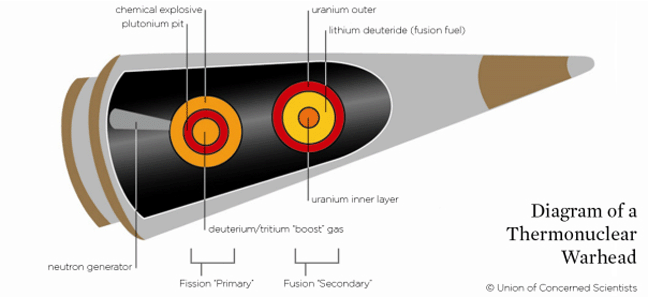
Cost Estimate for SRS Plutonium Bomb Plant to Soar to $10+ Billion? Causing Trouble for Contractors and Boosters Pushing New Pit Plant and “Money Pit” ICBM “Needing” New Plutonium Pits? https://www.rnanews.eu/cost-estimate-for-srs-plutonium-bomb-plant-to-soar-to-10-billion-causing-trouble-for-contractors-and-127657.html 11 May 21,
Stay tuned for the release by the US DOE’s National Nuclear Security Administration of a “Critical Decsion-1” determination on the proposed SRS Plutonium Bomb Plant. CD-1 would approve the basic project design and present an update cost range. The cost for the bomb plant could soar to $10 billion or more, more than double the earlier estimate of $4.6 billion to convert the partially finished plutonium fuel MOX plant at SRS to pit production.
The CD-1 document package was turned over to NNSA by contractor Savannah River Nuclear Solutions (SRNS) in January 2021. In March, the CEO of SRNS told the South Carolina Nuclear Advisory Council that a decision on CD-1 by NNSA could come in late May or June.
A huge jump in the cost of the SRS Plutonium Bomb Plant will ramp up the pressure on DOE/NNSA/Department of Defense to fund such an expensive facility and the new ICBM, Ground Based Strategic Deterrent (GBSD) – aka the Money Pit Missile – with a lifetime cost over $200 billion. The new ICBM and its W87-1 warhead would require new plutonium pits.
This missile and pits for it are not needed. As it’s part of planning for full-scale nuclear war, it would undermine national security and transfer a vast amount of money from patriotic taxpayers to contractors such as Northrop Grumman, Savannah River Nuclear Solutions and pit-production contractors at Los Alamos National Lab, the other site being considered for expanded pit production. In sum, the GBSD and plans for new pits must be canceled and the CD1 document will be a wake-up call for decision makers.
Meanwhile, Congress is still refusing to investigate possible waste, fraud, abuse and mismanagement of the failed MOX project by NNSA and contractors.
How the heck can they just sweep under the rug the waste of $8 billion on the failed project? Who is Congress protecting and why???
Standing up to the USA’s militarisation of space

U.S. push for space weaponisation must be challenged, Independent Australia While most of the world supports outlawing space weaponry, the U.S. Government is still pushing to militarise space, writes Karl Grossman.
RETIRED U.S. Army Colonel John Fairlamb stated in a piece in The Hill, the Washington, DC news website:
Fairlamb knows the issue with the weaponisation of space. His background includes being an International Affairs Specialist for the Army Space and Missile Defense Command and Military Assistant to the U.S. Secretary of State for Political-Military Affairs. He is familiar with war first-hand: he was a company commander in Vietnam and holds a doctorate in Comparative Defense Policy Analysis.
In his opinion column headed ‘The U.S. should negotiate a ban on basing weapons in space’, Fairlamb wrote:
Given the implications for strategic stability, and the likelihood that such a decision [to deploy weapons in space] by any nation would set off an expensive space arms race in which any advantage gained would likely be temporary, engaging now to prevent such a debacle seems warranted.
It’s time for arms control planning to address the issues raised by this drift toward militarisation of space. Space is a place where billions of defence dollars can evaporate quickly and result in more threats about which to be concerned. Russia and China have been proposing mechanisms for space arms control at the United Nations for years; it’s time for the U.S. to cooperate in this effort.
Indeed, if weapons are deployed in space – and for decades, including during the Reagan Administration’s “Star Wars” (officially named the Strategic Defense Initiative) push, now likely again with the Trump Administration’s creation of a U.S. Space Force and its mission to “dominate” space – there will be no return.
Space weaponisation ‘cannot be walked back’. And the world is at a crossroads.
Russian Foreign Minister Serge Lavrov two weeks ago called tor talks to create an ‘international legally binding instrument’ to ban the deployment of “any types of weapons” in space.
Lavrov declared:
We consistently believe that only a guaranteed prevention of an arms race in space will make it possible to use it for creative purposes, for the benefit of the entire mankind. We call for negotiations on the development of an international legally binding instrument that would prohibit the deployment of any types of weapons there, as well as the use of force or the threat of force.”
He made the statement on 12 April, the International Day of Human Space Flight, marked this year by the 60th anniversary of Russian Yuri Gagarin’s space flight, the first by a person in space.
The U.S., the United Kingdom and the then Soviet Union joined decades ago in drafting the Outer Space Treaty of 1967 that designated space as a “global commons” for peaceful purposes. The treaty bans the deployment of weapons of mass destruction in space. It’s been signed by most nations on Earth.
Russia and China – along with U.S. neighbour Canada – have led in a move to expand the Outer Space Treaty by outlawing the deployment of any weapons in space.
During the period of Reagan’s “Star Wars” and in years since, the U.S. has been working on developing space weaponry that has included hypervelocity guns and particle beam and laser weapons.
The Prevention of an Arms Race in Outer Space (PAROS) treaty has been pushed by Canada, Russia and China to broaden the Outer Space Treaty.
PAROS has worldwide support. But through a succession of U.S. administrations – Republican and Democrat – the U.S. Government has voted against the PAROS treaty at the Conference on Disarmament of the United Nations. Because conference decisions must be supported by consensus, the U.S. has effectively vetoed the enactment of the PAROS treaty.
The day after Lavrov’s statement, the Chinese Foreign Ministry joined Russia in its plea.
Deputy director of the Chinese Ministry of Foreign Affairs Information Department Zhao Lijian said on 13 April:
“We are calling on the international community to start negotiations and reach agreement on arms control in order to ensure space safety as soon as possible. China has always been in favour of preventing an arms race in space; it has been actively promoting negotiations on a legally binding agreement on space arms control jointly with Russia.”
As for the Biden Administration and space militarisation, spokesperson Jen Psaki tweeted: ‘We look forward to the continuing work of Space Force…’…..
The comments from retired Army Colonel John Fairlamb are quite excellent as he calls for the U.S. to seriously enter into negotiations with Russia and China on PAROS. Both those nations for years have been offering to enter into negotiations at the U.N. to close the door to the barn before the horse gets out. In other words, develop a new treaty that prevents a space arms race before it happens. Sadly, the U.S. due to aerospace industry greed and dreams of space domination has been blocking this much need treaty development process.
Some might see Mr Fairlamb’s comments as representing the U.S. military – as if a sea change was happening inside the Pentagon – on this very important issue.
Alice Slater, a member of the boards of both the Global Network and the organisation World BEYOND War, said
The U.S. mission to dominate and control the military use of space has been, historically and at present, a major obstacle to achieving nuclear disarmament and a peaceful path to preserve all life on Earth. Reagan rejected Gorbachev’s offer to give up “Star Wars” as a condition for both countries to eliminate all their nuclear weapons. Bush and Obama blocked any discussion in 2008 and 2014 on Russian and Chinese proposals for a space weapons ban in the consensus-bound Committee for Disarmament in Geneva.
At this unique time in history, when it is imperative that nations of the world join in cooperation to share resources to end the global plague assaulting its inhabitants and to avoid catastrophic climate destruction or Earth-shattering nuclear devastation, we are instead squandering our treasure and intellectual capacity on weapons and space warfare. https://independentaustralia.net/politics/politics-display/us-push-for-space-weaponisation-must-be-challenged,15066#.YJcE8NQEv74.twitter
1 This Month

Read the Public Inquiry Report, the Commissioners’ report, Surrendering Australia: The AUKUS Deception is available to download for free at aukuspublicinquiry.com. Or just watch the replay of the National Press Club Luncheon.


19 November – Webinar – The Reality of Reprocessing
Time: 11:00 AM Pacific Time (US & Canada) / 2:00 PM Eastern / 7:00 PM UK / 8:00 PM CET
Register for the Zoom Event Here



Shut down the radiation-damaged Heysham nuclear reactors now
To see nuclear-related stories in greater depth and intensity – go to https://nuclearinformation.wordpress.com

Say No to NASA’s Reckless Nuclear Reactor on the Moon
Say No to NASA’s Reckless Nuclear Reactor on the Moon
-
Archives
- November 2026 (84)
- October 2026 (302)
- September 2026 (339)
- August 2026 (330)
- July 2026 (355)
- June 2026 (287)
- May 2026 (306)
- April 2026 (356)
- March 2026 (251)
- February 2026 (267)
- January 2026 (308)
- December 2025 (358)
-
Categories
- 1
- 1 NUCLEAR ISSUES
- business and costs
- climate change
- culture and arts
- ENERGY
- environment
- health
- history
- indigenous issues
- Legal
- marketing of nuclear
- media
- opposition to nuclear
- PERSONAL STORIES
- politics
- politics international
- Religion and ethics
- safety
- secrets,lies and civil liberties
- spinbuster
- technology
- Uranium
- wastes
- weapons and war
- Women
- 2 WORLD
- ACTION
- AFRICA
- Atrocities
- AUSTRALIA
- Christina's notes
- Christina's themes
- culture and arts
- Events
- Fuk 2022
- Fuk 2023
- Fukushima 2017
- Fukushima 2018
- fukushima 2019
- Fukushima 2020
- Fukushima 2021
- general
- global warming
- Humour (God we need it)
- Nuclear
- RARE EARTHS
- Reference
- resources – print
- Resources -audiovicual
- Weekly Newsletter
- World
- World Nuclear
- YouTube
-
RSS
Entries RSS
Comments RSS

