David Swanson explodes the myths about why the USA nuclear bombed Hiroshima and Nagasaki

Why do U.S. history teachers in U.S. elementary schools today — in 2021! — tell children that nuclear bombs were dropped on Japan to save lives — or rather “the bomb” (singular) to avoid mentioning Nagasaki? Researchers and professors have pored over the evidence for 75 years. They know that Truman knew that the war was over, that Japan wanted to surrender, that the Soviet Union was about to invade. They’ve documented all the resistance to the bombing within the U.S. military and government and scientific community, as well as the motivation to test bombs that so much work and expense had gone into, as well as the motivation to intimidate the world and in particular the Soviets, as well as the open and shameless placing of zero value on Japanese lives. How were such powerful myths generated that the facts are treated like skunks at a picnic?
Hiroshima Is A Lie Endangerment By David Swanson, World BEYOND War, August 5, 2021
”………………… could an 18-year-old in 2015 be expected to know that most of the victims of WWII were civilians — men and women and children alike? Who would have told her that? Certainly not her text books. Most definitely not the endless saturation of her culture with WWII-themed entertainment. ……… In U.S. culture as well, which heavily influences Italian, a top focus for drama and tragedy and comedy and heroism and historical fiction is WWII.
……… WWII is often called “the good war,” and sometimes this is thought of as principally or originally a contrast between WWII, the good war, and WWI, the bad war. However, it was not popular to call WWII “the good war” during or immediately after it happened, when the comparison with WWI would have been easiest. Various factors may have contributed to the growth in popularity of that phrase over the decades, including increased understanding of the Holocaust (and misunderstanding of the war’s relationship to it),[ii] plus, of course, the fact that the United States, unlike all the other major participants, wasn’t itself bombed or invaded …………
Perhaps the strangest myths, though, are those about nuclear weapons, especially the idea that by murdering huge numbers of people with them a far greater number of lives, or at least the right kind of lives, were spared. The nukes did not save lives. They took lives, possibly 200,000 of them. They were not intended to save lives or to end the war. And they didn’t end the war. The Russian invasion did that. But the war was going to end anyway, without either of those things. The United States Strategic Bombing Survey concluded that, “… certainly prior to 31 December, 1945, and in all probability prior to 1 November, 1945, Japan would have surrendered even if the atomic bombs had not been dropped, even if Russia had not entered the war, and even if no invasion had been planned or contemplated.”[vi]
One dissenter who had expressed this same view to the Secretary of War and, by his own account, to President Truman, prior to the bombings was General Dwight Eisenhower.[vii] Under Secretary of the Navy Ralph Bard, prior to the bombings, urged that Japan be given a warning.[viii] Lewis Strauss, Advisor to the Secretary of the Navy, also prior to the bombings, recommended blowing up a forest rather than a city.[ix] General George Marshall apparently agreed with that idea.[x] Atomic scientist Leo Szilard organized scientists to petition the president against using the bomb.[xi] Atomic scientist James Franck organized scientists who advocated treating atomic weapons as a civilian policy issue, not just a military decision.[xii] Another scientist, Joseph Rotblat, demanded an end to the Manhattan Project, and resigned when it was not ended.[xiii] A poll of the U.S. scientists who had developed the bombs, taken prior to their use, found that 83% wanted a nuclear bomb publicly demonstrated prior to dropping one on Japan. The U.S. military kept that poll secret.[xiv] General Douglas MacArthur held a press conference on August 6, 1945, prior to the bombing of Hiroshima, to announce that Japan was already beaten.[xv]
The Chairman of the Joint Chiefs of Staff Admiral William D. Leahy said angrily in 1949 that Truman had assured him only military targets would be nuked, not civilians. “The use of this barbarous weapon at Hiroshima and Nagasaki was of no material assistance in our war against Japan. The Japanese were already defeated and ready to surrender,” Leahy said.[xvi] Top military officials who said just after the war that the Japanese would have quickly surrendered without the nuclear bombings included General Douglas MacArthur, General Henry “Hap” Arnold, General Curtis LeMay, General Carl “Tooey” Spaatz, Admiral Ernest King, Admiral Chester Nimitz, Admiral William “Bull” Halsey, and Brigadier General Carter Clarke. As Oliver Stone and Peter Kuznick summarize, seven of the United States’ eight five-star officers who received their final star in World War II or just after — Generals MacArthur, Eisenhower, and Arnold, and Admirals Leahy, King, Nimitz, and Halsey — in 1945 rejected the idea that the atomic bombs were needed to end the war. “Sadly, though, there is little evidence that they pressed their case with Truman before the fact.”[xvii]
On August 6, 1945, President Truman lied on the radio that a nuclear bomb had been dropped on an army base, rather than on a city. And he justified it, not as speeding the end of the war, but as revenge against Japanese offenses. “Mr. Truman was jubilant,” wrote Dorothy Day. Weeks before the first bomb was dropped, on July 13, 1945, Japan had sent a telegram to the Soviet Union expressing its desire to surrender and end the war. The United States had broken Japan’s codes and read the telegram. Truman referred in his diary to “the telegram from Jap Emperor asking for peace.” President Truman had been informed through Swiss and Portuguese channels of Japanese peace overtures as early as three months before Hiroshima. Japan objected only to surrendering unconditionally and giving up its emperor, but the United States insisted on those terms until after the bombs fell, at which point it allowed Japan to keep its emperor. So, the desire to drop the bombs may have lengthened the war. The bombs did not shorten the war.[xviii]
Presidential advisor James Byrnes had told Truman that dropping the bombs would allow the United States to “dictate the terms of ending the war.” Secretary of the Navy James Forrestal wrote in his diary that Byrnes was “most anxious to get the Japanese affair over with before the Russians got in.” Truman wrote in his diary that the Soviets were preparing to march against Japan and “Fini Japs when that comes about.” The Soviet invasion was planned prior to the bombs, not decided by them. The United States had no plans to invade for months, and no plans on the scale to risk the numbers of lives that U.S. school teachers will tell you were saved.[xix] The idea that a massive U.S. invasion was imminent and the only alternative to nuking cities, so that nuking cities saved huge numbers of U.S. lives, is a myth. Historians know this, just as they know that George Washington didn’t have wooden teeth or always tell the truth, and Paul Revere didn’t ride alone, and slave-owning Patrick Henry’s speech about liberty was written decades after he died, and Molly Pitcher didn’t exist.[xx] But the myths have their own power. Lives, by the way, are not the unique property of U.S. soldiers. Japanese people also had lives.
Truman ordered the bombs dropped, one on Hiroshima on August 6th and another type of bomb, a plutonium bomb, which the military also wanted to test and demonstrate, on Nagasaki on August 9th. The Nagasaki bombing was moved up from the 11th to the 9th to decrease the likelihood of Japan surrendering first.[xxi] Also on August 9th, the Soviets attacked the Japanese. During the next two weeks, the Soviets killed 84,000 Japanese while losing 12,000 of their own soldiers, and the United States continued bombing Japan with non-nuclear weapons — burning Japanese cities, as it had done to so much of Japan prior to August 6th that, when it came time to pick two cities to nuke, there hadn’t been many left to choose from. Then the Japanese surrendered.
That there was cause to use nuclear weapons is a myth. That there could again be cause to use nuclear weapons is a myth. That we can survive significant further use of nuclear weapons is a myth. That there is cause to produce nuclear weapons even though you’ll never use them is too stupid even to be a myth. And that we can forever survive possessing and proliferating nuclear weapons without someone intentionally or accidentally using them is pure insanity.[xxii]
Why do U.S. history teachers in U.S. elementary schools today — in 2021! — tell children that nuclear bombs were dropped on Japan to save lives — or rather “the bomb” (singular) to avoid mentioning Nagasaki? Researchers and professors have pored over the evidence for 75 years. They know that Truman knew that the war was over, that Japan wanted to surrender, that the Soviet Union was about to invade. They’ve documented all the resistance to the bombing within the U.S. military and government and scientific community, as well as the motivation to test bombs that so much work and expense had gone into, as well as the motivation to intimidate the world and in particular the Soviets, as well as the open and shameless placing of zero value on Japanese lives. How were such powerful myths generated that the facts are treated like skunks at a picnic? ………………………………. https://worldbeyondwar.org/hiroshima-is-a-lie/
How the USA fabricated a movie, full of falsehoods about the nuclear bombing in 1945.

Over and over we’re told that bigger bombs will bring peace and end war.
We’re told and shown completely fabricated nonsense
At the time The Beginning or the End was being scripted and filmed, the U.S. government was seizing and hiding away every scrap it could find of actual photographic or filmed documentation of the bomb sites.
Hiroshima Is A Lie Endangerment By David Swanson, World BEYOND War, August 5, 2021 ”……………………… In Greg Mitchell’s 2020 book, The Beginning or the End: How Hollywood — and America — Learned to Stop Worrying and Love the Bomb, we have an account of the making of the 1947 MGM film, The Beginning or the End, which was carefully shaped by the U.S. government to promote falsehoods.[xxiii] The film bombed. It lost money. The ideal for a member of the U.S. public was clearly not to watch a really bad and boring pseudo-documentary with actors playing the scientists and warmongers who had produced a new form of mass-murder. The ideal action was to avoid any thought of the matter. But those who couldn’t avoid it were handed a glossy big-screen myth. You can watch it online for free, and as Mark Twain would have said, it’s worth every penny.[xxiv]
The film opens with what Mitchell describes as giving credit to the UK and Canada for their roles in producing the death machine — supposedly a cynical if falsified means of appealing to a larger market for the movie. But it really appears to be more blaming than crediting. This is an effort to spread the guilt. The film jumps quickly to blaming Germany for an imminent threat of nuking the world if the United States didn’t nuke it first. (You can actually have difficulty today getting young people to believe that Germany had surrendered prior to Hiroshima, or that the U.S. government knew in 1944 that Germany had abandoned atomic bomb research in 1942.[xxv]) Then an actor doing a bad Einstein impression blames a long list of scientists from all over the world. Then some other personage suggests that the good guys are losing the war and had better hurry up and invent new bombs if they want to win it.
Over and over we’re told that bigger bombs will bring peace and end war. A Franklin Roosevelt impersonator even puts on a Woodrow Wilson act, claiming the atom bomb might end all war (something a surprising number of people actually believe it did, even in the face of the past 75 years of wars, which some U.S. professors describe as the Great Peace). We’re told and shown completely fabricated nonsense, such as that the U.S. dropped leaflets on Hiroshima to warn people (and for 10 days — “That’s 10 days more warning than they gave us at Pearl Harbor,” a character pronounces) and that the Japanese fired at the plane as it approached its target. In reality, the U.S. never dropped a single leaflet on Hiroshima but did — in good SNAFU fashion — drop tons of leaflets on Nagasaki the day after Nagasaki was bombed. Also, the hero of the movie dies from an accident while fiddling with the bomb to get it ready for use — a brave sacrifice for humanity on behalf of the war’s real victims — the members of the U.S. military. The film also claims that the people bombed “will never know what hit them,” despite the film makers knowing of the agonizing suffering of those who died slowly.
One communication from the movie makers to their consultant and editor, General Leslie Groves, included these words: “Any implication tending to make the Army look foolish will be eliminated.”[xxvi]
The main reason the movie is deadly boring, I think, is not that movies have sped up their action sequences every year for 75 years, added color, and devised all kinds of shock devices, but simply that the reason anybody should think the bomb that the characters all talk about for the entire length of the film is a big deal is left out. We don’t see what it does, not from the ground, only from the sky.
Mitchell’s book is a bit like watching sausage made, but also a bit like reading the transcripts from a committee that cobbled together some section of the Bible. This is an origin myth of the Global Policeman in the making. And it’s ugly. It’s even tragic. The very idea for the film came from a scientist who wanted people to understand the danger, not glorify the destruction. This scientist wrote to Donna Reed, that nice lady who gets married to Jimmy Stewart in It’s a Wonderful Life, and she got the ball rolling. Then it rolled around an oozing wound for 15 months and voilà, a cinematic turd emerged.
There was never any question of telling the truth. It’s a movie. You make stuff up. And you make it all up in one direction. The script for this movie contained at times all sorts of nonsense that didn’t last, such as the Nazis giving the Japanese the atomic bomb — and the Japanese setting up a laboratory for Nazi scientists, exactly as back in the real world at this very time the U.S. military was setting up laboratories for Nazi scientists (not to mention making use of Japanese scientists). None of this is more ludicrous than The Man in the High Castle, to take a recent example of 75 years of this stuff, but this was early, this was seminal. Nonsense that didn’t make it into this film, everybody didn’t end up believing and teaching to students for decades, but easily could have. The movie makers gave final editing control to the U.S. military and the White House, and not to the scientists who had qualms. Many good bits as well as crazy bits were temporarily in the script, but excised for the sake of proper propaganda.
If it’s any consolation, it could have been worse. Paramount was in a nuclear arms film race with MGM and employed Ayn Rand to draft the hyper-patriotic-capitalist script. Her closing line was “Man can harness the universe — but nobody can harness man.” Fortunately for all of us, it didn’t work out. Unfortunately, despite John Hersey’s A Bell for Adano being a better movie than The Beginning or the End, his best-selling book on Hiroshima didn’t appeal to any studios as a good story for movie production. Unfortunately, Dr. Strangelove would not appear until 1964, by which point many were ready to question future use of “the bomb” but not past use, making all questioning of future use rather weak. This relationship to nuclear weapons parallels that to wars in general. The U.S. public can question all future wars, and even those wars it’s heard of from the past 75 years, but not WWII, rendering all questioning of future wars weak. In fact, recent polling finds horrific willingness to support future nuclear war by the U.S. public.
At the time The Beginning or the End was being scripted and filmed, the U.S. government was seizing and hiding away every scrap it could find of actual photographic or filmed documentation of the bomb sites. Henry Stimson was having his Colin Powell moment, being pushed forward to publicly make the case in writing for having dropped the bombs. More bombs were rapidly being built and developed, and whole populations evicted from their island homes, lied to, and used as props for newsreels in which they are depicted as happy participants in their destruction.
Mitchell writes that one reason Hollywood deferred to the military was in order to use its airplanes, etc., in the production, as well as in order to use the real names of characters in the story. I find it very hard to believe these factors were terribly important. With the unlimited budget it was dumping into this thing — including paying the people it was giving veto power to — MGM could have created its own quite unimpressive props and its own mushroom cloud. It’s fun to fantasize that someday those who oppose mass murder could take over something like the unique building of the U.S. Institute of “Peace” and require that Hollywood meet peace movement standards in order to film there. But of course the peace movement has no money, Hollywood has no interest, and any building can be simulated elsewhere. Hiroshima could have been simulated elsewhere, and in the movie wasn’t shown at all. The main problem here was ideology and habits of subservience.
There were reasons to fear the government. The FBI was spying on people involved, including wishy-washy scientists like J. Robert Oppenheimer who kept consulting on the film, lamenting its awfulness, but never daring to oppose it. A new Red Scare was just kicking in. The powerful were exercising their power through the usual variety of means.
As the production of The Beginning or the End winds toward completion, it builds the same momentum the bomb did. After so many scripts and bills and revisions, and so much work and ass-kissing, there was no way the studio wouldn’t release it. When it finally came out, the audiences were small and the reviews mixed. The New York daily PM found the film “reassuring,” which I think was the basic point. Mission accomplished.https://worldbeyondwar.org/hiroshima-is-a-lie/
Jesuit Steve Kelly has done jail time for protesting nuclear weapons. He’s willing to do it again.
Jesuit Steve Kelly has done jail time for protesting nuclear weapons. He’s willing to do it again. America Magazine, Kevin Clarke, August 06, 2021 Steve Kelly, S.J., is trying to remain “discreet” about his precise whereabouts just now—it seems there is a warrant out for his arrest. He had already explained to the judge who freed him in April after nearly three years behind bars: He had—and has—no intention of cooperating with any of the stipulations of his supervised release. It took him no time at all to begin pushing against those stipulations.
He was ordered to report at a federal probation office within 72 hours of his release. He has not done so. It is the kind of obstinance that is likely to get a fellow sent back to jail sometime. Father Kelly is on probation after serving time for his most recent acts of civil disobedience in protest of the U.S. nuclear weapons regime
If he is “just incidentally arrested” at a demonstration or picked up during a traffic stop, he expects to be dragged back to a Georgia federal court, where he would face an additional four to 15 months behind bars. Father Kelly seems completely at peace with the prospect.
“I kind of make like a monk when I’m in jail,” he says. “I wouldn’t want to be in there for life, of course, but it’s not a big price to pay, at least for myself.”
A member of Kings Bay Plowshares 7, Father Kelly was convicted for his part in a protest at the Kings Bay Navy base in St. Marys, Ga., home port for six of America’s 14 Ohio-class nuclear submarines. These each carry 24 Trident nuclear ballistic missiles.
If he is “just incidentally arrested” at a demonstration or picked up during a traffic stop, he expects to be dragged back to a Georgia federal court, where he would face an additional four to 15 months behind bars. Father Kelly seems completely at peace with the prospect.
“I kind of make like a monk when I’m in jail,” he says. “I wouldn’t want to be in there for life, of course, but it’s not a big price to pay, at least for myself.”
Wire-cutting in Georgia
He recalls that “the bunker is lit up and double-fenced and guard-towered like a prison…[and] patrolled by Marines with lethal mandates.”Instead of receiving a reward for revealing the incredibly poor security at one of the nation’s premier nuclear weapons storage sites, they were promptly arrested.
Like other Kings Bay Plowshares 7 protesters, Father Kelly declined to apply for bail, waiting behind bars for trial. That meant at his sentencing in Octoberhe was released for time served.
Among the court orders he is ignoring, Father Kelly is declining to pay his share of $33,000 in restitution ordered for the damage at the submarine base: “Why would we want to pay for such idolatry?” he asks. “I’m indigent and I’m itinerant, so I’m just not going to allow donated money to pay for nuclear weapons.”
Paying the restitution and accepting the court supervision seem the path of least resistance. Why risk the additional jail time?
“This is the same authority that has been legitimizing nuclear weapons, so I just cannot in conscience cooperate,” he says.
“My beef is with the U.S. policy of nuclear weapons, so I am a political prisoner. Now, I’m not going to be recognized as a political prisoner by the Bureau of Prisons, nor the executive branch, probably by any branch of the U.S. government, but I still have to assert that; I have to humanize myself,” Father Kelly says.
“I assert my innocence; I assert the political nature of it, and I’m a conscientious objector to all that nuclear weapons represent.” https://www.americamagazine.org/politics-society/2021/08/06/kings-bay-plowshares-nuclear-weapons-jesuit-steve-kelly-240988
While State and Federal governments hurry to subsidise nuclear power plants, Exelon is closing Illinois nuclear stations anyway
State, federal efforts too late to save Exelon’s Illinois nuclear plants, CEO Crane says, Utility Dive Aug. 6, 2021 Iulia Gheorghiu
Dive Brief:
- Exelon Generation has two Illinois nuclear plants slated for shutdown and decommissioning this fall, despite recent federal proposals for both a tax credit and a fund for existing nuclear plants, and rising power prices in the state………….
Dive Insight:
Federal momentum is picking up on creating incentives for existing nuclear generation to stay online: The House and Senate introduced a $15/MWh production tax credit (PTC) for existing nuclear power plants, and the infrastructure bill now in the Senate would set aside $6 billion under the Department of Energy to support nuclear plants facing economic risks of shutdown…………
Exelon executives emphasized that the federal incentives, including the PTC, are only proposals at this point…….
[W]e need to make decisions based on laws that have actually been enacted, and nothing has yet come to fruition in D.C. as of yet,” Kathleen Barron, Exelon’s executive vice president of government, regulatory affairs and public policy, said during the quarterly call……………… https://www.utilitydive.com/news/state-federal-efforts-too-late-to-save-exelons-illinois-nuclear-plants-c/604579/
Activist priest believes that ”the days of nuclear weapons are numbered”
‘
Jesuit Steve Kelly has done jail time for protesting nuclear weapons. He’s willing to do it again. America Magazine, Kevin ClarkeAugust 06, 2021 ”……………..Father Kelly considers the effort to rid the world of nuclear weapons very much of this time and this place. “This is the same kind of thing that took place in the previous century when we did away with slavery,” he says. “Anyone [then] would have told you, ‘Wow, no, slavery is here to stay. It’s an economic reality that has been around for thousands of years. You’re not going to undo this.’”
He believes that nuclear weapons will one day soon be similarly recognized as “God’s nightmare.” There has, in fact, been much recent progress on ridding the world of nuclear weapons.
Through a number of treaties over decades that have eliminated entire classes of nuclear weapons, the United States and Russia (and its predecessor Soviet Union) made huge reductions in the number of nuclear weapons in their arsenals. From a Cold War high of more than 70,000 nuclear warheads, that mutual global arsenal has been reduced to about 14,000 weapons. The United States alone reduced its arsenal by 87 percent, from 32,000 warheads in 1967 to about 4,000 operational and reserve weapons today.
Last year, the United Nations ratified an abolition treaty that outlaws nuclear weapons as a moral and existential affront. The abolition movement has failed, so far, to persuade any of the nine members of the nuclear weapons club to completely abandon their programs, but Father Kelly remains optimistic about Plowshares’ odds in this countercultural fight.
He notes the movement of the church under Pope Francis away from what had been a qualified acceptance of nuclear deterrence to an absolute rejection of the moral acceptability of any possession of nuclear weapons. “We knew that the church was very much opposed to nuclear weapons,” he says, “but to be able to have something that official, that coordinated, to be able to speak with one voice is just a tremendous help.”
Father Kelly says he maintains tremendous hope that “people will pick up this mission” when and if he finally concludes his activism for peace.
“That’s what it’s going to take, I think. The politicians will follow the people,” he says.
“Maybe I might not see it in my lifetime, but I think the days [of nuclear weapons] are numbered.” https://www.americamagazine.org/politics-society/2021/08/06/kings-bay-plowshares-nuclear-weapons-jesuit-steve-kelly-240988
The nuclear industry is dying. Bitcoin to the rescue?

Some lawmakers have called for greater regulation of cryptocurrency, citing the enormous amount of resources required to produce it. “There are computers all over the world right now spitting out random numbers around the clock, in a competition to try to solve a useless puzzle and win the bitcoin reward,” Sen. Elizabeth Warren (D., Mass.) said in June, calling for a crackdown on “environmentally wasteful cryptocurrencies.”
Zero-carbon [?] bitcoin? The owner of a Pennsylvania nuclear plant thinks it could strike gold
Talen Energy plans to build a $400 million bitcoin mine at its Pa. nuclear plant. “I think this is a great opportunity to prolong the life of a lot of nuclear plants.”
Could bitcoin mining be the salvation of the embattled nuclear energy industry in America?
The owners of several nuclear power plants, including two in Pennsylvania, have formed ventures with cryptocurrency companies to provide the electricity needed to run computer centers that “mine” bitcoin. Since nuclear energy does not emit greenhouse gases, [ except that the whole nuclear fuel chain DOES] the project’s investors say, the zero-carbon [ a lie] bitcoin would address climate concerns that have tarnished the energy-intensive cryptocurrency industry.
Talen Energy, the owner of the Susquehanna Steam Electric Station near Berwick, Pa., announced this week that it has signed a deal with TeraWulf Inc., an Easton, Md. cryptocurrency mining firm, to build a giant bitcoin factory next to its twin reactors in northern Pennsylvania. The first phase of the venture, dubbed Nautilus Cryptomine, could cost up to $400 million.
Talen’s project could eventually use up to 300 megawatts — or 12% of Susquehanna’s 2,500 MW capacity. It’s the second bitcoin-mining venture in the last month that involves owners of Pennsylvania nuclear facilities.
Last month Energy Harbor Corp., the former power-generation subsidiary of First Energy Corp., announced it signed a five-year agreement to provide zero-carbon [nuclear is NOT zero-carbon] electricity to a new bitcoin mining center operated by Standard Power in Coshocton, Ohio. Energy Harbor owns two nuclear units in Ohio and the twin-unit Beaver Valley Power Station in Western Pennsylvania.
A nuclear fission start-up, Oklo, also announced last month it signed a 20-year deal with a bitcoin miner to supply it with power, though the company has not yet built a power plant.
In recent years, commercial nuclear operators have struggled to compete in competitive electricity markets against natural gas plants and upstart renewable sources such as wind and solar. Unfavorable market conditions have hastened the retirements of several single-unit reactors, such as Three Mile Island Unit 1 in Pennsylvania. Lawmakers in New Jersey, New York and Illinois have enacted nuclear bailouts, paid by electricity customers, to stave off early retirement for other plants.
The cryptocurrency deals would provide nuclear generators with reliable outlets for their power, and bitcoin miners with predictable sources of power at cheap prices, along with a zero-carbon [nuclear is NOT zero-carbon] cachet…….
The nuclear industry views the crypto craze not as a crutch but as a launching pad for expansion. “U.S. nuclear power plants are ready and able to supply miners with abundant, reliable carbon-free [ but nuclear is NOT carbon-free] power while also providing new business pathways for the nuclear developers and utilities, increasing their operating profits, and potentially accelerating the deployment of the next generation of reactors,” John Kotek, senior vice president of policy development and government affairs at Nuclear Energy Institute, said……
Energy and cryptocurrency experts say several trends are shifting the market in favor of U.S. nuclear power producers.
In May, Chinese regulators announced new measures to limit bitcoin mining in several regions that failed to meet Beijing’s energy-use targets. Bitcoin production levels have fallen since then, forcing bitcoin producers to relocate to places with low operating costs and cool climates to reduce the costs of cooling the bitcoin data centers. The state of Washington, which has lots of inexpensive hydroelectric power, has undergone a huge boom in bitcoin mining.
How mining is done
Bitcoin is a peer-to-peer virtual currency, operating without a central authority, and which can be exchanged for traditional currency such as the U.S. dollar. It is the most successful of hundreds of attempts to create virtual money through the use of cryptography, the science of making and breaking codes — hence, they are called cryptocurrency.
Bitcoin mining is built around blockchain technology, and it involves generating a string of code that decrypts a collection of previously executed bitcoin transactions. Successful decryption is rewarded with a new bitcoin. The supply of bitcoins is limited to 21 million — nearly 90% have already been mined. So the remaining bitcoins become increasingly scarce and more difficult to extract
Data centers operated by bitcoin miners randomly generate code strings, called “hashes,” to solve the puzzle and earn new coins. Worldwide, miners on the bitcoin network generate more than 100 quintillion hashes per second — that’s 100,000,000,000,000,000,000 guesses per second, according to Blockchain.com. The first phase of the Nautilus project in Pennsylvania would generate five quintillion hashes per second.

Such guesswork requires muscular [doncha love that word ”muscular” when they mean ”huge”] computing power, robust internet connections, and lots of electricity. Smaller bitcoin miners have teamed up in consortiums to pool their computing power. Bigger players have built huge data centers devoted exclusively to producing lines of random code.
“Mining cryptocurrency is an international, profitable, and energy-intensive business,” ScottMadden a management consulting firm, said in a paper it published last year. Bitcoin mining consumes an estimated 0.5% of the electricity produced worldwide or about as much as the country of Greece.
Some lawmakers have called for greater regulation of cryptocurrency, citing the enormous amount of resources required to produce it. “There are computers all over the world right now spitting out random numbers around the clock, in a competition to try to solve a useless puzzle and win the bitcoin reward,” Sen. Elizabeth Warren (D., Mass.) said in June, calling for a crackdown on “environmentally wasteful cryptocurrencies.”
………. Unlike other crypto projects in which the power generator is an arms-length electricity supplier, the Nautilus Cryptomine is a 50-50 venture between Talen and TeraWulf. The project would be directly connected to the Susquehanna plant — “behind the meter,” in industry parlance — and would avoid any transmission costs from the grid…….
The cryptomine would be located inside a 200,000-square-foot building — about four football fields. The mining operation would be built on a data center campus that Talen is developing next to the Susquehanna plant……..
“As you look across the United States, and you look at kind of the challenges that are facing nuclear plants, I think this is a great opportunity to prolong the life of a lot of plants,” said Dustin Wertheimer, vice president and divisional chief financial officer of Talen Energy https://www.inquirer.com/business/cryptocurrency-bitcoin-pennsylvania-nuclear-power-talen-susquehanna-20210806.html
Group of USA Republicans and Democrats united in $trillion Bill to subsidise the nuclear and carbon capture industries

Bipartisan $1 trillion Senate infrastructure bill focuses on nuclear, carbon capture, transmission, Utility Dive Aug. 3, 2021
Bipartisan $1 trillion Senate infrastructure bill focuses on nuclear, carbon capture, transmission, Utility Dive Aug. 3, 2021
Catherine Morehouse A bipartisan group of senators on Sunday unveiled its nearly $1 trillion infrastructure bill, formalized into text following a 67-32 consensus to advance the legislation. The vote to advance the bill included the support of 17 Republicans.
The approximately 2,700-page bill would invest billions of dollars in transmission and grid infrastructure, new advanced nuclear plants as well as current nuclear facilities, electric vehicle infrastructure, carbon capture and other clean energy resources.
Ten senators led negotiations on the bill over the weekend, and it remains to be seen whether the legislation has enough support on either side of the aisle to make it to President Joe Biden’s desk. The bill will likely face several rounds of amendments, according to multiple reports…………………
Nuclear, carbon capture a focus
The Senate bill targets two clean [whaa aa t?] energy technologies that currently aren’t an economically viable investment for most utilities: carbon capture and storage and nuclear power. It focuses less on renewables,…..
On nuclear power, the legislative package targets aging power plants as well as yet-to-be-built small modular reactors. It sets aside $6 billion for the Department of Energy to spend on nuclear facilities that are under threat of being shut down due to economic factors. It also sets aside $6 billion in funding for microreactors, small modular reactors and advanced nuclear reactors.
The nuclear industry has struggled economically for decades, and proponents of the fuel believe policy should focus on saving existing plants and financing newer, smaller facilities.
The chair of the Nuclear Regulatory Commission earlier this year predicted that without congressional assistance, the nuclear industry would go under trying to compete with cheaper resources like wind, solar and natural gas. Three nuclear plants owned by Exelon in Illinois failed to clear the PJM capacity auction in June, following the utility’s announcement earlier that year that the plants might face retirement without economic assistance from the state. Only one nuclear unit has been put into service in the last 30 years, and two units are under construction in Georgia, but the Georgia Vogtle project has run over budget and been delayed for years.
The Senate package is “a welcome step forward,” said John Kotek, senior vice president of policy development and public affairs at the Nuclear Energy Institute, but “additional action must be taken” to retain the existing fleet of nuclear power plants, including through a production tax credit…………. https://www.utilitydive.com/news/bipartisan-1t-senate-proposal-focused-on-nuclear-carbon-capture-transmis/604348/
US companies announce plans for nuclear-powered bitcoin mine

US companies announce plans for nuclear-powered bitcoin mine WNN, 04 August 2021 Talen Energy Corporation has announced a joint venture with US-based bitcoin mining company TeraWulf to develop up to 300 MW of zero-carbon bitcoin mining capacity. The Nautilus Cryptomine will be powered by Talen’s Susquehanna nuclear power plant.Phase I of the Nautilus Cryptomine facility will be a 180 MW bitcoin mining facility, which will be built on Talen’s digital infrastructure campus adjacent to the nuclear power plant in Berwick, Pennsylvania. The facility will be powered via a direct interconnection to Susquehanna …………. https://www.world-nuclear-news.org/Articles/US-companies-announce-plans-for-nuclear-powered-bi
US Renewables Generated More Power Than Coal Or Nuclear In 2020 For First Time
US Renewables Generated More Power Than Coal Or Nuclear In 2020 For First Time, IFL SCience, Jack Dunhill, 3 Aug 21, Renewables produced more power than coal or nuclear power in the USA last year for the first time in history, according to a new report by the Energy Information Administration. With surges in wind, solar and hydroelectric power, the renewable industry produced 21 percent of all electricity generation in the US last year, a massive increase over the previous decade.
Over the past year, the US has seen record growth in renewable power generation, adding 26 gigawatts of production capability in 2020 alone, 80 percent more than 2019. Combined with previous infrastructure, it brought the total renewable power production up to 170 gigawatts, which edged out both nuclear and coal by just a few percent (20 percent and 19 percent of total energy production, respectively). ….. https://www.iflscience.com/environment/us-renewables-generated-more-power-than-coal-or-nuclear-in-2020-for-first-time
Exelon keeps up its drive for subsidies to keep uneconomic nuclear reactors going.

Lacking a lifeline, Exelon’s Illinois nuclear plants to retire in fall -CEO Aug 4 (Reuters) – U.S. energy company Exelon Corp (EXC.O) said on Wednesday it still plans to retire uneconomic nuclear reactors at Byron and Dresden in Illinois this autumn unless some state or federal program is passed to save the plants.
Exelon Chief Executive Christopher Crane said in an earnings release that the company remains “hopeful that a state solution will pass in time to save the plants,………
there is also lingering public and political anger at Exelon’s Commonwealth Edison unit after the Chicago-based utility agreed to pay $200 million to resolve a U.S. Justice Department probe over inappropriate lobbying practices in 2020…….
In 2016, Exelon, which operates six nuclear plants in Illinois, won state subsidies that analysts have said provide about $230 million a year to keep its Clinton and Quad Cities plants operating.
Exelon, however, has long sought subsidies for its other Illinois nuclear plants.
Exelon has been successful in winning subsidies in New York and New Jersey to keep reactors operating to help meet those states’ clean(?) energy goals.https://www.reuters.com/business/energy/lacking-lifeline-exelons-illinois-nuclear-plants-retire-fall-ceo-2021-08-04/
Stalemate between environmentalists and unions on keeping Illinois nuclear reactors going
Unions, Environmentalists Declare Impasse on Energy Deal wttw, Amanda Vinicky | August 3, 2021 With possibly just a few weeks left before Exelon shutters a nuclear reactor in Byron, feuding and politically powerful interests have failed to reach a deal that would keep the plant open and otherwise move Illinois toward its renewable energy goals.After years of negotiating on a major energy deal, environmentalists and unions agree that they’re deadlocked, and that it’s time for legislators and Gov. J.B. Pritzker to take over talks.Environmental groups, under the mantle of the Illinois Clean Jobs Coalition, blame organized labor working as the umbrella group Climate Jobs Illinois. “We write to regretfully inform you that negotiations between the Illinois Clean Jobs Coalition and Climate Jobs Illinois around passing a climate and equitable jobs bill in Illinois have reached an impasse,” the environmental advocates wrote Monday in a letter addressed to General Assembly leaders and Gov. J.B. Pritzker. Unions likewise sent a note to the governor and legislative leaders citing “intractable differences.”……..https://news.wttw.com/2021/08/03/unions-environmentalists-declare-impasse-energy-deal |
U.S. Nuclear Regulatory Commission to give OK for spent nuclear fuel storage in Texas
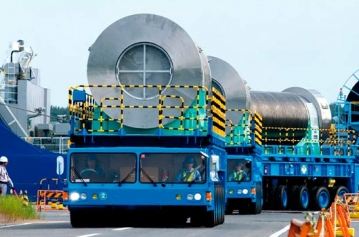
U.S. NRC staff gives environmental OK to proposed $2.3B spent fuel storage site in Texas Power Engineering 2 Aug 21, The U.S. Nuclear Regulatory Commission staff is recommending granting a proposed license for a planned spent nuclear fuel interim storage facility in west Texas.
The NRC issued its final environmental impact statement on the application by Interim Storage Partners LLC, which is a joint venture of Waste Control Specialists LLC and Orano CIS. If granted, the owners would construct a facility to store from 5,000 (in the beginning) to 44,000 short tons of spent commercial nuclear fuel and a small quantity of spent mixed oxide fuel for about 40 years.
U.S. Department of Energy statistics indicate that the U.S. commercial nuclear power industry generates about 2,000 metric tons of used uranium fuel per year. Once spent and removed from the reactor, used fuel roads are currently stored at close to 75 sites in 34 states, according to the DOE.
The proposed interim site would be in Andrews County, Texas less than a mile from the New Mexico border. The owners would build and operate the project within a 14,000-acre parcel of land accessible by rail and road……..
The original plan is to store 5,000 short tons with subsequent expansion eventually bringing the total to close to 44,000 tons, equal to about 20 years of operation by the entire U.S. nuclear power generation fleet, according to reports………. https://www.power-eng.com/nuclear/waste-management-decommissioning/u-s-nuclear-regulators-give-environmental-ok-to-proposed-2-3b-spent-fuel-storage-site-in-texas/
Vogtle nuclear power project’s costs – $27 Billion and rising!

“We’re really so far down the path of absurdity with this project.”
Georgia nuclear plant cost tops $27B as more delays unveiled, By JEFF AMY, July 30, 2021 ATLANTA (AP) — Two new reactors at Georgia’s Plant Vogtle will cost another billion dollars, with shareholders of the parent company of Georgia Power Co. taking a $460 million loss and other owners absorbing the rest.
The news came Thursday as Atlanta-based Southern Co. again admitted what outside experts have been telling regulators for months — its $27 billion-plus project at the complex outside Augusta will take longer and cost more than previously estimated.
Managers project construction will take another three to four months. That pushes the projected start date of Unit 3 into the second quarter of 2022, while Unit 4 is now projected to start in 2023. But independent monitors testified in June that they don’t think Unit 3 will start operation until at least June 2022 and projected total additional spending of up to $2 billion.
“It’s hard to be surprised at this point,” said Kurt Ebersbach, an attorney with the Southern Environmental Law Center, which opposes the project. “We’re really so far down the path of absurdity with this project.”
The company and regulators insist the plant — the first new U.S. reactors in decades — is the best source of clean and reliable energy for Georgia. Opponents have long pointed to what they say would be cheaper, better options, including natural gas or solar generation.
Southern Co. recorded the entire additional cost as a loss to shareholders on its quarterly earnings report, citing “the significant level of uncertainty that exists regarding the future recoverability of these costs” because the Georgia Public Service Commission must approve spending. The company said it could ask ratepayers to pay for the overrun, though.
Customers are already paying for the plant. Rates have gone up 3.4% to pay for earlier costs and Georgia Power projects rates will rise another 6.6 percentage points for a total increase of 10%. Commissioners are scheduled to vote on another rate increase in November……….
Georgia Power’s capital budget for Vogtle is $9.2 billion, with another $3.2 billion in financing costs projected. The total effect on the budget of the Vogtle project isn’t clear because Georgia Power is paying for only 45% of the project. Electric cooperatives and municipal utilities are paying for the remainder and have different financing costs.
Georgia Power also announced Thursday that it agreed with Public Service Commission staff to not seek any amounts above $7.3 billion until commissioners decide whether the company spent prudently during construction.
Georgia Power already agreed to write off about the first $700 million over the $7.3 billion……..
Besides extended testing, Georgia Power said Vogtle has been delayed by poor construction productivity, the necessity to redo substandard work, the slow pace of contractors turning over systems to the company and repairs to a leak in Unit 3′s spent fuel pool.
In June, the U.S. Nuclear Regulatory Commission began a special inspection to determine why so much of the electrical wiring in the plant had to be redone…….
Every month of delay at Vogtle costs roughly $90 million in capital costs, excluding financing costs.
The reactors, approved in 2012, were initially estimated to cost $14 billion, with the first new reactor originally planned to start generation in 2016. Delays and costs spiraled, especially after the main contractor filed for bankruptcy in 2017.
……. The Public Service Commission has reduced the amount that Georgia Power can earn on construction costs because of delays. Southern Co. said those penalties cost it $150 million last year and are projected to cost it another $630 million through 2023.
___ Follow Jeff Amy on Twitter at http://twitter.com/jeffamy. https://apnews.com/article/business-environment-and-nature-georgia-90bbe5cc8e3a1a6077b9e4318e2bbf7e
U.S. Nuclear Regulatory Commission doing a ‘special investigation’ at Davis-Besse nuclear station.
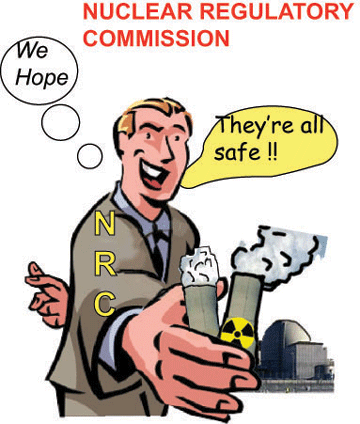
“It’s so severely cracked that concrete could fall off the exterior of the containment and take out safety systems down below. In that sense, the containment could cause the meltdown,”
Federal commission launches ‘special inspection’ at Davis-Besse nuclear plant in Ottawa County, https://www.cleveland19.com/2021/07/30/federal-commission-launches-special-inspection-davis-besse-nuclear-plant-ottawa-county/By Jim NelsonPublished: Jul. 30, 2021 OAK HARBOR, Ohio (WOIO) – The United States Nuclear Regulatory Commission announced it has launched a special inspection at the Davis-Besse plant in Ottawa County.
The facility is one of two nuclear plants in Ohio; the other is the Perry Plant in Lake County.
The agency said the inspection stems from multiple diesel generator failures during testing and maintenance and a complicated reactor trip.
“The six-person inspection team will review the company’s response to each diesel generator failure, including the company’s cause analysis, extent of condition reviews, maintenance practices and system design,” the NRC said in a news release issued Wednesday. “The team will also focus on the circumstances affecting the recent complicated automatic reactor shutdown, which was triggered by a turbine trip, assessing equipment performance and operator response.”
Since the early 2000′s, several incidents and problems have been reported by the NRC at Davis-Besse.
In 2002, a football-sized hole in a reactor vessel head was discovered. Corrosion was determined to be the cause. The NRC called it a near-failure and ruled it a serious nuclear safety incident.
Years later, cracks were discovered in the reactor building’s concrete.
Just two years ago, a radiation watchdog expressed serious concerns during a briefing with The Environmental and Energy Study Institute in Washington, D.C.
“It’s so severely cracked that concrete could fall off the exterior of the containment and take out safety systems down below. In that sense, the containment could cause the meltdown,” said Kevin Kamps, who represents Maryland-based nonprofit Beyond Nuclear.
To be clear, the NRC has not indicated such event is imminent or even likely.
An email to media representatives at Energy Harbor, Davis-Besse’s parent company, has not been returned.
Exelon moves to shutdown 2 nuclear power stations in Illinois, amidst subsidy negotiations.
Exelon moves to shut down 2 nuclear power plants in Illinois, Pantagraph.com, Dan Petrella Chicago Tribune Jul 29, 2021 CHICAGO — The parent company of scandal-plagued Commonwealth Edison filed plans with federal regulators to shut down two nuclear power plants for which it is seeking state subsidies that have been caught up in stalled energy negotiations in Springfield.
Gov. J.B. Pritzker has proposed a deal that would put power customers on the hook for a nearly $700 million bailout of three Exelon nuclear plants, including the plants in Byron and Dresden that are facing closure. Lawmakers returned to the Capitol in mid-June to vote on an energy policy overhaul but left town without an agreement on the timeline for phasing out natural gas-fired plants.
Exelon has argued that state subsidies are necessary for its nuclear plants, which don’t emit carbon pollution,[ as long as you don’t include the full nuclear fuel chain] to compete with plants that run on fossil fuels………….

Exelon’s threat to close the plants mirrors the company’s strategy from 2016, when it succeeded in winning approval for subsidies for two other plants. That legislation is now at the center of an ongoing federal corruption investigation in which its ComEd subsidiary has admitted to engaging in yearslong bribery scheme to win support for its agenda in Springfield.
During negotiations this spring, lawmakers were hesitant to appear to be doing the bidding of Exelon and ComEd in the wake of the scandal but also were eager to preserve thousands of high-paying union jobs at the nuclear plants.
Pritzker’s office and Exelon found common ground in the waning hours of the spring legislative session. But disagreements on other issues derailed a final deal on a larger package that would put the state on a path toward Pritzker’s goal of 100% carbon-free energy by 2050.
When the state Senate adjourned its one-day session in mid-June without voting, Senate President Don Harmon, an Oak Park Democrat, pointed to an ongoing disagreement between two of his party’s core constituencies: organized labor and environmental advocates…….
Further complicating the issue, there are discussions in Congress about potential federal tax credits for nuclear plants that could be even more lucrative than what Illinois is considering.
A proposal from U.S. Sen. Ben Cardin, a Maryland Democrat, would create a tax credit for nuclear generators worth more than three times the ratepayer subsidy Illinois lawmakers are considering. But that plan would subtract the value of any state support, meaning ComEd customers would essentially be picking up part of the tab from federal taxpayers…………
from the company’s perspective, any help from Washington wouldn’t come in time to preserve the plants. Byron, near Rockford, is slated for closure in September, with Dresden, in Grundy County, to follow in November…….. https://www.pantagraph.com/news/state-and-regional/exelon-moves-to-shut-down-2-nuclear-power-plants-in-illinois/article_2f61090a-fb68-56af-a126-8b34875b1f05.html
1 This Month

4 May -West Suburban Peace Coalition to discuss Iran war at May Educational Forum
Monday, May 4, 7:00 – 8:00 PM Central Standard Time
Title: : How Trump’s Narrative Tries to Shape the Reality of the War on Iran.
Contact Walt Zlotow, zlotow@hotmail.com 630 442 3045 for further information
14 May – online event From Bombs to Data Centres: the Face of Nuclear Colonialism
To see nuclear-related stories in greater depth and intensity – go to https://nuclearinformation.wordpress.com
-
Archives
- May 2026 (49)
- April 2026 (356)
- March 2026 (251)
- February 2026 (268)
- January 2026 (308)
- December 2025 (358)
- November 2025 (359)
- October 2025 (376)
- September 2025 (257)
- August 2025 (319)
- July 2025 (230)
- June 2025 (348)
-
Categories
- 1
- 1 NUCLEAR ISSUES
- business and costs
- climate change
- culture and arts
- ENERGY
- environment
- health
- history
- indigenous issues
- Legal
- marketing of nuclear
- media
- opposition to nuclear
- PERSONAL STORIES
- politics
- politics international
- Religion and ethics
- safety
- secrets,lies and civil liberties
- spinbuster
- technology
- Uranium
- wastes
- weapons and war
- Women
- 2 WORLD
- ACTION
- AFRICA
- Atrocities
- AUSTRALIA
- Christina's notes
- Christina's themes
- culture and arts
- Events
- Fuk 2022
- Fuk 2023
- Fukushima 2017
- Fukushima 2018
- fukushima 2019
- Fukushima 2020
- Fukushima 2021
- general
- global warming
- Humour (God we need it)
- Nuclear
- RARE EARTHS
- Reference
- resources – print
- Resources -audiovicual
- Weekly Newsletter
- World
- World Nuclear
- YouTube
-
RSS
Entries RSS
Comments RSS
 nuclear-news