Global Cooperation, Not Endless War Should Be Future of US Foreign Policy
Biden was right to pull out of Afghanistan, yet wrong on the larger picture.
America’s mortal enemies are not China, Iran, and Russia. Our real enemies are the common scourges facing humanity today. Global problems cannot be solved by individual nations alone.
It is uncertain whether America will change its relentless aggressive foreign policy for our own good, and the world’s. Our nation has been at war for centuries. Our repeated failures have led the political right to double down, calling with increasing fervor for more weapons, and further escalation with China, Iran, Russia, and other alleged foes. Yes, we have pulled out of Afghanistan—42 years too late—and that is good. But will the United States adopt a new foreign policy based on peace and problem-solving? That’s the real question.
Global Cooperation, Not Endless War Should Be Future of US Foreign Policy
Ours have been wars of hatred, not logic, and doomed to fail—at a mind-boggling human and financial cost. https://www.commondreams.org/views/2021/09/03/global-cooperation-not-endless-war-should-be-future-us-foreign-policy, JEFFREY D. SACHS September 3, 2021 by the Boston Globe During the past 60 years, the United States has suffered a series of failed wars in Indochina, Central America, the Middle East, and Afghanistan. Each of these wars produced mayhem and suffering, followed by an American retreat. While the American right wing has always argued that success needed just one more surge or bombing spree, the truth has been simpler and sadder. Ours have been wars of hatred, not logic, and doomed to fail—at a mind-boggling human and financial cost.
America has never cared to help those we have pretended to “save” by these wars. For that reason alone, America has never had the broad support of local populations that would have been essential for any kind of success in these misguided wars.
Americans didn’t want to save the Vietnamese, Cambodians, and Laotians, who were despised in US popular culture; America wanted to stop communism and the supposed “falling dominoes” across Southeast Asia. America didn’t want to save Salvadorans, Nicaraguans, and others in poverty-stricken Central America; it wanted to stop leftist radicals who threatened American investments in the region. America didn’t want to save the Iraqis, Libyans, and Syrians; it wanted to topple regimes and replace them with US-backed regimes.
And America cared not a whit about Afghanistan, a point confirmed repeatedly by President Biden in recent days. Biden has noted, approvingly, that the United States went to Afghanistan for one reason and one reason only: to get Osama bin Laden and Al Qaeda after 9/11, not to help the people of Afghanistan.
Tellingly, Biden has not been truthful about the real origin of US intervention in Afghanistan, following a pattern set by his predecessors. America’s intervention in Afghanistan goes back to 1979, more than 20 years before 9/11, when the CIA secretly trained, armed, and funded Islamic jihadists in Afghanistan to fight the Soviet Union. The US-created fighting force morphed into Al Qaeda and the Taliban, but no president, including Biden, has honestly explained the basic facts to the American people.
America’s right-wing culture has often been hostile toward the non-European world—the “shithole countries” in Donald Trump’s disgusting yet telling phrase. For the past 60 years, the United States has waged war after war for America’s narrow interests alone, and has created havoc, destruction, and death in its wake.
I have worked for decades in countries that all too many Americans find contemptible due to their poverty, religion, skin color, desire to migrate from hunger and violence, and insolence for trying to claim control over their own oil, uranium, and other minerals that America craves. Begrudging development assistance to these countries is a congressional pastime. People in those countries know all too well about American power, and its destructive potential. They try their best to stay out of harm’s way.
In pulling the United States out of Afghanistan, Biden showed scant sympathy for the Afghan people. He mocked the idea of “nation-building,” an American phrase of scorn that seems to mean being naïve enough to try to help another country. Is it any surprise that the regime in Afghanistan propped up by American power crumbled so rapidly just as America departed?
Lest any American mistakenly think that much of the roughly $1 trillion the US spent in Afghanistan for war and reconstruction went towards nation-building, it did not. Perhaps 2 percent of the total US spending went for purposes such as health, education, and civilian infrastructure. Almost all the money went for military and security purposes—troops, armaments, Afghan security forces, and the like. After 20 years, we left behind a country where 38 percent of the children are stunted due to chronic undernutrition.
In explaining America’s exit, Biden played the typical American foreign policy tune, that the world is very dangerous place filled with foes of America. The job of the president, Biden emphasized, is to protect America from those enemies, just no longer in Afghanistan. Here is how Biden summarized the global scene:
“This is a new world. The terror threat has metastasized across the world, well beyond Afghanistan. We face threats from Al Shabab in Somalia; Al Qaeda affiliates in Syria in and the Arabian Peninsula; and ISIS attempting to create a caliphate in Syria and Iraq, and establishing affiliates across Africa and Asia … And here’s a critical thing to understand: The world is changing. We’re engaged in a serious competition with China. We’re dealing with the challenges on multiple fronts with Russia. We’re confronted with cyberattacks and nuclear proliferation. We have to shore up America’s competitive[ness] to meet these new challenges in the competition for the 21st century.”
Here is what he should have said instead: All countries—including the United States, members of the European Union, Russia, China, Iran, and, yes, Afghanistan—are destabilized by the COVID-19 pandemic; the effects of the climate crisis (floods, droughts, hurricanes, forest fires, heatwaves); widening income inequality further dividing the haves and have nots; the upheavals of digital technologies; and the dangerous political influence of plutocrats. All of these are shared problems across the globe, and all require intensive global cooperation rather than confrontation.
Biden was right to pull out of Afghanistan, yet wrong on the larger picture.
America’s mortal enemies are not China, Iran, and Russia. Our real enemies are the common scourges facing humanity today. Global problems cannot be solved by individual nations alone.
It is uncertain whether America will change its relentless aggressive foreign policy for our own good, and the world’s. Our nation has been at war for centuries. Our repeated failures have led the political right to double down, calling with increasing fervor for more weapons, and further escalation with China, Iran, Russia, and other alleged foes. Yes, we have pulled out of Afghanistan—42 years too late—and that is good. But will the United States adopt a new foreign policy based on peace and problem-solving? That’s the real question.
More issues at Bruce power station raise concerns about aging nuclear infrastructure
More issues at Bruce power station raise concerns about aging nuclear infrastructure, MATTHEW MCCLEARN, The Globe and Mail, 5 Sept 21,
Unexpectedly high levels of hydrogen in pressure tubes at a nuclear power plant in Ontario have renewed questions about how long Canada’s aging CANDU reactors can continue to operate safely.
At a meeting before the Canadian Nuclear Safety Commission (CNSC) on Friday, officials confirmed more pressure tubes at the Bruce Nuclear Generating Station on the eastern shore of Lake Huron were found to contain hydrogen concentrations in excess of regulatory limits, and above what the industry expected. Bruce Power disclosed in July that it had discovered two tubes that exceeded regulatory limits.
The cause has not been determined, nor is it clear how many other pressure tubes in Canadian reactors might also be affected. Bruce Power did not answer questions from The Globe late Friday on how many additional tubes were found to violate the station’s licensing requirements.
Pressure tubes are six-metre rods that contain fuel bundles of uranium, and are considered the major life-limiting component in CANDUs, the reactors in all of Canada’s nuclear power plants. Tubes containing high hydrogen concentrations are more vulnerable to fracturing if they have pre-existing cracks. If one ruptures, coolant could be lost, which could trigger a range of scenarios from a relatively minor incident contained by the plant’s safety systems to a catastrophe in which fuel overheats.
The issue is particularly a concern when the reactor is below normal operating temperatures, such as during shutdown or startup…………
The Bruce station has eight reactors, each containing 480 pressure tubes; the offending tubes were found in Units 3 and 6, neither of which is operating. One tube in Unit 6 exhibited readings of 211 parts per million, approaching double the regulatory limit, and far above Bruce Power’s prediction of 100 ppm. Bruce Power officials said all of the elevated readings were discovered in the same region, close to one end of the tube………
Frank Greening, a retired Ontario Power Generation chemist who worked in the company’s pressure tube group for the last decade of his career, warned that it’s possible the rate of hydrogen pickup may have accelerated in older tubes in the past few years.
“And if that’s true, then the rate at which it’s going in is scary,” he said.
He added: “There is something happening that’s quite serious. And they’re saying ‘We don’t know how or why it’s happening.’ It’s pathetic. I can’t accept that.”
A CNSC commissioner, Marcel Lacroix, said during the meeting that industry officials had not satisfactorily explained what might be causing the problem……….. https://www.theglobeandmail.com/canada/article-more-issues-at-bruce-power-station-raise-concerns-about-aging-nuclear/
Highway safety concerns as DOE plans expanding nuclear waste transports to the Waste Isolation Pilot Plant (WIPP)
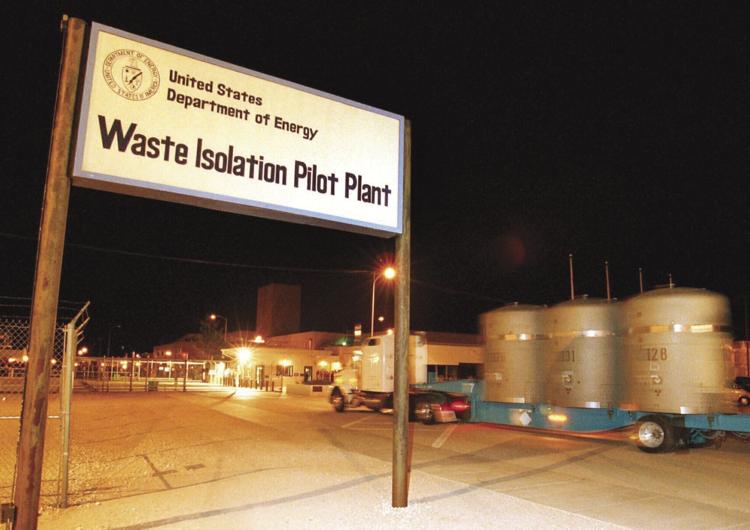
More nuclear waste may be heading to WIPP on US 285 Albuquerque Journal , BY ISABELLA ALVES / JOURNAL NORTH, SATURDAY, SEPTEMBER 4TH, 2021
Spanning the length of the state, U.S. Highway 285 is a major thoroughfare for truck transports and other traffic. This busy highway, nicknamed “Death Highway” due to the number of fatal accidents on it, may get busier.
Concerned citizens in Santa Fe County recently called out the U.S. Department of Energy’s Waste Isolation Pilot Plant for expanding its mission in a permit renewal application to include more nuclear waste being shipped along the 285 corridor.
Part of Highway 285 goes along the southern edge of the city of Santa Fe, and local activists are calling on local and federal leaders to halt this increase in nuclear waste transportation.
The permit application is requesting to add two nuclear waste storage panels to WIPP that would increase the waste volume in these areas. The permit renewal was filed July 30 and, if granted, wouldn’t increase the volume capacity of nuclear waste set by Congress in the Land Withdrawal Act for the plant.
“NMED is in litigation with the DOE for its failure to clean up legacy waste at Los Alamos National Laboratory. A successful resolution of the lawsuit is increased shipments of legacy waste from Los Alamos to WIPP,” James Kennedy, state Environment Department Cabinet secretary, said via email.
“The DOE and Nuclear Waste Partnership continuing to accept out-of-state waste streams or any new waste streams in lieu of cleaning up and shipping legacy waste from Los Alamos to WIPP is completely unacceptable,” he added.
At a recent Santa Fe County Town Hall, activist Cindy Weehler of 285 ALL said the U.S. Department of Energy made it clear that it’s going to expand its nuclear waste program, she said. She said she’s concerned about the new type of radioactive waste that would be traveling through the county, which would be diluted plutonium, instead of contaminated items.
This is consistent with a notice of intent published by the department in December 2020.
The Department of Energy’s (DOE) goal is to complete its missions safely and efficiently, including the continued reduction in the amount of transuranic waste at LANL and creating a safer environment for the surrounding communities,” a U.S. Department of Energy spokesperson said via email. “DOE notifies state authorities weeks in advance of all shipments to WIPP, which are done in strict accordance with federal rules and regulations and state law.”
On average, there are about seven waste shipments a week that travel to WIPP through Santa Fe County from the Los Alamos National Laboratory and the Idaho National Laboratory. In the coming months, pending any pandemic impacts, this number is expected to increase to 10 to 12 shipments per week.
“They have chosen a very unsafe way to deal with the surplus plutonium problem,” Weehler said. “It’s unsafe to our neighborhoods and I think, if people are going to be put at risk, like we are with this new mission, they deserve to know about it.”
Don Hancock, nuclear waste program director at the Southwest Research and Information Center, said the original type of waste being disposed of at WIPP were plutonium-contaminated items, such as gloves and other equipment that came into contact with the radioactive material.
Now, the plant is expected to dispose of the diluted plutonium, which is much more potent than contaminated material — and poses a greater safety risk. Hancock said they expect “a lot” of shipments to the plant and it’s hard to drill down an exact number.
This expansion is going to affect more than just Santa Fe County, it will impact people statewide, Weehler said. She said safety issues, such as preparing emergency responses for a nuclear waste spill if there’s an accident along the highway, will be left up to the local municipalities.
For Santa Fe County, this emergency response falls to its emergency management director who, Communications Coordinator Carmelina Hart said, has a background in these types of responses.
In the event of an emergency, the County’s role would be the initial evaluation, perimeter control and activation of all our state and federal partners who specialize in these responses,” Hart said in an email. “The County maintains relationships with the other agencies in the realm of emergency management. We have participated in full-scale exercises with the Department of Energy and local public safety teams.”
She said the county is reimbursed $15,000 annually by the Department of Energy’s WIPP program for emergency response preparations the county must maintain. The county also is working to identify additional training and equipment needs should nuclear waste transportation changes occur.
Santa Fe County Commissioner Hank Hughes said he has lived in Santa Fe before there was a WIPP project and has shared citizens’ concerns about nuclear waste transportation for many years. He said expanding WIPP’s mission might mean more nuclear waste traveling through Santa Fe County.
He said the county is as equipped as it can be to handle an accident. Since the transportation is considered classified information, local governments aren’t notified when nuclear waste is headed their way.
I think the concern is, while it’s very unlikely that there would be any leak of radioactive material — even if there was an accident — just increasing the number of trucks going through Santa Fe County raises that possibility,” Hughes said.
Since nuclear waste is handled on a federal level, it’s mostly out of the commission’s hands, he said. All the county can really do is make sure it’s prepared for an accident, and help its constituents express their concerns to the federal delegation.
And these worries haven’t gone unnoticed.
Maria Hurtado, spokeswoman for U.S. Rep. Teresa Leger Fernández, D-N.M., said the office has received a handful of constituent calls regarding the nuclear waste transportation…………. https://www.abqjournal.com/2426206/more-nuclear-waste-may-be-heading-to-wipp-on-us-285.htmladvertisement
Downwinders Look to Renew and Expand Radiation Exposure Compensation Act
Downwinders Look to Renew and Expand Radiation Exposure Compensation Act, Sierra Nevada Ally, By Brian Bahouth -September 4, 2021
Audio: a conversation with downwinder Mary Dickson Between 1951 and 1992, U.S. scientists and engineers conducted 928 nuclear blasts at the Nevada Test Site (NTS), a roughly 1,400 square-mile federal reservation located 65 miles north of Las Vegas. Eight hundred and twenty eight were underground tests and 100 atmospheric tests in which the atomic weapons were exploded at or above ground level, which releases highly radioactive material high into the atmosphere.
In total, at various locations around the globe, the Atomic Energy Commission and later the Department of Energy, conducted 1,054 atomic weapons tests.
Fallout from these many bombs circled the planet. If a person is in close proximity to a nuclear blast, the symptoms of acute radiation sickness are obvious, but outside the blast area, human senses do not apprehend radioactivity that can lodge in the fat of milk or meat and can linger for decades in the environment.
The health effects of nuclear testing on those directly downwind of the events in eastern Nevada, Utah and Arizona became evident with cancer clusters and and other related illnesses. Many ranchers lost livestock.
After years of lawsuits and wrangling, the Radiation Exposure Compensation Act (RECA) became law in 1990 and provides one-time benefit payments to “persons who may have developed cancer or other specified diseases after being exposed to radiation from atomic weapons testing or uranium mining, milling, or transporting.”
The U.S. Department of Justice administers RECA and has distributed over $2.4 billion in benefits to more than 37,000 claimants since its inception in 1990, but the RECA program is scheduled to sunset in 2022.
Geographically, RECA covers people living in a total of 22 counties with some in eastern Nevada, Utah, and Arizona. But research shows that parts of Idaho and Montana saw radioactivity impacts on par with Nevada, Utah and Arizona. Many places in North America realized toxic levels of radiation. Fallout from the tests travelled around the globe.
U.S. Senator from Idaho, Mike Crapo has been a long-time advocate for downwinders. In a recent newsletter to constituents, he said he’s working on bi-partisan legislation that would renew and expand the dimensions of RECA to include many more states.
Work is in progress with stakeholders to determine the best path forward to reintroduce the Radiation Exposure Compensation Act Amendments, which expands coverage of the Radiation Exposure Compensation Act (RECA) to include victims in Idaho among states impacted by exposure to fallout from nuclear weapons testing.”………….
“The more I started researching and the more I started following that story, the more I thought, ‘my government did this to me,’” Mary Dickson said. “I’m a casualty of the Cold War.
“My sister, at the time, was ill with an autoimmune disease, and she and I started making a list of all the people in our childhood neighborhood who had cancer or tumors. It didn’t take long before, in a four or five block area, we had about 54 people on that list …
“And we just thought, ‘OK, yeah, something happened to us. Something happened to us, something happened …”……… https://www.sierranevadaally.org/2021/09/04/downwinders-look-to-renew-and-expand-radiation-exposure-compensation-act/
Friends of the Earth and Sierra Club saw it coming – corruption is killing the nuclear industry

Public interest intervenors were prescient in their early assessments of the project. Friends of the Earth, which intervened before the Public Service Commission against the project in August 2008, noted SCANA’s disregard for energy efficiency and alternative forms of energy. That organization predicted that the project’s fate would be what the US Attorney’s Office affirmed in the August 18, 2021 indictment: “from the outset, the Project was characterized by cost overruns and significant delays.” Likewise, toward the end of the project in June 2017, just after Westinghouse declared bankruptcy, Friends of the Earth and the Sierra Club filed a formal complaint detailing why the project must be canceled. As money hemorrhaged, the owners made that earth-shaking decision a month later. And the mighty crash still reverberates.
With pursuit of large light-water reactors in the United States all but dead, the nuclear industry is now endlessly touting an array of “small modular reactors” and a dizzying menu of so-called “advanced reactors,” all of which exist only on paper. It’s unclear if there’s a path forward for this nuclear renaissance redux, and if there is, whether taxpayers will be put on the hook for financing some of it.
US attorney details illegal acts in construction projects, sealing the fate of the “nuclear renaissance” https://thebulletin.org/2021/08/us-attorney-details-illegal-acts-at-construction-projects-sealing-the-fate-of-the-nuclear-renaissance/By Tom Clements | August 31, 2021
The ill-fated construction of new nuclear reactors in South Carolina—one of two such troubled Westinghouse reactor construction projects in the United States—was abruptly terminated on July 31, 2017, but the effort to determine legal accountability for the project’s colossal failure is only now hitting its stride.
The South Carolina legislature conducted hearings about the project’s collapse. But it has fallen to the United States Attorney for South Carolina to outline internal decisions that led to project abandonment—via court filings, plea agreements, and indictments. These filings are proving to be the best documentation so far of criminal behavior related to projects that were part of a much-hyped “nuclear renaissance” that began in the early-2000s but has since petered out in the United States.
On August 18, 2021, a second Westinghouse official was charged in a federal grand jury indictment filed with the court in Columbia, South Carolina. The charges outline “the scheme” to cover up key details about the problem-plagued project to construct two 1,100 megawatt (MW) Westinghouse AP1000 light-water reactors at the VC Summer site north of Columbia.
The project was initiated in May 2008 and gained final approval in February 2009.
According to the 18-page indictment, former Senior Vice President of New Plants and Major Projects Jeffrey Benjamin “had first-line responsibility for Westinghouse’s nuclear reactors worldwide.” He was charged, according to a news release, “with sixteen felony counts including conspiracy, wire fraud, securities fraud, and causing a publicly-traded company to keep a false record.” On August 30, the US attorney’s office announced that Benjamin would be arraigned on August 31.
The indictment reveals important new information about how Benjamin and Westinghouse conspired to hide crucial information about reactor completion dates from the owners, the publicly held utility SCANA, now defunct, and its junior partner, the state-owned South Carolina Public Service Authority (known as Santee Cooper). It states that the defendant made “false and misleading statements” and “knowingly devised a scheme” to continue the project based on misrepresentations via Westinghouse to the owners, state regulators, the Securities and Exchange Commission, investors, and ratepayers. Nervous SCANA officials played along with the inept cover-up efforts and passed on false and inaccurate information to regulators.
Continue readingHurricane Ida Forces Two Nuclear Plants in Louisiana to Shut Down or Reduce Power
Hurricane Ida Forces Two Nuclear Plants in Louisiana to Shut Down or Reduce Power https://obrag.org/2021/09/hurricane-ida-forces-two-nuclear-plants-in-louisiana-to-shut-down-or-reduce-power/
by MICHAEL STEINBERG on SEPTEMBER 3, 2021 · Nuclear Shutdown News August 2021
By Michael Steinberg / Black Rain Press
Nuclear Shutdown News chronicles the decline and fall of the nuclear industry, and highlights the efforts of those working to create a nuclear free world.
On August 29, 2021, 16 years to the day when Hurricane Katrina devastated New Orleans and environs, Hurricane Ida made landfall twice as a Category 4 storm. Its 150 mph winds raced through the Crescent City, and up cancer alley, by Baton Rouge, an area replete with petrochemical facilities whose surrounding African American populations have high rates of serious health care problems in the best of times.
Almost all of the Gulf coast’s offshore refineries were forced to shut down and a million or more lost electrical power, including all of New Orleans.
Complicating this catastrophe was the loss of two nuclear plants, both upriver from New Orleans and owned by Entergy Corporation. According to an 8-30 report by S &P Global, Entergy shut down its Waterford nuke plant on 8-29 “after off-site electrical power was lost because of Hurricane Ida.”
According to the Nuclear Regulatory Commission, the plant was disconnected from the electrical grid that day “per procedures as storm winds elevated.”
The following day, the River Bend nuclear plant, 25 miles north of New Orleans, “reduced power to 35% of capacity.” The unit reduced power at the request of the Midcontinent Independent System Operator, Entergy’s Mike Bowling said.
“The action was to preserve the integrity of the grid in the wake of Hurrican Ida” Bowling added.
At this point, when the lights will come on is anybody’s guess.
We can reduce the nuclear danger, contacting politicians, joining Back from the Brink

Danger of nuclear war increasing https://www.heraldtimesonline.com/story/opinion/letters/2021/09/03/letter-danger-nuclear-war-increasing/5574644001/ Margaret Squires, Bloomington
Danger of nuclear war is rising. International tensions are growing, and Congress plans to spend billions to “modernize” our nuclear arsenal, including paying for weapons that will increase the chance of nuclear war–so-called “usable nukes” and vulnerable land-based missiles.
A nuclear exchange, begun by war, accident or cyber attack, would be devastating. Even a “small” nuclear war, using 3% of world nuclear arsenals, would kill over a quarter of the world’s population as clouds of debris block sunlight from food crops. War between the United States and Russia could extinguish life on Earth.
We can reduce our danger. We can contact Members of Congress and also support “Back from the Brink,” a national grassroots campaign working toward abolition of nuclear weapons and basic changes in U.S. nuclear weapons policy, such as seeking an agreement among nuclear powers to eliminate their nuclear arsenals, taking our weapons off hair-trigger alert and canceling the plan to “modernize” our nuclear arsenal.
Over 50 municipalities, four states, dozens of faith groups and many other organizations have passed resolutions endorsing this campaign. Such resolutions helped the Nuclear Freeze Movement of the 1980s to succeed. We can build strength to turn the tide of nuclear danger.
Illinois nuclear subsidy law – too late for Exelon’s Byron and Dresden nuclear plants
Time running out for Exelon’s Byron and Dresden nuclear plants as Illinois Senate passes major energy bill, Utiliy Dive, Sept. 2, 2021 By Scott Van Voorhis ”’………
- Senate Bill 18 provides hundreds of millions in subsidies to keep the state’s nuclear power sector open, with Exelon preparing to shut down its Byron nuclear plant Sept. 13.
- But the legislation, which still needs to pass the House, faces 11th hour hurdles: Gov. J.B. Pritzker, D, is raising objections to a key part of the plan dealing with the large Prairie State coal-fired plant.
……….The Illinois Senate’s clean energy package provides more than $600 million in subsidies for renewable power-related initiatives, and nearly $700 million over five years for the state’s struggling nuclear power sector.
However, Illinois’ governor has raised objections to a key piece of the deal, which would require the municipally-owned Prairie State coal-fired plant, the largest carbon emitting power plant in Illinois and one of the largest in the nation, to shut down by 2045
ssed before Exelon moves ahead with its closure plans.
….. The governor’s objections raise the prospect of legislative negotiations going down to the wire, with roughly 10 days, or even less, for a final bill to get pa…….. Exelon, which owns six nuclear plants in the state, has said it plans to close its Byron plant on Sept. 13 unless the bill passes.
But the real deadline is even tighter than that, with the legislation needing to clear before Sept. 13 in order to keep the plant open, Exelon noted in a statement.
….. The governor’s objections raise the prospect of legislative negotiations going down to the wire, with roughly 10 days, or even less, for a final bill to get pa…….. Exelon, which owns six nuclear plants in the state, has said it plans to close its Byron plant on Sept. 13 unless the bill passes.
But the real deadline is even tighter than that, with the legislation needing to clear before Sept. 13 in order to keep the plant open, Exelon noted in a statement.
……. “To be clear, Byron will run out of fuel and will permanently shut down on September 13 unless legislation is enacted,” the spokesperson stated. “We have been clear that we cannot refuel Byron on September 13 or Dresden in November absent policy changes.” ……………….. https://www.utilitydive.com/news/time-running-out-for-exelons-byron-and-dresden-nuclear-plants-as-illinois/605981/
Daunting costs of nuclear clean-ups
Daunting nuclear cleanup costs, Partial reactor meltdown at Three Mile Island in the US cost about $1bn https://www.businesslive.co.za/bd/opinion/letters/2021-09-02-letter-daunting-nuclear-cleanup-costs/ Peter Smulik 02 SEPTEMBER 2021- What every young South African needs to know now is how much it will cost their generation when it comes to cleaning up after nuclear power plants (“Nuclear build plan alarms energy analysts”, August 30). Three Mile Island in the US is a case in point: after the partial reactor meltdown of March 28 1979 the cleanup started in August 1979 and only officially ended in December 1993, at a total cost of about $1bn. That was just unit 2, which developed the incident. A preliminary assessment estimated that the Three Mile Island accident caused a total of $2.4bn in property damages.
As for unit 1: in 2017 it was announced that operations would cease by 2019 due to financial pressure from cheap natural gas, unless legislators stepped in to keep it open. When it became clear that subsidy legislation would not pass any time soon Exelon decided to retire the plant, and Three Mile Island-1 was shut down by September 30 2019. Exelon says it will take nearly 60 years and a further $1.2bn to completely decommission the Dauphin County site.
Meanwhile, more than 240 organisations have demanded that these bailouts be omitted from the state budget and funds be directed to investing in carbon-free, nuclear-free clean energy. Sixteen of the organisations are from Illinois, the most nuclear-reliant state in the US, which is considering a $700m Exelon nuclear bailout in upcoming state energy legislation.
These are facts, not pipedreams or pies in the sky. Enough said.
Nuclear waste – a heavy burden on the public of New Mexico
WIPP: New panels to dispose of nuclear waste, Adrian Hedden Carlsbad Current-Argus . 3 Sept 21, Two new spaces to hold nuclear waste were planned to be built at the Waste Isolation Pilot Plant, and they could be slightly bigger to allow for equipment needed to handle higher radioactive waste.
The proposal for the new panels came as officials worked to replace disposal capacity they said was lost during an accidental radiological release in 2014.
In 2014, a mispackaged drum of waste in WIPP’s underground repository ruptured, releasing radiation into the air of the underground and contaminating multiple areas of the facility.
Storage space was lost in three panels where transuranic (TRU) waste – comprised of clothing materials and equipment irradiated during nuclear activities – is permanently disposed of, and officials believed the site would need two additional panels to replace the lost space……………………….
The new panels will also be separated by 300 feet of rock, compared with 200 feet for the additional panels, and abutment pillars to support the rock above and assist with ground control will be 400 feet wide compared to 200 feet in the past.
…………….. Joni Arends for Concerned Citizens for Nuclear Safety argued the DOE was holding multiple PMR processes at once, efforts that appeared rushed and creating a challenge for the public to keep track and provide adequate analysis.
………….. Along with the replacement panels, WIPP was also conducting a PMR for a new utility shaft which was hoped to be approved later this year after a temporary authorization (TA) to build the shaft was not renewed last year by NMED which cited rising COVID-19 infections at the site.
Meanwhile, a 10-year renewal of WIPP’s operations permit was ongoing with a decision from NMED expected to be issue next year.
“The burden on the public is becoming heavier and heavier,” Arends said. “I do need to make a comment that the burden the DOE is putting on the people of New Mexico is a heavy burden.” https://www.currentargus.com/story/news/local/2021/09/03/new-panels-wipp-bigger-hold-more-radioactive-nuclear-waste/5689186001/
Advanced nuclear reactors need the government to create a market – nuclear loves socialism

……….………. Advanced reactors are in a position where they need a HALEU supply for commercialization of their technology to be possible, but there needs to be commercial market with demand for the fuel in place for the HALEU supply to get off the ground, according to nuclear engineer Matthew Corradini, a professor emeritus at the University of Wisconsin. “It’s a chicken and egg situation,” he said
One solution proposed by NEI is for the federal government to create the market ………….
Nuclear reactors of the future have a fuel problem, Utility Dive
Higher levels of uranium enrichment can unlock value from smaller and simpler reactors, but they come with new hurdles that the nuclear industry says only the federal government can address. Aug. 30, 2021 By Matthew Bandyk

President Joe Biden entered office being hailed by nuclear power advocates as perhaps the most pro-nuclear-energy president ever. He followed up his campaign trail discussions of nuclear energy as a necessary source of carbon-free emissions with a budget that proposed a record-setting $1.85 billion for the U.S. Department of Energy’s Office of Nuclear Energy
But many in the nuclear industry are concerned that the budget does not sufficiently address a problem that could prevent nuclear reactors of the future from being able to function. The impasse would stand even if technological advancements to make nuclear energy technology cheaper and easier to operate are realized. Some of the most prominent of these next-generation reactor designs can only run on a fuel for which there is no commercial supply chain currently — and building that supply chain could take years and lots of political will, according to reactor developers and nuclear fuel supply companies alike.

The nuclear industry, beset by massive cost overruns in the construction of current-generation reactors, has placed its hopes for new nuclear capacity in “advanced” or “next-generation” reactor designs, a broad category that includes everything from smaller versions of conventional light-water reactors to designs that eschew water entirely in favor of other cooling substances in the nuclear core like helium or salt. These reactors have the potential to help achieve decarbonization goals [an unlikely claim, and certainly not in time for the urgent climate need] by replacing fossil fuel plants, powering the production of clean hydrogen and firming renewable energy, among other possibilities. Several companies are developing designs and targeting deployment of their first commercial demonstration projects over the next decade.
Both the Biden and Trump administrations have supported research and development efforts toward advanced reactors, and Congress has passed legislation intended to streamline the regulatory path ahead. But the Nuclear Energy Institute (NEI), the primary trade association for the nuclear industry, argues that if advanced reactors are to succeed, the federal government needs to do much more to create a domestic market for this fuel. “The commercialization of many advanced nuclear technologies is in jeopardy,” NEI President and CEO Maria Korsnick said in a 2020 letter to then-U.S. Energy Secretary Dan Brouillette.
The biggest policy change advocated by NEI is for the federal government to sign a contract with a nuclear fuel supplier to essentially create a new market.
Both the Biden and Trump administrations have supported research and development efforts toward advanced reactors, and Congress has passed legislation intended to streamline the regulatory path ahead. But the Nuclear Energy Institute (NEI), the primary trade association for the nuclear industry, argues that if advanced reactors are to succeed, the federal government needs to do much more to create a domestic market for this fuel. “The commercialization of many advanced nuclear technologies is in jeopardy,” NEI President and CEO Maria Korsnick said in a 2020 letter to then-U.S. Energy Secretary Dan Brouillette.
What is HALEU?
What most of the advanced reactor developers seeking Nuclear Regulatory Commission (NRC) approval have in common, however, is that they would not be fueled by the form of uranium used in most nuclear power plants operating around the world today. Rather, they would use a form that is more highly enriched — or, to be more specific, has been made into a more fissionable form by using technology such as centrifuges to alter the balance of protons and neutrons in the uranium……….

TerraPower, the Bill Gates-funded startup that is developing the Natrium sodium fast reactor with GE Hitachi Nuclear Energy, is also banking on HALEU. While, at 345-MW, the Natrium reactor is much larger than Oklo’s, TerraPower’s design also relies on the high uranium-235 content of HALEU to allow the reactor to run efficiently, particularly when ramping up or down to follow changes in load driven by renewable energy. TerraPower declined to comment for this story. The startup and Centrus have said they plan to work together to expand HALEU production after Centrus’s DOE contract ends in 2022.
……………….. Advanced reactors are in a position where they need a HALEU supply for commercialization of their technology to be possible, but there needs to be commercial market with demand for the fuel in place for the HALEU supply to get off the ground, according to nuclear engineer Matthew Corradini, a professor emeritus at the University of Wisconsin. “It’s a chicken and egg situation,” he said
One solution proposed by NEI is for the federal government to create the market …………. https://www.utilitydive.com/news/nuclear-reactors-of-the-future-have-a-fuel-problem/604707/
Since 9/11, US Has Spent $21 Trillion on Militarism at Home and Abroad

Since 9/11, US Has Spent $21 Trillion on Militarism at Home and Abroad https://www.commondreams.org/news/2021/09/01/911-us-has-spent-21-trillion-militarism-home-and-abroad“Our $21 trillion investment in militarism has cost far more than dollars.” JAKE JOHNSONSeptember 1, 2021
In the 20 years since the September 11 attacks, the United States government has spent more than $21 trillion at home and overseas on militaristic policies that led to the creation of a vast surveillance apparatus, worsened mass incarceration, intensified the war on immigrant communities, and caused incalculable human suffering in Afghanistan, Iraq, Yemen, Libya, Somalia, and elsewhere.
According to State of Insecurity: The Cost of Militarization Since 9/11 (pdf), a report released Wednesday by the National Priorities Project, the U.S. government’s so-called “War on Terror” has “remade the U.S. into a more militarized actor both around the world and at home” by pouring vast resources into the Pentagon, federal law enforcement, and the Department of Homeland Security (DHS), an agency established in response to the September 11 attacks.
Released in the wake of the final withdrawal of U.S. troops from Afghanistan after two decades of devastating war and occupation, the new report argues that the Taliban’s rapid takeover of the country “raises deep questions about our military investments to date.”
“Twenty years ago, we were promised a vision of the War on Terror that did not come to pass: that Afghanistan would not become a quagmire, or that the Iraq War would be over in ‘five weeks or five days or five months’ and cost a mere $60 billion,” the report notes. “As the country went to war and refocused domestic security spending on terrorism, few had any inkling of the far-reaching ramifications for the military, veterans, immigration, or domestic law enforcement.”
The National Priorities Project (NPP), an initiative of the Institute for Policy Studies, estimates that of the $21 trillion the U.S. invested in “foreign and domestic militarization” in the aftermath of September 11, 2001, $16 trillion went to the military, $3 trillion to veterans’ programs, $949 billion to DHS, and $732 billion to federal law enforcement.

In addition to fueling death and destruction overseas, the new report stresses that spending on overseas wars heightened domestic militarization, making police crackdowns on dissent at home even more violent.
There is evidence that the War on Terror drove transfers of military equipment to police, as surges ended and the Pentagon looked to divest from surplus equipment,” the analysis notes. “Transfers in 2010, when the military was still deeply engaged in the War on Terror, totaled $30 million. Over the next few years, the U.S. pulled forces out of Iraq, and military equipment transfers skyrocketed, peaking at $386 million in 2014. Today, transfers are still far higher than they were early in the War on Terror, totaling $152 million in 2020 and $101 million in just the first half of 2021.”
Lindsay Koshgarian, program director of NPP and lead author of the new report, said in a statement Wednesday that “our $21 trillion investment in militarism has cost far more than dollars.”
There is evidence that the War on Terror drove transfers of military equipment to police, as surges ended and the Pentagon looked to divest from surplus equipment,” the analysis notes. “Transfers in 2010, when the military was still deeply engaged in the War on Terror, totaled $30 million. Over the next few years, the U.S. pulled forces out of Iraq, and military equipment transfers skyrocketed, peaking at $386 million in 2014. Today, transfers are still far higher than they were early in the War on Terror, totaling $152 million in 2020 and $101 million in just the first half of 2021.”
Lindsay Koshgarian, program director of NPP and lead author of the new report, said in a statement Wednesday that “our $21 trillion investment in militarism has cost far more than dollars.”
- $4.5 trillion could fully decarbonize the U.S. electric grid;
- $2.3 trillion could create five million $15-per-hour jobs with benefits and cost-of-living adjustments for 10 years;
- $1.7 trillion could erase student debt;
- $449 billion could continue the extended Child Tax Credit for another 10 years;
- $200 billion could guarantee free preschool for every 3-and-4-year old for 10 years, and raise teacher pay; and
- $25 billion could provide Covid vaccines for the population of low-income countries.
- The NPP report was published on same day that Brown University’s Costs of War Project released a new analysis estimating that U.S.-led post-9/11 wars in Iraq, Afghanistan, and elsewhere have killed at least 929,000 people—a figure deemed likely to be a “vast undercount”—and cost more than $8 trillion.”The end of the war in Afghanistan represents a chance to reinvest in our real needs,” Koshgarian said Wednesday. “Twenty years from now, we could live in a world made safer by investments in infrastructure, job creation, support for families, public health, and new energy systems, if we are willing to take a hard look at our priorities.”
Oblivion and 9 Other Best Dystopian Films About Nuclear War
Oblivion & 9 Other Best Dystopian Films About Nuclear War
Whether they show the build-up, detonation, or aftermath of a nuclear war, these movies portray those disasters better than others. Screen Rant BY TRICIA MAWIRE, 1 Sept 21, Nothing is more thrilling and simultaneously terrifying like a film about nuclear war. From the build-up to the detonation and aftermath of the attack, every minute is an emotional experience using fiction to show the grim reality of such a disaster. Although not all these movies show a post-apocalyptic dystopian world, those that do paint quite a picture of what life would be like when disaster strikes.
……On The Beach (1959)……………… . With the central theme being the end of the world, there are no happy endings in this one, even for the romance storyline which has a tragic ending.
Dr. Strangelove (1964)………. As one of Stanley Kubrick’s best productions, the film combines humor and the doom and gloom of nuclear warfare to create a feeling of comic dread throughout its run. ……..
Testament (1983)…………. Testament is an emotionally devastating film with an accurate depiction of the fallout of a nuclear war. The factual accuracy of the impact and effects of such a disaster are haunting, leaving a heartwrenching image in the minds of all who watch the movie.
Special Bulletin (1983)………. a group of terrorists threatens to detonate a homemade nuclear device if the U.S. government doesn’t agree to hand over the triggers for their nuclear weapons.
The Day After (1983)……… depicts ordinary people living their lives, the terrifying build-up to the disaster, and the aftermath of the nuclear attack. This approach shows the audience how easily an ordinary day can turn tragic within seconds.
Threads (1984)……….. struggles to survive the post-apocalyptic world where food has become the only thing of value and the cause of many fights…… Most dystopian movies about nuclear war have a grim tone, but Threads takes it a notch higher. It shows the horrifying reality of a nuclear war, highlighting the message that no one wins when it comes to such a tragedy. From the beginning right until the heartbreaking end, Threads is unrelentingly dreadful.
When The Wind Blows (1986)……..Despite the animated nature of the film, it captures the couple’s emotions throughout the attack in a way that’s touching and relatable……Miracle Mile (1988)………. mainly focuses on the leading moments before the attack, capturing Harry’s panic and the doubts of the unconfirmed attack he keeps warning others about….
The Divide (2011) ………. an interesting take on a post-apocalyptic world that captures the sentiment “survival of the fittest” in a brutal way. It holds the audience’s attention but is one of those creepy movies fans wouldn’t watch twice.
Oblivion (2013)…… The post-apocalyptic action flick paints a gruesome picture of a war-torn planet…. https://screenrant.com/oblivion-best-dystopian-films-about-nuclear-war/
Uranium prices and the true financial and climate costs of the Megatons to megawatts program
the Russian price the Americans paid for fuel from bombs bears no relationship to the actual costs of producing it, not only in money, but in greenhouse CO2 pumped into the atmosphere.
Megatons to Megawatts’: Prices and true costs of nuclear energy, SEP 1, 2021 KELVIN S. RODOLFO, Rappler.com
Clearly, the uranium market is not a free one in any sense of the word, and never will be’The following is the 13th in a series of excerpts from Kelvin Rodolfo’s ongoing book project “Tilting at the Monster of Morong: Forays Against the Bataan Nuclear Power Plant and Global Nuclear Energy.”
Promoters of nuclear power say it’s “cheap.” If you want to invest in it, however, look at how fickle uranium prices have been. Over time, they have varied by more than eight times!
Clearly, the uranium market is not a free one in any sense of the word, and never will be’The following is the 13th in a series of excerpts from Kelvin Rodolfo’s ongoing book project “Tilting at the Monster of Morong: Forays Against the Bataan Nuclear Power Plant and Global Nuclear Energy.”
Promoters of nuclear power say it’s “cheap.” If you want to invest in it, however, look at how fickle uranium prices have been. Over time, they have varied by more than eight times!
Besides satisfying Russia’s urgent needed for cash, selling this cheap Megatons to Megawatts fuel was a means to two ends. The first is much-extolled: to shrink the huge global stockpiles of nuclear weaponry. But has the project really made us safer?
All the world’s nuclear weapons have declined from as many as 70,300 in 1986 to about 13,890 in early-2019. The reduction happened mostly during the 1990s. But today’s weapons are much more lethal; the nuclear countries, instead of planning to disarm, are retaining large arsenals, making new weapons, and increasing their use in geopolitics.
The second, central role of Megatons to Megawatts was to keep nuclear power financially affordable, so the power industry would continue to use it. Now that the Russian leadership is better-off financially, it is less eager to trade bombs for electricity, and the jittery global realpolitik may well also direct more uranium away from fuel and back to weapons once again.
Finally, and most importantly: what did the reactor uranium made from old Soviet warheads really cost in treasure, and in greenhouse CO2? We know the market price of this new fuel, but what were the true costs of its manufacture, from its mining, milling, enrichment to weapons grade, then its dilution back down into reactor fuel?
During the mad rush to gain nuclear equality with the US, the Russians spared no expense. Their oldest weapons contained uranium that had been enriched with technologies that used about 40 to 60 times more electricity for every kilo of highly-enriched uranium than modern centrifuges do. And more energy, money, and CO2 emissions were used to dilute that warhead uranium back.
Finally, and most importantly: what did the reactor uranium made from old Soviet warheads really cost in treasure, and in greenhouse CO2? We know the market price of this new fuel, but what were the true costs of its manufacture, from its mining, milling, enrichment to weapons grade, then its dilution back down into reactor fuel?
During the mad rush to gain nuclear equality with the US, the Russians spared no expense. Their oldest weapons contained uranium that had been enriched with technologies that used about 40 to 60 times more electricity for every kilo of highly-enriched uranium than modern centrifuges do. And more energy, money, and CO2 emissions were used to dilute that warhead uranium back down to reactor grade, for which work the Russians eventually received $8 billion.In short, the Russian price the Americans paid for fuel from bombs bears no relationship to the actual costs of producing it, not only in money, but in greenhouse CO2 pumped into the atmosphere. A later Foray will evaluate the true costs in greenhouse CO2 for making nuclear fuel. On top of whatever values we arrive at, we must recognize that significant but forever unknowable amounts were generated by Megatons to Megawatts.
Our next Foray is about the intricate entanglement between nuclear weapons and nuclear power. – Rappler.com https://www.rappler.com/voices/thought-leaders/opinion-megatons-megawatts-prices-true-costs-nuclear-energy
Illinois very soon to vote on a Bill for the state to prop up the nuclear industry
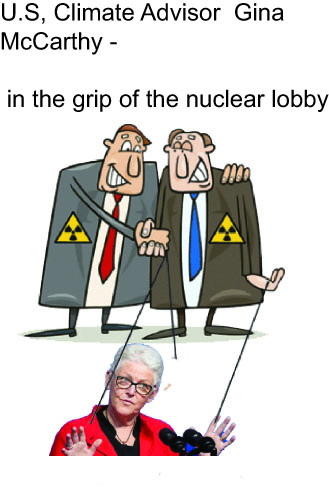
Gina McCarthy, President Joe Biden’s climate adviser, has said existing nuclear plants are “absolutely essential” to hit U.S. goals to decarbonize the electric grid by 2035 and the administration has supported federal incentives for the nuclear in
Illinois could vote Tuesday on bill that aims to save nuclear plants, By Timothy Gardner, Aug 31 (Reuters) – The Illinois legislature is edging closer to a vote as soon as Tuesday on a bill that aims to prevent two nuclear power plants from shutting, as the owner moves to close the first plant next month unless the state acts.
The legislature could vote in a special session on a compromise of a wide-ranging energy bill, introduced Monday, or a narrow version of it that would allow nuclear plants to earn carbon mitigation credits for generating virtually emissions-free power [not really emissions-free, considering the whole nuclear fuel chain]. Tuesday’s session is on legislative mapping, but could include the energy bill vote………..
Lawmakers were set to meet on Tuesday to consider a measure on the bill.
Exelon Corp (EXC.O) has said it will close the Byron nuclear plant in mid September and the Dresden plant in November if a state or federal program does not come to the rescue.
Gina McCarthy, President Joe Biden’s climate adviser, has said existing nuclear plants are “absolutely essential” to hit U.S. goals to decarbonize the electric grid by 2035 and the administration has supported federal incentives for the nuclear industry.
1 This Month

4 May -West Suburban Peace Coalition to discuss Iran war at May Educational Forum
Monday, May 4, 7:00 – 8:00 PM Central Standard Time
Title: : How Trump’s Narrative Tries to Shape the Reality of the War on Iran.
Contact Walt Zlotow, zlotow@hotmail.com 630 442 3045 for further information
14 May – online event From Bombs to Data Centres: the Face of Nuclear Colonialism
To see nuclear-related stories in greater depth and intensity – go to https://nuclearinformation.wordpress.com
-
Archives
- May 2026 (49)
- April 2026 (356)
- March 2026 (251)
- February 2026 (268)
- January 2026 (308)
- December 2025 (358)
- November 2025 (359)
- October 2025 (376)
- September 2025 (257)
- August 2025 (319)
- July 2025 (230)
- June 2025 (348)
-
Categories
- 1
- 1 NUCLEAR ISSUES
- business and costs
- climate change
- culture and arts
- ENERGY
- environment
- health
- history
- indigenous issues
- Legal
- marketing of nuclear
- media
- opposition to nuclear
- PERSONAL STORIES
- politics
- politics international
- Religion and ethics
- safety
- secrets,lies and civil liberties
- spinbuster
- technology
- Uranium
- wastes
- weapons and war
- Women
- 2 WORLD
- ACTION
- AFRICA
- Atrocities
- AUSTRALIA
- Christina's notes
- Christina's themes
- culture and arts
- Events
- Fuk 2022
- Fuk 2023
- Fukushima 2017
- Fukushima 2018
- fukushima 2019
- Fukushima 2020
- Fukushima 2021
- general
- global warming
- Humour (God we need it)
- Nuclear
- RARE EARTHS
- Reference
- resources – print
- Resources -audiovicual
- Weekly Newsletter
- World
- World Nuclear
- YouTube
-
RSS
Entries RSS
Comments RSS
 nuclear-news