Opposition to small nuclear reactor project for Oyster Creek
Small Nuclear Reactor Might Be Built At Oyster Creek, Jersey Shore Online, 10 Dec,
”……………….Janet Tauro, who serves as New Jersey Board Chair of Clean Water Action, told The Southern Ocean Times that her organization was not in favor of the idea. “The last thing we need is another nuclear reactor at a site that has millions of gallons of waste material still in their fuel pool.”
She expressed concerns of where Oyster Creek’s current nuclear waste would end up, noting that Holtec’s application to the Nuclear Regulatory Commission for a consolidated interim storage facility that would be based in New Mexico has not been approved and is facing resistance by residents and officials of that state.
“Nothing is happening any time soon – if at all – and we don’t want to saddle other people with other state’s nuclear waste.” She noted spent nuclear fuel rods on site at Oyster Creek must be removed from their storage casks every 20 years and put into new containers.
“This is a bad idea. Ocean County shouldn’t be a test case for unproven technology. Oyster Creek is the first nuclear power plant that Holtec has decommissioned. It is needless to expose Ocean County to that risk. Spent fuel rods should be nowhere near another nuclear reactor,” she added.
100% renewables possible for USA – study demonstrates
A study led by Stanford University professor Mark Jacobson has
demonstrated that the US energy system running on wind, water and solar,
coupled with storage, not only avoids blackouts but lowers energy
requirements and consumer costs while creating millions of jobs, improving
health, and freeing up land. The Jacobson-led study conducted with
colleagues from Stanford University analysed grid stability under multiple
scenarios in which wind, water, and solar energy resources powered 100% of
all energy needs in the United States. The study, published in the journal
Renewable Energy, demonstrates a blackout-free energy system under ideal
circumstances, and a much reduced risk of blackouts in extreme weather
events compared to the current fossil fuel-led energy systems.
Renew Economy 10th Dec 2021
DRUMS OF WAR Biden is pushing us to brink of NUCLEAR WAR over Ukraine in chilling echo of Cuban missile crisis, Russia claims

FIRES OF WAR Biden is pushing us to brink of NUCLEAR WAR over Ukraine in chilling echo of Cuban missile crisis, Russia claims, The Sun UK, Katie Davis, 10 Dec 2021
RUSSIA has warned Joe Biden is pushing the nation to the brink of NUCLEAR WAR as tensions over Ukraine hit boiling point.
Sergei Ryabkov, Russia’s deputy foreign minister, has warned a chilling echo of the 1962 Cuban missile crisis is possible as the US closely watches unrest at the border.
“You know, it really could come to that,” he said.
“If things continue as they are, it is entirely possible by the logic of events to suddenly wake up and see yourself in something similar.”
A standoff between Russia and the US brought the world close to nuclear war when Washington blocked Moscow from shipping nuclear missiles to Cuba in 1962 – and Ryabkov has warned escalating tensions between the nations risk a repeat of that.
After strained negotiations, John Kennedy and Nikita Khrushchev reached an agreement, with the Soviet leader dismantling their offensive weapons in Cuba on the condition the US would sign a public declaration to not invade the Caribbean country again.
It comes amid mounting tensions between the West and Moscow over a potential invasion of Ukraine – with growing fears war could break out.
Last week US intelligence detected Russia massing 175,000 troops on the border with Ukraine as fears of a potential invasion in early 2022 are mounting.
Meanwhile, Moscow claimed its fighter jets intercepted a US spy plane that was flying over the Black Sea.
Russia has denied that it plans to attack Ukraine.
Ryabkov’s warning comes after Joe Biden held a high-stakes call with Vladimir Putin as tensions between Washington and Moscow intensify over Ukraine.
The two-hour call between the leaders was held in a bid to de-escalate tensions – with the US President threatening sanctions over the situation at Russia’s border…………….
Russia has been demanded Ukraine not join NATO and raged that the US must stop all military activity in the region.
Ukraine commanders have warned that a Russian invasion would overwhelm the country without help from the West…………
it’s reported Britain and her allies are ready to use force to stop Russia invading Ukraine – despite warnings it would lead to the worst conflict since World War Two…………
a US senator has warned America could “rain destruction” on Russia with nuclear weapons if Putin invades Ukraine……
Senator Roger Wicker said “We don’t rule out first-use nuclear action, we don’t think it will happen, but there are certain things in negotiations, if you are going to be tough, that you don’t take off the table.”
But the Russian Embassy in Washington hit back at Wicker’s remarks, branding his suggestion that the US should consider using nuclear weapons against Moscow in the event of invasion as “irresponsible”.
“Such statements are irresponsible,” the statement, posted on Facebook, said.
“We advise all the unenlightened to read the joint statement of the Presidents of Russia and the United States of June 16, 2021 thoroughly. This document reaffirms the two countries’ commitment to the principle that a nuclear war cannot be won and must never be fought.”………. https://www.thesun.co.uk/news/16999520/biden-pushing-brink-nuclear-war-ukraine-russia/
‘The Catalog of Nuclear Death’: The U.S.’s Hair Raising Plan to Obliterate Russia

‘The Catalog of Nuclear Death’: The U.S.’s Hair Raising Plan to Obliterate Russia, The U.S. Air Force’s titled 1956 Atomic Weapons Requirement Study outlined all the targets it planned to hit if World War III broke out and how many bombers and nuclear weapons it would need to get the job done. In short, the report is a catalog of nuclear death. The National Interest, by WarIsBoring 10 Dec 21, Here’s What You Need to Know: The Air Force’s 1956 Atomic Weapons Requirement Study detailed the U.S.’s nuclear plan to attack Russia if the need should ever arrive.
In one scene from Stanley Kubrick’s iconic Cold War film Dr. Strangelove, an irate president Merkin Muffley refuses to get on board with a massive nuclear attack already in progress. Played by Peter Sellers, Muffley is trying to decide what to do after a rogue U.S. Air Force general sends his planes to bomb the Soviet Union.
“You’re talking about mass murder, general, not war!” Muffley angrily tells George C. Scott’s Gen. Turgidson, after the officer suggests the impending strikes could actually work. “Mr. President, I’m not saying we wouldn’t get our hair mussed,” Turgidson quips.
“But I do say no more than 10 to 20 million killed … tops,” the general stammers. “Uh, depending on the breaks.”
Released to a public faced with the ever present threat of nuclear annihilation in 1964, Kubrick probably had no idea just how close he was to the truth. Eight years earlier, the Air Force put together a report detailing how to obliterate the Soviet Union, China and their allies.
The National Security Archive at George Washington University obtained the document through a Mandatory Declassification Review and released it online on Dec. 22, 2015.
The flying branch’s blandly titled 1956 Atomic Weapons Requirement Study outlined all the targets it planned to hit if World War III broke out and how many bombers and nuclear weapons it would need to get the job done. Over the course of more than 800 pages, intelligence analysts identified more than 2,000 potential “designated ground zeroes” in the Soviet Union and elsewhere, including both military bases and cities.
“The SAC study includes chilling details,” William Burr, a nuclear researcher and analyst at the National Security Archive, wrote along with the release. “According to its authors, their target priorities and nuclear bombing tactics would expose nearby civilians and ‘friendly forces and people’ to high levels of deadly radioactive fallout.”
In short, the report is a catalog of nuclear death.
In 1956, Washington no longer had a monopoly on atomic bombs, but appeared to be winning the nuclear arms race. While Moscow had set off its first atomic weapon seven years before, the Pentagon had already started fielding even more powerful thermonuclear hydrogen bombs.
With long-range ballistic missiles still in development, the Air Force relied on a fleet of lumbering bombers and faster fighters to lob the nuclear arsenal in any actual war. The attack would come from warplanes armed with free-fall bombs or from early cruise missiles like the much maligned Snark………………
Those targets or target complexes that do not have a direct bearing on the destruction of SovBloc air power objective are part of the systematic destruction objective,” the authors explained. “The importance of the latter is not minimized.”
H-bombs would be reserved for important military targets, like air bases. American planes would drop atomic bombs on the rest……
The report includes a five-page key to every single category that might appear in the voluminous lists of bombing targets. It includes country codes for various facilities in all eight members of the Warsaw Pact. Depending on the type of target, three digit identifiers for Communist China, North Korea, North Vietnam and pre-Shah Iran might also be present.
Every single entry has a special eight-number code corresponding to an entry in a master “bombing encyclopedia.” The first four digits indicate a general zone, while the last four digits indicate the particular site or collection of sites within that particular area. This recording method theoretically allows for up to 9,999 individual targets within a given space.
The analysts clearly tried to pick out anything and everything that might have any effect on the war effort, from facilities producing cutting tools to rubber tires to the antibiotic streptomycin. Most notably, the Air Force defined “275” as the code for “population.”
Every single entry has a special eight-number code corresponding to an entry in a master “bombing encyclopedia.” The first four digits indicate a general zone, while the last four digits indicate the particular site or collection of sites within that particular area. This recording method theoretically allows for up to 9,999 individual targets within a given space.
The analysts clearly tried to pick out anything and everything that might have any effect on the war effort, from facilities producing cutting tools to rubber tires to the antibiotic streptomycin. Most notably, the Air Force defined “275” as the code for “population.”
“The authors developed a plan for the ‘systematic destruction’ of Soviet bloc urban-industrial targets that specifically and explicitly targeted ‘population’ in all cities, including Beijing, Moscow, Leningrad, East Berlin and Warsaw,” Burr pointed out. “Purposefully targeting civilian populations as such directly conflicted with the international norms of the day, which prohibited attacks on people per se (as opposed to military installations with civilians nearby).”
But other contemporary sources make it abundantly clear the Pentagon saw any person tied to a war effort as a viable military target. A now declassified 1952 U.S. Navy film on chemical and biological warfare specifically states a goal “to incapacitate the enemy’s armed forces and that portion of his human population that directly supports them.” With similar thoughts in mind, the U.S. Army had looked into radiological warfare and built deadly dirty bombs………
“The anonymous authors may not have been scientists,” Burr said. “But in light of the 1954 Castle Bravo test, which spread radioactive debris globally, they should have known better.”……. This first appeared in WarIsBoring here. https://nationalinterest.org/blog/reboot/catalog-nuclear-death-uss-hair-raising-plan-obliterate-russia-197705
.
Nuclear Command and Control Satellites Should Be Off Limits – here’s why
 |

Nuclear Command-and-Control Satellites Should Be Off Limits https://www.defenseone.com/ideas/2021/12/nuclear-command-and-control-satellites-should-be-limits/187472/ Blowing up some satellites causes problems. Blowing up these could cause nuclear war. By JAMES ACTON and THOMAS MACDONALD, DECEMBER 10, 2021
When Russia blew up an old satellite with a new missile on November 15, it created an expanding cloud of debris that will menace the outer space environment for years to come.
Hypersonic fragments from the collision with Moscow’s ground-launched, anti-satellite weapon risk destroying other satellites used for communications, meteorology, and agriculture. They even pose a danger to China’s Tiangong Space Station and the International Space Station, where personnel—including Russia’s own cosmonauts—were forced to don spacesuits and flee into their escape capsules ahead of approaching debris.
But the greatest danger that this careless stunt highlighted is to a different potential target: high-altitude satellites used for nuclear command and control. Those critical satellites face the threat of being attacked by co-orbital anti-satellite weapons, that is, other spacecraft with offensive capabilities. Destroying a nuclear command-and-control satellite, even unintentionally, could lead a conventional conflict to escalate into a nuclear war. As such, the United States, China, and Russia have a shared interest in ensuring the security of each other’s high-altitude satellites.
Satellites are integral to the United States’ nuclear command-and-control system. They would be the preferred means to transmit a presidential order to use nuclear weapons and would provide the first warning of an incoming nuclear attack. Russia uses satellites for similar purposes, even if it appears not to rely on them quite as much as the United States. While little is publicly known about China’s nuclear command-and-control system, the U.S. Department of Defense has assessed that China is in the process of developing a space-based early-warning system.
The most important nuclear command-and-control satellites—those for communications and early warning—are located in high-altitude orbits. Fortunately, most are strung out about 22,500 miles above the equator—far above the debris from Russia’s ground-launched anti-satellite weapon test. These satellites, however, are growing more vulnerable, particularly to co-orbital anti-satellite weapons.
Nuclear command-and-control satellites might be attacked deliberately, as the prelude to a nuclear war. In a conventional conflict, if China, Russia, or the United States decided to use nuclear weapons first—or believed that its opponent was about to do so—it might try to degrade the adversary’s nuclear command-and-control system preemptively. China, for example, might attack U.S. early-warning satellites to weaken the United States’ homeland missile defenses. Conversely, the United States might target Chinese communication satellites to interfere with Beijing’s ability to wield its nuclear forces.
In a conventional war, however, nuclear command-and-control satellites might be attacked and threatened for altogether different reasons—creating the risk that nuclear war might be triggered inadvertently. The United States, in particular, is deeply reliant on satellites to enable conventional operations. Moreover, most, if not all, nuclear command-and-control satellites also support nonnuclear missions—making them tempting targets even in a purely conventional conflict. For example, some U.S. satellites transmit orders to both U.S. conventional and nuclear forces. Russia might attack these satellites to try to undermine the United States’ ability to prosecute a conventional war, but with the added and unintended effect of degrading the U.S. nuclear command-and-control system.
Washington would be hard pressed to determine the intent behind such attacks. It could easily misinterpret them as preparations for a nuclear war and respond accordingly. It might threaten to use nuclear weapons unless its adversary backed off. In fact, the Trump administration’s nuclear policy explicitly threatened the use of nuclear weapons in precisely this circumstance. The Biden administration can and should remove this threat as part of its ongoing Nuclear Posture Review.
To make matters worse, it might not take actual attacks against nuclear command-and-control satellites to spark this kind of escalation. Satellites in high-altitude orbits are periodically moved to different positions to optimize their performance. Especially in a conventional conflict, a repositioning operation that led one spacecraft to approach a nuclear command-and-control satellite might appear to the latter’s owner as the beginning of an attack against its nuclearcommand-and-control system. Once again, the potential consequences could be catastrophic.
“Keep-out zones” around high-altitude satellites would be a straightforward way to mitigate these risks. Specifically, the United States, China, and Russia should agree not to maneuver their spacecraft within a certain distance—we propose 430 miles—of one another’s high-altitude satellites. (Exceptions could be made to accommodate occasional repositioning under tightly controlled conditions. Most importantly, the state conducting the maneuver should warn the others at least 24 hours in advance.)
In a conflict, if the belligerents had no intention of attacking each other’s high-altitude satellites, they would have strong reasons of self-interest to respect keep-out zones. If a state did seek to launch such attacks, keep-out zones couldn’t stop it from doing so—but they would buy time that the targeted state could use to try to evade the attack.
Negotiating keep-out zones during a conflict, when they would be most useful, would be next-to impossible. So, Washington, Beijing, and Moscow shouldn’t wait—they should start negotiating right away.
James M. Acton is co-director of the Nuclear Policy Program and holds the Jessica T. Mathews Chair at the Carnegie Endowment for International Peace. Thomas D. MacDonald is a fellow in the Nuclear Policy Program.
Nuclear weapons proliferation: the great danger in the USA exporting advanced fast nuclear reactors
Letter to the Secretary of Energy Regarding Advanced Reactors, Fast Reactors, Nuclear Proliferation https://npolicy.org/letter-to-the-secretary-of-energy-regarding-advanced-reactors-fast-reactors-nuclear-proliferation/ November 29, 2021
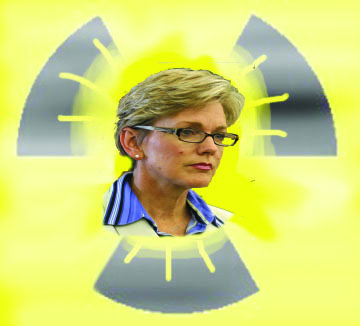
Earlier last month, Secretary of Energy Jennifer Granholm touted the Department’s commercialization of advanced fast reactors at the COPO26 Glasgow Climate Conference as a demonstration of America’s commitment to decarbonizing the planet. The State Department announced it’s organizing itself to support the export of such reactors. Yet, a day after Secretary Granholm’s COPO talk, the Pentagon determined that Beijing would acquire at least 1,000 nuclear weapons by 2030, in part, because of the super weapons-grade plutonium China could produce in its advanced fast reactors.
If the United States is serious about preventing the further spread of nuclear weapons, something has got to give. In June, I, Victor Gilinsky (NPEC’s Program Advisor), and 11 other of the nation’s leading nuclear nonproliferation experts wrote the Biden Administration and Secretary Granholm noting the nuclear weapons proliferation dangers posed by the Energy Department’s fast reactor commercialization efforts. The administration has yet to reply to that note, which called for a policy review.
Last week, I sent yet another note (below) to Secretary Granholm recalling the June 20th letter, the Pentagon’s latest China warhead findings, and fast reactor concerns.
It would be best if the United States dropped its plans to export fast reactors as these machines can be used to produce copious amounts of weapons plutonium. At a minimum, such reactors should not be exported unless and until our government can certify that it can technically assure timely warning of possible nuclear military diversions from such plants. This was the requirement that Presidents Ford and Carter demanded be met before the United States ever commercialized plutonium-based fuels. If we are still serious about preventing nuclear proliferation, our government should demand no less today.
It would be useful for the Secretary and the letter’s other addresses to clarify their position as the Department of State has already announced a $25 million-program to promote the export of U.S. advanced reactors and is presently in this business.
Letter to the Secretary of Energy Regarding Advanced Reactors, Fast Reactors, Nuclear Proliferation
November 29, 2021
The Honorable Jennifer M. Granholm
Secretary of Energy
US Department of Energy
1000 Independence Avenue, S.W.
Washington, DC 20585-1000
Re: Advanced reactors, fast reactors, nuclear proliferation
Madam Secretary:
Among the Energy Department’s “advanced reactors” that are being supported for commercialization and export are some — sodium-cooled fast reactors — that shouldn’t be for international security reasons. The natural fuel of such reactors is plutonium. In this mode they are called “breeder” reactors. If they are successful in becoming an export product—which the Department of Energy and the companies designing them advertise as a desirable goal—they will provide easy access around the world to nuclear weapons-grade plutonium. As far back as 1976, President Gerald Ford said we should not rely on plutonium fuel until the world can cope with the proliferation consequences. This determination was subsequently backed by President Jimmy Carter. Does anyone think we are anywhere near meeting this test and that we should now reverse that policy? The short answer is no.
Certainly, the Energy Department’s current enthusiasm to develop and export fast reactors is in direct conflict with the Pentagon’s trepidation about these reactors’ utility as nuclear weapons material production plants. In specific, Pentagon’s latest China military power report, released earlier this month, spotlighted two Chinese fast reactors and their associated reprocessing plants under construction and their role in helping to supply China with the weapons plutonium Beijing needs to acquire more than 1,000 nuclear weapons by 2030.
The head of the Strategic Command, Admiral Charles Richard, amplified this point earlier this year before the Senate Armed Services Committee. “With a fast breeder reactor,” he noted, “you now have a very large source of weapons grade plutonium available to you, that will change the upper bounds of what China could choose to do if they wanted to, in terms of further expansion of their nuclear capabilities.” In speaking of “a large source of weapons-grade plutonium,” Admiral Richard is referring not only to copious plutonium production, but to the “super weapons-grade” quality of about half of plutonium produced in fast reactors, a circumstance that simplifies weapon design and production. Imagine if such facilities spread globally, including to dangerous regions in Asia and the Middle East. We certainly cannot exclude the possibility that some future owners of such reactors may be interested in using these plants to make bombs.
With light water reactors, there is no need to extract plutonium. Also, as noted previously in letter to you with multiple signatures sent June 20th, there’s a major economic penalty for recycling plutonium in light water reactors versus using fresh uranium. As a result, international inspections to afford timely warning of military diversions are feasible. In contrast, with the copious quantities of “super-grade” plutonium that fast reactors produce, no such warning is yet practicable. Nor is there some technical modification of reprocessing technology that promises to make it substantially harder to access the plutonium to make bombs. Exporting “smaller” advanced nuclear plants also won’t help: Nuclear facilities, which are small in commercial terms, can, nonetheless pose very large military threats. A “small” 300 megawatt (electrical) fast reactor, for example, can produce upwards of 300 kilograms of plutonium annually, about half of which is “super-grade.” Contrast that with the requirement for a warhead, which can be as little three kilograms.
Unfortunately, nuclear enthusiasts intrigued with the breeding potential of fast reactors, especially the sodium-cooled category, have largely ignored these international security issues. Instead, they’ve lobbied for “advanced” fast reactors and reprocessing for decades. Yet, their “advanced” design dates back to the mid 1940s and so predates the light water reactor. In the 1970s, a fast reactor demonstration plant, the Clinch River Breeder Reactor, then the largest US energy project ever, was the Atomic Energy Commission’s main focus. Congress canceled it in the early 1980s because it made no economic sense. The Department of Energy, then, tried to revive the fast reactor concept during the George W. Bush administration on grounds that it would help in nuclear waste management, but that got nowhere.
The current Department of Energy flagship fast reactor commercialization demonstration project, TerraPower’s Natrium reactor, is based on an earlier General Electric-Hitachi design for a Prism reactor which is classified as a plutonium-fueled fast breeder reactor. TerraPower executives say they intend to fuel Natrium not with plutonium, but with uranium enriched to below 20 percent and that it would not require reprocessing of spent fuel. They also plan on exporting the reactor.
But fast reactors are very flexible regarding fuel use, and its customers, especially its foreign customers, will view the reactor as a potential “breeder” reactor, indeed it is the main attraction of such machines, and we expect the exporters will accommodate the customers. Consider that while TerraPower is taking advantage of the “small modular reactor” label’s cachet, TerraPower’s CEO expects customers to want the larger 1000 megawatt (electrical) size and expects to accommodate them. It is apparently still true—despite the enthusiasm over small modular reactors—that the larger sizes are more economic. I believe that once the design is established the fuel choice will revert the same way.
The Biden administration and Congress have decided to support nuclear energy as part of the effort to combat climate change. You have said that you are “very bullish on advanced nuclear reactors.” But our government’s support for advanced reactors should not be extended to fast reactors, much less their export, which would make it much easier for those so inclined to manufacture nuclear weapons. At a minimum, our government should not push their export unless and until it can certify that it can technically assure timely warning of possible nuclear military diversions. This was the requirement that Presidents Ford and Carter demanded be met before the United States ever commercialized plutonium-based fuels. If we are still serious about preventing nuclear proliferation, our government should demand no less today.
Sincerely, Henry Sokolski
Executive Director
The Nonproliferation Policy Education Center
CC: Secretary of State Antony Blinken
Administrator of the National Nuclear Security Administration Jill Hruby
Chairman, Nuclear Regulatory Commission Christopher Hansen
Nuns against nuclear weapons
Nuns against nuclear weapons – Plowshares protesters have fought for disarmament for over 40 years, going to prison for peace, https://theconversation.com/nuns-against-nuclear-weapons-plowshares-protesters-have-fought-for-disarmament-for-over-40-years-going-to-prison-for-peace-169918December 9, 2021 Carole Sargent Carole Sargent is a Friend of The Conversation. Literary Historian, Georgetown University In July 2012 Sister Megan Rice, an 82-year-old Catholic nun, and two men walked past multiple broken security cameras and into the heart of a high-security nuclear complex. Y-12 in Oak Ridge, Tennessee, was the birthplace of the atomic bomb and now stores enriched uranium for nuclear warheads. Although thanked by Congress for exposing astoundingly lax contractor security, the three were also convicted and served two years in prison.

Rice, who died in October 2021, was part of a protest tradition called Plowshares. Since 1980, there have been over 100 Plowshares actions in the U.S., the U.K. and Europe. The name comes from the books of Isaiah and Micah in the Bible: “They shall beat their swords into plowshares, and their spears into pruning hooks: nation shall not lift up sword against nation, neither shall they learn war any more.” Isaiah and Micah are accepted as Scripture by Christians, Jews and Muslims.
Civil resistance, not disobedience
Rice’s journey with Plowshares began when she retired after four decades teaching science and math in schools founded in Nigeria by her religious order, the Society of the Holy Child Jesus. At Baltimore’s Jonah House, a faith-based activist peace community, she met Sister Anne Montgomery, a Society of the Sacred Heart nun and the daughter of a prominent World War II naval commander. Montgomery became Rice’s Plowshares mentor.
Montgomery helped develop Plowshares’ legal strategies, such as attempting to put nuclear weapons on trial. This means explaining to juries that nukes have been internationally illegal since the Treaty on the Prohibition of Nuclear Weapons and even its 1968 predecessor – and also how their use violates the Geneva Conventions and other binding treaties.
When testifying, these nuns do not describe their actions as “civil disobedience,” because that would mean they did something illegal. Instead, they prefer “civil resistance,” which Montgomery called “divine obedience” to higher principles of peace.
One of Plowshares’ most effective strategies is to represent themselves in court, known as pro se, which in Latin means “for oneself.” It allows protesters, including these nuns, to discuss humanitarian law, the necessity defense – meaning you broke a small law to stop a large crime – and the U.S. 1996 War Crimes Act. Lawyers cannot discuss these issues because judges limit cases to mere trespassing or property damage. Using pro se, activists speak freely in ways that might get a real lawyer professionally reprimanded. Lawyers often do, however, stand by as advisers.
Sabotage charges
Rice wasn’t the first nun to be convicted of sabotage. Ten years earlier, Dominican Sister Ardeth Platte, who inspired the nun character on the popular Netflix prison series “Orange is the New Black,” went to prison in Danbury, Connecticut, on the same charge. Platte (pronounced Platty) spent her retirement years engaging in Plowshares and other protests at weapons sites.
In 2002, along with fellow Dominican nuns, Sister Carol Gilbert and Sister Jackie Hudson, Platte breached an intercontinental ballistic missile facility in Colorado. The three poured blood in the shape of a cross to remember victims of war. Then they rapped on the blast lid with a household hammer. The small hammers do not damage such massive weapons in any significant way. The three were accused of preventing the United States from attacking its enemies or defending itself, which is the definition of sabotage.
Just like Rice’s group and many other Plowshares activists, the three nuns carried rosaries, Bibles and other objects in small black bags. Explosives experts, however, thought they might have bombs. Attack helicopters swooped in as they sang and prayed. Police pointed semiautomatic rifles at them and shut down a nearby highway. This was an unusual reaction, since Plowshares protesters are usually stopped and arrested with far less fanfare, and it may be why the prosecutors won a sabotage conviction.
Rice’s prosecutors brought up Platte’s case during her trial, in which she and her companions were also convicted of sabotage. However, two years later an appeals court overturned it, admonishing that “no rational jury could find” they actually injured the national defense.
Just like Rice’s group and many other Plowshares activists, the three nuns carried rosaries, Bibles and other objects in small black bags. Explosives experts, however, thought they might have bombs. Attack helicopters swooped in as they sang and prayed. Police pointed semiautomatic rifles at them and shut down a nearby highway. This was an unusual reaction, since Plowshares protesters are usually stopped and arrested with far less fanfare, and it may be why the prosecutors won a sabotage conviction.
Rice’s prosecutors brought up Platte’s case during her trial, in which she and her companions were also convicted of sabotage. However, two years later an appeals court overturned it, admonishing that “no rational jury could find” they actually injured the national defense.
USA considers deploying nuclear weapons in Ukraine.

US weighing nuclear in Ukraine to deter Russia Mirage News, 9 Dec 21, ”…………… Last week U.S. President Joe Biden pledged to make it “very, very difficult” for Russia’s Vladimir Putin to take military action amid spiralling tensions with Ukraine……
“Deploying U.S. nuclear weapons in Ukraine as [deployed] on Turkish soil in 1959 to deter Soviet aggression is among the last-resort options being considered. This would make [invasion] “very, very difficult” for Russia as President Biden put it. However, this would not be a decision to take lightly.”……… https://www.miragenews.com/us-mulling-nuclear-deployment-in-ukraine-to-688776/
New Name- Same Scam. NuScale small nuclear reactors become ‘VOYGR”, universities co-opted.

NuScale SMR plants become VOYGR 03 December 2021,
NuScale Power’s small modular reactor (SMR) power plants are to be named VOYGR, the company has announced. The company is working towards commercialising the technology and aims to be ready to deliver the first VOYGR plant to public power consortium Utah Associated Municipal Power Systems’ Carbon Free Power Project by the end of the decade………
UAMPS earlier this year said it expects to submit a combined licence application for the Carbon Free Power Project – currently envisaged as a six-module plant – to the NRC in 2024. The plant is to be located on a site at the US Department of Energy’s (DOE’s) Idaho National Laboratory…….
Training centre

NuScale has now opened a third university-based centre to provide training and outreach opportunities through simulated, real-world nuclear power plant operation scenarios. The NuScale Energy Exploration (E2) Center, opened in collaboration with the Texas A&M Engineering Experiment Station, is at the Center for Advanced Small Modular and Micro Reactors located in College Station, Texas, and uses state-of-the-art computer modelling within a simulation of the control room of a 12-unit NuScale power plant control.
Previous E2 Centers were opened at Oregon State University, in November 2020, and at the University of Idaho, in August 2021. The centres are supported by a 2019 DOE grant to broaden the understanding of advanced nuclear technology in a control room setting. https://www.world-nuclear-news.org/Articles/NuScale-SMR-plants-become-VOYGR
Canada to get its version of the mythical beast – the Small Nuclear Reactor – GE Hitachi Nuclear Energy (GEH) BWRX-300


Ontario Power Generation (OPG) will build a GE Hitachi Nuclear Energy (GEH) BWRX-300 small modular reactor (SMR) at its Darlington Nuclear Station in Clarington, Ontario, marking a major triumph for the nuclear vendor in a stiff competition for the much-watched utility-scale project.
OPG announced the selection of the GE Hitachi BWRX-300 SMR over competitors X-energy and Terrestrial Energy in a live stream on Dec. 2. The utility said it will now work with GE Hitachi on the SMR engineering, design, planning, preparing the licensing and permitting materials, and performing site preparation activities. The companies are targeting a “mutual goal of constructing Canada’s first commercial, grid-scale SMR, projected to be completed as early as 2028.” Site preparation, which will include
“installation of the necessary construction services,” is slated to begin in the spring of 2022, pending appropriate approvals. OPG additionally said it will apply to the Canadian Nuclear Safety Commission
(CNSC) for a License to Construct the SMR by the end of 2022.
Power Mag 2nd Dec 2021
US Ex-Senator warns – US, NATO allies risking ‘all-out nuclear conflict’ with Russia
US, NATO allies risking ‘all-out nuclear conflict’ with Russia: Ex-senator, Press TV Sunday, 05 December 2021 The United States’ belligerent policy toward Russia is driven by an amorphous array of bureaucrats and lobbyists, says a former US state senator, adding that Washington does not comprehend the gravity of its provocative moves in siding with Ukraine.
The United States, its NATO allies and Ukraine accuse Moscow of massing troops near Ukraine’s border for a possible invasion. The US also claims that NATO allies are “prepared to impose severe costs” on Moscow if it attempts an invasion.
Russia says there is no such plan, but it has warned against any provocation from Ukraine that could trigger such an invasion.
“It is not clear that Western officials understand the gravity of what they are doing. It is unlikely that Russia can accept stationing of nuclear weapons or even large-scale movements of NATO troops into Ukraine,” Richard H. Black, a former state senator from Virginia, told Press TV.
“Ukraine is not a part of NATO, but the alliance increasingly talks of war to help Ukraine recover areas that have seceded from it. If NATO were to make war against Russia, the chances of escalation into an all-out nuclear conflict would be high,” he added.
Black pointed the finger of blame at Ukraine for the escalation between Moscow and NATO, stressing that the US-led military alliance’s talk of war is aimed at helping Kiev recover the areas of Donetsk and Luhansk in the Crimean Peninsula, which rejoined Russia in a 2014 referendum.
“The Ukrainian army is moving aggressively against this small pocket of Russian-speaking people. Ukraine has deployed heavy mortars and artillery to shell the enclave, and has carried out 200 unprovoked attacks in recent weeks,” the former senator said………… https://www.presstv.ir/Detail/2021/12/05/672022/Russia-policies-driven-US-bureaucrats-powerful-lobbyists
More delays and extra $1 billion expected for Georgia nuclear plant
More delays and extra $1 billion expected for Georgia nuclear plant, https://newschannel9.com/news/local/more-delays-and-extra-1-billion-expected-for-georgia-nuclear-plant by JEFF AMY Associated PressMonday, December 6th 2021–ATLANTA (AP) — Monitors say even the most recent pushback of completion dates for two new nuclear reactors in Georgia isn’t enough to account for all the delays and increased costs they see coming.
An engineer paid by the Georgia Public Service Commission predicts that the third reactor at Plant Vogtle near Augusta won’t the most recent deadline of September 2022 set by Georgia Power Co. Don Grace instead says ongoing delays suggest a range of November 2022 to February 2023.
Grace says the fourth reactor might not come online until sometime in late 2024.
Grace says more delay could mean $1 billion more in spending on a project already set to cost $28.7 billion.
Urgent need to correct exaggerated claims about China’s nuclear arsenal and its intentions.

In the months ahead, as the Biden administration attempts to draft a new Nuclear Posture Review and Congress votes on a proposed $715 defense bill for FY 2022, we can expect to hear a lot more about China’s “breathtaking” nuclear buildup. If we are to reduce the risks of nuclear war and lower the costs of nuclear weapons procurement, we must challenge such assertions and provide a balanced, realistic assessment of Chinese developments. We must also urge Biden to work with Xi in developing the “guardrails” that both agree are necessary to avert catastrophe.
Placing “Guardrails” on the US-China Nuclear Competition, A failure to challenge inflated claims about China’s nuclear arsenal will have serious and painful consequences. The Nation By Michael T. Klare , 1 Dec 21,
With the United States and China both speeding up the acquisition of new nuclear weapons, some analysts predicted that Presidents Joe Biden and Xi Jinping would discuss limits on those munitions during their virtual summit on November 15. However, they barely touched on the matter, agreeing only that both sides should take steps to prevent the unintended escalation of future crises. As Biden told Xi during their three-hour exchange, the two sides need “commonsense guardrails to ensure that competition does not veer into conflict.” Yet no plans were made for negotiations leading to the adoption of such measures, so the US-China arms race will only gain further momentum.
Historically, talk of nuclear arms racing has applied almost exclusively to the United States and the Soviet Union, and now Russia. Indeed, the US and Russia still possess the overwhelming majority of the world’s nuclear warheads, along with its most advanced nuclear delivery systems. But now China—long a minor player in the nuclear arena—appears to be bolstering its capabilities, while the United States is developing new weapons with the Chinese, as well as the Russians, in mind. The risk of a war between the US and China has also been growing, especially due to tensions over Taiwan, increasing the danger of nuclear weapons use.
Fueling these dangerous trends is a steady stream of alarmist pronouncements by US officials about China’s nuclear buildup. The Chinese are engaged in a “remarkable expansion of [their] nuclear and strategic capabilities,” Adm. Charles A. Richard, commander of the US Strategic Command, told the House Armed Services Committee last April. As a result of these initiatives, “China is capable of executing any plausible nuclear employment strategy regionally now, and soon will be able to do so at intercontinental ranges.”
But while China is certainly undertaking the modernization of its relatively old and meager nuclear arsenal—as compared to those of Russia and the United States—it can hardly be described as undertaking a “remarkable expansion” of its arsenal nor is it capable of “executing any plausible nuclear employment strategy” in a US-China war. Yet these inflated claims by senior Pentagon officials are helping spur Congress—which doesn’t really require much nudging—to finance a vast expansion of America’s own nuclear capabilities.
A failure to challenge these inflated claims and to slow the burgeoning US-China nuclear competition will have serious and painful consequences for both sides. If nothing else, it will lead to the massive allocation of resources for nuclear weapons procurement, with no end in sight. Any hope of trimming the Pentagon’s proposed $1.7 trillion modernization of all three “legs” of the nuclear “triad”—intercontinental ballistic missiles (ICBMs), submarine-launched ballistic missiles (SLBMs), and long-range strategic bombers—will disappear. And the emphasis on ever-more-capable conventional weapons, combined with new developments in cyber, space, and surveillance technology, will increase the likelihood that future crises trigger an unrestrained escalatory spiral terminating in nuclear annihilation.
Fortunately, the US-China nuclear arms race is still at a relatively early stage, at least when compared to the long-running US-Soviet/Russian competition. It is possible, then, to conceive of measures that might constrain this contest before it gathers additional momentum. Before considering such measures, however, we must possess a clear understanding of this dynamic and dispel various misconceptions regarding China’s nuclear capabilities.
UNDERSTANDING CHINA’S NUCLEAR POSTURE
For starters, bear in mind that China currently maintains a relatively modest nuclear arsenal. In its latest tally of world nuclear stockpiles, the Stockholm International Peace Research Institute (SIPRI) calculated that China possessed approximately 350 nuclear warheads—a bit more than the number deployed by France (290), but a very small fraction of the 5,550 warheads possessed by the US and the 6,375 by Russia. China has also chosen to limit its arsenal of nuclear delivery systems. According to the Federation of American Scientists (FAS), it has deployed only about 100 ICBMs and 48 SLBMs, compared to 400 ICBMs and 336 SLBMs in the US inventory. China also has a few dozen heavy bombers, but none with a range or nuclear payload comparable to the US B-2 and B-52 bombers.
That China maintains such a modest strategic arsenal has long provided confirmation for Beijing’s claim that it seeks nuclear armaments solely to implement a “minimum deterrence” posture—one that requires sufficient weapons to survive an enemy first strike and deliver intolerable damage on the attacker but not enough to conduct a disarming first strike on an adversary.
China’s arsenal has remained relatively unchanged for several decades, but now is being substantially modernized—allowing US military officials to claim that it is engaged in a major expansion along with a shift in its weapons employment doctrine. China’s nuclear arsenal is expanding at a“breathtaking” rate, Admiral Richard declared in August, and will soon achieve a “strategic breakout,” allowing Beijing to execute “any plausible nuclear strategy” it wishes to pursue……………
In sum, the evidence for a vast and rapid buildup in Chinese nuclear capabilities is underwhelming, to say the least. Also lacking is any indication that Beijing has abandoned its “minimum deterrence” strategy. What recent Chinese developments do suggest, however, is that Chinese officials fear that their existing nuclear force is becoming increasingly vulnerable to a first strike—sometimes called a “counterforce” strike—and so must be strengthened in order to safeguard its retaliatory capability.
US NUCLEAR INITIATIVES AND CHINA’S RESPONSE
In contrast to China, the United States has long maintained that its nuclear forces should be capable of many functions beyond just “minimum deterrence.” Current doctrine, as encapsulated in the Nuclear Posture Review (NPR) of 2018, states that nuclear weapons could be employed in response to an overwhelming conventional, as well as a nuclear, attack on the United States; even a major cyber assault on the United States might justify such usage…………….
| Under these circumstances, China’s nuclear buildup can largely be viewed as an attempt to overcome the vulnerabilities of its deterrence force, ensuring that enough of its weapons can survive an enemy first-strike assault and penetrate enemy defenses. This would explain both of the developments noted above: the replacement of single-warhead missiles with multiple-warhead variants and the construction of multiple silo holes in the desert. By equipping their ICBMs and SLBMs with a number of independently targetable reentry vehicles (MIRVed missiles, in Pentagon-speak), the Chinese evidently hope to ensure that even if only a few of their weapons escape American missile defenses, those survivors will still be able to launch multiple warheads against US targets; likewise, by constructing hundreds of additional silos and moving their ICBMs from one to the other on a random basis, they can circumvent a US first strike. None of this, however, suggests an intent to acquire a US-style counterforce capability. TAKING ACTION NOW As suggested by this analysis, China’s nuclear modernization does not pose the same sort of threat to the United States as US nuclear and conventional initiatives pose to China. True, China is capable of inflicting catastrophic damage on this country in the event of a nuclear war, but it does not appear to be seeking a first-strike or damage-limiting capacity akin to that possessed by the United States. Nevertheless, the danger of a US-China war is growing, and any major confrontation between US and Chinese forces could result in colossal losses on one or both sides, precipitating the early use of nuclear weapons. This is the perfect time, then, for the Biden administration to seek talks with Beijing aimed at eliminating or curtailing weapons developments that are placing both countries at greater risk. The goal—at least in the early stages of such engagement—should not be the adoption of conventional arms control agreements, like those signed between the US and the USSR during the Cold War era. Rather, the two sides should engage in high-level talks aimed at identifying the greatest risks of precipitous or unintended escalation, and in devising strategies for minimizing those dangers. (Reportedly, the Biden administration has been considering the initiation of such talks with China, but there is no indication that formal plans have yet been made to proceed with this.) Such high-level conversations—sometimes called “strategic stability” talks—could focus, for example, on the expected deployment on both sides of numerous hypersonic missiles aimed at each other’s high-value targets, and pursue ways to curtail their numbers or mode of employment, to minimize the risk of rapid escalation. Both sides could also agree to eschew cyberattacks on each other’s nuclear command-and-control systems, with the same goal in mind. Mutual restraints could also be crafted to reduce the danger of escalation during a crisis, for example through limitations on the scale of air and naval maneuvers in the area surrounding Taiwan. In the months ahead, as the Biden administration attempts to draft a new Nuclear Posture Review and Congress votes on a proposed $715 defense bill for FY 2022, we can expect to hear a lot more about China’s “breathtaking” nuclear buildup. If we are to reduce the risks of nuclear war and lower the costs of nuclear weapons procurement, we must challenge such assertions and provide a balanced, realistic assessment of Chinese developments. We must also urge Biden to work with Xi in developing the “guardrails” that both agree are necessary to avert catastrophe. https://www.thenation.com/article/world/china-nuclear-competition/ Michael T. Klare, The Nation’s defense correspondent, is professor emeritus of peace and world-security studies at Hampshire College and senior visiting fellow at the Arms Control Association in Washington, D.C. Most recently, he is the author of All Hell Breaking Loose: The Pentagon’s Perspective on Climate Change. |
Gordon Edwards discusses a Canadian documentary on the ”Nuclear Revival” and small nuclear reactors.
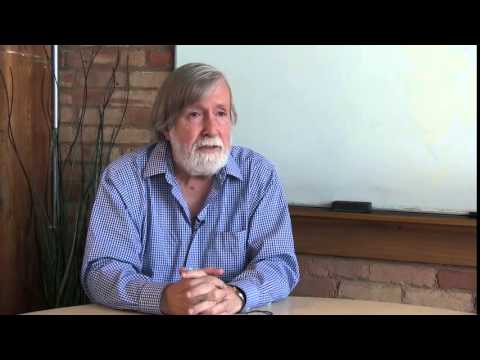
Gordon Edwards, 1 December 21, On November 24, 2021, APTN broadcast a half-hour TV documentary about High Level Nuclear Waste in Canada, with some extra attention paid to the new, unorthodox irradiated fuels that would result from the proposed new reactors called SMRs. Here is a link to the program, entitled Nuclear Revival: https://youtu.be/uLhPwAWejzc
A couple of observations that crossed my mind while watching the report by Journalist Christopher Read –
(1) The fuel bundles should be thought of as CONTAINERS of the actual radioactive wastes, which are locked up inside those solid bundles. There are many different radioactive elements (all of them human-made, most of them not found in unspoiled nature) that can escape from the fuel bundles as gases, liquids or solids. They all have different chemical and biological properties but they are all cancer-causing elements and can damage genetic materials like DNA molecules.
Even though the fuel bundles may not move an inch from where they have been emplaced, these other materials can leak out or leach out and find their way to the environment of living things. Time is on their side!! Damaged fuel bundles are analogous to a broken bottle – the container is still there, but the contents (some at least) have escaped.
(2) Concerning SMRs, even if these new nuclear reactors all worked very well, which is doubtful, they will be terribly expensive and very slow to reach a level of commercial deployment (and profitability) – at least 10 to 20 years – so they are too costly and too slow to respond to the climate crisis TODAY.
Solar and wind are much cheaper than nuclear, they are proven and can be quickly deployed, while energy efficiency measures are even cheaper and even faster to implement. We do not yet know how much progress can be made using these alternatives but clearly they should have the first priority – with nuclear as a wait-and-see backup possibility which very likely will not be needed at all (as in the case of Germany, which has phased out nuclear – nearly finished – and now is focussed on phasing out coal, using renewables and efficiency.)
9 top US nuclear no-proliferation experts write to Prime Minister Trudeau requesting a review of Canada’s planned nuclear reprocessing to recover plutonium.

| The latest of three open letters to Prime Minister Justin Trudeau from US non-proliferation. experts is copied below [on original] . The previous two letters are linked in footnotes #1 and #2. [on original] In these three letters, a group of nine distinguished nuclear policy experts are asking for a top level Canadian government review of the nuclear weapons proliferation dangers associated with the planned reprocessing of Canadian used nuclear fuel to recover the plutonium for use in a proposed new reactor in New Brunswick. These nine experts have worked under six U.S. presidents: John F. Kennedy, Lyndon B. Johnson, Richard Nixon, George H.W. Bush, Bill Clinton, and Barack Obama; and hold professorships at the Harvard Kennedy School, University of Maryland, Georgetown University, University of Texas at Austin, George Washington University, and Princeton University. CCNR 30th Nov 2021 http://www.ccnr.org/request_plute_nov_24_2021.pdf |
1 This Month

4 May -West Suburban Peace Coalition to discuss Iran war at May Educational Forum
Monday, May 4, 7:00 – 8:00 PM Central Standard Time
Title: : How Trump’s Narrative Tries to Shape the Reality of the War on Iran.
Contact Walt Zlotow, zlotow@hotmail.com 630 442 3045 for further information
14 May – online event From Bombs to Data Centres: the Face of Nuclear Colonialism
To see nuclear-related stories in greater depth and intensity – go to https://nuclearinformation.wordpress.com
-
Archives
- May 2026 (37)
- April 2026 (356)
- March 2026 (251)
- February 2026 (268)
- January 2026 (308)
- December 2025 (358)
- November 2025 (359)
- October 2025 (376)
- September 2025 (257)
- August 2025 (319)
- July 2025 (230)
- June 2025 (348)
-
Categories
- 1
- 1 NUCLEAR ISSUES
- business and costs
- climate change
- culture and arts
- ENERGY
- environment
- health
- history
- indigenous issues
- Legal
- marketing of nuclear
- media
- opposition to nuclear
- PERSONAL STORIES
- politics
- politics international
- Religion and ethics
- safety
- secrets,lies and civil liberties
- spinbuster
- technology
- Uranium
- wastes
- weapons and war
- Women
- 2 WORLD
- ACTION
- AFRICA
- Atrocities
- AUSTRALIA
- Christina's notes
- Christina's themes
- culture and arts
- Events
- Fuk 2022
- Fuk 2023
- Fukushima 2017
- Fukushima 2018
- fukushima 2019
- Fukushima 2020
- Fukushima 2021
- general
- global warming
- Humour (God we need it)
- Nuclear
- RARE EARTHS
- Reference
- resources – print
- Resources -audiovicual
- Weekly Newsletter
- World
- World Nuclear
- YouTube
-
RSS
Entries RSS
Comments RSS
 nuclear-news