Walt Zlotow – Chicago Tribune misleads its readership with Bob Kustra’s imaginary commentary ‘What Ronald Reagan would do today for the people of Ukraine’.
Walt Zlotow West Suburban Peace Coalition Glen Ellyn IL, 13 July 26
It’s fitting Tribune commentator Bob Kustra would go all the way back to 1980’s “virulent anti-communist” Ronald Reagan to argue Reagan would have squandered another $175 billion to keep Ukraine destroying itself in America and NATO’s lost proxy war to weaken, isolate Russia from the European economy.
Kustra is clearly locked in virulent 1980’s anti-communist ideology that he’s transferred to non-communist Russia, ignoring 35 years of NATO expansion that doubled NATO membership to keep Russia isolated and fearing NATO’s nukes on its doorsteps. This was after the USSR vanished into the dustbin of history.
Kustra imagines Russia had nothing to fear from adding Ukraine to NATO, a red line of Russian security concern that Russian leader Putin had been warning the US and NATO about since 2007. Kustra has apparently erased the US promoted Ukraine coup in 2014 that toppled Russian leaning Ukraine President Victor Yanukovych, provoking a civil war in the Donbas that killed thousands of Russian leaning Ukrainians there. In Kustra’s worldview, Obama didn’t greenlight the coup, Trump didn’t gift Ukraine with hundreds of millions in weapons to polish off the Donbas separatists. and Biden didn’t ramp up NATO membership to Ukraine and tell Russia it was none of their damn business.
Claiming Reagan would still be arming the collapsing, failed Ukraine state is preposterous. Reagan spending $20 million in black market smuggling networks to inundate Poland with “1eaflets, posters, magazines, newspapers and radio break-ins” is a quantum leap away from funding a war with $175 billion that has near utterly destroyed Ukraine in their lost war the US provoked. As conservative as Reagan was. he was foremost a pragmatist in foreign affairs. He was out of office and battling mental decline when the Soviet Union collapsed in 1991 so everything Kustra offers is conjecture. But Reagan’s record argues strongly he’d never have engaged in the madness Obama, Trump in term one and Biden did to send Ukraine to the scrapheap of nations.
Bob Kustra knows better. So does the Chicago Tribune. Its readership deserves something a tad better than Bob Kustra’s ‘The Russians are coming, The Russians are coming.’
Canada’s Federal Government in Disarray Over Nuclear Waste Project Assessment .
We the Nuclear Free North is an alliance of people and groups opposing a Deep Geological Repository for nuclear waste in Northern Ontario. We oppose the transport, burial and abandonment of this radioactive waste in our northern watersheds.
| Thunder Bay – Intervenors in the federal assessment of a nuclear waste transportation and burial plan are saying that the federal government is in disarray over the assessment of nuclear projects. This follows the Impact Assessment Agency of Canada’s release, last week, of the Tailored Impact Statement Guidelines for the Nuclear Waste Management Organization’s (NWMO’s) proposed deep geological repository for nuclear fuel waste. The NWMO plan incudes the transportation, processing, burial and abandonment of all of Canada’s high-level nuclear waste in an underground repository proposed for a site between Ignace and Dryden in northwestern Ontario. The Impact Assessment Agency posted the Guidelines to a public registry on July 3rd, following a 30-day comment period in April. The same day, a Notice of Commencement was issued, signaling the start of the assessment statement phase of the multi-year process. In this phase, the Nuclear Waste Management Organization must prepare an Impact Statement and supporting documents to meet the requirements set out in the Guidelines. “Overall, the guidelines set out a reasonable set of requirements. We were pleased to see that the Agency rejected NWMO’s pitch that long-distance transportation and long-term safety of the project should be excluded – those are fundamentally important issues – but we are disappointed that NWMO will not be required to present alternatives to the project,” commented Wendy O’Connor, a volunteer with We the Nuclear Free North. The assertion that the federal government is in disarray stems from the series of overlapping and – in some respects – contradictory messages and announcements issued by them in recent months related to the assessment of nuclear projects. In May, the federal government released a discussion paper proposing that the impact assessment of nuclear projects be handed over to the Canadian Nuclear Safety Commission (CNSC), rather than conducted by the independent Impact Assessment Agency of Canada. The CNSC is the licensing body for nuclear facilities and is described by both academics and industry observers as a “captured regulator”. CNSC is led by nuclear industry insiders and has never refused a licence application since its inception. In June, the federal government announced that it would potentially designate the NWMO’s Deep Geological Repository (DGR) as a “Project of National Interest” under the Building Canada Act. Such a designation would mean guaranteed approval of the DGR, even in the absence of evidence to support the safety of the project. The announcement defined the implications for the DGR project as including “streamlining” of the review and “issuing a document outlining the conditions under which the project may proceed.” According to the federal government, listing the DGR as a “Project of National Interest” would result in “shifting Canada’s regulatory focus from ‘whether’ the project should proceed to ‘how’ it will proceed.” In July, the federal Impact Assessment Agency issued a Notice of Commencement of a full impact assessment of the NWMO’s proposed deep geological repository to be delivered by the Impact Assessment Agency. “While the Guidelines are imperfect, they do provide at least a fighting chance of the public and Indigenous peoples being able to contribute to a thorough assessment of the NWMO’s project, and to have the NWMO’s proposal tested in front of a (hopefully) impartial hearing panel”, said Brennain Lloyd, project coordinator with Northwatch. “This is a massive and unprecedented project. The risks will be widespread – along the transportation route, in the vicinity of the repository, and downstream from the site – and long-lasting. These radioactive wastes remain significantly dangerous for a million years. Let’s not rush to any unsupported conclusions about the project’s safety”, added Charles Faust, speaking on behalf of Nuclear Free Thunder Bay. The comment period on the May discussion paper closes on July 22nd. The federal government is expected to decide by this fall whether the NWMO project is to be designated as a “Project of National Interest”, which would circumvent the impact assessment process. The NWMO is required to provide the Impact Assessment Agency with a workplan for the development of their Impact Statement by the first week of October. Contacts: Brennain Lloyd, 705-493-9650, brennain@northwatch.org Charles Faust, 807-633-0202, cfaust@tbaytel.net Wendy O’Connor, 807-358-6711, wendywoodswalker@rocketmail.com |
Trump Says Iran Deal Is “Over,” Signals More US Strikes Are Likely Coming

July 9, 2026, By Chris Walker, https://scheerpost.com/2026/07/09/trump-says-iran-deal-is-over-signals-more-us-strikes-are-likely-coming/
“Negotiators keep talking if they want, but I don’t see it,” Trump said on the status of future discussions.
In remarks at the NATO summit in Turkey on Wednesday, President Donald Trump claimed that the Memorandum of Understanding (MOU) between the U.S. and Iran, negotiated last month, was no longer in effect, citing the resumption of military attacks between the two countries.
Trump’s comments come as the U.S. and Iran have exchanged fire over the past several days, with U.S. Central Command announcing on Tuesday night that they had completed strikes on around 80 targets.
The president was visibly upset when responding to questions from reporters about the war.
“I think it’s over. I don’t want to deal with them anymore,” Trump said.
The U.S. president engaged in name-calling against Iran’s leaders, calling them “sick people” and “scum” — a noted departure from his positive descriptions of them when negotiations were going better.
The MOU was not a final peace deal, but rather an agreement between the U.S. and Iran that aimed to end hostilities while a larger agreement was being brokered. Trump derided Iran for denying negotiated deals he claimed were being made during those discussions.
“We make a deal. They [Iran] go outside, talk to the press, they say ‘we never even talked about it,’” Trump complained.
Over the past month, Trump has made several baseless claims about the dealmaking process without confirmation from Iran, including that Iran had agreed to give up control of the Strait of Hormuz and that the country would agree to destroy its enriched nuclear materials.
Asked whether he would engage in future negotiations with Iran, Trump demurred. “I don’t care,” he said, adding that he’d let “negotiators keep talking if they want, but I don’t see it.”
He also indicated that the U.S. would conduct more military attacks later on. “We hit them very hard last night. Probably hit them hard again tonight,” Trump said.
On Tuesday, Iran’s Foreign Minister Abbas Araghchi warned that the U.S.’s continued threats and attacks against Iran, which violate parts of the MOU, would impede “negotiations on a final deal.”
CENTCOM said it hit 80 targets on Tuesday, with one U.S. official calling the strikes bigger than previous retaliatory ones. While the U.S. insisted its targets are military posts, the attacks are happening near larger cities and close to civilian infrastructure.
Iran media reported explosions near military targets in Bushehr early on Wednesday morning, a port city near the northern edge of the Persian Gulf that has a population close to 250,000 people. The city is home to the only civilian nuclear power plant in the country.
The U.S. also appeared to bomb the city of Bandar Abbas, near the Strait of Hormuz, which has a population of over 526,000 people. Early morning footage showed fires from explosions and large smoke plumes over the city.
And Iranian media said several explosions were seen in Sirik, a port city in the southern part of the country, with attacks reportedly hitting commercial and fishing piers. Several people also suffered injuries from shrapnel due to the attacks.
According to figures compiled by Al Jazeera, around 3,468 Iranians have been killed in the U.S.-Israeli war on Iran since February 28. More than 26,500 Iranians have been injured due to the war. The true number of casualties is likely higher, as the figures were last updated in mid-June.
Trump Says He Supports Ukraine’s Long-Range Attacks Inside Russia, Will Allow Ukraine To Produce Patriot Missiles
by Dave DeCamp | July 8, 2026 , https://news.antiwar.com/2026/07/08/trump-says-he-supports-ukraines-long-range-attacks-inside-russia-will-allow-ukraine-to-produce-patriot-missiles/
President Trump heaped praise on Ukrainian President Volodymyr Zelensky at the NATO summit in Ankara on Wednesday, expressed support for Ukraine’s long-range attacks inside Russia, and said he would allow Ukraine to produce Patriot missile interceptors.
When asked about Ukraine’s strikes on Russian oil refineries, the president said, “It’s an escalation, but it’s also an escalation that could help lead to an end.”
Ukraine’s long-range drone attacks rely on intelligence provided by the US, and Ukrainian officials told The Financial Times this week that the Ukrainian military was able to strike multiple Russian oil refineries recently because US intelligence has allowed it to find the optimal flight path for its drones to get through Russia’s air defenses.
On top of Ukraine’s success in striking Russian oil refineries, there has also been a significant spike in Russian civilian casualties in Ukraine’s drone attacks. Russian officials have cited the civilian deaths when justifying Russia’s ramped-up bombardments of Ukrainian cities, which have led to an increase in Ukrainian civilian casualties.
Discussing the Patriot missiles, Trump told Zelensky, “We’re going to give a license to you to make Patriot missiles. That’s pretty cool. This way, you can’t complain that we’re not giving them enough. I said, ‘Make them yourself.’ We haven’t informed the company of that yet, but that’ll work out all right.”
Trump’s approval of Ukraine manufacturing Patriots marks another escalation of US support for Ukraine, and Russia will almost certainly attempt to target any Patriot factories that are established on Ukrainian territory.
Overall, Trump spoke very highly of Zelensky, a reversal from the start of his administration when the two clashed during a contentious Oval Office meeting. “We’ve actually developed a good relationship. It’s hard to believe,” Trump said, adding that Zelensky has “done an amazing job” and “been very effective” in the war.
Almost forgotten? the Church Rock nuclear tragedy

On July 16, 1979, the worst accidental release of radioactive waste in U.S.
history happened at the Church Rock uranium mine and mill site. While the
Three Mile Island accident (that same year) is well known, the enormous
radioactive spill in New Mexico has been kept quiet. It is the U.S. nuclear
accident that almost no one knows about. Just 14 weeks after the Three Mile
Island reactor accident, and 34 years to the day after the Trinity atomic
test, the small community of Church Rock, New Mexico became the scene of
another nuclear tragedy.
Beyond Nuclear 16th July 2023, https://beyondnuclearinternational.org/2023/07/16/a-90-million-gallon-nuclear-tragedy/
America’s AI War Has No Civilian Stop Rule

July 10, 2026, Brian Hudson Foreign Policy in Focus, https://www.juancole.com/2026/07/americas-civilian-stop.html
When the Pentagon made Palantir’s Maven Smart System a formal “program of record” in March, it did more than approve software. It gave long-term status to a platform that analyzes data from satellites, drones, radars, sensors, and intelligence reports to identify potential targets. Maven supported almost all of the 13,500 U.S. strikes in Iran. The designation is meant to secure funding and extend its use across the military.
That decision came while the United States was still investigating the February 28 strike on the Shajareh Tayyebeh girls’ school in Minab, Iran. An initial U.S. military inquiry found that U.S. forces were likely responsible, but the Pentagon has not released a final public conclusion. Iranian authorities have reported between 155 and more than 175 deaths, most of them students and teachers. The question is why a military system designed to move faster from information to action has no equally clear public requirement to slow down after grave civilian harm.
In software engineering, an “error budget” is meant to protect users. When a service exceeds an agreed level of failure, new releases stop until the problem is understood and fixed. War is obviously not software. But in Washington’s AI-assisted operations, civilian deaths do not automatically trigger a temporary suspension of the relevant tools, an independent review of the data, or a public account of the decisions that led to the strike.
Advocates of military AI argue that better data and faster analysis can make attacks more precise. That is possible in principle. But precision is not something software simply possesses. It depends on the quality and age of the data, what a system treats as suspicious, and whether people have enough time to challenge its output.
AI does not turn stale or biased information into truth. It can make bad information travel faster. Human Rights Watch has warned that Israeli digital tools used in Gaza relied on incomplete data and inexact estimates that could raise the risk of civilian harm. The lesson is not that every use of AI is unlawful. It is that speed can magnify the consequences of a bad premise before anyone can catch it.
The familiar assurance that a “human remains in the loop” does not solve this problem. A person who sees only a final recommendation, cannot inspect the data trail, and has seconds rather than hours to decide is not exercising meaningful independent judgment. AI can shape lethal force without pulling a trigger. It can determine what appears urgent, which people or places rise to the top of a list, and which facts never appear at all.
The Iran campaign makes this concern immediate. Maven and Anthropic’s Claude were used to process classified intelligence, suggest coordinates, rank targets, and turn planning that once took weeks into real-time operations. That does not establish that AI independently chose every target or that every AI-supported strike was unlawful. Reuters later reported that Palantir faced the task of removing Anthropic technology from Maven. But the larger point remains: the Pentagon is institutionalizing systems built to compress the time for human deliberation before force is used.
The Minab tragedy represents the human cost of treating speed as a virtue in itself. The school had a public website, posted student photographs, and was visible in satellite imagery. It also reported that targeting officials appeared to have used outdated intelligence. The exact role of AI in the strike has not been disclosed. But information apparently did not distinguish the school clearly enough from the adjacent military compound, and the Pentagon has not publicly explained how that failure traveled through the targeting process. That is an accountability problem, not just a technical one.
Congress should establish a civilian stop rule for AI-assisted targeting. Credible evidence of grave civilian harm should trigger a temporary suspension of the relevant system in comparable missions, an independent review of the data and approval process, and a public explanation of the system’s role. This would not treat every civilian casualty as proof of a crime or ban every military use of AI. It would mean families do not have to wait through months of secrecy to learn whether a database, a contractor, or a command decision helped turn a civilian site into a target.
Congress has begun to consider broader guardrails. The House Armed Services Committee’s FY2027 defense bill would direct the Pentagon to extend its AI policy to systems that support or materially influence operational planning, target development, weaponeering, and engagement recommendations. That is a start. But it is not a civilian stop rule. It does not automatically pause a system after a devastating incident or guarantee a public answer.
Such a rule would reinforce the law of war. Customary international humanitarian law requires militaries to take all feasible precautions to verify targets and reduce foreseeable civilian harm. It also requires them to cancel or suspend attacks when it becomes clear that a target is not military or an attack would be unlawful. The Red Cross has recommended after-action reviews and re-testing or suspending AI systems when reliability, safety, or legal compliance concerns emerge. Recent scholarship points in the same direction. Renato Wolf emphasizes precaution throughout AI-assisted target verification, while Jessica Dorsey warns that over-reliance on computational systems can weaken the human judgment needed to protect civilians. If an AI-enabled process makes verification harder because it rewards speed, the problem is a failure to meet an existing legal duty.
Palantir can say it supplies the platform. The Pentagon can say software only supports decisions. An operator can say the data arrived already ranked.
But people grieving outside a destroyed school are left with no clear answer about who is accountable. Until Washington creates a publicly disclosed civilian stop rule, “precision warfare” will remain a technical phrase that conceals a political choice: to accelerate force without a meaningful way to stop, inspect, and answer for its failures.
Saugeen Ojibway Nation Says It Was Shut Out of Canada’s Nuclear Strategy
The Nation whose territory hosts the Bruce nuclear site says Ottawa never consulted it on a plan for up to 10 new reactors — and that its consent is required.
Miranda Miller, Jul 08, 2026, https://www.owensoundcurrent.com/p/saugeen-ojibway-nation-says-it-was
The Saugeen Ojibway Nation says the federal government wrote Canada’s new Nuclear Energy Strategy without involving the Nation whose territory hosts the country’s largest nuclear facilities.
In a statement released July 7, the SON Joint Chiefs and Councils said they were disappointed and frustrated by the lack of consultation on the Strategy, which Ottawa released June 22.
Minister of Energy and Natural Resources Tim Hodgson unveiled the plan, which sets out to build up to 10 new large-scale reactors across Canada — two under construction by 2035, five more planned or under development by 2040 and at least one outside Ontario.
SON says it was not part of developing that Strategy, despite what it calls the significant impacts nuclear development has already had, and stands to have, on its Land, Water and People.
What the Strategy could mean for the Bruce site
The federal plan could include the proposed Bruce C project, an expansion of up to 4,800 megawatts at the existing Bruce Power site in the Municipality of Kincardine, within SON territory.
Bruce Power submitted the project to a federal impact assessment in 2024. The assessment is now in its impact-statement phase and is expected to run to roughly 2028. If built, Bruce C would make the site among the largest nuclear stations in the world.
SON has been taking part in that project-level assessment. Its objection is narrower and specific: that the national Strategy setting the direction for new builds was developed without it.
A letter to a Prime Minister who had no role
SON says its Joint Chiefs and Councils wrote to the Prime Minister before the Strategy’s release to raise concerns about the lack of early engagement.
The Strategy document itself states that Prime Minister Mark Carney was not shown the Strategy and had no role in developing it, which government officials have attributed to the ethics screen he holds over certain assets. Owen Sound Current has not independently reviewed SON’s letter or any federal reply.
SON says its territory already hosts Canada’s largest nuclear facilities and stores most of the country’s nuclear waste, accumulated over decades without the Nation’s consent. It warns that treating nuclear energy as a pillar of national industrial strategy risks repeating a pattern of putting industry priorities ahead of SON’s rights and stewardship responsibilities.
Consultation language versus accountability
The Strategy commits to upholding Indigenous rights and Crown consultation requirements, and states elsewhere that it aims to increase Indigenous equity participation in nuclear projects.
SON says that language does not explain how those rights will be protected in practice, and that commitments without clear actions and accountability are not meaningful.
Chippewas of Nawash Ogimaa Kwe Veronica Smith said Canada and Ontario cannot continue to treat SON territory as “an energy sacrifice zone — an area where the Land, Water and People bear the risks while the benefits flow elsewhere.”
Chippewas of Saugeen Acting Chief Randall Kahgee said SON members are central to decisions on major nuclear development. SON leadership and its Environment Office say they continue to press their position in discussions with Canada and Ontario, and that SON’s consent is required for any new nuclear development in or affecting its territory.
Iran war takes terrifying turn, missiles bombard NUCLEAR plant
Daily Mail, By PHILLIP NIETO, US POLITICAL REPORTER, , 10 July 2026
Donald Trump‘s war has escalated after Tehran retaliated by firing missiles and drones at war-weary US allies in the Middle East, while American strikes bombarded an Iranian nuclear plant.
A day after the President declared the ceasefire ‘over’ and struck more than 170 regime targets, Kuwait and Bahrain faced fresh Iranian attacks on Thursday morning.
Jordan, a US ally, said five Iranian ballistic missiles were fired from northwestern Iran toward an air base in the country, delaying flights across the region.
Sirens could be heard blasting for civilians to take cover as all Iranian missiles were intercepted, the government says.
Iranian officials claimed that US military strikes sent shrapnel and projectiles slamming into the perimeter of the Bushehr nuclear power plant in southern Iran.
US strikes on Iran over the last 48 hours have targeted Iran’s military assets near the Strait of Hormuz, a waterway responsible for one-fifth of the world’s oil supply.
Various Iranian air defense systems, drones, regime speed boats, and missile storage sites have been destroyed, according to US Central Command. US officials claim that the strikes are designed to stop Iran from attacking commercial shipping vessels crossing the strait.
Iran’s Revolutionary Guard claims it has successfully struck US military bases near the Persian Gulf. The Daily Mail has contacted the Pentagon for comment. ………………………………………………………………
Explosions were also reported in several Gulf nations on Wednesday night, as Iran claimed it attacked US bases in neighboring countries in retaliation.
https://www.dailymail.com/news/article-15965221/Iran-war-takes-terrifying-turn-missiles-bombard-NUCLEAR-plant-flights-thrown-chaos.html
NATO vassals buy Trump ‘unity’ with $160 billion bribe
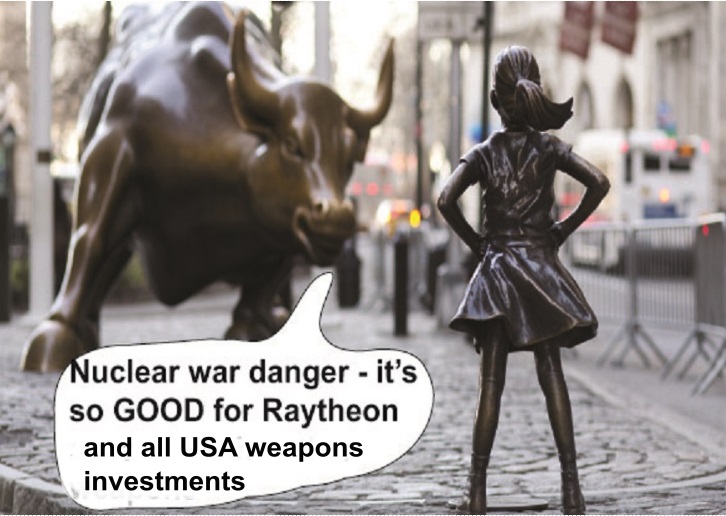
The NATO arrangement works from the Europeans buying American weapons and equipment for Ukraine. What the latest pledge means is that the 31 NATO members are handing a massive subsidy to the U.S. military-industrial complex.
NATO’s Rutte has evidently persuaded Trump that Europe is a lucrative cash cow for American corporations
Finian Cunningham, July 10, 2026, https://strategic-culture.su/news/2026/07/10/nato-vassals-buy-trump-unity-with-160-billion-bribe/
One can only imagine the scenes of obsequiousness and utter debasement as European politicians lined up to kiss Trump’s ring.
What a turnaround. The NATO summit this week was heading for an almighty crash, its leaders were bracing for impact, and then, suddenly, at the last moment, the alliance pulled out of a nosedive, and everyone was happy ever after.
What happened? U.S. President Donald Trump came to Ankara in a fury over bashing the Europeans. Then the mood swung like a person who just got his rocks off. He was bought off with a $160 billion pledge from the European and Canadian NATO vassals. Money talks for this American president, whose administration is a byword for graft and grift.
The final declaration from the Ankara summit states that the European and Canadian members are to donate $80 bn for military aid to Ukraine in 2026 and 2027. That is a total of $160 bn.
Under Trump, the United States has apparently stopped sending money to Ukraine. The NATO arrangement works from the Europeans buying American weapons and equipment for Ukraine. What the latest pledge means is that the 31 NATO members are handing a massive subsidy to the U.S. military-industrial complex.
There’s a lot more from where that came from, too. Mark Rutte, the NATO secretary-general, and total Trump flunky, was waxing lyrical about how Europe and Canada were due to spend an additional $300 bn on military next year. Much of this money will be spent on buying U.S.-made F-35 fighter jets and Patriot air defense missile systems. In other words, another huge subsidy to American corporations.
This flaunting of money explains the dizzying turnaround in Trump’s behavior over the two-day summit. Going into the conference in Ankara, Trump was berating the NATO alliance as “useless and ridiculous”. He was griping about how it was a one-way street of American military spending and “protection” for European “wasters”.
NATO members were expecting a disastrous display of disunity. Then suddenly, on the second day, Trump and the 31 other NATO leaders went into a behind-closed-doors session from which the media was excluded.
Trump emerged hailing NATO “unity” and a “lot of love in the room.” He claimed that all the heads of state declared their love for him and begged him to remain as their leader.
One can only imagine the scenes of obsequiousness and utter debasement as European politicians lined up to kiss Trump’s ring. Flattery and ego-stroking are one thing. But the money talking is another.
NATO’s Rutte has evidently persuaded Trump that Europe is a lucrative cash cow for American corporations. It’s an opportunity to squeeze, not walk away from, as the grumpy Trump had threatened to do on numerous occasions, with his perception that the U.S. was doing all the heavy lifting in NATO. Yes, American soldiers and warplanes tend to do the war fighting as in Iran currently. But there’s a new role developing, where the Europeans are turning their economies over to fuel the American war machine.
Rutte has pointed out that since Trump became president for the first time in 2017, NATO members have spent an additional $1,000 bn on the military. Last year, alone, they forked out $140 bn. The Europeans and Canadians have committed to raising military expenditure from 2-3 per cent of GDP to 5 per cent by 2035. This involves trillions of dollars, all up for grabs by American corporations.
The relief expressed by European leaders at the end of the NATO summit betrays what happened and their vassal status. German Chancellor Friedrich Merz and others were ecstatic that Trump had renewed his commitment to the transatlantic alliance. “NATO is stronger than ever,” declared Merz, who also announced that Germany would be buying Tomahawk missiles from the U.S. Germany makes its own, more modern cruise missiles, the Taurus, so why is it buying from the U.S.? Of course, it’s part of the European effort to bribe Trump.
The European leaders are more acutely Russophobic than Trump. For them, there was a mortal danger that the mercurial American was going to wreck the NATO summit with divisions and acrimony, which would undermine the proxy war agenda in Ukraine against Russia. Trump had been rebuking the Europeans for not supporting his war effort against Iran.
With Russia making significant advances on the battlefield, taking a major Ukrainian stronghold at Konstantinovka earlier this week ahead of the NATO conference, there was deep concern that Trump was going to abandon the Europeans.
To the amazement of many observers, Trump did a last-minute U-turn in Ankara, declaring unity and commitment to NATO and support for Ukraine “against the long-term threat of Russia.”
The key to understanding the giant flip-flop is that the European and Canadian vassals got down on their knees and begged Trump to stay with them. Trump’s megalomania could not resist the pleasure. And he got a hefty fee of $160 bn to take home. Usually, the prostitutes get paid for their services. In Europe’s case, the client walks away with the money.
Of course, the Euro leaders and their pimp, Mark Rutte, will not feel any damage personally. It is the generations of European citizens who are being screwed for the American-NATO gangbang.
Deferring a Crisis: The Iran-US Ceasefire Cracks
9 July 2026 Dr Binoy Kampmark, https://theaimn.net/deferring-a-crisis-the-iran-us-ceasefire-cracks/
Ceasefires in the Middle East seem especially susceptible to revision, alteration and contradiction. Missiles still get fired; airstrikes initiated. Destruction to infrastructure, and death, follows. Yet despite the misunderstandings, the sniping and the harrying, these odd understandings are often described by those funny political coves as “holding”. In the case of the ceasefire between Tehran and Washington, articulated with some fanfare with a Memorandum of Understanding, only the most piously delusional would claim it was holding in any way.
The June 18 MoU stipulates from the outset that the US, Iran and their allies “declare the immediate and permanent termination of military operations on all fronts, including Lebanon, and undertaken from now on not to initiate any war or any military of operation against each other, and to refrain from the threat or use of force against each other, and ensuring the territorial integrity and sovereignty of Lebanon.” The parties further understood that Iran would commit to a gradual reopening of the Strait of Hormuz to commercial shipping; the US would grant modest sanctions relief on Iranian crude, refined products and petrochemical products as well as lift its own naval blockade. Further talks would take place to reach a final agreement in 60 days.
The Lebanon side of the bargain has, from the outset, been a wretched shambles, with Israel continuing its operations with various shades of intensity against Hezbollah even as it seeks to occupy the south of the country. The Lebanese government has been increasingly confined to the status of humiliated water carrier. As for Tehran and Washington, the Strait of Hormuz has again become an area of rattling contentiousness.Despite being a mere 33 kilometres at its at its narrowest point, this humble body of water was, prior to the February 28 US-Israeli assault on Iran, responsible for the transiting of 20 to 21 million barrels of oil a day, making up somewhere between 20% to 21% of the total global consumption of petroleum liquids. Liquified natural gas to the proportion of 22% of global trade also took place through the strait.
Iran has continued to target vessels in the strait’s southern corridor, notably those transiting near the Omani coastline. Iran’s chief negotiator Mohammad Bagher Ghalibaf has declared in rather purplish terms that the Strait was a “divine gift from God granted us during this war and our greatest instrument of power.” Iran maintained sovereignty over Hormuz, though it would coordinate management matters with Oman and the Gulf states. Indeed, pursuant to Clause Five of the MoU, Iran and Oman had “already reached agreement on all legal and service-related matters.” It was only at the insistence of the Gulf states that transit fees would not be charged for 60 days.
On July 7, the United Kingdom Maritime Trade Operations centre noted three attacks on commercial shipping in the strait. While Tehran is suspected of being behind these, given that the tankers were not seemingly travelling through Iran’s approved transit route, it has so far not claimed responsibility for the actions.
These incidents took place even as representatives gathered in the disagreeable atmosphere of the North Atlantic Treaty Organization (NATO) summit just concluded in Ankara. US Central Command (CENTCOM) was swift in initiating strikes conducted “in response to Iranian attacks on three commercial vessels” transiting through the Strait. On July 8, another wave of attacks was announced by CENTCOM “to further degrade” Tehran’s “ability to threaten the freedom of navigation in the Strait of Hormuz. The United States is holding Iran accountable for recent unjustified aggression against commercial shipping and civilian crews navigating a vital international waterway.” Sanctions have also been reimposed on Iranian oil sales.
The response from Iran was not long in coming, keeping to the script written at the start of the war. The Islamic Revolutionary Guard Corps (RGC) promptly announced drone and missile strikes against the US Fifth Fleet headquarters in Bahrain and Ali Al Salem Air Base in Kuwait. Again, the Gulf states must be rueing their misplaced reliance on Washington’s security guarantee.
The NATO summit provided the appropriate backdrop of perverse dysfunction for US President Donald Trump, who managed to berate bruised allies even as various arms deals were made. In responding to a question about whether the ceasefire with Iran had ended, he claimed, as far as he was concerned, “it’s over.” He had no further appetite to “deal with them anymore, they’re scum.” They were “sick people, they’re led by sick people, and they’re vicious, violent people. And if they had a nuclear weapon, they’d use it.”
Groping for some rationalisation of these latest US attacks – some 80 sites struck across southern Iran – military pundits sense a shift towards crippling Tehran’s maritime denial capability, notably the country’s menacing use of fast attack craft, small submarines and armed speedboats. (CENTCOM insists that 60 small boats had been targeted.) But the occluding language of Washington’s military-industrial complex, one so inured to the propaganda of muscular might over subtle sense (when in doubt, resort to the favoured word “degrade”), remains blinded to the continued resilience of Iran’s war machine.
Even Trump, for all his raging petulance, can see that the diplomatic trail has not gone entirely cold, if only because he has no other sensible option. At the summit, he made grumbling mention of his chief negotiators, Steve Witkoff and Jared Kushner. “I don’t care, they can talk. But I think they’re wasting their time.” The Iranians were “a bunch of lying guys.” Given that negotiations, especially covering Iran’s nuclear program, have been placed in cold storage for the duration of the funeral obsequies for the late supreme leader Ayatollah Ali Khamenei, those lying guys will be waiting full of anticipation.
U.S. launches ‘powerful strikes’ on Iran after tanker attacks in Strait of Hormuz
[your]NEWS, Tue, 07 Jul 2026, https://www.sott.net/article/507318-US-launches-powerful-strikes-on-Iran-after-tanker-attacks-in-Strait-of-Hormuz
U.S. Central Command said American forces began “powerful strikes” against Iran after three commercial vessels were attacked while transiting the Strait of Hormuz.
U.S. forces began launching strikes against Iran on Tuesday after Tehran attacked commercial ships moving through the Strait of Hormuz, according to U.S. Central Command.
CENTCOM announced the military action in a post on X, saying the strikes were aimed at imposing costs on Iran for targeting civilian-crewed commercial vessels in an international waterway.
“U.S. Central Command forces have begun launching a series of powerful strikes against Iran to impose heavy costs for targeting and attacking commercial shipping crewed by innocent civilians in an international waterway,” the command wrote. “The U.S. strikes are in response to Iranian attacks on three commercial vessels that were transiting the Strait of Hormuz.”
CENTCOM said Iran’s actions violated the ceasefire and created a dangerous escalation in one of the world’s most important shipping corridors.
“Iran’s demonstrated aggression was unwarranted, dangerous, and a clear violation of the ceasefire.”
Reuters reported that the strikes came after the vessel attacks, citing Central Command’s statement that the U.S. response was tied to Iranian targeting of commercial shipping in the strategic waterway.
Iran responded by saying it would take all necessary measures to protect its security and interests. The Iranian Foreign Ministry blamed the United States for any violations of the truce agreement and pointed to Washington’s revival of oil sanctions Tuesday as a breach of the agreement.
The confrontation came after maritime security warnings intensified around the Strait of Hormuz. CNBC reported Tuesday that the threat level near the waterway had been raised to “severe” after Iran attacked tankers traveling on a route protected by the U.S. Navy.
The Strait of Hormuz sits between Iran and Oman and serves as a critical passage for global energy shipments. A significant share of the world’s oil and liquefied natural gas moves through the narrow waterway, making disruptions there a major concern for energy markets and international shipping.
The military strikes also came as the Trump administration continued its broader pressure campaign against Tehran. That effort includes restrictions on Iran’s ability to generate revenue from oil exports.
The administration recently moved to end a waiver that had allowed certain countries to continue purchasing Iranian oil despite U.S. sanctions. The waiver had permitted limited transactions involving Iranian crude exports, and ending those exemptions was intended to further restrict Tehran’s access to oil income.
The Trump administration has argued that cutting off Iranian oil revenue is a key part of pressuring Tehran over its nuclear program and regional activities.
Iran has repeatedly warned that efforts to limit its energy exports could lead to retaliation, including actions affecting commercial shipping in the Persian Gulf and the Strait of Hormuz.
The latest tanker attacks and U.S. strikes have increased concerns that shipping through Hormuz could face further disruption. Any prolonged threat to traffic through the waterway could affect oil prices and raise costs for consumers.
Tuesday’s strikes mark another escalation between Washington and Tehran as tensions continue over Iran’s nuclear ambitions, regional conduct and oil revenue.
Hawaii Bearing Huge Brunt of U.S. Military Buildup Directed Against China
Hawai’i functions as head of a vast Pacific network of bases and surveillance systems
Jeremy Kuzmarov, CovertAction Magazine Jul 08, 2026 -[ RICHLY ILLUSTRATED]
Hawai’i functions as head of a vast Pacific network of bases and surveillance systems, though expiration of military base leases in 2029 offers an opportunity to convert its land to more sustainable uses
n December 2025, Hawaiian Congressman Ed Case (D) issued a press release announcing his support for the $900 billion National Defense Authorization Act (NDAA), which included $1 billion for military construction projects in Hawai’i.
The projects included a new drydock for the Pearl Harbor naval shipyard, ship support upgrades at the Pearl Harbor-Hickham Base, replacement of the main gate at Marine Corps Base Hawai’i and airfield improvement at the Pacific Missile Range facility.
Case gave a speech before Congress last year asserting that Chinese Premier Xi Jinping was cheering on Republicans who voted against funding the Ukraine War because they were supposedly playing into Xi’s ambitions to establish Chinese global domination—enabled by an isolationist U.S.
Case’s use of Sinophobic rhetoric to justify an expansion of the U.S. military presence in Hawai’i is matched by Hawai’i’s other Democratic Party congresswoman, Jill Tokuda, who sits on the House Select Committee on the Chinese Communist Party (CCP), a fear-mongering body that has spread alarmist rhetoric and false accusations directed against China reminiscent of the McCarthy era.[1]
In late May, the Institute for Policy Studies issued a report—co-sponsored by two human rights NGOs (Āina Aloha Economic Futures and Īlioʻulaokalani Coalition), the Hawai’i Sierra Club and Cost of War Project at Brown University—showing the harrowing cost of the U.S. military presence in Hawai’i that is being accelerated because of the New Cold War.
Entitled The True Cost of the U.S. Military in Hawai’i, the report makes clear Hawai’i’s function as a “central node” in U.S. Indo-Pacific war planning dating back to the U.S. government’s illegal overthrow of Queen Lili’uokalani and the Hawaiian Kingdom in 1893.
President Grover Cleveland described the 1893 U.S. Hawaiian coup as “an act of war…committed…without authority of Congress.”……………………………………………………………………………………………………………………………………………………………………………………………………………
The U.S. military currently has more than 107,000 soldiers stationed in Hawai’i and controls an estimated 133 sites, totaling 254,225 acres, plus another 1,017 acres operated by the Hawai’i National Guard……………
The U.S. Pacific Fleet (PACFLT), headquartered at Joint Base Pearl Harbor-Hickam (JBPHH), is the largest naval command in the world, responsible for miles of ocean, nearly 200 ships, 1,700 aircraft and more than 225,000 sailors and Marines.
Additional key military/intelligence facilities include:
- the Air Force Maui Optical and Supercomputing Site on Haleakalā;
- the Ka’ena Point Space Force Station on O’ahu;
- Navy tracking facilities associated with the Pacific Missile Range Facility (PMRF) on Kaua’I;
- a Naval Computer and Telecommunications Area Master Station (NCTAMS); and
- a National Security Agency/Central Security Service (NSA/CSS) regional signals intelligence center where Edward Snowden worked.[4]
Kyle Kajihiro[5] and Neta Crawford[6] reported in January that the U.S. Navy proposed an increase in bombing of Ka’ula (an island and seabird sanctuary off Ni’ihau), an increase in training at sea around Hawai’i and California, an increase in the use of underwater explosives, and a higher authorized “take” of marine species.
The U.S. Army has further expanded its training with other countries in Hawai’i through the Joint Pacific Multinational Readiness Center.
These initiatives will only compound the already devastating consequences of the U.S. military presence in Hawai’i chronicled in The True Cost of the U.S. Military in Hawai’i, which estimates that the Pentagon owes Hawai’i between $32.8 billion and $133.7 billion in unpaid rent.
Since 1964, the U.S. military has leased tens of thousands of acres of public trust land in Hawai’i for the token fee of $1 per year.
The above estimate does not include billions in additional costs to clean up environmental damage caused by the U.S. military and destruction of cultural and archeological sites……………………………………………………………………………………………………………………………………………………………………………………………………………….. https://covertactionmagazine.com/2026/07/07/hawaii-bearing-huge-brunt-of-u-s-military-buildup-directed-against-china/
250 Years of a Country and What Have We Learned? – The nuclear industrial complex creation catastrophe.

| Nuclear Information & Resource Service , 7 July 26, https://www.nirs.org/250-years-of-not-learning-a-single-thing/?eType=EmailBlastContent&eId=a75d340b-0e4a-44bb-ab2b-6db3fb5de4cd |
The 4th of July, a time when many Americans celebrate the founding of their country. This year is particularly momentous this year, as it is the 250th year since this country’s founding. Our president wants to celebrate this momentous occasion by starting up (or “going critical”) three untested, unlicensed, unregulated reactors—of course, creating more nuclear waste. To be noted, this order to the DOE would extend far beyond these three “gone critical” nuclear reactors. But as anyone who has taken a history class knows, there is plenty in the USA’s history that is dark, dirty, and dangerous—much the same as its history with nuclear colonialism.
As the newest “boom” of the nuclear industrial complex (tries) to rise, lobbyists line pockets to push bailouts, nuclear bigwigs are still getting prison sentences and being fined (Ohio, I’m looking at you), and tritiated water is still being dumped into our waterways with little to no restriction. Operating and abandoned uranium mines still operate and pollute Indigenous lands well beyond the “promises” made to shut them down after just a few years, and who can forget: there’s still no permanent repository for the nuclear waste that will remain deadly for hundreds of thousands of years.
900 years ago, we spoke Old English, and unless you’re a scholar specialized in the field, you’d be hard-pressed to even understand the basest of sentences in the language. How are we going to protect generations upon generations of humans from a deadly substance that, presumably, we won’t even be able to label for as long as it remains deadly? But I get ahead of myself.
The 4th of July is a time to look back on our history as a country, and when we speak of our nuclear history, the book gets a lot darker. Just a short time after we were done celebrating our Independence Day celebrations in 1945, the Trinity Test took place in New Mexico (in a place they called Ground Zero) on July 16th, marking the very first nuclear explosion. The area was “remote” and “desolate,” they said. No harm to the human population. The Indigenous and Hispanic communities of New Mexico downwind of the nuclear fallout, of course, beg to differ. This is not to mention the flora and fauna that were blown to oblivion in the “desolate” area, and that would also remain affected for years and years to come. In a sick coincidence, on the same day in 1979, the Church Rock uranium mill spill sent more radioactive materials into our environment than even the Three Mile Island disaster (more on that later) and devastated nearby Navajo lands with deadly radioactive substances that continue to harm the area to this day
According to environmentandsociety.org, “Waste from the mining process was disposed of in three lined lagoons fortified by a man-made dam built on geologically unsound land—of which both the United Nuclear Corporation and state and federal agencies were aware. [Italics added for emphasis.] On 16 July, 1979, the dam breached and 1100 tons of uranium waste and 94 million gallons of radioactive water seeped into the Puerco River.” To put into perspective, these events occurred in 1945 and 1979, and we haven’t even begun to speak of the meltdowns, the corruption, the bailouts, and the false promises for the future that continue today. To keep up with the timeline and to make the Church Rock incident and the nuclear situation of the 1970s that much sweeter (read: absolutely horrific), earlier, in March of that year, the Three Mile Island disaster resulted in a partial meltdown of the reactor unit 2 in Pennsylvania. Still, America trudged on with its vision of a nuclear powered US.
The nuclear industrial complex creation catastrophe didn’t stop after these major incidents of destruction—though they should have been metaphoric (and physical) red flags. No lessons were learned, no communities were given reparations or protected for the future, and no 1970s Erin Brockovich came to save the day or hold these companies accountable. (But seriously, girl, if you want to team up, my email is listed on our website—plus, I also hate PG&E—and nuclear-affected communities could use you.) Instead, we got lobbyists who line pockets and lie to minority, frontline, and poor communities in desperate need of well-paying jobs. But hey, sometimes they throw a big BBQ for the communities in question.
The US nuclear industrial complex spreads far and wide outside the continental US, from the Bikini Atoll and Enewetak Atoll in the Marshall Islands, Johnston Atoll, and Amchitka Island in Alaska’s Aleutian Islands. And we aren’t the only countries that have access to nuclear technology. Most of us remember the Fukushima Daiichi meltdown and Chornobyl—horror stories that have literally been fodder for horror films and television series, PBS documentaries, and more. And yet, still, according to Bisconti Research, “77% favor nuclear energy vs. 23% who are opposed.” Have there not been enough accidents? Enough environmental impact? Enough communities devastated by higher than average cancer rates? Is it not in enough people’s backyards?
Today, Silicon Valley tech bros, with their zip up Patagonia windbreakers and their wireless earbuds and self-driving cars, and billionaires with money to burn see nuclear as the next big leap into the future—never mind its failed, dirty, dangerous, and expensive past. Talks of small modular nuclear reactors (or SMRs, for short) sound like flip-phones sounded in the early 2000s. New, shiny, exciting—the Jetsons are here! Where are our robot maids? But what these billionaire, Tesla drivers fail to recognize is that not only are nuclear reactors not the cash grab they think they’ll be, but they’re also at least a decade off from coming to fruition. Not to mention the cost overruns they, presumably, are not worried about, nor the storage of the waste, nor the environmental impacts of the uranium fuel chain, nor the potential for a disaster, nor, god-willing that doesn’t happen, what happens when these reactors inevitably need to be decommissioned—forever leaving that space unusable and toxic.
There’s no denying: the climate crisis is here NOW. It’s been here. It’s getting markedly worse day by day, triple-digit summer by summer, snowless winter by winter. It makes sense that folks, especially young activists who have grown up in a world that knows nothing else would be experiencing climate anxiety—something that makes you want to throw everything at the wall and see what sticks just to have a snowball’s chance in hell to make it out of global warming alive. I get it. I’ve been wearing T-shirts with slogans on them that got me called a “tree-hugging hippie” since I was in the 7th grade. I got in fights with my father about whether global warming was real or not (“The Earth has always gone through temperature changes!”). I’m exhausted. You’re exhausted. Activists from the 1970s to the 2020s are exhausted. But a “nuclear renaissance” is not the future America needs. This country needs to look back at its dark past with nuclear technologies and realize that consistent and all-in-support of renewables is the only answer to our climate problem. They’re ready, they’re on grid, they’re proving themselves year after year. In Texas, renewables now supply over ⅓ of all their electricity(EIA.gov) and the numbers are growing at voracious speeds across the entire US. My own home in California is run entirely on solar from a very modest set of panels on my roof, and there’s not even an ounce of gas on my property save for the tank of propane attached to my grill outside and the less than a quarter tank of gas in my car (hello, $6.00/gal gas!).
Continued uranium mining, frontline communities devastated, meltdown-prone plants, taxpayer-supported subsidies, 10-year building times, crooked CEOs, and the lined pockets of government officials won’t be the energy future that saves America. This 4th of July, we ought to really think about where our country has been with nuclear and where we want it to go. Do we hedge our bets on dirty, dangerous, and slow nuclear—that has proven time and again to be a force of destruction, not clean energy—or do we invest in what’s already propelling us into the future of a sustainable, clean, green, renewable energy grid. A future that’s livable for ourselves and our kids, a future where Indigenous communities can start to heal from the damage of uranium mining, where downwinders can not worry about generations after them suffering the same fate. An energy future the earth can count on, from its people, to its rivers, to its oceans. Install a solar panel or two on your home, eat vegan, recycle, buy a reusable water bottle, switch to an EV, take public transit, compost your food, shut the tap off when you brush your teeth, listen to your mom when she tells you to turn off the lights when you leave the room—but don’t think a new nuclear power plant a decade from now is going to save the world.
Works Cited:
“The Church Rock Uranium Mill Spill | Environment & Society Portal.” U.S. Energy Information Administration, www.environmentandsociety.org/tools/keywords/church-rock-uranium-mill-spill. Accessed 30 June 2026.
“2026 National Nuclear Energy Public Opinion Survey: How to Strengthen Record-High Favorability to Nuclear Energy: Latest Survey Offers Tips — Bisconti Research, Inc..” Bisconti Research, Inc., www.bisconti.com/blog/public-opinion-2026. Accessed 30 June 2026.
Cut the Pentagon, Save the Planet: The $1.5 Trillion Climate Solution We Can’t Ignore
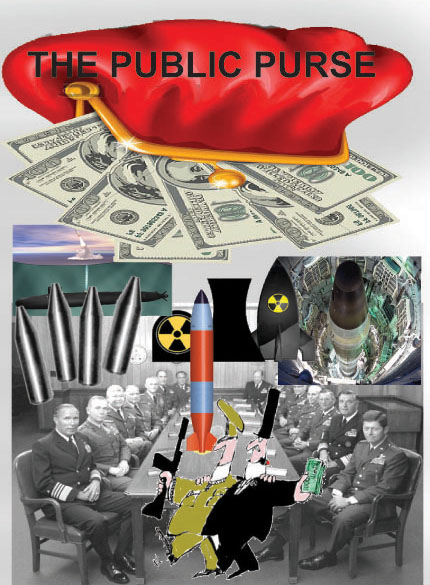
Without more money to new bases increasingly encircling China, we could collaborate on green technology instead of starting a new ecocidal cold war, and we could stop trampling on the sovereignty of countries throughout the Asia-Pacific like the Northern Mariana Islands.
July 10, 2026, Aaron Kirshenbaum, https://scheerpost.com/2026/07/10/cut-the-pentagon-save-the-planet-the-1-5-trillion-climate-solution-we-cant-ignore/
Last week, millions of people around the world were subjected to record-breaking heatwaves. At least 25 deaths in the U.S. from this heat dome were reported. The French government also counted over 2,000 excess deaths during the June heatwaves. At the same time, this past weekend, a devastating super typhoon hit the Northern Mariana Islands and Guam, leaving islands like Rota, where 2,000 people live, without running water and most buildings impacted.
In both cases, the people least responsible for the climate crisis are the most vulnerable to its effects. And in both cases, people’s ability to withstand crises has been made dramatically worse by militarization. Those most threatened by heatwaves are too often in neighborhoods subjected to militarized policing, economic abandonment, and the exploitation of their communities. Guam and the Northern Mariana Islands are occupied by the U.S. military and subjected to environmentally destructive bases and training exercises.
These climate disasters are not new, but they are coming at a moment when we have an opportunity to do something about them. Congress will soon vote on the Pentagon budget. This year’s proposed budget is an obscene $1.5 trillion, and the cumulative amount of military spending would be even higher. For the first time in years, there will likely be a notable number of Democratic Party votes against it. Senator Ed Markey has also introduced a bill to cut it in half. Cutting this budget could be one of the only pieces of climate policy that can meet the speed and scale of the climate crisis. Fighting it could open up new organizing terrains and break down movement silos that have prevented traction for so long.
Even without redistributing that $1.5 trillion, cutting the Pentagon’s budget could do wonders for the planet. The Pentagon is the world’s largest institutional polluter. It has over 800 bases worldwide. Each base acts as part of the permanent enforcement mechanism for the fossil fuel industry, driving ecocidal resource wars and entrenching U.S. corporate dominance in oil- and mineral-rich regions. This budget also opens a direct line of funding for more data centers that poison communities and drive further resource wars to power them At least $30 billion is requested for direct Department of War-owned data centers, over $58 billion is requested for AI capabilities more broadly, and over half of the proposed budget is going to private weapons contractors whose AI programs are directly supported by the data centers being developed around the country. Companies building these centers, like OpenAI, Meta, and Amazon Web Services, have all passed their own multi-billion-dollar deals with the Pentagon.
What could we do with that money instead? The scale of the Pentagon’s environmental destruction and its financial power is unfathomable; each of those 800 bases has generations of stories of destruction, displacement, and long-term illness. Each transaction covers multiple continents. And so the scale of possibility — what we could do alternatively with these resources — is equally immense.
According to the National Priorities Project, the current $1 trillion Pentagon budget could fund a year’s solar electricity for 1.92 billion homes, for instance. And according to the Climate and Community Institute (CCI), the proposed $500 billion increase alone could cover 60% of U.S. homes. $500 billion could also end the wildfire crisis in California and restore 100 million acres of forest. Of course, the current oil-motivated wars, like the U.S.-Israeli assault on Iran, are quite costly. The CCI report estimates that as of early April 2026, the $37 billion that the U.S. had spent on the assault on Iran could have paid for pre-k for every four-year-old in the country, green retrofits for 2,000 public schools, and over double the cost of restoring Trump’s cuts to SNAP benefits.
We can also point to other pathways for addressing the climate crisis: Instead of funding missile development, we could fund clean technology development. The land taken up by massive, sprawling, and toxic bases could be cleaned up and devoted to cultural sites, schools, agro-ecological farms, regenerative production, and the return of land to indigenous sovereignty and stewardship. New jobs and training programs could be created in all of these areas while, of course, avoiding false solutions such as carbon credits, carbon capture technology, and nuclear energy.
Without more money to new bases increasingly encircling China, we could collaborate on green technology instead of starting a new ecocidal cold war, and we could stop trampling on the sovereignty of countries throughout the Asia-Pacific like the Northern Mariana Islands. We could move toward a fossil fuel treaty and work with extremely vulnerable countries being occupied and sanctioned, like Cuba, to move their own holistic climate adaptation plans forward.
Fossil fuel supply chains are global, as is the impact of the U.S. military. Many states in the Global South continue to be dominant producers of fossil fuels due to debt traps and sanctions. Global climate finance could help alleviate that debt and fund a transition to truly renewable energy, free from the reproduction of violent extraction often enacted through the mining of so-called “critical” minerals (often deemed “critical” for the sake of military usage), also carried out in states like New Mexico and on indigenous territory.
This is, of course, just a sliver of what is possible, based on projects, blueprints, and visions already developed by those on the front lines of the climate crisis for decades. In recent years, these visions have been defined and revised in the People’s Agreement of Cochabamba, The Red Deal, and A People’s Green New Deal. This year’s People’s Declaration for a Rapid, Just, and Equitable Transition was developed from a global summit made up of 900 civil society organizations in Santa Marta, Colombia. Notably, its 12th principle emphasizes the irreplaceable and central role of dismantling U.S. imperialism and militarism globally within the much larger framework for confronting the climate crisis — we can and should be just as clear-eyed in our organizing.
When we cut the Pentagon budget, we can be imaginative. We can see a world where the iron claw of extraction is weakened, and we can begin building something new in its place. The Pentagon budget is a clear target, with the potential to address rising environmental, economic, and public health crises globally. At a time when most environmental policy is almost impossible to pass at the federal level, we can fight against this Pentagon budget and choose to breathe new life into our movements and our world.
Trump Sweetens the Nuclear Energy Pot, But Will Anyone Play?

By Thomas A. Firey, July 6, 2026, https://www.cato.org/blog/trump-sweetens-nuclear-energy-pot-will-anyone-play
Last week, the Trump administration announced it is offering $17.5 billion in financing to build five new two-reactor nuclear power plants featuring Westinghouse Electric’s AP1000 large reactor. The offer comes on the heels of last November’s Trump announcement of an $80 billion deal with Westinghouse intended to jump-start a fleet of new US reactors.
Government doling out money (and other breaks) to nuclear power is old hat. But the two announcements, taken together, put a new spin on the practice of politicians picking winners and losers in the marketplace: Under the November deal, Uncle Sam could get a 20 percent equity stake in Westinghouse if its nuclear business booms in the coming years. Writing at the time, I predicted that it probably won’t happen: Nuke makes lousy business sense, as energy economist Steve Thomas recently detailed in Cato’s policy magazine Regulation, and it’s doubtful energy companies would take on such risk. Apparently, my prediction’s been right so far, so the Trump administration is offering a sweetener to get things going.
The announced financing envisions $3.5 billion in federal loan money per plant, with Westinghouse and the recipient energy companies contributing a billion dollars of their own money to each project, giving them some “skin in the game.” According to US Energy Secretary Chris Wright, there is “tremendous interest” in the initiative.
But interest is one thing, and completed nuclear plants are something else entirely.
The last time Uncle Sam meddled in nuke was back in the early 2000s under George W. Bush’s Nuclear Power 2010 Program. Enticed by government loan guarantees and rate subsidies, energy companies quickly proposed some 30 reactors. But interest faded after those companies crunched the financial numbers and found they didn’t add up. Only four reactors went into construction, and just two—Units 3 and 4 at the A.W. Vogtle power station in Georgia—ultimately entered service.
Vogtle shows why the other energy companies backed off: Construction of those two units—featuring Westinghouse AP1000s, it bears noting—began in 2013 (though site work started in 2009). Completion was expected in 2016/2017 at a cost of a little over $14 billion. But the reactors didn’t come online until 2023/2024, at a cost of $30 billion. That’s a common pattern with nuke: Expect it to take twice as long and cost twice as much as projected.
When asked about Vogtle’s $30 billion plant cost compared to the $4.5 billion envisioned by the Trump financing initiative, Wright averred that things will be different this time. Building “at fleet scale” will let the industry avoid Vogtle’s cost burden, which he attributed to bad planning, supply-chain snags, and the pandemic (which happened 3–4 years after Vogtle was to be completed). In his mind, nuclear plants are like cars on an assembly line: The more units you build, the lower the total cost per unit. But as Thomas explains in his Regulation article, nuclear plants are bespoke and offer minimal economies of scale.
This push for nuke is perplexing not just because the economics are grim, but also because of other Trump policies. If the administration really is interested in increasing America’s electricity supply (in part to power new data centers), then why is it spending billions of taxpayer dollars to get wind companies to not build generation? Moreover, why is the administration so keen on nuclear, given its hostility to climate change concerns (though even a reasonable carbon tax wouldn’t make nuclear competitive with other low- and no-emission power sources).
Perhaps the answer is nuclear socialism: Trump wants to boost an industry in which Uncle Sam could have an equity stake. This is part of the broader pattern of Trump corporate socialism, with government stakes in Intel, US Steel, MP Materials, Lithium Americas, Trilogy Metals, Vulcan Elements, ReElement Technologies, Korea Zinc, USA Rare Earth, L3Harris Technologies, Anduril, xLight, and others.
Circling back to nuclear power specifically, is there no way the technology will ever make economic sense? Never say never, but the odds are long. That goes not just for large reactors like the AP1000, but also the “small modular reactors” (SMRs) now lionized by some politicians and parts of the industry. As Thomas explains in his article, SMRs face the same problems and are bespoke like their bigger brothers, but with much less output. Again, never say never, but it’s bad policy for politicians to be pushing this mature technology—whether large reactor or small—on taxpayers and ratepayers.
My Cato colleague Travis Fisher said it best when he questioned the executive branch’s becoming so deeply embedded in the electricity business, especially when some future administration could offer sweeteners to different technologies entirely. Removing barriers to entry and letting energy companies build generation that passes a market test remains a much better policy than government picking winners and losers—especially when it’s acting as owner, banker, and regulator of those competitors.
1 This Month

To see nuclear-related stories in greater depth and intensity – go to https://nuclearinformation.wordpress.com
-
Archives
- September 2026 (174)
- August 2026 (330)
- July 2026 (355)
- June 2026 (287)
- May 2026 (306)
- April 2026 (356)
- March 2026 (251)
- February 2026 (267)
- January 2026 (308)
- December 2025 (358)
- November 2025 (359)
- October 2025 (375)
-
Categories
- 1
- 1 NUCLEAR ISSUES
- business and costs
- climate change
- culture and arts
- ENERGY
- environment
- health
- history
- indigenous issues
- Legal
- marketing of nuclear
- media
- opposition to nuclear
- PERSONAL STORIES
- politics
- politics international
- Religion and ethics
- safety
- secrets,lies and civil liberties
- spinbuster
- technology
- Uranium
- wastes
- weapons and war
- Women
- 2 WORLD
- ACTION
- AFRICA
- Atrocities
- AUSTRALIA
- Christina's notes
- Christina's themes
- culture and arts
- Events
- Fuk 2022
- Fuk 2023
- Fukushima 2017
- Fukushima 2018
- fukushima 2019
- Fukushima 2020
- Fukushima 2021
- general
- global warming
- Humour (God we need it)
- Nuclear
- RARE EARTHS
- Reference
- resources – print
- Resources -audiovicual
- Weekly Newsletter
- World
- World Nuclear
- YouTube
-
RSS
Entries RSS
Comments RSS
 nuclear-news