Residential proximity to nuclear power plants and cancer incidence in Massachusetts, USA (2000–2018)

18 December 2025, Springer Nature, Volume 24, article number 92, (2025)
“………………………………………. Results
Proximity to plants significantly increased cancer incidence, with risk declining by distance. At 2 km, females showed RRs of 1.52 (95% CI: 1.20–1.94) for ages 55–64, 2.00 (1.59–2.52) for 65–74, and 2.53 (1.98–3.22) for 75 + . Males showed RRs of 1.97 (1.57–2.48), 1.75 (1.42–2.16), and 1.63 (1.29–2.06), respectively. Cancer site-specific analyses showed significant associations for lung, prostate, breast, colorectal, bladder, melanoma, leukemia, thyroid, uterine, kidney, laryngeal, pancreatic, oral, esophageal, and Hodgkin lymphoma, with variation by sex and age. We estimated 10,815 female and 9,803 male cancer cases attributable to proximity, corresponding to attributable fractions of 4.1% (95% CI: 2.4–5.7%) and 3.5% (95% CI: 1.8–5.2%).
Conclusions
Residential proximity to nuclear plants in Massachusetts is associated with elevated cancer risks, particularly among older adults, underscoring the need for continued epidemiologic monitoring amid renewed interest in nuclear energy. https://link.springer.com/article/10.1186/s12940-025-01248-6
Trump is not threatening war on Iran over its nuclear program, but because it challenges U.S. dominance.

In short, it is about removing Iran from the strategic playing field, as it is the sole actor in the region that is powerful, influential, and beyond the United States’ direct control. The U.S. and Israel desperately want to remove that oppositional force.
So Trump is buying time by agreeing to talks that cannot succeed on the terms he and Rubio have laid down. He is likely to use that time to magnify the threat against the Iranian leadership in the vain hope that they will acquiesce to his demands.
The U.S. is once again threatening a war on Iran that could devastate the region. Trump knows Iran is not pursuing nuclear weapons, but that has never been the point. It is about removing Iran as the only actor in the region beyond U.S. control.
By Mitchell Plitnick February 6, 2026, https://mondoweiss.net/2026/02/trump-is-not-threatening-war-on-iran-over-its-nuclear-program-but-because-it-challenges-u-s-dominance/
American and Iranian negotiators are meeting in Muscat to see if they can come to an agreement and avoid an American attack on Iran. The chances don’t look good.
There was some initial hope because Donald Trump agreed to hold talks at all. The buildup of American forces in the region and the frequent planning meetings with Israeli political and military officials gave the appearance of an unstoppable buildup to war.
But American allies Türkiye, Saudi Arabia, Qatar, and Oman have been working hard to convince Trump not to attack Iran. They fear the potential backlash of an American attack on the Islamic Republic, believing that Iran is not likely to respond to an attack with the restraint they have shown in the past.
Israel is urging Trump to attack, as the government of Benjamin Netanyahu is the one entity that stands to benefit from the chaos that an attack on Iran could bring.
Indeed, Iran has warned that an attack this time will be met with a very different response than previous ones. Yet, paradoxically, it is the very fact that Iran is capable of a more damaging response than it has taken in the past that creates the impasse that is likely to derail negotiations.
What each side wants
Iran’s desires from any talks with the U.S. are straightforward: they want the U.S. to stop threatening to attack, and to lift the sanctions that have helped to cripple Iran’s economy.
But the United States has more complicated demands.
- The United States wants Iran to completely abandon nuclear power. This demand is not just about weaponry, but includes all civilian nuclear power under Iran’s control. No uranium at all can be enriched by Iran, regardless of whether it is for civilian or military purposes, and all enriched uranium Iran has must be handed over.
- The U.S. is demanding that Iran agree to limits dictated by Washington on the range and number of ballistic missiles it can possess.
- The U.S. is demanding that Iran end its support of any and all armed resistance groups in the region.
All of these demands are unreasonable. But the United States is holding a loaded gun to Iran’s head. The U.S. has moved a large carrier group into the waters near Iran, and between American and Israeli intelligence, they surely have a very clear map of where they want to strike to go along with the technical capability to essentially ignore Iran’s defenses.
But while Iran can do very little to shield itself from an American or Israeli attack, it is capable of responding to one. That is what the last two American demands are focused on, and it’s really the reason all of this is happening.
If the U.S. or Israel attacks Iran and Iran elects to respond with all of its capabilities—which it has not done in previous attacks—it has the ability to kill many American soldiers, severely disrupt oil production in the Gulf, or cause significant damage to Israel.
Iran can do this because it has a large battery of long-range ballistic missiles. It has already shown, last June, that it can hurt Israel, and that was an attack largely meant to be a warning.
Iran also backs various militias in the region, some large, like Ansar Allah in Yemen, others smaller. That means it can launch guerrilla attacks on American bases or other key sites in places like Iraq and Syria.
Iran can also target oil fields throughout the region, either with missiles or drones or with militia attacks. That’s a major reason Trump’s friends in the Gulf are reluctant to see him start a war.
The ability to do all of that gives Washington pause. Donald Trump likes it when he can do quick operations with little or no pushback, as he did recently in Venezuela or last year in Iran. Trump has carefully avoided situations where American soldiers might be killed. Iran might not let the U.S. off so easily this time around.
The reality behind U.S. demands
That brings us to why talks are so unlikely to succeed.
Iran has already made it clear it has no intention to negotiate on their support for groups throughout the region or on their ballistic missile arsenal. They understand that the reason the United States is trying to force them to agree to such measures is that it would leave Iran defenseless. Giving in to these demands would be tantamount to national suicide.
The Iranian leadership is more than happy to discuss the issue of nuclear power. As unfair as the terms might be, they might even be willing to reach a compromise that allows them to use nuclear power without enriching uranium themselves. That’s far from ideal, but Iran is facing a considerable threat.
But this holds little interest for the Trump administration. Despite American chest-thumping, they know that Iran is not pursuing a nuclear weapon, nor were they before the U.S. damaged so much of their nuclear infrastructure last year. Trump’s own intelligence corps confirmed that Iran was not actively seeking a nuclear weapon, just as it had affirmed that finding every year since 2007.
But none of this has ever been about an Iranian nuclear weapon. Rather, it has always been about pressuring the Islamic Republic either to fall or to radically change its behavior in the region. It has always been about getting Iran to stop supporting the Palestinian cause rhetorically and to stop arming Palestinian factions. It has always been about stopping Iran from supporting militias in the region that act outside of the American-run system, unlike those that are backed by Saudi Arabia, the UAE, or other states in the region that are on good terms with Washington.
In short, it is about removing Iran from the strategic playing field, as it is the sole actor in the region that is powerful, influential, and beyond the United States’ direct control. The U.S. and Israel desperately want to remove that oppositional force.
Trump weighs the consequences of attacking Iran
Does Trump really want a war? That concern with Iran is a long-term U.S.-Israeli policy goal. What Donald Trump personally wants is always difficult to know. It can change from day to day, and is often based on a less-than-full understanding of the real world.
From all appearances, Trump felt emboldened by the American success in Venezuela. He kidnapped the head of state and his wife, and suffered no American casualties in doing so. The short-term political backlash, both in Latin America and in the U.S., was brief and minimal.
No doubt, he envisioned a similar success in Iran, when the protests there and the Iranian government’s brutal response helped to create what might have looked superficially like similar circumstances. Trump began issuing one threat after another, and while their frequency has been intermittent, they have not stopped.
But his friends in Saudi Arabia, Qatar, Türkiye, and elsewhere in the Mideast explained to Trump that the outcome in Iran would be very different from that in Venezuela. Iran has the capabilities we’ve already discussed here, but there are other key differences.
For one, Iran has a deep governmental infrastructure, and there is no one in it who is both capable of taking over from Ayatollah Ali Khamenei and willing to compromise with Trump in the way Delcy Rodriguez has in Caracas. Despite the occasional protester in Iran calling out the name of Reza Pahlavi, the son of the last Shah of Iran, who was deposed in 1979, there is no infrastructure of support for him in Iran, and it would likely be impossible to simply install him without a full-scale invasion of the country.
So Trump is buying time by agreeing to talks that cannot succeed on the terms he and Rubio have laid down. He is likely to use that time to magnify the threat against the Iranian leadership in the vain hope that they will acquiesce to his demands.
But the primary purpose of that time is to continue to position American and Israeli forces to counter what they can anticipate of an Iranian response. That would mean not just the stationing of ships in striking distance of Iran, but also positioning whatever military assets they might have in countries like Iraq and Syria, as well as in other Gulf states, to counter guerrilla attacks by Iran-aligned militias and getting friendly states to agree to help with shooting down Iranian missiles and drones, as they did last year.
With Rubio and Benjamin Netanyahu pushing Trump toward a regime change war with Iran, and given the amount of bluster he has already put out there, it is hard to see Trump backing away from a war if Iran will not agree to compromise on its missiles and the militias it supports. And Iran is not about to do that.
The war that will ensue stands a good chance of toppling the Iranian government, but with nothing to replace it, the power vacuum that will surely follow will mean chaos not only for Iran but for the whole region. That isn’t really in Trump’s interests, and it certainly does not benefit his Gulf Arab allies.
Netanyahu, on the other hand, will have made the “neighborhood” that much more dangerous just as Israel’s election season begins to ramp up. While many Israelis have lost faith that “Mr. Security” can protect them after October 7, a heightened sense of danger to Israelis remains the atmosphere that is most favorable to Netanyahu electorally. It’s therefore no surprise that Israel is the one actor in the region that is pressing for this regime change war.
Averting that war will mean the Trump administration climbing down from its maximalist demands. There are indications that the U.S. is looking, at least,for an option that allows it to do that without appearing to have shied away from Iranian retaliation. But that remains an unlikely outcome, as hawks in Israel, Washington, and among the anti-regime exile Iranian community continue to urge an attack.
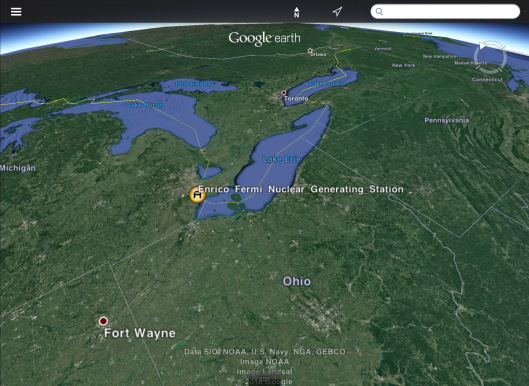
An environmental coalition defends Environmental Justice (EJ) against the Canadian Nuclear Waste Management Organization’s (NWMO) latest Deep Geological Repository (DGR) scheme.
February 5, 2026, https://beyondnuclear.org/enviro-coalition-defends-ej-against-nwmo-dgr/
An environmental coalition — Beyond Nuclear, Coalition for a Nuclear-Free Great Lakes, Don’t Waste Michigan, and Nuclear Information and Resource Service (NIRS) — has defended Environmental Justice (EJ) against the Canadian Nuclear Waste Management Organization’s (NWMO) latest Deep Geological Repository (DGR) scheme.
The coalition submitted extensive comments on NWMO’s Initial Project Description Summary.
NWMO is targeting the Wabigoon Lake Ojibway Nation and the Township of Ignace, in northwestern Ontario, north of Minnesota and a relatively short distance outside of the Great Lakes (Lake Superior) watershed, for permanent disposal of a shocking 44,500 packages of highly radioactive irradiated nuclear fuel.
The Mobile Chornobyls, Floating Fukushimas, Dirty Bombs on Wheels, Three Mile Island in Transit, and Mobile X-ray Machines That Can’t Be Turned Off would travel very long distances, including on routes through the Great Lakes watershed, from Canadian reactors to the south and east, thereby increasing transport risks and impacts.
The watershed at the proposed Revell Lake DGR site flows through Lake of the Woods, Minnesota, sacred to the Ojibwe. Lake of the Woods contains many islands, some adorned with ancient rock art.
Indigenous Nations and organizations, including Fort William First Nation, Nishnawbe Aski Nation, Grassy Narrows First Nation, Neskantaga First Nation, and the Land Defence Alliance rallied against NWMO’s DGR last summer in Thunder Bay, Ontario, on the shore of Lake Superior.
Beyond Nuclear’s radioactive waste specialist, Kevin Kamps, traveled to Thunder Bay last spring, to speak out against NWMO’s DGR at the Earth Day annual meeting of Environment North.
We the Nuclear-Free North organized the public comment effort, greatly aiding our coalition to meet the deadline.
Our coalition groups worked with Canadian and Indigenous allies for two decades to stop another DGR, targeted by Ontario Power Generation (which dominates the NWMO) at the Bruce Nuclear Generating Station in Kincardine, Ontario, on the Lake Huron shore. Bruce is the largest nuclear power plant in the world by number of reactors — nine! The final nail in the Bruce DGR came from the very nearby Saugeen Ojibwe Nation, which voted 86% to 14% against hosting the DGR!
Why Iran–US negotiations must move beyond a single-issue approach to the nuclear problem
By Seyed Hossein Mousavian | February 5, 2026, https://thebulletin.org/2026/02/why-iran-us-negotiations-must-move-beyond-a-single-issue-approach-to-the-nuclear-problem/?utm_source=ActiveCampaign&utm_medium=email&utm_content=Iran-US%20negotiations&utm_campaign=20260209%20Monday%20Newsletter
Iran’s nuclear crisis has reached a point at which it can no longer be treated as a purely technical or legal dispute within the framework of the Nuclear Non-Proliferation Treaty (NPT). It has evolved into a deeply security-driven, geopolitical, and structural challenge whose outcome is directly tied to the future of the nonproliferation order in the Middle East and beyond. If the negotiations scheduled for Friday between Iran and the United States are to be effective and durable, they must move beyond single-issue approaches and toward a comprehensive, direct, and phased dialogue.
The format and venue of Iran–US negotiations. The first round of talks between Iranian Foreign Minister Abbas Araghchi and US envoy Steve Witkoff took place on April 12, 2025, in Muscat, Oman. At Iran’s insistence, these negotiations were defined as “indirect.” On April 8, 2025, I emphasized in a tweet that direct negotiations—particularly in Tehran—would significantly increase the chances of reaching a dignified, realistic, and timely agreement. “Wasting time is not in the interest of either country,” I insisted. Despite these warnings, nearly 10 months were lost, during which the region suffered heavy and regrettable losses.
It now appears that Tehran has agreed to direct talks among Witkoff, son-in-law and key adviser to President Trump Jared Kushner, and Araghchi, again in Oman. The most effective format going forward, however, would be to hold direct talks in Tehran and then in Washington. This formula would not only break long-standing political taboos but also enable deeper mutual understanding. A visit by Witkoff and Kushner to Tehran would allow them to engage not only with the foreign minister but also with other key decision-makers, including the secretary of the Supreme National Security Council, members of parliament, and relevant institutions—engagement that is essential if any sustainable agreement is to be achieved. Araghchi should engage in Washington not only with US negotiators, but also with President Trump, officials from the Pentagon, and members of the US Congress, to gain a clearer understanding of the current political environment in Washington.
Why a single-issue agreement is not sustainable. In hundreds of articles and interviews since 2013, I have argued that a single-issue agreement—even if successful on the nuclear file—will be inherently unstable. Under current conditions, three core issues require reasonable, dignified, and lasting solutions.
The US demand for zero enrichment. Ahead of negotiations, the United States is demanding that Iran entirely stop all uranium enrichment and give up its stockpile of around 400-kilograms of highly enriched uranium, steps that would prevent Tehran from possible diversion toward weaponization. Since 2013, a group of prominent nuclear scientists from Princeton University and I have proposed a “joint nuclear and enrichment consortium” for the Persian Gulf and the broader Middle East as a way for Iran to continue its peaceful nuclear program and for the United States and regional countries to be reassured that program will not be used as a cover for the production of nuclear weapons. This proposal was repeatedly articulated—up to 10 days before the 2025 Israeli and US attacks on Iran—but unfortunately failed to gain serious attention.
Today, the only realistic solution to the question of uranium enrichment remains the establishment of a joint nuclear and enrichment consortium involving Iran, Turkey, Egypt, Saudi Arabia, the Arab states of the Persian Gulf, and major global powers. This model would address nuclear proliferation concerns while safeguarding equal access to peaceful nuclear technology.
Iran’s missile and defensive capabilities. Defensive capabilities are the ultimate guarantor of territorial integrity, sovereignty, and national security. Since 2013, I have repeatedly recommended two regional agreements: a conventional weapons treaty and a non-aggression pact among the states in the Persian Gulf and the Middle East. A regional conventional weapons treaty would ensure a balance of defensive power, while a non-aggression pact would lay the foundation for collective security. Without these frameworks, expectations for unilateral limitations on Iran’s defensive capabilities are neither realistic nor sustainable.
Iran’s support for the “axis of resistance” and regional security order. My book, A New Structure for Security, Peace, and Cooperation in the Persian Gulf, presented a comprehensive framework for regional cooperation and collective security, including a nuclear and weapons of mass destruction free zone. This framework would enable progress on four major issues: the roles of non-state and semi-state actors; the Persian Gulf and energy security; the antagonism among Iran, the United States, and Israel; and a safe and orderly US withdrawal from the region.
If a sustainable agreement is to be reached, Iran and Israel must put an end to mutual existential, military, and security threats. “Despite major differences, the United States and China both worry about the conflict. China has close Iran relations, and Israel is a US strategic partner, making them qualified mediators serving as communication channels,” I suggested in 2023.
A warning to Washington: Iran’s nuclear file and the future of nonproliferation. The global non-proliferation order is undergoing a fundamental transition. The world is moving away from a system in which nuclear strategy is defined by possession or non-possession of nuclear weapons, and toward one defined by positioning, reversibility, and strategic optionality.
Nuclear-weapon states have not only failed to meet their NPT obligations to make good-faith efforts toward nuclear disarmament; they are also actively modernizing and expanding their arsenals. At the same time, some non-nuclear states that face threats to their security are seeking deterrence without formal weaponization, and political leverage without legal rupture.
The Iranian case demonstrated that full compliance with the 2015 Joint Comprehensive Plan of Action (aka the Iran nuclear deal) and unprecedented cooperation with the International Atomic Energy Agency (IAEA) did not produce security for Iran. The US withdrawal from the agreement, the imposition of sweeping sanctions, and subsequent military attacks conveyed a clear message to the Iranian government: Maximum restraint can create vulnerability. Meanwhile, Israel—outside the NPT and enjoying unwavering US support—remains the region’s sole nuclear-armed state.
For the first time in the history of nuclear non-proliferation, safeguarded nuclear facilities of a non-nuclear-weapon state were attacked, without meaningful condemnation from either the IAEA or the UN Security Council. This episode has fundamentally altered the meaning of non-proliferation commitments.
The conclusion is clear: If Iran’s nuclear crisis is treated as a narrowly defined, Iran-specific issue, it will not lead to a sustainable agreement. Instead, it will accelerate the spread of “nuclear ambiguity” across the Middle East as multiple countries seek the capability to build nuclear weapons, even if they do not immediately construct weapons. Any new nuclear agreement between Iran and the United States must therefore be firmly grounded in the principles and obligations of the Nuclear Non-Proliferation Treaty (NPT), applied in a balanced, non-discriminatory, and credible manner. The fate of Iran-US negotiations is inseparably linked to the future of non-proliferation in the region and around the world. Decisions made today will shape regional and international security for decades to come.
Trump nixes nukes from environmental reviews

February 5, 2026, https://beyondnuclear.org/trump-nixes-nukes-from-environmental-review/
White House Executive Order & DOE set rule for “categorical exclusion” of new reactors from NEPA environmental impact statements
On February 2, 2026, the American Nuclear Society’s NuclearNewsWire headlined the US Department of Energy (DOE) announcement for the exclusion of experimental advanced nuclear reactors (ANR) from environmental reviews under the National Environmental Policy Act (NEPA). The February 2, 2026 Federal Register notice states that the Trump White House by Executive Order (E.O.) 14301, “Reforming Nuclear Reactor Testing at the Department of Energy” (May 23, 2025), Section 6, Streamlining Environmental Reviews directs U.S. Secretary of Energy Chris Wright to create “categorical exclusions as appropriate for reactors within certain parameters.” The categorical exclusion was made effective immediately on February 2, 2026.
Beyond Nuclear encourages you to submit your comment on the new categorical exclusion rule up until March 4, 2026, using the Federal eRulemaking Portal: www.regulations.gov. Public comments must include the agency name (“Department of Energy,”) and docket number, (DOE-HQ-2025-0405) and labeled “DOE categorical exclusion for Advanced Nuclear Reactors (ANR).”
The new DOE categorical exclusion rule establishes some specific conditions allegedly before the nuclear industry can proceed through licensing for mass production, construction and operation its ANR projects unfettered by any environmental assessment or environmental impact statement as otherwise required under NEPA law.
Beyond Nuclear’s first examination of the DOE’s qualifying conditions for claiming categorical exclusion eligibility to apply finds them contradicting facts and without meeting the legal standard of “reasonable assurance”.
Here are a few samples of prepared comments that Beyond Nuclear will be submitting to the DOE on these bogus conditions of eligibility:
Inherent/Passive Safety Features: The new reactor design must employ “inherent safety” features and systems.
Based on available information of currently funded nuclear power startup companies in the United States, none of the known startups, or any of the established nuclear power corporations like Westinghouse Electric have formally declared they will refuse US government limited liability protection from a catastrophic nuclear power accident under the Price-Anderson Act. In fact, as quietly tacked onto to “An Act: To authorize appropriations for the United States Fire Administration and firefighter assistance grant programs, to advance the benefits of nuclear energy, and for other purposes,” the Accelerating Deployment of Versatile, Advanced Nuclear for Clean Energy (ADVANCE) Act of 2024—without a single public hearing—Congress extended the industry’s limited liability protection beyond the scheduled expiration of Price-Anderson on December 31, 2025 with a 40-year extension to December 31, 2065. The original Price-Anderson Act of 1957 has long been and remains essential for the nuclear industry to secure what meager private investment it can still attract by maintaining its federally limited liability and indemnification from catastrophic radiological contamination by nuclear accidents and malevolent acts. It is highly improbable that any nuclear power startup or current operational nuclear companies will voluntarily forgo the federal government’s limited liability nuclear accident financial shelter, given developing advanced reactors still face unacceptable uncertainty from severe nuclear accident risks and bad actors. This demonstrated lack of industry confidence contradicts its own claims of “inherent safety” from a well established and acknowledged “inherently dangerous” nuclear power technology.
Advanced Fuel and Coolant Systems: The reactor must utilize well-established fuel, coolant, and structural materials that support a, low-risk safety design basis.
Many of the emerging US advanced reactor designs will rely upon an advanced nuclear fuel identified as High Assay Low Enriched Uranium (HALEU) nuclear fuel. HALEU fuel is not “well-established” in the US market. HALEU is fissionable uranium-235 enriched to just under 20% U-235. (Conventional nuclear fuel is enriched to 3-5% U-235). The only commercial-grade HALEU fuel available globally today is state-owned and controlled by Russian oligarchy. Even the US current operating fleet of commercial reactors only resources roughly 1% or less of low enriched U-235 domestically to fuel its existing fleet. It is heavily reliant upon foreign uranium. According to the US Energy Information Administration, Russia and the Russia-influenced countries of Kazakhstan and Uzbekistan provide approximately 48% of the total US domestic reactor nuclear fuel purchases.
What’s more, at just under an upper limit near 20% enriched U-235, HALEU fuel significantly reduces the effort needed to produce nuclear weapons-grade material under the guise of advanced reactor deployment and fuel development. This results in an increased threat to global safety and security with accelerated nuclear weapons proliferation that would likely result with the commercial trafficking and expansion of advance reactor technology and the higher enriched uranium nuclear fuel.
The number of advanced reactor design coolant systems that plan to use highly reactive and “hazardous” liquid metal and liquid salt combined with nuclear power operations warrant the NEPA requirement for “reasonable assurance” analysis and public interrogation by environmental impact statements. In the context of advanced nuclear coolants, this refers to materials that are chemically reactive in air and water (sodium) or highly corrosive (molten salts) both of which are balanced with safety tradeoff benefits that come with low-pressure operation. However, historical accounts demonstrate numerous and recurring of reactor coolant leaks and fires in different countries involving sodium coolant do not provide the “reasonable assurance” for the blanket categorical exclusion of environmental reviews for these advanced reactors.
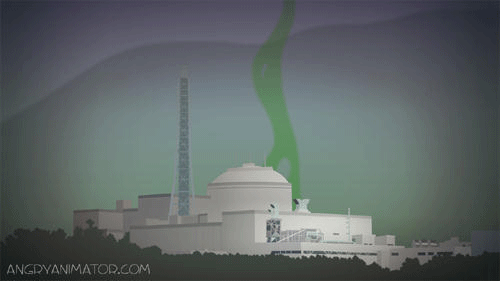
Japan’s Monju sodium cooled reactor had numerous and significant leaks and fires over its operational history including one major accident and widely reported sodium leak and fire accident in 1995. The accident dominated Monju’s operational history associated with forced shutdown for nearly 15 years and its eventual abandonment of operation. This 1995 accident was compounded by a scandal where the operator (JAEA) attempted to hide the extent of the damage, leading to a significant loss of Japan’s public confidence in nuclear power. Monju was permanently closed in 2016 and decommissioned. This operational history in Japan does not demonstrate “reasonable assurance” in the technology to warrant a blanket categorical exclusion of NEPA’s required environmental impact statement on the risks and consequences also associated with a catastrophic nuclear accident.
Another example documented by historical operating data comes from France’s sodium-cooled fast breeder reactor (FBR) program, specifically the Phénix (multiple sodium-air and recurring sodium-water reactive events in its steam generators). Additionally, France’s Superphénix reactors experienced a major sodium reactive event that shut down the reactor for four years. These combined incidents and accidents were frequent and costly enough to lead to major, long-term shutdowns and France’s eventual abandonment of the technology altogether in the late 1990s. Again, the operational history in France does not provide “reasonable assurance” for the DOE to grant a categorical exclusion of NEPA’s required environmental impacts statement on the resumption of yet another experimental reactor coolant failure, significant fire and/or explosion that could precipitate significant radiological releases.
Safe Waste Management: The project must demonstrate that any hazardous waste, radioactive waste, or spent nuclear fuel can be managed in accordance with applicable requirements.

The Proceedings of the National Academy of Sciences (PNAS), a peer reviewed journal of the National Academy of Sciences (NAS) published a report “Nuclear waste from small modular reactors,” on May 31, 2022. The significance of this study authored by finds “few studies have assessed the implications of SMRs (Small Modular Reactors) for the back end of the nuclear fuel cycle. The low-, intermediate-, and high-level waste stream characterization presented here reveals that SMRs will produce more voluminous and chemically/physically reactive waste than LWRs (the US conventional large Light Water Reactor fleet), which will impact options for the management and disposal of this waste.”
“‘Our results show that most small modular reactor designs will actually increase the volume of nuclear waste in need of management and disposal, by factors of 2 to 30 for the reactors in our case study,’ said study lead author Lindsay Krall, a former MacArthur Postdoctoral Fellow at Stanford University’s Center for International Security and Cooperation (CISAC). ‘These findings stand in sharp contrast to the cost and waste reduction benefits that advocates have claimed for advanced nuclear technologies.’”
Study Conclusions
“This analysis of three distinct SMR designs shows that, relative to a gigawatt-scale PWR, these reactors will increase the energy-equivalent volumes of SNF (spent nuclear fuel), long-lived LILW (low and intermediate level radioactive waste), and short-lived LILW by factors of up to 5.5, 30, and 35, respectively. These findings stand in contrast to the waste reduction benefits that advocates have claimed for advanced nuclear technologies. More importantly, SMR waste streams will bear significant (radio-) chemical differences from those of existing reactors. Molten salt– and sodium-cooled SMRs will use highly corrosive and pyrophoric fuels and coolants that, following irradiation, will become highly radioactive. Relatively high concentrations of 239Pu (plutonium) and 235U in low–burnup SMR SNF will render recriticality a significant risk for these chemically unstable waste streams.”
These few excerpts from scientific findings by the peer reviewed journal of the National Academy of Sciences do not provide “reasonable assurance” to meet a legal standard for the DOE to grant a categorical exclusion of NEPA’s required environmental impacts statement.
Additional samples of the critical comments already submitted to the DOE:
“DOE-HQ-2025-0405 is illegal, absurd, arbitrary, and capricious.
Per NEPA: § 4336e. Definitions. In this subchapter: (1) Categorical exclusion. The term ‘categorical exclusion’ means a category of actions that a Federal agency has determined normally does not significantly affect the quality of the human environment within the meaning of section 4332(2)(C) of this title. Obviously, nuclear reactors significantly affect the quality of the human environment when they fail (e.g. Three-Mile Island, Fukishima, and Chernobyl). DOEHQ-2025-0405 excludes experimental nuclear technologies from review without any analysis. DOE-HQ-2025-0405 briefly mentions that these experimental technologies will ‘limit adverse consequences from releases of radioactive or hazardous material from construction, operation, and decommissioning.’ This statement implies that there will be ‘releases of radioactive or hazardous material,’ and ‘adverse consequences’ from those releases, but that the unproven technologies will somehow ‘limit’ those adverse consequences. To be clear, releases of radioactive and hazardous materials significantly affect the quality of the human environment.”
“The new policy of waiving regulatory hurdles is INSANITY! Whole communities, town and cities are at risk for nuclear contamination. Surely you’ve documented our history of radiation contamination not only in our country but around the globe. Trump’s administration acts before thinking, studying, and reasoning. If there is anything to be done in advance of nuclear projects going online please for the sake of humanity stop this nonsense.”
“Department of Energy DOE-HQ-2025-0405. Given the controversial nature of nuclear power generation and disposal of associated waste, as well as earlier reactor disasters around the world compliance with NEPA requires the completion of an EIS not a CX. The long term environmental impacts and alternatives require a more complete and scientically informed analysis before a decision can be made.”
Has Trump been trumped by large, powerful, resolute Iran?

Trump is also not the master of his destiny with Iran. He knows Iran poses no threat whatsoever to US interests. But Trump also knows he’s subservient to his Israeli masters who demand he attack Iran
Walt Zlotow West Suburban Peace Coalition Glen Ellyn IL, 8 Feb 26
Last June Israel attacked Iran, got blooded bad enough to beg Trump to negotiate a ceasefire. Trump got a reality lesson as well. Iran responded with its own attack to Trump’s one-off strike that did not “obliterate” Iran’s nuclear program, damaging a US base in Qatar. The message was clear. Any all out US attack could bring home hundreds, possibly thousands of US body bags.
Both Iranian responses demonstrate Iran has enormous firepower to both defend any US Israeli attack, but also inflict enormous damage on its attackers. And that damage would not only be to US, Israeli forces, it would shut down the Strait of Hormuz, likely wrecking the US, Israeli; indeed world economy.
Did Trump get the message? At first no. He conspired with Israeli Prime Minister Benjamin Netanyahu in December to foment violent domestic protests to overthrow the Iranian regime. Trump planned a mid-January attack to push the protesters to victory. But when Iran crushed the protests, Trump backed down once again, realizing a strengthened Iranian regime would repel any attack just like in June.
That has left Trump in an impossible quandary. He’s put the massive US military armada on Iran’s doorstep knowing he cannot possibly succeed without incurring US, Israeli losses. But his credibility is destroyed if he admits defeat and withdraws the US armada.
What to do? Trump’s M.O. when cornered is to set up fake, negotiations with his adversary to buy time and seek trifling concessions so he can claim a complete, overwhelming victory. That won’t work with Iran. His upcoming negotiations with Iran will fail worse than his failed negotiations with Denmark and NATO to gobble up Greenland. Trump’s demands going in are so extreme, essentially guaranteeing end of Iranian sovereignty, they are a non-starter.
Trump is also not the master of his destiny with Iran. He knows Iran poses no threat whatsoever to US interests. But Trump also knows he’s subservient to his Israeli masters who demand he attack Iran to destroy Israel’s last Middle East hegemonic competitor. Even major US casualties could serve Israel’s agenda by forcing Trump launch all out war to avenge those casualties as not dying in vain. It’s even possible that Israel would use their own massive casualties to drop a nuke on Tehran. Once Trump pulls the trigger on his armada installed at Israel’s behest, there is no reversal of the inevitable catastrophe for Middle East peace; possibly world peace.
It was a snap for Trump to bring his military up to Venezuela’s border and slaughter a few hundred folks with boat strikes and outright invasion to score a presidential kidnapping. Bringing that same military up to Iran’s border will be a criminal war too far for Trump. Either he blows up the Middle East, destroying US and Israeli forces along with Iran in a conflict that could go nuclear, or he admits defeat, turns tail and sheds his warrior credibility.
By caving to Israeli demands, Trump has left himself no satisfactory way out. Has he met his match in large, powerful, resolute Iran? Sure looks like it.
Hegseth calls for U.S. space dominance.

Trump’s War Department is returning to this illusory vision that hopes to erase the multi-polar world in favor of American global dominance. Thus, despite all the nice talk about negotiating with China, Russia, Iran and other BRICS+ nations, the US is stepping deeply back into the big muddy. This time though it includes a major league arms race in space.
For years China and Russia have been introducing a global ban on weapons in space treaty at the United Nations. The US and Israel have been blocking the development of such a treaty that would close the door to the barn before the horses get out.
Bruce K. Gagnon , 7 Feb 26, https://space4peace.blogspot.com/2026/02/hegseth-calls-for-us-space-dominance.html
Secretary of War Pete Hegseth delivered an overly confident and aggressive speech at Blue Origin’s Rocket Park in Florida (owned by Jeff Bezos), emphasizing the strategic importance of space in U.S. war-making.
Speaking to employees and big-wigs, Hegseth declared: ‘We will unleash American space dominance’.
He underscored that space is the ultimate high ground, criticized the Biden administration, and praised the military initiatives of President Trump, highlighting the urgency of American leadership in the ‘space race’.
This is not completely new as the US Space Command (and now the US Space Force) have long been calling for ‘America to come out on top’ in space.
He said, ‘We have a Commander in Chief who is interested in winning’.
The big difference these days is the current level of braggadocio and arrogance inside this administration.
‘We are just unleashing the war fighter to be lethal, disciplined, trained, accountable and ready’, he claimed.
Hegseth called it his ‘arsenal of freedom tour’ during the next month across the country. He declared that the administration intends to spend $1.5 trillion this year on war-making. ‘We will dominate in every domain’, he bragged.
Those funds include $25 billion to start work on Golden Dome – ‘total orbit supremacy’ he called it. ‘We have to dominate the space domain’.
He congratulated ‘America’s deterrence in action’ at the US border, in Venezuela, Yemen, and Iran.
He described the Pentagon as a place where we ‘rip out the bureaucracy….and expedite innovation for the war fighter’.
This aggressive talk reminds me of an Iraq-war era speech by author Thomas Barnett where he told an assembly of Pentagon and CIA reps that America’s role in the coming years would be ‘security export’. He said at that time that we won’t make shoes, cars, refrigerators and the like. It is cheaper to produce those products overseas. Our role under corporate globalization will be to play the role of world policeman.
Barnett declared that the Pentagon would go into nations not currently under our ‘control’ with overwhelming force – what he called ‘Leviathan’. But the problem he said, is who will run these countries after we take them over?
What we need he said is a force to run these nations after the initial take down. He called this team ‘Systems Administration’. Not too soon after watching his presentation I noticed that Lockheed Martin had received a huge contract to train ‘Sys Ad’ forces. Barnett said our ‘Sys Ad’ troops would never come home.
Barnett also claimed that the US would need legions of young people to go into the ‘Leviathan’ force and they would be easy to find because there are essentially no jobs in this country anymore. He said that we need to recruit these ‘angry young men’ who wile away their time playing violent video games. There is an endless supply of them across America.
Trump’s War Department is returning to this illusory vision that hopes to erase the multi-polar world in favor of American global dominance. Thus, despite all the nice talk about negotiating with China, Russia, Iran and other BRICS+ nations, the US is stepping deeply back into the big muddy. This time though it includes a major league arms race in space.
For years China and Russia have been introducing a global ban on weapons in space treaty at the United Nations. The US and Israel have been blocking the development of such a treaty that would close the door to the barn before the horses get out.
Trump appears to want to release all the war horses, and come what may, vainly attempt to make America ‘Mr. Big’ once again.
Does his administration understand they are on a crash course with WW3 – total global annihilation?
There is always an Achilles’ heel. In the case of the US it is our crumbling economy. Hegseth declares big dreams for global control. But where will the $$$ come from to pay for it? Do they intend to take Social Security for example?
Time will tell but in the meantime we all need to be on the case.
Protest and survive. Build resilience and hope. Keep paddling.
The Military’s AI Strategy Threatens Everything We Love
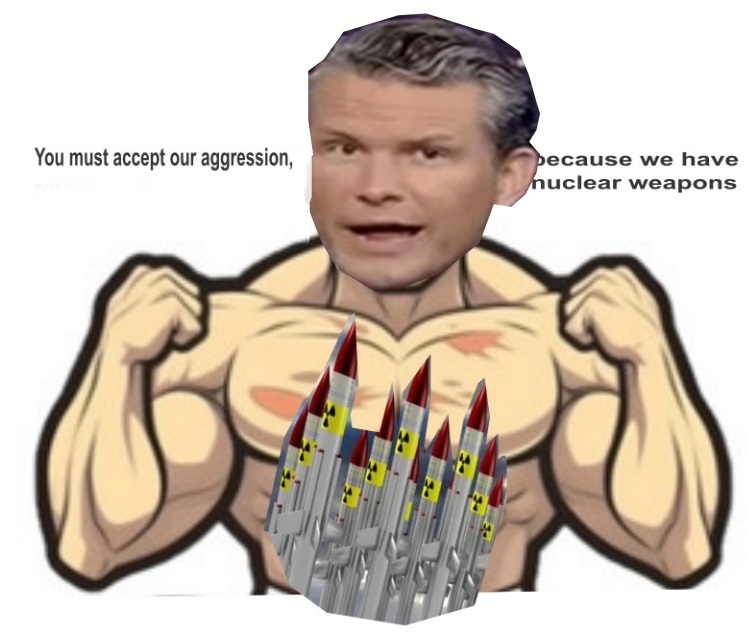
For Hegseth, the tech bros, and technofascists who have infiltrated the government, all of the above represent the best of American innovation. For them, innovation is a pseudonym for constant surveillance, never-ending warfare, and widespread environmental destruction.
On the same day as Hegseth’s SpaceX speech, a report revealed that the first four military bases to add data centers will be Fort Hood (Texas), Fort Bragg (North Carolina), Fort Bliss (Texas), and Dugway Proving Ground (Utah). Hegseth said these facilities will be developed through private partnership agreements with companies such as Google, Amazon Web Services, Oracle, SpaceX, and Microsoft.
February 7, 2026, By Chris Jeske for Codepink, https://scheerpost.com/2026/02/07/the-militarys-ai-strategy-threatens-everything-we-love/
As did many fellow Americans, I chuckled when President Trump announced the creation of the U.S. Space Force on December 20, 2019. I even remember laughing heartily while taking in the late-night circuit’s many Star Trek jokes that day. Yet, I had mostly forgotten that the Space Force still exists until last week when Secretary of War Pete Hegseth started a policy speech alongside Elon Musk at SpaceX’s headquarters by flashing the Vulcan salute and affirming Musk’s desire to “make Star Trek real.”
The absurdity of Musk’s introduction–in which he spoke of “going beyond our star system to other star systems, where we may meet aliens or discover long dead alien civilizations” as if this could happen in any of our lifetimes–belied the seriousness of the new U.S. Military Artificial Intelligence strategy that Secretary Hegseth proceeded to announce.
Before an audience of Pentagon leadership and SpaceX employees, Hegseth outlined the structures, initiatives, and objectives in place to bring about what he called “America’s military AI dominance,” with his remarks largely following the plan documented in the July 2025 report “America’s AI Action Plan.”
A core goal Hegseth specified was “becoming an AI-first warfighting force across all domains.” He elaborated that AI will be deployed in three ways: for “warfighting, intelligence, and enterprise missions.”
Hegseth shared that the military’s generative AI model, known as genai.mil, launched last month for all three million Department of War (DOW) employees and will run on “every unclassified and classified network throughout our department.” The initial model was developed with Google Gemini and will soon incorporate xAI’s Grok. In its first month, one-third of DOW’s workforce (one million people) has used the generative AI model.
In the speech, Heseth repeated phrases such as “removing red tape,” “blowing up bureaucratic barriers,” and “taking a wartime approach” to the people and policies that he called “blockers.” Specifics he voiced disdain for included regulations in “Title 10 and 50″–referring to Title 10 of the U.S. Code (the legal bedrock of the armed forces, including the configuration of each branch) and Title 50 of the U.S. Code (the laws which govern national security, intelligence, defense contracts, war powers, and more). These don’t sound like the types of data, processes, and policies to treat with a ‘move fast and break things’ approach.
How genai.mil might be used is even more frightening, especially as we learn how other AI programs are already being used to direct intelligence, surveillance, and warfare.
An April 2024 report from +972 unveiled an Israeli military AI program known as “Lavender,” which was used to generate kill lists of Palestinians. Despite the program reportedly having a known 10 percent false identification rate, no human validation was required before launching air strikes on the AI-identified targets. Another system, known as “Where’s Daddy?,” employed AI to locate targeted individuals. The program was often most confident in a target being at a specific location when they were at home, so the air strikes regularly killed entire families instead of just the targeted individual.
Hegseth eagerly addressed the need for “responsible AI,” but this proved to be another instance of doublespeak. His description was as follows: “We will not employ AI models that won’t allow you to fight wars.” Perhaps the reason he needs to state this is that, in theory, a properly trained AI model would not likely recommend military action in most instances–especially if built upon the data of recent U.S.-involved wars.
Furthermore, Hegseth echoed President Trump, promising that the military’s AI will not be ‘woke’ or ‘confused by DEI and social justice.’ Such declarations raise the question of whether this could mean military AI models will be designed with explicit white supremacist biases. A July 2025 incident involving xAI’s Grok offers a prescient case study: After Elon Musk claimed to remove ‘political correctness’ and ‘wokeness’ from Grok, the program proceeded to praise Hitler, claim to be “MechaHitler,” and spew a series of antisemitic tropes.
Regardless of how genai.mil is ultimately used, it will require extraordinary computing power. While hyperscale data centers are already massive environmental risks, Executive Order 14318, “Accelerating Federal Permitting of Data Center Infrastructure,” signed by President Trump on July 23, 2025, exempts qualifying projects from virtually all federal environmental regulations.
Department of Energy Secretary Chris Wright is ‘all-in’ with the development of federal data centers and the required energy infrastructure. He’s joyfully referred to such initiatives as “the next Manhattan Project” on multiple occasions. As of July 2025, four national lab sites have been selected for data center and energy infrastructure development: Idaho National Laboratory (Idaho), Oak Ridge Reservation (Tennessee), Paducah Gaseous Diffusion Plant (Kentucky), and Savannah River Site (South Carolina).
On the same day as Hegseth’s SpaceX speech, a report revealed that the first four military bases to add data centers will be Fort Hood (Texas), Fort Bragg (North Carolina), Fort Bliss (Texas), and Dugway Proving Ground (Utah). Hegseth said these facilities will be developed through private partnership agreements with companies such as Google, Amazon Web Services, Oracle, SpaceX, and Microsoft.
These same companies are frequently the driving force behind commercial data centers popping up in municipalities across the nation. Regardless of where data centers are located–municipalities, national lab sites, or military bases–the environmental costs are massive. Aaron Kirshenbaum, CODEPINK’s War is Not Green Campaigner, documents power consumption, water usage, noise pollution, toxic waste, and rare mineral extraction among the many negative local impacts of data centers in our communities. “They must be fought against at all costs,” Kirshenbaum says.
For Hegseth, the tech bros, and technofascists who have infiltrated the government, all of the above represent the best of American innovation. For them, innovation is a pseudonym for constant surveillance, never-ending warfare, and widespread environmental destruction.
Yet, some wisdom never ages. George Manuel in The Fourth World: An Indian Reality speaks of the destructive tendencies of ‘innovations’ developed by settlers: “Europe’s most important contributions that are still of value today seem either to be means of transport or instruments of war: ships, wagons, steelware, certain breeds of horses, guns. Most of the other things that were brought to North America by Europeans came from other parts of the world: paper, print, gunpowder, glass, mathematics, and Christianity.”
So many science fiction classics are rooted in the truth of Manuel’s observation–that western industrial development fuels a lust for warfare and environmental destruction. The authors of these sci-fi classics–unlike our technofascist ‘geniuses’–are true visionaries who are concerned with the future of humanity, and who feel compelled to warn of what might become if we follow these dangerous ideologies that have fuelled centuries of colonialism, imperialism, and white supremacy to their logical conclusions.
Even Star Trek itself famously depicts a utopian future where humankind has moved beyond racism, beyond conquest, and beyond capitalism itself. “There simply couldn’t be a more anti-Trek idea than an ‘AI-first warfighting force across all domains,” says Gerry Canavan, a professor of English at Marquette University specializing in science fiction studies. “Watch just one episode of the show, and you’ll see.”
While it’s hard to take Musk and Hegseth seriously when they talk about making Star Trek real, I don’t doubt for a minute that they can find many new ways to violate our rights and destroy what we love about the natural world.
But we aren’t without hope. “For every science fiction narrative about a new technological means for violence and oppression,” Canavan says, “there’s another about what happens when the people suffering under the machine finally unite together to smash it, and take the future back for themselves.”
Just as the protagonists in our favorite science fiction stories actively struggle for and create the world they want to live in, so can we.
Chris Jeske is an organizer with CODEPINK Milwaukee and Associate Director of the Marquette University Center for Peacemaking.
Sorrowful day for peace largely ignored thruout America

Walt Zlotow West Suburban Peace Coalition Glen Ellyn IL, 7 Feb 26
The New Start Treaty between Russia and US expires today and America largely yawned. Big story on mainstream news? Faggedaboudit. Ask the person on the street about New Start and he might mutter something about giving disadvantaged kids free comprehensive early childhood education. Wait, wait…that’s Head Start.
Nope, New Start is the 16 year old treaty Obama signed with Russian President Dmitry Medvedev on February 8, 2010. It caps the number of nuclear warheads each side can deploy at 1,550 and limits the number of deployed and non-deployed strategic launchers to 800. Still enough for either side to incinerate us all, but prevents a senseless arms race and symbolic of the critical need to reduce nuclear tensions.
But limited US Russian nuclear arsenals go back 54 years as 2010 Russian New Start signer Medvedev reminded us yesterday. “That’s it. For the first time since 1972, Russia (the former USSR) and the US have no treaty limiting strategic nuclear forces. SALT 1, SALT 2, START I, START II, SORT, New START – All in the past, winter is coming.”
President Trump rebuffed Russian President Putin’s offer to extend the limits for another year for sensible diplomacy to negotiate a new treaty.
Secretary of State Marco Rubio used the lame excuse that any new treaty must include China. But with a nuclear arsenal a pittance of the two nuclear giants, China demurred saying any treaty involving China must include US Russian nuclear stockpiles reduced to China’s level. Rubio knew his requirement was a poison pill deal breaker for any new extension of New Start.
Dumping nuclear agreements is nothing new for Trump. He left office in January 20, 2021 ignoring New Start’s eminent expiration. Successor Biden promptly renewed New Start for 5 years, exactly 5 years ago today. This time Trump has succeeded in letting it expire on his watch.
This gives Trump a trifecta in dumping critically needed nuclear agreements. In August 2019 Trump withdrew from the Intermediate Range Nuclear Forces (INF) Treaty that banned all land-based missiles with ranges between 500 and 5,500 km. . In November 2020, just before leaving office, Trump withdrew from the 2002 Open Skies Treaty which allowed the US and Russia to conduct short-notice, unarmed reconnaissance flights over each other’s territory to monitor military activities.
The only positive glimmer to put on Trump’s refusal to extend New Start, even for a measly year to negotiate a long term agreement? Trump has no more nuclear agreements to withdraw from in the last sorrowful 3 years of his second term.
This January the Bulletin of Atomic Scientists moved the Doomsday Clock, symbolic of approaching global catastrophe, to 85 seconds to Midnight, the closest in its 79 year history. With Trump president, the Bulletin might want to quickly reconvene for another gander at our march toward world annihilation. Next January, none of us might around to hear the 2027 announcement.
The US Keeps Openly Admitting It Deliberately Caused The Iran Protests
Caitlin Johnstone, Feb 06, 2026, https://www.caitlinjohnst.one/p/the-us-keeps-openly-admitting-it?utm_source=post-email-title&publication_id=82124&post_id=187080859&utm_campaign=email-post-title&isFreemail=true&r=1ise1&triedRedirect=true&utm_medium=email
Speaking before the Senate Banking Committee on Thursday, US Treasury Secretary Scott Bessent explicitly stated that the US deliberately caused a financial crisis in Iran with the goal of fomenting civil unrest in the country.
Asked by Senator Katie Britt what more the US can be doing to place pressure on the Ayatollah and Iran, Bessent explained that the Treasury Department has implemented a “strategy” designed to undermine the Iranian currency which crashed the economy and sparked the violent protests we’ve seen throughout the country.
“One thing we could do at Treasury, and what we have done, is created a dollar shortage in the country,” Bessent said. “At a speech at the Economic Club in March I outlined the strategy. It came to a swift and I would say grand culmination in December when one of the largest banks in Iran went under. There was a run on the bank, the central bank had to print money, the Iranian currency went into free fall, inflation exploded, and hence we have seen the Iranian people out on the street.”
This is not the first time Bessent has made these admissions. Speaking at the World Economic Forum in Davos last month, the treasury secretary said the following:
“President Trump ordered Treasury and our OFAC division, Office of Foreign Asset Control, to put maximum pressure on Iran. And it’s worked, because in December, their economy collapsed. We saw a major bank go under; the central bank has started to print money. There is dollar shortage. They are not able to get imports, and this is why the people took to the street. So, this is economic statecraft, no shots fired, and things are moving in a very positive way here.”
Following these remarks, Jeffrey Sachs and Sybil Farres wrote the following for Common Dreams:
“What Secretary Bessent describes is of course not ‘economic statecraft’ in a traditional sense. It is war conducted by economic means, all designed to produce an economic crisis and social unrest leading to a fall of the government. This is proudly hailed as ‘economic statecraft.’
“The human suffering caused by outright war and crushing economic sanctions is not so different as one might think. Economic collapse produces shortages of food, medicine, and fuel, while also destroying savings, pensions, wages, and public services. Deliberate economic collapse drives people into poverty, malnutrition, and premature death, just as outright war does.”
Bessent laid out these plans in advance at the Economic Club of New York back in March of last year, saying the following:
“Last month, the White House announced its maximum pressure campaign on Iran designed to collapse its already buckling economy. The Iranian economy is in disarray; 35% official inflation, has a currency that has depreciated 60% in the last 12 months, and an ongoing energy crisis. I know a few things about currency devaluations, and if I were an Iranian, I would get all of my money out of the Rial now.
“This precarious state exists before our Maximum Pressure campaign, designed to collapse Iranian oil exports from the current 1.5–1.6, million barrels per day, back to the trickle they were when President Trump left office.
“Iran has developed a complex shadow network of financial facilitators and black-market oil shippers via a ghost fleet to sell oil, petrochemical and other commodities to finance its exports and generate hard currency.
“As such, we have elevated a sanctions campaign against this export infrastructure, targeting all stages of Iran’s oil supply chain. We have coupled this with vigorous government engagement and private sector outreach.
“We will close off Iran’s access to the international financial system by targeting regional parties that facilitate the transfer of its revenues. Treasury is prepared to engage in frank discussions with these countries. We are going to shut down Iran’s oil sector and drone manufacturing capabilities.
“We have predetermined benchmarks and timelines. Making Iran Broke Again will mark the beginning of our updated sanctions policy. Watch this space.”
The US has been orchestrating plans to foment unrest in Iran by causing economic strife for years. In 2019 Trump’s previous secretary of state Mike Pompeo openly acknowledged that the goal of Washington’s economic warfare against Iran was to make the population so miserable that they “change the government”, cheerfully citing the “economic distress” the nation had been placed under by US sanctions.
As unrest tore through Iran last month, Trump egged protesters on and encouraged them to escalate, saying “To all Iranian patriots, keep protesting, take over your institutions, if possible, and save the name of the killers and the abusers that are abusing you,” adding, “all I say to them is help is on its way.”
Deliberately trying to ignite a civil war in a country by immiserating its population so severely that they start attacking their own government out of sheer desperation is one of the most evil things you can possibly imagine. But under the western empire it’s just another day. They’re doing it in Iran, and they’ve also aggressively ramped up efforts to do it in Cuba, where the government has just announced it will be rationing oil as the US moves to strangle the island nation into regime change.
A lot of attention is going into the Epstein files right now, and understandably so. But it’s worth noting that nothing in them is as depraved and abusive as what our rulers are doing right out in the open.
Will soaring electricity rates kill Ontario’s nuclear expansion?
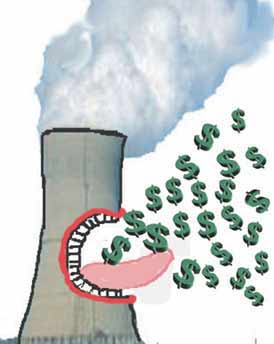
At $20.9-billion, the Darlington SMRs are expected to cost nearly as much as larger reactors that would have generated far more power. The government is betting that the economic benefits will be worth it: by building the first-ever BWRX-300 reactor, it hopes to win export opportunities for Ontario-based nuclear suppliers.
Future plans include what would be two of the largest nuclear plants on Earth, which will cost hundreds of billions of dollars. And while the IESO holds competitive procurements for other forms of generation including natural gas, wind and solar, nuclear plants are exempted from that requirement………… “There’s no real competition and there’s no real incentive for them to deliver that power at the cheapest cost “
Matthew McClearn, The Globe and Mail, Feb 5, 2026
The Ontario government’s plans to more than double the capacity of the province’s fleet of nuclear power reactors is sprawling in its ambition – and has a price tag to match.
Last May, Energy Minister Stephen Lecce stood alongside Premier Doug Ford to announce that the government would spend $20.9-billion to build four new small modular reactors in Clarington, Ont. In November, they approved a $26.8-billion overhaul of four old reactors at Ontario Power Generation’s Pickering Nuclear Generating Station, just east of Toronto.
Ontario’s electricity rates shot up 29 per cent in November, driven in part by rising nuclear generation costs. Further hikes are virtually certain: Ontario Power Generation (OPG) recently filed a rate application before the Ontario Energy Board, which it says will lay the foundation for the province’s energy supply over the next quarter century. The utility seeks roughly a doubling of the payments it receives for the electricity generated by its nuclear power plants. If granted, monthly bills would increase by an average of $3.50 each year for the next five years.
What comes next, though, promises to be even more expensive.
The Ford government asserts that Ontario will need roughly 18,000 additional megawatts of nuclear capacity by mid-century. (Ontario’s existing Darlington, Bruce and Pickering stations represent about 12,000 megawatts.) They’re ready to embark on what they describe as “the largest expansion of nuclear energy on the continent,” which includes plans for two of the largest nuclear plants on Earth. They could easily cost hundreds of billions of dollars.
This aspect of Ontario’s nuclear ambitions – the cost, and how residents and businesses will pay – is rarely discussed by provincial officials, and then only in vague terms. But the Ford government has long insisted that it can do it all while keeping electricity costs down. Critics – particularly those favoring renewable generation – have warned for years that this nuclear-focused approach would eventually lead to steep rate hikes.
“Ontario is on a track to more expensive energy in the future,” said David Pickup, manager of electricity at the Pembina Institute, an energy thinktank.
In a presentation in late January, Jack Gibbons, chair of the Ontario Clean Air Alliance, said Mr. Ford’s plans would see 75 per cent of Ontario’s electricity produced by nuclear power by 2050.
“If his nuclear projects proceed, our electricity rates will rise dramatically,” he predicted.
The Ford government came to power in 2018 riding a wave of dissatisfaction with the energy policies of its Liberal predecessors, which also led to surging power bills. Have Mr. Lecce and Mr. Ford similarly miscalculated?
Surging rates
Ontario’s Nov. 1 rate hike of 29 per cent was likely the largest on the continent last year. In the past year, Maine and New Jersey experienced increases of 25.5 per cent and 21 per cent, respectively, according to data published by the U.S. Energy Information Administration. The U.S. national average was just 6.6 per cent.
OEB spokesperson Tom Miller attributed Ontario’s rate increase partly to unexpectedly high nuclear generation last year, including from a refurbished reactor at Darlington that returned to service five months earlier than expected.
The November hike was almost entirely offset by an accompanying increase in the Ontario Energy Rebate, a provincial subsidy the government uses to lower residential electricity bills. But those subsidies will cost taxpayers billions of dollars each year, competing with other priorities.
For now, Ontarians’ rates still compare favorably to some provinces, including Nova Scotia, and also U.S. states around the Great Lakes. But the higher payments sought by OPG, if approved, would endure for years.
Traditionally, OPG recovered its costs for projects once they began generating electricity – a common practice worldwide. But nuclear plants can take a decade or two to construct and therefore tend to rack up sizeable interest charges, adding to their final tab.
Last year the government amended the Ontario Energy Board Act to allow OPG to immediately begin recouping some costs associated with building the small modular reactors (SMRs) and refurbishing Pickering.
“The intended effect is to smooth out the cost over time, rather than massive jumps from one year to the next,” explained Brendan Frank, who heads policy development and analysis at Clean Prosperity, a clean energy thinktank.
The Association of Major Power Consumers of Ontario, which represents major industrial electricity users, accepts the charges.
“It’s a legitimate ask from the generators,” said Brad Duguid, the organization’s president. “They have preliminary costs that they’re incurring, and they need to have a way to pay for that.”
Nonetheless, similar regulatory changes elsewhere in North America led to misfortune. In the U.S., a practice known as Construction Work in Progress was introduced in South Carolina and Georgia, which obligated ratepayers in those states to pay up front for the only new nuclear plants built in the U.S. since the 1980s. The South Carolina plant was never finished, and the Georgia plant came in well over budget and many years late, contributing to major rate increases in both states.
Another factor driving up rates in Ontario are refurbished reactors returning to service. Including Pickering, Ontario has decided to refurbish 14 reactors, at a cost of several billions of dollars each. OPG is wrapping up an overhaul of its Darlington plant while Bruce Power’s is scheduled to run until 2033.
Refurbishments enjoy broad political support. One reason is that Ontario’s nuclear industry employs tens of thousands of people. At a press conference held in November to announce the Pickering refurbishment, Finance Minister Peter Bethlenfalvy turned to the unionized workers behind him and assured them: “You folks are gonna be working for a long time. By the way, you’ve got job security…I can guarantee you that we’ll have the nuclear industry’s back all the way through for the next 50 years.”
Local economic benefits are central to Mr. Lecce’s enthusiasm for nuclear, as is energy security.
“The alternative is either a dirty source of power,” he said, “or it is leveraging procurements or materials that are often made in China.
“When I think about President Trump’s attack on the country and his ongoing antagonistic approach to allies and historic friends of the U.S. like Canada, it only reaffirms to me that we are on the right path.”
An expensive future
How much of a premium are Ontarians prepared to pay?
At $20.9-billion, the Darlington SMRs are expected to cost nearly as much as larger reactors that would have generated far more power. The government is betting that the economic benefits will be worth it: by building the first-ever BWRX-300 reactor, it hopes to win export opportunities for Ontario-based nuclear suppliers.
Nuclear plants worldwide have routinely suffered serious delays and cost overruns during construction, and one in nine is never completed. Mr. Lecce exudes confidence that OPG can repeat its performance with the Darlington refurbishment.
Mr. Lecce emphasized that his government is pursuing an “all-of-the-above” approach. The province’s Independent Electricity System Operator (IESO) has awarded contracts to natural gas and battery storage projects, which are to come online in 2028. But the slogan obscures the fact that the government’s plans would see Ontario lean even more heavily on reactors than it has in the past.
And while the IESO holds competitive procurements for other forms of generation including natural gas, wind and solar, nuclear plants are exempted from that requirement.
Said Mr. Pickup: “There’s no real competition and there’s no real incentive for them to deliver that power at the cheapest cost – unlike these competitive procurements, where if they don’t come in at low cost, they won’t win and they won’t get built.”
The Ford government supports Bruce Power’s proposal to build four large new reactors at its plant in Kincardine, Ont., adding up to 4,800 megawatts to what is often described as the world’s largest nuclear power plant. Known as Bruce C, it could be Canada’s first large-scale nuclear build in more than 30 years. The government has agreed to pay for most of the impact assessment, a benefit few other private power producers enjoy.
Simultaneously, OPG has begun planning an even larger plant at Wesleyville, the site of a partly-constructed oil-fired facility near Port Hope. Wesleyville’s capacity could be as high as 10,000 megawatts, enough to seize the Bruce’s crown as the world’s largest nuclear plant.
Nuclear plants take at least a decade, often two or more, to plan and build. This long lead time, accompanied by their huge output of electricity, requires governments to make big bets about future demand.
Mr. Lecce has placed his. He expects 21 million people will live in Ontario by mid-century, up from 16 million currently. He anticipates mass-adoption of electric vehicles, new data centres and massive investment in Ontario’s industry, including electrification of steel mills.
“We need 65 per cent more power at least, 90 per cent at the high,” Mr. Lecce said. “The province is going to be investing in energy generation, one way or another.”
But many EV projects announced in the past few years have stalled or been cancelled outright. U.S. President Donald Trump’s efforts to curtail automotive imports into his country has led automakers to lower production in Ontario, and the future of other power-intensive industries such as steel are similarly unclear.
The path not taken
The Ford government’s nuclear expansion plots the opposite course to that taken by most other jurisdictions globally.
According to the International Energy Agency, renewables (particularly solar) are growing faster than any other major energy source, and will continue to do so in all scenarios it has presented – even accounting for continuing hostility from the Trump administration.
“Renewables and storage have come down massively” in cost over the last 15 years, Mr. Pickup said. “Cost reductions have been 80 to 90 per cent, so renewables aren’t just competitive, they’re much cheaper.”
Mr. Ford resolutely opposed wind generation when he first assumed office; his government sought to halt construction of two partly-constructed wind farms, much as Mr. Trump now attacks offshore wind projects.
Mr. Ford’s antipathy toward renewables appears to have softened since then. Nonetheless, the IESO expects renewables will supply roughly the same proportion of Ontario’s electricity 25 years from now as they do today.
Mr. Pickup said the Pembina Institute doesn’t think Ontario should throw out its nuclear plans entirely, only that it should moderate its ambitions considerably in favor of alternatives, particularly renewables and energy storage.
“Nuclear comes in as expensive today,” he said. “It’s going to be relatively more expensive tomorrow.”
Mr. Gibbons, of the Ontario Clean Air Alliance, asserted that the cost of new nuclear capacity is between two and eight times more expensive than wind and solar generation.
“If we build new nuclear stations, our electricity rates will rise. If we actually want to lower our electricity bills, we need to invest in the lower cost options.”
But renewables have their own shortcomings and hidden costs. Unlike nuclear plants, wind and solar facilities provide electricity only intermittently, the amount of which is largely determined by environmental conditions like wind speed and daylight. And they require additional transmission infrastructure to connect to the grid, not to mention lots of land.
Decommissioning of Gentilly 1
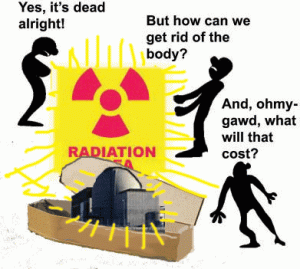
Ken Collier, 7 Feb 26
As in many industrial projects, many of the hazards come to be known only after the project is well under way or, very often, completed and discontinued. Gentilly 1 is one of those projects. Like others, the Gentilly 1 detritus presents grave dangers to living things as the building, equipment and supplies are taken apart. Complete public review of the decommissioning of Gentilly 1 is required, in my view. It should not be skipped or sidestepped in any way.
Notice of the project was posted on the website of the federal impact assessment agency, but it bears scant resemblance to formal and complete impact assessments, and the public is instructed to send comments to the private consortium, rather than to the federal authorities responsible for making the decision.
To cite Dr. Gordon Edwards, president of the Canadian Coalition for Nuclear Responsibility (CCNR): “Heavily contaminated radioactive concrete and steel would be trucked over public roads and bridges, through many Quebec and Ontario communities, to the Chalk River site just across the Ottawa River from Quebec.”
How Flexibility, Not Nuclear, Can Secure Ontario’s Electricity Future
Michael Barnard, Clean Technica, 6 Feb 26
Ontario is moving forward with planning for an entirely new nuclear generation site in Port Hope, 100 km east of Toronto, at a moment when its electricity system is already one of the most nuclear-heavy in the world. Nuclear power today provides roughly 55% of Ontario’s electricity, with hydro adding another 25%. Wind, solar, batteries, and demand-side resources together account for a much smaller share, having been cut off at the knees in 2018 when the provincial conservative party took power and summarily cut 758 contracts for renewable generation. Advancing a new site signals how the province understands its future electricity challenge. It reflects an expectation that Ontario will require another large block of firm, always-available capacity to remain reliable as demand grows, particularly during the most constrained hours of the year.
Ontario’s electricity planners, primarily through the Independent Electricity System Operator, frame the case for new nuclear around long-term reliability rather than annual energy supply. Their planning outlook projects electricity demand rising by about 65–75% by 2050—a low energy value not aligned with actual climate or competitiveness goals—with a projected winter peak reaching roughly 36–37 GW. Summer peaks are also expected to rise, but they remain slightly lower, in the range of about 35–36 GW by mid-century. The winter peak, not the summer peak, is treated as the binding constraint, and it is that single cold, dark evening hour that underpins the justification for new nuclear capacity.
This framing matters because of how nuclear is treated in planning models. Nuclear plants supply energy year-round, but the decision to build new nuclear capacity is driven mainly by how much firm capacity planners believe is needed to meet future peak demand. Nuclear units are counted as fully available during peak hours, even though they operate continuously, do not follow demand and are not available when down for maintenance, refueling or refurbishment for months or years. From a reliability perspective, this approach is understandable. System operators are rewarded for avoiding shortages and penalized heavily for blackouts, while overbuilding capacity carries fewer immediate consequences………………………….
The distinction between energy growth and peak growth is critical here. Energy demand, measured in TWh, reflects how much electricity the system produces over a year. Peak demand, measured in GW, reflects the single hardest hour the system must meet. Nuclear plants are not built to follow peaks, but they are sized to peaks. If peaks remain sharp and high, nuclear looks attractive in planning models. If peaks flatten or decline due to significant system component flexiblity, the value of adding large, inflexible, always-on generation falls quickly, even if total energy demand continues to rise.
Electrification without flexibility is genuinely concerning, and planners are right to worry about it……………………………………………………………………………………………………………………………………………………………………………………………………………………………………………………..
Ontario does not lack clean electricity. It lacks a planning framework that fully reflects how electricity systems are changing, why winter peaks appear hard only under outdated assumptions, and how firm capacity is actually used in a flexible, digitized grid. The choice facing the province is not between reliability and decarbonization, but between building infrastructure sized for a winter peak that no longer needs to exist and building a system designed to avoid creating that peak in the first place. https://cleantechnica.com/2026/02/06/how-flexibility-not-nuclear-can-secure-ontarios-electricity-future/
US and Russia negotiating New START deal – Axios.

The issue was reportedly discussed on the sidelines of the Ukraine peace talks in Abu Dhabi
5 Feb, 2026 , https://www.rt.com/news/632065-us-russia-negotiate-new-start/
Moscow and Washington are working on a deal to continue the New START nuclear reduction treaty, Axios reported on Thursday, citing three sources familiar with the issue. The strategic arms control agreement officially expired on February 5.
Signed in 2010, the treaty put caps on the number of strategic nuclear warheads and launchers that can be deployed and establishes monitoring mechanisms for both Russian and American arsenals. It was initially set to expire in 2021 but was extended for five years at the time.
According to Axios, President Donald Trump’s son-in-law Jared Kushner and special envoy Steve Witkoff discussed the issue with the Russian delegation on the sidelines of the Ukraine peace talks in Abu Dhabi. “We agreed with Russia to operate in good faith and to start a discussion about ways it could be updated,” a US official told the media outlet. Another source claimed that the sides had agreed to observe the treaty’s terms for at least six months as the talks on a potential new deal would be ongoing.
Earlier on Thursday, Kremlin spokesman Dmitry Peskov said that Moscow suggested sticking to the treaty’s provisions for another year but its initiative “remained unanswered.” Russia will “keep its responsible attentive approach in the field of strategic stability [and] nuclear weapons” but will be always “primarily guided by its national interests,” he said.
The UN also called the treaty expiration “a grave moment for international peace and security.” Secretary-General Antonio Guterres warned that “the risk of a nuclear weapon being used is the highest in decades” as he urged Moscow and Washington to negotiate a successor framework.
Russian President Vladimir Putin had earlier proposed to his US counterpart Donald Trump a one-year extension of the treaty but the American president said that he wanted a “better” agreement that includes China.
On Thursday, Peskov said that China considers joining the talks on a new treaty “pointless” since its nuclear arsenal is incompatible with that of Russia and the US. “We respect this position,” the Kremlin spokesman said.
Impact Assessment of the Planned Dismantling of the Core of the Gentilly-1 reactor.
To: The Honourable Julie Aviva Dabrusin, Minister of Environment and Climate Change
From: The Canadian Coalition for Nuclear Responsibility (CCNR)
Re: Impact assessment of the final dismantling of the Gentilly-1 nuclear reactor
Date: July 5 2026
Reference Number 90092
Cc Impact Assessment Agency of Canada
Atomic Energy of Canada Limited
Canadian Nuclear Laboratories \
Canadian Nuclear Safety Commission
The final dismantling of the most radioactive portions of the Gentilly-1 nuclear reactor, proposed by the licensee Canadian Nuclear Laboratories (CNL), will mark the first time that a CANDU power reactor has ever been fully decommissioned – that is, demolished.
This project is not designated for a full panel review under the Impact Assessment Act (IAA) but you, Minister Dabrusin, have the power to so designate it under the terms of the Act.
The Canadian Coalition for Nuclear Responsibility urges you to do so for the reasons stated below.
(1) When it comes to post-fission radioactivity (human made), the long-lived radioactive decommissioning waste from the core area of a nuclear reactor is second only in radiotoxicity and longevity to the high-level radioactive waste (irradiated nuclear fuel) that has already been designated for a full panel review under IAA at the initiative of NWMO, the Nuclear Waste Management Organization. The deadline for initial comments on the NWMO Deep Geological Repository project (DGR) for used nuclear fuel was yesterday, February 4, 2026. [Our comments: www.ccnr.org/GE_IAAC_NWMO_comments_2026.pdf ]
(2) Fully dismantling a nuclear reactor core is a demanding and hazardous undertaking, resulting in voluminous intermediate level radioactive wastes. The highly radioactive steel and concrete structures – fuel channels, calandria tubes, tube sheet, thermal shield, calandria vessel, biological shield, reactor vault, and more – need to be carefully disassembled, using robotic equipment and perhaps underwater cutting techniques with plasma torches. Such methods are described in a 1984 article published by the Canadian Nuclear Society and linked below, on the detailed advanced methods required for dismantling Gentilly-1.
Gentilly-1 Reactor Dismantling Proposal, by Hubert S. Vogt
Reactor and Fuel Handling Engineering Department
Atomic Energy of Canada Limited – CANDU Operation
Published by the Canadian Nuclear Society in the
Proceedings of the 5th Annual Congress
(3) Dismantling the reactor core will create large amounts of radioactive dust and debris some of which will almost certainly be disseminated into the atmosphere, or flushed into the nearby St. Lawrence River, or added to the existing contamination of the soil and subsoil (including groundwater) at the Gentilly site. It is worth noting that, during the Bruce refurbishment operations in 2009, over 500 workers – local tradesmen, mainly – suffered bodily contamination by inhaling radioactive airborne dust containing plutonium and other alpha emitters (i.e. americium) for a period of more than two weeks. The workers were told that respirators were not required. The radioactivity in the air went undetected for two and a half weeks because neither Bruce managers nor CNSC officers on site took the precaution to have the air sampled and tested.
(4) Once disassembled, the bulky and highly radioactive structural components of Gentilly-1 will have to be reduced in volume by cutting, grinding or blasting. Radioactive dust control and radioactive runoff prevention may be only partially effective. Then the multitudinous radioactive fragments must be packaged, and either (a) stored on site or (b) removed and transported over public roads and bridges, probably to Chalk River. The Chalk River site is already overburdened with high-level, intermediate-level, and low-level radioactive wastes of almost all imaginable varieties. Toxic waste dumping at Chalk River is contrary to the United Nations Declaration on the Rights of Indigenous Peoples (UNDRIP) and the federal government’s “duty to consult”, since Keboawek First Nation and other Indigenous rights-holders in the area have not given their free, prior, informed consent to either the storage or disposal of these toxic wastes on their unceded territory. A panel review could weigh the options of temporary on-site storage versus immediate relocation. Since there is as yet no final destination for intermediate level wastes, moving those wastes two or three times rather than once (when a final destination exists) will be costlier and riskier. Hence on-site storage is attractive.
(5) The decommissioning waste must be isolated from the environment of living things for thousands of years. The metallic fragments contain such long-lived radioactive species as nickel-59, with a 76,000 year half-life, and niobium-94, with a 20,000 year half-life. The concrete fragments also contain long-lived radioactive species like chlorine-36, with a 301,000 year half-life. Such radioactive waste materials are created during the fission process; they were never found in nature before 1940. NWMO has recommended that such intermediate-level decommissioning waste requires a Deep Underground Repository (DGR) not unlike that proposed for used nuclear fuel. CCNR believes that it is only logical and entirely responsible to call for a panel review of this, the first full decommissioning project for a nuclear power reactor in Canada. The lessons learned will have important ramifications for all of Canada’s power reactors as they will all have to be dismantled at some time. This is not “business as usual”.
Read more: Impact Assessment of the Planned Dismantling of the Core of the Gentilly-1 reactor.(6) Demolition of buildings is often a messy business, but demolition of a nuclear reactor core is further complicated by the fact that everything is so highly radioactive, therefore posing a long-term threat to the health and safety of humans and the environment. A panel review by the Assessment Agency is surely the least we can do in the pubic interest.
(7) To the best of our understanding, Canadian Nuclear Laboratories (CNL) is a private contractor managed by an American-led consortium of multinational corporations, whose work is paid for by Canadian taxpayers through the transfer of billions of dollars to CNL from Atomic Energy of Canada Limited, a crown corporation wholly owned by the Canadian government. As CNL is a contractor, paid to do a job by AECL, CCNR does not feel assured that the best interests of Quebec or of Canada will automatically be fully served by CNL, as it is not accountable to the electorate. When the job involves demolishing, segmenting, fragmenting, packaging and transporting dangerous radioactive materials, involving persistent radiological toxins, we feel that a thorough public review by means of a comprehensive impact assessment, coupled with the involvement and oversight of accountable federal and provincial public agencies is required to ensure that the radioactive inventory is verified and documented, that no corners are cut and no presumptions go unchallenged. The International Atomic Energy Agency strongly advises that before any reactor decommissioning work is done, there has to be a very precise and accurate characterisation of the radioactive inventory –
all radionuclides accounted for, all becquerel counts recorded, and all relevant physical/chemical/biological properties carefully noted. We have seen no such documentation, but we believe it is essential to make such documentation publicly available before final decommissioning work begins, and to preserve such records for future generations so that they can inform themselves about the radioactive legacy we are leaving them. A panel review could help to ensure that we do not bequeath a radioactive legacy that is devoid of useful information, a perfect recipe for amnesia.
(8) The Canadian Coalition for Nuclear Responsibility (CCNR) is federally incorporated as a not-for-profit organization, whose official name in French is le Regroupement pour la surveillance du nucléaire (RSN). CCNR/RSN is a member of le Regroupement des organismes environnementaux en énergie (ROEÉ). The ROEÈ has also filed comments on this dossier, linked below, with 10 recommendations. We endorse the ROEÉ submission and all of its recommendations. The ROEÉ submission is en français www.ccnr.org/IAAC_ROEE_G1_2026.pdf and here is a link to an English translation
www.ccnr.org/IAAC_ROEE_G1_e_2026.pdf .
Yours very truly,
Gordon Edwards, Ph.D., President,
Canadian Coalition for Nuclear Responsibility
1 This Month

of the week – Shut Down Drone Warfare!


Tell the Ukrainian Government to Drop Prosecution of Peace Activist Yurii Sheliazhenko

Petition to revoke the licensing of the Near Surface Nuclear Disposal Facility (NSDF) at Chalk River. https://www.ourcommons.ca/petitions/en/Petition/Details?Petition=e-7247
To see nuclear-related stories in greater depth and intensity – go to https://nuclearinformation.wordpress.com
-
Archives
- March 2026 (244)
- February 2026 (268)
- January 2026 (308)
- December 2025 (358)
- November 2025 (359)
- October 2025 (376)
- September 2025 (257)
- August 2025 (319)
- July 2025 (230)
- June 2025 (348)
- May 2025 (261)
- April 2025 (305)
-
Categories
- 1
- 1 NUCLEAR ISSUES
- business and costs
- climate change
- culture and arts
- ENERGY
- environment
- health
- history
- indigenous issues
- Legal
- marketing of nuclear
- media
- opposition to nuclear
- PERSONAL STORIES
- politics
- politics international
- Religion and ethics
- safety
- secrets,lies and civil liberties
- spinbuster
- technology
- Uranium
- wastes
- weapons and war
- Women
- 2 WORLD
- ACTION
- AFRICA
- Atrocities
- AUSTRALIA
- Christina's notes
- Christina's themes
- culture and arts
- Events
- Fuk 2022
- Fuk 2023
- Fukushima 2017
- Fukushima 2018
- fukushima 2019
- Fukushima 2020
- Fukushima 2021
- general
- global warming
- Humour (God we need it)
- Nuclear
- RARE EARTHS
- Reference
- resources – print
- Resources -audiovicual
- Weekly Newsletter
- World
- World Nuclear
- YouTube
-
RSS
Entries RSS
Comments RSS
 nuclear-news